resources by type
resources by grade
resources by subject
other resources

3,890 products added recently

Page 2 - Pre-K Assessments

Monitor your pre-K students' developmental milestones using assessments that are age-appropriate and engaging. This collection includes observational guides, simple skill activities, and parent-teacher communication tools. Foster a supportive environment that prepares them for the next educational step.

Relevant
alt down
Any Time
alt down
filter by
alt down
All File Types
alt down
filter nav Show filters
Sort by: Relevant
CLEAR
resources by type
Activities
down arrow
Classroom Decor
down arrow
Teacher Tools
up arrow
Anchor Charts
Assessments
Charts
DBQ's
Diagrams
Graphic Organizers
Lesson Plans
Literacy Readers
Outlines
Presentations
Quizzes and Tests
down arrow
Rubrics
Templates
Worksheets & Printables
down arrow
resources by grade
Early Learning
down arrow
Pre-K
up arrow
Kindergarten
Preschool
Elementary
down arrow
Middle School
down arrow
High School
down arrow
Adult Education
Not Grade Specific
resources by subject
Creative Arts
down arrow
ELA
down arrow
Holiday & Seasonal
down arrow
Life Studies
down arrow
Math
down arrow
P.E. & Health
down arrow
Social Studies
down arrow
Special Resources
down arrow
Science
down arrow
Foreign Languages
down arrow
Resources for Teachers
down arrow
other resources
Common Core
Homeschool Resources
down arrow
Montessori
Research
STEM
Guided Reading Level H - Clean Hands, Healthy Bodies

Guided Reading Level H - Clean Hands, Healthy Bodies
ELA, Resources for Teachers, Reading Comprehension, Reading, Health, P.E. & Health, Social Emotional Learning (SEL), Special Resources, Life Skills, Science, Kindergarten, Grade 1, 2, Worksheets & Printables, Worksheets, Teacher Tools, Centers, Activities, Literacy Readers, Quizzes, Quizzes and Tests, Assessments

This Guided Reading Book - Clean Hands, Healthy Bodies (Level H) includes: Guided Reading Color Label (front cover x1) This is a quick way to match the book’s demands to what students can generally handle.. The overall goal is to use the level/color to pick books for several smaller groups. To qualify for a certain level, a student is expected to read a book from that level with about 90–94% accuracy. If a student is consistently accurate and understands, move up a level. If the student is struggling at that level, drop down and add more support. Each student will improve at completely different rates, but it is generally one of the best ways to check progress across the class. DOWNLOAD THE CATALOG TO VIEW ALL GUIDED READING BOOKS AVAILABLE (SORTED LEVELS A-Z) Pre-Reading Question (x1) Teacher asks the prompt aloud, can be while showing the cover or first page. Students share what they already know, or make educated guesses from the cover. Prompt them to use the target vocabulary. Write some of their responses on the board to look back at during the reading. Vocabulary Words (x5) Introduce the five words, best doing it one at a time. Start by saying it, while students repeat and then see if anyone knows what it means before reading further. Read through the meaning and try to briefly connect each word to a picture or gesture so it’s meaningful. Ask students to flip through the book pages and point to where they see each of the vocabulary words. While reading the book pause upon coming across one of the vocab words or read the sentence twice to make sure students understand the word has appeared. Optional: Ask students to raise hands whenever they see/hear one of the new words. Guided Reading Pages (x10) Check the book snapshot (below) for: primary topic - do you need to prep extra reading or intro materials on this? what is taught best - decide on 1-2 bullets to focus on, use the prompt or words provided here for best results. learning goals - what you are checking for students to be able to do after the session, elicit answers using prompts or words provided. key vocabulary (see section above). questions overview - so you know what is coming up and if you need to prep extra materials to assist understanding. Run the lesson You may have already looked at a few of the pages together, but you can show them some of the pictures again first to set meaning. Depending on how much time you have and how familiar your students are with guided reading class, you may want to read the book aloud first with the group first. Students whisper or partner read, while you listen in. If time, do it as a group, one student reading a page each. Use the guided page’s prompts to coach: “Check the picture / does it make sense?” “Point under the words / try the first sound” “Reread the sentence smoothly”. Try to focus more on one student per session (rotating every time), so you can work out if they are ready to move up or need to move down a level. Comprehension Questions (back cover x3) This is your way to check that students didn’t just say the words, but actually understood the text. First, let students answer by pointing to the page/picture and saying a short sentence. After any answer, follow with: “Show me where you found that in the text.” In bigger groups, have partners answer first (10–20 seconds), then call on 2–3 students to share. Differentiation tips: Emerging speakers/struggling readers: oral + pointing On-level: oral in a full sentence Higher: one written sentence or draw + label Book Snapshot Title: Clean Hands, Healthy Bodies Genre: Nonfiction (informational) Subject: Health & Safety / Science Primary Topic: When and how to wash hands to stop germs Estimated Guided Reading Level (A–Z): H What This Book Teaches Best Why washing hands matters: it “keeps germs away” and helps prevent germs from spreading to other people. When to wash hands (before eating, after outdoor play, after using the toilet, after playing with a pet). How to wash hands step-by-step (wet with clean running water, use soap, scrub all areas, rinse, dry). A key procedure detail: scrubbing should last “twenty seconds” to remove germs. The idea of healthy habits: making handwashing a regular habit “protects everyone.” Learning Goals Students will explain one reason the book gives for washing hands, using a detail from the text. Students will identify at least two times the book says hands should be washed. Students will describe the steps for washing hands in order, based on the text. Students will state how long scrubbing should last, according to the book. Students will describe how handwashing helps other people, using the book’s words about spreading germs/protecting everyone. Key Vocabulary From the Text germs — tiny living things that can make you sick. contact — touching something. invisible — cannot be seen. scrub — rub hard to get something clean. protects — keeps safe from harm. Discussion Prompts Pre-reading question: When do you think it is most important to wash your hands? Comprehension questions: Name one time the book says you should wash your hands. How long should scrubbing last when you wash your hands? Why does washing your hands help other people? Printing Tips 1. Best Printing Method (Recommended) “Booklet” Printing (Best if Available) If your printer or PDF viewer supports Booklet Printing , use this. Settings to use: Print mode: Booklet Paper size: Letter or A4 (either works) Orientation: Landscape Print on both sides: Yes Flip on: Short edge Scaling: Fit to printable area Booklet subset: First test: Front sides only Then: Back sides only This will automatically: Pair pages correctly Put the cover on the outside Align everything for folding After printing, fold in half and staple along the spine . 2. If “Booklet” Printing Is NOT Available You can still print this correctly with manual duplex printing . Step-by-step: Open the PDF. Choose Print . Set: Orientation: Landscape Pages per sheet: 1 Print on both sides: Yes Flip on: Short edge Print all pages . Because each PDF page already contains two facing book pages, the result will still fold cleanly into a book. Thousands of Cored Education products are included with your TeachSimple membership. Download links and encyclopedia index available here.

Author Cored Education

Rating

Tags Vocabulary, Reading Comprehension, Reading Passages, Leveled Reading, Nonfiction, Reading, Guided Reading, Health, SEL, Life Skills

Guided Reading Level H - Snow, Sleet, and Hail

Guided Reading Level H - Snow, Sleet, and Hail
ELA, Resources for Teachers, Reading Comprehension, Reading, Science, Pre-Reading, Language Development, Earth and Environmental Sciences, Earth Sciences, Physics, Kindergarten, Grade 1, 2, Worksheets & Printables, Worksheets, Teacher Tools, Centers, Activities, Literacy Readers, Quizzes, Quizzes and Tests, Assessments

This Guided Reading Book - Snow, Sleet, and Hail (Level H) includes: Guided Reading Color Label (front cover x1) This is a quick way to match the book’s demands to what students can generally handle.. The overall goal is to use the level/color to pick books for several smaller groups. To qualify for a certain level, a student is expected to read a book from that level with about 90–94% accuracy. If a student is consistently accurate and understands, move up a level. If the student is struggling at that level, drop down and add more support. Each student will improve at completely different rates, but it is generally one of the best ways to check progress across the class. DOWNLOAD THE CATALOG TO VIEW ALL GUIDED READING BOOKS AVAILABLE (SORTED LEVELS A-Z) Pre-Reading Question (x1) Teacher asks the prompt aloud, can be while showing the cover or first page. Students share what they already know, or make educated guesses from the cover. Prompt them to use the target vocabulary. Write some of their responses on the board to look back at during the reading. Vocabulary Words (x5) Introduce the five words, best doing it one at a time. Start by saying it, while students repeat and then see if anyone knows what it means before reading further. Read through the meaning and try to briefly connect each word to a picture or gesture so it’s meaningful. Ask students to flip through the book pages and point to where they see each of the vocabulary words. While reading the book pause upon coming across one of the vocab words or read the sentence twice to make sure students understand the word has appeared. Optional: Ask students to raise hands whenever they see/hear one of the new words. Guided Reading Pages (x10) Check the book snapshot (below) for: primary topic - do you need to prep extra reading or intro materials on this? what is taught best - decide on 1-2 bullets to focus on, use the prompt or words provided here for best results. learning goals - what you are checking for students to be able to do after the session, elicit answers using prompts or words provided. key vocabulary (see section above). questions overview - so you know what is coming up and if you need to prep extra materials to assist understanding. Run the lesson You may have already looked at a few of the pages together, but you can show them some of the pictures again first to set meaning. Depending on how much time you have and how familiar your students are with guided reading class, you may want to read the book aloud first with the group first. Students whisper or partner read, while you listen in. If time, do it as a group, one student reading a page each. Use the guided page’s prompts to coach: “Check the picture / does it make sense?” “Point under the words / try the first sound” “Reread the sentence smoothly”. Try to focus more on one student per session (rotating every time), so you can work out if they are ready to move up or need to move down a level. Comprehension Questions (back cover x3) This is your way to check that students didn’t just say the words, but actually understood the text. First, let students answer by pointing to the page/picture and saying a short sentence. After any answer, follow with: “Show me where you found that in the text.” In bigger groups, have partners answer first (10–20 seconds), then call on 2–3 students to share. Differentiation tips: Emerging speakers/struggling readers: oral + pointing On-level: oral in a full sentence Higher: one written sentence or draw + label Book Snapshot Title: Snow, Sleet, and Hail Genre: Nonfiction (informational) Subject: Life Science / Earth Science Primary Topic: Types of frozen water from the sky Estimated Guided Reading Level (A–Z): H What This Book Teaches Best Introduces three kinds of frozen water that fall from the sky: snow, sleet, and hail. Explains simple conditions and traits: snow falls when air is cold and feels “soft and light.” Builds science vocabulary using clear examples (snowflakes as “tiny crystal,” sleet as rain that “freezes as it falls”). Describes how hail forms and changes size (“grows inside a tall cloud” and “gets bigger and bigger”). Learning Goals Identify snow, sleet, and hail as kinds of frozen water. Describe what the text says snow is like and when it falls. Explain what a snowflake is, using the book’s words. Explain how the book says sleet forms as it falls. Describe how the book says hail forms and grows before it falls. Tell how frozen water affects Earth in the book (it “covers the earth,” and cold weather “changes the land”). Key Vocabulary From the Text crystal — a hard, shiny shape. sleet — rain that freezes as it falls. freezes — turns from water into ice when very cold. bounces — jumps back up after it hits something. hail — hard ice that falls during a big storm. Discussion Prompts Pre-reading question: What kinds of frozen water have you seen fall from the sky? Comprehension questions: What does the book say snow is like when it falls? Comprehension questions: What does the book say sleet is made from as it falls? Comprehension questions: Where does the book say hail grows before it falls? Printing Tips 1. Best Printing Method (Recommended) “Booklet” Printing (Best if Available) If your printer or PDF viewer supports Booklet Printing , use this. Settings to use: Print mode: Booklet Paper size: Letter or A4 (either works) Orientation: Landscape Print on both sides: Yes Flip on: Short edge Scaling: Fit to printable area Booklet subset: First test: Front sides only Then: Back sides only This will automatically: Pair pages correctly Put the cover on the outside Align everything for folding After printing, fold in half and staple along the spine . 2. If “Booklet” Printing Is NOT Available You can still print this correctly with manual duplex printing . Step-by-step: Open the PDF. Choose Print . Set: Orientation: Landscape Pages per sheet: 1 Print on both sides: Yes Flip on: Short edge Print all pages . Because each PDF page already contains two facing book pages, the result will still fold cleanly into a book. Thousands of Cored Education products are included with your TeachSimple membership. Download links and encyclopedia index available here.

Author Cored Education

Rating

Tags Vocabulary, Reading Comprehension, Reading Passages, Leveled Reading, Nonfiction, Reading, Guided Reading, Earth Science, Weather, Physics

ADD AND SUBTRACT Exercises | ANIMAL THEMED
Free Download

ADD AND SUBTRACT Exercises | ANIMAL THEMED
Addition and Subtraction, Math, Addition, Subtraction, Early Learning, Elementary, Homeschool Resources, Not Grade Specific, Pre-K, Assessments, Teacher Tools, Quizzes and Tests

ADD AND SUBTRACT Exercises | ANIMAL THEMED BASIC INFORMATION OF THIS MATH RESOURCE: · Document Title: Addition and Subtraction Exercises · Number of Pages: 10 · File Format (PDF, Word, PPT): PDF · Color or Black & White: Mixed ABOUT THE AUTHOR: At EDITORIAL ARENAS EDUCATIVAS, we specialize in designing high-quality educational materials. We want every child to discover that learning can be both entertaining and creative. I invite you to explore my educational store and discover the wide collection of resources available for your classroom or home. MAIN DESCRIPTION OF THIS RESOURCE: What skills or competencies does it develop? Thanks to this fabulous resource, students will first be able to develop their knowledge, attention, and concentration. Who can use it (teachers, parents, therapists, students)? This document can be adapted according to the person using it. If you’re a teacher, you can use it; if you do homeschooling, you can also use it. Therapists can use it for students with learning difficulties, and even self-learners will find it very useful. What materials are needed to make the most of it (pencils, scissors, printer, etc.)? To make the most of this fabulous document, you can start with pencils. But, since it’s adaptable by the teacher, you may also encourage your students to use markers, scissors, and other creative materials. SECONDARY AND COMPLEMENTARY INFORMATION: What format is it in (digital, printable, PDF, A4, letter)? A4 PDF This fun and engaging resource is designed in A4 format and has been converted to PDF, making it easy to use and carry anywhere. Is the design in full color, black and white, or mixed? Mixed This document includes both black and white and color versions, making it more creative and appealing. You also have the freedom to print it in whichever style you prefer. What type of material is it (book, workbook, activity pack, posters, flashcards)? Worksheets EDITORIAL ARENAS EDUCATIVAS creates a variety of materials such as packs, worksheets, games, and assessments. This resource belongs to one of those categories.

Author EDITORIAL LAURA EDUCA

Rating

Tags FREE, FREE RESOURCES, MATH, MATH RESOURCES, ADDITION, SUBTRACTION

Guided Reading Level H - Gravity Made Simple

Guided Reading Level H - Gravity Made Simple
ELA, Resources for Teachers, Reading Comprehension, Reading, Science, Pre-Reading, Language Development, Vocabulary, Physics, Earth and Environmental Sciences, Kindergarten, Grade 1, 2, Worksheets & Printables, Worksheets, Teacher Tools, Centers, Activities, Literacy Readers, Quizzes, Quizzes and Tests, Assessments

This Guided Reading Book - Gravity Made Simple (Level H) includes: Guided Reading Color Label (front cover x1) This is a quick way to match the book’s demands to what students can generally handle.. The overall goal is to use the level/color to pick books for several smaller groups. To qualify for a certain level, a student is expected to read a book from that level with about 90–94% accuracy. If a student is consistently accurate and understands, move up a level. If the student is struggling at that level, drop down and add more support. Each student will improve at completely different rates, but it is generally one of the best ways to check progress across the class. DOWNLOAD THE CATALOG TO VIEW ALL GUIDED READING BOOKS AVAILABLE (SORTED LEVELS A-Z) Pre-Reading Question (x1) Teacher asks the prompt aloud, can be while showing the cover or first page. Students share what they already know, or make educated guesses from the cover. Prompt them to use the target vocabulary. Write some of their responses on the board to look back at during the reading. Vocabulary Words (x5) Introduce the five words, best doing it one at a time. Start by saying it, while students repeat and then see if anyone knows what it means before reading further. Read through the meaning and try to briefly connect each word to a picture or gesture so it’s meaningful. Ask students to flip through the book pages and point to where they see each of the vocabulary words. While reading the book pause upon coming across one of the vocab words or read the sentence twice to make sure students understand the word has appeared. Optional: Ask students to raise hands whenever they see/hear one of the new words. Guided Reading Pages (x10) Check the book snapshot (below) for: primary topic - do you need to prep extra reading or intro materials on this? what is taught best - decide on 1-2 bullets to focus on, use the prompt or words provided here for best results. learning goals - what you are checking for students to be able to do after the session, elicit answers using prompts or words provided. key vocabulary (see section above). questions overview - so you know what is coming up and if you need to prep extra materials to assist understanding. Run the lesson You may have already looked at a few of the pages together, but you can show them some of the pictures again first to set meaning. Depending on how much time you have and how familiar your students are with guided reading class, you may want to read the book aloud first with the group first. Students whisper or partner read, while you listen in. If time, do it as a group, one student reading a page each. Use the guided page’s prompts to coach: “Check the picture / does it make sense?” “Point under the words / try the first sound” “Reread the sentence smoothly”. Try to focus more on one student per session (rotating every time), so you can work out if they are ready to move up or need to move down a level. Comprehension Questions (back cover x3) This is your way to check that students didn’t just say the words, but actually understood the text. First, let students answer by pointing to the page/picture and saying a short sentence. After any answer, follow with: “Show me where you found that in the text.” In bigger groups, have partners answer first (10–20 seconds), then call on 2–3 students to share. Differentiation tips: Emerging speakers/struggling readers: oral + pointing On-level: oral in a full sentence Higher: one written sentence or draw + label Book Snapshot Title: Gravity Made Simple Genre: Nonfiction (informational) Subject: Science (Physical Science / Earth & Space Science) Primary Topic: How gravity works on Earth and in space Estimated Guided Reading Level (A–Z): H What This Book Teaches Best Gravity is a hidden, always-active force that pulls things toward Earth’s center. Gravity keeps objects on Earth’s surface—without it, things would float away. Gravity keeps the air close to Earth, forming the atmosphere that living things need to breathe. Gravity works in space too: Earth’s pull keeps the Moon in an orbit, and the Moon’s gravity affects ocean tides. Mass and gravity connect: more mass means a stronger gravitational pull, and weight measures gravity’s pull. Learning Goals Explain what gravity is and what it does to objects on Earth. Describe what happens when an object is dropped, according to the text. Tell how gravity helps keep objects (and air) close to Earth. Describe how Earth’s gravity affects the Moon’s orbit. Explain how the Moon’s gravity is connected to tides along the coast. Use the text to explain how mass relates to gravitational pull. Key Vocabulary From the Text gravity — a force that pulls things toward Earth. atmosphere — the thick layer of air around Earth. orbit — the path something takes around a planet. mass — how much matter is inside an object. tides — ocean water rising and falling along the coast. Discussion Prompts Pre-reading question: What do you think happens when you drop an object? Comprehension questions: What does the book say happens when an object is dropped? Comprehension questions: What does Earth’s pull do for the Moon’s path around Earth? Comprehension questions: What does the book say causes tides along the coast? Printing Tips 1. Best Printing Method (Recommended) “Booklet” Printing (Best if Available) If your printer or PDF viewer supports Booklet Printing , use this. Settings to use: Print mode: Booklet Paper size: Letter or A4 (either works) Orientation: Landscape Print on both sides: Yes Flip on: Short edge Scaling: Fit to printable area Booklet subset: First test: Front sides only Then: Back sides only This will automatically: Pair pages correctly Put the cover on the outside Align everything for folding After printing, fold in half and staple along the spine . 2. If “Booklet” Printing Is NOT Available You can still print this correctly with manual duplex printing . Step-by-step: Open the PDF. Choose Print . Set: Orientation: Landscape Pages per sheet: 1 Print on both sides: Yes Flip on: Short edge Print all pages . Because each PDF page already contains two facing book pages, the result will still fold cleanly into a book. Thousands of Cored Education products are included with your TeachSimple membership. Download links and encyclopedia index available here.

Author Cored Education

Rating

Tags Vocabulary, Reading Comprehension, Reading Passages, Leveled Reading, Nonfiction, Reading, Guided Reading, Gravity, Physics, Earth Science

The Pull of Gravity: Guided Reading Level F with Lesson Plan

The Pull of Gravity: Guided Reading Level F with Lesson Plan
ELA, Resources for Teachers, Reading Comprehension, Reading, Science, Language Development, Vocabulary, Physics, Earth and Environmental Sciences, Pre-Reading, Kindergarten, Grade 1, 2, Worksheets & Printables, Worksheets, Teacher Tools, Centers, Activities, Literacy Readers, Quizzes, Quizzes and Tests, Assessments, Lesson Plans

This The Pull of Gravity (level f) guided reading book with lesson plan includes: Guided Reading Color Label (front cover x1) This is a quick way to match the book’s demands to what students can generally handle.. The overall goal is to use the level/color to pick books for several smaller groups. To qualify for a certain level, a student is expected to read a book from that level with about 90–94% accuracy. If a student is consistently accurate and understands, move up a level. If the student is struggling at that level, drop down and add more support. Each student will improve at completely different rates, but it is generally one of the best ways to check progress across the class. DOWNLOAD THE CATALOG TO VIEW ALL GUIDED READING BOOKS AVAILABLE (SORTED LEVELS A-Z) COMPANION VIDEO NOW AVAILABLE (EMBEDDED AFTER PREVIEW PICTURES IN PRODUCT DESCRIPTION) Pre-Reading Question (x1) The teacher says the question aloud, either while showing the cover or the first page. Students share what they already know or make sensible guesses based on the cover. Encourage them to use the target vocabulary where possible. Write a few of their ideas on the board so you can return to them during or after the reading. Vocabulary Words (x5) Introduce the five words one at a time. Say each word aloud, have students repeat it, and then ask if anyone already knows what it means. Read the meaning together and briefly connect each word to a picture, action, or gesture so it feels more memorable. Ask students to flip through the book and point to any pages where they spot the vocabulary words. While reading, pause when one of the words appears, or reread the sentence so students clearly notice and understand it in context. Optional: Ask students to raise their hands whenever they see or hear one of the new words. Guided Reading Pages (x10) Check the book snapshot below for: Primary topic — decide whether students need a quick introduction or extra background first. What this lesson teaches best — choose 1–2 key points to focus on during the session. Learning goals — keep in mind what students should be able to understand or say by the end. Key vocabulary — review and reinforce these throughout the lesson. Questions overview — look ahead so you know what students will be asked and whether any extra support is needed. Run the lesson You may already have looked at a few pages together, but it can help to revisit some of the pictures first to build meaning. Depending on your time and how confident the group is with guided reading, you may want to read the whole book aloud to them first. Students can then whisper-read or partner-read while you listen in. If time allows, you can also read as a group, with each student taking a page. Use the guided reading prompts to support them, such as: “Check the picture—does it make sense?” “Point under the words.” “Try the first sound.” “Reread the sentence smoothly.” It can be helpful to focus more closely on one student each session, rotating over time, so you can better judge whether they are ready to move up or may need more support at their current level. Comprehension Questions (back cover x3) This is where you check that students understood the text, not just the words on the page. Start by letting students answer by pointing to a page or picture and saying a short sentence. After they respond, follow up with: “Show me where you found that in the text.” In larger groups, let partners discuss their answer first for 10–20 seconds, then invite 2–3 students to share. Differentiation tips Emerging speakers / struggling readers: oral response + pointing On-level: oral response in a full sentence Higher: one written sentence or a drawing with labels Lesson Snapshot Title: The Pull of Gravity Genre: Nonfiction (informational) Subject: Science (Physical Science) Primary Topic: How gravity pulls things and helps keep them in place Estimated Guided Reading Level (A–Z): F What This Lesson Teaches Best Explains that gravity is a force and that it is all around us. Shows that gravity pulls things down and toward the Earth. Uses simple, everyday examples like a ball, leaves, water, rocks, sand, and air to show gravity in action. Helps students understand that larger objects, like Earth, have a stronger pull. Introduces the idea that gravity is also in space and helps pull the moon. Learning Goals Students will identify that gravity is a force found everywhere. Students will describe how gravity pulls things down and toward the Earth. Students will give examples from the text of things gravity pulls or keeps in place. Students will explain what the text says about Earth’s strong pull. Students will answer questions about gravity using details from the book. Key Vocabulary From the Text gravity — a pull that makes things go down force — a push or a pull toward — moving closer to something space — the place above Earth mountain — a very high hill of land Discussion Prompts Pre-reading question: What do you think makes things fall down to the ground? Comprehension question: What does the book say gravity is? Comprehension question: What does gravity pull things toward? Comprehension question: Name one thing the book says gravity keeps in place. 1. Best Printing Method (Recommended) Booklet printing is the best option if your printer or PDF viewer supports it. This method usually places the pages in the correct order automatically and makes folding much easier. Settings to use: Print mode: Booklet Paper size: Letter or A4 Orientation: Landscape Print on both sides: Yes Flip on: Short edge Scaling: Fit to printable area Booklet subset: First, print front sides only Then, print back sides only This will automatically: Pair the pages correctly Place the cover on the outside Help everything line up properly for folding After printing, fold the pages in half and staple along the spine. 2. If “Booklet” Printing Is Not Available You can still print the book correctly by using manual duplex printing . Step-by-step: Open the PDF. Click Print . Use these settings: Orientation: Landscape Pages per sheet: 1 Print on both sides: Yes Flip on: Short edge Print all pages. Since each PDF page already contains two facing book pages, the pages should still fold neatly into a book. Thousands of Cored Education products are included with your TeachSimple membership. Download links and encyclopedia index available here.

Author Cored Education

Rating

Tags Reading Comprehension, Reading Passages, Reading, Guided Reading, Guided Reading Lesson Plan, Guided Reading Activity, Pre-reading, Science Lesson Plans, Earth Science, Physics

Number & Operations: Base-Ten & Place Value - Pre-Assessment & Teach the Skill - MAC Software

Number & Operations: Base-Ten & Place Value - Pre-Assessment & Teach the Skill - MAC Software
Math, Place Value, Common Core, Kindergarten, Preschool, Grade 1, 2, Assessments, Teacher Tools

The Number & Operations: Base-Ten & Place Value MAC Software This comprehensive teaching resource equips educators with impactful tools to instill crucial math skills in their students, focusing especially on the concepts of number operations, base-ten and place value. Target Audience: Specifically designed for preschoolers through second graders. Main Features: A variety of pre- assessment activities and a comprehensive lesson plan. Interactive tools that assist students in visualizing abstract mathematical concepts. Bilingual support facilitating teaching in both English and Spanish. A must-have tool for educators ensuring that linguistic barriers don't hinder valuable lessons. Strict adherence to Common Core State Standards, National Council Teachers Mathematics' guidelines, and synchronization with STEM initiatives guarantees relevance while keeping focus on curriculum guidelines. Digital Distribution:: All these interactive resources are packed into an easy-to-download zip file tailored especially for the MAC operating system. It can be seamlessly implemented across various educational scenarios: whole group instruction, small group interaction or individual assignments. In Summary: The profoundly versatile yet focused, Number & Operations: Base-Ten & Place Value software is an excellent choice for educators aiming to translate theoretical knowledge into practical insights within early mathematics education.

Author Classroom Complete Press

Tags Math Pre-assessment, Operations Worksheet, Digital Math, Place Value, Base-ten

All About Insects: Guided Reading Level G with Lesson Plan

All About Insects: Guided Reading Level G with Lesson Plan
ELA, Resources for Teachers, Reading Comprehension, Reading, Science, Language Development, Vocabulary, Pre-Reading, Insects, Life Sciences, Kindergarten, Grade 1, 2, Worksheets & Printables, Worksheets, Teacher Tools, Centers, Activities, Literacy Readers, Quizzes, Quizzes and Tests, Assessments, Lesson Plans

This All About Insects (level g) guided reading book with lesson plan includes: Guided Reading Color Label (front cover x1) This is a quick way to match the book’s demands to what students can generally handle.. The overall goal is to use the level/color to pick books for several smaller groups. To qualify for a certain level, a student is expected to read a book from that level with about 90–94% accuracy. If a student is consistently accurate and understands, move up a level. If the student is struggling at that level, drop down and add more support. Each student will improve at completely different rates, but it is generally one of the best ways to check progress across the class. DOWNLOAD THE CATALOG TO VIEW ALL GUIDED READING BOOKS AVAILABLE (SORTED LEVELS A-Z) Pre-Reading Question (x1) Teacher asks the prompt aloud, can be while showing the cover or first page. Students share what they already know, or make educated guesses from the cover. Prompt them to use the target vocabulary. Write some of their responses on the board to look back at during the reading. Vocabulary Words (x5) Introduce the five words, best doing it one at a time. Start by saying it, while students repeat and then see if anyone knows what it means before reading further. Read through the meaning and try to briefly connect each word to a picture or gesture so it’s meaningful. Ask students to flip through the book pages and point to where they see each of the vocabulary words. While reading the book pause upon coming across one of the vocab words or read the sentence twice to make sure students understand the word has appeared. Optional: Ask students to raise hands whenever they see/hear one of the new words. Guided Reading Pages (x10) Check the book snapshot (below) for: primary topic - do you need to prep extra reading or intro materials on this? what is taught best - decide on 1-2 bullets to focus on, use the prompt or words provided here for best results. learning goals - what you are checking for students to be able to do after the session, elicit answers using prompts or words provided. key vocabulary (see section above). questions overview - so you know what is coming up and if you need to prep extra materials to assist understanding. Run the lesson You may have already looked at a few of the pages together, but you can show them some of the pictures again first to set meaning. Depending on how much time you have and how familiar your students are with guided reading class, you may want to read the book aloud first with the group first. Students whisper or partner read, while you listen in. If time, do it as a group, one student reading a page each. Use the guided page’s prompts to coach: “Check the picture / does it make sense?” “Point under the words / try the first sound” “Reread the sentence smoothly”. Try to focus more on one student per session (rotating every time), so you can work out if they are ready to move up or need to move down a level. Comprehension Questions (back cover x3) This is your way to check that students didn’t just say the words, but actually understood the text. First, let students answer by pointing to the page/picture and saying a short sentence. After any answer, follow with: “Show me where you found that in the text.” In bigger groups, have partners answer first (10–20 seconds), then call on 2–3 students to share. Differentiation tips: Emerging speakers/struggling readers: oral + pointing On-level: oral in a full sentence Higher: one written sentence or draw + label Book Snapshot Title: All About Insects Genre: Nonfiction (informational) Subject: Science (Life Science) Primary Topic: Insect body parts, features, and where they live Estimated Guided Reading Level (A–Z): G What This Book Teaches Best Explains what insects are by stating they are tiny animals that live in many places . Teaches basic insect anatomy: insects have six legs and three body parts (head, thorax, abdomen). Connects structures to functions: legs help the insect move and antennae are used to smell things . Describes common insect features: some have a hard shell that protects the body , and some have wings (dragonflies can fly fast ). Introduces early life stages: many insects come from eggs , and a larva hatches from an egg. Learning Goals Students will describe insects as tiny animals that live in many places. Students will identify that an insect has six legs that help it move. Students will name the three body parts of an insect: head, thorax, and abdomen. Students will explain that most insects have two antennae used to smell things. Students will describe details from the text about insect features (shells, wings) and how insects begin life (eggs, larva). Key Vocabulary From the Text thorax — the middle part of an insect’s body. abdomen — the back part of an insect’s body. antennae — body parts insects use to smell things. larva — a young insect that hatches from an egg. dragonflies — insects that can fly fast. Discussion Prompts Pre-reading question: Where have you seen insects living before? Comprehension questions: What does the book say insects are? Comprehension questions: How many legs does an insect have? Comprehension questions: Where does the book tell you to look to find an insect? Printing Tips 1. Best Printing Method (Recommended) “Booklet” Printing (Best if Available) If your printer or PDF viewer supports Booklet Printing , use this. Settings to use: Print mode: Booklet Paper size: Letter or A4 (either works) Orientation: Landscape Print on both sides: Yes Flip on: Short edge Scaling: Fit to printable area Booklet subset: First test: Front sides only Then: Back sides only This will automatically: Pair pages correctly Put the cover on the outside Align everything for folding After printing, fold in half and staple along the spine . 2. If “Booklet” Printing Is NOT Available You can still print this correctly with manual duplex printing . Step-by-step: Open the PDF. Choose Print . Set: Orientation: Landscape Pages per sheet: 1 Print on both sides: Yes Flip on: Short edge Print all pages . Because each PDF page already contains two facing book pages, the result will still fold cleanly into a book. Thousands of Cored Education products are included with your TeachSimple membership. Download links and encyclopedia index available here.

Author Cored Education

Rating

Tags Reading Comprehension, Reading Passages, Reading, Guided Reading, Guided Reading Lesson Plan, Guided Reading Activity, Pre-reading, Science Lesson Plans, Life Science, Insects

Geometry: Shapes - Pre-Assessment & Teach the Skill - PC Software

Geometry: Shapes - Pre-Assessment & Teach the Skill - PC Software
Math, Geometry, Common Core, Kindergarten, Preschool, Grade 1, 2, Assessments, Teacher Tools

The Geometry: Shapes - Pre-Assessment & Teach the Skill - PC Software Overview The Geometry: Shapes - Pre-Assessment & Teach the Skill - PC Software is a specialized teaching tool designed for educators in public schools and homeschooling structures who are working with preschool, kindergarten, grade one and grade two students. This comprehensive resource focuses on understanding Shapes of Geometry. An integral part of this teaching software is its math tools which empowers teachers with interactive features. These features make learning geometry more dynamic and engaging for young pupils. By ensuring active participation, they will have better capacity to understand different geometric shapes. Languages Accessibility This resource provides language accessibility featuring both English voiceover and text option by default ensuring no student misses any information due to language limitations or auditory preferences. Recognizing the need for cultural diversity in today's classrooms, it also includes a Spanish voiceover and text option catering to bilingual teachers and children. Teaching Flexibility Whole group session implementation possible Suitable even when broken down into small groups depending on pupil's comfortability in grasping mathematical concepts at different paces A versatile teaching tool matching various classroom settings Educational Standards Compliance along with STEM Initiatives' Criteria Meeting: This software supports educators by being aligned not only with Common Core State Standards but also meet criteria outlined by STEM initiatives making it suitable where standards compliance matters most. Format Convenience There's quick setup convenience thanks to its availability in 1 zip file format ensuring easy reuse indeed fitting perfectly into today's fast-paced teaching environment. In conclusion, instructors who value structure as well as modern technological conveniences would find this digital resource beneficial to their curriculum plan. This software is especially catered for PC users making it easily accessible. The Geometry: Shapes - Pre-Assessment & Teach the Skill - PC Software signifies a fresh approach to teaching – combining traditional tactics with trend-setting techniques for unmatched results.

Author Classroom Complete Press

Tags Pre-assessment, Math Assessment, Geometry, Shapes Lesson, Math Skills

Beginner AI Chatbot Safety & Prompt Practice Worksheets

Beginner AI Chatbot Safety & Prompt Practice Worksheets
Resources for Teachers, Classroom Management, Community Building, Technology, Science, Computer Science, Engineering, Research, Special Resources, Social Emotional Learning (SEL), Preschool, Grade 1, 2, 3, 4, 5, 6, Teacher Tools, Lesson Plans, Presentations, Assessments, Worksheets & Printables, Flashcards, Worksheets, Word Searches, Writing Prompts, Workbooks

This professionally designed 36-page AI Chatbot Safety and Prompt Practice Workbook provides educators and parents with the comprehensive guidance needed to help their 6–9 year-old students develop literacy skills while learning how to safely work with AI chatbots as powerful tools rather than friends, maintain safe digital boundaries, protect their personal identifiable information (PII), create clear and effective prompts using the “Three-Part Recipe”, practice digital kindness, verify the accuracy of AI-generated content, and develop strong literacy skills through the use of iterative questioning. This resource can be used in any learning environment including traditional classrooms, homeschooling, after-school programs, or family time on electronics. Key features include: - Aligned with the Piaget and Vygotsky constructivist theory and early literacy standards - Ten printable worksheets (e.g. fill-in-the-blank, matching, true/false, scenario) - Teacher/parent guide with theory, case studies, and strategies for implementation - Visual aids (e.g. mind maps, flowcharts), and the "Digital Safety Ecosystem" infographic - Complete answer key for easy assessment - No-prep, print-and-go format (PDF) - Ideal for introducing safe use of ChatGPT/AI tools, prompt engineering, and digital citizenship prior to students' access to full AI tools. Why Parents and Schools Are Interested To Use It : -Creates a lifetime of Real World safety habits around Digital use by teaching children to never share names, addresses, schools or emotions with AI preventing privacy issues before they happen. -Allows for Literacy development through AI use. Making writing Prompts fun iterative writing exercises will enhance vocabulary, specificity, sentence structure and critical thinking. -Cost effective for busy parents and teachers who can print everything out with a simple to follow directions, pictures and answer key - great for morning work, tech centers S.E.L. lessons or home school tech units. -Removes worries about AI in the classroom by providing a structured researched based blueprint for educators and families to use to introduce chat-bots without the fear of misuse or becoming overly reliant upon. -Fun and easy for children to learn about safety through stories, fun Prompts and activities, "Digital Detective" activity, so they will actually look forward to learning and following safe and responsible use of digital technology. Target Audience / Students Grades : Kindergarten & 4th/5th Grades are not targeted (English). The curriculum is developed with 1st through 3rd grade (ages 6-9) only - early elementary children who are in the concrete operational cognitive development stage; therefore, the curriculum utilizes concrete metaphors (e.g.; recipe, blueprint, vault, shield), large print for worksheets, and has scenarios appropriate for a given age, such as bats/frogs/knights/dinosaurs. This is not appropriate for kindergarten or 4th grade and beyond as the language and activity levels are too elementary for 4th and older students, and also too advanced for pre-k. Copyright/Terms and Use : The content of these pages is under copyright by Syed Hammad Rizvi, and it is for your personal use or classroom use only (meaning only one person will use it) You may not change or share any portion of these pages with anyone else or post them online for others to find and download. If you would like to share this resource with someone else or would like to share it with your colleagues, please purchase an additional license from Teachsimple. Your compliance with this Copyright/Terms of Use will greatly help us in continuing to provide content/resources. Syed Hammad Rizvi would like to express his thanks for purchasing these products.

Author Creative Book Store

Rating

Tags Ages6to9, Grades1to3, AISafetyForKids, ChatGPTForKids, AIForElementary, PromptEngineeringForKids, KidsAged6to9, AIForAges6to9, EarlyElementaryAI, DigitalLiteracyWorksheets

Guided Reading Level B: Clouds You Can Spot

Guided Reading Level B: Clouds You Can Spot
ELA, Resources for Teachers, Reading Comprehension, Reading, Science, Language Development, Pre-Reading, Vocabulary, Earth and Environmental Sciences, Earth Sciences, Kindergarten, Preschool, Grade 1, Worksheets & Printables, Worksheets, Teacher Tools, Centers, Activities, Literacy Readers, Quizzes, Quizzes and Tests, Assessments

This Guided Reading Book - Clouds You Can Spot (Level B) includes: Guided Reading Color Label (front cover x1) This is a quick way to match the book’s demands to what students can generally handle.. The overall goal is to use the level/color to pick books for several smaller groups. To qualify for a certain level, a student is expected to read a book from that level with about 90–94% accuracy. If a student is consistently accurate and understands, move up a level. If the student is struggling at that level, drop down and add more support. Each student will improve at completely different rates, but it is generally one of the best ways to check progress across the class. DOWNLOAD THE CATALOG TO VIEW ALL GUIDED READING BOOKS AVAILABLE (SORTED LEVELS A-Z) Pre-Reading Question (x1) Teacher asks the prompt aloud, can be while showing the cover or first page. Students share what they already know, or make educated guesses from the cover. Prompt them to use the target vocabulary. Write some of their responses on the board to look back at during the reading. Vocabulary Words (x5) Introduce the five words, best doing it one at a time. Start by saying it, while students repeat and then see if anyone knows what it means before reading further. Read through the meaning and try to briefly connect each word to a picture or gesture so it’s meaningful. Ask students to flip through the book pages and point to where they see each of the vocabulary words. While reading the book pause upon coming across one of the vocab words or read the sentence twice to make sure students understand the word has appeared. Optional: Ask students to raise hands whenever they see/hear one of the new words. Guided Reading Pages (x10) Check the book snapshot (below) for: primary topic - do you need to prep extra reading or intro materials on this? what is taught best - decide on 1-2 bullets to focus on, use the prompt or words provided here for best results. learning goals - what you are checking for students to be able to do after the session, elicit answers using prompts or words provided. key vocabulary (see section above). questions overview - so you know what is coming up and if you need to prep extra materials to assist understanding. Run the lesson You may have already looked at a few of the pages together, but you can show them some of the pictures again first to set meaning. Depending on how much time you have and how familiar your students are with guided reading class, you may want to read the book aloud first with the group first. Students whisper or partner read, while you listen in. If time, do it as a group, one student reading a page each. Use the guided page’s prompts to coach: “Check the picture / does it make sense?” “Point under the words / try the first sound” “Reread the sentence smoothly”. Try to focus more on one student per session (rotating every time), so you can work out if they are ready to move up or need to move down a level. Comprehension Questions (back cover x3) This is your way to check that students didn’t just say the words, but actually understood the text. First, let students answer by pointing to the page/picture and saying a short sentence. After any answer, follow with: “Show me where you found that in the text.” In bigger groups, have partners answer first (10–20 seconds), then call on 2–3 students to share. Differentiation tips: Emerging speakers/struggling readers: oral + pointing On-level: oral in a full sentence Higher: one written sentence or draw + label Book Snapshot Title: Clouds You Can Spot Genre: Nonfiction (informational) Subject: Earth Science (Weather) / Early Literacy Primary Topic: Observing clouds using simple describing words Estimated Guided Reading Level (A–Z): B What This Book Teaches Best Builds early nonfiction observation language by naming what you can see in the sky (sun, clouds, sky). Teaches describing words (adjectives) for clouds: big/small, white/grey, high/low, and “rain clouds.” Supports patterned reading and fluency through repeated sentence structure: “See the ____.” Encourages compare/contrast thinking using paired opposites (big vs. small; high vs. low; white vs. grey). Learning Goals Students will identify things the book says you can see (sun, clouds, sky). Students will describe clouds using words from the text (big, small, white, grey, high, low, rain). Students will retell the book’s sequence using the repeated pattern “See the ____.” Students will compare two cloud descriptions from the book (such as high/low or big/small). Students will answer simple questions about what the book tells the reader to see. Key Vocabulary From the Text clouds — white or grey puffs you see in the sky grey — a color between white and black high — up far above you low — down close to the ground rain — water that falls from clouds Discussion Prompts Pre-reading question: What do you think you might see when you look up at the sky? Comprehension questions: What is the first thing the book says to see? Comprehension questions: What are two different kinds of clouds the book tells you to see? Comprehension questions: What is the last thing the book says to see? Printing Tips 1. Best Printing Method (Recommended) “Booklet” Printing (Best if Available) If your printer or PDF viewer supports Booklet Printing , use this. Settings to use: Print mode: Booklet Paper size: Letter or A4 (either works) Orientation: Landscape Print on both sides: Yes Flip on: Short edge Scaling: Fit to printable area Booklet subset: First test: Front sides only Then: Back sides only This will automatically: Pair pages correctly Put the cover on the outside Align everything for folding After printing, fold in half and staple along the spine . 2. If “Booklet” Printing Is NOT Available You can still print this correctly with manual duplex printing . Step-by-step: Open the PDF. Choose Print . Set: Orientation: Landscape Pages per sheet: 1 Print on both sides: Yes Flip on: Short edge Print all pages . Because each PDF page already contains two facing book pages, the result will still fold cleanly into a book. Thousands of Cored Education products are included with your TeachSimple membership. Download links and encyclopedia index available here.

Author Cored Education

Rating

Tags Vocabulary, Reading Comprehension, Reading Passages, Literacy Readers, Leveled Reading, Nonfiction, Reading, Guided Reading, Earth Science, Clouds

WORD SEARCH SIGHT WORDS

WORD SEARCH SIGHT WORDS
Common Core, Montessori, ELA, Reading, Writing, Language Development, Homeschool Curriculum, Homeschool Templates, Kindergarten, Grade 1, 2, Worksheets & Printables, Workbooks, Teacher Tools, Literacy Readers, Assessments

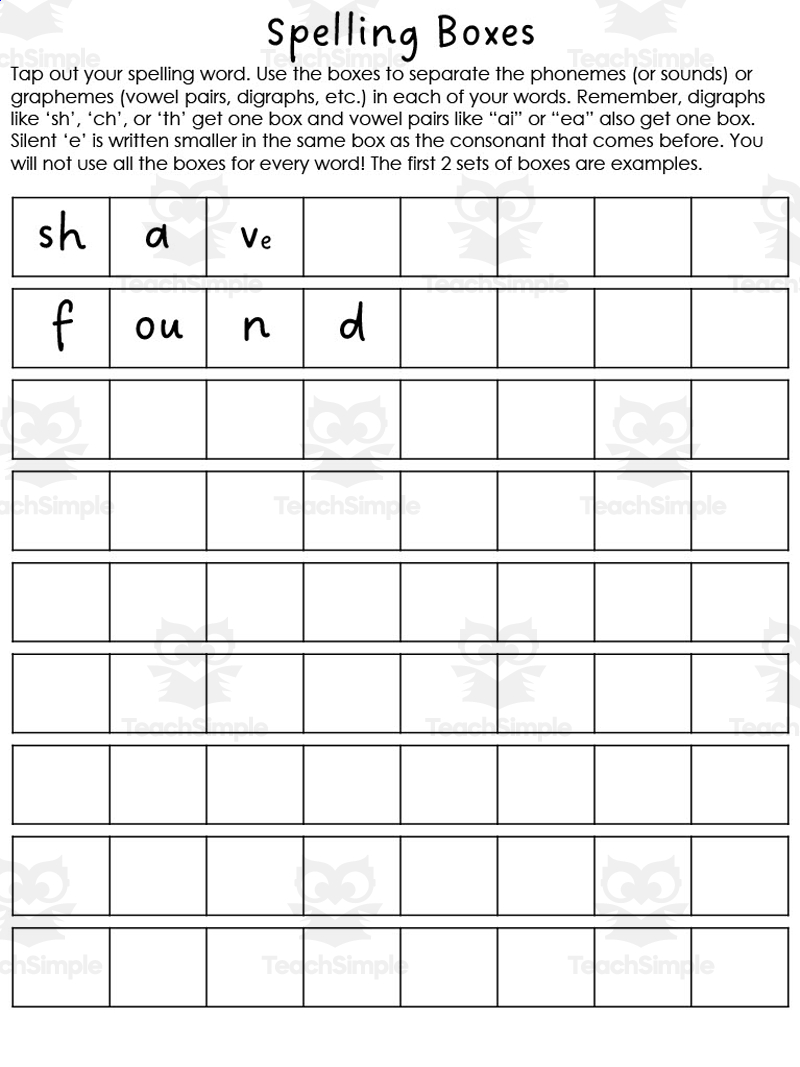
WORD SEARCH SIGHT WORDS This word search sight words booklet is a valuable learning resource for children who are beginning to read and sound out words. This workbook is designed to help children practice reading and sounding out sight words in a fun and engaging way. This workbook is also great for developing phonemic awareness, which is the ability to recognize and manipulate sounds in words. By practicing sounding out sight words with this booklet, children will develop their phonemic awareness skills and be better equipped to read and spell words as they progress in their reading journey. Theworkbookfeatures a wide range of sight words that are commonly used in early reading materials. Each page features an empty box to build the word and find the correct spelling of words that corresponds with the sight words, which helps children develop their vocabulary and understanding of language. Skill building: · Filling in the empty books help the students o use problem solving skills · Sounding out the words help to build letter sounds · Tracing sigh words to build handwriting skills What's Included 1 PDF 13 pages Instructions Print pages Laminate each page for longer use Add binder

Author KD's Kids School Shop

Rating

Tags Sight Words, Word Search, Spelling, Writing, Phonics

Kindergarten Assessment Pack

Kindergarten Assessment Pack
ELA, Language Development, Pre-Reading, Math, Numbers, Preschool, Teacher Tools, Assessments

Kindergarten Assessment Pack Description The Kindergarten Assessment Pack is a detailed teaching resource developed for educators to track their student's progress through the kindergarten year. Covering important areas such as letters, numbers, shapes and colors, this tool aims to bolster and monitor the development of basic skills essential for kindergarten learners. Identifying uppercase and lowercase letters; Printing letters; Distinguishing sight words; Recognizing numbers from 1-20; Writing numbers from 1-20; Counting up to 100 by tens and ones; Naming shapes and colors.. An accompanying Assessment Cover Sheet is also incorporated into the pack. This resource allows an educator to assess each student's understanding at key stages - beginning, middle, end of the school year. Strategic utilization of these assessments lets all kinds of educators effectively chart academic growth while addressing learning gaps. The Kindergarten Assessment Pack can be employed diversely according to an teacher's requirements. It can be administered in its totality during regular class hours maintaining uniformity in measuring proficiency levels or concentrated within smaller groups working on common weak areas needing reinforcement or improvement. As homework tasks this resource may involve parental input into children’s scholarly journey too. Main Focus Area: 'Language Arts' for pre-reading skills along with 'Numbers' in Math subject area at Kindergarten level are mainly emphasized herebullets . This ready-to-go PDF formatted teaching resource creates a user-friendly experience without the need for extra materials. This adaptable teaching tool enables educators to methodically assess each learner's absorption of critical information. In doing so, it facilitates accurately adjusting teaching methods to fit individual learner needs thereby adding much value to student’s educational experiences.

Author Simply Schoolgirl

Tags Assessment, Kindergarten, Tracking Progress, Basic Skills, Teacher Resource

Measurement: Measuring Length - Pre-Assessment & Teach the Skill - PC Software

Measurement: Measuring Length - Pre-Assessment & Teach the Skill - PC Software
Math, Measurements, Common Core, Kindergarten, Preschool, Grade 1, 2, Assessments, Teacher Tools

Measurement: Measuring Length - Pre-Assessment & Teach the Skill - PC Software This innovative teaching resource, specifically designed for preschool, kindergarten, and elementary students (grades 1 and 2), offers comprehensive coverage on the critical subject of measurements. The title 'Measurement: Measuring Length – Pre-Assessment & Teach the Skill' gets straight to the point of what this resource is all about. Serving as an introductory chapter on length measurements, it specializes in presenting curriculum -based content that enhances both teaching and learning experiences. Furthermore, practical math tools are included to give children a hands-on approach during lesson time. The software comes in a compact, easy-to-download format - a zip file compatible with personal computers. This allows educators quick access to essential materials they need daily while saving storage space in their devices. This adaptability makes it ideal for use during whole group instruction or smaller study groups making it versatile enough to be adapted based on each educational setting's unique needs. In order to cater for diversity among students, this product includes not only English voice over and text but also Spanish alternatives — showing thoughtfulness towards multilingual education environments. The inclusion of voice-over enhances auditory learning strategies while supporting emerging readers who may struggle with text-based resources alone . A reliable option for those keen on adopting thoroughly researched methodologies of teaching length measurement concepts; it aligns flawlessly with Common Core State Standards and STEM initiatives while being written according to National Council of Teachers of Mathematics(NCTM). With 'Measurement: Measuring Length – Pre-Assessment & Teach the Skill ', one can easily transform ordinary measurement lessons into immersive experiences that solidify young learners' foundations in mathematics.

Author Classroom Complete Press

Tags Pre-assessment, Math Lesson Plan, Length, Measurement, Digital Math

Data Analysis & Probability: Bar Graphs - Pre-Assessment & Teach the Skill - PC Software

Data Analysis & Probability: Bar Graphs - Pre-Assessment & Teach the Skill - PC Software
Math, Graphing, Common Core, Kindergarten, Preschool, Grade 1, 2, Assessments, Teacher Tools

Data Analysis & Probability: Bar Graphs - Pre- Assessment & Teach The Skill PC Software Enhance your teaching resources with the Data Analysis & Probability: Bar Graphs - Pre- Assessment and Teach The Skill PC Software, specifically designed for preschool, kindergarten, and Grades 1 and 2 educators. This invaluable learning resource aids in introducing students to the fundamental concepts of data analysis and probability through bar graphs. This educational tool comes packed with: Pre- assessment activities: Ideal for gauging each student's current understanding prior to delving into lessons. Structured lesson plan: Facilitates step-by-step instruction in teaching this key skill. Versatile mathematical tools: Assist in demonstrating these concepts easier during whole group sessions or smaller breakout groups. This is digitally-savvy education at its finest as it is delivered as one zip file. An exciting feature about using digital means rests in its ability to provide diverse language options: Caters both English and Spanish text Included voice over options supports bilingual learning environments or ESL classrooms. The product meets educational standards including those set by Common Core State Standards (CCSS), Science Technology Engineering Math (STEM) initiatives, along with adhering to guidelines from the National Council Of Teachers Of Mathematics (NCTM). The Data Analysis & Probability: Bar Graphs - Pre- Assessment & Teach The Skill PC Software stands as an indispensable asset within any math educator's toolkit especially those aiming at making graphing a fun and comprehensive subject!

Author Classroom Complete Press

Tags Math Lesson Plan, Digital Math, Bar Graphs, Data, Probability

Guided Reading Level H - Bridges Strong and Safe

Guided Reading Level H - Bridges Strong and Safe
ELA, Resources for Teachers, Reading Comprehension, Reading, Language Development, Pre-Reading, Vocabulary, Science, Technology, Engineering, Kindergarten, Grade 1, 2, Worksheets & Printables, Worksheets, Teacher Tools, Centers, Activities, Literacy Readers, Quizzes, Quizzes and Tests, Assessments

This Guided Reading Book - Bridges Strong and Safe (Level H) includes: Guided Reading Color Label (front cover x1) This is a quick way to match the book’s demands to what students can generally handle.. The overall goal is to use the level/color to pick books for several smaller groups. To qualify for a certain level, a student is expected to read a book from that level with about 90–94% accuracy. If a student is consistently accurate and understands, move up a level. If the student is struggling at that level, drop down and add more support. Each student will improve at completely different rates, but it is generally one of the best ways to check progress across the class. DOWNLOAD THE CATALOG TO VIEW ALL GUIDED READING BOOKS AVAILABLE (SORTED LEVELS A-Z) Pre-Reading Question (x1) Teacher asks the prompt aloud, can be while showing the cover or first page. Students share what they already know, or make educated guesses from the cover. Prompt them to use the target vocabulary. Write some of their responses on the board to look back at during the reading. Vocabulary Words (x5) Introduce the five words, best doing it one at a time. Start by saying it, while students repeat and then see if anyone knows what it means before reading further. Read through the meaning and try to briefly connect each word to a picture or gesture so it’s meaningful. Ask students to flip through the book pages and point to where they see each of the vocabulary words. While reading the book pause upon coming across one of the vocab words or read the sentence twice to make sure students understand the word has appeared. Optional: Ask students to raise hands whenever they see/hear one of the new words. Guided Reading Pages (x10) Check the book snapshot (below) for: primary topic - do you need to prep extra reading or intro materials on this? what is taught best - decide on 1-2 bullets to focus on, use the prompt or words provided here for best results. learning goals - what you are checking for students to be able to do after the session, elicit answers using prompts or words provided. key vocabulary (see section above). questions overview - so you know what is coming up and if you need to prep extra materials to assist understanding. Run the lesson You may have already looked at a few of the pages together, but you can show them some of the pictures again first to set meaning. Depending on how much time you have and how familiar your students are with guided reading class, you may want to read the book aloud first with the group first. Students whisper or partner read, while you listen in. If time, do it as a group, one student reading a page each. Use the guided page’s prompts to coach: “Check the picture / does it make sense?” “Point under the words / try the first sound” “Reread the sentence smoothly”. Try to focus more on one student per session (rotating every time), so you can work out if they are ready to move up or need to move down a level. Comprehension Questions (back cover x3) This is your way to check that students didn’t just say the words, but actually understood the text. First, let students answer by pointing to the page/picture and saying a short sentence. After any answer, follow with: “Show me where you found that in the text.” In bigger groups, have partners answer first (10–20 seconds), then call on 2–3 students to share. Differentiation tips: Emerging speakers/struggling readers: oral + pointing On-level: oral in a full sentence Higher: one written sentence or draw + label Book Snapshot Title: Bridges: Strong and Safe Genre: Nonfiction (informational) Subject: Science (Engineering) Primary Topic: Bridge types, parts, and forces that affect bridges Estimated Guided Reading Level (A–Z): H What This Book Teaches Best Explains what bridges do: connect two places and help people and vehicles cross obstacles. Introduces several bridge types and what makes each one work (beam, arch, suspension, truss). Teaches key bridge parts and supports (deck, abutments, piers) using clear definitions in context. Builds science/engineering understanding of forces that act on bridges (gravity, tension, compression). Shows that scientists and engineers work together to keep bridges safe. Learning Goals Students will explain how bridges help people, cars, and trains travel using text details. Students will identify and describe at least two types of bridges named in the book. Students will use the book’s words to tell what a bridge deck is and what it does. Students will describe how gravity, tension, and compression affect bridges, based on the text. Students will explain what piers do and why they must be deep and steady. Key Vocabulary From the Text deck — the flat top part of a bridge. abutments — the ends an arch bridge pushes against. tension — a pulling force that stretches materials. compression — a pushing or squeezing force. piers — supports that go into ground or water. Discussion Prompts Pre-reading question: How do you think bridges help people get from one place to another? Comprehension questions: What do bridges help cars, trains, and people do? What is the flat top of a beam bridge called? What do piers keep a bridge from doing when wind blows or water flows fast? Printing Tips 1. Best Printing Method (Recommended) “Booklet” Printing (Best if Available) If your printer or PDF viewer supports Booklet Printing , use this. Settings to use: Print mode: Booklet Paper size: Letter or A4 (either works) Orientation: Landscape Print on both sides: Yes Flip on: Short edge Scaling: Fit to printable area Booklet subset: First test: Front sides only Then: Back sides only This will automatically: Pair pages correctly Put the cover on the outside Align everything for folding After printing, fold in half and staple along the spine . 2. If “Booklet” Printing Is NOT Available You can still print this correctly with manual duplex printing . Step-by-step: Open the PDF. Choose Print . Set: Orientation: Landscape Pages per sheet: 1 Print on both sides: Yes Flip on: Short edge Print all pages . Because each PDF page already contains two facing book pages, the result will still fold cleanly into a book. Thousands of Cored Education products are included with your TeachSimple membership. Download links and encyclopedia index available here.

Author Cored Education

Rating

Tags Vocabulary, Reading Comprehension, Reading Passages, Leveled Reading, Nonfiction, Reading, Guided Reading, Bridges, Technology, Engineering

Measurement: Measuring Weight - Pre-Assessment & Teach the Skill - PC Software

Measurement: Measuring Weight - Pre-Assessment & Teach the Skill - PC Software
Math, Measurements, Common Core, Kindergarten, Preschool, Grade 1, 2, Assessments, Teacher Tools

Measurement: Measuring Weight - Pre- Assessment & Teach the Skill - PC Software Measurement: Measuring Weight - Pre- Assessment & Teach the Skill is a comprehensive tool designed to enhance teaching experiences. This PC Software, dedicated to simplifying instruction of weight measurements, is especially crafted for preschool, kindergarten, grade 1 and grade 2 level students. Incorporated Features: This educational software incorporates detailed pre- assessment activities aiding teachers in gauging their pupils' current understanding of weight measurement. The software is steeped with multiple tools which can cater for whole group as well as small-group instructions or one-to-one sessions. To make it more accessible to everyone, dual-language capabilities are embedded within this resource which consists of default English text and voiceover alongside an alternative Spanish option. Tie-in With Academic Standards: Apart from aligning with Common Core State Standards (CCSS), this tool also connects itself towards measurable STEM initiatives geared towards educating pupils through real-world applications. Potential Impact on Learning Experience: The use of such interactive tools facilitates a transformative approach providing a fresh perspective promoting visualization and bonding abstract ideas with hands-on experiences empowering children adding interest hence increasing retention while polishing individual skills on several fronts. Compatibility in zip format further enhances accessibility making it nearly ubiquitous across all PCs ready for classroom use. The software engages novel horizons transforming complex mathematical notions into simplified concepts thus helping young learners achieve proficiency effortlessly thereby making math less daunting but far more interesting and enticing! Note: The Measurement: Measuring Weight - Pre- Assessment & Teach The Skill PC software propels an enriching learning experience making it the perfect addition to any math teacher's repertoire.

Author Classroom Complete Press

Tags Math Lesson Plan, Measurement Lesson Plan, Pre-assessment, Math Skills, Measuring

Guided Reading Level H - All About Hiking (with Lesson Plan)

Guided Reading Level H - All About Hiking (with Lesson Plan)
ELA, Resources for Teachers, Reading Comprehension, Reading, Science, Earth and Environmental Sciences, Geography, Social Studies, Health, P.E. & Health, Kindergarten, Grade 1, 2, Worksheets & Printables, Worksheets, Teacher Tools, Centers, Activities, Literacy Readers, Quizzes, Quizzes and Tests, Assessments

This Guided Reading Book - All About Hiking (Level H) with lesson plan includes: Guided Reading Color Label (front cover x1) This is a quick way to match the book’s demands to what students can generally handle.. The overall goal is to use the level/color to pick books for several smaller groups. To qualify for a certain level, a student is expected to read a book from that level with about 90–94% accuracy. If a student is consistently accurate and understands, move up a level. If the student is struggling at that level, drop down and add more support. Each student will improve at completely different rates, but it is generally one of the best ways to check progress across the class. DOWNLOAD THE CATALOG TO VIEW ALL GUIDED READING BOOKS AVAILABLE (SORTED LEVELS A-Z) Pre-Reading Question (x1) Teacher asks the prompt aloud, can be while showing the cover or first page. Students share what they already know, or make educated guesses from the cover. Prompt them to use the target vocabulary. Write some of their responses on the board to look back at during the reading. Vocabulary Words (x5) Introduce the five words, best doing it one at a time. Start by saying it, while students repeat and then see if anyone knows what it means before reading further. Read through the meaning and try to briefly connect each word to a picture or gesture so it’s meaningful. Ask students to flip through the book pages and point to where they see each of the vocabulary words. While reading the book pause upon coming across one of the vocab words or read the sentence twice to make sure students understand the word has appeared. Optional: Ask students to raise hands whenever they see/hear one of the new words. Guided Reading Pages (x10) Check the book snapshot (below) for: primary topic - do you need to prep extra reading or intro materials on this? what is taught best - decide on 1-2 bullets to focus on, use the prompt or words provided here for best results. learning goals - what you are checking for students to be able to do after the session, elicit answers using prompts or words provided. key vocabulary (see section above). questions overview - so you know what is coming up and if you need to prep extra materials to assist understanding. Run the lesson You may have already looked at a few of the pages together, but you can show them some of the pictures again first to set meaning. Depending on how much time you have and how familiar your students are with guided reading class, you may want to read the book aloud first with the group first. Students whisper or partner read, while you listen in. If time, do it as a group, one student reading a page each. Use the guided page’s prompts to coach: “Check the picture / does it make sense?” “Point under the words / try the first sound” “Reread the sentence smoothly”. Try to focus more on one student per session (rotating every time), so you can work out if they are ready to move up or need to move down a level. Comprehension Questions (back cover x3) This is your way to check that students didn’t just say the words, but actually understood the text. First, let students answer by pointing to the page/picture and saying a short sentence. After any answer, follow with: “Show me where you found that in the text.” In bigger groups, have partners answer first (10–20 seconds), then call on 2–3 students to share. Differentiation tips: Emerging speakers/struggling readers: oral + pointing On-level: oral in a full sentence Higher: one written sentence or draw + label Book Snapshot Title: All About Hiking Genre: Nonfiction (informational) Subject: Health / Outdoor Safety Primary Topic: Hiking basics: trails, gear, nature, and care Estimated Guided Reading Level (A–Z): H What This Book Teaches Best Defines hiking as “a long walk in nature” and a sport done on trails. Describes that trails exist in different environments (forests and rocky ground). Explains essential hiking items and why they help (footwear with treads, backpack, water, snacks). Introduces navigation support on trails by explaining what trail markers and signs do. Emphasizes caring for nature by not leaving litter so the trail stays clean. Learning Goals Students can describe what hiking is using details from the text. Students can identify different trail environments mentioned in the book. Students can explain how specific hiking items help hikers (boots, backpack, water, snacks). Students can explain how trail markers and signs help hikers follow the correct path. Students can describe how hikers can protect the environment by leaving no litter behind. Key Vocabulary From the Text footwear — shoes or boots you wear on your feet. treads — bumpy lines on shoes that help you not slip. essential — very important; you really need it. reusable — can be used again instead of thrown away. landscape — the land you can see in an area. Discussion Prompts Pre-reading question: What supplies do you think people might bring when they go hiking? Comprehension questions: What does the book say hiking is? What do trail markers and signs help hikers do? What happens to the trail when no litter is left behind? Printing Tips 1. Best Printing Method (Recommended) “Booklet” Printing (Best if Available) If your printer or PDF viewer supports Booklet Printing , use this. Settings to use: Print mode: Booklet Paper size: Letter or A4 (either works) Orientation: Landscape Print on both sides: Yes Flip on: Short edge Scaling: Fit to printable area Booklet subset: First test: Front sides only Then: Back sides only This will automatically: Pair pages correctly Put the cover on the outside Align everything for folding After printing, fold in half and staple along the spine . 2. If “Booklet” Printing Is NOT Available You can still print this correctly with manual duplex printing . Step-by-step: Open the PDF. Choose Print . Set: Orientation: Landscape Pages per sheet: 1 Print on both sides: Yes Flip on: Short edge Print all pages . Because each PDF page already contains two facing book pages, the result will still fold cleanly into a book. Thousands of Cored Education products are included with your TeachSimple membership. Download links and encyclopedia index available here.

Author Cored Education

Rating

Tags Reading Comprehension, Reading Passages, Reading, Guided Reading, Guided Reading Lesson Plan, Guided Reading Activity, Pre-reading, Vocabulary, Science Lesson Plans, Geography Lesson Plans

Geometry: Composing Geometric Shapes - Pre-Assessment & Teach the Skill - MAC Software

Geometry: Composing Geometric Shapes - Pre-Assessment & Teach the Skill - MAC Software
Math, Geometry, Common Core, Kindergarten, Preschool, Grade 1, 2, Assessments, Teacher Tools

Geometry: Composing Geometric Shapes - Pre- Assessment & Teach the Skill - MAC Software This powerful software resource is designed for educators in the mathematics field working with preschool to Grade 2. It emphasizes on both theory-based content and practical application, particularly in composing geometric shapes. The downloadable zip file is compatible with Mac software and contains a comprehensive chapter mini that features curriculum-oriented content. This educational package comes in two primary formats: Pre- assessment activities Teach-the-skill lesson plans. The ultimate goal of these activities is mastery over geometric shape composition, an essential component of Geometry. Multisensory Learning Methods & Inclusive Education We prioritize multisensory learning methods for inclusivity, thus this resource includes English voice-over and text. Recognizing bilingual classrooms or Spanish-speaking students, we have incorporated Spanish voice-over and text as well. Pedagogical Tools for Interactive Learning Experiences This software also hosts math tools designed to facilitate interactive learning experiences. These tools enhance pedagogy by reinforcing concepts taught while offering opportunities for building problem-solving skills. Educational Standards Compliance This resource aligns with established standards across various educational platforms such as the Common Core State Standards , STEM initiatives guidelines and those set by NCTM (National Council of Teachers of Mathematics). In Conclusion... If you're seeking a modern yet efficient way to explore geometry concepts while nurturing talent, this innovatively structured resource should be on your list!

Author Classroom Complete Press

Tags Pre-assessment, Geometry Quiz, Composing, Shapes, Math Skill

KG Morning Work | 180 Days of Daily Spiral Review | Math & ELA

KG Morning Work | 180 Days of Daily Spiral Review | Math & ELA
ELA, Math, Kindergarten, Assessments, Teacher Tools, Lesson Plans, Worksheets & Printables

Kindergarten Morning Work | 180 Days of Literacy & Math Practice | Print & Go Morning Bins | Bell Ringers | Daily Spiral Review Give your kindergarten students a calm, productive start to every school day with this Kindergarten Morning Work resource! Featuring 180 days of engaging literacy and math practice , each one-page activity helps young learners build foundational skills through consistent spiral review. Designed to be developmentally appropriate and highly visual, these print-and-go morning work pages encourage independence while reinforcing essential kindergarten concepts all year long. What's Included 180 printable morning work pages (one page per day) Daily 10–15 minute independent practice Five engaging activities on every page: Early Literacy Handwriting Math Fine Motor Skills Thinking Skills Teacher Guide with implementation tips Month-by-month Pacing Guide Skills Checklist Common Core Standards Alignment Editable Morning Work Schedule (Word & PDF) Complete Answer Key Student Progress Tracker Parent Communication Forms Certificates of Completion Bonus Classroom Pack including: Morning routine chart Visual schedule cards Calendar pieces Weather chart Student name tags Alphabet chart Number chart to 100 Sight word flashcards Fine motor task cards Choice board How It Works in the Classroom This Kindergarten Morning Work resource is designed to fit seamlessly into your daily classroom routine with predictable, developmentally appropriate practice that students quickly learn to complete independently. Each daily page includes five short sections: Early Literacy (letters, sounds, rhyming, phonics, or sight words) Handwriting practice Math (counting, number sense, addition, shapes, measurement, or color-by-code) Fine Motor practice (tracing, mazes, dot-to-dot, or drawing) Thinking Skills (patterns, matching, visual discrimination, or "Which One Does Not Belong?") Teachers can use the first few weeks for guided practice before transitioning students to increasingly independent work while taking attendance, greeting students, or working with small groups. Perfect for: Morning Work Bell Ringers Morning Tubs Independent Practice Early Finishers Daily Spiral Review Centers Homework RTI & Intervention Homeschool Substitute Plans Standards & Learning Goals This Kindergarten Morning Work resource provides continuous spiral review of essential kindergarten readiness skills while supporting Common Core standards. Literacy Skills Letter recognition Uppercase and lowercase matching Beginning, middle, and ending sounds Rhyming Syllables Blending sounds CVC words Word families Blends and digraphs Sight words Emergent reading Handwriting Sentence writing Fine motor development Math Skills Counting to 100 Number recognition Number formation Number sense Ten frames Comparing numbers Picture addition Picture subtraction Number stories Shapes Measurement Patterns Sorting Problem solving Students also strengthen: Visual discrimination Critical thinking Independent work habits Pencil control Classroom routines First grade readiness Why Teachers Love It ❤️ One page per day keeps routines simple and consistent ❤️ Large print, visual directions, and plenty of white space support emerging learners ❤️ Developmentally appropriate activities encourage independence ❤️ Carefully paced progression builds skills throughout the school year ❤️ Weekly routines help students know what to expect every day ❤️ Monthly progression gradually increases difficulty from letter recognition to first-grade readiness ❤️ Includes assessment tools, parent communication forms, and progress monitoring ❤️ Bonus classroom resources help establish strong morning routines ❤️ No prep—just print and teach ❤️ Perfect for classrooms, homeschool, intervention groups, and substitute teachers Perfect For Kindergarten Classrooms Morning Work Daily Spiral Review Bell Ringers Literacy Centers Math Warm-Ups Early Finishers Independent Practice Homeschool RTI & Intervention Kindergarten Readiness First Grade Preparation If you're looking for a Kindergarten Morning Work resource that builds strong academic foundations while helping students develop independence, this 180-day literacy and math spiral review provides everything you need for meaningful, engaging mornings. With predictable routines, age-appropriate activities, and comprehensive teacher support materials, you'll help students build confidence and essential skills every single day. Download today and make your kindergarten mornings organized, engaging, and stress-free!

Author Bright Classroom Ideas Marketplace

Rating

Tags Math, Ela, Spiral, Review, Morning Work, Back To School, Yearlong, Curriculum, Full Year

Farm Counting  Numbers 1-10 | Digital Math Activity

Farm Counting Numbers 1-10 | Digital Math Activity
Math, Numbers, Kindergarten, Preschool, Teacher Tools, Assessments

This resource is a Farm Counting Numbers 1-10 Digital Math Activity. Students will count farm animals as they practice with numbers 1-10. These interactive slides will keep students engaged! A link is included for Google access.

Author JoyfulToddler

Tags Farm, Animals, Counting, Numbers, Math Activity

Data Analysis & Probability: Pictographs - Pre-Assessment & Teach the Skill - PC Software

Data Analysis & Probability: Pictographs - Pre-Assessment & Teach the Skill - PC Software
Math, Graphing, Common Core, Kindergarten, Preschool, Grade 1, 2, Assessments, Teacher Tools

Data Analysis & Probability: Pictographs - Pre- Assessment & Teach the Skill - PC Software Dive into an exciting exploration of data analysis and probability with our specialized teaching resource focusing on Pictographs. This tool is designed to offer pre- assessment activities plus comprehensive lesson plans, providing a two-fold advantage for educators. Perfectly suitable for preschool, kindergarten and grades 1 and 2. With its diverse applications—from a supportive tool during group instruction to an enriching homework assignment—this software is sure to cater to every unique learning style. Inside this package: A comprehensive set of math tools that convert complex concepts into comprehensible segments. Included English text instructions with voice-over as well Spanish language option in both text and audio—an attribute purposefully incorporated considering bilingual classrooms or students in earlier stages of acquiring English language skills. Standard Alignments: Common Core State Standards (CCSS) STEM-based learning outcomes The lessons lined up following principles provided by National Council of Teachers Mathematics (NCTM), thus ensuring educators get quality-laden content aligning with recognized professional standards. This product comes as one Zip file containing PC software making it easy-to-access without any additional hassle. Given its digital format, everyday integration into lessons becomes simplified—a characteristic seasoned homeschoolers would value too. In conclusion, our 'Data Analysis & Probability: Pictographs' teaching resource offers a captivating way introducing complex mathematical ideologies through pre- assessment exercises followed by thoroughly designed lessons. It deepens conceptual understanding while simultaneously nurturing independent problem-solving skills—preparing pupils optimally not just in Math but across all subjects they encounter throughout their academic journey.

Author Classroom Complete Press

Tags Pictographs, Digital Math, Digital Graphs, Pre-assessment, Probability

Color By Number - Abacus Challenge - 20 Pages

Color By Number - Abacus Challenge - 20 Pages
Math, Early Math, Numbers, Counting, Basic Operations, Place Value, Graphic Arts, Creative Arts, Kindergarten, Preschool, Grade 1, 2, 3, 4, 5, Worksheets & Printables, Worksheets, Coloring Pages, Centers, Activities, Games, Assessments, Teacher Tools, Lesson Plans

Need a genius way to sneak in some number recognition, fine motor practice, and peace and quiet? Enter the Color By Number – Abacus Challenge —20 pages of math-meets-art magic where kids match numbers to colors and end up with a masterpiece (or at least something proudly fridge-worthy). This isn’t your average color-by-number. These pages are inspired by the mighty abacus, giving students a fun visual connection to early math skills while keeping their hands and eyes busy, because if their hands are coloring, they’re not poking their neighbor or spinning in their chair. #Winning What’s Included: 20 Color-by-Number pages with an abacus theme Numbers, patterns, and colors galore Ways to Use It: ✔️ Morning Work – Start the day without a chorus of “What do I do now?” ✔️ Math Center – A sneaky way to reinforce number recognition ✔️ Early Finishers – Keep the fast finishers from redecorating your whiteboard ✔️ Sub Plans – Low prep, high engagement, instant hero status ✔️ Rainy Day Fun – Calm chaos with crayons Enjoy!

Author Ponder Palette Plazza

Rating

Tags Numbers, Math, Color By Number, Coloring, Coloring Numbers, Math Activities, Games, Math Games, Counting, Math Worksheets

Sight Word Sentences, Fill in the Blanks, Kindergarten - SET 7

Sight Word Sentences, Fill in the Blanks, Kindergarten - SET 7
ELA, Reading, Language Development, Vocabulary, Writing, Preschool, Grade 1, Teacher Tools, Assessments

Sight Word Sentences, Fill in the Blanks, Kindergarten - SET 7 Kindergarten is a pivotal stage to start sharpening language and reading skills. Sight Word Sentences, Fill in the Blanks, Kindergarten - SET 7 acts as a priceless tool for parents and teachers looking to strengthen a child's comprehension and usage of sight words. Intended mainly for Kindergarteners and 1st graders, this set focuses on crucial language arts areas including reading comprehension, vocabulary expansion, and writing abilities. What makes these worksheets unique? The dual-purpose design of each worksheet that features seven different sight words embedded within engaging fill-in-the-blank sentences thereby compelling students towards learning using these common phrases effectively across various contexts. The assignment requires students to fill each blank space with its correct corresponding sight word making sentence construction easier to understand. An additional aspect enhancing this exercise is an added coloring feature. Upon correctly completing the sentences using their recognized color-coded sight words; students can color a star on their worksheet matching that specific word's color scheme which augments motor skill development along with vocabulary acquisition. Variety of Teaching Methods Sight Word Sentences worksheets cater to diverse teaching techniques—whether they're included in individual tasks assigned during class hours or morning routines or integrated into group work activities promoting enriched collaborative learning experiences at school or home environments conceived for homeschooling families. Purpose Behind These Activities Pinctronrlbed understanding Now ThisNot : InaugurateInstinct amongst young mindsBbiibThroughControlled environmentsBrazilianInteractive exercisesLeading towardsImprovedRetention ratesContributing towardsFlawlessWriting compositions." Consequently, being an integral part of assessment types in current language arts curriculums; Sight Word Sentences evoke an initiative among young learners stimulating keen interest intertwined between practical learning and real-life applications. Therefore, the journey isn’t just about learning sight words but also comprehending them in different scenarios—facilitating effective nurturing of young intellects. Conclusion In conclusion, this PDF consisting of 8 pages in US Letter Size is a blessing for children passionate about mastering language arts skills with improved proficiency.

Author TeacherYouWant

Tags Sight Words, Reading Comprehension, Vocabulary Development, Writing Skills, Fill In The Blanks

All About Kangaroos: Guided Reading Level G with Lesson Plan

All About Kangaroos: Guided Reading Level G with Lesson Plan
ELA, Resources for Teachers, Reading Comprehension, Reading, Science, Language Development, Vocabulary, Life Sciences, Geography, Social Studies, Kindergarten, Grade 1, 2, Worksheets & Printables, Worksheets, Teacher Tools, Centers, Activities, Literacy Readers, Quizzes, Quizzes and Tests, Assessments, Lesson Plans

This All About Kangaroos (level g) guided reading book with lesson plan includes: Guided Reading Color Label (front cover x1) This is a quick way to match the book’s demands to what students can generally handle.. The overall goal is to use the level/color to pick books for several smaller groups. To qualify for a certain level, a student is expected to read a book from that level with about 90–94% accuracy. If a student is consistently accurate and understands, move up a level. If the student is struggling at that level, drop down and add more support. Each student will improve at completely different rates, but it is generally one of the best ways to check progress across the class. DOWNLOAD THE CATALOG TO VIEW ALL GUIDED READING BOOKS AVAILABLE (SORTED LEVELS A-Z) Pre-Reading Question (x1) Teacher asks the prompt aloud, can be while showing the cover or first page. Students share what they already know, or make educated guesses from the cover. Prompt them to use the target vocabulary. Write some of their responses on the board to look back at during the reading. Vocabulary Words (x5) Introduce the five words, best doing it one at a time. Start by saying it, while students repeat and then see if anyone knows what it means before reading further. Read through the meaning and try to briefly connect each word to a picture or gesture so it’s meaningful. Ask students to flip through the book pages and point to where they see each of the vocabulary words. While reading the book pause upon coming across one of the vocab words or read the sentence twice to make sure students understand the word has appeared. Optional: Ask students to raise hands whenever they see/hear one of the new words. Guided Reading Pages (x10) Check the book snapshot (below) for: primary topic - do you need to prep extra reading or intro materials on this? what is taught best - decide on 1-2 bullets to focus on, use the prompt or words provided here for best results. learning goals - what you are checking for students to be able to do after the session, elicit answers using prompts or words provided. key vocabulary (see section above). questions overview - so you know what is coming up and if you need to prep extra materials to assist understanding. Run the lesson You may have already looked at a few of the pages together, but you can show them some of the pictures again first to set meaning. Depending on how much time you have and how familiar your students are with guided reading class, you may want to read the book aloud first with the group first. Students whisper or partner read, while you listen in. If time, do it as a group, one student reading a page each. Use the guided page’s prompts to coach: “Check the picture / does it make sense?” “Point under the words / try the first sound” “Reread the sentence smoothly”. Try to focus more on one student per session (rotating every time), so you can work out if they are ready to move up or need to move down a level. Comprehension Questions (back cover x3) This is your way to check that students didn’t just say the words, but actually understood the text. First, let students answer by pointing to the page/picture and saying a short sentence. After any answer, follow with: “Show me where you found that in the text.” In bigger groups, have partners answer first (10–20 seconds), then call on 2–3 students to share. Differentiation tips: Emerging speakers/struggling readers: oral + pointing On-level: oral in a full sentence Higher: one written sentence or draw + label Book Snapshot Title: All About Kangaroos Genre: Nonfiction (informational) Subject: Science (Life Science) Primary Topic: Kangaroo traits, movement, food, and babies Estimated Guided Reading Level (A–Z): G What This Book Teaches Best Identifies a kangaroo’s habitat by stating it lives in Australia . Describes how kangaroos move: they have two big back legs , and they hop very fast. Explains how a kangaroo’s tail helps it by keeping balance . Shares what kangaroos eat by stating they like green grass and find food on the ground. Teaches family/group terms: a baby is a joey that grows in the pouch , and a group is a mob . Learning Goals Students will identify where a kangaroo lives using details from the text. Students will describe how kangaroos move, using the book’s words and examples. Students will explain how a kangaroo’s tail helps it keep balance. Students will describe what kangaroos eat and where they find food. Students will name what a baby kangaroo is called and where it grows. Students will identify what a group of kangaroos is called. Key Vocabulary From the Text Australia — a country where kangaroos live. balance — staying steady and not falling over. pouch — a pocket where a mother carries her baby. joey — a baby kangaroo. mob — a group of kangaroos that live together. Discussion Prompts Pre-reading question: What do you already know about kangaroos? Comprehension questions: Where does the book say a kangaroo lives? Comprehension questions: How does a kangaroo move in this book? Comprehension questions: What is a group of kangaroos called? Printing Tips 1. Best Printing Method (Recommended) “Booklet” Printing (Best if Available) If your printer or PDF viewer supports Booklet Printing , use this. Settings to use: Print mode: Booklet Paper size: Letter or A4 (either works) Orientation: Landscape Print on both sides: Yes Flip on: Short edge Scaling: Fit to printable area Booklet subset: First test: Front sides only Then: Back sides only This will automatically: Pair pages correctly Put the cover on the outside Align everything for folding After printing, fold in half and staple along the spine . 2. If “Booklet” Printing Is NOT Available You can still print this correctly with manual duplex printing . Step-by-step: Open the PDF. Choose Print . Set: Orientation: Landscape Pages per sheet: 1 Print on both sides: Yes Flip on: Short edge Print all pages . Because each PDF page already contains two facing book pages, the result will still fold cleanly into a book. Thousands of Cored Education products are included with your TeachSimple membership. Download links and encyclopedia index available here.

Author Cored Education

Rating

Tags Reading Comprehension, Reading Passages, Reading, Guided Reading, Guided Reading Lesson Plan, Guided Reading Activity, Pre-reading, Science Lesson Plans, Life Science, Geography