



3,931 products added recently
Page 14 - Reading Comprehension Lesson Plans
Strengthen your students' ability to understand and analyze texts with reading comprehension lesson plans. These resources offer strategies and questions that promote critical thinking. Incorporate them into your teaching to support students in becoming thoughtful and discerning readers.

 Show filters


Growing Minds in Social Studies #2: Lessons for Stimulating Thinking
Social Studies, Reading, Reading Comprehension, Grade 4, 5, 6, 7, 8, Teacher Tools, Lesson Plans
Growing Minds in Social Studies #2: Lessons for Stimulating Thinking This is a comprehensive teaching resource designed specifically for students in the 4th through 8th grades. Created with middle and intermediate school levels in mind, it deals with various social studies topics. The Main Objective: The beauty of this resource pack lies in its objective to foster critical thinking. The arranged activities aim at subject matters like analyzing phenomena such as hoarding and contemplating the parameters of success - all within the context of social studies. Unique Approach: What sets this package apart is its multifaceted approach towards active learning, providing different levels of student participation based on their ages and capabilities. A Tool for Educators: Equipped with comprehensive teacher guides accompanying every lesson Eases preparation while ensuring you are well-equipped to engage students effectively during lessons Total Content: In total, this PDF file comprises 15 print-ready pages filled with content aiming to ignite interest and stimulate thoughtful analysis among students. Possibilities of Utilization : During whole group instruction time Assign them as homework Small group discussions Crafted Comprehension Oriented Content: "); This resource exemplifies an interactive blend between discipline-oriented instructive materials and cognition- boosting activities seeking to inspire curiosity driven explorations amongst young learners. ")
Author Classroom Complete Press
Tags Growing Minds, Social Studies, Lessons, Thinking Skills, Teacher's Guide

Story Squares for Grade 3: Multiple Learning Styles for Reading Comprehension
ELA, Reading, Reading Comprehension, Grade 3, Teacher Tools, Lesson Plans
Story Squares for Grade 3: Multiple Learning Styles for Reading Comprehension Story Squares serves as a multifaceted teaching tool, enhancing students' reading comprehension by incorporating various learning styles. This resource is beneficial to both public school teachers and homeschooling educators who aim to unlock the full potential of their teaching strategies. The Classics Brought Alive: Apart from timeless children's classics like "Freckle Juice," "Judy Moody was in a Mood. Not a Good Mood. A Bad Mood," "The Magic Finger," "Chocolate Fever," "The Van Gogh Cafe", and “Skylark,” Story Squares also opens up opportunities for language arts, higher-order thinking, writing, and creative arts. Diverse Activity Options: Every story comes with its summary. An option of 20 possible activities is available per story. These array of tasks range from analytical questions that probe big-picture thinking skills to creative assignments may involve art or storytelling. Versatile Application: The Story Squares can be incorporated into various classroom settings – wheatheher it is during whole group discussions, small work groups, homework assignment or even project work. Educator-Friendly Features for Easy Use: Included teacher hints help steer the process of implementation effectively; A grading rubric ensures clarity and fairness during evaluation; A comprehensive glossary provides easy access to vocabulary terms. > Made Specifically For Third-Graders Learning Language Arts Subject Area Story Squares is designed to cater the language arts subject area for third grade level learners, with a specific emphasis on enhancing comprehension skills. This allows Story Squares to adapt based on the needs of its learners while fostering an enduring love for reading.
Author Classroom Complete Press
Tags PDF
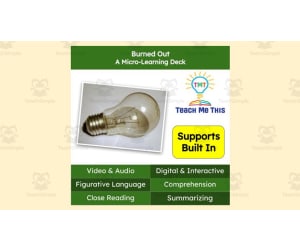
Burned Out | Figurative Language Activity | Micro-Learning Deck
ELA, Reading, Reading Comprehension, Grade 4, 5, 6, 7, Teacher Tools, Lesson Plans
Burned Out | Figurative Language Activity | Micro-Learning Deck Burned Out | Figurative Language Activity | Micro-Learning Deck is a prestigious teaching asset for educators seeking to enrich their students' grasp of figurative language. This resource is appropriate for students from grade 4 through grade 7, serving extensively in the domain of Language Arts, particularly Comprehension. The engaging and interactive micro-learning deck encourages learners to explore the fascinating world of figurative language. Focusing on the term 'Burned Out', it promotes active learning through an intimate reading experience and audio-assisted passages, so pupils can better comprehend figurative language concepts. Resource Inclusions: An informational video lesson on language concepts – a dynamic way to introduce variety into traditional instruction methods. A quick write feature that prompts immediate student participation thereby fostering interaction-based learning. The resource comes in a Microsoft PowerPoint file type ensuring easy access and display in class sessions with thirteen ready-to-deliver presentation slides. This saves valuable prep time while guaranteeing an effective content delivery method. Versatility: Aptly adjustable according to unique teaching needs and styles, these lessons can be introduced across multiple platforms - usable as large-group classroom settings for collaborative engagements or customised as individual activities or even assigned as homework tasks. Provides teachers flexibility based on varying classroom requirements. In summary, this micro-learning deck makes an ideal tool for those searching for well-organised yet adaptable materials honing in on comprehension under Language Arts curriculum.
Author Teach Me This
Tags Figurative Language, Language Arts, Comprehension, Active Learning, Interactive
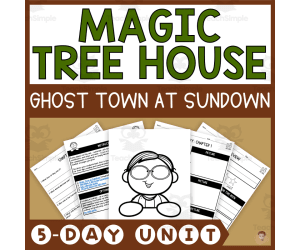
Ghost Town at Sundown (Magic Tree House #10 Lesson Plan, Videos, Activities)
ELA, Social Studies, Reading, Reading Comprehension, Grammar, Literature, Language Development, Spelling, Vocabulary, Writing, Grade 1, 2, 3, Lesson Plans, Teacher Tools
A 5-day NO PREP novel study of Ghost Town at Sundown (Magic Tree House #10). This comprehensive book companion includes a lesson plan, chapter comprehension questions, vocabulary practice, and many other activities. Perfect for first grade, second grade, and third grade classrooms, homeschool families, and cooperatives. You can easily customize lessons based on student age, reading and comprehension level, interests, and learning style! Additionally, all worksheets can be completed in an interactive notebook or simply discussed aloud if you desire to reduce the number of pages you print. THIS RESOURCE COVERS: Art (drawing, coloring, arts & crafts) Comprehension English language arts Geography Grammar History Reading Research Social studies Spelling Writing
Author Heather Huhman
Tags Ghost Town At Sundown, Magic Tree House, Book Companion, Novel Study, Wild West, Cowboys
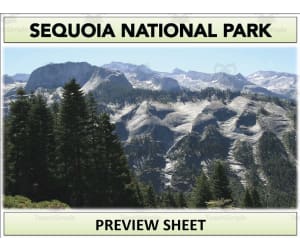
Sequoia National Park Geography Unit
Social Studies, ELA, Geography, Reading, Reading Comprehension, Grade 6, 7, 8, 9, Teacher Tools, Lesson Plans, Presentations, Worksheets & Printables, Worksheets
Sequoia National Park Geography Unit Transport students to Sequoia National Park with this engaging geography unit. Through informative reading passages, vibrant images, and interactive activities like crosswords and videos, middle schoolers will become immersed in the park's captivating history, wildlife, climate, and landscapes. The complete set of materials equips educators to guide a comprehensive study on this iconic landmark. It includes condensed and extended reading sheets, QR code links to supplementary videos, worksheets for further analysis, eye-catching visuals for projects, an accompanying PowerPoint presentation to facilitate instruction, and templates to help students synthesize their knowledge into presentations or booklets. This versatile and multi-faceted unit brings Sequoia National Park’s unique geography alive and makes learning memorable.
Author Mr Gray History
Tags National Park Services, Sequoia National Park, Landmarks, Monuments, Geography Unit, Wildlife, Climate Lesson, Climate Activity
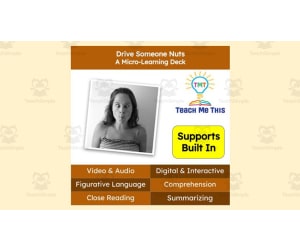
Drive Someone Nuts | Figurative Language Activity | Micro-Learning Deck
ELA, Reading, Reading Comprehension, Grade 3, 4, 5, 6, Teacher Tools, Lesson Plans
Engaging Figurative Language Activity for Elementary Students This figurative language learning activity allows students to explore the term "drive someone nuts" in a fun, memorable way. Through close reading of a text passage with audio support, video explanations, comprehension questions, and creative writing prompts , students will better understand idioms and figurative language. This versatile resource can be used for whole-class instruction through the video and passage, small group work through the comprehension questions, or independent practice through the creative quick write activity. Written for grades 3-6, this resource builds literacy skills for upper elementary students. By integrating this activity into your English language arts curriculum, students will expand their comprehension of non-literal language. This lively resource ensures students find learning about figurative language expressions highly engaging.
Author Teach Me This
Tags Figurative, Language, Comprehension, Learning Deck, Digital Reading Lesson
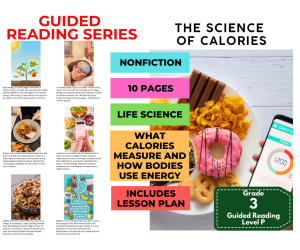
The Science of Calories: Guided Reading Level P with Lesson Plan
ELA, Resources for Teachers, Reading Comprehension, Reading, Science, Life Sciences, Health, P.E. & Health, Physics, Language Development, Grade 2, 3, 4, Worksheets & Printables, Worksheets, Teacher Tools, Centers, Activities, Literacy Readers, Quizzes, Quizzes and Tests, Assessments, Lesson Plans
This The Science of Calories (level p) guided reading book with lesson plan includes: Guided Reading Color Label (front cover x1) This is a quick way to match the book’s demands to what students can generally handle.. The overall goal is to use the level/color to pick books for several smaller groups. To qualify for a certain level, a student is expected to read a book from that level with about 90–94% accuracy. If a student is consistently accurate and understands, move up a level. If the student is struggling at that level, drop down and add more support. Each student will improve at completely different rates, but it is generally one of the best ways to check progress across the class. DOWNLOAD THE CATALOG TO VIEW ALL GUIDED READING BOOKS AVAILABLE (SORTED LEVELS A-Z) Pre-Reading Question (x1) Teacher asks the prompt aloud, can be while showing the cover or first page. Students share what they already know, or make educated guesses from the cover. Prompt them to use the target vocabulary. Write some of their responses on the board to look back at during the reading. Vocabulary Words (x5) Introduce the five words, best doing it one at a time. Start by saying it, while students repeat and then see if anyone knows what it means before reading further. Read through the meaning and try to briefly connect each word to a picture or gesture so it’s meaningful. Ask students to flip through the book pages and point to where they see each of the vocabulary words. While reading the book pause upon coming across one of the vocab words or read the sentence twice to make sure students understand the word has appeared. Optional: Ask students to raise hands whenever they see/hear one of the new words. Guided Reading Pages (x10) Check the book snapshot (below) for: primary topic - do you need to prep extra reading or intro materials on this? what is taught best - decide on 1-2 bullets to focus on, use the prompt or words provided here for best results. learning goals - what you are checking for students to be able to do after the session, elicit answers using prompts or words provided. key vocabulary (see section above). questions overview - so you know what is coming up and if you need to prep extra materials to assist understanding. Run the lesson You may have already looked at a few of the pages together, but you can show them some of the pictures again first to set meaning. Depending on how much time you have and how familiar your students are with guided reading class, you may want to read the book aloud first with the group first. Students whisper or partner read, while you listen in. If time, do it as a group, one student reading a page each. Use the guided page’s prompts to coach: “Check the picture / does it make sense?” “Point under the words / try the first sound” “Reread the sentence smoothly”. Try to focus more on one student per session (rotating every time), so you can work out if they are ready to move up or need to move down a level. Comprehension Questions (back cover x3) This is your way to check that students didn’t just say the words, but actually understood the text. First, let students answer by pointing to the page/picture and saying a short sentence. After any answer, follow with: “Show me where you found that in the text.” In bigger groups, have partners answer first (10–20 seconds), then call on 2–3 students to share. Differentiation tips: Emerging speakers/struggling readers: oral + pointing On-level: oral in a full sentence Higher: one written sentence or draw + label Book Snapshot Title: The Science of Calories Genre: Nonfiction (informational science text) Subject: Science (Nutrition/Human Body) Primary Topic: What calories measure and how bodies use energy Estimated Guided Reading Level (A–Z): P What This Book Teaches Best Defines energy as what living things need to survive and function, and connects energy to everyday examples like cars and lamps. Explains that a calorie measures energy in food (not weight or size) and describes it as a scientific unit of measurement. Shows how most energy starts with the sun , and how plants use photosynthesis to turn light into chemical energy stored in plant parts. Describes how the human body uses energy all the time (even during rest or sleep) to power the heart, lungs, and brain. Explains how food energy is released through digestion , how activity increases energy demand, and how extra calories may be stored as body fat. Learning Goals Explain what energy is and why living things need it. Describe what a calorie measures according to the text. Explain how plants get energy from the sun and where that energy is stored in a plant. Describe how digestion helps the body unlock energy from food. Describe how physical activity changes the body’s need for calories. Explain what happens when more calories are consumed than the body needs for daily activities. Key Vocabulary From the Text measurement — finding out how much of something there is. photosynthesis — plants use sunlight to make chemical energy. digestion — the process that unlocks energy in food. intestines — long tubes that help finish breaking down food. converted — changed from one form into another. Discussion Prompts Pre-reading question: What do you think calories tell us about the food we eat? Comprehension questions: What does the book say a calorie measures? Comprehension questions: How does the book explain that plants capture and store energy from the sun? Comprehension questions: What does the book say happens when a person consumes more calories than needed for daily activities? Printing Tips 1. Best Printing Method (Recommended) “Booklet” Printing (Best if Available) If your printer or PDF viewer supports Booklet Printing , use this. Settings to use: Print mode: Booklet Paper size: Letter or A4 (either works) Orientation: Landscape Print on both sides: Yes Flip on: Short edge Scaling: Fit to printable area Booklet subset: First test: Front sides only Then: Back sides only This will automatically: Pair pages correctly Put the cover on the outside Align everything for folding After printing, fold in half and staple along the spine . 2. If “Booklet” Printing Is NOT Available You can still print this correctly with manual duplex printing . Step-by-step: Open the PDF. Choose Print . Set: Orientation: Landscape Pages per sheet: 1 Print on both sides: Yes Flip on: Short edge Print all pages . Because each PDF page already contains two facing book pages, the result will still fold cleanly into a book. Thousands of Cored Education products are included with your TeachSimple membership. Download links and encyclopedia index available here.
Author Cored Education
Rating
Tags Reading Comprehension, Reading Passages, Reading, Guided Reading, Guided Reading Lesson Plan, Guided Reading Activity, Pre-reading, Science Lesson Plans, Life Science, Health
Reading Comprehension: Context Clues - FLASH-MAC
ELA, Reading, Reading Comprehension, Grade 5, 6, 7, 8, Teacher Tools, Lesson Plans
Reading Comprehension: Context Clues - FLASH-MAC FLASH-MAC is an innovative teaching resource that focuses on enhancing students' understanding of language arts. This software, developed for grades 5 to 8, provides curriculum -oriented content designed to engage young learners and deepen their reading comprehension skills. Key Feature: Focusing on Context Clues A unique feature of this teaching aid is its emphasis on context clues. Comprehending context clues aids learners in deciphering meanings of new words or complex sentences without explicit definitions. This promotes independence in reading and vocabulary enrichment. Inclusions in the Package: Reading Passages:Each accompanied by pre-reading and post-reading questions to stimulate prior knowledge and review issues learned from the text. Printables:Supplemental materials compatible with lecture methods or individual study activities. Vocabulary Flashcards:Useful for impromptu quizzes or daily drills—proven methods for internalizing terms discussed. */li> Graphic Organizers:These support visual learning through breaking down information into digestible segments aiding comprehension. Diverse Interactive Activities:Situated within the program offering practical application methods suitable for group classroom exercises or small group problem-solving tasks. */li> In conclusion, "Reading Comprehension: Context Clues - FLASH-MAC"'s comprehensive elements harmonize seamlessly towards increased student engagement and skill development goals. Therefore, it serves as a highly recommended tool both for public school educators and homeschooling facilitators alike.</p
Author Classroom Complete Press
Tags Software (Mac)
The Boy Who Cried Wolf | Figurative Language Activity | Micro-Learning Deck
ELA, Reading, Reading Comprehension, Grade 1, 2, 3, 4, Teacher Tools, Lesson Plans
This resource allows students to explore figurative learning in a fun way. The figurative language term for this learning deck is "The Boy Who Cried Wolf." Through close reading and a reading passage with audio, your students will better comprehend figurative language! Included: -Video lesson on language concept -Reading passage w/ audio Comprehension -Quick write
Author Teach Me This
Tags Reading, Comprehension, Figurative, Language, Video Lesson, The Boy Who Cried Wolf Activities

Egypt The Gift of the Nile: Guided Reading Level R with Lesson Plan
ELA, Resources for Teachers, Reading Comprehension, Reading, Science, Geography, Social Studies, History, Earth and Environmental Sciences, Technology, Grade 3, 4, 5, Worksheets & Printables, Worksheets, Teacher Tools, Centers, Activities, Literacy Readers, Quizzes, Quizzes and Tests, Assessments, Lesson Plans
This Egypt: The Gift of the Nile (level r) guided reading book with lesson plan includes: Guided Reading Color Label (front cover x1) This is a quick way to match the book’s demands to what students can generally handle.. The overall goal is to use the level/color to pick books for several smaller groups. To qualify for a certain level, a student is expected to read a book from that level with about 90–94% accuracy. If a student is consistently accurate and understands, move up a level. If the student is struggling at that level, drop down and add more support. Each student will improve at completely different rates, but it is generally one of the best ways to check progress across the class. DOWNLOAD THE CATALOG TO VIEW ALL GUIDED READING BOOKS AVAILABLE (SORTED LEVELS A-Z) Pre-Reading Question (x1) Teacher asks the prompt aloud, can be while showing the cover or first page. Students share what they already know, or make educated guesses from the cover. Prompt them to use the target vocabulary. Write some of their responses on the board to look back at during the reading. Vocabulary Words (x5) Introduce the five words, best doing it one at a time. Start by saying it, while students repeat and then see if anyone knows what it means before reading further. Read through the meaning and try to briefly connect each word to a picture or gesture so it’s meaningful. Ask students to flip through the book pages and point to where they see each of the vocabulary words. While reading the book pause upon coming across one of the vocab words or read the sentence twice to make sure students understand the word has appeared. Optional: Ask students to raise hands whenever they see/hear one of the new words. Guided Reading Pages (x10) Check the book snapshot (below) for: primary topic - do you need to prep extra reading or intro materials on this? what is taught best - decide on 1-2 bullets to focus on, use the prompt or words provided here for best results. learning goals - what you are checking for students to be able to do after the session, elicit answers using prompts or words provided. key vocabulary (see section above). questions overview - so you know what is coming up and if you need to prep extra materials to assist understanding. Run the lesson You may have already looked at a few of the pages together, but you can show them some of the pictures again first to set meaning. Depending on how much time you have and how familiar your students are with guided reading class, you may want to read the book aloud first with the group first. Students whisper or partner read, while you listen in. If time, do it as a group, one student reading a page each. Use the guided page’s prompts to coach: “Check the picture / does it make sense?” “Point under the words / try the first sound” “Reread the sentence smoothly”. Try to focus more on one student per session (rotating every time), so you can work out if they are ready to move up or need to move down a level. Comprehension Questions (back cover x3) This is your way to check that students didn’t just say the words, but actually understood the text. First, let students answer by pointing to the page/picture and saying a short sentence. After any answer, follow with: “Show me where you found that in the text.” In bigger groups, have partners answer first (10–20 seconds), then call on 2–3 students to share. Differentiation tips: Emerging speakers/struggling readers: oral + pointing On-level: oral in a full sentence Higher: one written sentence or draw + label Book Snapshot Title: Egypt: The Gift of the Nile Genre: Nonfiction Subject: Social Studies (Geography/History) Primary Topic: How the Nile shaped ancient and modern Egypt Estimated Guided Reading Level (A–Z): R What This Book Teaches Best How Egypt’s desert environment (Sahara Desert, little rain) made a single water source essential for a thriving civilization. Why the Nile River’s yearly floods mattered, including how receding water left fertile silt for growing food. Major symbols of ancient Egypt and what the text says they were for or represented (Great Pyramid of Giza; Great Sphinx). Key beliefs and systems of ancient Egypt, including pharaohs, the afterlife, hieroglyphics, and mummification. Connections between past and present by describing modern Cairo, the Suez Canal, tourism, and archaeologists’ discoveries. Learning Goals Students will describe Egypt’s location and explain how the Sahara Desert affects the land. Students will explain how Nile floods helped farmers grow food by using the text’s details about silt. Students will identify what the Great Pyramid of Giza was built for and describe one detail about its construction. Students will describe how ancient Egyptians recorded history and managed government using hieroglyphics and scribes. Students will explain why mummification was developed and describe what the text says happened during the process. Students will describe two details that show Egypt is a modern nation today (for example, Cairo and the Suez Canal). Key Vocabulary From the Text receded — moved back after being higher. silt — rich dark soil left by water. monumental — very large and important. hieroglyphics — picture symbols used as a writing system. mummification — preserving a body by drying and wrapping. Discussion Prompts Pre-reading question: How might a river help people live and farm in a desert place? Comprehension questions: What did the Nile River’s floods leave behind when the water receded, and why did that help farmers? Comprehension questions: What does the text say the Great Pyramid of Giza was built for? Comprehension questions: What two details from the text show Egypt is a modern nation today? Printing Tips 1. Best Printing Method (Recommended) “Booklet” Printing (Best if Available) If your printer or PDF viewer supports Booklet Printing , use this. Settings to use: Print mode: Booklet Paper size: Letter or A4 (either works) Orientation: Landscape Print on both sides: Yes Flip on: Short edge Scaling: Fit to printable area Booklet subset: First test: Front sides only Then: Back sides only This will automatically: Pair pages correctly Put the cover on the outside Align everything for folding After printing, fold in half and staple along the spine . 2. If “Booklet” Printing Is NOT Available You can still print this correctly with manual duplex printing . Step-by-step: Open the PDF. Choose Print . Set: Orientation: Landscape Pages per sheet: 1 Print on both sides: Yes Flip on: Short edge Print all pages . Because each PDF page already contains two facing book pages, the result will still fold cleanly into a book. Thousands of Cored Education products are included with your TeachSimple membership. Download links and encyclopedia index available here.
Author Cored Education
Rating
Tags Reading Comprehension, Reading Passages, Reading, Guided Reading, Guided Reading Lesson Plan, Guided Reading Activity, Pre-reading, Social Studies, Geography, History

Gut Feeling | Figurative Language Activity | Micro-Learning Deck
ELA, Reading, Reading Comprehension, Grade 4, 5, 6, 7, Teacher Tools, Lesson Plans
Gut Feeling | Figurative Language Learning Activity teaches students about figurative language through an engaging micro-learning deck. Students start by watching a short video that explains the figurative language term "gut feeling." Next, they read a passage with audio recording that uses gut feeling to paint a descriptive picture. After reading, students answer reading comprehension questions to check their understanding. They finish by completing a quick write activity to apply what they learned about gut feeling in their own writing. This versatile resource can be used for whole group instruction to introduce figurative language. It also works for small groups or individual assignments to reinforce this language concept.
Author Teach Me This
Tags Reading Lesson, Comprehension Activity, Learning Deck, Figurative, Language

Good Morning, Gorillas (Magic Tree House #26 Lesson Plan, Videos, Activities)
Social Studies, ELA, Geography, Reading, Reading Comprehension, Grammar, Literature, Language Development, Vocabulary, Spelling, Writing, Science, Life Sciences, Animals, Grade 1, 2, 3, Lesson Plans, Teacher Tools
The Good Morning, Gorillas (Magic Tree House #26 Lesson Plan, Videos, Activities) is a comprehensive teaching resource designed to help educators facilitate engaging and informative lessons for first to third grade students. With over 114 pages of content, this PDF file serves as not just a book companion but a complete instructional tool. Drawing from the wide-ranging disciplines of Social Studies Language Arts Science The resource dives into specific topics like: Geography Comprehension Grammar Literature Reading Vocabulary Spelling Writing Zoology This lesson collection goes beyond basic instruction by immersing students in various dimensions of learning. No Prep Needed - Practical Learning Experience! Designed as a 5-day lesson plan with no prep required on your part—the emphasis remains on providing practical learning experiences while minimizing your workload. Creative Expression Through Art & History Exploration One particular highlight is how this resource encourages creative expression through art (drawing & coloring), history exploration through curated videos — paving way for multisensory learning where children 'experience' knowledge rather than just absorb it. Ease Of Classroom Management! This educational tool makes classroom management easier too! Given its adaptability across whole class instruction or small groups or even set as homework assignments—it offers flexibility in implementation suited best for your teaching style and student needs. Variety of activities available including: - Pre-reading Activities: Lay the groundwork for comprehensive understanding. - During Reading Discussions: Instigate transformative dialogues among learners—enhancing their critical thinking abilities. - Post-reading Worksheets: Activities that reinforce concepts learned. Additional Highlights: - Interactive Notebook Pieces (6): Promotes active recall among learners - Book Review Report Options (6): Boosts long-term retention rates - Writing Craftivity: Fosters creativity and refines writing skills Above all, the "Good Morning, Gorillas (Magic Tree House #26 Lesson Plan, Videos, Activities)" is more than just a lesson plan — it's an 'avenue for imagination and interactive learning.'
Author Heather Huhman
Tags Lesson Plan, Comprehension, Geography, Grammar, Zoology, Good Morning Tree House

Reading Comprehension: Making Inferences - FLASH-PC
ELA, Reading, Reading Comprehension, Grade 5, 6, 7, 8, Teacher Tools, Lesson Plans
Reading Comprehension: Making Inferences - FLASH-PC This is a comprehensive teaching resource designed to significantly aid in developing students' understanding of interpretation and deduction tactics. Aimed at teachers and instructors from Grade 5 up to Grade 8, it focuses on boosting the analytical skills required for reading comprehension. What sets this course apart, however, is its specific emphasis on the concept of making inferences. Exemplification Learning Approach The resource adopts an exemplification learning approach with Reading Passages providing real-world examples acting as blueprints upon which students can build their skills. Each passage kick-starts with 'Before You Read' questions and winds down with 'After You Read' questions to reinforce learning. Plethora of Supporting Materials Vocabulary flash cards, Educator's printable documents, Inferential graphic organizers. The product offers these supportive materials to diversify teaching approaches, catering to various learning styles ensuring internalization of new vocabulary effectively. Omnipresent Utility & Flexibility Besides being a comprehensive standalone resource for use during language arts lessons in comprehension subtopics, the product also has opportunities for blended e-learning experiences due its software (for PC) file type that permits different modes of implementation — be it whole group sessions or smaller study groups besides individual study assignments — giving it utility across different classroom environments or homeschooling setups. In essence Reading Comprehension: Making Inferences - FLASH-PC serves as a comprehensive guide simplifying understanding and mastering complex inferring tasks returning rich literacy rewards beneficial beyond school years extending into professional trajectories later in life.
Author Classroom Complete Press
Tags Software (PC)

Indiana State Unit Study (Capital, Bird, Flower, Flag, Animal)
ELA, Social Studies, Reading, Reading Comprehension, Grammar, Language Development, Spelling, Writing, Research, Grade 2, 3, 4, Lesson Plans, Teacher Tools
Indiana State Unit Study An exceptional teaching resource designed for educators seeking a comprehensive yet relaxing introduction to the elements that make up the state of Indiana. This unit study is ideal for public school teachers and homeschoolers of grades 2 through 4 and is easily manageable over five days. Key Features Based around Five Major Symbols: Capital, Bird, Flower, Flag and Animal Diverse Learning Modes: Includes curated videos, reading passages, and research report pages Cross-curricular Activities: Integrated into daily lessons Literacy Skill Development: Focus on reading comprehension and writing skills Art Exploration: Drawing & crafts related to Indiana’s symbols. The unit study not only fosters understanding about geography by examining Indiana's unique place within America's Midwest region, but it also incorporates elements of social studies through historical lessons. Ease-of-Use Enhancements: Inclusive Teacher Instructions: Easily implemented as a full class project or in smaller groups also adaptable for rigorous homework assignments. Included Discussion Guides: Furnished with interactive notebook pieces related to each symbol being studied plus six information-rich symbol cards available in colordagger/black & white formats.p *Bonus* Mix-and-Match Research Report Pages : A set that helps students engage deeply with each topic similarly supplemented by coloring pages adding creativity within daily tasks balancing between critical thinking skills development alongside free-form design work. Your students will be fascinated as they traverse the engaging activities built around artistry crafts bolstering English language arts alongside social studies - making this unit study an indispensable teaching resource year-round or just for quick educational fun.
Author Heather Huhman
Tags Indiana State, Unit Study, Symbols, Cross-curricular, Art Activities, Indiana State Flower Coloring Page, What's Indiana's State Animal, Indianas State Animal, State Animal For Indiana, Indiana State Bird Coloring Page, Indianas State Bird, Indiana's State Bird, What Is Indiana State Animal, Indiana's State Animal
Reading Comprehension: Making Inferences - FLASH-MAC
ELA, Reading, Reading Comprehension, Grade 5, 6, 7, 8, Teacher Tools, Lesson Plans
Reading Comprehension: Making Inferences - FLASH-MAC A well-crafted teaching tool targeting the 5th to 8th-grade levels. It concentrates on one key aspect of English Language Arts, specifically comprehension, and dives deep into the skill of making inferences. Curriculum -aligned content: The product offers comprehensive curriculum -aligned content. It includes compelling reading passages that aim to stimulate students' thought processes. Every passage is accompanied by 'Before you Read' and 'After you Read' questions encouraging reflective learning and understanding. Useful Printables: Reading Comprehension: Making Inferences - FLASH-MAC also features helpful printables for off-screen engagement—equally valuable for independent work or group exercises during classroom time or homework. Vocabulary Skills: To facilitate necessary vocabulary skills associated with effective comprehension techniques, this product presents vocabulary flashcards for reinforcement and memory boosting. These come in handy when dealing with individual student needs or during cooperative learning sessions. Interactive Activities: The solution further amplifies its efficacy through interactive activities. Students will practice interpreting text using contextual cues—a significant aspect when drawing logical conclusions from written content. Inclusion of Graphic Organizers: An added highlight within 'Reading Comprehension: Making Inferences - FLASH-MAC', graphic organizers assist pupils to visually sort information thus making it easier to comprehend the purposed text meanings—an essential layer securing successful learning outcomes efficiently. User-friendly Software Design: The sleek software design assures international Mac accessibility for educators—eliminating potential system compatibility problems while ensuring effortless user experience every time! Therefore, Reading Comprehension: Making Inferences - FLASH-MAC emerges as a comprehensive solution aimed at enhancing comprehension levels amongst middle-grade learners and providing a distinguishable boost to their language arts abilities. It serves as the perfect platform for guiding your students towards improved reading proficiency creatively.
Author Classroom Complete Press
Tags Software (Mac)
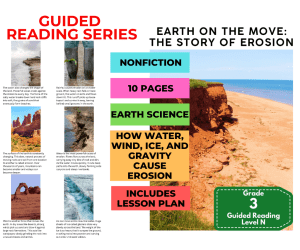
The Story of Erosion: Guided Reading Level N with Lesson Plan
ELA, Resources for Teachers, Reading Comprehension, Reading, Science, Language Development, Pre-Reading, Earth and Environmental Sciences, Geography, Social Studies, Grade 2, 3, 4, Worksheets & Printables, Worksheets, Teacher Tools, Centers, Activities, Literacy Readers, Quizzes, Quizzes and Tests, Assessments, Lesson Plans
This The Story of Erosion (level n) guided reading book with lesson plan includes: Guided Reading Color Label (front cover x1) This is a quick way to match the book’s demands to what students can generally handle.. The overall goal is to use the level/color to pick books for several smaller groups. To qualify for a certain level, a student is expected to read a book from that level with about 90–94% accuracy. If a student is consistently accurate and understands, move up a level. If the student is struggling at that level, drop down and add more support. Each student will improve at completely different rates, but it is generally one of the best ways to check progress across the class. DOWNLOAD THE CATALOG TO VIEW ALL GUIDED READING BOOKS AVAILABLE (SORTED LEVELS A-Z) Pre-Reading Question (x1) Teacher asks the prompt aloud, can be while showing the cover or first page. Students share what they already know, or make educated guesses from the cover. Prompt them to use the target vocabulary. Write some of their responses on the board to look back at during the reading. Vocabulary Words (x5) Introduce the five words, best doing it one at a time. Start by saying it, while students repeat and then see if anyone knows what it means before reading further. Read through the meaning and try to briefly connect each word to a picture or gesture so it’s meaningful. Ask students to flip through the book pages and point to where they see each of the vocabulary words. While reading the book pause upon coming across one of the vocab words or read the sentence twice to make sure students understand the word has appeared. Optional: Ask students to raise hands whenever they see/hear one of the new words. Guided Reading Pages (x10) Check the book snapshot (below) for: primary topic - do you need to prep extra reading or intro materials on this? what is taught best - decide on 1-2 bullets to focus on, use the prompt or words provided here for best results. learning goals - what you are checking for students to be able to do after the session, elicit answers using prompts or words provided. key vocabulary (see section above). questions overview - so you know what is coming up and if you need to prep extra materials to assist understanding. Run the lesson You may have already looked at a few of the pages together, but you can show them some of the pictures again first to set meaning. Depending on how much time you have and how familiar your students are with guided reading class, you may want to read the book aloud first with the group first. Students whisper or partner read, while you listen in. If time, do it as a group, one student reading a page each. Use the guided page’s prompts to coach: “Check the picture / does it make sense?” “Point under the words / try the first sound” “Reread the sentence smoothly”. Try to focus more on one student per session (rotating every time), so you can work out if they are ready to move up or need to move down a level. Comprehension Questions (back cover x3) This is your way to check that students didn’t just say the words, but actually understood the text. First, let students answer by pointing to the page/picture and saying a short sentence. After any answer, follow with: “Show me where you found that in the text.” In bigger groups, have partners answer first (10–20 seconds), then call on 2–3 students to share. Differentiation tips: Emerging speakers/struggling readers: oral + pointing On-level: oral in a full sentence Higher: one written sentence or draw + label Book Snapshot Title: Earth on the Move: The Story of Erosion Genre: Nonfiction (informational text) Subject: Life Science / Earth Science Primary Topic: How water, wind, ice, and gravity cause erosion Estimated Guided Reading Level (A–Z): N What This Book Teaches Best Defines erosion as a slow, natural process that moves rocks and soil from one place to another. Compares different forces of erosion (water, ocean waves, rainfall/runoff, wind, ice/glaciers, gravity) using clear examples. Explains cause and effect in Earth changes , such as rivers cutting deep paths that form canyons and riverbanks over time. Shows that erosion can break down land in one place and build new land in another , including how a river can form a delta where it meets the ocean. Highlights ways nature can slow erosion , including how plant roots hold soil in place. Learning Goals Students can define erosion using details from the text. Students can identify water as the most powerful cause of erosion described in the book. Students can explain how rivers, waves, and rainfall/runoff change land over time. Students can describe how wind, glaciers, and gravity move or reshape rock and soil. Students can explain how plants help prevent erosion from happening too quickly. Students can describe how a delta forms when a river drops sand and soil at the ocean. Key Vocabulary From the Text erosion — moving rock and soil from one place to another. shoreline — where land meets the ocean. runoff — rainwater that flows downhill over the ground. glaciers — huge sheets of ice moving slowly across land. delta — land formed when a river drops sand and soil. Discussion Prompts Pre-reading question: What are some ways land might change over a long time? Comprehension questions: How does the book describe erosion and what it moves? Comprehension questions: What does fast-moving river water do to the earth, according to the text? Comprehension questions: How do the roots of trees and grasses help stop erosion from happening too quickly? Printing Tips 1. Best Printing Method (Recommended) “Booklet” Printing (Best if Available) If your printer or PDF viewer supports Booklet Printing , use this. Settings to use: Print mode: Booklet Paper size: Letter or A4 (either works) Orientation: Landscape Print on both sides: Yes Flip on: Short edge Scaling: Fit to printable area Booklet subset: First test: Front sides only Then: Back sides only This will automatically: Pair pages correctly Put the cover on the outside Align everything for folding After printing, fold in half and staple along the spine . 2. If “Booklet” Printing Is NOT Available You can still print this correctly with manual duplex printing . Step-by-step: Open the PDF. Choose Print . Set: Orientation: Landscape Pages per sheet: 1 Print on both sides: Yes Flip on: Short edge Print all pages . Because each PDF page already contains two facing book pages, the result will still fold cleanly into a book. Thousands of Cored Education products are included with your TeachSimple membership. Download links and encyclopedia index available here.
Author Cored Education
Rating
Tags Reading Comprehension, Reading Passages, Reading, Guided Reading, Guided Reading Lesson Plan, Guided Reading Activity, Pre-reading, Science Lesson Plans, Earth Science, Geography

Small World | Figurative Language Activity | Micro-Learning Deck
ELA, Reading, Reading Comprehension, Grade 4, 5, 6, 7, Teacher Tools, Lesson Plans
Small World | Figurative Language Activity teaches figurative language using the concept of "Small World." This teaching resource for language arts educators guides students to explore figurative language in an engaging way. After watching an explanatory video lesson, learners will read a passage with audio support to comprehend the "Small World" figurative language technique. Comprehension is then checked through a quick write activity. This product can be used effectively in whole-group, small-group, or individual settings as an in-class lesson or homework assignment for grades 4-7. Presented in an easy-to-use Microsoft PowerPoint format, Small World allows educators to seamlessly integrate rich figurative language instruction into their language arts curriculum .
Author Teach Me This
Tags Figurative, Language, Comprehension Lesson, Small World, Learning Deck

Race, Ethnicity, and Racism Lesson
Social Studies, ELA, Language Development, Vocabulary, Reading, Reading Comprehension, Grade 4, 5, 6, 7, 8, 9, Teacher Tools, Lesson Plans
Race, Ethnicity, and Racism Lesson: A Multimedia-oriented, Comprehensive Teaching Resource This Google Slide-based teaching tool incorporates various means of engagement including photographs, videos, maps, and read-alouds. Given its range, teachers may employ it in: Fostering dialogue during group lessons Fostering thoughtful discussions through smaller-group activities Assigning segments as independent work Including them in stimulating homework assignments. The objective is to guide students through the complex subjects of race and ethnicity while examining the different facets of racism. Further instilling a level of ease as they discuss these sensitive topics. A Gist of Core Material: - 'What Is Race?' Aided by read-aloud book - Let's Talk About Race. - Science Behind Skin Tone Variations Across Races' Educative curriculum on melanin with a fitting video from Bill Nye explaining skin color science. - 'What Is Racism?' Bonus features: ● Vocabulary words highlighted throughout the slides ● Speaker’s notes giving guidance on structured class-related discussions Crafted for Grades 4-9, covering subjects like Social Studies & Language Arts (additional sub-subjects include Vocabulary Comprehension) – teachers can enjoy an immersive lesson plan on a topical subject. Finally, a summary check-in and breathing exercise intends to calm participants, reinforcing the learned concepts in students’ minds.
Author Teaching Reimagined
Tags Race, Ethnicity, Racism, Teaching Resource, Lesson Plan

Revolutionary War on Wednesday (Magic Tree House #22 Lesson Plan, Activities)
Social Studies, ELA, History, History: USA, Reading, Reading Comprehension, Grammar, Literature, Language Development, Vocabulary, Spelling, Writing, Grade 1, 2, 3, Lesson Plans, Teacher Tools
A 5-day NO PREP novel study of Revolutionary War on Wednesday (Magic Tree House #22). This comprehensive book companion includes a lesson plan, chapter comprehension questions, vocabulary practice, and many other activities. You can easily customize lessons based on student age, reading and comprehension level, interests, and learning style! Additionally, all worksheets can be completed in an interactive notebook or simply discussed aloud if you desire to reduce the number of pages you print. THIS RESOURCE COVERS: Art (drawing, coloring, arts & crafts) Comprehension English language arts Geography Grammar History Reading Research Social studies Spelling Writing Includes: A 5-day lesson plan List of required materials and optional supplements Curated videos Chapter comprehension quizzes Chapter vocabulary (2 options) Pre-reading, during reading, and post-reading worksheets and activities Interactive notebook pieces (6 options) Book review reports (6 options) Writing craftivity
Author Heather Huhman
Tags Revolutionary War On Wednesday, Magic Tree House, George Washington, Revolutionary War, Book Companion, Novel Study, Revolutionary War Activities
Reading Comprehension Through Novel Studies Gr. 2-5
ELA, Reading, Reading Comprehension, Grade 2, 3, Teacher Tools, Lesson Plans
Reading Comprehension Through Novel Studies Gr. 2-5 Engage your students in active learning with the Reading Comprehension Through Novel Studies Gr. 2-5 teaching resource. This tool offers a dynamic approach to enhance reading comprehension abilities in Grade 2 through Grade 5 learners, utilizing high-interest, low-vocabulary narratives. Included Titles: 'Cam Jansen and the Mystery of the Dinosaur Bones' 'Karen’s Christmas Tree' 'The Mystery of the Missing Cat' 'Night of the Ninjas' 'Someone is Following Pip Ramsay' 'Dragons Don’t Cook Pizza' 'Werewolves Don’t Go To Summer Camp' The product package consists of seven riveting titles that equip educators with a contemporary method of teaching reading skills. Each book is expertly selected to hold student attention while simultaneously fostering their love for reading. This powerful educational tool primarily emphasizes comprehension with its design rooted in multiple-choice questions that assess students’ understanding levels effectively. It employs every story's unique format to encourage even the most reluctant readers, thereby heightening their motivation levels to read more often. Diverse Activities: Apart from providing captivating texts for learners, this instructive resource also features an assortment of activities applicable to both small groups or entire classes, depending on your classroom requirements or homeschooling contexts. -Discussion Questions- Discussion questions spark deep thinking about content while promoting better student engagement during lessons—a highly beneficial feature if you're aiming for interactive education environments. -Comprehensive Lesson Plans - Supplementing these elements are comprehensive lesson plans also included within this resource package—the ideal support for educators looking for structure and organization during instruction times. With robust answers keys integrated into each lesson plan section, checking student responses becomes effortless—a convenience greatly appreciated by busy teachers! In final consideration, this exhaustive PDF-based material specialises at empowering educators like you with versatile language arts instruction tools essential towards driving significant academic success—especially within the critical comprehension subfield. Note: All resources are designed for use within Grades 2-3 Language Arts curriculums. This product contains one downloadable file for ease of access and use during teaching times.
Author Classroom Complete Press
Tags PDF

Dingoes at Dinnertime (Magic Tree House #20 Lesson Plan, Videos, Activities)
Social Studies, ELA, Geography, Reading, Reading Comprehension, Grammar, Literature, Language Development, Vocabulary, Spelling, Writing, Science, Life Sciences, Animals, Grade 1, 2, 3, Lesson Plans, Teacher Tools
Magic Tree House #20: Dingoes at Dinnertime Novel Study Transport students to the Australian Outback with this comprehensive 5-day novel study for Dingoes at Dinnertime, part of the beloved Magic Tree House series. Through reading, writing, geography, and art activities, second and third graders will strengthen literacy skills while learning about dingoes, Aboriginal culture, and the landscape of the Land Down Under. The customizable resource includes a lesson plan outlining instructional strategies like whole class, small group, paired, and individual work. Interactive and hands-on components engage visual, auditory, and kinesthetic learners. Assessment includes chapter questions, vocabulary practice, and language arts exercises focused on grammar, spelling, and different forms of writing. Extend learning even further with supplementary videos. This all-in-one novel study builds content knowledge and reading comprehension in an engaging way.
Author Heather Huhman
Tags Dingoes At Dinnertime, Magic Tree House, Book Companion, Novel Study, Australia, Dingoes, Kangaroos, Koalas
Tone Deaf | Figurative Language Activity | Micro-Learning Deck
ELA, Reading, Reading Comprehension, Grade 4, 5, 6, 7, Teacher Tools, Lesson Plans
Tone Deaf | Figurative Language Learning Activity Tone Deaf is a micro-learning deck that allows grade 4-7 students to explore figurative language in an engaging way. Through a close reading passage with audio and an animated video lesson, learners will better understand the figurative term "tone deaf" and how it is used in writing. This versatile resource can be used in whole group instruction to introduce the concept or assigned to individuals or small groups to allow self-paced comprehension. The passage, video, and writing activity provide a complete mini-lesson that enhances literacy skills and figurative language knowledge. This bite-sized learning activity authored by experienced teachers helps build reading proficiency in an entertaining format across elementary and middle school grades.
Author Teach Me This
Tags Comprehension, Interactive Lesson, Figurative, Language, Tone Deaf
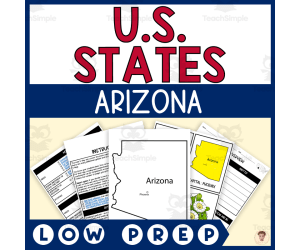
Arizona State Unit Study (Capital, Bird, Flower, Flag, Animal)
ELA, Social Studies, Reading, Reading Comprehension, Grammar, Language Development, Spelling, Writing, Science, Life Sciences, Animals, History, History: USA, Geography, Grade 2, 3, 4, Lesson Plans, Teacher Tools
Arizona State Unit Study This comprehensive, five-day resource dives into fascinating aspects like the state capital, bird, flower, flag and animal. Designed for low preparation yet rich in detail, making it an ideal tool for second to fourth grade students. Main Integration Areas: Language Arts (Comprehension, grammar, reading spelling & writing) Science (Zoology) Social Studies (U.S. history and geography). This multifaceted resource is equally appealing to artistic learners with colouring exercises or crafting activities that hone their English Language Arts skills. Simultaneously technical subjects like geography or history are catered with rigorous readings and information-loaded research tasks centered around Arizona's state symbols. Cross-curricular resource details: Packed with teaching instructions and a designated five-day lesson plan. Fascinating video content provided as an extra stimulant alongside reading passages or research assignments. The activities improve active learning cycles boosting student engagement whilst the included discussion guides foster interactive communication skills among them. Interactive notebook elements based on Arizona's key identifiers spur visual-spatial stimuli- whether used individually in small groups or full-classroom involvement. Variations considerations: The unit study can be seamlessly adjusted based on age grading comprehension level individual interests learning style utilizing its adaptive features. Note: Reducing pages option exists when discussing aloud is preferred over written assignment submission in its printables. Add-ons: Colourful & B&W versions of six symbol cards about Arizonian state values along with mix-match report sheets supplement research portions perfectly during this journey around Arizona.
Author Heather Huhman
Tags Arizona, State Symbols, Unit Study, Cross-curricular, Interactive Notebook

Guided Reading Level N - Manchester (with Lesson Plan)
ELA, Resources for Teachers, Reading Comprehension, Reading, Social Studies, Geography, Earth and Environmental Sciences, Science, History, Economics, Grade 2, 3, 4, Worksheets & Printables, Worksheets, Teacher Tools, Centers, Activities, Literacy Readers, Quizzes, Quizzes and Tests, Assessments, Lesson Plans
This Guided Reading Book - Manchester (Level N) with lesson plan includes: Guided Reading Color Label (front cover x1) This is a quick way to match the book’s demands to what students can generally handle.. The overall goal is to use the level/color to pick books for several smaller groups. To qualify for a certain level, a student is expected to read a book from that level with about 90–94% accuracy. If a student is consistently accurate and understands, move up a level. If the student is struggling at that level, drop down and add more support. Each student will improve at completely different rates, but it is generally one of the best ways to check progress across the class. DOWNLOAD THE CATALOG TO VIEW ALL GUIDED READING BOOKS AVAILABLE (SORTED LEVELS A-Z) Pre-Reading Question (x1) Teacher asks the prompt aloud, can be while showing the cover or first page. Students share what they already know, or make educated guesses from the cover. Prompt them to use the target vocabulary. Write some of their responses on the board to look back at during the reading. Vocabulary Words (x5) Introduce the five words, best doing it one at a time. Start by saying it, while students repeat and then see if anyone knows what it means before reading further. Read through the meaning and try to briefly connect each word to a picture or gesture so it’s meaningful. Ask students to flip through the book pages and point to where they see each of the vocabulary words. While reading the book pause upon coming across one of the vocab words or read the sentence twice to make sure students understand the word has appeared. Optional: Ask students to raise hands whenever they see/hear one of the new words. Guided Reading Pages (x10) Check the book snapshot (below) for: primary topic - do you need to prep extra reading or intro materials on this? what is taught best - decide on 1-2 bullets to focus on, use the prompt or words provided here for best results. learning goals - what you are checking for students to be able to do after the session, elicit answers using prompts or words provided. key vocabulary (see section above). questions overview - so you know what is coming up and if you need to prep extra materials to assist understanding. Run the lesson You may have already looked at a few of the pages together, but you can show them some of the pictures again first to set meaning. Depending on how much time you have and how familiar your students are with guided reading class, you may want to read the book aloud first with the group first. Students whisper or partner read, while you listen in. If time, do it as a group, one student reading a page each. Use the guided page’s prompts to coach: “Check the picture / does it make sense?” “Point under the words / try the first sound” “Reread the sentence smoothly”. Try to focus more on one student per session (rotating every time), so you can work out if they are ready to move up or need to move down a level. Comprehension Questions (back cover x3) This is your way to check that students didn’t just say the words, but actually understood the text. First, let students answer by pointing to the page/picture and saying a short sentence. After any answer, follow with: “Show me where you found that in the text.” In bigger groups, have partners answer first (10–20 seconds), then call on 2–3 students to share. Differentiation tips: Emerging speakers/struggling readers: oral + pointing On-level: oral in a full sentence Higher: one written sentence or draw + label Book Snapshot Title: World Cities: Manchester Genre: Nonfiction (informational text) Subject: Social Studies (Geography) Primary Topic: Manchester’s location, waterways, climate, and growth Estimated Guided Reading Level (A–Z): N What This Book Teaches Best How Manchester’s location and landform (a bowl-shaped plain) help describe where the city sits and what surrounds it. How waterways shape a city’s geography, including the River Irwell as a border and nearby rivers that join it. How people changed transportation and trade by building the Manchester Ship Canal to connect the inland city to the Irish Sea. How weather and climate connect to land features, including nearby hills trapping clouds and creating frequent grey skies and light rain. How Manchester has changed over time, from textile mills in the 1800s to a skyline with new skyscrapers in recent years. Learning Goals Students will identify where Manchester is located in England using details from the text. Students will describe how Manchester’s rivers and waterways affect the city’s geography. Students will explain why the Manchester Ship Canal was built and what it connects to. Students will describe Manchester’s temperate maritime climate using evidence from the text. Students will explain how damp air influenced textile mills in the 1800s, according to the text. Students will describe one way Manchester’s city center or skyline has changed, using text details. Key Vocabulary From the Text waterways — rivers or channels that water flows through. terrain — what the land is like. maritime — connected to the sea or ocean. municipal — belonging to a city or town. skyscrapers — very tall buildings with many floors. Discussion Prompts Pre-reading question: How might rivers, hills, and weather shape what a city becomes like? Comprehension questions: Where does the text say Manchester is located in England? Comprehension questions: What did the Manchester Ship Canal connect Manchester to? Comprehension questions: According to the text, how did damp air help cotton threads in the 1800s? Printing Tips 1. Best Printing Method (Recommended) “Booklet” Printing (Best if Available) If your printer or PDF viewer supports Booklet Printing , use this. Settings to use: Print mode: Booklet Paper size: Letter or A4 (either works) Orientation: Landscape Print on both sides: Yes Flip on: Short edge Scaling: Fit to printable area Booklet subset: First test: Front sides only Then: Back sides only This will automatically: Pair pages correctly Put the cover on the outside Align everything for folding After printing, fold in half and staple along the spine . 2. If “Booklet” Printing Is NOT Available You can still print this correctly with manual duplex printing . Step-by-step: Open the PDF. Choose Print . Set: Orientation: Landscape Pages per sheet: 1 Print on both sides: Yes Flip on: Short edge Print all pages . Because each PDF page already contains two facing book pages, the result will still fold cleanly into a book. Thousands of Cored Education products are included with your TeachSimple membership. Download links and encyclopedia index available here.
Author Cored Education
Rating
Tags Reading Comprehension, Reading Passages, Reading, Guided Reading, Guided Reading Lesson Plan, Guided Reading Activity, Pre-reading, Geography, Social Studies Lesson Plans, History