



3,915 products added recently
Page 16 - History Lesson Plans
Transport your students through time with history lesson plans that vividly illustrate past events and societies. These resources include primary sources, discussions, and projects. Implement them to foster critical thinking and a deeper understanding of our world's history.

 Show filters

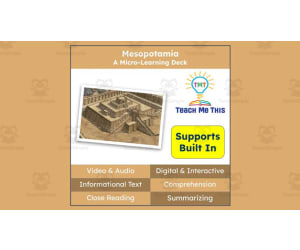
Mesopotamia | Reading Comprehension Deck | Interactive Lesson
Social Studies, History, History: Asian, Grade 5, 6, 7, Teacher Tools, Lesson Plans
Mesopotamia Reading Comprehension Lesson Deck for Social Studies Transport students back in time to ancient Mesopotamia with this interactive digital lesson deck for middle school grades. The resource covers key aspects of Mesopotamian history and culture through engaging formats to suit different learning styles. Students can watch an informative video lesson, read along with a passage about daily life with audio support, analyze primary sources, respond to comprehension questions, and quick write activities. Assessment options allow teachers to gauge understanding. Use the materials for whole class instruction, small group discussion, or independent review. The variety of activities centered around one topic keeps social studies exciting. This multimedia Mesopotamia toolkit equips educators with the content and assessments needed to immerse students in learning.
Author Teach Me This
Tags Video Lesson, Comprehension, Writing, Mesopotamia, Interactive Lesson

I WONDER - Were Greek Gods Immortal | Animated Video Lesson
History: Ancient, History, Social Studies, History: Europe, Grade 4, 5, 6, 7, 8, 9, 10, Lesson Plans, Teacher Tools
Video Introduction An amazing video designed for the students to learn more about history. I WONDER - Were Greek Gods Immortal | Animated Video Lesson Do you like history? Which topic do you really enjoy about history? Have you ever read an interesting fact about the Vikings? If yes, can you mention them? What do you like most about the Victorian era? Can you name all the Tudors? Have you ever wondered how people used to live in ancient Japan and ancient China? Do you know any interesting facts about ancient Egyptians and the Pharaohs? Have you ever visited South America? What do you know about Incas and Aztecs? Celtic culture was really one of a kind, can you name any of the places that Celts used to live in? Imagine yourself living during the ancient Roman empire, how your life will look like? Ancient Greece was an amazing place to live in. What do you know about ancient Greek life? I WONDER - Were Greek Gods Immortal | Animated Video Lesson The video is perfect for encouraging the researching skills for the students, while learning more about history. I WONDER - Were Greek Gods Immortal | Animated Video Lesson This friendly designed video is suitable for students at school, homeschooling, and as a group activity. Format Available in MP4 format.
Author Educational Voice
Tags Were Greek Gods Immortal, Were Greek Gods Immortal Video, Greek Gods, Greek Gods Facts, Greek Gods Facts For Kids, Greek Gods Video, Greek Gods Video For Kids, Greek God, Greek Goddess

Aztecs Reading Comprehension Passage - Cored Ed Encyclopedia
ELA, Language Development, Reading Comprehension, Reading, Social Studies, Writing, Vocabulary, Geography, History, History: Ancient, Grade 2, 3, 4, 5, Worksheets & Printables, Worksheets, Teacher Tools, Centers, Activities, Writing Prompts, Assessments, Quizzes and Tests, Quizzes, Lesson Plans
This Aztecs reading comprehension with lesson plan includes: Visualization (on the front cover) Start your lesson by taking a minute to think and share something about the topic. Read the script aloud (slowly), perhaps prepare some music or sound effects. Student close their eyes and let their imaginations wander. Students open their eyes, read the question aloud and give them a few minutes to complete. Ask a few students to share or keep answers until the end to compare with what they learn in the passage. Quick pause—thousands of Cored Education products are included with your TeachSimple membership. Download links and encyclopedia index available here. Pre-Reading Trivia Students will write down one thing they already know about the subject and then read five more facts and discuss. These facts are fun, and the students will enjoy learning about the subject before reading more. Give 1 minute for students to write what they already know (no pressure—best guess is fine). Read the five facts together. After each fact, do ask a student for their opinion, was it surprising? Set a purpose by asking students to highlight/underline one fact they want to learn more about during the reading. Reading Passage The text is a high-interest reading passage with set paragraphs, roughly three to four paragraphs long. It contains a variety of themes about the topic, anywhere from history to technology. The passage is between 250 and 350 words in length. First, ask students to look at the headings and see what they’ll learn about today. What do they know about the topic/heading? First read options: Teacher read-aloud (best for support). Partner reading (paragraph by paragraph). While reading, students underline important details, and vocabulary words they think may come up in the questions section. Mixed Questions The first question page contains four multiple-choice questions, each with a choice of four answers, and three written response questions that require a sentence or two from the student. Students complete the mcqs first independently, then review quickly as a class. For the 3 written responses, try to get students giving the answer with some form of evidence: “I think ___ because the text says ___.” If students get stuck, send them back to check the passage. Vocabulary Questions Practice seven key words from the text in this section across two activities. First section is scrambled words where students will unscramble three words given a clue for each. The second section is a word to meaning matching activity. Before starting, have some students read out words they underlined in the passage. Ask students to say the word and read aloud the sentence(s) around each word. Ask students to do scrambled words and the matching exercise in pairs then go through answers as a class. For the scrambled spelling task, get four pairs to come up to the board and write the words for extra practice with the other student reading out the clue. For the matching task, prompt students to give full sentences: “I matched ___ with ___ because ___.” Creative Writing In this question, the student will be required to write a five to eight sentence paragraph on a question related to the topic. Before starting, ask students write down 3 key ideas they are going to include in their piece. Ask students for ideas to share around the class to help those struggling. Pro writing expectations: 5–8 sentences At least 2 facts or details from the passage At least 2 vocabulary words from the previous page Students read their paragraphs while classmates listen for facts and vocabulary words. Extension Activities This page is optional for fast finishers or to take home. There are several activities, each one requiring a different skill. Do some, do none, do all, completely optional - but you will feel reassured knowing every possibility is planned for. Includes summary writting question and additional facts. Answer Key There are answers for the multiple-choice questions, written response questions have sample answers, vocabulary answers and if there is a summary question then a sample summary will be provided as well. Lesson Plan Included Customized lesson plan for this lesson is included. Lesson Snapshot Title: Aztecs Genre: Nonfiction (informational passage) Subject: Social Studies (Ancient Civilizations) / Reading (Informational Text) Primary Topic: Building lake-city life and what happened later Estimated Guided Reading Level (A–Z): S What This Lesson Teaches Best How a wandering Nahua group (the Mexica) chose a home based on a sign and began building a city on a lake. How people adapted to living on water using chinampas , canals, and causeways to grow food and move around. How Triple Alliance (between Tenochtitlan , Texcoco , and Tlacopan ) helped the capital grow powerful through victories and tribute. Using headings to track a sequence: founding and growth, alliance and power, then conflict and destruction, and what remains today. Connecting past to present by noting how the eagle-and-cactus story lives on and how archaeologists still uncover remains beneath modern streets. Learning Goals Identify the sign the Mexica saw that helped them choose their home. Describe how builders expanded the island and how chinampas helped crops grow near home. Explain how canals and causeways helped the city get fresh water and connect to the shore. Describe how tribute (examples named in the text) helped the capital grow powerful. Describe what the passage says happened after Spanish explorers arrived, including the year the city fell. Explain what the passage says exists today where the city once stood. Key Vocabulary From the Text chinampas — raised garden beds packed with mud. causeways — broad raised roads that connect land and water. tribute — goods sent to rulers as payment. levees — walls or banks that help stop floods. archaeologists — people who uncover and study the past. FULL CATALOG OF DOWNLOAD LINKS AND ENCYCLOPEDIA INDEX HERE
Author Cored Education
Rating
Tags Vocabulary, Reading Comprehension, Reading Passages, Lesson Plans, Ela Lesson Plans, Reading Comprehension Lesson Plans, Pre-reading, History, History Lesson Plans, Geography

Viking Ships at Sunrise (Magic Tree House #15 Lesson Plan, Videos, Activities)
ELA, Social Studies, Reading, Reading Comprehension, Grammar, Literature, Language Development, Spelling, Vocabulary, Writing, History, History: Europe, Grade 1, 2, 3, Lesson Plans, Teacher Tools
Magic Tree House #15: Viking Ships at Sunrise Lesson Plans and Activities This comprehensive 5-day novel study for Viking Ships at Sunrise guides students through reading comprehension, writing, grammar, vocabulary, art, and more. Through engaging activities like comprehension questions, read-alouds, crafts , and videos, students will strengthen literacy skills while learning about Viking history and culture. Teachers can easily customize or scaffold lessons for different ages, reading levels, and learning styles. This versatile resource can be used for whole group instruction, small groups, independent work, or homework. With cross-curricular connections to social studies, geography, spelling, and language arts, these lesson plans turn independent reading into meaningful learning experiences.
Author Heather Huhman
Tags Viking Ships At Sunrise, Magic Tree House, Book Companion, Novel Study, Vikings

I WONDER - What Did Roman Children Wear | Animated Video Lesson
History: Ancient, History, Social Studies, History: Europe, Grade 1, 2, 3, 4, 5, 6, 7, 8, Lesson Plans, Teacher Tools
Video Introduction An amazing video designed for the students to learn more about history. I WONDER - What Did Roman Children Wear | Animated Video Lesson Do you like history? Which topic do you really enjoy about history? Have you ever read an interesting fact about the Vikings? If yes, can you mention them? What do you like most about the Victorian era? Can you name all the Tudors? Have you ever wondered how people used to live in ancient Japan and ancient China? Do you know any interesting facts about ancient Egyptians and the Pharaohs? Have you ever visited South America? What do you know about Incas and Aztecs? Celtic culture was really one of a kind, can you name any of the places that Celts used to live in? Imagine yourself living during the ancient Roman empire, how your life will look like? Ancient Greece was an amazing place to live in. What do you know about ancient Greek life? I WONDER - What Did Roman Children Wear | Animated Video Lesson The video is perfect for encouraging the researching skills for the students, while learning more about history. I WONDER - What Did Roman Children Wear | Animated Video Lesson This friendly designed video is suitable for students at school, homeschooling, and as a group activity. Format Available in MP4 format.
Author Educational Voice
Tags What Did Roman Children Wear, What Did Roman Children Wear Video, Roman Children, Roman Children Facts, Roman Children Video, Roman Children Facts For Kids, Roman Children Video For Kids

I WONDER - What Special Features Did Castles Have | Animated Video
History: Ancient, History, Social Studies, History: Asian, History: African, History: British, History: Europe, History: World, Grade 6, 7, 8, 9, 10, 11, 12, Lesson Plans, Teacher Tools
Video Introduction An amazing video designed for the students to learn more about history. I WONDER - What Special Features Did Castles Have | Animated Video Lesson Do you like history? Which topic do you really enjoy about history? Have you ever read an interesting fact about the Vikings? If yes, can you mention them? What do you like most about the Victorian era? Can you name all the Tudors? Have you ever wondered how people used to live in ancient Japan and ancient China? Do you know any interesting facts about ancient Egyptians and the Pharaohs? Have you ever visited South America? What do you know about Incas and Aztecs? Celtic culture was really one of a kind, can you name any of the places that Celts used to live in? Imagine yourself living during the ancient Roman empire, how your life will look like? Ancient Greece was an amazing place to live in. What do you know about ancient Greek life? I WONDER - What Special Features Did Castles Have | Animated Video Lesson The video is perfect for encouraging the researching skills for the students, while learning more about history. I WONDER - What Special Features Did Castles Have | Animated Video Lesson This friendly designed video is suitable for students at school, homeschooling, and as a group activity. Format Available in MP4 format.
Author Educational Voice
Tags What Special Features Did Castles Have, What Special Features Did Castles Have Video, Castles, Castles Special Features, Castles Special Features Video, Castles Special Features Facts, Castles Special Features Video

I WONDER - How Did The Pteranodon Eat | Animated Video Lesson
History: Ancient, History, Social Studies, History: World, Animals, Life Sciences, Science, Grade 4, 5, 6, 7, 8, 9, 10, Lesson Plans, Teacher Tools
Video Introduction An amazing video designed for the students to learn more about dinosaurs in different countries. I WONDER - How Did The Pteranodon Eat | Animated Video Lesson Do you like dinosaurs? what is your favorite one? Do you own a pet? If yes, tell us more about it, like what its name? And what do you like most about it? Do you think that your pet has been evolved from a dinosaur? Can you write down the characteristics of your favourite dinosaur like it's shape, their rivals, where did it use to live and what was their favourite food? What is the largest and the smallest dinosaur that ever found? Why is the T-rex is so famous? Have you ever read any interesting facts about it? Can you name any of the carnivores or herbivores dinosaurs? I WONDER - How Did The Pteranodon Eat | Animated Video Lesson The video is perfect for encouraging the researching skills for the students, while learning more about dinosaurs. I WONDER - How Did The Pteranodon Eat | Animated Video Lesson This friendly designed video is suitable for students at school, homeschooling, and as a group activity. Format Available in MP4 format.
Author Educational Voice
Rating
Tags Pteranodon, Pteranodon Facts, Pteranodon Video, Pteranodon Video For Kids, Pteranodon Facts For Kids, How Did The Pteranodon Eat, How Did The Pteranodon Eat Video, Dinosaur, Dinosaurs

Lesson Plan on The Victorians
History: British, History, Social Studies, History: Europe, Grade 6, 7, 8, 9, 10, Lesson Plans, Teacher Tools, Worksheets & Printables
This captivating 90-minute lesson plan will teach your students everything there is to know about Victorian Britain. According to the film "What was regular Victorian living like? According to historian Ruth Goodman, this lesson from HistoryExtra uses vivid illustrations, understandable explanations, and practical exercises to bring history to life. Students explore how Victorians washed, dressed, ate, and lived in small crowded homes. The worksheet includes vocabulary practice, listening tasks, true or false statements, matching, comparison charts, and a creative diary-writing activity. It helps learners develop listening, reading, and writing skills while building real historical understanding. The lesson also encourages discussion and comparison between the past and the present, helping students think critically about change and progress. Easy to teach, no preparation needed — just play the video and hand out the worksheet. Perfect for history or English classes, this ready-to-use lesson keeps students interested and learning from start to finish. Bring the Victorian era into your classroom today!
Author Bright Classroom Ideas Marketplace
Rating
Tags Victorian, Britain, England, Era, London
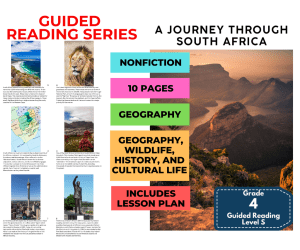
Journey Through South Africa: Guided Reading Level S with Lesson Plan
ELA, Resources for Teachers, Reading Comprehension, Reading, Science, Geography, Social Studies, History, Life Sciences, Government, Grade 3, 4, 5, Worksheets & Printables, Worksheets, Teacher Tools, Centers, Activities, Literacy Readers, Quizzes, Quizzes and Tests, Assessments, Lesson Plans
This A Journey Through South Africa (level s) guided reading book with lesson plan includes: Guided Reading Color Label (front cover x1) This is a quick way to match the book’s demands to what students can generally handle.. The overall goal is to use the level/color to pick books for several smaller groups. To qualify for a certain level, a student is expected to read a book from that level with about 90–94% accuracy. If a student is consistently accurate and understands, move up a level. If the student is struggling at that level, drop down and add more support. Each student will improve at completely different rates, but it is generally one of the best ways to check progress across the class. DOWNLOAD THE CATALOG TO VIEW ALL GUIDED READING BOOKS AVAILABLE (SORTED LEVELS A-Z) Pre-Reading Question (x1) Teacher asks the prompt aloud, can be while showing the cover or first page. Students share what they already know, or make educated guesses from the cover. Prompt them to use the target vocabulary. Write some of their responses on the board to look back at during the reading. Vocabulary Words (x5) Introduce the five words, best doing it one at a time. Start by saying it, while students repeat and then see if anyone knows what it means before reading further. Read through the meaning and try to briefly connect each word to a picture or gesture so it’s meaningful. Ask students to flip through the book pages and point to where they see each of the vocabulary words. While reading the book pause upon coming across one of the vocab words or read the sentence twice to make sure students understand the word has appeared. Optional: Ask students to raise hands whenever they see/hear one of the new words. Guided Reading Pages (x10) Check the book snapshot (below) for: primary topic - do you need to prep extra reading or intro materials on this? what is taught best - decide on 1-2 bullets to focus on, use the prompt or words provided here for best results. learning goals - what you are checking for students to be able to do after the session, elicit answers using prompts or words provided. key vocabulary (see section above). questions overview - so you know what is coming up and if you need to prep extra materials to assist understanding. Run the lesson You may have already looked at a few of the pages together, but you can show them some of the pictures again first to set meaning. Depending on how much time you have and how familiar your students are with guided reading class, you may want to read the book aloud first with the group first. Students whisper or partner read, while you listen in. If time, do it as a group, one student reading a page each. Use the guided page’s prompts to coach: “Check the picture / does it make sense?” “Point under the words / try the first sound” “Reread the sentence smoothly”. Try to focus more on one student per session (rotating every time), so you can work out if they are ready to move up or need to move down a level. Comprehension Questions (back cover x3) This is your way to check that students didn’t just say the words, but actually understood the text. First, let students answer by pointing to the page/picture and saying a short sentence. After any answer, follow with: “Show me where you found that in the text.” In bigger groups, have partners answer first (10–20 seconds), then call on 2–3 students to share. Differentiation tips: Emerging speakers/struggling readers: oral + pointing On-level: oral in a full sentence Higher: one written sentence or draw + label Book Snapshot Title: A Journey Through South Africa Genre: Nonfiction Subject: Social Studies (Geography/Culture/History) Primary Topic: South Africa’s geography, wildlife, history, and cultural life Estimated Guided Reading Level (A–Z): S What This Book Teaches Best Country overview and civics detail: South Africa’s location at Africa’s southernmost tip and its unusual system of three capital cities (Pretoria, Cape Town, Bloemfontein). Landforms and unique plant life: Table Mountain as a major landmark and part of a national park with many plant species found nowhere else. Habitats, wildlife, and conservation: Coastal habitats (including African penguins) and inland grasslands/savannas connected to the “Big Five” and protection of animals and environments. Modern cities and historical change: Johannesburg’s growth after gold discovery and South Africa’s journey from apartheid toward equality and democracy through Nelson Mandela’s leadership. Culture and identity through arts and community life: Traditions, music, and dance (Zulu and Xhosa) plus artistic expression like Ndebele painting and beadwork with special meanings. Learning Goals Students will identify South Africa’s three capital cities and explain each city’s role as described in the text. Students will describe two natural features or habitats in South Africa (for example, Table Mountain or the coastline) using details from the text. Students will explain how the text describes South Africa’s coastline and name the oceans it includes. Students will describe the inland grasslands and savannas and identify animals included in the text’s “Big Five.” Students will explain what apartheid was and describe how the text says South Africa moved toward equality and democracy. Students will describe at least two examples of South African culture or identity from the text (music/dance, art/beadwork, sports, or national symbols). Key Vocabulary From the Text southernmost — farthest to the south. administrative — related to running a government or system. savannas — wide grassy areas with some trees. apartheid — unfair system that separated people by race. resilience — strength to recover and keep going. Discussion Prompts Pre-reading question: What do you think you will learn about South Africa’s people, places, and animals? Comprehension questions: What are the three capital cities of South Africa named in the text? Comprehension questions: Which two oceans does the text say border South Africa’s coastline? Comprehension questions: What is the name of the system that separated people by race in South Africa? Printing Tips 1. Best Printing Method (Recommended) “Booklet” Printing (Best if Available) If your printer or PDF viewer supports Booklet Printing , use this. Settings to use: Print mode: Booklet Paper size: Letter or A4 (either works) Orientation: Landscape Print on both sides: Yes Flip on: Short edge Scaling: Fit to printable area Booklet subset: First test: Front sides only Then: Back sides only This will automatically: Pair pages correctly Put the cover on the outside Align everything for folding After printing, fold in half and staple along the spine . 2. If “Booklet” Printing Is NOT Available You can still print this correctly with manual duplex printing . Step-by-step: Open the PDF. Choose Print . Set: Orientation: Landscape Pages per sheet: 1 Print on both sides: Yes Flip on: Short edge Print all pages . Because each PDF page already contains two facing book pages, the result will still fold cleanly into a book. Thousands of Cored Education products are included with your TeachSimple membership. Download links and encyclopedia index available here.
Author Cored Education
Rating
Tags Reading Comprehension, Reading Passages, Reading, Guided Reading, Guided Reading Lesson Plan, Guided Reading Activity, Pre-reading, Social Studies, Geography, History
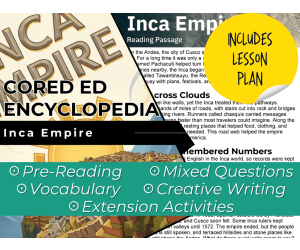
Inca Empire Reading Comprehension Passage - Cored Ed Encyclopedia
ELA, Reading Comprehension, Reading, History, Social Studies, Science, Geography, Technology, Pre-Reading, Language Development, Grade 2, 3, 4, 5, Worksheets & Printables, Worksheets, Teacher Tools, Centers, Activities, Writing Prompts, Assessments, Quizzes and Tests, Quizzes, Lesson Plans
This Inca Empire reading comprehension with lesson plan includes: Visualization (on the front cover) Start your lesson by taking a minute to think and share something about the topic. Read the script aloud (slowly), perhaps prepare some music or sound effects. Student close their eyes and let their imaginations wander. Students open their eyes, read the question aloud and give them a few minutes to complete. Ask a few students to share or keep answers until the end to compare with what they learn in the passage. Quick pause—thousands of Cored Education products are included with your TeachSimple membership. Download links and encyclopedia index available here. Pre-Reading Trivia Students will write down one thing they already know about the subject and then read five more facts and discuss. These facts are fun, and the students will enjoy learning about the subject before reading more. Give 1 minute for students to write what they already know (no pressure—best guess is fine). Read the five facts together. After each fact, do ask a student for their opinion, was it surprising? Set a purpose by asking students to highlight/underline one fact they want to learn more about during the reading. Reading Passage The text is a high-interest reading passage with set paragraphs, roughly three to four paragraphs long. It contains a variety of themes about the topic, anywhere from history to technology. The passage is between 250 and 350 words in length. First, ask students to look at the headings and see what they’ll learn about today. What do they know about the topic/heading? First read options: Teacher read-aloud (best for support). Partner reading (paragraph by paragraph). While reading, students underline important details, and vocabulary words they think may come up in the questions section. Mixed Questions The first question page contains four multiple-choice questions, each with a choice of four answers, and three written response questions that require a sentence or two from the student. Students complete the mcqs first independently, then review quickly as a class. For the 3 written responses, try to get students giving the answer with some form of evidence: “I think ___ because the text says ___.” If students get stuck, send them back to check the passage. Vocabulary Questions Practice seven key words from the text in this section across two activities. First section is scrambled words where students will unscramble three words given a clue for each. The second section is a word to meaning matching activity. Before starting, have some students read out words they underlined in the passage. Ask students to say the word and read aloud the sentence(s) around each word. Ask students to do scrambled words and the matching exercise in pairs then go through answers as a class. For the scrambled spelling task, get four pairs to come up to the board and write the words for extra practice with the other student reading out the clue. For the matching task, prompt students to give full sentences: “I matched ___ with ___ because ___.” Creative Writing In this question, the student will be required to write a five to eight sentence paragraph on a question related to the topic. Before starting, ask students write down 3 key ideas they are going to include in their piece. Ask students for ideas to share around the class to help those struggling. Pro writing expectations: 5–8 sentences At least 2 facts or details from the passage At least 2 vocabulary words from the previous page Students read their paragraphs while classmates listen for facts and vocabulary words. Extension Activities This page is optional for fast finishers or to take home. There are several activities, each one requiring a different skill. Do some, do none, do all, completely optional - but you will feel reassured knowing every possibility is planned for. Includes summary writting question and additional facts. Answer Key There are answers for the multiple-choice questions, written response questions have sample answers, vocabulary answers and if there is a summary question then a sample summary will be provided as well. Lesson Plan Included Customized lesson plan for this lesson is included. Lesson Snapshot Title: Inca Empire Genre: Nonfiction (informational passage) Subject: Social Studies (History) / Reading (Informational Text) Primary Topic: Cusco, roads, quipu records, terraces, legacy Estimated Guided Reading Level (A–Z): S What This Lesson Teaches Best How Cusco grew from a small kingdom into a larger Inca state in the 1400s under a leader named Pachacuti, and how the state was called Tawantinsuyu (the Realm of the Four Parts). How Inca engineers built a wide road system with stairs cut into rock and bridges, plus storehouses and resting places that helped the empire spread across western South America. How the Inca kept records without an English-like alphabet by using a quipu (cords with knots and colors for counts and notes). How terraces were used on hillsides to hold soil and water for crops like potatoes and corn, and how work was organized by the state as a kind of tax. How the empire ended after conflict and Spanish conquest, while people and culture continued (Quechua still spoken; terraces and stone places remain). Learning Goals Describe how Cusco changed in the 1400s and name the Inca state described in the passage. Explain how roads, bridges, and storehouses helped the Inca move messages, supplies, and armies. Explain what a quipu is and what it could record, based on the text. Describe what terraces are used for and how they helped farming on hillsides. Identify what happened in the 1500s that led to the end of the empire and one way Inca life continued afterward. Key Vocabulary From the Text Tawantinsuyu — the Inca state called the Realm of the Four Parts. chasquis — runners who carried messages from stop to stop. quipu — cords with knots and colors for records. terraces — flat steps that hold soil and water. storehouses — places along routes that kept needed supplies. FULL CATALOG OF DOWNLOAD LINKS AND ENCYCLOPEDIA INDEX HERE
Author Cored Education
Rating
Tags Vocabulary, Reading Comprehension, Reading Passages, Lesson Plans, Ela Lesson Plans, Reading Comprehension Lesson Plans, Pre-reading, History, Social Studies Lesson Plans, Geography

I WONDER - Who Made The Statue Of Liberty | Animated Video Lesson
History: Europe, History, Social Studies, History: USA, History: Ancient, History: World, Grade 4, 5, 6, 7, 8, 9, 10, Lesson Plans, Teacher Tools
Video Introduction An amazing video designed for the students to learn more about history. I WONDER - Who Made The Statue Of Liberty | Animated Video Lesson Do you like history? Which topic do you really enjoy about history? Have you ever read an interesting fact about the Vikings? If yes, can you mention them? What do you like most about the Victorian era? Can you name all the Tudors? Have you ever wondered how people used to live in ancient Japan and ancient China? Do you know any interesting facts about ancient Egyptians and the Pharaohs? Have you ever visited South America? What do you know about Incas and Aztecs? Celtic culture was really one of a kind, can you name any of the places that Celts used to live in? Imagine yourself living during the ancient Roman empire, how your life will look like? Ancient Greece was an amazing place to live in. What do you know about ancient Greek life? I WONDER - Who Made The Statue Of Liberty | Animated Video Lesson The video is perfect for encouraging the researching skills for the students, while learning more about history. I WONDER - Who Made The Statue Of Liberty | Animated Video Lesson This friendly designed video is suitable for students at school, homeschooling, and as a group activity. Format Available in MP4 format.
Author Educational Voice
Tags Who Made The Statue Of Liberty, Who Made The Statue Of Liberty Video, The Statue Of Liberty, The Statue Of Liberty Facts, The Statue Of Liberty Video, The Statue Of Liberty Video For Kids, The Statue Of Liberty Facts For Kids

US Flag Etiquette and History | Reading Comprehension Deck | Interactive Lesson
Social Studies, History, History: USA, Grade 7, 8, 9, 10, Teacher Tools, Lesson Plans
This reading comprehension deck is the perfect accessory to your Social Studies instruction! This digital slideshow presents US Flag Etiquette and History. Within this slideshow, you will receive: -Video Lesson -Reading Passage w/ Audio -Close Reading -Quick Write The informational texts included in this resource alongside the informal assessments will keep your students engaged from beginning to end.
Author Teach Me This
Tags American Flag, Flag History, Flag Etiquette, Reading Comprehension, Social Studies Lesson, American Flag Lesson Plans
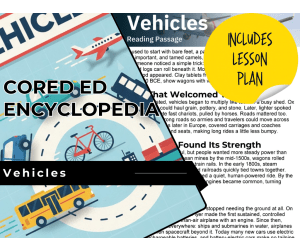
Vehicles Reading Comprehension Passage - Cored Ed Encyclopedia
ELA, Language Development, Reading Comprehension, Reading, Pre-Reading, Science, Technology, Engineering, History, Social Studies, Grade 2, 3, 4, 5, Worksheets & Printables, Worksheets, Teacher Tools, Centers, Activities, Writing Prompts, Assessments, Quizzes and Tests, Quizzes, Lesson Plans
This vehicles reading comprehension with lesson plan includes: Visualization (on the front cover) Start your lesson by taking a minute to think and share something about the topic. Read the script aloud (slowly), perhaps prepare some music or sound effects. Student close their eyes and let their imaginations wander. Students open their eyes, read the question aloud and give them a few minutes to complete. Ask a few students to share or keep answers until the end to compare with what they learn in the passage. Quick pause—thousands of Cored Education products are included with your TeachSimple membership. Download links and encyclopedia index available here. Pre-Reading Trivia Students will write down one thing they already know about the subject and then read five more facts and discuss. These facts are fun, and the students will enjoy learning about the subject before reading more. Give 1 minute for students to write what they already know (no pressure—best guess is fine). Read the five facts together. After each fact, do ask a student for their opinion, was it surprising? Set a purpose by asking students to highlight/underline one fact they want to learn more about during the reading. Reading Passage The text is a high-interest reading passage with set paragraphs, roughly three to four paragraphs long. It contains a variety of themes about the topic, anywhere from history to technology. The passage is between 250 and 350 words in length. First, ask students to look at the headings and see what they’ll learn about today. What do they know about the topic/heading? First read options: Teacher read-aloud (best for support). Partner reading (paragraph by paragraph). While reading, students underline important details, and vocabulary words they think may come up in the questions section. Mixed Questions The first question page contains four multiple-choice questions, each with a choice of four answers, and three written response questions that require a sentence or two from the student. Students complete the mcqs first independently, then review quickly as a class. For the 3 written responses, try to get students giving the answer with some form of evidence: “I think ___ because the text says ___.” If students get stuck, send them back to check the passage. Vocabulary Questions Practice seven key words from the text in this section across two activities. First section is scrambled words where students will unscramble three words given a clue for each. The second section is a word to meaning matching activity. Before starting, have some students read out words they underlined in the passage. Ask students to say the word and read aloud the sentence(s) around each word. Ask students to do scrambled words and the matching exercise in pairs then go through answers as a class. For the scrambled spelling task, get four pairs to come up to the board and write the words for extra practice with the other student reading out the clue. For the matching task, prompt students to give full sentences: “I matched ___ with ___ because ___.” Creative Writing In this question, the student will be required to write a five to eight sentence paragraph on a question related to the topic. Before starting, ask students write down 3 key ideas they are going to include in their piece. Ask students for ideas to share around the class to help those struggling. Pro writing expectations: 5–8 sentences At least 2 facts or details from the passage At least 2 vocabulary words from the previous page Students read their paragraphs while classmates listen for facts and vocabulary words. Extension Activities This page is optional for fast finishers or to take home. There are several activities, each one requiring a different skill. Do some, do none, do all, completely optional - but you will feel reassured knowing every possibility is planned for. Includes summary writting question. Answer Key There are answers for the multiple-choice questions, written response questions have sample answers, vocabulary answers and if there is a summary question then a sample summary will be provided as well. Lesson Plan Included Customized lesson plan for this lesson is included. Lesson Snapshot Title: Vehicles Genre: Nonfiction (Informational text) Subject: Social Studies / Science & Technology Primary Topic: How transportation changed from wheels to flight Estimated Guided Reading Level (A–Z): P Support pages: Pre-reading trivia, mixed questions, vocabulary practice, creative writing, extension activities, and an answer key. Support-page QA check: Some vocab items don’t match the exact word forms in the passage (e.g., chariot vs chariots , battery vs batteries , submarine vs submarines , locomotive vs locomotives ). What This Lesson Teaches Best Sequence of transportation changes over time: Moves from walking/animals, to logs/sledges, to wooden wheels and wagons, to roads and coaches, to steam locomotives, motor vehicles, and airplanes. How inventions improved travel and hauling: Explains how wheels, roads, tracks/railroads, and engines made travel smoother, faster, and able to carry heavier loads. Using headings to organize information: Section headings (“Roads…,” “When Steam…,” “A Lift Into the Air”) help readers track time periods and big shifts. Key historical details in an informational text: Includes dates and examples such as Uruk clay tablets (3700–3500 BCE) and the Wright Flyer flight (December 17, 1903). Modern tech and environmental impact: Notes electric motors, rechargeable batteries, and “no tailpipe exhaust,” ending with a question about helping the planet. Learning Goals Students will describe how people traveled and carried loads before wheels, using details from the passage. Students will identify how wheels changed what vehicles could do (hauling goods and moving more easily). Students will explain how roads and railroads affected travel and connected places, based on the text. Students will summarize the “biggest leap” in travel described in the passage and name the example given. Students will use headings and key details to retell the passage’s main changes in transportation in order. Key Vocabulary From the Text sledge — a sled that helps heavy things slide. Mesopotamia — an ancient region where Uruk was located. spoked — having thin supports connecting wheel center to rim. locomotives — train engines that pull cars on tracks. rechargeable — can be filled with power again. FULL CATALOG OF DOWNLOAD LINKS AND ENCYCLOPEDIA INDEX HERE
Author Cored Education
Rating
Tags Vocabulary, Reading Comprehension, Reading Passages, Lesson Plans, Ela Lesson Plans, Reading Comprehension Lesson Plans, Pre-reading, Science Lesson Plans, Technology, History Lesson Plans

Bill of Rights: History Speaks . . .
Social Studies, History, History: USA, Grade 4, 5, 6, 7, 8, Teacher Tools, Lesson Plans
Bill of Rights: History Speaks Bill of Rights: History Speaks... is a comprehensive teaching resource designed to make history engaging for students. This material assists educators in helping students from grades 4 through 8 explore the origins of each amendment in the Bill of Rights and connect these historical laws to present-day experiences. What's included Detailed handouts, A plethora of thought-stimulating discussion suggestions, Carefully selected primary source materials. All these elements work together, providing learners a nuanced understanding of how the Bill of Rights continues to shape our everyday lives. The real-life accounts strewn throughout will stimulate your students not only to learn about the past, but also engage them in meaningful dialogues around current legislation and societal norms. More than just rote memorization or textbook facts, "Bill Of Rights: History Speaks", demystifies complex insights from political cartoons and provides opportunities for analyses of court decisions — skills integral for any Social Studies curriculum. This interactive tool facilitates whole group instruction as well as smaller student groups aimed at deeper discussion. The user-friendly format makes it suitable even for homework assignments that promote independent research outside school hours. Easily accessible PDF Format Fear no technical difficulties while conducting traditional classroom lessons or distance education programs as having this product available in a downloadable and printable PDF format ensures convenience whether you are teaching in-class or facilitating learning from home-school settings. In imparting knowledge about U.S. history with continuous relevance on its impact on modern American life, The "Bill Of Rights: History Speaks", stays true to TeachSimple’s commitment—"Make learning simple yet effective." Through interactive learning, your students can experience how history continues to speak and resonate in the present.
Author Classroom Complete Press
Tags PDF
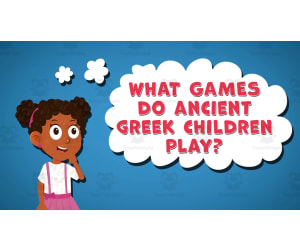
I WONDER - What Games Do Ancient Greek Children Play | Animated Video
History: Ancient, History, Social Studies, History: Europe, Grade 2, 3, 4, 5, 6, 7, 8, Lesson Plans, Teacher Tools
Video Introduction An amazing video designed for the students to learn more about history. I WONDER - What Games Do Ancient Greek Children Play | Animated Video Lesson Do you like history? Which topic do you really enjoy about history? Have you ever read an interesting fact about the Vikings? If yes, can you mention them? What do you like most about the Victorian era? Can you name all the Tudors? Have you ever wondered how people used to live in ancient Japan and ancient China? Do you know any interesting facts about ancient Egyptians and the Pharaohs? Have you ever visited South America? What do you know about Incas and Aztecs? Celtic culture was really one of a kind, can you name any of the places that Celts used to live in? Imagine yourself living during the ancient Roman empire, how your life will look like? Ancient Greece was an amazing place to live in. What do you know about ancient Greek life? I WONDER - What Games Do Ancient Greek Children Play | Animated Video Lesson The video is perfect for encouraging the researching skills for the students, while learning more about history. I WONDER - What Games Do Ancient Greek Children Play | Animated Video Lesson This friendly designed video is suitable for students at school, homeschooling, and as a group activity. Format Available in MP4 format.
Author Educational Voice
Tags What Games Do Ancient Greek Children Play, What Games Do Ancient Greek Children Play Video, Ancient Greek Children, Ancient Greek Children Video, Ancient Greek Children Facts, Ancient Greek Children Video For Kids
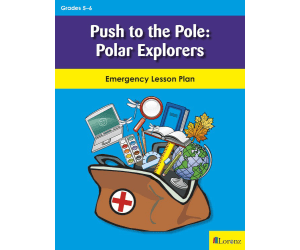
Push to the Pole: Polar Explorers: Emergency Lesson Plan
Social Studies, History, History: World, Grade 5, 6, Teacher Tools, Lesson Plans
Push to the Pole: Polar Explorers: Emergency Lesson Plan The Push to the Pole: Polar Explorers: Emergency Lesson Plan is a thorough teaching resource tailored for 5th and 6th-grade classrooms. This quick-access tool is specifically created for educators who might need an impromptu lesson in unpredictable circumstances such as sudden illness or unexpected free time before school events. Cross-Curricular Instruction Tool Uniquely designed, this unit merges various subject areas making it ideal for cross-curricular instruction. The central feature of this resource is a nonfiction article that shares the exciting journeys of two American explorers noteworthy in North Pole discovery. It doesn't just highlight key historical milestones, but it also stirs an intrigue and zeal for learning world history among students. Inclusive Learning Approach Supplementary worksheets stimulating critical thinking and extension activities prompting further study beyond classroom discussions are included. These facets make sure that learning isn't confined to merely absorbing content - instead, tasks focused on sharpening analytical skills essential in understanding intricate global narratives are integrated. User-friendly Format > PDF format: Easily accessible when needed without requiring extensive preparations. Readily printable: Comes with eight ready-to-print pages thus ensures no confusion with instructions. Versatile usage: Can be used for either whole-group classroom activities or assigned individually as homework or additional exercises. Sustaining Education Amid Disruptions With its equilibrium of gripping content and meticulously chosen activities, The Push to the Pole: Polar Explorers: Emergency Lesson Plan gifts educators with a necessary tool they can rely on during unavoidable predicaments: showing that education needn't halt in face of disruptions; instead, it can thrive through adaptability and innovation.
Author Classroom Complete Press
Tags Weather, Nonfiction Article, Extension Activities, North Pole, Explorers
Vietnam War: The Role of the Navy Gr. 5-8
Social Studies, History, History: USA, Grade 5, 6, 7, 8, Teacher Tools, Lesson Plans
Vietnam War: The Role of the Navy Gr. 5-8 Vietnam War: The Role of the Navy Gr. 5-8 is a comprehensive teaching resource designed to enrich and deepen grade 5 to 8 students' understanding of the longest military conflict in U.S. history, the Vietnam War. This resource focuses on elucidating the crucial role played by the U.S. Navy. It offers an immersive journey into Southeast Asia, enabling students to connect with its climate and terrain in relation to pertinent battles and military strategies implemented throughout the war. An added value within this robust historical exploration is its provision of essential knowledge concerning Presidents John F Kennedy, Lyndon B Johnson, and Richard M Nixon’s distinct tactical approaches used during these trying times—great for educators! Interesting insights into innovative warfare aspects are also part of this curriculum including discussions on helicopters' role in major battles—a springboard for technological discussions. The SEAL teams introduction gives readers closer look at modern-day special operations forces—all simplified for middle-school learners! A focus on after-effects includes home-front protests led by those who didn't align with national war attitudes leading to an engaging platform for empathy development through organizing mock protests—an engaging hands-on activity integrated right within readings! Bloom's Taxonomy Approach And State Standards Aligned The lesson incorporates Bloom's Taxonomy approach and meets State Standards—efficient content comprehension backed by quizzes & word games! Specifically crafted for teachers seeking deep conversation starters while aiming at enhancing learning outcomes! This resources comes packed as a single PDF composed of 27-pages ready-to-print.
Author Classroom Complete Press
Tags Social Studies, US History, Vietnam War, Comprehension Questions, Social Studies Quiz

Alaska State Unit Study (Capital, Bird, Flower, Flag, Animal)
ELA, Social Studies, Reading, Reading Comprehension, Language Development, Spelling, Writing, History, History: USA, Geography, Research, Grade 2, 3, 4, Lesson Plans, Teacher Tools
Alaska State Unit Study (Capital, Bird, Flower ,Flag ,Animal) An interactive teaching tool designed for educators who wish to enlighten their students about the State of Alaska. This low-prep 5-day unit study covers five significant emblems—capital city, bird species, indigenous flower type, official flag design and native fauna. It ensures easy facilitation with a comprehensively planned lesson plan format. This resource is adaptable for homework assignments, large group or small group sessions across multiple grade levels such as Grade 2-4. Broadly subtended subjects include Language Arts and Social Studies. Daily Activities and Learning Tools Curated videos that enhance visual learning Literature passages for reading enthusiasts A combination of research tasks with interactive notebook activities that make learning immersive Kinesthetic-friendly resources to encourage experiential learning among students by facilitating a practice-led approach If you are exploring topics on USA History or Geography then don't miss out on this tool as it provides in-depth knowledge of iconic Alaska symbols which will add value to your lessons. Additive Benefits: Serves great during writing lessons or social studies period due its compelling mix-and-match research report pages catering student's interest. Inclusion of teacher instructions along with student discussions guide makes teaching less complicated offering seamless experience. So go ahead confidently use this one-stop solution that caters not only informative content but doubles-up as exciting hands-on projects posing indispensable values throughout learner's journey into the state of Alaska's rich history and geography. its resources promises to keep learners engaged, foster academic growth and kindle an enduring love for learning! File Format: The Alaska State Unit Study resource comes in a PDF format, promising excellent functionality. The content lays emphasis on providing a color-filled educational experience through enjoyable coloring pages and other engaging activities.
Author Heather Huhman
Tags Alaska, State Unit Study, Capital City, Bird Species, Flower Type
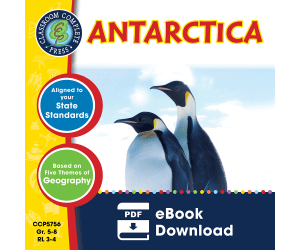
Antarctica Gr. 5-8
Social Studies, History, History: World, Grade 5, 6, 7, 8, Teacher Tools, Lesson Plans
Antarctica Gr. 5-8 Antarctica Gr. 5-8, is an exciting educational resource designed to deepen students' understanding of the South Pole's captivating ecology and geography. By immersing pupils into the world of Antarctic scientists, they explore the harsh climate, unending ice fields and dynamic magnetic field. Diverse Learning Activities Vivid facts blended with engaging activities allows students to map out research stations across Antarctica. The curriculum fosters a scientific mindset with temperature studies revealing two miles thick ice surfaces owing to extreme coldness. A unique atmospheric study from an Antarctic viewpoint offers students a fresh perspective on earth science. Mobility in Focus Inspire your learners to think beyond traditional transportation means by exploring how scientists navigate through these icy landscapes. Furthermore, comparing Antarcticas active volcano – Mt Eribus – with other globally recognized ones like St Helens and Vesuvius adds more depth into the study. Aligned With Academic Standards Besides regular geographical elements, Antarctica Gr.5-8 proudly aligns itself with State Standards along with Five Themes Of Geography, supplementing learning process by adding crossword puzzles and word searches for reinforcing knowledge while enhancing cognitive skills. Versatile Application & Enhanced Engagement This teaching aid offers teachers valuable flexibility in its application as it can be used for both whole group instruction or small group work or even as insightful homework assignments ensuring progress across different learning environments. Captivating Look Into World History And Geographical Studies Specially crafted for grade five through eight learners, it closely aligns itself to state standards and core learning objectives such as World History under Social Studies substructures. It includes maps that help foster spatial thinking skills, comprehensive quizzes for information retention and a dedicated answer key for accurate evaluation. Format & Accessibility Antarctica Gr 5-8, packaged as a user-friendly PDF, emerges as a comprehensive lesson plan to stimulate and challenge young minds in the realm of social studies while keeping learning fun and accessible at all times.
Author Classroom Complete Press
Tags PDF

American Civil War: The Human Meaning of the War Gr. 5-8
Social Studies, History, History: USA, Grade 5, 6, 7, 8, Teacher Tools, Lesson Plans
American Civil War: The Human Meaning of the War Gr. 5-8 American Civil War: The Human Meaning of the War Gr. 5-8 is a substantial teaching resource designed for educators guiding students in grades 5 through 8. It presents an objective, comprehensive view of America's inner conflict that spanned from 1861 to 1865. Overview Ideally structured for public school teachers and homeschoolers alike, this resource provides meaningful insights into the war between the North and South states of America. The conflicts presented in this lesson plan mainly revolve around issues such as slavery, the tension between industry and agriculture, and state rights Main figures of the war Abraham Lincoln Ulysses S. Grant Jefferson Davis Robert E. Lee The evaluations also cover how societal implications were affected by critically evaluating their impact on women and African Americans. Incorporating deep historical content 🡪Lincoln's Gettysburg Address: The package includes an in-depth study into President Lincoln's Gettysburg Address with thoughtfully constructed research assignments. Description of Fort Sumter's attack & other crucial battles like Bull Run battle are explained thoroughly. Main highlights: quizzes for information reinforcement. It can be implemented across varied formats—group instructions, small study circles, or individual assignments. Teaching Environments: Ideal for Social Studies educators focusing on US History. Nonetheless, it ensures optimal learning outcomes across different teaching settings due to its meticulous compliance with State Standards and adherence to Bloom's Taxonomy.
Author Classroom Complete Press
Tags PDF

I WONDER - Why Did The Microraptor Have Feathers | Animated Video
Animals, Life Sciences, Science, History: Ancient, History, Social Studies, History: World, Grade 4, 5, 6, 7, 8, 9, 10, Lesson Plans, Teacher Tools
Video Introduction An amazing video designed for the students to learn more about dinosaurs in different countries. I WONDER - Why Did The Microraptor Have Feathers | Animated Video Lesson Do you like dinosaurs? what is your favorite one? Do you own a pet? If yes, tell us more about it, like what its name? And what do you like most about it? Do you think that your pet has been evolved from a dinosaur? Can you write down the characteristics of your favourite dinosaur like it's shape, their rivals, where did it use to live and what was their favourite food? What is the largest and the smallest dinosaur that ever found? Why is the T-rex is so famous? Have you ever read any interesting facts about it? Can you name any of the carnivores or herbivores dinosaurs? I WONDER - Why Did The Microraptor Have Feathers | Animated Video Lesson The video is perfect for encouraging the researching skills for the students, while learning more about dinosaurs. I WONDER - Why Did The Microraptor Have Feathers | Animated Video Lesson This friendly designed video is suitable for students at school, homeschooling, and as a group activity. Format Available in MP4 format.
Author Educational Voice
Rating
Tags Why Did The Microraptor Have Feathers, Why Did The Microraptor Have Feathers Video, Microraptor, Microraptor Facts, Microraptor Video, Microraptor Video For Kids, Microraptor Facts For Kids
I WONDER - Where Does Halloween Come From | Animated Video Lesson
History: USA, History, Social Studies, History: Ancient, History: World, History: Europe, Grade 4, 5, 6, 7, 8, 9, 10, Lesson Plans, Teacher Tools
Video Introduction An amazing video designed for the students to learn more about history. I WONDER - Where Does Halloween Come From | Animated Video Lesson Do you like history? Which topic do you really enjoy about history? Have you ever read an interesting fact about the Vikings? If yes, can you mention them? What do you like most about the Victorian era? Can you name all the Tudors? Have you ever wondered how people used to live in ancient Japan and ancient China? Do you know any interesting facts about ancient Egyptians and the Pharaohs? Have you ever visited South America? What do you know about Incas and Aztecs? Celtic culture was really one of a kind, can you name any of the places that Celts used to live in? Imagine yourself living during the ancient Roman empire, how your life will look like? Ancient Greece was an amazing place to live in. What do you know about ancient Greek life? I WONDER - Where Does Halloween Come From | Animated Video Lesson The video is perfect for encouraging the researching skills for the students, while learning more about history. I WONDER - Where Does Halloween Come From | Animated Video Lesson This friendly designed video is suitable for students at school, homeschooling, and as a group activity. Format Available in MP4 format.
Author Educational Voice
Tags Where Does Halloween Come From, Where Does Halloween Come From Video, Halloween, Halloween Facts, Halloween History, Halloween Video, Halloween Video For Kids, Halloween Facts For Kids
I WONDER - Why Were Rainbows Important In Viking Mythology
History: Europe, History, Social Studies, History: British, History: Ancient, History: World, History: USA, History: Canada, Grade 4, 5, 6, 7, 8, 9, 10, Lesson Plans, Teacher Tools
Video Introduction An amazing video designed for the students to learn more about history. I WONDER - Why Were Rainbows Important In Viking Mythology | Animated Video Lesson Do you like history? Which topic do you really enjoy about history? Have you ever read an interesting fact about the Vikings? If yes, can you mention them? What do you like most about the Victorian era? Can you name all the Tudors? Have you ever wondered how people used to live in ancient Japan and ancient China? Do you know any interesting facts about ancient Egyptians and the Pharaohs? Have you ever visited South America? What do you know about Incas and Aztecs? Celtic culture was really one of a kind, can you name any of the places that Celts used to live in? Imagine yourself living during the ancient Roman empire, how your life will look like? Ancient Greece was an amazing place to live in. What do you know about ancient Greek life? I WONDER - Why Were Rainbows Important In Viking Mythology | Animated Video Lesson The video is perfect for encouraging the researching skills for the students, while learning more about history. I WONDER - Why Were Rainbows Important In Viking Mythology | Animated Video Lesson This friendly designed video is suitable for students at school, homeschooling, and as a group activity. Format Available in MP4 format.
Author Educational Voice
Tags Why Were Rainbows Important In Viking Mythology, Why Were Rainbows Important In Viking Mythology Video, Rainbows In Viking Mythology, Rainbows In Viking Mythology Facts, Rainbows In Viking Mythology Video

I WONDER - Who Invented Sledding | Animated Video Lesson
History: Ancient, History, Social Studies, History: Europe, History: World, History: Asian, Grade 6, 7, 8, 9, 10, 11, 12, Lesson Plans, Teacher Tools
Video Introduction An amazing video designed for the students to learn more about history. I WONDER - Who Invented Sledding | Animated Video Lesson Do you like history? Which topic do you really enjoy about history? Have you ever read an interesting fact about the Vikings? If yes, can you mention them? What do you like most about the Victorian era? Can you name all the Tudors? Have you ever wondered how people used to live in ancient Japan and ancient China? Do you know any interesting facts about ancient Egyptians and the Pharaohs? Have you ever visited South America? What do you know about Incas and Aztecs? Celtic culture was really one of a kind, can you name any of the places that Celts used to live in? Imagine yourself living during the ancient Roman empire, how your life will look like? Ancient Greece was an amazing place to live in. What do you know about ancient Greek life? I WONDER - Who Invented Sledding | Animated Video Lesson The video is perfect for encouraging the researching skills for the students, while learning more about history. I WONDER - Who Invented Sledding | Animated Video Lesson This friendly designed video is suitable for students at school, homeschooling, and as a group activity. Format Available in MP4 format.
Author Educational Voice
Tags Who Invented Sledding, Who Invented Sledding Video, Sledding, Sledding History, Sledding History Facts, Sledding History Facts For Kids, Sledding History Video, Sledding History Video For Kids