



3,912 products added recently
Page 18 - History Lesson Plans
Transport your students through time with history lesson plans that vividly illustrate past events and societies. These resources include primary sources, discussions, and projects. Implement them to foster critical thinking and a deeper understanding of our world's history.

 Show filters


Kids Love Canada: In Winter Gr. K-2
Social Studies, History, History: Canada, Grade 1, Teacher Tools, Lesson Plans
Kids Love Canada: In Winter Gr. K-2 This comprehensive package is perfect for public school teachers and homeschoolers alike looking to immerse their students into Canadian heritage during winter season. Themes included are, but not limited to communities, animals, legends and folktales, families, trees and more. Covered Topics The package contains illustrative materials such as big book and little book folktales on "Rabbit, North Wind, and Mountain Ash". To enhance interaction, an "Animal Bucks" board game is included. Unique storyboard stories like " Martha and the Northern Lights " covers relevant historical aspects. Art studies featuring works of popular Canadian artists like Mary Pratt are incorporated for broader artistic understanding. Aimed at enhancing reading skills in younger learners, there is a captivating Rebus story called "Canadian Children in Winter" along with a Ribbon Candy art lesson by Monique Martin promoting creativity. In honor of National Family Literary Day, a special family bookmaking activity was added to the resources. Specially Designed for Grade 1 Students Specializing in Social Studies (History: Canada Category) These Teaching resources were created keeping grade 1 students majoring in Social Studies with particular focus on History: Canada category. The material simplifies complex subjects for easy understanding while focusing on enhancing various skills including Reading Comprehension, Broadening Mathematical Understanding, Nurturing Critical Thinking Abilities. All these valuable topics merged into one compact PDF file type lesson plan providing great practicality. The resource pack can be employed for whole group instruction or small group activities . It also makes excellent homework assignments. Teacher-Student sections come equipped with board games, storyboard stories, word cards and big books as well as little books enabling teachers to craft flexible, well-rounded lesson plans that cater to each learner's individual needs while assuredly injecting fun throughout this educational journey of exploring Canadian winters.
Author Classroom Complete Press
Tags PDF
I WONDER - Was Julius Caesar Ever Captured | Animated Video Lesson
History: Ancient, History, Social Studies, History: British, Grade 3, 4, 5, 6, 7, 8, 9, Lesson Plans, Teacher Tools
Video Introduction An amazing video designed for the students to learn more about history. I WONDER - Was Julius Caesar Ever Captured | Animated Video Lesson Let's use our time machine and trave though time till we get to the ancient world where life began! Have you ever thought about how did ancient Greeks, Romans, Egyptians and even the Viking and Celts use to shower? And how did these amazing civilizations build iconic buildings and invented things that we still use till today like toothpaste? Do you know who was the first king and queen in the world? Which countries they ruled? Who is the most fascinating person lived on Earth? Tell us more about him/her. I WONDER - Was Julius Caesar Ever Captured | Animated Video Lesson The video is perfect for encouraging the researching skills for the students, while learning more about history. I WONDER - Was Julius Caesar Ever Captured | Animated Video Lesson This friendly designed video is suitable for students at school, homeschooling, and as a group activity. Format Available in MP4 format.
Author Educational Voice
Rating
Tags Was Julius Caesar Ever Captured, Julius Caesar, Julius Caesar Facts, Julius Caesar Facts For Kids, Julius Caesar Video, Julius Caesar Video For Kids, Julius Caesar History, Ancient Rome, Ancient Roman Leader

I WONDER - What Is A Dinosaur Biped | Animated Video Lesson
History: Ancient, History, Social Studies, History: World, Grade 3, 4, 5, 6, 7, 8, 9, Lesson Plans, Teacher Tools
Video Introduction An amazing video designed for the students to learn more about dinosaurs in different countries. I WONDER - What Is A Dinosaur Biped | Animated Video Lesson Do you like dinosaurs? what is your favorite one? Do you own a pet? If yes, tell us more about it, like what its name? And what do you like most about it? Do you think that your pet has been evolved from a dinosaur? Can you write down the characteristics of your favourite dinosaur like it's shape, their rivals, where did it use to live and what was their favourite food? What is the largest and the smallest dinosaur that ever found? Why is the T-rex is so famous? Have you ever read any interesting facts about it? Can you name any of the carnivores or herbivores dinosaurs? I WONDER - What Is A Dinosaur Biped | Animated Video Lesson The video is perfect for encouraging the researching skills for the students, while learning more about dinosaurs. I WONDER - What Is A Dinosaur Biped | Animated Video Lesson This friendly designed video is suitable for students at school, homeschooling, and as a group activity. Format Available in MP4 format.
Author Educational Voice
Rating
Tags What Is A Dinosaur Biped, What Is A Dinosaur Biped Video, Dinosaur Biped, Dinosaur Biped Video, Dinosaur Biped Facts, Dinosaur Biped Video For Kids, Dinosaur Biped Facts For Kids, Dinosaur

World War II: Major Battles
Social Studies, History, History: World, Common Core, Grade 5, 6, 7, 8, Teacher Tools, Lesson Plans
World War II: Major Battles Designed as an enlightening journey into the past, this resource provides an accessible exploration of the key battles of World War II. An ideal learning tool for use in public schools or homeschooling settings, it brings history to life across various educational scenarios. 'World War II: Major Battles' offers a detailed study of WWII's most significant conflicts, commencing with Germany's invasion of Poland on September 1, 1939. A nightmare period that involved over 200 nations and caused unparalleled destruction. The resource maintains a focus on illustrative battles such the maritime clashes and the Normandy confrontations. It employs clear language suitable for its target audience (5th to 8th graders), making complex social topics easy to understand. Prominently featured is Germany’s central role during this phase of history interlaced with engaging narratives about numerous important battles. The teaching material extends beyond being mere text – it promotes critical thinking through thought-stimulating exercises catering to multiple learning styles – making it adaptable either as class discussions or individual study modules! To aid visual understanding series of colour mini-posters are included - simplifying complex military operations from history! Educational Alignment & Accessibility This curriculum aligns perfectly with well established directives including Common Core State Standards facilitating worry-free adoption by teachers geared towards meeting prescribed course outlines effectively. It is available in one simple format — PDF — allowing flexibility for printouts and digital review during lessons or self-learning sessions. A Unique Learning Experience In conclusion, 'World War II: Major Battles', combines compelling content crafted in reader-friendly language enriched with engaging activities formulated to foster a deep understanding of one of history's most pivotal periods, making it an invaluable teaching aid for students in grades 5-8.
Author Classroom Complete Press
Tags PDF

Alexander Hamilton : Mini Unit
Social Studies, Biographies, History, History: USA, Grade 8, 9, 10, 11, 12, Lesson Plans, Teacher Tools
Alexander Hamilton Mini Unit The Alexander Hamilton Mini Unit is a comprehensive teaching resource designed to assist educators in imparting knowledge about the life and contributions of this American historical figure. It has been crafted for students ranging from grades 8 up to grade 12, making it particularly useful for those studying Social Studies, Biographies, and USA History. Covered Topic Highlights: Hamilton's early life & academics. His involvement in the Revolution, Congress, Shays Rebellion & the Constitution development. Tenure as Treasury Secretary and events such as Whiskey Rebellion. The formation of political parties: Federalist & Democratic-Republican Parties. A detailed overview of the infamous Hamilton-Burr Duel and Hamilton's legacy. This educational module respects differences among learners by offering reading sheets in both regular and simplified formats. There are also interactive PowerPoint slides which include factual information along with thought-provoking questions. Multimedia-learning Resources: Note sheets for students to jot down their thoughts or reflections on each discussed topic enhancing their comprehension level. Interactive Workbook materials: Facilitates enriched content interaction either through creating booklets or magazines. Comprehensive assessment options Brief quizzes/tests : Offers Teachers an effective tool to gauge learning outcomes. Fun and Engaging Learning Tools: Comic materials: Bringing history to life with amusing dialogues. Coloring pages: Enhancing creativity while understanding the topics. Crossword puzzles: A fun way to test students' knowledge. In conclusion, the Alexander Hamilton Mini Unit is an expansive teaching toolkit. Its flexibility allows teachers to meet diverse classroom needs. It can be used individually as a homework assignment, for group discussions encouraging collaborative learning or in whole group reflection sessions.
Author Mr Gray History
Tags Alexander Hamilton, American Revolution, Constitution Development, Treasury Secretary, Political Parties

Cells Reading Comprehension Passage - Cored Ed Encyclopedia
ELA, Language Development, Reading Comprehension, Reading, Pre-Reading, Life Sciences, Science, Technology, History, Social Studies, Grade 2, 3, 4, 5, Worksheets & Printables, Worksheets, Teacher Tools, Centers, Activities, Writing Prompts, Assessments, Quizzes and Tests, Quizzes, Lesson Plans
This cells reading comprehension with lesson plan includes: Visualization (on the front cover) Start your lesson by taking a minute to think and share something about the topic. Read the script aloud (slowly), perhaps prepare some music or sound effects. Student close their eyes and let their imaginations wander. Students open their eyes, read the question aloud and give them a few minutes to complete. Ask a few students to share or keep answers until the end to compare with what they learn in the passage. Quick pause—thousands of Cored Education products are included with your TeachSimple membership. Download links and encyclopedia index available here. Pre-Reading Trivia Students will write down one thing they already know about the subject and then read five more facts and discuss. These facts are fun, and the students will enjoy learning about the subject before reading more. Give 1 minute for students to write what they already know (no pressure—best guess is fine). Read the five facts together. After each fact, do ask a student for their opinion, was it surprising? Set a purpose by asking students to highlight/underline one fact they want to learn more about during the reading. Reading Passage The text is a high-interest reading passage with set paragraphs, roughly three to four paragraphs long. It contains a variety of themes about the topic, anywhere from history to technology. The passage is between 250 and 350 words in length. First, ask students to look at the headings and see what they’ll learn about today. What do they know about the topic/heading? First read options: Teacher read-aloud (best for support). Partner reading (paragraph by paragraph). While reading, students underline important details, and vocabulary words they think may come up in the questions section. Mixed Questions The first question page contains four multiple-choice questions, each with a choice of four answers, and three written response questions that require a sentence or two from the student. Students complete the mcqs first independently, then review quickly as a class. For the 3 written responses, try to get students giving the answer with some form of evidence: “I think ___ because the text says ___.” If students get stuck, send them back to check the passage. Vocabulary Questions Practice seven key words from the text in this section across two activities. First section is scrambled words where students will unscramble three words given a clue for each. The second section is a word to meaning matching activity. Before starting, have some students read out words they underlined in the passage. Ask students to say the word and read aloud the sentence(s) around each word. Ask students to do scrambled words and the matching exercise in pairs then go through answers as a class. For the scrambled spelling task, get four pairs to come up to the board and write the words for extra practice with the other student reading out the clue. For the matching task, prompt students to give full sentences: “I matched ___ with ___ because ___.” Creative Writing In this question, the student will be required to write a five to eight sentence paragraph on a question related to the topic. Before starting, ask students write down 3 key ideas they are going to include in their piece. Ask students for ideas to share around the class to help those struggling. Pro writing expectations: 5–8 sentences At least 2 facts or details from the passage At least 2 vocabulary words from the previous page Students read their paragraphs while classmates listen for facts and vocabulary words. Extension Activities This page is optional for fast finishers or to take home. There are several activities, each one requiring a different skill. Do some, do none, do all, completely optional - but you will feel reassured knowing every possibility is planned for. Includes summary writting question and additional facts. Answer Key There are answers for the multiple-choice questions, written response questions have sample answers, vocabulary answers and if there is a summary question then a sample summary will be provided as well. Lesson Plan Included Customized lesson plan for this lesson is included. Lesson Snapshot Title: Cells Genre: Nonfiction (informational science text with headings) Subject: Life Science / Reading (Informational Text) Primary Topic: Cell discovery, parts, and how cells work Estimated Guided Reading Level (A–Z): Q What This Lesson Teaches Best Explains how scientists first described “cells” by observing cork under a microscope (Robert Hooke, 1665). Shows how improved lenses led to new discoveries, including seeing living tiny organisms and developing the idea that living things are built from cells. Teaches core cell-part functions using a clear analogy (a cell as a “busy little city”), including membrane, nucleus/DNA, and organelles. Highlights differences and similarities across living things (one-celled organisms vs. animals with trillions of cells working in teams). Introduces the idea of cell division and specialization as a way living things grow and heal. Learning Goals Students will explain why Robert Hooke used the word “cells” for what he saw in cork. Students will describe how better microscopes changed what scientists could observe. Students will identify key cell parts named in the text and describe what each does. Students will compare one-celled organisms with animals made of many cells, using details from the passage. Students will describe what the passage says about how new cells form. Key Vocabulary From the Text membrane — thin “skin” that separates inside from outside. nucleus — cell center part that holds DNA. organelles — tiny cell parts with special jobs. mitochondria — parts that help release energy from food. chloroplasts — green parts that capture sunlight. FULL CATALOG OF DOWNLOAD LINKS AND ENCYCLOPEDIA INDEX HERE
Author Cored Education
Rating
Tags Vocabulary, Reading Comprehension, Reading Passages, Lesson Plans, Ela Lesson Plans, Reading Comprehension Lesson Plans, Pre-reading, Science Lesson Plans, Life Science, History

The move to Global War - IB Paper 1 Full Course Notes - 39 Pages
Social Studies, History, History: World, Grade 12, Teacher Tools, Lesson Plans
Title: The Move to Global War - IB Paper 1 Full Course Notes - 39 Pages Unleash the potential of your students with this comprehensive set of notes on The Move to Global War for the International Baccalaureate (IB) Paper 1 course. This meticulously arranged thirty-nine-page pack offers an exhaustive exploration into the historical intricacies that paved the road towards global conflict. Covering a multitude of pressing topics including: Japanese expansion leading to global warfare, Italy's position in inter-war European geopolitics and even examining why international response to Abyssinian Crisis was weak, This set of notes presents a thorough understanding for students. In addition, there's a steadfast focus on German foreign policy development comprehension, demonstrating how it evolved in its complexity and purpose. By dissecting key real-world examples from history, learners will grasp these challenging concepts more effectively preparing them for their examination journey. This indispensable resource can be employed seamlessly across various academic settings – whether that is group study sessions or individualized homework assignments. Tailor its use based on your teaching methods and students' needs with its versatile format in Microsoft Word. Designed specifically with Grade 12 Social Studies curriculum focusing on World History in mind, this resource stands as an easy-to-understand yet detailed guide through understanding our world's past conflicts. Its robust content empowers educators like yourself to deliver their lessons confidently without sacrificing depth or knowledge quality Incorporating this rich yet accessible teaching tool into your toolkit will serve you doubly by streamlining preparation time while enhancing student learning efficiency. With these detailed course notes on hand, educators can rely upon a trustworthy resource designed for helping their learners succeed academically not just today but also tomorrow when they take exams incorporating historical studies about global war themes.
Author Innov8tive History
Tags Japanese Expansion, Global Warfare, Italy In Inter-war Europe, Abyssinian Crisis, German Foreign Policy

Civil War on Sunday (Magic Tree House #21 Lesson Plan, Videos, Activities)
Social Studies, ELA, History, History: USA, Reading, Reading Comprehension, Grammar, Literature, Language Development, Vocabulary, Spelling, Writing, Grade 1, 2, 3, Lesson Plans, Teacher Tools
Civil War on Sunday Novel Study for Grades 1-3 Transport students back in time with this 5-day novel study for Civil War on Sunday, part of the beloved Magic Tree House series. Through reading comprehension questions, vocabulary builders, creative writing prompts, geography activities, arts and crafts projects, and more, young learners will strengthen literacy skills and deepen their knowledge of the American Civil War era. Ideal for whole class, small group, or independent study, this versatile cross-curricular resource can be customized for different ages and learning styles. Bring history to life while fostering a passion for reading with this engaging novel companion.
Author Heather Huhman
Tags Civil War On Sunday, Civil War, Magic Tree House, Book Companion, Novel Study, Civil War Lesson Plans For High School

I WONDER - How Did Ancient Greeks Decorate Their Clothes
History, Social Studies, History: Ancient, History: Europe, Grade 4, 5, 6, 7, 8, 9, 10, Lesson Plans, Teacher Tools
Video Introduction An amazing video designed for the students to learn more about history. I WONDER - How Did Ancient Greeks Decorate Their Clothes | Animated Video Lesson Do you like history? Which topic do you really enjoy about history? Have you ever read an interesting fact about the Vikings? If yes, can you mention them? What do you like most about the Victorian era? Can you name all the Tudors? Have you ever wondered how people used to live in ancient Japan and ancient China? Do you know any interesting facts about ancient Egyptians and the Pharaohs? Have you ever visited South America? What do you know about Incas and Aztecs? Celtic culture was really one of a kind, can you name any of the places that Celts used to live in? Imagine yourself living during the ancient Roman empire, how your life will look like? Ancient Greece was an amazing place to live in. What do you know about ancient Greek life? I WONDER - How Did Ancient Greeks Decorate Their Clothes | Animated Video Lesson The video is perfect for encouraging the researching skills for the students, while learning more about history. I WONDER - How Did Ancient Greeks Decorate Their Clothes | Animated Video Lesson This friendly designed video is suitable for students at school, homeschooling, and as a group activity. Format Available in MP4 format.
Author Educational Voice
Tags How Did Ancient Greeks Decorate Their Clothes, How Did Ancient Greeks Decorate Their Clothes Video, Ancient Greek Clothes, Ancient Greek Clothes Video, Ancient Greek Clothes Facts, Ancient Greek Clothes Video For Kids

Country Study Presentation - Zambia - Geography - Africa
Social Studies, First Peoples (Native), Geography, History: African, History, Grade 7, 8, 9, 10, 11, 12, Teacher Tools, Presentations, Lesson Plans
Country Study Presentation - Zambia - Geography + Social Studies - Southern Africa Try this Teaching Resource on Zambia (Introductory Presentation Lesson - PDF Printable), designed for Geography + African History (Southern Africa) + Social Studies lessons. Suitable for Grades 7–12 (Middle school and High School students), this Introductory PDF Presentation offers a ready to use lesson that requires little to no preparation. Geography and Social Studies students will learn about Zambia ’s geography, history, culture, language and economy — making it perfect for classroom instruction, homeschooling, or online learning. 📘 Teachers can find the following topics in this Social Studies and Geograhy Teaching resource ✅ Greetings in Bemba ✅ Geography of Zambia (Southern Africa) – Key facts, borders, and an interactive Google Maps link to its location. ✅ Quick Facts – Population, capital city, currency and other essential details. ✅ Languages of Zambia : Bemba - introduction in the languages spoken + basic vocabuary ✅ History Overview – A concise summary of the most important events in the history of Zambia (Southern Africa) ✅ Geography & Environment – Details about the country’s land area, regions, and climate zones. ✅ Zambia's Economy – paragraph on Zambia ’s industries, exports, currency and economic strengths (Southern Africa) ✅ Lusaka – Explore the capital city of Zambia , its famous landmarks, and cultural highlights. ✅ Other Major Cities – A map showcasing additional important cities in Zambia (Southern Africa) ✅ Zambia's Culture & Traditions – A look at the customs and values that define Zambia (Southern Africa) ✅ Farewell in Bemba 🎯 This Geography and Social Studies Teaching Resource can be perfect for: Geography classes Social Studies lessons World cultures units Country study projects Substitute teacher toolbox Digital learning In-class or online teaching 📂 Resource Details Format: PDF Digital Presentation Grade Levels: 7th–12th Grade (Middle School and High School students) Learning with Alan is an educational resource store created to help teachers, educators, and tutors reach their teaching goals while building a fun, engaging, and stimulating learning environment . Because learning should always be meaningful—and fun! 🎓✨ If you want to browse more of my Teaching Resources, click here Learning with Alan!!
Author Learning with Alan
Rating
Tags Country Study, Social Studies, Geography, Africa, Zambia, Lesson, Introduction, History, Southern Africa, African

I WONDER - Who Discovered The Baryonyx | Animated Video Lesson
Animals, Life Sciences, Science, History: Ancient, History, Social Studies, History: World, Grade 4, 5, 6, 7, 8, 9, 10, Lesson Plans, Teacher Tools
Video Introduction An amazing video designed for the students to learn more about dinosaurs in different countries. I WONDER - Who Discovered The Baryonyx | Animated Video Lesson Do you like dinosaurs? what is your favorite one? Do you own a pet? If yes, tell us more about it, like what its name? And what do you like most about it? Do you think that your pet has been evolved from a dinosaur? Can you write down the characteristics of your favourite dinosaur like it's shape, their rivals, where did it use to live and what was their favourite food? What is the largest and the smallest dinosaur that ever found? Why is the T-rex is so famous? Have you ever read any interesting facts about it? Can you name any of the carnivores or herbivores dinosaurs? I WONDER - Who Discovered The Baryonyx | Animated Video Lesson The video is perfect for encouraging the researching skills for the students, while learning more about dinosaurs. I WONDER - Who Discovered The Baryonyx | Animated Video Lesson This friendly designed video is suitable for students at school, homeschooling, and as a group activity. Format Available in MP4 format.
Author Educational Voice
Rating
Tags Who Discovered The Baryonyx, Who Discovered The Baryonyx Video, Baryonyx, Baryonyx Facts, Baryonyx Video, Baryonyx Video For Kids, Baryonyx Facts For Kids, Dinosaur, Dinosaurs

The Oregon Trail : Mini Unit
Social Studies, History, History: USA, Grade 4, 5, 6, 7, 8, Lesson Plans, Teacher Tools
The Oregon Trail : Mini Unit is a great resource to have students explore and learn about the topic. The materials included are designed to teach the story of the Oregon Trail. Reading material, questions, and activity sheets are provided for the following topics : Planning the journey. Transport. Supplies. Children on the trail. Obstacles. Dangers. Disasters. This unit contains all the files needed for students to explore the topic in detail and for them to show their knowledge at the end. Among the files included are: Presentations file includes information about the The Oregon Trail : Mini Unit Additionally, it presents 3 different options for students to demonstrate their knowledge in the topic. Each of the options are shown with instructions, hints and tips. The options are: A Guidebook project or a Dairy project. Worksheets file includes reading comprehension worksheets and also all necessary worksheets for students to engage in an activity where they need to choose the supplies they need but their wagon can only carry a maximum of 2400 pounds. If they try to carry any more than this then their wagon will probably break and their animals will be too tired. Separated material contains individual ready-to-print worksheets to be used throughout the unit.
Author Mr Gray History
Tags Oregon, Oregon Trail, Oregon Trail Unit, Lesson Plans On The Oregon Trail, Oregon Trail Lesson Plans, Oregon Trail Lesson Plans 5th Grade

The Civil War | Social Studies Unit
Social Studies, History, History: USA, Grade 9, 10, 11, 12, Teacher Tools, Lesson Plans
This resource is a The Civil War Social Studies Unit . This bundle of resources has everything you need to introduce the before, during, and after of the Civil War. A critical part in American history and this unit leaves no stone unturned. From research essays to lectures and quizzes , you can be confident in knowing that students will complete this unit well-informed! The best part is that every component is created with engagement in mind to keep your learners attention. The even better part is that each component can be printed or paperless. Instructions for accessibility are included.
Author Creating History
Tags Civil War, American History, Google Classroom, Lectures, Research Essay

I WONDER - Why Is The Chinese Dragons Important In Chinese Culture
Sociology, Social Studies, Geography, History: Asian, History, Grade 4, 5, 6, 7, 8, 9, 10, Lesson Plans, Teacher Tools
Video Introduction An amazing video designed for the students to learn more about history. I WONDER - Why Is The Chinese Dragons Important In Chinese Culture | Animated Video Lesson In Chinese culture, dragons are very special. They symbolize: Good luck and fortune 🎰 Strength and power 💪 Wisdom and intelligence 🧠 Long ago, only the Emperor of China was allowed to wear clothes with dragon designs. This showed how important and powerful he was. 👑 Fun Fact: Imagine if only one person in your whole country could wear a certain picture on their clothes! I WONDER - Why Is The Chinese Dragons Important In Chinese Culture | Animated Video Lesson The video is perfect for encouraging the researching skills for the students, while learning more about history. I WONDER - Why Is The Chinese Dragons Important In Chinese Culture | Animated Video Lesson This friendly designed video is suitable for students at school, homeschooling, and as a group activity. Format Available in MP4 format.
Author Educational Voice
Rating
Tags Why Is The Chinese Dragons Important In Chinese Culture, Why Is The Chinese Dragons Important In Chinese Culture Video, Chinese Dragons, Chinese Dragons Facts, Chinese Dragons Video, Chinese Culture
I WONDER - What Age Did You Marry In Ancient Rome | Animated Video
History: Ancient, History, Social Studies, History: Europe, Grade 4, 5, 6, 7, 8, 9, 10, Lesson Plans, Teacher Tools
Video Introduction An amazing video designed for the students to learn more about history. I WONDER - What Age Did You Marry In Ancient Rome | Animated Video Lesson Do you like history? Which topic do you really enjoy about history? Have you ever read an interesting fact about the Vikings? If yes, can you mention them? What do you like most about the Victorian era? Can you name all the Tudors? Have you ever wondered how people used to live in ancient Japan and ancient China? Do you know any interesting facts about ancient Egyptians and the Pharaohs? Have you ever visited South America? What do you know about Incas and Aztecs? Celtic culture was really one of a kind, can you name any of the places that Celts used to live in? Imagine yourself living during the ancient Roman empire, how your life will look like? Ancient Greece was an amazing place to live in. What do you know about ancient Greek life? I WONDER - What Age Did You Marry In Ancient Rome | Animated Video Lesson The video is perfect for encouraging the researching skills for the students, while learning more about history. I WONDER - What Age Did You Marry In Ancient Rome | Animated Video Lesson This friendly designed video is suitable for students at school, homeschooling, and as a group activity. Format Available in MP4 format.
Author Educational Voice
Tags What Age Did You Marry In Ancient Rome, What Age Did You Marry In Ancient Rome Video, Ancient Rome, Ancient Rome Facts, Ancient Rome Facts For Kids, Ancient Rome Video, Ancient Rome Video For Kids
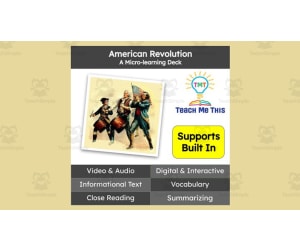
American Revolution | Reading Comprehension Deck | Interactive Lesson
Social Studies, History, History: USA, Grade 6, 7, 8, Teacher Tools, Lesson Plans
American Revolution Reading Comprehension Lessons Transport students back in time to the era of the American Revolution with this interactive digital lesson deck for middle school social studies. The resource covers key events and figures from the Revolutionary War period through engaging informational texts, video clips, close reading activities, a quick write exercise, and reading comprehension assessments . Educators can utilize the materials in various ways - as a whole class lesson, small group work, or even as independent assignments. The multi-media format keeps middle schoolers engaged as they build content knowledge and reading skills. This standards-aligned teaching resource is versatile for implementing in different learning formats across grades 6-8.
Author Teach Me This
Tags American Revolution, Reading, Comprehension, Social Studies, U.S. History
What Is The Difference Between Chinese Dragon And Western Dragon
History, Social Studies, History: Europe, History: USA, History: Asian, History: Ancient, Grade 3, 4, 5, 6, 7, 8, 9, Lesson Plans, Teacher Tools
Video Introduction An amazing video designed for the students to learn more about mythological creatures in different cultures. I WONDER - What Is The Difference Between Chinese Dragon And Western Dragon | Animated Video Lesson Do you know who are mermaids and what they look like? How do you think they have been created and in which mythology we can find them? Have you ever read about Cerberus the dog with three faces? If yes, tell us where it lived and what was its job? How did Minotaur look like? Did it has a unique story to tell from the Greek mythology? Why do people love to put gnomes in their gardens? In which mythology we can find them? Do you know that not all dragons are same some dragons are really scary and some can bring good luck. So let's discover the difference between the western dragons and Chinese dragons. Tell us which ones do you prefer? I WONDER - What Is The Difference Between Chinese Dragon And Western Dragon | Animated Video Lesson The video is perfect for encouraging the creativity skills for the students, while learning more about this fantastic mythical creature. I WONDER - What Is The Difference Between Chinese Dragon And Western Dragon | Animated Video Lesson This friendly designed video is suitable for students at school, homeschooling, and as a group activity. Format Available in MP4 format.
Author Educational Voice
Rating
Tags What Is The Difference Between Chinese Dragon And Western Dragon, Chinese Dragon, Chinese Dragon Facts, Chinese Dragon Video, Chinese Dragon Video For Kids, Western Dragon, Western Dragon Facts
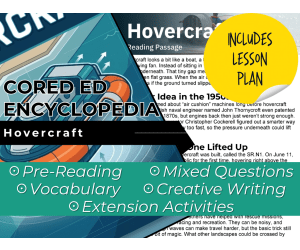
Hovercraft Reading Comprehension Passage - Cored Ed Encyclopedia
ELA, Reading Comprehension, Reading, Pre-Reading, Language Development, History, Social Studies, Science, Physics, Technology, Grade 2, 3, 4, 5, Worksheets & Printables, Worksheets, Teacher Tools, Centers, Activities, Writing Prompts, Assessments, Quizzes and Tests, Quizzes, Lesson Plans
This hovercraft reading comprehension with lesson plan includes: Visualization (on the front cover) Start your lesson by taking a minute to think and share something about the topic. Read the script aloud (slowly), perhaps prepare some music or sound effects. Student close their eyes and let their imaginations wander. Students open their eyes, read the question aloud and give them a few minutes to complete. Ask a few students to share or keep answers until the end to compare with what they learn in the passage. Quick pause—thousands of Cored Education products are included with your TeachSimple membership. Download links and encyclopedia index available here. Pre-Reading Trivia Students will write down one thing they already know about the subject and then read five more facts and discuss. These facts are fun, and the students will enjoy learning about the subject before reading more. Give 1 minute for students to write what they already know (no pressure—best guess is fine). Read the five facts together. After each fact, do ask a student for their opinion, was it surprising? Set a purpose by asking students to highlight/underline one fact they want to learn more about during the reading. Reading Passage The text is a high-interest reading passage with set paragraphs, roughly three to four paragraphs long. It contains a variety of themes about the topic, anywhere from history to technology. The passage is between 250 and 350 words in length. First, ask students to look at the headings and see what they’ll learn about today. What do they know about the topic/heading? First read options: Teacher read-aloud (best for support). Partner reading (paragraph by paragraph). While reading, students underline important details, and vocabulary words they think may come up in the questions section. Mixed Questions The first question page contains four multiple-choice questions, each with a choice of four answers, and three written response questions that require a sentence or two from the student. Students complete the mcqs first independently, then review quickly as a class. For the 3 written responses, try to get students giving the answer with some form of evidence: “I think ___ because the text says ___.” If students get stuck, send them back to check the passage. Vocabulary Questions Practice seven key words from the text in this section across two activities. First section is scrambled words where students will unscramble three words given a clue for each. The second section is a word to meaning matching activity. Before starting, have some students read out words they underlined in the passage. Ask students to say the word and read aloud the sentence(s) around each word. Ask students to do scrambled words and the matching exercise in pairs then go through answers as a class. For the scrambled spelling task, get four pairs to come up to the board and write the words for extra practice with the other student reading out the clue. For the matching task, prompt students to give full sentences: “I matched ___ with ___ because ___.” Creative Writing In this question, the student will be required to write a five to eight sentence paragraph on a question related to the topic. Before starting, ask students write down 3 key ideas they are going to include in their piece. Ask students for ideas to share around the class to help those struggling. Pro writing expectations: 5–8 sentences At least 2 facts or details from the passage At least 2 vocabulary words from the previous page Students read their paragraphs while classmates listen for facts and vocabulary words. Extension Activities This page is optional for fast finishers or to take home. There are several activities, each one requiring a different skill. Do some, do none, do all, completely optional - but you will feel reassured knowing every possibility is planned for. Includes summary writting question and additional facts. Answer Key There are answers for the multiple-choice questions, written response questions have sample answers, vocabulary answers and if there is a summary question then a sample summary will be provided as well. Lesson Plan Included Customized lesson plan for this lesson is included. Lesson Snapshot Title: Hovercraft Genre: Nonfiction (informational text) Subject: Science / Engineering (transportation) Primary Topic: How hovercraft ride on air and where they’re used Estimated Guided Reading Level (A–Z): Q What This Lesson Teaches Best Explains how a hovercraft rides on a “cushion of air trapped underneath,” instead of sitting in water. Describes why the air cushion reduces rubbing so the craft can slide over water, sand, or flat grass. Gives a brief invention history (an 1870s patented idea, then a smarter 1950s improvement to stop air leaking). Shows how design changes improved performance, including the flexible “skirt” for obstacles and choppy water. Connects hovercraft to real-world uses today (ferries, rescue missions, military landings, racing/recreation) and notes challenges like wind and waves. Learning Goals Students will describe how a hovercraft is like a boat, a small airplane, and a moving fan. Students will explain how an air cushion helps a hovercraft slide with very little rubbing. Students will describe how Christopher Cockerell improved hovercraft by reducing air leaking in the 1950s. Students will identify the SR.N1 and tell what happened when it was shown to the public on June 11, 1959. Students will explain how the flexible “skirt” helped hovercraft handle obstacles and choppy water. Students will list at least two places or jobs hovercraft can do today, using text evidence. Key Vocabulary From the Text patented — legally protected an invention idea. pressure — pushing force of trapped air underneath. flexible — able to bend without breaking. obstacles — things in the way that block movement. ferries — boats that carry people across a route. FULL CATALOG OF DOWNLOAD LINKS AND ENCYCLOPEDIA INDEX HERE
Author Cored Education
Rating
Tags Vocabulary, Reading Comprehension, Reading Passages, Lesson Plans, Ela Lesson Plans, Reading Comprehension Lesson Plans, Pre-reading, Science Lesson Plans, Physics, Technology

I WONDER - How Big Was The Carnotaurus | Animated Video Lesson
History: Ancient, History, Social Studies, History: World, Animals, Life Sciences, Science, Grade 4, 5, 6, 7, 8, 9, 10, Lesson Plans, Teacher Tools
Video Introduction An amazing video designed for the students to learn more about dinosaurs in different countries. I WONDER - How Big Was The Carnotaurus | Animated Video Lesson Do you like dinosaurs? what is your favorite one? Do you own a pet? If yes, tell us more about it, like what its name? And what do you like most about it? Do you think that your pet has been evolved from a dinosaur? Can you write down the characteristics of your favourite dinosaur like it's shape, their rivals, where did it use to live and what was their favourite food? What is the largest and the smallest dinosaur that ever found? Why is the T-rex is so famous? Have you ever read any interesting facts about it? Can you name any of the carnivores or herbivores dinosaurs? I WONDER - How Big Was The Carnotaurus | Animated Video Lesson The video is perfect for encouraging the researching skills for the students, while learning more about dinosaurs. I WONDER - How Big Was The Carnotaurus | Animated Video Lesson This friendly designed video is suitable for students at school, homeschooling, and as a group activity. Format Available in MP4 format.
Author Educational Voice
Rating
Tags How Big Was The Carnotaurus, How Big Was The Carnotaurus Video, Carnotaurus, Carnotaurus Video, Carnotaurus Facts, Carnotaurus Facts For Kids, Carnotaurus Video For Kids, Dinosaur

Mount Vernon: Historic Monuments Series
Social Studies, History, History: USA, Grade 4, 5, 6, 7, 8, Teacher Tools, Lesson Plans
Mount Vernon: Historic Monuments Series - Enriching History Lessons for Grade 4 to 8 Students Designed specifically for grade 4 through 8 students, this social studies tool focuses on exciting topics that run the length from Jamestown’s establishment to George Washington's key roles in American history. An engaging journey into Virginia and the USA’s rich history, including interactions between Captain John Smith and Pocahontas. A detailed exploration of George Washington's lifelong love for his home at Mount Vernon. Versatile Teaching Resource - Learning Anywhere, Anytime! This resource offers 50 ready-to-print pages, conveniently delivered in the PDF format. It’s ideal for numerous learning scenarios: In-class group lessons: traditional instruction setting or small-group discussions. Homeschooling: a valuable resource enabling learners to absorb knowledge at their own pace from their homes’ comfort. Maintaining Engagement Through Review Questions The end of each section includes review questions that test comprehension — keeping students engaged while reinforcing learned concepts. This feature ensures focus on key historical facts, personalities, and events remains unabated throughout the lesson. Promoting Research Skills & Broadening Outlook The teaching resource encourages independent research using web resources - promoting not just breadth but depth of knowledge across different modes of learning. This merges boundaries between technology-enhanced learning platforms and traditional teaching methods. Diverse Learning Methods Catering to Everyone! This academic toolkit accommodates all types of learners—from visual enthusiasts fascinated with graphical representation to kinesthetic minds who learn best from hands-on experience! Teacher-Friendly Resource - Saving Time & Effort An answer key is provided for effortless checking of student progress—reducing workload significantly and allowing time for planning new exciting lessons or personal development! In essence, the Mount Vernon: Historic Monuments series brings American history right to your classroom in a fun and engaging way — an indispensable addition to every teacher’s academic toolbox!
Author Classroom Complete Press
Tags American History, Mount Vernon, Monuments, Jamestown, Slavery
I WONDER - What Were Bronze Age Homes Like | Animated Video Lesson
History: Ancient, History, Social Studies, History: Europe, History: World, History: Asian, History: African, Grade 4, 5, 6, 7, 8, 9, 10, Lesson Plans, Teacher Tools
Video Introduction An amazing video designed for the students to learn more about history. I WONDER - What Were Bronze Age Homes Like | Animated Video Lesson Do you like history? Which topic do you really enjoy about history? Have you ever read an interesting fact about the Vikings? If yes, can you mention them? What do you like most about the Victorian era? Can you name all the Tudors? Have you ever wondered how people used to live in ancient Japan and ancient China? Do you know any interesting facts about ancient Egyptians and the Pharaohs? Have you ever visited South America? What do you know about Incas and Aztecs? Celtic culture was really one of a kind, can you name any of the places that Celts used to live in? Imagine yourself living during the ancient Roman empire, how your life will look like? Ancient Greece was an amazing place to live in. What do you know about ancient Greek life? I WONDER - What Were Bronze Age Homes Like | Animated Video Lesson The video is perfect for encouraging the researching skills for the students, while learning more about history. I WONDER - What Were Bronze Age Homes Like | Animated Video Lesson This friendly designed video is suitable for students at school, homeschooling, and as a group activity. Format Available in MP4 format.
Author Educational Voice
Tags What Were Bronze Age Homes Like, What Were Bronze Age Homes Like Video, Bronze Age Homes, Bronze Age Homes Facts, Bronze Age Homes Video, Bronze Age Homes Video For Kids, Bronze Age Homes Facts For Kids

US State Presentation - Alabama
Social Studies, First Peoples (Native), Economics, Geography, History: USA, History, Middle School, Not Grade Specific, High School, Teacher Tools, Lesson Plans, Presentations
US State Presentation - Alabama Bring the United States to life in your classroom with this engaging US State Presentation on Alabama , a ready-to-use digital resource designed for Geography, Social Studies, and US History classes from 7th grade through 12th grade . This presentation provides students with a clear, structured introduction to one US state while combining essential geographical, historical, economic, and cultural information in an accessible format. This US State Presentation - Alabama , includes: The resource begins with a general introduction to the state , helping students understand its location, identity, and importance within the United States. Students then explore the state's borders and neighboring states , making it easier to place it within the broader geography of the country. A general data section introduces key facts such as population, area, population density, capital city, and other essential statistics , providing a useful foundation for further study. A paragraph that explores the history of this US state , highlighting important events, periods, people, and developments that have shaped its identity. This section is particularly useful for US History lessons because it allows students to connect state-level history with major events and themes in American history. A Geography section examines the state's physical characteristics, including its territory, landscapes, natural features, environment, and climate. Students can discover how mountains, rivers, plains, forests, coastlines, deserts, or other geographical characteristics have influenced settlement and human activity. A presentation also introduces the state's economy , explaining its major economic sectors, industries, natural resources, agricultural activities, and other economic strengths. This provides an excellent opportunity to connect geography with economics and understand why particular industries have developed in different parts of the United States. A dedicated section focuses on the capital city , introducing its importance as a political and administrative center. Students can also learn about other important cities , discovering major urban centers and their roles in business, transportation, education, culture, tourism, or industry. A paragraoh that explores culture , giving students an opportunity to learn about traditions, food, music, celebrations, landmarks, historical heritage, and other characteristics that contribute to the state's unique identity. This digital US State Presentation on Alabama is ideal for classroom instruction, student research, geography units, US History lessons, Social Studies activities, state studies, homework, review activities, and independent learning. Its organized structure makes it suitable for middle school and high school students , while its broad range of topics encourages students to view a state from multiple perspectives. Whether you are teaching a unit on the United States, American Geography, US History, state studies, or regional culture , this resource offers a convenient and engaging way to help students explore the diversity and complexity of the United States. Perfect for: Geography Classes, Social Studies Classes, US History Classes, Middle School, High School, Grades 7–12, State Studies, American Studies, Homeschooling, Student Research, and Digital Learning. Learning with Alan is an educational resource store created to help teachers, educators, and tutors reach their teaching goals while building a fun, engaging, and stimulating learning environment . Because learning should always be meaningful—and fun! 🎓✨ If you want to browse more of my Teaching Resources, click here Learning with Alan!!
Author Learning with Alan
Rating
Tags USA, US States, Alabama, Presentation, Lesson, Introduction, Geography, Social Studies, US History, History

Ancient Civilizations: Greece Unit Study
Social Studies, History, History: Ancient, Grade 3, 4, 5, 6, Lesson Plans, Teacher Tools
Ancient Civilizations: Greece Unit Study The Ancient Civilizations: Greece Unit Study serves as a comprehensive toolkit for educators introducing their students to ancient Greek civilization. This package is suitable for teachers and home-schoolers instructing grades 3-6 in social studies classes. Geographical Landscapes: Students explore geographies of ancient Greece such as The Parthenon and Aegean Islands through colorful maps. Famous Figures: Person knowledge strips featuring key personalities including Aristotle and Alexander the Great are also included. Literacy Components: Tailored book recommendations, both fiction and non-fiction, engulf students into the rich culture of Ancient Greece while vocabulary strips aid learners in grasping key terms like ‘Philosophy’ or ‘Democracy’ YouTube Videos: Suggested YouTube videos about various aspects of ancient Greek life capture the interest of digital-native learners. Craft Projects & Games: Students can recreate artifacts like Amphora (baskets), Lyre (musical instruments), Kotinos Wreath (national symbol), coin systems etc. through provided craft projects. Thematic spelling words about infamous events from this time period are used in interesting matching games related to Greek gods. Writing Prompts: The unit concludes with writing prompts across several genres that encourage both students' and teachers' conceptualization, thereby integrating writing into history lessons seamlessly. This comprehensive resource aids you in introducing your pupils to one of civilization's most fascinating eras – Ancient Greece! Enjoy!
Author Simply Schoolgirl
Tags Geography, Ancient Greece, Resources, Artifacts, Writing Prompts

Country Study Presentation - Vanuatu - Geography - Oceania
Social Studies, First Peoples (Native), History, Grade 7, 8, 9, 10, 11, 12, Teacher Tools, Presentations, Lesson Plans
Country Study Presentation - Vanuatu - Geography + Social Studies - Oceania Try this Teaching Resource on Vanuatu (Introductory Presentation Lesson - PDF Printable), designed for Geography + Oceanian History (Oceania - Pacific Ocean) + Social Studies lessons. Suitable for Grades 7–12 (Middle school and High School students), this Introductory PDF Presentation offers a ready to use lesson that requires little to no preparation. Geography and Social Studies students will learn about Vanuatu ’s geography, history, culture, language and economy — making it perfect for classroom instruction, homeschooling, or online learning. 📘 Teachers can find the following topics in this Social Studies and Geograhy Teaching resource ✅ Greetings in English + French + Bislama ✅ Geography of Vanuatu ( Oceania - Pacific Ocean ) – Key facts, borders, and an interactive Google Maps link to its location. ✅ Quick Facts – Population, capital city, currency and other essential details ( Oceania - Pacific Ocean ) ✅ Languages of Vanuatu : English + French + Bislama - introduction in the languages spoken + basic vocabuary ✅ History Overview – A concise summary of the most important events in the history of Vanuatu ( Oceania - Pacific Ocean ) ✅ Geography & Environment – Details about the country’s land area, regions, and climate zones ( Oceania - Pacific Ocean ) ✅ Kiribati's Economy – paragraph on Vanuatu ’s industries, exports, currency and economic strengths ( Oceania - Pacific Ocean ) ✅ Port Vila – Explore the capital city of Vanuatu , its famous landmarks, and cultural highlights. ✅ Other Major Cities – A map showcasing additional important cities in Vanuatu ( Oceania - Pacific Ocean ) ✅ Vanuatu's Culture & Traditions – A look at the customs and values that define Vanuatu ( Oceania - Pacific Ocean ) ✅ Farewell in English + French + Bislama 🎯 This Geography and Social Studies Teaching Resource can be perfect for: Geography classes Social Studies lessons World cultures units Country study projects Substitute teacher toolbox Digital learning In-class or online teaching 📂 Resource Details Format: PDF Digital Presentation Grade Levels: 7th–12th Grade (Middle School and High School students) Learning with Alan is an educational resource store created to help teachers, educators, and tutors reach their teaching goals while building a fun, engaging, and stimulating learning environment . Because learning should always be meaningful—and fun! 🎓✨ If you want to browse more of my Teaching Resources, click here Learning with Alan!!
Author Learning with Alan
Rating
Tags Geography, Social Studies, Oceania, Vanuatu, Ocean, Pacific Ocean, Country Study, Presentation, Introduction, Lesson