resources by type
resources by grade
resources by subject
other resources

3,948 products added recently

Page 2 - 8th Grade Word Problems

Provide eighth graders with word problems that involve geometry, functions, and complex algebraic concepts. These worksheets bridge the gap to high school mathematics. Use them to ensure readiness and build confidence.

Relevant
alt down
Any Time
alt down
filter by
alt down
All File Types
alt down
filter nav Show filters
Sort by: Relevant
CLEAR
resources by type
Activities
down arrow
Classroom Decor
down arrow
Teacher Tools
down arrow
Worksheets & Printables
up arrow
Drawing Templates & Outlines
Flashcards
Novel Studies
Parts of and Anatomy of
Task Cards
Word Problems
Writing Prompts
Worksheets
down arrow
Workbooks
resources by grade
Early Learning
down arrow
Pre-K
down arrow
Elementary
down arrow
Middle School
up arrow
Grade 6
Grade 7
Grade 8
High School
down arrow
Adult Education
Not Grade Specific
resources by subject
Creative Arts
down arrow
ELA
down arrow
Holiday & Seasonal
down arrow
Life Studies
down arrow
Math
up arrow
Addition and Subtraction
down arrow
Algebra
down arrow
Calculus
down arrow
Trigonometry
Decimals
Early Math
down arrow
Fractions
Geometry
Graphing
Measurements
Money
Multiplication and Division
down arrow
Number Lines
Order of Operations
Percentages
Statistics
Time
P.E. & Health
down arrow
Social Studies
down arrow
Special Resources
down arrow
Science
down arrow
Foreign Languages
down arrow
Resources for Teachers
down arrow
other resources
Common Core
Homeschool Resources
down arrow
Montessori
Research
STEM
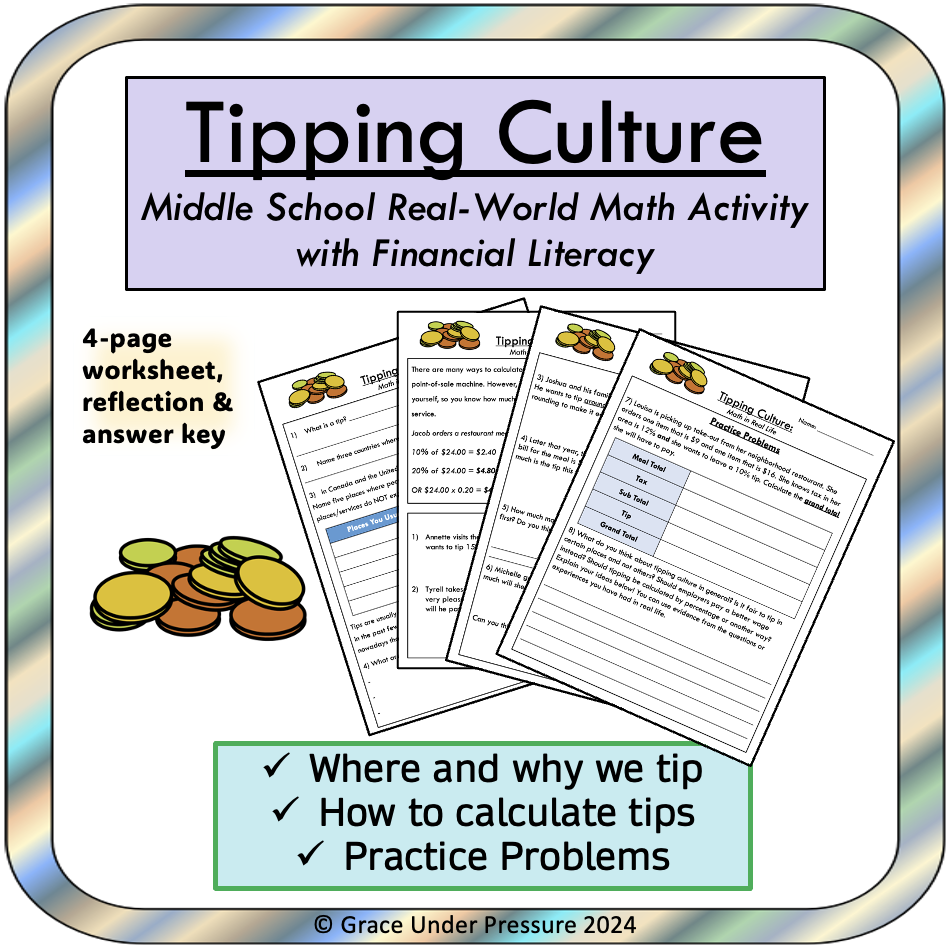
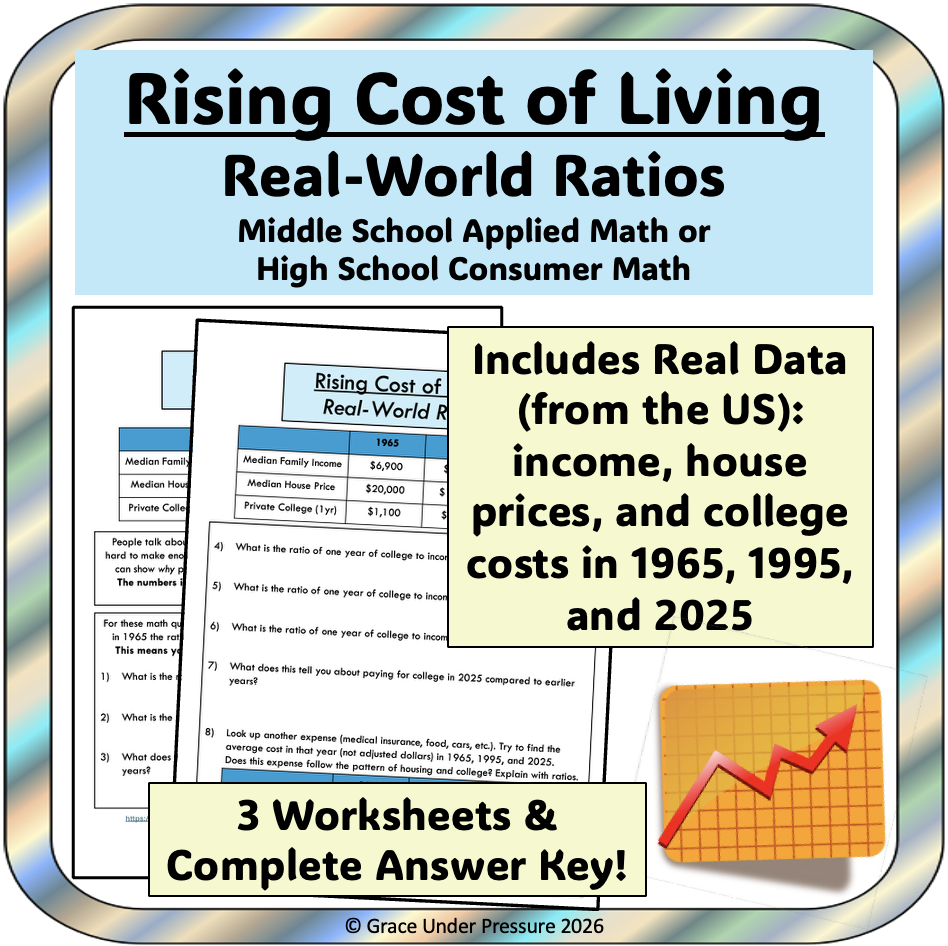
Real-World Ratio Worksheets: Rising Cost of Living Financial Literacy

Real-World Ratio Worksheets: Rising Cost of Living Financial Literacy
Finance, Life Studies, Home Economics, Percentages, Math, Fractions, Money, Grade 6, 7, 8, 9, 10, 11, 12, Worksheets & Printables, Worksheets, Word Problems

Here’s a middle or high school applied math or consumer math activity to help your students practice the ratio math skills they have learned in a real-world situation: the rising cost of living . The three-page worksheet includes real statistics (from the United States) with accurate median family income, median house price, and average private college costs from 1965, 1995, and 2025. Students can use simple ratios to compare this data and see if housing and university really are more expensive compared to wages than they used to be. Although this lesson uses US data, it demonstrates trends that are occurring in other countries (like Canada) too! How to Use: Print 3 pages of worksheets for each student. Go over the table on page one together. It shows the median family income, median house price, and average cost of one year of college in 1965, 1995, and 2025 (in dollars for each of those years). Ask students what they notice. Model how to use the chart to write a ratio and simplify it by rounding. Use the included example of 1965 income to 1965 house price, which simplifies to 1:3 Let students work in pairs or small groups on the rest of the ratio questions. They will complete research for question 8: to find the average prices of a different category (medical insurance, food, cars, etc.) for 1965, 1995, and 2025. These can be shared later in a class discussion. Students can also share their ideas from question 9 in the discussion: how can people get ahead when housing and college cost so much more compared to wages than they used to? Finally, students can create their own meme to share a real-world proportional relationship about the rising cost of living with others. A sample is included in the answer key. A complete answer key is included so there is no guess-work with this lesson! Grades to Use With: This lesson is designed for middle school students in 6th, 7th or 8th grade to apply and practice ratio, rate, and proportional relationship skills. It could also be used in high school consumer math classes to help students understand current economic events. What's Included: 5-Page PDF: Ready to Print and Use! Complete Teacher Instructions Worksheet: Real Historical Data from the US: income, house prices, college costs in 1965, 1995, 2025 Worksheet: Ratio Math Questions Worksheet: Reflect & Create a Meme Complete Answer Key

Author Grace Under Pressure

Rating

Tags Rising Cost Of Living, Ratio Worksheets, Ratio And Rate, Real World Math, Financial Literacy, High School Financial Literacy, Middle School Financial Literacy, Budget, Ratio Word Problems

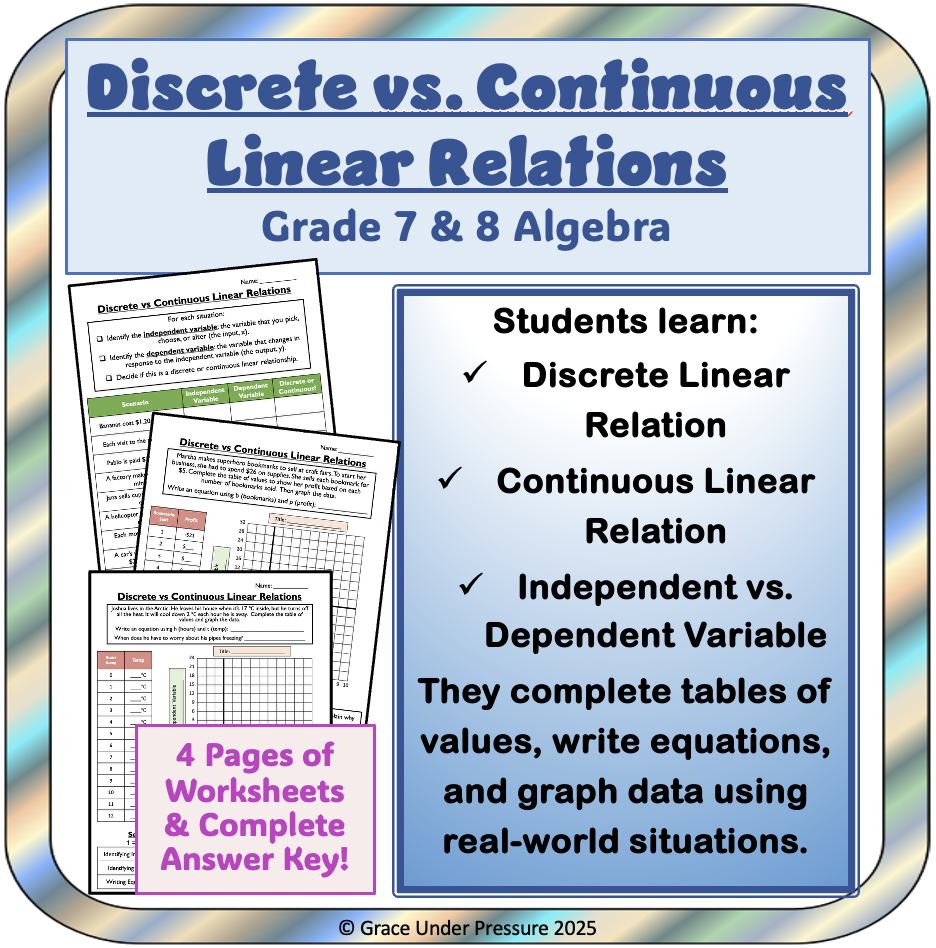
BC Grade 8 Math: Full-Year 8th Grade Real World Math Worksheets

BC Grade 8 Math: Full-Year 8th Grade Real World Math Worksheets
Math, Number Lines, Percentages, Algebra, Decimals, Fractions, Geometry, Measurements, Statistics, Multiplication and Division, Grade 7, 8, 9, Worksheets, Worksheets & Printables, Word Problems

Grade 8 Math: Full Year of Worksheets, Games, and Projects: Do you need some new & engaging real-world math worksheets, games and projects for your 8th grade math class? If you want to add a fun and relevance to your grade 8 math program in British Columbia , Canada or beyond, this is the full-year math resource for you! This full-year 100-page PDF is full of real-life applications , math stations , fun games , quick assessments , and math projects that match up with every single Learning Outcome in the BC Math 8 curriculum. How to Use: This is a supplemental curriculum and is designed to be used alongside your regular textbook lessons. First teach your students the basics, and then you can use these applied math projects, worksheets, and games to show how the math learned in class can be applied to useful everyday situations! There is at least one math task for each learning standard. My students love seeing how they can use statistics to explore hourly wages, or apply what they know about the Pythagorean Theorem to solve everyday problems. Many of the tasks include financial literacy learning , because that is a great way to make math meaningful and useful in the real world! Here are the topics covered: Square & Cube Roots Perfect Squares & Cubes Percents Less Than One or Greater Than One Hundred Proportional Relationships (rates, ratios, percent) Fraction Operations Discrete Linear Relationships Write & Evaluate Expressions Two-Step Equations Surface Area & Volume of 3-D Shapes Pythagorean Theorem Nets of 3-D Objects Central Tendency (mean, median & mode) Theoretical Probability Financial Literacy Grades to Use With: This product is specially designed for Grade 8 math classes in the province of British Columbia, Canada . However, the PDF is full of math tasks that meet 7th & 8th grade common core standards, so it could easily be used in many classrooms! What's Included: 100-Page PDF with over 20 Different Activities Where applicable, Answer Keys are included If you enjoy this product, check out my other full-year supplemental math curriculums: BC Grade 4 Math Full-Year Supplemental Math Activities BC Grade 5 Math Full-Year Supplemental Math Activities BC Grade 6 Math Full-Year Supplemental Math Activities BC Grade 7 Math Full-Year Supplemental Math Activities

Author Grace Under Pressure

Rating

Tags Math Games, Math Stations, Math Projects, Financial Literacy, Geometry, 8th Grade Math, Grade 8 Math, Full Year Math, 8th Grade Math Worksheets, Grade 8 Math Worksheets

Percent Less Than One & More Than a Hundred: Decimal Percent Worksheet

Percent Less Than One & More Than a Hundred: Decimal Percent Worksheet
Math, Addition and Subtraction, Multiplication and Division, Percentages, Decimals, Grade 7, 8, 9, Worksheets & Printables, Worksheets, Word Problems

Here are no-prep Real-World Decimal Percent word problem worksheets that show your students in 7th, 8th or 9th grade realistic scenarios that need the use of percentages less than one (for example, 0.5%) and percentages more than one hundred (for example, 250%) to solve. From measuring and comparing population growth to deciphering medical statistics to bookkeeping for small businesses- people use information about decimal percentages in our daily lives without even noticing it! Your Students Will: Learn from a sample scenario involving house price appreciation. Solve real-world decimal percent word problems involving interest rates, growth rates, medical statistics, salary raises, and more! Self-assess their skills with a simple self-assessment scale. How to Use: Print 4 pages of worksheets for each student Go through the sample problem together, ensuring students know how to convert percentages into decimals for easy calculations. Let students work in pairs or small groups on the word problems. Students self-assess their skills using a simple scale. Have students come up and share their solution methods when you review the questions as a class. A complete answer key is included. Math Skills Required: Converting percents less than one and more than one hundred into decimals. Completing calculations using the four operations, large numbers, and decimal percents. Using mental math and estimation skills to check the reasonableness of answers. Grades to Use With : These worksheets are perfect for students in 7th, 8th and 9th grade who are learning about (or reviewing) proportional relationships- specifically more complicated percents. They are a great way for students to practice solving real-world math word problems. The worksheets could also be used in high school special education classes where appropriate. What's Included: 6-Page PDF: Ready to Print and Use! Teacher Instructions Student Handout with Vocabulary and Sample Scenario 3 Pages of Student Worksheets with Word Problems and Self-Assessment Complete Answer Key

Author Grace Under Pressure

Rating

Tags Decimal Percent, Percent Less Than One, Percent More Than One Hundred, Percent Word Problems, 7th Grade Percent, 8th Grade Percent, Percentages, Real World Math, 9th Grade Percent

Life Skills: Nutrition Facts Math Percentages, Ratios, Rates

Life Skills: Nutrition Facts Math Percentages, Ratios, Rates
Special Resources, Life Skills, Home Economics, Life Studies, Math, Percentages, Multiplication and Division, Grade 5, 6, 7, 8, Worksheets & Printables, Worksheets, Word Problems

Healthy eating is a key life skill! Do you want to teach your class how to accurately read a nutrition facts label and determine the healthy and less healthy aspects of the food choices they make? Do you want to find a way to apply the math skills you have been teaching in your middle school classroom (percentages, rates, ratios) to a real-life engaging situation? This is the lesson for you! This ready-to-print lesson for students in 5th to 8th grades includes an eye-catching one-page handout to teach students the basic vocabulary and terms included on nutrition facts labels: - absolute amount in grams or mg or mcg & percent of Recommended Daily Intake (RDI) - suggested serving size (grams) - calories - fat, protein, carbohydrates - sodium - vitamins and minerals There are three different worksheets to allow students practice the following life skills: • Determining the number of servings in a package (you mean I'm not supposed to eat the whole tub of ice cream in one sitting!?). • Calculating the amount of nutrients and calories they would get if they ate several servings (which we often do!). • Comparing sugars that are naturally occurring vs. added. • Using simple percent calculations to determine the Recommended Daily Intake of vitamins. • Comparing two similar foods (frozen yogurt vs ice cream) to see which is a healthier choice and why. And more! What's Included: 6 Page PDF Ready to Print and Use! - Title Page and Teacher Instructions - Student Handout: The Basics of Nutrition Facts Labels - Potato Chip Nutrition Facts Label (with Math Questions) - Dried Apricots Nutrition Facts Label (with Math Questions) - Ice Cream vs. Frozen Yogurt Nutrition Facts Labels (with Math Questions) - Complete Answer Key If you like this lesson, check out other grocery lessons in my store: Grocery Shopping Price Comparisons Grocery Shopping on a Budget Grocery Game

Author Grace Under Pressure

Tags Word Problems, Life Skills, Real World Math, Nutrition Facts, Nutrition, Nutrition Facts Label, Percentage Word Problems, Rate Word Problems, Grocery Shopping, Family Consumer Sciences

Math Practice Simplified L - Pre-Algebra

Math Practice Simplified L - Pre-Algebra
Math, Algebra, Grade 6, 7, 8, Worksheets & Printables, Word Problems, Worksheets

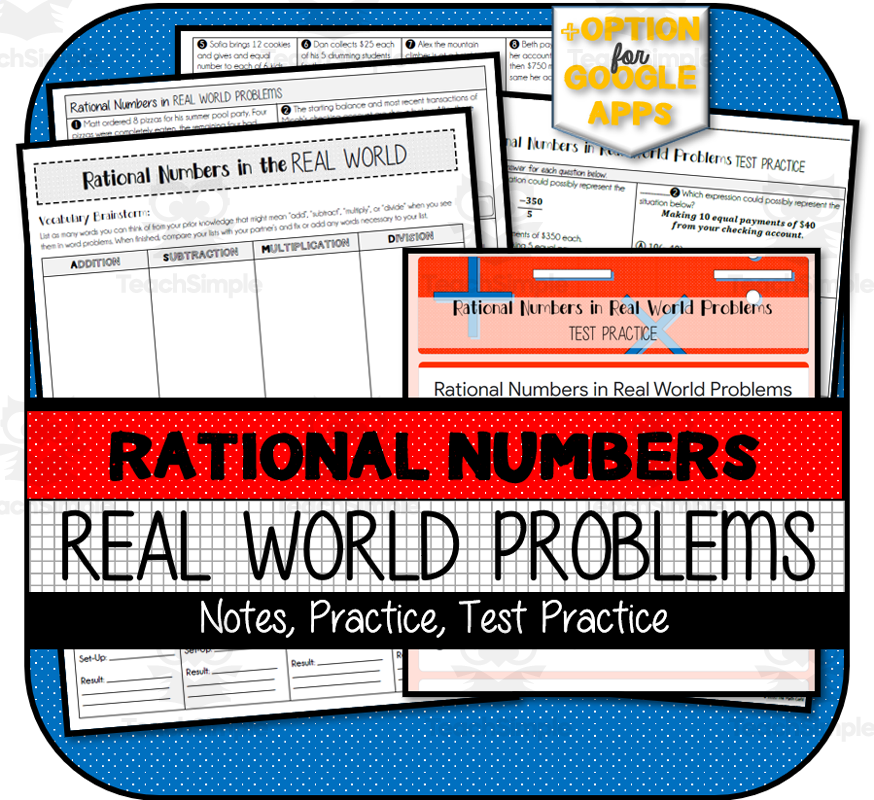
This mathematics-based resource is designed for grades 6-8. It’s imperative for students to have a strong foundation in basic math skills. This resource provides real-world activities to help students practice with signed numbers, expressions with exponents, square numbers and roots. Use this resource as a building block to higher mathematics. The first part of this resource focuses on integers. Rational and irrational numbers follow. This resource is perfect to prepare students to succeed on standardized tests . An answer key is included. Aligned to National Council of Teachers of Mathematics (NCTM) Standards.

Author Classroom Complete Press

Tags Math, Mathematics, Integers, Word Problems, Rational Numbers, Exponents, Square Root, Middle, Drills, Answer Key

Create Your Dream Store – Decimal Math Project

Create Your Dream Store – Decimal Math Project
Life Studies, Math, Addition and Subtraction, Addition, Decimals, Money, Finance, Business, Career, Grade 5, 6, 7, 8, Worksheets & Printables, Word Problems, Activities, Projects

This is an engaging math project that lets students apply math skills to a realistic situation: opening their own store! Grades to Use With: This project is perfect to use with your middle grades students in grades 5-8. It could also be a great addition to a high school life skills class studying finance, business, or careers. How to Use: Each of your students has won $2,000,000 in the lottery, and they are going to use it to open their very own store! They create a budget for a new business venture by considering the costs to rent a commercial storefront in your area, pay employees, and buy all of the supplies and stock they will need. They can do research on the internet to find out the prices of rental properties and the supplies they will need. They can do decimal calculations by hand or with a calculator. This will include adding decimals and multiplying decimals. Extension: Students who finish early can create an advertisement to attract customers to their new store. You could even have a day where each student presents their unique store idea to the class. What's Included: A total of 5 pages: Title Page and 4 page PDF assignment Standards: CCSS5.NBT.B.7 Add, subtract, multiply, and divide decimals to hundredths, using concrete models or drawings and strategies based on place value, properties of operations, and/or the relationship between addition and subtraction; relate the strategy to a written method and explain the reasoning used. CCSS7.NS.A.3 Solve real-world and mathematical problems involving the four operations with rational numbers. If you enjoy this math project, check out some other options in my store: Math in the Real World: Personal Math Research Project for STEM, Enrichment, or Early Finishers Financial Literacy: Household Budget Project: Taxes, Insurance, Loans, Rent, Groceries and More!

Author Grace Under Pressure

Rating

Tags Math Project, Store Design, Budget, Decimal Calculations, Group Work, Financial Literacy, Applied Math, Money, Business, Project

Savings Goals: Middle School Financial Literacy, Graphing, Patterns

Savings Goals: Middle School Financial Literacy, Graphing, Patterns
Finance, Life Studies, Home Economics, Math, Algebra, Graphing, Money, Life Skills, Special Resources, Grade 6, 7, 8, Worksheets & Printables, Word Problems, Worksheets

Teach your middle grades students in 6th, 7th, and 8th grade all about saving up money for large purchases and help them practice a variety of intermediate math skills: using ratio tables, graphing, completing operations with large numbers, using percentages , and more! This middle school financial literacy & budgeting lesson has six ready-to-use worksheets to teach your class how to develop savings goals and save their money for life's big-ticket items. How to Use: Print 5 or 6 worksheets for each student. Go through the information on the first page and give your students time to complete the vocabulary definitions (budget, credit card, loan, and interest). Students will then research an item of their choice (between $200 to $300). They will practice calculating the sales tax for it. On the second page, students will complete a simple ratio table and the included graph to calculate how many hours of work will be required to pay for their item. They will calculate how many weeks of work this will take based on how much they work each week. On the third and fourth pages, students will complete similar activities for even larger savings goals: a new car and a down payment for a home. Your students get a choice for how they will consolidate their learning: they can either create a cartoon or write a paragraph reflection to share what they learned about savings goals. Grades to Use With: This lesson is specifically designed for your middle grades students who are learning about ratios, graphs, tables, and financial literacy in math class. It's a great way to incorporate real-world math and budgeting into your 6th, 7th or 8th grade classroom! It could also be used in high school special education classes where appropriate. What's Included: 8-Page PDF: Ready to Print and Use! Teacher Instructions 4 Pages of Worksheets 2 Pages of Student Reflection Choices Complete Answer Key If you enjoy this financial literacy activity, check out others in my store! Grace Under Pressure

Author Grace Under Pressure

Rating

Tags Middle School Financial Literacy, Financial Literacy, Budget, Budgeting, Saving Money, Savings Goals, Patterns Tables, Graphs, Graphing, Tables Of Value

Statistics Word Problems: Compare Two Data Sets of Annual Salaries

Statistics Word Problems: Compare Two Data Sets of Annual Salaries
Math, Graphing, Measurements, Statistics, Grade 6, 7, 8, Worksheets & Printables, Worksheets, Word Problems

This middle school math lesson allows your students in grades 6-8 to apply the statistical skills they have been learning in class to a real-world financial literacy scenario: the annual salaries of workers who have a college degree compared to those who do not have one. It is a real world math activity that includes five worksheets all ready to go! Your students will: - Make two dot plots to display two data sets (that are included with the lesson): wages for people with a college degree and those without - Share observations about the distribution of data in each set - Calculate the mean, median and interquartile range for each data set - Draw inferences about whether there is an effect of a college education on someone's annual salary - Consider if the sample that was used is representative This lesson was designed to specifically address 7th Grade Common Core Math Standards for the Statistics and Probability strand: 7.SP.A.1 7.SP.B.3 7.SP.B.4 What's Included: 7 Page PDF- Ready to Print and Use! - Title Page with Teacher Instructions - Student Handout that has Two Data Sets (with 20 items each) - Dot Plot Worksheet (for students to graph and compare two dot plots) - 2-Page Measures of Central Tendency and Variation Worksheet - Reflection Worksheet - Answer Key If you enjoy this statistics lesson, check out other fun options in my store: Middle School Math Stations or Centers for Statistics and Probability: 5 Math Centers that are a great way to prepare for a unit test! Create Dot Plots and Histograms: 6th Grade Statistics and Graphing Practice: Students create and carry out their own survey and then graph it two ways! Identifying and Writing Statistical Questions for 6th Grade Math: Help your students learn ways to collect data and try it out!

Author Grace Under Pressure

Tags Statistics, Compare Data Sets, Financial Literacy, Dot Plots, Statistics Word Problems, Compare Data Distributions, Mean, Median, Interquartile Range, Graphing Data

Term 2 Critical Thinking: Morning Work Warm-Ups: 60 More Days!

Term 2 Critical Thinking: Morning Work Warm-Ups: 60 More Days!
Social Studies, Resources for Teachers, Math, ELA, Science, Grade 5, 6, 7, 8, Worksheets & Printables, Word Problems, Activities

Do you need some new activities for your middle school homeroom class with 5th, 6th, 7th or 8th grade students? Do you want a consistent routine to start your day on a good note of learning and fun? I have the full-term morning work powerpoint presentation just for you! THIS IS THE TERM 2 SLIDESHOW This presentation is a helpful tool to use as your morning routine with any middle school students! Students can use a special notebook for this task or they could use whiteboards, or whatever routine is best for your group. This editable powerpoint presentation has activities for each weekday with enough slides for one whole term (60 days of school). The slides are completely editable, so you can use them as a template and make more for future semesters. You can also ask students (especially early finishers) to help make extra slides. What are the Daily Categories? Math Monday: Mondays are for math! Students can review tons of intermediate math skills with fun word problems and puzzles that cover topics like ratios, money, area, and more! Trivia Tuesday; Tuesdays are for Trivia! Students will be asked questions about science, social studies, financial literacy and more! These will be great discussion starters too! Would You Rather Wednesday: This is a great way to practice speaking and listening skills. Students will be given two options and have to share their choice and their reasons and justifications. Thesaurus Thursday: Thursdays are for expanding vocabulary as students think of synonyms for boring words. Focus Friday: Fridays are for puzzles as students solve brain teasers and logic puzzles! Grades to Use With: These morning work slides are designed for students in 5th, 6th, 7th, or 8th grade. What's Included: An editable PowerPoint with 63 slides Title Page 12 Math Monday 12 Trivia Tuesday 12 Would You Rather Wednesday 12 Thesaurus Thursday 12 Focus Friday 2 Page Answer Key If you want another term (60 days) of this routine, check it out here!

Author Grace Under Pressure

Rating

Tags Critical Thinking, Morning Work, Warm-ups, Vocabulary, Math, Homeroom, Classroom Routine, Middle School, Middle School Homeroom, Homeroom Activities

Two Step Equations Worksheet: Writing & Solving Real-Life Equations

Two Step Equations Worksheet: Writing & Solving Real-Life Equations
Math, Algebra, Grade 6, 7, 8, Worksheets & Printables, Word Problems, Worksheets

When teaching your students key algebra skills, it can often seem detached from the real world. Use this ready-to-go set of worksheets to help your students see how simple algebra can help solve real life problems that occur in everyday living. This product addresses simple two-step equations and the basics of algebra: doing the same thing to each side of an equation. How to Use: With this resource, learners get to see firsthand how two-step equations become useful tools in everyday situations. The package begins by presenting them with a sample scenario, presented in an easy-to-use handout, which will serve as both guide and template for subsequent activities. Then students put theory into practice by writing two-step equations representing simple real-life scenarios – distance, money, cooking and more! For each situation, students write an equation, solve the equation, and then check their solution by putting it back into the equation: an important final step. Grades to Use With: This lesson is designed for students in grades 6-8 who are learning the basics of algebra: writing equations, using variables, solving two-step equations, and checking their solution. It could also be used in high school special education classes as it is designed to be learner-friendly and includes step-by-step instructions and graphic organizers. What's Included: 7 Page PDF including: Title Page Sample Scenario Handout Three pages of realistic Practice Questions- with graphic organizers to keep students organized and focused A page with an extension activity (create your own problem) and an important Self-Assessment so students can see where they may need extra practice A complete answer key If you enjoy this algebra activity , check out other real world activities in my store: The Wave Pool Problem: Patterns, Expressions and Graphing Independent and Dependent Variables in Grade 6 Math: Hockey Math Solving Systems of Equations Using Substitution Inequality Matching Game Exponent Board Game

Author Grace Under Pressure

Tags Algebra, Two Step Equations, Equations, Word Problems, Real World Math, Middle School Math, Variables, Writing Two Step Equations, Two Step Equations Worksheet, Two Step Equations Worksheets

Math Journal: Experimental Probability with Two Independent Events

Math Journal: Experimental Probability with Two Independent Events
ELA, Math, Percentages, Fractions, Statistics, Writing, Grade 5, 6, 7, 8, 9, Worksheets & Printables, Word Problems, Activities

Math Journal: Experimental Probability with Two Independent Events This resource serves as a helpful teaching tool for educators focusing on the concepts of experimental probability and theoretical probability of two independent events in middle school mathematics. It offers an engaging math journal entry exercise that allows students to explain their mathematical thinking in pictures, numbers, diagrams, and words. How to Use: Students are given the following question: You have a six-sided die and a penny. If you roll the die twice and flip the penny twice, which is more likely: to get two sixes on the die or two heads from the penny? Explain your thinking using pictures, numbers, and words. Can you figure out the percentage chance of each event happening? Give students dice, coins, and mini whiteboards to work with so they can start to test out their ideas and theories. Encourage students to tackle the penny first as there are fewer results when flipping two coins. Suggest that students work together in pairs or small groups and use a table or chart to record the experimental options that could occur. You may want to start by teaching a mini-lesson about the probability of two independent events: that one multiplies the probability of each event to determine the probability of BOTH events. Grades to Use With This resource is ideal for use with students in grades 5-9 but can also be used as special education material or enrichment content for gifted children aged between grades 4-6. Finally, it could be used in a high school special education classroom. What's Included: This two page PDF is ready to print and go! If you enjoy this math journal entry, check out my bundle of 20 Middle School Math Journal Entries or my Math Journal Rubric for easy marking. Or, explore other probability items in my store.

Author Grace Under Pressure

Tags Math Journal, Experimental Probability, Two Independent Events, Middle School, Probability, Dice , Coins, Chance, Middle School Math, Fractions

Scale Drawing Word Problems Digital and Printable

Scale Drawing Word Problems Digital and Printable
Math, Geometry, Measurements, Grade 7, 8, 9, Activities, Worksheets & Printables, Task Cards, Word Problems

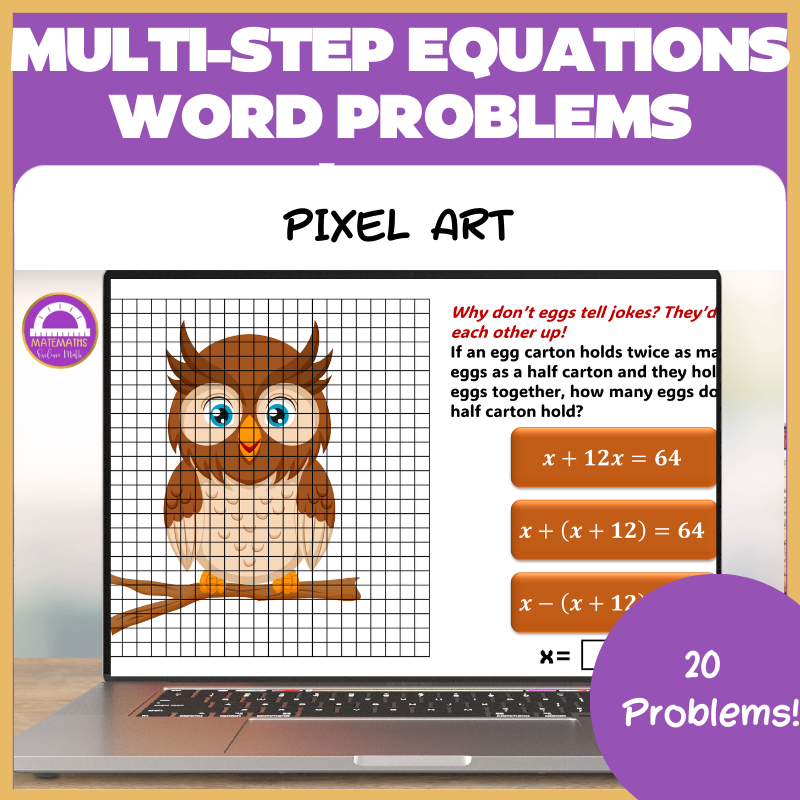
Engage your learners with this Scale Drawing Word Problems Activity: Digital and Printable, and drive the stress out of teaching and learning! Be it digital or paper-and-pencil classrooms, this resource will work in engaging your students, saving your preparation time, and offering them effective self-paced learning. This activity is both instructive and engaging, with 20 real-world problems involving scale drawings, area, and perimeter. With the self-checking features, students get immediate feedback and are free to work at their own pace, coming to you only when they need help. Why You Will Love This Resource ✅ No Prep Required Spend less time planning! Everything you need is ready to go, whether you're teaching online or in person. ✅ Digital and Printable Options Digital versions for online learners that are interactive. Printable worksheets and task cards for hands-on practice. ✅ Self-Checking Tools for Independent Learning Students receive immediate feedback, which builds confidence and limits disruptions. Great for stations, homework, or independent study. ✅ Engaging and Fun Real-world problems keep students engaged. Focused on practical challenges to be solved with scale drawings, measurements, and geometric concepts. What's Included? ???? 20 Word Problems Practice making scale drawings using imperial and customary measurements. Find area and perimeter of rectangles and triangles. Printable Worksheets & Task Cards Great for classroom activities, group work, or homework assignments. ✔️ Complete Solutions Clear, detailed answers for easy reference by students and teachers. Perfect for Your Classroom Grade Levels: Ideal for grade levels learning about scale drawings and the basics of geometry. Flexible Use: Great for digital, hybrid, or traditional learning environments Independent Learning: Self-paced design promotes student accountability while minimizing disruptions. Why Teachers Love It This resource is designed to make teaching easier and learning more effective. The no-prep format saves you time, while the self-checking features keep students on track. With both digital and printable options, you can tailor the activity to fit your unique teaching needs.

Author Matemaths

Tags Pixel Art, Interactive Activity, Digital Learning, Matemaths, Task Cards, Printable, Digital, Word Problems, Scale Drawing

High School Financial Literacy: Net Worth = Assets - Liabilities

High School Financial Literacy: Net Worth = Assets - Liabilities
Special Resources, Life Studies, Life Skills, Math, Addition and Subtraction, Addition, Subtraction, Money, Finance, Home Economics, Grade 7, 8, 9, 10, 11, 12, Worksheets & Printables, Word Problems, Worksheets

This 6 Page Financial Literacy PDF teaches your students about assets, liabilities, and net worth (equity). It is an easy way to get your high school students interested in personal financial literacy and building their wealth. 3 case studies are included with calculations to complete and questions to respond to. Each person has some assets and some liabilities. Students must add each of these categories up and find the difference to see how much net worth each person has. Then they need to think about what changes each person could make to their financial habits. Perhaps one person has too much debt or someone else isn't investing much even with a high income. Students can start to see how high income does not always lead to high net worth if the person spends more than they make and has debt. On the other hand, someone with a lower income can have a high net worth if they live a frugal lifestyle and save money in investments or property equity. Just because someone "looks" rich, doesn't mean that they are! Grades to Use WIth: The actual math in this assignment is quite simple: adding and subtracting numbers to the hundred thousands. Students could do the work by hand or with a calculator. Because of this, this assignment is accessible to students in grades 7-12 in regular math classes, adult education students, and high school special education students. How to Use: Introduce the vocabulary: Assets, Liabilities, and Equity on the first page and fill in the blanks together. You could do one of the case studies together as a class and assign the other two for students to complete on their own. What's Included: 6 page PDF: Title Page Introduction Page 3 Case Studies Answer Key If you enjoy this product, check out some of the other personal finance lessons in my store: Grace Under Pressure .

Author Grace Under Pressure

Tags Financial Literacy, Net Worth, Wealth, Assets, Budget, Finance, Personal Financial Literacy Worksheets, High School Financial Literacy, Net Worth Worksheets, Personal Finance

Percent Word Problems

Percent Word Problems
Math, Percentages, Grade 7, 8, 9, 10, Word Problems, Worksheets & Printables

This is a 1-page printable with Percent Word Problems for your middle and high school students. This makes a great homework assignment or assessment. Answer key included.

Author Mister G's Teacher Shop

Tags Percents, Math Worksheet, Homework, Independent Work, Math Assessment, Word Problems, Comprehension, Bell Ringer, Solving Percentages Word Problems, Percent Word Problems Worksheets For Grade 7, Percent Word Problems Pdf

Math Journals: 20 Intermediate and Middle School Math and Critical Thinking Prompts: Geometry, Percentages, Pre-Algebra, Probability, Place Value and More!

Math Journals: 20 Intermediate and Middle School Math and Critical Thinking Prompts: Geometry, Percentages, Pre-Algebra, Probability, Place Value and More!
Math, Percentages, Patterns, Decimals, Fractions, Geometry, Measurements, Place Value, Grade 4, 5, 6, 7, 8, Worksheets & Printables, Word Problems

Encourage your middle school/intermediate math students to clearly explain their ideas about concepts (like ratio, area, and algebra) in complete sentences using appropriate vocabulary and relevant diagrams . These open-ended questions require students to explain how they figured out their answers or to judge options using their mathematic understanding. They are a great review of math concepts learned earlier in the year or in previous grades, and they allow students to practice critical thinking skills too. This bundle includes 20 journal entry topics so you can use two a month for the entire school year. You and your students can track their progress and development. The journals are not numbered, so you can use them in whatever order works best for your class. This could be a fantastic addition to your math program for the new school year! A rubric for easy marking is also included. Students are assessed on their process, vocabulary, completeness, and visuals. This allows you to easily see student progress if you assess one or two journals per term. You could also use them as artifacts for parent-teacher conferences. Topics covered: - fractions and percent: equivalent fractions, fraction and decimal relationships, division of fractions, fractions to percent, percent discounts - probability and data collection: flipping coins, surveys, experiments - geometry: area and perimeter, triangles, rotations, - pre-algebra: one-step equations, membership rates - place value: large numbers, decimals to thousandths - factors and ratios For each topic, students are encouraged to write in complete sentences and explain all of their thinking clearly and explicitly. Don't assume the teacher knows what you are thinking! They should also draw some diagrams to support their thinking. This could include area and perimeter models, fraction models, t-charts and tables, and more.

Author Grace Under Pressure

Tags Journal, Math Journal, Intermediate Math, Word Problems, Pre-algebra, Middle School Math, Grade Six Math, Critical Thinking, Math, Percent

Absolute Value Worksheets:  Real World 6th Grade Math 6.NS.C.7.C

Absolute Value Worksheets: Real World 6th Grade Math 6.NS.C.7.C
Math, Number Lines, Numbers, Algebra, Grade 5, 6, 7, 8, Worksheets & Printables, Word Problems, Worksheets

Absolute Value can be a tricky topic to teach. It seems so easy and simple, but students actually need a strong, conceptual understanding of it for later years in middle school and high school math, so it definitely can't be skipped or glossed over! Here's a ready-to-go lesson all about absolute value for students in 6th grade. It is designed to meet standard CCSS 6.NS.C.7.c This lesson could also be a great review for students in grades 7 or 8 or could even be used in high school special education classrooms. First, there is a simple handout that explains what absolute value is using an easy, visual analogy: a dart board. Then, there are two pages of real-world questions for students to approach using an understanding of absolute value. From bank accounts, to elevation, to temperatures, to golf games, we actually use absolute value regularly in our number system without even noticing it! These questions require students to use number lines, integers, and absolute value proficiently. Students will notice how depending on the question, you may need to use an integer or an absolute value. They will start to see how absolute value can be helpful when calculating the difference between two numbers on a number line. A complete answer key is also included! If you enjoy this product, check out other grade 6 math number system lessons in my store: Middle School Math Stations or Centers: Fraction Operations: Add, Subtract, Multiply, Divide Multiplication and Division: Real Life Word Problems for Grades 4-6 Decimal Operations Assessment: Add, Subtract, Multiply, and Divide Middle School Math Stations or Centers: Factors, Multiples, Prime and Composite Integers and Plotting to Make Pictures in 4 Quadrant Cartesian Planes Combinations of Transformations in 4 Quadrants: Translation, Rotation, Reflection Real-Life Integers: Working with Integers and Number Lines Grade 6 Math

Author Grace Under Pressure

Rating

Tags Absolute Value, 6th Grade Math, Grade 6 Math, 7th Grade Math, Grade 7 Math, Number System, Number Lines, Real World Math, Word Problems, Absolute Value Worksheets

Financial Literacy: Saving Up From a Part-Time Job Using Ratio Tables

Financial Literacy: Saving Up From a Part-Time Job Using Ratio Tables
Life Studies, Finance, Home Economics, Math, Graphing, Money, Fractions, Grade 5, 6, 7, 8, Worksheets & Printables, Word Problems, Worksheets

Here's an integrated lesson that teaches key financial literacy skills while also allowing students to practice using ratio tables and graphing them. Students get to choose an item they want to save up for that costs between $200-$300. They research the exact price and where they can buy it. Then, they use a ratio table to help calculate the sales tax on that item in their area. Next students complete two ratio tables based on hourly wages they could get for a part-time job. They graph the data from the 2 tables to see that when you are making more money per hour, you can save up for an item faster. This is good practice for plotting ordered pairs on a coordinate plane. After that, students create a new ratio table to see how many weeks they will have to work to save up for their item. Finally, they reflect on what they have learned about ratio tables, graphing, saving up, getting a part-time job, or hourly wages. A complete answer key is included! Grades to Use With: This lesson is designed to target the Common Core State Standards 6.RP.A.3.A and 6.RP.A.3.C It is perfect for a grade 6 classroom, or could be used as review and/or to teach financial literacy in a grade 7 or 8 classroom. It could be used for enrichment in a grade 5 classroom. Finally. it could be used in high school special education classes. What's Included: 5 Page PDF: Title Page, 3 Pages of Worksheets with Ratio Tables and Graphs included, Complete Answer Key If you enjoy this financial literacy activity, check out others in my store: My Budget Project for Elementary: Grades 3-6 Back to School Budget Activity Halloween Budget Activity My Party Budget: Decimals and Percentages Practice Financial Literacy: Financial Tradeoffs

Author Grace Under Pressure

Tags Ratio Tables, Ratios, Financial Literacy, Money Math, Real World Math, Saving Money, Part Time Job, Proportional Relationships, Money, Finance

Systems of Equations: Word Problems PARTNER PRACTICE

Systems of Equations: Word Problems PARTNER PRACTICE
Math, Algebra, Grade 8, Word Problems, Worksheets & Printables

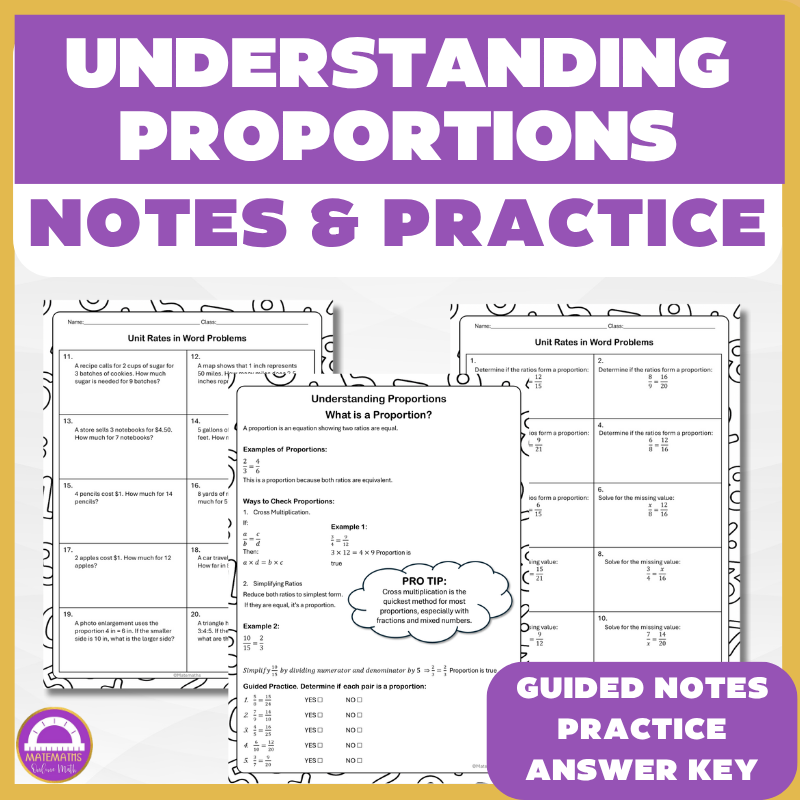
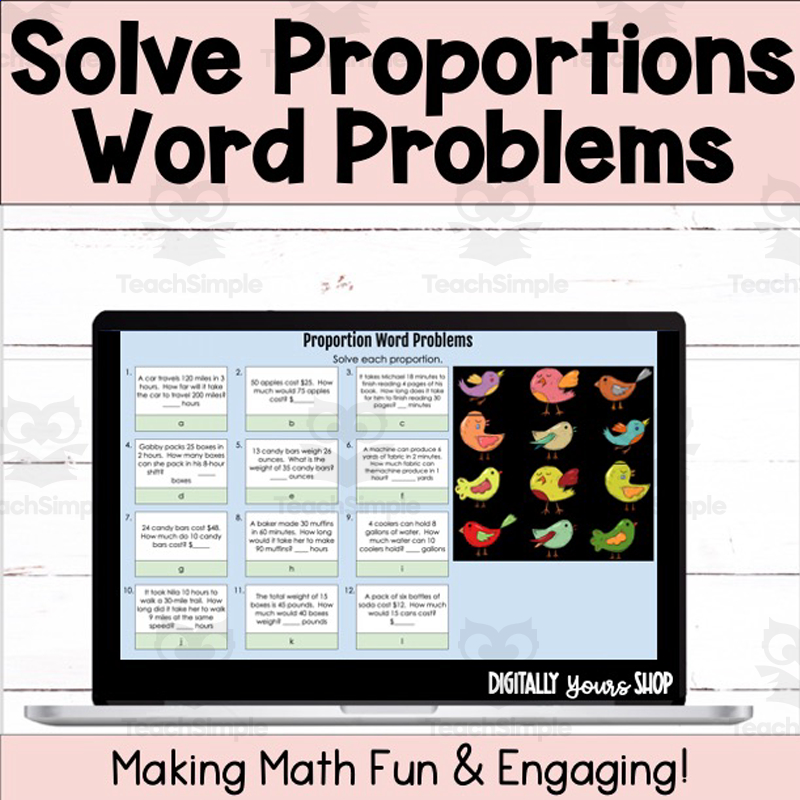
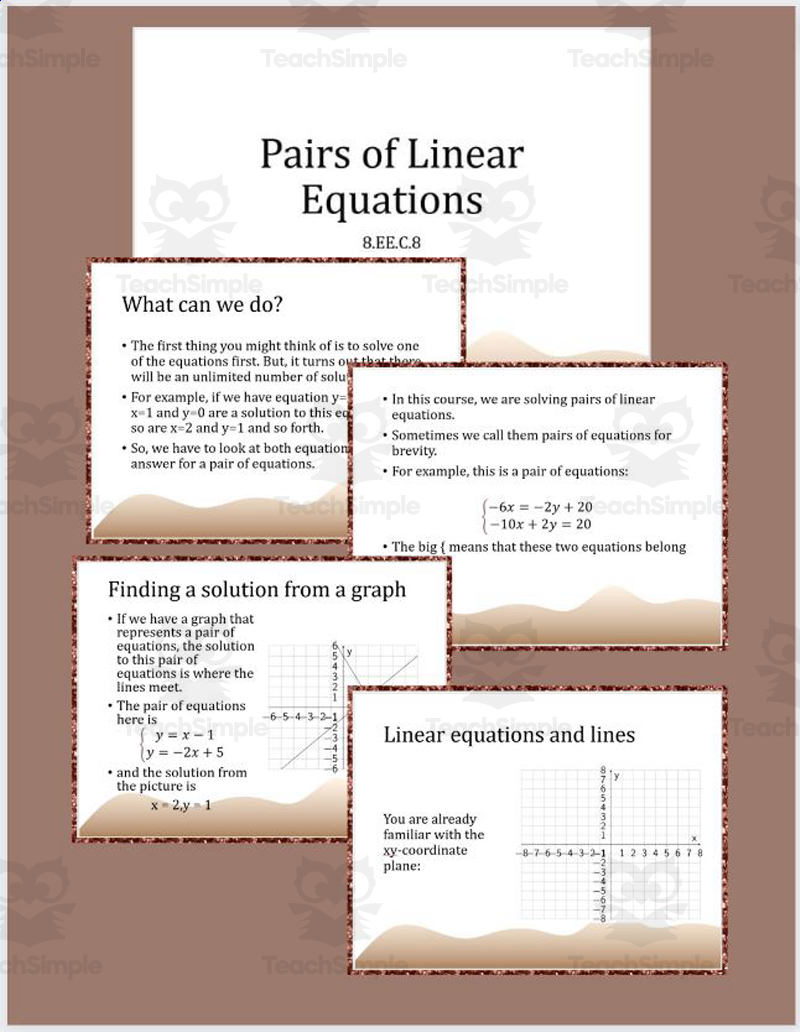
This resource was developed to meet the requirements of the 8th Grade Expressions & Equations Standards below: CCSS.MATH.CONTENT.8.EE .C.8 Analyze and solve pairs of simultaneous linear equations. CCSS.MATH.CONTENT.8.EE .C.8.C Solve real-world and mathematical problems leading to two linear equations in two variables.For example, given coordinates for two pairs of points, determine whether the line through the first pair of points intersects the line through the second pair.

Author The Math Cafe

Tags Systems Of Equations, Word Problems, Practice, System Of Equations Word Problem, System Of Equation Word Problems Answers

Real-World Pythagorean Theorem Word Problems Pythagoras 8th 9th Grade

Real-World Pythagorean Theorem Word Problems Pythagoras 8th 9th Grade
Math, Measurements, Geometry, Grade 8, 9, Worksheets & Printables, Worksheets, Word Problems

Here are real-world and no-prep Pythagorean Theorem word problem worksheets for students in 8th or 9th grade. We use and calculate with information about right triangles & the Pythagorean Theorem in our daily lives- these word problems show students realistic situations where they can apply the Pythagorean Theorem! Traditionally, teaching the Pythagorean Theorem can be dry and mostly about memorizing the formula. This lesson will show your students why understanding right triangles and the Pythagorean Theorem matters for their everyday lives. It answers the question, "When will we use this in our lives?" For each realistic everyday scenario, students will draw a triangle diagram and calculate the answer using the Pythagorean Theorem. At the end of the lesson, students get to write their own word problem and self-assess their skills. How to Use: Use these Pythagorean Theorem worksheets after you have taught your students the basics of the Pythagorean Theorem. Print three pages of worksheets for each student and exit tickets for the whole class. Let students work in pairs or small groups on the word problems. For each word problem, they should draw a diagram and calculate an exact answer using the Pythagorean Theorem. Students will create their own word problem and trade with a friend. Students reflect on when understanding right triangles can be helpful in their lives. At the end, hand out exit ticket self-assessment slips to see where your students need more support. Grades to Use With : These worksheets are designed for students in 8th & 9th grade who are learning about right triangles & the Pythagorean Theorem. They are a good way to incorporate real-world math into your program. The worksheets could be used in high school special education classes where appropriate. What's Included: 6-Page PDF: Ready to Print and Use! Teacher Instructions 2-Page Student Word Problem Worksheet 1-Page Student Reflection Worksheet Student Exit Tickets Complete Answer Key

Author Grace Under Pressure

Rating

Tags Pythagoras, Pythagorean Theorem, Right Triangles, 8th Grade Geometry, 9th Grade Geometry, Square Root, Real World Math, Geometry Word Problems, Pythagoras Word Problems

Percent and Decimal Word Problems: Property Taxes Life Skills

Percent and Decimal Word Problems: Property Taxes Life Skills
Life Studies, Home Economics, Finance, Math, Decimals, Percentages, Special Resources, Life Skills, Grade 7, 8, 9, 10, 11, 12, Worksheets & Printables, Worksheets, Word Problems

Property Taxes: What they are, rates around the world, what they are used for, and how to calculate them! A great way to practice percent to decimal conversions, decimal operations, and rate and ratio learning! This two-page life skills and math worksheet is a quick and easy personal financial literacy activity for your middle or high school students. The Handout portion introduces your students to: Important vocabulary and definitions: property tax and a home’s assessed value. A variety of global property tax rates (ranging from 0.08% – 2.64%) in locations in the United States, Canada, and even Europe. A prompt about why rates vary (lower rates where property is expensive and higher rates where property is cheaper) is also included. What the money collected from property tax revenues is used for: from schools to sewers and roads to emergency services including fire fighters. The Worksheet portion has real-world math practice for your class: Students are taught how they can calculate an annual property tax amount using percentages converted to decimals. First, they practice converting between percents and decimals. Then, they multiply a home's assessed value by the property tax percentage (written as a decimal) in the municipality. 10 practice math questions are included for your students to work on. Finally, they will research the local property tax rate in their area: great real-life learning! A COMPLETE ANSWER KEY INCLUDED- so there is no guesswork when marking! Grades to Use With: This lesson is designed for any students in grades 7-12 who understand percent to decimal conversions, ratios and rates, and decimal operations (specifically multiplying a large number by a decimal). It could be used in high school family and consumer science class, business or economics, applied math, or even life skills classes. If you enjoy this lesson, check out others in my store: Income Tax Sales Tax Capital Gains Tax

Author Grace Under Pressure

Tags Percent Word Problems, Decimal Word Problems, Taxes, Property Tax, Family Consumer Sciences, Financial Literacy, Life Skills, Personal Finance, Home Economics, Percent Worksheet

Financial Literacy: Compound Interest with Percent and Formula

Financial Literacy: Compound Interest with Percent and Formula
Life Studies, Math, Decimals, Money, Finance, Home Economics, Business, Grade 8, 9, 10, 11, 12, Worksheets & Printables, Word Problems, Activities

These high school financial literacy worksheets will show your students why compound interest is helpful for investors while also letting them practice math skills using percentages and a simple mathematic formula! How to Use: Print 4 pages for each student. Page 1 teaches students how to calculate compound interest step by step. Students need to have a basic understanding of writing percentages in decimal form and multiplying to find the percent of a number. Next, students will be given their initial investment amount & a yearly interest rate. Each student in your class can be given different values so they have to do their own unique calculations, and to allow comparisons to be made. This provides for easy differentiation as well- you can choose what percentage interest rate each student gets based on their ability. Students will calculate the amount of compound interest they earn over ten years. They can then check their calculations using the compound interest formula that is included. Next, they can use the formula to calculate compound interest over longer periods of time. Your class can compare their results- leading to an interesting class discussion (prompt questions are included). Make sure to point out how compound interest is helpful for investing and saving and detrimental for borrowing money. Finally, students reflect on their learning by writing a paragraph after the lesson. Hopefully they will leave class wanting to start a saving account! Grades to Use With: This compound interest lesson with worksheets is designed for high school students in grades 8 through 12. It could be used in math, applied math, financial literacy, or consumer math classes. What's Included: 6 pages in PDF format: Ready to Print and Use! Title Page Instructions for Calculating Compound Interest 2-Page Worksheet Reflection Paragraph Sample Answer Key Also check out my Financial Literacy Interest Rates: Lending and Borrowing Money Lesson!

Author Grace Under Pressure

Rating

Tags Financial Literacy, Compound Interest, Investment, Yearly Interest, Money, Personal Finance, Interest, Loans, Percent, Compound Interest Lesson

Financial Literacy: Financial Trade-offs

Financial Literacy: Financial Trade-offs
Special Resources, Life Studies, Life Skills, Finance, Home Economics, Math, Money, Grade 7, 8, 9, 10, 11, 12, Worksheets & Printables, Word Problems, Activities

Financial Literacy: Financial Trade-offs Here’s a quick and simple way to include some easy financial literacy learning into your middle, high school, or special education class. These 8 prompts describe realistic financial scenarios about work, housing expenses, post-secondary education, cars, retirement planning, and wedding costs. Use them as debate topics, research prompts, or a simple whole class discussion (ideal for those extra few minutes you often end up with before the end of class). Only simple math skills and basic financial vocabulary are needed to understand these topics. How to Use: Start by explaining the basic premise to your students: Often people can feel stuck in their life due to a financial issue. However, by making a few financial trade-offs, there is usually a different way to deal with issues. Here are eight real life scenarios that many people deal with. Discuss them with your peers, have a debate, make a list of pros and cons! Realize that you always have more options if you can think critically and creatively. Main Goal: The main goal of these prompts is to drive home the importance of understanding trade-offs in goal setting and financial planning. Each topic presents itself as a relatable real-life scenario offering two distinctive choices involving critical thinking and decision-making. There is no "right" answer: just the right answer for your situation. Grades to Use With: These prompts could work in a middle or high school math class, a personal planning or career and education class, or a high school special education classroom. They could even be used in adult education scenarios. What's Included: A total of 10 pages in PDF: Title Page, Instruction Page and 8 trade-off situations If you enjoy this financial literacy product, please check out some of my other options in my store: FIRE: Financial Independence Retire Early Compound Interest: Hook Students on Financial Literacy Net Worth: Assets - Liabilities = Equity

Author Grace Under Pressure

Tags Financial Literacy, Trade-offs, Critical Thinking, Budget, Money, Life Skills, Real World Math, Finance, Planning, Personal Finance

Math Word Problems Grades 7 & 8 - Includes a test! Fractions, Ratios and More!

Math Word Problems Grades 7 & 8 - Includes a test! Fractions, Ratios and More!
Math, Fractions, Grade 7, 8, Word Problems, Worksheets & Printables

Math Word Problems Grades 7 & 8 This is a comprehensive, well-structured curriculum resource specifically designed to assist educators in teaching math to grade 7 and grade 8 students. This versatile package covers numerous essential math concepts, which include: Fractions Percentages Percentage increase, Number lines, Ratios averages (mean), Note: The files are available in PDF format ensuring easy access and compatibility across devices. The package has been expertly created to benefit educators of varying experience levels with teaching grades 7 and 8 math. Whether you're new to the job or a veteran looking for fresh word problems, this package is for you. This product incorporates worksheets packed with diverse context-based problems suitable for classroom use in either whole group or small group settings, as well as assignable independent tasks such as homework. Included Test With Answer Key! We've included a test complete with an answer key! This handy feature allows teachers to quickly assess students' understanding of the various concepts covered herein. Grading has never been easier thanks to our ready-to-print tests and convenient answer keys! Fosters Class Discussions! A unique aspect of our worksheets is that they encourage class discussions allowing on-the-spot assessment of student comprehension. The carefully selected real-life scenario based word problems make learning relevant while examining students' analytical abilities. No Additional Work Required! Tirelessly compiled by dedicate teacher-experts in education pedagogy; Math Word Problems saves you planning time so you can focus more on individualized student interest - all without requiring any external materiel or additional preparation. If you're an educator striving for efficiency with high quality, effective resources that also fit comfortably within your budget- Math Word Problems Grades 7 &8 is perfect for you!

Author Easy As ABC

Tags Math Concepts, Word Problems, Curriculum Resource, Fractions, Percentages, Ratio Math Word Problems

Circumference and Area of Circles (with First Peoples' Principles)

Circumference and Area of Circles (with First Peoples' Principles)
Social Studies, First Peoples (Native), Math, Geometry, Measurements, Grade 6, 7, 8, Worksheets & Printables, Word Problems, Worksheets

Circumference and Area of Circles with First Peoples' Principles is a teaching resource that combines math education with a basic introduction to two cultural traditions from indigenous groups. It is suitable for middle grades students in 6th to 8th grades. This lesson provides a practical application of geometry by instructing students on how to calculate the areas of rectangles as well as the area and circumference of circles. The lesson plan blends hands-on activities with relevant mathematics concepts, helping students to understand math theory through real-life tasks. 1) Students learn what a button blanket is and its cultural significance. They measure the area of a "blanket" and calculate the area of the "buttons." Then, they cut out the buttons and glue them on the blanket in a design. Finally, they calculate the area of the blanket that is not covered by the buttons. 2) Students learn what a drum is and its cultural significance. They calculate the circumference of the "drum." Then they determine the area and circumference of a piece of rawhide that would be needed to overhang and cover the drum. This flexible lesson can be used in whole-class sessions to guide every student step by step. It may also serve as a resource for small group work or homework assignments, promoting independent problem-solving skills outside school hours. Grades to Use With: This product is specifically designed to align with the British Columbia Mathematics 7 curriculum requirements, but it can fit into any learning environment studying circle areas & perimeters - ranging from middle school math classes, high school social studies lessons, or high school special education. The worksheets also help meet CCSSMP1 standards. What's included: An easy-to-follow four-page PDF including two student worksheets. An answer key for teachers to accurately assess student progress through each exercise. If you enjoy this math activity , check out many others in my store: Grace Under Pressure

Author Grace Under Pressure

Tags Circles, Geometry, Indigenous Culture, Area, Circumference, Radius, Diameter, Button Blanket, Drum, Area Of Circle