 Free download
 Math practice
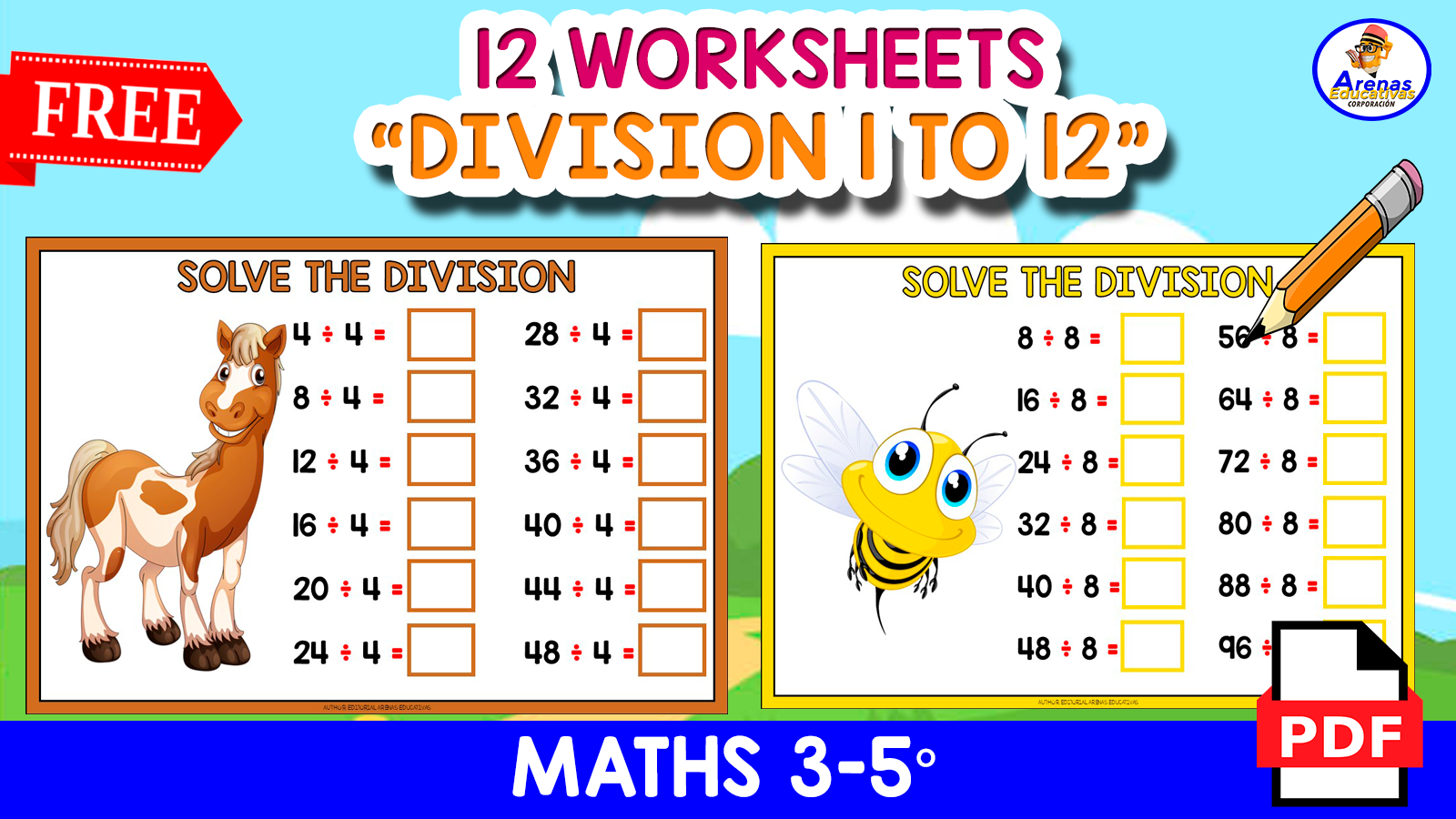
12 DIVISION WORKSHEETS | Animal Theme
Solve each division equation and write the answer (e.g., 1÷1=, 7÷1=) across 12 worksheets, one per divisor (1 through 12).




Classroom resources
Browse by lesson focus
Choose the topic or kind of practice you need.
Showing 217–240 of 2447 resources

 Show filters Free download
 Solve each division equation and write the answer (e.g., 1÷1=, 7÷1=) across 12 worksheets, one per divisor (1 through 12).

A worksheet for students to practice locating, drawing, and classifying angles found in their surroundings.

Read first-person riddle descriptions (health benefits and physical traits) of 8 fruits and 8 vegetables, guess which food each riddle describes, and answer a reflection question on which fruit/vegetable is their favourite and why.
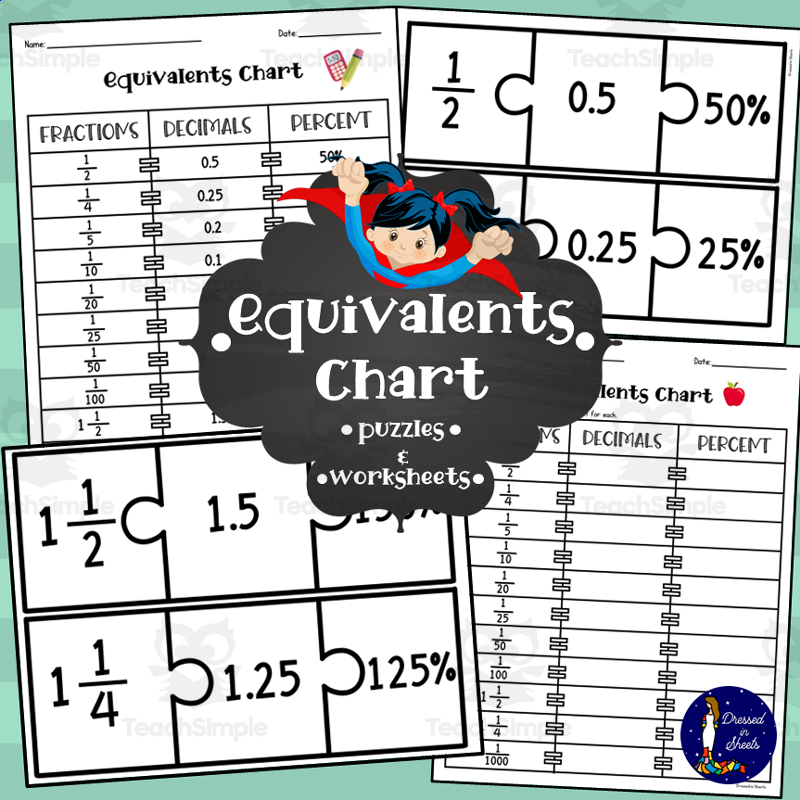
Teaches and drills memorization of common fraction-decimal-percent equivalents using a reference chart, fill-in worksheets, and a puzzle.

This worksheet will help your students understand the human body and how it works. It's a great resource for health and fitness lessons.
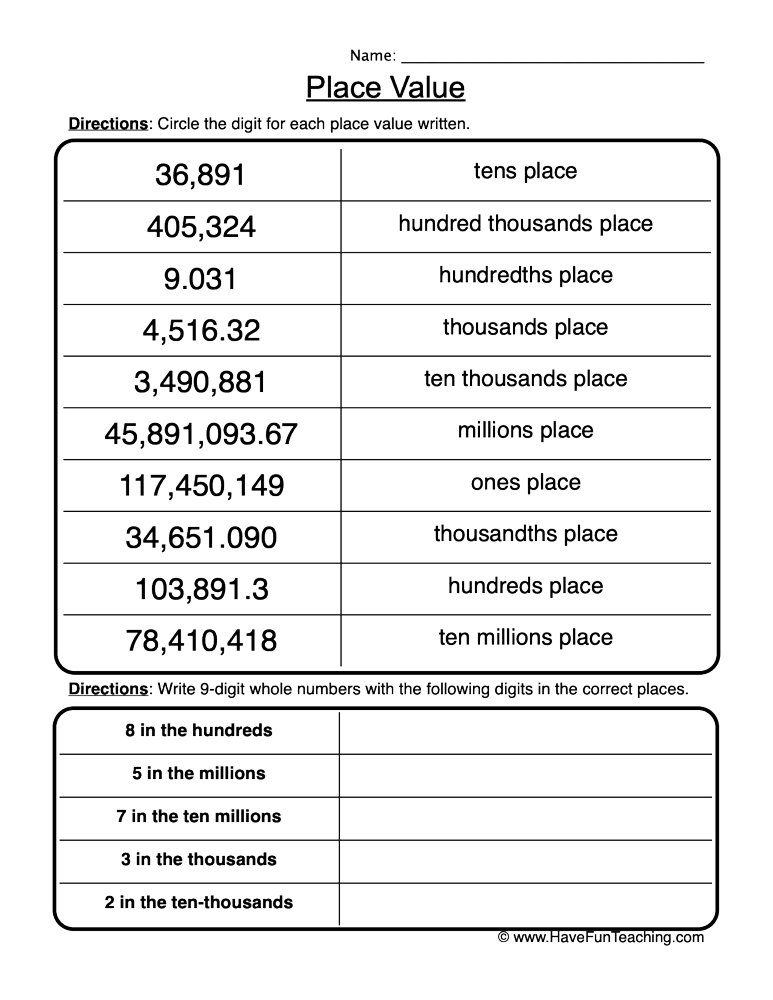
This Place Value Review Worksheet is a great resource for teachers who want to help their students review and practice place value. This worksheet will help students understand place value concepts by having them circle the place value digits and then create their own numbers with specific numbers in a place value.

This multiplication estimation worksheet is a great way for students to practice rounding numbers before multiplying. This is a helpful skill for students to learn in order to improve their multiplication skills.
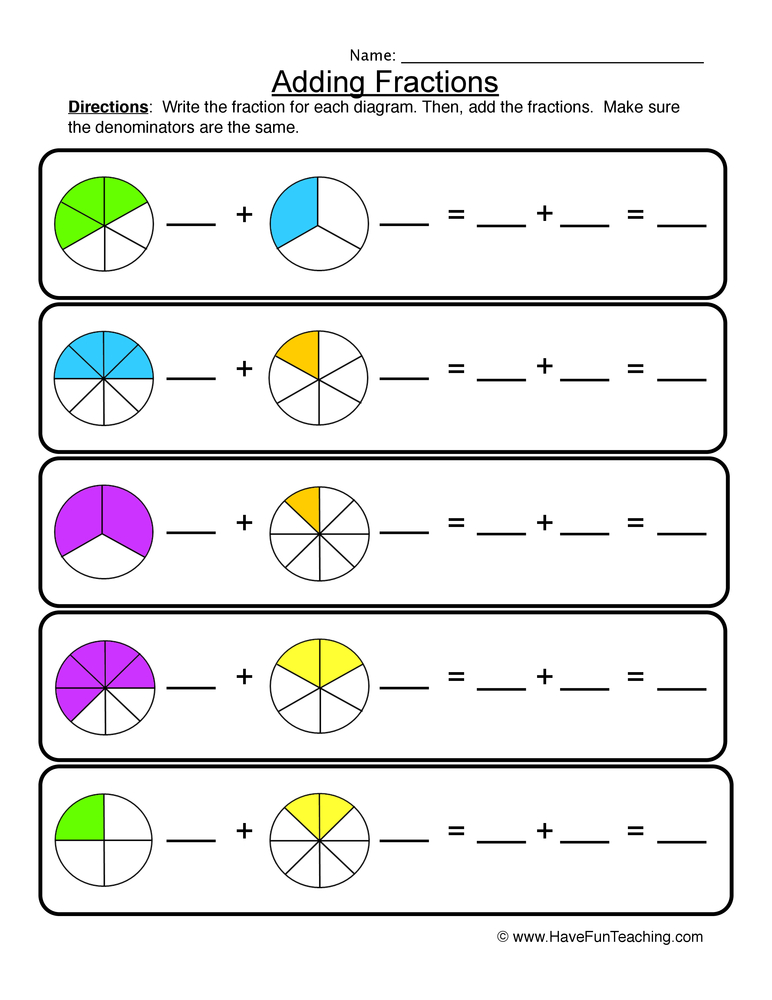
Connect fraction addition with shaded circle models. Students identify the two pictured fractions, find equivalent forms with a common denominator, and record their sum for each of five pairs. Use the diagrams to discuss why the parts must represent the same-sized units before adding.

A self-checking one-step equations worksheet where solving each equation reveals letters that spell out a hidden message.
 Free download
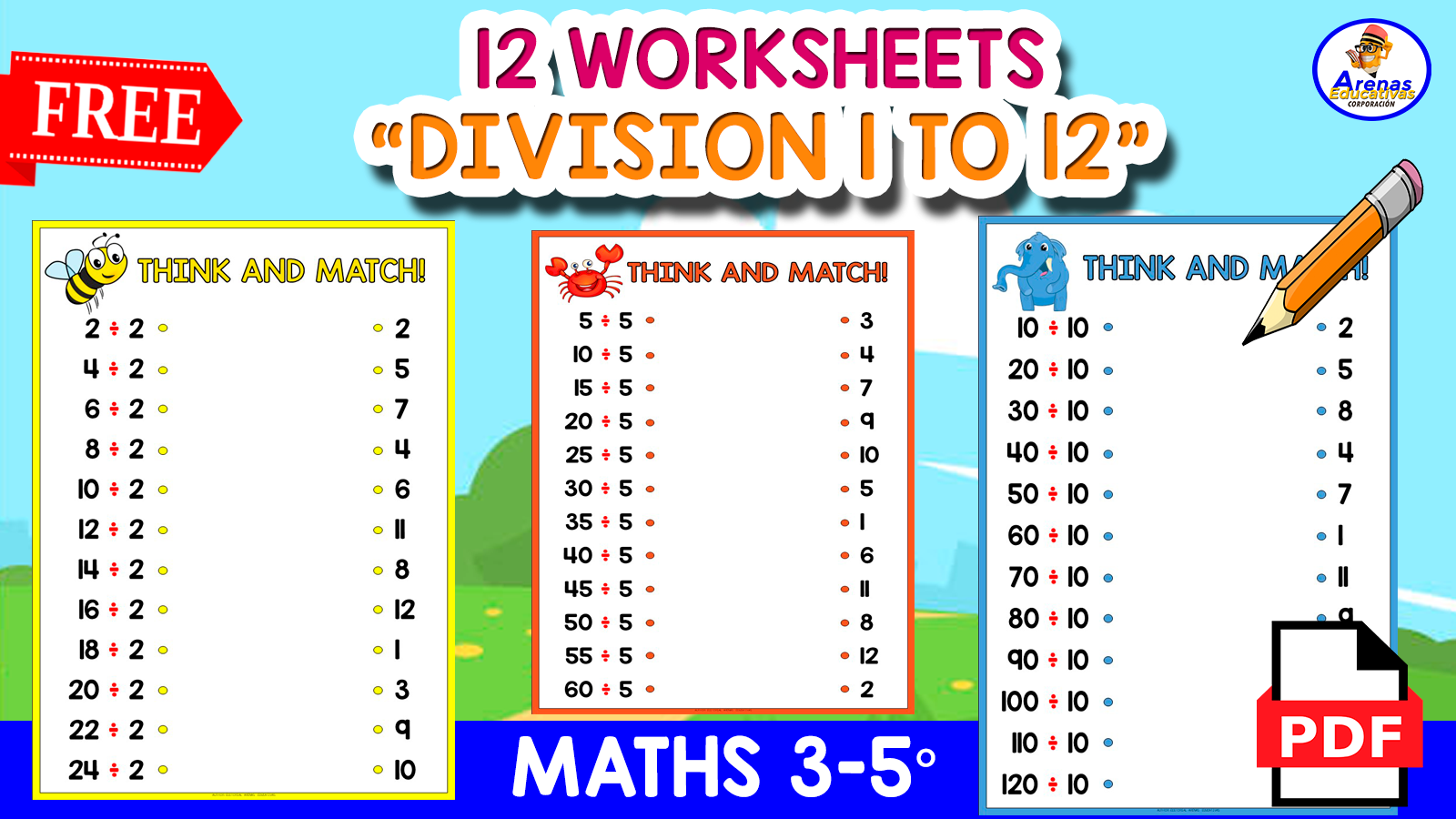
 Give students practice matching division equations to their correct numeric answers.

Students make assumptions to solve a real-world math/science problem (calculating the length of wire needed for a roll of fencing with a given mesh style), build a real-life model and a mathematical model, and communicate their findings.

Worksheet giving example sentences for four sentence/punctuation types (statement, exclamation, question, command) for students to read aloud with matching expression.
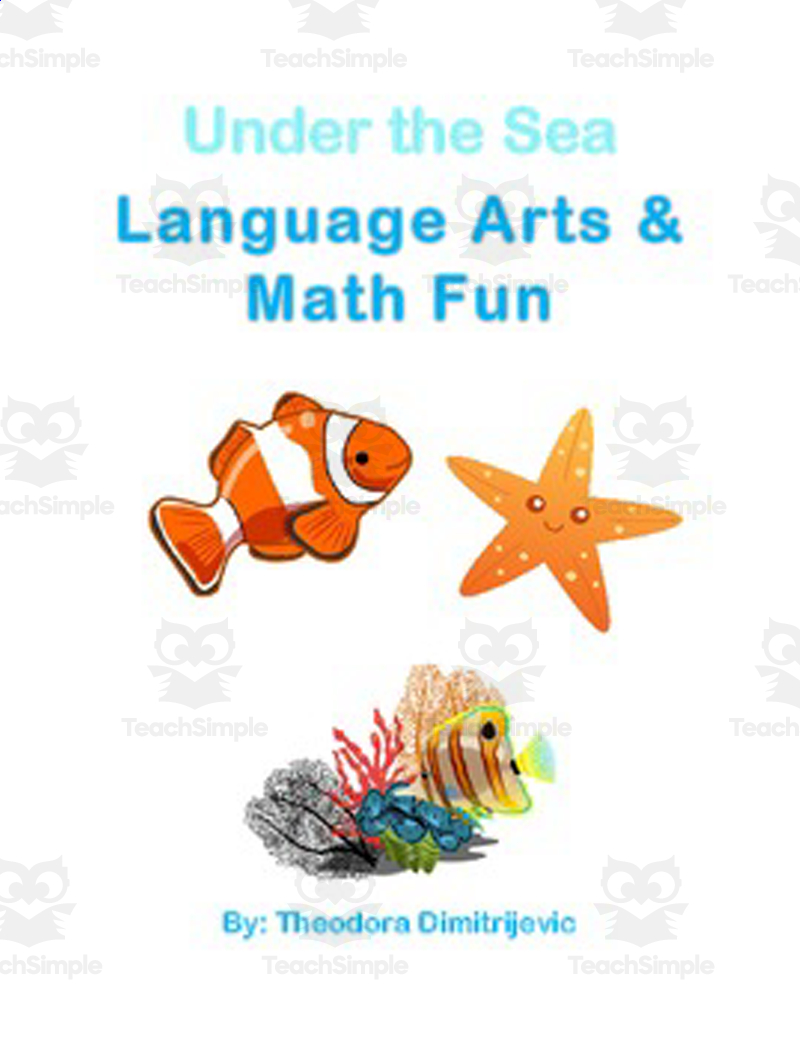
Students circle nouns and adjectives, identify alliteration, underline adjectives, write descriptive sentences, complete place-value exercises (matching word form to standard form, identifying digit value), and fill sea-creature vocabulary sentences from a word bank.
 Free download
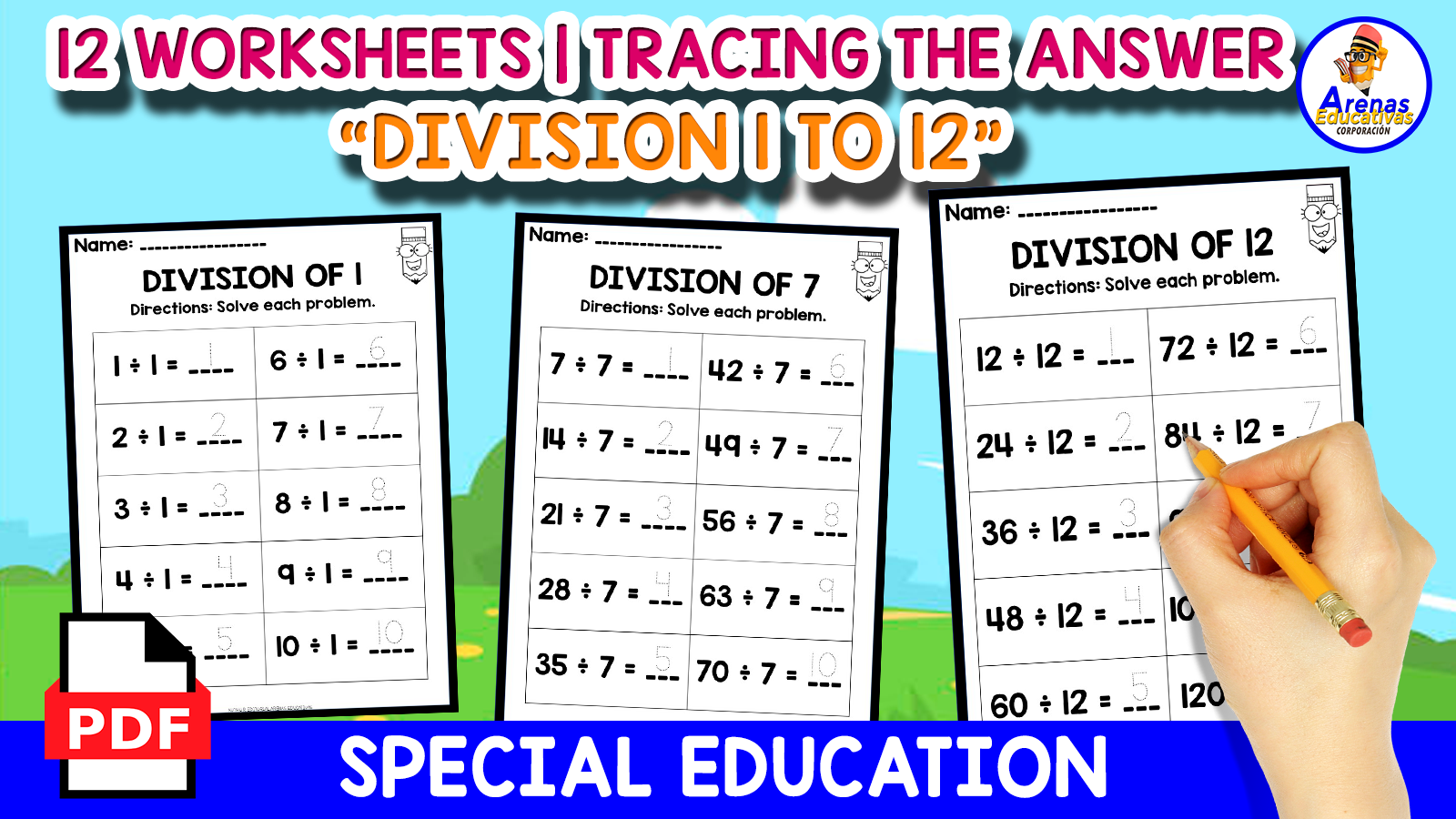
 Trace the printed answer digit for each division problem (e.g., 1 ÷ 1 = ____ with the digit shown near the blank) across worksheets covering divisors 1 through 12.
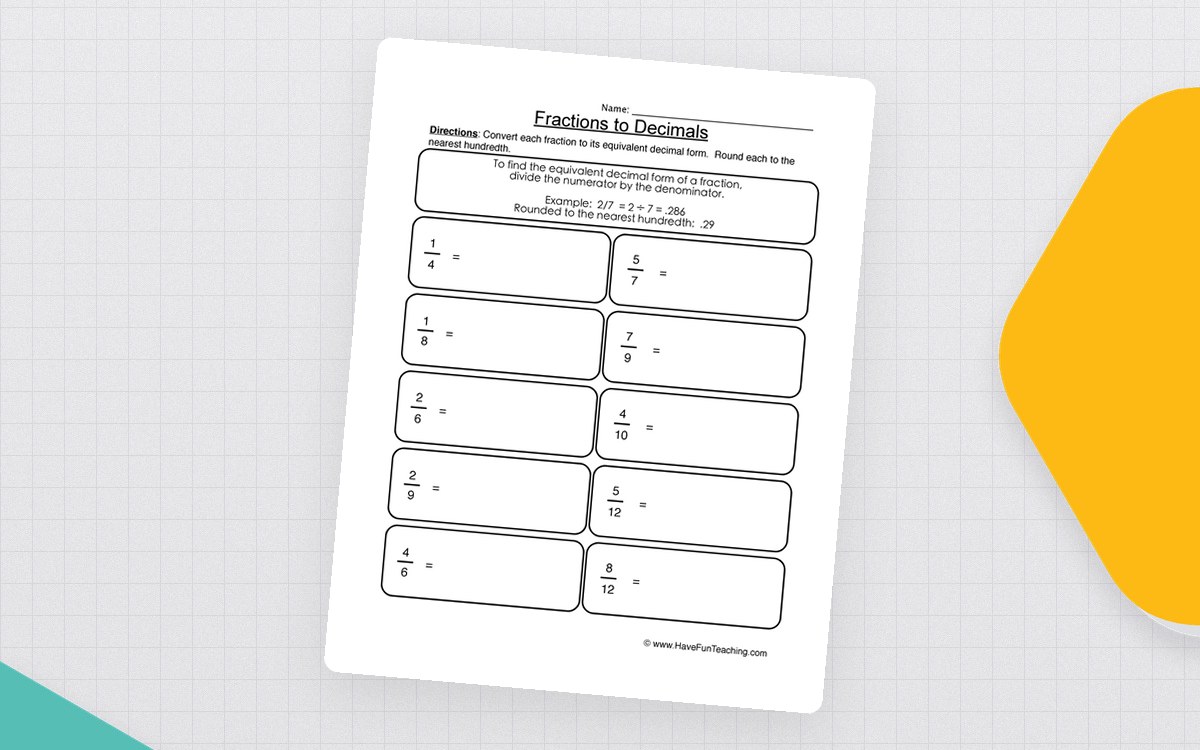
A math worksheet teaching students to convert fractions into decimal form using division.

A math worksheet teaching a five-step problem-solving process applied to an integer-operations word problem about identifying integers divisible by each of their own digits ('cwazy' integers).

Better description: This Equivalent Fractions Matching Worksheet is a great way for students to practice identifying equivalent fractions. By drawing lines to match fractions, they will be able to see how fractions can be equivalent even if they have different numerators and denominators.

A 3-worksheet packet (from the same 'Language of Educational Art' publisher as the Literary Terms Lesson series) teaching students to manipulate three specific literary devices — Details, Diction, and Tone — to control the mood/meaning of creative writing, before students draft original work.

Practice adding and subtracting decimals and representing the results on a bar graph.

Word-problem worksheet practicing conversion between milligrams, grams, and kilograms.

A worksheet giving practice correctly placing quotation marks around spoken dialogue in sentences.
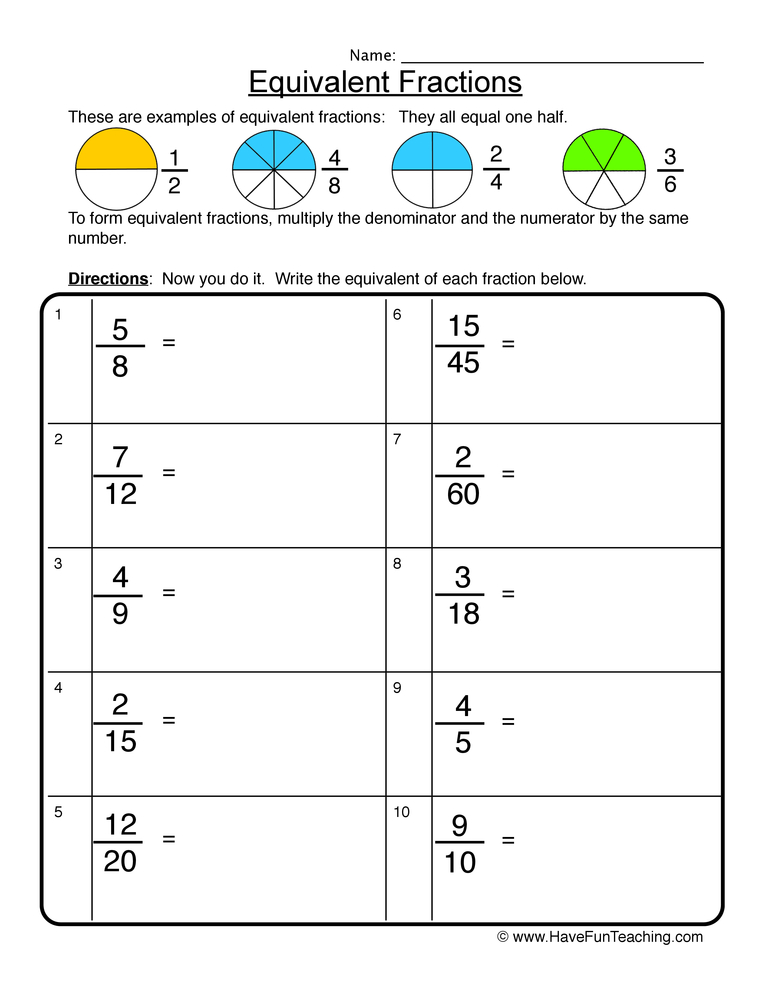
Math worksheet for practicing writing equivalent fractions by multiplying or dividing the numerator and denominator.

Fill blanks with the present perfect form of given verbs, complete sentences with the present perfect, choose between present perfect and past simple, write the past participle of listed verbs, write questions in the present perfect matching given answers, and answer open-ended questions using the present perfect.

Apply the same rounding decision across twenty large numbers. Values range from the hundred-thousands into the millions, while the target remains the nearest hundred thousand. Have students identify the surrounding multiples before choosing the closer one, especially when the number of digits changes.