Back-to-School Activities for Grade 5
Complete 40 short activities across English Language Arts, Math, Science, Social Studies, and Art/creative sections (write, solve, draw, match, color); check answers against the included answer key.
Classroom resources
Browse by lesson focus
Choose the topic or kind of practice you need.
Complete 40 short activities across English Language Arts, Math, Science, Social Studies, and Art/creative sections (write, solve, draw, match, color); check answers against the included answer key.
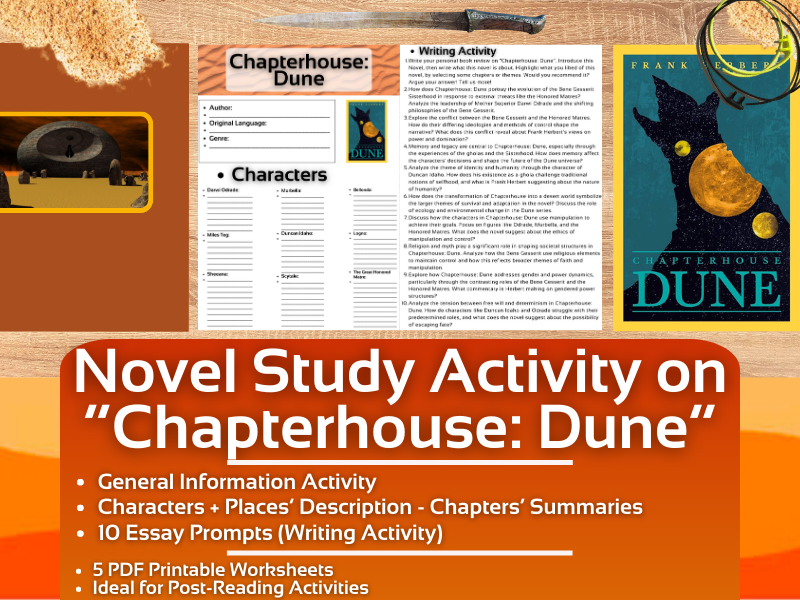
Post-reading novel-study worksheet for "Chapterhouse: Dune" by Frank Herbert: guides students through a character web, a place/setting web, a chapter-by-chapter summary grid, and reflection/creative-writing prompts.
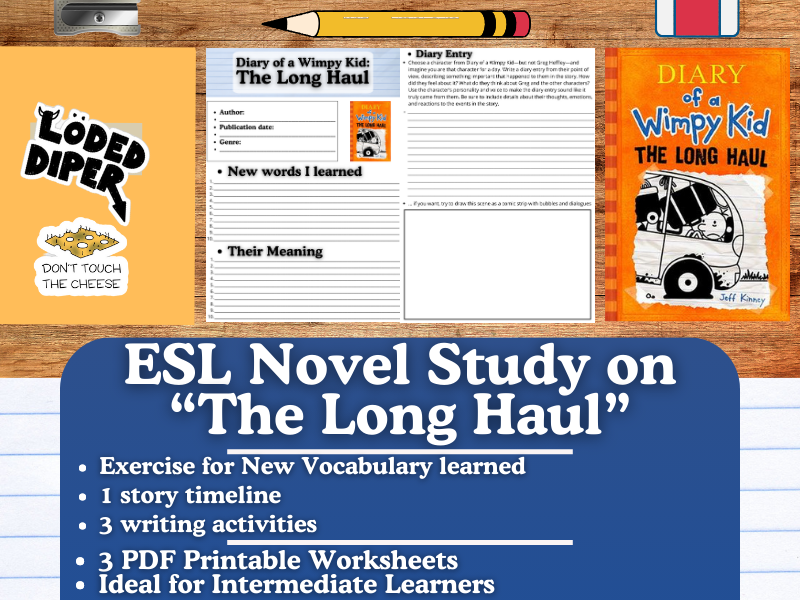
Post-reading ESL/EFL novel-study worksheet for "The Long Haul" by Jeff Kinney, combining a vocabulary exercise, reflection/comprehension prompts and creative-writing tasks.
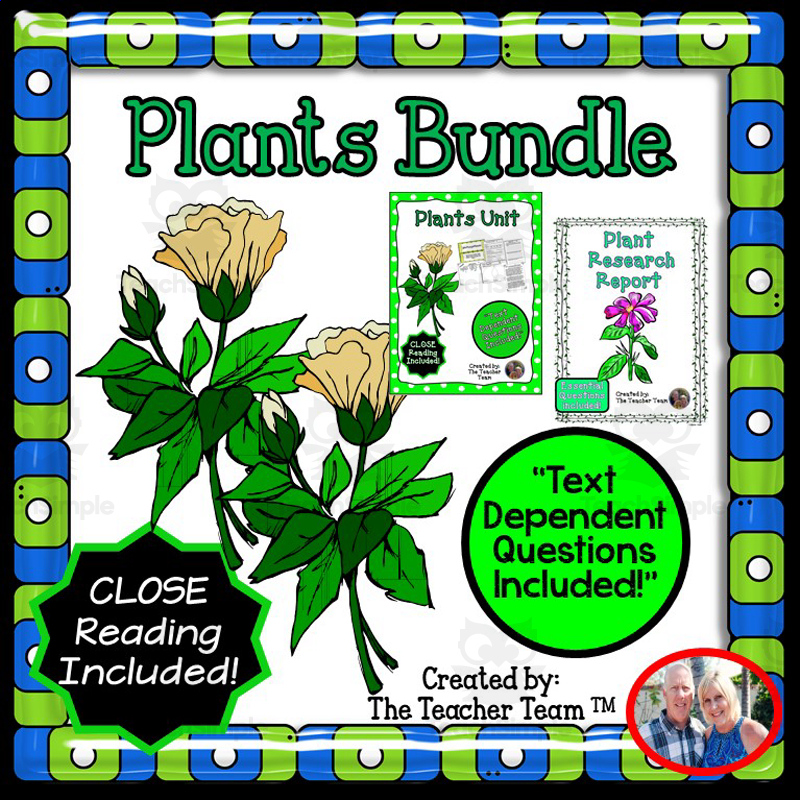
A multi-component CLOSE-reading and vocabulary unit on plants for grades 3-7, teaching close-reading annotation skills alongside plant science content (plant classification, parts of a plant, photosynthesis, pollination/seed dispersal, plants and life on Earth) through nonfiction passages and supporting activities.
Answer pre-viewing background questions, take notes on key figures while watching the film, complete a viewing guide of key events, analyze nonviolent resistance principles, answer critical-analysis and cause-and-effect questions, compare two leaders, define vocabulary in context, analyze a primary-source King quote…
For each of the five myths: read a close-reading passage, annotate it using provided bookmarks/anchor charts, answer text-dependent questions and essential questions (including compare/contrast and 'write a new ending' writing prompts), complete a CLOZE fill-in-the-blank worksheet, complete a character-analysis organizer, complete a…
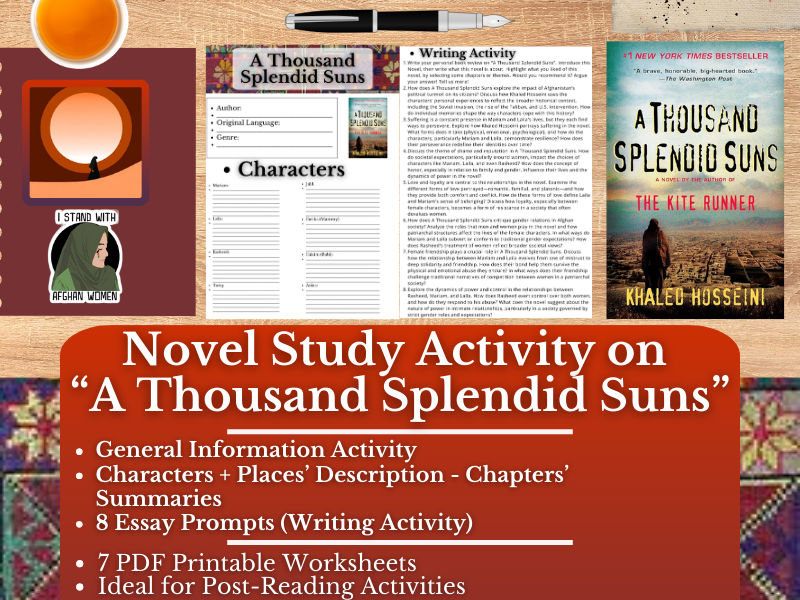
Post-reading novel-study worksheet for "A Thousand Splendid Suns" by Khaled Hosseini: guides students through a character web, a place/setting web, a chapter-by-chapter summary grid, and reflection/creative-writing prompts.
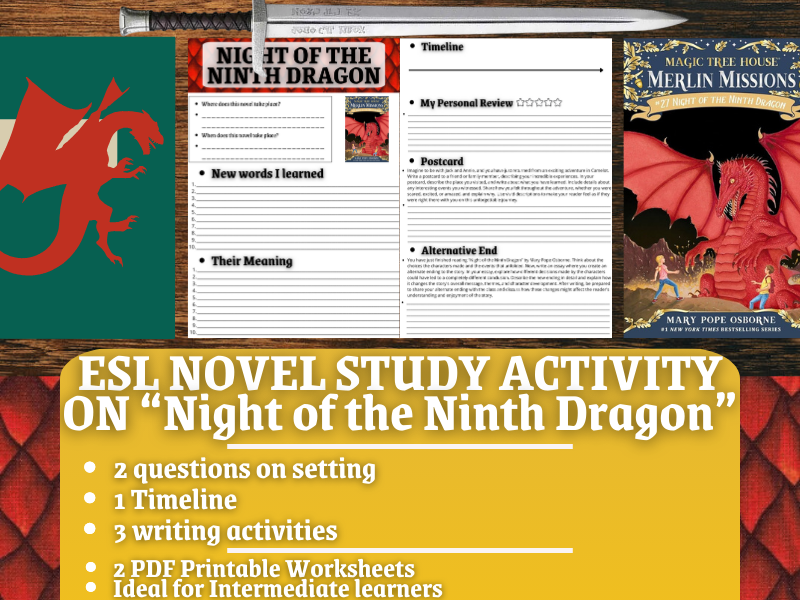
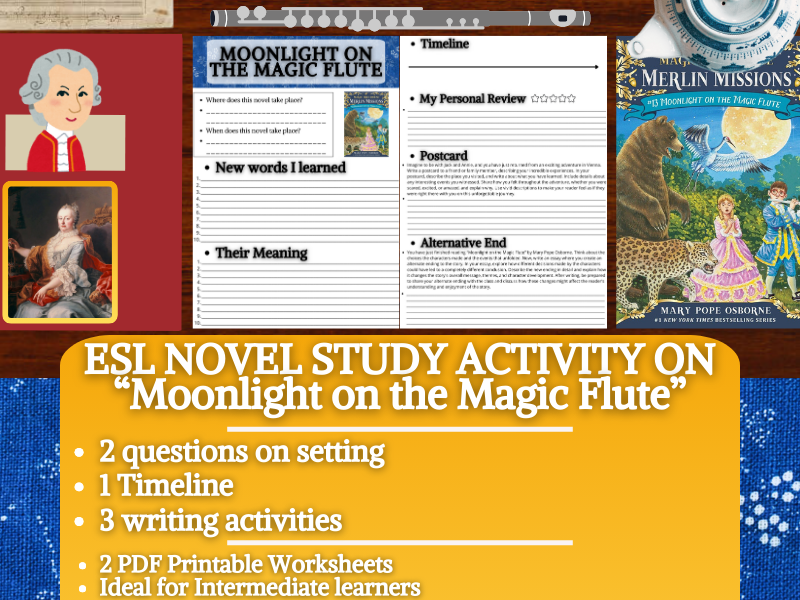
Identify where and when the novel takes place; complete two 10-item numbered vocabulary lists; write a postcard as if returning from an adventure with Jack and Annie in Camelot; then write an essay proposing an alternate ending to the novel and explaining how it changes the story's message, themes and character development.
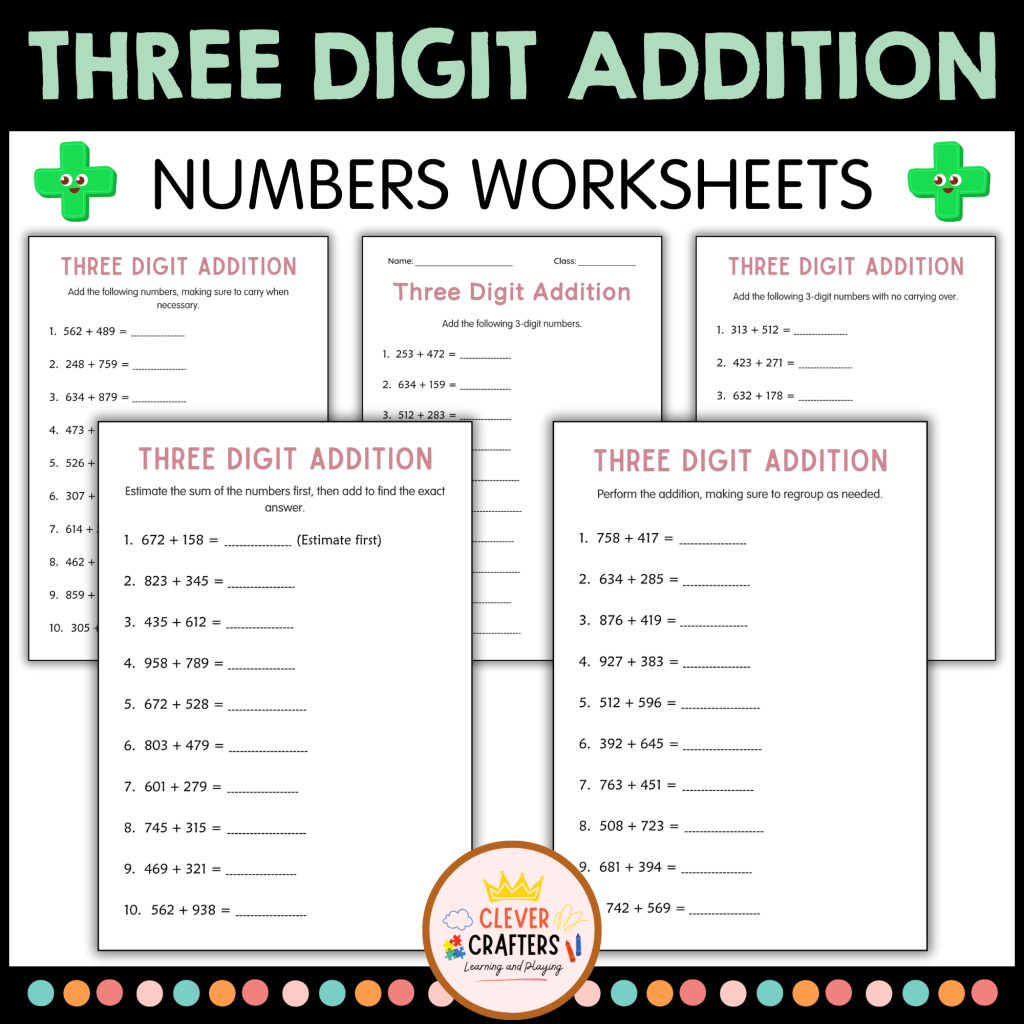
Select a page to match the addition strategy your class is practising. Students calculate sums, estimate before adding, break numbers into hundreds, tens, and ones, or find a missing addend. The nine-page set gives you short groups of problems for independent work and discussion; no answer key is included. For related practice, see addition and subtraction regrouping worksheets .
Add/subtract/multiply/divide fractions and decimals, round decimals, identify place value, compare numbers, multiply/divide multi-digit numbers, compute area/perimeter/volume, classify angles, and solve multi-step word problems.
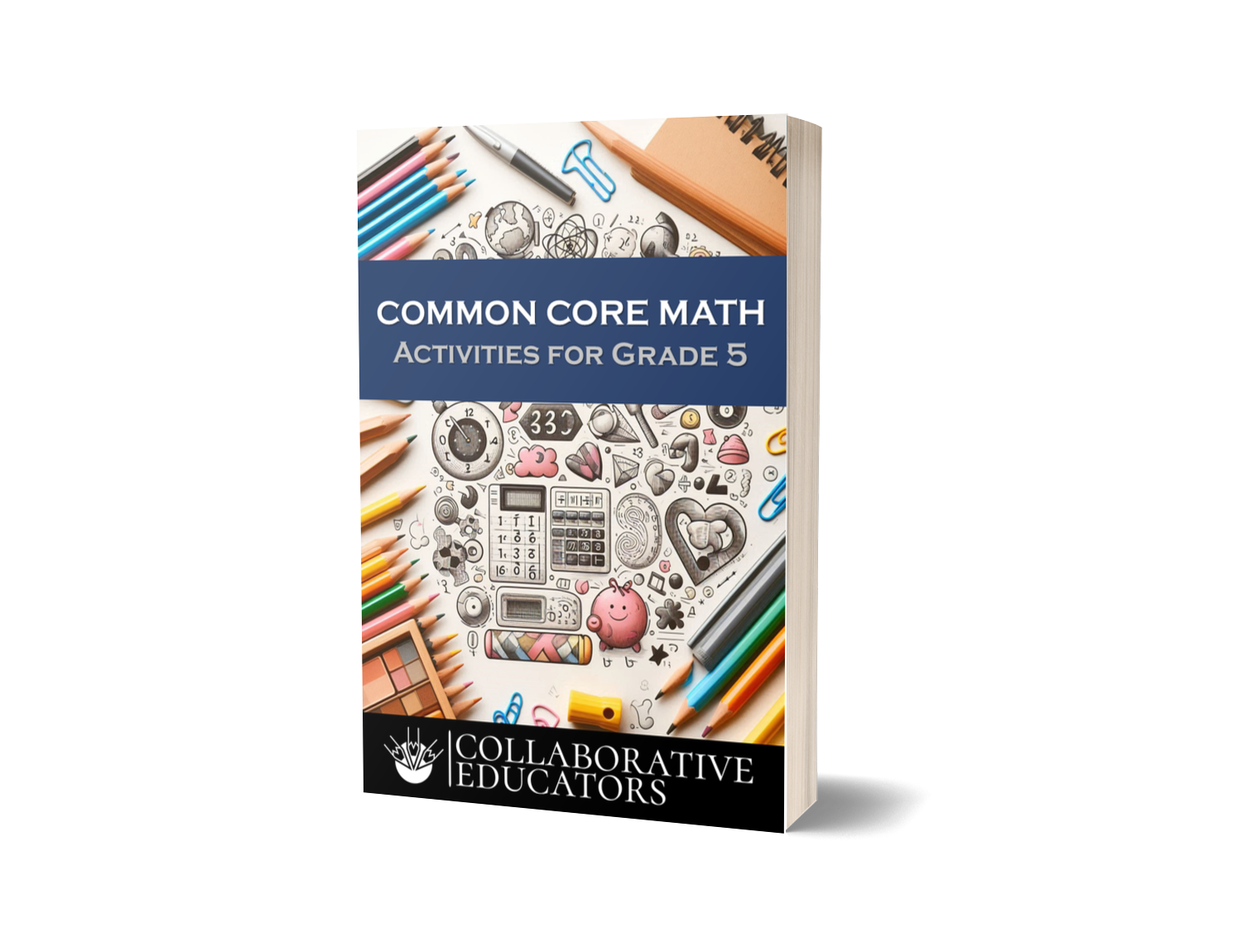
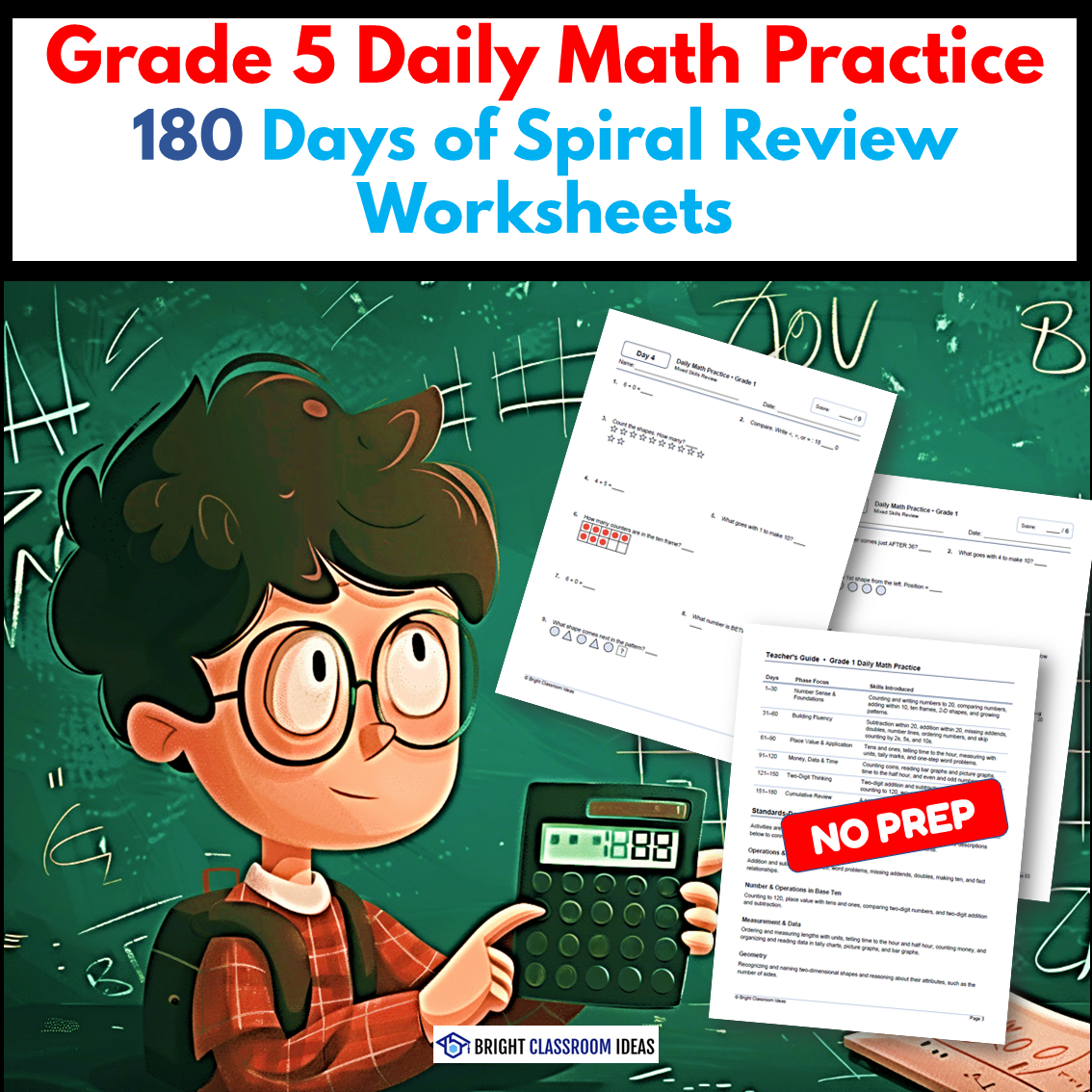
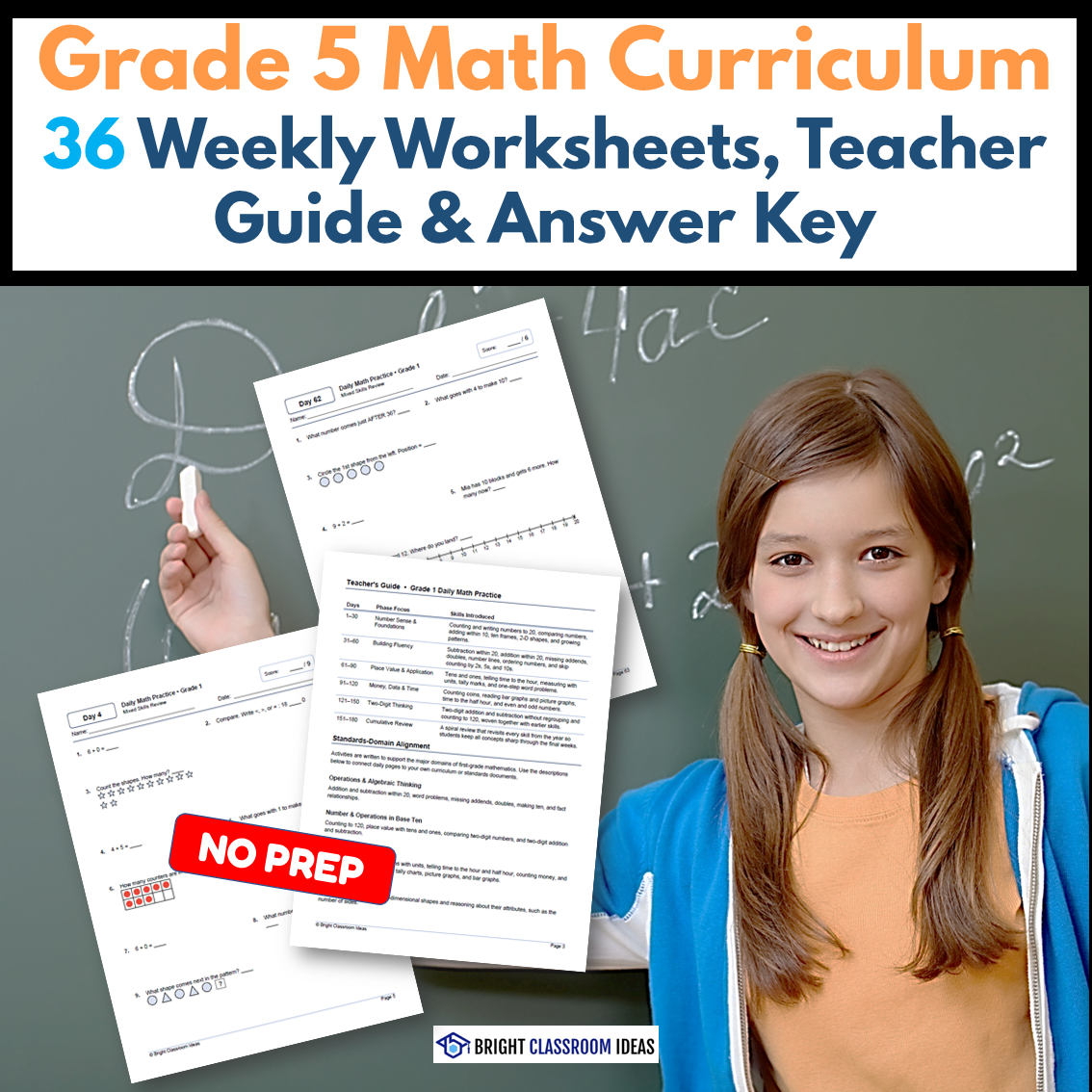
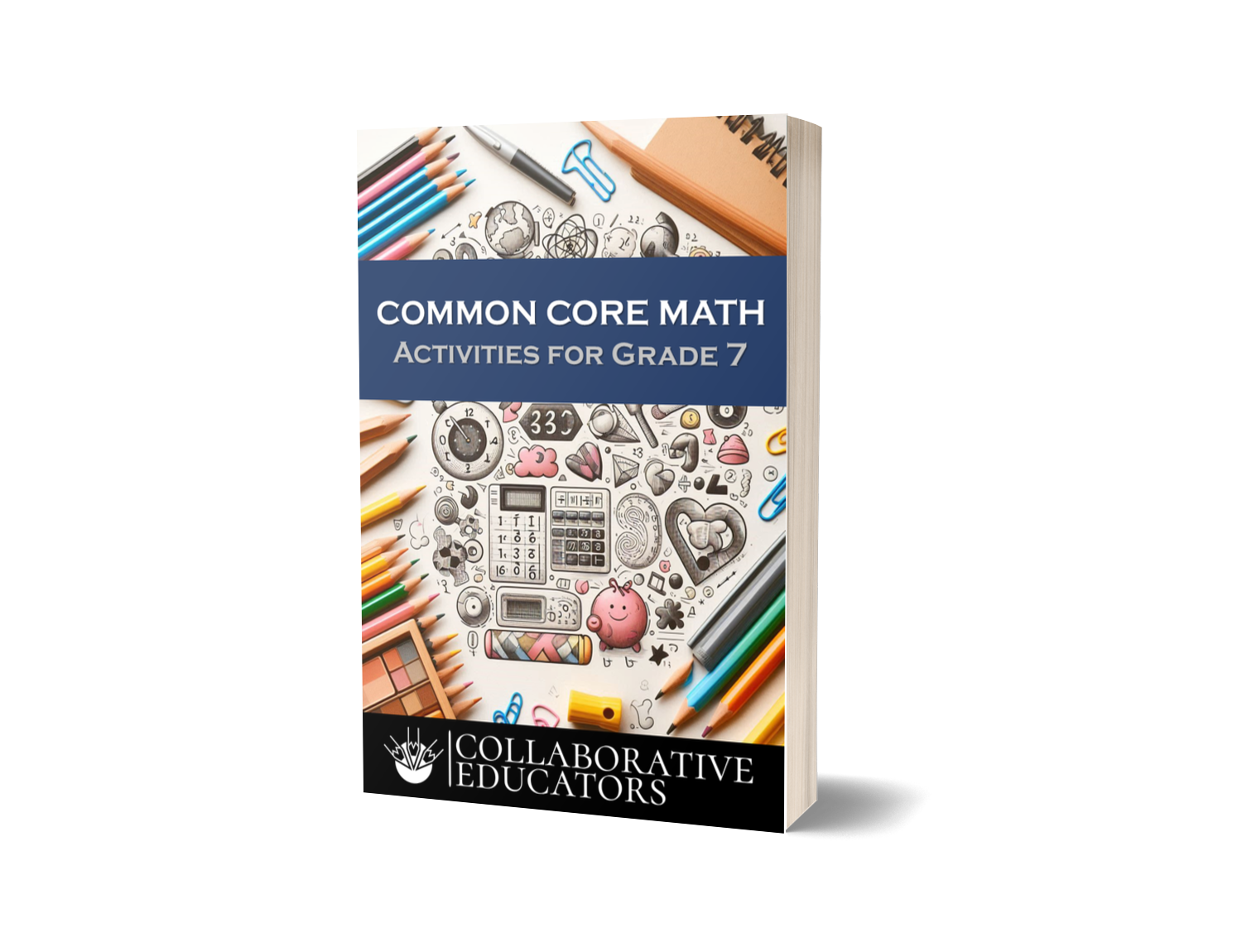
A 180-day daily spiral-review math practice resource for grade 5, giving students one short one-page worksheet per school day mixing skills across the Common Core grade 5 math domains.
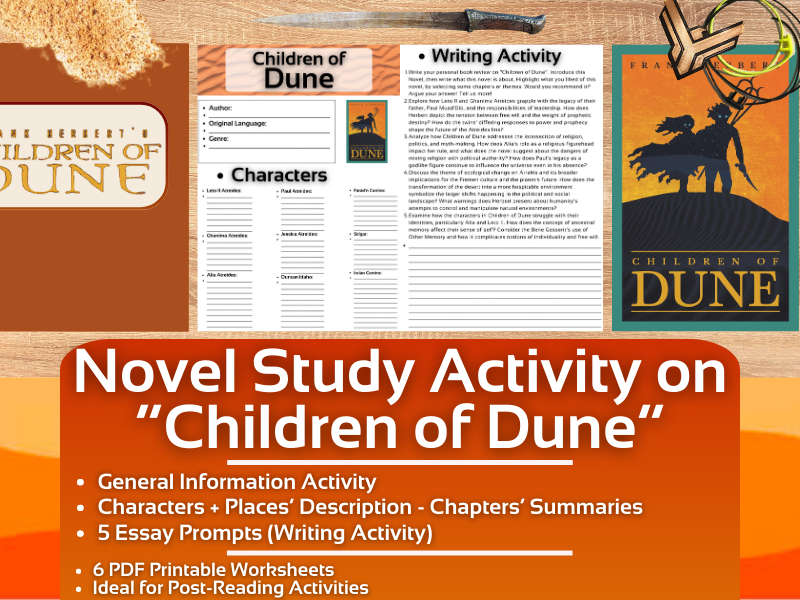
Post-reading novel-study worksheet for "Children of Dune" by Frank Herbert: guides students through a character web, a place/setting web, a chapter-by-chapter summary grid, and reflection/creative-writing prompts.
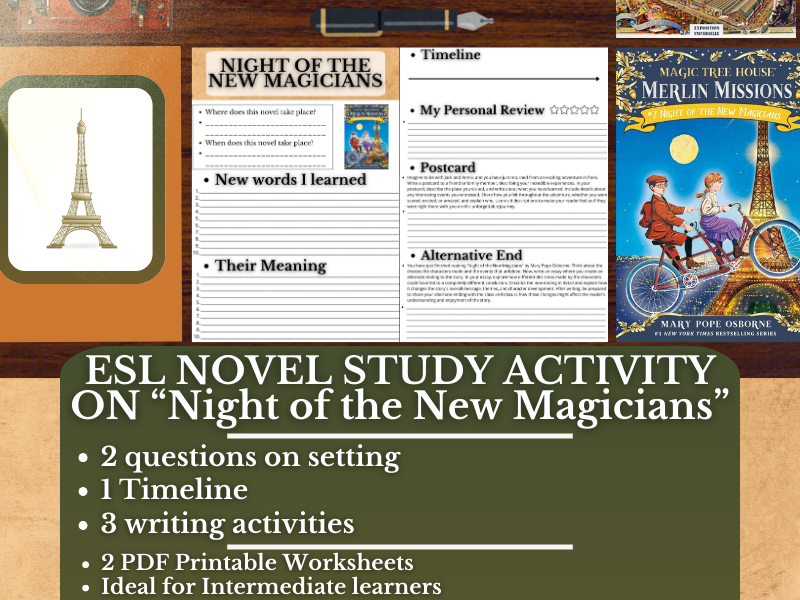
Identify where and when the novel takes place; complete two 10-item numbered vocabulary lists; write a postcard as if returning from an adventure with Jack and Annie in Paris; then write an essay proposing an alternate ending to the novel and explaining how it changes the story's message, themes and character development.
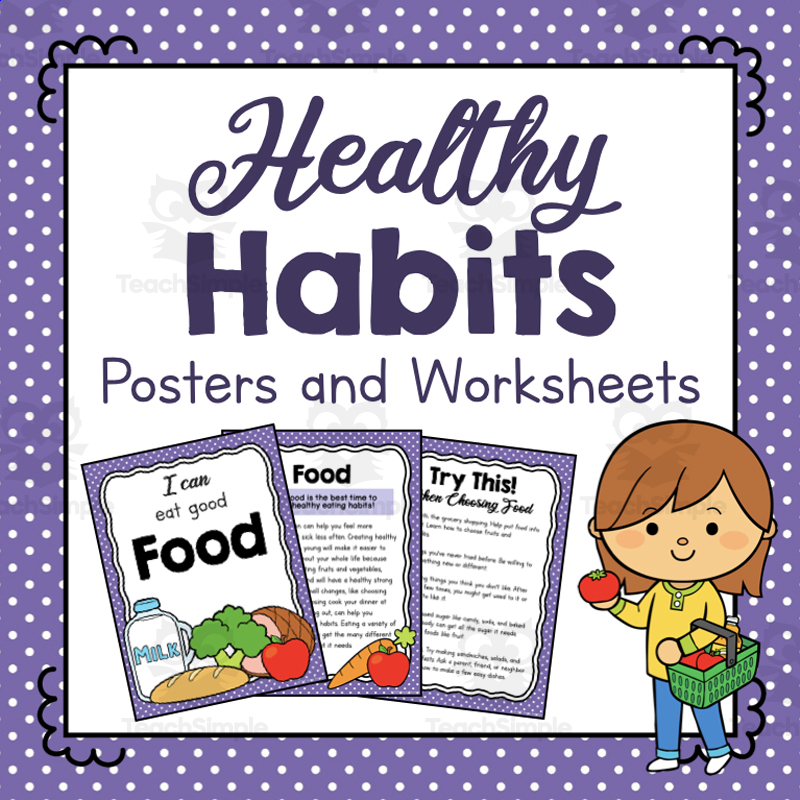
Read informational cards about each health topic, complete 'I can...' worksheet pages for 'My Book About Healthy Habits,' and review 'Try This!' tip lists for building the habit; cut out title pennants for a bulletin board display.
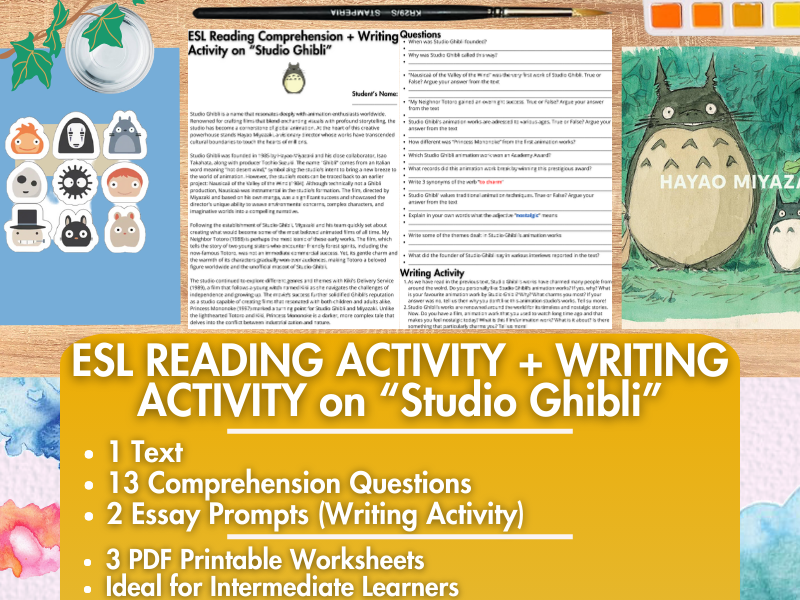
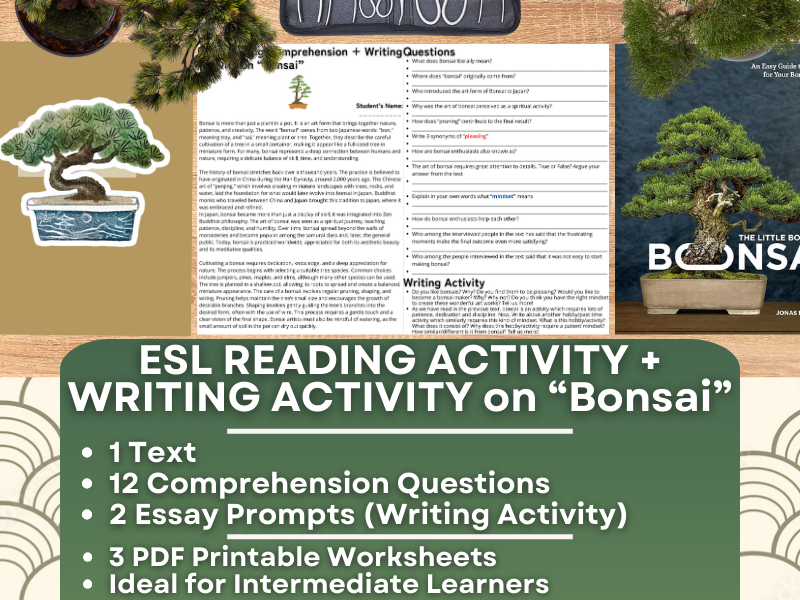
Students read a multi-paragraph nonfiction passage, answer open-response reading comprehension questions (including short-answer, vocabulary/synonym, and a true-or-false-with-textual-justification item), then write a personal-opinion or comparison essay responding to a set of guided writing prompts about the topic.
Students solve place-value, decimal, fraction, multiplication/division, order-of-operations, and geometry problems by filling in blanks on one-page weekly worksheets (e.g. rounding decimals, adding fractions with unlike denominators, evaluating numerical expressions).
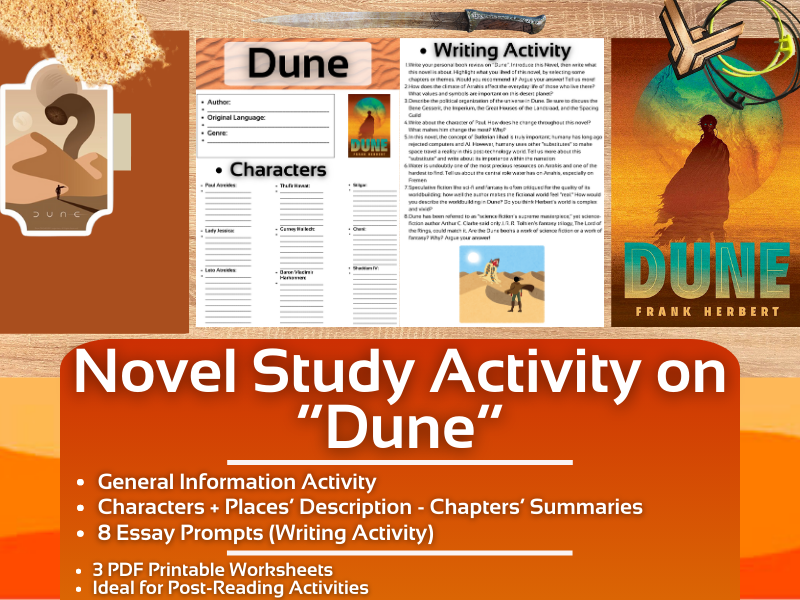
Post-reading novel-study worksheet for "Dune" by Frank Herbert: guides students through a character web, a place/setting web, a chapter-by-chapter summary grid, and reflection/creative-writing prompts.
Identify where and when the novel takes place; complete two 10-item numbered vocabulary lists; write a postcard as if returning from an adventure with Jack and Annie in Vienna; then write an essay proposing an alternate ending to the novel and explaining how it changes the story's message, themes and character development.
Write and simplify ratios, solve proportions and unit-rate problems, perform integer/fraction operations, find GCF, simplify and evaluate expressions, write and solve equations/inequalities, compute area/perimeter/volume/surface area of 2D and 3D shapes, classify angles, calculate mean/median/mode and probability…
Students read a multi-paragraph nonfiction passage, answer open-response reading comprehension questions (including short-answer, vocabulary/synonym, and a true-or-false-with-textual-justification item), then write a personal-opinion or comparison essay responding to a set of guided writing prompts about the topic.
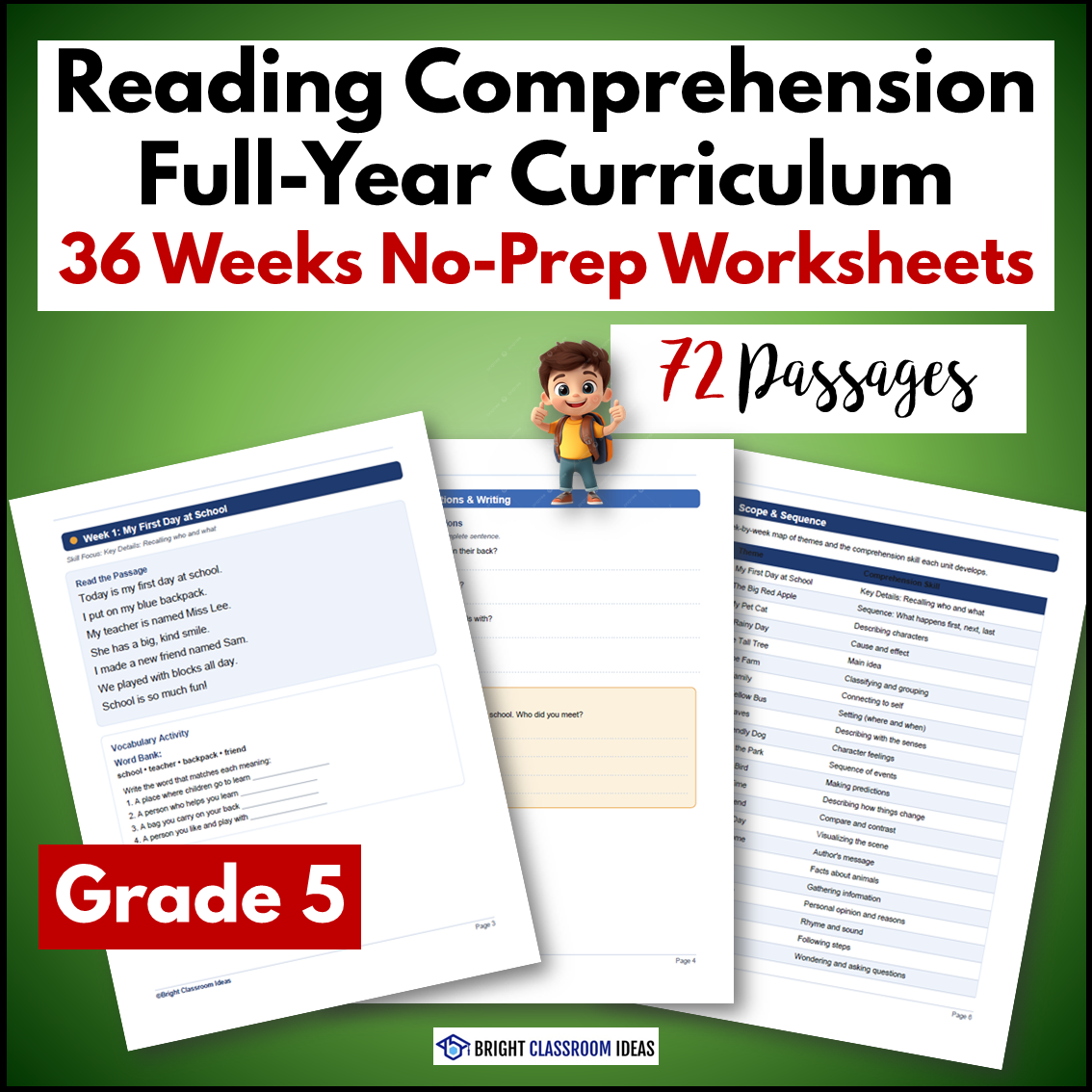
A full-year Grade 5 reading comprehension curriculum (Bright Classroom Ideas) providing 72 original fiction/nonfiction passages across 36 weeks, designed to challenge upper-elementary readers with close reading, critical thinking, and text analysis.
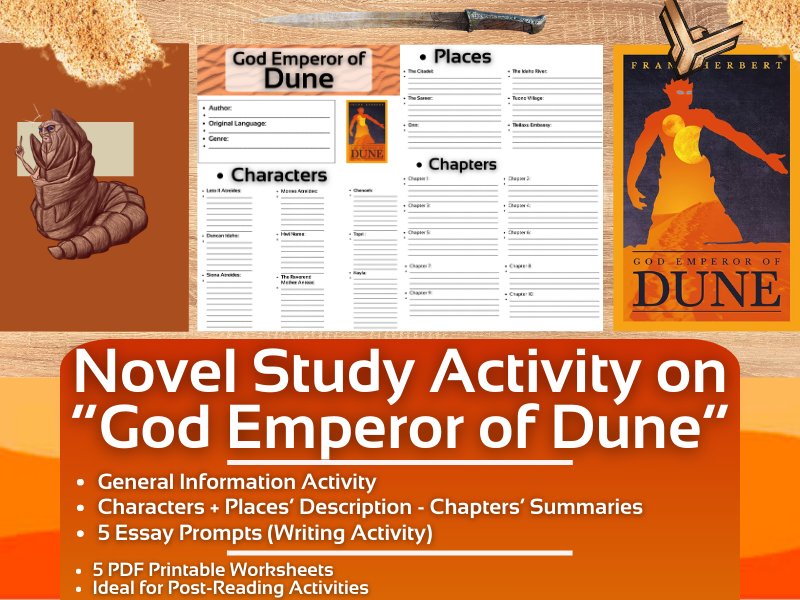
Post-reading novel-study worksheet for "God Emperor of Dune" by Frank Herbert: guides students through a character web, a place/setting web, a chapter-by-chapter summary grid, and reflection/creative-writing prompts.
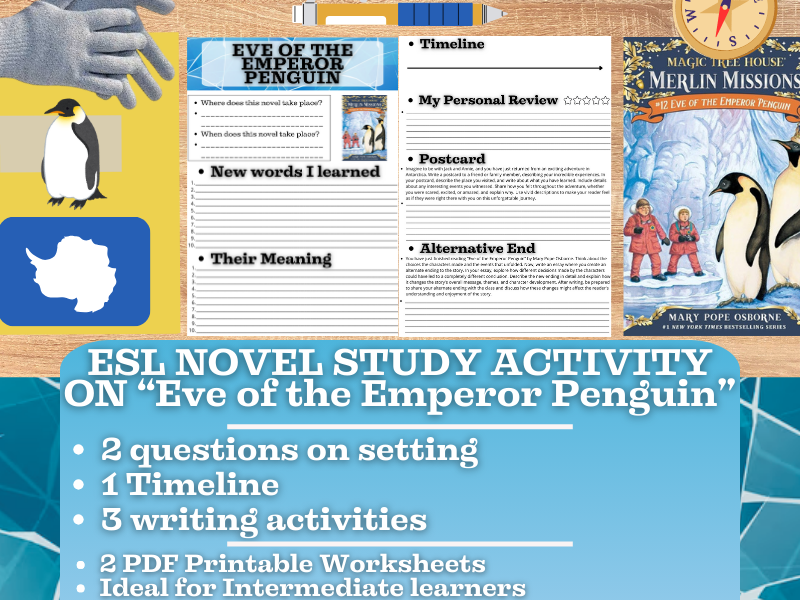
Identify where and when the novel takes place; complete two 10-item numbered vocabulary lists; write a postcard as if returning from an adventure with Jack and Annie in Antarctica; then write an essay proposing an alternate ending to the novel and explaining how it changes the story's message, themes and character development.
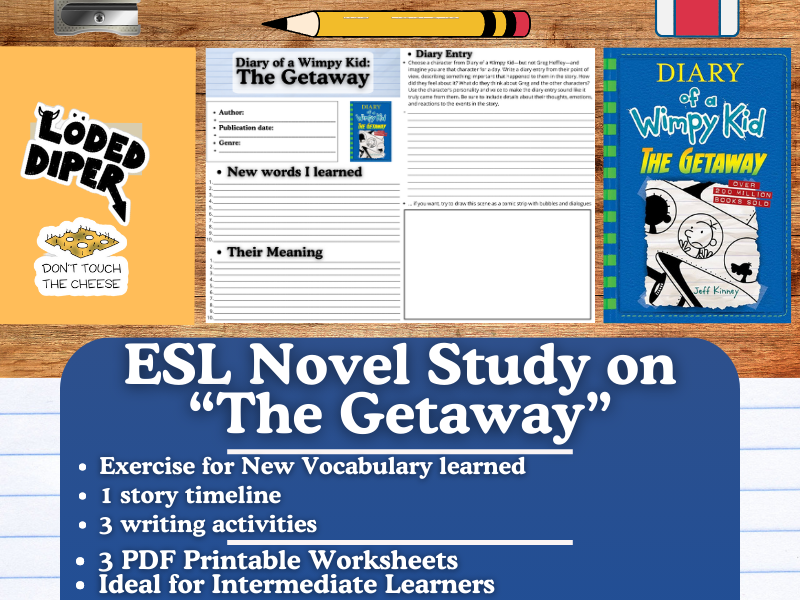
Post-reading ESL/EFL novel-study worksheet for "The Getaway" by Jeff Kinney, combining a vocabulary exercise, reflection/comprehension prompts and creative-writing tasks.