Reading & language
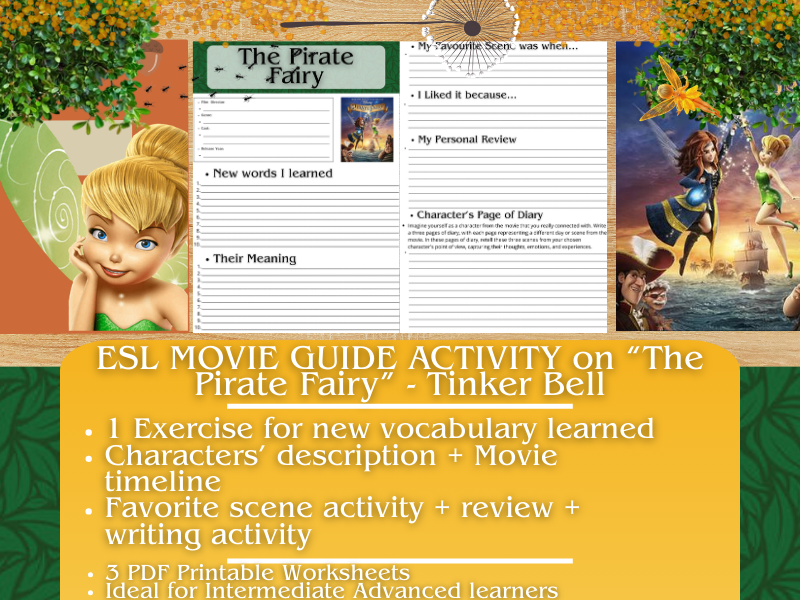
ESL Movie Guide Worksheets - The Pirate Fairy - Tinker Bell
Pre/post-viewing ESL movie guide worksheet that has English-language learners record film details, learn new vocabulary, and write about the film "The Pirate Fairy".




Classroom resources
Browse by lesson focus
Choose the topic or kind of practice you need.
Showing 2137–2160 of 2447 resources

 Show filters
 Pre/post-viewing ESL movie guide worksheet that has English-language learners record film details, learn new vocabulary, and write about the film "The Pirate Fairy".
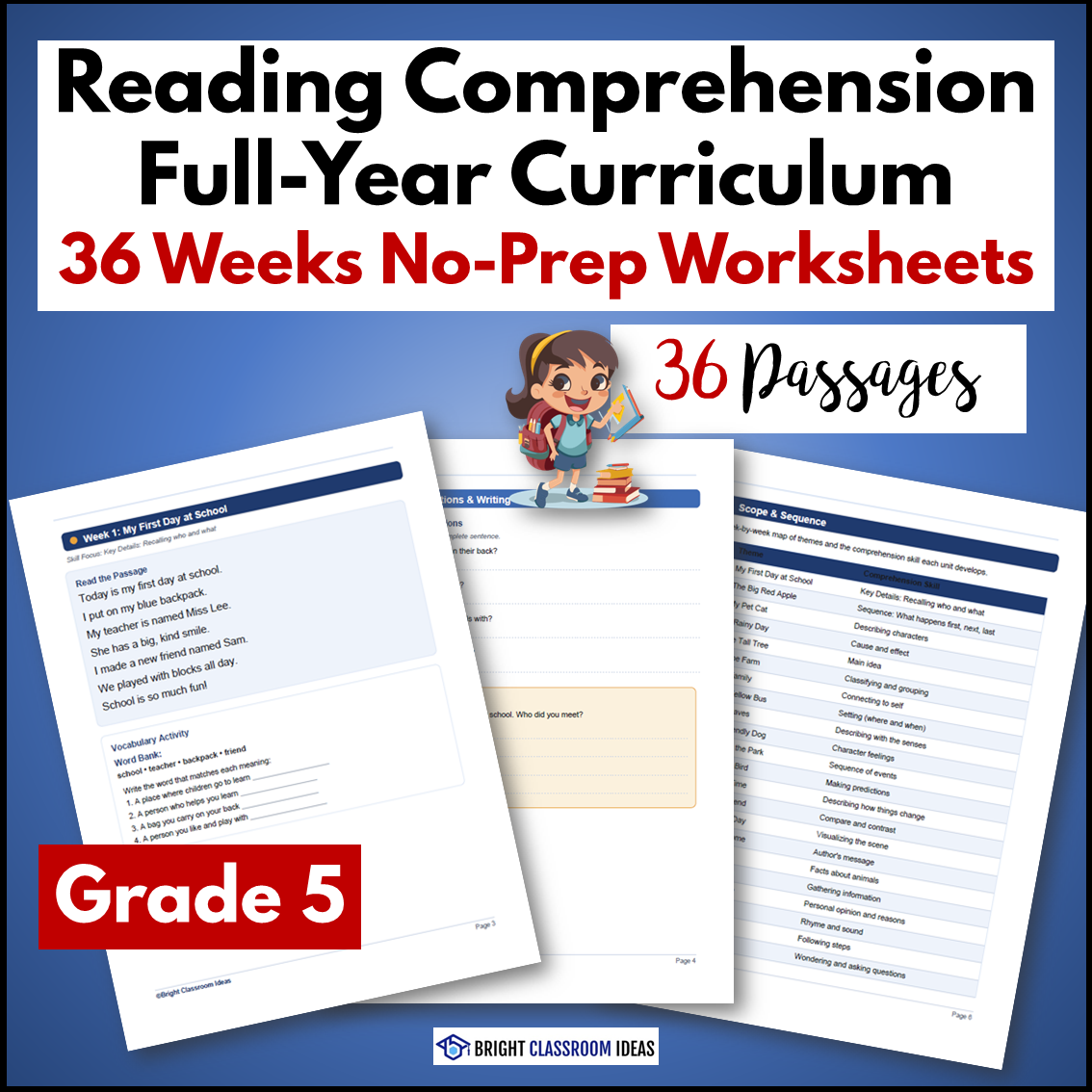
Each week students read a passage, match vocabulary words to definitions from a word bank, answer short comprehension questions (including main idea, inference, and analysis of figurative language/author's craft), and respond to an open-ended writing prompt.
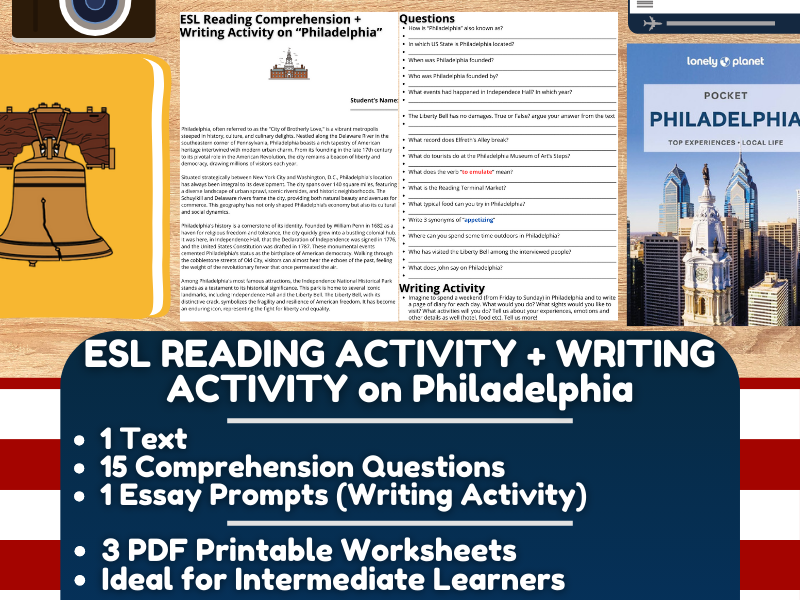
Gives ESL/EFL students a reading-comprehension and writing-practice worksheet built around a nonfiction article on the history, landmarks, food, and attractions of Philadelphia, Pennsylvania.
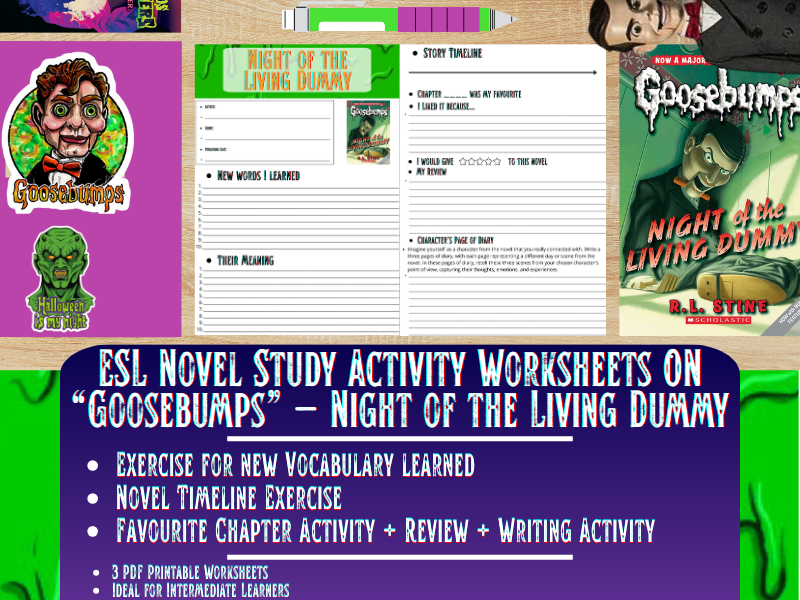
Fill in the novel's author, genre and publishing date; list 10 new vocabulary words and their meanings; name a favourite chapter and explain why; give the novel a star rating and write a review; then write a three-page diary entry in the voice of a character from the novel.
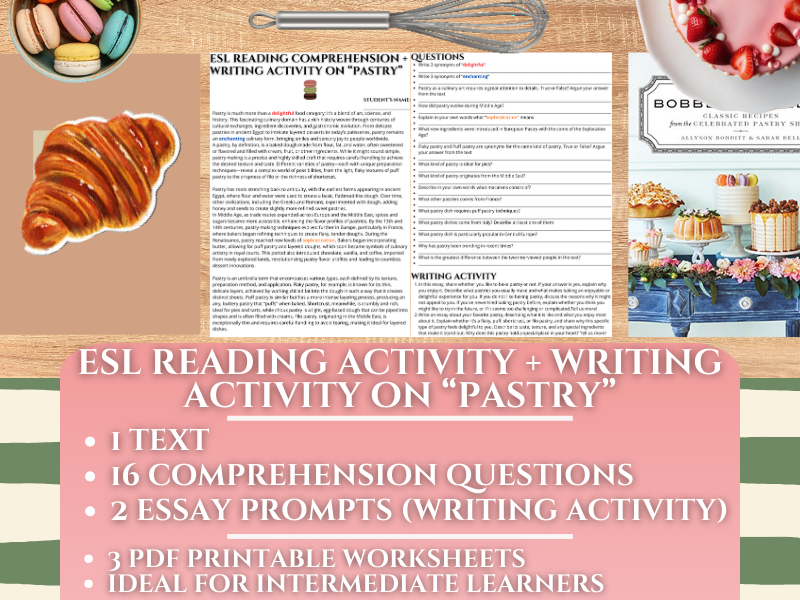
Students read a nonfiction passage about pastry (history and international varieties), answer short-answer and true/false (with textual justification) comprehension questions, complete vocabulary/synonym exercises, and respond to two extended writing prompt(s) about the topic.
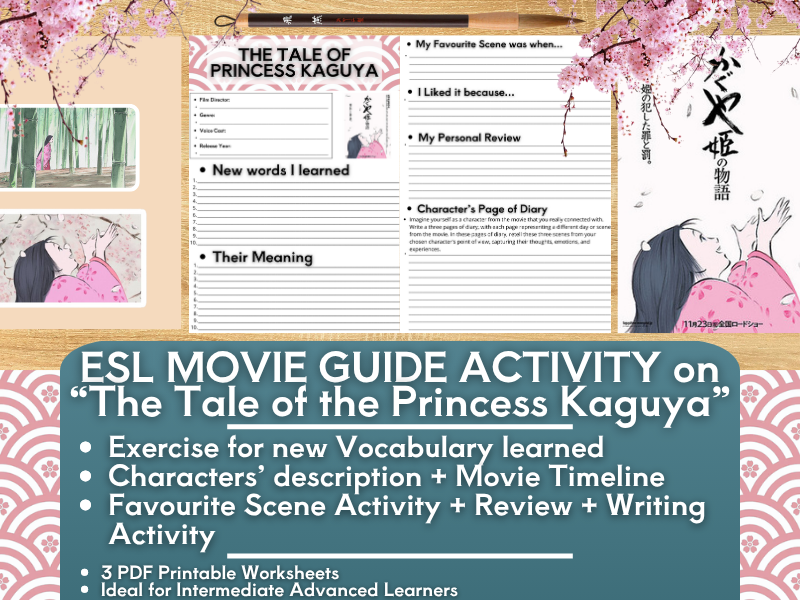
Post-viewing ESL/EFL movie-guide worksheet packet built around the film "The Tale of the Princess Kaguya": records film facts, builds vocabulary from the film, and prompts written reflection and creative (diary) writing about the movie.
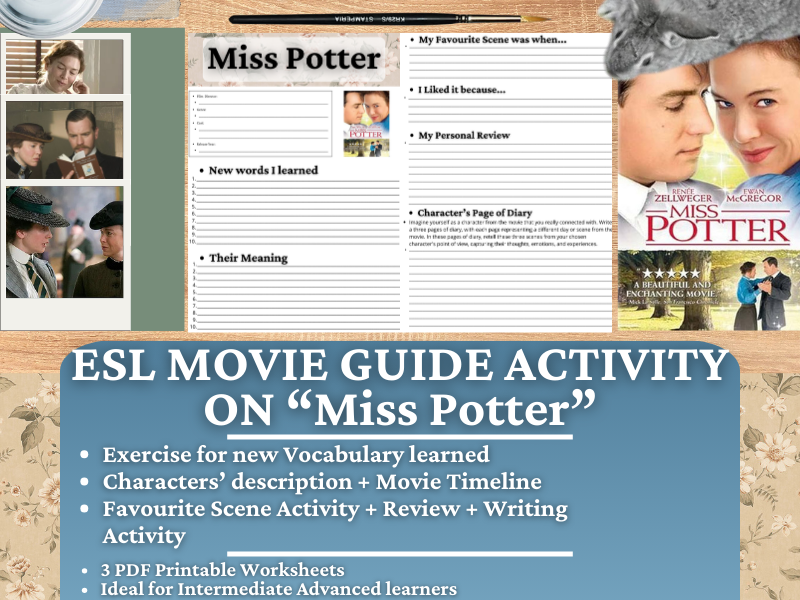
A post-viewing ESL/EFL worksheet built around the film "Miss Potter", used for movie-based vocabulary and writing practice after students watch the film.
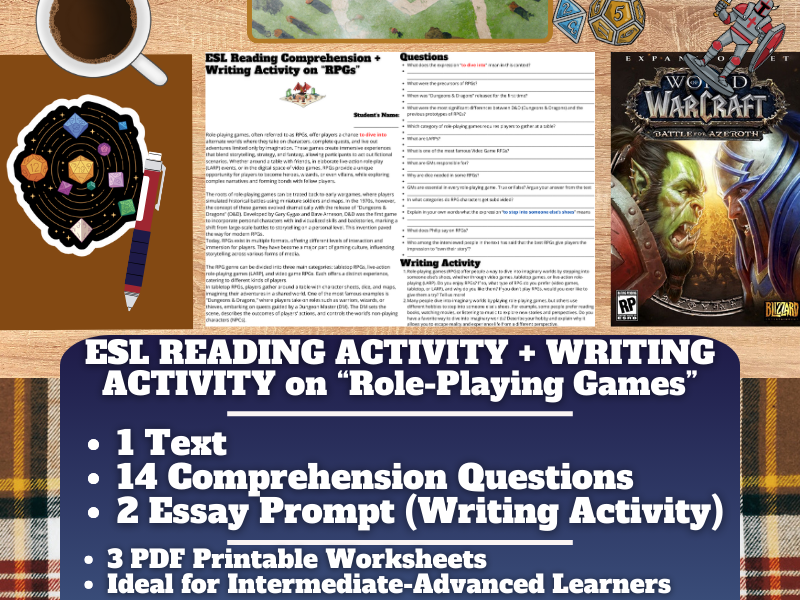
Students read a multi-paragraph nonfiction passage, answer open-response reading comprehension questions (including short-answer, vocabulary/synonym, and a true-or-false-with-textual-justification item), then write a personal-opinion or comparison essay responding to a set of guided writing prompts about the topic.
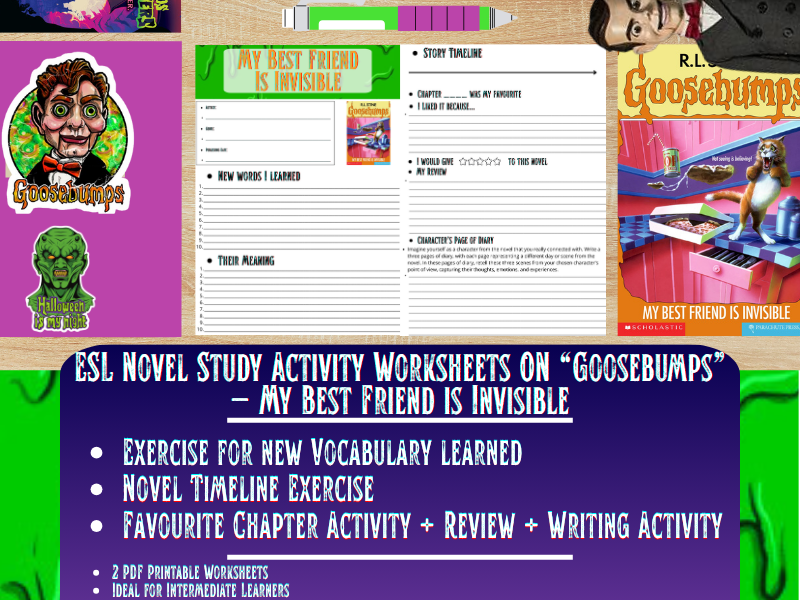
Fill in the novel's author, genre and publishing date; list 10 new vocabulary words and their meanings; name a favourite chapter and explain why; give the novel a star rating and write a review; then write a three-page diary entry in the voice of a character from the novel.
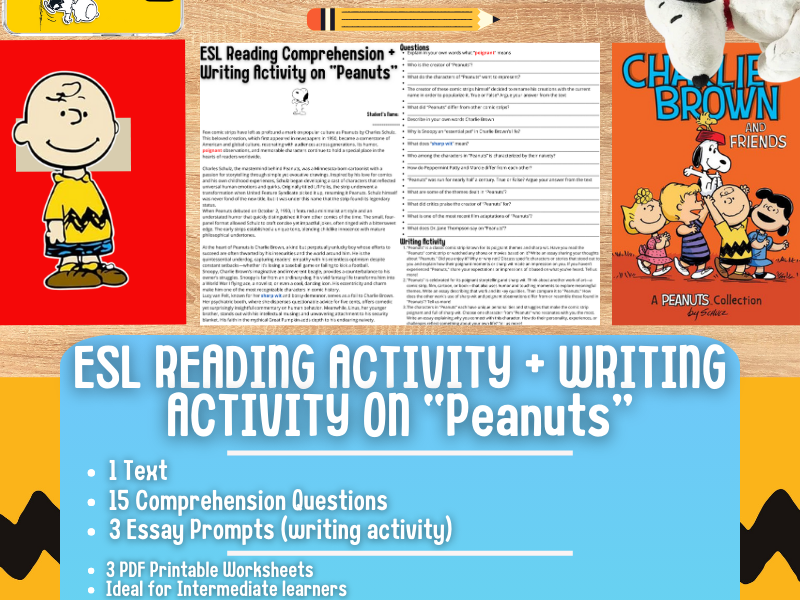
Students read a nonfiction passage about the Peanuts comic strip (Charles Schulz, characters and cultural impact), answer short-answer and true/false (with textual justification) comprehension questions, complete vocabulary/synonym exercises, and respond to three extended writing prompt(s) about the topic.
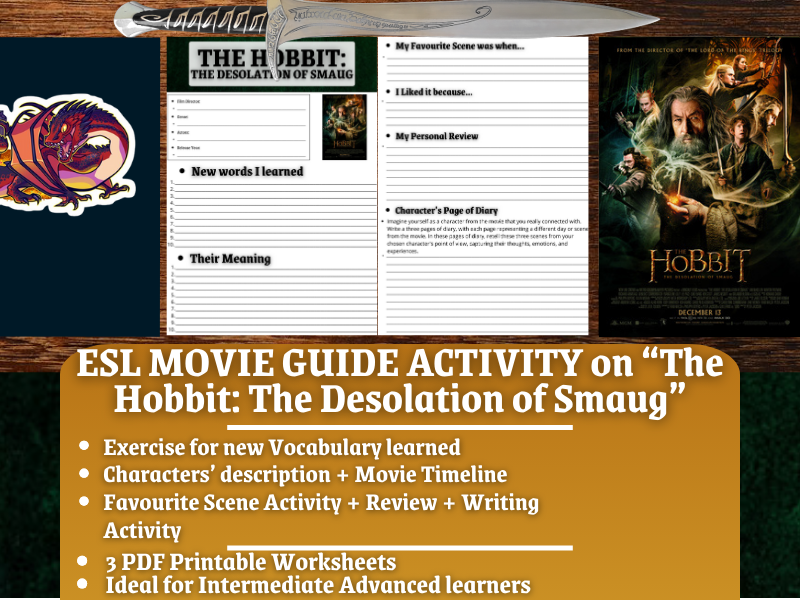
Post-viewing ESL/EFL movie-guide worksheet packet built around the film "The Hobbit: The Desolation of Smaug": records film facts, builds vocabulary from the film, and prompts written reflection and creative (diary) writing about the movie.
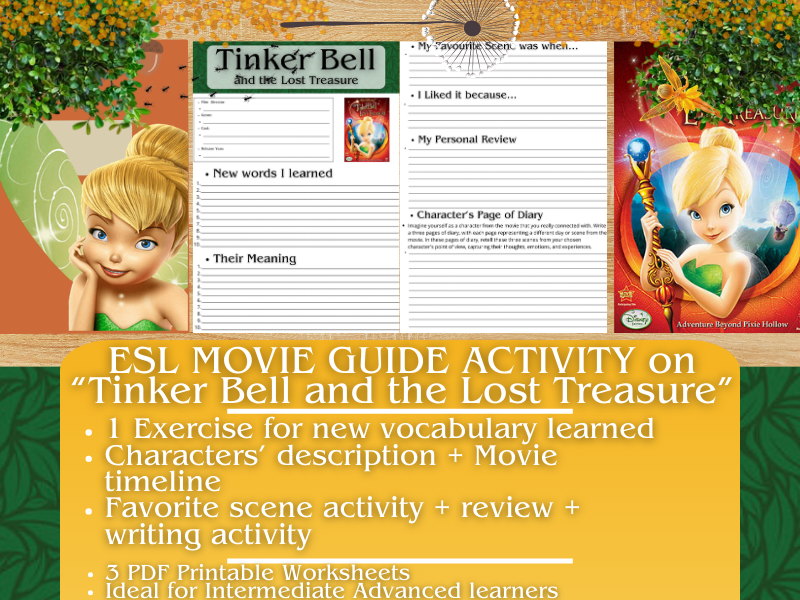
Pre/post-viewing ESL movie guide worksheet that has English-language learners record film details, learn new vocabulary, and write about the film "Tinker Bell and the Lost Treasure".
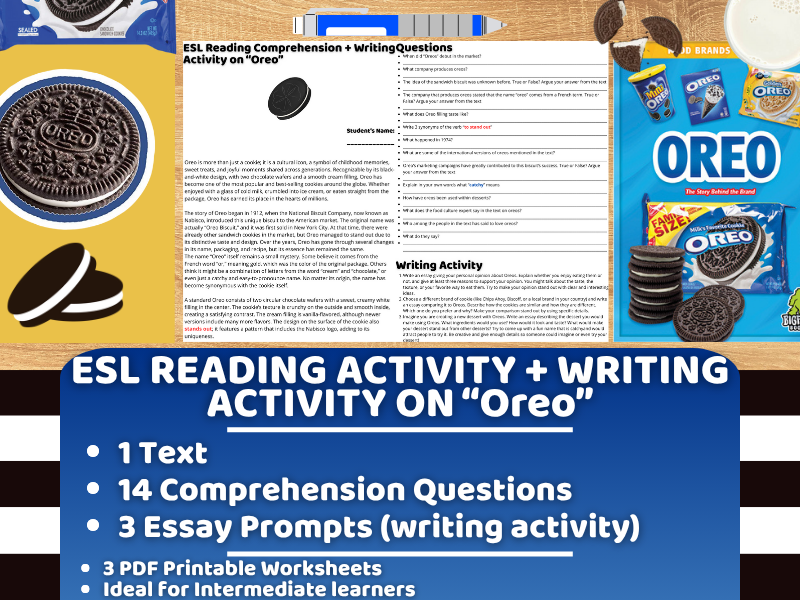
Students read a nonfiction passage about the Oreo cookie (history and brand evolution), answer short-answer and true/false (with textual justification) comprehension questions, complete vocabulary/synonym exercises, and respond to three extended writing prompt(s) about the topic.
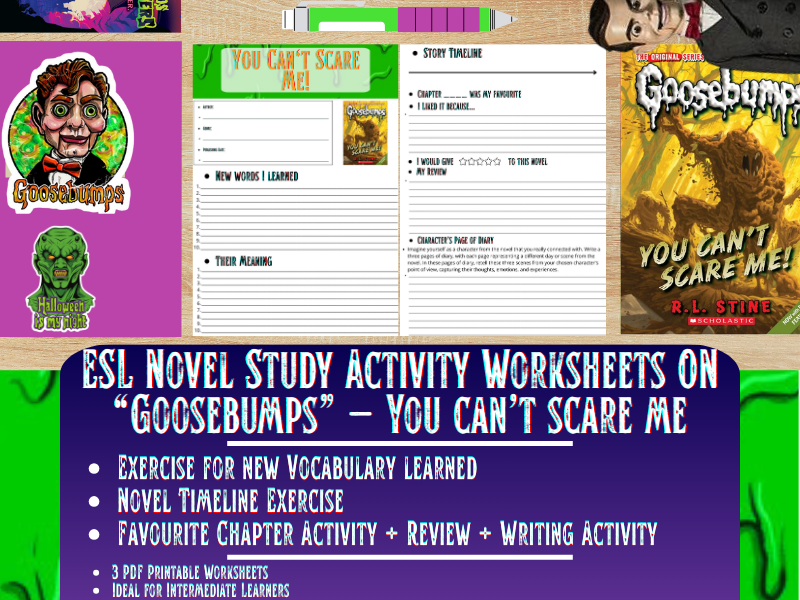
A post-reading novel-study worksheet for ESL/EFL students who have read the Goosebumps novel "You Can't Scare Me!" (R.L. Stine), used to record vocabulary, reflect on the story, and practise creative writing.
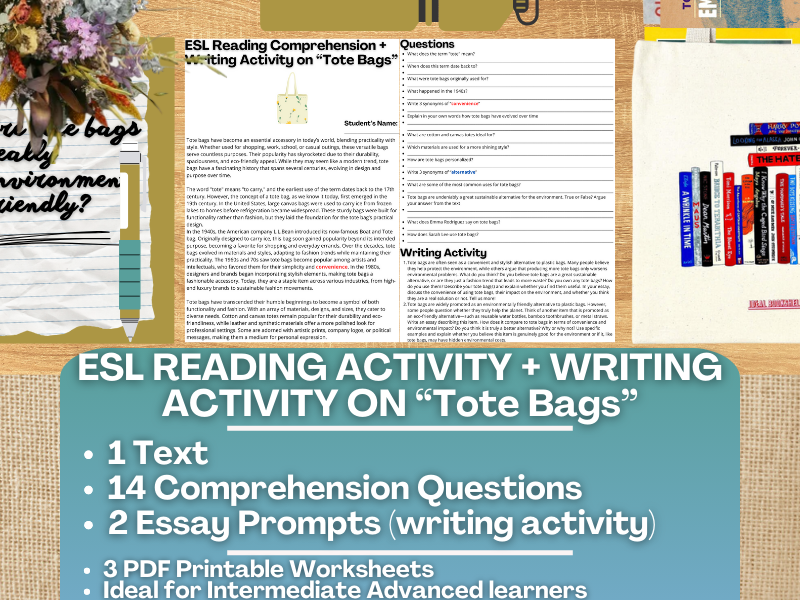
Gives ESL/EFL students a reading-comprehension and writing-practice worksheet built around a nonfiction article on the history of tote bags and the debate over their environmental sustainability.
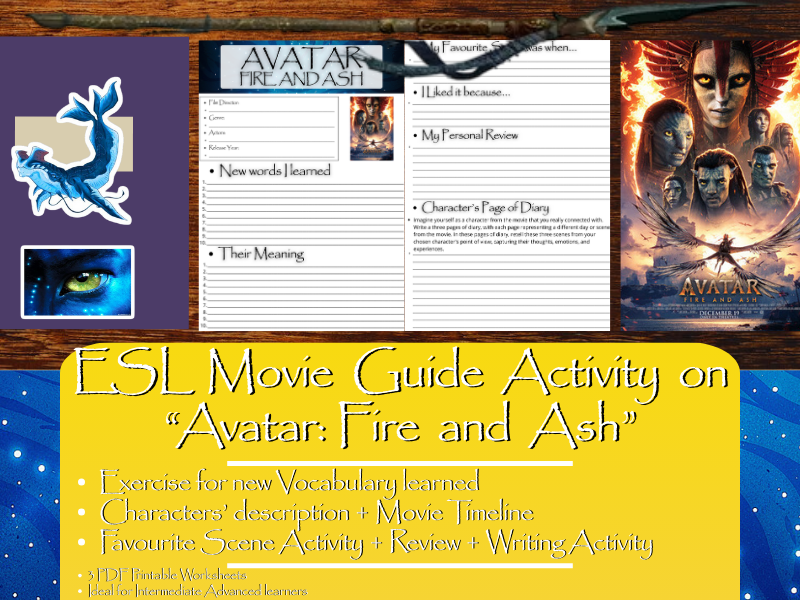
A post-viewing ESL/EFL worksheet built around the film "Avatar: Fire and Ash" - Science Fiction", used for movie-based vocabulary and writing practice after students watch the film.
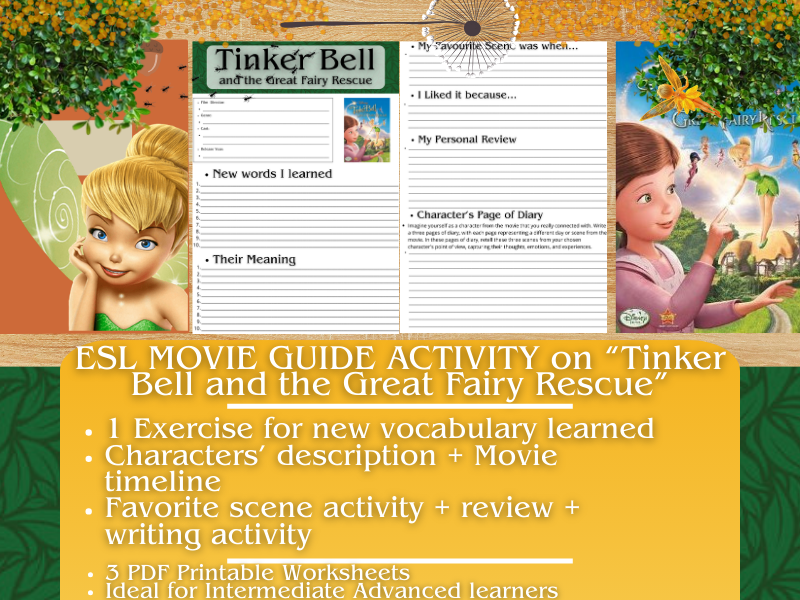
Pre/post-viewing ESL movie guide worksheet that has English-language learners record film details, learn new vocabulary, and write about the film "Tinker Bell and the Great Fairy Rescue".
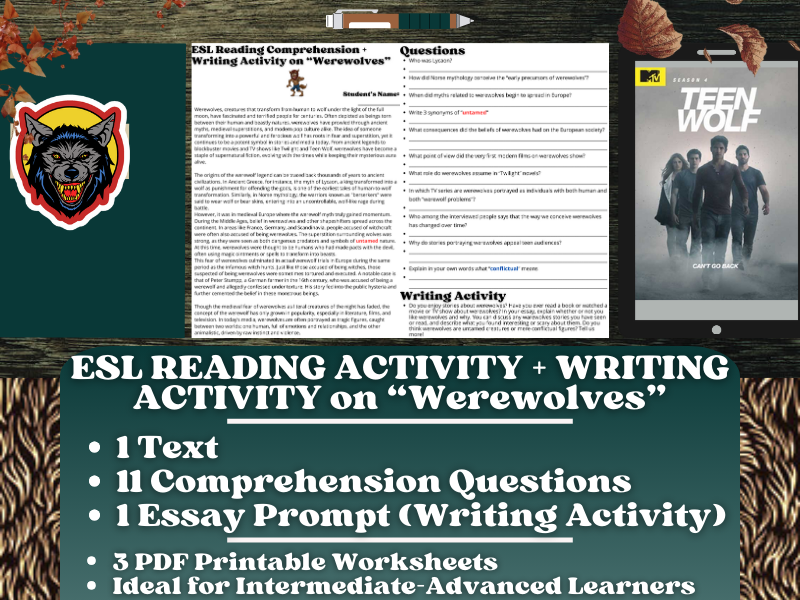
Gives ESL/EFL students a reading-comprehension and writing-practice worksheet built around a nonfiction article on the folklore origins and modern media portrayal of werewolves (Twilight, Teen Wolf).
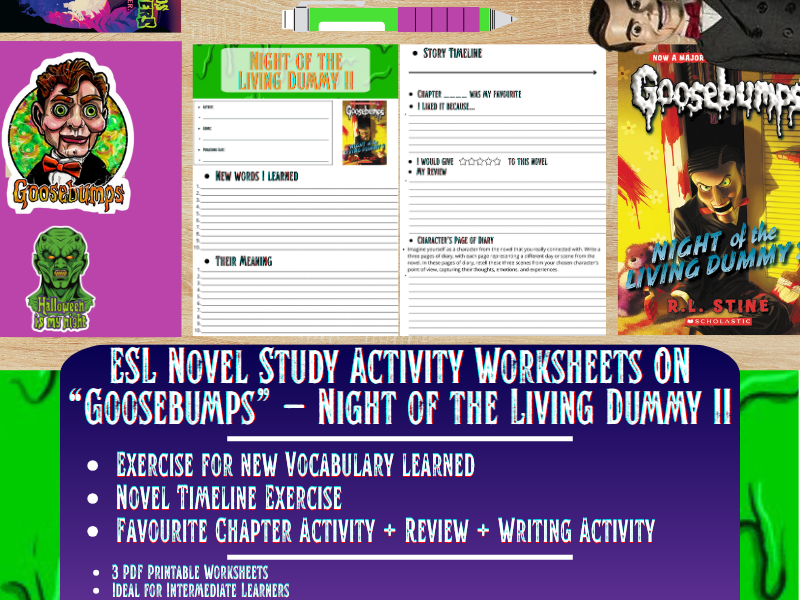
Fill in the novel's author, genre and publishing date; list 10 new vocabulary words and their meanings; name a favourite chapter and explain why; give the novel a star rating and write a review; then write a three-page diary entry in the voice of a character from the novel.
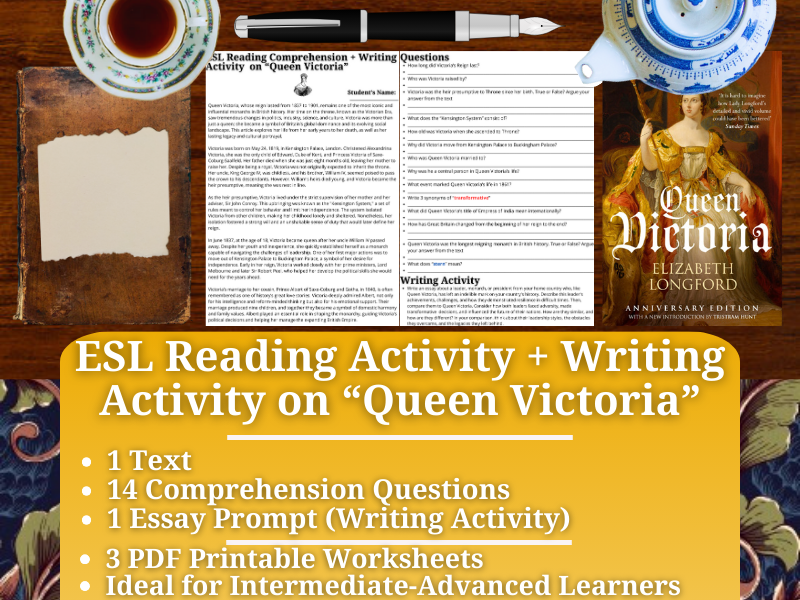
Students read a multi-paragraph nonfiction passage, answer open-response reading comprehension questions (including short-answer, vocabulary/synonym, and a true-or-false-with-textual-justification item), then write a personal-opinion or comparison essay responding to a set of guided writing prompts about the topic.
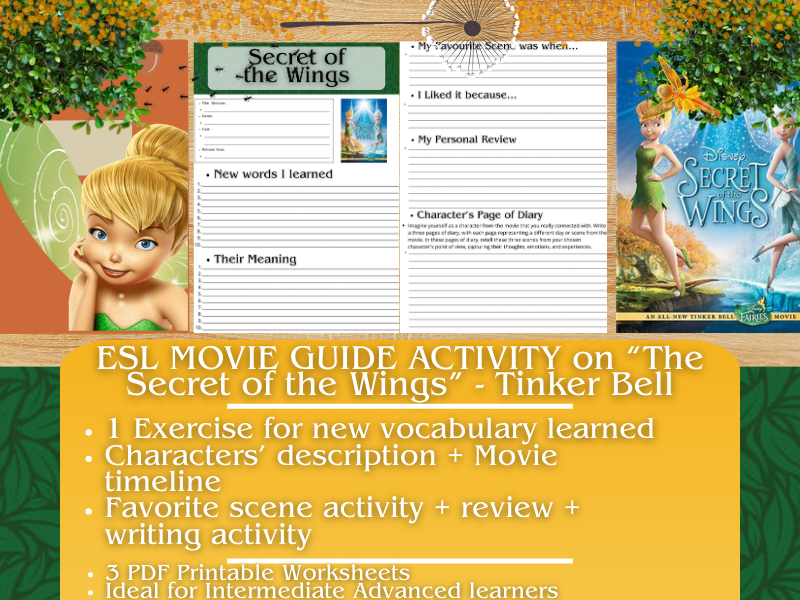
Pre/post-viewing ESL movie guide worksheet that has English-language learners record film details, learn new vocabulary, and write about the film "The Secret of the Wings".
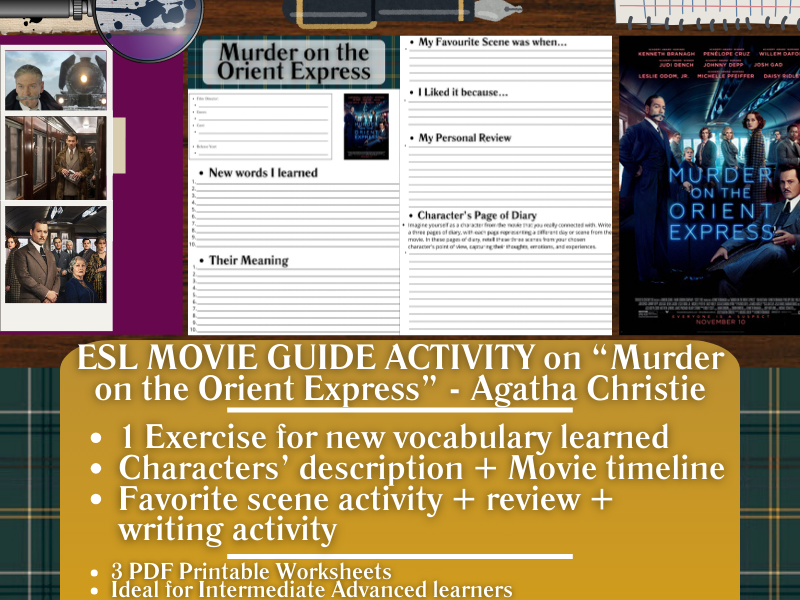
A post-viewing ESL/EFL worksheet built around the film "Murder on the Orient Express", used for movie-based vocabulary and writing practice after students watch the film.
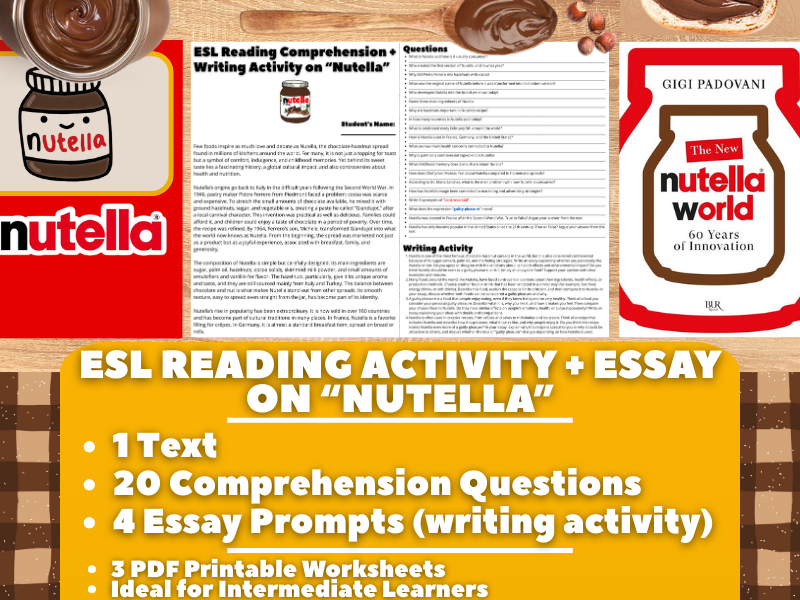
Students read a nonfiction passage about Nutella (history, ingredients and controversies), answer short-answer and true/false (with textual justification) comprehension questions, complete vocabulary/synonym exercises, and respond to four extended writing prompt(s) about the topic.
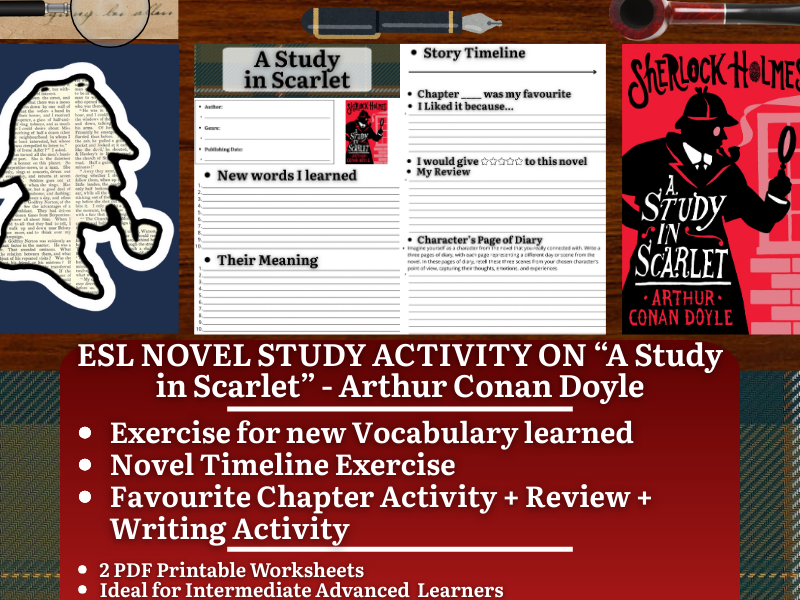
Fill in author/genre/publication fields, build a vocabulary list with meanings, identify and justify a favourite chapter, write a numeric book review, and write a three-page diary entry from a character's point of view; all response areas are blank lines in the scanned file.