CURRENT: Today's Music in the Classroom V1 N2
A music-education teaching unit (Volume 1, Number 2) that uses the song 'Dynamite' by Taio Cruz to teach music vocabulary, listening/analysis skills, and curriculum-aligned music concepts.
Classroom resources
Browse by lesson focus
Choose the topic or kind of practice you need.
A music-education teaching unit (Volume 1, Number 2) that uses the song 'Dynamite' by Taio Cruz to teach music vocabulary, listening/analysis skills, and curriculum-aligned music concepts.
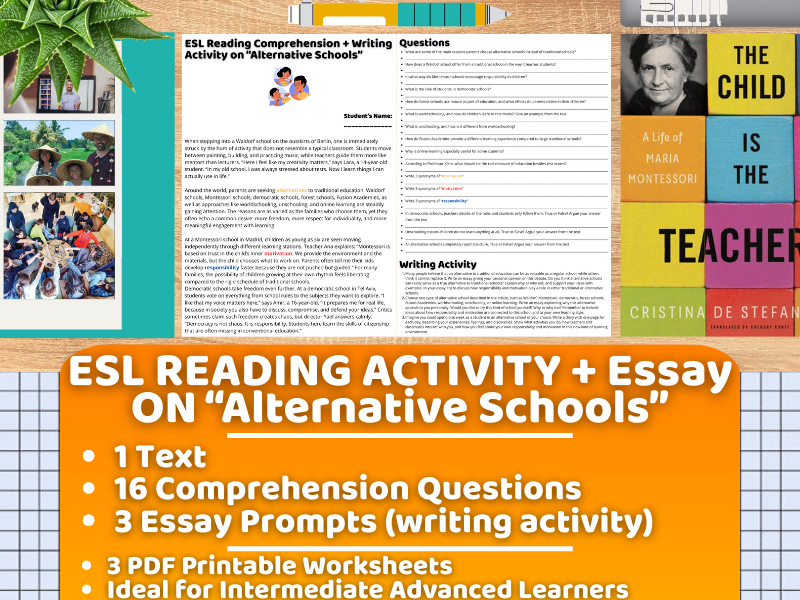
Read a short informational article, answer written comprehension questions (including one true/false question that requires arguing the answer from the text), complete a short synonym-writing vocabulary exercise, then write a full essay responding to one of two or three provided writing prompts.
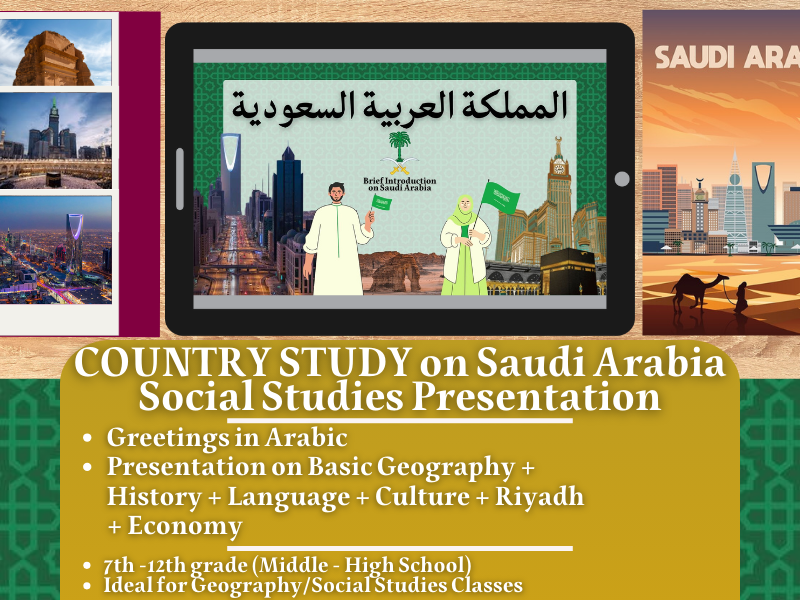
Introduces students to Saudi Arabia as the birthplace of Islam, home to Mecca and Medina, and a major global energy exporter, presented as an illustrated country-study slideshow covering Saudi Arabia's location, quick facts, language, history, geography, economy, cities, and culture.
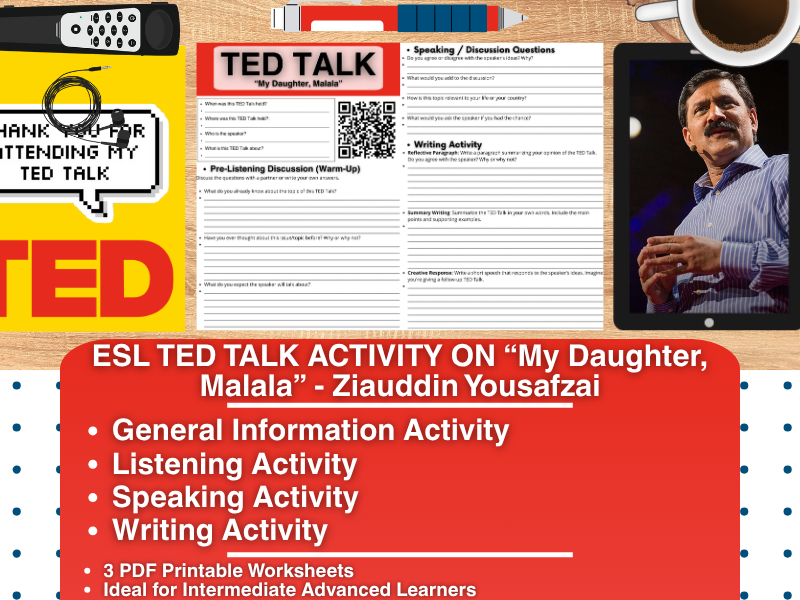
Students record talk details (when/where it was held, speaker, topic), discuss pre-listening warm-up questions with a partner or in writing, log up to 10 new vocabulary words and their meanings, take while-listening notes (classify the main idea as informative/persuasive/entertaining and list key points, facts, or examples)…
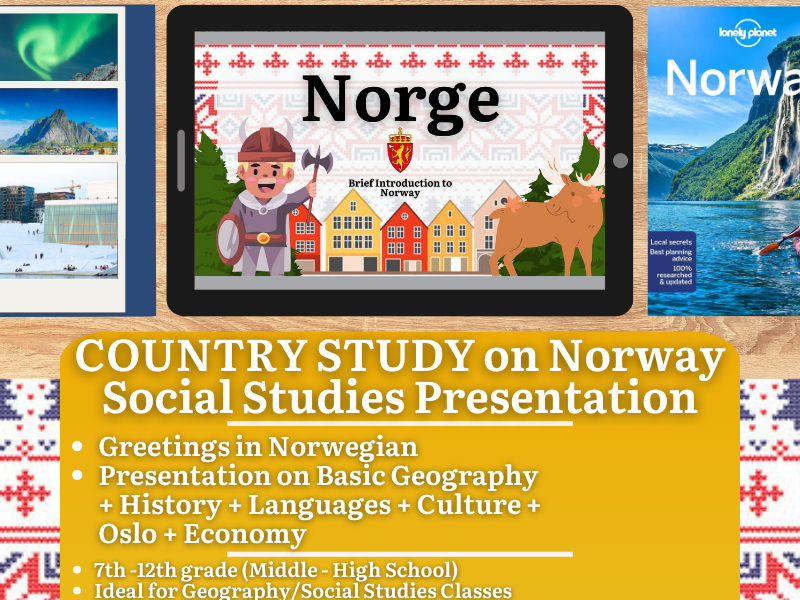
Introduce students to Norway through a slide presentation covering its language/greetings, history timeline, geography, economy, capital city and landmarks, and culture.
A teacher-facing activity guide for organizing small-group student-led review presentations on a chosen subject (math, science, or social studies) for the last week of school.
Read a short informational article, answer written comprehension questions (including one true/false question that requires arguing the answer from the text), complete a short synonym-writing vocabulary exercise, then write a full essay responding to one of two or three provided writing prompts.
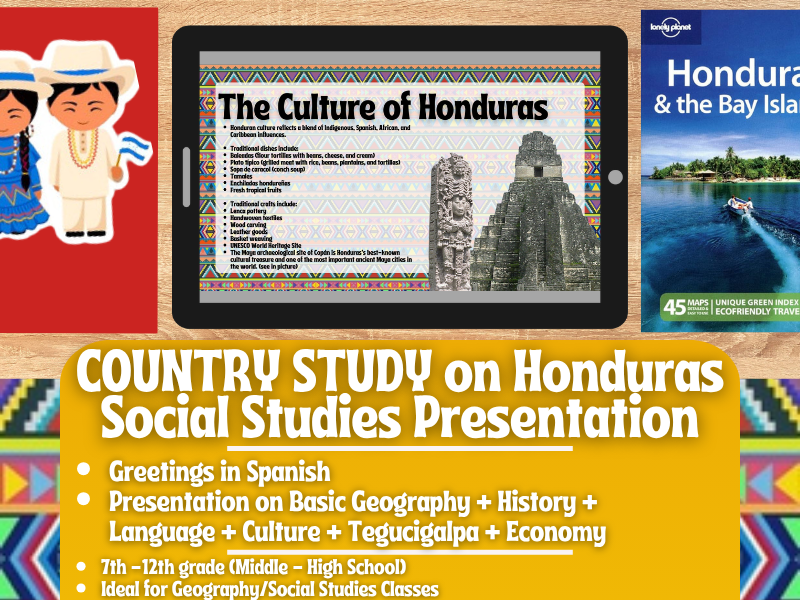
An informational slide-style presentation introducing Honduras: greeting/basic vocabulary, general country data, languages, a history timeline, geography and climate, economy, capital city, other major cities, and culture (food, music, festivals).
Read a short informational article, answer written comprehension questions (including one true/false question that requires arguing the answer from the text), complete a short synonym-writing vocabulary exercise, then write a full essay responding to one of two or three provided writing prompts.
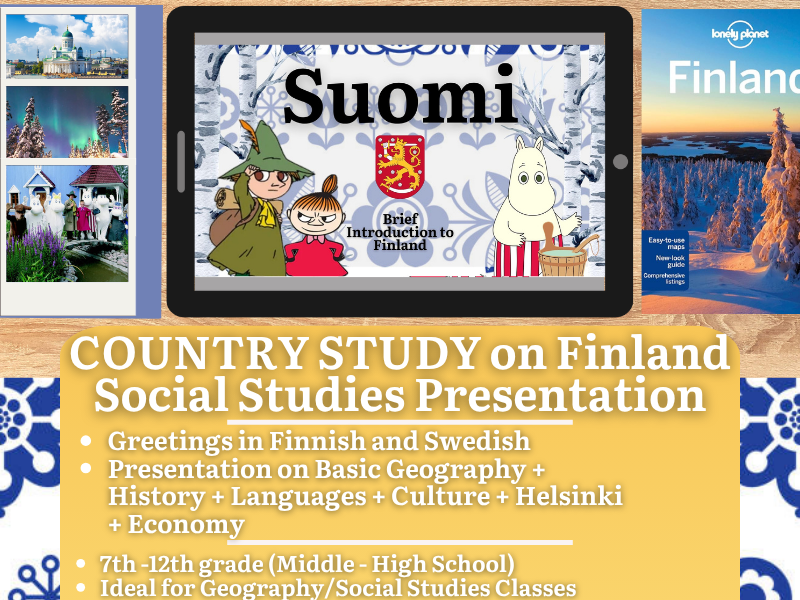
Introduce students to Finland through a slide presentation covering its language/greetings, history timeline, geography, economy, capital city and landmarks, and culture.
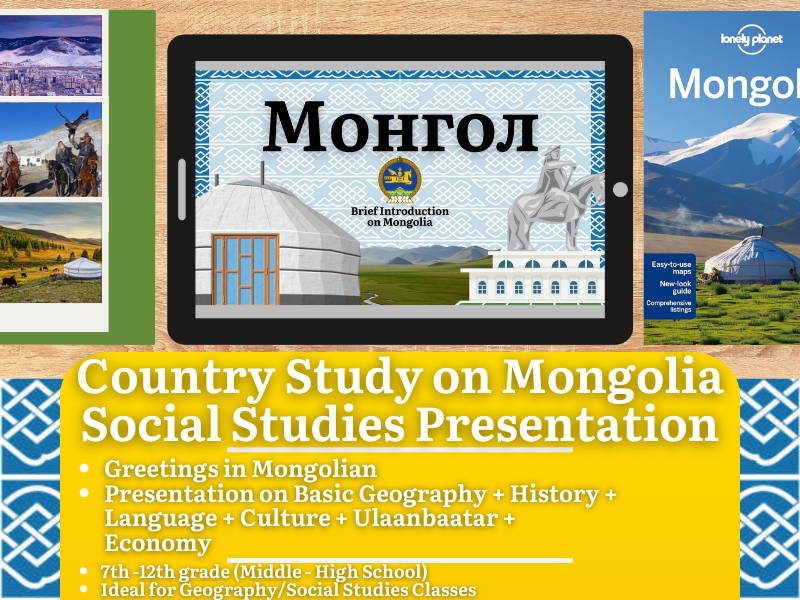
An introductory country-study slide presentation on Mongolia, giving students a single-source overview of its geography, government, history, economy, and culture for social studies/geography instruction.
Read a short informational article, answer written comprehension questions (including one true/false question that requires arguing the answer from the text), complete a short synonym-writing vocabulary exercise, then write a full essay responding to one of two or three provided writing prompts.
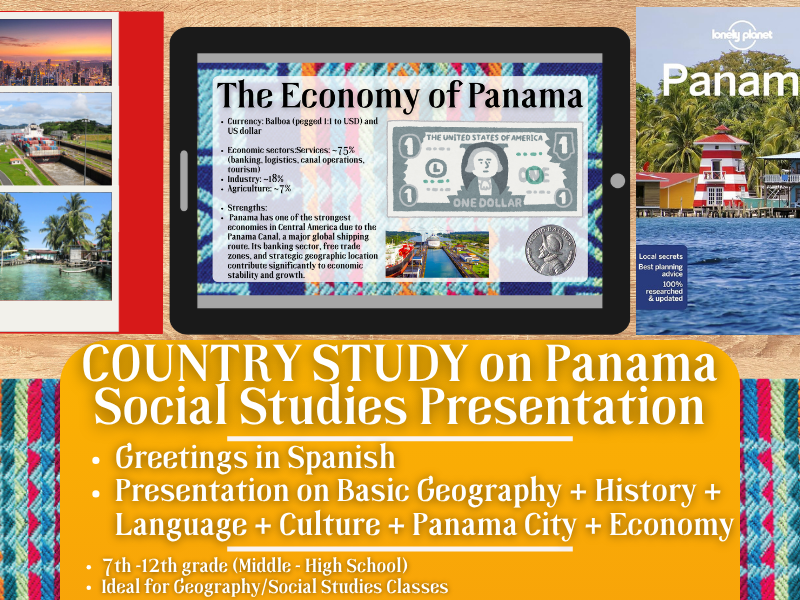
Introduces students to Panama's role as a land bridge between the Americas and the history and economic importance of the Panama Canal, presented as an illustrated country-study slideshow covering Panama's location, quick facts, language, history, geography, economy, cities, and culture.
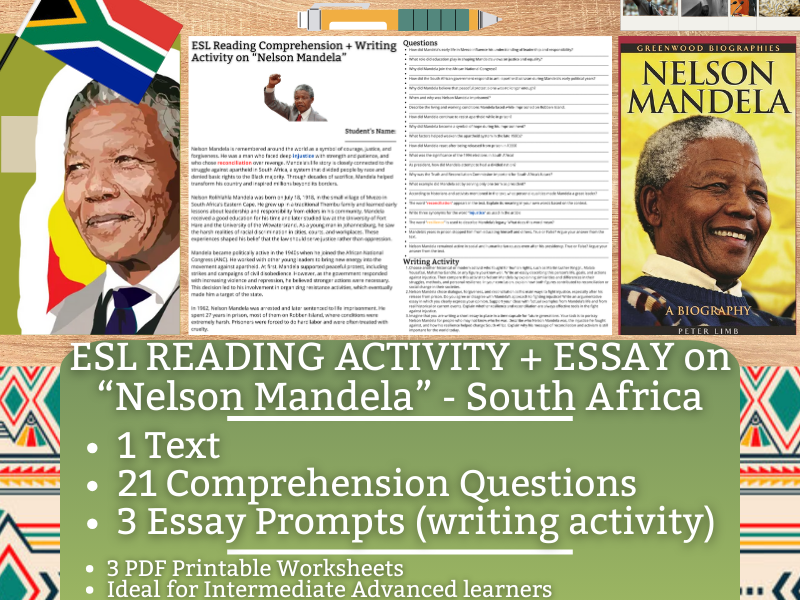
An ESL/EFL reading comprehension and writing worksheet packet built around a biographical informational passage about Nelson Mandela, South African leader, used to build reading comprehension, vocabulary-in-context, and essay-writing skills.
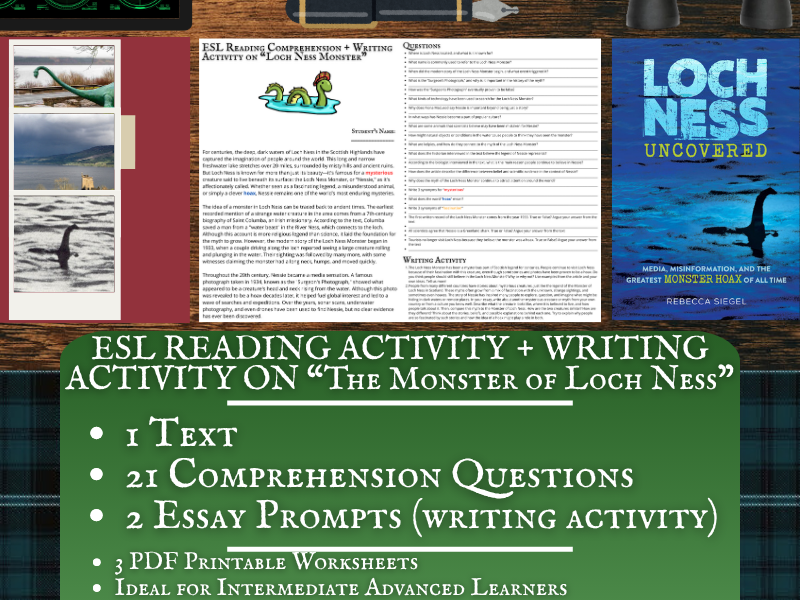
An ESL/EFL reading comprehension and writing worksheet packet built around an informational passage about the Loch Ness Monster legend, Scotland, used to build reading comprehension, vocabulary-in-context, and essay-writing skills.
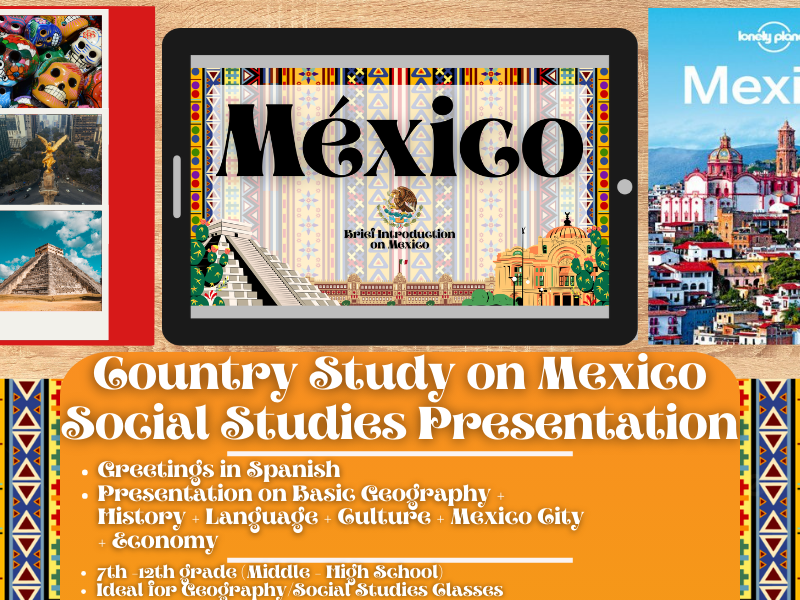
An introductory country-study slide presentation on Mexico, giving students a single-source overview of its geography, government, history, economy, and culture for social studies/geography instruction.
Read a short informational article, answer written comprehension questions (including one true/false question that requires arguing the answer from the text), complete a short synonym-writing vocabulary exercise, then write a full essay responding to one of two or three provided writing prompts.
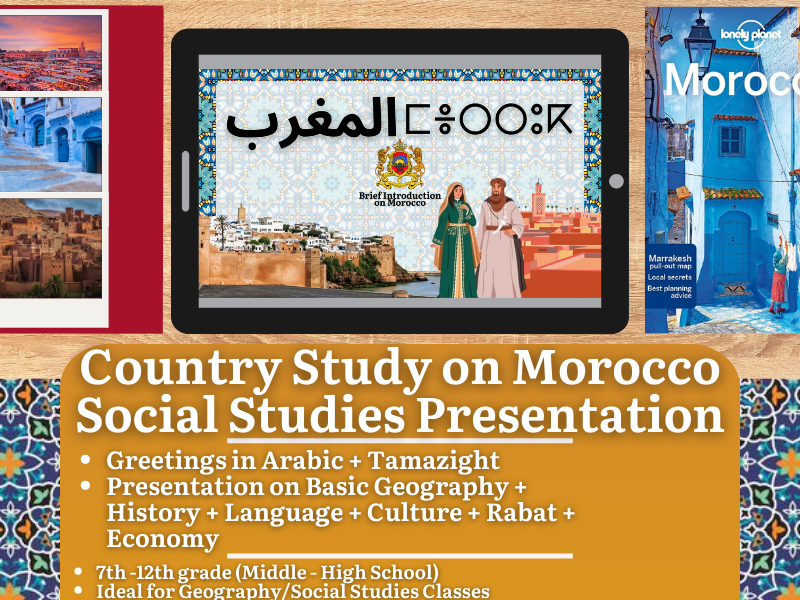
An introductory country-study slide presentation on Morocco, giving students a single-source overview of its geography, government, history, economy, and culture for social studies/geography instruction.
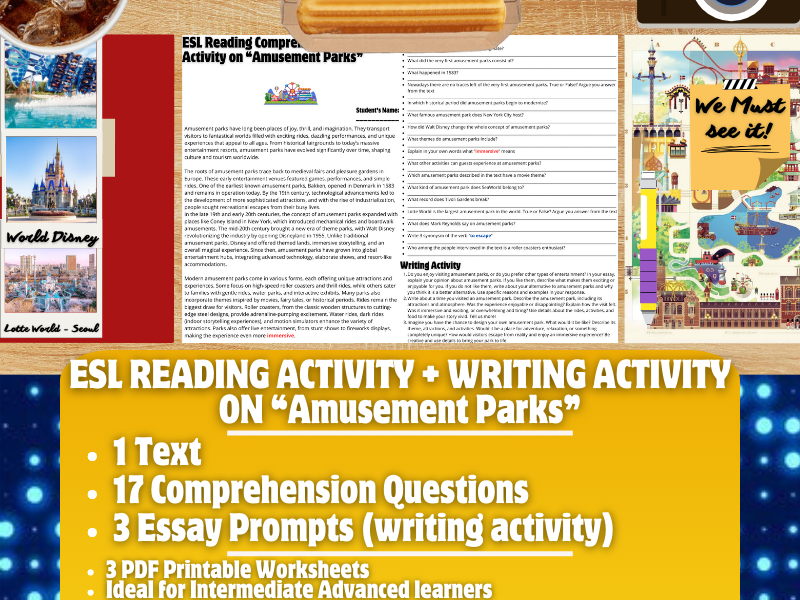
Read a short informational article, answer written comprehension questions (including one true/false question that requires arguing the answer from the text), complete a short synonym-writing vocabulary exercise, then write a full essay responding to one of two or three provided writing prompts.
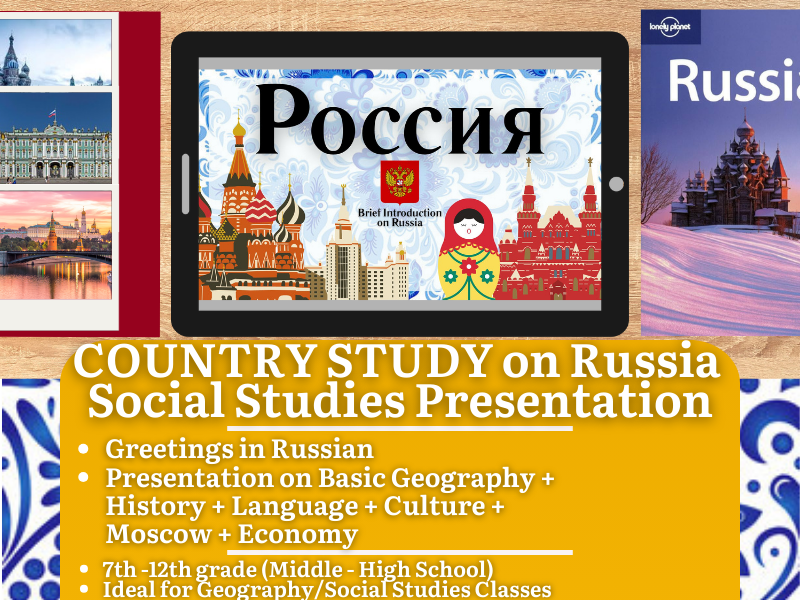
Introduces students to Russia as the largest country in the world by land area, spanning Europe and Asia, presented as an illustrated country-study slideshow covering Russia's location, quick facts, language, history, geography, economy, cities, and culture.
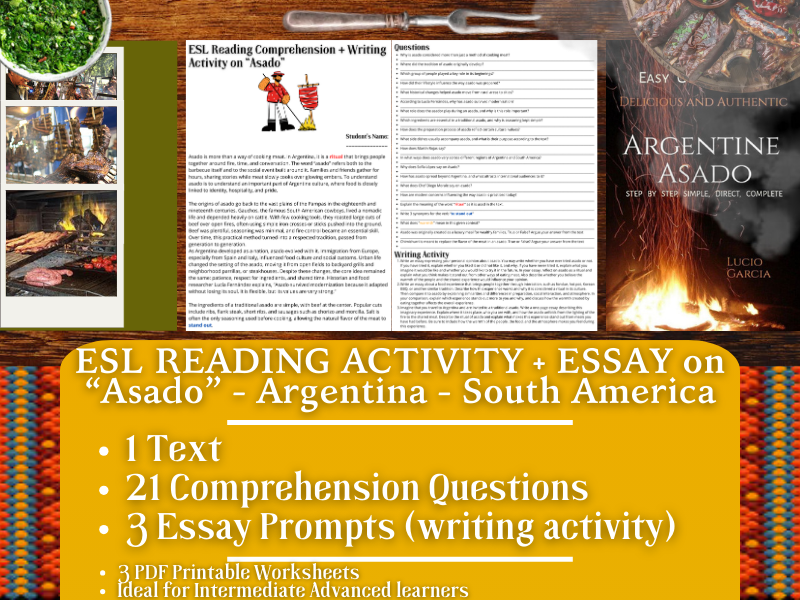
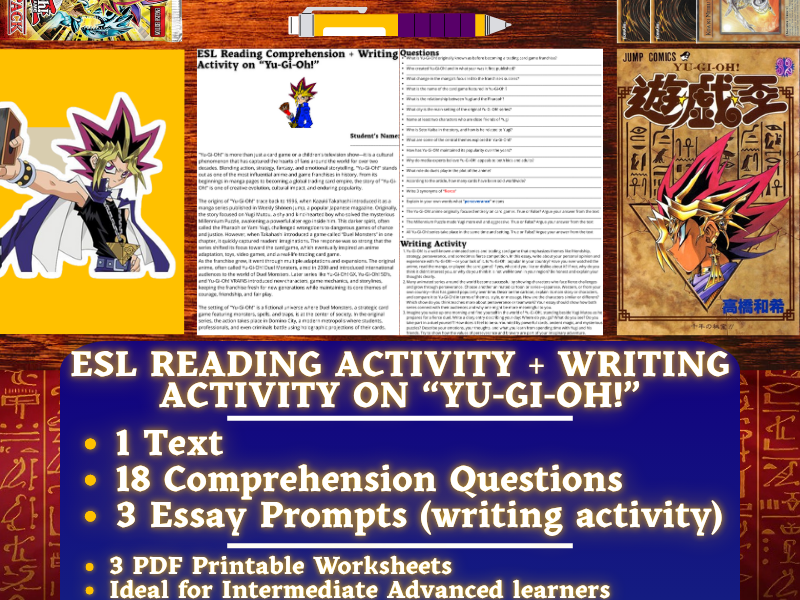
Students read a multi-paragraph nonfiction passage, answer open-response reading comprehension questions (including short-answer, vocabulary/synonym, and a true-or-false-with-textual-justification item), then write a personal-opinion or comparison essay responding to a set of guided writing prompts about the topic.
Rotate through 9 stations in groups, completing tasks such as drawing a model, researching a question, writing an opinion, reading an article and answering questions, taking a multiple-choice quiz, watching a video and answering questions, and writing new quiz questions; record answers in a group passport booklet.
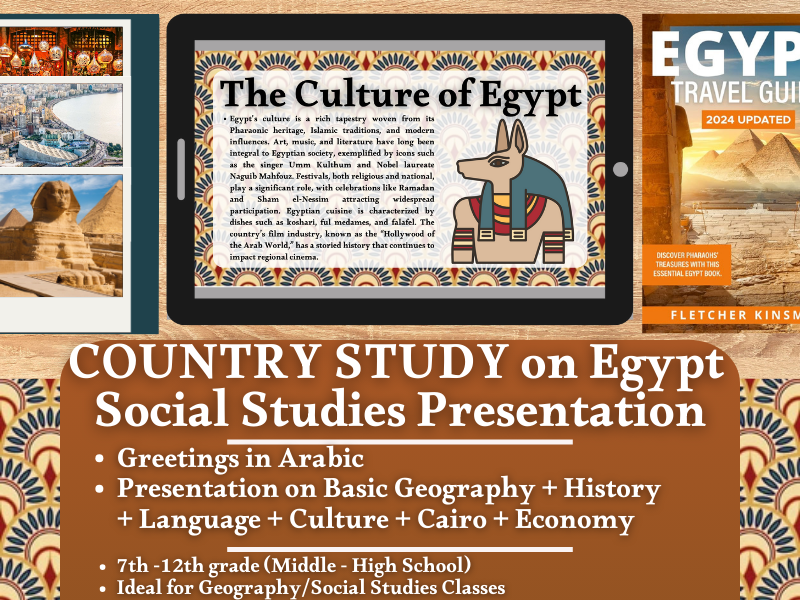
An informational slide-style presentation introducing Egypt: greeting/basic vocabulary, general country data, languages, a history timeline, geography and climate, economy, capital city, other major cities, and culture (food, music, festivals).
Each day students read a short nonfiction passage about money, define vocabulary words as used in the passage, answer comprehension questions, and respond to a writing prompt; the Answer Key provides model vocabulary definitions, model comprehension answers, and writing guidance for each day plus keys for the diagnostic, unit quizzes…