Reading & language
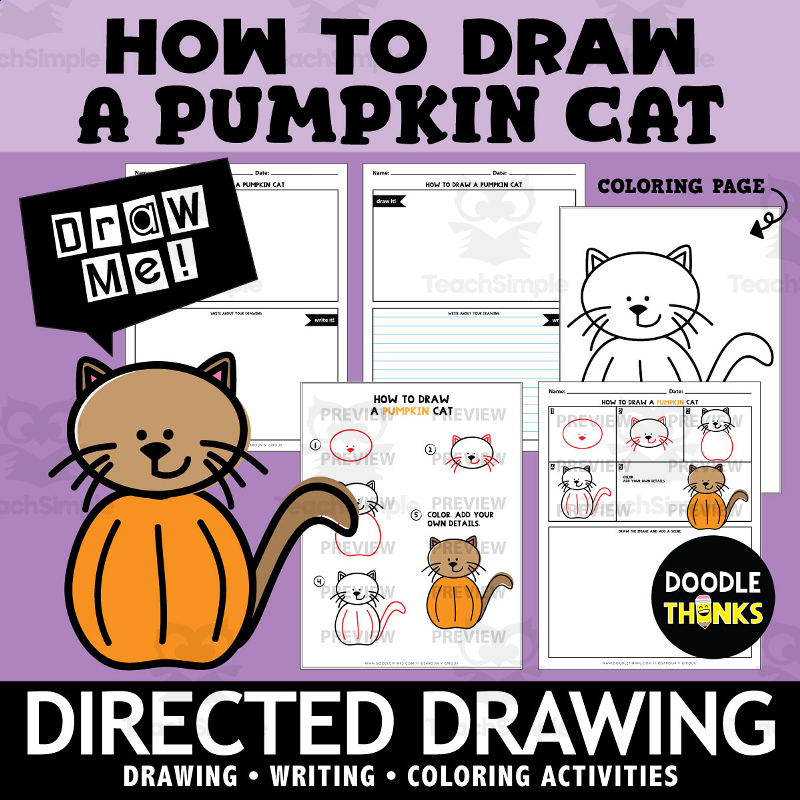
Pumpkin Cat Directed Drawing | How To Draw Autumn Art Activities
Follow numbered step-by-step instructions to draw a pumpkin cat, color the drawing and add own details, draw an original scene, and write about their drawing.




Classroom resources
Browse by lesson focus
Choose the topic or kind of practice you need.
Showing 2689–2703 of 2703 resources

 Show filters
 Follow numbered step-by-step instructions to draw a pumpkin cat, color the drawing and add own details, draw an original scene, and write about their drawing.
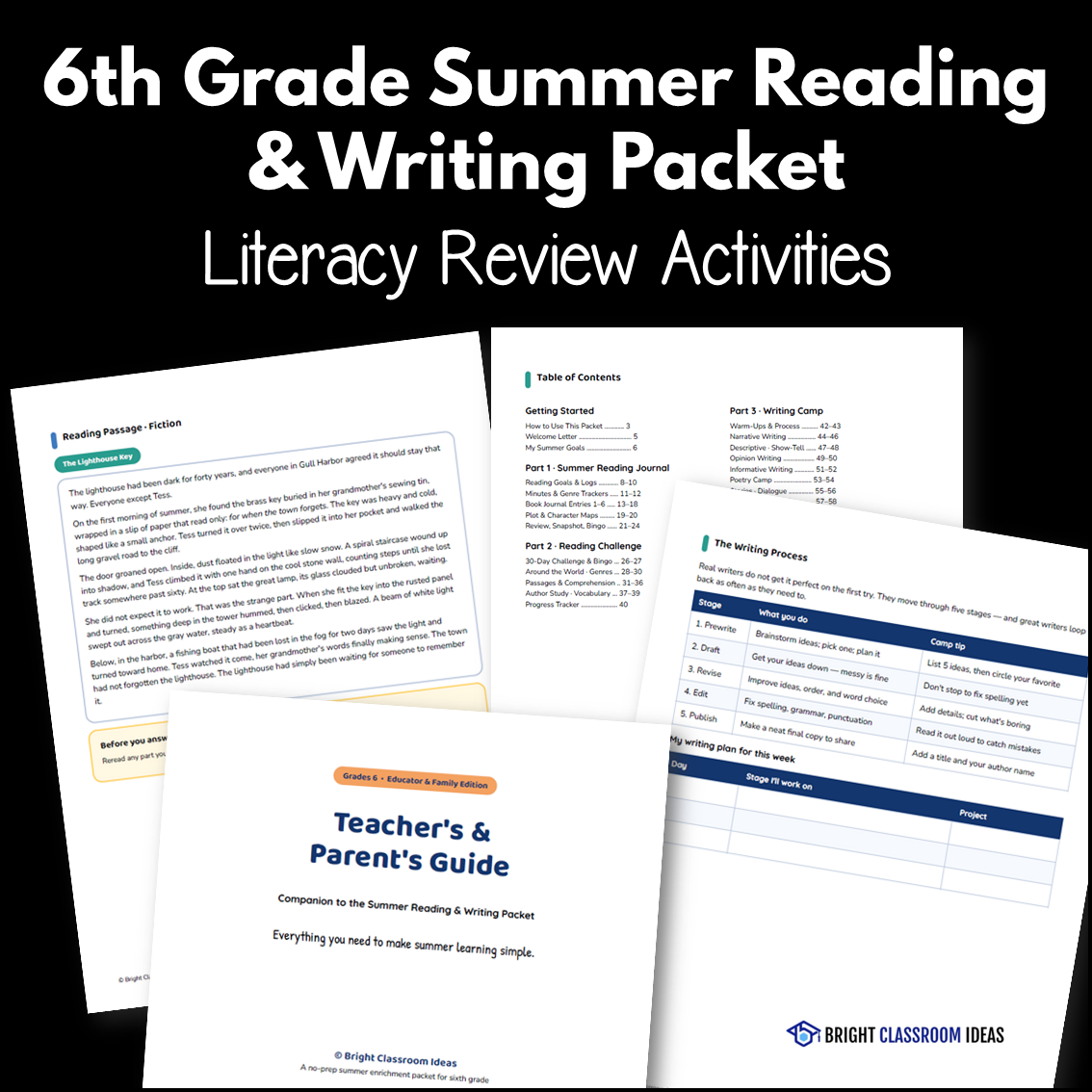
A no-prep summer enrichment packet for students transitioning from 6th to 7th grade, reviewing reading comprehension, writing, grammar, vocabulary, and language arts skills to prevent summer learning loss.
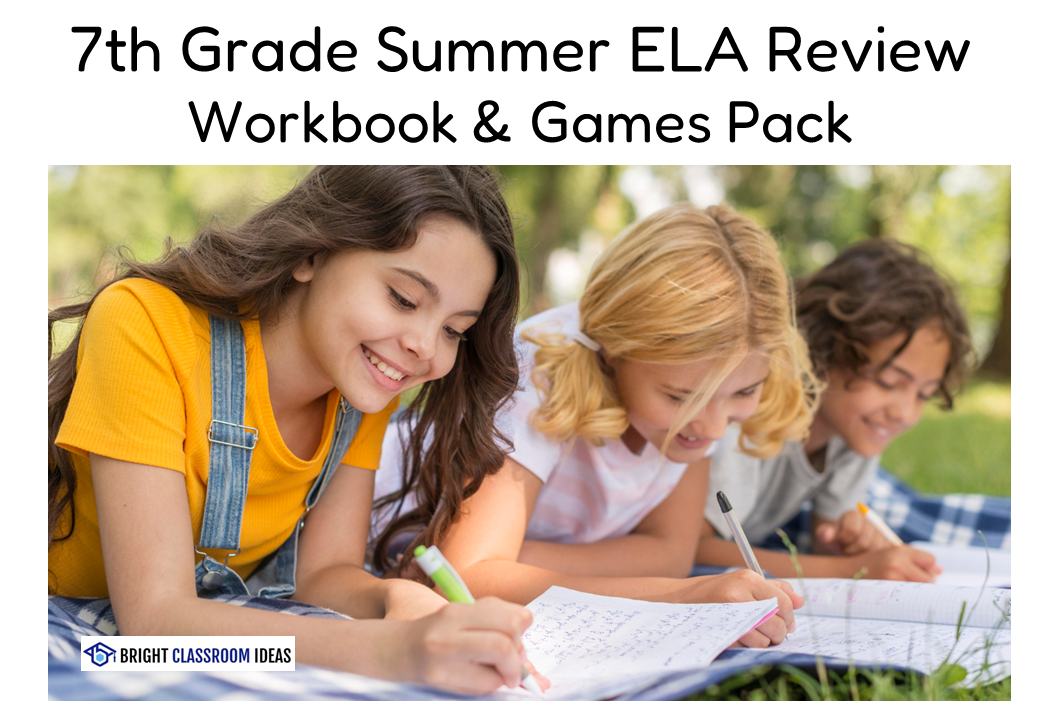
A Grade 7 summer ELA review workbook covering academic vocabulary, word study (prefixes/suffixes/roots), reading comprehension, and writing, delivered as a student worksheet, answer key, teacher's guide, and games, organized by week.
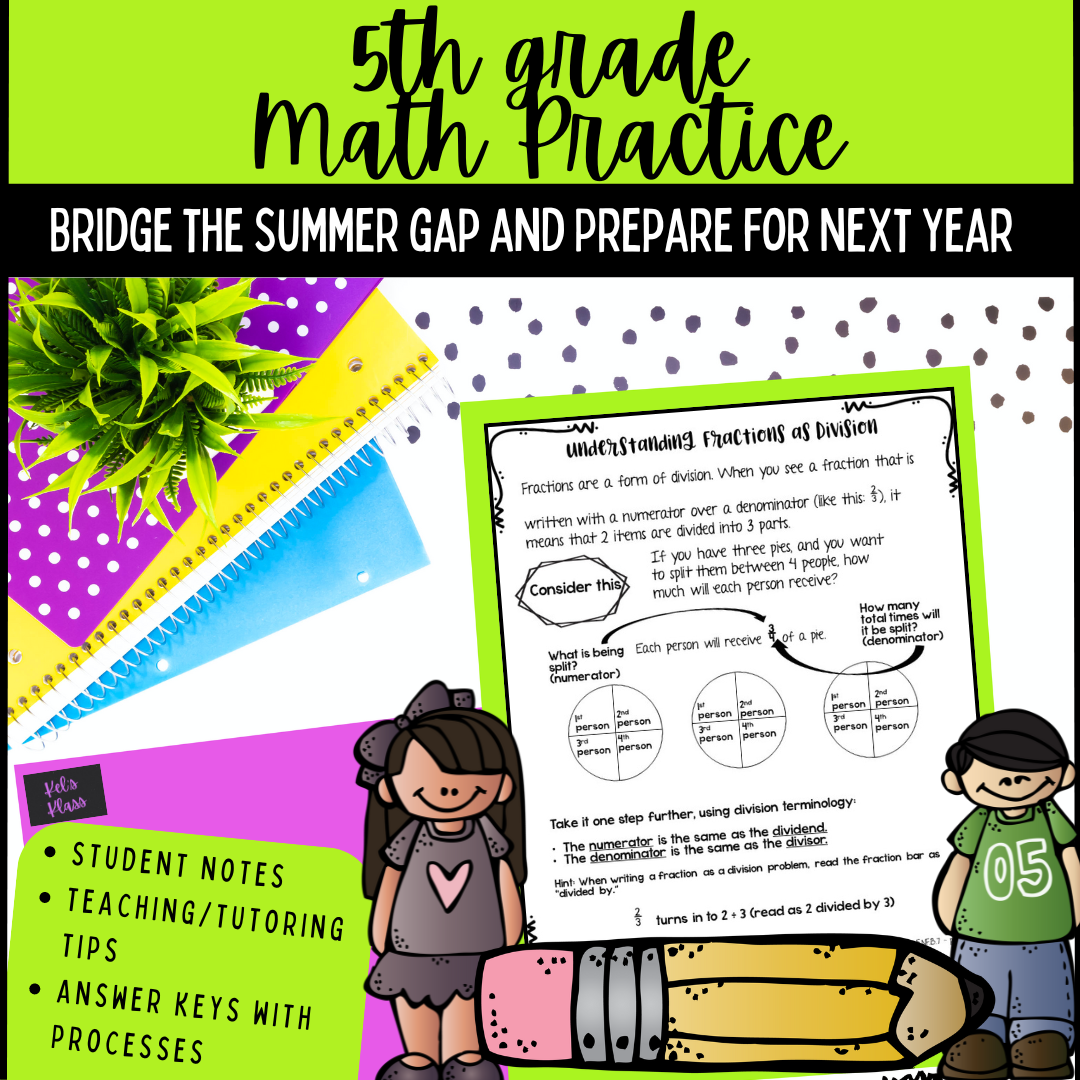
Work through 20 lessons (each with a teaching/note page and practice worksheet) covering multiplication, division, decimals, fractions, graphing, geometry, and volume, then self-check with step-by-step answer keys.
Classify rational/irrational numbers, evaluate powers and roots, convert to/from scientific notation, solve multi-step linear equations and inequalities, solve systems by substitution/elimination/graphing, evaluate and graph functions, compute slope and rate of change, and apply the Pythagorean theorem; also includes…
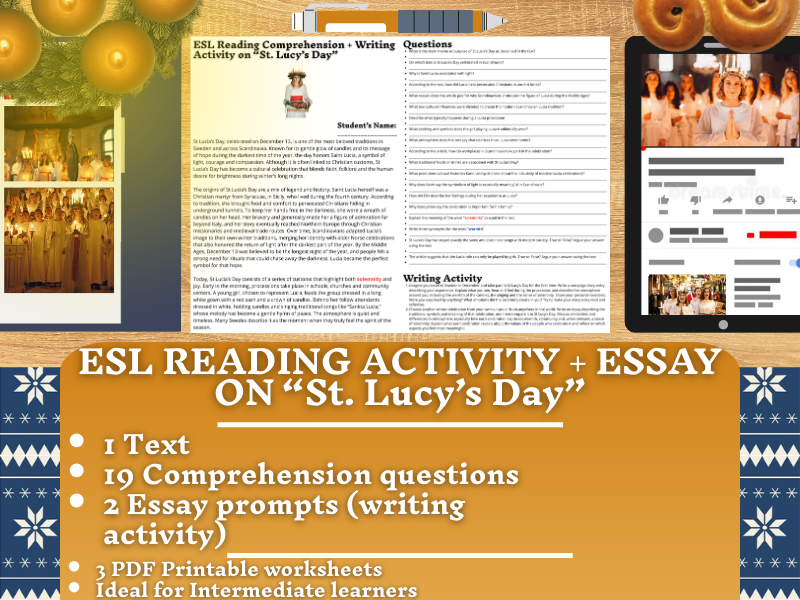
A nonfiction reading passage and worksheet set that teaches ESL/EFL students about St. Lucy's Day, a Scandinavian winter holiday tradition, paired with comprehension and essay writing practice.
Solve numeric and word problems (compute proportions, add/subtract/multiply/divide integers and rational numbers, solve two-step equations and inequalities, graph inequalities, compute circumference and area) organized into 4 weekly sets of activities; play accompanying math games.
Students work through weekly sets of activities: decoding academic words by syllables, learning advanced prefixes/suffixes and Greek/Latin roots, completing analogies, plus reading, writing, and grammar tasks, and play accompanying review games.
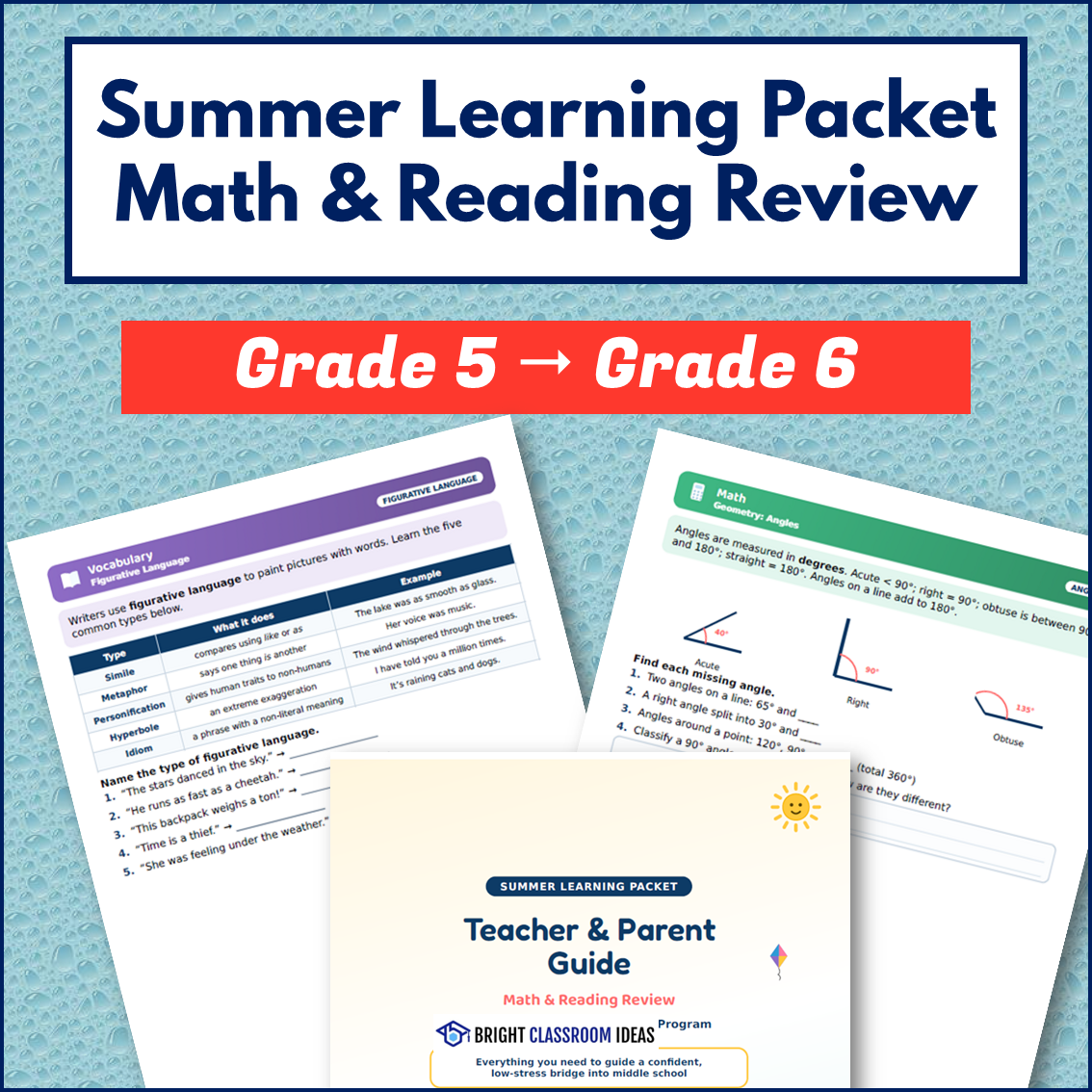
Read fiction/nonfiction/paired texts and answer theme/character/point-of-view/inference/main-idea/author's-purpose/text-structure/cause-effect/compare-contrast questions; complete vocabulary work (context clues, roots, prefixes, suffixes, figurative language); apply grammar (parts of speech, pronouns, tenses…
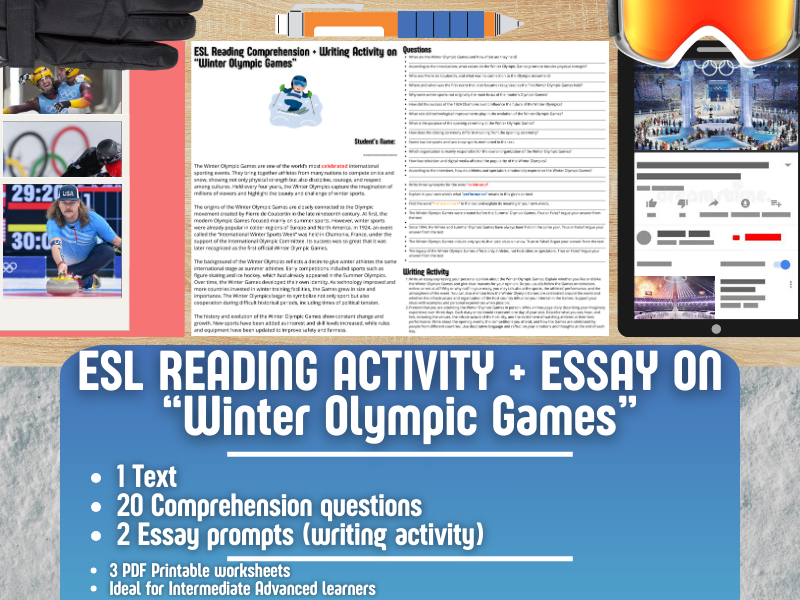
Read a short informational article, answer written comprehension questions (including one true/false question that requires arguing the answer from the text), complete a short synonym-writing vocabulary exercise, then write a full essay responding to one of two or three provided writing prompts.
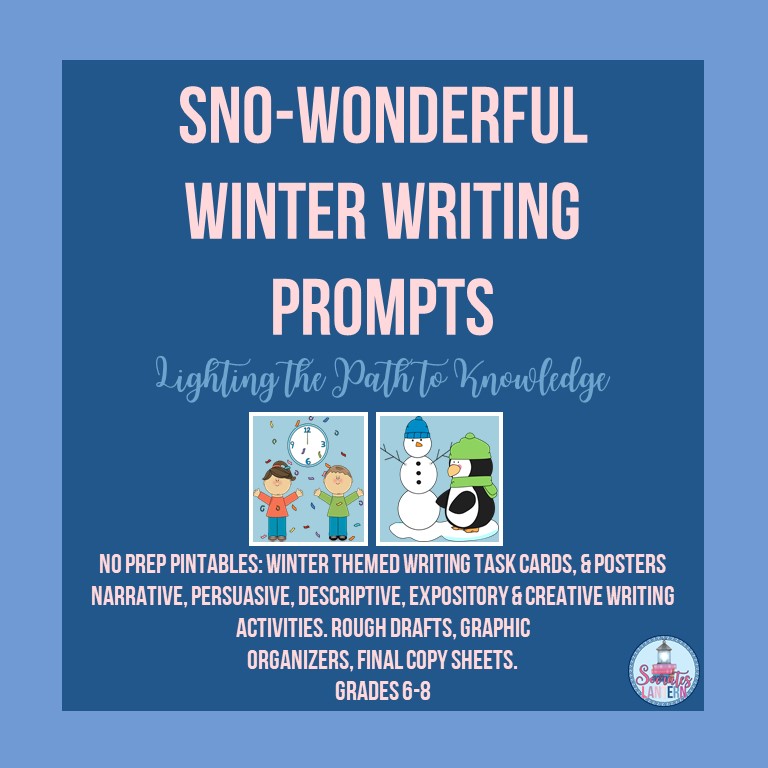
Learn the definitions of Narrative, Descriptive, Expository, and Persuasive writing; complete genre-specific winter-themed writing task cards; use graphic organizers and pre-writing worksheets; proofread and revise a draft following provided proofreading steps; and produce a final copy on provided lined pages, referencing a grading…
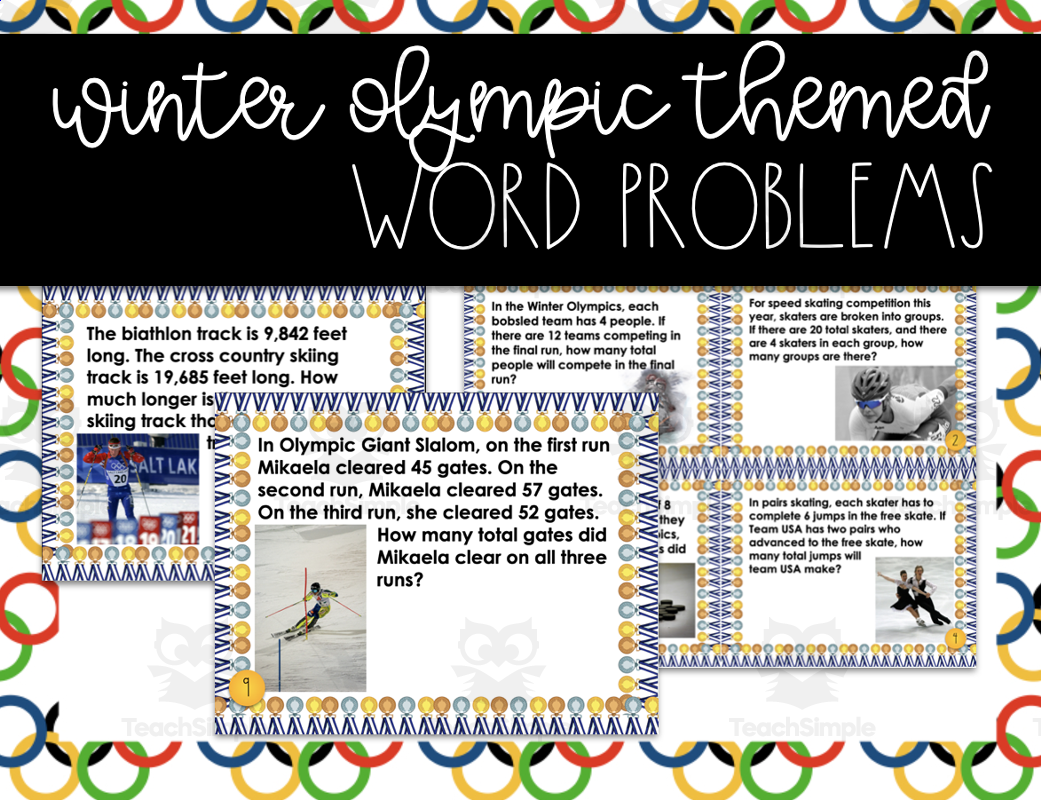
Solve addition/subtraction and multiplication/division word problems based on Winter Olympics scenarios (medals, ski jumps, hockey, curling, bobsled, etc.), usable as a room 'scoot' activity, classroom hunt/display, or assigned digitally via linked Google Slides.
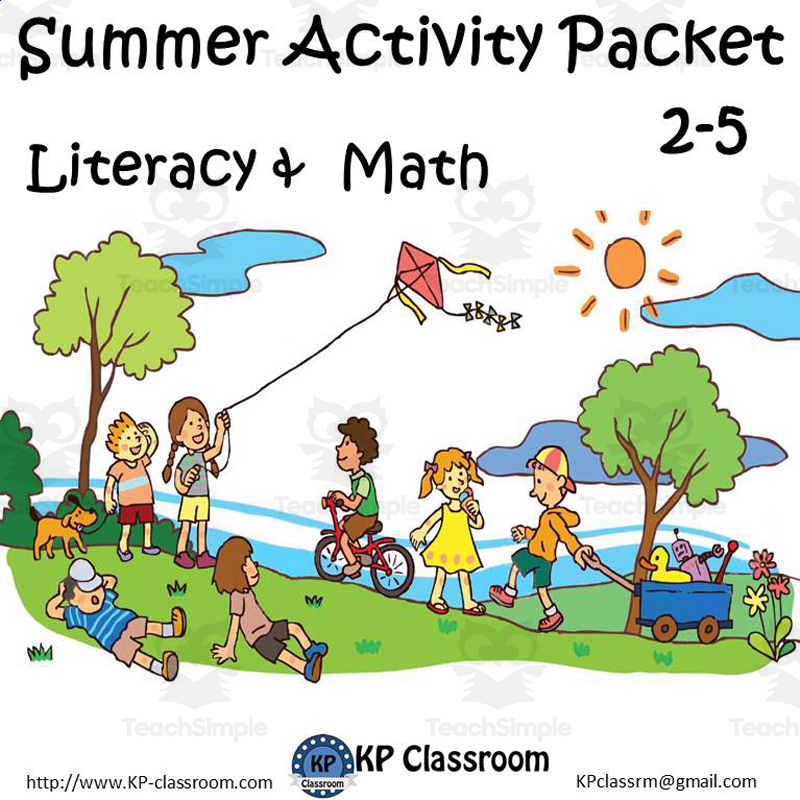
Read short nonfiction passages ('The Summer Season', 'The Sun', 'Being Safe in the Summer') and a narrative ('My Day at the Beach'), then answer reading-response questions (circle/underline/box answers, short answer), compare paired texts with textual evidence, define new vocabulary words, draw and label items related to a topic…
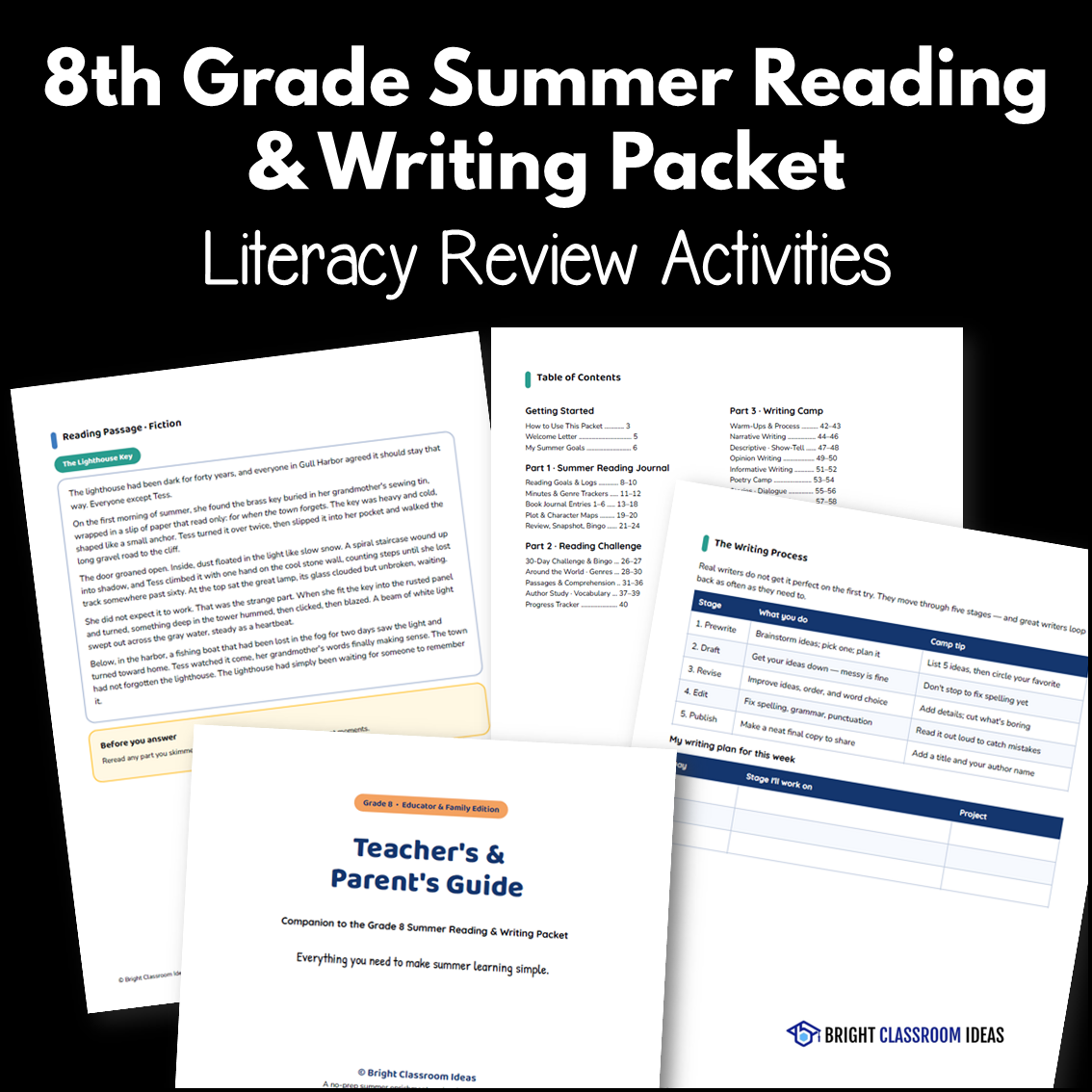
Complete reading journal logs/trackers for independently-read books, a 30-day reading challenge (bingo, quests, dares, author study, vocabulary), passage analysis questions, and writing activities; many pages are personal/open-ended ('answers will vary').
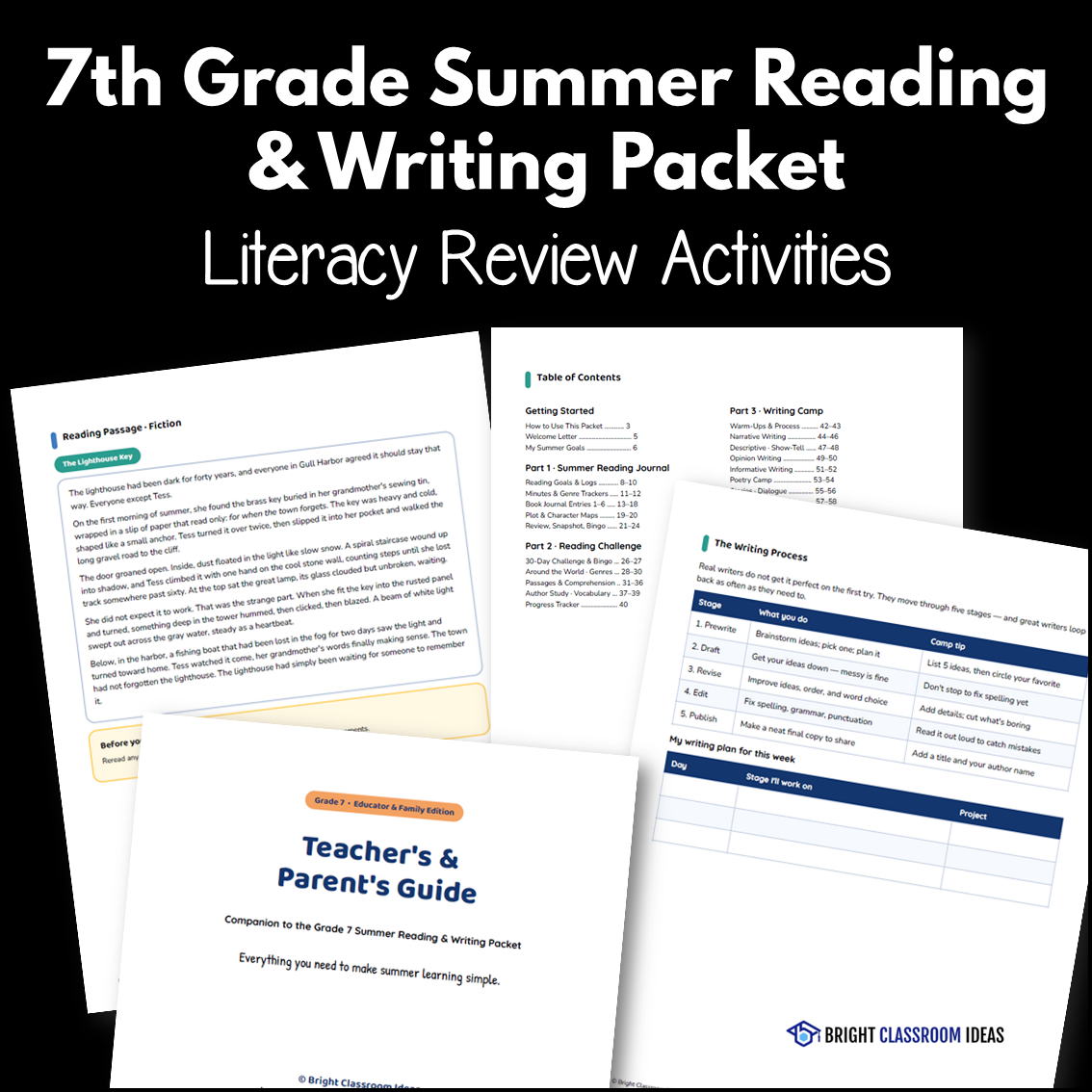
Keep a reading journal/tracker and complete reading challenges (30-day challenge, bingo, quests, author study); read passages (a short story, an informational text, a poem) and answer analysis questions on character, inference, theme, and craft/figurative language; complete Writing Camp pieces (narrative, argumentative with…