



3,968 products added recently
Page 3 - SEL Worksheets
Integrate social-emotional learning worksheets into your teaching to address topics like empathy, self-awareness, and relationship skills. These resources promote reflection and discussion. Use them to create a supportive atmosphere that nurtures students' emotional well-being.

 Show filters


Beginner AI Chatbot Safety & Prompt Practice Worksheets
Resources for Teachers, Classroom Management, Community Building, Technology, Science, Computer Science, Engineering, Research, Special Resources, Social Emotional Learning (SEL), Preschool, Grade 1, 2, 3, 4, 5, 6, Teacher Tools, Lesson Plans, Presentations, Assessments, Worksheets & Printables, Flashcards, Worksheets, Word Searches, Writing Prompts, Workbooks
This professionally designed 36-page AI Chatbot Safety and Prompt Practice Workbook provides educators and parents with the comprehensive guidance needed to help their 6–9 year-old students develop literacy skills while learning how to safely work with AI chatbots as powerful tools rather than friends, maintain safe digital boundaries, protect their personal identifiable information (PII), create clear and effective prompts using the “Three-Part Recipe”, practice digital kindness, verify the accuracy of AI-generated content, and develop strong literacy skills through the use of iterative questioning. This resource can be used in any learning environment including traditional classrooms, homeschooling, after-school programs, or family time on electronics. Key features include: - Aligned with the Piaget and Vygotsky constructivist theory and early literacy standards - Ten printable worksheets (e.g. fill-in-the-blank, matching, true/false, scenario) - Teacher/parent guide with theory, case studies, and strategies for implementation - Visual aids (e.g. mind maps, flowcharts), and the "Digital Safety Ecosystem" infographic - Complete answer key for easy assessment - No-prep, print-and-go format (PDF) - Ideal for introducing safe use of ChatGPT/AI tools, prompt engineering, and digital citizenship prior to students' access to full AI tools. Why Parents and Schools Are Interested To Use It : -Creates a lifetime of Real World safety habits around Digital use by teaching children to never share names, addresses, schools or emotions with AI preventing privacy issues before they happen. -Allows for Literacy development through AI use. Making writing Prompts fun iterative writing exercises will enhance vocabulary, specificity, sentence structure and critical thinking. -Cost effective for busy parents and teachers who can print everything out with a simple to follow directions, pictures and answer key - great for morning work, tech centers S.E.L. lessons or home school tech units. -Removes worries about AI in the classroom by providing a structured researched based blueprint for educators and families to use to introduce chat-bots without the fear of misuse or becoming overly reliant upon. -Fun and easy for children to learn about safety through stories, fun Prompts and activities, "Digital Detective" activity, so they will actually look forward to learning and following safe and responsible use of digital technology. Target Audience / Students Grades : Kindergarten & 4th/5th Grades are not targeted (English). The curriculum is developed with 1st through 3rd grade (ages 6-9) only - early elementary children who are in the concrete operational cognitive development stage; therefore, the curriculum utilizes concrete metaphors (e.g.; recipe, blueprint, vault, shield), large print for worksheets, and has scenarios appropriate for a given age, such as bats/frogs/knights/dinosaurs. This is not appropriate for kindergarten or 4th grade and beyond as the language and activity levels are too elementary for 4th and older students, and also too advanced for pre-k. Copyright/Terms and Use : The content of these pages is under copyright by Syed Hammad Rizvi, and it is for your personal use or classroom use only (meaning only one person will use it) You may not change or share any portion of these pages with anyone else or post them online for others to find and download. If you would like to share this resource with someone else or would like to share it with your colleagues, please purchase an additional license from Teachsimple. Your compliance with this Copyright/Terms of Use will greatly help us in continuing to provide content/resources. Syed Hammad Rizvi would like to express his thanks for purchasing these products.
Author Creative Book Store
Rating
Tags Ages6to9, Grades1to3, AISafetyForKids, ChatGPTForKids, AIForElementary, PromptEngineeringForKids, KidsAged6to9, AIForAges6to9, EarlyElementaryAI, DigitalLiteracyWorksheets
Resilience Building & Growth Mindset Journal Prompts Pack
Special Resources, Social Emotional Learning (SEL), Life Skills, Social Skills, Special Education Needs (SEN), Speech Therapy, STEM, ELA, Literature, Reading, Grade 3, 4, 5, Worksheets & Printables, Workbooks, Worksheets, Word Searches, Teacher Tools, Assessments, Lesson Plans, Quizzes and Tests, Quizzes, Tests
The complete Resilience Building & Growth Mindset Journals Bundle provides teachers and parents of Grades 3-5 with journal prompts to promote resilience and a growth mindset. It is designed for children aged 8 to 11 as an SEL (Social-Emotional Learning) curriculum that connects Carol Dweck’s theory of growth mindset, neuroplasticity, Albert Bandura’s self-efficacy, and Lev Vygotsky’s Zone of Proximal Development into one easy-to-use journaling system. Contents: Phase 1 (Theory Guide for Educators / Parents) – 10+ pages of professional development materials that explain the C.O.R.E. Journaling Framework, productive struggle, locus of control change, affect labeling (“Name It to Tame It”), metacognition, specific real-life examples related to perfectionism and math anxiety in classrooms. Phase 2 (Student Workbook) – 10 creative and engaging worksheet prompts (The Elastic Brain, Power of “Yet,” Failure Autopsy, Inner Critic vs. Inner Coach, Frustration Station, Effort Equation, Feedback Loop, Courage Catalog, Obstacle Course, My Resilience Recipe) that provide over 80 prompts to provide daily, effective application of abstract concepts Phase 3 (Visuals and Teacher Materials) – ready-to-project visuals, expected response rubrics, implementation procedures, and reflective facilitator exercises. The Resilience Building & Growth Mindset Journals Bundle is a great tool for morning meetings, SEL blocks, counseling sessions, home schooling, or independent journaling. Easy to implement – print or post digitally today! Parents and Schools Appreciate This Programme Because of The Following: 1) Evidence Base and Classroom Validity - Supported by the research of Dweck, Bandura, Vygotsky, Siegel, and neuroplasticity; contains original data indicating that task avoidance behaviour has decreased by 41%; educators will find real life case studies that are immediately applicable for use in their designs. 2) Ready-To-Use And High Benefit As SEL: 10 to 15 minutes, 3 times per week increases resilient, emotionally regulation, and metacognition skills; suitable for use in MTSS, PBIS or as part of a Counselors's assigned caseload. 3) Differentiated and Inclusive: Is designed for gifted/perfectionist students as well as those with anxiety, and/or being neurodivergent by developing strategic perseverance. 4) Dual Use By Parents And Educators: The theoretical section provides educators with materials that could be added to their professional development program; parents would enjoy using the home version to help their children with school anxiety and sports challenges. 5) Attractive To Kids: The design of this curriculum is visually appealing, motivational and provides scaffolding for independent work; children from 8 years of age to 11 years are able to relate to the material without feeling childish. Intended Student Population from Full PDF Analysis: The Intended Student Population Will be Grades 3-5, ages 8-11 years old in upper elementary/middle childhood. The Curriculum has been Explicitly Designed and Developed for the Developmental Window of Grades 3-5 (Prefrontal Cortex Synaptogenesis, Increasing Academic Pressures, Peers Putting Pressure on One Another and Executive Function Development). It Is Not Developed for Either Grades K-2 (Too Advanced for K-2 Students) or Grades 6+ (Too Simple in Language and Scaffolding for 6+ Year Olds). Terms of Use: Copyrighted material belongs Syed Hammad Rizvi. Materials contained within are for personal and single classroom use only. You may not alter, distribute, or sell any part of the materials. In other words, you may not upload the documents in such a way that they would be available to others online, nor can you print copies of them for others. If you would like to share the documents with other staff at your school, please purchase additional licenses through Teachsimple. Thank you for following the terms of use. Syed Hammad Rizvi is pleased to provide you with this product.
Author Creative Book Store
Rating
Tags GrowthMindset, GrowthMindsetForKids, ResilienceBuilding, SELActivities, SocialEmotionalLearning, GrowthMindsetJournal, ResilienceForKids, CarolDweck, MindsetMatters, TeacherResources
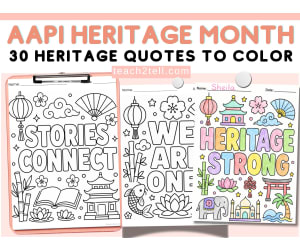
AAPI Heritage Month Coloring Activity Asian American Pacific Islander
Community Building, Resources for Teachers, Social Emotional Learning (SEL), Special Resources, History: Asian, History, Social Studies, Homeschool Templates, Grade 1, 2, 3, 4, 5, 6, Activities, Bulletin Boards, Classroom Decor, Door Decor, Posters, Coloring Pages, Worksheets, Worksheets & Printables, Writing Prompts
Ever need a simple but meaningful way to recognize AAPI Heritage Month without spending hours planning? These AAPI Heritage Month Coloring Pages give students a chance to celebrate Asian American Pacific Islander culture in a way that feels calm, accessible, and classroom-friendly. No prep. Just print and go. What’s Included: 30 AAPI-themed coloring pages Positive and kid-friendly cultural celebration quotes A mix of heritage, kindness, culture, and community themes Printable high-resolution PDF format Ideal For AAPI Heritage Month Cultural diversity lessons Bulletin board displays Morning tubs or centers Fast finisher activities Sub plans Calm-down activities How It Can Be Used Whole class coloring activity during AAPI Month Small group discussions about culture and heritage Independent work Hallway or classroom displays Pair with picture books or writing prompts Add to a cultural celebration unit Skills Covered Cultural awareness Respect for diversity Fine motor skills Classroom discussion Creativity and self-expression I’ve found resources like this work best when they’re flexible. You can keep it simple with a coloring activity, or turn it into a larger classroom conversation depending on your students and schedule that week.
Author Teach2Tell
Rating
Tags AAPI Heritage Month, AAPI Activities, Coloring Pages, Asian American Pacific Islander, Cultural Diversity Activities, Heritage Month Activities, Elementary Coloring Pages, May Classroom Activities, Bulletin Board Activities, Social Studies Activities

Food Safety Skills: Nelson Learns the Benefits of Proper Food Storage
P.E. & Health, Special Resources, Life Studies, Social Emotional Learning (SEL), Special Education Needs (SEN), Speech Therapy, Life Skills, Home Economics, Grade 10, 11, 12, Activities, Worksheets & Printables, Worksheets
Product Name: Food Safety Skills: Nelson Learns the Benefits of Proper Food Storage Keeping perishable items fresh and safe is a crucial life skill, but it's one not everyone knows how to master. This becomes easier with the Food Safety Skills: Nelson Learns the Benefits of Proper Food Storage resource. The story centers around Nora explaining to Nelson that safe and proper storage is key to keeping food wholesome. Ideal for special education teachers, parents, speech therapists, occupational therapists, supported living coaches, ABA therapists or anyone who wants an effective yet simple tool for teaching social narratives and life skills. This resource offers readers several ways to better grasp food safety practices through an engaging story in clear language along with real-world examples. Providing hands-on learning experiences, this narrative doesn't just stop at listening; it also includes seven reading comprehension questions that encourage learners to apply knowledge learned from the story. It's a fantastic tool whether you are leading a full class discussion on food safety or using it as homework material that students can work on independently. The resource uses age-appropriate visuals such as illustrations and diagrams which simplify abstract concepts making them easier to understand. It highlights topics like reading storage information on food labels and storing leftover meat properly all aiming at preventing bacteria growth – both important aspects of everyday life skills for students in grades 10 through 12 or even adult education learners. While playing a considerable role in helping high school students and young adults improve their independent living skills in school or home settings as well as within their communities, this narrative serves more than just its learning purpose; it sets clear expectations convenient for special needs individuals too. In conclusion, the Food Safety Skills: Nelson Learns the Benefits of Proper Food Storage resource isn't just any teaching tool. It's a practical, user-friendly narrative that breaks down complex concepts and presents them in an accessible and digestible format; an indispensable tool for anyone looking to teach life skills effectively.
Author Adulting Life Skills Resources
Tags Food Safety, Proper Storage, Life Skills, Independent Living, Special Education

Self-Control SEL Game, SEL poster, and Mystery Mosaic Activity SEL Gam
Special Resources, Life Skills, Social Emotional Learning (SEL), Social Skills, Special Education Needs (SEN), Kindergarten, Grade 1, 2, Activities, Games, Worksheets, Worksheets & Printables
The Self-Control Game, Mini-poster, and Mystery Mosaic Activity This resource is designed specifically for kindergarten to second-grade students to introduce or reinforce concepts related to self-control and emotional regulation. Stop & Think Game Board The main component of the resource is an interactive game which includes: 12 STOP cards 12 THINK cards The game stimulates discussions about emotions while exploring strategies for maintaining self-control. Detailed instructions are provided for best practice in facilitating gameplay. This can be used for whole class instruction or student-led group activities. Mini-Poster: Stop, Breathe, & Think An accompanying mini-poster acts as a ready reminder of these essential skills. It is suitable both for classroom display and home use. Mystery Mosaic Activity A mystery mosaic activity further reinforces the lessons learnt from the Stop & Think game in a fun yet educational mode. Fits Special Education Resources and Life Skills Curriculum This resource aligns with many special education resources as well as broader life skills curriculum objectives. It pairs well with books about managing big feelings or self-control. Even some reading recommendations are included. Digital Download Convenience (PDF Format) The resource comes as an easy-to-print digital download so no sorting through physical products. In Summary: The Self-Control Game, Mini-Poster, and Mystery Mosaic Activity provides equitable access to vital social-emotional learning principles through relatable activities. Teaching self-control, understanding emotions or promoting calming breathing techniques have never been this engaging before. If you are interested in other SEL and social emotional resources, please check out my store at: https://teachsimple.com/contributor/jennifer-moyer-taylor I am a full-time school counselor who uses my own resources on the students I serve. If it is not "kid" approved, I change it! I am very willing to tweak a resource if the resource is not as engaging or relevant for the students, I alter the lesson and the activities.
Author Jennifer Moyer Taylor
Tags Self-control Game, Emotional Regulation, Social-emotional Learning, Character Education, Mindfulness, SEL Games, SEL, Social Emotional Learning, SEL Poster
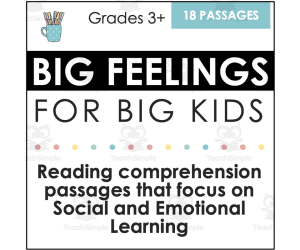
Big Feelings for Big Kids | SEL Reading Comprehension Passages
Special Resources, Social Emotional Learning (SEL), Grade 3, 4, 5, 6, Worksheets & Printables, Worksheets
This resource is a Big Feelings for Big Kids SEL Reading Comprehension Passages. Combine social and emotional learning (SEL) with reading comprehension using these 18 passages. Each passage depicts a scene with characters experiencing complex feelings and emotions that upper elementary students may face in their own lives. The passages require students to use evidence from the text in order to analyze characters’ feelings and body language. Then, students must reflect on how they would solve the problem. With this resource, students are reading, finding text evidence, analyzing characters and emotions, problem-solving, and empathizing. ** THIS COMES WITH BOTH A PAPER AND A DIGITAL OPTION ! Included in this resource: 18 passages (paper and digital on Google Slides) The questions on each passage fall under two categories: Analyze and Reflect The Analyze questions require students to describe how each character feels based on the things they say and their body language The Reflect questions require students to “THINK” by writing how they would solve the problem, and “FEEL” by sharing what they would say to the characters to make them feel better (empathy) The passage themes include: academic anxiety feeling overwhelmed trying your best good sportsmanship staying focused accepting differences standing up for yourself standing up for others being compassionate making friends calming down anger hurt peer pressure death homelessness violence socioeconomic status How can I hear about new resources and sales? Click here to join my email list Click here to follow me on Facebook
Author Markers and Minions
Tags Character Education, Community, SEL, Reading Passages, Comprehension, Reading Passages For Comprehension
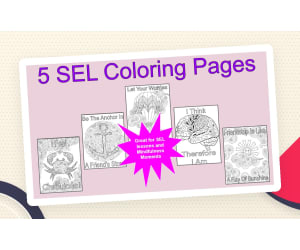
SEL Coloring Pages – 5 Mindfulness Quote Sheets
Resources for Teachers, Special Resources, Social Emotional Learning (SEL), Social Skills, Special Education Needs (SEN), Life Skills, Kindergarten, Grade 1, 2, 3, 4, 5, Activities, Worksheets & Printables, Worksheets, Coloring Pages
In This SEL coloring page resource and mindfulness coloring resources, students will have 5 different coloring pages with inspirational quotes to ponder as they color these wonderful coloring pages. The quotes are; "I Feel Crabulous", "Be The Anchor In A Friend's Storm", "Friendship Is Like A Ray Of Sunshine", "Let Your Worries Drift Away", "I Think Therefore I Am". All of these quotes are geared toward helping students realize their true potential and also consider how they are talking to themselves. These are great as a brain break, quiet time activity, early finisher activity or after an SEL lesson. You may also enjoy these SEL products from my store at: https://teachsimple.com/contributor/jennifer-moyer-taylor You may also enjoy these products from my store: https://teachsimple.com/product/christmas-themed-coping-skills-sel-coloring-pages (These are 5 color by coping Christmas fun activities. Students will learn about different coping skills strategies as they color some very fun and engaging Christmas themed activities. There is a picture of a Christmas tree, reindeer, snowman, gingerbread man, santa and snowman. These activities teach students about the various coping skills available to them.) https://teachsimple.com/product/changing-negative-self-talk-into-positive-self-talk-sel-presentation (An SEL presentation about self-talk. Students will learn about the fact that we talk to ourselves every day without even knowing it! This is a very engaging lesson to talk to students about how much we self-talk and should talk to ourselves so we feel better, not worse.) https://teachsimple.com/product/put-down-sel-presentation (In this very important lesson, students learn about nonverbal and verbal put-downs. They will analyze part of a story and also part of a video to see how many put-downs are happening. Then there is a homework assignment for students to analyze the put-downs they see and hear on TV or on a Video clip.. The they will bring their findings to school to analyze their findings and how this may impact other younger students when they watch these shows.)
Author Jennifer Moyer Taylor
Rating
Tags Sel Coloring Pages, Sel Worksheets, Sel, Social Emotional Learning, Mindfulness, Mindfulness Coloring, School Counseling, Social Skills, Special Education

Who Has It? – Chemical Elements Game (1–118) – 3 Levels of Differentia
STEM, Science, Chemistry, Physics, Life Sciences, Earth and Environmental Sciences, Basic Science, Special Resources, Social Emotional Learning (SEL), Special Education Needs (SEN), Homeschool Templates, Grade 6, 7, 8, 9, 10, 11, Activities, Games, Worksheets & Printables, Task Cards, Quizzes and Tests, Teacher Tools, Quizzes, Worksheets, Projects, Flashcards
Who Has It? – Chemical Elements Game (1–118) – 3 Levels of Differentiation A cooperative chemistry card game for grades 7–10 to review atomic numbers, element names, and symbols 🧪🎯 This resource is a classroom game that helps students become more confident with the chemical elements – from hydrogen to oganesson. The game follows the well-known “I have… who has?” format and is designed to reinforce students’ understanding of element names, symbols, and atomic numbers in a playful and interactive way. To support different learning levels, the material includes three differentiated versions of the full game, each with 118 element cards: With element names for both question and answer (beginner level) Only the “I have…” part includes the name , the question uses the symbol/number (intermediate level) Without element names – players must match based on symbol and atomic number alone (advanced level) Each version builds on the last and can be used flexibly depending on students' prior knowledge. The game works best with medium to large groups and encourages students to listen carefully, stay engaged, and support one another. What’s included: 3 full card sets (118 cards per set = 354 total) Differentiated by content and level of language support Clear instructions for printing, laminating, and use Ideal for individual, pair, or group work How I use it in class: I’ve played this game both at the end of a chemistry unit and as a fun opener when starting the periodic table. It’s also perfect for substitute lessons or for classes with mixed ability levels. Since each student needs to be ready when their card comes up, it fosters attention and collaboration. This is one of those games where learning happens almost by accident – students are so focused on playing that they internalize atomic numbers and symbols without even noticing. A simple, engaging way to bring structure, repetition, and movement into chemistry class – no extra prep needed. If you're looking for an easy way to help students become more confident with the periodic table, this might be worth trying in your classroom. Best, Heike from Lernfitness Did You Know? I teach with a certified therapy dog, and together we create a positive and welcoming learning environment. 🐶
Author Lernfitness
Rating
Tags Game, Educational Card Games, Chemistry, Physics, STEM Science Matching Game, Chemical Elements, Periodic Table Matching Game, Who Has It, STEM, Who Has It?

Health 2nd Grade Unit 6: Prevention / Control of Disease
P.E. & Health, Health, Physical Education, Special Resources, Life Skills, Social Emotional Learning (SEL), Social Skills, Grade 2, Teacher Tools, Lesson Plans, Worksheets & Printables, Worksheets
For 2nd Grade Health there are seven standards that need to be taught. Unit 1 Personal Health Unit 2 Growth and Development Unit 3 Nutrition and Physical Activity Unit 4 Substance Use and Abuse Unit 5 Injury/ Violence Prevention Control and Safety Unit 6 Prevention/Control of Disease Unit 7 Environmental Consumer Health This Health 2nd Grade Unit 6: Prevention / Control of Disease covers topics such as: * Communicable vs non-communicable diseases with a cut, sort, and paste activity. * What to do when you are sick and how not to spread germs. * Steps to wash hands effectively. * Overall personal hygiene worksheets. * Vocabulary words related to dental care. * This 2nd Grade Health Unit even covers Covid 19 and how it started and its effects on the body and how to prevent the spread of this disease. With this 2nd grade health unit, students will be able to understand how to better prevent the spread of diseases. It is a great way to help them learn how to stay healthy and well at home, at school, and in public places. At the end of the unit, there is an assessment to check for understanding. A total of 31 pages for 2nd Grade Health on Prevention and Control of Disease. There are seven units that cover all the health requirements for second grade. Here are the links to other health units: Health 2nd Grade Unit 1: Personal Health Health 2nd Grade Unit 2: Growth and Development Health 1st Grade Unit 3: Nutrition and Physical Activity Health 2nd Grade Unit 4: Substance Use and Abuse Health 2nd Grade Unit 5: Injury / Violence Prevention and Safety Health 2nd Grade Unit 6: Prevention / Control of Disease Health 2nd Grade Unit 7: Environmental / Consumer Health 2nd grade Coronavirus / Covid-19 Facts This unit meets Common Core Standards.
Author K-5 Treasures
Tags Health Unit, Prevention, Control Of Disease, Germs, Second Grade Health, 2nd Grade Health, Healthy Activities, Healthy Habits, Coronavirus, Health Resources For 2nd Grade
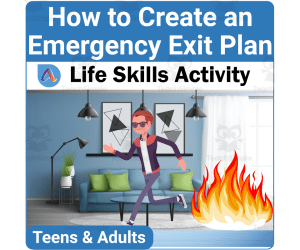
Independent Living Skills: How to Create an Emergency Exit Plan
Special Resources, Creative Arts, Art, Life Studies, Social Emotional Learning (SEL), Special Education Needs (SEN), Life Skills, Grade 10, 11, 12, Activities, Worksheets & Printables, Worksheets
This Special Education life skills activity teaches high school students how to create an Emergency Exit Plan by identifying their house's primary and secondary exits, emergency exits, and safe locations outside. The use of this Independent Living Skills resource will allow students to engage in the following: • How to identify the primary, secondary, and emergency exits at home. • Learn when to consider emergency exits instead of main exits • Ways to communicate with family during an emergency • Identifying a safe meeting place in emergencies • Choosing the safest exit in an emergency • Make sure your home has an emergency exit plan There are 16 reading comprehension questions in this Independent Living Skills resource! This activity will assist high school students in developing the necessary life skills to become more independent at school, at home, and in their communities. A great place to use this handout is in special education classes or one-to-one settings, such as ABA therapy, speech therapy, occupational therapy, and Registered Behavior Technician (RBT) sessions. High school students working on independent living would benefit significantly from this activity for defining, setting, and measuring IEP goals. In addition to interactive instruction, this resource is ideal for hands-on and community-based learning. Engage your special education class with this highly interactive High School Independent Living Skills Activity! This activity contains step-by-step instructions, questions, and answers that reinforce learning, age-appropriate graphics, real-world examples, and ideas for implementation. This is the perfect special education activity for grade 10, grade 11, grade 12, and autism life skill centers . This special education life skills handout was designed to assist teens and adults with difficulties developing independent living skills. It's a printable, easy-to-use activity ready to hand out! Related Products for Developing Independent Living Skills How to Read a Basic Pay Stub How to Schedule an Appointment How to Fill Out a Job Application How to Create a Strong Password A PDF with eight unique pages. Color and black-and-white versions of each page are available for this pdf resource.
Author Adulting Life Skills Resources
Tags Special Education, Autism Safety Resources, Interactive Safety Lessons, Independent Living Skills, IEP Goal-Oriented Skills, Life Skills For Autistic Teens And Adults, Adulting On The Spectrum, Social And Emotional Learning, Life Skills For Teens, Life Skills For Adults

Money Math Life Skills Worksheet: Reading Restaurant Menus Level 1
Special Resources, Creative Arts, Art, Social Emotional Learning (SEL), Life Skills, Math, Money, Grade 7, 8, 9, Activities, Worksheets & Printables, Worksheets
Money Math Life Skills Worksheet : Reading Restaurant Menus Level 1 This interactive 192-question math worksheet aids middle school students in developing essential life skills for independence. Students will calculate complete breakfast and lunch meal costs using six standard restaurant menus. Questions progress in difficulty from computing costs of two menu items to four. Interactive practice strengthens skills in money management. All questions include detailed solutions. Educators can implement this printable resource in special education classes, speech therapy, ABA therapy, or one-on-one intervention. It also helps define, set, and measure IEP goals related to functional math and independent living. The worksheet provides real-world money math practice for grades 7-9. The step-by-step structure with visual supports is ideal for middle schoolers with autism and other special needs. Students will build confidence ordering meals and managing money. Skills developed with this resource help middle schoolers gain independence at school, home and in the community.
Author Adulting Life Skills Resources
Tags Life Skills Money Math, Special Education Money Math, Independent Living Skills, IEP Goal-Oriented Skills, Autism Resource For Parent, Adulting On The Spectrum, Social And Emotional Learning, Autism And Money Skills, Life Skills For Teens, Life Skills For Adults, Math Menu Activities, Life Skills Worksheets Kids, Restaurant Menu Math Word Problems, Literacy Menus, Menu Math Printable, Menu Engineering Worksheet, Life Skills Math, Menu Worksheet

Health | 3rd Grade Unit 7: Enviromental Consumer Health
P.E. & Health, Life Studies, Physical Education, Health, Life Skills, Special Resources, Social Emotional Learning (SEL), Social Skills, Grade 3, Teacher Tools, Lesson Plans, Worksheets & Printables, Worksheets
This 3rd Grade Health Unit focuses on Enviromental Consumer Health and is essential to help students with their health and wellness. There are seven units in all taught in 3rd grade that focus on health. These units include: Unit 1 that focuses on Personal Health and Wellness Unit 2 that focuses on Growth and Development Unit 3 teaches students about Nutrition and Physical Activity and how to eat right and stay active Unit 4 that helps students with Substance Use and Abuse and how to avoid bad substances Unit 5 that will teach students about Injury/ Violence Prevention Control and Safety Unit 6 that covers what happened during Covid and how to protect themselves while learning about Prevention/Control of Disease Unit 7 discusses our environment and how to help save our planet with Environmental Consumer Health These units can be taught out of order. They are only numbered for your convenience. At the end of each unit, there is an assessment to test students’ understanding. Through using this 3rd Grade Health Unit 7: Environmental Consumer Health, students will explore and learn to identify daily healthy habits. Included in this 3rd Grade Health Unit are the following: Students will learn about different types of pollution in the air, land, and sea and how the pollution affects community health. In this unit, students will read about how to keep the community in which they live in clean and the importance of being apart of a clean community. We've all heard of the terms: reuse, reduce, and recycle. Students will be able to understand the importance of these terms and how to recycle objects. There is a question about if kids today are healthier or less healthy and students will need to explain their reasoning. Many communities have a farmer's market with fresh fruits and vegetables. Students will discuss their thoughts on if this is beneficial for a community and how it can affect the environment and our health. Lastly, there is an assessment to check for understanding. This unit meets Common Core Standards. It is 11 pages of fun engaging activities! There are seven units that cover all the health requirements for 3rd grade. Go to K-5 Treasures to check out the other 3rd Grade Health Units to help students complete the entire Health Standards for the year!
Author K-5 Treasures
Rating
Tags Health Unit, Personal Health, Healthy Goals, Unhealthy Choices, Health Activities, Physical Goals, Health Goals, Health And Wellness, 3rd Grade Health, Third Grade Health

Health | 3rd Grade Unit 5: Injury Prevention and Safety
P.E. & Health, Life Studies, Physical Education, Health, Life Skills, Special Resources, Social Emotional Learning (SEL), Social Skills, Grade 3, Teacher Tools, Lesson Plans, Worksheets & Printables, Worksheets
This 3rd Grade Health Unit focuses on Personal Injury and Violence Prevention Control and Safety and is essential to help students with their health and wellness. There are seven units in all taught in 3rd grade that focus on health. These units include: Unit 1 that focuses on Personal Health and Wellness Unit 2 that focuses on Growth and Development Unit 3 teaches students about Nutrition and Physical Activity and how to eat right and stay active Unit 4 that helps students with Substance Use and Abuse and how to avoid bad substances Unit 5 that will teach students about Injury/ Violence Prevention Control and Safety Unit 6 that covers what happened during Covid and how to protect themselves while learning about Prevention/Control of Disease Unit 7 discusses our environment and how to help save our planet with Environmental Consumer Health Included in this 3rd Grade Health Unit are the following: These units can be taught out of order. They are only numbered for your convenience. At the end of each unit, there is an assessment to test students’ understanding. Through using this 3rd Grade Health Unit 5: Injury Prevention and Safety, students will explore and learn to identify daily healthy habits. Included in this 3rd Grade Health Unit are the following: In this unit, students will be able to learn about first aid and how to help themselves if there is an injury such as a cut on their arm or other part of their body. A very important part of this unit is all about stranger danger. Students will read about the tricks that strangers use to harm kids. (This is very valuable for students and families to learn to help protect themselves.) Included in this unit is information about how to be safe in their school, community, and especially in their homes. Finally, included is an assessment to check for understanding. This unit meets Common Core Standards. It is 9 pages of fun engaging activities! There are seven units that cover all the health requirements for 3rd grade. Here are the links to other health units: Go to K-5 Treasures to check out the other 3rd Grade Health Units to help students complete the entire Health Standards for the year!
Author K-5 Treasures
Rating
Tags Health Unit, Personal Health, Healthy Goals, Unhealthy Choices, Health Activities, Physical Goals, Health Goals, Health And Wellness, 3rd Grade Health, Third Grade Health
Taxes & Paychecks – Real-World Simulation Sheets
Social Skills, Special Resources, Life Skills, Social Emotional Learning (SEL), Social Studies, Economics, Math, Money, Measurements, STEM, Grade 6, 7, 8, 9, 10, 11, 12, Workbooks, Worksheets & Printables, Worksheets, Teacher Tools, Quizzes and Tests, Quizzes, Tests, Literacy Readers, Lesson Plans, Word Searches
Get Ready To Unlock Real Life Know How In Finance By Teaching Students About Taxes Made Simple, Paychecks, And Managerial.Learn and Use Your Skills In The Real World Without Hosting A Class In Your Community With This All-Encompassing Feature Rich Tax And Paycheck Unit. Do you ever just wish to bring in Real Life Math, teach students valuable life long skills, make it relatable, and teach students about the relationship between abstract developement of numbers versus actual application of numbers in the real world? If you do; THIS IS the complete all-inclusive, no prep repititive unit that you needed to discover to teach your middle schoolers all about taxes, paychecks; found out that you CAN earn money with this comprehensive written unit. How can we make something that seems overwhelming and complicated, easier, and more enjoyable? By using an engaging and student centered material to inform and educate your students about understanding their actual earnings (Net Pay) before they get their first paycheck. This will help your middle school students view their paychecks as an indication of successful involvement within the work force against societal standards of financial obligation by then being empowered after having deliuered when they felt more discouraged previously. This is the ultimate teaching plan; a tried and true, 5-day-lesson plan that is intended to sufficiently prepare your students for their future by creating an opportunity for them to be able to view themselves as successful in the world of finance and less anxious about obtaining those same values. This product will benefit students in grades 6-9 who are studying math (especially for applying percentages/real-world scenarios), financial literacy, life skills and/or career exploration, civics and economics (to comprehend how tax money works within society), and in cooperative homeschool environments. Including the 34-page (pdf only) detailed phase one: core content and theory guide which explains the differences and similarities between gross and net, overtime, FICA, federal and state taxes and voluntary deductions. You’ll want to use this as part of teacher preparation materials or to supplement any students who are classified as advanced readers. Phase 2: Workbook for Students (10 Workbooks) Workbooks from 1 to 10 will provide instructions and examples for answering the following: 1. Understanding the structure of a paycheck (Worksheet #1). 2. Finding gross pay for various given situations (Worksheet #2). 3. All about FICA (the intergenerational contractual agreement) (Worksheet #3). 4. What to expect on your federal and state income tax return (Worksheet #4). 5. What the deduction from your paycheck is, to whom you can give it, and the effect of giving (Worksheet #5). 6. Bringing everything together to calculate the net pay for the paycheck (Worksheet #6). 7. What effect sales tax has on the consumer (Worksheet #7). 8. The basics of how property taxes impact local communities (Worksheet #8). 9. Understanding Form W-4 and Form W-2 (Worksheet #9). 10. Understanding the basics of the consumer and their role in the economy (Worksheet 10). Phase 3: Teaching Resources & Visuals High contrast visuals in black and white that can be printed and used are; diagrams of the paycheck pipeline, the anatomy of a paycheck, and where the taxes are sent. Also, a complete answer key will give the teacher all of the answers and how to create them from the 10 workbooks. Lastly, there will be a full guide for implementation by the teacher that includes the pacing guide (5 days), daily lesson objectives, daily lesson activities, weekly lesson discussion prompts, and how to differentiate lessons for children needing scaffolding or extensions. Allow your students to have the knowledge necessary to make a successful transition into their adult lives at home and in the community. Download this print and go unit today to help your students become knowledgeable, confident participants in the economy! Why Schools/Parents Especially Like It : Building Real-Life Skills - This program teaches students a real-world, practical skill that they will use starting the day they receive their first paycheck, laying the groundwork for a lifetime of future financial success. Connecting Civics & Math - This project successfully connects important math concepts (percentages) with key civics lessons that teach students how taxes are used to support the communities they live in, making learning much more effective and relevant to students. Comprehensive & No Preparation - This program is a complete unit that is ready to use; including the lesson plan, student worksheets, visuals, answer keys and 5-day lesson plans teachers will have more time to plan for other subjects. Empowering & Reducing Students’ Anxiety - The confusion caused by the amount of information presented on pay stubs and issues related to deductions is replaced by clarity and control over their finances with an understanding of what many of those deductions mean, allowing them to view themselves as part of and contributing to our economy. Promoting Critical Thinking - Students will build critical thinking skills through discussions about capstone simulations and ethics (i.e., considering progressive taxation), as well as developing the ability to analyze and evaluate many complex financial situations beyond basic computation. Mainly: - Middle School Math: Excellent resource for %'s and decimals; includes real-life problems. - Pre-Algebra or Consumer Math in HS (9th grade): Great introduction or summary. - Financial Literacy in HS or MS: Core unit of any financial literacy curriculum. - Life Skills/Career Readiness: Essential info for every student getting ready to work. - Civics/Economics: Excellent connection between personal finance and how government/public services are funded. Terms of Service/Copyright: Copyright is with Syed Hammad Rizvi. All rights reserved. If used in the classroom, this resource can only be used once per teacher. There is no sharing, alteration, distribution or selling of any portion of this resource. For example, you may not post this resource on the internet for others to view and download. If you wish to share this resource with colleagues, please order additional licenses at Teachsimple. Thank you for adhering to the above terms of use. This product is proudly created by Syed Hammad Rizvi.
Author Creative Book Store
Rating
Tags FinancialLiteracy, RealWorldMath, LifeSkills, UnderstandingTaxes, Paycheck, ConsumerMath, PersonalFinance, Economics, MathLesson, Civics
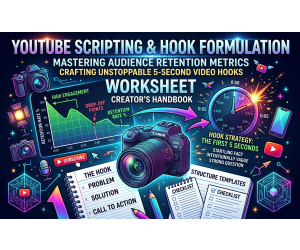
YouTube Scripting & Hook Formulation
Science, Technology, Computer Science, Engineering, Life Skills, Special Resources, Social Emotional Learning (SEL), Special Education Needs (SEN), Social Studies, Sociology, Grade 6, 7, 8, 9, 10, 11, 12, Teacher Tools, Worksheets & Printables, Workbooks, Worksheets, Word Searches, Writing Prompts, Lesson Plans, Quizzes and Tests, Quizzes, Tests
Are your students passive consumers of media, or are they a new generation of creators? Transform your classroom with this comprehensive, 5-day curriculum designed to turn high school students from mindless scrollers into master strategists of the digital age. This is not just another "how to make a video" guide. This is a deep dive into the psychology, data analytics, and persuasive writing that powers the world's largest video platform. Specifically designed for a Grade 10-12 audience, this curriculum meets students where they are—on YouTube—and equips them with critical 21st-century skills in media literacy, data analysis, and compelling communication. In a world where attention is the most valuable currency, this unit teaches students how to earn it. They will learn to deconstruct viral videos, analyze audience retention metrics, and engineer powerful "5-second hooks" that captivate an audience from the very first frame. What's Included in this 41-Page Resource? Part 1: In-Depth Theoretical Framework (10 Pages): The Attention Economy: Understanding the science of modern attention. The Psychology of the Click: Exploring concepts like the "Cognitive Threshold" and the "Triad of Immediate Engagement." Decoding Audience Retention Metrics: A student-friendly guide to reading the "Graph of Truth" to diagnose what works and what doesn't. Actionable Hook Templates: Three powerful, psychologically-backed frameworks (The Paradoxical Premise, Negative Outcome Warning, and In Medias Res) for scripting irresistible introductions. Part 2: Engaging Student Workbook (19 Pages): 10 Hands-On Worksheets: A full suite of activities covering everything from analyzing retention graphs and rewriting weak hooks to aligning visual/verbal cues and reverse-engineering competitor videos. Capstone Project: A final worksheet where students synthesize all their learning to draft the "Ultimate 5-Second Hook" for various scenarios. Part 3: Complete Teacher Resources (12 Pages): Visual Anchor Charts: High-quality diagrams of the Retention Curve, the Anatomy of a Hook, and the CVI Formulation Matrix, perfect for classroom display. Comprehensive Answer Key: Detailed answers and "ideal responses" for all 10 student worksheets. Full 5-Day Teacher Implementation Guide: A step-by-step, no-prep lesson plan with objectives, activities, homework assignments, and common pitfalls to ensure a successful and engaging unit. Equip your students for the future. Whether they aim to be content creators, marketers, filmmakers, or simply more critical consumers of digital media, this curriculum provides an unforgettable, practical, and highly relevant learning experience. Perfect for: High School English Language Arts (ELA) Media Studies or Digital Literacy Electives Career and Technical Education (CTE) programs Public Speaking & Communications Creative Writing Business & Marketing Classes Why Parents/Schools Love It: Builds Critical 21st-Century Skills: This curriculum goes beyond standard subjects, teaching in-demand skills like digital storytelling, data analysis, and persuasive communication—competencies essential for college applications and modern careers. Promotes Digital Literacy & Critical Thinking: It transforms students from passive media consumers into active, critical analysts. They learn to understand the psychological techniques used to capture their attention, making them smarter and safer digital citizens. Highly Engaging & Relevant: The content meets students in their world—YouTube. This inherent relevance boosts student engagement, participation, and knowledge retention in a way that traditional topics often struggle to match. Cross-Curricular & Practical Application: This unit seamlessly integrates concepts from English (writing), Math (data/graphs), Psychology (behavior), and Art (visuals), demonstrating the real-world application of academic knowledge. Career & Technical Education (CTE) Pathway: This resource provides a foundational understanding of the creator economy, digital marketing, and media production, opening students' eyes to viable and lucrative modern career paths. Target Student Grade Level : Based on a complete analysis, the PDF explicitly and repeatedly references Grade 10 students . The language is sophisticated yet well-explained, making it perfectly suited for this level. Primary Target: Grade 10 (Ages 15-16) Secondary Target: The curriculum is easily adaptable for Grades 9 through 12 (Ages 14-18). It would be particularly effective in advanced 9th-grade classes or as a core unit for 11th and 12th-grade electives in media, marketing, or communications. Copyright/Terms of Use: This Book was copyrighted by Syed Hammad Rizvi. This resource is for personal and single classroom use only. You may not alter, redistribute, or sell any part of this resource. In other words, you may not put it on the Internet where it could be publicly found and downloaded. If you want to share this resource with colleagues, please purchase additional licenses from Teachsimple. Thank you for respecting these terms of use. This product is happily brought to you by Syed Hammad Rizvi
Author Creative Book Store
Rating
Tags YouTubeCurriculum, VideoScripting, MediaLiteracyCurriculum, DigitalStorytellingUnit, AudienceRetention, 5SecondHook, HookFormulation, CreatorEconomyEducation, HighSchoolMedia, YouTubeForStudents
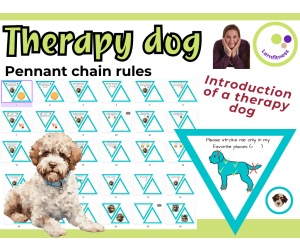
Therapy Dog Classroom Rules – Create, Discuss & Decorate! 🐶🏫 Banner
Social Emotional Learning (SEL), Special Resources, Social Skills, Special Education Needs (SEN), Life Skills, Animals, Life Sciences, Science, Classroom Management, Resources for Teachers, High School, Middle School, Elementary, Early Learning, Pre-K, Classroom Decor, Banners, Bulletin Boards, Projects, Activities, Drawing Templates & Outlines, Worksheets & Printables, Coloring Pages, Worksheets
Therapy Dog Classroom Rules Create, Discuss & Decorate! 🐶🏫 Bringing a therapy dog into the classroom is an exciting and rewarding experience, but it also requires clear expectations and structure. This Therapy Dog Rules Pennant Banner is a creative and engaging way to introduce, reinforce, and display important guidelines for students when interacting with a school therapy dog. Whether your school already has a therapy dog or you’re just starting to introduce the idea, these pennants help students understand respectful behavior, responsibilities, and boundaries in a fun and visual way. 🐾 Why This Resource is Perfect for Your Classroom ✔ Encourages Respectful Interactions – Helps students learn how to behave around a therapy dog. ✔ Interactive & Creative – Students can draw, write, or collage their own pennants to personalize the display. ✔ Supports Classroom Discussions – Use as a conversation starter about animal care, empathy, and safety. ✔ A Fun Visual Reminder – Display the banner in the classroom or on the door so rules are always visible. ✔ Perfect for Any Therapy Dog Setting – Ideal for schools, counseling offices, and special education programs. 📌 What’s Included? 📜 Printable Therapy Dog Rules Pennants, featuring: ✔ Ready-made rule templates ✔ Blank versions for students to create their own rules ✔ Simple, clear visuals for all ages ✔ pre-colored for quick use 🎨 How to Use This Resource 1️⃣ Print the pennants and the door sign. 2️⃣ Let students illustrate, decorate, or collage the rules in their own creative way. 3️⃣ Cut out and string the pennants together to create a classroom banner. 4️⃣ Hang the banner somewhere visible to reinforce positive interactions with the therapy dog. 🏆 Classroom Tip: Involve students in writing the rules together before decorating their pennants. This makes them feel more responsible for following the guidelines! 🐶 Why Teachers Love It ✔ “A great way to help kids understand boundaries around therapy dogs.” ✔ “The perfect mix of creativity and structure—students loved making their own rules!” ✔ “Looks great on the classroom wall and actually helps reinforce good behavior!” 🏫 Make Your Therapy Dog Program a Success! Having a therapy dog in the classroom can be an incredible learning experience—but students need guidance to make sure it’s a safe and positive environment. This banner set makes it easy, interactive, and fun to set those expectations! 📥 Download now and start creating your therapy dog-friendly classroom today! 🐾✨ 📍 Best, Heike from Lernfitness Did You Know? I teach with a certified therapy dog, and together we create a positive and inspiring learning environment. 🐶✨
Author Lernfitness
Tags Therapy Dog, Animal-assisted Learning, Inclusive Education Tools, Therapy Dog Rules, Classroom Pet Guidelines, Therapy Dog In School, Social-emotional Learning, SEL, Dog Classroom Rules

Claude Monet | Artist Biography + Activities | Elementary Art Lesson
ESL, Language Development, ELA, Biographies, Social Studies, Social Emotional Learning (SEL), Special Resources, Art, Creative Arts, Art History, Elementary, Lesson Plans, Teacher Tools, Presentations, Coloring Pages, Worksheets, Worksheets & Printables
This resource offers your students the opportunity to independently explore and summarize the life of the famous French Impressionist artist Claude Monet, thanks to this engaging discovery and learning tool. This resource is designed to guide students through the artist's biography: from his early childhood passions to his first experiments, from his encounters with other Impressionist artists (Pissarro, Renoire, Degas) to his artistic maturity. Teaching with this resource is simple! Start by showing the biography slides: through illustrations created in Monet's unmistakable style and the first-person narrative, students will approach him empathetically, seeing him first as a friend and playmate. Once the story is complete, you will find the proposed activities. "Monet's Artist" section: - Color recognition activity based on the series of paintings "The Rouen Cathedral"; - Coloring: Theory of color and color contrasts; - Redrawing and coloring a still life by Monet "The Artist's Qualities" section. In this section, students will describe the "human" qualities that made Monet famous: passion, love of nature, perseverance, and determination. "Chat with the Artist" section. In this final phase, students will have the opportunity to chat with Monet through a specially designed AI experience to stimulate interest and engagement. The resource is structured to answer questions and provide new conversation starters. The resource is available in four languages: English, French, German, and Italian.
Author TeachFizz
Rating
Tags Claude Monet, Impressionism, Artist Biography, Art History Lesson, Famous Artist, No-prep Art Lesson, Elementary Art, Artist Study, Homeschool Art

Boundary Setting & Healthy Relationships Scenario Worksheets
Special Resources, Life Skills, Social Emotional Learning (SEL), Social Skills, Special Education Needs (SEN), Speech Therapy, STEM, Resources for Teachers, Classroom Management, Community Building, Grade 6, 7, 8, 9, 10, 11, 12, Worksheets & Printables, Workbooks, Worksheets, Word Searches, Teacher Tools, Assessments, Lesson Plans, Quizzes and Tests, Quizzes, Tests
Presented in an easy-to-use format that is ready for use immediately, the Boundary Setting and Healthy Relationships Scenarios Worksheet is a collection of 40 pages of worksheets focused on Teaching S.E.L. (Social & Emotional Learning) skills to adolescents. Containing relevant and up-to-date research, these worksheets help teachers foster students’ development of strong social and emotional skills through hands-on experiences, supported based on both interpersonal neurobiology and cognitive-behavioral principles. Using interactive worksheets, students will engage with realistic (and often high-stake) scenarios that depict physically, emotionally, cognitively, materially, and digitally/cyberly, from peers, from family, from romantic partners, and much more, as they explore consent and communicating when under stress, the fawn response vs. fight or flight response, location tracking, the rupture and repair cycle, trauma dumping, peer pressure, etc. Using guided written prompts as well as fill-in-the-blank and scripting exercises with reflection questions and self-assessments, students will grow their understanding of and ability to demonstrate self-control, stay calm under pressure, use assertive communication with others, and ultimately build a lifetime of autonomy through satisfying relationships. Included with the worksheets are a full Visual Asset Library (boundary typology continuum, discomfort-resolution flowchart, spheres of digital agency), complete answer keys; example responses; foundational knowledge quizzes; and an extensive Teacher Implementation Guide including psychological safety protocols, differentiation between middle and high school, and detailed information about how to use this resource in the classroom or during counseling sessions, with homeschoolers, or in youth programs. This digital (PDF) resource is the ideal tool for teachers to develop emotional regulation, distress tolerance, assertive communication, and autonomous interpersonal relationships for students as they learn to navigate friendships, romantic partnerships, social media, and family dynamics from a place of confidence and respect. Reasons why Parents/Schools Appreciate It: Trauma-Informed and Psychologically Safe: Explicitly identified protocols (Third Party Rule, opt-out options, validation versus correction) that allow for the protection of vulnerable students while still getting credit for the Social and Emotional Learning standards. Entirely "Ready to Go" and requires no prep time (40 pages of theory, 10 Scenario Worksheets, visual aids, answer keys and individualised teacher guides). Print once and immediatley begin teaching. Relevance with Real Life: Addresses current adolescent issues such as cyber boundaries, tracking locations, group chat pressure, love bombing and smear campaigns through engaging, appropriate, context sensitive scenarios. Demonstrated Skill-Building: Transition from theory to practice using scripting, somatic awareness and mastery reflections, creating measurable improvement in assertiveness and self-esteem. Flexible and Scalable (can be used by teachers in whole classes, small groups, individually or as independent study). Can be adapted from Middle School up to High School. Target Student Grade Levels: The curriculum is intended for students in grades 6 through 12 (middle and high school) as well as for teachers implementing it in classrooms. This is reflected in the Teacher Implementation Guide, sections beginning on pages 39-40, with examples of differentiation for middle schoolers and high schoolers as described below: For middle schoolers (grades 6-8), examples are provided, emphasizing peer relationships and how those relationships can lead to digital exclusion, as well as using a scripted role-playing activity. For high schoolers (grades9-12), the focus is on the complexities/differences of exploring nuances, emotional manipulation, gaslighting, intimate partner relationships, and the interconnectedness of digital technologies. The curriculum can be effectively used in Health, Social Emotional Learning (SEL), Advisory, Psychology, Counseling, Life Skills, and Advisory/Homeroom classes, as well as in after school programming, by school counselors, through families who are homeschooling, and by youth groups. Terms of Use / Copyright: This document is copyrighted to Syed Hammad Rizvi. This product is to be used only for personal and individual use in your classroom, and may not be modified or reused in any way, including the distribution or the selling of this document. This means that you may not put this on the Internet for the public to download. If you would like to distribute this item to other teachers, please purchase a new license from Teachsimple. Thank you for respecting these terms of use. This item is supplied by Syed Hammad Rizvi.
Author Creative Book Store
Rating
Tags BoundarySetting, HealthyRelationships, SEL, SocialEmotionalLearning, SELcurriculum, TeenBoundaries, DigitalBoundaries, ConsentEducation, BoundarySettingWorksheets, HealthyRelationshipsWorksheets

Cognitive Restructuring for Test Anxiety
Life Skills, Special Resources, Social Emotional Learning (SEL), Social Skills, Special Education Needs (SEN), Speech Therapy, STEM, Resources for Teachers, Classroom Management, Community Building, Grade 6, 7, 8, 9, 10, 11, 12, Worksheets & Printables, Workbooks, Worksheets, Word Searches, Teacher Tools, Assessments, Lesson Plans, Quizzes and Tests, Quizzes, Tests
Do your pupils suffer from anxiety before exams, worry about their academic ability and feel they are going to fail? Have you seen brilliant students, who should do well on national exams such as the SATs, Advanced Placement finals or chapter tests, perform poorly due to the pressure of the exam? The source of the issues described above isn’t because the student is not knowledgeable; rather, it is due to a lack of mental control. The extensive Cognitive Restructuring Guide & Workbook (28 pages) is the premier resource for educators, school counsellors, psychotherapists and tutors. This evidence-based resource incorporates the principles of Cognitive Behavioural Therapy (CBT), but goes much deeper than merely telling students to ‘relax’ before an exam by providing them with the skills they need to eliminate test anxiety by looking at the root causes. Your students will learn to become scientists of their own minds and to change their catastrophic thoughts into calm and rational confidence. WHAT IS INCLUDED IN THIS 28-PAGE RESOURCE: PART 1: The Educator’s Foundational Guide (10 Pages) A comprehensive understanding of test anxiety through the psychology behind test anxiety and also the "The Anatomy of Academic Panic" model. Foundational understandings and explanations of the following CBT concepts: Tripartite Model of Anxiety; Catastrophizing; Cognitive Distortions (All-or-Nothing, Fortune Telling, etc.); and Cognitive Defusion. In-depth and relatable case studies that provide real-life context to the theory so that you can explain to your students in a relatable manner. PART 2: The Student Workbook (10 Actionable Worksheets) A step-by-step process through which a student can begin to actively restructure their anxious thoughts. Each worksheet is intended to build on the previous worksheet to create long-lasting & profound changes. Worksheet 1: The Anatomy of an Anxious Thought Worksheet 2: Spotting the Catastrophe Worksheet 3: The Empirical Evidence Board Worksheet 4: The ''And Then What?'' Protocol (Decatastrophizing) Worksheet 5: The Double Standard Technique Worksheet 6: Moving from What If to Even If Worksheet 7: Somatic Awareness and Cognitive Links Worksheet 8: Looking at Your Past Successes Worksheet 9: The Productive vs Unproductive Worry: Action vs Anxiety Worksheet 10: The "Cognitive Blueprint for Pre-Exam Thoughts" PART 3: Teaching Resources/Visuals and Answer Key (8 Pages) Pedagogy based visuals: There are three high-quality Anchor Charts/Visual Aids (The Cognitive Triangle; The Five-Step Restructuring Sequence; Taxonomy of Distortions) which can be used as classroom displays or given out as individually provided handouts. Answer key: This answer key provides a description of how an answer should be provided to each question and includes the "Exemplar Look-Fors" that you will need to evaluate a student's understanding of the material. THESE ARE IDEAL FOR: Counselors who work with small groups or use one-on-one session Teachers in High School and Middle School (specifically those who teach AP/IB/class with high testing requirements) Those involved in delivering Social-Emotional Learning (SEL) curriculum Individuals who provide Executive Function (EF) coaching/tutoring services Therapists who work with adolescents Parents who want to provide structure to help their anxious teen Finally, every student should have every resource available to them to not only pass their tests and exams, but also overcome anxiety and other challenges that hold them back from success. Download this incredible resource today! Test Anxiety, Cognitive Behavioral Therapy (CBT), Worksheets, High School, Middle School, SEL, Social Emotional Learning, School Counselor, Study Skills, AP Exams, SAT Preparation, Final Exams, Growth Mindset, Executive Functioning, Printable/Digital Resource, Anxiety, Catastrophizing. Why Parents / Schools Appreciate It : Evidence-Based & Effective - Backed by the proven Cognitive Behavioral Therapy, this is not just fluffy advice. This systematic and scientific approach to anxiety relief provides result-driven actions for those who take part in the program. Provides Actionable, Skills for a Lifetime – Students become contributors to their own mental health and have the tools to be active participants in their recovery. Not only do they learn how to regain control, but they develop useable critical thinking and emotional regulation tools that they will continue to benefit from throughout their lives. Comprehensive & Turnkey – The all-inclusive packet saves educators and counselors valuable time in preparation. It includes the theoretical background behind the theory, student worksheets, visual aids, and a detailed answer key that explains the 'why' behind each activity. Creates True Resilience & Confidence – By teaching students to identify, challenge and change the way they think, this program helps them create true self-worth and building resiliency as they come to understand that failure is not an option, but an opportunity to develop a growth mindset. Perfect for Organizations and Individuals – The versatility in the program can be used for individual or group counseling, as a whole class SEL lesson, or independently by the students themselves. Targeting the Target Audience: After analyzing the content, structure, language, and examples used in the PDF (AP History & SAT & Algebra.) List the following target audiences: Primary Student Audience: 8th to 12th Grade Students. This explicit reference provides information for students between grades eight through twelve. This information can be utilized to assist those students, especially high-achieving students (eighth to twelfth grader), who are experiencing stress/pressure/stress associated with taking standardized tests/AP exams/college applications. In addition, there are also many eighth graders that are beginning to experience anxiety regarding final exams and/or high school placement tests that could benefit from this resource. Primary Professional Audience: School Counselors and Psychologists: This is the primary audience. School-based counselors/psychologists will primarily be utilizing this resource for individual and/or small-group counseling sessions focused on academic anxiety. High School Teachers: Will especially benefit from utilizing this resource when they are providing instruction to students enrolled in high school AP/IB/honors-level courses where student performance will be evaluated based on standardized tests. Tutors & Executive Functioning Coaches: These professionals will work with students who are experiencing difficulties related to academic performance. They will also utilize this resource as a foundational element of their toolkits. Therapists: Private practitioners providing services to adolescents will primarily be focused on utilizing this resource to support adolescents struggling with anxiety/depression/distress charged by the pressures of academic performance. Copyright Information and Terms of Service: This Book has been copyrighted by the Author Syed Hammad Rizvi. This resource is for private and personal use and not intended for use by multiple persons in group settings. There is no permission to make changes to, copy, print, distribute or sell any portion of this resource. That is, you cannot upload it to the internet in a public format (e.g., through a website or file-sharing service). If you would like to share this resource with your colleagues, please buy additional licenses through Teachsimple. Thank you for your understanding and compliance with the terms of service. Syed Hammad Rizvi is proud to offer this resource to you through Teachsimple.
Author Creative Book Store
Rating
Tags SchoolCounselor, HighSchoolCounselor, MiddleSchoolCounselor, SchoolCounseling, CounselorResources, TeachersOfInstagram, HighSchoolTeacher, MiddleSchoolTeacher, TeacherResources, Educator
Emotional Regulation & Self-Care Planners for Teens
Special Resources, Social Emotional Learning (SEL), Life Skills, Social Skills, Special Education Needs (SEN), Speech Therapy, Life Studies, Coaching, Career, Leadership, Grade 9, 10, 11, 12, Teacher Tools, Assessments, Lesson Plans, Quizzes and Tests, Quizzes, Tests, Worksheets & Printables, Worksheets, Word Searches, Workbooks
The Emotional Regulation & Self-Care Planner for Teens (39 pages), which is available digitally as a curriculum and a planner, is laid out in three phases. The first phase (core content & theory) consists of four chapters dealing with the neurobiology of adolescent emotions, the cognitive restructuring process as well as working with the inner critic; somatic regulation (resilience of the nervous system); strategic self-care (boundary architecture). Also included are real-life case studies of teenagers (amygdala hijack, perfectionism spiral, freeze response/burnout cycle); The second phase consists of a student workbook that includes ten interactive worksheets (re: affective granularity/metacognition cognitive distortion; interoceptive/somatic map; navigating the Window of Tolerance boundary architecture; digital ecosystem audit; executive function/anticipatory anxiety; and interpersonal rupture & repair); The third phase consists of visuals & teacher resources (classroom visuals, answer keys, assessment rubrics, teacher implementation guide). The three visuals contain high-fidelity representations of the Window of Tolerance diagram; cognitive-behavioral triad; multidimensional self-care matrix). The teacher resources contain answer keys for each module and rubrics for use in assessing student work. The resource addresses self-care from three frameworks, cognitive-behavioral therapy (CBT), dialectical behavior therapy (DBT), and polyvagal theory and defines self-care as "radical stewardship of oneself". It provides teenagers with practical tools for emotional regulation, managing stress, setting digital boundaries, and developing resilience. The resource was designed to be print-ready and tested in classrooms, and includes fillable blank forms and reflection items. What Parents/Schools Appreciate: Based on research and ready to use in class – Integrating CBT, DBT and Polyvagal Theory, the program includes worksheets for students as well as the teacher's key that connects with social emotional learning (SEL) standards, thereby saving weeks of lesson planning. Directly targeted to teens and highly engaging – The material is presented via case studies from students, real-world issues they face with the digital age and through visual diagrams that connect to these emotional learning experiences for grades 9-12. Trauma-informed and provides safety – The material provides the students with options, breaks the stigma on emotional learning and clearly explains the reporting protocols for educators, making it a resource they can use for success in diverse classrooms. Comprehensive and multi-functional – It can be used for whole class lesson plans, small group counseling, advisory periods or as a self-help resource for individual students, one product meets several needs. Immediate learning and long term benefit – Students develop ongoing skills in emotional granularity, boundary setting, and regulating their nervous system while parents and schools experience decreased levels of anxiety and increased levels of focus. Intended Students: Students in Grades 9-12 only. All the examples, case studies, language, and content are created specifically for high school students (ages 14-18) who are dealing with academic pressures, social media, peer group dynamics, forming their identity, and normal neurodevelopmental changes in the developing teenage brain. This material is inappropriate for middle school students (too mature) or college students (too teen-focused). Copyright Notice and Terms of Use: This Book is the exclusive property of Syed Hammad Rizvi and may not be used for anything other than personal or one-on-one classroom usage. You cannot make any changes, distribute, or sell all or any portion of this Book in any form without written permission from Syed Hammad Rizvi. This means that you cannot publish this Book on the Internet for public access. If you would like to give this Book to your colleagues, please contact Teachsimple for more licenses. Thank you for understanding our terms of use. We hope you enjoy this product from Syed Hammad Rizvi.
Author Creative Book Store
Rating
Tags EmotionalRegulationForTeens, SelfCarePlannerForTeens, TeenEmotionalRegulation, SELcurriculum, TeenMentalHealth, HighSchoolSEL, CBTForTeens, DBTForTeens, TeenSelfCare, EmotionalRegulationWorkbook

Money Management Life Skills: The Value of a Bank Account
Special Resources, Creative Arts, Art, Life Studies, Social Emotional Learning (SEL), Life Skills, Finance, Grade 9, 10, 11, 12, Activities, Worksheets & Printables, Worksheets
The Value of Having a Bank Account is a step-by-step special education life skills activity designed to instruct high school students on utilizing savings accounts, checking accounts, and debit cards. When using this Money Management Life Skills resource, students can actively participate in the following: • Understanding the importance of storing money in a bank account. • Recognizing the diverse functions of checking accounts. • Receiving guidance on how to maintain a balanced checking account. • Learning how to use a checking account to cover daily living expenses. • Discovering the benefits of using a savings account for future purchases. • Appreciating the convenience offered by debit cards for accessing funds. There are a total of 26 reading comprehension questions in this resource! This activity will assist high school students in developing the necessary life skills to become more independent at school, at home, and in their communities. A great place to use this handout is in special education classes or one-to-one settings, such as ABA therapy, speech therapy, occupational therapy, and Registered Behavior Technician (RBT) sessions. High school students working on independent living would benefit significantly from this activity for defining, setting, and measuring IEP goals. In addition to interactive instruction, this resource is ideal for hands-on and community-based learning. Engage your special education class with this highly interactive High School Money Management Life Skills Activity! This activity contains step-by-step instructions, questions, and answers that reinforce learning, age-appropriate graphics, real-world examples, and ideas for implementation. This is the perfect special education activity for grade 10, grade 11, grade 12, and autism life skill centers . This special education life skills handout was designed to assist teens and adults with difficulties developing independent living skills. It's a printable, easy-to-use activity ready to hand out! Related Products for Managing Personal Finances How to Create a Monthly Budget How to Create a Shopping List How Credit Cards Work How to Read a Basic Pay Stub A PDF with 9 unique pages. Color and black-and-white versions of each page are available for this pdf resource.
Author Adulting Life Skills Resources
Tags Life Skills, Special Education, Independent Living Skills, Autism Resource For Parent , IEP Goal Oriented Skills, Life Skills For Autistic Teens And Adults, Adulting On The Spectrum, Social And Emotional Learning, Life Skills For Teens, Life Skills For Adults, Occupational Therapy Money Management Activities, Life Skills Money Management

Therapy Dog Door Signs – Clear Communication
Social Emotional Learning (SEL), Special Resources, Social Skills, Special Education Needs (SEN), Life Skills, Animals, Life Sciences, Science, Classroom Management, Resources for Teachers, High School, Middle School, Elementary, Early Learning, Pre-K, Not Grade Specific, Adult Education, Classroom Decor, Banners, Bulletin Boards, Projects, Activities, Drawing Templates & Outlines, Worksheets & Printables, Coloring Pages, Worksheets
Therapy Dog Door Signs – Keep Your Classroom Calm & Organized 🐶🚪 A therapy dog in school is wonderful—but clear communication makes it even better! When a therapy dog is part of your school, it’s important that everyone—students, teachers, and visitors—knows how to interact appropriately. Sometimes the dog is available for visits, sometimes resting, and other times they need a quiet space to recharge. Instead of constantly reminding students when it’s okay to interact, these removable door signs do the work for you! With simple, easy-to-read messages, these signs help set clear expectations so that students respect the therapy dog’s needs while still enjoying all the benefits of having one at school. 🐾 Why These Signs Are Helpful for Any Therapy Dog Program ✔ Prevents classroom disruptions – No more students knocking or entering at the wrong time. ✔ Helps students learn respect – Teaches kids to recognize when the therapy dog needs rest. ✔ Perfect for schools, counseling offices, and classrooms – Works anywhere a school therapy dog is present. ✔ Easy to switch – The signs are removable, so you can update them as needed throughout the day. ✔ Kid-friendly design – Simple words and visuals make it easy for even young students to understand. 📌 What’s Included? 📜 A Set of Printable Therapy Dog Door Signs 🐶 "Therapy Dog Inside – Please Enter Quietly" 🐶 "Therapy Dog Resting – Do Not Disturb" 🐶 "Therapy Dog on a Break – Will Be Back Soon" ✔ Clear and student-friendly wording ✔ Easy-to-print format for flexible use 💡 How to Use These Signs in Your School 📍 Print & laminate for durability. These signs will last all year with lamination! 📍 Attach with Velcro or a removable adhesive. This makes it quick and easy to change the sign depending on the therapy dog’s schedule. 📍 Place them at the classroom or office door. Anywhere the therapy dog is working or resting, these signs help students understand what to do. 📍 Let students take responsibility. Assign a student helper to change the sign when needed—it’s a great way to involve them in learning about animal care and respect. Why Teachers Love These Signs ✔ "My students used to walk in loudly, but now they stop and check the sign first!" ✔ "It’s made a big difference—fewer interruptions, and our therapy dog is much calmer." ✔ "I laminated them, and now they’re a daily part of our routine. So helpful!" 🐶 A Simple Solution for a Well-Organized Therapy Dog Program Bringing a therapy dog into a school setting is such a rewarding experience, but a little structure makes it even smoother. These removable therapy dog door signs help set clear expectations so that both students and the therapy dog feel safe and comfortable. 📥 Print them today and make your school’s therapy dog experience even better! 🐾✨ 📍 Best wishes, Heike from Lernfitness Did You Know? I teach with a certified therapy dog, and together we create a positive and inspiring learning environment. 🐶✨
Author Lernfitness
Tags Therapy Dog, Animal-assisted Learning, Inclusive Education Tools, Therapy Dog Rules, Classroom Pet Guidelines, Therapy Dog In School, Social-emotional Learning, SEL, Dog Classroom Sign
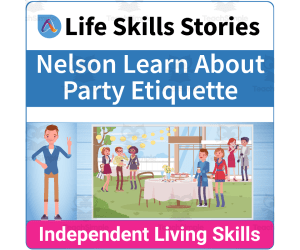
Functional Life Skills: Nelson Learns about Party Etiquette
Special Resources, Social Emotional Learning (SEL), Special Education Needs (SEN), Speech Therapy, Life Skills, Grade 11, 12, Activities, Worksheets & Printables, Worksheets
Functional Life Skills: Nelson Learns about Party Etiquette This resource is an educational tool with a focus on teaching students valuable life skills, especially proper party etiquette. 'Functional Life Skills: Nelson Learns about Party Etiquette' is a story that illustrates basic dos and don'ts of social manners at parties through the character Nora who guides Nelson. The narrative uses simple language to cover the importance of proper etiquette at parties including how to: Introduce oneself Start conversations Accept food or drink graciously, and Exhibit polite behaviour. The resource's strength lies in its relatability from practical examples and age-appropriate visual aids such as diagrams and illustrations. It simplifies complex social narratives making it suitable for high school students with intellectual disabilities and adults learning basic life skills. The addition of seven comprehension questions aid understanding along with answer keys allowing for reinforcement: Nora teaches Nelson how to introduce himself at parties. Functional Life Skills: Nelson Learns about Party Etiquette as Part of your Lesson Plan: Incorporate in whole group activities, Tailor for smaller focus groups, or Assign as homework. This product aims at fostering independent living skills creating confident individuals. Teachers, parents, coaches or therapists can use this resource effectively because it simplifies social narratives into easy-to-understand concepts using direct language and clear behavior expectations. Get Started Now! This product is available in a convenient printable format and easy-to-distribute six-page PDF. Incorporate 'Functional Life Skills: Nelson Learns about Party Etiquette' into your educational strategy today!
Author Adulting Life Skills Resources
Tags Party Etiquette, Life Skills, Social Norms, Manners, Interactive Instruction

Money Math Life Skills Worksheet: Clothes Shopping Level 3
Special Resources, Life Studies, Creative Arts, Art, Social Emotional Learning (SEL), Special Education Needs (SEN), Life Skills, Finance, Math, Money, Grade 7, 8, 9, Activities, Worksheets & Printables, Worksheets
Clothes Shopping Money Math Level 3 is a 60-question special education worksheet that builds essential life skills for middle school students. This activity aids in teaching calculations for discounts, sales tax, and determining prices when shopping for various items of clothing. The questions are formatted as real-life word problems followed by multiple choice answers. There are 6 sets of 10 questions for calculating costs of pants, shirts, skirts, accessories, dresses, and shoes. This printable worksheet can be used one-on-one or in small groups to help students become more independent. It's an excellent resource for IEP goals related to money math and practical life skills. Interactive and hands-on, this worksheet is ready to use for grade 7-9 special education, autism life skills, or therapy sessions. With step-by-step instructions, age-appropriate graphics, and real-world examples, this is the perfect money math activity to engage middle school students.
Author Adulting Life Skills Resources
Tags Life Skills Money Math , Independent Living Skills, IEP Goal-Oriented Skills, Life Skills For Autistic Teens And Adults, Life Skills For Visual Learners, Adulting On The Spectrum, Social And Emotional Learning, Life Skills For Teens, Life Skills For Adults, Autism And Money Skills, Math Dresses