



3,968 products added recently
Page 5 - SEL Worksheets
Integrate social-emotional learning worksheets into your teaching to address topics like empathy, self-awareness, and relationship skills. These resources promote reflection and discussion. Use them to create a supportive atmosphere that nurtures students' emotional well-being.

 Show filters

Mindfulness for Exam Stress – Focused Attention Worksheets
Life Skills, Special Resources, Social Emotional Learning (SEL), Social Skills, Special Education Needs (SEN), Speech Therapy, STEM, Resources for Teachers, Classroom Management, Community Building, Grade 6, 7, 8, 9, 10, 11, 12, Worksheets & Printables, Workbooks, Worksheets, Word Searches, Teacher Tools, Assessments, Lesson Plans, Presentations, Quizzes and Tests, Tests
A complete 40-page workbook to promote the use of mindfulness and learn how to manage exam stress using neuroscience-based methods. This workbook includes clear theoretical concepts (e.g., "Amygdala Hijacking", "Working Memory Bottleneck", "Default Mode Network versus Task Positive Network") paired with a total of 10 student worksheets, 3 visually appealing colored models for use throughout the course, an answer key that shows all answers for the worksheets and a teacher guide to implementation. In addition to theory, there are practical tools to help the student manage their stress level and perform well on assessments. Practical tools include: Cognitive Defusion (to eliminate the "failure script" you tell yourself), using Somatic Mapping and micro-interventions (e.g., Physiological Sigh, 5-4-3-2-1 Grounding, Box Breathing), using the POP (Pause, Observe, Proceed) method to eliminate "blanks" on assessments, utilizing pre-test mental rehearsal and post-test decompression exercises. This workbook is perfect for use in the classroom, individual counseling sessions, study skills programs, or home schooling. It is available for immediate digital download, and can be printed from your computer or used in your digital course materials with no preparation needed. These strategies have been researched and proven to effectively lower levels of test anxiety and provide access to your working memory when under pressure to perform. Reasons Parents and Schools Love this Product: Science-based methods that help students calm themselves when they take exams through teaching them how to control their brains instead of just telling them to calm themselves down. No preparation required on the part of teachers with regard to having materials like worksheets, visuals, answer keys, and an implementation guide to use immediately in their classrooms or with students who need support. Helps develop true resilience by teaching students ways to cope with anxiety over a lifetime rather than relying on temporary motivation techniques. All micro-interventions available through this product can be done without being seen or heard, therefore making it more conducive to use during exam time. Very easy for both parents and counselors to understand how to use the micro-interventions in a way that they will get maximum benefit from doing so; great for SEL programs, study skills classes, or using at home. Intended Readers : The target audience for this resource is students who belong to the ages of 12-16 (Grades 7-10). The research case studies were conducted with 7th grade (ADHD/test anxiety), 8th grade, 9th grade and 10th grade (AP Biology) students. The resource sections of the Teacher Implementation Guide focus on the students themselves as they relate to their neurodevelopmental stage (middle and early high school). This resource is perfect for middle school (Grades 7-8) and early high school (Grades 9-10) students, who are preparing for any number of major exams, standardized exams and high stakes assessments (i.e., any subject). Not intended for elementary students (too difficult) or late high school/college students (the language and examples were written specifically for the adolescent population). Copyright / Terms of Use : This book is copyrighted to Syed Hammad Rizvi. It should only be used by you or as a single classroom reference resource. You cannot edit, share, or sell anything contained in this book, so please do not upload it to the internet and make it available for download to anyone else. If you would like to share this book with co-workers, please purchase another copy of this book through Teachsimple and respect the above terms of use. Thanks for using and supporting this product from Syed Hammad Rizvi!
Author Creative Book Store
Rating
Tags Mindfulness, TestAnxiety, ExamStress, StressRelief, AnxietyRelief, MentalHealth, SelfCare, SEL, SocialEmotionalLearning, MindfulnessForStudents
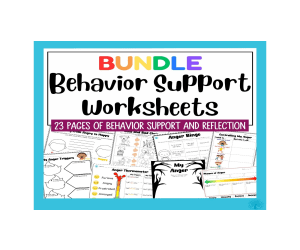
Behavior Support Worksheet Bundle
Special Resources, Social Skills, Life Skills, Social Emotional Learning (SEL), Special Education Needs (SEN), Not Grade Specific, Worksheets & Printables, Worksheets
Promoting positive behavior and self-regulation skills in children requires targeted guidance. This collection of worksheets and activities aims to equip students with strategies for managing their emotions and actions. With engaging formats, these materials teach crucial skills for school and social success. This pack includes 16 worksheets: * Anger Choices * Anger Bingo * Anger Meter * Behavior Reflection * Anger Dos and Don'ts * Controlling my Anger * My Anger * Getting from Angry to Happy * Behavior Choices * Good and Bad Choices * Anger Responses * Kind hands * My Anger Triggers * Phases of Anger * Why should I Follow the Rules? * Anger Thermometer The resources in this bundle help children identify and express their feelings in constructive ways. Activities teach coping mechanisms like deep breathing, counting, and taking time out to defuse anger and calm down. By learning to recognize emotional triggers and apply regulation strategies, students gain tools to de-escalate situations before acting out. Several worksheets address the root causes of behaviors using self-evaluation and introspection. Students learn to reflect on their actions, identify better choices, and make amends after mistakes. Developing this self-awareness fosters personal accountability and growth. The concrete examples and scenarios help kids apply the social-emotional lessons. Interactive formats like drawing and cutting and sticking make the content approachable. These teacher-created resources aim to set children up for success, not just penalize them after the fact. Equipping students with behavior management skills early on instills self-discipline and emotional intelligence. This leads to fewer disruptions and more harmonious classrooms. The worksheets build coping skills using relatable, engaging methods. Clipart courtesy of Kari Bolt Clipart.
Author SEN Resource Source
Tags Behavior Support, Anger, Angry, Emotions, Social-Emotional Learning, Self-Reflection, Social Skills, Anger Management, Coping Skills, Calming Strategies
Health 2nd Grade Unit 2: Growth and Development
P.E. & Health, Health, Social Emotional Learning (SEL), Grade 2, Worksheets & Printables, Worksheets
For 2nd Grade Health there are seven standards that need to be taught. Unit 1 Personal Health Unit 2 Growth and Development Unit 3 Nutrition and Physical Activity Unit 4 Substance Use and Abuse Unit 5 Injury/ Violence Prevention Control and Safety Unit 6 Prevention/Control of Disease Unit 7 Environmental Consumer Health These units can be taught out of order. They are only numbered for your convenience. At the end of each unit, there is an assessment to test students’ understanding. Through using this Health 2nd Grade Unit 2: Growth and Development students will explore and learn to identify major organs of the body as well as physical and emotional characteristics of themselves and others. They will explore their feelings and describe what makes them happy, angry, etc. Students will also learn about the following body systems as they cut and paste a body together: * Understand the Skeletal and Nervous body system * Learn about the Circulatory body system * Learn about the Digestive body system * Learn about the Respiratory body system * Learn about the Muscular body system * Learn about the Skin and Hair body system At the end of the unit, there is an assessment to check for understanding. A total of 13 pages for this 2nd Grade Health Unit 2 on Growth and Development. There are seven units that cover all the health requirements for second grade. Here are the links to other health units: Health 2nd Grade Unit 1: Personal Health Health 2nd Grade Unit 2: Growth and Development Health 1st Grade Unit 3: Nutrition and Physical Activity Health 2nd Grade Unit 4: Substance Use and Abuse Health 2nd Grade Unit 5: Injury / Violence Prevention and Safety Health 2nd Grade Unit 6: Prevention / Control of Disease Health 2nd Grade Unit 7: Environmental / Consumer Health 2nd grade Coronavirus / Covid-19 Facts This unit meets Common Core Standards.
Author K-5 Treasures
Tags Health Unit, Human Body, Emotions
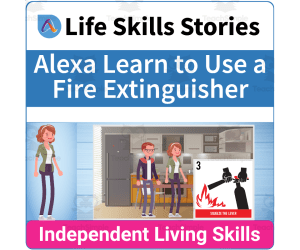
Safety Life Skills: Alexa Learn to Use a Fire Extinguisher
Special Resources, Social Emotional Learning (SEL), Special Education Needs (SEN), Speech Therapy, Life Skills, Grade 10, 11, 12, Activities, Worksheets & Printables, Worksheets
In Alexa Learn to Use a Fire Extinguisher, Austin teaches Alexa about fire safety and how to use fire extinguishers. The use of this Safety Life Skills resource will allow students to engage in: • This story emphasizes safety by providing tips on how to use a fire extinguisher and when to call 911. • This story includes step-by-step instructions on how to use a fire extinguisher, including how to hold it, aim it, and sweep the nozzle. • This story explains and illustrates the four parts of a fire extinguisher: the handle, nozzle, pressure gauge, and safety pin. • The interactive dialog and questions engage learners and reinforce their understanding of the story and the concepts. • The real-world examples, and age-appropriate visual aids, such as illustrations and diagrams , make this conversational story an excellent resource for teaching social narratives. • This social narrative's simple and direct language sets clear expectations, making it ideal for high school students and adults with intellectual disabilities. The story includes seven (7) reading comprehension questions and answers to reinforce and measure the student's understanding of the Safety Life Skills contained in the story! This life skills story will assist high school students and young adults in developing the necessary independent living skills to become more independent at school, at home, and in their communities. This story is designed to be used by special education teachers, occupational therapists, speech therapists, ABA therapists, registered behavior technicians (RBT), parents, supported living coaches, and life skills teachers to teach their students valuable life skills. In addition to interactive instruction, this resource is ideal for hands-on and community-based learning, defining, setting, and measuring IEP goals. Related Products for Developing Independent Living Skills How to Create an Emergency Exit Plan How to Create a Medication List How to Create a Supplement List Understanding and Tracking Allergies How to Read a Prescription Label How to Create a Strong Password What to do When the Doorbell Rings Engage your special education class with this highly interactive High School Safety Life Skills Story! It's printable, easy to use, and ready to hand out! A PDF file with six(6) pages. Color and black-and-white versions of each page are available for this pdf resource.
Author Adulting Life Skills Resources
Tags Adulting On The Spectrum, Independent Living Skills, Functional Self-Care Resources, Summer Life Skills Activities, Resource For Supported Living Coach , Resource For Speech Therapists, Resource For ABA Therapists, Interactive Safety Lessons, Autism Visual Aid Life Skills, Autism Life Skills Stories, Fire Extinguisher Grades

Health | 3rd Grade Unit 2: Growth and Development
P.E. & Health, Life Studies, Physical Education, Health, Special Resources, Life Skills, Social Emotional Learning (SEL), Social Skills, Grade 3, Teacher Tools, Lesson Plans, Worksheets & Printables, Worksheets
This 3rd Grade Health Unit focuses on Growth and Development and is essential to help students with their health and wellness. There are seven units in all taught in 3rd grade that focus on health. These units include: Unit 1 that focuses on Personal Health and Wellness Unit 2 that focuses on Growth and Development Unit 3 teaches students about Nutrition and Physical Activity and how to eat right and stay active Unit 4 that helps students with Substance Use and Abuse and how to avoid bad substances Unit 5 that will teach students about Injury/ Violence Prevention Control and Safety Unit 6 that covers what happened during Covid and how to protect themselves while learning about Prevention/Control of Disease Unit 7 discusses our environment and how to help save our planet with Environmental Consumer Health These units all about health can be taught out of order. They are only numbered for your convenience. At the end of each unit, there is an assessment to test students’ understanding. Through using this Health 3rd Grade Unit 2: Growth and Development, students will be able to study and learn about body organs, our body systems, and their emotional and physical features. Included in this 3rd Grade Health Unit are the following: In this unit, students will learn about several different organs in the body including: brain, lungs, heart, liver, kidneys, and the small and large intestines. They will find a worksheet with a blank body and label all these parts after reading about these vital organs. Students will also learn about the many different body systems we have which include: skeletal and nervous systems, circulatory system, digestive system, respiratory system, muscular system, and learn about our skin and hair. They will assemble in order how these systems look in a body as they compile a book. They will also label each system after looking a drawings. They will explore the emotional and physical features of people when they are sad, surprised, happy, etc. Lastly, they will compare their physical features to other classmates and come to understand how our genes are all different. This unit meets Common Core Standards. It is 13 pages of fun engaging activities! At the end of the unit, there is an assessment to check for understanding. There are seven units that cover all the health requirements for 3rd grade. Here are the links to other health units:
Author K-5 Treasures
Rating
Tags Health Unit, Personal Health, Healthy Goals, Unhealthy Choices, Health Activities, Physical Goals, Health Goals, Health And Wellness, 3rd Grade Health, Third Grade Health

How to Read a Prescription Label – Life Skills
P.E. & Health, Special Resources, Creative Arts, Art, Health, Social Emotional Learning (SEL), Special Education Needs (SEN), Life Skills, Grade 10, 11, 12, Activities, Worksheets & Printables, Worksheets
The How to Read a Prescription Label is a Special Education life skills activity that aids in teaching high school students how to read a pill bottle, including medication warnings and drug interactions. The use of this Independent Living Skills resource will allow students to engage in the following: • What to look for on a prescription label • Defining and discussing basic prescription warnings • Defining and discussing examples of drug interactions • Here are some sample questions to ask your doctor when you receive a prescription for medication • Here are some questions you can ask your pharmacist about your prescription • To increase knowledge, there are multiple samples of prescription labels with questions There are 35 reading comprehension questions in this Independent Living Skills resource! This activity will assist high school students in developing the necessary life skills to become more independent at school, at home, and in their communities. A great place to use this handout is in special education classes or one-to-one settings, such as ABA therapy, speech therapy, occupational therapy, and Registered Behavior Technician (RBT) sessions. High school students working on independent living would benefit significantly from this activity for defining, setting, and measuring IEP goals. In addition to interactive instruction, this resource is ideal for hands-on and community-based learning. Engage your special education class with this highly interactive High School Independent Living Skills Activity! This activity contains step-by-step instructions, questions, and answers that reinforce learning, age-appropriate graphics, real-world examples, and ideas for implementation. This is the perfect special education activity for grade 10, grade 11, grade 12, and autism life skill centers . This special education life skills handout was designed to assist teens and adults with difficulties developing independent living skills. It's a printable, easy-to-use activity ready to hand out! Related Products for Developing Independent Living Skills How to Create a Medication List How to Create a Supplement List What to do When the Doorbell Rings Understanding and Tracking Allergies A PDF with 17 unique pages. Color and black-and-white versions of each page are available for this pdf resource.
Author Adulting Life Skills Resources
Rating
Tags Autism Safety Resources, Personal Safety Passages, Independent Living Skills, IEP Goal-Oriented Skills, Autism Resource For Parent , Life Skills For Autistic Teens And Adults, Adulting On The Spectrum, Social And Emotional Learning, Life Skills For Teens, Life Skills For Adults
Functional Life Skills: Jasmine Learns the Dangers of Sharing Medicine
Special Resources, Life Studies, Social Emotional Learning (SEL), Special Education Needs (SEN), Speech Therapy, Life Skills, Grade 10, 11, 12, Activities, Worksheets & Printables, Worksheets
Functional Life Skills: Jasmine Learns the Dangers of Sharing Medicine This is a highly effective interactive resource which crucially imparts important life skills to students. It focuses on vital themes such as the importance of consulting with a healthcare professional before using medication and following their instructions, making it essential for imparting real-world knowledge in both classroom or homeschool settings. Multifunctional Teaching Resource This tool can function as a conversation enhancer, storybook or comprehension exercise. It is rich with interactive dialogues and strategically formulated questions that stimulate learners while strengthening their understanding over crucial health concepts discussed. Simplicity and Extensive Use Adorned by age-appropriate visual aids such as illustrations and diagrams along with real-world examples, this conversational story becomes an excellent teaching aid for social narratives. Its simple language sets clear expectations for high school students or adults dealing with intellectual disabilities. Seven reading Comprehension segments: Each offering questions and answers further strengthens understanding life skills depicted in the narrative. Invaluable teaching aid: From special education teachers to homeschooling parents to occupational therapists working towards fortifying independent living skills; this serves perfectly for all. A Simulating Learning Experience This hands-on educational tool that assists well in defining IEP goals also supports community-based learning experiences. You can supplement your classroom curriculum by engaging young minds through our Adult Education graded PDF resource specially designed for grades 10-12 students involved in Activities & Worksheets under Sub-subjects like Social Emotional Learning, Special Education Needs (SEN), Speech Therapy & Life Skills. Just pair it up with similar resources like 'How to Create an Emergency Exit Plan' or 'Understanding and Tracking Allergies' An Essential Tool for Life Skills This six-page printable PDF file is designed to guarantee your students a valuable understanding of life skills. It is easy to use and absolutely ready-to-go resource. Conclusion Prepare your students for real-world scenarios in the most engaging way with Functional Life Skills: Jasmine Learns the Dangers of Sharing Medicine!
Author Adulting Life Skills Resources
Tags Life Skills, Medication Safety, Healthcare Consultation, Interactive Resource, Functional Living Skills

Functional Life Skills: Omar Learns How to Ask for Help
Special Resources, Social Emotional Learning (SEL), Special Education Needs (SEN), Speech Therapy, Life Skills, Grade 11, 12, Activities, Worksheets & Printables, Worksheets
In Omar Learns How to Ask for Help, Olivia teaches Omar the importance of asking for help and when it's appropriate. The use of this Functional Life Skills resource will allow students to engage in the following: • This essential life skills story covers how to ask for help politely • Encouragement to express gratitude when receiving help • The life skills resources use humor to make the concept relatable • The story uses simple and clear language to emphasize the benefits of seeking help from others. • The interactive dialog and questions engage learners and reinforce their understanding of the story and the concepts. • The real-world examples, and age-appropriate visual aids, such as illustrations and diagrams , make this conversational story an excellent resource for teaching social narratives. • This social narrative's simple and direct language sets clear expectations, making it ideal for high school students and adults with intellectual disabilities. The story includes seven (7) reading comprehension questions and answers to reinforce and measure the student's understanding of the Functional Life Skills contained in the story! This life skills story will assist high school students and young adults in developing the necessary independent living skills to become more independent at school, at home, and in their communities. This story is designed to be used by special education teachers, occupational therapists, speech therapists, ABA therapists, registered behavior technicians (RBT), parents, supported living coaches, and life skills teachers to teach their students valuable life skills. In addition to interactive instruction, this resource is ideal for hands-on and community-based learning, defining, setting, and measuring IEP goals. Related Products for Developing Independent Living Skills How to Create an Emergency Exit Plan How to Create a Medication List How to Create a Supplement List Understanding and Tracking Allergies How to Read a Prescription Label How to Create a Strong Password What to do When the Doorbell Rings Engage your special education class with this highly interactive High School Functional Life Skills Story! It's printable , easy to use, and ready to hand out! A PDF file with six(6) pages.
Author Adulting Life Skills Resources
Tags Adulting On The Spectrum, Independent Living Skills, Autism Resource For Parent, Life Skills For Visual Learners, Autism Reading Comprehension, Summer Life Skills Activities, Functional Self-Care Resources, Resource For Speech Therapists, Life Skills Activities For High School Students, Special Education Teachers

The Executive Mastery Framework A Developmentally Scaffolding
STEM, Special Resources, Life Skills, Social Emotional Learning (SEL), Social Skills, Special Education Needs (SEN), Science, Technology, Computer Science, Engineering, Grade 1, 2, 3, 4, 5, 9, 10, 11, Worksheets & Printables, Flashcards, Workbooks, Worksheets, Word Problems, Teacher Tools, Lesson Plans, Quizzes and Tests, Quizzes, Tests
The Executive Mastery Framework: A Developmentally Scaffolding Curriculum for Neurodiverse Learners "In The Executive Mastery Framework: A Developmentally Scaffolding Curriculum for Neurodiverse Learners," you will find a digital workbook, guide for educators, and other resources that support executive function development in neurodiverse individuals. The 30-page workbook and teacher resource guide provide a new perspective by shifting away from deficit-based models to a neuro-affirming outlook; it equips teachers, parents, and professionals with usable tools and strategies to build external cognitive supports that develop into the internalized capability of neurodiverse individuals. You will discover in this curriculum: Phase 1: Core concepts of neurobiology, executive function challenges, and developmental scaffolding; Phase 2: Ten worksheets (age progression/ability) that assist neurodiverse individuals in developing somatic awareness, impulse control, task initiation, working memory, cognitive flexibility, organizational skills, metacognitive awareness, persistence, vocational skills, and self-advocacy; and Phase 3: Visual frameworks, flowcharts, answer keys with evaluator rubrics. The curriculum contains case studies, reflections and practitioner insights, as well as action-based methodologies such as backward chaining, cognitive offloading, and environmental prosthetics to help neurodivergent children succeed in all aspects of education, work, and life from Pre-K through adulthood. This resource is perfect for special education resources, homeschool ADHD curriculum, autism teaching tools, executive function activities, neurodiversity-affirming education, and for IEP/504 plan support. Why Schools/Parents Appreciate It: Neuroscience-Informed and Research-Based: Uses positive, scaffolded support (shifting from a traditional punitive, deficit-based model) that relies on neuroscience principles to support neurodivergent learners in developing authentic skills in an environment free of shame and frustration. Complete and Versatile: Includes comprehensive [theory and research], interactive [worksheets/visuals/case studies], and teacher resources for easy adaptation for specific learner needs such as ADHD task initiation or autism transition plans. Demonstrated Effectiveness through Case Studies: Real-life examples proving quick and/or dramatic change in many areas and reduced challenging behaviors (i.e. decreasing aggressiveness, reducing instances of "lazy," creating self-advocacy skills) — resulting in higher levels of self-esteem and improved academic performance. Progression through Developmentally Appropriate Stages for Future Success: Provides information supporting learners in developing co-regulation to full independence (from an early age) and preparing them for success post-school (e.g. self-advocacy portfolio). Support for Educators and Parents/Guardians through Time-Saving Ready-to-Use Resources: Provide educators with reflective/reflection-based/rubric-based resources that enable educators to create student autonomy, while minimizing planning time, hence creating fewer behavioural concerns and more engagement. Target Audience of This Curriculum: This Curriculum was designed for use with students who present Neurodiverse profiles. The key characteristics of these profiles include ADHD, autism, dyslexia, executive dysfunction, or NVLD. The curricula analyzed within this PDF have been organized according to developmental progression from Pre-K to 2nd Grade, 3rd to 5th Grade, Middle School/6th to 8th grade, and High School/9th to 12th grade and beyond. Pre-K to 2nd Grade: The focus on early childhood developmentally appropriate foundational learning skills which includes the topics of use of environmental prosthetics, somatic awareness (awareness of the body), impulse inhibition, and developing an ability to co-regulate (worksheets 1 - 2). This would be appropriate for a 4 to 8-year-old child who is either autistic or has ADHD and experiences difficulty with sensory predictability or emotional regulation. 3rd to 5th Grade: Students at this grade level should be practicing the skills of upper elementary school co-regulated navigation, working memory expansion, and task initiation (worksheets 3 - 4). This would be appropriate for any student who displays signs of experiencing transitional anxiety or experiencing a working memory bottleneck. Middle School/ 6th to 8th Grades: The students in this age group should be able to internalize their tooling, develop cognitive flexibility, and work on their organizational systems (worksheets 5 - 6). This would apply to an adolescent who would display signs of experiencing difficulties with social hierarchies or temporal discounting due to their ADHD or AuDHD profile. High School/ 9th to 12th and Transition to Adulthood: Students should be developing their metacognitive self-advocacy skills, time management skills, goal persistence, vocational navigation skills, and independence (worksheets 7 - 10). This would apply to any teen or young adult who is preparing to enter college, work, or request the need for accommodations under the Americans with Disabilities Act due to severe executive dysfunction. This curriculum can be used in a variety of settings including: special education classes, home schooling, therapy sessions, implementation of an IEP, or within an inclusive classroom setting, ages 4-20+. Copyright/Terms of Use : This resource is the property of Syed Hammad Rizvi and is only to be purchased and used for personal or one single classroom activity. You cannot change/distribute/sell (however you choose) any part of this resource and cannot publish this resource to the Internet so other may have the opportunity to download or view it. If you would like to provide a colleague with a copy of this resource, you may do so by purchasing another license through Teachsimple. Thank You for following the terms provided above This product is happy to be provided by Syed Hammad Rizvi
Author Creative Book Store
Rating
Tags ADHD, Autism, Neurodivergent, SpecialEducation, IEP, 504Plan, TeacherResources, SpecialEdTeacher, HomeschoolCurriculum, Dyslexia

Guided Reading Level H - Clean Hands, Healthy Bodies
ELA, Resources for Teachers, Reading Comprehension, Reading, Health, P.E. & Health, Social Emotional Learning (SEL), Special Resources, Life Skills, Science, Kindergarten, Grade 1, 2, Worksheets & Printables, Worksheets, Teacher Tools, Centers, Activities, Literacy Readers, Quizzes, Quizzes and Tests, Assessments
This Guided Reading Book - Clean Hands, Healthy Bodies (Level H) includes: Guided Reading Color Label (front cover x1) This is a quick way to match the book’s demands to what students can generally handle.. The overall goal is to use the level/color to pick books for several smaller groups. To qualify for a certain level, a student is expected to read a book from that level with about 90–94% accuracy. If a student is consistently accurate and understands, move up a level. If the student is struggling at that level, drop down and add more support. Each student will improve at completely different rates, but it is generally one of the best ways to check progress across the class. DOWNLOAD THE CATALOG TO VIEW ALL GUIDED READING BOOKS AVAILABLE (SORTED LEVELS A-Z) Pre-Reading Question (x1) Teacher asks the prompt aloud, can be while showing the cover or first page. Students share what they already know, or make educated guesses from the cover. Prompt them to use the target vocabulary. Write some of their responses on the board to look back at during the reading. Vocabulary Words (x5) Introduce the five words, best doing it one at a time. Start by saying it, while students repeat and then see if anyone knows what it means before reading further. Read through the meaning and try to briefly connect each word to a picture or gesture so it’s meaningful. Ask students to flip through the book pages and point to where they see each of the vocabulary words. While reading the book pause upon coming across one of the vocab words or read the sentence twice to make sure students understand the word has appeared. Optional: Ask students to raise hands whenever they see/hear one of the new words. Guided Reading Pages (x10) Check the book snapshot (below) for: primary topic - do you need to prep extra reading or intro materials on this? what is taught best - decide on 1-2 bullets to focus on, use the prompt or words provided here for best results. learning goals - what you are checking for students to be able to do after the session, elicit answers using prompts or words provided. key vocabulary (see section above). questions overview - so you know what is coming up and if you need to prep extra materials to assist understanding. Run the lesson You may have already looked at a few of the pages together, but you can show them some of the pictures again first to set meaning. Depending on how much time you have and how familiar your students are with guided reading class, you may want to read the book aloud first with the group first. Students whisper or partner read, while you listen in. If time, do it as a group, one student reading a page each. Use the guided page’s prompts to coach: “Check the picture / does it make sense?” “Point under the words / try the first sound” “Reread the sentence smoothly”. Try to focus more on one student per session (rotating every time), so you can work out if they are ready to move up or need to move down a level. Comprehension Questions (back cover x3) This is your way to check that students didn’t just say the words, but actually understood the text. First, let students answer by pointing to the page/picture and saying a short sentence. After any answer, follow with: “Show me where you found that in the text.” In bigger groups, have partners answer first (10–20 seconds), then call on 2–3 students to share. Differentiation tips: Emerging speakers/struggling readers: oral + pointing On-level: oral in a full sentence Higher: one written sentence or draw + label Book Snapshot Title: Clean Hands, Healthy Bodies Genre: Nonfiction (informational) Subject: Health & Safety / Science Primary Topic: When and how to wash hands to stop germs Estimated Guided Reading Level (A–Z): H What This Book Teaches Best Why washing hands matters: it “keeps germs away” and helps prevent germs from spreading to other people. When to wash hands (before eating, after outdoor play, after using the toilet, after playing with a pet). How to wash hands step-by-step (wet with clean running water, use soap, scrub all areas, rinse, dry). A key procedure detail: scrubbing should last “twenty seconds” to remove germs. The idea of healthy habits: making handwashing a regular habit “protects everyone.” Learning Goals Students will explain one reason the book gives for washing hands, using a detail from the text. Students will identify at least two times the book says hands should be washed. Students will describe the steps for washing hands in order, based on the text. Students will state how long scrubbing should last, according to the book. Students will describe how handwashing helps other people, using the book’s words about spreading germs/protecting everyone. Key Vocabulary From the Text germs — tiny living things that can make you sick. contact — touching something. invisible — cannot be seen. scrub — rub hard to get something clean. protects — keeps safe from harm. Discussion Prompts Pre-reading question: When do you think it is most important to wash your hands? Comprehension questions: Name one time the book says you should wash your hands. How long should scrubbing last when you wash your hands? Why does washing your hands help other people? Printing Tips 1. Best Printing Method (Recommended) “Booklet” Printing (Best if Available) If your printer or PDF viewer supports Booklet Printing , use this. Settings to use: Print mode: Booklet Paper size: Letter or A4 (either works) Orientation: Landscape Print on both sides: Yes Flip on: Short edge Scaling: Fit to printable area Booklet subset: First test: Front sides only Then: Back sides only This will automatically: Pair pages correctly Put the cover on the outside Align everything for folding After printing, fold in half and staple along the spine . 2. If “Booklet” Printing Is NOT Available You can still print this correctly with manual duplex printing . Step-by-step: Open the PDF. Choose Print . Set: Orientation: Landscape Pages per sheet: 1 Print on both sides: Yes Flip on: Short edge Print all pages . Because each PDF page already contains two facing book pages, the result will still fold cleanly into a book. Thousands of Cored Education products are included with your TeachSimple membership. Download links and encyclopedia index available here.
Author Cored Education
Rating
Tags Vocabulary, Reading Comprehension, Reading Passages, Leveled Reading, Nonfiction, Reading, Guided Reading, Health, SEL, Life Skills

Working Memory & Sequential Recall Exercises
Life Skills, Special Resources, Social Emotional Learning (SEL), Social Skills, Special Education Needs (SEN), STEM, Resources for Teachers, Classroom Management, Community Building, Life Studies, Homeschool Curriculum, Grade 2, 3, 4, 5, 6, 7, Worksheets & Printables, Workbooks, Worksheets, Word Searches, Teacher Tools, Lesson Plans, Quizzes and Tests, Quizzes, Tests, Presentations
The Evidence-Based Working Memory & Sequential Recall Curriculum Will Help Unlock Your Students' Ultimate Learning Potential! As an Educator, Clinician, or Special Education Teacher do you have students struggling to complete multi-step directions, reading comprehension or complex math problems? Do you see them grasp a concept at one moment, and then lose it the next? More than likely, the root cause of this lack of learning is not due to the student not putting forth effort, but rather, it's simply a bottleneck in their working memory. This comprehensive 41-page digital curriculum is much more than a set of worksheets - it's an evidence-based intervention program specifically developed using the science of neuroplasticity and within Alan Baddeley's highly regarded cognitive theory to target, strengthen and developed the most important part of the cognitive engine of learning, which is working memory and sequential recall - so that teachers are able to go beyond rote memorization while at the same time, enabling the student to create robust, long-lasting executive function skills. Designed to meet the needs of 2nd, 3rd, and 4th grade Student as well as for support of older students who are in RTI/MTSS or Special Education, this curriculum is going to help support students bridging the gap from seeing the information to actually processing the information. HOW TO USE THIS 41-PAGE DOCUMENT This is a comprehensive 3-step program that is ready for you to implement right away: Step 1 - Core Content and Theory (A Guide for Educators) — An in-depth look at the cognitive science behind the exercises. Through clear definitions and supporting case studies, you’ll be able to accurately explain Phonological Loop, Visuospatial Sketchpad, Central Executive, and Episodic Buffer to yourself and to others so that you, as an educator, can become an expert in understanding what each of these components does. Step 2 - Student Workbook — Ten progressive, fun worksheets for students to accomplish as if they were on “missions” (i.e., Zoo Keeper’s Roster, Detective’s Missing Clue, Architect’s Blueprint, etc.). These worksheets each target unique aspects of working memory by having students perform: - Forward/Backward Sequential Recall - Procedural Recall/Recognizing Steps - Semantic Clustering/Categorizing - Dual-Task Process/Inhibiting Distractors - Pattern Recognition/Chronological Sequencing Visual Aid and Teacher Resources (Part 3): The essential support for successful teaching. Cognitive Architecture Visuals; Diagrams to support cognitive processing and visual representation of working memory. Teacher Implementation Guide; Framework for cognitive dose control of Load with 7-10 minute intervals. Differentiation; Explicitly designed order of operations enabling the use of scaffolding in strategies used for increasing to gifted levels. Comprehensive Answer Key; A tool for quick and effective evaluation of student achievement. You will be able to change your responses of, "I forgot," to, "I've got this!" once you have utilized your resources from above. Key Words: Working Memory, Executive Functions, Sequential Memory, Special Education, Speech Language Pathologist/ Speech Therapy, Response To Intervention, Multi-Tiered System Of Supports, Cognitive Skills, Following Multi-Step Directions, Reading Comprehension, Math Word Problems, Learning Disabilities, ADHD Support, 2nd Grade, 3rd Grade, 4th Grade, Digital Resource, Paper Forms, Cognitive Load. The reasons parents/schools value it: Targets Root Causes: This program helps children build the underlying cognitive skills themselves rather than just treating their symptoms (e.g., bad grades, lost assignments). These skills (working memory) allow students to do all of their academic work. Based on Scientific Evidence & No Prep Required: The exercises included in this program are not simple "busy work." They form part of a well-structured curriculum based on scientific principles of cognition. They are provided to the teacher in easy-to-print/implement formats, thus allowing the teachers to save preparation time. Differentiation Built-In: The teacher's guide includes specific strategies for the teacher to assist struggling learners and to challenge gifted learners, thus allowing all children to make significant (meaningful) progress. Increased Independence in Class: Students completing the exercises will demonstrate increased ability to follow multi-step instructions, complete complex tasks, and work independently with minimal redirection. Improved Achievement Across All Academic Areas: Students who have a strong working memory can better comprehend what they have read (because they can track characters and plot), can solve math problems more accurately (because they can hold the numbers and steps they are holding), and can write more clearly and accurately because they have better organization. Target Audience Analysis: On the basis of the content, the nature of the language, and the explicit references within the PDF: The primary audience are second to fourth graders (approximately ages 7-10). The document explicitly states this developmental window as its focus. Secondary audience: The resource is just as appropriate for older students (5th grade and up) with identified learning disabilities, ADHD, or who are in a support program through Special Education, Resource Rooms, Speech Therapy, RTI, or MTSS. These basic foundational skills are often the major barriers to learners. Primary audience: for professionals, and not the kids. Of course, other groups are: General Education Teachers (Grades 2-4) Special Education Teachers School Psychologists Speech-Language Pathologists (SLPs) Educational Diagnosticians Homeschooling Parents who are familiar with brain development. Copyright /Terms of Use: Copyrighted by Syed Hammad Rizvi. This resource is for individual use and classroom only. No part of this resource may be modified, sold, or shared in any other manner, including posting it on the Internet where anyone might download it. If you wish to provide this resource to other teachers, you must purchase additional licenses through Teachsimple. Thank you for your cooperation in this matter and for following the terms of use. This resource is proudly provided to you by Syed Hammad Rizvi.
Author Creative Book Store
Rating
Tags WorkingMemory, ExecutiveFunction, ExecutiveFunctioning, ExecutiveFunctionSkills, CognitiveSkills, BrainTraining, Neurodiversity, SequentialRecall, SequencingSkills, FollowingDirections

Food Safety Skills: Nelson Learns Proper Food Handling
P.E. & Health, Special Resources, Life Studies, Social Emotional Learning (SEL), Special Education Needs (SEN), Speech Therapy, Life Skills, Home Economics, Grade 10, 11, 12, Activities, Worksheets & Printables, Worksheets
Food Safety Skills: Nelson Learns Proper Food Handling This is a powerful teaching resource designed to enrich life skills through facilitating health via accurate food handling strategies. The main character of the story, Nora, imparts her knowledge on Nelson about how to handle food items safely, particularly perishable foods such as meat, dairy products and eggs. The focal point here is avoiding foodborne illnesses. The narrative utilizes plain language for effective understanding and ease of relate-ability. This learning tool encourages students to adopt prudent habits like cleaning hands before and after interaction with any type of food and implementing correct storage methodologies for deteriorating goods. Interactive Learning The narrative ensures interactive engagement by weaving dialogues which result in active learning reinforcement concerning safe food strategies. With real-life instances combined along with suitable visual aids such as diagrams or illustrations, it transforms theoretical knowledge into practical understanding. "This tool's clarity and precision in explaining complex concepts makes it an ideal teaching aid for high school students or intellectually disabled adults." Ensuring Comprehension In order to strengthen the learning process further, seven comprehension questions appended with answers are included so that learners can grasp the elementary attributes of this critical life skill effectively. Beyond Food: Aiding Independent Living Skills Development Apart from promoting safety measures related to foods consumption, this story prepares high school students for independent living skills development which assists them during their transition phase from school environment towards home settings or beyond into broader society aspects seamlessly. Beneficial especially for special education teachers, therapists (occupational, speech or ABA), parents or living coaches who advocate community-based learning resources whilst defining goals within an Individualized Education Plan (IEP). Practical Use Across Diverse Fields This worksheet's practicality extends over a plethora of subjects such as P.E & Health Special Resources and others, making it an extremely versatile teaching aid that can be put to use in many fields including Social Emotional Learning or Life Studies. This tool comes in a convenient printable format that easily fits into lesson plans , consisting of six pages in a PDF file.
Author Adulting Life Skills Resources
Tags Food Safety, Proper Handling, Perishable Foods, Hygiene, Life Skills

Money Math Life Skills Worksheet: Grocery Shopping Level 2
Special Resources, Life Studies, Creative Arts, Art, Social Emotional Learning (SEL), Special Education Needs (SEN), Life Skills, Finance, Math, Money, Grade 7, 8, 9, Worksheets & Printables, Worksheets
Grocery Shopping Money Math Level 2 teaches middle school students with special needs how to calculate costs of groceries like fruits, vegetables, meat, dairy, canned goods, and personal care items. With 64 real-world questions, students will practice vital skills like adding, multiplying, and applying sales tax. This engaging worksheet guides them to become more independent in school, home, and the community. Use it one-on-one or in special education classes. Define, set, and measure IEP goals related to finance and independent living. The activity includes step-by-step instructions, questions, answers, graphics, and implementation ideas. Engage your middle school special education students with this interactive life skills worksheet! Two color versions help visual learners. Check out other practical money math worksheets in the series for more grade-appropriate practice. This Money Math Life Skills Worksheet helps students practice the following: - Figuring out the total cost when buying multiples of the same product (Improves multiplication skills). - Finding the total cost for various items with different prices (Strengthens addition skills). - Calculating the cost of fruits and vegetables based on their weight (Enhances both multiplication and addition skills). This Money Math Life Skills Worksheet includes a total of 64 questions to work on! Middle school students can use this worksheet to develop the necessary life skills to become more independent at school, at home and community. You can use this activity in special education classes or one-on-one settings like speech therapy, occupational therapy, ABA therapy, or Registered Behavior Technician (RBT) sessions. This is an excellent resource for defining, setting, and measuring IEP goals for middle school students working on independent living. Interactive, hands-on, and community instruction are excellent uses for this life skills activity. All correct answers are provided at the end of each section. This activity contains step-by-step instructions, questions, and answers that reinforce learning, age-appropriate graphics, real-world examples, and ideas for implementation. This is the perfect special education activity for grade 7, grade 8, grade 9, and autism life skill centers . It's a printable, easy-to-use activity ready to hand out! Engage your special education class with this highly interactive Middle School Money Math Life Skills Worksheet! Related Products for Developing Practical Money Math Skills Level 1 Reading Menus Level 2 Reading Menus Level 3 Reading Menus Level 4 Reading Menus Level 1 Clothes Shopping Level 2 Clothes Shopping Level 3 Clothes Shopping Level 4 Clothes Shopping A PDF with 38 unique pages. Color and black-and-white versions of each page are available for this pdf resource.
Author Adulting Life Skills Resources
Tags Life Skills Money Math, Independent Living Skills, IEP Goal-Oriented Skills, Autism Resource For Parent , Adulting On The Spectrum, Social And Emotional Learning, Life Skills For Teens, Life Skills For Adults, Autism And Money Skills, Teaching Money Skills To Students With Autism

Dog-Themed Scattergories – A Fun & Educational Game About Dogs! 🐶🎲
Social Emotional Learning (SEL), Special Resources, Social Skills, Life Skills, Animals, Life Sciences, Science, Common Core, Biology, STEM, Grade 5, 6, 7, 8, 9, 10, Projects, Activities, Drawing Templates & Outlines, Worksheets & Printables, Worksheets, Task Cards, Games, Word Searches, Templates, Teacher Tools
Dog-Themed Scattergories – A Fun & Educational Game About Dogs! 🐶🎲 A Fun Way to Learn, Laugh, and Think – All About Dogs! Whether you’re teaching animal education, therapy dog awareness, or just looking for a creative classroom activity, this Dog-Themed Scattergories Game is a perfect choice! Students will think fast, get creative, and expand their vocabulary while playing this classic word game—now with a fun, dog-inspired twist. It’s a great way to spark discussions about responsible pet ownership, dog behavior, and working dogs while encouraging teamwork and critical thinking. 🐾 Why This Game is a Must-Have for Your Classroom ✔ Engaging & Fun – Students love the challenge of coming up with unique answers before time runs out! ✔ Encourages Quick Thinking – Builds vocabulary, critical thinking, and problem-solving skills. ✔ Great for Therapy Dog Programs – Perfect for discussing therapy dogs, service dogs, and how animals help people. ✔ No Prep Needed – Just print and play! Ideal for busy teachers and last-minute lesson plans. ✔ Versatile & Adaptable – Works for elementary, middle, and high school students, plus ESL learners. 📌 What’s Inside? 📜 Printable Dog-Themed Scattergories Game (PDF) ✔ Multiple game sheets with different dog-related categories ✔ Simple instructions for classroom or small-group play ✔ Ready-to-print format for easy use 💡 How to Play This Game in Class 📍 Step 1: Pick a Letter. Randomly choose a letter of the alphabet. 📍 Step 2: Set the Timer. Give students a set time (e.g., 1-2 minutes). 📍 Step 3: Brainstorm Dog-Themed Words! Students write down words that match the category AND start with the chosen letter. 📍 Step 4: Score Points. Unique answers earn points—if multiple students write the same word, they don’t get points! 📍 Step 5: Celebrate the Winner. The student with the most unique answers at the end wins! Bonus Idea: Use this game as an icebreaker, brain warm-up, or substitution lesson—it’s a fantastic way to keep students engaged! 🌟 Why Teachers Love This Game ✔ “A fantastic way to get students thinking fast while learning about dogs!” ✔ “Perfect for therapy dog discussions and a great addition to my classroom activities.” ✔ “Simple, fun, and no prep—I just printed it and played with my students.” 🐶 A Fun, Educational Game That’s All About Dogs! This Dog-Themed Scattergories Game isn’t just fun—it helps students develop language skills, think critically, and learn more about dogs in an interactive way. Whether you use it in an animal studies unit, therapy dog discussion, or as a creative brain break, your students will love it! 📥 Print it today and bring dog-themed fun into your classroom! 🐾✨ 📍 Best wishes, Heike from Lernfitness Did You Know? I teach with a certified therapy dog, and together we create a positive and inspiring learning environment. 🐶✨
Author Lernfitness
Tags Therapy Dog, Animal-assisted Learning, Inclusive Education Tools, Therapy Dog In School, Social-emotional Learning, SEL, Dog, Scattergories, Game, Substitution Lesson
Daily Life Skills: Alexa Learns How to Dress for Every Occasion
Special Resources, Life Studies, Social Emotional Learning (SEL), Special Education Needs (SEN), Speech Therapy, Life Skills, Grade 10, 11, 12, Activities, Worksheets & Printables, Worksheets
In Alexa Learns How to Dress for Every Occasion, Alyssa teaches Alexa that dressing well can help one to stand out positively. The use of this Daily Life Skills resource will allow students to engage in: • This functional life skills story emphasizes the importance of dressing appropriately for various occasions such as school, work, and hiking. • The story uses simple and clear language to explain how appearance can influence people's perceptions. • This life skills story is an excellent conversation starter for discussing the significance of being presentable in public. • The interactive dialog and questions engage learners and reinforce their understanding of the story and the concepts. • The real-world examples, and age-appropriate visual aids, such as illustrations and diagrams , make this conversational story an excellent resource for teaching social narratives. • This social narrative's simple and direct language sets clear expectations, making it ideal for high school students and adults with intellectual disabilities. The story includes seven (7) reading comprehension questions and answers to reinforce and measure the student's understanding of the Daily Life Skills contained in the story! This life skills story will assist high school students and young adults in developing the necessary independent living skills to become more independent at school, at home, and in their communities. This story is designed to be used by special education teachers, occupational therapists, speech therapists, ABA therapists, registered behavior technicians (RBT), parents, supported living coaches, and life skills teachers to teach their students valuable life skills. In addition to interactive instruction, this resource is ideal for hands-on and community-based learning, defining, setting, and measuring IEP goals. Related Products for Developing Independent Living Skills The Value of a Bank Account How to Create a Monthly Budget How to Create a Shopping List How Credit Cards Work Level 1 Grocery Shopping Money Math Level 1 Clothes Shopping Money Math Level 1 Reading Menus Money Math Engage your special education class with this highly interactive High School Daily Life Skills Story! It's printable , easy to use, and ready to hand out! A PDF file with six(6) pages.
Author Adulting Life Skills Resources
Tags Adulting On The Spectrum, Independent Living Skills, Autism Reading Comprehension, Life Skills For Autistic Teens And Adults, Life Skills For Visual Learners, Functional Self-Care Resources, Summer Life Skills Activities, Life Skills For Occupational Therapists, Life Skills For ABA Therapists, Social And Emotional Learning

SEL Coloring Pages with Positive Affirmations
Special Resources, Social Emotional Learning (SEL), Social Skills, Special Education Needs (SEN), Kindergarten, Grade 1, 2, 3, 4, 5, 6, 7, 8, Worksheets & Printables, Worksheets, Coloring Pages
In this SEL product you will get 5 SEL coloring pages. These pages have a positive affirmation on each one. There is a sloth that says "I can relax.", a sports page that says "I am strong.", a collection of shells that says "I can breathe.", rainbows that state "I am calm", a car full of animals that states "I am a good friend". These sel coloring pages are great for early finishers, having students color these during quiet time, in a calm down corner, in a school counseling session, as a follow up to an SEL guidance lesson on making friends, strategies to use to get calm when having big feelings, a lesson about slow breathing or mindfulness breathing, after a Physical education class to emphasize "I am strong". The uses are limitless. Even middle schoolers love to color these and it is a way for them to do something while they talk to the school counselor or participate in a small group meeting. For more SEL presentations, coloring pages, SEL Boom Cards, please feel free to visit my sel store at: https://teachsimple.com/contributor/jennifer-moyer-taylor I work full-time as a school counselor for grades kindergarten, first, second, third, fourth, fifth, sixth, seventh, and eighth. You may also enjoy these SEL products: https://teachsimple.com/product/5-sel-fall-themed-coping-sel-coloring-pages-3-halloween-images (coping by coloring, fall themed sel coloring pages) https://teachsimple.com/product/20-personalized-mindfulness-sel-coloring-sheets-fully-editable (these are editable mindfulness coloring pages) https://teachsimple.com/product/teddy-bear-sel-coloring-based-on-likes-and-dislikes (coloring teddy bear based on student's own preferences and likes-each one will come out differently based on your students' preferences!) https://teachsimple.com/product/coping-skills-sel-coloring-pages (coping skills coloring with 4 different images, there is a teddy bear, beach ball, umbrella, butterfly as well as a handout with 16 different coping skills so students can take this home, decide which ones to try, decide which ones work the best for them, etc. These are wonderful to do in one on one counseling sessions, after an SEL lesson on coping skills, etc.
Author Jennifer Moyer Taylor
Tags SEL Coloring Pages, Sel, Social Emotional Learning, School Counseling, Affirmations, Mindfulness Coloring, Social Skills, Coloring, Coloring Pages

SEL Affirmation Worksheets and SEL Coloring Pages
Special Resources, Social Emotional Learning (SEL), Social Skills, Kindergarten, Preschool, Grade 1, Worksheets & Printables, Worksheets, Coloring Pages
In this SEL resource, you will receive 3 SEL Affirmation Worksheets and SEL coloring pages. The affirmations say "I am calm.", "I am brave." and "I am wise." Students can learn how to write letters and at the same time tell themselves positive affirmations. After they trace the 2 traceable sentences, they can write the affirmation on their own on the following line (the third line). Next, they can draw a picture of them feeling calm, feeling wise, and feeling brace in the box below the words. This is both a writing activity as well as a coloring and drawing activity. Students can do these worksheets after a lesson about being brave, calm or wise. They can do these worksheets for morning work, centers, during SEL time or during writing time. These are for pre-k, kindergarten, first grade and second grade. Even students who can write, will appreciate tracing and writing these powerful statements. For more SEL coloring pages, SEL worksheets, SEL presentations, please visit my store at: https://teachsimple.com/contributor/jennifer-moyer-taylor I have other products you might enjoy such as: https://teachsimple.com/product/sel-feelings-centers-kit-k-2-no-reading-required (In this product, it give you 5 SEL centers activities for students. There is a find the differences sheet with emojis, feelings charades cubes, feelings bingo, and feelings play dough faces for play dough mats and creating different feelings.) https://teachsimple.com/product/coping-toolbox-sel-lesson-and-activity (Coping skills toolkit. In this toolkit, students get to create a paper "toolbox" with 4 different coping skills for the toolbox; slow breathing, do what you enjoy, find things that you see, feel and hear, and thinking of something to look forward to. Students can color their toolbox and make it special to them. They can write their name on it, staple it together and place the 4 coping skills pictures inside their toolbox. Then students can take this home and show their families the coping skills they learned and practice them!)
Author Jennifer Moyer Taylor
Tags SEL Coloring Pages, SEL Worksheets, Affirmations, Social Emotional Learning, Sel, School Counseling, Social Skills, Tracing Words, Writing, Centers

Kindergarten Health: Unit 6
P.E. & Health, Life Studies, Health, Physical Education, Special Resources, Life Skills, Social Emotional Learning (SEL), Social Skills, Kindergarten, Lesson Plans, Teacher Tools, Worksheets & Printables, Worksheets
For Kindergarten Health there are seven standards that need to be taught to achieve healthy habits! Unit 1 Personal Health Unit 2 Growth and Development Unit 3 Nutrition and Physical Activity Unit 4 Substance Use and Abuse Unit 5 Injury/ Violence Prevention Control and Safety Unit 6 Prevention/Control of Disease Unit 7 Environmental Consumer Health These units can be taught out of order. They are only numbered for your convenience. Through using this Kindergarten Health: Unit 6, students will learn about disease prevention and how to control disease. Included in this unit : * Students will learn what germs are and how to prevent the spread of germs. * Students will learn how to wash their hands to prevent the spread of germs. They will do an activity of cut and paste for hand washing. * Students will understand the role of doctors and identify the role of some of the instruments that they use to care for your health needs. * Also included is information on the coronavirus and how to prevent the spread of this disease and how to stay healthy. Students will learn about disease prevention and how to stay healthy by controlling diseases. There are a total of 20 pages included in this unit for Kindergarten Health. There are seven units that cover all the health requirements for Kindergarten. Here are the links to other health units: Kindergarten Health: Unit 1 Personal Health Kindergarten Health: Unit 2 Growth and Development Kindergarten Health: Unit 3 Nutrition and Physical Activity Kindergarten Health: Unit 4 Substance Use and Abuse Kindergarten Health: Unit 5 Injury / Violence Prevention Control and Safety Kindergarten Health: Unit 6 Prevention / Control of Disease Kindergarten Health: Unit 7 Enviromental Consumer Health You can also teach your students about keeping yourself safe by studying about the Coronavirus, where and when it started and facts that plagued our world with this virus. Kindergarten Health: Covid 19 / Coronavirus Facts This unit meets Common Core Standards.
Author K-5 Treasures
Tags Kindergarten Health, Health Units, Healthy Habits, Healthy Food, Health Worksheets, Worksheets On Health, Kids Health, Personal Health, Health, Health For Kindergarten
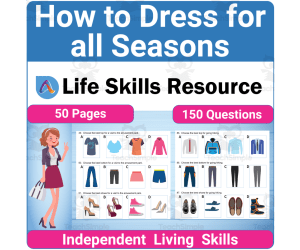
Seasonal Life Skills - How to Dress for Spring Summer, Fall and Winter
Special Resources, Creative Arts, Art, Life Studies, Social Emotional Learning (SEL), Special Education Needs (SEN), Life Skills, Career, Grade 10, 11, 12, Activities, Worksheets & Printables, Worksheets
How to Dress for Spring, Summer, Fall, and Winter is an engaging and interactive functional life skills activity specifically designed for high school students and young adults. This activity focuses on teaching the importance of selecting appropriate clothing for each season, empowering students to make informed decisions. Key Features: * Carefully crafted to develop students' ability to make informed decisions about suitable attire for different weather conditions, enhancing their functional life skills. * Reading comprehension questions provide clues such as the season, temperature, occasion, weather, and location, enabling students to approach their decision-making process systematically. * Visual appeal is enhanced with images and illustrations that aid comprehension, making learning enjoyable and accessible. Visual cues reinforce the concept of season-appropriate clothing and improve understanding and retention. * Real-life scenarios reflect students' challenges when dressing for different seasons, promoting problem-solving skills and the practical application of knowledge. This comprehensive resource includes a total of 150 reading comprehension questions, fostering independence in high school students as they develop essential life skills for various contexts: school, home, and community. This handout is particularly valuable in special education classes or one-to-one settings such as ABA therapy, speech therapy, job coaches, occupational therapy, and Registered Behavior Technician (RBT) sessions. The activity is ideal for hands-on and community-based learning, engaging students in interactive instruction while reinforcing learning objectives. It is suitable for grade 10, grade 11, and grade 12 students, as well as autism life skill centers . This printable, easy-to-use activity is designed to assist teens and adults with difficulties in developing independent living skills. It provides step-by-step instructions, comprehensive questions and answers, age-appropriate graphics, real-world examples, and implementation ideas. Empower your special education class with this highly interactive High School Functional Life Skills Activity, promoting independence and facilitating personal growth. Related Products for Developing Independent Living Skills How to Read a Basic Pay Stub How to Fill Out a Job Application How to Create an Emergency Exit Plan How to Create a Strong Password A PDF with 50 unique pages. Color and black-and-white versions of each page are available for this pdf resource.
Author Adulting Life Skills Resources
Tags Employment Related, Independent Living Skills, IEP Goal-Oriented Skills, Community-Based Instruction, Autism Resource For Parent , Life Skills For Autistic Teens And Adults, Adulting On The Spectrum, Social And Emotional Learning, Life Skills For Adults, Life Skills For Teens
Functional Life Skills: Understanding and Tracking Allergies
Special Resources, Creative Arts, Art, Social Emotional Learning (SEL), Special Education Needs (SEN), Speech Therapy, Life Skills, Grade 10, 11, 12, Activities, Worksheets & Printables, Worksheets
Functional Life Skills: Understanding and Tracking Allergies An educational resource aimed at enhancing formative learning for high school students by providing comprehensive understanding of allergies. The underlying aim is to equip the younger generation with essential life skills that will bear them in good stead both within the school environment and as they venture into the wider world. Allergy Resource Key Focus: Creating a detailed allergy list Monitoring preventive care for allergies Tracking symptoms over time Developing an easy-to-understand allergy rating scale Maintaining a record of various allergic reactions The resource offers value by presenting "51 reading comprehension questions", targeted towards cementing newfound concepts in student's memory while simultaneously reinforcing existing knowledge. This activity will assist high school students in developing the necessary life skills to become more independent at school, at home, and in their communities. A great place to use this handout is in special education classes or one-to-one settings, such as ABA therapy, speech therapy, occupational therapy, and Registered Behavior Technician (RBT) sessions. High school students working on independent living would benefit significantly from this activity for defining, setting, and measuring IEP goals. In addition to interactive instruction, this resource is ideal for hands-on and community-based learning. Engage your special education class with this highly interactive High School Independent Living Skills Activity ! This activity contains step-by-step instructions, questions, and answers that reinforce learning, age-appropriate graphics, real-world examples, and ideas for implementation. This is the perfect special education activity for grade 10, grade 11, grade 12, and autism life skill centers. This special education life skills handout was designed to assist teens and adults with difficulties developing independent living skills. It's a printable, easy-to-use activity ready to hand out! Related Products for Developing Independent Living Skills How to Read a Basic Pay Stub How to Schedule an Appointment How to Fill Out a Job Application How to Create a Strong Password This activity comprises 22 unique pages packed full of step-by-step instructions complemented by appropriate graphic design features. It comes with a flexible option of either color-themed pages or black-and-white printable pages promoting convenience. To sum it up - The Functional Life Skills: Understanding and Tracking Allergies resource promotes beneficial life skills subtly woven into day-to-day activities fostering independence among high school students.
Author Adulting Life Skills Resources
Tags Allergies, Life Skills, Monitoring, Symptoms, Education

Functional Life Skills: Omar Prepares to Visit His New Doctor
Special Resources, Social Emotional Learning (SEL), Special Education Needs (SEN), Speech Therapy, Life Skills, Grade 10, 11, 12, Activities, Worksheets & Printables, Worksheets
In Omar Prepares to Visit His New Doctor, Olivia helps Omar prepare to visit a new primary care doctor. • An excellent conversation starter for discussing medical information is this life skills story. • Use simple and clear language to cover the importance of medical history, including surgeries, hospitalizations, allergies, and family medical history. • The story examines the social history, including smoking, drinking, and drug use. • They discuss changes in health and family medical history since your last visit with the doctor. • The interactive dialog and questions engage learners and reinforce their understanding of the story and the concepts. • The real-world examples, and age-appropriate visual aids, such as illustrations and diagrams , make this conversational story an excellent resource for teaching social narratives. • This social narrative's simple and direct language sets clear expectations, making it ideal for high school students and adults with intellectual disabilities. The story includes seven (7) reading comprehension questions and answers to reinforce and measure the student's understanding of the Functional Life Skills contained in the story! This life skills story will assist high school students and young adults in developing the necessary independent living skills to become more independent at school, at home, and in their communities. This story is designed to be used by special education teachers, occupational therapists, speech therapists, ABA therapists, registered behavior technicians (RBT), parents, supported living coaches, and life skills teachers to teach their students valuable life skills. In addition to interactive instruction, this resource is ideal for hands-on and community-based learning, defining, setting, and measuring IEP goals. Related Products for Developing Independent Living Skills How to Create an Emergency Exit Plan How to Create a Medication List How to Create a Supplement List Understanding and Tracking Allergies How to Read a Prescription Label How to Create a Strong Password What to do When the Doorbell Rings Engage your special education class with this highly interactive High School Functional Life Skills Story! It's printable , easy to use, and ready to hand out! A PDF file with seven (7) pages.
Author Adulting Life Skills Resources
Tags Adulting On The Spectrum, Independent Living Skills, IEP Goal-Oriented Skills, Community-Based Instruction, Autism Reading Comprehension, Life Skills For Autistic Teens And Adults, Autism Safety Resources, Autism Visual Aid Life Skills, Autism Social Narratives

Growth Mindset Posters Easy SEL Coloring Pages Activities Motivational
Special Resources, Social Emotional Learning (SEL), Community Building, Resources for Teachers, Classroom Management, Homeschool Templates, Grade 1, 2, 3, 4, 5, 6, Bulletin Boards, Classroom Decor, Posters, Coloring Pages, Worksheets, Worksheets & Printables
Looking for a low-prep, high-impact way to build your students' confidence and social-emotional skills? These Growth Mindset Posters are just what you need! This set of 25 motivational quote posters doubles as a meaningful SEL coloring activity and eye-catching classroom décor. Each poster features an inspiring growth mindset phrase with fun, kid-friendly doodles and creatively styled letters—perfect for helping students internalize positive messages while enjoying a calm and mindful coloring experience. Whether you're looking for early finisher tasks, morning work, brain breaks, or simple ways to incorporate social-emotional learning , these printable pages are versatile and ready to use! Ideal for grades 1–6, counseling sessions, or even mindfulness corners. What’s Included: ✅ 25 unique black-and-white coloring posters (PDF format) ✅ Each design includes a motivational quote ✅ Whimsical doodle style with kid-appealing artwork ✅ Perfect for classroom display or bulletin boards Ways to Use: ✨ SEL lessons & growth mindset discussions ✨ Mindfulness coloring for morning meetings or quiet time ✨ Counselor toolkits or therapy rooms ✨ Bulletin boards, classroom door décor, or hall displays ✨ Student goal-setting and reflection activities Why Teachers Love It: ⭐ Ready to print — no prep required ⭐ Supports emotional regulation and confidence ⭐ A creative way to reinforce positive thinking ⭐ Adds a personal student touch to your classroom walls Encourage a culture of positivity, perseverance, and self-belief — one poster at a time!
Author Teach2Tell
Rating
Tags SEL Coloring, Motivational Art, Mindfulness Art, Positive Posters, Motivational Bulletin Board , Growth Mindset Activities, Growth Mindset Posters, Mental Health Classroom, Easy Coloring Pages, Classroom Decor

Health 2nd Grade Unit 3: Nutrition and Physical Activity
P.E. & Health, Health, Physical Education, Special Resources, Life Skills, Social Emotional Learning (SEL), Social Skills, Grade 2, Lesson Plans, Teacher Tools, Worksheets & Printables, Worksheets
For 2nd Grade Health there are seven standards that need to be taught. Unit 1 Personal Health Unit 2 Growth and Development Unit 3 Nutrition and Physical Activity Unit 4 Substance Use and Abuse Unit 5 Injury/ Violence Prevention Control and Safety Unit 6 Prevention/Control of Disease Unit 7 Environmental Consumer Health These units can be taught out of order. They are only numbered for your convenience. At the end of each unit, there is an assessment to test students’ understanding. Through using this Health 2nd Grade Unit 3: Nutrition and Physical Activity students will explore and learn to identify: * Healthy foods they should and foods that they should not eat that are unhealthy for their bodies. * Physical activities beneficial to their health and suggestions of which types of activities they can do. * Consequences of being active vs inactive * Students will also learn the importance of eating a healthy balanced diet and the benefits of being physically active at school, at home, and with their friends. This unit meets Common Core Standards for 2nd grade health. A total of 10 pages for this 2nd Grade Health Unit 3 on Nutrition and Physical Activity. At the end of the unit, there is an assessment to check for understanding. There are seven units that cover all the health requirements for second grade. Here are the links to other health units: Health 2nd Grade Unit 1: Personal Health Health 2nd Grade Unit 2: Growth and Development Health 1st Grade Unit 3: Nutrition and Physical Activity Health 2nd Grade Unit 4: Substance Use and Abuse Health 2nd Grade Unit 5: Injury / Violence Prevention and Safety Health 2nd Grade Unit 6: Prevention / Control of Disease Health 2nd Grade Unit 7: Environmental / Consumer Health 2nd grade Coronavirus / Covid-19 Facts
Author K-5 Treasures
Tags Health Unit, Nutrition, Physical Activity, Healthy Food, 2nd Grade Health, Second Grade Health, Physical Health, Eating Healthy, Health Resources, 2nd Grade Health Resources

Therapy Dog - Helping Students Reflect with Therapy Dogs 🐶💭
Social Emotional Learning (SEL), Special Resources, Social Skills, Special Education Needs (SEN), Life Skills, Animals, Life Sciences, Science, Classroom Management, Resources for Teachers, High School, Middle School, Elementary, Early Learning, Pre-K, Homeschool Resources, Classroom Decor, Bulletin Boards, Projects, Activities, Drawing Templates & Outlines, Worksheets & Printables, Worksheets, Posters, Door Decor, Task Cards
Helping Students Reflect with Therapy Dogs 🐶💭 There’s something special about the presence of a therapy dog in the classroom. Even the most restless students seem to relax. Some kids who rarely speak up suddenly open up. And for many, it’s the first time they’ve had a chance to experience the unconditional support that a dog offers. But what if we took that experience and turned it into a learning moment? That’s exactly what this reflection activity does. It helps students think about what kindness means, why responsibility matters, and how their actions affect others—whether those others have two legs or four. Why This Activity Feels Different ✔ It gets students thinking, not just answering. It’s not about memorizing facts. It’s about pausing for a moment and reflecting on simple but meaningful questions. ✔ It connects emotions with actions. Why do therapy dogs have rules? Why does kindness matter? These questions lead to unexpectedly deep discussions. ✔ It’s easy for any grade level. Younger kids can draw their answers, while older students might write or discuss. No one feels left out. ✔ It works with or without a therapy dog. Even if your school doesn’t have one, this still sparks conversations about empathy and responsibility. ✔ No prep required. Just print it out, hand it to students, and let them think. How I Use It in My Classroom 📌 First, we talk. I ask, “How do animals teach us about kindness?” or “What do therapy dogs need from us?” The answers are never what I expect—and that’s the best part. 📌 Then, students reflect. They complete a few simple but thoughtful prompts about their own behavior, their emotions, and what they’ve learned. 📌 Next, we share (if they want to). I never make sharing mandatory. But I’m always surprised by how many students want to. 📌 Finally, we put up the poster. It’s a small reminder that kindness and responsibility go beyond the classroom. 🐶 One more idea: If you have a therapy dog visit your class, have students read their reflections to the dog. You’d be amazed at how much more open and engaged they become! What Other Teachers Have Said ✔ “I used this before our first therapy dog visit, and it made a huge difference in how students behaved around the dog.” ✔ “It’s simple but powerful. The class discussions that came from this were amazing.” ✔ “Perfect for social-emotional learning, even without a therapy dog!” Why This Activity Sticks with Students At the end of the day, this isn’t just another worksheet. It’s a way to help students slow down, think about their actions, and reflect on what really matters—whether that’s how they interact with a therapy dog, a classmate, or the world around them. 📥 Give it a try—you might be surprised by what your students come up with. 🐶✨ 📍 Warmly, Heike from Lernfitness Did You Know? I teach with a certified therapy dog, and together we create a positive and inspiring learning environment. 🐶✨
Author Lernfitness
Tags Therapy Dog, Animal-assisted Learning, Inclusive Education Tools, Therapy Dog Rules, Classroom Pet Guidelines, Therapy Dog In School, Social-emotional Learning, SEL, Dog, Reflection Activity