



3,911 products added recently
Page 203 - Holiday and Seasonal Activities
Celebrate holidays and embrace the seasons in your classroom with a variety of engaging activities. This collection offers projects and lessons tailored to different times of the year, helping you bring relevance and excitement to your curriculum. From holiday crafts to seasonal science experiments, these activities provide creative ways to connect with your students and enhance their learning experience.

 Show filters


Financial Literacy – Bank Statement & Credit Card Bill
Special Resources, Life Studies, Life Skills, Math, Percentages, Decimals, Money, Finance, Home Economics, Grade 7, 8, 9, 10, 11, 12, Worksheets & Printables, Word Problems, Activities
Financial Literacy: Bank Statement and Credit Card Bill Practice Activity A useful teaching resource, this activity is designed to arm students with necessary skills around reconciling bank accounts and managing monthly expenses. This hands-on lesson promotes the understanding of financial literacy through realistic practice with everyday financial documents - namely credit card bills and checking account statements. Grades to Use With: This lesson is suitable for students in grade 7 through grade 12, depending on your situation. It can be utilized in a variety of subjects such as Career and Personal Planning, Life Skills, Home Economics, and Math. The math skills required are adding and subtracting with money amounts up the the thousands of dollars. How to Use: Students are given a sample VISA bill with entries for one month's spending. They add up their total spending, reflect on if they should pay off the entire bill each month, add up their spending in specific categories (groceries, gas), and transfer their VISA spending to their checking account to pay off the bill. Next, students are given a sample checking account for one month of spending. They must complete a math operation for each entry. Sometimes that involves adding a deposit to the balance, subtracting a withdrawal from the balance, or figuring out a transaction amount based on a given balance. You can do several entries together as a class, and then assign the rest for your students to complete. Finally, students answer questions about the monthly spending as a whole, and they decide if this person has good financial health. A complete answer key is included. What's Included: A total of 7 pages: Title Page, 3 page assignment, 3 page answer key If you enjoy this real-wold financial literacy lesson, check out others in my store! Taxes, Tips, Sales: Using Percentages in Real Life Inflation: What is it and why does it matter? Financial Literacy: Interest Rates: Lending and Borrowing Money Renting vs Buying a Home: Real-Life Math Project Income Tax: Notes and Practice Calculations Household Budget Project
Author Grace Under Pressure
Rating
Tags Bank Statement, Financial Literacy, Money Management, Personal Finance, Credit Card, Budget, Money, Real World Math, Life Skills, High School Life Skills
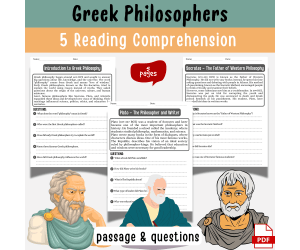
Greek Philosophers Reading Comprehension passage & Question Worksheet
History: Ancient, History, Social Studies, Reading, ELA, Reading Comprehension, Grade 4, 5, Assessments, Teacher Tools, Centers, Activities
Engaging and Educational! Introduce students to the influential thinkers of Ancient Greece with this reading comprehension resource focused on Socrates, Plato, and Aristotle. Designed for upper elementary and middle school learners, this activity helps students build reading comprehension and critical thinking skills while exploring the foundations of Greek philosophy. Students will learn about the origins of philosophy, the teachings of Socrates, Plato’s ideas and writings, Aristotle’s scientific approach, and the lasting influence of Greek philosophy on modern society. Each informational passage includes comprehension questions that encourage students to analyze ideas, strengthen vocabulary, and improve historical understanding. The resource features a clear and student-friendly format that supports independent learning and classroom instruction. It is perfect for social studies lessons, literacy centers, homework assignments, substitute plans, morning work, small-group instruction, and homeschool learning. Ideal for Grades 4–8, ESL and ELL learners, intervention groups, and history enrichment activities. File type: PDF number of pages / 5
Author Sadigitalart
Rating
Tags Greek Philosophers , Sociql Studies, Worksheet Greek, Reading Comprehension, Passage & Question
Research Organizer & Essay Assignment: Steve Jobs
Social Studies, History, History: USA, Science, Technology, Grade 8, 9, 10, 11, 12, Activities, Projects, Worksheets & Printables, Worksheets
It's hard to imagine modern life without the contributions of Apple Inc. and its co-founder, Steve Jobs. This resource provides your students with the opportunity to independently learn about and summarize the life of the businessman and computer scientist with this engaging research planner and essay assignment. This carefully scaffolded and easy-to-assign-AND-assess resource has been designed to guide student learning fromSteve Jobs fact-collection to the careful development of a five-paragraph research essay. Teaching this resource could not be easier! Start by handing out the background research and note-taking worksheet (you could also ONLY hand this out if you want a shorter lesson!). Once students have found their facts and sources, provide them with the essay outline activity, which guides them step-by-step through the requirements of a short research essay. From there, drafting their essay, using the provided peer review checklist, and submitting their final draft will be no problem at all. And then you can assess their work with the provided Common Core rubric! Use this entire resource as a complete research lesson or just part of it as a short research activity or sub plan! This TeachSimple download includes: - A Steve Jobs essay writing assignment with directions, requirements, research essay writing tips, a peer review checklist, and Common Core-tied grading rubric - An editable rubric, provided as a link, that lets you make adjustments to the grade values and guidelines. This link is provided as as Google Sheet specifically built for integration into Google Classroom, although you can also modify it for use in other Learning Management Systems (LMSs) - A Steve Jobs biography and note-taking worksheet that will guide your students through information gathering. This straightforward two-page handout includes instructions for background research, a fun drawing section, and an area to cite quality sources and organize conducted research - A research essay outlining worksheet, so students build on their Steve Jobs notes in a clear and simple manner as they build their work towards a draft and final paper - All 6-pages of this lesson are provided in full-color and B&W versions Although this resource can be fitted for any secondary Language Arts classroom, it has been carefully designed to work best in grades 8 through 11. The included rubric is subtly but specifically tied to Common Core ELA Standards for Language (3) and Writing (2 and 7). This resource is provided as a print-ready, bookmarked, and adjustable PDF file. The rubric is also included as an editable Google Sheet. This resource contains 6 pages and 1 Google Sheet.
Author The Language of Educational Art, LLC
Tags Essay, Rubric, Research, Notetaking, Outlining, Steve Jobs
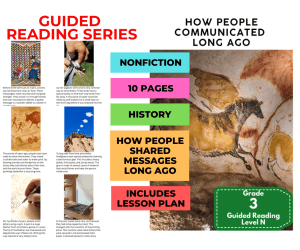
Guided Reading Level N - How People Communicated (with Lesson Plan)
ELA, Resources for Teachers, Reading Comprehension, Reading, Science, Pre-Reading, Language Development, Technology, History, Social Studies, Grade 2, 3, 4, Worksheets & Printables, Worksheets, Teacher Tools, Centers, Activities, Literacy Readers, Quizzes, Quizzes and Tests, Assessments
This Guided Reading Book - How People Communicated (Level N) with lesson plan includes: Guided Reading Color Label (front cover x1) This is a quick way to match the book’s demands to what students can generally handle.. The overall goal is to use the level/color to pick books for several smaller groups. To qualify for a certain level, a student is expected to read a book from that level with about 90–94% accuracy. If a student is consistently accurate and understands, move up a level. If the student is struggling at that level, drop down and add more support. Each student will improve at completely different rates, but it is generally one of the best ways to check progress across the class. DOWNLOAD THE CATALOG TO VIEW ALL GUIDED READING BOOKS AVAILABLE (SORTED LEVELS A-Z) Pre-Reading Question (x1) Teacher asks the prompt aloud, can be while showing the cover or first page. Students share what they already know, or make educated guesses from the cover. Prompt them to use the target vocabulary. Write some of their responses on the board to look back at during the reading. Vocabulary Words (x5) Introduce the five words, best doing it one at a time. Start by saying it, while students repeat and then see if anyone knows what it means before reading further. Read through the meaning and try to briefly connect each word to a picture or gesture so it’s meaningful. Ask students to flip through the book pages and point to where they see each of the vocabulary words. While reading the book pause upon coming across one of the vocab words or read the sentence twice to make sure students understand the word has appeared. Optional: Ask students to raise hands whenever they see/hear one of the new words. Guided Reading Pages (x10) Check the book snapshot (below) for: primary topic - do you need to prep extra reading or intro materials on this? what is taught best - decide on 1-2 bullets to focus on, use the prompt or words provided here for best results. learning goals - what you are checking for students to be able to do after the session, elicit answers using prompts or words provided. key vocabulary (see section above). questions overview - so you know what is coming up and if you need to prep extra materials to assist understanding. Run the lesson You may have already looked at a few of the pages together, but you can show them some of the pictures again first to set meaning. Depending on how much time you have and how familiar your students are with guided reading class, you may want to read the book aloud first with the group first. Students whisper or partner read, while you listen in. If time, do it as a group, one student reading a page each. Use the guided page’s prompts to coach: “Check the picture / does it make sense?” “Point under the words / try the first sound” “Reread the sentence smoothly”. Try to focus more on one student per session (rotating every time), so you can work out if they are ready to move up or need to move down a level. Comprehension Questions (back cover x3) This is your way to check that students didn’t just say the words, but actually understood the text. First, let students answer by pointing to the page/picture and saying a short sentence. After any answer, follow with: “Show me where you found that in the text.” In bigger groups, have partners answer first (10–20 seconds), then call on 2–3 students to share. Differentiation tips: Emerging speakers/struggling readers: oral + pointing On-level: oral in a full sentence Higher: one written sentence or draw + label Book Snapshot Title: How People Communicated Long Ago Genre: Nonfiction (Informational) Subject: Social Studies (Past and Present) / Reading Primary Topic: How people shared messages long ago Estimated Guided Reading Level (A–Z): N What This Book Teaches Best How people shared information long ago using cave wall paintings made from crushed rocks and water. How messengers (runners) delivered spoken messages or wooden tablets across forests and mountains. Different tools for sending messages, including carrier pigeons , letters , and the printing press for making many copies quickly. How inventions changed communication over time—from telegraph (Morse code) to telephone to near-instant messages today. Quality check note: One page includes text about firefighters’ turnout gear that does not match the book’s communication topic, and the vocabulary list includes firefighter terms (“protective,” “turnout”). Learning Goals Students will describe at least three ways people communicated long ago using details from the text. Students will explain how carrier pigeons carried letters according to the text. Students will describe how the printing press changed how books were made. Students will explain how the telegraph sent messages and name “Morse code” as described. Students will compare older communication methods to today’s communication described in the book. Key Vocabulary From the Text messengers — people who carry messages or news. invention — something new created for the first time. telegraph — machine that sent messages using electricity. envelope — paper cover that holds a letter. instantly — right away, with almost no waiting. Discussion Prompts Pre-reading question: What are some ways people might share information when they are far apart? Comprehension questions: How did people use cave walls to share information thousands of years ago? What did carrier pigeons carry, and where was it attached? According to the text, how can a message travel around the world today in just a few seconds? Printing Tips 1. Best Printing Method (Recommended) “Booklet” Printing (Best if Available) If your printer or PDF viewer supports Booklet Printing , use this. Settings to use: Print mode: Booklet Paper size: Letter or A4 (either works) Orientation: Landscape Print on both sides: Yes Flip on: Short edge Scaling: Fit to printable area Booklet subset: First test: Front sides only Then: Back sides only This will automatically: Pair pages correctly Put the cover on the outside Align everything for folding After printing, fold in half and staple along the spine . 2. If “Booklet” Printing Is NOT Available You can still print this correctly with manual duplex printing . Step-by-step: Open the PDF. Choose Print . Set: Orientation: Landscape Pages per sheet: 1 Print on both sides: Yes Flip on: Short edge Print all pages . Because each PDF page already contains two facing book pages, the result will still fold cleanly into a book. Thousands of Cored Education products are included with your TeachSimple membership. Download links and encyclopedia index available here.
Author Cored Education
Rating
Tags Reading Comprehension, Reading Passages, Reading, Guided Reading, Guided Reading Lesson Plan, Guided Reading Activity, Pre-reading, Vocabulary, History Lesson Plans, Technology

Prehistoric Archaeology: Social Studies Reading Passage (Fillable PDF)
ELA, Reading, Reading Comprehension, Strategies, Resources for Teachers, Social Studies, History: Ancient, History, Grade 6, 7, 8, 9, Writing Prompts, Worksheets & Printables, Centers, Activities, Teacher Tools, Assessments, Quizzes and Tests, Quizzes, Tests
Prehistoric Archaeology: Social Studies Reading Comprehension Passage (Fillable PDF) This resource introduces a unique Social Studies reading comprehension passage with questions about Prehistoric Archaeology: How Archaeology Explains Prehistory. The passage is carefully designed to bridge the gap between social studies and literacy through strengthening reading comprehension and sparking knowledge curiosity in middle school students. Each passage blends English Language Arts skills with accurate social studies content . Ideal for interdisciplinary learning in ELA and Social Studies. Suitable for Grade 9 review, too! This resource is designed as a fillable PDF , which means students can type their answers directly into the document on any computer or tablet . Each page includes highlighted text fields that show them exactly where to type! Student Tasks throughout the passage: 5 multiple-choice questions targeting the following skills: main idea, key details, inference, vocabulary in context, and use of evidence 5 vocabulary matching items with clear, student-friendly definitions 5 text-based questions that require citing specific lines or facts 1 summary prompt that asks students to condense central ideas accurately Full answer key for every section Available Formats for this Resource: PDF Word Docs Google Docs FULL CATALOG OF DOWNLOADING LINKS HERE Social Studies Reading Comprehension Collection Links: 1. Ancient Civilizations PDF Fillable PDF Word Docs Google Docs 2. Early Empires and Trade Networks PDF Fillable PDF Word Docs Google Docs 3. The Founding of the United States PDF Fillable PDF Word Docs Google Docs 4. Language, Culture, and Meaning PDF Fillable PDF Word Docs Google Docs 5. Psychology and Society PDF Fillable PDF Word Docs Google Docs 6. Global Festivals and Traditions PDF Fillable PDF Word Docs Google Docs 7. Extreme Environments and People PDF Fillable PDF Word Docs Google Docs 8. Food, Culture, and Preservation PDF Fillable PDF Word Docs Google Docs 9. Global Food Customs PDF Fillable PDF Word Docs Google Docs 10. Media, Communication, and Popular Culture PDF Fillable PDF Word Docs Google Docs 11. Human Impact on the Environment PDF Fillable PDF Word Docs Google Docs 12. Civic Action and Social Change PDF Fillable PDF Word Docs Google Docs 13. Fashion, Society, and Power PDF Fillable PDF Word Docs Google Docs 14. People, Places, and Unusual Histories PDF Fillable PDF Word Docs Google Docs Product Details: Length: 5 pages Grades: 6–8, also suitable for Grade 9 review Use cases: close reading, stations, homework, intervention, test prep, and sub plans Why Teachers Choose This Passage: Authentic social studies content paired with rigorous literacy practice Consistent task structure for easier planning and smoother student routines Clear, age-appropriate writing that builds confidence without oversimplifying Use this passage to reinforce ELA skills in social studies, to add literacy to your lessons, and to support independent work. The passage strengthens main idea, evidence use, vocabulary in context, inference, cause and effect, and summary writing. With ready-to-use assessments and complete answer keys, you can provide focused practice that is simple to run and fast to review.
Author Middle & High School - CORED Education
Rating
Tags Middle School, Reading Comprehension, Reading Strategies, ELA, Centers, Reading Passage, Assessments, Vocabulary, Social Studies, Ancient Civilization
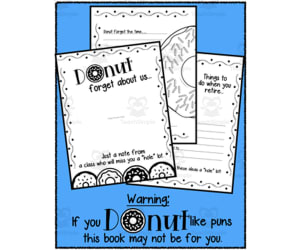
Donut Retirement book
ELA, Resources for Teachers, Classroom Management, Writing, Creative Writing, Not Grade Specific, Activities, Projects
The Donut Retirement Book is a creative and humorous printable resource perfect for honoring beloved retiring teachers, principals, or staff. This 20-page donut-themed book can be customized by students to create a lighthearted, personal keepsake filled with appreciation, well-wishes, memories, advice, and more for the retiree. Pages range from Mad Lib style stories to advice columns to thank you notes, with plenty of donut puns sprinkled throughout. It can be implemented as an end-of-year whole class or small group project, or individual pages can be doled out incrementally over weeks or months leading up to the retirement date. However implemented, this lively memento will definitely leave a smiling impression on the outgoing educator. The Donut Retirement Book offers flexible printable templates making it easy to facilitate and a fond, creative way for classes to bid a favorite school leader farewell.
Author Tpete's Supply Store
Tags Retirement, Teacher Gift, End Of Year, End Of The Year, Retirement Gift, Last Week Of School, Last Week
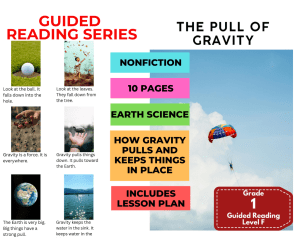
The Pull of Gravity: Guided Reading Level F with Lesson Plan
ELA, Resources for Teachers, Reading Comprehension, Reading, Science, Language Development, Vocabulary, Physics, Earth and Environmental Sciences, Pre-Reading, Kindergarten, Grade 1, 2, Worksheets & Printables, Worksheets, Teacher Tools, Centers, Activities, Literacy Readers, Quizzes, Quizzes and Tests, Assessments, Lesson Plans
This The Pull of Gravity (level f) guided reading book with lesson plan includes: Guided Reading Color Label (front cover x1) This is a quick way to match the book’s demands to what students can generally handle.. The overall goal is to use the level/color to pick books for several smaller groups. To qualify for a certain level, a student is expected to read a book from that level with about 90–94% accuracy. If a student is consistently accurate and understands, move up a level. If the student is struggling at that level, drop down and add more support. Each student will improve at completely different rates, but it is generally one of the best ways to check progress across the class. DOWNLOAD THE CATALOG TO VIEW ALL GUIDED READING BOOKS AVAILABLE (SORTED LEVELS A-Z) COMPANION VIDEO NOW AVAILABLE (EMBEDDED AFTER PREVIEW PICTURES IN PRODUCT DESCRIPTION) Pre-Reading Question (x1) The teacher says the question aloud, either while showing the cover or the first page. Students share what they already know or make sensible guesses based on the cover. Encourage them to use the target vocabulary where possible. Write a few of their ideas on the board so you can return to them during or after the reading. Vocabulary Words (x5) Introduce the five words one at a time. Say each word aloud, have students repeat it, and then ask if anyone already knows what it means. Read the meaning together and briefly connect each word to a picture, action, or gesture so it feels more memorable. Ask students to flip through the book and point to any pages where they spot the vocabulary words. While reading, pause when one of the words appears, or reread the sentence so students clearly notice and understand it in context. Optional: Ask students to raise their hands whenever they see or hear one of the new words. Guided Reading Pages (x10) Check the book snapshot below for: Primary topic — decide whether students need a quick introduction or extra background first. What this lesson teaches best — choose 1–2 key points to focus on during the session. Learning goals — keep in mind what students should be able to understand or say by the end. Key vocabulary — review and reinforce these throughout the lesson. Questions overview — look ahead so you know what students will be asked and whether any extra support is needed. Run the lesson You may already have looked at a few pages together, but it can help to revisit some of the pictures first to build meaning. Depending on your time and how confident the group is with guided reading, you may want to read the whole book aloud to them first. Students can then whisper-read or partner-read while you listen in. If time allows, you can also read as a group, with each student taking a page. Use the guided reading prompts to support them, such as: “Check the picture—does it make sense?” “Point under the words.” “Try the first sound.” “Reread the sentence smoothly.” It can be helpful to focus more closely on one student each session, rotating over time, so you can better judge whether they are ready to move up or may need more support at their current level. Comprehension Questions (back cover x3) This is where you check that students understood the text, not just the words on the page. Start by letting students answer by pointing to a page or picture and saying a short sentence. After they respond, follow up with: “Show me where you found that in the text.” In larger groups, let partners discuss their answer first for 10–20 seconds, then invite 2–3 students to share. Differentiation tips Emerging speakers / struggling readers: oral response + pointing On-level: oral response in a full sentence Higher: one written sentence or a drawing with labels Lesson Snapshot Title: The Pull of Gravity Genre: Nonfiction (informational) Subject: Science (Physical Science) Primary Topic: How gravity pulls things and helps keep them in place Estimated Guided Reading Level (A–Z): F What This Lesson Teaches Best Explains that gravity is a force and that it is all around us. Shows that gravity pulls things down and toward the Earth. Uses simple, everyday examples like a ball, leaves, water, rocks, sand, and air to show gravity in action. Helps students understand that larger objects, like Earth, have a stronger pull. Introduces the idea that gravity is also in space and helps pull the moon. Learning Goals Students will identify that gravity is a force found everywhere. Students will describe how gravity pulls things down and toward the Earth. Students will give examples from the text of things gravity pulls or keeps in place. Students will explain what the text says about Earth’s strong pull. Students will answer questions about gravity using details from the book. Key Vocabulary From the Text gravity — a pull that makes things go down force — a push or a pull toward — moving closer to something space — the place above Earth mountain — a very high hill of land Discussion Prompts Pre-reading question: What do you think makes things fall down to the ground? Comprehension question: What does the book say gravity is? Comprehension question: What does gravity pull things toward? Comprehension question: Name one thing the book says gravity keeps in place. 1. Best Printing Method (Recommended) Booklet printing is the best option if your printer or PDF viewer supports it. This method usually places the pages in the correct order automatically and makes folding much easier. Settings to use: Print mode: Booklet Paper size: Letter or A4 Orientation: Landscape Print on both sides: Yes Flip on: Short edge Scaling: Fit to printable area Booklet subset: First, print front sides only Then, print back sides only This will automatically: Pair the pages correctly Place the cover on the outside Help everything line up properly for folding After printing, fold the pages in half and staple along the spine. 2. If “Booklet” Printing Is Not Available You can still print the book correctly by using manual duplex printing . Step-by-step: Open the PDF. Click Print . Use these settings: Orientation: Landscape Pages per sheet: 1 Print on both sides: Yes Flip on: Short edge Print all pages. Since each PDF page already contains two facing book pages, the pages should still fold neatly into a book. Thousands of Cored Education products are included with your TeachSimple membership. Download links and encyclopedia index available here.
Author Cored Education
Rating
Tags Reading Comprehension, Reading Passages, Reading, Guided Reading, Guided Reading Lesson Plan, Guided Reading Activity, Pre-reading, Science Lesson Plans, Earth Science, Physics

Science Reading Comprehension Passage: Microevolution (Fillable PDF)
Science, ELA, Reading, Reading Comprehension, Strategies, Resources for Teachers, Life Sciences, Biology, Grade 6, 7, 8, 9, 10, Writing Prompts, Worksheets & Printables, Centers, Activities, Teacher Tools, Assessments, Quizzes and Tests, Quizzes, Tests
Life Science Reading Comprehension Passage and Questions: Microevolution (Fillable PDF) This very engaging science reading passage is about microevolution and the small inherited changes that occur within populations over many generations . It explains how traits and alleles can become more or less common through natural selection, mutation, genetic drift, the bottleneck and founder effects, gene flow, and non-random mating. Students explore clear examples such as insect camouflage, antibiotic-resistant bacteria, changing bird beaks, animal movement, pollen transfer, and mate-attracting traits. This passage is designed to bridge the gap between science and literacy by strengthening reading comprehension while sparking scientific curiosity in middle school students. It blends English Language Arts skills with accurate science content, helping students build background knowledge, understand key concepts, use evidence from the text, and explain scientific ideas clearly. This resource supports science classroom practice while also reinforcing important literacy skills such as main idea, vocabulary, comprehension, and summarizing. Ideal for interdisciplinary learning in ELA and Science. Suitable for Grade 9 review, too! Student Tasks for The Passage: 10 multiple-choice questions targeting main idea, key details, science concepts, comparison, and real-world applications 10 True/False statements to check understanding and address common misconceptions 5 text-based short-answer questions that require students to explain important ideas from the passage 5 vocabulary matching items with clear, student-friendly definitions 1 summary prompt that asks students to condense the central ideas accurately Full answer key for every section This passage is designed as a fillable PDF , which means students can type their answers directly into the document on any computer or tablet . Each page includes highlighted text fields that show them exactly where to type! Available Formats for this Resource PDF Word Docs Google Docs FULL CATALOG OF DOWNLOADING LINKS HERE Product Details Length: 7 pages total Grades: 6–8, also suitable for Grade 9 review Use cases: close reading, stations, homework, intervention, test prep, and sub plans Standards support: Reinforces informational-text skills and supports NGSS-style sense-making by helping students read scientific explanations, connect evidence to key concepts, interpret real-world examples, and explain cause-and-effect relationships in science. Why Teachers Choose This Set Authentic science content paired with rigorous literacy practice Consistent task structure across all passages for easier planning and smoother student routines Clear, age-appropriate writing that builds confidence without oversimplifying Other Science Reading Collections and Topics You May Find in the Store: 1. Astronomy & Space Science 2. Volcanoes, Rocks, & Mountains 3. Rock Cycle, Soil, & Sinkholes 4. Mars, Glaciers, & Antarctica 5. Water Cycle, Acid Rain, & Wastewater 6. Insects, Animals, & Ecosystems 7. Bioluminescence & Insects 8. Animal Skin, Cats, & T. Rex 9. Human Body and Senses 10. Health & Applied Bioscience 11. Waves, Light, & Imaging 12. Electricity & Energy 13. Motion & Materials 14. Chemistry and Materials Science 15. Electromagnetism 16. Acids and Bases 17. Gas Laws 18. Biotechnology 19. Periodic Trends 20. Protists and Fungi 21. Microevolution 22. Blood 23. Chemical Bonding 24. Magnets 25. Muscles 26. Nuclear Chemistry 27. Electromagnetic Devices 28. Epigenetics 29. The Law of Conservation of Mass 30. Atomic Models 31. Isotopes and Ions 32. Light 33. Human-Environment Interaction 34. Theory of Evolution 35. Photosynthesis 36. Origins of Life and Early Earth 37. Gene Expression and Regulation 38. Thermochemistry 39. Allergies 40. Coevolution 41. Birth to Adulthood 42. Cells 43. Entropy and Free Energy 44. The Human Brain 45. Mixtures and Solutions 46. Invertebrates 47. Zoo Animals 48. Biochemistry 49. Animal Behavior 50. Population Ecology ...and many more engaging science reading passages that cover intriguing and important topics designed to spark curiosity and support student learning. Use this passage to reinforce ELA skills in science, to add literacy to your lessons, and to support independent work. The passages strengthen main idea, evidence use, vocabulary in context, inference, cause and effect, and summary writing. With ready-to-use assessments and complete answer keys, you can provide focused practice that is simple to run and fast to review.
Author Middle & High School - CORED Education
Rating
Tags Middle School, Reading Comprehension, Reading Strategies, ELA, Centers, Reading Passage, Assessments, Vocabulary, Biology, Life Science

Home at Last Read Aloud Book Companion Activities for IRA
ELA, Reading, Reading Comprehension, Grade 2, 3, 4, Read Alouds, Activities
Home at Last Read Aloud Book Companion Activities for IRA This is a complete supplemental resource designed to enhance language arts teaching in grade 2, grade 3, and grade 4. This product complements the book Home at Last by Susan Middleton Elya and provides over two dozen activities that enable educators to tailor learning to their students' individual needs and academic abilities. Focus on Comprehensive Skills This well-rounded resource tackles various reading skills like character investigation, story elements identification, theme determination, plot practice etc. Cause & effect relationships exploration, compare & contrast exercises are also included amongst others. The product encourages students to make predictions and drawing inferences while providing opportunities for applying higher-level thinking skills. Detailed Character Analysis Activities: The activities are centered on characters Mama and Ana from the text. Students describe what each character says or does throughout the story. They'll analyze changing feelings throughout the narration and learn how characters undergo transformation due to events in the story. This thorough engagement with characters aims into developing comprehensive reading comprehension skills while fueling creativity as students imagine what happens next in the narrative. Diverse Classroom Settings: The PDF file contains engaging worksheets ready for print-and-go usage. These flexible tools can be utilized across different classroom settings such as: Focused daily instructions: Learning centers - To revisit their understanding, In small group genial reading sessions - To spotlight areas needing improvement, In peer collaboration exercises within literature circles - To promote richer discussions around additional reading concepts. Remember though that this collection focuses solely on extension read-aloud activities related with Home at Last - purchasing of this celebrated children fiction has not been incorporated into this offering.
Author Creatively Gifted
Tags Character Analysis, Story Elements, Theme, Plot Practice, Compare & Contrast

Noah's Ark Reading Literacy Packet
ELA, Reading, Kindergarten, Preschool, Grade 1, Activities
This resource is a Noah's Ark Reading Literacy Packet. Students will practice with building sentences and the letter N with this packet. All you have to do is print and go. A craft is at the end for students to build their own ark.
Author Glimmercat Education
Tags Literacy Center, Building Sentences, Uppercase Letters, Noah's Ark, Crafts
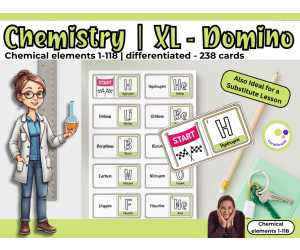
XL Domino – Chemical Elements 1–118 | exploring element names + symbol
STEM, Science, Chemistry, Physics, Life Sciences, Montessori, Basic Science, Grade 7, 8, 9, 10, 11, 12, Activities, Games, Worksheets & Printables, Task Cards, Quizzes and Tests, Teacher Tools, Word Problems, Flashcards, Escape Room, Experiments
XL Domino – Chemical Elements 1–118 An interactive domino game for exploring element names and symbols 🧪🎲 This printable XL domino game offers a fun and flexible way for students to practice the names and symbols of all 118 chemical elements. Designed for use in grades 7–10, this resource supports both introductory lessons and ongoing review in chemistry class. Whether used in small groups, as a full-class activity, or even spread out along the hallway floor, it encourages active learning and collaboration. Each card features either the name or the symbol of a chemical element. By matching these correctly, students build a long domino chain – all while reinforcing their knowledge of atomic numbers, symbols, and the layout of the periodic table. What’s included: 238 printable domino cards (PDF format) Two complete versions of the game (119 cards each): – Beginner version: element names on both sides – Advanced version: name on one side, symbol on the other Covers all elements from hydrogen (1) to oganesson (118) Tips for setup and gameplay included How I’ve used it: This game works well before introducing the periodic table in depth. It gives students time to get comfortable with element names and symbols in a low-pressure setting. The larger card format makes it ideal for group work or movement-based activities, such as arranging the cards on the floor or in the hallway. Why it works: The visual repetition and active gameplay help students internalize key facts more effectively than passive memorization. Group dynamics also support peer learning – students naturally help each other recall unfamiliar elements. And because it feels like a game, students stay engaged longer and show more willingness to participate. The material is easy to prepare: print, laminate if you like, and cut out the cards. From there, you can adapt it for differentiated learning levels or turn it into a competitive classroom challenge. This is not just a game – it’s a versatile teaching tool that brings the periodic table to life. 📍 Best wishes, Heike from @Lernfitness Did You Know? I teach with a certified therapy dog, and together we create a positive and welcoming learning environment. 🐶
Author Lernfitness
Rating
Tags Educational Card Games, Chemistry, Physics, STEM Science Matching Game, Chemical Elements, Periodic Table Matching Game, Game, Domino, Differentiation
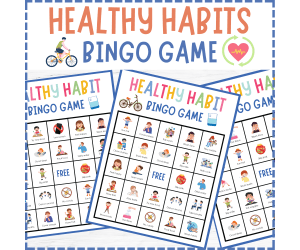
Healthy Habits Bingo – Wellness Classroom Game
STEM, Physical Education, P.E. & Health, Health, Kindergarten, Preschool, Grade 1, 2, 3, Games, Activities
Make learning about health and wellness fun with this engaging Healthy Habits Bingo Game ! Perfect for classrooms, homeschool, health units, or kids’ wellness parties, this no-prep printable game helps teach children the importance of self-care, hygiene, nutrition, and staying active—all in a playful and memorable way. With colorful, kid-friendly visuals and everyday wellness themes like brushing teeth, drinking water, washing hands, exercising, and eating fruits and veggies, this bingo game encourages positive daily routines while keeping kids excited and involved. What’s Included In this Bingo Game File? 40 unique Healthy Habits Bingo cards Calling cards featuring health and self-care images Easy-to-follow instructions – just print and play Suitable for group games, centers, or individual review This Game Pack Is Perfect For: Health & hygiene units Social-emotional learning (SEL) activities Wellness week or school health fair Morning meetings or classroom brain breaks This Healthy Habits Bingo is a fun and interactive way to support children's well-being, build life skills, and start important conversations about self-care in the classroom or at home!
Author Perfect_Printables
Rating
Tags Healthy Habits Bingo, Health Bingo For Kids, Wellness Classroom Game, Hygiene Bingo Game, Nutrition Bingo Printable, Self Care Bingo For Kids, Healthy Habits Activity, Wellness Worksheet For Students, Printable Health Game, Hygiene Classroom Activity

Research Organizer & Essay Assignment: Albert Einstein
Social Studies, ELA, History, History: Europe, Science, Physics, Research, Grade 8, 9, 10, 11, 12, Activities, Projects, Worksheets & Printables, Worksheets
Research Organizer & Essay Assignment: Albert Einstein Guide students to research the renowned physicist Albert Einstein with this complete 6-page resource. Students begin by gathering facts and citing quality sources on a provided worksheet. Next, they use their research to draft a 5-paragraph essay, following clear instructions and tips. A peer review checklist and grading rubric aligned to Common Core ELA standards support the drafting process. Whether used as a full research project or individual activities, these materials scaffold the research and writing process step-by-step. The organizer builds notetaking skills; the outline structures the essay format; the checklist facilitates peer review; and the rubric assesses the final product. Suitable for grades 8-11, this resource develops key research, writing, revision, and assessment skills. Edit the rubric as needed with the included Google Sheet file.
Author The Language of Educational Art, LLC
Tags Research, Essay, Notetaking, Outlining
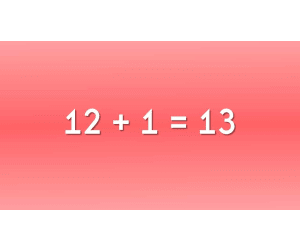
Adding 12 Song (Lyric Music Video)
Math, Addition and Subtraction, Addition, Numbers, Preschool, Kindergarten, Grade 1, 2, 3, Songs, Activities
This song is a great way for kids to learn and practice adding 12. The song covers all addition facts from 1-15, and is a fun and catchy way for kids to learn. Adding 12 can be a difficult concept for some kids, but this song makes it easy and fun.
Author Have Fun Teaching
Tags Counting

NO PRINT Summer Articulation K Edition
Special Resources, Speech Therapy, Not Grade Specific, Activities
NO PRINT Summer Articulation K Edition An interactive and iPad-friendly teaching resource that integrates summer-themed vocabulary into the development of articulation skills, focusing on the /k/ phoneme. This pack aids in enhancing linguistic complexity while making learning engaging and fun. Accommodating both virtual classrooms or traditional face-to-face setups, it reduces the effort of preparation for teachers. Main Features: Incorporates 24 word positions - 8 in each INITIAL, MEDIAL, and FINAL. Uses single words, phrases, sentences with alternating starting or ending phrases. Features pictures to stimulate visual cognition for better concept connection Includes a story to amplify each word position further increasing student engagement> Educational Advancements: The No Print edition takes students from single words to stories via an enjoyable reinforcer game designed specifically to capture student interest. This flexible learning resource isn't bound by grade levels making it effective across different learner groups perfecting special resources like Speech Therapy tools shape learners' articulative abilities effortlessly! Mix of Activities: ( The wide variety of activities is themed around summer adding flair to mundane instruction formats promising productive results! All these fantastic benefits come encapsulated digitally saving you paper and ink too! The NO PRINT Summer Articulation K Edition is available as an easily downloadable PDF file type that ensures smooth accessibility anytime backing up your educational needs efficiently while reducing carbon footprints little by little!
Author Intrepid Speech Therapy Materials
Tags Summer Articulation, Interactive Learning, IPad-friendly, Language Development, Speech Therapy

Find Me a Home! Housing Market Analysis Math Project (Grades 3-5)
Math, Numbers, Grade 3, 4, 5, Activities, Projects
Find Me a Home! Housing Market Analysis Math Project is a 16-page standards-based math project for grades 3-5 that teaches real-world application of number operations and place value. Students take on the role of a real estate agent and use math skills to compare home listings, evaluate the housing market, and determine the best property purchase based on family needs and budget. Throughout the guided 5-day structure, students strengthen critical thinking, data analysis, mapping, writing, presentation, and collaborative skills. This differentiated activity works for whole-class, small groups, or independent practice, covering numerous Common Core standards while embedding cross-curricular social studies and technology components. With included teacher instructions, student help sheets, assessment tools and more, Find Me a Home makes math meaningful and fun!
Author Beyond Traditional Math
Tags Real-world Math, Interdisciplinary, Critical Thinking, Data Analysis, Differentiated Instruction

Cells + Their Organelles Reading Activity
Science, Life Sciences, Biology, Grade 6, 7, 8, Activities
Cells + Their Organelles Reading Activity is a printable packet that could serve as an introduction or review for your science students. Students will have the opportunity to read passages, cut and paste and so much more. Answer keys included.
Author Sarah Miller Tech
Tags Cells, Organelles, Biology, Informational Text, Assessment, Cell And Their Organelles Packet Answers, Cells And Their Organelles Worksheet, Cell Organelles Activity, Cells And Their Organelles Worksheet Key
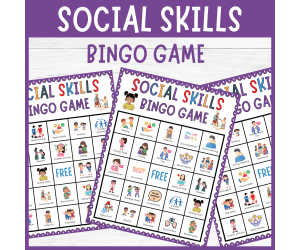
Social skills activities bingo game SEL social emotional learning
Social Emotional Learning (SEL), Special Resources, Social Skills, Early Learning, Pre-K, Elementary, Games, Activities
Make practicing social skills fun and engaging with this No Prep Social Skills Bingo Game! Students will explore important social-emotional skills such as communication, cooperation, kindness, empathy, listening, sharing, respect, and problem-solving through an interactive bingo game. I like using this bingo game during SEL lessons, social skills groups, classroom community activities, morning meetings, counseling sessions, classroom centers, and homeschool learning. It's an easy, low-prep activity that gives students a fun way to review and practice positive social behaviors. What You Will Get This printable Social Skills Bingo Game includes everything you need for an engaging SEL activity that reinforces important interpersonal and emotional skills. What's Included in this Bingo Game? • Printable Social Skills Bingo cards • Calling cards featuring social skills and positive behaviors • Easy-to-follow teacher instructions • Low-prep, print-and-play activity • Perfect for whole-class, small-group, or learning center use • Reusable for SEL review throughout the school year This resource is perfect for: • Social Emotional Learning (SEL) lessons • Social skills groups • Classroom community building • School counseling activities • Morning meetings and advisory • Special education social skills instruction • Homeschool learning Why you will love this? • Quick and easy to prepare • Reinforces essential social skills vocabulary • Encourages communication and positive interactions • Promotes empathy, cooperation, and respectful behavior • Supports classroom community building • Makes SEL learning interactive and engaging This Social Skills Bingo Game is a fun way for students to practice communication, kindness, empathy, cooperation, respect, and problem-solving while building positive social-emotional skills through engaging classroom gameplay.
Author The Clever Llama
Rating
Tags Social Skills Activities, Social Skills, Social Skills Games, Sel, Social Emotional Learning, Life Skills , Life Skill Activities , Classroom Community, Empathy Activity, Positive Behavior Game

Research Guide: X Games Biography Writing
P.E. & Health, ELA, Sports, Physical Education, Writing, Research, Common Core, Grade 7, 8, 9, 10, Activities
Do you have some extreme sports fanatics in your classroom? What could be more fun than providing them with the opportunity to research and synthesize the life of a famous X Games athlete? This carefully scaffolded and easy-to-assign-AND-assess resource has been designed to guide student learning from simple (and multiple choice!) X Games legend selection, to subject fact-collection, essay planning, and the development of a properly-cited and well-organized five-paragraph research essay. Do you need help instructing your students on the use of MLA style? Download it HERE! Implementing this lesson into your physical education or language arts curriculum is so simple! Start by handing out the background research and note-taking worksheet (you could also ONLY hand this out if you want a shorter lesson!). Once students have selected their subject, all you have to do is provide them the opportunity to conduct research using the straightforward information planner, then distribute the essay outline activity, which guides students step-by-step through the requirements of their research essay. From there, essay drafting, using the provided peer review checklist, and submitting their final draft will be easy for even the most reluctant writers! And then you can assess their work with the provided Common Core-aligned rubric! That’s right: there’s no need to write a rubric! Use this resource as a complete research lesson or just part of it as a short research activity or sub plan! This TeachSimple download includes: An X Games star essay writing assignment with directions, requirements, research essay writing tips, a peer review checklist, and Common Core-tied grading rubric An editable rubric, provided as a link, that lets you make adjustments to the grade values and guidelines. This link is provided as as Google Sheet specifically built for integration into Google Classroom, although you can also modify it for use in other Learning Management Systems (LMSs) A significant extreme sports athlete note-taking worksheet that will guide your students through information gathering. This straightforward two-page handout includes instructions for background research, subject selection section (with 1-2-sentence biography summary), a fun drawing section, and an area to cite quality sources and organize conducted research A research essay outlining worksheet, so students build on their X Games legend subject notes in a clear and simple manner as they build their work towards a draft and final paper All 6-pages of this lesson are provided in full-color and B&W versions Although this can be fitted for any secondary classroom, it has been carefully designed to work best in grades 7 through 10. The included rubric is subtly but specifically tied to Common Core ELA Standards for Language (3) and Writing (2, 5, and 7). This resource is provided as a print-ready, bookmarked, and adjustable PDF file. The rubric is also included as an editable Google Sheet. This resource contains 6 pages and 1 Google Sheet.
Author The Language of Educational Art, LLC
Tags Essay, Rubric, Worksheets, MLA, Research, Common Core, Biography Writing
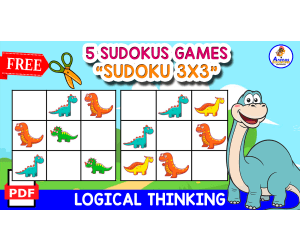
5 GAMES OF SUDOKU | MADE WITH DINO THEMED
, Kindergarten, Preschool, Grade 1, 2, Activities, Games
NAME OF THIS PRODUCT: SUDOKU GAME OF DINOS We are a publisher dedicated to creating fabulous resources for children in the areas of mathematics, language, as well as worksheets in Spanish. TODAY WE BRING YOU ON THIS OCCASION THESE FANTASTIC 5 WORK SHEETS TO PLAY SUDOKU. 1. WHAT IS SUDOKU? As you know, Sudoku is one of the best games so that your children have the opportunity to develop multiple cognitive processes. ON THIS OCCASION WE HAVE ADAPTED THIS SUDOKU GAME ESPECIALLY FOR CHILDREN AND USING DRAWINGS SO THAT IT IS MUCH MORE ATTRACTIVE FOR THEM. A. The name of this educational resource is The title of this resource is "5 worksheets with 3x3 sudoku exercises" B. This document contains this number of pages This document is made up of 5 pages, on each page you will find 1 sudoku game . C. This educational resource has been prepared by: This pedagogical resource has been designed by EDITORIAL ARENAS EDUCATIVAS, we are a publisher dedicated to the development of games for children as well as educational worksheets. D. You can apply this educational document in different contexts such as: You can apply it at home if you are a parent and want your children to exercise their intellect, and you can also use it in the classroom if you want your children to develop their intelligence. SECONDARY INFORMATION ABOUT THIS PRODUCT: E. Is this document in black and white or color? Made in color and it is recommended that it be printed in color. F. For what ages is this document recommended? This document can be applied to students of all ages but especially to small children from 4 to 7 years old. G. At what point in class can I apply it? You can apply it during the development of your class. H. Should I apply it individually or in groups? It is preferable that it be done individually or in groups of 2 students because the activity is quick and will be completed quickly. This file is for personal use only. It is not allowed to be resold or shared with others.
Author EDITORIAL LAURA EDUCA
Tags SUDOKU, SUDOKU GAME, PUZZLE, PUZZLES, FREE RESOURCE
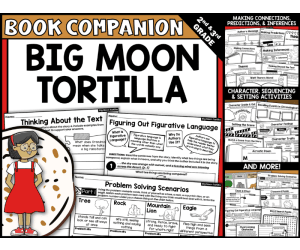
Big Moon Tortilla by Joy Cowley Interactive Read-Aloud Activities
ELA, Reading, Reading Comprehension, Grade 2, 3, 4, Read Alouds, Activities
This picture book companion is a comprehensive supplemental resource for Big Moon Tortilla, by Joy Cowley. It includes 33 ready-to-use, print-and-go activities designed to meet the needs of all learning levels. Created with teachers in mind, this resource saves you time while providing students with engaging opportunities to demonstrate their understanding and newly acquired knowledge through interactive read-alouds. The activities cover a range of skills, from basic comprehension to critical thinking. INCLUDED IN THIS RESOURCE: Making Predictions Judging by the Cover Story Elements Sequencing Recalling Events in Chronological Order Summary Story Event Sort Cause and Effect Making Connections Making Inferences Character Traits (Marta) Character Traits (Marta) Character Inside & Out (Marta) Character Inside & Out (Grandmother) Character Feelings (Marta) Character Development (Marta) Character Change (Marta) Overcoming Obstacles Acrostic Poem Sketch a Scene From the Story Setting the Scene Identifying Imagery Thinking About the Text Thinking Beyond the Text Theme Figuring Out Figurative Language Author's Message Dear Diary Problem Solving Scenarios Crossword Puzzle Word Search Puzzle Wait... There's More! Book Review This resource is for extension read-aloud activities only. The book is not included.
Author Creatively Gifted
Tags Reading Comprehension, Reading, Upper Elementary Reading, Picture Book , Read-aloud Activities, Interactive Read-aloud Activities, Book Companion, ELAR
Science Reading Passages on Properties of Earth Materials (Videos)
Science, Earth and Environmental Sciences, Earth Sciences, Common Core, ESL, Language Development, ELA, Reading Comprehension, Reading, Grade 2, 3, 4, Teacher Tools, Activities
Accompanying Videos Based on Reading Passages on Properties of Earth Materials for Earth Science These accompanying videos contain scripts extracted from the Science Reading Passages series. With stock footage, subtitles, voiceovers, animation and diagrams, they will help students understand the topic more. Ideal for starting or ending a lesson, each video runs at less than 5 minutes and is at least 95% identical to the passage itself. What's inside? Part 1 Videos - Properties of Earth Materials Reading Passage 1: Earth Science and Earth Materials Reading Passage 2: Earth Materials and Their Uses Reading Passage 3: Minerals Reading Passage 4: Rocks and the Rock Cycle Reading Passage 5: Soils Reading Passage 6: Fossils Science Reading Comprehension Outline: Targeted for students in 3rd and 4th grades, these reading passages are enhanced with illustrations and graphs to elucidate critical points. Each lesson aligns with the Common Core State Standards, allowing you to integrate science reading practice effortlessly, knowing that minimal preparation is needed on your part. Each passage comes with a variety of questions in different formats, including multiple-choice formats, data analysis, and fill-in-the-blanks. The topics covered strike a balance between engaging content and core curriculum-based science subjects. Versatile in application, these lessons are suitable for a variety of settings such as whole-class instruction, morning activities, independent desk work, small group discussions, contingency plans for substitute teachers, homework assignments, or even special holiday-themed tasks. FULL CATALOG OF DOWNLOAD LINKS HERE Grade 3/4 Links: Physical Science Part 1 - Properties of Objects and Materials Google Docs/Slides/Forms PDF PPT Word Free Supplementary Pack Accompanying Videos Physical Science Part 2 - Position and Motion of Objects Google Docs/Slides/Forms PDF PPT Word Free Supplementary Pack Accompanying Videos Physical Science Part 3 - Light, Heat, Electricity, Magnetism Google Docs/Slides/Forms PDF PPT Word Free Supplementary Pack Accompanying Videos Life Science Part 1 - Characteristics of Organisms Google Docs/Slides/Forms PDF PPT Word Free Supplementary Pack Accompanying Videos Life Science Part 2 - Life Cycles of Organisms Google Docs/Slides/Forms PDF PPT Word Free Supplementary Pack Accompanying Videos Life Science Part 3 - Organisms and Environments Google Docs/Slides/Forms PDF PPT Word Free Supplementary Pack Accompanying Videos Earth Science Part 1 - Properties of Earth Materials Google Docs/Slides/Forms PDF PPT Word Free Supplementary Pack Accompanying Videos Earth Science Part 2 - Changes in the Earth and Sky Google Docs/Slides/Forms PDF PPT Word Free Supplementary Pack Accompanying Videos Earth Science Part 3 - Objects in the Sky Google Docs/Slides/Forms PDF PPT Word Free Supplementary Pack Accompanying Videos For similar products and other frees, do check out Cored Group on TeachSimple .
Author Cored Education
Rating
Tags Science, Elementary, Reading, Comprehension, Vocabulary, Science Assessments, Reading Comprehension Assessments, Vocabulary Assessments, Earth Science
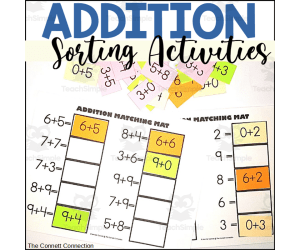
Addition Flash Cards and Sorting Mats
Math, Addition and Subtraction, Addition, Preschool, Grade 1, Worksheets & Printables, Flashcards, Activities, Games
These math centers focused on addition enable students to enhance their proficiency in adding, comparing outcomes, and understanding related facts. The included set of addition flashcards and mats make it engaging for both kindergarten and first-grade students. They will appreciate the tactile experience of mastering addition facts through this sorting activity. What is Included: * Math Fact Cards * Number Cards * Addition Mats with Addition Facts * Addition Mats for Sorting by Sum * Addition Mats for Comparing Sums This set contains addition problems with sums up to 20, but can also be differentiated for students needing sums within 10. There are sorting mats for students to sort problems by sums and to compare problems to see is they are greater than, less than or equal to other addition facts. Practice related addition facts by using the corresponding addition problems on the sorting mats. Uses for this product: * Use the number cards to sort the facts by their sum. * Use the addition mats to sort math facts * Create a greater than, less than and equal to activity for comparing sums of addition facts * Give students a group of addition cards and have them put the cards in order from least to greatest. * Play concentration or memory where students must match the addition facts with the same sums to get a pair. * Play war where students with the largest sum wins both addition fact cards The teacher may choose to create a file folder activity using these math mats. By attaching the mat to one side of the file folder, and attaching hook and loop fasteners to the mat and cards, the teacher can create an easy to set up and put away center for students to use independently. These math mats are low prep. They just need to be printed out and laminated if desired. The addition fact cards and number cards do need to be cut apart.
Author The Connett Connection
Tags Addition, Addition Within 20, Addition Up To 20, Sums Within 20, Kindergarten Math, Math Sorts, Addition Flash Cards, Comparing Numbers, Related Addition Facts

Amphibians vs Reptiles Activity
Science, Life Sciences, Animals, Biology, Grade 3, 4, 5, 6, 7, 8, 9, Activities
Activity Introduction An amazing activity designed for the students to learn more about famous places in different countries. Amphibians vs Reptiles Do you like animals? what is your favorite one? Do you own a pet? If yes, tell us more about it, like what its name? And what do you like most about it? What are the animal kingdoms? Can you write down the characteristics of each animal class like mammals, birds, reptiles, amphibian, fish and mollusks. Do you know that some animals can sing, can you name any of them? What is the largest and the smallest mammal in the world? What is the largest and the smallest bird in the world? What is the largest and the smallest fish in the world? Amphibians vs Reptiles Activity The activity is perfect for encouraging the researching skills for the students, while learning more about this fantastic place. Amphibians vs Reptiles This friendly designed worksheet is suitable for students at school, homeschooling, and as a group activity. Instructions Cut everything out and glue them where they belong. Format Available in a PDF format.
Author Educational Voice
Tags Amphibians Vs Reptiles Activity, Amphibians, Amphibian, Amphibians Facts, Amphibians Facts For Kids, Reptiles, Reptile, Reptiles Facts, Reptiles Facts For Kids