



3,992 products added recently
Page 5 - ELA Graphic Organizers
Enrich your English Language Arts instruction with graphic organizers that aid in understanding and organizing literary elements, writing structures, and vocabulary. This collection includes story maps, essay planners, and vocabulary webs. By integrating these tools, you can facilitate deeper engagement with texts and improve communication skills.

 Show filters

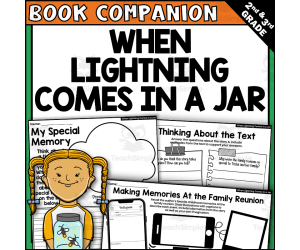
When Lightning Comes in a Jar Book Companion
ELA, Reading, Reading Comprehension, Literature, Science, Life Sciences, Insects, Grade 2, 3, 4, Teacher Tools, Graphic Organizers, Worksheets & Printables, Novel Studies, Activities, Games, Worksheets
This picture book companion is a complete supplemental resource for the book When Lightning Comes in a Jar by Patricia Polacco. It includes 28 print-and-go reading activities to choose from, making this resource ideal for customizing learning to your student's specific needs and academic abilities. Students will investigate characters, identify story elements, determine the theme, practice plotting story events, compare & contrast, make predictions, inferences, & connections, answer questions that require them to think beyond the text, and much more! Students will thoroughly enjoy the captivating activities, and you'll value the time saved from scouring for advanced resources to address challenging reading concepts. The offered activities are crafted to foster higher-order thinking, prompt students to present textual proof for their reasoning, and inspire them to share their personal insights and viewpoints. ⭐️This Resource Includes:⭐️ ◾ Making Predictions: Before reading the book, students make predictions about the text. ◾ Story Elements: Students fill in the boxes with words & pictures to represent the story elements. ◾ Sequencing: Students will retell & illustrate the important parts of the story. ◾ Recalling Events in Chronological Order: Students will describe and illustrate four events in the story in chronological order. ◾ Summary: Students complete the Somebody, Wanted, Because, But, So graphic organizer and write a summary of the story. ◾ Story Event Sort: Students will describe a scene or event from the story that fits into each of the categories & explain how the event made them feel & how it relates to the category. ◾ Making Inferences: Students use clues & schema to make inferences while reading the story. ◾ Making Connections: Students make connections to an event from the story. ◾ Character Inside & Out: Students include details from the story to describe what the characters say, think, do, and feel. ◾ Character Feelings: Students describe how the characters' feelings change throughout the story & give examples of the events that cause them to feel the way they do. ◾ Character Development: Students select the character traits that best describe Trisha at different times throughout the story and provide examples from the book to support each character trait. ◾ Character Change: Students will explain how the character changed from the beginning to the end of the story and describe the events that caused the change to happen. ◾ Character Summary: Students summarize the main character of the story. ◾ Sketch a Scene From the Story: Students will draw a scene from the story and explain why it's important to the plot. ◾ Setting Influences the Plot: Students will draw a scene from the story that takes place in one of the settings, write about what happened there, & explain why it is important to the plot. ◾ Setting the Scene: Students identify three different settings in the story and explain how they know that the setting changed. ◾ 3-2-1: Students will list three of Trisha's favorite things about her family reunion, 2 activities from the story they would like to try, and one word that describes Trisha's family reunion. ◾ Author's Message: Students describe four important events from the story and put them in chronological order. Then, answer the questions about the author's message. ◾ Theme: Students answer the questions to determine which theme best fits the story and provide text evidence to support their choice. ◾ Thinking About the Text: Students will answer the questions about the story & include examples from the text to support their answers. ◾ Then & Now: Students will describe something the author, Patricia Polacco, did as a young girl at her family reunions, write about something she might do at her family reunions now that she is older, and draw illustrations to go with their writing. ◾ Wait... There's More!: Students will write about what happens next in the story. ◾ My Special Memory: Students write about a special day or moment in their lives. ◾ Making Memories at the Family Reunion: Students recall the author's favorite childhood memories at the family reunion and draw illustrations with captions to describe each event. ◾ Families are Special: Students will brainstorm their family's traditions, things that make their family unique, and special things they do with their family. Then, they will compare and contrast their family with a classmate's family using a Venn diagram. ◾ Dear Patricia Polacco: Students write a letter to Patricia Polacco, the author and illustrator, sharing their reactions to the story, and asking her at least one question. ◾ Book Review: Students will color in the stars to rate how much they enjoyed the book and draw a new cover & their favorite character from the story. Then, they will explain why other kids should or should not read it. ◾ Family Traditions Survey: Students will answer questions about their own family traditions. This resource is for extension read-aloud activities only. The book is not included. ⭐️You may also like: ⭐ TEXT SET #1: "The Importance of Friendship" ◾ A Weekend With Wendell Read Aloud Book Companion Activities for IRA ◾ First Come the Zebra Read Aloud Book Companion Activities for IRA ◾ This is Our House Read Aloud Book Companion Activities for IRA ◾ Horace and Morris But Mostly Dolores Read Aloud Book Companion Activities for IRA ◾ The Old Woman Who Named Things Read Aloud Book Companion Activities for IRA TEXT SET #3: "Finding Your Way in a New Place" ◾ Grandfather Counts Read Aloud Book Companion Activities for IRA ◾ The Have a Good Day Cafe, Read Aloud Book Companion Activities for IRA ◾ Roses for Gita Read Aloud Book Companion Activities for IRA ◾ Mango, Abuela, and Me, Read Aloud Book Companion Activities for IRA ◾ Home at Last Read Aloud Book Companion Activities for IRA TEXT SET #7: "Exploring Narrative Nonfiction" ◾ Cactus Hotel Read Aloud Book Companion Activities for IRA ◾ A Log's Life Read Aloud Book Companion Activities for IRA ◾ Salmon Stream Read Aloud Book Companion Activities for IRA ◾ Think of an Eel Read Aloud Book Companion Activities for IRA ✨Be sure to check out my storefront here: https://teachsimple.com/contributor/creatively-gifted
Author Creatively Gifted
Tags IRA, Picture Book Activities, Read Aloud Lessons, Interactive Read Aloud Activities, Elementary Reading, Reading Comprehension, Fountas And Pinnell IRA, Family, Second Grade, Memory Stories
How to Write a Book Report: Graphic Organizers for Non Fiction Book Reports
ELA, Writing, Common Core, Grade 5, 6, 7, 8, Graphic Organizers, Teacher Tools
How to Write a Book Report: Graphic Organizers for Non Fiction Book Reports This teaching resource is an all-in-one solution aimed at engaging both educators and students in the challenging yet exciting endeavor of non-fiction book report writing. Within this comprehensive, 24-page PDF, you'll find all the required tools for helping students in Grades 5 through 8. The Challenge of Teaching Book Reports Writing Tutors may find it daunting to instruct their pupils on how to craft an efficient book report, and such difficulty tends to increase when dealing with non-fiction content. This instructional tool addresses these concerns directly by furnishing step-by-step guidance supplemented with striking graphic organizers. Focusing on Effective Organization and Presentation This resource concentrates on providing learners with concrete methodologies for collating and displaying information about various non-fiction topics encountered during language arts and writing lessons. Teachers can take advantage of these robust tools to facilitate their students' grasp of organized data management during pre-writing stages. Pupil-Efficient Instructions: The teaching aid combats overcomplicated tasks, presenting clear guidance, inclusive of student assessment rubrics and comprehension quizzes promoting seamless understanding among learners. Bloom’s Taxonomy-Based Objectives: Learning goals follow the globally acclaimed Bloom’s Taxonomy framework encouraging advanced cognition as per current educational standards, aligning perfectly with Common Core State Standards. Vocabulary Skill Reinforcement: Ready-to-use word puzzles serve as entertaining interludes while amplifying vocabulary learnt from textbooks, infusing an air of fun into learning activities without compromising educational guidelines. Potential Use Cases across Classroom Activities Educators can choose from multitude options regarding this tool's application. It can be used in numerous techniques ranging from whole-class instructions to small group discussions, outside classroom activities and even individual self-pacing exercises! Concluding Thoughts In essence, tutors seeking engaging methodologies to instruct non-fiction book report writing will find immense value in this aid. The perfect blend of explicit teaching, captivating graphic organizers and extensive student guides makes it a crucial addition to any toolkit. Applying such resource promises simplified yet systematic learning experiences ensuring efficiency at mastering non-fiction book reporting skills.
Author Classroom Complete Press
Tags Language Arts, Writing, Writing A Book Report, Non-fiction Test, Graphic Organizers
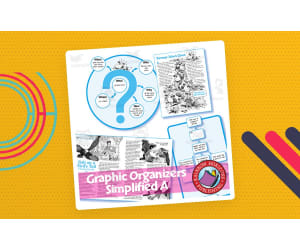
Graphic Organizers Simplified A - Reading, Writing & Thinking Skills
ELA, Reading, Writing, Grade 2, 3, Graphic Organizers, Teacher Tools
This graphic organizer -based resource is designed for grades 2 to 3. The graphic organizers included in this resource helps students organize their thoughts to be successful in reading, writing and thinking. Graphic organizers are used to help students become better readers, writers and thinkers. This is the first book in a series of four that provides ready-to-use content. The lessons within this resource are made up of three sections: a reading section, a graphic organizer , and comprehension-style worksheets. Aligned to the International Reading Association and National Council of Teachers of English Standards 1, 3, 6, and 12.
Author Classroom Complete Press
Tags Graphic Organizers, Comprehension, Answers, Primary, Elementary
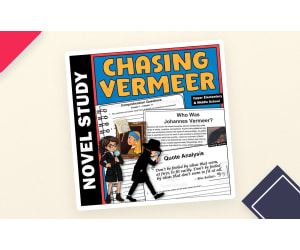
Chasing Vermeer Novel Study – Mystery Unit
ELA, Reading, Reading Comprehension, Literature, Vocabulary, Grade 3, 4, 5, 6, Teacher Tools, Lesson Plans, Worksheets & Printables, Novel Studies, Graphic Organizers, Assessments, Activities, Worksheets
This novel study is a complete supplemental resource for Chasing Vermeer by Blue Balliet. The included activities focus on the genre of mystery, reader response questions, comprehension questions, vocabulary practice, character analysis, the elements of the plot, and more! Graphic organizers are included, along with a clue tracker chart and mystery genre posters. ⭐️This Resource Includes:⭐️ Who Was Johannes Vermeer?: A short biography about Vermeer that includes reader response questions. Reader Response Journal: This reader response journal is divided into 5 sections by chapters. Each section includes 1-2 pages of vocabulary practice and 1-2 pages of short answer comprehension questions, and a 4-page final assessment that is mixed with multiple choice questions and short answer questions. Not only can this literature response packet be used for whole group discussion/instruction, but it works great in literature circles, to hold group members accountable for reading and discussing the text. It can also be used as a homework assignment, small group instruction, book clubs, etc. Mystery Genre Resources - This section includes 2 mystery genre posters (2 color options) and a Clue Tracker to record clues or evidence regarding suspicious people or events from the novel. Quote Analysis with response questions: a pre-reading activity Elements of Plot: Graphic Organizer Character Analysis: This graphic organizer can be used for any character(s) at any point during the reading of the novel that you see fit. Task Cards: 2 sets of task cards are included. The first set is made up of open-ended questions & digging deeper prompts. The second set are the same questions used in the reader response journals but in a different format. This offers an alternative to the reader response journal activity.
Author Creatively Gifted
Rating
Tags Novel Study, Vocabulary, Comprehension, Partner Discussion, Graphic Organizers, Book Companion, Chasing Vermeer, Mystery, Anchor Chart, Reader Response, Chasing Vermeer Chapter Questions

Personality Traits in Spanish – Bilingual Word Lists
ELA, Language Development, ESL, Grade 3, 4, 5, Teacher Tools, Graphic Organizers
This resource is a Bilingual Physical & Character Traits Packet. This packet comes equipped with word lists and graphic organizers offered in English and Spanish. This is a great way for students to explore and practice new vocabulary. Students can use these lists and graphic organizers to help them alongside reading assignments when they are identifying traits!
Author Creatively Mrs. B
Rating
Tags ESL, Bilingual, Spanish, Word Lists, Character Traits, Character Traits Word List, Graphic Organizers

Year of Graphic Organizers
ELA, Writing, Grade 5, 6, 7, 8, 9, 10, Teacher Tools, Graphic Organizers
Year of Graphic Organizers: Your Ultimate Language Arts Assistant Year of Graphic Organizers is an all-inclusive teaching resource tailored for educators in order to streamline the learning process. This diverse collection is highly beneficial in public school contexts as well as homeschooling setups and can be easily integrated into different group settings whether it's a whole class, small clusters or individual homework assignments. With this collective treasure of graphic organizers, the missing piece from a comprehensive Language Arts curriculum puzzle will finally fit. The beauty of these collaborative tools lies within their ability to kindle engagement, and stir imagination while fulfilling the enjoyment aspect that makes learning more effective for students. Sharp learners or ones still finding their groove will equally benefit due to its rich array catering to various comprehension levels. The Importance and Utility of Graphic Organizers Graphic organizers are pivotal- they are visual facilitators simplifying knowledge intake and retention for children enabling them faster understanding of facts and concepts. Moreover, they accelerate practical knowledge application by allowing learners to visualize connections between facts which ultimately helps in meaningful knowledge absorption. Included Resources: Persuasive Writing Organizers, Expository Writing Organizers, Vocabulary Organizers, Book Report Forms, Etc... Futher resources range from Rough Draft Forms catalyzing ideation process followed by nurturing structure via Final Draft Activities leading up till Timelines that teach charting capabilities effectively! Outlining becomes less daunting with ready-made forms accompanied by grading rubrics ensuring fair appraisal representation. New Additions? Always Complementary! The Year of Graphic Organizers doesn’t end here! It’s an ever-growing resource so any new additions are complementary benefits already included within your purchase making it optimal cost-effective educational assistance material. Targeted at Grade 5 through Grade 10 learners specializing in Language Arts; applicable contextually not only within Middle School or Upper Elementary but equally useful for Special Ed Classrooms. This bundle as PDF students will experience how graphic organizers can turn Language Arts into a picturesque learning journey that's enjoyable as it is informative.
Author Socrates Lantern
Tags Graphic Organizers, Teaching Resource, Language Arts, Engagement, Learning Tools

Literary Devices: Using Graphic Organizers to Identify Point of View
ELA, Literature, Grade 5, 6, 7, 8, Graphic Organizers, Teacher Tools
"Literary Devices: Using Graphic Organizers to Identify Point of View" - A Dynamic Lesson Plan Tailored for educators, this resource focuses on teaching students about the fascinating interplay between language and storytelling. It is particularly useful for grades 5 through 8, fitting seamlessly within Language Arts curricula. The tool introduces learners to the intense world beneath mesmerizing tales—the Literary Devices. These include critical components like: Characterization Setting Plot Theme, and more... The value in this resource lies in its emphasis on identifying Point of View in literature via grade-specific activities utilizing graphic organizers . User-friendly Definitions and Practice Opportunities- Apart from providing simple definitions for key terminologies, it offers repeated practice opportunities to bolster understanding. Bloom's Taxonomy Model Adherence- The content adheres strictly to the Bloom's Taxonomy model ensuring high quality and educational validity making it usable in both public schools or homeschools alike. It could be used with whole class cohorts or smaller study groups; not forgetting homework assignments either. Tying narrations together with age-appropriate learning activities enable young scholars to understand storytelling better while appreciating creativity; they also build critical analysis skills tackling diverse literary forms encouraging exploration that growth-seeking academic minds desire. Thus whether you aim at arming young minds for expansive literary studies or just inspire a deep affection toward classic/modern Literature - 'Literary Devices: Using Organizers Identify Point of View' could be an indispensable addition to your teaching toolkit.
Author Classroom Complete Press
Tags PDF, Graphic Organizers For Literature, Literary Element Lesson Plans

Digital Graphic Organizers: Constructed Response
ELA, Writing, Grade 6, 7, 8, 9, 10, 11, 12, Graphic Organizers, Teacher Tools
Product Overview: The focus is on an educational instrument known as Digital Graphic Organizers : Constructed Response. Particularly effective with any constructed response writing section, this product has broad applicability across all subjects. This renders it fitting for both public school textbooks and homeschooling resources. Audience and Scope: This primary audience is middle school students, applicable from grades 6-12. The broad applicability extends to non-traditional education environments, including advanced young learners or adult education classes seeking to refine their language arts skills. Versatility in Learning Styles: A distinguishing feature of this product is that it accommodates students' unique needs via its multiple organizer styles. It allows for self-exploration and promotes independent learning in their academic pursuit. Digital Availability and Usage: The Digital Graphic Organizers : Constructed Response caters to both physical and digital use cases, enabling educators to print the sheets or edit them using applications such as PowerPoint or Google Slides directly. The templates are stored in one file for digital usage—ideal for directly sharing with students or organizing separate files by dragging individual organizers. Variety in Teaching Applications: The flexibility of these organizers facilitates their usage across whole group teachings sessions, targeted small group break out sessions, home-based directed study guides for individual learners. Educators can also incorporate them within homework assignments that reinforce classroom teachings – offering reliable value when teaching language arts writing specifically. In Summary: This extensive educational tool notably excels at fostering interactive learning experiences and adapting the lessons based on differing student learning styles. Digital Graphic Organizers : Constructed Response empowers teachers to diversify their teaching approaches while simultaneously engaging their students.
Author Fairways and Chalkboards
Tags Educational Tool, Graphic Organizers, Constructed Response, Language Arts, Student Engagement
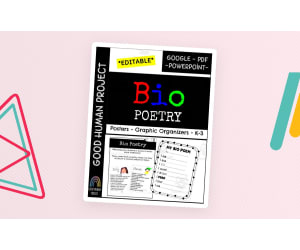
Bio Poetry Writing | Posters & Graphic Organizers
ELA, Literature, Poetry, Grade 1, 2, 3, Graphic Organizers, Teacher Tools
This resource is a set of templates for bio poem writing. This pairs well with your poetry unit in English class. You may also love to print these off and use in a center activity. This resource can be accessed through: PowerPoint Google slides PDF
Author Good Human Project
Tags Bio Poems, Poetry Lesson, Poetry Writing, Graphic Organizers, Posters
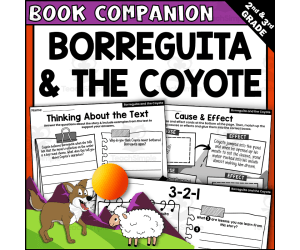
Borreguita and the Coyote Reader Response Activities
ELA, Reading, Reading Comprehension, Literature, Grade 2, 3, 4, Teacher Tools, Graphic Organizers, Worksheets & Printables, Novel Studies, Activities, Worksheets
This picture book companion is the perfect resource to accompany the book Borreguita and the Coyote by Verna Aardema. It includes 35 print-and-go reading activities to choose from, making this resource ideal for customizing learning to your student's specific needs and academic abilities. Students will investigate characters, identify story elements, determine the theme, practice plotting story events, compare & contrast, make predictions, inferences, & connections, answer questions that require them to think beyond the text, and much more! Students will love the engaging and fun activities, and you will appreciate the time saved hunting for high-level resources to teach reading concepts that students frequently struggle with. The activities provided are designed to enable students to apply higher-level thinking skills, encourage them to provide text evidence to support their thinking, and challenge them to express their own thoughts and/or perspectives. ⭐️This Resource Includes:⭐️ ◾ Elements of a Trickster Tale Anchor Chart or Notes Handout: Color and B&W ◾ Making Predictions: Before reading the book, students will make predictions about the text. ◾ Elements of a Trickster Tale: Students fill in the chart with the details of the story that characterize it as a trickster tale. ◾ Trickster Tale Tidbits: Students will answer the questions with details from the story that proves it's a trickster tale. ◾ Story Elements: Students fill in the boxes with words & pictures to represent the story elements. ◾ Sequencing: Students will retell & illustrate the important parts of the story. ◾ Retell the Story: Students retell the beginning, middle, and end of story with text and illustrations. ◾ Recalling events in Chronological Order: Students describe and illustrate four major events in the story in chronological order. ◾ Summary: Students complete the Somebody, Wanted, Because, But, So graphic organizer and write a summary of the story. ◾ Story Event Sort: Students will describe a scene or event from the story that fits into each of the categories & explain how the event made them feel & how it relates to the category. ◾ Making Inferences: Students use clues & schema to make inferences while reading the story. ◾ Making Connections: Students make connections to an event from the story. ◾ Cause & Effect (simplified cut-and-paste): Students are given either the cause or effect and will cut & match up cause & effect cards, then paste them in the correct boxes (ANSWER KEY included). ◾ Cause & Effect (cut-and-paste): Students cut & match up cause & effect cards, then paste them in the correct boxes (ANSWER KEY included). ◾ Cause & Effect: Students fill in the causes and effects (ANSWER KEY included). ◾ Author's Message: Students describe four important events from the story in chronological order and answer the questions about the author's message. ◾ Character Inside & Out (Borreguita): Students include details from the story to describe what the character says, thinks, does, and feels. ◾ Character Inside & Out (Coyote): Students include details from the story to describe what the character says, thinks, does, and feels. ◾ Character Feelings (Borreguita): Students describe how the character's feelings change throughout the story & give examples of the events that cause them to feel the way they do. ◾ Character Feelings (Coyote): Students describe how the character's feelings change throughout the story & give examples of the events that cause them to feel the way they do. ◾ Character Development (Borreguita): Students select the character traits that best describe the character at different times throughout the story and provide examples from the book to support each character trait. ◾ Character Development (Coyote): Students select the character traits that best describe the character at different times throughout the story and provide examples from the book to support each character trait. ◾ Character Change (Borreguita): Students will explain how the character changed from the beginning to the end of the story and describe the events that caused the change to happen. ◾ Character Change (Coyote): Students will explain how the character changed from the beginning to the end of the story and describe the events that caused the change to happen. ◾ Character Acrostic Poem (Borreguita): Students will write an acrostic poem to describe the character. ◾ Character Acrostic Poem (Coyote): Students will write an acrostic poem to describe the character. ◾ Sketch a Scene From the Story: Students draw a scene from the story & explain why it's important to the plot. ◾ Setting Influences the Plot: Students will draw a scene from the story that takes place in one of the settings and write about what happened there and why it was important to the plot. ◾ Setting the Scene: Students identify three different settings in the story and explain how they know that the setting changed. ◾ Theme: Students answer the questions to determine which theme best fits the story and provide text evidence to support their choice. ◾ Thinking About the Text: Students will answer the questions about the story & include examples from the text to support their answers. ◾ 3-2-1: Students will list three tricks that Borreguita played on Coyote, 2 lessons that can be learned from the story, and one word that describes Borreguita. ◾ Word Search Puzzle: Students identify the words for the definitions below. Then, find the words hidden in the puzzle (ANSWER KEY INCLUDED). ◾ Wait... There's More!: Students will write about what happens next in the story. ◾ Book Review: Students color in the stars to rate how much they enjoyed the book and draw a new cover & their favorite character from the story. Then, they will explain why other kids should or should not read it. 💡Need ideas for different ways you can implement these activities? ◾ Focus on different reading skills each day for targeted instruction, and have students complete a corresponding printable to check for understanding. ◾ During centers, students can independently read the story again and complete an activity that reviews a previously taught concept. ◾ Work with students on a reading concept they struggle with during guided reading or strategy groups. ◾ Students work with a partner or in literature circles to complete additional reading activities. The book is not included in this resource. ⭐️You may also like: ⭐ TEXT SET #1: "The Importance of Friendship" ◾ A Weekend With Wendell Read Aloud Book Companion Activities for IRA ◾ First Come the Zebra Read Aloud Book Companion Activities for IRA ◾ This is Our House Read Aloud Book Companion Activities for IRA ◾ Horace and Morris But Mostly Dolores Read Aloud Book Companion Activities for IRA ◾ The Old Woman Who Named Things Read Aloud Book Companion Activities for IRA TEXT SET #3: "Finding Your Way in a New Place" ◾ Grandfather Counts Read Aloud Book Companion Activities for IRA ◾ The Have a Good Day Cafe, Read Aloud Book Companion Activities for IRA ◾ Roses for Gita Read Aloud Book Companion Activities for IRA ◾ Mango, Abuela, and Me, Read Aloud Book Companion Activities for IRA ◾ Home at Last Read Aloud Book Companion Activities for IRA TEXT SET #7: "Exploring Narrative Nonfiction" ◾ Cactus Hotel Read Aloud Book Companion Activities for IRA ◾ A Log's Life Read Aloud Book Companion Activities for IRA ◾ Salmon Stream Read Aloud Book Companion Activities for IRA ◾ Think of an Eel Read Aloud Book Companion Activities for IRA ✨Be sure to check out my storefront here: https://teachsimple.com/contributor/creatively-gifted
Author Creatively Gifted
Tags IRA, Picture Book Activities, Read Aloud Lessons, Interactive Read Aloud Activities, Elementary Reading, Reading Comprehension, Fountas And Pinnell IRA, Second Grade, Trickster Tales, Borreguita And The Coyote

How to Write an Essay: What is a Narrative Essay?
ELA, Writing, Common Core, Vocabulary, Grade 5, 6, 7, 8, Teacher Tools, Lesson Plans, Graphic Organizers, Quizzes, Crosswords Puzzles, Word Searches
How to Write an Essay: What is a Narrative Essay? Rooted in the earnest desire to simplify the essay writing process for students, this resource decomposes every step of essay composition. Devised as an autonomous chapter from the expansive lesson plan 'How to Write an Essay,' this instructional handbook propounds a novel approach for elucidating and streamlining what often arises as a daunting assignment. The key is in simplicity, and this teaching resource impeccably delivers it. This 24-page PDF guide offers lucid yet captivating content tailored specifically for grade 5-8 students. Adhering to Bloom's Taxonomy principles, it ensures seamless flow from one topic to another, thereby serving perfectly fit for group learning or guiding small group activities. Imagine leading student cognition of narrative essays beyond basic definition. The module not only provides simple definitions but delves into various stages of essay writing - selecting topics, building arguments, crafting climactic conclusions - leaving no stones unturned. The real treasure lies in its explicit segments on four widespread types of essays along with recap sessions around essential elements such as verbs, adjectives, and pronouns that are useful across all subjects requiring proficient written communication skills. Educational value shouldn't be confined only within classrooms . Recognising the importance of independent learning too,this guide can be seamlessly used as homework material encouraging learning away from school. You'll marvel at the ease with which evaluation can be executed using this bundle owing not just to individual word puzzle exercises & comprehension quizzes but also through detailed scoring rubrics enabling smooth tracking of learner progress. Additionally,it incorporates six full-colored graphic organizers offering visual aids aimed towards easy grasp of key concepts while steering your class towards completion their own engaging narratives successfully. An added benefit is its compliance with Common Core State Standards, reassuring reliability and effectiveness. Choose 'How To Write An Essay: What is a Narrative Essay?' for its intricate design and effective structure that make teaching essay writing an achievable and less intimidating task.
Author Classroom Complete Press
Tags Language Arts, Writing, Essay Writing, Narrative Essay, Comprehension Quiz

Literary Devices: Using Graphic Organizers to Identify Setting
ELA, Literature, Common Core, Grade 5, 6, 7, 8, Graphic Organizers, Teacher Tools
Literary Devices: Using Graphic Organizers to Identify Setting This all-encompassing educational tool focuses on the vital elements of literature such as setting, plot, theme, point of view, foreshadowing and flashback, symbolism and irony. It is not just about offering clear-cut definitions but also providing enough practice opportunities for students. Using Graphic Organizers to Identify Setting This chapter guides students in understanding how settings can define stories. By using graphic organizers – a form of visual learning -, students get better at storing information making it easier to decipher the significance of setting within a literary work. Suitability & Use This product caters follower wide range - whether executed in whole groups or small groups or given as homework. The aim here is ensuring that it adapts best according to your classroom requirements. Structured Learning: This resource aligns with Bloom’s Taxonomy of Learning ensuring its educational pertinence and efficiency. Ready-to-use: Comprising 24 pages that are ready-to-print which are contained within a single PDF file allow for convenient usage without any extra provisions needed. Matching up with Grade 5 to Grade 8 grade levels’ Common Core State Standards - this tool ensures strict adherence towards meeting expectations related to Language Arts focusing specifically on Literature subdomain. Creative Narration & Interactive Activities:The blend of engaging narration styles accompanied by involving activities like interpretation symbols or identifying storylines using graphic organizers ensures student's deep understanding about storytelling fundamentals. When you wish for improving your student's literature assessment skills effectively while having fun during that process then Literary Devices: Using Graphic Organizers To Identify Setting* proves itself as an exceptionally profitable addition. Not only does it add to their knowledge but also creates an intrigue about language arts.
Author Classroom Complete Press
Tags Language Arts, Literary, Literature, Graphic Organizers, Word Search

How to Write a Book Report: Graphic Organizers for Oral Book Reports
ELA, Writing, Common Core, Grade 5, 6, 7, 8, Graphic Organizers, Teacher Tools
Teaching Resource Overview 'How to Write a Book Report: Graphic Organizers for Oral Book Reports' is an indispensable tool for educators, especially ideal for those imparting language arts focused on writing aspects to students in grades 5 through 8. The content of this resource offers practical guidelines from initial drafting to final revision, making the process of writing book reports simple and comprehensive. Tackling Challenges Head-On Acknowledging that students can perceive book reports as overwhelming tasks, the product focuses on mastering this crucial academic undertaking. Included in its package are graphic organizers meant to be used during the prewriting stage. These tools facilitate strong foundational thinking and streamline organization before the actual writing begins. Beyond Draft Creation Not just assisting with creating detailed drafts, 'How to Write a Book Report: Graphic Organizers for Oral Book Reports' equips educators with additional tools necessary for successfully implementing related report-writing lessons. These include: A student assessment rubric Intriguing word puzzles Comprehension quizzes designed for sustained student engagement Crafting Skills effectively – The Visual Aids Advantage This teaching resource contains six color graphic organizers which introduce skill focus effectively while guiding learners through various writing process stages. Distributing Learning Material Effortlessly An added convenience offered by 'How To Write A Book Report: Graphic Organizers For Oral Book Reports' is being equipped with 24 ready-to-print PDF pages which simplifies distribution among students fitting into multiple learning scenarios such as: Whole-group instruction Smaller breakout groups or even individual assignments addressing specific learning needs. Enhancing Student Proficiency This comprehensive lesson plan is aligned with both Common Core State Standards and Bloom's Taxonomy. It not only supports current academic programs but also independently elevates student proficiency levels in report-writing skills which directly contributes towards their overall academic success.
Author Classroom Complete Press
Tags Language Arts, Writing, Book Reports, Graphic Organizers, Language Activity

What are Myths, Fables, Legends, and Fairy Tales?
ELA, Literature, Reading, Writing, Grade 3, 4, 5, Drawing Templates & Outlines, Worksheets & Printables, Worksheets, Graphic Organizers, Teacher Tools, Outlines
Brief Activity Overview: In this activity, your child will explore the unique features of myths, fables, legends, and fairy tales . They will watch a short video and use a chart to organize what they’ve learned about each type of story. At the end of this document, be sure to check out the "Beyond the Activity" section for fun extension ideas if your child wants to dive deeper into these story types or try related lessons. Estimated Time: Less than 1 hour Learning Objective: Understand and identify key features of myths, fables, legends, and fairy tales. Subject: English Language Arts Recommended Grade Levels: 3rd – 6th Getting Started: Exploring Story Types Begin by engaging your child in a simple conversation to spark interest and activate prior knowledge: Tell me about one of your favorite storybooks. Suggested discussion questions are included as great way to ease into the lesson and connect your child’s personal reading experiences to the bigger ideas behind storytelling. Introducing the Activity Discuss how many stories fall into categories such as myths, fables, legends, and fairy tales and what your child knows about them (guiding questions are provided). Then, explain that in this activity, they’ll learn more about each type by watching a brief video and taking notes. Encourage them to pay attention to the key features of each story type and notice how they are alike and different . What to Do Next Watch the Video – Invite your child to watch the short video provided. Take Notes – As they watch, encourage them to jot down what they learn about myths, fables, legends, and fairy tales. Discuss and Reflect – After watching, go over the comprehension questions on the next page. These questions can be used: As discussion starters As writing prompts Or a combination of both—whatever works best for your family! 💡 An answer key is included to support your discussion.
Author Sprout & Inspire
Rating
Tags Reading, Myth, Fable, Legend, Fairy Tale, Graphic Organizer, Quick Activity, Ela
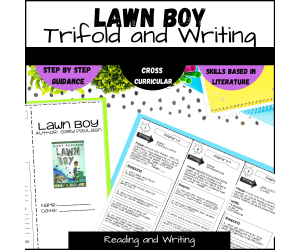
Guided Reading Activity Lawn Boy Book Report Trifold
ELA, Reading, Grade 3, 4, 5, Activities, Projects, Teacher Tools, Graphic Organizers, Worksheets & Printables, Novel Studies
Lawn Boy by Gary Paulsen tells the story of a 12-year-old boy who transforms a simple lawn-mowing gig into an unexpectedly booming business. Through quirky clients, a surprising stock market investment, and the involvement of a professional boxer, the boy learns about responsibility, success, and the unpredictable twists of entrepreneurship. With humor and insight, Lawn Boy captivates readers while sparking conversations about economics, character growth, and life lessons. This trifold activity is created to help students practice reading comprehension skills while providing differentiated instruction for various reading levels. Trifolds can be utilized during guided reading, as independent seat work, or in literature circles. The included writing wrap-up allows for assessing multiple skills in one cohesive project, making it an ideal, standards-aligned resource for busy teachers. Multiple subjects can be assessed, including reading skills, reading comprehension, and writing reflection. What’s Included in This Resource: Each trifold is broken down by chapters or pages and allows chunking of information for easy teacher planning and appropriate student use. In each trifold, the following skills are assessed: Making Connections: Encourage students to relate the story to their own lives, other texts, and the wider world. Making Inferences: Help students combine text evidence with prior knowledge to draw logical conclusions. Using Context Clues: Teach students to deduce the meaning of unfamiliar words using hints from the text. Visualization: Support students in creating mental images of characters, events, and settings. Evaluation: Develop critical thinking by analyzing characters, themes, and the author’s message. Writing Wrap-Up: A writing assessment tool for reflection and deeper understanding. How This Resource Benefits Teachers: ✔ Provides differentiated instruction for diverse learners. ✔ Fosters text engagement and critical thinking with content. ✔ Offers flexibility for grades, seat work, or group discussions. What Teachers Are Saying: ⭐ "This resource made my guided reading groups more organized and productive!" - Rebecca T. ⭐ "Perfect for differentiation and keeping all students engaged at their level." - Larraine C. ⭐ "My students loved the activities, and it worked seamlessly in our literature circles!" - Celia N.
Author Kel's Klass
Tags Trifold, Reading Project, Gary Paulsen, Making Inferences, Making Connections, Lawn Boy, Guided Reading Activity, Context Clues, Evaluation, Visualization
How to Write a Book Report: Using Graphic Organizers for Prewriting
ELA, Writing, Common Core, Grade 5, 6, 7, 8, Graphic Organizers, Teacher Tools
How to Write a Book Report: Using Graphic Organizers for Prewriting This resource is designed to aid in the education of students, focusing on the organization of thoughts and ideas before they begin writing book reports. Ideal for students between grade 5 and 8, this resource falls squarely within the Language Arts category with an emphasis on enhancing writing skills. The primary function of this tool is to revolutionize the often daunting task of book report assignments by using easily accessible graphic organizers during prewriting. These handy devices guide students through organizing their thoughts concerning key elements such as plot structure, character characteristics, and themes which are essential in creating engaging book reports. A well-organized outline aligns with Bloom's Taxonomy learning objectives; this resource encourages a progressive learning method gliding students gradually from understanding facts through synthesis and evaluation stages - guiding each step along the way to completing polished reports that strictly adhere to proper forms and mechanics. Besides being just a teaching tool, educators can use this resource creatively - whether as supplementary material complementing an ongoing writing program or self-sufficient activities assigned at home. The inclusive package doesn't only include exciting word puzzles enhancing language skills but also comprehension quizzes significantly instrumental in determining student's grasp level over learned concepts. To ensure flawless execution of preset activities included in lesson plans, there’s added reassurance with inclusion of detailed guides breaking down how tasks should be approached. An additional feature includes easy-to-use student assessment rubrics simplifying grading process while ensuring fair basis during marking exercise - offering overall a systemically designed educational experience bundling together both learning and assessment processes neatly organized within one place. Kept flexible via maintaining it available on PDF; it enables usage electronically during virtual classes or printed paper copies accommodating varied class systems from whole group teaching to small group combined studies. This promising writing developmental course for intermediate level students, adheres strictly to the Common Core State Standards and is thoughtfully curated implementing Bloom's Taxonomy techniques forming its fundamental foundation.
Author Classroom Complete Press
Tags PDF

Aunt Flossie's Hats and Crab Cakes Later Book Companion
ELA, Reading, Reading Comprehension, Literature, Grade 2, 3, 4, Teacher Tools, Graphic Organizers, Worksheets & Printables, Novel Studies, Activities, Worksheets
This picture book companion is a complete supplemental resource for the book Aunt Flossie's Hats (and Crab Cakes Later) by Elizabeth Fitzgerald Howard. It includes 27 print-and-go reading activities to choose from, making this resource ideal for customizing learning to your student's specific needs and academic abilities. Students will investigate characters, identify story elements, determine the theme, practice plotting story events, compare & contrast, make predictions, inferences, & connections, answer questions that require them to think beyond the text, and much more! Students will be captivated by the stimulating activities, while educators will value the saved effort in searching for premium resources to tackle complex reading concepts. The activities on offer aim to promote advanced cognitive skills, urge students to cite textual justifications for their conclusions, and motivate them to articulate their personal opinions and views. ⭐️This Resource Includes:⭐️ ◾ Making Predictions: Before reading the book, students will make predictions about the text. ◾ Story Elements: Students fill in the boxes with words & pictures to represent the story elements. ◾ Sequencing: Students will retell & illustrate the important parts of the story. ◾ Summary: Students complete the Somebody, Wanted, Because, But, So graphic organizer and write a summary of the story. ◾ Story Event Sort: Students will describe a scene or event from the story that fits into each of the categories & explain how the event made them feel & how it relates to the category. ◾ Cause & Effect (simplified): Students are given either the cause or effect and will cut & match up cause & effect cards, then paste them in the correct boxes (ANSWER KEY included). ◾ Cause & Effect: Students cut & match up cause & effect cards, then paste them in the correct boxes (ANSWER KEY included). ◾ Visualizing Aunt Flossie's Hats: Students read the descriptions of Aunt Flossie's hats from the story and draw pictures of what they visualize the hats to look like. ◾ Making Inferences: Students use clues & schema to make inferences while reading the story. ◾ Using Details to Make Inferences: Students will make inferences using the provided details from the story. ◾ Making Connections: Students make connections to an event from the story. ◾ Character Inside & Out (Sarah): Students include details from the story to describe what the character says, thinks, does, and feels. ◾ Character Inside & Out (Susan): Students include details from the story to describe what the character says, thinks, does, and feels. ◾ Character Inside & Out (Aunt Flossie): Students include details from the story to describe what the character says, thinks, does, and feels. ◾ Character Feelings (Sarah & Susan): Students describe how the characters’ feelings change throughout the story & give examples of the events that cause them to feel the way they do. ◾ Character Feelings (Aunt Flossie): Students describe how the character's feelings change throughout the story & give examples of the events that cause them to feel the way they do. ◾ Character Summary: Students summarize the main character of the story. ◾ Character Perspective: Students will compare Rubina's perspective to Sana's perspective in the story by drawing a picture and adding words to the thought bubbles. ◾ Sketch a Scene From the Story: Students will draw a scene from the story and explain why it's important to the plot. ◾ Setting Influences the Plot: Students will draw a scene from the story that takes place in one of the settings and write about what happened there and why it was important to the plot. ◾ Theme: Students answer the questions to determine which theme best fits the story and provide text evidence to support their choice. ◾ Thinking About the Text: Students will answer the questions about the story & include examples from the text to support their answers. ◾ Thank You Aunt Flossie: Students imagine they are Sarah or Susan and write Aunt Flossie a thank-you note to explain why spending Sunday afternoons with her made such special memories. ◾ Wait... There's More!: Students will write about what happens next in the story. ◾ My Special Memory: Students write about a piece of clothing, jewelry, hat, shoes, or other item that reminds them of a special memory. ◾ Families are Special: Students will brainstorm their family's traditions, things that make their family unique, and special things they do with their family. Then, they will compare and contrast their family with a classmate's family using a Venn diagram. ◾ Book Review: Students will color in the stars to rate how much they enjoyed the book and draw a new cover & their favorite character from the story. Then, they will explain why other kids should or should not read it. 💡Need ideas for different ways you can implement these activities? ◾ Focus on different reading skills each day for targeted instruction, and have students complete a corresponding printable to check for understanding. ◾ During centers, students can independently read the story again and complete an activity that reviews a previously taught concept. ◾ Work with students on a reading concept they struggle with during guided reading or strategy groups. ◾ Students work with a partner or in literature circles to complete additional reading activities. This resource is for extension read-aloud activities only. The book is not included. ⭐️You may also like: ⭐ TEXT SET #1: "The Importance of Friendship" ◾ A Weekend With Wendell Read Aloud Book Companion Activities for IRA ◾ First Come the Zebra Read Aloud Book Companion Activities for IRA ◾ This is Our House Read Aloud Book Companion Activities for IRA ◾ Horace and Morris But Mostly Dolores Read Aloud Book Companion Activities for IRA ◾ The Old Woman Who Named Things Read Aloud Book Companion Activities for IRA TEXT SET #3: "Finding Your Way in a New Place" ◾ Grandfather Counts Read Aloud Book Companion Activities for IRA ◾ The Have a Good Day Cafe, Read Aloud Book Companion Activities for IRA ◾ Roses for Gita Read Aloud Book Companion Activities for IRA ◾ Mango, Abuela, and Me, Read Aloud Book Companion Activities for IRA ◾ Home at Last Read Aloud Book Companion Activities for IRA TEXT SET #7: "Exploring Narrative Nonfiction" ◾ Cactus Hotel Read Aloud Book Companion Activities for IRA ◾ A Log's Life Read Aloud Book Companion Activities for IRA ◾ Salmon Stream Read Aloud Book Companion Activities for IRA ◾ Think of an Eel Read Aloud Book Companion Activities for IRA ✨Be sure to check out my storefront here: https://teachsimple.com/contributor/creatively-gifted
Author Creatively Gifted
Tags IRA, Picture Book Activities, Read Aloud Lessons, Interactive Read Aloud Activities, Elementary Reading, Reading Comprehension, Fountas And Pinnell IRA, Family, Second Grade, Memory Stories

How to Write an Essay: Prewriting and Graphic Organizers
ELA, Writing, Common Core, Grade 5, 6, 7, 8, Graphic Organizers, Teacher Tools
**This is the chapter slice "Prewriting and Graphic Organizers" from the full lesson plan "How to Write an Essay"** Take the fear out of writing essays and empower your students by giving them the tools to comprehensively express their point of view. Our workbook provides clear and concise lessons about every stage of the writing process. Based on Bloom’s taxonomy we offer instruction about the four most common types of essays and provide review lessons about verbs, adjectives and pronouns. You can use this material to supplement your present writing program or for independent student work. Also included is a detailed implementation guide, student assessment rubric, word puzzles and comprehension quiz. The six color graphic organizers will assist the introduction of the skill focus and in guiding your students through their successful writing process. All of our content meets the Common Core State Standards and are written to Bloom's Taxonomy.
Author Classroom Complete Press
Tags PDF, What Is A Pre Write For An Essay, Pre Writing Graphic Organizers

Jabuti the Tortoise Reader Response Activities
ELA, Reading, Reading Comprehension, Literature, Grade 2, 3, 4, Teacher Tools, Graphic Organizers, Worksheets & Printables, Novel Studies, Activities, Worksheets
This picture book companion is the perfect resource to accompany the book Jabuti the Tortoise: A Trickster Tale from the Amazon by Gerald McDermott. It includes 34 print-and-go reading activities to choose from, making this resource ideal for customizing learning to your student's specific needs and academic abilities. Students will investigate characters, identify story elements, determine the theme, practice plotting story events, compare & contrast, make predictions, inferences, & connections, answer questions that require them to think beyond the text, and much more! Students will love the engaging and fun activities, and you will appreciate the time saved hunting for high-level resources to teach reading concepts that students frequently struggle with. The activities provided are designed to enable students to apply higher-level thinking skills, encourage them to provide text evidence to support their thinking, and challenge them to express their own thoughts and/or perspectives. ⭐️This Resource Includes:⭐️ ◾ Elements of a Trickster Tale Anchor Chart or Notes Handout: Color and B&W ◾ Making Predictions: Before reading the book, students will make predictions about the text. ◾ Elements of a Trickster Tale: Students fill in the chart with the details of the story that characterize it as a trickster tale. ◾ Trickster Tale Tidbits: Students will answer the questions with details from the story that proves it's a trickster tale. ◾ Story Elements: Students fill in the boxes with words & pictures to represent the story elements. ◾ Sequencing: Students will retell & illustrate the important parts of the story. ◾ Recalling events in Chronological Order: Students describe and illustrate four major events in the story in chronological order. ◾ Summary: Students complete the Somebody, Wanted, Because, But, So graphic organizer and write a summary of the story. ◾ Story Event Sort: Students will describe a scene or event from the story that fits into each of the categories & explain how the event made them feel & how it relates to the category. ◾ Making Inferences: Students use clues & schema to make inferences while reading the story. ◾ Making Connections: Students make connections to an event from the story. ◾ Author's Message: Students describe four important events from the story in chronological order and answer the questions about the author's message. ◾ Character Inside & Out (Jabuti): Students include details from the story to describe what the character says, thinks, does, and feels. ◾ Character Inside & Out (Vulture): Students include details from the story to describe what the character says, thinks, does, and feels. ◾ Character Feelings (Jabuti): Students describe how the character's feelings change throughout the story & give examples of the events that cause them to feel the way they do. ◾ Character Feelings (Vulture): Students describe how the character's feelings change throughout the story & give examples of the events that cause them to feel the way they do. ◾ Character Development (Jabuti): Students select the character traits that best describe the character at different times throughout the story and provide examples from the book to support each character trait. ◾ Character Development (Vulture): Students select the character traits that best describe the character at different times throughout the story and provide examples from the book to support each character trait. ◾ Character Change (Jabuti): Students will explain how the character changed from the beginning to the end of the story and describe the events that caused the change to happen. ◾ Character Change (Vulture): Students will explain how the character changed from the beginning to the end of the story and describe the events that caused the change to happen. ◾ Sketch a Scene From the Story: Students draw a scene from the story & explain why it's important to the plot. ◾ Setting Influences the Plot: Students will draw a scene from the story that takes place in one of the settings and write about what happened there and why it was important to the plot. ◾ Setting the Scene: Students identify three different settings in the story and explain how they know that the setting changed. ◾ Theme: Students answer the questions to determine which theme best fits the story and provide text evidence to support their choice. ◾ Thinking About the Text: Students will answer the questions about the story & include examples from the text to support their answers. ◾ Compare & Contrast: Students answer the questions to compare & contrast Jabuti's tricks to Vulture's trick. ◾ Vocabulary Crossword Puzzle: Students use the clues and the word bank to fill in the crossword puzzle (ANSWER KEY INCLUDED). ◾ Antonyms All Around: Students find the antonyms, words with opposite meanings, in the text provided from the story and use a dictionary, or scan the QR code, to find more opposite words for the antonyms they found in the text. ◾ Wait... There's More!: Students will write about what happens next in the story. ◾ Book Review: Students color in the stars to rate how much they enjoyed the book and draw a new cover & their favorite character from the story. Then, they will explain why other kids should or should not read it. ◾ Write an Origin Story: Students will plan and write their own origin story. The following pages are included in this activity : ◾ My Trickster Tale Planning Sheet: Students use the planning sheet to organize their own origin story. They select an animal that they think is special and write a story about how the animal got its voice, coloring, nose, tail, speed, or other special features or abilities. ◾ My Trickster Tale Cover: Students design a book cover for their origin story. ◾ Lined Writing Paper: Three different layouts are included. 💡Need ideas for different ways you can implement these activities? ◾ Focus on different reading skills each day for targeted instruction, and have students complete a corresponding printable to check for understanding. ◾ During centers, students can independently read the story again and complete an activity that reviews a previously taught concept. ◾ Work with students on a reading concept they struggle with during guided reading or strategy groups. ◾ Students work with a partner or in literature circles to complete additional reading activities. The book is not included. ⭐️You may also like: ⭐ TEXT SET #1: "The Importance of Friendship" ◾ A Weekend With Wendell Read Aloud Book Companion Activities for IRA ◾ First Come the Zebra Read Aloud Book Companion Activities for IRA ◾ This is Our House Read Aloud Book Companion Activities for IRA ◾ Horace and Morris But Mostly Dolores Read Aloud Book Companion Activities for IRA ◾ The Old Woman Who Named Things Read Aloud Book Companion Activities for IRA TEXT SET #3: "Finding Your Way in a New Place" ◾ Grandfather Counts Read Aloud Book Companion Activities for IRA ◾ The Have a Good Day Cafe, Read Aloud Book Companion Activities for IRA ◾ Roses for Gita Read Aloud Book Companion Activities for IRA ◾ Mango, Abuela, and Me, Read Aloud Book Companion Activities for IRA ◾ Home at Last Read Aloud Book Companion Activities for IRA TEXT SET #7: "Exploring Narrative Nonfiction" ◾ Cactus Hotel Read Aloud Book Companion Activities for IRA ◾ A Log's Life Read Aloud Book Companion Activities for IRA ◾ Salmon Stream Read Aloud Book Companion Activities for IRA ◾ Think of an Eel Read Aloud Book Companion Activities for IRA ✨Be sure to check out my storefront here: https://teachsimple.com/contributor/creatively-gifted
Author Creatively Gifted
Tags IRA, Picture Book Activities, Read Aloud Lessons, Interactive Read Aloud Activities, Elementary Reading, Reading Comprehension, Fountas And Pinnell IRA, Second Grade, Trickster Tales, Jabuti The Tortoise
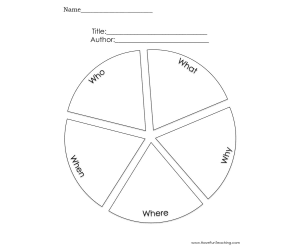
Who What When Where Why Graphic Organizer Worksheet
ELA, Social Studies, Reading, Grade 2, 3, 4, Teacher Tools, Graphic Organizers
If you want to give students extra practice with organizing information in reading, I have just the resource for you. The great part of this worksheet is that it can be used at any time with just about any text. This means the practice and exposure to this skill is endless for your students. This Who What When Where Why Graphic Organizer Worksheet is a great way for your students to organize important information in their own words. The pie-shaped graphic organizer is easy to use and understand, making it a valuable tool for any teacher. What You Get: A 1-page printable PDF featuring a single graphic organizer. How to Implement This Graphic Organizer: This activity is perfect for students who are struggling with organizing information when they are reading a text, short story, or reading passage. This will help them practice and improve their skills. Here are a few ways you may choose to implement this Who What When Where Why Graphic Organizer Worksheet: -- You can print off this worksheet as a whole class set for each student to complete. If you are reading a story as a whole group, use that as an opportunity to complete the graphic organizer as a whole group. Guide students through each section of the pie as you think out loud about what details you need to include in that section. You will also use the text to help you find the answers you are looking for. By modeling how to complete the Who What When Where Why Graphic Organizer Worksheet, students will feel more equipped to complete it independently for other texts. -- You can print off copies of the worksheet and laminate them, so that students can use them over and over again with dry erase markers. This makes a great reading and writing center activity. -- This Who What When Where Why Graphic Organizer Worksheet can also be used as homework or an early finisher activity. Encourage students to see if they can find these important details for books they are reading in the classroom or have checked out from the library. Take A Look at My Best Sellers: Land and Water Worksheet Solving Subtraction Word Problems Worksheet Fact Families Worksheet Personal Pronouns Worksheet Animal Beginning Digraph Sounds Worksheet Writing with Technology Activity You can find more resources at my storefront here: Have Fun Teaching
Author Have Fun Teaching
Tags Note Taking, Story Elements, Graphic Organizer Worksheet, Reading Graphic Organizer, Reading Comprehension, Writing Center, Short Story, Story Grammar Graphic Organizer, Who What When Where How Why, 5 W Graphic Organizer

Quatrain Poetry – Posters + Graphic Organizers
ELA, Literature, Poetry, Grade 1, 2, 3, Graphic Organizers, Teacher Tools
This resource is a set of learning posters and graphic organizers for quatrain poetry writing. There are a variety of posters that teach about quatrain poetry. Students will explore features, how to write a quatrain poem and so much more. They will use the graphic organizers to brainstorm ideas and then write a quatrain poem. This pairs well with your poetry unit in English class. You may also love to print these off and use in a center activity. This resource can be accessed through: PowerPoint Google slides PDF
Author Good Human Project
Rating
Tags Quatrain Poetry, Poetry Writing, Language Arts, Posters, Graphic Organizers, How To Write A Quatrain, Quatrain In Poetry, What Is Quatrain In Poetry, What Is A Quatrain In Poetry, How To Write A Quatrain Poem
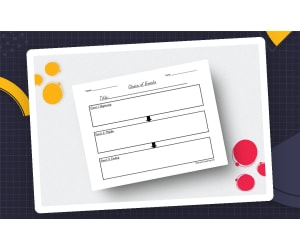
Beginning, Middle, End – Story Sequencing Organizer
ELA, Reading, Grade 2, 3, 4, 5, 6, Teacher Tools, Graphic Organizers, Worksheets & Printables, Worksheets
This graphic organizer can help your students to better understand the events that occur in the beginning, middle, and end of a story. This can be a helpful tool for students who are struggling to understand the sequence of events in a story.
Author Have Fun Teaching
Rating
Tags Sequencing, Sequencing Chart Graphic Organizer

Nonfiction Text Analysis Packet
ELA, Reading, Grade 3, 4, 5, 6, Teacher Tools, Graphic Organizers
This resource is a Nonfiction Text Analysis Packet. These worksheets pair well alongside any nonfiction texts. Students will explore schemas, vocabulary and so much more. The graphic organizers will help them explore cause and effect, summarizing and more.
Author Hey Teacher Shoppe
Tags Graphic Organizers, Nonfiction, Text Analysis, Cause And Effect, Vocabulary

Characters, Settings, and Events Worksheet
ELA, Reading, Preschool, Kindergarten, Grade 1, Teacher Tools, Graphic Organizers, Worksheets & Printables, Worksheets
This worksheet will help your students identify characters, setting, and events in a story. It is perfect for stories that they are struggling with or for extra practice. This worksheet is easy to follow and provides great support for your students.
Author Have Fun Teaching
Tags Story Elements, Characters Worksheet, Types Of Characters Worksheet