



3,992 products added recently
Page 6 - ELA Graphic Organizers
Enrich your English Language Arts instruction with graphic organizers that aid in understanding and organizing literary elements, writing structures, and vocabulary. This collection includes story maps, essay planners, and vocabulary webs. By integrating these tools, you can facilitate deeper engagement with texts and improve communication skills.

 Show filters


Note Taking Worksheet
ELA, Reading, Grade 2, 3, 4, 5, Teacher Tools, Graphic Organizers, Worksheets & Printables, Worksheets
This Note Taking Worksheet is a great way for students to take notes and summarize a book or story. This graphic organizer is simple and easy to use, and it will help students to understand the story better.
Author Have Fun Teaching
Tags Note Taking, Summarizing

Ode Poetry Writing – Posters + Graphic Organizers
ELA, Literature, Poetry, Grade 1, 2, 3, Graphic Organizers, Teacher Tools
This resource is a set of learning posters and graphic organizers for ode poetry writing. There are a variety of posters that teach about ode poetry. Students will explore features, how to write an ode poem and so much more. They will use the graphic organizers to brainstorm ideas and then write an ode poem. This pairs well with your poetry unit in English class. You may also love to print these off and use in a center activity. This resource can be accessed through: PowerPoint Google slides PDF
Author Good Human Project
Rating
Tags Language Arts Graphic Organizers, Language Posters, Poetry Writing, Ode Poetry, Unit, How To Write An Ofe, How To Write An Ode, Ode Template Pdf, Write An Ode, Writing An Ode, How To Write And Ode, What To Write An Ode About, How To Write A Ode, How Do You Write An Ode, How To Write Odes, How To Write An Ode For Students, How To Write A Ode Poetry, How To Write An Ode Poem, Ode Lesson Plans, Ode Poem Ideas
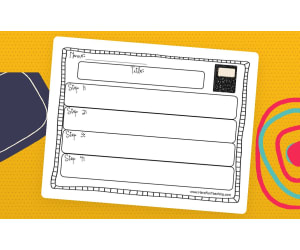
Sequence of Events Graphic Organizer Worksheet
ELA, Social Studies, Reading, Grade 1, 2, 3, Teacher Tools, Graphic Organizers, Worksheets & Printables, Worksheets
This graphic organizer worksheet will help your students write the title of the book they have been assigned or have chosen. It's a great way to help them keep track of the sequence of events in the story.
Author Have Fun Teaching
Tags Sequencing, Sequence Of Events Worksheet

Dolch Sight Word: Progress Monitoring - Data Tracking
ELA, Language Development, Vocabulary, Kindergarten, Preschool, Grade 1, 2, Teacher Tools, Graphic Organizers
This resource is great to keep track of learning of Dolch Sight Word learning.
Author Jessica Richmond
Tags Dolch Sight Words, Progress Monitoring, Data Tracking, Vocabulary, Sight Words

Land and Sea Animals Compare and Contrast Graphic Organizer
ELA, Science, Life Sciences, Animals, Reading, Earth and Environmental Sciences, Earth Sciences, Biology, Grade 2, 3, 4, Teacher Tools, Graphic Organizers, Worksheets & Printables, Worksheets
This Land and Sea Animals Compare and Contrast Graphic Organizer is a great way for students to organize their ideas and compare and contrast Land and Sea animals. This product is a great resource for teachers who want to help their students learn about these topics.
Author Have Fun Teaching
Tags Compare And Contrast, Oceans, Environments

PLOT: The FIVE Elements of a Story Graphic Organizers
ELA, Reading, Reading Comprehension, Writing, Literary Devices, Not Grade Specific, Graphic Organizers, Templates
This is our PLOT section of our Graphic Organizers Series: The FIVE Elements of a Story. In this set, you can enjoy 10 custom graphic organizers for Plot. These graphic organizers can be used in any classroom, for any grade, and with any student. Use these graphic organizers to help students gain an understanding of Plot in a story. Each graphic organizer comes with instructions on how to use them. Plot Graphic Organizers: Plot Pyramid – Complete this classic Plot Pyramid graphic organizer by writing the Introduction of the story in the bottom left box. Then, describe the Rising Action, followed by the Climax of the story. Finish up with the Falling Action and the Resolution or Conclusion of the story. Sequence – Describe events from the story in sequence. Start off by writing the Initiating Event, or the event that starts off a chain reaction, in the top box. Follow this with the Steps that directly result from this event in order that they occur. Finish up by writing the Final Outcome of this event. Prediction Chart – In the first column, write down what you predicted, or thought would happen in the story. In the second column, write down what actually happened in the story. Continue this format for each event you predict will happen in the story. Storyboard – Illustrate the plot or an event from the story. Draw or describe in detail each stage in the plot or in an event that takes place in the story. Remember, the order of plot development is: Introduction, Rising Action, Climax, Falling Action, and Resolution/Conclusion. Story Structure – Complete the Story Structure by identifying the Introduction, events of the Rising Action, Climax, events of the Falling Action, and the Conflict and Resolution of the story. Then, identify the theme of the story, as well as the setting of the story (where and when the story takes place). Sequence Chain – Describe up to 9 events from the story in the order that they occur. Write the first event in the first box, followed by the second event in the following box, and so on following the chain. It is not necessary to fill in every box with an event. For an extra activity, draw each event in detail. Prediction Tree – In this Prediction Tree graphic organizer, write your question at the base of your tree. On the trunk, write down your prediction to the answer of the question posed. On the branches, write down evidence from the story to support your prediction. Story Cycle – Describe the Introduction of the story in the top right box. Following the cycle, describe the Rising Action next. Then, include the Climax of the story. Follow this with the Falling Action, and finally with the Resolution of the story. Then, describe how the Resolution relates back to the Introduction. Changes in Plot – Identify how the Plot changes throughout the story. In the first column, write down what happened in the beginning of the story. In the second column, write down what happened at the end of the story. Compare the two to show how the plot changed. Do this for every event in the story. Plot Analysis – Describe the Introduction and identify the Point of View. Describe the Rising Action and what’s being Forshadowed if relevant. Identify the Inciting Force and the Climax. Describe the Falling Action and any Suspense that is experienced. Describe the Conclusion and any Symbolism that is present.
Author Ibby Resources
Tags Literary, Device, Graphic Organizer, Plot, Elements

Story Map
ELA, Reading, Reading Comprehension, Preschool, Grade 1, 2, Teacher Tools, Graphic Organizers
Sometimes you just need a great graphic organizer that students can use over and over again in your classroom, no matter what book you’re reading! Sometimes, we may be in need of something that only highlights a single skill. However, once students have been introduced to multiple skills individually, they may be ready to combine these skills. When your students are ready for this, I have just the resource for you. This is a Story Map Graphic Organizer . It is a 2-page printable which can be printed front and back or on two separate pages. This story map is great because it can be used for fiction and non-fiction texts. This was designed for lower elementary students to start putting their knowledge to the test. This graphic organizer will easily allow you to informally assess student comprehension. The components included are: -Story Plot (First, Next, Finally) -Characters Who? -Setting Where? -Problem -Solution -What was the big idea of the story? You can choose to print multiple copies of this. You may even choose to print and laminate this, so students can use it over and over again. I can be contacted for questions and concerns at lisa.riddle50@gmail.com .
Author Lisa Lynn Riddle
Tags Story Map, Story Elements, Graphic Organizer, Reading Printable, Story Plot, Comprehension, Characters, Fiction Text, Nonfiction Text, Free Printable Story Map, Simple Story Map, Story Map Printable, Story Map Lesson Plans
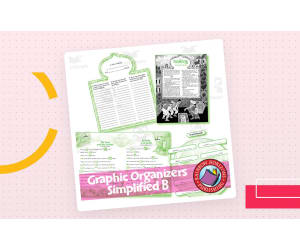
Graphic Organizers Simplified B - Reading, Writing & Thinking Skills
ELA, Reading, Writing, Grade 3, 4, Graphic Organizers, Teacher Tools
This graphic organizer -based resource is designed for grades 3 to 4. The graphic organizers included in this resource helps students organize their thoughts to be successful in reading, writing and thinking. Graphic organizers are used to help students become better readers, writers and thinkers. This is the first book in a series of four that provides ready-to-use content. The lessons within this resource are made up of three sections: a reading section, a graphic organizer , and comprehension-style worksheets. Aligned to the International Reading Association and National Council of Teachers of English Standards 1, 3, 6, and 12.
Author Classroom Complete Press
Tags Graphic Organizers, Comprehension, Answers, Primary, Elementary

Triplet Poetry Writing | Posters & Graphic Organizers
ELA, Literature, Poetry, Grade 1, 2, 3, Graphic Organizers, Teacher Tools
This resource is a set of learning posters and graphic organizers for triplet poetry writing. There are a variety of posters that teach about triplet poetry. Students will explore features, how to write a triplet poem and so much more. They will use the graphic organizers to brainstorm ideas and then write a triplet poem. This pairs well with your poetry unit in English class. You may also love to print these off and use in a center activity. This resource can be accessed through: PowerPoint Google slides PDF
Author Good Human Project
Tags Triplet Poems, Language Arts, Poetry Unit, Writing Poems, Graphic Organizers, Triplet Poem Examples

Beginning Writer Story Board
ELA, Writing, Creative Writing, Preschool, Grade 1, 2, 3, Teacher Tools, Graphic Organizers, Activities, Worksheets & Printables, Worksheets
The Beginning Writer Story Board: An Innovative Teaching Tool Constructed meticulously with the younger writer's mind in sight, this storyboard set caters specifically to those taking their first steps into narrative story writing. The Beginner Writer Story Board is a versatile teaching resource that provides an engaging and interactive way for young students (kindergarten-grade 3) to express their thoughts, ideas, and experiences. Building Creative Narratives 108 thematic story cards featuring characters, items, settings and other diverse elements act as unique puzzle pieces for creative storytelling. Students are encouraged to construct narratives by selectively piecing together these cards onto a storyboard. This empowers learners as they become the architects of their own narratives. Versatile Storyboard Options The set comes with ten distinct storyboard options where students can arrange chosen story cards on laminated boards using reusable Velcro dots. With an easy interchangeability option if they decide to redirect their creative storyline. Other Key Features: Fosters independent thinking skills. Promotes decision making process during narrative creation. Aids struggling writers by providing visual cues throughout drafting process. Suitably crafted for classroom material during language arts lessons or exciting homework exercise promoting narrative skills outside regular school hours! Inspire creativity in your students with the Beginner Writer Story Boards! Let them uncover captivating tales lying ahead!
Author Simply Schoolgirl
Tags Creativity, Narrative Writing, Story Cards, Independent Thinking, Visual Aids
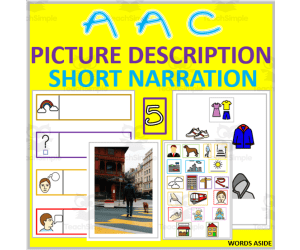
AAC | Picture Description Short Story | Visual Guide Resource 5
Special Resources, ELA, Special Education Needs (SEN), Speech Therapy, Language Development, Pre-Reading, Vocabulary, Writing, Kindergarten, Preschool, Grade 1, 2, Teacher Tools, Graphic Organizers
AAC Picture Description Short Story Visual Guide Resource 5 is an educational resource designed specifically for educators and therapists. Its main goal is improving the language development, communication, and early literacy skills of children with special education needs (SEN), speech therapy patients, as well as mainstream classroom students primarily from preschool through grade two. This resource combines various teaching aids including: Real-life pictures Color-coded sentence strips Familiar themes like WHO / WHAT DOING / WHERE / WHEN / WEATHER / SURROUNDINGS/ THOUGHTS represented on separate pages Description of clothes or individual's appearance etc. The learning journey begins with a real-life photo that serves as the basis for all ensuing activities then leverages color-coded sentence strips to help children formulate narratives around familiar themes. Additional features include descriptions of clothing worn by individuals in photos and sequential answer boards that allow narrative formation through randomized questioning. An added attribute of this resource pack is the inclusion of blank colour coded pages which invite learners to contribute creatively- customizing stories in their unique way thus strengthening their communication roots further. The AAC Picture Description Short Story Visual Guide Resource 5 offers immense flexibility - use it en masse during whole-group instruction sessions or divide it among smaller groups; distribute it for homework assignments enhancing independent thinking; make use of task cards material available within; or even creating minibooks complete with descriptive strips and boards! This package comprises 16 printable PDFs each equipped with: Sentence construction strips Narration boards & Answer cards aiming at improving children's verbal abilities+ Note: The downloaded file can be printed and laminated for use. While this tool is designed primarily for use in educational environments, it can be equally beneficial during one-on-one learning or therapy sessions at home facilitated by parents/guardians and is thus an excellent asset towards children's verbal, cognitive, social and emotional development.
Author WORDS ASIDE
Tags AAC, Picture Description, Short Story, Visual Guide, Communication Skills

Venn Diagram Templates and Triple Venn Diagram Templates
ELA, Research, Science, Social Studies, Grade 5, 6, 7, 8, Worksheets & Printables, Worksheets, Graphic Organizers, Teacher Tools
Venn Diagram and Triple Venn Diagram Templates: With Lines and Without Lines Are your middle school students completing research projects in science, social studies, or English Language Arts? Are they comparing and contrasting two or three ideas? Then you need these Venn Diagram Templates and Triple Venn Diagram Templates in your teacher tool box! How to Use: Simply print the Venn Diagram that works best with the topic you are studying. If you are comparing and contrasting two characters pick the standard Venn Diagram with lines or without lines. If you are comparing and contrasting three extreme environments, choose the Triple Venn Diagram with lines or without lines. Your students will fill in notes to show what is unique about each topic and what ideas the two (or three) topics share. This is a great way for them to organize research or notes from a lesson you are presenting. These can be used independently, in pairs, or for small group work! What's Included: 5-Page PDF: Ready to Print and Use! Title Page with teacher instructions Traditional Venn Diagram with no lines Traditional Venn Diagram with lines Triple Venn Diagram with no lines Triple Venn Diagram with lines Grades to Use With: These Venn Diagrams can be used in any grade, but they are designed for middle school research projects in 5th, 6th, 7th, or 8th grade in social studies (compare two countries or three political figures), science (compare and contrast two kinds of circuits or three terrestrial biomes), or English Language Arts (compare two poems or three of Shakespeare's plays). You can choose to use the versions with lines or the versions with no lines, or differentiate for your students. If you enjoy this middle school research project template, check out other middle grades research options in my store: Grace Under Pressure .
Author Grace Under Pressure
Rating
Tags Venn Diagram, Triple Venn Diagram, Graphic Organizer, Research Graphic Organizer, Compare And Contrast, Venn Diagram Template, Triple Venn Diagam Template, Venn Diagram With Lines

Compare & Contrast – Cause & Effect Organizer
ELA, Reading, Grade 3, 4, 5, 6, Teacher Tools, Graphic Organizers, Worksheets & Printables, Worksheets
This graphic organizer can help your students compare and contrast events in two separate stories. It can be used to identify cause and effect relationships as well.
Author Have Fun Teaching
Rating
Tags Cause And Effect, Compare And Contrast

Living and Non-Living Things Compare and Contrast Graphic Organizer
ELA, Reading, Science, Earth and Environmental Sciences, Earth Sciences, Grade 2, 3, 4, Teacher Tools, Graphic Organizers, Worksheets & Printables, Worksheets
This graphic organizer is a great way for students to compare and contrast living and non-living things. It is simple and easy to use, and it helps students organize their thoughts. This is a great tool for any teacher looking to help their students understand the difference between living and non-living things.
Author Have Fun Teaching
Tags Compare And Contrast, Living And Non-Living Things
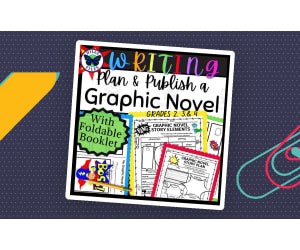
Graphic Novel Writing Plan & Publish
ELA, Writing, Creative Writing, Grade 2, 3, 4, Teacher Tools, Graphic Organizers
Graphic Novel Writing Plan & Publish: A Revolutionary Resource for Teachers Engaging young readers has never been easier with the rising trend of graphic novels. Leveraging this, the exceptional 'Graphic Novel Writing Plan & Publish' resource proves to be a practical solution for educators such as public school teachers and homeschoolers. Expertly designed, it seeks to enrich students’ creative writing skills while interweaving elements of Language Arts in an engaging manner. Ideal for students from Grade 2 through Grade 4, this teaching aid aims at nurturing budding writers. Easing Teaching Woes with Strategic Guidance Understanding the challenges a teacher may face - endless needs and varying student skill levels - this invaluable kit breaks ground by guiding learners systematically through every stage of creating a graphic novel step-by-step. It caters to all aspects, from sparking their initial inspiration to publishing their final product in a foldable booklet form. Meticulously Crafted Graphic Organizers Enclosed in The Kit Ten comprehensive PDF pages featuring graphic organizers that allow learners to structure their narratives effectively. Nurture both critical thinking and storytelling abilities. Inclusive of examples of essential elements needed when crafting visual stories such as speech bubbles, thought bubbles, emanata (visual symbols representing emotions), narration captions, and splash page (single-page drawings within comic books). The building blocks provided serve as masters for artistic narrative techniques which are key components behind successful creative writing. A Step Towards Publishing Student Work: Printable Booklets Outline Note: For best results when printing foldable booklets print pages 7-10 back-to-back flipped on the short side. This easy-to-use resource goes beyond merely a homework assignment or small group activity. It's an authentic journey transforming novice writers into published authors! Why Add This to Your Teaching Toolkit? Transforming complex subjects like Creative Writing into approachable concepts helps sustain children's interest while making learning enjoyable. Whether it’s managing an entire class or leading small breakout sessions, incorporating 'Graphic Novel Writing Plan & Publish' in your teaching toolkit will undeniably enrich your instructional methodology!
Author Diles Files
Tags Graphic Novels, Creative Writing, Language Arts, Storytelling, Publishing

SETTING: The FIVE Elements of a Story Graphic Organizers
ELA, Reading, Reading Comprehension, Language Development, Pre-Reading, Writing, Not Grade Specific, Teacher Tools, Graphic Organizers
This is our SETTING section of our Graphic Organizers Series: The FIVE Elements of a Story. In this set, you can enjoy 10 custom graphic organizers for Setting. These graphic organizers can be used in any classroom, for any grade, and with any student. Use these graphic organizers to help students gain an understanding of Setting in a story. Each graphic organizer comes with instructions on how to use them. Setting Graphic Organizers: Setting Elements - Place + Time + Environment = Setting in this Graphic Organizer. Describe the Place that the story takes place in the house graphic. Then, describe the Time in the clock graphic. Finally, describe the Environment in the landscape graphic. Setting Stage - Draw the setting that the story takes place in on the stage in this graphic organizer. Be sure to illustrate the time and place that the story takes place in. Also include the environment of the story, and try to show the tone or mood that the setting creates for the story. Changes in Setting - Identify how the Setting changes throughout the story. In the first column, write down when and where the story takes place at the beginning. In the second column, write down when and where the story takes place at the end. Compare the two to show how the setting changed. Setting Comparison - Compare your Setting with the Setting of the story. In the first column, describe your own Place, Time, Environment, and Mood. Then, do the same for the story’s setting in the second column. Finally, compare each element of the setting. What is the same? What is different? Tone and Mood - Where + When = Tone/Mood in this Graphic Organizer. Describe Where the story takes place in the house graphic. Then, describe When the story takes place in the clock graphic. Finally, describe how both of these elements affect the Tone and Mood of the story. Setting Map - Draw a map to show where the story takes place. Include all the important places from the story as the setting changes. As an extra activity, include routes to each place as it happens in the story. Additionally, include the time for each place on your map. Be creative with your drawing. Past, Present, Future - Describe the Setting as it changes throughout the story. In the Past section, write the setting that took place before the story (flashback). In the Present section, write the current setting of the story. In the Future section, write the setting that will take place after the story (flashback). Elements of Setting - Place + Time + Environment + Mood = Setting in this Graphic Organizer. Describe the Place that the story takes place in the top left box. Then, describe the Time in the top right box. Then, describe the Environment in the bottom left box. Finally, describe the Mood in the bottom right box. Character and Setting Comparison - Compare the Characters in the story with the Setting. Write traits that the character and setting share where the circles overlap. Write traits that the character and setting don’t share in the outside circles. Do this for each character and setting in the story. Setting Analysis - Describe each element of the Setting in detail. Describe the setting, how it relates to the characters, and how the characters are in conflict with the setting. Then, identify the tone and mood of the story, how the setting affects it, and how the story would change if the setting was different.
Author Ibby Resources
Rating
Tags Study, Skills, Character, Literary, Device

"Zane and the Hurricane" Novel Study Figurative Language Activities
ELA, Reading, Reading Comprehension, Literature, Grade 4, 5, 6, Worksheets & Printables, Novel Studies, Teacher Tools, Graphic Organizers, Activities, Assessments, Worksheets
Figurative language generates emotion, sets the tone and mood, and reflects subtle connotational nuances. These are crucial cues that assist readers in making inferences and comprehending the author's purpose. Students should be aware of this type of language. This figurative language study provides an abundance of figurative language examples from the novel Zane and the Hurricane by Rodman Philbrick that students can analyze. ⭐️This resource includes:⭐️ Figurative Language Posters: Simile, Metaphor, Hyperbole, Personification, Idiom (definition, why authors use it, examples, & non-examples) Figurative Language Practice Sheets: Students will identify figurative language in passages taken from the novel and determine the type, meaning, and author’s purpose for including the figurative language identified in each passage. This activity can be divided up by splitting the class into groups and having each group work on different pages for a section of chapters. It could also be divided up and assigned as a bell ringer, warm-up activity, or exit ticket. Includes a total of 20 pages and is broken into the following sections: Ch. 1–5, Ch. 6–10, Ch. 11–15, Ch. 16–20, Ch. 21–25, and Ch. 26–end (INCLUDES ANSWER KEY). Finding Figurative Language Chart : As students read the novel, they fill out the chart with examples of figurative language they come across while reading. Students should provide the quote from the text, page numbers, type of figurative language used, meaning, and why the author included it. The figurative language chart is not specific to this particular novel and can be used with any text. ⭐ You may also like: ⭐ https://teachsimple.com/product/inside-out-and-back-again-vocabulary-study https://teachsimple.com/product/a-sweet-smell-of-roses-picture-book-read-aloud https://teachsimple.com/product/let-the-children-march-picture-book-read-aloud https://teachsimple.com/product/file-folder-game-honey-bee-vowel-teams Be sure to check out my storefront here: https://teachsimple.com/contributor/creatively-gifted
Author Creatively Gifted
Tags Literature, Literature Circles, Zane And The Hurricane, Reader Response, Open-ended Questions, Homework, Figurative Language, Novel Study, Reading Comprehension, Literary Analysis, Figurative Language Study Guide
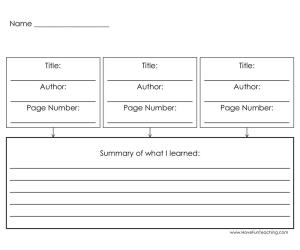
Comparing Three Texts Graphic Organizer Worksheet
ELA, Reading, Grade 4, 5, 6, Teacher Tools, Graphic Organizers, Worksheets & Printables, Worksheets
Description: This graphic organizer will help your students compare and contrast three texts they are reading in class. By summarizing the main points of each text, your students will be better able to understand the commonalities and differences between them. This is a great way to encourage close reading and higher-level thinking in your students.
Author Have Fun Teaching
Tags Compare And Contrast, Genres

Storyboard Creative Writing Planning Guide
ELA, Writing, Creative Writing, Grade 4, 5, 6, 7, Teacher Tools, Graphic Organizers
This resource is a Storyboard Creative Writing Planning Guide. This resource can be accessed digitally or as a printable. Included are 9 interactive Google Slides to make the writing process engaging and effective all year long.
Author The Language of Learning
Rating 3
Tags Creative Writing, Graphic Organizers, Storyboard, Story Elements, Planning Guide

Making Inferences Graphic Organizer
ELA, Reading, Grade 2, 3, 4, 5, Teacher Tools, Graphic Organizers, Worksheets & Printables, Worksheets
This graphic organizer will help your students to record their schema and textual evidences while reading and making inferences. It is a great way to help them organize their thoughts and improve their reading comprehension skills.
Author Have Fun Teaching
Tags Inference, Graphic Organizer For Inferences, Inferring Graphic Organizer
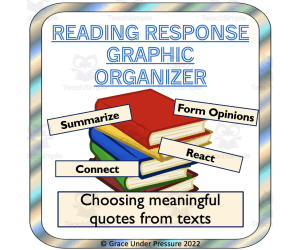
Reading Response Graphic Organizer: Help Your Students Choose Quotes from Literature
ELA, Reading, Reading Comprehension, Strategies, Literature, Writing, Grade 4, 5, 6, 7, 8, Teacher Tools, Graphic Organizers
This graphic organizer worksheet will help guide your intermediate students through the process of drafting an interesting reading response. This is the first step to learning how to choose meaningful quotes from novels when writing longer essays in high school and university. It takes time to teach students how to actually do this, and this assignment breaks that process down step-by-step. It includes prompts to help your students think carefully about the following topics: Choose an interesting quote from the book they are currently reading. This could be a class novel or an independent reading book. Summarize plot and characters: They need to explain what has been happening in the story up to this point. What has lead to this quote? Make text-to-text and text-to-self connections: Students should choose a quote that is impactful to them personally. They should have some kind of connection to this quote. Share reactions: This prompts students to share their emotions when reading this part of the book. Form opinions: This is where students start to move towards the idea of a thesis statement. What do they think about this part of the book? Do they agree or disagree with the character's choices? Visualize the scene: Students draw an image of this part of the book. How to Use: This task works well for literature circles, class novel studies, or individual novel studies. After completing this reading response, students could be tasked with writing an organized paragraph to explain their quote and its significance. Having answered all of these prompts, they should have lots to say! Grades to Use With: This assignment is perfect for middle grades (4-8) who are starting to learn how make deeper and more complex responses to literature (beyond simple comprehension questions).
Author Grace Under Pressure
Tags Reading Response, Quotes, Reflection, Novel Study, Lit Circles, Comprehension, Reading, Writing, Connection, Opinion, Organizer Quotes, Literature Graphic Organizer

What the Author Said Graphic Organizer Worksheet
ELA, Reading, Grade 2, 3, 4, Teacher Tools, Graphic Organizers, Worksheets & Printables, Worksheets
This graphic organizer will help your students summarize what the author said in the story they are reading. It is a great way to keep track of the main points in the story and to make sure your students are understanding what they are reading.
Author Have Fun Teaching
Tags Inference, Author Study Graphic Organizers
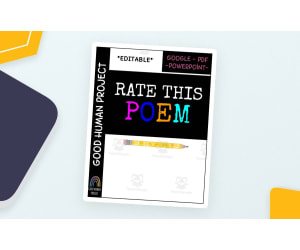
Rate A Poem
ELA, Literature, Poetry, Grade 1, 2, 3, Graphic Organizers, Worksheets, Worksheets & Printables
This is a fun resource to implement within your poetry unit or any time students are reading a poem. This is a Rate A Poem activity that can be completed independently, in centers or small groups. Students will rate the poem by giving it stars, discussing the rhyming, illustrate for the poem and much more. This resource can be accessed through: -Google slides -PDF -PowerPoint
Author Good Human Project
Tags Language Arts Activity , Graphic Organizer, Reading Response
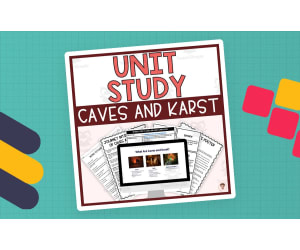
Caves and Karst Unit Study
Creative Arts, Art, Social Studies, ELA, Reading, Reading Comprehension, Grammar, Language Development, Vocabulary, Spelling, Writing, Grade 3, 4, 5, Activities, Crafts, Teacher Tools, Lesson Plans, Presentations, Graphic Organizers, Projects, Assessments, Worksheets & Printables, Worksheets
The Caves and Karst Unit Study This is an engaging, comprehensive, and low preparation teaching resource that explores the fascinating world of caves and karst. It is a valuable resource for educators focusing on grades 3 to 5, as well as homeschooling guardians. Main Topics Covered Introductory concepts about caves and karst formations Detailed insight into speleothems and cave forms Landscape found in karsts Particularly captivating information about cave ecosystems habitat adaptations. The unit study wraps up with an exploration of cave conservation efforts highlighting their importance. Tailored Approach to Learning Styles Each lesson includes: Visual-auditory online presentations , alongside curated videos. Reading passages: To cater for those who learn best through perusing textual information. Upon consideration for student handwriting skills levels, options are made available within note-taking pages with either primary lines, regular lines or no lines. Note-taking pages & Graphic organizers: To keep track of acquired knowledge across every topic covered. Hands-on activities are incorporated into every lesson plan providing kinesthetic opportunities. Purposeful Assessment through Quizzes A tool that teachers or homeschoolers can use flexibly over days or weeks depending on pacing preference - quizzes filled with 15 multiple-choice questions per lesson – ideal in testing understanding at each stage. Cross-Curricular Subjects Integration The unit study covers: Art (emphasis on drawing, coloring & crafts) English Language Arts Geography and Geology Grammar, History, Reading, Science and Social Studies research work , Spelling . The Caves and Karst Unit Study: An interactive unit study that inspires young geologists' minds while encouraging the application of learned concepts through hands-on activities. The resource spans over 150 pages premium content in a downloadable file in PDF format. A truly comprehensive guide for both educators and homeschoolers.
Author Heather Huhman
Tags Caves, Karst Formations, Speleothems, Cave Ecosystems, Conservation Efforts