3,905 products added recently
Page 43 - Science Lesson Plans
Bring science to life with lesson plans that cover biology, chemistry, physics, and more. These resources offer experiments and interactive lessons to stimulate curiosity. Implement them to foster a deep understanding of scientific principles and a passion for discovery.
Reducing Your Community's Carbon Footprint: Is the Future Green or Grim? Gr. 5-8
Science, Earth and Environmental Sciences, Environmental Science, Grade 5, 6, 7, 8, Teacher Tools, Lesson Plans
Reducing Your Community's Carbon Footprint: Is the Future Green or Grim? Gr. 5-8 An engaging and thought-provoking teaching resource for middle school educators focusing on science and environmental studies. Part of the larger lesson plan titled "Reducing your Community's Carbon Footprint", this component encourages students to think critically about global climate change, its causes, impacts, and potential solutions. Educate them about the transition from living in cities to suburban areas and how it affects a community's travel footprint. Have learners identify cause-and-effect correlations in workplace commuting on distant environments such as a shrinking island. Showcase real-life case studies such as Cuba’s transformation—substituting their fossil fuel–based farming system into an eco-friendly one within a decade. Inspire students with examples of green towns worldwide that have successfully reduced their carbon footprints while brainstorming personal actions they can adopt in their own communities towards greener futures. Bloom’s Taxonomy and STEAM principles This resource is designed based on Bloom’s Taxonomy guiding principle. The package aids holistic understandings of environmental science. The additional resources include: A graphic organizer facilitating structural thinking patterns. A carbon footprint calculator that sensitizes learners toward responsible living. A crossword aiding vocabulary enrichment related to nitrogen ingestion, A comprehension quiz fortifying assimilated knowledge absorption, An answer key reducing correction time for teachers! This easy-to-access downloadable PDF file is perfect for whole group instructions, small breakout sessions or even as a homework assignment! All this and more make " Reducing Your Community's Carbon Footprint: Is the Future Green or Grim? Gr. 5-8 " your absolute must-have environmental science teaching resource!
Author Classroom Complete Press
Tags PDF
I WONDER - How Can You Help Environmental Sustainability
Environmental Science, Earth and Environmental Sciences, Science, Grade 4, 5, 6, 7, 8, 9, 10, Lesson Plans, Teacher Tools
Video Introduction An amazing video designed for the students to learn more about STEM. I WONDER - How Can You Help Environmental Sustainability | Animated Video Lesson Do you like STEM subjects? what is your favorite one? Have you ever tried to plant a seed? If yes, tell us more about it. Or have you ever tried to invent something? If yes, tell us more about it. And how do you think it will help us? Have you ever seen a microorganism under a microscope? What was it? And how it looked like? Mathematics is a marvelous subject. Let' sharpen our brains and solve some equations. Do you like timetable tricks? What is your favorite one? Do you know how to code? Have you ever created an app or a game before? If yes, how was it like? I WONDER - How Can You Help Environmental Sustainability | Animated Video Lesson The video is perfect for encouraging the researching skills for the students, while learning more about this fantastic topic. I WONDER - How Can You Help Environmental Sustainability | Animated Video Lesson This friendly designed video is suitable for students at school, homeschooling, and as a group activity. Format Available in MP4 format.
Author Educational Voice
Tags How Can You Help Environmental Sustainability, How Can You Help Environmental Sustainability Video, Environmental Sustainability, Environmental Sustainability Facts, Environmental Sustainability Facts For Kids
I WONDER - How Long Does It Take To Make Compos | Animated Video
Earth Sciences, Earth and Environmental Sciences, Science, Environmental Science, STEM, Grade 5, 6, 7, 8, 9, 10, 11, Lesson Plans, Teacher Tools
Video Introduction An amazing video designed for the students to learn more about STEM. I WONDER - How Long Does It Take To Make Compos | Animated Video Lesson Do you like STEM subjects? what is your favorite one? Have you ever tried to plant a seed? If yes, tell us more about it. Or have you ever tried to invent something? If yes, tell us more about it. And how do you think it will help us? Have you ever seen a microorganism under a microscope? What was it? And how it looked like? Mathematics is a marvelous subject. Let' sharpen our brains and solve some equations. Do you like timetable tricks? What is your favorite one? Do you know how to code? Have you ever created an app or a game before? If yes, how was it like? I WONDER - How Long Does It Take To Make Compos | Animated Video Lesson The video is perfect for encouraging the researching skills for the students, while learning more about this fantastic topic. I WONDER - How Long Does It Take To Make Compos | Animated Video Lesson This friendly designed video is suitable for students at school, homeschooling, and as a group activity. Format Available in MP4 format.
Author Educational Voice
Tags How Long Does It Take To Make Compos, How Long Does It Take To Make Compos Video, Making Compos, Making Compos Video, Making Compos Facts, Making Compos Facts For Kids, Making Compos Video For Kids
I WONDER - What Shape Is Bacteria | Animated Video Lesson
Biology, Life Sciences, Science, Grade 4, 5, 6, 7, 8, 9, 10, Lesson Plans, Teacher Tools
Video Introduction An amazing activity designed for the students to learn more about STEM. I WONDER - What Shape Is Bacteria | Animated Video Lesson Do you like STEM subjects? what is your favorite one? Have you ever tried to plant a seed? If yes, tell us more about it. Or have you ever tried to invent something? If yes, tell us more about it. And how do you think it will help us? Have you ever seen a microorganism under a microscope? What was it? And how it looked like? Mathematics is a marvelous subject. Let' sharpen our brains and solve some equations. Do you like timetable tricks? What is your favorite one? Do you know how to code? Have you ever created an app or a game before? If yes, how was it like? I WONDER - What Shape Is Bacteria | Animated Video Lesson The video is perfect for encouraging the researching skills for the students, while learning more about this fantastic topic. I WONDER - What Shape Is Bacteria | Animated Video Lesson This friendly designed video is suitable for students at school, homeschooling, and as a group activity. Format Available in MP4 format.
Author Educational Voice
Tags What Shape Is Bacteria, What Shape Is Bacteria Video, Bacteria, Bacteria Facts, Bacteria Facts For Kids, Bacteria Video, Bacteria Video For Kids, Bacteria's Shape , Biology, Biology Video For Kids
Cells, Skeletal & Muscular Systems: The Skeletal System - Bones Gr. 5-8
Science, Life Sciences, Human Body, Grade 5, 6, 7, 8, Teacher Tools, Lesson Plans
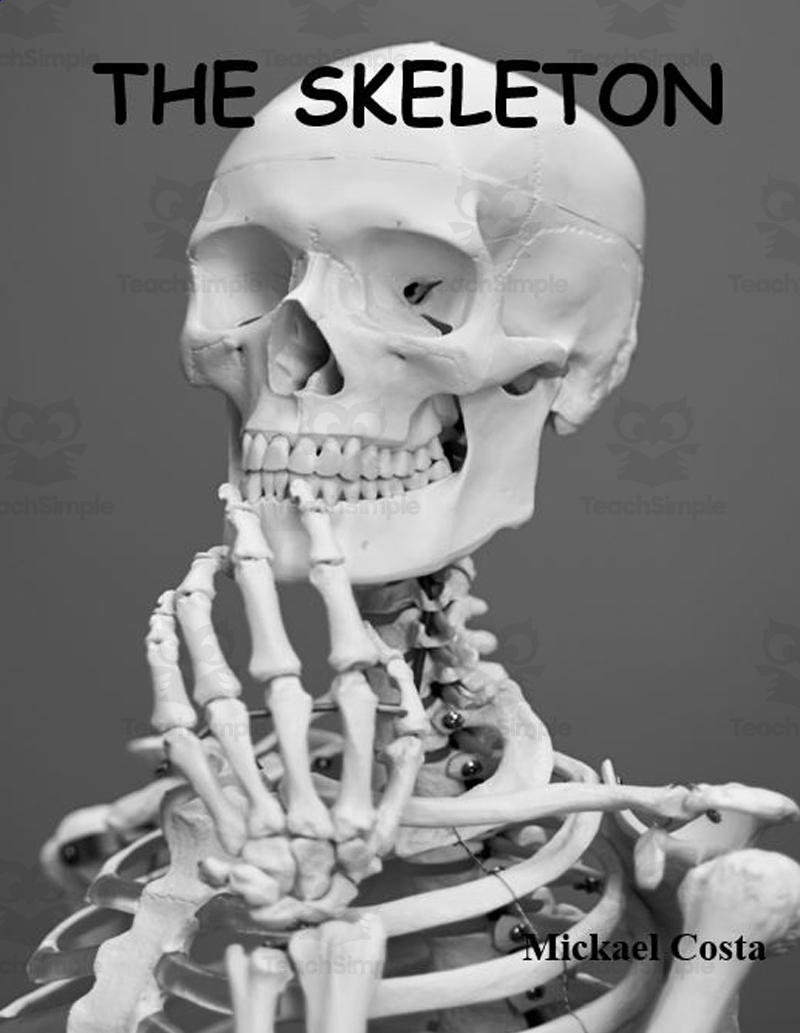
Cells, Skeletal & Muscular Systems: The Skeletal System - Bones Gr. 5-8 An instructive teaching resource, Cells, Skeletal & Muscular Systems: The Skeletal System - Bones Gr. 5-8 brings the human body to life in your classroom. Designed for students in grades 5 to 8, this science tool dives into detailed investigations of cells, tissues, organs and organ systems and provides both foundational and remedial understanding. In this lesson plan chapter, there's a special focus on the skeletal system, which functions as the supporting structure providing form and function to our bodies. Students will discover fascinating insights about bones, their composition and how they interconnect within the human structure. Table of Contents: The Comprehensive Analysis of Cells: This journey to acquaint with biology begins with a comprehensive analysis of cells—including their structures, functions and types expedition into specialized cells. The formation of Tissues from Individual Cells: Pupils will gain an enriched understanding about how individual cells form tissues which collectively create organs that work harmoniously within organ systems. An Understanding of Major Body Systems: Embedding aspects from eight major body systems-circulatory,respiratory,nervous,digestive excretory and reproductive. Tactile Learning Approach This resource includes specially-designed hands-on activities for tactile learners along with reading exercises strategically positioned before and after every core concept presentation that reinforces comprehension. Dedicated Teaching Resources To aid educators like you in various settings be it group lessons or small group discussions; homework tasks or test preparations, this package also provides a color mini poster visual aid. Each segment is followed by conversation points for intensifying the learning process. Compatibility and Conformance to Standards Thoughtfully sequenced according to Bloom's Taxonomy model using elements from STEM initiatives (Science Technology Engineering Mathematics), this comprehensive resource is compatible with state standards. In conclusion, Cells Skeletal & Muscular Systems: The Skeletal System - Bones Gr 5-8 doesn't just teach, it brings the microscopic world of cells and complexities of the human skeletal system into focus. It's more than just a teaching aide—it's an immersive journey of discovery within biology and human anatomy.
Author Classroom Complete Press
Tags PDF
Northern Lights DIGITAL Unit Study (Aurora Borealis)
Science, Basic Science, Grade 2, 3, 4, Lesson Plans, Teacher Tools
The Northern Lights DIGITAL Unit Study (Aurora Borealis): An Interactive Educational Resource Designed for Grades 2 through 4, this engaging unit study digs deep into the magic of Auroras, known as the northern lights (aurora borealis) and southern lights (aurora australis). Unique Educational Materials: Original reading passages: Learn about the origin of these celestial lights, what causes them, their different types and the distinctive sounds they make. Comprehension skills activities: Each passage is followed by self-checking questions to consolidate learning and understanding. Vocabulary matching activities: Develop extensive vocabulary associated with auroras via self-checking activities. Virtual games : Perfect team-building exercises that also embed scientific concepts. Great for group work or independent learning. Versatile Use: This dynamic resource can supplement science curriculums or arctic unit studies in classrooms, serve as homework assignments or even provide comprehensive content for homeschooling. Easily Accessible Format: The study material is available in PDF format ensuring seamless accessibility across various platforms without compromise on quality or usability. In conclusion,, whether you aim to enhance regular science lessons; launch an engaging Arctic unit study; supplement home-based learning plans; foster collaborative efforts through innovative group activities; assess comprehension levels - The Northern Lights DIGITAL Unit Study ticks all boxes while sparking learners' curiosity about one of nature's greatest wonders.
Author Heather Huhman
Tags Northern Lights, Aurora Borealis, Science Curriculum, Interactive Learning, Phenomenon
Carbon Footprint Calculator & Personal Sustainability Plans
Science, Basic Science, Earth and Environmental Sciences, Life Sciences, Earth Sciences, Environmental Science, Geology, Space, Nature & Plants, Biology, Homeschool Curriculum, Homeschool Templates, Grade 4, 5, 6, 7, 8, Worksheets & Printables, Workbooks, Worksheets, Word Searches, Teacher Tools, Assessments, Lesson Plans, Quizzes and Tests, Quizzes, Tests
This fully planned out unit, straying away from Climate Anxiety and allowing students to build agency related to climate action, can be printed right out of this document and used in the classroom immediately. Designed for use in Grades 5–7 (ages 10–14), students will progress through this unit comprehensively by learning about the Carbon Cycle, measuring their actual CO₂e emissions, and creating their own personal plan for sustainability. The unit provides scientific text, real-world case studies (i.e. The Life of a White Cotton T-shirt), 10 individual audit worksheets related to home energy, transportation, diet, consumption, and water use. There is a Carbon Calculator provided which translates students' daily habits into actual data as well as templates for SMART Goal Setting and Advocacy Letters to promote action from students after completing the project. The materials align with NGSS (Earth and Human Activity Standard) and are ideal for Earth Day, STEM, or to promote Environmental Literacy throughout the rest of the school year. Not only does this package come with an extensive Teacher's Guide complete with answer keys, grading rubrics, visual aids, and a flexible 5-day pacing guide; the materials have been scaffolded to help mitigate eco-anxiety with both kindness and evidence-based science. The highlights include: 4 engaging chapters on greenhouse gases, CO₂e, and Life Cycle Assessment 10 student audit worksheets and a Carbon Calculator to synthesize student audit results SMART Goals Workshop for setting student action plans and evaluating systemic actions Professional writing activity related to Advocacy Letters A comprehensive Teacher Key, including Answer Keys, Grading Rubrics, and 5-Day Unit Plan All materials have been classroom-tested and proved to be effective. Appreciated by Parents and Educators: Empowerment Versus Fear – Empowers children and youth to make positive changes by turning their fear of climate change into tangible steps they can take themselves. Real-World Math/Data Skills – Develops mathematics and data-based skills through the calculation of CO₂e from current activities, reinforcing applied math and unit conversion skills and improving critical thinking. Systems Thinking – Students develop a deeper understanding of system relationships and the ripple effects of human activity on the ecological system through Life Cycle Assessment (T-shirts) and permafrost feedback loops. Teacher-friendly, Minimal Prep/Materials Needed – All materials required for implementation are provided (e.g., rubrics, answer keys, visuals, and 5-day pacing guides), so even non-science specialists can implement without difficulty. Opens Up Conversation at Home/School/Community – The advocacy letter and family audit provide an avenue for discussion beyond the classroom, resulting in actual changes to household sustainability. Targeted Grade Levels: The statement in the introduction clearly states that targeted grade levels are ‘5th, 6th, and 7th Grade.’ Therefore, because the math being introduced in this program involves multiplication, metric/unit conversions, basic percentage reasoning and cognitive complexity, I believe students in grades 5 through 7 will best use this resource as follows: Primary Group: 5th – 7th Grade (10-13 year olds) Secondary/Extension Group: (4th Grade) Advanced; 8th – 9th Grade as a basic review of what they learned in grades 5 and/or 6. Copyright/Terms of Use : The copyright for this book is owned by Syed Hammad Rizvi. This resource is intended for personal use and to be used in a single classroom. This means that you may not repurpose, sell, or give away any part of this resource. In essence, you cannot upload this resource to any public place on the internet and make it available to the world. If you wish to distribute this resource to other teachers, please purchase additional licenses through Teachsimple. Thank you for respecting these terms of use. This product is brought to you proudly by Syed Hammad Rizvi.
Author Creative Book Store
Rating
Tags ClimateChangeEducation, EcoLiteracy, SustainableClassroom, GlobalWarming, ClimateAction, GoGreen, ZeroWasteClassroom, EnvironmentalEducation, GreenSTEM, EarthWarriors
I WONDER - How Can Soil Erosion Cause Dust Storms | Animated Video
Environmental Science, Earth and Environmental Sciences, Science, Earth Sciences, Geology, Grade 4, 5, 6, 7, 8, 9, 10, Lesson Plans, Teacher Tools
Video Introduction An amazing video designed for the students to learn more about STEM. I WONDER - How Can Soil Erosion Cause Dust Storms | Animated Video Lesson Our environment is so precious, can you name different ways to help our environment to be clean? Have you ever recycled a material? If yes, tell us what was the material was it paper, plastic, glass or aluminum? How did you recycled it? What are the types of clean energy? How do hydro power works? Where can we find wind turbines? What is climate change? And what we can do to stop it? What are the different types of ecosystems? I WONDER - How Can Soil Erosion Cause Dust Storms | Animated Video Lesson The video is perfect for encouraging the researching skills for the students, while learning more about this fantastic topic. I WONDER - How Can Soil Erosion Cause Dust Storms | Animated Video Lesson This friendly designed video is suitable for students at school, homeschooling, and as a group activity. Format Available in MP4 format.
Author Educational Voice
Rating
Tags How Can Soil Erosion Cause Dust Storms, Soil Erosion, Soil Erosion Facts, Soil Erosion Video, Soil Erosion Video For Kids, Soil Erosion Facts For Kids, Dust Storms, Dust Storms Facts, Dust Storms Video
Rhino | Interactive Science Lesson | Micro-Learning Deck
Science, Life Sciences, Animals, Grade 6, 7, 8, 9, Teacher Tools, Lesson Plans
Interactive Rhino Science Lesson Introduces the Endangered Species This informative science lesson gives educators a multimedia resource to engage middle school students in learning about the endangered rhinoceros species. The PowerPoint slide deck can be used in whole class instruction, small groups, or independent learning modules to build students' understanding of rhino conservation. The lesson begins with a short video to introduce key rhino facts like their habitat, diet, and modern threats driving them toward extinction. An accompanying reading passage with audio recording lets students dive deeper into behaviors, evolution, and human impacts on rhinos. Finally, a close reading activity and quick write prompt allow educators to assess retention and comprehension. Altogether, these varied components promote engaged learning using real-world connections to this important environmental issue. With versatile implementation options, this rhino conservation lesson integrates interactive media for memorable science instruction on endangered species. The blend of informal assessments and fascinating content makes for an impactful learning experience for 6th-9th grade students.
Author Teach Me This
Tags Rhinos, Mini Lesson, Interactive, Science, Zoology
What's the Difference Between Weather and Climate? | Interactive Science Lesson | Micro-Learning Deck
Science, Earth and Environmental Sciences, Environmental Science, Grade 6, 7, 8, 9, Teacher Tools, Lesson Plans
This micro-learning deck is the perfect accessory to your Science instruction! This digital slideshow presents What's the Difference Between Weather and Climate? Within this slideshow, you will receive: -Video Lesson -Reading Passage w/ Audio -Close Reading -Quick Write The informational texts included in this resource alongside the informal assessments will keep your students engaged from beginning to end.
Author Teach Me This
Tags Weather, Climate, Environment, Reading Passage, Science Lesson
I WONDER - How Did The Pteranodon Eat | Animated Video Lesson
History: Ancient, History, Social Studies, History: World, Animals, Life Sciences, Science, Grade 4, 5, 6, 7, 8, 9, 10, Lesson Plans, Teacher Tools
Video Introduction An amazing video designed for the students to learn more about dinosaurs in different countries. I WONDER - How Did The Pteranodon Eat | Animated Video Lesson Do you like dinosaurs? what is your favorite one? Do you own a pet? If yes, tell us more about it, like what its name? And what do you like most about it? Do you think that your pet has been evolved from a dinosaur? Can you write down the characteristics of your favourite dinosaur like it's shape, their rivals, where did it use to live and what was their favourite food? What is the largest and the smallest dinosaur that ever found? Why is the T-rex is so famous? Have you ever read any interesting facts about it? Can you name any of the carnivores or herbivores dinosaurs? I WONDER - How Did The Pteranodon Eat | Animated Video Lesson The video is perfect for encouraging the researching skills for the students, while learning more about dinosaurs. I WONDER - How Did The Pteranodon Eat | Animated Video Lesson This friendly designed video is suitable for students at school, homeschooling, and as a group activity. Format Available in MP4 format.
Author Educational Voice
Rating
Tags Pteranodon, Pteranodon Facts, Pteranodon Video, Pteranodon Video For Kids, Pteranodon Facts For Kids, How Did The Pteranodon Eat, How Did The Pteranodon Eat Video, Dinosaur, Dinosaurs
Muscular System Unit
Science, Life Sciences, Human Body, Grade 9, 10, 11, 12, Lesson Plans, Teacher Tools
This Muscular System Unit for Anatomy and Physiology as well as Biology includes PowerPoints, Cornell-style editable note taking system ( great for AVID schools!), labs, writing assignment, test with answers, crossword puzzle for early finishers, and a suggested day by day teacher planner. Please Note: This product is designed to be used in conjunction with an Anatomy text that a teacher would have in their classroom. In addition, another tool that is utilized in this product is “The Anatomy Coloring Book” by Kapit and Elson. If an Anatomy text is not available, the Internet can also be used as a source for supplemental reading. This unit contains Cornell-style note taking system which is great for AVID schools! This can be used in Anatomy/Physiology class and can also be used in Biology. Great for any level student from English Learner - EL - to more advanced students.
Author The Teacher Team
Tags Anatomy, Physiology, Human Body Systems, Biology, ELL
I WONDER - What Does A Switch Do In A Circuit | Animated Video Lesson
Physics, Science, STEM, Grade 6, 7, 8, 9, 10, 11, 12, Lesson Plans, Teacher Tools
Video Introduction An amazing video designed for the students to learn more about STEM. I WONDER - What Does A Switch Do In A Circuit | Animated Video Lesson Do you like STEM subjects? what is your favorite one? Have you ever tried to plant a seed? If yes, tell us more about it. Or have you ever tried to invent something? If yes, tell us more about it. And how do you think it will help us? Have you ever seen a microorganism under a microscope? What was it? And how it looked like? Mathematics is a marvelous subject. Let' sharpen our brains and solve some equations. Do you like timetable tricks? What is your favorite one? Do you know how to code? Have you ever created an app or a game before? If yes, how was it like? I WONDER - What Does A Switch Do In A Circuit | Animated Video Lesson The video is perfect for encouraging the researching skills for the students, while learning more about this fantastic topic. I WONDER - What Does A Switch Do In A Circuit | Animated Video Lesson This friendly designed video is suitable for students at school, homeschooling, and as a group activity. Format Available in MP4 format.
Author Educational Voice
Tags What Does A Switch Do In A Circuit, What Does A Switch Do In A Circuit Video, Circuit Switch, Circuit Switch Facts, Circuit Switch Facts For Kids, Circuit Switch Video, Circuit Switch Video For Kids, Circuit
I WONDER - What Is Bio Energy | Animated Video Lesson
Environmental Science, Earth and Environmental Sciences, Science, Grade 4, 5, 6, 7, 8, 9, 10, Lesson Plans, Teacher Tools
Video Introduction An amazing video designed for the students to learn more about STEM. I WONDER - What Is Bio Energy | Animated Video Lesson Do you like STEM subjects? what is your favorite one? Have you ever tried to plant a seed? If yes, tell us more about it. Or have you ever tried to invent something? If yes, tell us more about it. And how do you think it will help us? Have you ever seen a microorganism under a microscope? What was it? And how it looked like? Mathematics is a marvelous subject. Let' sharpen our brains and solve some equations. Do you like timetable tricks? What is your favorite one? Do you know how to code? Have you ever created an app or a game before? If yes, how was it like? I WONDER - What Is Bio Energy | Animated Video Lesson The video is perfect for encouraging the researching skills for the students, while learning more about this fantastic topic. I WONDER - What Is Bio Energy | Animated Video Lesson This friendly designed video is suitable for students at school, homeschooling, and as a group activity. Format Available in MP4 format.
Author Educational Voice
Tags What Is Bio Energy, What Is Bio Energy Video, Bio Energy, Bio Energy Facts, Bio Energy Facts For Kids, Bio Energy Video, Bio Energy Video For Kids, Energy, Environment, Environment Video For Kids
Lesson Plan on Photosynthesis
Biology, Life Sciences, Science, Nature & Plants, Elementary, Middle School, Lesson Plans, Teacher Tools, Worksheets & Printables, Worksheets
Photosynthesis is the method through which green plants and some other organisms convert light energy into chemical energy. In green plants, light energy is absorbed during photosynthesis and utilized to transform water, carbon dioxide, and minerals into oxygen and organic compounds rich in energy. It would be unthinkable to undervalue the significance of photosynthesis in sustaining life on Earth. If photosynthesis stopped, there would quickly be minimal food or other organic materials on Earth. The majority of organisms would vanish, and eventually Earth's atmosphere would be almost lacking in gaseous oxygen. The only organisms that could survive in such conditions would be chemosynthetic bacteria, which can harness the chemical energy from specific inorganic compounds and are therefore independent of light energy conversion. Utilize this useful lesson plan to instruct your students on the process of photosynthesis. Numerous activities are included, intended to take approximately 90 minutes. Photocopiable worksheets for students and their answers are also included at the end.
Author Bright Classroom Ideas Marketplace
Tags Photosynthesis, Biology, Earth, Lesson, Plan, Plant
High School Amphibians Reading Passage Bundle
ELA, Reading, Reading Comprehension, Science, Life Sciences, Animals, Biology, Resources for Teachers, High School, Homeschool Resources, Teacher Tools, Assessments, Worksheets & Printables, Writing Prompts, Quizzes and Tests, Rubrics, Lesson Plans
As a homeschool mom of a high schooler and a passionate resource creator, I know firsthand how challenging it can be to find engaging, rigorous science materials that truly captivate older learners. That exact struggle inspired me to design this comprehensive, High School Amphibians Reading Passage Bundle resource focused entirely on the fascinating biology of amphibians. Whether you are guiding your teenager through independent study or building a robust weekly science unit, this High School Amphibians Reading Passage Bundle resource transforms complex ecological concepts into clear, digestible learning milestones. Furthermore, my goal was to save you countless hours of planning by bundling an information-rich reading passage, extensive critical thinking prompts, note-taking sheets, academic vocabulary tools, and a complete assessment framework into one cohesive bundle. INCLUDED IN THIS RESOURCE: Comprehensive text covering amphibian biology and evolution. Analytical questions with paragraph-format answer keys. Forty terms with parts of speech, definitions, and quizzes. Detailed grading structures, scales, and complex rubrics. TOPICS COVERED: Gas exchange via permeable skin barriers. Thyroxine-driven developmental transformations. Predator-prey dynamics in global food webs. Chytrid fungi and anthropogenic extinction threats. Investing in this carefully curated High School Amphibians Reading Passage Bundle will elevate your high school science curriculum while bringing excitement back into your daily homeschool routine. By combining rigorous academic content with practical, time-saving printables and transparent rubrics, you can foster a genuine appreciation for evolutionary biology without the stress of heavy lesson planning. Truly, this resource bridges the gap between high-level scientific inquiry and accessible home education, ensuring both you and your teenager achieve academic success. Grab your copy today and watch your high schooler transform into a confident, scientifically literate steward of the natural world. If you and your students/homeschoolers enjoyed this resource, please leave a review. Thank you for your support! Tina - Big Easy Homeschooling Mom
Author Homeschool with Big Easy Homeschooling Mom
Rating
Tags Biology Lesson
Did You Say Dinosaurs? Gr. K-1
Science, Life Sciences, Animals, Grade 1, Teacher Tools, Lesson Plans
Did You Say Dinosaurs? Gr. K-1 Did You Say Dinosaurs? Gr. K-1 is a comprehensive educational resource specifically tailored for Kindergarten and Grade 1 students, focusing predominantly on the realm of animal science, with emphasis on Zoology. This all-inclusive teaching kit is an irreplaceable aid for teachers seeking original and captivating materials to enrich their Dinosaur Learning Center. Main Features: The included work-jobs can be printed directly onto construction paper or manila tag, providing educators with convenience and ease-of-use. Each job covers unique topics such as: "Meat Eaters", "Plant Eaters", "Two Legs", "Four Legs" and "I am a Dinosaur". The center book pages encourage creative development as children construct individual booklets, titled "Dinosaur Country", comprised of their personal dinosaur studies. Inbuilt interactive games like Fossil Match games, Dinosaur Bone Hunts, catchy Dinosaur Songs along with Mega Puzzles and Activity Cards that promote teamwork during group activities. A word search activity to strengthen the newly learned vocabulary related to dinosaurs gained from practical activities. An Interactive Board Game Concept: An intriguing addition within this learning resource is an engaging board game concept designed to stimulate interschool interaction among students while fostering a spirit of sportsmanship at such tender age. They have been designed keeping ultimate simplicity in mind; hence they come with easy-to-follow instructions, relieving teachers from task planning strain. In essence,'Did You Say Dinosaurs? Gr.K-1' bundle eases out the process of delivering multifaceted lessons about dinosaurs for teachers. It is well-suited for whole-class teaching, collaborative projects or homework assignment. This product is available in an universally accessible PDF format. Did You Say Dinosaurs? Gr.K-1 seamlessly integrates interactive animal science lessons into your curriculum - a perfect choice indeed!
Author Classroom Complete Press
Tags PDF
I WONDER - Can Plants Be Shy | Animated Video Lesson
Nature & Plants, Life Sciences, Science, Grade 4, 5, 6, 7, 8, 9, 10, Lesson Plans, Teacher Tools
Video Introduction An amazing video designed for the students to learn more about STEM. I WONDER - Can Plants Be Shy | Animated Video Lesson Do you like STEM subjects? what is your favorite one? Have you ever tried to plant a seed? If yes, tell us more about it. Or have you ever tried to invent something? If yes, tell us more about it. And how do you think it will help us? Have you ever seen a microorganism under a microscope? What was it? And how it looked like? Mathematics is a marvelous subject. Let' sharpen our brains and solve some equations. Do you like timetable tricks? What is your favorite one? Do you know how to code? Have you ever created an app or a game before? If yes, how was it like? I WONDER - Can Plants Be Shy | Animated Video Lesson The video is perfect for encouraging the researching skills for the students, while learning more about this fantastic topic. I WONDER - Can Plants Be Shy | Animated Video Lesson This friendly designed video is suitable for students at school, homeschooling, and as a group activity. Format Available in MP4 format.
Author Educational Voice
Tags Can Plants Be Shy, Can Plants Be Shy Video, Shy Plants, Shy Plants Facts, Shy Plants Facts For Kids, Shy Plants Video, Shy Plants Video For Kids, Plants, Plants Facts, Plants Video For Kids
I WONDER - What Do Hedgehogs Like To Eat | Animated Video Lesson
STEM, Biology, Life Sciences, Science, Animals, Grade 1, 2, 3, 4, 5, 6, 7, 8, Lesson Plans, Teacher Tools
Video Introduction Animal kingdoms are full of fascinating wonders to learn. This video is designed for the students to learn more about animals in different countries. I WONDER - What Do Hedgehogs Like To Eat | Animated Video Lesson Do you like animals? what is your favorite one? Do you own a pet? If yes, tell us more about it, like what its name? And what do you like most about it? What are the animal kingdoms? Can you write down the characteristics of each animal class like mammals, birds, reptiles, amphibian, fish and mollusks. Do you know that some animals can sing, can you name any of them? What is the largest and the smallest mammal in the world? What is the largest and the smallest bird in the world? What is the largest and the smallest fish in the world? I WONDER - What Do Hedgehogs Like To Eat | Animated Video Lesson The video is perfect for encouraging the researching skills for the students, while learning more about these fantastic animals. I WONDER - What Do Hedgehogs Like To Eat | Animated Video Lesson This friendly designed video is suitable for students at school, homeschooling, and as a group activity. Format Available in MP4 format.
Author Educational Voice
Tags What Do Hedgehogs Like To Eat, What Do Hedgehogs Like To Eat Video, Hedgehogs, Hedgehog, Hedgehogs Facts, Hedgehogs Facts For Kids, Hedgehogs Video, Hedgehogs Video For Kids
I WONDER - Can Chickens Recognise Their Chicks | Animated Video Lesson
STEM, Animals, Life Sciences, Science, Biology, Grade 1, 2, 3, 4, 5, 6, 7, 8, Lesson Plans, Teacher Tools
Video Introduction Animal kingdoms are full of fascinating wonders to learn. This video is designed for the students to learn more about animals in different countries. I WONDER - Can Chickens Recognise Their Chicks | Animated Video Lesson Do you like animals? what is your favorite one? Do you own a pet? If yes, tell us more about it, like what its name? And what do you like most about it? What are the animal kingdoms? Can you write down the characteristics of each animal class like mammals, birds, reptiles, amphibian, fish and mollusks. Do you know that some animals can sing, can you name any of them? What is the largest and the smallest mammal in the world? What is the largest and the smallest bird in the world? What is the largest and the smallest fish in the world? I WONDER - Can Chickens Recognise Their Chicks | Animated Video Lesson The video is perfect for encouraging the researching skills for the students, while learning more about these fantastic animals. I WONDER - Can Chickens Recognise Their Chicks | Animated Video Lesson This friendly designed video is suitable for students at school, homeschooling, and as a group activity. Format Available in MP4 format.
Author Educational Voice
Tags Can Chickens Recognise Their Chicks, Can Chickens Recognise Their Chicks Video, Chickens, Chicken, Chickens Facts, Chickens Facts For Kids, Chickens Video, Chickens Video For Kids, Chicks
Climate Change: Causes: Greenhouse Gases: Methane Gr. 5-8
Science, Earth and Environmental Sciences, Environmental Science, Grade 5, 6, 7, 8, Teacher Tools, Lesson Plans
Climate Change: Causes: Greenhouse Gases: Methane Gr. 5-8 Climate Change: Causes: Greenhouse Gases: Methane Gr. 5-8 is an instructive resource aimed towards students in grades 5 to grade 8 that elucidates the science associated with our atmosphere and the influence of human activities on Earth's systems. The Atmosphere Layers and Effects of Color on Radiation Absorption: This teaching tool discusses the different layers comprising our atmosphere. An intriguing experiment demonstrates how an object's color can affect the amount of radiation it absorbs, providing a hands-on activity that captivates your students. Effects of Rising Temperatures on Oceans and Carbon Cycle Model: An understanding of climate change isn't comprehensive without realizing what increasing temperatures do to Earth's oceans - a point well addressed within this resource. Students are motivated to build their own model of the carbon cycle, reinforcing their theoretical knowledge through practical application. Methane’s Atmospheric Residence Time, Ozone’s Impact and More: Moving beyond merely climate change, this robust package elucidates topics like methane’s atmospheric residence time as a weapon against climate change and ozone’s impact on human health – ensuring your lesson adopts a holistic approach intertwined with real-life implications. Educational Games & Vocabulary: This research-backed lesson plan includes subject-relevant vocabulary along with educational games such as crosswords and word searches which stimulate proactive participation among pupils while fortifying their learned concepts. This unit meets Bloom’s Taxonomy standards while aligning with STEAM initiatives for a balanced learning experience. Nitrogen-Fixing Bacteria Vs Synthetic Gases Discussion: The lesson goes beyond the environmental science curriculum by probing nitrogen-fixing bacteria versus synthetic gases topic, offering a clear view towards future sustainable practices and challenging current norms in agriculture. Adaptability to Different Teaching Formats: This resource can be used in whole group discussions, small student groups like project-based learning tasks or even as individual homework for it is bundled into one easy-to-navigate PDF file ready for print or digital usage. The pack also includes a comprehension quiz and an answer key as a feedback and evaluation tool. In conclusion, combining theoretical knowledge with practical understanding makes Climate Change: Causes: Greenhouse Gases: Methane Gr. 5-8 an essential addition to your teaching arsenal.
Author Classroom Complete Press
Tags PDF
The Universe Reading Comprehension Passage - Cored Ed Encyclopedia
ELA, Language Development, Reading Comprehension, Reading, Science, Earth and Environmental Sciences, Space, Pre-Reading, Vocabulary, Physics, Grade 2, 3, 4, 5, Worksheets & Printables, Worksheets, Teacher Tools, Centers, Activities, Writing Prompts, Assessments, Quizzes and Tests, Quizzes, Lesson Plans
This universe reading comprehension with lesson plan includes: Visualization (on the front cover) Start your lesson by taking a minute to think and share something about the topic. Read the script aloud (slowly), perhaps prepare some music or sound effects. Student close their eyes and let their imaginations wander. Students open their eyes, read the question aloud and give them a few minutes to complete. Ask a few students to share or keep answers until the end to compare with what they learn in the passage. Quick pause—thousands of Cored Education products are included with your TeachSimple membership. Download links and encyclopedia index available here. Pre-Reading Trivia Students will write down one thing they already know about the subject and then read five more facts and discuss. These facts are fun, and the students will enjoy learning about the subject before reading more. Give 1 minute for students to write what they already know (no pressure—best guess is fine). Read the five facts together. After each fact, do ask a student for their opinion, was it surprising? Set a purpose by asking students to highlight/underline one fact they want to learn more about during the reading. Reading Passage The text is a high-interest reading passage with set paragraphs, roughly three to four paragraphs long. It contains a variety of themes about the topic, anywhere from history to technology. The passage is between 250 and 350 words in length. First, ask students to look at the headings and see what they’ll learn about today. What do they know about the topic/heading? First read options: Teacher read-aloud (best for support). Partner reading (paragraph by paragraph). While reading, students underline important details, and vocabulary words they think may come up in the questions section. Mixed Questions The first question page contains four multiple-choice questions, each with a choice of four answers, and three written response questions that require a sentence or two from the student. Students complete the mcqs first independently, then review quickly as a class. For the 3 written responses, try to get students giving the answer with some form of evidence: “I think ___ because the text says ___.” If students get stuck, send them back to check the passage. Vocabulary Questions Practice seven key words from the text in this section across two activities. First section is scrambled words where students will unscramble three words given a clue for each. The second section is a word to meaning matching activity. Before starting, have some students read out words they underlined in the passage. Ask students to say the word and read aloud the sentence(s) around each word. Ask students to do scrambled words and the matching exercise in pairs then go through answers as a class. For the scrambled spelling task, get four pairs to come up to the board and write the words for extra practice with the other student reading out the clue. For the matching task, prompt students to give full sentences: “I matched ___ with ___ because ___.” Creative Writing In this question, the student will be required to write a five to eight sentence paragraph on a question related to the topic. Before starting, ask students write down 3 key ideas they are going to include in their piece. Ask students for ideas to share around the class to help those struggling. Pro writing expectations: 5–8 sentences At least 2 facts or details from the passage At least 2 vocabulary words from the previous page Students read their paragraphs while classmates listen for facts and vocabulary words. Extension Activities This page is optional for fast finishers or to take home. There are several activities, each one requiring a different skill. Do some, do none, do all, completely optional - but you will feel reassured knowing every possibility is planned for. Includes summary writting question. Answer Key There are answers for the multiple-choice questions, written response questions have sample answers, vocabulary answers and if there is a summary question then a sample summary will be provided as well. Lesson Plan Included Customized lesson plan for this lesson is included. Lesson Snapshot Title: The Universe Genre: Nonfiction (informational text) Subject: Science (Earth & Space Science) Primary Topic: Evidence the universe is expanding over time Estimated Guided Reading Level (A–Z): S What This Lesson Teaches Best Defines universe as “all of space and time and everything inside them,” expanding beyond the idea of stars as a “roof” above Earth. Explains how improved telescopes helped people realize some “cloudy” spots were actually faraway galaxies beyond the Milky Way. Uses the idea of galaxy light “shifted toward red” to show galaxies moving away and that space itself is stretching. Introduces the Big Bang as an explanation for expansion from a hotter, denser beginning, including the estimated age of the universe (about 13.8 billion years). Builds scientific curiosity by highlighting unanswered questions about “dark” ingredients that can’t be seen directly but affect the universe through gravity and expansion. Learning Goals Students will explain what the word universe means using details from the passage. Students will describe how better telescopes changed what people understood about “cloudy” spots in the sky. Students will explain what “shifted toward red” light suggests about galaxies and space stretching. Students will summarize the Big Bang idea as the universe expanding from a hotter, denser state. Students will describe why looking deep into space can also mean looking back in time. Students will identify one mystery scientists still study about the universe mentioned in the text. Key Vocabulary From the Text universe — all space, time, and everything inside them. galaxies — huge groups of stars far beyond the Milky Way. stretching — space expanding so distances grow larger. expanding — growing bigger as space spreads out. gravity — a force that affects everything by pulling. FULL CATALOG OF DOWNLOAD LINKS AND ENCYCLOPEDIA INDEX HERE
Author Cored Education
Rating
Tags Vocabulary, Reading Comprehension, Reading Passages, Lesson Plans, Ela Lesson Plans, Reading Comprehension Lesson Plans, Pre-reading, Science Lesson Plans, Earth Science, Space
I WONDER - Do Muscles Help You Stand | Animated Video Lesson
Human Body, Life Sciences, Science, Biology, STEM, Grade 4, 5, 6, 7, 8, 9, 10, Lesson Plans, Teacher Tools
Video Overview The human body is full of fascinating wonders to learn. This video is created to help the students recognize the anatomy and the job of the human body. I WONDER - Do Muscles Help You Stand | Animated Video Lesson Every part and organ in our human body is vital so let's see how important they are. Have you ever imagined how we look like if we didn't have a skeleton? Did you know that because we have our amazing muscles we can stand! Do you know how many teeth do we have? Have you ever wondered about the food journey inside our body? Can you name all the glands in our body? Why do we have skin? Our nervous system is really good at sending signals. Can you tell us more about it? Are you really good at Mathematics, painting, or any other thing? You should really thank your brain about it! The famous five senses are really doing a great work? Can you explain how every sense works? I WONDER - Do Muscles Help You Stand | Animated Video Lesson The video is perfect for encouraging the researching skills for the students, while learning more about our fantastic human body. I WONDER - Do Muscles Help You Stand | Animated Video Lesson This friendly designed video is suitable for students at school, homeschooling, and as a group activity. Format Available in MP4 format.
Author Educational Voice
Tags Do Muscles Help You Stand, Do Muscles Help You Stand Video, Muscles, Muscle, Muscles Fact, Muscles Fact For Kids, Muscles Video, Muscles Video For Kids, Muscle Facts, Muscle Facts For Kids
Digital Privacy & Security Guide for Non-Techies Book
Science, Technology, Computer Science, Engineering, Research, Social Emotional Learning (SEL), Special Resources, Career, Life Studies, Leadership, Grade 6, 7, 8, 9, 10, 11, 12, Teacher Tools, Assessments, Lesson Plans, Presentations, Workbooks, Worksheets & Printables, Writing Prompts, Word Problems, Activities, Projects
It is an unfortunate reality that one single leak of your passwords can lead to the theft of thousands of dollars from your savings account. It is also a frightening truth that your Smart TV can watch everything you do, and that Deepfake technology exists that is able to imitate your voice with ease. The above facts alone leave an overwhelming amount of people in a vulnerable position in relation to their personal digital security. This is the purpose of the 278-page "Digital Fear is Real" guide. This guide was created with the sole purpose of providing an in-depth, complete, and easy-to-understand reference tool for every aspect of your digital life. This tool covers everything, from passwords and mobile devices to social media, smart home technology, child safety issues, financial fraud, AI-driven threats, and estate planning. This guide goes beyond the typical frightening articles that do not provide real answers or to the overly technical books that require a computer science degree to understand. This book provides you with a complete step-by-step system that will allow you to protect yourself without having to spend a lot of time to achieve this goal. You'll Learn: * How to use password managers and passkeys * How to set up two-factor authentication to effectively stop hackers * How to secure your router and home network with six easy steps * How to protect your children from predators, cyber-bullying, and "sharing" * What you need to do to recover from identity theft and create an actionable recovery plan * How to install and use safe communication channels such as Signal, VPNs, Tor, and encrypted email * A 30-day privacy transformation plan to secure your digital world In addition to all the information contained in the guide, there are also many charts comparing different items, checklists, infographics, and a comprehensive appendix that contains a list of tools that every computer user needs to have. Why Parents (And Schools) are all in: Chapters Addressing the Child Safety Issues that Affect Parents and Adults in General, Including… Cyberbullying, online predators, sharenting, and children's digital footprint – all described in clear, no-nonsense, actionable terms. No Technical Experience Needed – These Chapters are written specifically for non-technical readers, with plenty of "common" language used in both chapters to facilitate understanding by teachers and parents who want to better protect their children from online dangers. Classroom and Family Resources Ready for Use – Each chapter is filled with checklists, comparison charts, infographics, and an overall 30 Day Action Plan that is great for either teaching curriculum or having family discussions at home. The Chapters Address Many of the Most Urgent Problems Facing Today's Children Including AI Voice Cloning, Deep Fakes, and TikTok Data Collection... so that they are prepared for whatever potential risk they may encounter this year. Create Lifelong Digital Citizens: Instead of merely providing a list of rules to abide by; through an ongoing mindset established throughout the children in their formative years/education process, parents will help their children learn to make thoughtful and responsible decisions independently of parents or other adults. Target Groups of Students: The book coversmost of the standard, foundational content and structure with both foundationaland advanced information. Therefore, the intendedaudiences will include the following: - High School Students (Grades 9-12)- A focus on Digital Literacy, Computer Science, and LifeSkills Classes contains usefulinformation forstudents; Chapters dedicated to the Social Media, Cyberbullying, A.I. Pitfalls and Financial Scams can addressthe high schoolage range. - CollegeUndergraduates- College Freshman OrientationStudents; Classes focused on Information Security awareness; College Campus Safety Programs.PopularContentforthisdemographic of student wouldinclude the Privacy by Designconceptplus Information relatedtoIdentity Theft recovery. - Parents &Caregivers- Adult Education (e.g., at PTA and/or Parent Group meetings) can provide parents/caregiverwith educational information pertaining tochildren's Online Safety; Managingtheir Online Content within Social Media Channels, S.K. Componentsand/orParental ControlSoftwarePrograms. - Educators and/or School Staff- Digital Citizenship Professionaldevelopment related to Student Data Privacy, Recognizingthe Threat of anA.I. CreatedInformationProduct. - Senior Citizens- Community Center courses for adults that educate subjects such as: fraud prevention,howto avoidTech Support Scams and howto BankOnlineSafely. TheAuthorhas specifically made this bookaccessibleandwrittenso that AllAge Groups canreceive this book as an option from Middle SchooltoAdultEducation students. Copyright/Terms of Use: This book and resource are copyrighted by Syed Hammad Rizvi. This is for your own personal use; you may only use it in one classroom. You cannot change, give away, or sell any part of this resource—you cannot place any of it on the Internet where someone can be able to locate and access (download) the resource. If you want to give to or share with others, you will need to purchase more than one for them from Teachsimple. Thank you for honoring the copyright! Syed Hammad Rizvi has produced this resource.
Author Creative Book Store
Rating
Tags DigitalPrivacy, CyberSecurity, OnlineSafety, DataProtection, InternetSafety, PrivacyMatters, StaySafeOnline, DigitalSecurity, DigitalLiteracy, FamilySafety