3,906 products added recently
Page 45 - Science Lesson Plans
Bring science to life with lesson plans that cover biology, chemistry, physics, and more. These resources offer experiments and interactive lessons to stimulate curiosity. Implement them to foster a deep understanding of scientific principles and a passion for discovery.
Sunglasses Reading Comprehension Passage - Cored Ed Encyclopedia
ELA, Language Development, Reading Comprehension, Reading, Pre-Reading, Writing, Science, Physics, History, Social Studies, Grade 2, 3, 4, 5, Worksheets & Printables, Worksheets, Teacher Tools, Centers, Activities, Writing Prompts, Assessments, Quizzes and Tests, Quizzes, Lesson Plans
This sunglasses reading comprehension includes: Visualization (on the front cover) Start your lesson by taking a minute to think and share something about the topic. Read the script aloud (slowly), perhaps prepare some music or sound effects. Student close their eyes and let their imaginations wander. Students open their eyes, read the question aloud and give them a few minutes to complete. Ask a few students to share or keep answers until the end to compare with what they learn in the passage. Quick pause—thousands of Cored Education products are included with your TeachSimple membership. Download links and encyclopedia index available here. Pre-Reading Trivia Students will write down one thing they already know about the subject and then read five more facts and discuss. These facts are fun, and the students will enjoy learning about the subject before reading more. Give 1 minute for students to write what they already know (no pressure—best guess is fine). Read the five facts together. After each fact, do ask a student for their opinion, was it surprising? Set a purpose by asking students to highlight/underline one fact they want to learn more about during the reading. Reading Passage The text is a high-interest reading passage with set paragraphs, roughly three to four paragraphs long. It contains a variety of themes about the topic, anywhere from history to technology. The passage is between 250 and 350 words in length. First, ask students to look at the headings and see what they’ll learn about today. What do they know about the topic/heading? First read options: Teacher read-aloud (best for support). Partner reading (paragraph by paragraph). While reading, students underline important details, and vocabulary words they think may come up in the questions section. Mixed Questions The first question page contains four multiple-choice questions, each with a choice of four answers, and three written response questions that require a sentence or two from the student. Students complete the mcqs first independently, then review quickly as a class. For the 3 written responses, try to get students giving the answer with some form of evidence: “I think ___ because the text says ___.” If students get stuck, send them back to check the passage. Vocabulary Questions Practice seven key words from the text in this section across two activities. First section is scrambled words where students will unscramble three words given a clue for each. The second section is a word to meaning matching activity. Before starting, have some students read out words they underlined in the passage. Ask students to say the word and read aloud the sentence(s) around each word. Ask students to do scrambled words and the matching exercise in pairs then go through answers as a class. For the scrambled spelling task, get four pairs to come up to the board and write the words for extra practice with the other student reading out the clue. For the matching task, prompt students to give full sentences: “I matched ___ with ___ because ___.” Creative Writing In this question, the student will be required to write a five to eight sentence paragraph on a question related to the topic. Before starting, ask students write down 3 key ideas they are going to include in their piece. Ask students for ideas to share around the class to help those struggling. Pro writing expectations: 5–8 sentences At least 2 facts or details from the passage At least 2 vocabulary words from the previous page Students read their paragraphs while classmates listen for facts and vocabulary words. Extension Activities This page is optional for fast finishers or to take home. There are several activities, each one requiring a different skill. Do some, do none, do all, completely optional - but you will feel reassured knowing every possibility is planned for. Includes summary writting question. Answer Key There are answers for the multiple-choice questions, written response questions have sample answers, vocabulary answers and if there is a summary question then a sample summary will be provided as well. Lesson Plan Included Customized lesson plan for this lesson is included. Lesson Snapshot Title: Sunglasses Genre: Nonfiction (informational text + support pages) Subject: Science (Light) / Health & Safety Primary Topic: Why sunglasses help and how they evolved Estimated Guided Reading Level (A–Z): Q What This Lesson Teaches Best What glare is and how tinted lenses can “calm down” sharp, shiny light bouncing off surfaces like water, sand, snow, or a car hood. A simple history of eye protection: smoky quartz lenses in 12th-century China and Inuit snow goggles with narrow slits to cut glare. How sunglasses became part of everyday life (experiments with tints; boardwalk sales in 1929; polarized lenses arriving in 1936). What UV light is (invisible but harmful over time) and what UV400 labeling means in the passage (filtering nearly all UVA/UVB up to 400 nanometers). How polarized lenses reduce reflected sparkle off flat surfaces like roads and water, making shapes easier to see. Learning Goals Define glare using details from the passage. Explain how tinted lenses help eyes feel more comfortable in bright sunlight. Describe two early ways people protected their eyes from harsh light. Explain how sunglasses became popular for everyday use using the dates and examples given. Describe what UV light is and what UV400 means in the passage. Explain how polarized lenses help with reflections off water and roads. Key Vocabulary From the Text glare — sharp, shiny light that bounces off surfaces. tinted — made darker, like a shaded window for eyes. quartz — a mineral used like simple dark lenses long ago. ultraviolet — invisible light that can harm eyes and skin over time. polarized — lens type that reduces reflections and sparkle. FULL CATALOG OF DOWNLOAD LINKS AND ENCYCLOPEDIA INDEX HERE
Author Cored Education
Rating
Tags Vocabulary, Reading Comprehension, Reading Passages, Lesson Plans, Ela Lesson Plans, Reading Comprehension Lesson Plans, Reading, Pre-reading, Physics, Sunglasses
I WONDER - What Was The First Metal To Be Discovered | Animated Video
Chemistry, Science, Grade 4, 5, 6, 7, 8, 9, 10, Lesson Plans, Teacher Tools
Video Introduction An amazing activity designed for the students to learn more about STEM. I WONDER - What Was The First Metal To Be Discovered | Animated Video Lesson Do you like STEM subjects? what is your favorite one? Have you ever tried to plant a seed? If yes, tell us more about it. Or have you ever tried to invent something? If yes, tell us more about it. And how do you think it will help us? Have you ever seen a microorganism under a microscope? What was it? And how it looked like? Mathematics is a marvelous subject. Let' sharpen our brains and solve some equations. Do you like timetable tricks? What is your favorite one? Do you know how to code? Have you ever created an app or a game before? If yes, how was it like? I WONDER - What Was The First Metal To Be Discovered | Animated Video Lesson The video is perfect for encouraging the researching skills for the students, while learning more about this fantastic topic. I WONDER - What Was The First Metal To Be Discovered | Animated Video Lesson This friendly designed video is suitable for students at school, homeschooling, and as a group activity. Format Available in MP4 format.
Author Educational Voice
Tags What Was The First Metal To Be Discovered, What Was The First Metal To Be Discovered Video, Metals, Metals Facts, Metals Facts For Kids, Metals Video, Metals Video For Kids, Chemistry, Chemistry Video For Kids
Force: Other Forces That Act Without Touching - FLASH-PC
Science, Physics, Common Core, Grade 5, 6, 7, 8, Teacher Tools, Lesson Plans
The Force: Other Forces That Act Without Touching - FLASH-PC Teaching Resource This teaching resource is designed to help students gain a deeper understanding of the concept of Force, especially covering aspects that involve forces acting without any physical contact. It is most suitable for students within fifth through eighth grades, and aligns with the Common Core State Standards. Main Components: Reading Passages: These carry essential concepts on 'other forces that act without touching', providing educators with all necessary knowledge for robust class discussions or engaging individual study sessions. 'Before You Read' Questions: To assess students’ prior knowledge and support new learning. 'After You Read' Questions: For reflection on learnt material, enabling learners to express their understanding confidently, thereby reinforcing physics principles inherent in Force. Dynamically produced Printables: These can perfectly supplement group activities or independent study time. Vocabulary Flashcards : Significantly enhance vocabulary retention and subject comprehension by use of these tools. In addition, there are also video elements available in order to facilitate visual learning while auditory learners are catered via high-quality audio resources. The software can function across PC compatible platforms either as an independent tool or within classroom settings while ensuring instructions align with Bloom's Taxonomy methodology which guides cognitive skills development across various disciplines. Inspirational note: This resource serves as a potential stepping stone towards nurturing future physicists!
Author Classroom Complete Press
Tags Software (PC)
Grey Squirrels: Kindergarten Science Projects
Science, Life Sciences, Biology, Kindergarten, Preschool, Grade 1, Teacher Tools, Lesson Plans, Activities, Projects, Worksheets & Printables, Worksheets
Squirrels: Kindergarten Science Projects Although the photos are of grey squirrels, the lesson notes can equally apply to red squirrels. The Squirrels' Kindergarten Science project is ideal for a mini topic. Use our Lesson notes to help you plan lessons. I like to help teachers use creatures that are commonly seen by children to explore the natural world, which is the building block of science. By using creatures with which children are familiar, we can cover much of the science curriculum in a way that the children will remember. Science lessons can be transformed as both pupils and teachers become engaged in the project, asking questions to stimulate further enquiry. Lesson objectives: Help your pupils to learn about squirrels to describe squirrels, learn about their anatomy a Learn about the squirrel's habitat Learn about the squirrel's behaviour To encourage pupils to compare squirrels with other animals they may have seen or studied. Contents: This kindergarten Science project has 33 pages of resources. It includes: Squirrel's information notes for so that teachers have the answers to hand and can feel knowledgeable about their subject without taking precious time to research for the lesson Lesson notes and ideas to help you plan 18 Differentiated worksheets/activities which will provide you with ample for all abilities The worksheets cover Parts of a squirrel Labelling a squirrel (characteristics) Diet Habitat Writing paper for recording Comprehension sheets And more! The Squirrel worksheets can be used with: See our S quirrel PowerPoint which can be used to introduce your science project, or use it to conclude your mini-series of lessons. What is included? One 35 page PDF Lots of supporting materials to help you teach a great kindergarten science project More: A good display is vital to capture children's interest and make the classroom a vibrant learning environment. Our resources help you to make such a display: Squirrels Photo pack
Author Lilibette's Resources
Rating
Tags Squirrel Worksheets, Grey Squirrels, Squirrels, Animals, Habitats, Autumn, Squirrels Project, Squirrels Unit Study, Kindergarten Science Projects, Nature
All About Tornadoes | Earth Science Unit
Science, Earth and Environmental Sciences, Earth Sciences, Grade 1, 2, 3, 4, Lesson Plans, Teacher Tools
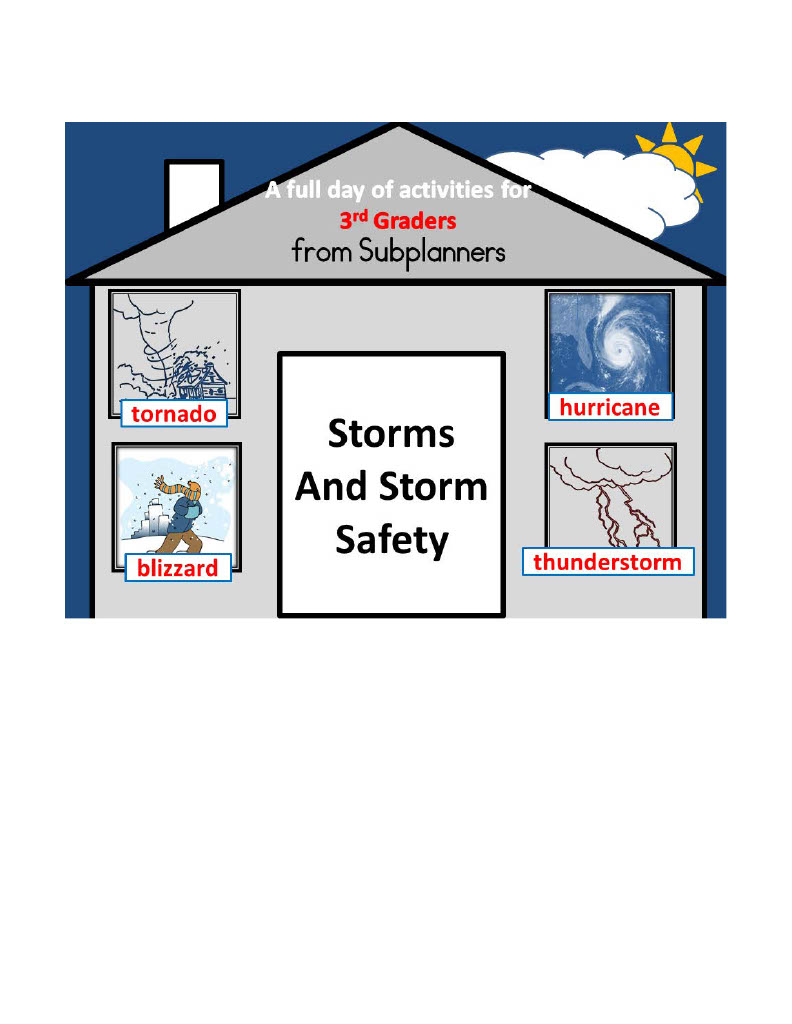
All About Tornadoes | Earth Science Unit This is a comprehensive resource suitable for educators seeking to add depth and engagement to their earth science lessons. The unit puts particular emphasis on supercell storms, the genesis of tornadoes, different types and parts of tornadoes, their categorization, and also includes detailed guidance on tornado safety protocols. The flexible nature of this resource allows educators to tailor their approach based on individual student needs or class dynamics. The package includes: Detailed lesson plans Project recommendations Links to relevant videos (also available as QR codes) Thematic vocabulary sets - Enhancing the accessibility of key terms with word strips for easy reference Visual Teaching Aids: Posters The use of visual aids in teaching cannot be overstated - which is why this pack comes equipped with posters that cover various aspects related to tornadoes: Tornado Formation - Explains how storms lead to the creation of these cyclones The distinct characteristics identifying a tornado A highlight about 'Tornado Alley' - Regions highly susceptible/repeatedly victimized by such disasters Reading Materials : You will find included articles about challenges in predicting these vast natural occurrences and safety considerations during such episodes crafted at varying reading levels so you can cater effectively within diverse learning groups. Creative Learning Resources : Labelling Exercises focusing on parts of a Tornado. This unit brings something for everyone. Whether you want to use these resources in larger classroom sessions, smaller groups or even for take-home assignments, the materials are versatile and efficient across scenarios. This comprehensive package designed for students from Grade 1 through to Grade 4 comes as an easily navigable PDF format. While primarily catering to earth science subject matter, this resource bundle goes beyond by bringing relatable content that helps kindle curiosity while fostering a solid understanding amidst the young minds.
Author Simply Schoolgirl
Tags Tornadoes, Earth Science, Weather Phenomena, Teaching Resources, Tornado Safety
Pollution: Harmful Effects of Plastic Water Bottles on Humans (Digital & Print)
Science, Earth and Environmental Sciences, Environmental Science, Grade 7, 8, 9, 10, Teacher Tools, Lesson Plans
Pollution: Harmful Effects of Plastic Water Bottles on Humans - A Learning Resource for Grade 7 to 10 Subject: Environmental Science This is an indispensable tool prudently tailored for Grade 7 to 10 learners, focusing on the imperative realm of plastic pollution. This resource serves as a suitable platform stimulating healthy discussions among students and fostering their environmental awareness. Diversity in Format: A digitally fillable PDF, printable PDF and Google Slides Hyperdoc are bundled together into one zip file facilitating utilitarian usage. Coverage: Microplastics found both in human bodies and oceans, impact on humans' wellbeing etc are covered in this resource, enlightening students about communities role in this crisis. Tailored Duration: Designed keeping regular class schedules in mind with an expected duration of just 30 minutes per lesson ensuring no undue burden is inflicted upon either the learner or educator. Incorporation & Flexibility This learning tool can easily be integrated into homework plans or class lessons ensuring maximum learner engagement. The flexibility it provides by allowing control over its blending within pre-existing learning modules helps overcome hurdles of a rigid curriculum giving teachers plethora choices when it comes to teaching strategies. In Conclusion, "Pollution: Harmful Effects of Plastic Water Bottles on Humans" is indeed an essential educational ally for any progressive educator striving to sow seeds of environmental consciousness amidst their students. Its breadth across the intricate world of plastic pollution tied with its well-planned format makes it a must-have element for productive learning.
Author Dynamic Earth Learning
Tags Pollution, Plastic Bottles, Harmful Effects, Environmental Awareness, Microplastics, Plastic Water Bottle Harmful Effects, Harmful Effects Of Plastic Water Bottles On Humans, Harmful Effects Of Plastic Water Bottles
Space Travel & Technology: Blasting Off Gr. 5-8
Science, Earth and Environmental Sciences, Space, Grade 5, 6, 7, 8, Teacher Tools, Lesson Plans
Space Travel & Technology: Blasting Off Gr. 5-8 An immersive teaching resource designed to transport students to the forefront of space exploration. This chapter slice , "Blasting Off," forms part of a larger lesson plan called "Space Travel & Technology," making it both versatile and integrable within a broader curriculum. Ideally suited to grades 5 through 8, this resource aligns with state standards, bringing Science and Astronomy principles alive using simplified language and vocabulary suitable for this age group. In-Depth Exploration The guide will turn your classroom into a shuttle en route to the International Space Station with your students playing key roles as crew members - scientists, engineers, astronauts! A Hands-On Experience This invaluable resource brings together exciting activities that can be modified for small groups or adapted for whole class instruction. Reading passages provide key insights into space travel while student activities integrated throughout encourage active engagement and knowledge application. There are test prep materials included that help reinforce gained knowledge while boosting test-taking confidence among learners. Included also are colorful mini posters that captivate attention while reinforcing topics learned — perfect for visual learners! Digital Learning Tool This PDF format product can also be assigned as homework ensuring learning continues even outside classroom walls. In essence, "Space Travel & Technology: Blasting Off Gr. 5-8" , is an inspiring bridge between today's classroom environment and tomorrow's vision of interstellar exploration. It champions educators' role in preparing future pioneers of space exploration by grounding theory with practical applications all within a learner-friendly framework.
Author Classroom Complete Press
Tags PDF
I WONDER - What Are The Signs That A Chemical Reaction Is Occurring
Chemistry, Science, STEM, Grade 6, 7, 8, 9, 10, 11, 12, Lesson Plans, Teacher Tools
Video Introduction An amazing video designed for the students to learn more about STEM. I WONDER - What Are The Signs That A Chemical Reaction Is Occurring | Animated Video Lesson Do you like STEM subjects? what is your favorite one? Have you ever tried to plant a seed? If yes, tell us more about it. Or have you ever tried to invent something? If yes, tell us more about it. And how do you think it will help us? Have you ever seen a microorganism under a microscope? What was it? And how it looked like? Mathematics is a marvelous subject. Let' sharpen our brains and solve some equations. Do you like timetable tricks? What is your favorite one? Do you know how to code? Have you ever created an app or a game before? If yes, how was it like? I WONDER - What Are The Signs That A Chemical Reaction Is Occurring | Animated Video Lesson The video is perfect for encouraging the researching skills for the students, while learning more about this fantastic topic. I WONDER - What Are The Signs That A Chemical Reaction Is Occurring | Animated Video Lesson This friendly designed video is suitable for students at school, homeschooling, and as a group activity. Format Available in MP4 format.
Author Educational Voice
Tags What Are The Signs That A Chemical Reaction Is Occurring, What Are The Signs That A Chemical Reaction Is Occurring Video, Chemical Reaction, Chemical Reaction Facts, Chemical Reaction Facts For Kids, Chemical Reaction Video For Kids
I WONDER - What Size Is The Bee Hummingbird | Animated Video Lesson
STEM, Animals, Life Sciences, Science, Biology, Grade 1, 2, 3, 4, 5, 6, 7, 8, Lesson Plans, Teacher Tools
Video Introduction Animal kingdoms are full of fascinating wonders to learn. This video is designed for the students to learn more about animals in different countries. I WONDER - What Size Is The Bee Hummingbird | Animated Video Lesson Do you like animals? what is your favorite one? Do you own a pet? If yes, tell us more about it, like what its name? And what do you like most about it? What are the animal kingdoms? Can you write down the characteristics of each animal class like mammals, birds, reptiles, amphibian, fish and mollusks. Do you know that some animals can sing, can you name any of them? What is the largest and the smallest mammal in the world? What is the largest and the smallest bird in the world? What is the largest and the smallest fish in the world? I WONDER - What Size Is The Bee Hummingbird | Animated Video Lesson The video is perfect for encouraging the researching skills for the students, while learning more about these fantastic animals. I WONDER - What Size Is The Bee Hummingbird | Animated Video Lesson This friendly designed video is suitable for students at school, homeschooling, and as a group activity. Format Available in MP4 format.
Author Educational Voice
Tags What Size Is The Bee Hummingbird, What Size Is The Bee Hummingbird Video, Bee Hummingbird, Bee Hummingbird Video, Bee Hummingbird Facts, Bee Hummingbird Facts For Kids, Bee Hummingbird Video For Kids
Animal Science Unit | All About Octopuses | Learning about Animals
Science, Life Sciences, Animals, Kindergarten, Preschool, Grade 1, 2, Lesson Plans, Teacher Tools
Animal Science Unit | All About Octopuses | Learning about Animals Octopus is a rich and comprehensive teaching resource meticulously designed to assist in weaving an engaging curriculum around the intriguing sea creature, the octopus. With materials suitable for all learning styles from pre-K up through 2nd grade, this versatile resource lets educators leverage real photos, non-fiction articles, arts and crafts , worksheets along with writing activities. This unit delves into integral aspects of animal science using an array of resources. Maps illustrate native regions of octopuses while high-quality photographs expose learners to their habitats and behaviors. Moreover, collectible animal cards, vocabulary strips with definitions and posters entailing information on life cycle or species enrich understanding by bostering visual learning. The product resources make it easy for educators to adapt teaching approaches as per classroom needs. By staging group discussions using provided questions or orchestrating an art-oriented focus session leveraging cute animal photo cut-outs or articulation paper craft are possible avenues that can be explored according to student profiles. Reading Materials & Activities: A non-fiction article on the sea creatures present reading tasks calibrated at two different reading levels accompanied by comprehension questions ideal for promoting language proficiency. Bookmarks highlighting the star creature whilst putting forward fun facts that could pique interest in individual learners. Cute worksheets covering key themes like eating habits or adaptations in animals which aids reinforcement of learned concepts besides lending students practice material post lecture sessions as homework assignments. Gaming For Learning: The tool kit incorporates a macro-photo guessing game coupled with memory games centered around characteristics and habitat details synonymous with octopuses which promotes 'experiential learning' ensuring effective grasp over content. Writing Activities: Last but not the least, writing exercises compel students to sport thinking caps onto literary ventures where they can structure reports styled around various template options giving birth to organically developed lessons based on marine biology studies. Contents: The received contents come as one zip file comprising Google Doc listing supplied elements along with JPEGs detailing individual activities set within a 73-page PDF hosting printable pages. Applicable Grades: Preschool Kindergarten Grade 1 Grade 2 This resource brings alive concepts of Zoology in a stimulating manner catering proactively for enhancing learning effectiveness in the classroom. </p
Author Simply Schoolgirl
Tags Octopuses, Animal Science, Curriculum Resource, Non-fiction Articles, Worksheets
Dams Reading Comprehension Passage - Cored Ed Encyclopedia
ELA, Language Development, Reading Comprehension, Reading, Pre-Reading, Science, Technology, Physics, Earth and Environmental Sciences, Life Sciences, Grade 2, 3, 4, 5, Worksheets & Printables, Worksheets, Teacher Tools, Centers, Activities, Writing Prompts, Assessments, Quizzes and Tests, Quizzes, Lesson Plans
This dams reading comprehension with lesson plan includes: Visualization (on the front cover) Start your lesson by taking a minute to think and share something about the topic. Read the script aloud (slowly), perhaps prepare some music or sound effects. Student close their eyes and let their imaginations wander. Students open their eyes, read the question aloud and give them a few minutes to complete. Ask a few students to share or keep answers until the end to compare with what they learn in the passage. Quick pause—thousands of Cored Education products are included with your TeachSimple membership. Download links and encyclopedia index available here. Pre-Reading Trivia Students will write down one thing they already know about the subject and then read five more facts and discuss. These facts are fun, and the students will enjoy learning about the subject before reading more. Give 1 minute for students to write what they already know (no pressure—best guess is fine). Read the five facts together. After each fact, do ask a student for their opinion, was it surprising? Set a purpose by asking students to highlight/underline one fact they want to learn more about during the reading. Reading Passage The text is a high-interest reading passage with set paragraphs, roughly three to four paragraphs long. It contains a variety of themes about the topic, anywhere from history to technology. The passage is between 250 and 350 words in length. First, ask students to look at the headings and see what they’ll learn about today. What do they know about the topic/heading? First read options: Teacher read-aloud (best for support). Partner reading (paragraph by paragraph). While reading, students underline important details, and vocabulary words they think may come up in the questions section. Mixed Questions The first question page contains four multiple-choice questions, each with a choice of four answers, and three written response questions that require a sentence or two from the student. Students complete the mcqs first independently, then review quickly as a class. For the 3 written responses, try to get students giving the answer with some form of evidence: “I think ___ because the text says ___.” If students get stuck, send them back to check the passage. Vocabulary Questions Practice seven key words from the text in this section across two activities. First section is scrambled words where students will unscramble three words given a clue for each. The second section is a word to meaning matching activity. Before starting, have some students read out words they underlined in the passage. Ask students to say the word and read aloud the sentence(s) around each word. Ask students to do scrambled words and the matching exercise in pairs then go through answers as a class. For the scrambled spelling task, get four pairs to come up to the board and write the words for extra practice with the other student reading out the clue. For the matching task, prompt students to give full sentences: “I matched ___ with ___ because ___.” Creative Writing In this question, the student will be required to write a five to eight sentence paragraph on a question related to the topic. Before starting, ask students write down 3 key ideas they are going to include in their piece. Ask students for ideas to share around the class to help those struggling. Pro writing expectations: 5–8 sentences At least 2 facts or details from the passage At least 2 vocabulary words from the previous page Students read their paragraphs while classmates listen for facts and vocabulary words. Extension Activities This page is optional for fast finishers or to take home. There are several activities, each one requiring a different skill. Do some, do none, do all, completely optional - but you will feel reassured knowing every possibility is planned for. Includes summary writting question and additional facts. Answer Key There are answers for the multiple-choice questions, written response questions have sample answers, vocabulary answers and if there is a summary question then a sample summary will be provided as well. Lesson Plan Included Customized lesson plan for this lesson is included. Lesson Snapshot Title: Dams Genre: Nonfiction (informational text with headings) Subject: Science (Engineering) / Reading (Informational Text) Primary Topic: How dams store water, make electricity, and release water safely Estimated Guided Reading Level (A–Z): P What This Lesson Teaches Best Explains what a dam does by describing how a wall can hold back river water into a deep reservoir. Teaches types of dams and how they stay strong (embankment dams packed tight; gravity dams using weight; layers and drains for stability). Shows how stored water can generate electricity using penstocks, turbines, and generators. Highlights safety and trade-offs, including controlled release through a spillway, the danger of failure, and impacts on fish paths and river mud. Uses headings to organize information into clear sections (building, electricity, and safe water release). Learning Goals Students will explain how a dam changes a river’s flow and creates a reservoir. Students will describe how embankment dams are built and why tight packing matters. Students will identify the role of penstocks, turbines, and generators in making electricity. Students will explain why spillways are needed and how they help release extra water safely. Students will describe at least one cost or concern the passage connects to dams. Key Vocabulary From the Text reservoir — deep stored water behind a dam. embankment — packed earth-and-rock mound used to build a dam. penstocks — big pipes that send water down from a reservoir. turbines — spinning machines turned by rushing water. spillway — safe path for extra water to leave a reservoir. FULL CATALOG OF DOWNLOAD LINKS AND ENCYCLOPEDIA INDEX HERE
Author Cored Education
Rating
Tags Vocabulary, Reading Comprehension, Reading Passages, Lesson Plans, Ela Lesson Plans, Reading Comprehension Lesson Plans, Pre-reading, Science Lesson Plans, Physics, Technology
Podcast Interview Question Outlines
Technology, Science, Computer Science, Engineering, Special Resources, Life Skills, Social Emotional Learning (SEL), Special Education Needs (SEN), Reading, ELA, Grade 6, 7, 8, 9, 10, 11, 12, Worksheets & Printables, Workbooks, Worksheets, Word Searches, Teacher Tools, Assessments, Lesson Plans, Quizzes and Tests, Quizzes, Tests
Transform your students from passive listeners into masterful storytellers with this complete, no-prep Podcasting Interview Skills Unit! Are you looking for an engaging, real-world project that goes beyond the traditional essay or book report? This comprehensive resource is designed to teach middle school students the sophisticated art of conducting powerful podcast interviews. Students will move beyond simple Q&A and learn to become architects of inquiry, crafting open-ended questions, listening actively, and unearthing compelling narratives. This is more than just a set of worksheets; it's a full-fledged pedagogical journey into the heart of communication, critical thinking, and media literacy. Perfect for your ELA, Journalism, Public Speaking, or Media Studies class, this unit equips students with the 21st-century skills they need to succeed. What's Included in this 48-Page Resource? This unit is meticulously structured into three phases to ensure student success and make implementation a breeze for you: Part 1: The Methodology & Theory (10 Pages) Deep dive into the "Architecture of Inquiry." Clear explanations of open-ended vs. closed questions, active listening, and structuring a narrative arc. Engaging case studies and examples that illustrate core concepts like "Narrative Anchors" and "Thematic Buckets." Strategies for troubleshooting common interview problems like reluctant guests or tangents. Part 2: The Student Workbook (19 Pages) 10 scaffolded, high-interest worksheets that move students from theory to practice. Exercises on identifying and transforming weak questions, drafting powerful follow-ups, spotting "the drop," using the "5 Whys" technique, structuring a narrative, navigating emotion, and more. A final "Master Blueprint" worksheet that guides students in creating a full interview outline from start to finish. Part 3: Visuals & Teacher Resources (19 Pages) Classroom-Ready Visual Aids: Three clear, printable anchor charts/visual frameworks explaining the core concepts (Anatomy of a Question, Active Listening Funnel, Interview Flow). Comprehensive Answer Key: Detailed, exemplar answers and pedagogical notes for all 10 student worksheets to make grading easy and effective. A Complete Teacher Implementation Guide: A 5-day+ lesson plan that walks you through direct instruction, modeling, guided practice, role-playing activities, and a final audio documentary project. Assessment Rubric: A clear, 4-point rubric for grading the final student interview project, focusing on question quality, narrative structure, follow-up agility, and audio professionalism. This isn't just a project; it's an experience. Watch your students' confidence soar as they learn to listen with empathy, think on their feet, and curate truth through the power of the human voice. Why Parents/Schools Love It: Develops Core Critical Thinking Skills: This curriculum explicitly teaches students how to move beyond surface-level facts and analyze information, synthesize ideas, and construct logical inquiries—skills essential for academic and life success. Builds 21st-Century Communication Skills: In an age of digital distraction, this program cultivates the "soft skills" that are most in demand: active listening, empathetic conversation, public speaking, and clear articulation of thought. Promotes Media & Digital Literacy: Instead of just consuming media, students become thoughtful creators. They learn the process behind the podcasts they listen to, gaining a deeper understanding of narrative construction and journalistic ethics. Provides Authentic, Real-World Application: Students are highly motivated by this project because it feels relevant and real. They are not just learning for a test; they are creating a tangible product (an audio documentary) that they can be proud of. Comprehensive and Teacher-Friendly: This is a complete, "plug-and-play" unit. The detailed teacher's guide, answer keys, and rubric save educators dozens of hours of prep time, making it easy for schools to implement a high-quality, engaging curriculum. Target Student Classes : Based on the explicit text in the PDF ("sixth-grade scholar," "Target Audience: Grade 6 Educators"), the primary target is 6th Grade . However, the material is sophisticated and rigorous enough to be highly effective for a broader range. I would recommend it for: Middle School ELA (Grades 6-8): As an alternative to traditional research papers or oral presentations. It hits standards for speaking, listening, writing, and critical analysis. Middle School Journalism or Media Studies Electives (Grades 7-9): This is a perfect foundational unit for any introductory journalism course. High School (Grades 9-10): Excellent for remedial or introductory communications, public speaking, or journalism classes. Gifted and Talented Programs (Grades 5-6): Ideal for younger, advanced learners who are ready for a challenging, project-based learning experience. Copyright/Terms of Use: This Book was copyrighted by Syed Hammad Rizvi. This resource is for personal and single classroom use only. You may not alter, redistribute, or sell any part of this resource. In other words, you may not put it on the Internet where it could be publicly found and downloaded. If you want to share this resource with colleagues, please purchase additional licenses from Teachsimple. Thank you for respecting these terms of use. This product is happily brought to you by Syed Hammad Rizvi
Author Creative Book Store
Rating
Tags Podcasting, CriticalThinking, ActiveListening, ProjectBasedLearning, PBL, DigitalStorytelling, MediaLiteracy, PublicSpeaking, CommunicationSkills, 21stCenturySkills
Lesson 1.5 - Graphing
Science, Chemistry, Physics, Grade 6, 7, 8, 9, 10, 11, 12, Lesson Plans, Teacher Tools
Lesson 1.5 - Graphing: An All-Inclusive Teaching Resource The Lesson 1.5 - Graphing is an comprehensive teaching resource designed to simplify the instruction process for teachers, especially those teaching introductory science lessons. The unit covers a wide range of relevant topics and can be effectively utilized by public school teachers and home-schoolers. Main Components: The Metric System: The package offers (A) version for students to fill out information while simultaneously providing a completed (B) version for absent learners. Measurement Labs: Allowing students gather measurements of assorted classroom. Diverse Reading Materials:Different lexile levels including one translated into Spanish are included in this resource. Coversion Lab Practices:Promote independent learning through practical conversion experiences. This complete resource incorporates clear PowerPoint notes covering each section, from discussing steps in the scientific method to analyzing types of variables within experiments . Alongside traditional learning materials, interactive activities such as games and whiteboard practices aide in reinforcing key concepts learned during regular study sessions. Critical Elements of Graphing Covered: Presentation of different parts of graph, Showcasing best fit line relationships, In addition to content material, strategic assets such as Binder Divider – Unit 1 highlights the importance organizational skills while Study Guide - Unit 1 supports collaborative learning experiences among classmates making this product invaluable tool that amplifies scientific learning in classrooms.
Author Integrated Chemistry and Physics
Tags Measurement, Metric System, Labs, Reading Materials, Conversions
Magnificent Simple Machines Gr. 4-7
Science, Physics, Grade 4, 5, Teacher Tools, Lesson Plans
Magnificent Simple Machines Gr. 4-7 A comprehensive teaching resource designed to improve the physical science curriculum for Grades 4 to 7. About the Resource: This resource provides an integrated learning experience, designed to give students a practical understanding of simple machines and their applications in everyday life. Included Lessons and Activities: Informative reading passages: Captivating texts specifically crafted for an age-appropriate audience. Puzzles: Engaging activities such as crossword puzzles and word searches, all with answer keys provided. Tailored lessons on core Physical Science topics: Including inclined planes, wedges, screws, levers, wheel and axles, and pulleys; providing a deep dive into key foundational aspects of mechanics. Note: Additional notes are included for possible enrichment lessons on gears, hydraulics, as well as an overview on how a car works should educators want extended learning moments. The Flexibility of Magnificent Simple Machines Gr. 4-7 : This plan can be easily implemented as a whole group study during class or broken down into small group workstations for targeted instruction. Equally suitable to assign as intriguing homework projects — its interactive nature not only encourages student participation but also promotes critical thinking. Comes in easily downloadable PDF format that's perfect if you need printed handouts or display materials ready-made for your learners' eyes. In Essence...Once they seamlessly blend theory with practice amidst fun-filled activities like crosswords and discovery sheets; your students will discover just how magnificent the world of machines truly is!
Author Classroom Complete Press
Tags Simple Machines, Physical Science, Hand-on, Machine, Lesson Plan
I WONDER - Can Liquids Be Compressed | Animated Video Lesson
Science, Chemistry, Physics, Grade 6, 7, 8, 9, 10, 11, 12, Lesson Plans, Teacher Tools
Video Introduction An amazing video designed for the students to learn more about STEM. I WONDER - Can Liquids Be Compressed | Animated Video Lesson Do you like STEM subjects? what is your favorite one? Have you ever tried to plant a seed? If yes, tell us more about it. Or have you ever tried to invent something? If yes, tell us more about it. And how do you think it will help us? Have you ever seen a microorganism under a microscope? What was it? And how it looked like? Mathematics is a marvelous subject. Let' sharpen our brains and solve some equations. Do you like timetable tricks? What is your favorite one? Do you know how to code? Have you ever created an app or a game before? If yes, how was it like? I WONDER - Can Liquids Be Compressed | Animated Video Lesson The video is perfect for encouraging the researching skills for the students, while learning more about this fantastic topic. I WONDER - Can Liquids Be Compressed | Animated Video Lesson This friendly designed video is suitable for students at school, homeschooling, and as a group activity. Format Available in MP4 format.
Author Educational Voice
Tags Can Liquids Be Compressed, Can Liquids Be Compressed Video, Liquids, Liquids Facts, Liquids Facts For Kids, Liquids Video, Liquids Video For Kids, Liquids Facts Video, Science, Science Video For Kids
Biomimetic Engineering &Regenerative Design:A K-12 Vertical Curriculum
Science, Basic Science, Life Sciences, Animals, Biology, Human Body, Nature & Plants, Physics, Technology, Engineering, Grade 2, 3, 4, 5, 9, 10, 11, 12, Worksheets & Printables, Worksheets, Workbooks, Word Searches, Dot To Dots, Teacher Tools, Assessments, Lesson Plans, Presentations, Quizzes and Tests
With this K-12 Biomimetic Engineering & Regenerative Design Curriculum Framework, show the student the future of STEM education through a complete, ready-to-use, vertically scaffolded transition from traditional ‘take/make/dispose’ mindsets to innovation inspired by nature! This digital PDF is composed of 35 pages full of professionally-designed and thoroughly researched and organized resources to develop your students’ biomimetic engineering and regenerative design skills: Phase 1: Core Theory includes a comprehensive introduction to the subject with four chapters of in-depth theory, and real-world case studies (The Shinkansen bullet train, Namib Desert beetle, Eastgate Centre’s termite mounds, Lloyd Crossing); Phase 2: Student Workbook contains 10 well-developed, engaging, standards-aligned worksheets for student to use to complete Morphological Mapping, Fluid Dynamics, Structural Integrity, Thermoregulation, Water Harvesting, Structural Color, Kinetic Plant Mechanism, Ecosystem Emulation, and Capstone Regenerative Design Project; Phase 3: Visuals & Teacher Resources provides all of the tools needed for the teacher to use the above materials (printable posters, K-12 Vertical Articulation Map, Biomimetic Design Spiral visual, and Paradigm Shift graph) This curriculum framework is a perfect fit for use in biomimicry, regenerative design, environmental engineering and next-generation STEM/STEAM classrooms. Vertical scaffolding is included (i.e., K-5: Observation & Empathy → 6-8: Mechanism & Translation → 9-12: Chemistry, Thermodynamics & Systems), thus allowing all students to develop their understanding of ecological literacy at an intuitive level from kindergarten through graduation! This framework provides fill-in-the-blank theory prompts, hands-on sketching and calculating, design challenge, and “Function First” taxonomy training on all projects using databases. The materials in this framework require no preparation on the part of the teacher as all links may be instantly downloaded from your computer, printed and used in Google Classroom! What Parents/Schools Appreciate: Preparation for Success in the Looking Future: The curriculum helps develop important skills for the 21st Century such as systems thinking, creating circular designed systems and creating regenerative innovations through hands-on projects and real-world examples that teach STEM concepts and Next Generation Science Standards (NGSS). It also develops the skills students will need to pursue green careers. Zero Preparation Time with Immediate Engagement : Teachers can drum up hours of quality instructional time, as the curriculum has ready-to-print theory chapters, 10 scaffolded worksheets, beautiful visual examples, case studies and lots of real-world examples of biomimicry hands-on projects. This makes for very engaged students in the classroom. Eco-Positive Effect: The curriculum helps provide a paradigm shift from the phrase "sustainable" to helping to regenerate the Earth's environment and teach both parents and administrators about ecological literacy and a higher sustainable carbon footprint. Aligned Across Multiple Grade Levels and All Have Inclusive Loosely Related Activities from Pre K to 12 All Have Common Curriculum- The curriculum support teachers in changing their instruction to a more differentiated style across multiple grade levels, providing differentiated instruction and methods to support students demonstrating gifted abilities! Quality and Professionally-Low Cost: Because of the high quality of the product (design, scientific accuracy, posters, and capstone project), it should cost much more than its price tag indicates. Target Students/Classes : The intended audience for this curriculum is K-12, and if you are looking for a curriculum for K-12, you will find that this is an appropriate curriculum to teach students/ classes; It includes and has built-in differentiation, making it easy to teach every student/ class at any level ( K-12). Elementary (K-5) – emphasis on observing and being empathetic towards others. Teachers can use this curriculum with elementary school Science, Nature Studies, and early STEM Clubs. Middle School (grades 6-8) – Using Mechanisms to Translate- Teachers can use this curriculum to teach their students about how mechanisms work and how they relate to life science, physical science, engineering electives, and project-based learning. High School- (grades 9-12): Chemistry, Thermodynamics & Systems- Teachers can use this curriculum with their high school biology, physics, environmental science, engineering, architecture, and AP/IB STEM classes. The curriculum will be great for educators who work in the public/ private K-12 systems, homeschoolers ( families), STEM coaches, after-school programs, and makerspace facilitators. It can be used throughout a district or school. Copyright and Terms of Use This book was written by Syed Hammad Rizvi and all rights are reserved to him. This book is for the purpose of personal use, or single class use only. You may NOT modify, reproduce, or distribute this book in any way. In other words, do not place this on the internet where it is available for anyone to download. If you wish to share this product with colleagues, please purchase additional licenses at Teachsimple. We appreciate your support in following this agreement. This product was happily created for you by Syed Hammad Rizvi.
Author Creative Book Store
Rating
Tags K12Curriculum, STEMEducation, STEAMEducation, ScienceTeachers, ElementarySTEM, MiddleSchoolSTEM, HighSchoolSTEM, HomeschoolCurriculum, ProjectBasedLearning, NGSS
I WONDER - Where Do Foxes Live | Animated Video Lesson
STEM, Animals, Life Sciences, Science, Biology, Grade 1, 2, 3, 4, 5, 6, 7, 8, Lesson Plans, Teacher Tools
Video Introduction Animal kingdoms are full of fascinating wonders to learn. This video is designed for the students to learn more about animals in different countries. I WONDER - Where Do Foxes Live | Animated Video Lesson Do you like animals? what is your favorite one? Do you own a pet? If yes, tell us more about it, like what its name? And what do you like most about it? What are the animal kingdoms? Can you write down the characteristics of each animal class like mammals, birds, reptiles, amphibian, fish and mollusks. Do you know that some animals can sing, can you name any of them? What is the largest and the smallest mammal in the world? What is the largest and the smallest bird in the world? What is the largest and the smallest fish in the world? I WONDER - Where Do Foxes Live | Animated Video Lesson The video is perfect for encouraging the researching skills for the students, while learning more about these fantastic animals. I WONDER - Where Do Foxes Live | Animated Video Lesson This friendly designed video is suitable for students at school, homeschooling, and as a group activity. Format Available in MP4 format.
Author Educational Voice
Tags Where Do Foxes Live, Where Do Foxes Live Video, Foxes, Fox, Foxes Facts, Foxes Facts For Kids, Foxes Video, Foxes Video For Kids, Fox Facts, Foxes Home
Wool Reading Comprehension Passage - Cored Ed Encyclopedia
ELA, Language Development, Reading Comprehension, Reading, Pre-Reading, Science, Technology, Physics, History, Social Studies, Grade 2, 3, 4, 5, Worksheets & Printables, Worksheets, Teacher Tools, Centers, Activities, Writing Prompts, Assessments, Quizzes and Tests, Quizzes, Lesson Plans
This wool reading comprehension with lesson plan includes: Visualization (on the front cover) Start your lesson by taking a minute to think and share something about the topic. Read the script aloud (slowly), perhaps prepare some music or sound effects. Student close their eyes and let their imaginations wander. Students open their eyes, read the question aloud and give them a few minutes to complete. Ask a few students to share or keep answers until the end to compare with what they learn in the passage. Quick pause—thousands of Cored Education products are included with your TeachSimple membership. Download links and encyclopedia index available here. Pre-Reading Trivia Students will write down one thing they already know about the subject and then read five more facts and discuss. These facts are fun, and the students will enjoy learning about the subject before reading more. Give 1 minute for students to write what they already know (no pressure—best guess is fine). Read the five facts together. After each fact, do ask a student for their opinion, was it surprising? Set a purpose by asking students to highlight/underline one fact they want to learn more about during the reading. Reading Passage The text is a high-interest reading passage with set paragraphs, roughly three to four paragraphs long. It contains a variety of themes about the topic, anywhere from history to technology. The passage is between 250 and 350 words in length. First, ask students to look at the headings and see what they’ll learn about today. What do they know about the topic/heading? First read options: Teacher read-aloud (best for support). Partner reading (paragraph by paragraph). While reading, students underline important details, and vocabulary words they think may come up in the questions section. Mixed Questions The first question page contains four multiple-choice questions, each with a choice of four answers, and three written response questions that require a sentence or two from the student. Students complete the mcqs first independently, then review quickly as a class. For the 3 written responses, try to get students giving the answer with some form of evidence: “I think ___ because the text says ___.” If students get stuck, send them back to check the passage. Vocabulary Questions Practice seven key words from the text in this section across two activities. First section is scrambled words where students will unscramble three words given a clue for each. The second section is a word to meaning matching activity. Before starting, have some students read out words they underlined in the passage. Ask students to say the word and read aloud the sentence(s) around each word. Ask students to do scrambled words and the matching exercise in pairs then go through answers as a class. For the scrambled spelling task, get four pairs to come up to the board and write the words for extra practice with the other student reading out the clue. For the matching task, prompt students to give full sentences: “I matched ___ with ___ because ___.” Creative Writing In this question, the student will be required to write a five to eight sentence paragraph on a question related to the topic. Before starting, ask students write down 3 key ideas they are going to include in their piece. Ask students for ideas to share around the class to help those struggling. Pro writing expectations: 5–8 sentences At least 2 facts or details from the passage At least 2 vocabulary words from the previous page Students read their paragraphs while classmates listen for facts and vocabulary words. Extension Activities This page is optional for fast finishers or to take home. There are several activities, each one requiring a different skill. Do some, do none, do all, completely optional - but you will feel reassured knowing every possibility is planned for. Includes summary writting question. Answer Key There are answers for the multiple-choice questions, written response questions have sample answers, vocabulary answers and if there is a summary question then a sample summary will be provided as well. Lesson Plan Included Customized lesson plan for this lesson is included. Lesson Snapshot Title: Wool Genre: Nonfiction (informational text) Subject: Life Science / Informational Reading Primary Topic: How wool works, history, and uses Estimated Guided Reading Level (A–Z): R Support pages present: Pre-reading trivia, mixed questions, vocabulary activities, creative writing, extension activities, and an answer key (all match the passage’s ideas and terms). What This Lesson Teaches Best Explains what wool is made of (tiny protein fibers) and how a natural wave called crimp helps fibers cling when spun into yarn. Teaches a clear cause-and-effect science idea : wool cloth traps air pockets, and trapped air helps keep warmth close. Builds understanding of how humans and sheep changed over time , including breeding for thicker coats, learning to shear, and wool becoming valuable through trade. Describes the process from fleece to finished materials , including shearing, lanolin in fresh wool, washing/sorting, spinning into yarn, and rubbing fibers into felt. Highlights real-world uses and properties of wool , including moisture handling and resistance to melting/dripping in fire because it chars instead. Learning Goals Students will explain how crimp helps wool fibers cling together when making yarn. Students will describe how wool cloth keeps warmth close using details about trapped air. Students will identify two ways people have used wool, based on examples in the text. Students will sequence key steps from fleece to yarn or felt that are stated in the passage. Students will describe why freshly shorn wool is called “greasy,” using evidence from the passage. Key Vocabulary From the Text fleece — a sheep’s coat that can be sheared off. protein — a natural building block that wool fibers are made of. crimp — a natural wave in each wool fiber. lanolin — a waxy substance from a sheep’s skin. felt — thick material made when fibers lock together. FULL CATALOG OF DOWNLOAD LINKS AND ENCYCLOPEDIA INDEX HERE
Author Cored Education
Rating
Tags Vocabulary, Reading Comprehension, Reading Passages, Lesson Plans, Ela Lesson Plans, Reading Comprehension Lesson Plans, Pre-reading, Science Lesson Plans, History Lesson Plans, Wool
All About Fossils | Earth Science Unit
Science, Earth and Environmental Sciences, Earth Sciences, Grade 1, 2, 3, 4, Lesson Plans, Teacher Tools
All About Fossils | Earth Science Unit This comprehensive teaching resource adds depth and dimension to your earth science curriculum by delving into the fascinating world of fossils and their contribution to our understanding of earth's history. Main Topics: Different types of fossilization, Knowledge derived from fossils about our planet's past, The essential role of paleontologists, Specific ancient creatures that once roamed the earth. A highlight is a hands-on geochronological timeline activity , offering a unique learning experience. This pack has been designed with flexibility in mind - it can serve whole-group instructions or smaller focus groups. Also, it’s suitable for both homework and class-activities with resources adaptable for digital classrooms. Pack Contents: A sample lesson plan schedule Suggested projects & activities along with video links (QR codes and URLs) Vocabulary & spelling words related to fossils - featuring 21 vocabulary word strips, Educative Posters: Covering aspects like where fossils are found or different fossilization processes such as Amber & Carbonization. Articles provided at two reading levels along with cut-and-glue projects like My Fossil Collection and The Fossil Record. Creative Engagement: dinosaur colored page engagement pieces added in the end, writing templates cater perfectly for early writing grades encouraging exploration around scientific disciplines right from initial stages. This unit is recommended for teaching Grade 1 through Grade 4.
Author Simply Schoolgirl
Tags Fossils, Earth Science, Paleontology, Geochronology, Fossilization, All About Fossils
I WONDER - Where Do Zebras Live | Animated Video Lesson
STEM, Biology, Life Sciences, Science, Animals, Grade 1, 2, 3, 4, 5, 6, 7, 8, Lesson Plans, Teacher Tools
Video Introduction Animal kingdoms are full of fascinating wonders to learn. This video is designed for the students to learn more about animals in different countries. I WONDER - Where Do Zebras Live | Animated Video Lesson Do you like animals? what is your favorite one? Do you own a pet? If yes, tell us more about it, like what its name? And what do you like most about it? What are the animal kingdoms? Can you write down the characteristics of each animal class like mammals, birds, reptiles, amphibian, fish and mollusks. Do you know that some animals can sing, can you name any of them? What is the largest and the smallest mammal in the world? What is the largest and the smallest bird in the world? What is the largest and the smallest fish in the world? I WONDER - Where Do Zebras Live | Animated Video Lesson The video is perfect for encouraging the researching skills for the students, while learning more about these fantastic animals. I WONDER - Where Do Zebras Live | Animated Video Lesson This friendly designed video is suitable for students at school, homeschooling, and as a group activity. Format Available in MP4 format.
Author Educational Voice
Tags Where Do Zebras Live, Where Do Zebras Live Video, Zebras, Zebra, Zebras Facts, Zebras Facts For Kids, Zebras Video, Zebras Video For Kids, Zebra Facts, Zebra Video
Community Helpers Curriculum Pack
Creative Arts, Art, Social Studies, ELA, Math, Early Math, Science, Basic Science, Language Development, Vocabulary, Kindergarten, Lesson Plans, Teacher Tools
If your students are studying community helpers or are about to begin a careers unit, I have just the resource to provide you with everything you need and more! This is a Community Helpers Curriculum Pack complete with an abundance of printable resources and engaging activities for students to complete. This curriculum was designed for your preschool students. The curriculum goal is to expand upon the knowledge children possess about jobs, careers, and the world around them, and to promote optimism about their future and the many diverse opportunities available to them. The vocabulary that students will focus on is occupation, retail, vocation, college, training, career, paycheck, income, schedule, uniform, business and job. This curriculum will come with a color of the week (purple) and a letter of the week (W). This curriculum pack includes: --Sensory Table Ideas --Art Activities --Cooking Experience --Community Time --Math Activities --Home/School Connection Ideas --Science Table Enrichments --Science Concepts/Activities --Prop Box Ideas/Dramatic Play Enrichments --Movement and Motor --Playground/Walk Activities --Transition/Waiting Ideas --Block Area Enrichments --Flannel Board --Teacher Made Enrichment Ideas --Field Trip Ideas --Supplemental Learning Ideas/Activities At the start of this pack, you will receive a list of supplies needed for activities and projects. The worksheets, activities, and tasks included in this pack are intended to be completed in a variety of formats – whole group, small group, and independent work. I hope you enjoy!
Author Learning Foundations
Tags Learning Foundations, Community Helpers, Social Studies Curriculum, Sensory Table, Art Activities, Color Of The Week, Cross-curricular, Literacy
Zoo Animal Research Writing Project on MONKEYS for K-2nd Grade
Life Studies, ELA, Writing, Creative Writing, Reading, Science, Life Sciences, Animals, Research, Kindergarten, Grade 1, 2, Activities, Teacher Tools, Lesson Plans, Worksheets & Printables, Worksheets, Coloring Pages, Writing Prompts
Animal Research Writing Project on Monkeys for K-2nd Grade. Engage young learners in reading, writing, and science with this 19-page informational writing project on monkeys. Students will examine real-life photos, read age-appropriate facts, color images, draw habitat scenes, and organize information using writing organizers. Differentiated writing pages allow kids to write at their level. When finished, students and the entire classroom can bind everything together into a customized book. This monkey-themed unit promotes creativity, reading comprehension, and nonfiction writing skills. Implement as whole class, small group, centers, or individual work. Suitable for homeschools or grades Kindergarten, first grade classrooms., and for second graders. Click the links below to view similar units on other zoo animals and to do research on zoo animals. Teachers appreciate the ready-to-use animal units covering reading, note-taking, drafting, illustrating, and publishing. Engage your class in meaningful informational writing with this standards-based project on monkeys. Plus, there are many more zoo animals to research as well in my store: K-5 Treasures! For additional Zoo Animal reports, click on the following links below: Animal Research Writing Project on TIGERS for K-2nd Grade Animal Research Writing Project on MONKEYS for K-2nd Grade Animal Research Writing Project on PANDAS for K-2nd Grade Animal Research Writing Project on HIPPOS for K-2nd Grade Animal Research Writing Project on ELEPHANTS for K-2nd Grade Animal Research Writing Project on GIRAFFES for K-2nd Grade Here are even more informational resources on report writing for OCEAN ANIMALS. Click on the links below: Animal Research Writing Project on WHALES for K-2nd Grade Animal Research Writing Project on the OCTOPUS for K-2nd Grade Animal Research Writing Project on SEA TURTLES for K-2nd Grade Animal Research Writing Project on ORCAS for K-2nd Grade Animal Research Writing Project on the SHELLFISH for K-2nd Grade Animal Research Writing Project on DOLPHINS for K-2nd Grade Animal Research Writing Project on SEALS for K-2nd Grade
Author K-5 Treasures
Tags Animal Research, Informational Writing, Writing Report, Zoo Animals, Report On Animals, Report On Zoo Animals, 1st Grade Writing, 2nd Grade Writing, Monkeys, Report On Monkeys
I WONDER - How Do Raspberries Grow | Animated Video Lesson
Nature & Plants, Life Sciences, Science, Grade 6, 7, 8, 9, 10, 11, 12, Lesson Plans, Teacher Tools
Video Introduction An amazing video designed for the students to learn more about STEM. I WONDER - How Do Raspberries Grow | Animated Video Lesson Do you like STEM subjects? what is your favorite one? Have you ever tried to plant a seed? If yes, tell us more about it. Or have you ever tried to invent something? If yes, tell us more about it. And how do you think it will help us? Have you ever seen a microorganism under a microscope? What was it? And how it looked like? Mathematics is a marvelous subject. Let' sharpen our brains and solve some equations. Do you like timetable tricks? What is your favorite one? Do you know how to code? Have you ever created an app or a game before? If yes, how was it like? I WONDER - How Do Raspberries Grow | Animated Video Lesson The video is perfect for encouraging the researching skills for the students, while learning more about this fantastic topic. I WONDER - How Do Raspberries Grow | Animated Video Lesson This friendly designed video is suitable for students at school, homeschooling, and as a group activity. Format Available in MP4 format.
Author Educational Voice
Tags How Do Raspberries Grow, How Do Raspberries Grow Video, Raspberries, Raspberry, Raspberries Facts, Raspberries Facts For Kids, Raspberries Video, Raspberries Video For Kids, Raspberries Facts Video For Kids
TikTok Algorithm & Content Calendar Mapping
Technology, Science, Computer Science, Engineering, Business, Life Studies, Career, Leadership, Research, Finance, Homeschool Curriculum, Grade 7, 8, 9, 10, 11, 12, Worksheets & Printables, Workbooks, Worksheets, Word Searches, Teacher Tools, Assessments, Lesson Plans, Quizzes and Tests, Quizzes, Tests
Are your students spending hours scrolling TikTok? It's time to transform their passive consumption into a powerful, career-building skill! This comprehensive, 43-page project-based learning unit demystifies the TikTok algorithm and empowers students to think like professional digital strategists. Move beyond random posting and teach the data-driven science behind viral content. This isn't just a worksheet packet; it's a complete, academically rigorous curriculum designed for high school students. It treats TikTok as a serious case study in modern marketing, audience psychology, and behavioral economics. Students will transition from being casual creators to strategic digital architects, capable of planning, executing, and analyzing a 30-day content campaign. What's Included in This 43-Page All-in-One Unit: Part 1: Core Theory & Case Studies (10 Pages): In-depth chapters covering the architecture of the TikTok algorithm, the 4 phases of audio lifecycles (Inception, Acceleration, Apex, Decay), strategic content pillars, the 70/20/10 risk model, and real-world case studies. Part 2: The Student Workbook (21 Pages): Ten detailed worksheets guide students through practical application. They will analyze trending audio, calculate velocity, identify algorithmic triggers, define their niche, establish content pillars, build a 30-day posting calendar, and learn to iterate based on performance data. Part 3: Teacher Resources & Visuals (12 Pages): High-Contrast Diagrams: Perfect for classroom projection, breaking down the audio lifecycle, content matrix, and distribution feedback loop. Comprehensive Answer Key: Detailed, expected answers for every worksheet to make grading clear and objective. Teacher Implementation Guide: A step-by-step guide with pre-teaching strategies, classroom activities, discussion prompts, and advice for overcoming common student roadblocks. This resource is perfect for project-based learning and ready to print or use digitally. Equip your students with the 21st-century media literacy and marketing skills they need to succeed in the digital economy. Perfect for: High School Marketing & Business Classes Media Literacy & Digital Citizenship Units Career and Technical Education (CTE) Courses Journalism & Communications Entrepreneurship Programs Keywords: TikTok Marketing, Social Media Strategy, Digital Literacy, Algorithm, Content Calendar, Project-Based Learning (PBL), High School Business, CTE, Media Studies, 21st Century Skills, Content Creation, Viral Trends, Marketing Curriculum. Why Parents/Schools Love It: Turns Screen Time into Skill Time: It transforms a platform students already use for entertainment into a rigorous academic exercise, teaching critical thinking and analytical skills. Teaches In-Demand 21st-Century Skills: Students learn the fundamentals of digital marketing, data analysis, strategic planning, and content creation—skills that are highly valuable in college and future careers. 100% Turnkey & No-Prep: This is a complete, ready-to-go unit. With a teacher's guide, answer keys, and student worksheets, educators can implement it immediately without hours of prep work. Highly Engaging & Relevant: By using TikTok, a platform students are passionate about, this curriculum guarantees high student engagement and makes abstract concepts (like data analysis) tangible and exciting. Promotes Digital Citizenship: The unit encourages students to think ethically and critically about the content they create and consume, fostering responsible behavior in the digital world. Target Student Audience : Based on the academic language ("sociological study," "algorithmic architecture") and the direct mention on page 1, target: Grades: 9th to 12th Grade . While designed with 9th graders in mind, the complexity of the strategic concepts makes it perfectly suitable and challenging for students up to grade 12, especially in advanced marketing or business courses. Classes: Marketing, Business, Media Studies, Digital Literacy, Communications, Entrepreneurship, and Career & Technical Education (CTE) electives. Copyright/Terms of Use: This Book was copyrighted by Syed Hammad Rizvi. This resource is for personal and single classroom use only. You may not alter, redistribute, or sell any part of this resource. In other words, you may not put it on the Internet where it could be publicly found and downloaded. If you want to share this resource with colleagues, please purchase additional licenses from TpT. Thank you for respecting these terms of use. This product is happily brought to you by Syed Hammad Rizvi Are your students spending hours scrolling TikTok? It's time to transform their passive consumption into a powerful, career-building skill! This comprehensive, 43-page project-based learning unit demystifies the TikTok algorithm and empowers students to think like professional digital strategists. Move beyond random posting and teach the data-driven science behind viral content. This isn't just a worksheet packet; it's a complete, academically rigorous curriculum designed for high school students. It treats TikTok as a serious case study in modern marketing, audience psychology, and behavioral economics. Students will transition from being casual creators to strategic digital architects, capable of planning, executing, and analyzing a 30-day content campaign. What's Included in This 43-Page All-in-One Unit: Part 1: Core Theory & Case Studies (10 Pages): In-depth chapters covering the architecture of the TikTok algorithm, the 4 phases of audio lifecycles (Inception, Acceleration, Apex, Decay), strategic content pillars, the 70/20/10 risk model, and real-world case studies. Part 2: The Student Workbook (21 Pages): Ten detailed worksheets guide students through practical application. They will analyze trending audio, calculate velocity, identify algorithmic triggers, define their niche, establish content pillars, build a 30-day posting calendar, and learn to iterate based on performance data. Part 3: Teacher Resources & Visuals (12 Pages): High-Contrast Diagrams: Perfect for classroom projection, breaking down the audio lifecycle, content matrix, and distribution feedback loop. Comprehensive Answer Key: Detailed, expected answers for every worksheet to make grading clear and objective. Teacher Implementation Guide: A step-by-step guide with pre-teaching strategies, classroom activities, discussion prompts, and advice for overcoming common student roadblocks. This resource is perfect for project-based learning and ready to print or use digitally. Equip your students with the 21st-century media literacy and marketing skills they need to succeed in the digital economy. Perfect for: High School Marketing & Business Classes Media Literacy & Digital Citizenship Units Career and Technical Education (CTE) Courses Journalism & Communications Entrepreneurship Programs Keywords: TikTok Marketing, Social Media Strategy, Digital Literacy, Algorithm, Content Calendar, Project-Based Learning (PBL), High School Business, CTE, Media Studies, 21st Century Skills, Content Creation, Viral Trends, Marketing Curriculum. Why Parents/Schools Love It: Turns Screen Time into Skill Time: It transforms a platform students already use for entertainment into a rigorous academic exercise, teaching critical thinking and analytical skills. Teaches In-Demand 21st-Century Skills: Students learn the fundamentals of digital marketing, data analysis, strategic planning, and content creation—skills that are highly valuable in college and future careers. 100% Turnkey & No-Prep: This is a complete, ready-to-go unit. With a teacher's guide, answer keys, and student worksheets, educators can implement it immediately without hours of prep work. Highly Engaging & Relevant: By using TikTok, a platform students are passionate about, this curriculum guarantees high student engagement and makes abstract concepts (like data analysis) tangible and exciting. Promotes Digital Citizenship: The unit encourages students to think ethically and critically about the content they create and consume, fostering responsible behavior in the digital world. Target Student Audience : Based on the academic language ("sociological study," "algorithmic architecture") and the direct mention on page 1, target: Grades: 9th to 12th Grade . While designed with 9th graders in mind, the complexity of the strategic concepts makes it perfectly suitable and challenging for students up to grade 12, especially in advanced marketing or business courses. Classes: Marketing, Business, Media Studies, Digital Literacy, Communications, Entrepreneurship, and Career & Technical Education (CTE) electives. Copyright/Terms of Use: This Book was copyrighted by Syed Hammad Rizvi. This resource is for personal and single classroom use only. You may not alter, redistribute, or sell any part of this resource. In other words, you may not put it on the Internet where it could be publicly found and downloaded. If you want to share this resource with colleagues, please purchase additional licenses from Teachsimple. Thank you for respecting these terms of use. This product is happily brought to you by Syed Hammad Rizvi
Author Creative Book Store
Rating
Tags TikTokAlgorithm, TikTokMarketing, ContentStrategy, SocialMediaMarketing, DigitalMarketing, ContentCalendar, ViralMarketing, TrendingAudio, SocialMediaStrategy, BusinessTeacher