Electrical and Chemical Energy Mini-Unit: PPT, Printables, Lesson Plans and Quiz
Teach how electrical and chemical energy cause change, for grades 4-6 science, using a direct-instruction lesson plan, interactive notebook, PowerPoint, and quiz.
Classroom resources
Browse by lesson focus
Choose the topic or kind of practice you need.
Teach how electrical and chemical energy cause change, for grades 4-6 science, using a direct-instruction lesson plan, interactive notebook, PowerPoint, and quiz.
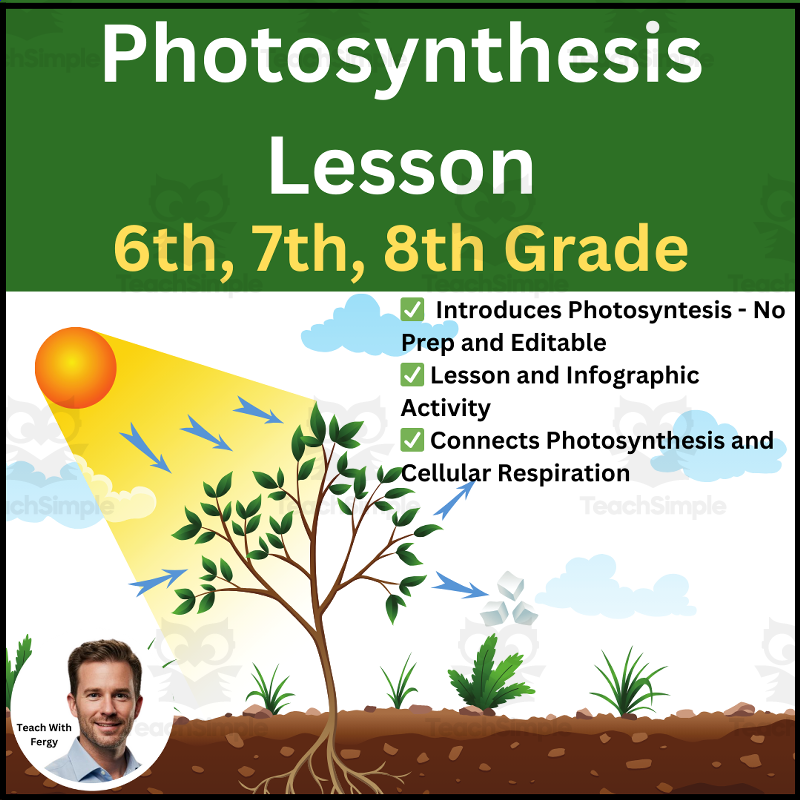
A middle school science lesson introducing photosynthesis and its connection to cellular respiration, covering solar energy, chloroplasts, chlorophyll and other leaf pigments, and why leaves change color in fall.
A slide-based lesson that builds students' understanding of how astronomers measure vast distances in space, introducing kilometers, astronomical units, light years, and parsecs.
A micro-learning slide deck teaching how to predict severe weather, combining video, a reading passage with audio, close reading, and vocabulary practice.
Deliver a video-guided, note-taking lesson on ecosystem fundamentals (abiotic/biotic factors, population, community, ecosystem recycling, sustainability, and human impacts) for in-class or distance learning.
An interactive digital 'micro-learning' slide deck that teaches how weather fronts form and how cold fronts and warm fronts differ, through a reading passage and follow-up close-reading and vocabulary activities.
An interactive digital 'micro-learning' slide deck that teaches the difference between weather and climate through a video/reading passage and follow-up close-reading and vocabulary activities.
Teach high school (grade 9-12) astronomy students the structure of the solar system from the Sun through the Oort Cloud, for use across a multi-day lesson.
A micro-learning slide deck teaching students to identify stratus clouds and understand the weather they produce, combining a video-lesson slot, an informational reading passage, vocabulary/comprehension practice, and a quick-write.
A multi-part science lesson on invasive species covering the difference between native and invasive species, the ecological effects of invasive species, methods of control (chemical, mechanical, biological), and a case study of the Small Asian Mongoose in Hawaii, designed as a video-supported, fill-in-the-blank guided-notes lesson with…
Teach a science lesson on biodiversity: what it is, why it matters ecologically/socially/economically, at-risk species categories, and keystone species, via slides plus supporting worksheets.
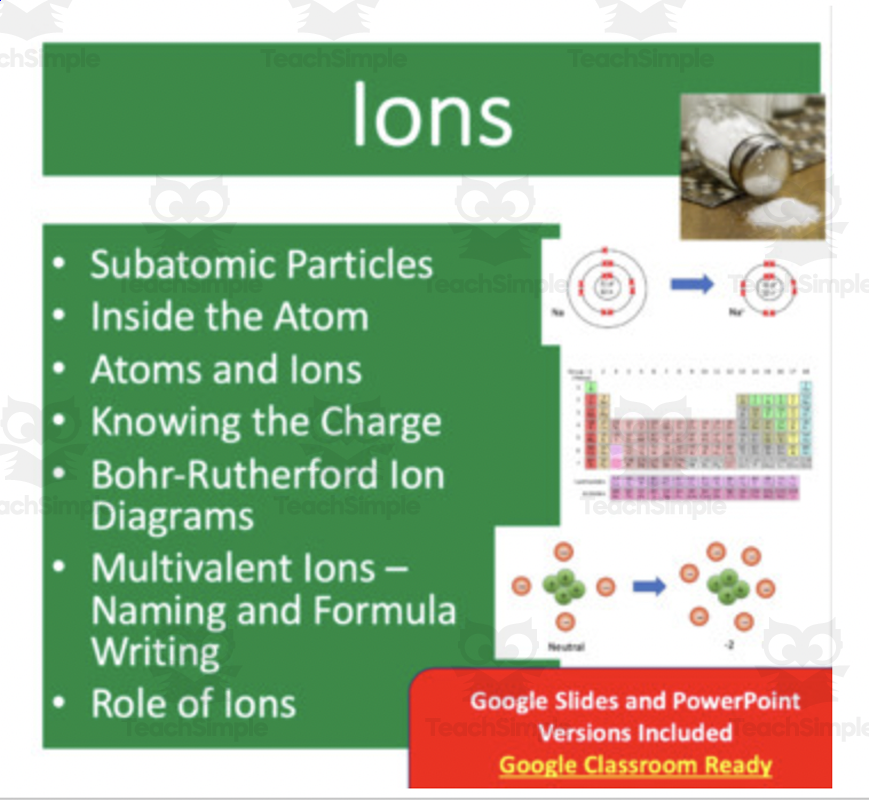
A chemistry lesson introducing ions: reviewing subatomic particles (protons, electrons, neutrons), explaining net charge using a color-cancellation analogy, teaching how atoms become cations or anions, drawing Bohr-Rutherford ion diagrams, naming simple and multivalent ions, and writing multivalent ion formulas.
A multi-day science lesson package explaining why Earth has seasons, covering Earth's rotation, axial tilt (23.5 degrees), and revolution around the sun, with a Bill Nye video quiz and interactive simulation activities.
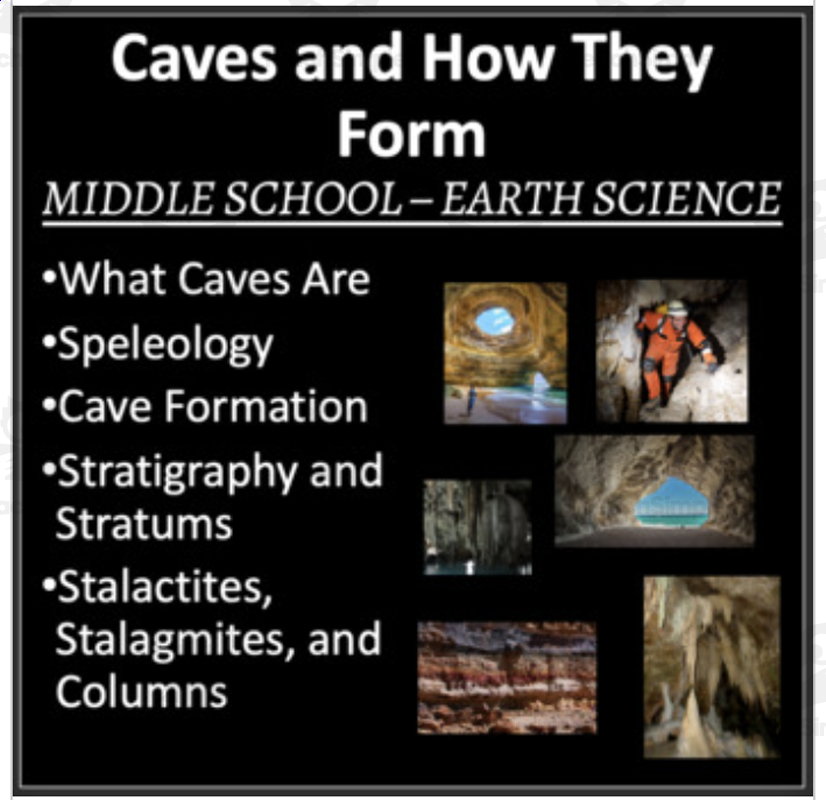
A middle-school Earth-science lesson teaching how caves form, covering what caves are, speleology, cave formation via weathering/erosion/deposition, stratigraphy, and cave features (stalactites, stalagmites, columns), delivered as a slide presentation with an auto-graded exit ticket and embedded videos.
Interactive PowerPoint memory-matching game to practice grade 7 chemical-reaction vocabulary.
Teach a two-day chemistry lesson on physical and chemical properties and changes of matter, covering states of matter, qualitative vs. quantitative properties, and energy.
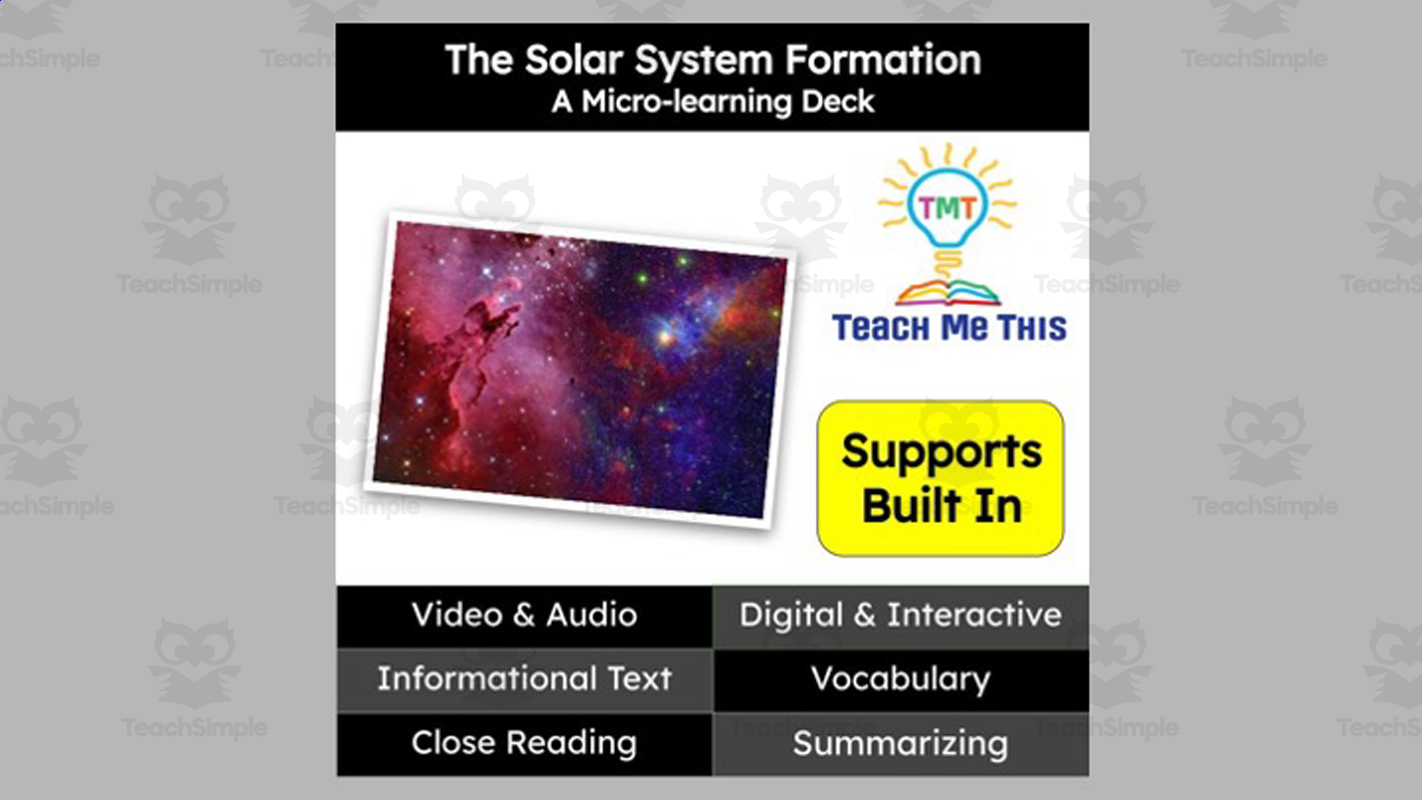
A micro-learning slide deck teaching how the solar system formed, combining a video lesson, an audio-supported reading passage, vocabulary, and a written summary activity.
A multi-file chemistry lesson package teaching atomic structure (protons, neutrons, electrons), atomic number/mass, isotopes, average atomic mass calculation, periodic table notation, and chemical symbols, provided in both teacher and student slide versions plus a Bill Nye video-companion worksheet.
A Google Slides-based digital interactive notebook that walks middle/high school students through the science and effects of climate change for use in a 1:1 or Google Classroom setting.
An interactive science micro-learning slide deck teaching where herbs and spices come from and how they are used, paired with a reading passage and comprehension activities.
Interactive PowerPoint to teach and review grade 8 light-waves vocabulary through key-concept slides, flashcards, and a multiple-choice review.
A video-supported science lesson teaching the four spheres of Earth (atmosphere, lithosphere, hydrosphere, biosphere) using guided fill-in-the-blank slides and a Bill Nye video worksheet.
Teach students to identify cumulus clouds and understand how they can develop into thunderstorm clouds, using a slide-deck 'micro-learning' format with video, reading, and vocabulary.
An interactive multimedia (slide-deck) science lesson teaching ant biology and behavior through video, an audio-supported reading passage, close reading, and writing activities.