
Whole-number operations
Double Digit Subtraction With Regrouping Assessment
Solve 21 vertical two-digit subtraction problems with regrouping, 2 word problems, and 1 bonus 3-digit subtraction word problem.




Classroom resources
Browse by lesson focus
Choose the topic or kind of practice you need.
Showing 217–240 of 471 resources

 Show filters
 Solve 21 vertical two-digit subtraction problems with regrouping, 2 word problems, and 1 bonus 3-digit subtraction word problem.
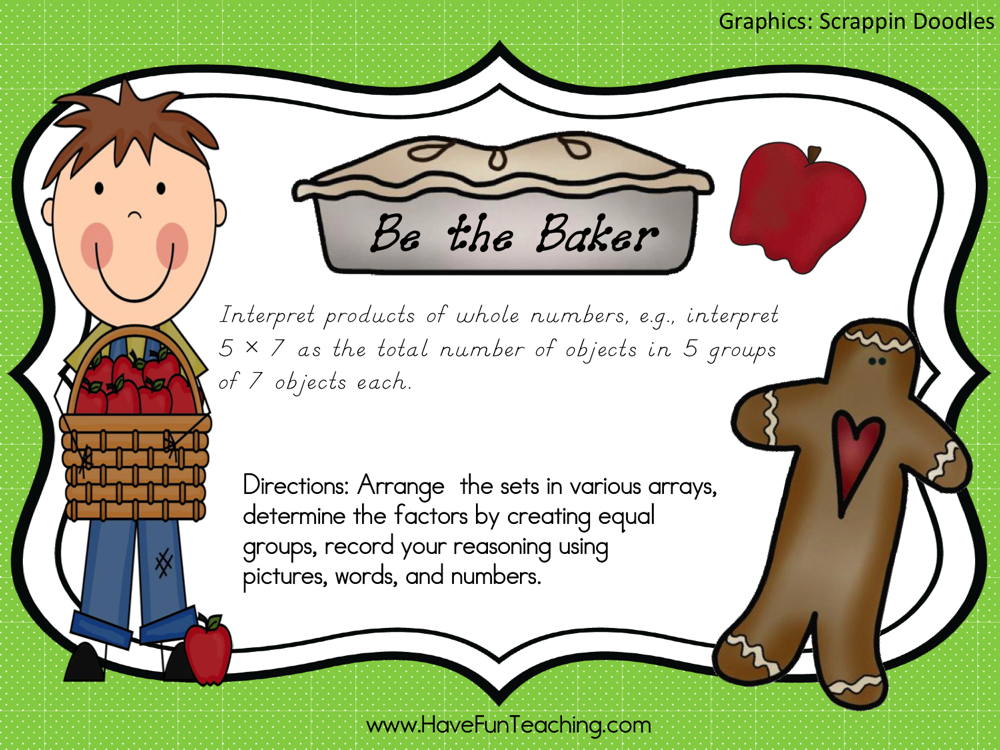
Solve baking word problems (e.g. dividing apples among pies, gingerbread cookies among boxes) by arranging items into equal-sized groups/arrays, determine the factors, and record reasoning using pictures, words, and a number sentence; self-check against an included answer key.

Solve word problems by organizing data, constructing tables, making lists, and drawing patterns across a series of themed activity pages (e.g. scoring, tessellating tiles, measurement, area/perimeter, party planning).
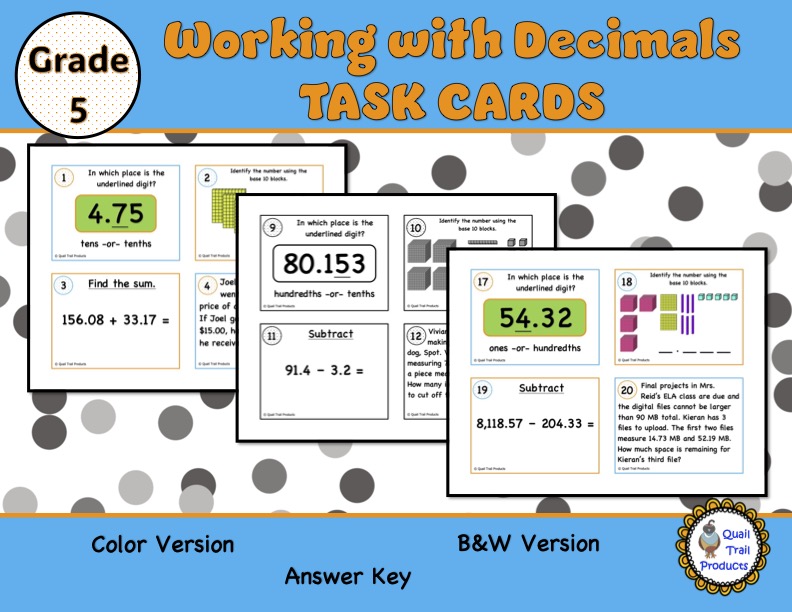
For each numbered task card, identify the place value of an underlined digit in a decimal number, write the decimal number shown by base-10 blocks, add or subtract multi-digit decimal numbers, or solve a word problem involving decimals (money, measurement, weight, or file size), recording each answer on a numbered recording sheet.
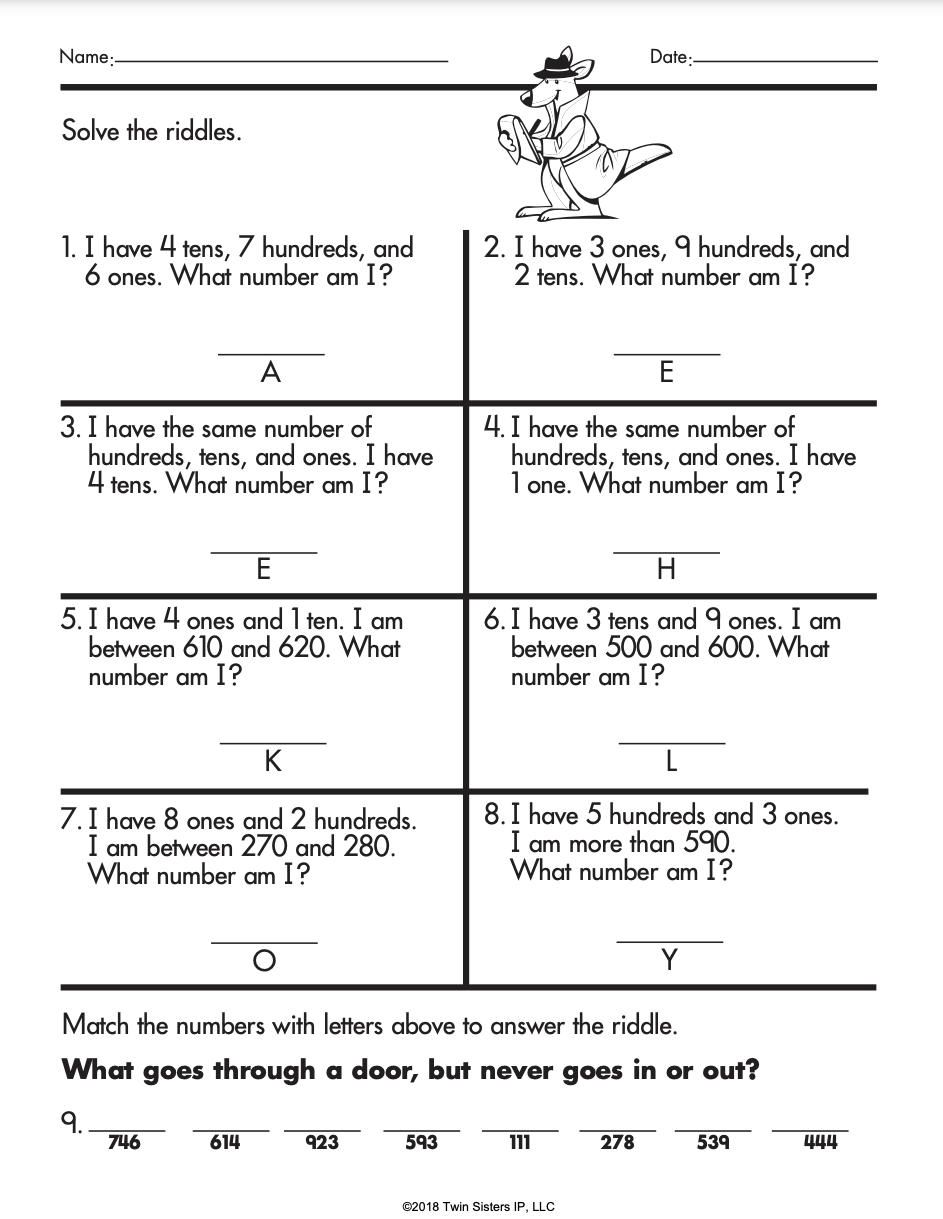
Write numbers in expanded and standard form, write number names, sort odd/even numbers by coloring, round numbers to the nearest 10/100/1,000, solve multi-digit addition and subtraction problems (including word problems about tokens/purchases), and match place-value representations to number names.
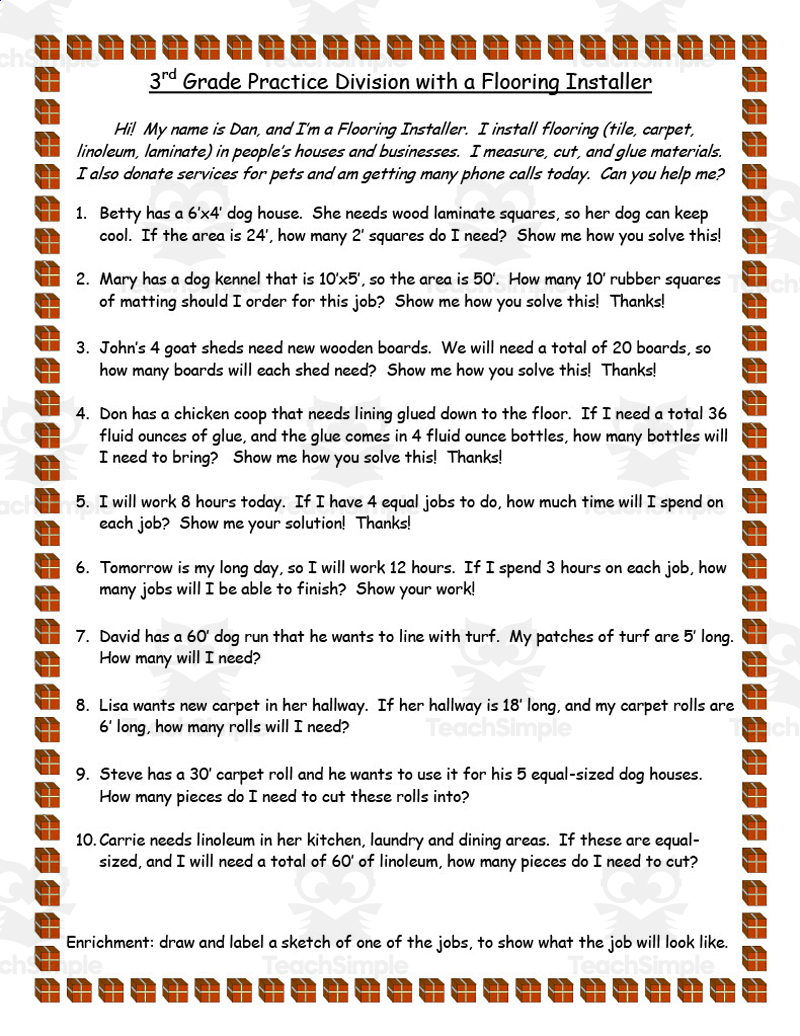
Solve 10 single-step division word problems (dividing areas, quantities, time, and materials) narrated by a flooring installer character; read a nonfiction passage on the history of flooring; complete an enrichment drawing/labeling activity and a science-link experiment comparing odor-absorbing materials.
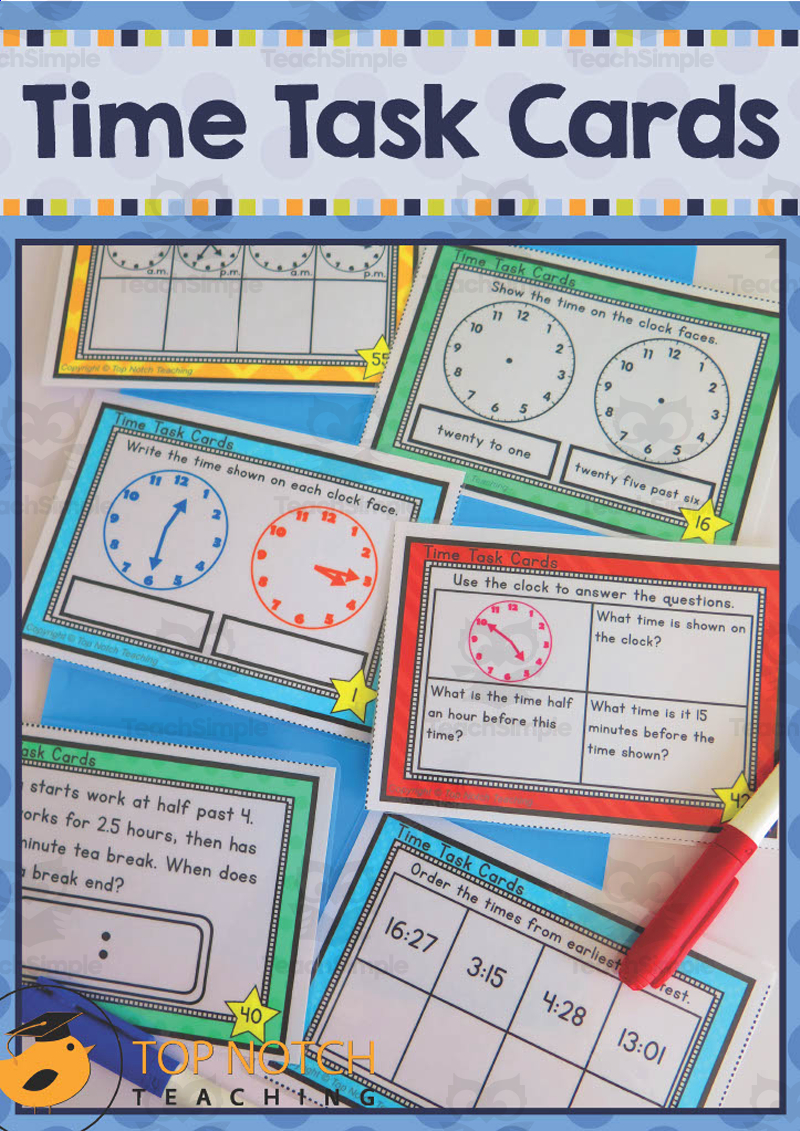
Write the time shown on analog clock faces, draw hands to show a given time (including word-phrased and 24-hour prompts), rewrite a given time in three other notations, and solve elapsed-time word problems (e.g., swim duration, travel time); check answers against included answer cards.
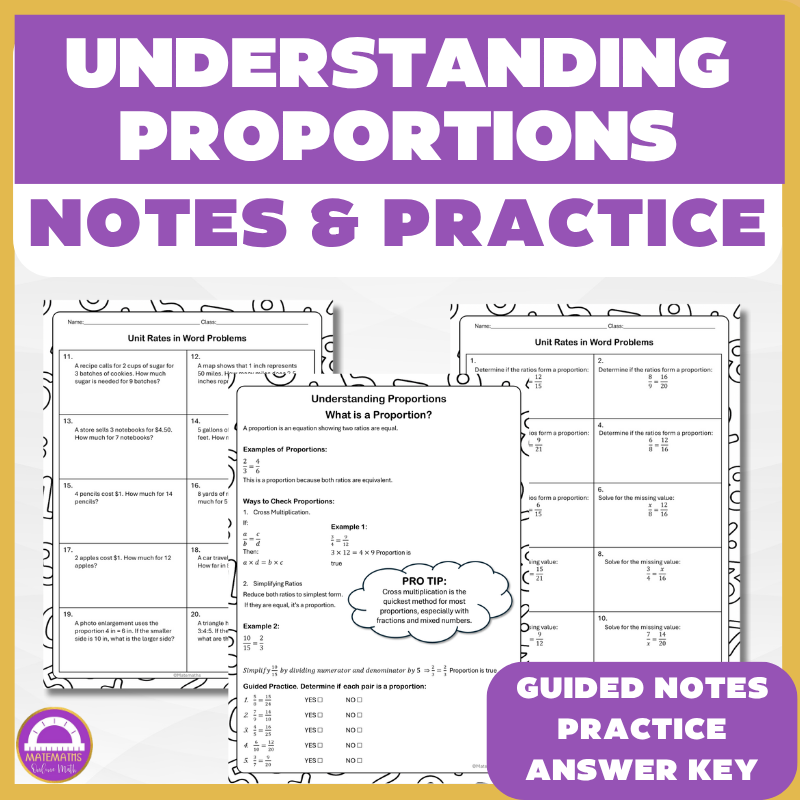
Study guided notes explaining what a proportion is and two methods to check one (cross multiplication, simplifying ratios); complete 5 yes/no guided-practice items determining if a ratio pair is a proportion; learn the steps to solve for a missing value using cross multiplication; complete 5 guided-practice items solving for a missing…
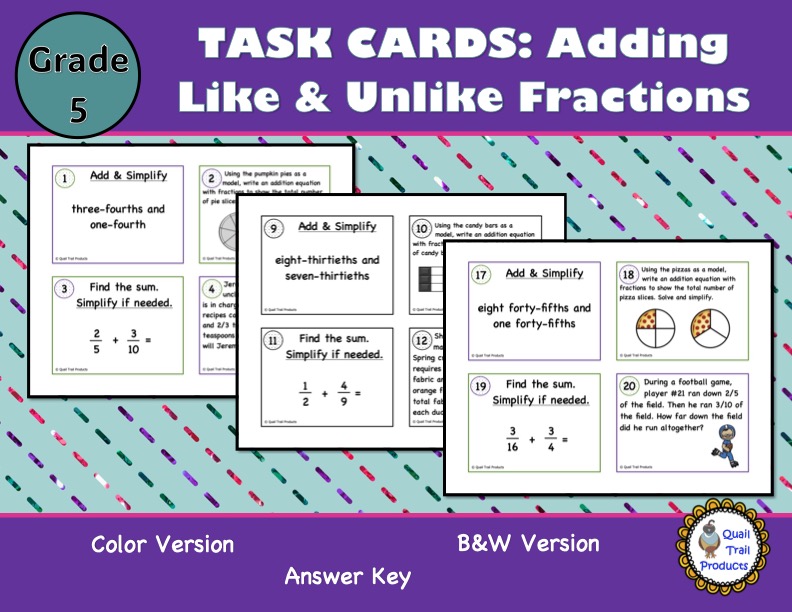
Solve fraction addition problems presented in multiple formats (spelled-out fraction words, numeric equations, food-model equations, and word problems), simplify sums as needed, and record answers on an answer sheet.

Students practice counting on and counting back, solve fact-family equations, use addition/subtraction algorithms (including partial products and counting-up subtraction), solve word problems, sort sums, and complete a quiz.
Read a worked tutorial on how the distributive property works, then complete practice problems applying the distributive property, solve word problems using the distributive property (drawing pictures/writing equations), and complete a review and test on both properties.
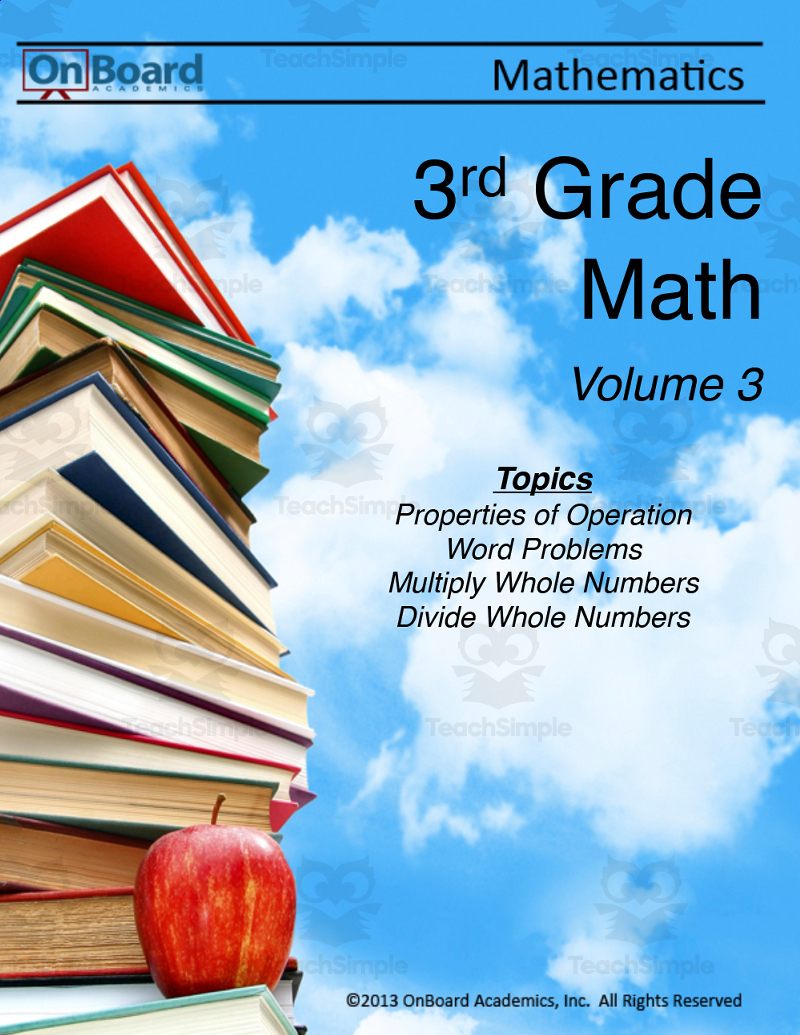
Complete illustrated math activities on properties of operations, solving word problems, and multiplying/dividing whole numbers, then answer a short quiz at the end of each of the four units.
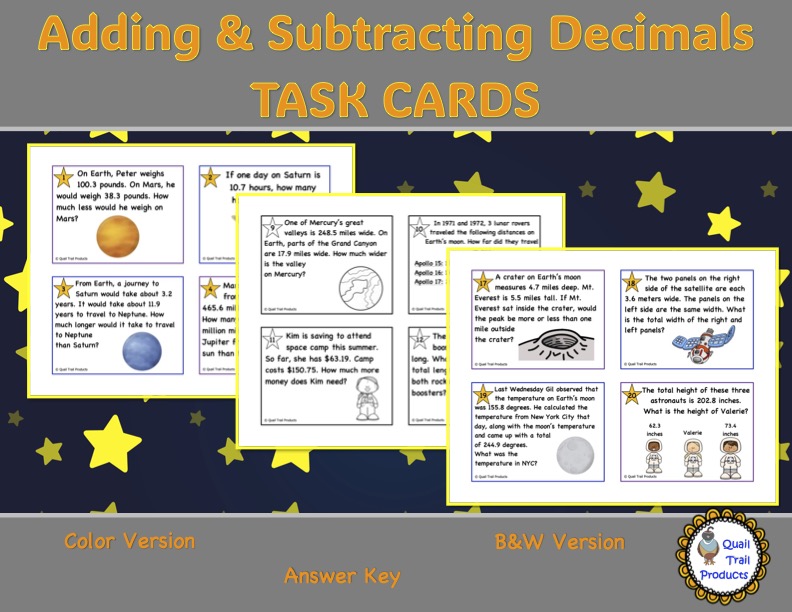
Solve decimal addition and subtraction word problems themed around the solar system (comparing planetary distances, weights, wind speeds, telescope/rocket lengths, astronaut measurements, lunar rover distances, etc.) using printed task cards.
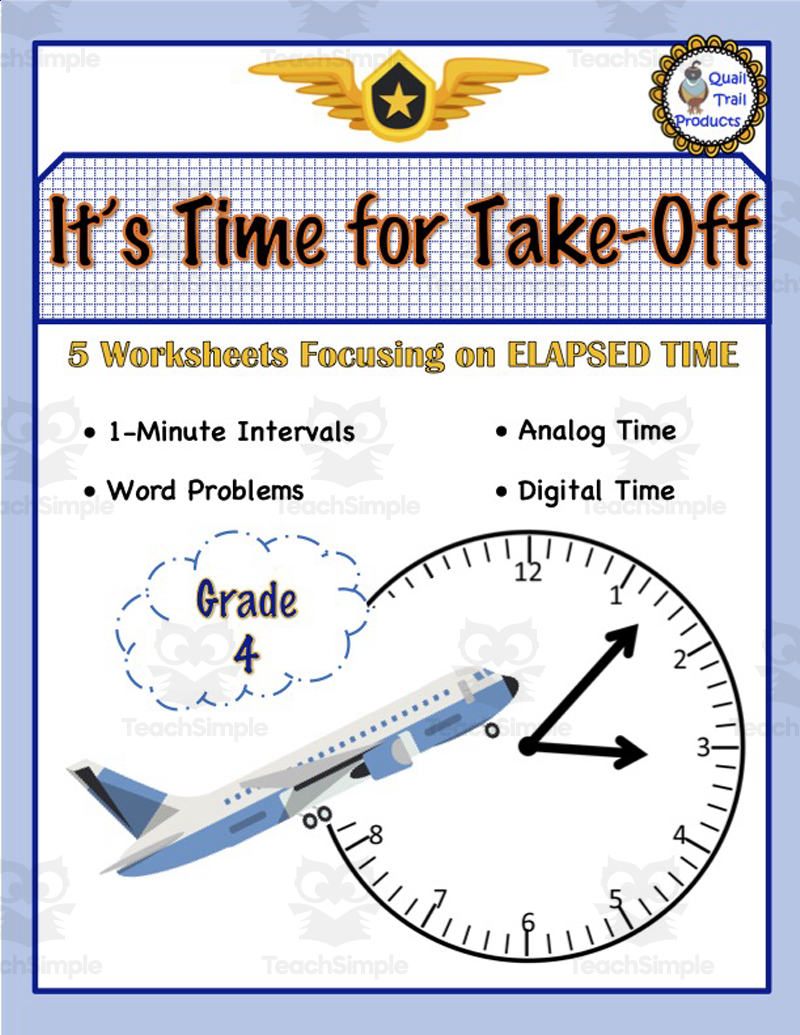
Read departure times and flight durations, then draw or write the arrival time on analog or digital clocks; solve related elapsed-time word problems about characters catching flights.

Draw/create equal groups matching given multiplication statements, write the repeated addition for multiplication facts, solve word problems by showing equal groups, and split totals into equal groups.

Solve area and perimeter word problems using provided graph paper; decompose given shapes into rectangles/squares to find total area; construct rectilinear shapes matching a set of given sub-areas; find missing perimeters and both area and perimeter of rectangles/squares from partial dimensions; design multiple shapes with a fixed area…
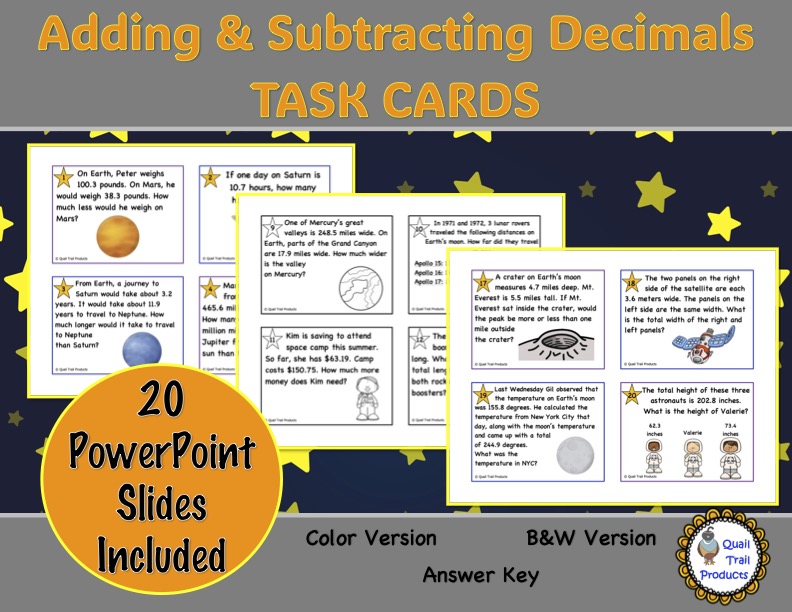
Solve decimal addition and subtraction word problems themed around the solar system (comparing planetary distances, weights, wind speeds, telescope/rocket lengths, astronaut measurements, etc.), using either printed task cards (color, black-and-white, with answer key) or the accompanying PowerPoint slide version.
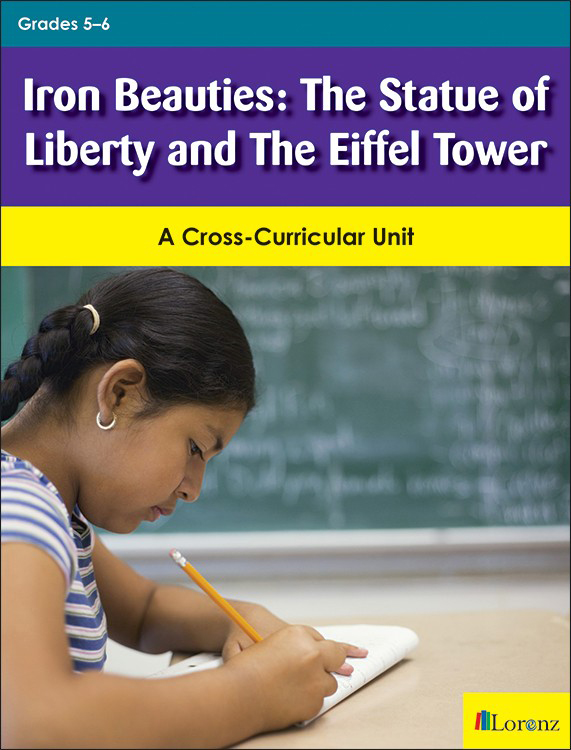
Read a non-fiction article about the Statue of Liberty and Eiffel Tower, fill in a comparison chart, write a descriptive story about a local building/bridge with a drawing, write noun/verb sentence pairs for multi-meaning vocabulary words, and solve word-problem math calculations (averages, division) based on facts from the article.
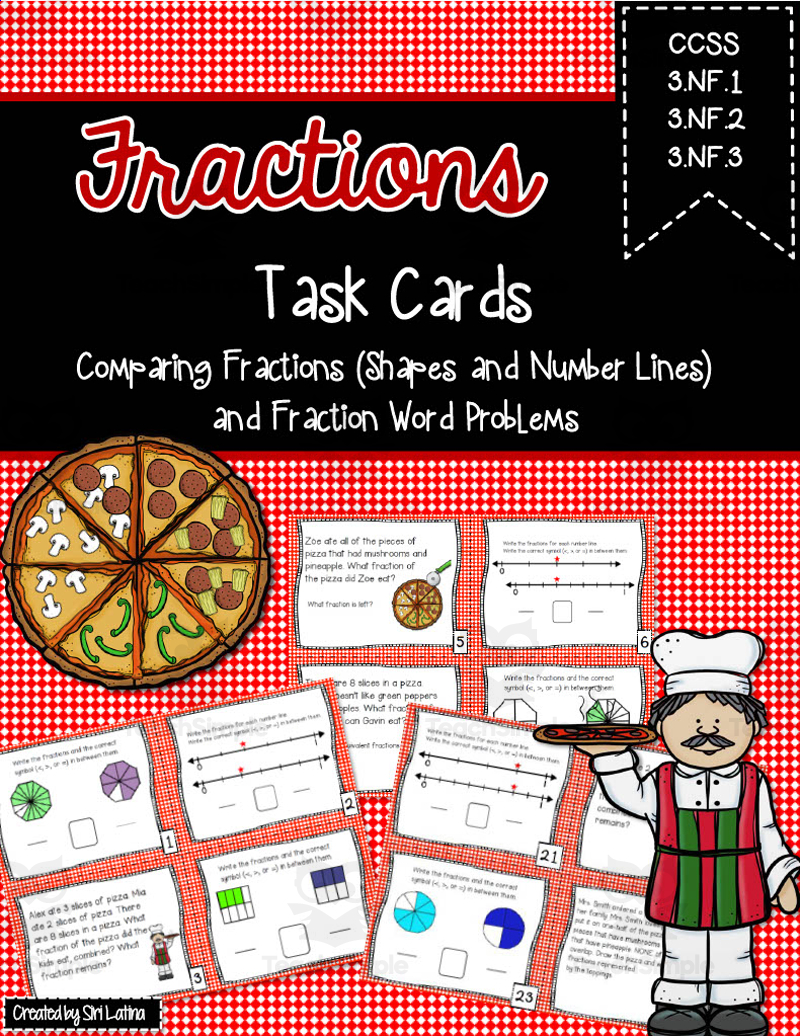
Students work through 24 numbered task cards on comparing fractions and fraction word problems, then in pairs design a paper 'pizza' divided into fractional toppings and record the fraction of each topping on a Fraction Pizza Party answer sheet.
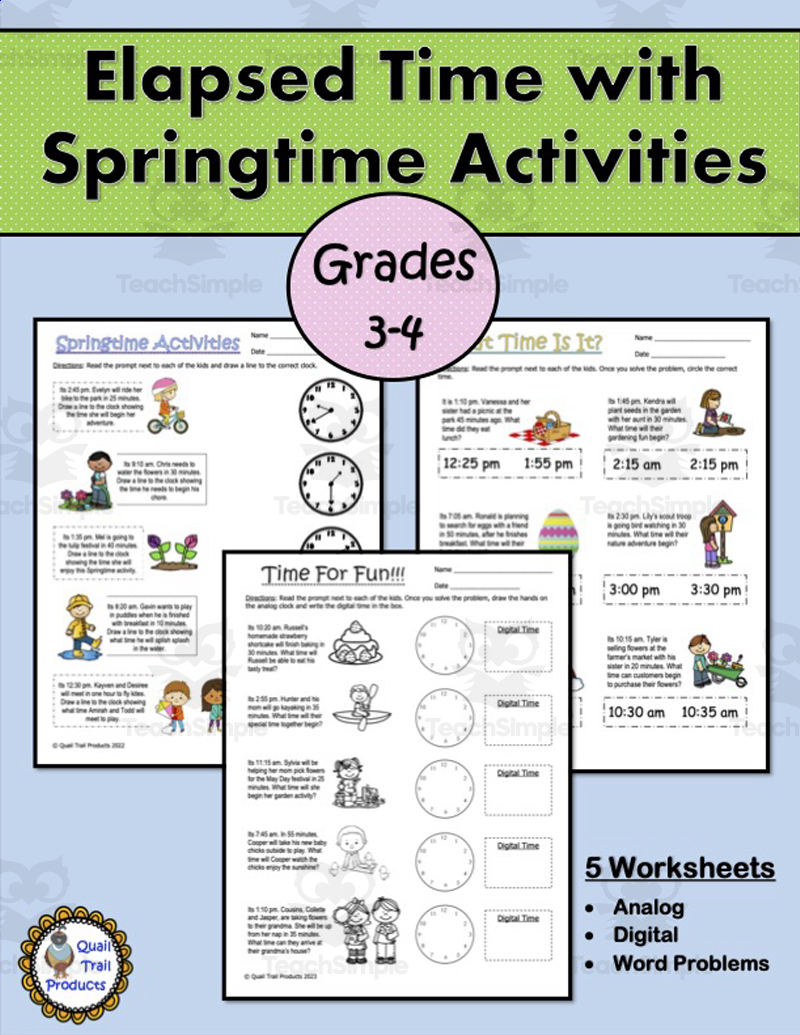
Students read spring-themed scenario prompts and draw lines connecting them to the correct clock face/time, and solve related elapsed-time word problems.
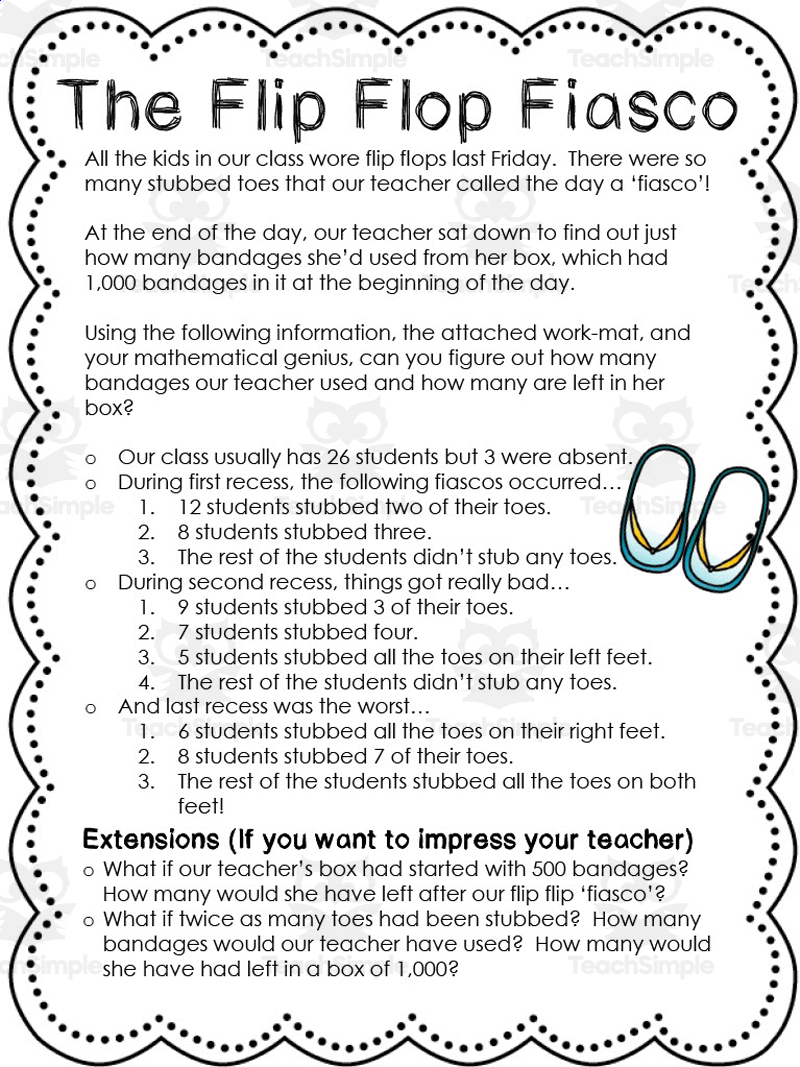
Read a multi-step word problem about stubbed toes and bandage usage, use provided data (numbers of students and toes stubbed across three recesses) to calculate totals via a work-mat, determine bandages used and remaining, and complete two extension problems with different starting quantities.

Solve 20 numbered word-problem task cards that require converting between cups, pints, quarts, and gallons, and record answers on a provided answer sheet.
Complete reproducible practice pages: add and subtract fractions and mixed numbers with like and unlike denominators, multiply and divide fractional and mixed numbers (including three-factor problems), and solve fraction word problems, writing answers in simplest form.
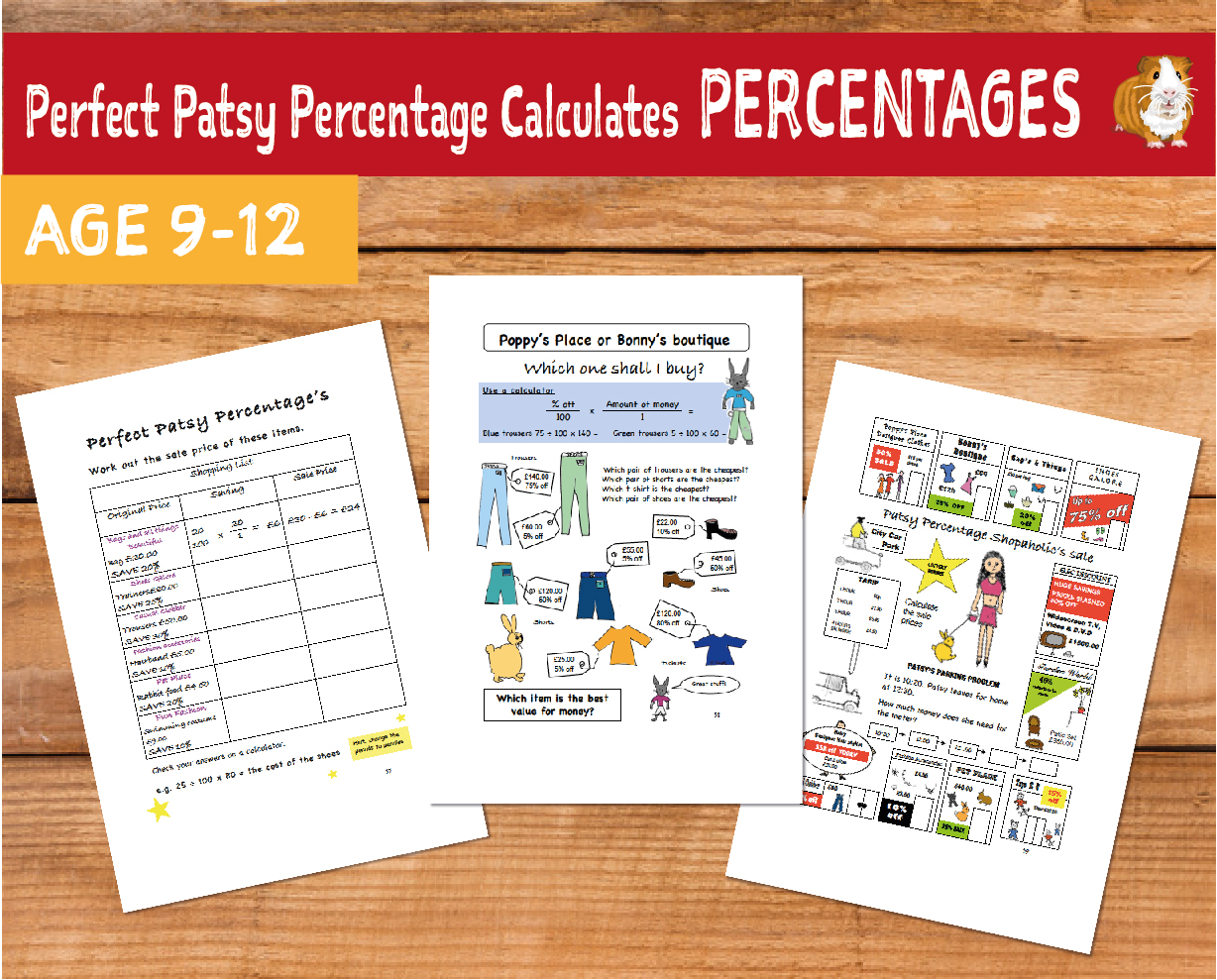
Review how to find a percentage of a number (using fraction equivalents and the 10%-then-multiply method), practice mental-arithmetic percent calculations, then work through shopping-themed word problems: calculate sale prices from original price and percent-off discounts across several fictional shops (e.g. 'Bags and all Things…