



3,984 products added recently
Page 12 - 4th Grade Worksheets
Enhance your fourth-grade classroom with worksheets that cover a range of subjects and promote analytical thinking. These resources help students delve deeper into topics and develop critical skills. Incorporate them to enrich your teaching and support student achievement.

 Show filters


National Poetry Month I Am Poem Template Bio Poem Poetry Worksheets
ELA, Writing, Poetry, Literature, Creative Writing, Homeschool Templates, Grade 2, 3, 4, 5, Worksheets & Printables, Bulletin Boards, Classroom Decor, Worksheets, Templates
Looking for a low-prep, high-impact way to bring poetry into your classroom this April? These I Am Poem Template Bio Poem Poetry Worksheets are just what you need to help your students explore their identity, build writing confidence, and celebrate National Poetry Month—without the stress! Whether your students are new to poetry or you’ve got a classroom full of budding writers, this activity is structured, meaningful, and (bonus!) fun to teach. What You’ll Love About This Resource: Step-by-step Lesson Plan – no guesswork required. Just print, teach, and enjoy the poetry magic. Poetry Worksheets (Notebook Templates) – includes both a Cover Sheet and Response Sheet, so students can draft and publish with pride. Sample Bio Poems – in both color and black & white for modeling and inspiration (perfect for printing or projecting!). Publishing Page – great for classroom displays or creating a class poetry anthology. Grading Rubric / Assessment Checklist – makes feedback quick, clear, and easy. Perfect for: National Poetry Month Back-to-school “getting to know you” activities SEL lessons Writing centers Bulletin board displays Poetry anthologies Whether you're celebrating voice, building community, or just looking for a poetry activity that works , this resource has everything you need. Print it. Teach it. Love it.
Author Teach2Tell
Rating
Tags Bio Poem Templates, Poetry Worksheets, National Poetry Month Activities, Poetry Lesson Plan, Grading Rubric For Poetry, Bio Poem Structure, Poetry Activities, Poetry Bulletin Board Ideas, I Am Poem Template, Poetry Templates
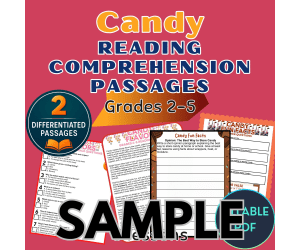
Candy Reading Comprehension 1 Lesson Sample Fillable PDF
ELA, Language Development, Resources for Teachers, Vocabulary, Spelling, Reading Comprehension, Reading, Early Math, Math, Common Core, Grade 2, 3, 4, 5, Worksheets & Printables, Worksheets, Teacher Tools, Centers, Activities, Assessments, Tests, Quizzes and Tests, Word Problems, Writing Prompts
THIS IS A ONE LESSON FREE SAMPLE OF THE FOLLOWING PRODUCT: Themed Reading Comprehension Passages Series - Candy This reading comprehension series is built for grades 2 to 5 and keeps things simple, clear, and easy to use. Every title follows a fun, kid-friendly theme and comes with two passage levels, one written for grades 2 to 3 and a more challenging version for grades 4 to 5. Students then work through a mix of follow-up pages that check understanding in different ways: multiple-choice questions, short written responses, scrambled words, a quick summary, and a theme-based word problem. Answer keys are included, so prep stays minimal. Each resource also comes in nine classroom-friendly formats, so you can choose what fits your setup: print or digital, editable or ready to go, and even self-grading options. Because the layout stays consistent, it is easy to plug into whole-class lessons, small groups, literacy centers, morning work, fast finisher tubs, sub plans, or home learning. It is a straightforward way to build comprehension, practice reading skills in context, and strengthen written responses without adding extra steps for you. Candy Lesson List Note: This product has titles different to those in the rest of the themed series. 1. Candy Types 2. Candy Flavors 3. Candy Shapes and Colors 4. Candy Ingredients 5. Candy Fun Facts FILLABLE PDF VERSION Worksheet-style pages, but with type-in answer boxes so students can complete and save their work digitally. Other versions are available in the links list below or in the full catalog. How to Use These Lessons Perfect for: Morning work or early-finisher bins Guided reading blocks or comprehension warmups Literacy centers or small-group rotations Holiday/seasonal review lessons Independent stations, sub plans, or take-home enrichment More Candy Themed Products CROSSWORDS WORDSEARCHES MAZES FULL CATALOG OF DOWNLOAD LINKS HERE Themed Reading Links Addition Animals Around the Home Birthday FORMATS: -FORMAL ASSESSMENT VERSION -PRESENTABLE PDF -PPT -SLIDES - PDF -FILLABLE PDF -WORD -FORMS -DOCS SUPPLEMENTARY MATERIALS (COMING SOON): -VISUAL READING PASSAGE VIDEO -GUIDED LEARNING VIDEO -LESSON PLANS Candy FORMATS: -FORMAL ASSESSMENT VERSION -PRESENTABLE PDF -PPT -SLIDES -PDF -FILLABLE PDF -WORD -FORMS -DOCS SUPPLEMENTARY MATERIALS (COMING SOON): -VISUAL READING PASSAGE VIDEO -GUIDED LEARNING VIDEO -LESSON PLANS Christmas Cinco de Mayo Clothes Colors Days and Months Division Earth Day Easter Easy Mazes Fall Father's Day Food Geography (Set 1) Geography (Set 2) Geography (Set 3) Graduation Health History (Set 1) History (Set 2) History (Set 3) Human Body Kindness Life Skills Mother's Day Multiplication Science (Set 1) Science (Set 2) Science (Set 3) Shapes Social Skills Spring Sports St. Patrick's Day Subtraction Summer Thanksgiving Transport Valentine's Day Winter Free One Lesson Themes Chinese New Year Lunar New Year Halloween Pink Shirt Day Independence Day Juneteenth President's Day Groundhog Day Readings in Depth Structure Each resource is built around a focused sub-theme within the broader topic. Students read two leveled passages (Grades 2–3 and Grades 4–5), then move through a short, consistent sequence of activities that checks understanding and keeps momentum: multiple-choice, brief written responses, a scrambled-words review, a compact summary task, and a light theme-linked word problem. The flow is predictable for students, but varied enough to feel fresh across topics. Each completed resource includes: Two differentiated reading passages (lower and upper level) A multiple-choice comprehension page Short written-response questions A scrambled-words or quick vocabulary check A brief summary activity A simple, theme-connected word problem Answer keys for fast marking and easy self-checking Nine classroom-friendly formats, including print, editable, digital, and self-grading options Themes Included These readings span a wide range of age-appropriate, high-interest topics, such as: Seasons and celebrations Real-world science and nature Community, character, and life skills Everyday high-frequency themes students already enjoy Each title connects to familiar experiences while strengthening comprehension, vocabulary in context, and clear written expression. Easy extensions (optional): Read twice: first for gist, second to highlight key details Write two “right there” questions and swap with a partner Create a 3-bullet fact list or mini mind map Turn the summary into a 3-sentence retell using sequence words Add one extra math question connected to the topic Compare the two levels: what details appear in both? Differentiation tips: Pre-teach 2–3 key words with quick examples Offer sentence starters for written responses Use partner reading: one reads aloud, one tracks evidence Allow highlighting or underlining before answering questions Provide a shorter chunking option for students who need breaks Encourage confident readers to justify answers with a quoted detail For similar downloads and other frees, do check out Cored Group on TeachSimple.
Author Cored Education
Rating
Tags Vocabulary, Spelling, Candy, Candy Activities, Writing Prompts, Word Problems, Reading Comprehension, Candy Reading, Candy Passages, Reading Passages
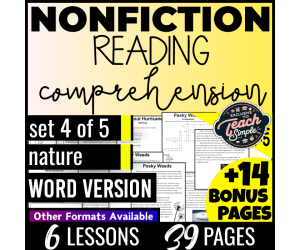
Reading Comprehension Nonfiction Set 4 - Nature (Word)
ELA, Reading, Reading Comprehension, Common Core, ESL, Language Development, Vocabulary, Spelling, Writing, Resources for Teachers, Grade 4, 5, Worksheets & Printables, Worksheets, Writing Prompts, Teacher Tools, Assessments, Tests, Quizzes and Tests
Reading Comprehension Passages Nonfiction Set 4 Overview No prep reading comprehension lessons, with enjoyable articles and topics. Each lesson has a blend of post-reading activities. Mixed questions to check overall understanding. Vocabulary activities, plus a writing section. Lessons also contain a bonus extension exercise at the end. Some you may like, some you may not, either way they are there if you wish to use them. Full answer keys are provided. Passages Include 1.Best Season: Is winter the best season? What activities do we do? Read more in this article. 2.Changing Leaves: This article explains how and why leaves change in fall. 3.Pesky Weeds: Love them or hate them, dandelions are more useful that you think. 4.All About Hurricanes: Here's all you need to know about hurricanes. 5.Earth Day: What can we do to help our world on a daily basis? 6.Caspian Sea: What? Where? How? Why? Learn about the history of the Caspian Sea in his lesson. Word Version This is the Word editable version. This download is available in GOOGLE Docs, GOOGLE Forms, GOOGLE Slides. PDF, PPT, WORD. FULL CATALOG OF DOWNLOAD LINKS HERE Grade 4/5 Links Fiction Set 1 - Animals Google Docs Google Forms Google Slides PDF PPT Word Guided Reading Materials Fiction Set 2 - Family Google Docs Google Forms Google Slides PDF PPT Word Guided Reading Materials Fiction Set 3 - Friends Google Docs Google Forms Google Slides PDF PPT Word Guided Reading Materials Fiction Set 4 - School Google Docs Google Forms Google Slides PDF PPT Word Guided Reading Materials Fiction Set 5 - Sports Google Docs Google Forms Google Slides PDF PPT Word Guided Reading Materials Nonfiction Set 1 - Birds Google Docs Google Forms Google Slides PDF PPT Word Guided Reading Materials Nonfiction Set 2 - Insects Google Docs Google Forms Google Slides PDF PPT Word Guided Reading Materials Nonfiction Set 3 - Mammals Google Docs Google Forms Google Slides PDF PPT Word Guided Reading Materials Nonfiction Set 4 - Nature Google Docs Google Forms Google Slides PDF PPT Word Guided Reading Materials Nonfiction Set 5 - Sea Animals Google Docs Google Forms Google Slides PDF PPT Word Guided Reading Materials Reading Passages Overview Each passage is especially written for Grade 4-5 students, including key vocabulary required for this age group. Topics are varied and are accompanied by colorful graphics. Topics are meant to educate, yet entertain the modern student. These passages are perfect for the modern classroom. Whereas textbooks can become outdated in no time, any changes to technology or the world will result in updates to this product. Mixed Questions The mixed questions section of each lesson includes a variation of five comprehension, vocabulary and math questions. In addition, key reading strategies are frequently covered including cause & effect, summarizing, compare & contrast and making conclusions. Two or three of the questions will be MCQs and other questions will require a written response of some kind. Full answers and example responses appear at the end of the lesson. Spelling & Vocab Each reading passage contains a variety of words and phrases designed for Grade 4-5 students. Spelling and vocab activities provide the opportunity to build fluency with these words. As it can become quite mundane doing the same activities over and over, each lesson in a set will contain a different spelling and vocab activity . Activities include: spelling games, sentence match-ups, mixed-up text and decoding words from the lesson. Writing Prompts Writing prompts are designed to continue the theme or lessons learned in the story. Students are persuaded to write in a variety of ways and each prompt includes several cues to help. As with the spelling/vocab section, writing prompts will vary. This includes research pieces, reading responses, poetry and creative writing prompts. Full Answer Keys Full answer keys and sample responses are provided so no matter how busy you are, you know you're covered! Mixed question answers provide evidence from the text, math questions contain the relevant workings. Answers are designed for use by the teacher, but also suitable as a handout to the student. Just for Fun Each lesson will have a bonus extension exercise. This is something fun to extend the lesson with. You can find these at the end of each lesson, titled Just for Fun. Just for Funs are optional. Some you may like, some you may not. Either way, they are there to do with as you wish. For similar downloads and other frees, do check out Cored Group on TeachSimple.
Author Cored Education
Tags Elementary, Reading, Comprehension, Vocabulary, Answers, Ccss, Common Core, Spelling, Writing, Passages
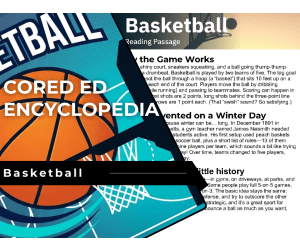
Basketball Reading Comprehension Passage - Cored Ed Encyclopedia
ELA, Language Development, Resources for Teachers, Reading Comprehension, Reading, Pre-Reading, Creative Writing, Writing, Sports, P.E. & Health, Grade 2, 3, 4, 5, Worksheets & Printables, Worksheets, Teacher Tools, Centers, Activities, Writing Prompts, Assessments, Tests, Quizzes and Tests, Quizzes
This basketball reading comprehension contains the following: Pre-Reading Trivia Students will write down one thing they already know about the subject and then read five more facts and discuss. These facts are fun, and the students will enjoy learning about the subject before reading more. Reading Passage The text is a high-interest reading passage with set paragraphs, roughly three to four paragraphs long. It contains a variety of themes about the topic, anywhere from history to technology. The passage is between 250 and 350 words in length. Mixed Questions The first question page contains four multiple-choice questions, each with a choice of four answers, and three written response questions that require a sentence or two from the student. Creative Writing In this question, the student will be required to write a five to eight sentence paragraph on a question related to the topic. Extension Activities This page is optional for fast finishers. If there are five to ten minutes left at the end of the lesson, the student can choose one of three activities, each one requiring a different skill. Answer Key There are answers for the multiple-choice questions and three written response questions have sample answers. FULL CATALOG OF DOWNLOAD LINKS AND ENCYCLOPEDIA INDEX HERE Cored Ed Encyclopedia Overview The Cored Ed Encyclopedia is a weekly series of lessons that you can pick up and use right away. These short readings fit into whatever time you have available. Each one includes a warm-up, a reading, and a set of questions, but it’s flexible — you can do just the reading, the full lesson, or skip the writing section if you need to. Each lesson focuses on a single topic so students don’t get lost. The writing is clear but never childish, making it perfect for grades two through five. Topics range from animals and science to history, inventions, and everyday things. No matter the level of the student, everyone should take away at least one new idea or fact from each lesson. The materials are easy to print, easy to explain, and require no setup. They work well for whole-class teaching, partner work, or independent study.
Author Cored Education
Rating
Tags Vocabulary, Spelling, Reading Comprehension, Reading Passages, Cored Encyclopedia, Facts, Reading, Creative Writing, Basketball, Sports
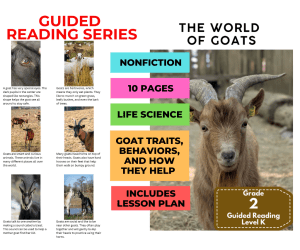
Guided Reading Level K - The World of Goats (with Lesson Plan)
ELA, Resources for Teachers, Reading Comprehension, Reading, Science, Language Development, Life Sciences, Animals, Pre-Reading, Vocabulary, Grade 2, 3, 4, Worksheets & Printables, Worksheets, Teacher Tools, Centers, Activities, Literacy Readers, Quizzes, Quizzes and Tests, Assessments, Lesson Plans
This Guided Reading Book - The World of Goats (Level K) with lesson plan includes: Guided Reading Color Label (front cover x1) This is a quick way to match the book’s demands to what students can generally handle.. The overall goal is to use the level/color to pick books for several smaller groups. To qualify for a certain level, a student is expected to read a book from that level with about 90–94% accuracy. If a student is consistently accurate and understands, move up a level. If the student is struggling at that level, drop down and add more support. Each student will improve at completely different rates, but it is generally one of the best ways to check progress across the class. DOWNLOAD THE CATALOG TO VIEW ALL GUIDED READING BOOKS AVAILABLE (SORTED LEVELS A-Z) Pre-Reading Question (x1) Teacher asks the prompt aloud, can be while showing the cover or first page. Students share what they already know, or make educated guesses from the cover. Prompt them to use the target vocabulary. Write some of their responses on the board to look back at during the reading. Vocabulary Words (x5) Introduce the five words, best doing it one at a time. Start by saying it, while students repeat and then see if anyone knows what it means before reading further. Read through the meaning and try to briefly connect each word to a picture or gesture so it’s meaningful. Ask students to flip through the book pages and point to where they see each of the vocabulary words. While reading the book pause upon coming across one of the vocab words or read the sentence twice to make sure students understand the word has appeared. Optional: Ask students to raise hands whenever they see/hear one of the new words. Guided Reading Pages (x10) Check the book snapshot (below) for: primary topic - do you need to prep extra reading or intro materials on this? what is taught best - decide on 1-2 bullets to focus on, use the prompt or words provided here for best results. learning goals - what you are checking for students to be able to do after the session, elicit answers using prompts or words provided. key vocabulary (see section above). questions overview - so you know what is coming up and if you need to prep extra materials to assist understanding. Run the lesson You may have already looked at a few of the pages together, but you can show them some of the pictures again first to set meaning. Depending on how much time you have and how familiar your students are with guided reading class, you may want to read the book aloud first with the group first. Students whisper or partner read, while you listen in. If time, do it as a group, one student reading a page each. Use the guided page’s prompts to coach: “Check the picture / does it make sense?” “Point under the words / try the first sound” “Reread the sentence smoothly”. Try to focus more on one student per session (rotating every time), so you can work out if they are ready to move up or need to move down a level. Comprehension Questions (back cover x3) This is your way to check that students didn’t just say the words, but actually understood the text. First, let students answer by pointing to the page/picture and saying a short sentence. After any answer, follow with: “Show me where you found that in the text.” In bigger groups, have partners answer first (10–20 seconds), then call on 2–3 students to share. Differentiation tips: Emerging speakers/struggling readers: oral + pointing On-level: oral in a full sentence Higher: one written sentence or draw + label Book Snapshot Title: The World of Goats Genre: Nonfiction (informational text) Subject: Life Science + Reading (Informational Text) Primary Topic: Goat traits, behaviors, and how they help Estimated Guided Reading Level (A–Z): K What This Book Teaches Best Describes goats as “smart and curious” animals that live in many places around the world. Explains body parts that help goats move and stay safe (horns, hooves, and special eyes that help them “see all around”). Teaches what goats eat by defining them as “herbivores” and naming plants they munch on (grass, leafy bushes, bark). Highlights goat abilities and behaviors (climbing steep, rocky cliffs; kids running and jumping; goats playing and gently bumping heads). Connects goats to farm life by stating they provide milk and wool. Learning Goals Students will identify key goat traits and behaviors described in the text. Students will explain how horns and hooves help goats, using details from the text. Students will describe how a goat’s special eyes help it stay safe. Students will explain what herbivores eat and list plants goats munch on from the text. Students will describe how goats communicate and what a “bleat” can help a mother goat do. Students will describe how goats can be helpful to people on a farm, according to the text. Key Vocabulary From the Text curious — wanting to learn more by exploring. hooves — hard feet that help goats walk. rectangles — shapes with four sides and four corners. herbivores — animals that eat only plants. bleat — the sound a goat makes. Discussion Prompts Pre-reading question: What features might help goats live in different places? Comprehension questions: How do a goat’s special eyes help it stay safe? Comprehension questions: What kinds of plants does the book say goats like to munch on? Comprehension questions: Why do goats gently bump their heads when they play together? Printing Tips 1. Best Printing Method (Recommended) “Booklet” Printing (Best if Available) If your printer or PDF viewer supports Booklet Printing , use this. Settings to use: Print mode: Booklet Paper size: Letter or A4 (either works) Orientation: Landscape Print on both sides: Yes Flip on: Short edge Scaling: Fit to printable area Booklet subset: First test: Front sides only Then: Back sides only This will automatically: Pair pages correctly Put the cover on the outside Align everything for folding After printing, fold in half and staple along the spine . 2. If “Booklet” Printing Is NOT Available You can still print this correctly with manual duplex printing . Step-by-step: Open the PDF. Choose Print . Set: Orientation: Landscape Pages per sheet: 1 Print on both sides: Yes Flip on: Short edge Print all pages . Because each PDF page already contains two facing book pages, the result will still fold cleanly into a book. Thousands of Cored Education products are included with your TeachSimple membership. Download links and encyclopedia index available here.
Author Cored Education
Rating
Tags Reading Comprehension, Reading Passages, Reading, Guided Reading, Guided Reading Lesson Plan, Guided Reading Activity, Pre-reading, Science Lesson Plans, Life Science, Animals
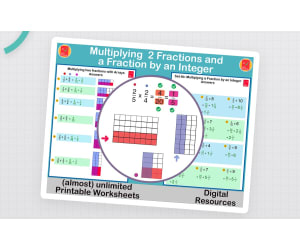
Multiplying Fractions with Fractions and Integers
Math, Common Core, Fractions, Multiplication, Grade 4, 5, Worksheets & Printables, Worksheets, Word Problems
This collection of worksheets focuses on introducing and developing skills in fractional multiplication, covering both fraction-to-fraction and fraction-to-integer operations. The material is organized into three difficulty tiers: Tier A: Utilizes visual aids such as rectangular grids for conceptual understanding Tier B: Emphasizes standard computational methods, including fraction simplification Tier C: Applies learned concepts to solve practical word problems The worksheet series comprises seven distinct sets: Fraction-to-Fraction Multiplication: 1. Foundational concepts using visual representations 2. Numerical exercises involving calculation and simplification 3. Real-world application problems Fraction-to-Integer Multiplication: 4. Questions incorporating visual grid support 5. Computational practice with simplification and mixed number conversion 6. Contextual word problems Advanced Practice: 7. Complex operations involving three fractions with simplification Upon completing this module, learners should be proficient in: • Performing multiplication with fractions and whole numbers • Reducing fractional results to their simplest form • Transforming improper fractions into mixed numbers • Utilizing fraction multiplication to address practical scenarios This will also help prepare them for the next level which covers multiplication of mixed numbers which will require all the various mathematical skills gained here to be well establishedTowards this end, you will see that there is an abundance of worksheets that will provide you with sufficient resources to enable your students gain a high proficiency in the essential skills How Many worksheets exactly ? The worksheets are virtually limitless. With a click of a button, numbers are randomized, which means that each worksheet is different. These worksheets are ideal not just for class time practice but also for math centers, end-of-lesson activities, or as resources for substitute teachers, homework assignments, requiring minimal instructions. Answers are generated automatically with each new worksheet. Interactive Teaching Pages The Teaching Pages, designed for use with Interactive Whiteboards, help to introduce the content of the worksheets for the whole class. Compatibility Note It is essential to note that these resources can be downloaded as PDF documents. They operate with the official Adobe Acrobat Reader on both Windows and Mac.
Author Jeff's Notebooks
Tags Math, Fractions, Multiply, Proper Fractions, Improper Fractions, Word Problems, Worksheets, 4th Grade, Arrays, Simmplify Fractions

Arctic Animals Coloring Pages worksheet activity printables
Animals, Life Sciences, Science, Geography, Social Studies, Creative Arts, Art, Grade 2, 3, 4, 5, Activities, Outlines, Teacher Tools, Worksheets & Printables, Coloring Pages, Worksheets
Engage your students by teaching about Arctic animals while allowing them to use their imagination while developing their motor skills by creating no-prep coloring pages featuring polar wildlife. Students can learn about the different types of Arctic animals such as polar bear, penguin, seal, whale, and they can also practice color, detail, and hand-eye coordination. The no-prep format provides an easy-to-use, enjoyable activity that allows you to combine learning with enjoyment, thus making learning memorable and fun! The Arctic Animals Coloring Pages are great for all levels of students and can be utilized in science, geography, and art centers, in addition to being utilized as homework assignments and during the time students finish early. ❄️🐾 Why Do it : The purpose of the activity is to provide students with knowledge of Arctic animals and their habitats 🐻❄️., enhance fine motor skills ✏️., create an awareness of polar regions and ecosystems 🌍., create curiosity about wildlife ❄️. Coloring provides a hands-on, creative approach to making learning fun and engaging for students of all levels. How Do You Do It : To use the Arctic Animals Coloring Pages, follow these simple steps: 1️⃣ Print the Arctic Animals Coloring Pages. 2️⃣ Introduce some key facts about the Arctic and its animals. 3️⃣ Ask the students to color the animals focusing on their details and patterns. 4️⃣ Discuss some of the interesting facts about each animal or Arctic habitat. 5️⃣ Use optional extension activities like labeling animals or habitats. ✅ Audience : K-5 Grades 🌟, individual assignment, paired assignment, student who finish early, science and geography center or substitute lesson plan 🤝. Practical use within the classroom: This type of assignment can be used for individual student practice, in classroom centers, for students to complete at home, and as a creative way for students who finish their work early to enhance their creative thinking skills. 🤲 Variations that may be fun to incorporate into your classroom: Artwork & Science Extensions 🎨: Drawing your own arctic animal habitat. Timely Coloring Competition For Students ⏳: See how many arctic animals students can colour within a certain time frame. Fact Labelling ✏️: Create a simple fact that describes each creature. Inventing Your Own Habitat 🧩: Construct a complete Arctic habitat with living creatures. How This Assignment Meets NGSS, Science/Geography Standards, and Helps Develop Hand Eye Coordination, Concentration/Focus, and Creativity within a Number of Subject Areas. File Format/Printing Information: The PDF file will have both colour and black/white pages of this lesson, which can easily be printed in a classroom setting because of the ink-saving features provided. Teacher Strategies 🌟: While helping students learn about the arctic environment and associated animal species, I would suggest that teachers provide students with an opportunity to apply their creative skills while learning about ecosystems and animal habitats within a hands on manner, which makes it a very enjoyable learning experience for all students! ❄️🐾
Author Classsim
Rating
Tags Arctic , Animals, Coloring Pages , Worksheet, Activity, Printables , Arctic Animals, Arctic Animals Coloring Pages , Arctic Animals Coloring Pages Worksheet , Arctic Animals Coloring Pages Worksheet Activity Printables
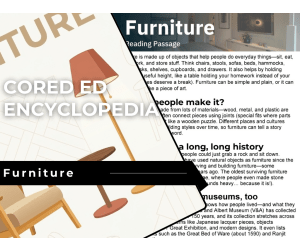
Furniture Reading Comprehension Passage - Cored Ed Encyclopedia
ELA, Language Development, Resources for Teachers, Reading Comprehension, Reading, Pre-Reading, Writing, Science, Technology, Strategies, Grade 2, 3, 4, 5, Worksheets & Printables, Worksheets, Teacher Tools, Centers, Activities, Writing Prompts, Assessments, Tests, Quizzes and Tests, Quizzes
This furniture reading comprehension contains the following: Pre-Reading Trivia Students will write down one thing they already know about the subject and then read five more facts and discuss. These facts are fun, and the students will enjoy learning about the subject before reading more. Reading Passage The text is a high-interest reading passage with set paragraphs, roughly three to four paragraphs long. It contains a variety of themes about the topic, anywhere from history to technology. The passage is between 250 and 350 words in length. Mixed Questions The first question page contains four multiple-choice questions, each with a choice of four answers, and three written response questions that require a sentence or two from the student. Creative Writing In this question, the student will be required to write a five to eight sentence paragraph on a question related to the topic. Extension Activities This page is optional for fast finishers. If there are five to ten minutes left at the end of the lesson, the student can choose one of three activities, each one requiring a different skill. Answer Key There are answers for the multiple-choice questions and three written response questions have sample answers. FULL CATALOG OF DOWNLOAD LINKS AND ENCYCLOPEDIA INDEX HERE Snapshot Genre: Nonfiction (informational text) Subject: Reading Primary Topic: What furniture is, how it’s made, and history Estimated Guided Reading Level (A–Z): Q What This Lesson Teaches Best Defines furniture by what it helps people do (sit, eat, sleep, work, store things) and gives examples of common items. Explains how furniture is made , including common materials and how makers connect parts using joints . Builds background knowledge about furniture across time , from using natural objects to evidence of built furniture long ago and stone furniture at Skara Brae. Shows how museums use objects as evidence of how people lived, including examples from the Victoria and Albert Museum (V&A) collection. Learning Goals Students will be able to explain what furniture is and list everyday tasks it helps people do. Students will be able to identify examples of furniture named in the passage and describe what each might be used for. Students will be able to describe how furniture can be made, including common materials and how joints connect pieces. Students will be able to describe key points in the history of furniture mentioned in the text (natural objects, carving/building, Skara Brae stone furniture). Students will be able to explain why museums collect furniture and name at least one example of an item mentioned from the V&A collection. Key Vocabulary From the Text joints — special fits that lock furniture parts together. archaeologists — people who study the past using evidence. cupboards — furniture for storing things behind doors. centuries — periods of one hundred years. lacquer — a shiny coating used on some objects. Cored Ed Encyclopedia Overview The Cored Ed Encyclopedia is a weekly series of lessons that you can pick up and use right away. These short readings fit into whatever time you have available. Each one includes a warm-up, a reading, and a set of questions, but it’s flexible — you can do just the reading, the full lesson, or skip the writing section if you need to. Each lesson focuses on a single topic so students don’t get lost. The writing is clear but never childish, making it perfect for grades two through five. Topics range from animals and science to history, inventions, and everyday things. No matter the level of the student, everyone should take away at least one new idea or fact from each lesson. The materials are easy to print, easy to explain, and require no setup. They work well for whole-class teaching, partner work, or independent study.
Author Cored Education
Rating
Tags Vocabulary, Spelling, Reading Comprehension, Reading Passages, Reading, Creative Writing, Reading Strategies, Writing Prompts, Technology, Furniture
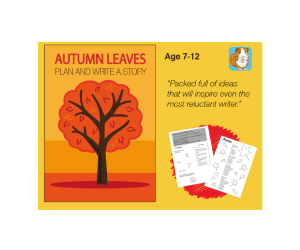
Write A Story Called 'Autumn Leaves' (7-11 years)
ELA, Writing, Grade 2, 3, 4, Worksheets & Printables, Worksheets
The Write A Story Called 'Autumn Leaves' (7-11 years) Educational Resource This creative, hands-on guide is designed to engage students in comprehensive language arts learning. It helps young learners from grade 2 through grade 4 construct sentences on their own and develop a beautiful autumn-themed story. This resource takes an innovative approach by permitting children to choose words from multiple choices or invent sentence endings by themselves. This piques their interest and makes the writing process intriguing. It further exemplifies how a narrative structure can be divided into three main parts - the beginning, a mid-section that builds up suspense, and a conclusion. Bonus feature: An added bonus of this teaching aid includes the opportunity for youngsters to pen down their unique Autumn poems. By crafting stories and poems around this seasonal theme, students effectively practice expressing ideas creatively while building strong language skills. The 'Autumn Leaves' series fits as an ideal supplement for all writing abilities – providing great encouragement even for those hesitant towards writing tasks. Besides shaping written narratives or laying out scripts or reports, learners get exposure to impressive vocabulary enhancement lessons within these activities. Focusing on various essential writing techniques with featured lessons on designing simple yet effective sentences — compound and complex structures alike . Children are introduced seamlessly into grammar rules such as punctuation marks application along with word connection hints which forms an integral part of sentence construction exercises. In summary, "This pedagogical resource transforms your Language Arts classroom into an engaging environment." Addendum: This PDF file type worksheet is not only meant for full class participation; it can work wonderfully in small group discussions enabling peer review sessions or even serve as productive homework assignments ensuring practice beyond classroom boundaries!
Author Guinea Pig Education
Tags Creative Writing, Story Building, Autumn Theme, Language Skills, Sentence Construction
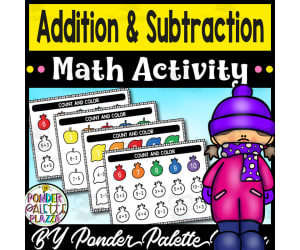
Addition and Subtraction - Count and Color
Math, Basic Operations, Early Math, Numbers, Addition and Subtraction, Addition, Subtraction, Grade 1, 2, 3, 4, 5, Worksheets & Printables, Worksheets, Centers, Activities, Coloring Pages
Turn math time into playtime with this Addition and Subtraction: Count and Color activity! Designed to engage even the most math-resistant students, this resource combines basic arithmetic with creativity. It’s the magical fusion of problem-solving and coloring that makes equations as fun as picking crayons out of the box (without the mess, of course). Students will count objects, solve simple addition or subtraction problems, and color their answers to reveal the vibrant results. It’s math, but make it artistic! No tears, no yawns, just a room full of kids doing math with a grin. Ways to Use: Morning Warm-Up: Start the day with a little math and a lot of fun. Small Groups: Ideal for math centers or partner activities. Homework: A worksheet kids won’t dread taking home! Sub Plans: No explanation needed—kids can dive right in. Advantages: Skill Boosting: Strengthens counting, addition, and subtraction skills effortlessly. Interactive: Combines thinking and doing for better retention. Engaging: Keeps kids busy, entertained, and learning. Mess-Free Creativity: All the fun of art without glitter explosions. This activity is your secret weapon to make math the highlight of the day!
Author Ponder Palette Plazza
Tags Addition, Subtraction, Addition And Subtraction, Coloring, Counting, Math Activities, Winter Math, Fall Math, Spring Math, Summer Math

Photosynthesis Lesson and Experiment for 3rd and 4th Grade Science
Science, Nature & Plants, Life Sciences, Earth and Environmental Sciences, Earth Sciences, Biology, Grade 3, 4, 5, Centers, Activities, Labs, Experiments, Worksheets, Worksheets & Printables
Photosynthesis Lesson, Worksheets, and Experiment How Plants Make Food - 3rd & 4th Grade Science Lesson I created this resource to give students a clear and enjoyable introduction to photosynthesis. The lesson blends reading, discussion, and a hands-on experiment so students can see how plants make their own food in a way that feels real and meaningful. I put this resource together because photosynthesis is one of those topics that becomes much easier to understand when students can read about it and observe it in action. This set offers a mix of activities that help students explore the idea from different angles. What’s inside? A short reading passage that explains photosynthesis Seven comprehension questions with an answer key A step by step experiment using black gram seeds Follow-up discussion questions to guide class conversation Safety notes and cautions for the experiment Two anchor charts that break the process into small pieces A quick True/False activity with answers A diagram activity where students label the photosynthesis process A story-writing page where students write from the point of view of a plant Complete answer keys to all the questions are included in this resource Resource features: I designed this set with 3rd and 4th graders in my mind. The reading level and activities are approachable for that age group. The experiment inside the resource is simple enough for students to complete in small groups, but still gives them something meaningful to observe. I have written all the instructions clearly. Each activity in this resource builds on the previous one so students can connect ideas as they go. This resource also blends science with literacy, drawing, and creative thinking, which makes it easy to fit into a variety of lesson plans or science centers. Ways to use it: Reading activity: Have students read the passage and answer the questions independently or with partners. Vocabulary work: Create a small word wall or glossary for science terms. Hands-on learning: Set up the seed experiment as a class or rotate it through small groups. Science journals: Encourage students to record their predictions and observations throughout the experiment. Art activity: Students can draw and label the parts of a plant involved in photosynthesis. Writing prompt: Let students write a short story from the perspective of a plant creating its own food. Group talk: Compare observations, discuss results, and talk through what might have caused them. Extensions: Students can look at different types of plants and explore how sunlight and environment affect their growth. Usefulness for teachers, homeschoolers, and parents This resource works well as a mini-unit as it requires very little preparation. The activities give students different ways to understand the process of photosynthesis. This resource is suitable for a wide range of learners. It supports reading comprehension, science vocabulary, and basic scientific inquiry skills, all while keeping instructions simple enough for independent use. The experiment uses easy to find materials, and the activities make it simple to incorporate science into home learning or family projects. photosynthesis, 3rd grade science, 4th grade science, anecdotal activity, photosynthesis story, hands-on learning, plant science, reading comprehension, science experiments, STEM, elementary education, homeschool science, nature study, scientific inquiry, vocabulary building, cross-curricular learning, environmental education, chlorophyll experiment, plant growth, science journaling, critical thinking, observation skills, teaching resource, environmental science, anchor charts, photosynthesis experiment
Author FlashKart
Rating
Tags Science, Photosynthesis, Plants, 3rd Grade Science, 4th Grade Science, Photosynthesis Experiment, Science Reading, Sunlight, Science Process, Earth Science

Lawn Mowers Reading Comprehension Passage - Cored Ed Encyclopedia
ELA, Language Development, Resources for Teachers, Reading Comprehension, Reading, Pre-Reading, Writing, Strategies, Science, Technology, Grade 2, 3, 4, 5, Worksheets & Printables, Worksheets, Teacher Tools, Centers, Activities, Writing Prompts, Assessments, Tests, Quizzes and Tests, Quizzes
This lawn mowers reading comprehension contains the following: Visualize on the Cover (Teacher Read Aloud Script) Start your lesson by taking a few moments to visualize the topic and share thoughts or feelings about it. Pre-Reading Trivia Students will write down one thing they already know about the subject and then read five more facts and discuss. These facts are fun, and the students will enjoy learning about the subject before reading more. Reading Passage The text is a high-interest reading passage with set paragraphs, roughly three to four paragraphs long. It contains a variety of themes about the topic, anywhere from history to technology. The passage is between 250 and 350 words in length. Mixed Questions The first question page contains four multiple-choice questions, each with a choice of four answers, and three written response questions that require a sentence or two from the student. Vocabulary Questions Practice seven key words from the text in this section across two activities. First section is scrambled words where students will unscramble three words given a clue for each. The second section is a word to meaning matching activity. Creative Writing In this question, the student will be required to write a five to eight sentence paragraph on a question related to the topic. Extension Activities This page is optional for fast finishers or to take home. There are several activities, each one requiring a different skill. Do some, do none, do all, completely optional - but you will feel reassured knowing every possibility is planned for. Includes summary writting question. Answer Key There are answers for the multiple-choice questions, written response questions have sample answers, vocabulary answers and if there is a summary question then a sample summary will be provided as well. FULL CATALOG OF DOWNLOAD LINKS AND ENCYCLOPEDIA INDEX HERE Lesson Snapshot Title: Lawn Mowers Genre: Nonfiction (informational text) Subject: Science & Technology / Reading (Informational Text) Primary Topic: How lawn mowers cut grass and affect noise/air Estimated Guided Reading Level (A–Z): O What This Lesson Teaches Best Defines what a lawn mower does (trims grass so lawns stay short and even) and where it might be used (backyard, park, sports field). Compares two cutting methods: reel-style “scissors” cutting vs. fast-spinning blade cutting “by impact.” Explains key machine parts and results, including what the mower “deck” does and how dull blades can shred tips and turn them brown. Builds historical understanding with the 1830 invention and patent by Edwin Beard Budding, including materials and design details. Introduces environmental and sound impacts by comparing electric vs. gas mowers (decibels, exhaust, and emissions). Learning Goals Students will explain the main job of a lawn mower using details from the text. Students will describe how a reel mower cuts grass and how a fast-spinning flat blade cuts grass. Students will identify what the mower “deck” does and what can happen when blades are dull. Students will recount what happened in 1830 with Edwin Beard Budding and why his mower mattered. Students will compare gas and electric mowers using the text’s information about loudness and air pollution. Key Vocabulary From the Text reel — a spinning set of curved blades. deck — cover around blade area that guides clippings. patent — legal protection for an invention. decibels — units used to measure how loud sound is. emissions — pollution released into the air. Cored Ed Encyclopedia Overview The Cored Ed Encyclopedia is a weekly series of lessons that you can pick up and use right away. These short readings fit into whatever time you have available. Each one includes a warm-up, a reading, and a set of questions, but it’s flexible — you can do just the reading, the full lesson, or skip the writing section if you need to. Each lesson focuses on a single topic so students don’t get lost. The writing is clear but never childish, making it perfect for grades two through five. Topics range from animals and science to history, inventions, and everyday things. No matter the level of the student, everyone should take away at least one new idea or fact from each lesson. The materials are easy to print, easy to explain, and require no setup. They work well for whole-class teaching, partner work, or independent study.
Author Cored Education
Rating
Tags Vocabulary, Spelling, Reading Comprehension, Reading Passages, Reading, Creative Writing, Reading Strategies, Writing Prompts, Technology, Lawn Mowers
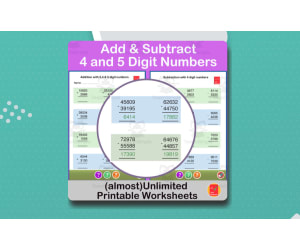
Add & subtract 4 & 5-digit whole numbers with or without regrouping
Math, Addition and Subtraction, Addition, Common Core, Grade 4, 5, Worksheets & Printables, Worksheets
There are a number of alternative methods used to solve these problems (and especially with 2 & 3 digit numbers), but the standard algorithm at this level is probably the best preparation your pupils can have for working with decimal numbers which will follow in Grade 5.These sets of worksheets focus on addition and subtraction working primarily with 4 and 5 digit numbers. On each Worksheet there are three buttons, each of which will randomise the numbers in the questions at 3 levels, namely addition and subtraction with: -4 digit numbers only -5 digit numbers only -A mix of 3,4 or 5 digit numbers The questions are presented in the standard column format so students can start working on them straight away. How many worksheets are in each set ? Lots and lots. At the click of a button all numbers are randomised, so the questions change every time. This will allow you to create as many new worksheets you will need for practice throughout the year or even give groups of pupils in your class different sets of questions. There will certainly be enough to ensure fluency in this topic. Answers can be found on the second page of every worksheet, automatically generated when you create a new worksheet. You can also remove all numbers from the sheet, so you have a blank template to work with or for your pupils to create their own set of questions. Note These resources are PDF documents and work with the official Adobe Acrobat Reader on Windows or Mac computers with the randomising buttons also working via a touchscreen or on an Interactive Whiteboard. Common Core State Standards 4.NBT.B.4 Fluently add and subtract multi-digit whole numbers using the standard algorithm. UK National Curriculum - Year 4 Programme of Study - Addition and Subtraction Add and subtract numbers with up to 4 digits using the formal written methods of columnar addition and subtraction where appropriate Need to review this topic with 2-digit or 3-digit numbers ? Add and Subtract 2-digit numbers with and without regrouping 2nd Grade Add and subtract 3 Digit numbers with and without regrouping
Author Jeff's Notebooks
Tags Addition, Subtraction, 5th Grade, 4th Grade, Jeff's Notebooks, Standard Algorithm, Column Addition, 4 Digit Numners, 5 Digit Numbers, Interactive Whiteboard

Algebra: Drill Sheets Vol. 2 Gr. 3-5
Math, Algebra, Common Core, Grade 3, 4, 5, Worksheets & Printables, Worksheets
Algebra: Drill Sheets Vol. 2 Gr. 3-5 This is a comprehensive teaching resource specially designed for students in grades 3 to 5. It offers an array of engaging, well-designed algebra exercises and activities that closely align with NCTM (National Council of Teachers of Mathematics) standards. Features A mix of diverse warm-up activities alongside timed drills spanning different degrees of complexity. An inclusive study on various algebra concepts such as patterns evaluation, expressions and number lines exploration, graph reading comprehension exercises to math sentences creation practices and others. Offers instructional guides through assessment standards rubrics helping educators track student progress accurately thus enhancing targeted interventions for individual student needs or areas struggling with collectively. In addition to providing practice opportunities, this resource comes packed with review sheets that allows students' self-reflection upon their understanding on algebra concepts fostering growth mindset among young learners. Bonus Features: The product bonus includes color activity posters which breaks down complex ideas into simplified representations thereby elucidating often complex or abstract mathematical ideas. Fully Compliant With Standards The product is compliant with both the Common Core State Standards as well as NCTM Standards framework aiming at promoting critical thinking skills development besides computational fluency firmly rooting its structure within STEM practices - all aimed towards achieving educational excellence in Mathematics instructions! Improve your classroom routine by implementing Algebra: Drill Sheets Vol.2 Gr3-5 today! Don't let this fantastic math resource slip by!
Author Classroom Complete Press
Tags PDF
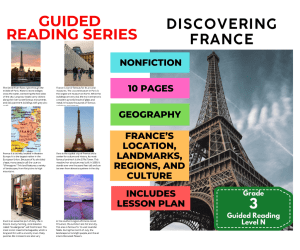
Discovering France: Guided Reading Level N with Lesson Plan
ELA, Resources for Teachers, Reading Comprehension, Reading, Science, Language Development, Vocabulary, Geography, Social Studies, Technology, Grade 2, 3, 4, Worksheets & Printables, Worksheets, Teacher Tools, Centers, Activities, Literacy Readers, Quizzes, Quizzes and Tests, Assessments, Lesson Plans
This Discovering France (level n) guided reading book with lesson plan includes: Guided Reading Color Label (front cover x1) This is a quick way to match the book’s demands to what students can generally handle.. The overall goal is to use the level/color to pick books for several smaller groups. To qualify for a certain level, a student is expected to read a book from that level with about 90–94% accuracy. If a student is consistently accurate and understands, move up a level. If the student is struggling at that level, drop down and add more support. Each student will improve at completely different rates, but it is generally one of the best ways to check progress across the class. DOWNLOAD THE CATALOG TO VIEW ALL GUIDED READING BOOKS AVAILABLE (SORTED LEVELS A-Z) Pre-Reading Question (x1) Teacher asks the prompt aloud, can be while showing the cover or first page. Students share what they already know, or make educated guesses from the cover. Prompt them to use the target vocabulary. Write some of their responses on the board to look back at during the reading. Vocabulary Words (x5) Introduce the five words, best doing it one at a time. Start by saying it, while students repeat and then see if anyone knows what it means before reading further. Read through the meaning and try to briefly connect each word to a picture or gesture so it’s meaningful. Ask students to flip through the book pages and point to where they see each of the vocabulary words. While reading the book pause upon coming across one of the vocab words or read the sentence twice to make sure students understand the word has appeared. Optional: Ask students to raise hands whenever they see/hear one of the new words. Guided Reading Pages (x10) Check the book snapshot (below) for: primary topic - do you need to prep extra reading or intro materials on this? what is taught best - decide on 1-2 bullets to focus on, use the prompt or words provided here for best results. learning goals - what you are checking for students to be able to do after the session, elicit answers using prompts or words provided. key vocabulary (see section above). questions overview - so you know what is coming up and if you need to prep extra materials to assist understanding. Run the lesson You may have already looked at a few of the pages together, but you can show them some of the pictures again first to set meaning. Depending on how much time you have and how familiar your students are with guided reading class, you may want to read the book aloud first with the group first. Students whisper or partner read, while you listen in. If time, do it as a group, one student reading a page each. Use the guided page’s prompts to coach: “Check the picture / does it make sense?” “Point under the words / try the first sound” “Reread the sentence smoothly”. Try to focus more on one student per session (rotating every time), so you can work out if they are ready to move up or need to move down a level. Comprehension Questions (back cover x3) This is your way to check that students didn’t just say the words, but actually understood the text. First, let students answer by pointing to the page/picture and saying a short sentence. After any answer, follow with: “Show me where you found that in the text.” In bigger groups, have partners answer first (10–20 seconds), then call on 2–3 students to share. Differentiation tips: Emerging speakers/struggling readers: oral + pointing On-level: oral in a full sentence Higher: one written sentence or draw + label Book Snapshot Title: Discovering France Genre: Nonfiction Subject: Social Studies (Geography/Culture) Primary Topic: France’s location, landmarks, regions, and culture Estimated Guided Reading Level (A–Z): N What This Book Teaches Best Geography basics about France , including where it is located and how its shape leads to a nickname. Key places and landmarks in Paris , such as the Eiffel Tower, the Seine River, and the Louvre Museum. Regional features of France by describing Provence, the French Alps, the French Riviera, and the Loire Valley. French culture and daily life , especially food traditions like boulangeries, baguettes, and croissants. Modern transportation in France , focusing on the TGV high-speed train and what it allows people to do. Learning Goals Students will identify where France is located and explain why it is called “L’Hexagone.” Students will describe at least two facts about Paris, including details about the Eiffel Tower. Students will explain how the Seine River is described and what people can see from boats on the river. Students will describe characteristics of at least two French regions (Provence, the Alps, the Riviera, or the Loire Valley) using details from the text. Students will describe examples of French culture from the text, including food and museums. Students will explain what the TGV is and how it changes travel across France. Key Vocabulary From the Text landmark — a famous place many people recognize. massive — very big. coastline — the land’s edge next to the sea. lavender — a purple plant/flower that can smell sweet. transportation — ways people travel from place to place. Discussion Prompts Pre-reading question: What do you already know about France, and what would you like to learn? Comprehension questions: Where does the text say France is located, and what nickname do some people give it because of its shape? Comprehension questions: What does the text tell you about the Eiffel Tower (such as when it was built or how tall it is)? Comprehension questions: Choose one region from the book (Provence, the French Alps, the French Riviera, or the Loire Valley) and describe two details the text gives about it. Printing Tips 1. Best Printing Method (Recommended) “Booklet” Printing (Best if Available) If your printer or PDF viewer supports Booklet Printing , use this. Settings to use: Print mode: Booklet Paper size: Letter or A4 (either works) Orientation: Landscape Print on both sides: Yes Flip on: Short edge Scaling: Fit to printable area Booklet subset: First test: Front sides only Then: Back sides only This will automatically: Pair pages correctly Put the cover on the outside Align everything for folding After printing, fold in half and staple along the spine . 2. If “Booklet” Printing Is NOT Available You can still print this correctly with manual duplex printing . Step-by-step: Open the PDF. Choose Print . Set: Orientation: Landscape Pages per sheet: 1 Print on both sides: Yes Flip on: Short edge Print all pages . Because each PDF page already contains two facing book pages, the result will still fold cleanly into a book. Thousands of Cored Education products are included with your TeachSimple membership. Download links and encyclopedia index available here.
Author Cored Education
Rating
Tags Reading Comprehension, Reading Passages, Reading, Guided Reading, Guided Reading Lesson Plan, Guided Reading Activity, Pre-reading, Social Studies, Geography, Technology

Irish Symbols Printable Posters
Creative Arts, Art, Art History, Grade 1, 2, 3, 4, Worksheets, Worksheets & Printables
This Irish Symbol Printable Poster features my own beautiful hand-illustrated watercolor images. To create a lasting and tactile item, I highly recommend printing the file onto watercolor paper. It creates a beautiful finish and looks like you are handling original paintings.
Author Fiddleticks Education
Tags Irish, Symbols, History, Printable, Poster, Printable Symbols

Write To Persuade: Come To Seaside World (9-14 years)
ELA, Writing, Grade 4, 5, 6, 7, Worksheets & Printables, Worksheets
Write To Persuade: Come To Seaside World This comprehensive teaching aid is aimed at children aged 9-14 years old and takes them on a guide to mastering persuasive writing. By walking through creating letters, pamphlets, brochures, and newspaper articles, learners will learn how to write persuasively in several academic contexts. Main Features: Diverse starting points for creating persuasive content. A focus on organisational and literary devices such as repetition mastery and emotive words usage. A layer of understanding towards tailored writing for varied audiences. The learning aid emphasises the importance of spelling accuracy, punctuation use, and grammatical correctness in successfully conveying your message. It presents example student essays that illustrate these norms clearly alongside practice questions designed around those compositions. Corrective Feedback and Tips for Success The Write To Persuade pack provides corrective feedback on common learner mistakes along with useful tips that bring achievement success within each session's reach. Our flexible ordering allows you to choose what you need when you need it without worrying about sequence constraints! Suitable for both independent study or supplementary lessons: This all-in-one package eases lesson development with pre-packaged essays covering non-fiction topics essential in pupils' learning trajectory. Suitable Grades: Ideal transition tool from Grade 4 to Grade 7 progressively making every day better! Included Subjects: Targeted at Language Arts subjects with an emphasis on writing and worksheets. Accessibility: Delivered in an accessible, hassle-free PDF format. Let's increase productivity and get down to the art of persuasive writing with our pack!
Author Guinea Pig Education
Tags Persuasive Writing, Literacy Skills, Varied Formats, Organisational Devices, Practice Questions
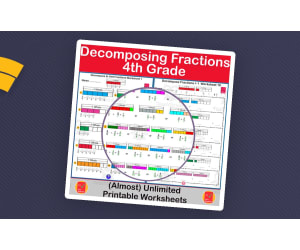
Decomposing Fractions – Grade 4 Worksheet Set
Math, Fractions, Grade 4, 5, Worksheets & Printables, Worksheets
Decomposing fractions deals with the breaking down of a fraction or whole number into a sum of simpler parts. It provides a good foundation for addition and subtraction of fractions, converting improper fractions to mixed fractions and also makes word problems easier. These worksheets aim to develop the skills and understanding of decomposing fractions by ensuring you can choose from a sufficient number of levels of worksheets with and without visual support, and where needed repeat a level with a different set of questions as many times as is needed. There are 5 levels of worksheets with visual support which form a natural progression: Decompose fractions less than 1 to unit fractions Decompose fractions less than 1 to 2 fractions Decompose a fraction less than 1 to 3 fractions Decompose a Whole Number to 2 fractions Decompose an improper number then write as a mixed number Differentiation within each level For each of the above there are a number of options available that will enable you to choose how much information your students need to complete a worksheet e.g. you may want themto: -only to fill in the numerators for the decomposed fractions -write out the fully the fraction before and after decomposition using colored fraction bar -color in the fraction bar -find the missing numerators or denominators using the shown numbers as clues How many worksheets are there ? Lots and lots. There are 22 worksheet templates BUT at the click of a button numbers are randomised, so the questions change every time which allows you to create new worksheets at the same level for extra practice or revision throughout the year or even give groups of pupils in your class different sets of questions again all at the same level. The multiple levels of worksheets means that you can differentiate from the very start and have the freedom to set the pace of work that you think is best for each student. With these worksheets there is a simple example at the top of the page as a memory jogger Numerical Worksheets There are 2 further sets of worksheets with numerical based questions. The first covers decomposing fractions to unit fractions and 2 or more fractions. The second set has questions on decomposing improper numbers then writing them as mixed numbers. Answers can be found on the second page of every worksheet, are automatically generated when you create a new worksheet. As these NO PREP worksheets need little explanation, they are ideal if you need to leave work for a replacement teacher. Blank Templates In addition there are blank templates of each of the 5 formats above that can be used for a more open-ended activity where students can create their own worksheets on decomposing fractions. Note These resources are PDF documents and work with the official Adobe Acrobat Reader on Windows or Mac computers with the randomising buttons also working via a touchscreen (PC or Mac)or on an Interactive Whiteboard. Common Core CCSS.MATH.CONTENT.4.NF.B.3 Understand a fraction a/b with a > 1 as a sum of fractions 1/b. CCSS.MATH.CONTENT.4.NF.B.3.B Decompose a fraction into a sum of fractions with the same denominator in more than one way, recording each decomposition by an equation. Justify decompositions, e.g., by using a visual fraction model.
Author Jeff's Notebooks
Rating
Tags Math, Fractions, Worksheets, Math Worksheets, Grade 4, Answer Key
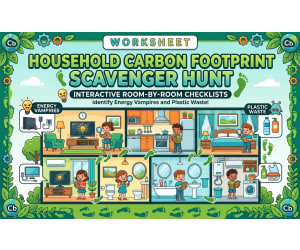
Household Carbon Footprint Scavenger Hunt
Science, Earth and Environmental Sciences, Environmental Science, Earth Sciences, Geology, Theories, Basic Science, Technology, Engineering, Space, Grade 3, 4, 5, 6, 7, 8, 9, Worksheets & Printables, Workbooks, Worksheets, Word Searches, Teacher Tools, Assessments, Lesson Plans, Quizzes and Tests, Quizzes, Tests
Transform your students into real-life Eco-Detectives! Are you looking for a hands-on, engaging, and impactful environmental science activity that goes beyond a standard worksheet? This Household Carbon Footprint Scavenger Hunt turns learning about climate change into a fun, actionable mission that empowers students to make a real difference, right in their own homes. This comprehensive, no-prep resource tackles two of the biggest "invisible" contributors to a household's carbon footprint: Energy Vampires (devices draining standby power) and Single-Use Plastics . By turning abstract concepts into a tangible hunt, students will develop critical thinking, data collection, and problem-solving skills aligned with Next Generation Science Standards (NGSS) . Perfect for Earth Day , a unit on environmental science, project-based learning (PBL), or a meaningful distance learning assignment, this scavenger hunt gets kids moving, observing, and collaborating with their families to create a more sustainable home. What's Included in this 38-Page PDF Resource: Part 1: Educator's Scientific Guide: A detailed 10-page introduction for the teacher or parent, explaining the science behind phantom power and the lifecycle of plastics in clear, easy-to-understand terms. Part 2: The Student Workbook (19 pages): Vocabulary Mission Briefing: Ensures students understand key terms before they begin. 8 Unique Room-by-Room Checklists: Students audit the Kitchen, Living Room, Bedroom, Bathroom, Laundry Room, and Home Office, hunting for culprits. 2 Action Plan Worksheets: Guides students to synthesize their data and create realistic, actionable plans for reducing energy and plastic waste. Part 3: Teacher Resources & Visuals (9 pages): 3 High-Quality Visual Aids: Concept maps and charts, perfect for classroom projection or as print-outs. Step-by-Step Teacher Implementation Guide: Includes pre-hunt prep, safety protocols, and tips for facilitating a powerful post-hunt reflection. Comprehensive Answer Key: A complete key with evaluation rubrics to make grading simple and objective. Give your students the gift of eco-agency, not eco-anxiety. Download today and empower the next generation of environmental stewards! Keywords: Earth Day, Carbon Footprint, Environmental Science, Scavenger Hunt, Project-Based Learning, At-Home Activity, Distance Learning, 3rd Grade, 4th Grade, 5th Grade, NGSS, Climate Change, Energy Conservation, Plastic Waste, Recycling, STEM, Go Green. Why Parents/Schools Love It: Turns Abstract Concepts into a Fun Game: It transforms the overwhelming idea of "climate change" into a tangible "scavenger hunt" for "energy vampires," making learning active, memorable, and incredibly engaging for kids. Empowers Students with Actionable Solutions: Instead of causing eco-anxiety, this resource gives children a sense of agency. By unplugging a charger or choosing a reusable bottle, they see an immediate, positive impact they can make. Comprehensive & No-Prep: This is a complete, ready-to-go resource. With a detailed teacher guide, student workbooks, visual aids, and an answer key, it saves educators and parents valuable preparation time. Strengthens the Home-School Connection: It's the perfect project to send home. The activity encourages students to collaborate with their families, bringing environmental education from the classroom to the living room. Builds Real-World Science Skills: Students aren't just memorizing facts; they are acting like real scientists—observing, collecting data (on their checklists), analyzing findings, and proposing solutions (in their action plans), directly aligning with NGSS practices. Target Student Audience : Based on a complete analysis of the language, concepts, and tasks in the workbook: Primary Target: 3rd Grade (8-9 years old). The PDF explicitly mentions this grade level, and the content is perfectly aligned with their cognitive abilities (the concrete operational stage). The tasks involve reading, counting, identification, and simple written responses. Secondary Target: 4th Grade and 5th Grade. This activity is still highly relevant and engaging for these students. They can complete it with more independence and provide more detailed, analytical responses in the action plan sections. Possible Niche Target: Advanced 2nd Graders (with significant parent/teacher guidance) or Middle School Special Education students who benefit from hands-on, concrete learning activities. Copyright/Terms of Use: This Book was copyrighted by Syed Hammad Rizvi. This resource is for personal and single classroom use only. You may not alter, redistribute, or sell any part of this resource. In other words, you may not put it on the Internet where it could be publicly found and downloaded. If you want to share this resource with colleagues, please purchase additional licenses from Teachsimple. Thank you for respecting these terms of use. This product is happily brought to you by Syed Hammad Rizvi
Author Creative Book Store
Rating
Tags EarthDay, TeacherResources, EnvironmentalScience, STEM, Homeschool, ScavengerHunt, DigitalDownload, Printable, CarbonFootprint, EarthDayActivities
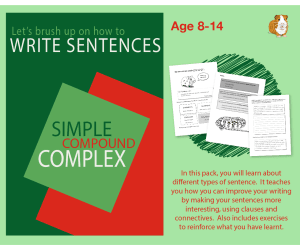
Brush Up On Writing Sentences (9-14 years)
ELA, Grammar, Grade 4, 5, 6, Worksheets & Printables, Worksheets
Brush Up On Writing Sentences (9-14 years) This is a resource pack specifically designed for grade 4 to 6 educators, ideal for both, public school teachers and homeschoolers alike. This versatile teaching aid focuses on language arts, with an emphasis on grounding students in the crucial aspects of writing – from sentence structure to grammar skills. Designed thoughtfully with young learners in mind, this product features two comprehensive packs – one targeting writing sentences and another focusing on using connectives. Each of these segments strives to foster a strong foundation in English language skills. The structured lesson plans feature straightforward exercises that teach good English while captivating the child’s interest, making learning both efficient and enjoyable. The First Pack The first pack pays attention to: Punctuation correction Spelling enhancement Sentence writing practice. . Not only does it accentuate parts of speech usage but also introduces literary techniques like similes and metaphors. The Second Pack: Brush Up On Using Connectives In this part, students are scaffolded into pulling their sentences together more cohesively using link words effectively. In terms of convenience, these resources can easily be integrated across various teaching methods such as individual study sessions, groupwork or even as homework assignments depending upon individual classroom needs or homeschooling setups. Making the encapsulation process easier for children is the array of easy-to-understand worksheets available within this set. Set includes: # Eight assessment tests structured creatively allowing pupils to put into practice taught vocabulary including capital letters usage guidelines along with varied elements such as other punctuation uses while blending leisure and academia impeccably. # Assessment sheets include answers so that outcomes can easily be reviewed by teachers or parents facilitating learner progress tracking seamlessly. This highly adaptable resource comes in a handy PDF format ensuring accessibility across different digital devices scores points for usability especially during times when digital learning tools have become paramount for sustained education without hampering learning outcomes. Encouraging beyond superficial learnings towards deep understanding of concepts which would prove instrumental in later years, this product provides a no-fuss approach towards mastering English language skills.
Author Guinea Pig Education
Tags Language Arts, Writing Skills, Sentence Structure, Grammar, Connectives
Detectives Reading Comprehension Passage - Cored Ed Encyclopedia
ELA, Language Development, Resources for Teachers, Reading Comprehension, Reading, Pre-Reading, Writing, Strategies, Vocabulary, Common Core, Grade 2, 3, 4, 5, Worksheets & Printables, Worksheets, Teacher Tools, Centers, Activities, Writing Prompts, Assessments, Tests, Quizzes and Tests, Quizzes
This detectives reading comprehension contains the following: Pre-Reading Trivia Students will write down one thing they already know about the subject and then read five more facts and discuss. These facts are fun, and the students will enjoy learning about the subject before reading more. Reading Passage The text is a high-interest reading passage with set paragraphs, roughly three to four paragraphs long. It contains a variety of themes about the topic, anywhere from history to technology. The passage is between 250 and 350 words in length. Mixed Questions The first question page contains four multiple-choice questions, each with a choice of four answers, and three written response questions that require a sentence or two from the student. Creative Writing In this question, the student will be required to write a five to eight sentence paragraph on a question related to the topic. Extension Activities This page is optional for fast finishers. If there are five to ten minutes left at the end of the lesson, the student can choose one of three activities, each one requiring a different skill. Answer Key There are answers for the multiple-choice questions and three written response questions have sample answers. FULL CATALOG OF DOWNLOAD LINKS AND ENCYCLOPEDIA INDEX HERE Cored Ed Encyclopedia Overview The Cored Ed Encyclopedia is a weekly series of lessons that you can pick up and use right away. These short readings fit into whatever time you have available. Each one includes a warm-up, a reading, and a set of questions, but it’s flexible — you can do just the reading, the full lesson, or skip the writing section if you need to. Each lesson focuses on a single topic so students don’t get lost. The writing is clear but never childish, making it perfect for grades two through five. Topics range from animals and science to history, inventions, and everyday things. No matter the level of the student, everyone should take away at least one new idea or fact from each lesson. The materials are easy to print, easy to explain, and require no setup. They work well for whole-class teaching, partner work, or independent study.
Author Cored Education
Rating
Tags Vocabulary, Spelling, Reading Comprehension, Reading Passages, Cored Encyclopedia, Facts, Reading, Creative Writing, Detectives, Ela

Iguanas Reading Comprehension Passage - Cored Ed Encyclopedia
ELA, Reading Comprehension, Reading, History, Social Studies, Science, Physics, Earth and Environmental Sciences, Life Sciences, Geography, Grade 2, 3, 4, 5, Worksheets & Printables, Worksheets, Teacher Tools, Centers, Activities, Writing Prompts, Assessments, Quizzes and Tests, Quizzes, Lesson Plans
This Iguanas reading comprehension with lesson plan includes: Visualization (on the front cover) Start your lesson by taking a minute to think and share something about the topic. Read the script aloud (slowly), perhaps prepare some music or sound effects. Student close their eyes and let their imaginations wander. Students open their eyes, read the question aloud and give them a few minutes to complete. Ask a few students to share or keep answers until the end to compare with what they learn in the passage. Quick pause—thousands of Cored Education products are included with your TeachSimple membership. Download links and encyclopedia index available here. Pre-Reading Trivia Students will write down one thing they already know about the subject and then read five more facts and discuss. These facts are fun, and the students will enjoy learning about the subject before reading more. Give 1 minute for students to write what they already know (no pressure—best guess is fine). Read the five facts together. After each fact, do ask a student for their opinion, was it surprising? Set a purpose by asking students to highlight/underline one fact they want to learn more about during the reading. Reading Passage The text is a high-interest reading passage with set paragraphs, roughly three to four paragraphs long. It contains a variety of themes about the topic, anywhere from history to technology. The passage is between 250 and 350 words in length. First, ask students to look at the headings and see what they’ll learn about today. What do they know about the topic/heading? First read options: Teacher read-aloud (best for support). Partner reading (paragraph by paragraph). While reading, students underline important details, and vocabulary words they think may come up in the questions section. Mixed Questions The first question page contains four multiple-choice questions, each with a choice of four answers, and three written response questions that require a sentence or two from the student. Students complete the mcqs first independently, then review quickly as a class. For the 3 written responses, try to get students giving the answer with some form of evidence: “I think ___ because the text says ___.” If students get stuck, send them back to check the passage. Vocabulary Questions Practice seven key words from the text in this section across two activities. First section is scrambled words where students will unscramble three words given a clue for each. The second section is a word to meaning matching activity. Before starting, have some students read out words they underlined in the passage. Ask students to say the word and read aloud the sentence(s) around each word. Ask students to do scrambled words and the matching exercise in pairs then go through answers as a class. For the scrambled spelling task, get four pairs to come up to the board and write the words for extra practice with the other student reading out the clue. For the matching task, prompt students to give full sentences: “I matched ___ with ___ because ___.” Creative Writing In this question, the student will be required to write a five to eight sentence paragraph on a question related to the topic. Before starting, ask students write down 3 key ideas they are going to include in their piece. Ask students for ideas to share around the class to help those struggling. Pro writing expectations: 5–8 sentences At least 2 facts or details from the passage At least 2 vocabulary words from the previous page Students read their paragraphs while classmates listen for facts and vocabulary words. Extension Activities This page is optional for fast finishers or to take home. There are several activities, each one requiring a different skill. Do some, do none, do all, completely optional - but you will feel reassured knowing every possibility is planned for. Includes summary writting question and additional facts. Answer Key There are answers for the multiple-choice questions, written response questions have sample answers, vocabulary answers and if there is a summary question then a sample summary will be provided as well. Lesson Plan Included Customized lesson plan for this lesson is included. Lesson Snapshot Title: Iguanas Genre: Nonfiction (informational text) Subject: Reading (Informational Text) / Life Science Primary Topic: Green vs. marine iguanas: tails, habitat, survival Estimated Guided Reading Level (A–Z): R What This Lesson Teaches Best Describes key iguana features and what they look like (dewlap, a line of spines). Explains where iguanas live and notes that most live in the Americas, with some relatives on islands. Shows how a green iguana’s long tail helps with survival (whip-like defense and strong tail strokes for swimming away). Compares two related iguanas by habitat and behavior (tree-climbing green iguana vs. sea-foraging marine iguana that eats algae and basks on dark rocks). Builds awareness of changing habitats and reasons protection matters (building on land, hunting/capturing, predators, El Niño, oil spills). Learning Goals Identify details that describe what an iguana looks like and where it lives. Explain how a green iguana uses its tail when danger comes near water. Describe how the marine iguana finds food and what it does after a cold swim. Compare the green iguana and marine iguana using evidence from the passage. Describe at least two reasons iguanas might need protection based on changes in their habitats. Key Vocabulary From the Text dewlap — loose throat skin that can hang in a fold. spines — pointed bumps that may rise along its back. forages — searches for food. predators — animals that hunt other animals. habitats — places animals need to live. FULL CATALOG OF DOWNLOAD LINKS AND ENCYCLOPEDIA INDEX HERE
Author Cored Education
Rating
Tags Vocabulary, Reading Comprehension, Reading Passages, Lesson Plans, Ela Lesson Plans, Reading Comprehension Lesson Plans, Pre-reading, History, Science Lesson Plans, Life Science

Number & Operations: Decimals - Addition & Subtraction - Practice the Skill 3 - MAC Software
Math, Decimals, Common Core, Addition, Grade 3, 4, 5, Teacher Tools, Lesson Plans, Worksheets
MAC Software: Number & Operations - Decimals - Addition & Subtraction Designed for visionary educators, this software is an ideal enhancement to your mathematics curriculum. It offers Grade 3-5 students a unique understanding and practice in adding and subtracting decimals in line with the Number and Operations aspect. This tool is crafted with concise content based on the curriculum, delivered timely to help promote efficiency. Main Feature: "Practice the Skill" Timed Drills The exercises focus on improving student's speed and accuracy in handling decimal operations. Provides ample practice, essential for mastering math skills. Besides this, the product also includes rounding challenges where students are required to round provided decimals to the nearest whole number. This exercise further fosters precision and ensures their calculations are accurate. Catering inclusivity, this resource isn't limited to English-speaking students only. Aided by a Spanish voiceover and text options, no student faces isolation due to language barriers! Packed with Additional Math Tools Inclusion of these tools provides a deeper understanding of concepts involved. Theoretical knowledge can easily be converted into practical applications hence promoting overall comprehension. Note:The MAC software aligns impeccably with Common Core State Standards as well as NCTM principles while supporting STEM initiatives too! Thus it proves an indispensable asset for any zealous educator looking for top-notch education standards within their classrooms or homeschooling environments. A Versatile Teaching Aid: Ideal for whole group instruction or small group work or even individual homework assignments. The software comes in Zip file format for hassle-free installation. To summarize, this software molds young minds into mathematical geniuses by offering interactive learning experiences that aid mastery of key decimal concepts within addition and subtraction operations. All while strictly adhering to national and global education standards .
Author Classroom Complete Press
Tags Math Skills, Digital Math, Decimals Printable, Math Lesson, Adding Decimals
The Science of Calories: Guided Reading Level P with Lesson Plan
ELA, Resources for Teachers, Reading Comprehension, Reading, Science, Life Sciences, Health, P.E. & Health, Physics, Language Development, Grade 2, 3, 4, Worksheets & Printables, Worksheets, Teacher Tools, Centers, Activities, Literacy Readers, Quizzes, Quizzes and Tests, Assessments, Lesson Plans
This The Science of Calories (level p) guided reading book with lesson plan includes: Guided Reading Color Label (front cover x1) This is a quick way to match the book’s demands to what students can generally handle.. The overall goal is to use the level/color to pick books for several smaller groups. To qualify for a certain level, a student is expected to read a book from that level with about 90–94% accuracy. If a student is consistently accurate and understands, move up a level. If the student is struggling at that level, drop down and add more support. Each student will improve at completely different rates, but it is generally one of the best ways to check progress across the class. DOWNLOAD THE CATALOG TO VIEW ALL GUIDED READING BOOKS AVAILABLE (SORTED LEVELS A-Z) Pre-Reading Question (x1) Teacher asks the prompt aloud, can be while showing the cover or first page. Students share what they already know, or make educated guesses from the cover. Prompt them to use the target vocabulary. Write some of their responses on the board to look back at during the reading. Vocabulary Words (x5) Introduce the five words, best doing it one at a time. Start by saying it, while students repeat and then see if anyone knows what it means before reading further. Read through the meaning and try to briefly connect each word to a picture or gesture so it’s meaningful. Ask students to flip through the book pages and point to where they see each of the vocabulary words. While reading the book pause upon coming across one of the vocab words or read the sentence twice to make sure students understand the word has appeared. Optional: Ask students to raise hands whenever they see/hear one of the new words. Guided Reading Pages (x10) Check the book snapshot (below) for: primary topic - do you need to prep extra reading or intro materials on this? what is taught best - decide on 1-2 bullets to focus on, use the prompt or words provided here for best results. learning goals - what you are checking for students to be able to do after the session, elicit answers using prompts or words provided. key vocabulary (see section above). questions overview - so you know what is coming up and if you need to prep extra materials to assist understanding. Run the lesson You may have already looked at a few of the pages together, but you can show them some of the pictures again first to set meaning. Depending on how much time you have and how familiar your students are with guided reading class, you may want to read the book aloud first with the group first. Students whisper or partner read, while you listen in. If time, do it as a group, one student reading a page each. Use the guided page’s prompts to coach: “Check the picture / does it make sense?” “Point under the words / try the first sound” “Reread the sentence smoothly”. Try to focus more on one student per session (rotating every time), so you can work out if they are ready to move up or need to move down a level. Comprehension Questions (back cover x3) This is your way to check that students didn’t just say the words, but actually understood the text. First, let students answer by pointing to the page/picture and saying a short sentence. After any answer, follow with: “Show me where you found that in the text.” In bigger groups, have partners answer first (10–20 seconds), then call on 2–3 students to share. Differentiation tips: Emerging speakers/struggling readers: oral + pointing On-level: oral in a full sentence Higher: one written sentence or draw + label Book Snapshot Title: The Science of Calories Genre: Nonfiction (informational science text) Subject: Science (Nutrition/Human Body) Primary Topic: What calories measure and how bodies use energy Estimated Guided Reading Level (A–Z): P What This Book Teaches Best Defines energy as what living things need to survive and function, and connects energy to everyday examples like cars and lamps. Explains that a calorie measures energy in food (not weight or size) and describes it as a scientific unit of measurement. Shows how most energy starts with the sun , and how plants use photosynthesis to turn light into chemical energy stored in plant parts. Describes how the human body uses energy all the time (even during rest or sleep) to power the heart, lungs, and brain. Explains how food energy is released through digestion , how activity increases energy demand, and how extra calories may be stored as body fat. Learning Goals Explain what energy is and why living things need it. Describe what a calorie measures according to the text. Explain how plants get energy from the sun and where that energy is stored in a plant. Describe how digestion helps the body unlock energy from food. Describe how physical activity changes the body’s need for calories. Explain what happens when more calories are consumed than the body needs for daily activities. Key Vocabulary From the Text measurement — finding out how much of something there is. photosynthesis — plants use sunlight to make chemical energy. digestion — the process that unlocks energy in food. intestines — long tubes that help finish breaking down food. converted — changed from one form into another. Discussion Prompts Pre-reading question: What do you think calories tell us about the food we eat? Comprehension questions: What does the book say a calorie measures? Comprehension questions: How does the book explain that plants capture and store energy from the sun? Comprehension questions: What does the book say happens when a person consumes more calories than needed for daily activities? Printing Tips 1. Best Printing Method (Recommended) “Booklet” Printing (Best if Available) If your printer or PDF viewer supports Booklet Printing , use this. Settings to use: Print mode: Booklet Paper size: Letter or A4 (either works) Orientation: Landscape Print on both sides: Yes Flip on: Short edge Scaling: Fit to printable area Booklet subset: First test: Front sides only Then: Back sides only This will automatically: Pair pages correctly Put the cover on the outside Align everything for folding After printing, fold in half and staple along the spine . 2. If “Booklet” Printing Is NOT Available You can still print this correctly with manual duplex printing . Step-by-step: Open the PDF. Choose Print . Set: Orientation: Landscape Pages per sheet: 1 Print on both sides: Yes Flip on: Short edge Print all pages . Because each PDF page already contains two facing book pages, the result will still fold cleanly into a book. Thousands of Cored Education products are included with your TeachSimple membership. Download links and encyclopedia index available here.
Author Cored Education
Rating
Tags Reading Comprehension, Reading Passages, Reading, Guided Reading, Guided Reading Lesson Plan, Guided Reading Activity, Pre-reading, Science Lesson Plans, Life Science, Health