



3,980 products added recently
Page 8 - 4th Grade Worksheets
Enhance your fourth-grade classroom with worksheets that cover a range of subjects and promote analytical thinking. These resources help students delve deeper into topics and develop critical skills. Incorporate them to enrich your teaching and support student achievement.

 Show filters


Shapes Crosswords (PDF)
ELA, Language Development, Resources for Teachers, Vocabulary, Spelling, ESL, Shapes, Early Math, Math, Grade 2, 3, 4, 5, Worksheets & Printables, Worksheets, Teacher Tools, Crosswords Puzzles, Centers, Activities
Crossword Series This crossword series is designed for students in grades 2–5. Each set of crosswords is built around a clear vocabulary theme, allowing students to strengthen their word recognition, build subject-based knowledge, and reinforce early literacy and thinking skills. Each topic includes six crossword sets , and each set features the following consistent structure: 1. 8 vocabulary clues 2. Crossword puzzle 3. Answer key 4. 1 Did You Know fact related to the set These crosswords are designed to be student-friendly, classroom-ready, and easily integrated into thematic units, seasonal learning, morning work, or independent literacy stations. Shapes Crosswords Word List 1. Basic Shapes Circle, Square, Triangle, Rectangle, Oval, Star, Heart, Diamond 2. 3D Shapes Cube, Sphere, Cylinder, Cone, Pyramid, Rectangular prism, Hemisphere, Torus 3. Shapes in Everyday Life Wheel, Window, Stop sign, Ball, Pizza slice, Dice, Ice cream cone, Tabletop 4. Describing Shapes Round, Pointy, Flat, Curved, Straight, Symmetrical, Wide, Narrow 5. Fun & Unique Shapes Hexagon, Pentagon, Octagon, Crescent, Trapezoid, Parallelogram, Spiral, Arrow 6. Jobs & Tools Using Shapes Architect, Artist, Engineer, Designer, Carpenter, Mapmaker, Mathematician, Puzzle maker PDF Version Other versions will appear here when available. Follow the store for the lastest on new products. How to Use This Crossword These crosswords are ideal for whole-class work, small groups, literacy centers, or take-home activities. Use one set per day, or spread them across a week or month depending on your curriculum needs. Each clue has been crafted to align with the reading level of grades 2–5, with support for both decoding and meaning. The Did You Know? facts offer additional extension opportunities for writing, drawing, or display work. Whether you're reinforcing vocabulary, exploring a seasonal topic, or adding variety to your literacy block, these crosswords provide a fun, flexible, and focused way to boost early literacy in an engaging format. More Shapes Themed Products Nothing yet, but follow for the latest on new products. FULL CATALOG OF DOWNLOAD LINKS HERE Addition PDF Animals PDF Around the Home PDF Birthday PDF Candy PDF Christmas PDF Cinco de Mayo PDF Clothes PDF Colors PDF Days and Months PDF Division PDF Earth Day PDF Easter PDF Easy Crosswords PDF Fall PDF Father's Day PDF Food PDF Geography (Set 1) PDF Geography (Set 2) PDF Geography (Set 3) PDF Graduation PDF Health PDF History (Set 1) PDF History (Set 2) PDF History (Set 3) PDF Human Body PDF Kindness PDF Life Skills PDF Mother's Day PDF Multiplication PDF Science Crosswords (Set 1) PDF Science Crosswords (Set 2) PDF Science Crosswords (Set 3) PDF Shapes PDF Social Skills PDF Spring PDF Sports PDF St. Patrick's Day PDF Subtraction PDF Summer PDF Thanksgiving PDF Transport PDF Valentine's Day PDF Winter PDF Crosswords in Depth Structure Each crossword clue is written in simplified language to suit early readers, and follows a strict number-and-clue format (e.g., 1.A shape with four sides ). Students complete each puzzle using the themed vocabulary provided, helping to build both content knowledge and spelling confidence. Each completed set includes: A questions section with clearly formatted clues An answers section to support teacher checking or independent correction A Did You Know? fact tied to the topic (one per set) to add curiosity and cross-curricular value Themes Included The crosswords cover a wide variety of engaging, age-appropriate themes such as: Seasons & Holidays (e.g., Winter, Easter, Valentine’s Day) Math Concepts (e.g., Addition, Subtraction, Multiplication, Division) Everyday Topics (e.g., School, Colors, Animals, Weather) Special Units (e.g., Health, Earth Day, Sports, Graduation, Kindness) Each theme is carefully selected to reflect the experiences and interests of young learners, while reinforcing vocabulary and comprehension. For similar downloads and other frees, do check out Cored Group on TeachSimple.
Author Cored Education
Rating
Tags Vocabulary, Spelling, Crosswords, Basic Shapes, 3D Shapes, Shapes, Shape Crosswords, Math, Math Crosswords, Describing Shapes
Fill in the Blanks Practice - Vocabulary Grade 3-4 (Presentable PDF)
ELA, Language Development, ESL, Common Core, Resources for Teachers, Vocabulary, Grade 3, 4, Worksheets & Printables, Worksheets, Quizzes and Tests, Teacher Tools, Tests, Assessments
Fill in the Blanks Vocabulary Practice MCQS Snapshot Title: Fill in the Blanks Practice Worksheets Genre: Nonfiction / Practice workbook Subject: Reading Primary Topic: Using sentence clues to complete vocabulary blanks This Grade 3–4 workbook includes an examples sheet, six worksheets, and answers, and students complete sentence blanks by choosing the word that best fits each context. What This Teaches Best It teaches students to use sentence meaning to select the best vocabulary word. It combines word knowledge with grammar awareness so students notice what form fits the blank. It develops precision in choosing words that make a sentence logical and complete. It gives repeated practice with academic vocabulary in short reading contexts. Learning Goals Students will use sentence clues to choose the correct word for a blank. Students will explain why one answer choice fits better than the others. Students will use vocabulary knowledge to complete sentences accurately. Students will notice whether a sentence needs a noun, verb, adjective, or adverb. Students will strengthen reading fluency by making sentences complete and meaningful. Key Vocabulary substantial — large in amount compare — tell how things are alike climate — usual weather of a place recognizing — knowing someone or something again demonstrate — show how something is done Common Core Alignment CCSS.ELA-LITERACY.L.2.4.A CCSS.ELA-LITERACY.L.3.4.A CCSS.ELA-LITERACY.L.4.4.A These standards fit because students use sentence-level context to determine which word makes sense in each blank. Fill in the Blanks Overview: Includes: Adjectives in Sentences Nouns in Sentences Verbs in Sentences Frequently Mistaken Words PRESENTABLE PDF VERSION Run it like a slide show straight from a PDF, with no PowerPoint or extra software needed, just open, project, and teach. Other versions are available in the links list below or in the full catalog. FULL CATALOG OF DOWNLOAD LINKS HERE ELA Review Questions Overview Questions have three answer choices. There are a handful of pictures on each test for aesthetic purposes, as well as a review sheet covering most of the topics covered in the product. Introduction or Example Sheet Each topic will include an introduction or example sheet to go through first with your students. Full Answer Keys Full answer keys and sample responses are provided so no matter how busy you are, you know you're covered! In the Supplementary Pack Interactive Ice Breakers: Fun, hands-on activities that get students thinking about adjectives right from the start. Guided Practice: Teacher-led exercises that reinforce the day’s lesson, ensuring students can confidently identify and use adjectives. Group and Partner Tasks: Collaborative activities that allow students to work together to solve problems, categorize adjectives, and create descriptive sentences. Independent Worksheets: Structured worksheets that provide individual practice and help solidify understanding of key concepts. Exit Tasks: Quick, reflective activities at the end of each lesson that assess understanding and encourage students to apply what they’ve learned. For similar downloads and other frees, do check out Cored Group on TeachSimple. Focus the next vocabulary review on words with similar meanings using synonyms practice questions .
Author Cored Education
Rating
Tags Elementary, Answers, Ccss, Common Core, Tests, Test Prep, Assessment, Grade 3, Grade 4, Vocabulary
Compare & Order Multi-Digit Numbers up to 1000 or 10,000 or 100,000
Math, Numbers, Grade 3, 4, Worksheets & Printables, Worksheets
Compare 4 multi-digit numbers numbers and place them in order between inequality signs, either increasing or decreasing. This is an ideal follow on from the resource Compare 2 Multi-Digit Numbers Using Place Value - 4th Grade as it challenges students to now compare and place in order of size 4 numbers, applying the knowledge of the place value of the digits, but now in 4 numbers at the same time. Worksheets There are 3 levels of questions and for each level you have potentially (almost) unlimited worksheets Level 1: Numbers to 1000 Level 2: Numbers to 10,000 Level 3: Numbers to 100,000 How many worksheets are in each set ? Virtually unlimited. At the click of a button all numbers are randomised, so the questions change every time. This will allow you to create as many new worksheets you will need for practice throughout the year (classwork, homework, revision, fillers etc.) or even give small groups of students in your class different sets of questions either at the same level or differentiated . There will certainly be enough to ensure fluency in this topic. As these worksheets need little explanation and no preparation, they are ideal if you need to leave work for a substitute teacher. Answers found on the second page of every worksheet are automatically generated when you create a new worksheet. Interactive Teaching Resources Self Checking Interactive Presentation Ideal for a whole class activity as an introduction to the worksheets, pupils can come to the Whiteboard and enter solutions and get immediate feedback. Number Formats You have a choice of 3 different number formats which will cover most educators' needs around the world. A comma separator - for the USA & UK e.g. 23,334,290 A space separator - Canada, Australia, plus many European countries e.g. 23 334 290 No separator - often used in scientific writings, page numbers, years & addresses e.g. 23334290 Note These resources are PDF documents and work with the official Adobe Acrobat Reader on Windows or Mac computers with the randomising buttons also working via a touchscreen (PC or Mac)or on an Interactive Whiteboard. Common Core CCSS4.NBT.A.2 - Challenge ....... Compare two multi-digit numbers based on meanings of the digits in each place, using >, =, and < symbols to record the results of comparisons. Australian Curriculum - ACMNA027 - order numbers to at least 1000 Australian Curriculum - ACMNA072 - order numbers to at least tens of thousands
Author Jeff's Notebooks
Tags Math, Compare Large Numbers, Compare Big Numbers, Compare And Order, Place Value, 4th Grade, Jeffsnotebooks, Compare And Order Large Numbers, Worksheets, Interactive Whiteboard

Candy Word Searches (PDF)
ELA, Language Development, Resources for Teachers, Vocabulary, Spelling, Grade 2, 3, 4, 5, Worksheets & Printables, Worksheets, Teacher Tools, Centers, Activities, Word Searches
Wordsearch Series This wordsearch series is designed for students in grades 2–5. Each set of wordsearches is built around a clear vocabulary theme, helping students develop word recognition, improve spelling, and boost topic-related understanding through engaging visual puzzles. Every wordsearch also includes a fun hidden shape for students to guess—adding an interactive twist to traditional vocabulary practice. These wordsearches are student-friendly, classroom-ready, and perfect for integrating into literacy warmups, seasonal units, fast-finisher tasks, or home learning extensions. Each puzzle reinforces themed vocabulary in a playful, structured format that keeps learners motivated. Candy Word Search Word List 1. Chocolate Treats Fudge, Truffle, Cocoa, Chocolate Bar, Milk Chocolate, Chocolate Bunny, Chocolate Heart, Chocolate 2. Sugar Rush Lollipop, Gummies, Jellybeans, Cotton Candy, Caramel, Sour Candy, Rock Candy, Sweet 3. Candy History Hershey, Cadbury, Tootsie, Nestlé, Wonka, Mars, Ghirardelli, Lindt 4. Fruity Candies Licorice, Taffy, Sour, Skittles, Fruit Chews, Starburst, Jolly Rancher, M&Ms 5. Holiday Candies Candy Cane, Pumpkin, Chocolate Egg, Heart, Easter Egg, Gingerbread, Valentine’s Box, Chocolate Bunny 6. Candy Packaging Wrapper, Box, Bag, Pouch, Tin, Jar, Foil, Treat PDF Version Other versions will appear here when available. Follow the store for the lastest on new products. How to Use These Wordsearches These wordsearches are ideal for: Morning work or early finisher bins Vocabulary centers or anchor activities Holiday or seasonal review lessons Independent literacy stations or take-home enrichment Each puzzle includes a themed word list and a shaped grid for students to complete. Word directions may vary (horizontal, vertical, diagonal), and answer keys are included for easy checking. Optional vocabulary challenges or writing tasks can be added to extend the learning experience. Whether you're reviewing key vocabulary, exploring a seasonal topic, or offering fun literacy practice, these wordsearches provide a flexible and engaging tool to support vocabulary growth in grades 2–5. More Candy Themed Products CROSSWORDS FULL CATALOG OF DOWNLOAD LINKS HERE Themed Word Search Links Addition PDF Animals PDF Around the Home PDF Birthday PDF Candy PDF Christmas PDF Cinco de Mayo PDF Clothes PDF Colors PDF Days and Months PDF Division PDF Earth Day PDF Easter PDF Easy Word Searches PDF Fall PDF Father's Day PDF Food PDF Geography (Set 1) PDF Geography (Set 2) PDF Geography (Set 3) PDF Graduation PDF Health PDF History (Set 1) PDF History (Set 2) PDF History (Set 3) PDF Human Body PDF Kindness PDF Life Skills PDF Mother's Day PDF Multiplication PDF Science Word Searches (Set 1) PDF Science Word Searches (Set 2) PDF Science Word Searches (Set 3) PDF Shapes PDF Social Skills PDF Spring PDF Sports PDF St. Patrick's Day PDF Subtraction PDF Summer PDF Thanksgiving PDF Transport PDF Valentine's Day PDF Winter PDF Wordsearches in Depth Structure Each wordsearch is crafted around a focused sub-theme and includes a visual puzzle shaped like a related object (e.g., balloon, gift, snowman). Students complete each puzzle using the provided themed word list, strengthening both content knowledge and spelling skills in a highly engaging format. Each completed set includes: A shaped wordsearch puzzle with 10 vocabulary words A student instruction guide with search directions (horizontal, vertical, diagonal) An answer key for teacher support or student self-checking A Did You Know? fact connected to the theme for enrichment or discussion Themes Included The wordsearches cover a wide range of fun, age-appropriate themes, including: Seasons & Holidays (e.g., Halloween, Easter, Valentine’s Day) Math Concepts (e.g., Addition, Number Words) Everyday Topics (e.g., Animals, Weather, School) Special Units (e.g., Health, Earth Day, Sports, Kindness) Each topic is selected to reflect students’ real-life experiences and interests while reinforcing literacy skills and content understanding in a playful, visual way. For similar downloads and other frees, do check out Cored Group on TeachSimple.
Author Cored Education
Rating
Tags Vocabulary, Spelling, Candy, Candy History, Candy Activities, Word Searches, Candy Word Searches, Ela Word Searches, Word Search
Write About My Weekend (7-11 years)
ELA, Writing, Grade 3, 4, 5, Worksheets & Printables, Worksheets
Write About My Weekend (7-11 years): An Engaging Teaching Resource The Write About My Weekend teaching resource is primed to spur the imaginations of students in Grades 3 to 5. It's an enriching tool that introduces intriguing characters—DJ George and co-presenter Christabelle, providing ample scope for creativity amongst young learners. This educational asset serves as a fun-filled exercise and an excellent prompt especially for those who find initiating the writing process challenging. Learners can delve into a multitude of writing formats, be it penning poems, drafting diaries, scripting plays - this resource has well-suited starting points for all. Apart from honing creative skills, it encompasses essential writing techniques including constructing various types of sentences using connectives appropriately. Packed with fundamental spelling strategies, punctuation rules and grammar pointers; it bestows students a thorough understanding of language arts. A pronounced focus on vocabulary enhancement empowers children with sound word choices like powerful adjectives, verbs and expressive adverbs leading their write-ups to evolve from mere lines to engaging storytelling narratives. "Write About My Weekend", disseminated as a PDF document comprising nine worksheets can seamlessly be incorporated into diverse classroom settings whether arranged in whole or small groups or even presented as homework assignments —thus endowing educators enough leeway over its integration into lesson structures. To Conclude: In essence,"Write About My Weekend (7-11 years)" bears an integral part in instigating creative thinking amid young pupils while polishing their fundamental writing skills—an indispensable facet pivotal for comprehending all subject areas.
Author Guinea Pig Education
Tags Creative Thinking, Writing Skills, Vocabulary Enhancement, Language Arts, Weekend Activities
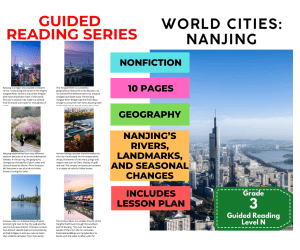
Guided Reading Level N - Nanjing (with Lesson Plan)
ELA, Resources for Teachers, Reading Comprehension, Reading, Social Studies, Geography, Earth and Environmental Sciences, Science, History, Economics, Grade 2, 3, 4, Worksheets & Printables, Worksheets, Teacher Tools, Centers, Activities, Literacy Readers, Quizzes, Quizzes and Tests, Assessments, Lesson Plans
This Guided Reading Book - Nanjing (Level N) with lesson plan includes: Guided Reading Color Label (front cover x1) This is a quick way to match the book’s demands to what students can generally handle.. The overall goal is to use the level/color to pick books for several smaller groups. To qualify for a certain level, a student is expected to read a book from that level with about 90–94% accuracy. If a student is consistently accurate and understands, move up a level. If the student is struggling at that level, drop down and add more support. Each student will improve at completely different rates, but it is generally one of the best ways to check progress across the class. DOWNLOAD THE CATALOG TO VIEW ALL GUIDED READING BOOKS AVAILABLE (SORTED LEVELS A-Z) Pre-Reading Question (x1) Teacher asks the prompt aloud, can be while showing the cover or first page. Students share what they already know, or make educated guesses from the cover. Prompt them to use the target vocabulary. Write some of their responses on the board to look back at during the reading. Vocabulary Words (x5) Introduce the five words, best doing it one at a time. Start by saying it, while students repeat and then see if anyone knows what it means before reading further. Read through the meaning and try to briefly connect each word to a picture or gesture so it’s meaningful. Ask students to flip through the book pages and point to where they see each of the vocabulary words. While reading the book pause upon coming across one of the vocab words or read the sentence twice to make sure students understand the word has appeared. Optional: Ask students to raise hands whenever they see/hear one of the new words. Guided Reading Pages (x10) Check the book snapshot (below) for: primary topic - do you need to prep extra reading or intro materials on this? what is taught best - decide on 1-2 bullets to focus on, use the prompt or words provided here for best results. learning goals - what you are checking for students to be able to do after the session, elicit answers using prompts or words provided. key vocabulary (see section above). questions overview - so you know what is coming up and if you need to prep extra materials to assist understanding. Run the lesson You may have already looked at a few of the pages together, but you can show them some of the pictures again first to set meaning. Depending on how much time you have and how familiar your students are with guided reading class, you may want to read the book aloud first with the group first. Students whisper or partner read, while you listen in. If time, do it as a group, one student reading a page each. Use the guided page’s prompts to coach: “Check the picture / does it make sense?” “Point under the words / try the first sound” “Reread the sentence smoothly”. Try to focus more on one student per session (rotating every time), so you can work out if they are ready to move up or need to move down a level. Comprehension Questions (back cover x3) This is your way to check that students didn’t just say the words, but actually understood the text. First, let students answer by pointing to the page/picture and saying a short sentence. After any answer, follow with: “Show me where you found that in the text.” In bigger groups, have partners answer first (10–20 seconds), then call on 2–3 students to share. Differentiation tips: Emerging speakers/struggling readers: oral + pointing On-level: oral in a full sentence Higher: one written sentence or draw + label Book Snapshot Title: World Cities: Nanjing Genre: Nonfiction (informational text) Subject: Social Studies (Geography) Primary Topic: Nanjing’s rivers, landmarks, and seasonal changes Estimated Guided Reading Level (A–Z): N What This Book Teaches Best How Nanjing’s location along the Yangtze River helped it become a travel and trade hub. How a major river can divide a city and lead to bridges being built to connect districts. How landforms and green spaces (like Purple Mountain’s forests) can help keep a city’s air clean and support plant life. How human-built features (the ancient city wall) can follow natural geography like hills and lakes. How climate and seasons change a city’s landscape through spring blossoms, autumn leaf color, and summer shade from “green tunnels.” Learning Goals Students will describe where Nanjing is located and what major river it sits along. Students will explain why bridges were built across the Yangtze River in Nanjing. Students will identify Purple Mountain and explain how its forests help the city. Students will describe how Nanjing’s ancient city wall follows the natural geography of the land. Students will describe one role Xuanwu Lake plays (islands/bridges or collecting rainwater). Students will describe how Nanjing’s humid subtropical climate connects to changes across seasons. Key Vocabulary From the Text districts — parts of a city. subtropical — warm climate, often with lots of humidity. transformation — a big change. fertile — good for plants to grow. geography — land features of a place. Discussion Prompts Pre-reading question: How might rivers and hills help a city grow and change? Comprehension questions: Where does the text say Nanjing is located, and what river runs through it? Comprehension questions: Why were massive bridges built across the Yangtze River in Nanjing? Comprehension questions: What change does the text describe happening in Nanjing during autumn? Printing Tips 1. Best Printing Method (Recommended) “Booklet” Printing (Best if Available) If your printer or PDF viewer supports Booklet Printing , use this. Settings to use: Print mode: Booklet Paper size: Letter or A4 (either works) Orientation: Landscape Print on both sides: Yes Flip on: Short edge Scaling: Fit to printable area Booklet subset: First test: Front sides only Then: Back sides only This will automatically: Pair pages correctly Put the cover on the outside Align everything for folding After printing, fold in half and staple along the spine . 2. If “Booklet” Printing Is NOT Available You can still print this correctly with manual duplex printing . Step-by-step: Open the PDF. Choose Print . Set: Orientation: Landscape Pages per sheet: 1 Print on both sides: Yes Flip on: Short edge Print all pages . Because each PDF page already contains two facing book pages, the result will still fold cleanly into a book. Thousands of Cored Education products are included with your TeachSimple membership. Download links and encyclopedia index available here.
Author Cored Education
Rating
Tags Reading Comprehension, Reading Passages, Reading, Guided Reading, Guided Reading Lesson Plan, Guided Reading Activity, Pre-reading, Geography, Social Studies Lesson Plans, History

Mindful Printable Journal
Life Studies, Special Resources, Life Skills, Preschool, Grade 1, 2, 3, 4, 5, 6, 7, Worksheets, Worksheets & Printables
6 flashcard-sized Mindfulness cards. Beautiful watercolour images promotes mental health wellbeing.
Author Fiddleticks Education
Tags Journal, Printables, Poster, Watercolor
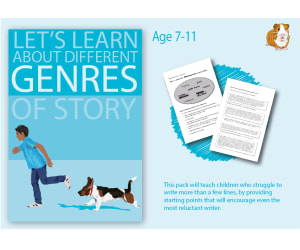
Let's Learn About Different Genres Of Story (Age 7-11)
ELA, Writing, Creative Writing, Grade 3, 4, 5, 6, Worksheets & Printables, Worksheets
Let's Learn About Different Genres Of Story (Age 7-11) This teaching resource is designed to spark creativity and encourage young learners aged between 7 and 11 to delve into various writing genres. It provides educational prompts, innovative starting points, engaging formats, and a wide range of writing activities. An Exciting Layout: The 'magazine style' layout with vibrant illustrations captures children’s interests across all levels of proficiency, thereby enhancing their communication abilities in various modes. Diverse Genres: Fiction & Non-fiction, Persuasive leaflet writing, often overlooked yet critical skill amenability for addressing contemporary global issues, In addition to crafting exciting letters, diaries & reports. Focused on Structure: " The pack comes with keen focus on structural components such as sentence variation, effective use of connectives along with grammar and punctuation tips. These elements are intertwined throughout the units providing students a rich literary platform stimulating story development as well as personal growth."" " Versatile Usage: " " This resource is not only great for individual home study but can also be effectively used by teachers for whole-group instruction or small-group classroom/virtual activities. Portions may also be assigned as homework so that it reinforces prior classroom discussions. Note: It does not need to be used sequentially allowing greater flexibility in teaching curriculum . Finally,it comes with ease-of-use features like compatibility over different platforms via its PDF format making it user-friendly whether using offline or online. In conclusion, listed below are the several benefits provided by this resource: Targeted practice opportunities covering Language Arts fundamentals, Engaging for children between Grades 3 to 6 (i.e., age: 7-11), Fosters improved writing skills helping develop fondness towards it, Saves valuable preparation time for educators without compromising learning standard. "
Author Guinea Pig Education
Tags Story Genres, Writing Activities, Creativity, Literary Journey, Teaching Resource
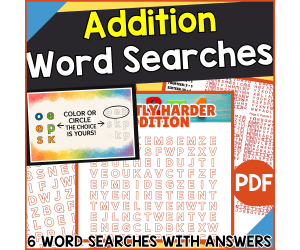
Addition Word Searches (PDF)
ELA, Language Development, Resources for Teachers, Vocabulary, Spelling, Addition and Subtraction, Math, Addition, Early Math, Numbers, Grade 2, 3, 4, 5, Worksheets & Printables, Worksheets, Teacher Tools, Centers, Activities, Word Searches
Wordsearch Series This wordsearch series is designed for students in grades 2–5. Each set of wordsearches is built around a clear vocabulary theme, helping students develop word recognition, improve spelling, and boost topic-related understanding through engaging visual puzzles. Every wordsearch also includes a fun hidden shape for students to guess—adding an interactive twist to traditional vocabulary practice. These wordsearches are student-friendly, classroom-ready, and perfect for integrating into literacy warmups, seasonal units, fast-finisher tasks, or home learning extensions. Each puzzle reinforces themed vocabulary in a playful, structured format that keeps learners motivated. Addition Word Search Word List 1. Basic Addition Seven, Eight, Nine, Ten, Thirteen, Fourteen, Sixteen, Fifteen 2. Slightly Harder Addition Five, Eleven, Twelve, Seventeen, Nineteen, Twenty, Twenty-Two, Twenty-Five 3. Intermediate Addition Eighteen, Twenty-One, Twenty-Six, Twenty-Seven, Thirty, Thirty-Three, Thirty-Four, Thirty-Five 4. Larger Numbers Forty, Forty-Two, Forty-Five, Forty-Seven, Fifty, Fifty-Four, Fifty-Eight, Sixty 5. Up to Seventy-Five Sixty-Five, Sixty-Nine, Seventy, Seventy-Two, Seventy-Five, Seventy-Nine, Eighty, Eighty-Five 6. Up to One Hundred Eighty-Nine, Ninety, Ninety-Five, Ninety-Seven, Ninety-Nine, One Hundred, One Hundred Five, One Hundred Ten PDF Version Other versions will appear here when available. Follow the store for the lastest on new products. How to Use These Wordsearches These wordsearches are ideal for: Morning work or early finisher bins Vocabulary centers or anchor activities Holiday or seasonal review lessons Independent literacy stations or take-home enrichment Each puzzle includes a themed word list and a shaped grid for students to complete. Word directions may vary (horizontal, vertical, diagonal), and answer keys are included for easy checking. Optional vocabulary challenges or writing tasks can be added to extend the learning experience. Whether you're reviewing key vocabulary, exploring a seasonal topic, or offering fun literacy practice, these wordsearches provide a flexible and engaging tool to support vocabulary growth in grades 2–5. More Addition Themed Products CROSSWORDS FULL CATALOG OF DOWNLOAD LINKS HERE Themed Word Search Links Addition PDF Animals PDF Around the Home PDF Birthday PDF Candy PDF Christmas PDF Cinco de Mayo PDF Clothes PDF Colors PDF Days and Months PDF Division PDF Earth Day PDF Easter PDF Easy Word Searches PDF Fall PDF Father's Day PDF Food PDF Geography (Set 1) PDF Geography (Set 2) PDF Geography (Set 3) PDF Graduation PDF Health PDF History (Set 1) PDF History (Set 2) PDF History (Set 3) PDF Human Body PDF Kindness PDF Life Skills PDF Mother's Day PDF Multiplication PDF Science Word Searches (Set 1) PDF Science Word Searches (Set 2) PDF Science Word Searches (Set 3) PDF Shapes PDF Social Skills PDF Spring PDF Sports PDF St. Patrick's Day PDF Subtraction PDF Summer PDF Thanksgiving PDF Transport PDF Valentine's Day PDF Winter PDF Wordsearches in Depth Structure Each wordsearch is crafted around a focused sub-theme and includes a visual puzzle shaped like a related object (e.g., balloon, gift, snowman). Students complete each puzzle using the provided themed word list, strengthening both content knowledge and spelling skills in a highly engaging format. Each completed set includes: A shaped wordsearch puzzle with 10 vocabulary words A student instruction guide with search directions (horizontal, vertical, diagonal) An answer key for teacher support or student self-checking A Did You Know? fact connected to the theme for enrichment or discussion Themes Included The wordsearches cover a wide range of fun, age-appropriate themes, including: Seasons & Holidays (e.g., Halloween, Easter, Valentine’s Day) Math Concepts (e.g., Addition, Number Words) Everyday Topics (e.g., Animals, Weather, School) Special Units (e.g., Health, Earth Day, Sports, Kindness) Each topic is selected to reflect students’ real-life experiences and interests while reinforcing literacy skills and content understanding in a playful, visual way. For similar downloads and other frees, do check out Cored Group on TeachSimple.
Author Cored Education
Rating
Tags Vocabulary, Spelling, Math, Basic Addition, Slightly Harder Addition, Intermediate Addition, Addition Activities, Word Searches, Addition Word Searches, Word Search

Noodles Reading Comprehension Passage - Cored Ed Encyclopedia
ELA, Language Development, Resources for Teachers, Reading Comprehension, Reading, Pre-Reading, Writing, History, Social Studies, Strategies, Grade 2, 3, 4, 5, Worksheets & Printables, Worksheets, Teacher Tools, Centers, Activities, Writing Prompts, Assessments, Tests, Quizzes and Tests, Quizzes
This noodles reading comprehension contains the following: Visualize on the Cover (Teacher Read Aloud Script) Start your lesson by taking a few moments to visualize the topic and share thoughts or feelings about it. COMPANION VIDEO NOW AVAILABLE (EMBEDDED AFTER PREVIEW PICTURES IN PRODUCT DESCRIPTION) Pre-Reading Trivia Students will write down one thing they already know about the subject and then read five more facts and discuss. These facts are fun, and the students will enjoy learning about the subject before reading more. Reading Passage The text is a high-interest reading passage with set paragraphs, roughly three to four paragraphs long. It contains a variety of themes about the topic, anywhere from history to technology. The passage is between 250 and 350 words in length. Mixed Questions The first question page contains four multiple-choice questions, each with a choice of four answers, and three written response questions that require a sentence or two from the student. Vocabulary Questions Practice seven key words from the text in this section across two activities. First section is scrambled words where students will unscramble three words given a clue for each. The second section is a word to meaning matching activity. Creative Writing In this question, the student will be required to write a five to eight sentence paragraph on a question related to the topic. Extension Activities This page is optional for fast finishers or to take home. There are several activities, each one requiring a different skill. Do some, do none, do all, completely optional - but you will feel reassured knowing every possibility is planned for. Includes summary writting question. Answer Key There are answers for the multiple-choice questions, written response questions have sample answers, vocabulary answers and if there is a summary question then a sample summary will be provided as well. FULL CATALOG OF DOWNLOAD LINKS AND ENCYCLOPEDIA INDEX HERE Lesson Snapshot Title: Noodles Genre: Nonfiction Subject: Reading (Informational Text) Primary Topic: What noodles are, shapes, and brief history Estimated Guided Reading Level (A–Z): N What This Lesson Teaches Best Explains what noodles are made from and what “unleavened” means (not puffed up with yeast). Describes how noodles are formed into strands (rolled and cut, or stretched and pushed through holes). Compares noodle ingredients around the world (wheat flour and water, eggs, rice, and other starches). Builds historical understanding by sharing evidence of very old noodles found in China and explaining how noodles traveled through trade and migration. Uses sensory and descriptive language to explain how noodles soak up flavor and can feel slippery, springy, soft, cold, or crisp. Learning Goals Explain what noodles are and what “unleavened dough” means, using details from the text. Describe two ways noodles can be made into strings or strands. Identify different noodle shapes mentioned in the passage (straight, curly, wide ribbons). Compare ingredients used for noodles in different places, based on the passage. Explain what the passage says about the oldest noodles found and what that shows. Describe how noodles soak up broth or sauce and how that changes their taste. Key Vocabulary From the Text Unleavened — made without yeast to puff it up. Yeast — something that makes dough rise and puff. Starches — plant foods that can be used to make noodles. Migration — moving from one place to another. Strand — one long, thin piece, like a noodle string. Cored Ed Encyclopedia Overview The Cored Ed Encyclopedia is a weekly series of lessons that you can pick up and use right away. These short readings fit into whatever time you have available. Each one includes a warm-up, a reading, and a set of questions, but it’s flexible — you can do just the reading, the full lesson, or skip the writing section if you need to. Each lesson focuses on a single topic so students don’t get lost. The writing is clear but never childish, making it perfect for grades two through five. Topics range from animals and science to history, inventions, and everyday things. No matter the level of the student, everyone should take away at least one new idea or fact from each lesson. The materials are easy to print, easy to explain, and require no setup. They work well for whole-class teaching, partner work, or independent study.
Author Cored Education
Rating
Tags Vocabulary, Spelling, Reading Comprehension, Reading Passages, Reading, Creative Writing, Reading Strategies, Writing Prompts, History, Noodles

U.S. Presidents: Truman and Johnson: Crack the medium-level codes and explore their lives
Social Studies, Biographies, Grade 3, 4, Worksheets & Printables, Worksheets
U.S. Presidents: Truman and Johnson: Crack the Medium-Level Codes and Explore Their Lives This resource is a unique dual-purpose educational tool that combines basic grammar skills reinforcement with an introduction to U.S. presidential studies, focusing specifically on Presidents Harry Truman and Lyndon B. Johnson. Tailor-made for Grade 3 and Grade 4 students, this inventive teaching instrument offers a creative way of extending Social Studies lessons into language arts curriculum areas. The Resource's Operation: Presents students with short biographies of President Truman and President Johnson carrying embedded secret information. The narratives contain medium-level codes that need cracking to answer related worksheet questions. Intrigued by the stealthy twist in these narratives, pupils are driven to examine the material closely, thus encouraging deep reading while simultaneously building reference skills. Grammar Competencies Strengthened: Understanding use of revision marks Familiarity with different parts of speech The download comes as one PDF file containing 13 pages ideal for classroom use—whether you're conducting activities with the whole class or dividing into smaller focus groups or pairs cooperatively learning together. It also serves as stimulating homework, providing learners an enriching alternative to rote after-school assignments. Set forth on this intriguing journey through U.S history's hallowed halls—where past presidents coexist wondrously with foundational literacy concepts —enriching your teaching practice while diversifying learners' educational landscape brilliantly!
Author Classroom Complete Press
Tags U.S. Presidents, Truman, History Printable, Social Studies, Comprehension Questions
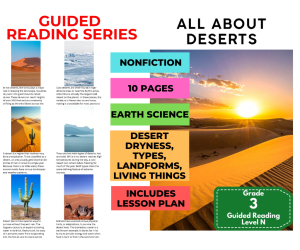
Guided Reading Level N - All About Deserts (with Lesson Plan)
ELA, Resources for Teachers, Reading Comprehension, Reading, Language Development, Life Sciences, Science, Earth and Environmental Sciences, Geography, Social Studies, Grade 2, 3, 4, Worksheets & Printables, Worksheets, Teacher Tools, Centers, Activities, Literacy Readers, Quizzes, Quizzes and Tests, Assessments
This Guided Reading Book - All About Deserts (Level N) with lesson plan includes: Guided Reading Color Label (front cover x1) This is a quick way to match the book’s demands to what students can generally handle.. The overall goal is to use the level/color to pick books for several smaller groups. To qualify for a certain level, a student is expected to read a book from that level with about 90–94% accuracy. If a student is consistently accurate and understands, move up a level. If the student is struggling at that level, drop down and add more support. Each student will improve at completely different rates, but it is generally one of the best ways to check progress across the class. DOWNLOAD THE CATALOG TO VIEW ALL GUIDED READING BOOKS AVAILABLE (SORTED LEVELS A-Z) Pre-Reading Question (x1) Teacher asks the prompt aloud, can be while showing the cover or first page. Students share what they already know, or make educated guesses from the cover. Prompt them to use the target vocabulary. Write some of their responses on the board to look back at during the reading. Vocabulary Words (x5) Introduce the five words, best doing it one at a time. Start by saying it, while students repeat and then see if anyone knows what it means before reading further. Read through the meaning and try to briefly connect each word to a picture or gesture so it’s meaningful. Ask students to flip through the book pages and point to where they see each of the vocabulary words. While reading the book pause upon coming across one of the vocab words or read the sentence twice to make sure students understand the word has appeared. Optional: Ask students to raise hands whenever they see/hear one of the new words. Guided Reading Pages (x10) Check the book snapshot (below) for: primary topic - do you need to prep extra reading or intro materials on this? what is taught best - decide on 1-2 bullets to focus on, use the prompt or words provided here for best results. learning goals - what you are checking for students to be able to do after the session, elicit answers using prompts or words provided. key vocabulary (see section above). questions overview - so you know what is coming up and if you need to prep extra materials to assist understanding. Run the lesson You may have already looked at a few of the pages together, but you can show them some of the pictures again first to set meaning. Depending on how much time you have and how familiar your students are with guided reading class, you may want to read the book aloud first with the group first. Students whisper or partner read, while you listen in. If time, do it as a group, one student reading a page each. Use the guided page’s prompts to coach: “Check the picture / does it make sense?” “Point under the words / try the first sound” “Reread the sentence smoothly”. Try to focus more on one student per session (rotating every time), so you can work out if they are ready to move up or need to move down a level. Comprehension Questions (back cover x3) This is your way to check that students didn’t just say the words, but actually understood the text. First, let students answer by pointing to the page/picture and saying a short sentence. After any answer, follow with: “Show me where you found that in the text.” In bigger groups, have partners answer first (10–20 seconds), then call on 2–3 students to share. Differentiation tips: Emerging speakers/struggling readers: oral + pointing On-level: oral in a full sentence Higher: one written sentence or draw + label Book Snapshot Title: All About Deserts Genre: Nonfiction (informational) Subject: Earth Science Primary Topic: Desert dryness, types, landforms, and living things Estimated Guided Reading Level (A–Z): N What This Book Teaches Best Defines a desert by low precipitation and explains how deserts are classified (less than 10 inches of rain or snow in a year). Compares hot and cold deserts and identifies what they share: extreme dryness. Explains how wind shapes desert landforms, including dunes and how they shift. Describes how plants and animals survive desert conditions using specific examples (saguaro cactus; dromedary camel; fennec fox). Shows how deserts can change over time through erosion and rare rain events like a “super-bloom,” and explains what an oasis is. Learning Goals Identify the defining feature of a desert using details from the text. Compare hot deserts and cold deserts using information from the book. Explain how wind can shape deserts by forming dunes and changing rocks over time. Describe how at least one desert plant and one desert animal survive using text evidence. Describe what happens during a “super-bloom,” according to the book. Explain what an oasis is and why it is important in the desert. Key Vocabulary From the Text precipitation — water that falls as rain or snow. classified — sorted into a group using rules. dunes — giant mounds of sand shaped by wind. adaptations — traits that help an animal survive. erosion — rock wearing away slowly over time. Discussion Prompts Pre-reading question: What do you think makes a place a desert? Comprehension questions: What does the book say is the defining feature that hot and cold deserts share? How does wind-blown sand change desert rocks over millions of years? What does the book say happens when a heavy rainstorm creates a “super-bloom”? Printing Tips 1. Best Printing Method (Recommended) “Booklet” Printing (Best if Available) If your printer or PDF viewer supports Booklet Printing , use this. Settings to use: Print mode: Booklet Paper size: Letter or A4 (either works) Orientation: Landscape Print on both sides: Yes Flip on: Short edge Scaling: Fit to printable area Booklet subset: First test: Front sides only Then: Back sides only This will automatically: Pair pages correctly Put the cover on the outside Align everything for folding After printing, fold in half and staple along the spine . 2. If “Booklet” Printing Is NOT Available You can still print this correctly with manual duplex printing . Step-by-step: Open the PDF. Choose Print . Set: Orientation: Landscape Pages per sheet: 1 Print on both sides: Yes Flip on: Short edge Print all pages . Because each PDF page already contains two facing book pages, the result will still fold cleanly into a book. Thousands of Cored Education products are included with your TeachSimple membership. Download links and encyclopedia index available here.
Author Cored Education
Rating
Tags Reading Comprehension, Reading Passages, Reading, Guided Reading, Guided Reading Lesson Plan, Guided Reading Activity, Pre-reading, Vocabulary, Science Lesson Plans, Geography Lesson Plans
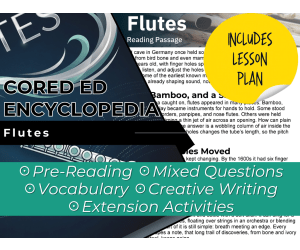
Flutes Reading Comprehension Passage - Cored Ed Encyclopedia
ELA, Reading Comprehension, Reading, Science, Technology, Social Studies, History, Music, Creative Arts, Physics, Grade 2, 3, 4, 5, Worksheets & Printables, Worksheets, Teacher Tools, Centers, Activities, Writing Prompts, Assessments, Quizzes and Tests, Quizzes, Lesson Plans
This flutes reading comprehension with lesson plan includes: Visualization (on the front cover) Start your lesson by taking a minute to think and share something about the topic. Read the script aloud (slowly), perhaps prepare some music or sound effects. Student close their eyes and let their imaginations wander. Students open their eyes, read the question aloud and give them a few minutes to complete. Ask a few students to share or keep answers until the end to compare with what they learn in the passage. Quick pause—thousands of Cored Education products are included with your TeachSimple membership. Download links and encyclopedia index available here. Pre-Reading Trivia Students will write down one thing they already know about the subject and then read five more facts and discuss. These facts are fun, and the students will enjoy learning about the subject before reading more. Give 1 minute for students to write what they already know (no pressure—best guess is fine). Read the five facts together. After each fact, do ask a student for their opinion, was it surprising? Set a purpose by asking students to highlight/underline one fact they want to learn more about during the reading. Reading Passage The text is a high-interest reading passage with set paragraphs, roughly three to four paragraphs long. It contains a variety of themes about the topic, anywhere from history to technology. The passage is between 250 and 350 words in length. First, ask students to look at the headings and see what they’ll learn about today. What do they know about the topic/heading? First read options: Teacher read-aloud (best for support). Partner reading (paragraph by paragraph). While reading, students underline important details, and vocabulary words they think may come up in the questions section. Mixed Questions The first question page contains four multiple-choice questions, each with a choice of four answers, and three written response questions that require a sentence or two from the student. Students complete the mcqs first independently, then review quickly as a class. For the 3 written responses, try to get students giving the answer with some form of evidence: “I think ___ because the text says ___.” If students get stuck, send them back to check the passage. Vocabulary Questions Practice seven key words from the text in this section across two activities. First section is scrambled words where students will unscramble three words given a clue for each. The second section is a word to meaning matching activity. Before starting, have some students read out words they underlined in the passage. Ask students to say the word and read aloud the sentence(s) around each word. Ask students to do scrambled words and the matching exercise in pairs then go through answers as a class. For the scrambled spelling task, get four pairs to come up to the board and write the words for extra practice with the other student reading out the clue. For the matching task, prompt students to give full sentences: “I matched ___ with ___ because ___.” Creative Writing In this question, the student will be required to write a five to eight sentence paragraph on a question related to the topic. Before starting, ask students write down 3 key ideas they are going to include in their piece. Ask students for ideas to share around the class to help those struggling. Pro writing expectations: 5–8 sentences At least 2 facts or details from the passage At least 2 vocabulary words from the previous page Students read their paragraphs while classmates listen for facts and vocabulary words. Extension Activities This page is optional for fast finishers or to take home. There are several activities, each one requiring a different skill. Do some, do none, do all, completely optional - but you will feel reassured knowing every possibility is planned for. Includes summary writting question and additional facts. Answer Key There are answers for the multiple-choice questions, written response questions have sample answers, vocabulary answers and if there is a summary question then a sample summary will be provided as well. Lesson Plan Included Customized lesson plan for this lesson is included. Lesson Snapshot Title: Flutes Genre: Nonfiction (Informational Text) Subject: Music / Science (Sound) / Reading (Informational Text) Primary Topic: How flutes make sound and changed over time Estimated Guided Reading Level (A–Z): Q What This Lesson Teaches Best How very early flutes were made (carved from bird bone and mammoth ivory ) and why these finds matter as early musical instruments. How flutes make a clear note: a thin jet of air across an opening creates a wobbling column of air inside the tube. Cause and effect in instruments: covering or uncovering holes changes the tube’s length, so the pitch goes up or down. How design evolved in Europe, including added holes and keys and Theobald Boehm’s 1800s redesign with tone holes and ring keys . Key features of a modern concert flute (often metal, about 26 inches long, three sections, padded keys, range of a little more than three octaves ). Learning Goals Students will describe what materials some ancient flutes were carved from and how old they were said to be. Students will explain how a flute makes a clear note using the idea of a “column of air” in a tube. Students will explain how covering or uncovering holes changes pitch by changing the tube’s length. Students will summarize how the sideways flute changed over time in Europe, including added holes and keys. Students will identify changes Theobald Boehm made to flute design and how ring keys helped players. Students will describe at least two details of today’s concert flute mentioned in the passage. Key Vocabulary From the Text mammoth — an ancient animal related to today’s elephants. ivory — hard material used for carving. column — a long “tube” shape of air inside. pitch — how high or low a note sounds. octaves — sets of notes higher or lower. FULL CATALOG OF DOWNLOAD LINKS AND ENCYCLOPEDIA INDEX HERE
Author Cored Education
Rating
Tags Vocabulary, Reading Comprehension, Reading Passages, Lesson Plans, Ela Lesson Plans, Reading Comprehension Lesson Plans, Pre-reading, History, Music, Music Lesson Plans

Milliken's Complete Book of Math Reproducibles - Grade 4: Over 110 Activities for Today's Differentiated Classroom
, Grade 4, Worksheets & Printables, Worksheets
Milliken's Complete Book of Math Reproducibles - Grade 4 An exceptional teaching resource specifically designed to cater to the changing dynamics of today's classrooms. This tool set is tailor-made for educators aiming at grade 4 students with a focus on mathematics. Core Focus: Fractions Decimals Measurements Time and money handling, etc. Equipped with over 110 activities,this compendium allows teachers to enrich their lessons or reinforce core concepts effectively within different classroom contexts. The book’s ready-to-use feature eliminates any need for planning by the teacher as all activities are pre-prepared and ready for immediate application. Included in The Package: A finely crafted PDF encompassing "128" printable pages ensuring logistical ease when sharing resources among students. Furthermore, its reproducibility feature guarantees perpetual usability cycle after cycle without additional purchases. The worksheets are not generic arithmetic drills but interesting exercises designed with a motive to stimulate curiosity among children while enhancing their logic and analytical skills simultaneously. Beyond merely arming your learners with the knowledge they require to excel academically, You'd also be setting an invaluable foundation that fosters self-reliable learners who find joy in understanding mathematical theories. Versatility & Convenience: The integration of Milliken’s Complete Book into various teaching methodologies adopted across different education systems makes it exceptionally suitable for public school teachers as well as homeschoolers. In light of these versatile features embedded in one comprehensive bundle - educators stand poised abundantly benefiting from such well-structured resources intended towards fulfilling their teaching objectives effectively.
Author Classroom Complete Press
Tags Math Workbook, Decimals, Fractions, Division, Measurement

Executive Functioning & Neuro-Inclusive Seasonal Curriculum: The Comp
Social Emotional Learning (SEL), Special Resources, Social Skills, Special Education Needs (SEN), Speech Therapy, Life Skills, Life Studies, Career, Leadership, Grade 3, 4, 5, 6, 7, 8, Assessments, Teacher Tools, Charts, Lesson Plans, Quizzes and Tests, Quizzes, Tests, Worksheets, Worksheets & Printables, Workbooks
Unlock the potential of neurodiverse students with this complete Executive Functioning Curriculum for Grades 3-8, a neuro-inclusive seasonal resource that helps develop vital skills such as task initiation, emotional control, cognitive flexibility, and metacognition. This 43-page digital resource, optimized for educators, parents, and homeschoolers, combines neurobiology theory with worksheets, visual aids, and teacher guidance to address the learning needs of neurodiverse students with conditions such as ADHD, Autism, Dyslexia, and more. By utilizing the natural rhythms of the academic calendar, the curriculum moves from a reactive teaching style to a proactive teaching style, reducing cognitive load for the student and promoting self-regulation. This seasonal resource includes 10 fun worksheets with fillable prompts for the students, 3 vital visuals for the teacher, an answer key, and a teacher guide with differentiation ideas for different neurotypes. This SEO-optimized resource for developing executive functioning skills, designed for special education, RTI, and regular classrooms, promotes inclusive education, reduces behavioral problems, and increases the learning stamina of your students. Keywords: Executive Functioning Activities, Neurodiverse Curriculum, ADHD Resources for Teachers, Autism Classroom Tools, Dyslexia Support Materials. Why Parents/Schools Love It: Aligns with the Seasons, Avoiding Burnout: "Executive functioning skills are aligned with the natural ebbs and flows of the school calendar, making strategies more effective and avoiding common pitfalls such as winter dysregulation and spring fatigue." Neuro-Inclusive, Differentiated, and Accessible: "Designed with neurodiverse students (ADHD, Autism, Dyslexia) in mind, with the use of visuals and worksheets that can be adapted for different neuroprofiles." Practical, Ready-to-Use, and Action-Oriented: "Includes 10 student worksheets, teacher guides, answer keys, and visuals for immediate application, promoting real-world skills such as self-regulation, metacognition, and independence." Evidence-Based, with Measurable Progress: "Based on neurobiology and cognitive load theory, with an emphasis on process, not product, to promote a growth mindset and functional independence." Engaging, Empowering, and Transformational: "From compliance to comprehension, this program empowers students to 'engineer their own cognitive environments' with hands-on, engaging activities that increase self-confidence and decrease behavioral problems." Target Classes/Students : The curriculum has been designed to target students from Grade 3 to Grade 8 based on an exhaustive analysis of the entire PDF content, which includes theoretical aspects, worksheets for students, visuals, and teacher guides. It specifically targets the period of brain development where the prefrontal cortex is developing and the "literacy watershed" from learning to read to reading to learn. It specifically mentions case studies for Grade 4-6, scaffolding for Grade 3-5 and Grade 6-8, and strategies for neurodiverse students such as ADHD, Autism, and Dyslexia for middle elementary to early middle school ages. It would be appropriate for elementary and middle school classrooms, special education programs, homeschooling programs, and intervention programs for ages 8-14. Copyright/Terms of Use: This Book was copyrighted by Syed Hammad Rizvi. This is for personal use and use in one classroom. It is not for you to change, redistribute, or sell any part of this product. This means you cannot put it on the Internet for any person to find and download. If you wish to use the product with other teachers, you can purchase additional licenses through Teachsimple. Thank you for understanding these terms of use. This product is happily brought to you by Syed Hammad Rizvi
Author Creative Book Store
Rating
Tags ExecutiveFunctioningCurriculum, NeuroInclusiveEducation, SeasonalCurriculum, ADHDResources, AutismSupportTools, DyslexiaInterventions, ExecutiveFunctioningActivities, NeurodiverseLearners, Grades3to8, SpecialEducationResources
Reading Response Forms: Remembering Gr. 3-4
ELA, Reading, Common Core, Grade 3, 4, Worksheets & Printables, Worksheets
Reading Response Forms: Remembering Gr. 3-4 This resource enhances the reading experience for students in grades 3 and 4. Combining worksheets and hands-on activities, it focuses on the six levels of Bloom's Taxonomy education hierarchy to promote advanced thinking. Purpose: The resource supports reading programs in public schools and homeschool curriculums, while also furnishing content encouraging independent work. The included worksheets target a variety of cognitive skills necessary for complete text understanding including such areas as: Knowledge Acquisition Comprehension Application Analysis Synthesis Evaluation Versatility: The tools can be used in class discussions, small group deliberations where thoughts are shared about literary pieces or as supplemental homework assignments extending learning beyond classroom walls. Included Materials: A teacher implementation guide is provided along with student evaluation rubrics and comprehension quizzes for progress assessment during reading exercises. Word puzzles adding educational fun whilst reinforcing letter recognition and critical thinking skills are part of this package too! Color graphic organizers beneficial for visual learners have been included. Educational Standards & File Format: All materials comply with Common Core State Standards suggesting nationwide curricular requirement alignment whilst promoting Bloom’s Taxonomy progress. Delivery is made available in PDF format ensuring teacher convenience when duplicating copies, digitally sharing material or projecting on a smart board. Bolster language arts instruction effectiveness with this comprehensive resource!
Author Classroom Complete Press
Tags PDF
Learning Communication & Teamwork: Leadership Gr. 3-8+
Special Resources, Life Skills, Grade 3, 4, 5, 6, 7, 8, Worksheets & Printables, Worksheets
Learning Communication & Teamwork: Leadership Gr. 3-8+ Learning Communication & Teamwork: Leadership Gr. 3-8+ is an exceptional educational resource aimed at educators striving to enhance their students' teamwork and communication abilities. Tailored specifically for grades 3 through 8, this tool supports children in acquiring suitable jobs as they become adults. This product uses real-world tasks, undefined strategies and role-play situations to instill critical leadership skills in the learners. It engages students with interactive exercises that require keen cooperation among them. On top of revealing how supervision functions, this resource guides students on the best approaches towards engaging with supervisors. Integration of Technology A standout feature of Learning Communication & Teamwork: Leadership Gr. 3-8+, is its seamless incorporation of technology and media platforms into the curriculum allowing students to understand networking while simultaneously improving their collaboration ─ a life skill largely ignored in standard syllabi. Creative Arts Projects The teaching material includes artistic assignments where learners can delve into what entails being a leader whilst developing their artistic tendencies further. The role-play situations significantly foster constructive discussions and debates amongst classmates enriching their active learning experiences. Suitable for both whole group instruction Applicable for small group activities Caters for independent study at home Digital PDF Format Compatibility
Author Classroom Complete Press
Tags PDF

I Survived the Black Death 1348 – Book Study Unit
ELA, Reading, Writing, Grade 3, 4, 5, Worksheets & Printables, Novel Studies, Worksheets
This is a very engaging, rigorous, and fun book study unit that the students will learn and grow from. There are 10 lessons with 15 rigorous comprehension, vocabulary, and figurative language questions for each. Each lesson covers two chapters as well in this 20 chapter book. After each lesson is finished, their is a 5-point rigorous Exit Quiver Quiz the teacher can administer which equals 10 total quizzes. The quizzes are full of comprehension, context clue vocabulary, figurative language, inferencing, main ideas, tone, themes, and much more. For every four chapters or two lessons there is a rigorous fill-in-the-blank vocabulary test with the ten words from the lessons. There are five 10-point vocabulary tests along with 50 Context Clue Practice Sentence Cards to help with the tests! Great for group activities, too! There is also a WordArt Vocabulary Template to Learn words in a fun, artistic way! At the end of the unit, there is a 25-point multiple choice test as well. There are two writing prompts: a mini-research prompt and a memoir prompt. A 4-Page Summary/Main Idea Activity Packet to help with Writing Summaries and Main Ideas has been added! An Exemplar is included from chapter 2 to help the students!
Author TrilogyTeacher
Rating
Tags Novel Study, Book Study, Comprehension, Vocabulary, Figurative Language, Exit Quizzes, Assessments

Lot's Of Writing Tasks About Being Out And About (7-11 years)
ELA, Writing, Grade 3, 4, 5, Worksheets & Printables, Worksheets
Lot's Of Writing Tasks About Being Out And About (7-11 years) Entering the realm of creative writing can often be intimidating for many learners. Lot's Of Writing Tasks About Being Out And About, a resource specially designed for children between the ages of 7 to 11, provides a fun and interactive way to enhance their writing skills while sparking their creativity. Comprising numerous well-thought-out activities that naturally pique children’s interest, this pack helps students build stronger vocabulary, improve sentence structuring, and master planning and non-fiction writing techniques. Varying Activity Formats: Adopting multiple activity structures such as story-writing assignments, radio script dissection or simulated text/email exchanges introduces students to real-world communication scenarios. The Summer Barbecue: In this task, students read Gareth and Gemma's stories for inspiration then write about the same settings or situations but with fresh twists of their own. Interactive Learning Through Guinea Pig Radio: By studying George and Christabelle's radio dialogue exchange, children learn how to write dialogues while also developing narrative skills by imagining other potential listeners contacting the show. Vocabulary Enhancement Task List - 'I am': This exercise engages kids in creating lists laden with brilliant new verbs! This resource offers engaging challenges adequate for both reluctant writers who need encouragement and enthusiastic ones searching for novel trials alike. It readily accommodates special education needs along with English language learners! The lively magazine-style format is brimming with examples of student work plus essential tips on mastering complex sentences among other writing techniques guarantees that no learner is left behind. Potential applications range from whole group instruction during classroom lessons focused on boosting creativity; small group revisions aimed at polishing specific skills, to individualized home assignments fostering independent thought; as well as homeschooling coursework covering Language Arts essentials. These stimulating tasks not only build students' confidence in their writing abilities but also fosters a growing appreciation for the art of storytelling. By honing these skills and cultivating a love for writing, children are equipped with essential life tools that extend beyond just the classroom.
Author Guinea Pig Education
Tags Creative Writing, Vocabulary Building, Narrative Skills, Non-fiction Writing Techniques, Interactive Activities

Candy Mazes (PDF)
ELA, Language Development, Resources for Teachers, Vocabulary, Spelling, Grade 2, 3, 4, 5, Worksheets & Printables, Worksheets, Teacher Tools, Centers, Activities, Mazes
Maze Series This maze series is designed for students in grades 2–5. Each set features a clear, kid-friendly theme with scene-based mazes that students first navigate, then complete by drawing a few target words from a simple word list. Pages come in varied styles and graduated difficulty, with an optional “color it in” step—and some themes invite quick calculations to match the task. These mazes are student-friendly, classroom-ready, and perfect for literacy warmups, seasonal units, fast-finisher bins, centers, sub plans, or home learning extensions. The playful, structured format builds problem-solving, attention to detail, and fine-motor control while reinforcing themed content in a motivating way. Note: Unlike many themed products, not all word-list words appear on the maze pages. To support full vocabulary coverage, we’ve released a companion word list you can find in the links section. Candy Word List 1. Chocolate Treats Fudge, Truffle, Cocoa, Chocolate Bar, Milk Chocolate, Chocolate Bunny, Chocolate Heart, Chocolate 2. Sugar Rush Lollipop, Gummies, Jellybeans, Cotton Candy, Caramel, Sour Candy, Rock Candy, Sweet 3. Candy History Hershey, Cadbury, Tootsie, Nestlé, Wonka, Mars, Ghirardelli, Lindt 4. Fruity Candies Licorice, Taffy, Sour, Skittles, Fruit Chews, Starburst, Jolly Rancher, M&Ms 5. Holiday Candies Candy Cane, Pumpkin, Chocolate Egg, Heart, Easter Egg, Gingerbread, Valentine’s Box, Chocolate Bunny 6. Candy Packaging Wrapper, Box, Bag, Pouch, Tin, Jar, Foil, Treat PDF Version Other versions will appear here when available. Follow the store for the lastest on new products. How to Use These Mazes Perfect for: Morning work or early-finisher bins Literacy or STEM centers Holiday/seasonal review lessons Independent stations, sub plans, or take-home enrichment More Candy Themed Products CROSSWORDS WORD SEARCHES FULL CATALOG OF DOWNLOAD LINKS HERE Themed Mazes Links Addition PDF Animals PDF Around the Home PDF Birthday PDF Candy PDF Christmas PDF Cinco de Mayo PDF Clothes PDF Colors PDF Days and Months PDF Division PDF Earth Day PDF Easter PDF Easy Mazes PDF Fall PDF Father's Day PDF Food PDF Geography (Set 1) PDF Geography (Set 2) PDF Geography (Set 3) PDF Graduation PDF Health PDF History (Set 1) PDF History (Set 2) PDF History (Set 3) PDF Human Body PDF Kindness PDF Life Skills PDF Mother's Day PDF Multiplication PDF Science (Set 1) PDF Science (Set 2) PDF Science (Set 3) PDF Shapes PDF Social Skills PDF Spring PDF Sports PDF St. Patrick's Day PDF Subtraction PDF Summer PDF Thanksgiving PDF Transport PDF Valentine's Day PDF Winter PDF Mazes in Depth Structure Each maze is crafted around a focused sub-theme. Students navigate the maze, encountering branches and cul-de-sacs that build attention and planning. Most pages include a tiny follow-up box—students draw or label 2–3 target words from a small word box, add a quick count, or color in the scene—so the activity reinforces both content and skills in a highly engaging format. Each completed set includes: A themed maze page. A simple student instruction strip. An answer key showing the solved path for teacher support or self-checking Themes Included These mazes cover a wide range of fun, age-appropriate themes, including: Seasons & Holidays (e.g., Halloween, Easter, Valentine’s Day) Math-Lite Connections (e.g., quick counts, number words) Everyday Topics (e.g., Animals, Weather, School) Special Units (e.g., Health, Earth Day, Sports, Kindness) Each topic reflects students’ real-life experiences and interests while strengthening problem-solving, visual scanning, and fine-motor control in a playful, highly visual way. Easy extensions (optional): Time it: solve once in pencil, then try to beat the time in pen Retell the route using sequence words (first, next, then, finally) Count intersections or turns and graph the results Write a 1–2 sentence mini-story about the scene using the target words Design a tiny maze in the corner for a partner to solve Differentiation tips: Offer a finger-trace pass before pencils for emerging learners Highlight the borders of the correct region on first attempts Use thicker-line versions or simpler pages to build confidence Pair roles: “navigator” gives directions; “driver” traces the path For similar downloads and other frees, do check out Cored Group on TeachSimple.
Author Cored Education
Rating
Tags Vocabulary, Spelling, Candy, Candy History, Candy Activities, Maze, Ela Mazes, Candy Mazes, Mazes

Equator Reading Comprehension Passage - Cored Ed Encyclopedia
ELA, Reading Comprehension, Reading, Science, Technology, Language Development, History, Social Studies, Earth and Environmental Sciences, Geography, Grade 2, 3, 4, 5, Worksheets & Printables, Worksheets, Teacher Tools, Centers, Activities, Writing Prompts, Assessments, Quizzes and Tests, Quizzes, Lesson Plans
This Equator reading comprehension with lesson plan includes: Visualization (on the front cover) Start your lesson by taking a minute to think and share something about the topic. Read the script aloud (slowly), perhaps prepare some music or sound effects. Student close their eyes and let their imaginations wander. Students open their eyes, read the question aloud and give them a few minutes to complete. Ask a few students to share or keep answers until the end to compare with what they learn in the passage. Quick pause—thousands of Cored Education products are included with your TeachSimple membership. Download links and encyclopedia index available here. Pre-Reading Trivia Students will write down one thing they already know about the subject and then read five more facts and discuss. These facts are fun, and the students will enjoy learning about the subject before reading more. Give 1 minute for students to write what they already know (no pressure—best guess is fine). Read the five facts together. After each fact, do ask a student for their opinion, was it surprising? Set a purpose by asking students to highlight/underline one fact they want to learn more about during the reading. Reading Passage The text is a high-interest reading passage with set paragraphs, roughly three to four paragraphs long. It contains a variety of themes about the topic, anywhere from history to technology. The passage is between 250 and 350 words in length. First, ask students to look at the headings and see what they’ll learn about today. What do they know about the topic/heading? First read options: Teacher read-aloud (best for support). Partner reading (paragraph by paragraph). While reading, students underline important details, and vocabulary words they think may come up in the questions section. Mixed Questions The first question page contains four multiple-choice questions, each with a choice of four answers, and three written response questions that require a sentence or two from the student. Students complete the mcqs first independently, then review quickly as a class. For the 3 written responses, try to get students giving the answer with some form of evidence: “I think ___ because the text says ___.” If students get stuck, send them back to check the passage. Vocabulary Questions Practice seven key words from the text in this section across two activities. First section is scrambled words where students will unscramble three words given a clue for each. The second section is a word to meaning matching activity. Before starting, have some students read out words they underlined in the passage. Ask students to say the word and read aloud the sentence(s) around each word. Ask students to do scrambled words and the matching exercise in pairs then go through answers as a class. For the scrambled spelling task, get four pairs to come up to the board and write the words for extra practice with the other student reading out the clue. For the matching task, prompt students to give full sentences: “I matched ___ with ___ because ___.” Creative Writing In this question, the student will be required to write a five to eight sentence paragraph on a question related to the topic. Before starting, ask students write down 3 key ideas they are going to include in their piece. Ask students for ideas to share around the class to help those struggling. Pro writing expectations: 5–8 sentences At least 2 facts or details from the passage At least 2 vocabulary words from the previous page Students read their paragraphs while classmates listen for facts and vocabulary words. Extension Activities This page is optional for fast finishers or to take home. There are several activities, each one requiring a different skill. Do some, do none, do all, completely optional - but you will feel reassured knowing every possibility is planned for. Includes summary writting question and additional facts. Answer Key There are answers for the multiple-choice questions, written response questions have sample answers, vocabulary answers and if there is a summary question then a sample summary will be provided as well. Lesson Plan Included Customized lesson plan for this lesson is included. Lesson Snapshot Title: Equator Genre: Nonfiction (Informational Text) Subject: Social Studies (Geography) / Science (Earth Science) / Reading (Informational Text) Primary Topic: Equator, latitude, hemispheres, sunlight, and navigation Estimated Guided Reading Level (A–Z): N What This Lesson Teaches Best Explains the equator as an imaginary line at 0 degrees latitude that circles Earth’s widest part. Shows how the equator splits Earth into the Northern and Southern Hemispheres and acts as a starting line for measuring north and south . Connects observation to science by telling how Eratosthenes compared shadow angles to help estimate Earth’s size long ago. Describes how sunlight near the equator is more direct , helping many equator regions stay warm and keeping day and night close in length. Links geography to modern tools by noting GPS and satellites still begin with the 0-degree equator circle. Learning Goals Students will identify the equator as an imaginary line at 0 degrees latitude . Students will explain how the equator divides Earth into the Northern Hemisphere and Southern Hemisphere . Students will describe how latitude is measured north or south of the equator. Students will explain how shadow angles helped Eratosthenes estimate Earth’s size. Students will describe why sunlight near the equator can feel more direct and how that affects warmth and day/night length. Students will describe how the equator is used as a reference point in GPS and satellites . Key Vocabulary From the Text latitude — degrees north or south of the equator. hemispheres — the two halves of Earth. shadows — dark shapes made when light is blocked. solstice — a day when the Sun’s position is special. satellites — objects in space used to help find locations. FULL CATALOG OF DOWNLOAD LINKS AND ENCYCLOPEDIA INDEX HERE
Author Cored Education
Rating
Tags Vocabulary, Reading Comprehension, Reading Passages, Lesson Plans, Ela Lesson Plans, Reading Comprehension Lesson Plans, Pre-reading, Geography, Earth Science, Science Lesson Plans

Present Tense Practice Questions - Grade 3-4 Grammar (Word)
ELA, Language Development, ESL, Grammar, Common Core, Resources for Teachers, Grade 3, 4, Worksheets & Printables, Worksheets, Quizzes and Tests, Teacher Tools, Tests, Assessments
Present Tense Grammar Practice MCQS ELA MCQS Overview: In this series of lessons, students will embark on an engaging journey to explore the grammar skills that make our language vibrant and expressive. These lessons are crafted to help students identify, comprehend, and effectively apply language arts skills in both writing and speech. Accompanied by free supplementary materials available for all topics, each lesson builds on the previous one, offering a balanced mix of direct instruction, interactive group activities, and independent practice. Through fun and creative tasks, students will learn to recognize grammar within sentences, understand their function, and use them to enrich their own writing and speech. Present Tense Overview: Includes: Present Simple Present Continuous Present Perfect Mistake Finding Word Version This is the Word editable and version. This download is available in GOOGLE Docs, GOOGLE Forms, GOOGLE Slides. PDF, PPT, WORD, check the links below for more details. FULL CATALOG OF DOWNLOAD LINKS HERE Grade 3/4 Links: Adjectives Google Docs Google Forms Google Slides PDF PPT Word Free Supplementary Materials Pack Adverbs Google Docs Google Forms Google Slides PDF PPT Word Free Supplementary Materials Pack Conjunctions Google Docs Google Forms Google Slides PDF PPT Word Free Supplementary Materials Pack Nouns Google Docs Google Forms Google Slides PDF PPT Word Free Supplementary Materials Pack Pronouns Google Docs Google Forms Google Slides PDF PPT Word Free Supplementary Materials Pack Verbs Google Docs Google Forms Google Slides PDF PPT Word Free Supplementary Materials Pack Sentence Structure Google Docs Google Forms Google Slides PDF PPT Word Free Supplementary Materials Pack Present Tense Google Docs Google Forms Google Slides PDF PPT Word Free Supplementary Materials Pack Past Tense Google Docs Google Forms Google Slides PDF PPT Word Free Supplementary Materials Pack Future Tense Google Docs Google Forms Google Slides PDF PPT Word Free Supplementary Materials Pack Context Clues Google Docs Google Forms Google Slides PDF PPT Word Free Supplementary Materials Pack Defining Words Google Docs Google Forms Google Slides PDF PPT Word Free Supplementary Materials Pack Fill the Blanks Google Docs Google Forms Google Slides PDF PPT Word Free Supplementary Materials Pack Homophones Google Docs Google Forms Google Slides PDF PPT Word Free Supplementary Materials Pack Synonyms Google Docs Google Forms Google Slides PDF PPT Word Free Supplementary Materials Pack ELA Review Questions Overview Questions have three answer choices. There are a handful of pictures on each test for aesthetic purposes, as well as a review sheet covering most of the topics covered in the product. Introduction or Example Sheet Each topic will include an introduction or example sheet to go through first with your students. Full Answer Keys Full answer keys and sample responses are provided so no matter how busy you are, you know you're covered! In the Supplementary Pack Interactive Ice Breakers: Fun, hands-on activities that get students thinking about adjectives right from the start. Guided Practice: Teacher-led exercises that reinforce the day’s lesson, ensuring students can confidently identify and use adjectives. Group and Partner Tasks: Collaborative activities that allow students to work together to solve problems, categorize adjectives, and create descriptive sentences. Independent Worksheets: Structured worksheets that provide individual practice and help solidify understanding of key concepts. Exit Tasks: Quick, reflective activities at the end of each lesson that assess understanding and encourage students to apply what they’ve learned. For similar downloads and other frees, do check out Cored Group on TeachSimple.
Author Cored Education
Tags Elementary, Answers, Ccss, Common Core, Grammar, Tests, Test Prep, Assessment, Grade 3, Grade 4

Geography Crosswords - Set 2 (PDF)
ELA, Language Development, Vocabulary, Spelling, ESL, Resources for Teachers, Geography, Social Studies, Grade 2, 3, 4, 5, Worksheets & Printables, Worksheets, Teacher Tools, Crosswords Puzzles, Centers, Activities
Crossword Series This crossword series is designed for students in grades 2–5. Each set of crosswords is built around a clear vocabulary theme, allowing students to strengthen their word recognition, build subject-based knowledge, and reinforce early literacy and thinking skills. Each topic includes six crossword sets , and each set features the following consistent structure: 1. 8 vocabulary clues 2. Crossword puzzle 3. Answer key 4. 1 Did You Know fact related to the set These crosswords are designed to be student-friendly, classroom-ready, and easily integrated into thematic units, seasonal learning, morning work, or independent literacy stations. Geography Crosswords Set 2 Word List 1. More Countries of the World Germany, Italy, Russia, South Africa, Argentina, Saudi Arabia, Thailand, Canada 2. More Famous Cities Los Angeles, Beijing, Moscow, Berlin, Dubai, Madrid, Buenos Aires, Seoul 3. More Famous Landmarks Machu Picchu, Big Ben, Leaning Tower, Christ the Redeemer, Stonehenge, Mount Rushmore, Petra, The Louvre 4. Bodies of Water Amazon River, Nile River, Mississippi River, Lake Superior, Mediterranean Sea, Arctic Ocean, Gulf of Mexico, Dead Sea 5. Climate and Weather Tropical, Desert, Polar, Humidity, Hurricane, Tornado, Drought, Monsoon 6. Geography Tools and Maps Globe, Map, Compass, Latitude, Longitude, Equator, Hemisphere, Legend PDF Version Other versions will appear here when available. Follow the store for the lastest on new products. How to Use This Crossword These crosswords are ideal for whole-class work, small groups, literacy centers, or take-home activities. Use one set per day, or spread them across a week or month depending on your curriculum needs. Each clue has been crafted to align with the reading level of grades 2–5, with support for both decoding and meaning. The Did You Know? facts offer additional extension opportunities for writing, drawing, or display work. Whether you're reinforcing vocabulary, exploring a seasonal topic, or adding variety to your literacy block, these crosswords provide a fun, flexible, and focused way to boost early literacy in an engaging format. More Geography Themed Products Geography Crosswords (Set 1) PDF Geography Crosswords (Set 3) PDF FULL CATALOG OF DOWNLOAD LINKS HERE Themed Crossword Links Addition PDF Animals PDF Around the Home PDF Birthday PDF Candy PDF Christmas PDF Cinco de Mayo PDF Clothes PDF Colors PDF Days and Months PDF Division PDF Earth Day PDF Easter PDF Easy Crosswords PDF Fall PDF Father's Day PDF Food PDF Geography (Set 1) PDF Geography (Set 2) PDF Geography (Set 3) PDF Graduation PDF Health PDF History (Set 1) PDF History (Set 2) PDF History (Set 3) PDF Human Body PDF Kindness PDF Life Skills PDF Mother's Day PDF Multiplication PDF Science Crosswords (Set 1) PDF Science Crosswords (Set 2) PDF Science Crosswords (Set 3) PDF Shapes PDF Social Skills PDF Spring PDF Sports PDF St. Patrick's Day PDF Subtraction PDF Summer PDF Thanksgiving PDF Transport PDF Valentine's Day PDF Winter PDF Crosswords in Depth Structure Each crossword clue is written in simplified language to suit early readers, and follows a strict number-and-clue format (e.g., 1.A shape with four sides ). Students complete each puzzle using the themed vocabulary provided, helping to build both content knowledge and spelling confidence. Each completed set includes: A questions section with clearly formatted clues An answers section to support teacher checking or independent correction A Did You Know? fact tied to the topic (one per set) to add curiosity and cross-curricular value Themes Included The crosswords cover a wide variety of engaging, age-appropriate themes such as: Seasons & Holidays (e.g., Winter, Easter, Valentine’s Day) Math Concepts (e.g., Addition, Subtraction, Multiplication, Division) Everyday Topics (e.g., School, Colors, Animals, Weather) Special Units (e.g., Health, Earth Day, Sports, Graduation, Kindness) Each theme is carefully selected to reflect the experiences and interests of young learners, while reinforcing vocabulary and comprehension. For similar downloads and other frees, do check out Cored Group on TeachSimple.
Author Cored Education
Rating
Tags Vocabulary, Spelling, Crosswords, Geography, Geography Crosswords, Countries Of The World, Famous Cities, Famous Landmarks, Bodies Of Water, Climate And Weather

Learning Communication & Teamwork: Communicating with Peers and Supervisors Gr. 3-8+
Special Resources, Life Skills, Grade 3, 4, 5, 6, 7, 8, Worksheets & Printables, Worksheets
Learning Communication & Teamwork: Communicating with Peers and Supervisors Gr. 3-8+ A unique teaching resource developed for empowering young students with critical collaboration and communication skills in the digitized era. Adapted to address the teaching requirements at public schools as well as serve homeschooling needs from grades 3 through 8+. Core Areas of Focus: Teamwork Skills Peer-to-Peer Communication Peer-to-Supervisor Communication The resource innovatively combines practical real-life activities, role-playing scenarios, and customizable open-ended strategies corresponding to varied learning speeds. The ultimate goal remains to imbue future generations with effective communication, leadership, teamwork prowess, and societal contribution. Educational Methodology: Incorporation of project-based exercises enabling learners to collaborate employing modern technology channels while participating in creative art projects symbolizing leadership roles under simulated real-world conditions. Role-Playing Scenarios: An educational avenue offering varied viewpoints in a sophisticated manner during discussions or disagreements - fundamental abilities for democratic societies – nurtured within a safe instructor-regulated environment. Flexible Implementation: The instructional material arrives handily packaged with standalone reproducible worksheets permitting application according to unique class or individual requirements: Total class teach-ins, ' Cohort group tasks, ' Solo homework assignments... ', …You Decide!, Note: The tool is adept for inculcating life skills among Grades 3-8+ students necessitating only a software compatible with PDF files for digital accessibility! In summation this educational content transcends routine teaching, pioneering the transformation of life skills beyond schooling years and delivers immense value to educators aimed at wholesome development of students.
Author Classroom Complete Press
Tags PDF