
Crash Course Psychology #18: The Growth of Knowledge
Crash Course Psychology Episode 18: The Growth of Knowledge is a supplemental digital worksheet designed to engage middle and high school students.


23,569 resources
Explore sub-categories
4 sub-categories · 23,569 resources
Crash Course Psychology Episode 18: The Growth of Knowledge is a supplemental digital worksheet designed to engage middle and high school students.

Fifteen short-answer questions follow a linked Crash Course Psychology video episode, moving from Harlow's monkey-attachment experiments and the "strange situation" test through the three major parenting styles and into Kohlberg's three levels of moral development, including the Heinz Dilemma. Each question has space for a response. Students record answers while viewing; use the Word version to expand the writing space if needed. A separate teacher answer key gives a full model answer for every question, covering topics such as what the critical period is for ducks and geese, when self-awareness typically begins, and what critics say about the gap between moral thinking and moral action. Both the student worksheet and the answer key are provided in matching Word and PDF versions.
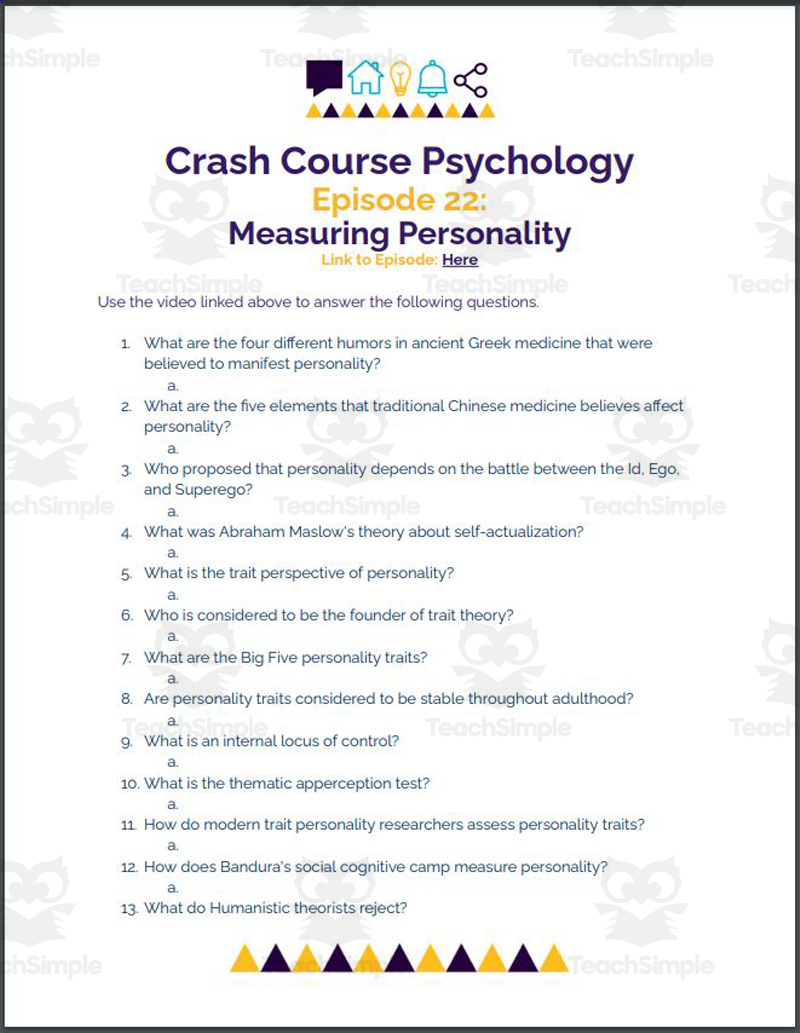
Crash Course Psychology Video Worksheet : Measuring Personality provides students with a 2-page digital worksheet to accompany Crash Course Psychology's 22nd episode on personality measurement.

Crash Course Psychology #26 provides educators with a supplemental worksheet to accompany the Emotion, Stress, and Health episode. Students are guided through the 26th episode in Crash Course's acclaimed video series as they learn about…

Let's Talk About Sex Crash Course Psychology Video Worksheet provides an engaging 15-question worksheet to accompany Crash Course Psychology's video on human sexuality.

Crash Course Psychology Episode 28: Psychological Disorders is a supplemental curriculum resource that provides students with a worksheet and questions to deepen understanding of concepts covered in the Crash Course video.

Introduce the questions before playing the linked episode and pause for responses when needed. Students consider scientific reasoning, case studies, observations and surveys, then reflect on a research topic that interests them.
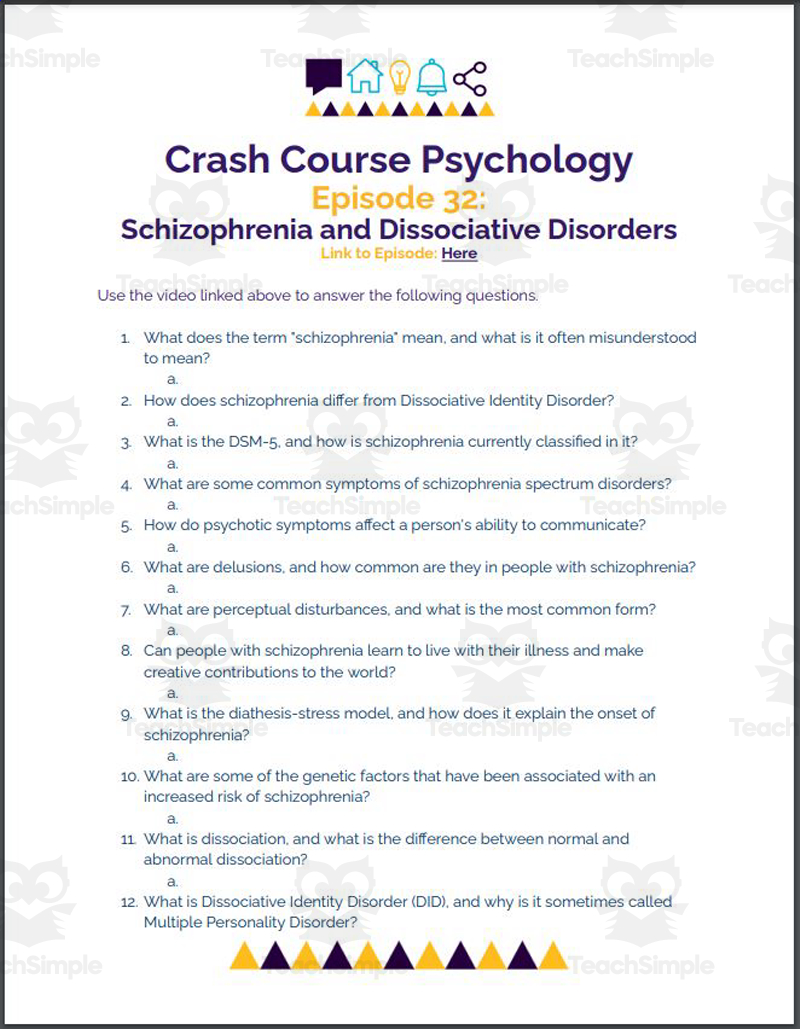
Understanding Mental Health: Crash Course Psychology #32 on Schizophrenia and Dissociative Disorders\nThis digital teaching resource provides educators with a 2-page worksheet and answer key to supplement Crash Course Psychology's video on…

Episode 33 of the Crash Course Psychology series (linked in the file) pairs with a two-page companion worksheet on eating and body dysmorphic disorders. After watching, students answer 15 short-answer questions covering the three main categories of eating disorders (anorexia, bulimia, binge eating), the two DSM-5 subtypes of anorexia, contributing psychological and social factors, prevalence across gender and ethnic groups, and how body dysmorphic disorder relates to obsessive-compulsive disorder. A teacher answer key with complete model answers is included as a separate document. The zip file provides both the worksheet and the answer key in Word and PDF format.

Looking to supplement your psychology lessons on personality disorders? This 2-page video worksheet accompanies Crash Course Psychology's video on personality disorders.

Crash Course Psychology #36: Biomedical Treatments is an informative video worksheet designed to supplement lessons on mental health treatments.

Crash Course Psychology Social Thinking Worksheets bring the popular YouTube video series to the classroom. Students complete a 2-page digital worksheet with 15 critical thinking questions covering key concepts from Crash Course…

Crash Course Psychology Social Influence Worksheet analyzes concepts from episode 38 of the popular Crash Course Psychology video series.

This viewing worksheet follows the episode’s movement from intergroup conflict to helping behavior. Students respond to questions about the Robbers Cave study, aggression, altruism and the bystander effect. Use the teacher responses to review the video, then invite students to compare explanations for why people help others.

Introducing a supplemental worksheet for Crash Course Psychology's "Meet Your Master - Getting to Know Your Brain" video. This informative resource engages students with 15 critical thinking questions about key concepts covered in the…

Crash Course Psychology Episode 6: Homunculus Worksheets provide an engaging 15-question guide for students watching the popular Crash Course video that explains the concept of perception versus sensation.
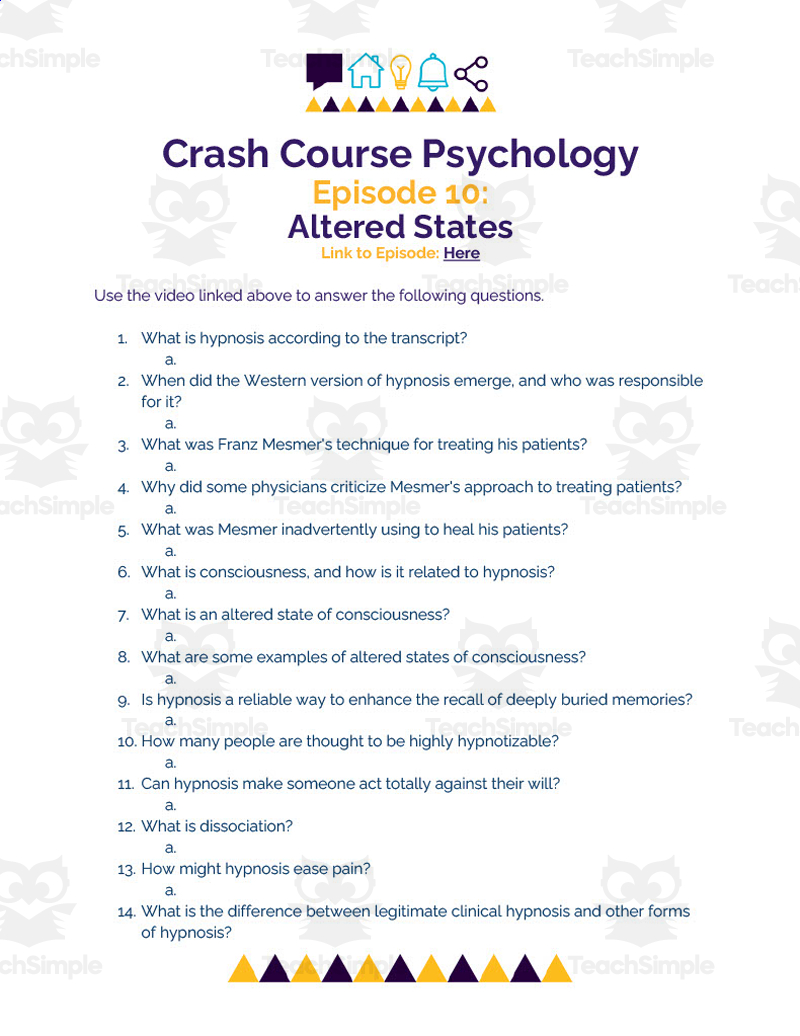
Crash Course Psychology Episode 10 Worksheet : Altered States Dig into the psychology of altered states with students using this 2-page episode worksheet.
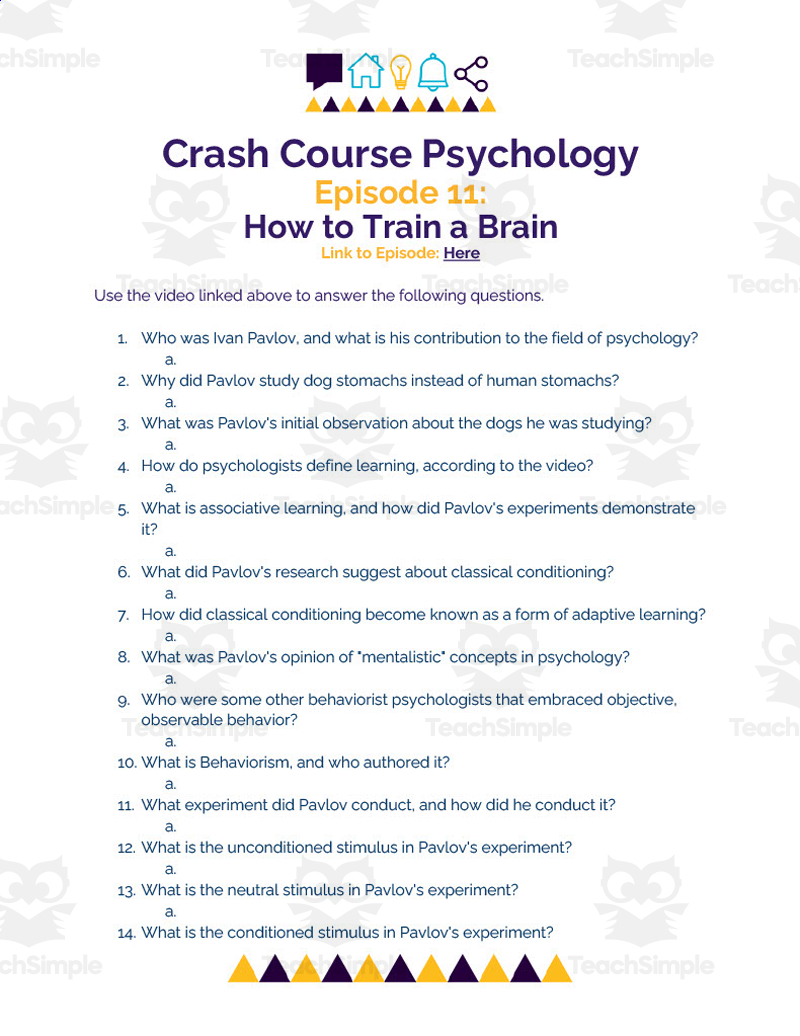
Crash Course Psychology: How to Train a Brain Worksheet High school psychology students will love this 2-page episode worksheet for the Crash Course Psychology video "How to Train a Brain." With 15 short answer questions that prompt…

Crash Course Psychology Episode 12 Worksheet: The Bobo Beatdown This 2-page worksheet accompanies the Crash Course Psychology video on The Bobo Beatdown.

Crash Course Psychology Episode Worksheet: How We Make Memories This 2-page digital worksheet complements the Crash Course Psychology video on how humans form memories.

Crash Course Psychology Episode Cognition Worksheet This 2-page digital worksheet accompanies the Crash Course Psychology video on cognition. It contains 15 questions for students to answer while and after viewing the 10-minute video.

Crash Course Psychology Episode 16 - Language Worksheet This 2-page worksheet contains 15 questions for students to answer while watching the 10-minute Crash Course Psychology video on language.

Crash Course Psychology: Monkeys and Morality Worksheet Dive into the psychology behind morality with this engaging worksheet based on the Crash Course Psychology video "Monkeys and Morality." Perfect for high school psychology students…
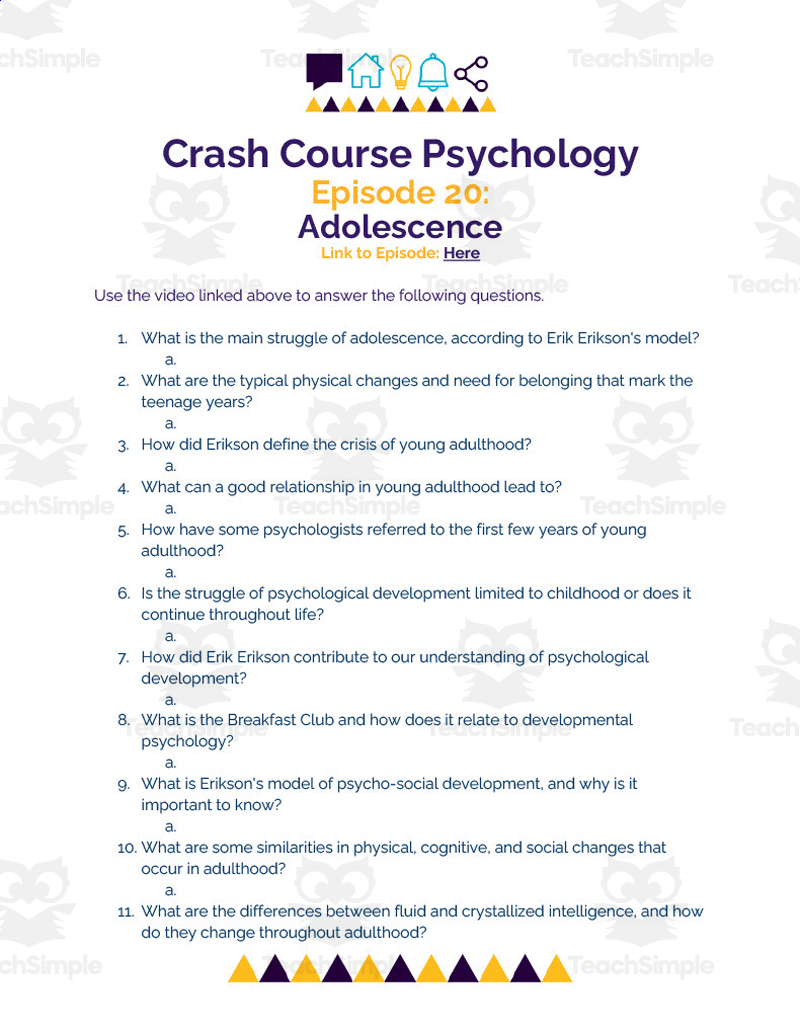
Crash Course Psychology Episode 20: Adolescence Worksheet Help high school students better understand the psychological concept of adolescence with this informative 2-page episode worksheet.