



3,984 products added recently
Page 57 - Science Activities
Ignite your students' interest in science with activities that make learning interactive and exciting. This collection offers experiments, demonstrations, and inquiry-based projects covering various scientific fields. By integrating these science activities into your lessons, you can encourage critical thinking, foster curiosity, and deepen understanding of scientific concepts.

 Show filters


Life Science Reading Passage: The Dinosaur Tyrannosaurus rex. SAMPLE
Science, ELA, Reading, Reading Comprehension, Strategies, Resources for Teachers, Life Sciences, Animals, Biology, Grade 6, 7, 8, 9, Writing Prompts, Worksheets & Printables, Centers, Activities, Teacher Tools, Assessments, Quizzes and Tests, Quizzes, Tests
This is a free passage sample from the complete resource. The full version includes everything needed for a complete reading comprehension activity: the passage, multiple-choice questions, short-answer questions, vocabulary matching, a summary-writing task, and a detailed answer key. Download the complete passage resource by clicking on the following links: PDF Fillable PDF Word Docs Google Docs Life Science Reading Comprehension Passage and Questions: The Dinosaur Tyrannosaurus rex (PDF) This very engaging science reading passage about Tyrannosaurus rex and how scientists use fossils to understand how it lived. It explains what fossils are, where and when T. rex lived, and what fossil evidence reveals about its size, teeth, skull, movement, speed, diet, hunting, and scavenging. It also shows how modern tools, such as CT scans, imaging, computer simulations, and coprolites , help paleontologists build a clearer picture of T. rex as a powerful predator from the late Cretaceous period. This passage is designed to bridge the gap between science and literacy through strengthening reading comprehension and sparking scientific curiosity in middle school students. The passage blends English Language Arts skills with accurate science content that supports NGSS classroom practice. Ideal for interdisciplinary learning in ELA and Science. Suitable for Grade 9 review, too! Student Tasks for The Passage: 5 multiple-choice questions targeting main idea, key details, inference, vocabulary in context, and use of evidence 5 vocabulary matching items with clear, student-friendly definitions 5 text-based questions that require citing specific lines or facts 1 summary prompt that asks students to condense central ideas accurately Full answer key for every section FULL CATALOG OF DOWNLOADING LINKS HERE Product Details Length: 5 pages total Grades: 6–8, also suitable for Grade 9 review Use cases: close reading, stations, homework, intervention, test prep, and sub plans Standards support: reinforces informational-text skills and supports NGSS-style sense making through observation, modeling, and clear use of claim, evidence, and reasoning Why Teachers Choose This Set Authentic science content paired with rigorous literacy practice Consistent task structure across all passages for easier planning and smoother student routines Clear, age-appropriate writing that builds confidence without oversimplifying Other Science Reading Collections you May find in the store: 1. Astronomy & Space Science 2. Volcanoes, Rocks, & Mountains 3. Rock Cycle, Soil, & Sinkholes 4. Mars, Glaciers, & Antarctica 5. Water Cycle, Acid Rain, & Wastewater 6. Insects, Animals, & Ecosystems 7. Bioluminescence & Insects 8. Animal Skin, Cats, & T. Rex 9. Human Body and Senses 10. Health & Applied Bioscience 11. Waves, Light, & Imaging 12. Electricity & Energy 13. Motion & Materials 14. Chemistry and Materials Science Use this set to reinforce ELA skills in science, to add literacy to your lessons, and to support independent work. The passages strengthen main idea, evidence use, vocabulary in context, inference, cause and effect, and summary writing. With ready-to-use assessments and complete answer keys, you can provide focused practice that is simple to run and fast to review.
Author Middle & High School - CORED Education
Rating
Tags Middle School, Reading Comprehension, Reading Strategies, ELA, Centers, Reading Passage, Assessments, Vocabulary, Life Science, The Dinosaur Tyrannosaurus Rex
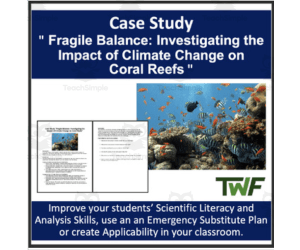
Ecology Case Study - The Impact of Climate Change on Coral Reefs
Science, Life Sciences, Nature & Plants, Biology, Earth and Environmental Sciences, Earth Sciences, Environmental Science, Grade 6, 7, 8, Activities
Bring climate science to life for your middle or high school students with this engaging case study on the threats facing coral reef ecosystems. Students will be immersed in a real-world investigation of how rising ocean temperatures are damaging delicate coral habitats across the globe. The case study provides an in-depth look at the cascading effects of climate change on the Great Barrier Reef, the world's largest reef system off the coast of Australia. Vibrant photos and maps put learners on location to witness firsthand the alarming phenomenon of coral bleaching. As carbon emissions continue to warm and acidify ocean waters, students will come to understand why coral polyps are under attack. This interdisciplinary activity blends literacy skills with ecology, Earth science and biology concepts. The reading builds background knowledge on reef biodiversity and why coral health is critical for local marine ecosystems and economies. Students will learn how coral bleaching and lowering pH impede symbiotic relationships, reproductive cycles and calcification. Following the well-researched narrative are open-ended discussion questions and analysis tasks. Learners will interpret impacts through data analysis and make predictions on the future of reefs based on climate projections. Additional student research explores mitigation strategies like reducing tourism, overfishing and pollution. Use this case study to kickstart a unit on climate change, introduce systems thinking, or drive an inquiry project . The blending of science disciplines promotes analysis from multiple angles. Assign as individual work or group discussion to fit diverse class needs. Whatever the approach, students will gain a memorable look into cascading climate impacts on the front lines. Turn up the heat on climate literacy in your classroom with this thought-provoking reef case study! Immerse students in investigating the threats coral ecosystems face from acidic and warming waters due to greenhouse gas emissions. Understanding the science behind these impacts creates informed, caring stewards of the environment. NGSS: MS-LS2-4 HS-LS2-7 HS-ESS3-5 HS-ESS2-2
Author Teach With Fergy
Tags Science Reading, Coral, Climate Change

Pig Spoon Activity
Science, Life Sciences, Animals, Biology, Grade 3, 4, 5, 6, 7, 8, 9, Activities
Activity Introduction An amazing activity designed for the students to learn more about famous places in different countries. The Pigs Do you like animals? what is your favorite one? Do you own a pet? If yes, tell us more about it, like what its name? And what do you like most about it? What are the animal kingdoms? Can you write down the characteristics of each animal class like mammals, birds, reptiles, amphibian, fish and mollusks. Do you know that some animals can sing, can you name any of them? What is the largest and the smallest mammal in the world? What is the largest and the smallest bird in the world? What is the largest and the smallest fish in the world? Pig Spoon Activity The activity is perfect for encouraging the researching skills for the students, while learning more about this fantastic place. pig This friendly designed worksheet is suitable for students at school, homeschooling, and as a group activity. Materials Needed Wooden spoon Pink pipe cleaner Googly eyes Black marker Pink construction paper Pink paint Pink button Format Available in a PDF format.
Author Educational Voice
Tags Pig Spoon Activity, Pig Activity, Pig, Pigs, Animal, Animals, Animals Facts, Animals Facts For Facts, Pig Facts For Kids, Pigs Facts
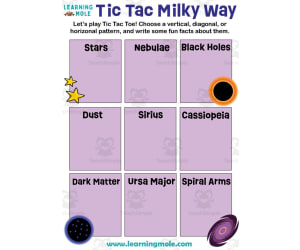
Tic Tac Milky Way Activity
Science, Space, Earth and Environmental Sciences, Grade 2, 3, 4, 5, 6, 7, 8, 9, 10, Activities
Activity Introduction An amazing activity designed for the students to learn more about space facts. Tic Tac Milky Way Do you like reading about space? If yes, what is your favorite topic? What do you know about our solar system? What is the smallest planet in our solar system? What is the biggest planet in our solar system? What is the hottest planet in our solar system? And what is the coldest one? Do you think there are aliens? If yes, what do you think they look like? What do they eat and how they speak to each other? Where do they live? What is a galaxy? And what is a milky way? Have you recently saw a shooting star? If yes, tell us more about it, like when did it happen and where? What is a blackhole? Can a blackhole gets bigger by time? Do you like counting the stars? What do you think a star is made of? Tic Tac Milky Way Activity The activity is perfect for encouraging the researching skills for the students, while learning more about the fantastic space. Tic Tac Milky Way This friendly designed worksheet is suitable for students at school, homeschooling, and as a group activity. Instructions Let's play Tic Tac Toe! Choose a vertical, diagonal, or horizonal pattern, and write some fun facts about them. Format Available in a PDF format.
Author Educational Voice
Tags Tic Tac Milky Way Activity, Tic Tac Milky Way, Tic Tac, Tic Tac Activity, Milky Way Activity, Milky Way, Milky Way Facts, Milky Way Facts For Kids, Space, Space Facts
Science Mazes - Set 3: 1 Page Sample (PDF)
ELA, Language Development, Vocabulary, Spelling, ESL, Resources for Teachers, Science, Physics, Earth and Environmental Sciences, Life Sciences, Grade 2, 3, 4, 5, Worksheets & Printables, Worksheets, Teacher Tools, Centers, Activities, Mazes
THIS IS A ONE PAGE SAMPLE OF A SIX PAGE MAZE DOWNLOAD FULL SIX MAZE DOWNLOAD INFORMATION: Maze Series This maze series is designed for students in grades 2–5. Each set features a clear, kid-friendly theme with scene-based mazes that students first navigate, then complete by drawing a few target words from a simple word list. Pages come in varied styles and graduated difficulty, with an optional “color it in” step—and some themes invite quick calculations to match the task. These mazes are student-friendly, classroom-ready, and perfect for literacy warmups, seasonal units, fast-finisher bins, centers, sub plans, or home learning extensions. The playful, structured format builds problem-solving, attention to detail, and fine-motor control while reinforcing themed content in a motivating way. Note: Unlike many themed products, not all word-list words appear on the maze pages. To support full vocabulary coverage, we’ve released a companion word list you can find in the links section. Science Set 3 Word List 1. Human Body Systems Brain, Heart, Lungs, Muscles, Bones, Veins, Digest, Nerves 2. Ecosystems and Food Chains Ecosystem, Habitat, Producer, Consumer, Decomposer, Food Chain, Predator, Prey 3. States of Matter Matter, Solid, Liquid, Gas, Melt, Freeze, Evaporate, Condense 4. Space and the Universe Galaxy, Milky Way, Orbit, Gravity, Black Hole, Meteor, Astronomer, Telescope 5. Plants and Photosynthesis Roots, Stem, Leaf, Flower, Seed, Sunlight, Oxygen, Chlorophyll 6. Simple Machines and Engineering Lever, Pulley, Ramp, Wheel, Axle, Screw, Gears, Invent PDF Version Other versions will appear here when available. Follow the store for the lastest on new products. How to Use These Mazes Perfect for: Morning work or early-finisher bins Literacy or STEM centers Holiday/seasonal review lessons Independent stations, sub plans, or take-home enrichment More Science Themed Products Science Crosswords (Set 1) PDF Science Crosswords (Set 2) PDF Science Crosswords (Set 3) PDF Science Word Searches (Set 1) PDF Science Word Searches (Set 2) PDF Science Word Searches (Set 3) PDF Science Mazes (Set 1) PDF Science Mazes (Set 2) PDF FULL CATALOG OF DOWNLOAD LINKS HERE Themed Mazes Links Addition PDF Animals PDF Around the Home PDF Birthday PDF Candy PDF Christmas PDF Cinco de Mayo PDF Clothes PDF Colors PDF Days and Months PDF Division PDF Earth Day PDF Easter PDF Easy Mazes PDF Fall PDF Father's Day PDF Food PDF Geography (Set 1) PDF Geography (Set 2) PDF Geography (Set 3) PDF Graduation PDF Health PDF History (Set 1) PDF History (Set 2) PDF History (Set 3) PDF Human Body PDF Kindness PDF Life Skills PDF Mother's Day PDF Multiplication PDF Science (Set 1) PDF Science (Set 2) PDF Science (Set 3) PDF Shapes PDF Social Skills PDF Spring PDF Sports PDF St. Patrick's Day PDF Subtraction PDF Summer PDF Thanksgiving PDF Transport PDF Valentine's Day PDF Winter PDF Mazes in Depth Structure Each maze is crafted around a focused sub-theme. Students navigate the maze, encountering branches and cul-de-sacs that build attention and planning. Most pages include a tiny follow-up box—students draw or label 2–3 target words from a small word box, add a quick count, or color in the scene—so the activity reinforces both content and skills in a highly engaging format. Each completed set includes: A themed maze page. A simple student instruction strip. An answer key showing the solved path for teacher support or self-checking Themes Included These mazes cover a wide range of fun, age-appropriate themes, including: Seasons & Holidays (e.g., Halloween, Easter, Valentine’s Day) Math-Lite Connections (e.g., quick counts, number words) Everyday Topics (e.g., Animals, Weather, School) Special Units (e.g., Health, Earth Day, Sports, Kindness) Each topic reflects students’ real-life experiences and interests while strengthening problem-solving, visual scanning, and fine-motor control in a playful, highly visual way. Easy extensions (optional): Time it: solve once in pencil, then try to beat the time in pen Retell the route using sequence words (first, next, then, finally) Count intersections or turns and graph the results Write a 1–2 sentence mini-story about the scene using the target words Design a tiny maze in the corner for a partner to solve Differentiation tips: Offer a finger-trace pass before pencils for emerging learners Highlight the borders of the correct region on first attempts Use thicker-line versions or simpler pages to build confidence Pair roles: “navigator” gives directions; “driver” traces the path For similar downloads and other frees, do check out Cored Group on TeachSimple.
Author Cored Education
Rating
Tags Vocabulary, Spelling, Science, Human Body Systems, Ecosystems, Food Chains, States Of Matter, Plants And Photosynthesis, Mazes, Science Mazes
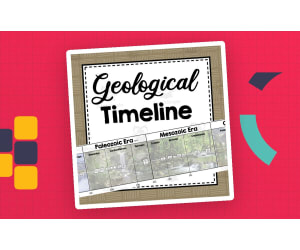
Geological Timeline | Geochronology | Timeline Project
Science, Earth and Environmental Sciences, Grade 1, 2, 3, 4, Activities
Help your students create their own large timeline as you explore the different geological eras, providing them with a visual representation of Earth’s ancient history. This interactive project allows students to better understand the geological time and how life evolved across millions of years. Glue the pieces together to form one long timeline and study the diverse kinds of creatures that lived during each era, from the Precambrian to the Cenozoic, giving students a sense of when major evolutionary milestones occurred. There is one version with simplified information for younger students and another with more detailed content for advanced learners. As students assemble the timeline, they can add labels, illustrations, or facts about each era, making the lesson more engaging and creative. You can even encourage them to research and add additional information about the environmental changes or major extinction events that shaped life during these periods. This hands-on project not only reinforces their understanding of geological eras but also helps them develop sequencing and critical thinking skills. What You Get: 7 Vocabulary word strips: (Prehistoric, Archean, Proterozoic, Paleozoic, Mesozoic, Cenozoic, and Geochronology) Spiral Geochronological Timeline Poster Huge Color Printable Classroom Geochronologial Timeline (6 pages long taped together!) Geochronological Timeline Template for your students to make themselves (This is AMAZING!) Two template choices, cut out plants and animals to add to the timeline as you learn about which organisms lived when.
Author Simply Schoolgirl
Tags Geology Activity, Earth Science Activity, Timeline Activity
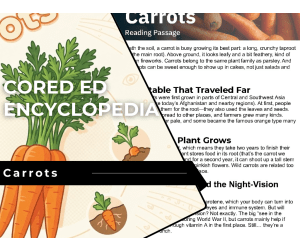
Carrots Reading Comprehension Passage - Cored Ed Encyclopedia
ELA, Language Development, Resources for Teachers, Reading Comprehension, Reading, Pre-Reading, Writing, Life Sciences, Science, Nature & Plants, Grade 2, 3, 4, 5, Worksheets & Printables, Worksheets, Teacher Tools, Centers, Activities, Writing Prompts, Assessments, Tests, Quizzes and Tests, Quizzes
This carrots reading comprehension contains the following: Pre-Reading Trivia Students will write down one thing they already know about the subject and then read five more facts and discuss. These facts are fun, and the students will enjoy learning about the subject before reading more. COMPANION VIDEO NOW AVAILABLE (EMBEDDED AFTER PREVIEW PICTURES IN PRODUCT DESCRIPTION) Reading Passage The text is a high-interest reading passage with set paragraphs, roughly three to four paragraphs long. It contains a variety of themes about the topic, anywhere from history to technology. The passage is between 250 and 350 words in length. Mixed Questions The first question page contains four multiple-choice questions, each with a choice of four answers, and three written response questions that require a sentence or two from the student. Creative Writing In this question, the student will be required to write a five to eight sentence paragraph on a question related to the topic. Extension Activities This page is optional for fast finishers. If there are five to ten minutes left at the end of the lesson, the student can choose one of three activities, each one requiring a different skill. Answer Key There are answers for the multiple-choice questions and three written response questions have sample answers. FULL CATALOG OF DOWNLOAD LINKS AND ENCYCLOPEDIA INDEX HERE Cored Ed Encyclopedia Overview The Cored Ed Encyclopedia is a weekly series of lessons that you can pick up and use right away. These short readings fit into whatever time you have available. Each one includes a warm-up, a reading, and a set of questions, but it’s flexible — you can do just the reading, the full lesson, or skip the writing section if you need to. Each lesson focuses on a single topic so students don’t get lost. The writing is clear but never childish, making it perfect for grades two through five. Topics range from animals and science to history, inventions, and everyday things. No matter the level of the student, everyone should take away at least one new idea or fact from each lesson. The materials are easy to print, easy to explain, and require no setup. They work well for whole-class teaching, partner work, or independent study.
Author Cored Education
Rating
Tags Vocabulary, Spelling, Reading Comprehension, Reading Passages, Cored Encyclopedia, Facts, Reading, Creative Writing, Carrots, Life Science

Cupid February | Kindergarten Unplugged / Digital Coding
Science, Technology, Computer Science, Preschool, Kindergarten, Grade 1, Activities
Cupid February | Kindergarten Unplugged/Digital Coding is a unique teaching resource designed to introduce early-grade and kindergarten learners into the world of computer programming. This is a STEM-centred educational tool, which can be adopted with or without computers. Main Highlights: Based around "honey bees" , an engaging theme perfect for July learning activities. Packed with elementary logic puzzles reinforcing problem-solving skills, vital for "Hour of Code" initiatives. Inclusive of hands-on, printable puzzles with ‘snip-and-paste’ commands – making it action-orientated and captivating! Packaged Content: Broad Guidelines In-depth instructions guiding both teachers as well as students on using this resource effectively. Coding materials A colourful coding navigation chart & matching pieces planned to make children explore this tool more enthusiastically! Deregulation Sheet A fun-filled 'overcome the code worksheet' along with smartboard charts bringing collective pleasure into the system. All resources are conveniently packaged for printing (PDFs) or digital sharing (Google Slides). Tailoring To Your Teaching Plans: Easily adaptable materials allow you to make alterations in the code or remove unnecessary slides prior sharing them on platforms like Google Classroom. Students can either use physical printed out sheets or enjoy performing drag-and-drop exercises digitally! No Barriers With Distance Learning: This digitized operation makes Cupid February | Kindergarten Unplugged / Digital coding an effective tool even for remote classrooms! Resourceful For Varied Learners: Ideal for those looking for quality teaching material in traditional classroom settings, or homeschooling parents aiming to incorporate STEM education early in their curriculum. This well-thought-out educational resource turns complex concepts like computer programming into manageable, game-based exercises - making the journey into digital world more friendly and approachable! About Product Target Audience: Preschoolers through Grade 1 Supplementary Topic Coverage: Science; sub-subjects include Computer Science Type of Product: Activity toolkit Files Included: PDF format standardly sized at 11 x 8.5 inches or customizable Google Slides.
Author Roombop
Tags Educational Tool, Computer Programming, Coding, Logic Puzzles, Hands-on Activities
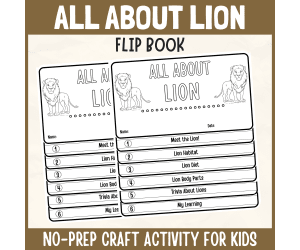
Lion Flipbook craft African Animal Science Study writing activities
Animals, Life Sciences, Science, Biology, Grade 1, 2, 3, 4, Crafts, Activities, Parts of and Anatomy of, Worksheets & Printables, Writing Prompts
Make learning about lions fun and interactive with this printable flipbook craft! Students will explore the fascinating world of lions by learning about their habitat, diet, body features, life cycle, adaptations, and interesting facts while strengthening reading comprehension and writing skills through engaging science activities. I like using this resource during African animal units, wildlife studies, animal science lessons, classroom centers, independent work, and homeschool learning. It’s a low-prep activity that combines science, reading, writing, and creativity into one meaningful project. What You Will Get This resource includes a printable Lion flipbook that helps students organize and record what they learn about this majestic African animal through reading, writing, and hands-on learning. What’s Included in this Flipbook? • Lion flipbook craft templates • Reading and writing activities • Animal facts and science research pages • Habitat, diet, and life cycle sections • Physical characteristics and adaptations pages • Writing prompts and reflection activities • Easy-to-follow assembly instructions This resource is perfect for: • African animal lessons • Wildlife studies • Animal science units • Classroom science centers • Homeschool learning • Independent work and early finishers Why you will love this? • Easy to print and assemble • Encourages reading, writing, and scientific thinking • Builds nonfiction reading comprehension skills • Supports research and observation skills • Makes science learning hands-on and engaging • Creates a meaningful keepsake students can share This Lion Flipbook Craft is a fun and interactive way for students to discover the characteristics, adaptations, and importance of lions while developing reading, writing, and science skills through creative, hands-on learning.
Author Perfect_Printables
Rating
Tags Animal Science, Writing Prompt, Science Craft, Nonfiction Activities, Science Centers, Animal Research, Flipbook, Lion Research, African Animal, African Wildlife

Earth Science Reading Comprehension Passage: The Rock Cycle (Docs)
Science, ELA, Reading, Reading Comprehension, Strategies, Resources for Teachers, Earth and Environmental Sciences, Earth Sciences, Grade 6, 7, 8, 9, Writing Prompts, Worksheets & Printables, Centers, Activities, Teacher Tools, Assessments, Quizzes and Tests, Quizzes, Tests
Science Reading Comprehension Passages and Questions: The Rock Cycle (Docs) This very engaging earth science reading passage about The Rock Cycle is designed to bridge the gap between science and literacy through strengthening reading comprehension and sparking scientific curiosity in middle school students. The passage blends English Language Arts skills with accurate science content that supports NGSS classroom practice. Ideal for interdisciplinary learning in ELA and Science. Suitable for Grade 9 review, too! Student Tasks for The Passage: 5 multiple-choice questions targeting main idea, key details, inference, vocabulary in context, and use of evidence 5 vocabulary matching items with clear, student-friendly definitions 5 text-based questions that require citing specific lines or facts 1 summary prompt that asks students to condense central ideas accurately Full answer key for every section Available Formats for this Resource PDF Fillable PDF Word Docs FULL CATALOG OF DOWNLOADING LINKS HERE Product Details Length: 5 pages total Grades: 6–8, also suitable for Grade 9 review Use cases: close reading, stations, homework, intervention, test prep, and sub plans Standards support: reinforces informational-text skills and supports NGSS-style sense making through observation, modeling, and clear use of claim, evidence, and reasoning Why Teachers Choose This Set Authentic science content paired with rigorous literacy practice Consistent task structure across all passages for easier planning and smoother student routines Clear, age-appropriate writing that builds confidence without oversimplifying Other Science Reading Collections you May find in the store: 1. Astronomy & Space Science 2. Volcanoes, Rocks, & Mountains 3. Rock Cycle, Soil, & Sinkholes 4. Mars, Glaciers, & Antarctica 5. Water Cycle, Acid Rain, & Wastewater 6. Insects, Animals, & Ecosystems 7. Bioluminescence & Insects 8. Animal Skin, Cats, & T. Rex 9. Human Body and Senses 10. Health & Applied Bioscience 11. Waves, Light, & Imaging 12. Electricity & Energy 13. Motion & Materials 14. Chemistry and Materials Science Use this set to reinforce ELA skills in science, to add literacy to your lessons, and to support independent work. The passages strengthen main idea, evidence use, vocabulary in context, inference, cause and effect, and summary writing. With ready-to-use assessments and complete answer keys, you can provide focused practice that is simple to run and fast to review.
Author Middle & High School - CORED Education
Rating
Tags Middle School, Reading Comprehension, Reading Strategies, ELA, Centers, Reading Passage, Assessments, Vocabulary, Environmental Science, Earth Science
Science Revision for Grade 6
Science, Grade 6, Activities, Worksheets & Printables, Assessments, Teacher Tools
This Science worksheet ebook is perfect for Grade 6 classrooms. It includes 30 fun and varied activities that cover all key science topics. Students will learn about living things, the human body, matter, energy, the Earth, and space. Each activity is designed to be done directly on the worksheet—no extra materials needed. The tasks include matching, fill-in-the-blanks, diagrams, true or false, and more. These activities help students understand science through clear and simple tasks. Teachers will love how easy it is to use. Just print and go! No prep time required. The worksheet also includes an answer key, making checking quick and simple. This resource works well for classwork, homework, or revision. It supports different learning styles and helps build science vocabulary and knowledge. This ebook saves time, engages students, and supports strong learning. It is ideal for busy teachers who want high-quality, ready-to-use materials. Make science fun and easy to teach with this all-in-one Grade 6 worksheet pack!
Author Bright Classroom Ideas Marketplace
Rating
Tags Science, Revision, Grade 6
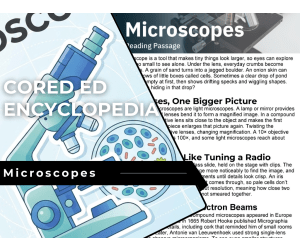
Microscopes Reading Comprehension Passage - Cored Ed Encyclopedia
ELA, Language Development, Resources for Teachers, Reading Comprehension, Reading, Pre-Reading, Science, Writing, Strategies, Physics, Grade 2, 3, 4, 5, Worksheets & Printables, Worksheets, Teacher Tools, Centers, Activities, Writing Prompts, Assessments, Tests, Quizzes and Tests, Quizzes
This microscopes reading comprehension contains the following: Visualize on the Cover (Teacher Read Aloud Script) Start your lesson by taking a few moments to visualize the topic and share thoughts or feelings about it. Pre-Reading Trivia Students will write down one thing they already know about the subject and then read five more facts and discuss. These facts are fun, and the students will enjoy learning about the subject before reading more. Reading Passage The text is a high-interest reading passage with set paragraphs, roughly three to four paragraphs long. It contains a variety of themes about the topic, anywhere from history to technology. The passage is between 250 and 350 words in length. Mixed Questions The first question page contains four multiple-choice questions, each with a choice of four answers, and three written response questions that require a sentence or two from the student. Vocabulary Questions Practice seven key words from the text in this section across two activities. First section is scrambled words where students will unscramble three words given a clue for each. The second section is a word to meaning matching activity. Creative Writing In this question, the student will be required to write a five to eight sentence paragraph on a question related to the topic. Extension Activities This page is optional for fast finishers or to take home. There are several activities, each one requiring a different skill. Do some, do none, do all, completely optional - but you will feel reassured knowing every possibility is planned for. Includes summary writting question. Answer Key There are answers for the multiple-choice questions, written response questions have sample answers, vocabulary answers and if there is a summary question then a sample summary will be provided as well. FULL CATALOG OF DOWNLOAD LINKS AND ENCYCLOPEDIA INDEX HERE Lesson Snapshot Title: Microscopes Genre: Nonfiction Subject: Science (scientific tools) Primary Topic: How microscopes magnify; parts; history Estimated Guided Reading Level (A–Z): Q What This Lesson Teaches Best Explains how microscopes make tiny objects look larger so people can explore what they can’t see with eyes alone. Teaches how a compound microscope uses two lenses (objective lens first, then the eyepiece) to create a bigger picture. Describes key microscope parts and what they do (slide, stage with clips, coarse focus knob, fine focus knob, iris diaphragm). Introduces resolution as an important idea for seeing details clearly, not just making things bigger. Connects science tools to history and innovation (Robert Hooke and Micrographia , Antonie van Leeuwenhoek, and electron microscopes). Learning Goals Describe what a microscope does using details from the passage. Explain how the objective lens and eyepiece work together in a compound microscope. Identify the job of the coarse focus knob and the fine focus knob when making an image look crisp. Explain how the iris diaphragm helps control light when viewing pale samples. Define resolution as the passage describes it and explain why it matters. Compare light microscopes and electron microscopes based on what they use to see tiny structures. Key Vocabulary From the Text Objective — lens close to sample that makes the first enlarged image. Eyepiece — top lens you look through that enlarges the picture again. Diaphragm — part that controls how much light comes through. Resolution — how close two points can be and still look separate. Vacuum — space with no air where samples sit in electron microscopes. Cored Ed Encyclopedia Overview The Cored Ed Encyclopedia is a weekly series of lessons that you can pick up and use right away. These short readings fit into whatever time you have available. Each one includes a warm-up, a reading, and a set of questions, but it’s flexible — you can do just the reading, the full lesson, or skip the writing section if you need to. Each lesson focuses on a single topic so students don’t get lost. The writing is clear but never childish, making it perfect for grades two through five. Topics range from animals and science to history, inventions, and everyday things. No matter the level of the student, everyone should take away at least one new idea or fact from each lesson. The materials are easy to print, easy to explain, and require no setup. They work well for whole-class teaching, partner work, or independent study.
Author Cored Education
Rating
Tags Vocabulary, Spelling, Reading Comprehension, Reading Passages, Reading, Creative Writing, Reading Strategies, Writing Prompts, Microscopes, Physics
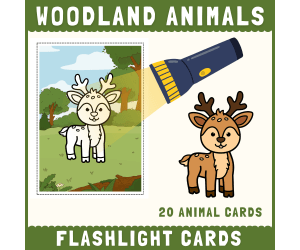
Woodland animals flashlight cards hidden picture science activity
Animals, Life Sciences, Science, Environmental Science, Earth and Environmental Sciences, Kindergarten, Preschool, Toddler, Grade 1, 2, Flashcards, Worksheets & Printables, Centers, Activities, Games
Make learning about woodland forest animals fun and interactive with these Woodland Forest Animals Flashlight Cards! Students will use a flashlight to reveal hidden forest animal pictures while practicing animal recognition and building science vocabulary through an exciting hands-on science center activity. I like using these flashlight cards during woodland animal units, forest habitat studies, animal science lessons, preschool and kindergarten science centers, nature-themed activities, and homeschool learning. It’s an engaging, low-prep activity that adds a fun element of discovery to animal learning. What You Will Get This printable Woodland Forest Animals Flashlight Cards resource gives students an exciting way to discover hidden forest animals and review woodland wildlife vocabulary. What’s Included in this Resource? • Printable woodland forest animal flashlight cards • Hidden picture reveal activity • Forest animal vocabulary • Hands-on flashlight discovery activity • Student-friendly science center format • Easy-to-use printable cards • Great for independent or small-group learning This resource is perfect for: • Woodland animal science units • Forest habitat studies • Animal science lessons • Nature-themed learning • Preschool and kindergarten science centers • Life science activities • Small-group activities • Homeschool learning Why you will love this? • Easy to prepare and use • Creates an exciting hands-on learning experience • Builds observation and visual recognition skills • Reinforces woodland animal vocabulary • Encourages curiosity and independent discovery • Great for science centers and habitat-themed units These Woodland Forest Animals Flashlight Cards are a fun way for young learners to discover hidden forest animals, practice animal recognition, and build observation skills through an interactive science center activity.
Author Perfect_Printables
Rating
Tags Farm Animals Flashlight, Animal Science, Science Center Activities, Hidden Picture Activities, Flashlight Cards, Animal Vocabulary, Woodland Habitat, Woodland Animals, Forest Animals Activities, Forest Animal
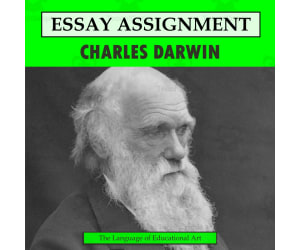
Research Organizer & Essay Assignment: Charles Darwin
Social Studies, History, History: World, Science, Life Sciences, Biology, Grade 7, 8, 9, 10, 11, 12, Activities, Projects, Worksheets & Printables, Worksheets
It's hard to imagine a figure more important to the field of biology than Charles Darwin. This resource provides your students with the opportunity to independently learn about and summarize the life of the father of evolution with this engaging research planner and essay assignment. This carefully scaffolded and easy-to-assign-AND-assess resource has been designed to guide student learning from Charles Darwin fact-collection to the careful development of a five-paragraph research essay. Teaching this resource could not be easier! Start by handing out the background research and note-taking worksheet (you could also ONLY hand this out if you want a shorter lesson!). Once students have found their facts and sources, provide them with the essay outline activity, which guides them step-by-step through the requirements of a short research essay. From there, drafting their essay, using the provided peer review checklist, and submitting their final draft will be no problem at all. And then you can assess their work with the provided Common Core rubric! Use this entire resource as a complete research lesson or just part of it as a short research activity or sub plan! This TeachSimple download includes: - A Charles Darwin essay writing assignment with directions, requirements, research essay writing tips, a peer review checklist, and Common Core-tied grading rubric - An editable rubric, provided as a link, that lets you make adjustments to the grade values and guidelines. This link is provided as as Google Sheet specifically built for integration into Google Classroom, although you can also modify it for use in other Learning Management Systems (LMSs) - A Charles Darwin biography and note-taking worksheet that will guide your students through information gathering. This straightforward two-page handout includes instructions for background research, a fun drawing section, and an area to cite quality sources and organize conducted research - A research essay outlining worksheet, so students build on their Charles Darwin notes in a clear and simple manner as they build their work towards a draft and final paper - All 6-pages of this lesson are provided in full-color and B&W versions Although this resource can be fitted for any secondary Language Arts classroom, it has been carefully designed to work best in grades 8 through 11. The included rubric is subtly but specifically tied to Common Core ELA Standards for Language (3) and Writing (2 and 7). This resource is provided as a print-ready, bookmarked, and adjustable PDF file. The rubric is also included as an editable Google Sheet. This resource contains 6 pages and 1 Google Sheet.
Author The Language of Educational Art, LLC
Tags Essay, Rubric, Research, Notetaking, Outlining, Charles Darwin

Science Reading Comprehension 25: Nervous System PPT
Science, Life Sciences, Biology, Common Core, Language Development, ELA, Vocabulary, Reading Comprehension, Reading, Human Body, Grade 5, 6, 7, Teacher Tools, Presentations, Activities, Tests, Quizzes and Tests, Assessments
Free Reading Passage on Nervous System for Life Science What's inside this free product? Science Reading Comprehension Passage: Nervous System Independent PPT Version: This is the independent PPT version containingone lesson. Product Info: 43 SLIDES (US English with Answers) PPT Version Teaching Duration: 90 Minutes Science Reading Comprehension Outline: Introducing a comprehensive resource tailored for 5th and 6th graders, this product offers enriching reading passages supplemented with illustrative pictures and graphs to clarify key concepts. Aligned with the Common Core State Standards (CCSS), it offers a hassle-free approach to teaching, given that the bulk of the preparation is already done for you. The passages present a diverse set of questions – from multiple choice to data analysis and fill-in-the-blanks. This ensures a rich blend of high-interest content and fundamental curriculum-based science themes. With its versatility, you can seamlessly integrate these lessons into various classroom settings, whether it's whole class discussions, morning exercises, independent desk tasks, small group engagements, contingency plans for substitute teachers, regular homework assignments, or even themed activities for holidays. FULL CATALOG OF DOWNLOAD LINKS HERE Grade 5/6 Links: Physical Science Part 1 - Physical and Chemical Properties Google Docs/Slides/Forms PDF PPT Word Free Supplementary Pack Accompanying Videos Physical Science Part 2 - Motion and Energy Google Docs/Slides/Forms PDF PPT Word Free Supplementary Pack Accompanying Videos Physical Science Part 3 - Electricity and Magnets Google Docs/Slides/Forms PDF PPT Word Free Supplementary Pack Accompanying Videos Life Science Part 1 - Cells, Reproduction and Genetics Google Docs/Slides/Forms PDF PPT Word Free Supplementary Pack Accompanying Videos Life Science Part 2 - Human Body Systems Google Docs/Slides/Forms PDF PPT Word Free Supplementary Pack Accompanying Videos Life Science Part 3 - Plant Parts and Ecosystems Google Docs/Slides/Forms PDF PPT Word Free Supplementary Pack Accompanying Videos Earth Science Part 1 - Plate Tectonics and Rock Cycle Google Docs/Slides/Forms PDF PPT Word Free Supplementary Pack Accompanying Videos Earth Science Part 2 - Ocean Exploration and Natural Resources Google Docs/Slides/Forms PDF PPT Word Free Supplementary Pack Accompanying Videos Earth Science Part 3 - Weather and Solar System Google Docs/Slides/Forms PDF PPT Word Free Supplementary Pack Accompanying Videos For similar products and other frees, do check out Cored Group on TeachSimple .
Author Cored Education
Tags Science, Elementary, Reading, Comprehension, Vocabulary, Answers, Physics, Physical Science, Ccss, Common Core
Boyles and Charles Law Practice ESL: Korean Version
Science, Chemistry, Grade 8, 9, 10, 11, 12, Activities
Boyles and Charles Law Practice Calculations ESL Resource: Korean Version This science resource allows students to practice 20 calculations using the important gas laws of chemistry - Boyles and Charles Law. Students apply the formulas P1V1 = P2V2 and V1/T1 = V2T2 to solve contextual word problems on the 10 Boyles Law and 10 Charles Law questions provided. After working through the practice set, students can check their understanding by reviewing the included solutions. An added feature of this teaching resource is the Korean translation underneath each question, assisting ESL students to comprehend the problems. This differentiated material creates an inclusive lesson that targets the needs of native Korean speakers learning chemistry concepts. Use this worksheet for individual practice, partner work, or small group instruction to reinforce these fundamental gas laws.
Author Schrim's Chem
Tags Boyles And Charles Law, ESL, Chemistry Korean , Bilingual Korean, Science Korean
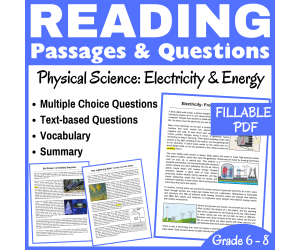
Physical Science Reading Passages: Electricity & Energy (FILLABLE PDF)
Science, ELA, Reading, Reading Comprehension, Strategies, Resources for Teachers, Physics, Grade 6, 7, 8, 9, Writing Prompts, Worksheets & Printables, Centers, Activities, Teacher Tools, Assessments, Quizzes and Tests, Quizzes, Tests
Electricity and Energy: Physical Science Reading Comprehension Passages and Questions (PDF) This very engaging and fillable collection of physical science reading passages about electricity and energy is designed to bridge the gap between science and literacy through strengthening reading comprehension and sparking scientific curiosity in middle school students. Each passage blends English Language Arts skills with accurate science content that supports NGSS classroom practice. Ideal for interdisciplinary learning in ELA and Science. Suitable for Grade 9 review, too! These worksheets are designed as fillable PDFs , which means students can type their answers directly into the document on any computer or tablet . Each page includes highlighted text fields that show them exactly where to type! What Is Included? There are (3) informational passages: The Lightning Rod: Turning Fear into Safety Eel Power: A Holiday Surprise Electricity: From Source to Socket Student Tasks for Each Passage: 5 multiple-choice questions targeting main idea, key details, inference, vocabulary in context, and use of evidence 5 vocabulary matching items with clear, student-friendly definitions 5 text-based questions that require citing specific lines or facts 1 summary prompt that asks students to condense central ideas accurately Full answer key for every section Available Formats for this Resource Word Docs Google Docs FULL CATALOG OF DOWNLOADING LINKS HERE Other Science Reading Collections and Topics You May Find in the Store: 1. Astronomy & Space Science 2. Volcanoes, Rocks, & Mountains 3. Rock Cycle, Soil, & Sinkholes 4. Mars, Glaciers, & Antarctica 5. Water Cycle, Acid Rain, & Wastewater 6. Insects, Animals, & Ecosystems 7. Bioluminescence & Insects 8. Animal Skin, Cats, & T. Rex 9. Human Body and Senses 10. Health & Applied Bioscience 11. Waves, Light, & Imaging 12. Electricity & Energy 13. Motion & Materials 14. Chemistry and Materials Science 15. Electromagnetism 16. Acids and Bases 17. Gas Laws 18. Biotechnology 19. Periodic Trends 20. Protists and Fungi 21. Microevolution 22. Blood 23. Chemical Bonding 24. Magnets 25. Muscles 26. Nuclear Chemistry 27. Electromagnetic Devices 28. Epigenetics 29. The Law of Conservation of Mass 30. Atomic Models 31. Isotopes and Ions 32. Light 33. Human-Environment Interaction 34. Theory of Evolution 35. Photosynthesis 36. Origins of Life and Early Earth 37. Gene Expression and Regulation 38. Thermochemistry 39. Allergies 40. Coevolution 41. Birth to Adulthood 42. Cells 43. Entropy and Free Energy 44. The Human Brain 45. Mixtures and Solutions 46. Invertebrates 47. Zoo Animals 48. Biochemistry 49. Animal Behavior 50. Population Ecology ...and many more engaging science reading passages that cover intriguing and important topics designed to spark curiosity and support student learning. How to Use These PDFs Click on the highlighted area to start typing your answer. Move to the next question by clicking in the next highlighted box. When you are finished, close the document and select SAVE so your answers stay recorded. If you want to keep a blank copy for later, choose Save As and give your completed version a new name. Product Details Length: 14 pages total Grades: 6–8, also suitable for Grade 9 review Use cases: close reading, stations, homework, intervention, test prep, and sub plans Standards support: reinforces informational-text skills and supports NGSS-style sense making through observation, modeling, and clear use of claim, evidence, and reasoning Why Teachers Choose This Set Authentic science content paired with rigorous literacy practice Consistent task structure across all passages for easier planning and smoother student routines Clear, age-appropriate writing that builds confidence without oversimplifying Use this set to reinforce ELA skills in science, to add literacy to your lessons, or to support independent work. The passages strengthen main idea, evidence use, vocabulary in context, inference, cause and effect, and summary writing. With ready-to-use assessments and complete answer keys, you can provide focused practice that is simple to run and fast to review.
Author Middle & High School - CORED Education
Rating
Tags Middle School, Reading Comprehension, Reading Strategies, ELA, Centers, Reading Passage, Assessments, Vocabulary, Physical Science, Physics
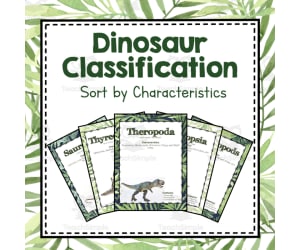
Dinosaur Sorting Mats
Science, Earth and Environmental Sciences, Grade 3, 4, 5, Activities
Dinosaur Sorting Mats Enthral your students and transport them back to the age of dinosaurs with Dinosaur Sorting Mats. This resource is designed for students in Grade 3, Grade 4 and Grade 5, sparking their curiosity about prehistoric creatures and taxonomy. You can incorporate this tool into your science lessons on Archaeology, deepening discussions about dinosaur taxonomy. The resource includes six sorting mats focused on the following dinosaur groups: Onithopods Ceratopsia Thyreophora Sauropoda Theropoda Pachycephalosauria In addition, there are eighteen brightly colored cards depicting a variety of dinosaurs suitable for sorting activities. Educational Methodology & Implementation Guide The teacher guides learners through the process of grouping based on dinosaur traits. Moreover, they instruct students to place figures or cards on matching dinosaur mats - thus creating a hands-on learning experience. Incorporation in Classrooms & Study Formats You can introduce these resources into dedicated 'dinosaur corners' in your classroom or as a component of solo-learning activity boxes. Motivation behind this Design: A two-page rationale underscores the need to discern among the varieties of prehistoric entities through taxonomic understanding along with an illustrative diagram that presents a holistic view providing structure amidst those chaos. The collection also provides five distinct pages with cut-out dinosaur models for added realism. Print and laminate these materials for longer usability! Outcome This teaching resource transforms your learners into budding paleontologists and conveys dinosaur taxonomy's essence in an engaging and digestible manner.
Author Simply Schoolgirl
Tags Dinosaur Sorting, Taxonomy, Organism Classification, Archaeology, Dinosaur Center

Virtual Jersey Patch Photoshop Activity
Science, Technology, Grade 7, 8, 9, 10, Activities
Students will work with digital tools in the Virtual Jersey Patch Photoshop Activity . Students will take an ordinary image and make it look like a patch sewn on a virtual journey. Step by step directions are included.
Author OK Products
Tags Technology, Science, Computer Class, Jersey Patch, Sports, Photoshop, Digital Tools, Mobile Applications, Photopea, Virtual

Photosynthesis Lesson | Middle School Lesson and Infographic Activity
Science, Basic Science, Earth and Environmental Sciences, Life Sciences, Nature & Plants, Biology, Grade 6, 7, 8, Activities, Projects, Lesson Plans, Teacher Tools, Presentations, Worksheets
Introduce students to the essentials of Photosynthesis and its connection to Cellular Respiration with this ready-to-use science lesson designed for Grades 6–8. This middle school resource provides both foundational knowledge and opportunities for scientific discussion and inquiry-based learning. ✅ Covers Photosynthesis and Cellular Respiration using interactive slides and critical thinking questions ✅ Includes Editable Presentations, Auto-Graded Exit Ticket , Infographic Task, and Student Notes ✅ Aligned to NGSS Standards MS-LS1-5, MS-LS1-6, MS-LS1-7, and MS-LS2-3 ✅ No-Prep Resource with built-in videos and fill-in-the-blank guided notes to support active learning This lesson package is comprehensive and student-friendly. It includes everything needed for a full class session or more, offering a smooth and engaging way to teach key life science concepts. Students will explore how energy from the sun drives life on Earth, how plants process that energy, and how it's transferred through ecosystems. Topics covered in the lesson include: The sun as Earth’s energy source Distribution of energy on Earth The structure and role of chloroplasts The function of chlorophyll Why leaves change color The processes of Photosynthesis and Cellular Respiration ATP as a cellular energy carrier How Photosynthesis supports all life on Earth What’s inside the download: A teacher slideshow with full content and answers A student version of the slideshow with fill-in-the-blank sections An auto-graded 4-question Exit Ticket for quick assessment Two instructional videos embedded within the presentation An infographic-based activity to reinforce learning A printable student worksheet to guide note-taking and discussion Standards alignment: MS-LS1-5 : Students examine how plants rely on air and water to build materials needed for growth, tying into carbon dioxide and water’s role in photosynthesis. MS-LS1-6 : Learners explain how photosynthesis drives the flow of matter and energy in living systems. MS-LS1-7 : The lesson supports modeling how food undergoes chemical reactions in cellular respiration to release energy and support growth. MS-LS2-3 : Students explore how energy and matter cycle between organisms and their environment. The student notes are designed to maximize participation without overwhelming learners with too much writing. Strategic fill-in-the-blank prompts help students focus on key vocabulary and ideas while leaving time for group discussion, exploration, and deeper analysis. These prompts are clearly marked in the teacher copy to make instruction seamless. Whether you’re teaching in person or online, this lesson gives you everything you need to introduce photosynthesis and cellular respiration in a clear, structured, and student-centered way.
Author Teach With Fergy
Rating
Tags Photosynthesis, Cellular Respiration, Biology Lesson, Chloroplast, Plants

Sheep Heart Dissection Lab ~ Anatomy and Physiology
Science, Life Sciences, Human Body, Grade 9, 10, 11, 12, Activities, Experiments
This lab will cover 15 anatomical structures in the heart as well as 20 other discussion questions. This lab is very flexible as it will work for any level student from English Learner - EL - to more advanced students.
Author The Teacher Team
Tags Science Lab, Anatomy, Physiology, Biology, ELL, Labeled Sheep Heart Dissection, Heart Dissection Lab, Sheep Heart Dissection Guide, Sheep Heart Dissection Lab, Sheep Dissection Lab, Heart
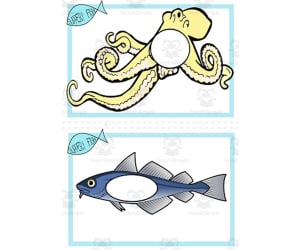
Slippery Fish – Vocabulary Cards Set
Science, Life Sciences, Animals, Grade 1, 2, 3, Activities
This is a set of Slippery Fish Vocabulary Cards. You can print, laminate and cut these cards for students to practice.
Author Nathan
Rating
Tags Flash Cards, Vocabulary, Fish, Word Building, Fish Vocabulary
Practical Science: Natural and Processed Materials Activities for 8-10 year olds
Science, Basic Science, Grade 3, 4, 5, Activities
Practical Science: Natural and Processed Materials Activities provides eight detailed science lessons for educators working with 8-10 year old students. The 28-page PDF resource begins each section by outlining the materials needed and offering ideas to integrate the hands-on activities into various teaching contexts from whole group to individual work. Students will gain firsthand experience identifying properties of commonplace items through sorting and classifying activities. As they work with real-world objects like rocks, liquids, metals, and plastics, young learners build their understanding of the scientific concepts related to natural and synthetic materials. With explicit lesson plans tailored for grades 3-5, this practical guide makes it easy for teachers to facilitate engaging science learning.
Author Ready-Ed Publications
Tags Physical Science, Practical Science, Natural Science Materials, Processed Materials, Science Activities

Food Machine Design Challenge
Science, Inventors, Not Grade Specific, Activities
Food Machine Design Challenge: An Effortless Teaching Resource Food Machine Design Challenge is a teaching resource designed for seamless integration into any curriculum . It isn't grade-specific, allowing adaptability and versatility across various grades and learner capacities. This resource primarily focuses on Science, emphasizing the inventive dimension of learning. Versatile and Independent Learning The module includes ready-to-use design challenges that promote independent learning among students. Its chief advantage lies in adaptability – it can be incorporated into Makerspace sessions, Genius Hour, Independent Time or STEM classes with ease. Real-life Scenarios to Promote Understandings This tool corresponds to real-life scenarios while keeping with content standards to deepen student understanding. It stimulates critical thinking and fuels innovation as students actively engage in problem-solving. Detailed Design Challenges Context- Provides the rationale behind each challenge. Design Challenge- Outlines tasks for completion. Specifications- Sketches out needed conditions per challenge. >Constraints- Marks limitations within each challenge.' ' Note:All materials and tools needed are also detailed. Additonal Support through Organized Steps Detailed steps guide learners on systematically approaching tasks from beginning to end. Tips are provided throughout exercises increasing chances of success. The product comes in multiple file types offering cross-device accessibility; thus making it useful for educators developing lesson plans at their own pace or revising them quickly if necessary. The hands-on activities further enrich student experiences by promoting practical learning which leads to enhanced comprehension. In conclusion,The Food Machine Design Challenge presents as an accessible, comprehensive educational tool promoting critical thinking while maintaining high interactivity.
Author WhyMaker
Tags Science, Design Challenge, Independent Learning, Problem-solving, Innovative Thinking