3,890 products added recently
Page 19 - Science Lesson Plans
Bring science to life with lesson plans that cover biology, chemistry, physics, and more. These resources offer experiments and interactive lessons to stimulate curiosity. Implement them to foster a deep understanding of scientific principles and a passion for discovery.
I WONDER - Do Leopards Live In Groups | Animated Video Lesson
STEM, Animals, Life Sciences, Science, Biology, Grade 1, 2, 3, 4, 5, 6, 7, 8, Lesson Plans, Teacher Tools
Video Introduction Animal kingdoms are full of fascinating wonders to learn. This video is designed for the students to learn more about animals in different countries. I WONDER - Do Leopards Live In Groups | Animated Video Lesson Do you like animals? what is your favorite one? Do you own a pet? If yes, tell us more about it, like what its name? And what do you like most about it? What are the animal kingdoms? Can you write down the characteristics of each animal class like mammals, birds, reptiles, amphibian, fish and mollusks. Do you know that some animals can sing, can you name any of them? What is the largest and the smallest mammal in the world? What is the largest and the smallest bird in the world? What is the largest and the smallest fish in the world? I WONDER - Do Leopards Live In Groups | Animated Video Lesson The video is perfect for encouraging the researching skills for the students, while learning more about these fantastic animals. I WONDER - Do Leopards Live In Groups | Animated Video Lesson This friendly designed video is suitable for students at school, homeschooling, and as a group activity. Format Available in MP4 format.
Author Educational Voice
Tags Do Leopards Live In Groups, Do Leopards Live In Groups Video, Leopards, Leopard, Leopards Facts, Leopards Facts For Kids, Leopards Video, Leopards Video For Kids, Leopard Facts, Leopard Video
I WONDER - What Is A Frost Flower | Animated Video Lesson
Earth Sciences, Earth and Environmental Sciences, Science, Grade 4, 5, 6, 7, 8, 9, 10, Lesson Plans, Teacher Tools
Video Introduction An amazing video designed for the students to learn more about famous phenomena in different countries. I WONDER - What Is A Frost Flower | Animated Video Lesson Weather phenomena can affect our lives, crops and even animals! Can you name any of the weather phenomena that happened in your country? Do you know when hailstorms happen? And what is the most country who has lots of hailstorms happening per year? Do you think the all countries have four seasons? If no, can you name any? Why do some animals sleep at winter? Can you name any of these animals? I WONDER - What Is A Frost Flower | Animated Video Lesson The video is perfect for encouraging the researching skills for the students, while learning more about this fantastic phenomenon. I WONDER - What Is A Frost Flower | Animated Video Lesson The video is perfect for encouraging the researching skills for the students, while learning more about this fantastic phenomenon. Format Available in a PDF format.
Author Educational Voice
Rating
Tags What Is A Frost Flower, Frost Flower, Frost Flower Facts, Frost Flower Video, Frost Flower Video For Kids, Frost Flower Facts For Kids, Severe Weather Phenomena, Severe Weather Phenomena Video
I WONDER - What Do Animals Use Bioluminescence For | Animated Video
STEM, Animals, Life Sciences, Science, Biology, Grade 1, 2, 3, 4, 5, 6, 7, 8, Lesson Plans, Teacher Tools
Video Introduction Animal kingdoms are full of fascinating wonders to learn. This video is designed for the students to learn more about animals in different countries. I WONDER - What Do Animals Use Bioluminescence For | Animated Video Lesson Do you like animals? what is your favorite one? Do you own a pet? If yes, tell us more about it, like what its name? And what do you like most about it? What are the animal kingdoms? Can you write down the characteristics of each animal class like mammals, birds, reptiles, amphibian, fish and mollusks. Do you know that some animals can sing, can you name any of them? What is the largest and the smallest mammal in the world? What is the largest and the smallest bird in the world? What is the largest and the smallest fish in the world? I WONDER - What Do Animals Use Bioluminescence For | Animated Video Lesson The video is perfect for encouraging the researching skills for the students, while learning more about these fantastic animals. I WONDER - What Do Animals Use Bioluminescence For | Animated Video Lesson This friendly designed video is suitable for students at school, homeschooling, and as a group activity. Format Available in MP4 format.
Author Educational Voice
Tags What Do Animals Use Bioluminescence For, What Do Animals Use Bioluminescence For Video, Bioluminescent Animals, Bioluminescent Animals Facts, Bioluminescent Animals Video, Bioluminescent Animals Video For Kids
Speed Quizzing – Matter, Chemical Trends, and Bonding Unit
Science, Chemistry, Grade 10, 11, 12, Lesson Plans, Teacher Tools
Speed Quizzing – Matter, Chemical Trends, and Bonding Unit This teaching tool is an innovative approach to engaging students in interactive learning. Designed for the grade 10 to 12 curriculum , it provides educators with an easy-to-implement, customizable tool that promotes proactive knowledge checks and encourages student interaction. Main features of this resource: Fully compatible with Microsoft Word Emphasis on key chemistry topics such as Atomic Theory and Structure Overview Lewis Structures Trends in the Periodic Table And more! The activity involves partner-based flashcard quizzes where one student reads a question from their card, their partner responds then roles are switched. This method ensures maximum classroom participation while spotlighting teamwork values. Possible Applications: This speed quizzing format is not only great for knowledge reinforcement sessions but also can serve as practice for polishing weak areas among students. The flexible arrangement fosters alternation of pairs during group engagements prompting wider student exposure. Ideal for Chemistry Sub-categories- Made by teachers themselves; its exciting approach aids in creating successful interactive sessions while positively enhancing classroom comprehension levels. An invaluable tool aiding educators in guiding students efficiently on their journey through science studies.
Author Teach With Fergy
Tags Interactive Learning, Chemistry Education, Student Engagement, Knowledge Checks, Teaching Support
I WONDER - Who Invented The World Wide Web | Animated Video Lesson
Biographies, Social Studies, Inventors, Basic Science, Science, Grade 4, 5, 6, 7, 8, 9, 10, Lesson Plans, Teacher Tools
Video Introduction An amazing video designed for the students to learn more about famous people in different countries. I WONDER - Who Invented The World Wide Web | Animated Video Lesson Do you know this person? How much do you know about him/her? Who is your idol? Why did you choose this person? Tell us more about him/her? Who is your favorite athlete? Or what is your favorite team? Have you recently heard a story about a famous person? Who was this person? Can you tell us more about him/her. Who is your favorite president, king, or queen? Why you chose that person? In your country, who are the most famous people? What did they do? Can you tell us more about them. What is your favorite invention? Who invented it? Who is your favorite artist? What is the most famous thing he/she have done? What is the most enjoyable you have read before? Who wrote it? I WONDER - Who Invented The World Wide Web | Animated Video Lesson The video is perfect for encouraging the researching skills for the students, while learning more about this fantastic place. I WONDER - Who Invented The World Wide Web | Animated Video Lesson This friendly designed video is suitable for students at school, homeschooling, and as a group activity. Format Available in MP4 format.
Author Educational Voice
Rating
Tags Who Invented The World Wide Web, Who Invented The World Wide Web Video, The World Wide Web, Sir Tim Berners-Lee, Sir Tim Berners-Lee Video, Sir Tim Berners-Lee Facts, Sir Tim Berners-Lee Video For Kids
I WONDER - How Does Gravity Work | Animated Video Lesson
Physics, Science, Grade 6, 7, 8, 9, 10, 11, 12, Lesson Plans, Teacher Tools
Video Introduction An amazing video designed for the students to learn more about STEM. I WONDER - How Does Gravity Work | Animated Video Lesson Do you like STEM subjects? what is your favorite one? Have you ever tried to plant a seed? If yes, tell us more about it. Or have you ever tried to invent something? If yes, tell us more about it. And how do you think it will help us? Have you ever seen a microorganism under a microscope? What was it? And how it looked like? Mathematics is a marvelous subject. Let' sharpen our brains and solve some equations. Do you like timetable tricks? What is your favorite one? Do you know how to code? Have you ever created an app or a game before? If yes, how was it like? I WONDER - How Does Gravity Work | Animated Video Lesson The video is perfect for encouraging the researching skills for the students, while learning more about this fantastic topic. I WONDER - How Does Gravity Work | Animated Video Lesson This friendly designed video is suitable for students at school, homeschooling, and as a group activity. Format Available in MP4 format.
Author Educational Voice
Tags How Does Gravity Work, How Does Gravity Work Video, Gravity, Gravity Facts, Gravity Facts For Kids, Gravity Video, Gravity Video For Kids, Science, Stem, Science Video
I WONDER - Are There Different Types Of Frost | Animated Video Lesson
Earth Sciences, Earth and Environmental Sciences, Science, Grade 4, 5, 6, 7, 8, 9, 10, Lesson Plans, Teacher Tools
Video Introduction An amazing video designed for the students to learn more about famous phenomena in different countries. I WONDER - Are There Different Types Of Frost | Animated Video Lesson What do you know about this phenomenon? Where it happens? When it happens? What are the safety measures that we should take to be safe during this phenomenon? Are there any other places in the world that experienced this phenomenon? If yes, tell us more about them. Why do you think it happens? Do you like reading about Geography? What is your favorite country in the whole world? I WONDER - Are There Different Types Of Frost | Animated Video Lesson The video is perfect for encouraging the researching skills for the students, while learning more about this fantastic phenomenon. I WONDER - Are There Different Types Of Frost | Animated Video Lesson The video is perfect for encouraging the researching skills for the students, while learning more about this fantastic phenomenon. Format Available in a PDF format.
Author Educational Voice
Rating
Tags Are There Different Types Of Frost, Are There Different Types Of Frost Video, Different Types Of Frost, Different Types Of Frost Video, Different Types Of Frost Facts, Different Types Of Frost Video For Kids, Different Types Of Frost Facts For Kids
I WONDER - How was glass formed naturally | Animated Video Lesson
Earth Sciences, Earth and Environmental Sciences, Science, Environmental Science, Grade 4, 5, 6, 7, 8, 9, 10, Lesson Plans, Teacher Tools
Video Introduction An amazing video designed for the students to learn more about STEM. I WONDER - How was glass formed naturally | Animated Video Lesson Do you like STEM subjects? what is your favorite one? Have you ever tried to plant a seed? If yes, tell us more about it. Or have you ever tried to invent something? If yes, tell us more about it. And how do you think it will help us? Have you ever seen a microorganism under a microscope? What was it? And how it looked like? Mathematics is a marvelous subject. Let' sharpen our brains and solve some equations. Do you like timetable tricks? What is your favorite one? Do you know how to code? Have you ever created an app or a game before? If yes, how was it like? I WONDER - How was glass formed naturally | Animated Video Lesson The video is perfect for encouraging the researching skills for the students, while learning more about this fantastic topic. I WONDER - How was glass formed naturally | Animated Video Lesson This friendly designed video is suitable for students at school, homeschooling, and as a group activity. Format Available in MP4 format.
Author Educational Voice
Tags How Was Glass Formed Naturally, How Was Glass Formed Naturally Video, Glass Formation, Glass Formation Facts, Glass Formation Facts For Kids, Glass Formation Video, Glass Formation Video For Kids, Glass
I WONDER - Where Do Biofuels Come From | Animated Video Lesson
Environmental Science, Earth and Environmental Sciences, Science, Earth Sciences, STEM, Grade 3, 4, 5, 6, 7, 8, 9, Lesson Plans, Teacher Tools
Video Introduction An amazing video designed for the students to learn more about STEM. I WONDER - Where Do Biofuels Come From | Animated Video Lesson Do you like STEM subjects? what is your favorite one? Have you ever tried to plant a seed? If yes, tell us more about it. Or have you ever tried to invent something? If yes, tell us more about it. And how do you think it will help us? Have you ever seen a microorganism under a microscope? What was it? And how it looked like? Mathematics is a marvelous subject. Let' sharpen our brains and solve some equations. Do you like timetable tricks? What is your favorite one? Do you know how to code? Have you ever created an app or a game before? If yes, how was it like? I WONDER - Where Do Biofuels Come From | Animated Video Lesson The video is perfect for encouraging the researching skills for the students, while learning more about this fantastic topic. I WONDER - Where Do Biofuels Come From | Animated Video Lesson This friendly designed video is suitable for students at school, homeschooling, and as a group activity. Format Available in MP4 format.
Author Educational Voice
Tags Where Do Biofuels Come From, Where Do Biofuels Come From Video, Biofuels, Biofuel, Biofuels Facts, Biofuels Facts For Kids, Biofuels Video, Biofuels Video For Kids, Science, Science Facts
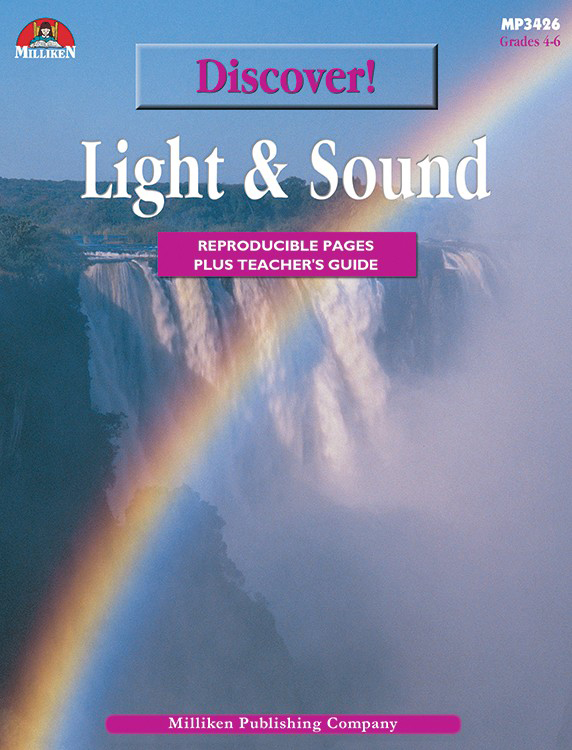
Discover! Light and Sound
Science, Physics, Grade 4, 5, 6, Teacher Tools, Lesson Plans
Discover! Light and Sound: A Teaching Resource Discover! Light and Sound is an informative teaching resource for educators, both in a public school setting or as for homeschooling. This product offers a carefully structured set of activities tailored specifically to illuminate the fundamental concepts in the field of light and sound,Mainly aimed at Grade 4 to 6 science curriculums in the subfield of physics. The structure blends theory combined with interactive undertakings like experiments , puzzles, and review questions. These tasks are designed explicitly to facilitate effective learning around basic principles such as: The nature and behavior of light Sources of light usage Types of lenses Vibration patterns related to sound Mechanism of sound propagation along with their distinct characteristics. A Resource For Teachers too This product doesn't just focus on student tasks - it also includes detailed background information improving educators' understanding around these topics, and offers insights on implementing these pedagogic activities successfully into their students' learning sessions. It also provides guiding questions for discussions that can facilitate thought-provoking classroom debates or help develop comprehension queries. Easily Accessible & Adaptable Format This resource is downloadable as a PDF file that can be shared across digital platforms or printed out according to preference. No matter your teaching style - whole group instruction via screen sharing technology or projection displays; small group activities encouraging collaboration; individual assignments; this tool effortlessly adapts. Navigability & Comprehension The resource is structured clearly making it easy for Grade 4-6 students to navigate through. Each exercise within Discover! Light & Sound comes with provided answers promoting self-evaluation among learners and giving teachers tools to assess student progress.
Author Classroom Complete Press
Tags PDF
I WONDER - Can You Live On A Space Station | Animated Video Lesson
Space, Earth and Environmental Sciences, Science, Grade 6, 7, 8, 9, 10, 11, 12, Lesson Plans, Teacher Tools
Video Introduction An amazing video designed for the students to learn more about space facts. I WONDER - Can You Live On A Space Station | Animated Video Lesson Do you like reading about space? If yes, what is your favorite topic? What do you know about our solar system? What is the smallest planet in our solar system? What is the biggest planet in our solar system? What is the hottest planet in our solar system? And what is the coldest one? Do you think there are aliens? If yes, what do you think they look like? What do they eat and how they speak to each other? Where do they live? What is a galaxy? And what is a milky way? Have you recently saw a shooting star? If yes, tell us more about it, like when did it happen and where? What is a blackhole? Can a blackhole gets bigger by time? Do you like counting the stars? What do you think a star is made of? I WONDER - Can You Live On A Space Station | Animated Video Lesson The video is perfect for encouraging the researching skills for the students, while learning more about the fantastic space. I WONDER - Can You Live On A Space Station | Animated Video Lesson This friendly designed video is suitable for students at school, homeschooling, and as a group activity. Format Available in MP4 format.
Author Educational Voice
Tags Can You Live On A Space Station, Can You Live On A Space Station Video, Space Station, Space Station Facts, Space Station Facts For Kids, Space Station Video, Space Station Video For Kids, Space
Vertical Hydroponic Garden Nutrient Logging
Science, Life Sciences, Nature & Plants, Technology, Engineering, STEM, Resources for Teachers, Classroom Management, Research, Community Building, Grade 6, 7, 8, 9, 10, 11, 12, Worksheets & Printables, Workbooks, Worksheets, Word Searches, Teacher Tools, Lesson Plans, Quizzes and Tests, Quizzes, Tests, Assessments
Transform your classroom into a modern, data-driven vertical farm! This comprehensive, 41-page curriculum packet is a complete, project-based learning unit designed to bridge the gap between abstract science and real-world application. Move beyond basic plant-growing projects and empower your students to think like true agronomists and data scientists. This isn't just a lesson; it's a full-scale simulation of running a Controlled Environment Agriculture (CEA) operation. Students will master the critical chemistry of soil-free systems (pH, EC, nutrient lockout) and learn to harness the power of data by building and maintaining a professional-grade nutrient logging spreadsheet. They will prevent crop failures, troubleshoot problems using data, and make informed decisions—turning abstract numbers into thriving plants. What's Included in This 41-Page Turnkey Unit: Part 1: In-Depth Theoretical Guide: Five expertly written chapters covering the core chemistry of hydroponics, including pH dynamics, Electrical Conductivity (EC), nutrient lockout, and real-world case studies of crop-saving data analysis. Part 2: Student Workbook: Ten rigorous worksheets with over 80 questions that guide students from foundational knowledge to advanced troubleshooting. Topics include system fundamentals, pH/EC calculations, NPK logging, environmental interplay, and designing the ultimate nutrient spreadsheet. Part 3: Teacher Resources & Visuals: High-Quality Instructional Visuals: Three printable/embeddable diagrams covering the pH "Goldilocks Zone," the daily data logging workflow, and spreadsheet architecture. Perfect for classroom posters or digital dashboards. Step-by-Step Teacher Implementation Guide: A detailed guide on hardware setup, assigning student roles (Lead Data Custodian, Systems Analyst), setting pedagogical benchmarks, and troubleshooting common classroom failures. Part 4: Complete Answer Keys: Full answer keys for all "Agronomy Data Checks" and all 10 student worksheets, making grading and assessment effortless. Students Will Learn & Master: Applied Chemistry: Understand the logarithmic nature of pH, nutrient availability, and chemical precipitation (nutrient lockout). Data Science & Analysis: Build, manage, and interpret a relational database using spreadsheets, including data validation and conditional formatting. Critical Thinking & Problem Solving: Analyze data anomalies, diagnose plant health issues, and execute corrective protocols based on evidence. STEM Career Skills: Gain hands-on experience in skills essential for careers in agritech, environmental science, data analysis, and sustainable agriculture. Perfect For: High School Agricultural Science / Agriscience Classes AP Environmental Science (APES) - Unit 5: Land and Water Use Biology & AP Biology - Plant Science & Lab Units Chemistry - Applied Chemistry Projects STEM / STEAM Electives Career and Technical Education (CTE) Programs This resource is provided as a print-ready PDF and is perfect for any high school classroom with access to a hydroponic tower, NFT system, or even a simple deep-water culture setup. Equip your students with the 21st-century skills they need to feed the future. Add this project to your cart today! Why Parents/Schools Love It: Builds 21st-Century Career Skills: This isn't just about growing lettuce; it's a hands-on project that teaches data analysis, spreadsheet management, and systems thinking—skills directly applicable to high-demand STEM and AgriTech careers. Makes Abstract Science Tangible: Concepts like pH, osmosis, and nutrient concentration can be difficult. This curriculum makes them visible and understandable as students see their data logging directly impact the health of their plants. Fosters Responsibility and Collaboration: The built-in teacher guide encourages assigning specific roles (Data Custodian, Systems Analyst), teaching students accountability, teamwork, and the importance of process in a scientific setting. Comprehensive & Teacher-Friendly: This is a "plug-and-play" unit. With detailed theory, student worksheets, visual aids, and complete answer keys, it saves teachers dozens of hours of prep time while ensuring a rigorous academic experience. Promotes Sustainable Thinking: Students engage directly with the future of food, learning about soil-free, water-efficient farming methods that are critical for solving real-world environmental challenges. Target Student Audience : Based on the vocabulary, concepts (logarithmic scales, data validation, chemical interactions), and the requirement for spreadsheet management, this PDF is best suited for: Primary Target: High School Students (Grades 9-12) . Specific Classes: Agricultural Science / Agriscience: This is a perfect fit. Environmental Science (including AP Environmental Science): Excellent for units on sustainable agriculture and food production technology. Biology (especially honors or AP): A fantastic hands-on application of osmosis, nutrient uptake, and cellular processes. Chemistry: A practical and engaging way to teach about pH, solutions, and concentration. STEM/STEAM Electives & CTE pathways: It perfectly integrates Science, Technology, Engineering, and Math. Advanced Middle School (Grades 7-8): Gifted or advanced programs could adapt the content, focusing more on the hands-on logging and less on the complex chemistry. Copyright/Terms of Use: This Book was copyrighted by Syed Hammad Rizvi. This resource is for personal and single classroom use only. You may not alter, redistribute, or sell any part of this resource. In other words, you may not put it on the Internet where it could be publicly found and downloaded. If you want to share this resource with colleagues, please purchase additional licenses from Teachsimple. Thank you for respecting these terms of use. This product is happily brought to you by Syed Hammad Rizvi
Author Creative Book Store
Rating
Tags Hydroponics, Verticalfarming, Agriculture, Plantscience, Gardening, Agritech, CEA, STEM, Projectbasedlearning, Scienceproject
I WONDER - What Is A Meteor | Animated Video Lesson
Space, Earth and Environmental Sciences, Science, Grade 4, 5, 6, 7, 8, 9, 10, Lesson Plans, Teacher Tools
Video Introduction An amazing video designed for the students to learn more about space facts. I WONDER - What Is A Meteor | Animated Video Lesson Do you like reading about space? If yes, what is your favorite topic? What do you know about our solar system? What is the smallest planet in our solar system? What is the biggest planet in our solar system? What is the hottest planet in our solar system? And what is the coldest one? Do you think there are aliens? If yes, what do you think they look like? What do they eat and how they speak to each other? Where do they live? What is a galaxy? And what is a milky way? Have you recently saw a shooting star? If yes, tell us more about it, like when did it happen and where? What is a blackhole? Can a blackhole gets bigger by time? Do you like counting the stars? What do you think a star is made of? I WONDER - What Is A Meteor | Animated Video Lesson The video is perfect for encouraging the researching skills for the students, while learning more about the fantastic space. I WONDER - What Is A Meteor | Animated Video Lesson This friendly designed video is suitable for students at school, homeschooling, and as a group activity. Format Available in MP4 format.
Author Educational Voice
Tags What Is A Meteor , What Is A Meteor Video, Meteor, Meteor Facts, Meteor Facts For Kids, Meteor Video, Meteors, Meteors Video For Kids, Space, Space Video
Vehicles Reading Comprehension Passage - Cored Ed Encyclopedia
ELA, Language Development, Reading Comprehension, Reading, Pre-Reading, Science, Technology, Engineering, History, Social Studies, Grade 2, 3, 4, 5, Worksheets & Printables, Worksheets, Teacher Tools, Centers, Activities, Writing Prompts, Assessments, Quizzes and Tests, Quizzes, Lesson Plans
This vehicles reading comprehension with lesson plan includes: Visualization (on the front cover) Start your lesson by taking a minute to think and share something about the topic. Read the script aloud (slowly), perhaps prepare some music or sound effects. Student close their eyes and let their imaginations wander. Students open their eyes, read the question aloud and give them a few minutes to complete. Ask a few students to share or keep answers until the end to compare with what they learn in the passage. Quick pause—thousands of Cored Education products are included with your TeachSimple membership. Download links and encyclopedia index available here. Pre-Reading Trivia Students will write down one thing they already know about the subject and then read five more facts and discuss. These facts are fun, and the students will enjoy learning about the subject before reading more. Give 1 minute for students to write what they already know (no pressure—best guess is fine). Read the five facts together. After each fact, do ask a student for their opinion, was it surprising? Set a purpose by asking students to highlight/underline one fact they want to learn more about during the reading. Reading Passage The text is a high-interest reading passage with set paragraphs, roughly three to four paragraphs long. It contains a variety of themes about the topic, anywhere from history to technology. The passage is between 250 and 350 words in length. First, ask students to look at the headings and see what they’ll learn about today. What do they know about the topic/heading? First read options: Teacher read-aloud (best for support). Partner reading (paragraph by paragraph). While reading, students underline important details, and vocabulary words they think may come up in the questions section. Mixed Questions The first question page contains four multiple-choice questions, each with a choice of four answers, and three written response questions that require a sentence or two from the student. Students complete the mcqs first independently, then review quickly as a class. For the 3 written responses, try to get students giving the answer with some form of evidence: “I think ___ because the text says ___.” If students get stuck, send them back to check the passage. Vocabulary Questions Practice seven key words from the text in this section across two activities. First section is scrambled words where students will unscramble three words given a clue for each. The second section is a word to meaning matching activity. Before starting, have some students read out words they underlined in the passage. Ask students to say the word and read aloud the sentence(s) around each word. Ask students to do scrambled words and the matching exercise in pairs then go through answers as a class. For the scrambled spelling task, get four pairs to come up to the board and write the words for extra practice with the other student reading out the clue. For the matching task, prompt students to give full sentences: “I matched ___ with ___ because ___.” Creative Writing In this question, the student will be required to write a five to eight sentence paragraph on a question related to the topic. Before starting, ask students write down 3 key ideas they are going to include in their piece. Ask students for ideas to share around the class to help those struggling. Pro writing expectations: 5–8 sentences At least 2 facts or details from the passage At least 2 vocabulary words from the previous page Students read their paragraphs while classmates listen for facts and vocabulary words. Extension Activities This page is optional for fast finishers or to take home. There are several activities, each one requiring a different skill. Do some, do none, do all, completely optional - but you will feel reassured knowing every possibility is planned for. Includes summary writting question. Answer Key There are answers for the multiple-choice questions, written response questions have sample answers, vocabulary answers and if there is a summary question then a sample summary will be provided as well. Lesson Plan Included Customized lesson plan for this lesson is included. Lesson Snapshot Title: Vehicles Genre: Nonfiction (Informational text) Subject: Social Studies / Science & Technology Primary Topic: How transportation changed from wheels to flight Estimated Guided Reading Level (A–Z): P Support pages: Pre-reading trivia, mixed questions, vocabulary practice, creative writing, extension activities, and an answer key. Support-page QA check: Some vocab items don’t match the exact word forms in the passage (e.g., chariot vs chariots , battery vs batteries , submarine vs submarines , locomotive vs locomotives ). What This Lesson Teaches Best Sequence of transportation changes over time: Moves from walking/animals, to logs/sledges, to wooden wheels and wagons, to roads and coaches, to steam locomotives, motor vehicles, and airplanes. How inventions improved travel and hauling: Explains how wheels, roads, tracks/railroads, and engines made travel smoother, faster, and able to carry heavier loads. Using headings to organize information: Section headings (“Roads…,” “When Steam…,” “A Lift Into the Air”) help readers track time periods and big shifts. Key historical details in an informational text: Includes dates and examples such as Uruk clay tablets (3700–3500 BCE) and the Wright Flyer flight (December 17, 1903). Modern tech and environmental impact: Notes electric motors, rechargeable batteries, and “no tailpipe exhaust,” ending with a question about helping the planet. Learning Goals Students will describe how people traveled and carried loads before wheels, using details from the passage. Students will identify how wheels changed what vehicles could do (hauling goods and moving more easily). Students will explain how roads and railroads affected travel and connected places, based on the text. Students will summarize the “biggest leap” in travel described in the passage and name the example given. Students will use headings and key details to retell the passage’s main changes in transportation in order. Key Vocabulary From the Text sledge — a sled that helps heavy things slide. Mesopotamia — an ancient region where Uruk was located. spoked — having thin supports connecting wheel center to rim. locomotives — train engines that pull cars on tracks. rechargeable — can be filled with power again. FULL CATALOG OF DOWNLOAD LINKS AND ENCYCLOPEDIA INDEX HERE
Author Cored Education
Rating
Tags Vocabulary, Reading Comprehension, Reading Passages, Lesson Plans, Ela Lesson Plans, Reading Comprehension Lesson Plans, Pre-reading, Science Lesson Plans, Technology, History Lesson Plans
Reducing Your Community's Carbon Footprint: Is the Future Green or Grim? Gr. 5-8
Science, Earth and Environmental Sciences, Environmental Science, Grade 5, 6, 7, 8, Teacher Tools, Lesson Plans
Reducing Your Community's Carbon Footprint: Is the Future Green or Grim? Gr. 5-8 An engaging and thought-provoking teaching resource for middle school educators focusing on science and environmental studies. Part of the larger lesson plan titled "Reducing your Community's Carbon Footprint", this component encourages students to think critically about global climate change, its causes, impacts, and potential solutions. Educate them about the transition from living in cities to suburban areas and how it affects a community's travel footprint. Have learners identify cause-and-effect correlations in workplace commuting on distant environments such as a shrinking island. Showcase real-life case studies such as Cuba’s transformation—substituting their fossil fuel–based farming system into an eco-friendly one within a decade. Inspire students with examples of green towns worldwide that have successfully reduced their carbon footprints while brainstorming personal actions they can adopt in their own communities towards greener futures. Bloom’s Taxonomy and STEAM principles This resource is designed based on Bloom’s Taxonomy guiding principle. The package aids holistic understandings of environmental science. The additional resources include: A graphic organizer facilitating structural thinking patterns. A carbon footprint calculator that sensitizes learners toward responsible living. A crossword aiding vocabulary enrichment related to nitrogen ingestion, A comprehension quiz fortifying assimilated knowledge absorption, An answer key reducing correction time for teachers! This easy-to-access downloadable PDF file is perfect for whole group instructions, small breakout sessions or even as a homework assignment! All this and more make " Reducing Your Community's Carbon Footprint: Is the Future Green or Grim? Gr. 5-8 " your absolute must-have environmental science teaching resource!
Author Classroom Complete Press
Tags PDF
Eco-Intelligence:The Science of Winter Survival & Climate Adaptation
Winter, Seasons, Holiday & Seasonal, Science, Earth and Environmental Sciences, Earth Sciences, Environmental Science, Geology, Space, STEM, Homeschool Curriculum, Homeschool Templates, Grade 2, 3, 4, 5, 6, Worksheets & Printables, Workbooks, Worksheets, Teacher Tools, Assessments, Lesson Plans, Outlines, Presentations, Rubrics, Literacy Readers
Discover the ultimate Groundhog Day reading comprehension activity with this engaging Eco-Intelligence Interactive Literacy Kit, which is perfect for blending science and literacy within the confines of your classroom or homeschool setup. The 40-page digital resource looks into winter survival, climate adaptation, and animal behavior as highly interesting topics: Groundhog Day, Valentine's Day main idea passages, and science regarding hibernation. Merging in some nature's seasonal cycles-phenology-with important reading skills for elementary students, such as determining main ideas versus supporting details, vocabulary building, structures of compare and contrast, and thematic synthesis. They will love the "Anchor & Abstract" methodology that anchors abstract concepts like photoperiodism, metabolism, and ethology to holidays they know well. This Kit is full of sample texts, cloze, sorting activities, visual literacy, paragraph shrinking techniques, and exercises on conservation tasks. It reworks folklore into rigorous STEM education. Ideal for 3rd grade reading comprehension worksheets, 4th grade science units, Valentine's Day classroom activities, and Groundhog Day crafts with a twist: increase the level of engagement for your students while aligning them to Common Core standards for non-fiction reading and biological sciences. Download immediately upon purchase of this printable PDF today for instant access to neuro-inclusive, multidisciplinary lessons. Why Parents/Schools Love It: Multidisciplinary Engagement: Blends science topics like hibernation, photoperiodism, animal adaptation with literacy skills like main idea, vocabulary, text evidence, translating holiday topics into meaningful STEM learning that holds kids’ interest without sacrificing academic content. Neuro-Inclusive Design: Follows principles of 'Anchor & Abstract' which utilizes visual aids to meet the needs of learners suffering from dyslexia or those facing difficulties in terms of Executive Functions. Holiday-Relevant Rigor: Reframes Groundhog Day and Valentine's Day in terms of biology and nature, skipping over "fluff" and still providing holiday-relevant learning objectives—great in an already existing unit of instruction in early February about predicting the weather, animal behaviors, and protecting nature. Ready to Use Activities - Several types of activities such as sorting strategies, a cloze activity with a passage, a paragraph shrinking activity, and a highlighting protocol are available in CTL. Proven Skill Building: Assists students in progressing from memorization to abstract thematic comprehension, nurturing neural pathways for ultimate comprehension, along with real-world practice for projects creating environments for wildlife. Target Classes/Students : From the analysis of the 40-page document, which is summarized in its introduction of various teaching methods, in-depth discussions of chronobiology, metabolic sciences, the science of biological courtship, and the teaching of literacy themes, followed by the various exercises, activities, and aids in the latter portion of the document, it is clear that the document is intended for elementary school-level students in Grades 2-5, particularly with the emphasis on Grades 3 and 4, as it addresses the transition from the "Learning to Read" to the "Reading to Learn" approach, which is in line with the cognitive developmental level of the subject matter, utilizing words of higher tiers, cause and effect, as well as cognitive elements of main idea determination, among others, which is intended for Grades 2 as a foundational introduction, intensive synthetic exercises in Grade 5, and can therefore find its place in a heterogeneous or special educational model that emphasizes neuro-accessibility. Copyright/Terms of Use : Book Copyright by Syed Hammad Rizvi. This resource is intended only for personal and single classroom use, and you may not alter, redistribute, or sell the resource in any form. In other words, you cannot put it on the Internet, where it can be found and downloaded by the public freely. If you need to share this file with your colleagues, please consider buying additional licenses from Teachsimple. Thanks for respecting the terms of use! This product is happily brought to you by Syed Hammad Rizvi
Author Creative Book Store
Rating
Tags GroundhogDayActivities, ValentinesDayWorksheets, WinterSurvivalScience, ElementaryLiteracyKit, HomeschoolResources, ReadingComprehension, MainIdeaPassages, AnimalAdaptation, HibernationScience, Photoperiodism
I WONDER - How Is PH Measured | Animated Video Lesson
Chemistry, Science, Grade 4, 5, 6, 7, 8, 9, 10, Lesson Plans, Teacher Tools
Video Introduction An amazing activity designed for the students to learn more about STEM. I WONDER - How Is PH Measured | Animated Video Lesson Do you like STEM subjects? what is your favorite one? Have you ever tried to plant a seed? If yes, tell us more about it. Or have you ever tried to invent something? If yes, tell us more about it. And how do you think it will help us? Have you ever seen a microorganism under a microscope? What was it? And how it looked like? Mathematics is a marvelous subject. Let' sharpen our brains and solve some equations. Do you like timetable tricks? What is your favorite one? Do you know how to code? Have you ever created an app or a game before? If yes, how was it like? I WONDER - How Is PH Measured | Animated Video Lesson The video is perfect for encouraging the researching skills for the students, while learning more about this fantastic topic. I WONDER - How Is PH Measured | Animated Video Lesson This friendly designed video is suitable for students at school, homeschooling, and as a group activity. Format Available in MP4 format.
Author Educational Voice
Tags How Is PH Measured, How Is PH Measured Video, PH Measured, PH Scale, PH Scale Facts, PH Scale Facts For Kids, PH Scale Video, PH Scale Video For Kids, Chemistry , Chyemistry Video For Kids
Wool Reading Comprehension Passage - Cored Ed Encyclopedia
ELA, Language Development, Reading Comprehension, Reading, Pre-Reading, Science, Technology, Physics, History, Social Studies, Grade 2, 3, 4, 5, Worksheets & Printables, Worksheets, Teacher Tools, Centers, Activities, Writing Prompts, Assessments, Quizzes and Tests, Quizzes, Lesson Plans
This wool reading comprehension with lesson plan includes: Visualization (on the front cover) Start your lesson by taking a minute to think and share something about the topic. Read the script aloud (slowly), perhaps prepare some music or sound effects. Student close their eyes and let their imaginations wander. Students open their eyes, read the question aloud and give them a few minutes to complete. Ask a few students to share or keep answers until the end to compare with what they learn in the passage. Quick pause—thousands of Cored Education products are included with your TeachSimple membership. Download links and encyclopedia index available here. Pre-Reading Trivia Students will write down one thing they already know about the subject and then read five more facts and discuss. These facts are fun, and the students will enjoy learning about the subject before reading more. Give 1 minute for students to write what they already know (no pressure—best guess is fine). Read the five facts together. After each fact, do ask a student for their opinion, was it surprising? Set a purpose by asking students to highlight/underline one fact they want to learn more about during the reading. Reading Passage The text is a high-interest reading passage with set paragraphs, roughly three to four paragraphs long. It contains a variety of themes about the topic, anywhere from history to technology. The passage is between 250 and 350 words in length. First, ask students to look at the headings and see what they’ll learn about today. What do they know about the topic/heading? First read options: Teacher read-aloud (best for support). Partner reading (paragraph by paragraph). While reading, students underline important details, and vocabulary words they think may come up in the questions section. Mixed Questions The first question page contains four multiple-choice questions, each with a choice of four answers, and three written response questions that require a sentence or two from the student. Students complete the mcqs first independently, then review quickly as a class. For the 3 written responses, try to get students giving the answer with some form of evidence: “I think ___ because the text says ___.” If students get stuck, send them back to check the passage. Vocabulary Questions Practice seven key words from the text in this section across two activities. First section is scrambled words where students will unscramble three words given a clue for each. The second section is a word to meaning matching activity. Before starting, have some students read out words they underlined in the passage. Ask students to say the word and read aloud the sentence(s) around each word. Ask students to do scrambled words and the matching exercise in pairs then go through answers as a class. For the scrambled spelling task, get four pairs to come up to the board and write the words for extra practice with the other student reading out the clue. For the matching task, prompt students to give full sentences: “I matched ___ with ___ because ___.” Creative Writing In this question, the student will be required to write a five to eight sentence paragraph on a question related to the topic. Before starting, ask students write down 3 key ideas they are going to include in their piece. Ask students for ideas to share around the class to help those struggling. Pro writing expectations: 5–8 sentences At least 2 facts or details from the passage At least 2 vocabulary words from the previous page Students read their paragraphs while classmates listen for facts and vocabulary words. Extension Activities This page is optional for fast finishers or to take home. There are several activities, each one requiring a different skill. Do some, do none, do all, completely optional - but you will feel reassured knowing every possibility is planned for. Includes summary writting question. Answer Key There are answers for the multiple-choice questions, written response questions have sample answers, vocabulary answers and if there is a summary question then a sample summary will be provided as well. Lesson Plan Included Customized lesson plan for this lesson is included. Lesson Snapshot Title: Wool Genre: Nonfiction (informational text) Subject: Life Science / Informational Reading Primary Topic: How wool works, history, and uses Estimated Guided Reading Level (A–Z): R Support pages present: Pre-reading trivia, mixed questions, vocabulary activities, creative writing, extension activities, and an answer key (all match the passage’s ideas and terms). What This Lesson Teaches Best Explains what wool is made of (tiny protein fibers) and how a natural wave called crimp helps fibers cling when spun into yarn. Teaches a clear cause-and-effect science idea : wool cloth traps air pockets, and trapped air helps keep warmth close. Builds understanding of how humans and sheep changed over time , including breeding for thicker coats, learning to shear, and wool becoming valuable through trade. Describes the process from fleece to finished materials , including shearing, lanolin in fresh wool, washing/sorting, spinning into yarn, and rubbing fibers into felt. Highlights real-world uses and properties of wool , including moisture handling and resistance to melting/dripping in fire because it chars instead. Learning Goals Students will explain how crimp helps wool fibers cling together when making yarn. Students will describe how wool cloth keeps warmth close using details about trapped air. Students will identify two ways people have used wool, based on examples in the text. Students will sequence key steps from fleece to yarn or felt that are stated in the passage. Students will describe why freshly shorn wool is called “greasy,” using evidence from the passage. Key Vocabulary From the Text fleece — a sheep’s coat that can be sheared off. protein — a natural building block that wool fibers are made of. crimp — a natural wave in each wool fiber. lanolin — a waxy substance from a sheep’s skin. felt — thick material made when fibers lock together. FULL CATALOG OF DOWNLOAD LINKS AND ENCYCLOPEDIA INDEX HERE
Author Cored Education
Rating
Tags Vocabulary, Reading Comprehension, Reading Passages, Lesson Plans, Ela Lesson Plans, Reading Comprehension Lesson Plans, Pre-reading, Science Lesson Plans, History Lesson Plans, Wool
I WONDER - Why Is Renewable Energy Better For The Environment
Environmental Science, Earth and Environmental Sciences, Science, Grade 4, 5, 6, 7, 8, 9, 10, Lesson Plans, Teacher Tools
Video Introduction An amazing video designed for the students to learn more about STEM. I WONDER - Why Is Renewable Energy Better For The Environment | Animated Video Lesson Do you like STEM subjects? what is your favorite one? Have you ever tried to plant a seed? If yes, tell us more about it. Or have you ever tried to invent something? If yes, tell us more about it. And how do you think it will help us? Have you ever seen a microorganism under a microscope? What was it? And how it looked like? Mathematics is a marvelous subject. Let' sharpen our brains and solve some equations. Do you like timetable tricks? What is your favorite one? Do you know how to code? Have you ever created an app or a game before? If yes, how was it like? I WONDER - Why Is Renewable Energy Better For The Environment | Animated Video Lesson The video is perfect for encouraging the researching skills for the students, while learning more about this fantastic topic. I WONDER - Why Is Renewable Energy Better For The Environment | Animated Video Lesson This friendly designed video is suitable for students at school, homeschooling, and as a group activity. Format Available in MP4 format.
Author Educational Voice
Tags Why Is Renewable Energy Better For The Environment, Why Is Renewable Energy Better For The Environment Video, Renewable Energy, Renewable Energy Facts, Renewable Energy Facts For Kids, Renewable Energy Video
I WONDER - What Is A Javan Rhino | Animated Video Lesson
STEM, Animals, Life Sciences, Science, Biology, Grade 1, 2, 3, 4, 5, 6, 7, 8, Lesson Plans, Teacher Tools
Video Introduction Animal kingdoms are full of fascinating wonders to learn. This video is designed for the students to learn more about animals in different countries. I WONDER - What Is A Javan Rhino | Animated Video Lesson Do you like animals? what is your favorite one? Do you own a pet? If yes, tell us more about it, like what its name? And what do you like most about it? What are the animal kingdoms? Can you write down the characteristics of each animal class like mammals, birds, reptiles, amphibian, fish and mollusks. Do you know that some animals can sing, can you name any of them? What is the largest and the smallest mammal in the world? What is the largest and the smallest bird in the world? What is the largest and the smallest fish in the world? I WONDER - What Is A Javan Rhino | Animated Video Lesson The video is perfect for encouraging the researching skills for the students, while learning more about these fantastic animals. I WONDER - What Is A Javan Rhino | Animated Video Lesson This friendly designed video is suitable for students at school, homeschooling, and as a group activity. Format Available in MP4 format.
Author Educational Voice
Tags What Is A Javan Rhino, What Is A Javan Rhino Video, Javan Rhino, Javan Rhino Facts, Javan Rhino Facts For Kids, Javan Rhino Video, Javan Rhino Video For Kids, Rhino, Rhino Video, Rhino Facts
Prevention, Recycling & Conservation: Fresh Water Resources Gr. 5-8
Science, Earth and Environmental Sciences, Environmental Science, Grade 5, 6, 7, 8, Teacher Tools, Lesson Plans
Prevention, Recycling & Conservation: Fresh Water Resources Gr. 5-8 Overview A comprehensive teaching resource specifically designed for Educators of Grades 5 through 8. Featuring detailed insights into Environmental Science, it simplifies and enriches information about Prevention, Recycling & Conservation initiatives. Coverage of Topics The notion of conservation and distinction between natural, renewable and non-renewable resources. Landfill waste reduction techniques and composting practices suitable for everyday life. Understanding how organic materials decompose over time. Educational material on preventing pollution of our critical fresh water resources. Sustainable land management practices to minimize environmental degradation from burning fossil fuels which leads to smog production, ozone layer depletion, and increased levels of greenhouse gases. Simplified Language Usage This specially designed resource breaks down complex topics into easily understandable terms for Grade 5-8 students irrespective of how technical they may initially sound. Educational Aid Features: Inbuilt Lesson Planning System: An ideal companion for teachers or homeschoolers that outlines effective lesson plans in Environmental Science education; this PDF type educational aid includes ready-to-use reading passages aligned meticulously with respective state standards plus a diverse selection of student activities—the perfect choice either as a whole group study aid or small group engagement tool or even for homework assignments. Bloom's Taxonomy Compliant: This resource governs its design based on the educational guidelines provided by Bloom's Taxonomy—it contains test prep materials ensuring effective revisions before examinations while aiding educators in tracking complete development outcomes regarding critical environmental subjects amongst students. Add-on Feature: Special attention is given for remedial learners as it includes color mini posters—catering to visually oriented learners with success in retaining complex concepts—an integrative approach indeed! Conclusion: To sum up: The novel educational instrument that is Prevention, Recycling & Conservation: Fresh Water Resources Gr. 5-8, serves as a reliable resource for educators enthusiastic about instilling necessary environmental knowledge in their students with efficiency.
Author Classroom Complete Press
Tags PDF
I WONDER - What Happens When Lightning Strikes Wet Sand
Earth Sciences, Earth and Environmental Sciences, Science, Grade 4, 5, 6, 7, 8, 9, 10, Lesson Plans, Teacher Tools
Video Introduction An amazing video designed for the students to learn more about famous phenomena in different countries. I WONDER - What Happens When Lightning Strikes Wet Sand | Animated Video Lesson What do you know about this phenomenon? Where it happens? When it happens? What are the safety measures that we should take to be safe during this phenomenon? Are there any other places in the world that experienced this phenomenon? If yes, tell us more about them. Why do you think it happens? Do you like reading about Geography? What is your favorite country in the whole world? I WONDER - What Happens When Lightning Strikes Wet Sand | Animated Video Lesson The video is perfect for encouraging the researching skills for the students, while learning more about this fantastic phenomenon. I WONDER - What Happens When Lightning Strikes Wet Sand | Animated Video Lesson The video is perfect for encouraging the researching skills for the students, while learning more about this fantastic phenomenon. Format Available in a PDF format.
Author Educational Voice
Rating
Tags What Happens When Lightning Strikes Wet Sand, What Happens When Lightning Strikes Wet Sand Video, Wet Sand, Lightning Strikes, Lightning Strikes Facts, Lightning Strikes Video, Lightning Strikes Video For Kids
I WONDER - How Big Was The Pteranodon | Animated Video Lesson
History: Ancient, History, Social Studies, History: World, Animals, Life Sciences, Science, Grade 4, 5, 6, 7, 8, 9, 10, Lesson Plans, Teacher Tools
Video Introduction An amazing video designed for the students to learn more about dinosaurs in different countries. I WONDER - How Big Was The Pteranodon | Animated Video Lesson Do you like dinosaurs? what is your favorite one? Do you own a pet? If yes, tell us more about it, like what its name? And what do you like most about it? Do you think that your pet has been evolved from a dinosaur? Can you write down the characteristics of your favourite dinosaur like it's shape, their rivals, where did it use to live and what was their favourite food? What is the largest and the smallest dinosaur that ever found? Why is the T-rex is so famous? Have you ever read any interesting facts about it? Can you name any of the carnivores or herbivores dinosaurs? I WONDER - How Big Was The Pteranodon | Animated Video Lesson The video is perfect for encouraging the researching skills for the students, while learning more about dinosaurs. I WONDER - How Big Was The Pteranodon | Animated Video Lesson This friendly designed video is suitable for students at school, homeschooling, and as a group activity. Format Available in MP4 format.
Author Educational Voice
Rating
Tags How Big Was The Pteranodon, How Big Was The Pteranodon Video, Pteranodon, Pteranodon Facts, Pteranodon Video, Pteranodon Facts For Kids, Pteranodon Video For Kids, Dinosaur, Dinosaurs
I WONDER - What Does A Low PH Mean | Animated Video Lesson
Chemistry, Science, Grade 4, 5, 6, 7, 8, 9, 10, Lesson Plans, Teacher Tools
Video Introduction An amazing activity designed for the students to learn more about STEM. I WONDER - What Does A Low PH Mean | Animated Video Lesson Do you like STEM subjects? what is your favorite one? Have you ever tried to plant a seed? If yes, tell us more about it. Or have you ever tried to invent something? If yes, tell us more about it. And how do you think it will help us? Have you ever seen a microorganism under a microscope? What was it? And how it looked like? Mathematics is a marvelous subject. Let' sharpen our brains and solve some equations. Do you like timetable tricks? What is your favorite one? Do you know how to code? Have you ever created an app or a game before? If yes, how was it like? I WONDER - What Does A Low PH Mean | Animated Video Lesson The video is perfect for encouraging the researching skills for the students, while learning more about this fantastic topic. I WONDER - What Does A Low PH Mean | Animated Video Lesson This friendly designed video is suitable for students at school, homeschooling, and as a group activity. Format Available in MP4 format.
Author Educational Voice
Tags What Does A Low PH Mean, What Does A Low PH Mean Video, Low PH, Low PH Facts, Low PH Facts For Kids, Low PH Video, Low PH Video For Kids, Chemistry, Chemistry Video For Kids