



3,983 products added recently
Page 69 - 2nd Grade Worksheets
Provide your second graders with worksheets that promote growth in literacy, numeracy, and critical thinking. These resources align with curriculum standards and offer engaging activities. Incorporate them to strengthen understanding and encourage enthusiasm for learning.

 Show filters


CVC Short U Vowel Sound Activity Packet and Worksheets
ELA, Language Development, Phonics, Preschool, Grade 1, 2, Worksheets, Worksheets & Printables
CVC Short U Vowel Sound Activity Packet and Worksheets This resource is a meticulously curated activity packet and worksheets centered around the 'u' vowel sound in CVC words. It caters to educators across both public schools and homeschooling setups. Aimed at students from Kindergarten to Second Grade. The range of resources are suitable for all levels of learning. Focused on bolstering skills like spelling, grammar, reading comprehension and writing. No extra preparation necessary from educators as interactive activities are included within the packet itself. Included Resources: A Short U CVC Anchor Chart for visual learning. Detailed Short U CVC Word Lists coupled with Picture Match games – equally good as classroom exercises or homework support. 'Short U’ themed poems and writing prompts have also been included to promote creative thinking whilst teaching core language arts concepts such as Phonics. There are also fun activities like crossword puzzles that have been tossed into the mix! Merges math skill application with English practice through unique activities like Scrabble Score Math Activity , providing another level of interactive learning. Note: The transition from short 'U' CVC Words to long 'U' CVCE words is made engaging using word search puzzle games. All resources are provided in downloadable PDF format ensuring compatibility with various teaching mediums. Summary: This comprehensive resource stands out by combining fun-filled education while finetuning basic language skills in early learners
Author KP Classroom
Tags Phonics, CVC Words, Reading Comprehension, Spelling Practice, Language Arts
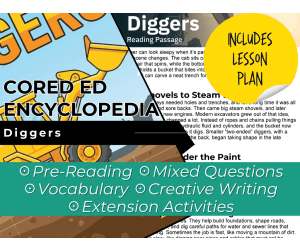
Diggers Reading Comprehension Passage - Cored Ed Encyclopedia
ELA, Language Development, Reading Comprehension, Reading, Science, Technology, Social Studies, Engineering, History, Physics, Grade 2, 3, 4, 5, Worksheets & Printables, Worksheets, Teacher Tools, Centers, Activities, Writing Prompts, Assessments, Quizzes and Tests, Quizzes, Lesson Plans
This diggers reading comprehension with lesson plan includes: Visualization (on the front cover) Start your lesson by taking a minute to think and share something about the topic. Read the script aloud (slowly), perhaps prepare some music or sound effects. Student close their eyes and let their imaginations wander. Students open their eyes, read the question aloud and give them a few minutes to complete. Ask a few students to share or keep answers until the end to compare with what they learn in the passage. Quick pause—thousands of Cored Education products are included with your TeachSimple membership. Download links and encyclopedia index available here. Pre-Reading Trivia Students will write down one thing they already know about the subject and then read five more facts and discuss. These facts are fun, and the students will enjoy learning about the subject before reading more. Give 1 minute for students to write what they already know (no pressure—best guess is fine). Read the five facts together. After each fact, do ask a student for their opinion, was it surprising? Set a purpose by asking students to highlight/underline one fact they want to learn more about during the reading. Reading Passage The text is a high-interest reading passage with set paragraphs, roughly three to four paragraphs long. It contains a variety of themes about the topic, anywhere from history to technology. The passage is between 250 and 350 words in length. First, ask students to look at the headings and see what they’ll learn about today. What do they know about the topic/heading? First read options: Teacher read-aloud (best for support). Partner reading (paragraph by paragraph). While reading, students underline important details, and vocabulary words they think may come up in the questions section. Mixed Questions The first question page contains four multiple-choice questions, each with a choice of four answers, and three written response questions that require a sentence or two from the student. Students complete the mcqs first independently, then review quickly as a class. For the 3 written responses, try to get students giving the answer with some form of evidence: “I think ___ because the text says ___.” If students get stuck, send them back to check the passage. Vocabulary Questions Practice seven key words from the text in this section across two activities. First section is scrambled words where students will unscramble three words given a clue for each. The second section is a word to meaning matching activity. Before starting, have some students read out words they underlined in the passage. Ask students to say the word and read aloud the sentence(s) around each word. Ask students to do scrambled words and the matching exercise in pairs then go through answers as a class. For the scrambled spelling task, get four pairs to come up to the board and write the words for extra practice with the other student reading out the clue. For the matching task, prompt students to give full sentences: “I matched ___ with ___ because ___.” Creative Writing In this question, the student will be required to write a five to eight sentence paragraph on a question related to the topic. Before starting, ask students write down 3 key ideas they are going to include in their piece. Ask students for ideas to share around the class to help those struggling. Pro writing expectations: 5–8 sentences At least 2 facts or details from the passage At least 2 vocabulary words from the previous page Students read their paragraphs while classmates listen for facts and vocabulary words. Extension Activities This page is optional for fast finishers or to take home. There are several activities, each one requiring a different skill. Do some, do none, do all, completely optional - but you will feel reassured knowing every possibility is planned for. Includes summary writting question and additional facts. Answer Key There are answers for the multiple-choice questions, written response questions have sample answers, vocabulary answers and if there is a summary question then a sample summary will be provided as well. Lesson Plan Included Customized lesson plan for this lesson is included. Lesson Snapshot Title: Diggers Genre: Nonfiction (informational text with headings) Subject: Science (Engineering & Technology) / Reading (Informational Text) Primary Topic: How diggers work and what they build Estimated Guided Reading Level (A–Z): P What This Lesson Teaches Best Explains key parts of a digger and what they do (cab on a turning platform; tracks or wheels; long arm and bucket). Describes how diggers changed over time—from hand digging to steam shovels to modern excavators using hydraulics. Teaches how hydraulics works in simple cause-and-effect terms (a small push becomes a bigger push through pressure in a system). Connects machines to real construction jobs (foundations, roads, clearing broken concrete, paths for water and sewer lines). Uses headings to organize information into sections (history, hydraulics, and what gets built). Learning Goals Students will describe how a digger moves and turns using details from the text. Students will explain at least two things a digger’s bucket can do on a building site. Students will explain how digging tools changed from long ago to modern excavators, using evidence from the passage. Students will explain how hydraulics helps a small joystick move a giant bucket, based on the text. Students will identify why oil is used as the hydraulic liquid in many machines, using details from the passage. Students will describe why some digging must be slow and careful, according to the passage. Key Vocabulary From the Text trench — a long, dug-out cut in the ground. excavators — digging machines that grew from power shovels. hydraulics — science of pushing liquids so pressure travels. cylinders — parts helped by oil to do powerful work. pressurized — under pressure (like oil that helps systems work). FULL CATALOG OF DOWNLOAD LINKS AND ENCYCLOPEDIA INDEX HERE
Author Cored Education
Rating
Tags Vocabulary, Reading Comprehension, Reading Passages, Lesson Plans, Ela Lesson Plans, Reading Comprehension Lesson Plans, Pre-reading, Science Lesson Plans, Engineering, Physics

Punctuation Practice Worksheets - Periods, Question Marks, Exclamation
Grammar, Language Development, ELA, Grade 1, 2, 3, 4, 5, Worksheets, Worksheets & Printables
Introduction This worksheet pack helps students build strong writing skills by practicing essential punctuation and capitalization rules. Through a variety of engaging and simple activities, learners develop confidence in using periods, question marks, exclamation points, commas, apostrophes, and quotation marks in everyday sentences. What’s Included: A wide range of punctuation practice activities Exercises on periods, question marks, and exclamation marks Capitalization practice for sentence beginnings Comma usage in lists Apostrophes for contractions and possession Quotation marks for dialogue Sentence correction and rewriting tasks Mini-paragraph editing for real-life writing practice Matching, circling, and rewriting activities to reinforce learning Grades / Ages: Ideal for Grades 1–5 Implementation Format: Use for classwork, homework, or independent practice Perfect for literacy centers, small groups, or review sessions Supports both guided and independent learning Answer Key: Not included File Type: PDF (Non-editable) Number of Pages: 10 pages total License: Paid product for personal or single-classroom use only
Author Clever Crafters
Rating
Tags Punctuation Worksheets, Capitalization Practice, Grammar Worksheets, Sentence Correction, Elementary Writing Skills, Punctuation Marks Practice, Comma Practice

Yellowstone National Park Interactive Foldable Booklets - EBOOK
Science, Earth and Environmental Sciences, Earth Sciences, Grade 2, 3, 4, 5, 6, 7, 8, Worksheets & Printables, Worksheets
Yellowstone National Park Interactive Foldable Booklets - EBOOK The interactive foldable booklets on Yellowstone National Park are specifically designed for educators to enhance their teaching approach in Science, particularly Earth Sciences. Tailored for students from grade two to eight, these downloadable materials guarantee an immersive and hands-on learning experience. Title: Content Coverage and Format The resource offers critical insights into Yellowstone's geography, history, and scientific aspects. These come via vibrantly colored or black & white booklets that prop-up pupils’ understanding beyond mere text. General Facts: Incorporates fundamental information about Yellowstone National Park presented in color and monochrome formats. Spotlight Feature – Old Faithful: : One of the park's breathtaking wonders receives comprehensive coverage. https://media.springernature.com/full/springer-cms/rest/v1/img/10539606/v2/4by3 Title: Uniqueness of the 20-Page eBook This eBook stands apart due to its interactive nature that ensures learner engagement with the subject matter robustly, rendering it perfect for both traditional classroom as well as homeschooling environments. Title: The Concept The idea entails pupils cutting shapes per specific visual instructions then folding these into miniature booklets. They subsequently pen down their learnings within these – aiding knowledge retention. Title: Integration of Geography Expeditions Apart from science-focused topics like geology or climate studies; facets such as Volcano or Hot Springs have also been encompassed since they're linked intrinsically to understanding Earth’s enchanting Mosaic systems and all kind of life forms within it including plants and wildlife at large. Title: Flexibility Teachers can adjust usage as per individual class needs, either through whole-class activities where every student constructs their booklet as the elements are conversed holistically; small groups which foster collaboration via collective project creation; or aimed for completion as homework tasks. In conclusion, The Yellowstone National Park Interactive Foldable Booklet eBook is indeed an exceptional tool that not only enhances curiosity among students about Mother Earth's magnificent treasure trove but also boosts concrete knowledge gain!
Author Knowledge Box Central
Tags Yellowstone National Park, Interactive Learning, Earth Sciences, Geography Expeditions, Wildlife

Reading Comprehension Passages Nonfiction Set 2 - Nutrition (Fillable)
ELA, Reading, Reading Comprehension, Common Core, ESL, Language Development, Spelling, Vocabulary, Writing, Resources for Teachers, Grade 2, 3, Worksheets & Printables, Worksheets, Assessments, Teacher Tools, Tests, Quizzes and Tests, Centers, Activities
Reading Comprehension Passages Nonfiction Set 2 Snapshot Genre: Nonfiction (informational articles + comprehension practice) Subject: Reading (Informational Text) / Health Primary Topic: What proteins are and why bodies need them Estimated Guided Reading Level (A–Z): N What This Teaches Best Understanding what proteins do in the body (tissues, muscles, organs; blood, skin, nails, hair). Learning how scientific terms connect (proteins → amino acids; essential amino acids; macronutrient). Distinguishing categories using definitions and examples (complete vs. incomplete protein sources). Reading for specific facts and quantities (e.g., “40 grams of protein,” “20 amino acids,” “nine essential”). Learning Goals Students will explain what proteins are and name body parts they support using the text. Students will describe what amino acids are and how they relate to proteins. Students will explain the difference between complete and incomplete proteins with examples from the text. Students will identify key numbers and facts stated in the article. Students will summarize the article using key ideas and vocabulary. Key Vocabulary From the Text proteins — nutrients that build and support body systems. amino acids — small parts that make up proteins. essential — needed and cannot be made by the body. macronutrient — a food type needed in large amounts. incomplete — missing some needed amino acids. Passages Include 1.Proteins: After water, protein makes up most of the weight in our bodies. 2.Carbohydrates: Carbohydrates are the principal source of energy for the body. 3.Fats: What are trans fats? Learn all about them in this lesson. 4.Milk: There are many kinds of milk, each has its own advantages. 5.Potatoes: Did you know potatoes originate from South America? 6.Composting: Read how to make your very own compost heap in this article. Additional File: Milk: Nutritional Values Printable FILLABLE PDF VERSION Worksheet-style pages, but with type-in answer boxes so students can complete and save their work digitally. Other versions are available in the links list below or in the full catalog. FULL CATALOG OF DOWNLOAD LINKS HERE For similar downloads and other frees, do check out Cored Group on TeachSimple.
Author Cored Education
Rating
Tags Elementary, Reading, Comprehension, Vocabulary, Answers, Spelling, Writing, Passages, Reading Centers, Reading Comprehension Assessment

Find and Color Short Vowel Sounds
ELA, Language Development, Phonics, Preschool, Grade 1, 2, Worksheets & Printables, Worksheets
Understanding short vowel sounds is fundamental to strong literacy skills, it lays the foundation for their early literacy skills and paves the way for successful reading and spelling. These worksheets give students focused practice isolating vowel sounds in simple CVC words. The ability to recognize and differentiate between short vowel sounds helps children sound out words, enabling them to read new and unfamiliar words with accuracy. Each page displays 6 pictures along with a choice of 3 different vowel sounds, children have to work out what CVC word the picture is representing and then color in the correct middle vowel sound for that word. For example, seeing a picture of a pig would cue coloring the "i" as the middle vowel sound in "pig". Filling in missing vowel sounds reinforces phonics rules and reading readiness. With cute animals and objects, learners apply knowledge to decipher familiar CVC words. Parents and teachers can use the self-checking pages to assess and build vowel comprehension. This engaging exercise promotes mastery of those tricky vowel sounds through interactive practice. Emerging readers will delight in using pictures and letter clues to identify the missing short vowels. The vocabulary exploration strengthens essential literacy foundations for spelling, writing and reading success. Clipart images courtesy of Kari Bolt Children's Illustrator
Author SEN Resource Source
Tags Phonics, Vowels, Cvc Words, Early Reading, Short Vowel Sounds

Classical and Baroque Composer Profile
Creative Arts, Art, Music, Grade 2, 3, 4, 5, 6, Worksheets & Printables, Worksheets
This resource is a composer profile set for 4 different composers. Students will use this resource digitally or printed to fill out information about that composer. It mimics a social media profile so students will love that. The composers included: 1. Ludwig Van Beethoven 2. Johann Sebastian Bach 3. Wolfgang Amadeus Mozart 4. George Frederic Handel
Author Joyful Noise Teaching
Tags Classical, Baroque, Composers, Social Media, Music Worksheet

Spring Letter Sounds
ELA, Language Development, Phonics, Preschool, Grade 1, 2, Worksheets & Printables, Worksheets
Spring-themed phonemes worksheet that helps your students practice listening to the sounds of words. In this worksheet, the students say each word and color in the letters that they hear in the word.
Author Cherry Workshop
Tags Letter Sounds, Reading, Phonics, Spring, Phonemes

All About Me-A Back To School Handout
Special Resources, Social Emotional Learning (SEL), Resources for Teachers, Classroom Management, Kindergarten, Preschool, Grade 1, 2, Worksheets & Printables, Worksheets
All About Me - A Back To School Handout This is a versatile teaching resource perfect for first introductions at the start of the school term. This one-page PDF worksheet serves preschoolers to Grade 2 students, accommodating various learning styles. Express Creativity and Personality This unique handout creates a platform for learners to express their creativity and personality. It includes an activity for drawing or attaching a self-portrait, fostering Social Emotional Learning by allowing students to share about themselves - all while learning about their peers and community-building within the classroom. Name Writing: Students can write down their names, giving quick insights into children's art skills. Favorite Colors: Children can color with crayons or colored pencils in their favorite hues; promoting grip strength improvement through coloring exercises related with fine motor skills. Critical Dates: Learners get to write down important dates like birthdays so teachers have a personalized record of special days throughout the year. Literature Appreciation & Healthy Eating Habits: The All About Me handouts also integrate literature appreciation and nutrition. By drawing representations of beloved books & preferred foods, pupils become aware of fundamental life topics from early on. This activity might contribute significantly towards shaping shared reading lists or improved cafeteria menus if implemented broadly across schools! The detailed artwork provides opportunities not only for teachers but parents during open houses or at conferences! Adults can gain an insight into children’s interests which they might’ve previously overlooked due functional time constraints during regular lessons. In Summary: Ideal as an in-class group assignment or a solo homework task, this resource is an effective way to kick-start the academic year while instilling immediate openness and trust with a new set of students ready for an exciting academic journey.
Author Jennifer Moyer Taylor
Tags Self-portrait, Community-building, Handwriting Skills, Literature Appreciation, Healthy Nutrition

Reading Comprehension Passage with Questions: The Old Journal
ELA, Reading, Reading Comprehension, Grade 2, 3, 4, Worksheets & Printables, Worksheets
Product Overview: Reading Comprehension Passage with Questions: The Old Journal Targeted predominantly at Grades 2 - 4, this well-crafted teaching resource features a two-page reading passage coupled with two engaging worksheets. These worksheets incorporate seven comprehension questions each, providing various scenarios for active student engagement. The Narrative Involving the intriguing tale of a young boy's search for the perfect journal, this product draws students into an exciting narrative that spans from ideation to discovery in a local antique store. Versatility and Use Cases Group Learning: Ideal for facilitating discussions about the narrative in both large and small student groups. Solo Practice: Can also serve as an individual homework assignment to aid independent comprehension. Educational Contingencies: A ready-to-use asset during substitute teaching days, collective class reviews, or quick assessments . A Deep Dive into Comprehension To promote better understanding of narratives, six open-ended or short-answer questions are woven into each worksheet. It inspires students to provide thoughtful responses in complete sentences. An added creative angle is offered by question number seven – designated for learners to visually express their interpretation of what the journal might look like. Suitability: From Grades 2-4 This resource is primarily aimed at 3rd and 4th graders due its standalone nature; however, it can easily be adapted down to Grade 2 level if educator-guided learning implementation accompanies it. Inclusive Features Answer Key Included: Streamlining assessment for educators. Flexible Application: Works well in diverse classroom scenarios. In conclusion, this PDF teaching resource exemplifies comprehensive language arts elements oriented at enhancing comprehension skills and promoting the joy of reading among young learners.
Author Life with 5 Boys
Tags Reading Comprehension, Narrative, Questions, Journal, Visual Depiction
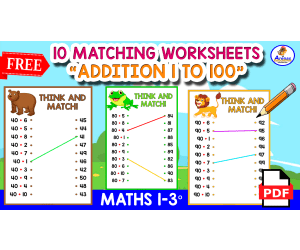
10 ADDITION MATCHING WORKSHEETS | Addition 1 to 100
Math, Addition and Subtraction, Addition, Grade 2, 3, 4, 5, Worksheets & Printables, Worksheets
CHILDREN LOVE TO MAKE TRACES! For this reason, on this occasion we bring you this fantastic worksheet for children to practice additions from 1 to 100. Based on tens, so that they can practice these additions that also constitute mental calculation. A. SPECIFIC DETAILS OF THIS PRODUCT: "10 worksheets on additions from 1 to 100" With animal theme COMPLETELY FREE EDUCATIONAL DOCUMENT, SO TAKE ADVANTAGE OF IT NOW TO DOWNLOAD IT. B. GENERAL PRODUCT DETAILS: Thank you very much for being part of this community of educational resources. --The name of this educational resource is The name of this resource is "10 tiles of the sums from 1 to 100" --This document contains this number of pages It contains 10 fabulous pages with the sums from 1 to 100. --This educational resource has been prepared by: Prepared by EDITORIAL ARENAS EDUCATIVAS. --You can apply this educational document in different contexts such as: --Is this document in black and white and color? Made in colors because it will be much more educational and interesting for your students. --For what ages is this document recommended to apply? Recommended for children from 5 to 9 years old who are doing their first sums. --At what point in class can I apply it? You can apply it during the development of your class or also send it as homework. --Should I apply it individually or in groups? Preferably applied individually or in pairs. --Keywords that describe the product: Additions, addition exercises, additions for children, printable math resources. C. DETAILS OF OUR PUBLISHER: We are the EDITORIAL ARENAS EDUCATIVAS. We are dedicated to the design and development of fabulous mathematical resources for primary education. In addition, we also make resources for reading, writing, Spanish, as well as reasoning and brain exercises. I invite you to continue exploring my store because I also have interesting exercises. - Cards to review numbers - Cards to review the alphabet - Cards to perform addition, subtraction, multiplication, division.
Author EDITORIAL LAURA EDUCA
Tags Addition Worksheets, Addition Exercises, Addition Resources, Addition 1 To 100
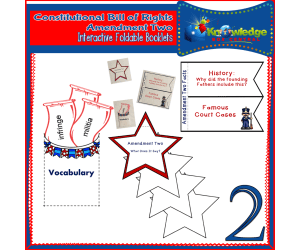
U.S. Constitutional Bill of Rights: Amendment Two Interactive Foldable Booklets - EBOOK
Social Studies, Government, Grade 2, 3, 4, 5, 6, 7, 8, 9, 10, 11, 12, Worksheets & Printables, Worksheets
The U.S. Constitutional Bill of Rights: Amendment Two Interactive Foldable Booklets - EBOOK An engaging, easy-to-use teaching resource designed for educators looking to delve into the teachings of the United States Constitution with their students. Special focus on the Second Amendment for a hands-on approach that stimulates student's interaction and understanding. This resource is versatile and can be used in various educational settings—public school classrooms during whole group discussions or one-on-one sessions, homeschooling activities or even as take-home assignments! The Resource at a Glimpse: A digital product is offered here: a downloadable PDF file containing interactive foldable booklets ready-to-print and create! 'What Does It Say', facilitating lively discussions about interpreting amendment text. 'Amendment Two Facts', guiding students through important historical facts like ratification. 'Amendment Two Vocabulary', helping students comprehend terms associated with this particular amendment while acting as a vocabulary builder. No Software Plug-in Requirement: No extra software plug-ins necessary, simply open and read using any standard PDF reader once downloaded. Why it's Worthwhile: An ideal Social Studies tool that sparks interest among young minds about the intricacies of the U.S Constitution - all whilst practicing language arts abilities! This product forms part of an extensive series covering other significant Constitutional Amendments—a complete range for your students to explore their knowledge about the U.S government.
Author Knowledge Box Central
Tags Constitutional Amendments, Second Amendment, US Constitution, Interactive Learning, Vocabulary Building

Learn Spelling Rules: 'i' Before 'e'... And Silent Letters (7-11 years)
ELA, Language Development, Spelling, Grade 2, 3, 4, 5, Worksheets & Printables, Worksheets
Learn Spelling Rules: 'i' Before 'e'... And Silent Letters (7-11 years) A valuable tool for educators, this resource offers strategic academic solutions while ensuring an engaging learning environment. The focus is on strengthening student's spelling skills utilizing well-structured worksheets . Main Focus: 'i' before 'e', except after 'c', when sounding like ‘ee’ Understanding silent letters (eg: knees) This is accomplished through straightforward and clear-cut explanations combined with practical examples and exceptions. Crafted for students between the ages of 7 to 11 (Grade 2 to Grade 5), it proves effective in multiple educational settings. From public schools to home-school environments, our friendly alien guide - Zoggy, ensures each child's learning process remains interactive. Making Learning Engaging: Rather than abstractly stating rules, the challenges embedded within these sheets are born out of specific word instances. For example: Dropping 'e' from words such as take, resulting in a different word like taking Versatile Application: The applicability ranges from one-on-one tutoring sessions to group classes - allowing for teaching method diversity based on student needs and preferences. Empowering parents during home studies through homework assignments illustrated by Zoggy gives them active roles. A Tool Towards Mastery: Learn Spelling Rules,, aims at establishing strong foundations early in a learner’s journey – rectifying common spelling errors while preventing bad habits. An immensely valuable leap towards language arts proficiency through an easily accessible PDF file format.
Author Guinea Pig Education
Tags Spelling Rules, Silent Letters, English Language, Interactive Learning, Educational Resource
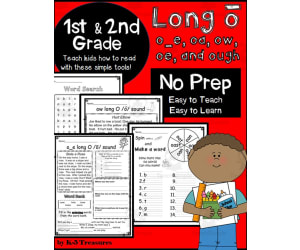
Phonics for 1st and 2nd Grade: Help Students Learn Long O Words: O_E, OA, OW, OE, and OUGH
ELA, Grammar, Language Development, Phonics, Reading, Grade 1, 2, Worksheets & Printables, Worksheets, Teacher Tools, Lesson Plans
This unit focuses only on the Long O sounds. Learning how to read can be the most challenging activity for students and for a teacher. Understanding that the combination of letters can make the same vowel sound requires lots of repetitive practice of reading and writing these words with these sounds. There are other phonics units that I sell that focuses on each of the long vowels with a combination of different letters. Reading can be made easier with these phonic helps that repeatedly encourage students to practice these Long O sounds. Activities include: - Reading comprehension and identifying the Long O in their reading - Writing their answers to questions regarding the paragraph - Identifying additional Long O words in sentences using a word bank - Matching words with pictures - Spinning a paperclip activity where students will write the word with the Long O sound - and lastly a fun wordsearch with variations of Long O words. These activities are for each long vowel words that are focused on the Long O sounds so there are plenty of opportunities for students to practice their comprehension reading skills and phonic sounds. Students will practice the following Long O Word sounds: O_E, OA, OW, OE, and OUGH. Teachers can use this resource in whole group, individually with students, students can practice with each other in centers, or these worksheets can be assigned as homework. Worksheets are also differentiated for each Long O sounds for all young learners which makes it perfect for all 1st - 2nd graders. A total of 31 pages full of reading and phonic activities. Along with reading and writing, there are matching, cutting, and pasting activities. Word searches and spin and make a word activity are also a part of this packet which make learning to read these phonic sounds entertaining for young learners. For a list of other phonics and grammar activities, click on the following links: CVC Word Families for Beginning Readers: Stamp it, Make it, Trace it, and Write it CVC Words | Short Vowel Phonics | Word Families for K- 2nd Grade Phonics for 1st and 2nd Grade: Help Students Learn Long A Words: AY, AI, A_E, EIGH, EY, and EA Phonics for 1st and 2nd Grade: Help Students Learn Long E Words: EE, EA, E_E, and Y Phonics for 1st and 2nd Grade: Help Students Learn Long I Words: I_E, IE, IGH, and Y Phonics for 1st and 2nd Grade: Help Students Learn Long O Words: O_E, OA, OW, OE, and OUGH Phonics for 1st and 2nd Grade: Help Students Learn Long U Words: U_E, EW, OO, UE, UI and OU Phonics / Digraphs for 1st and 2nd Grade: Beginning, Middle, and Ending Sounds Phonics / Digraphs for 1st -2nd: Ending Sounds: CK, NG, SH, TH, and NK Phonics / Digraphs for 1st and 2nd Grade: Beginning Sounds: SH, TH, WH and PH Phonics: R-Controlled Words for 1st and 2nd Grade and Early Readers
Author K-5 Treasures
Tags Phonics, Grammar, Vowel Sounds, Long Vowel Sounds, Reading, Long O Sounds, 1st Grade, 2nd Grade, Long O Words, Long O Words With Oe
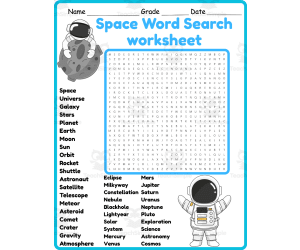
space day Word Search 2rd 3th 4th 5th Grade worksheet activity
Language Development, ELA, Spelling, Vocabulary, Science, Life Sciences, Nature & Plants, Grade 2, 3, 4, 5, Games, Activities, Worksheets & Printables, Worksheets, Word Searches
Start the lesson off by doing this Space Day Word Search for learning. This engaging and low-preparation printable worksheet will get students working with space-themed vocabulary (planets, stars, astronauts, rockets, etc.), while working on their spelling, scanning, and word recognition skills too. Purpose: This assignment gives students opportunities to: 1. Learn/refresh vocabulary specific to space. 2. Work on spelling, attention to detail, and word recognition. 3. Spark their curiosity, interests, and inquiries about science, astronomy, space, and space travel. 4. Focus and critical thinking. Order of Events/ Steps: 1. Pass out the Space Day Word Search printable worksheet. 2. Go over the listed words, including any unfamiliar vocabulary (celestial bodies, space missions, etc…) to build background knowledge. 3. Students will search through the word search and circle or highlight the words. 4. Discuss the meanings of the words and where they fit into the world around us. 5. Use the answer key to come up with definitive answers after the word search. Grades or Age: This Space Day Word Search is appropriate for grades 2-5. Ways to implement: This is an awesome activity to use for independent work, science centers, early finisher work, substitute plans, or partner work. It could also be included in a whole group discussion about science and astronomy or other.✅ Work for easy checking by students & teachers. How to Use: Time challenge - See if they can find all of the words first. Partner puzzle - Do the puzzle with a partner. Vocabulary Extension - Write fun facts about planets (or astronauts, etc). Create your own - Have students create their own word search about space. Standards: Substitutes CCSS/ELA vocabulary development, NGSS science skills like observing, classifying and exploring space 🌌 📘. File Types & Pages: PDF only. Color & black & white. Answer key for check. Ink friendly printable. A Note to Teachers: Let Space Day be an adventure - literacy, STEM learning and fun all wrapped into an exciting class activity with this Space Day Word Search🚀🌟🪐.
Author Classsim
Rating
Tags Space , Day , Word Search , 2rd 3th 4th 5th Grade , Worksheet , Activity, Space Day , Space Day Word Search, Space Day Word Search 2rd 3th 4th 5th Grade, Space Day Word Search 2rd 3th 4th 5th Grade Worksheet Activity
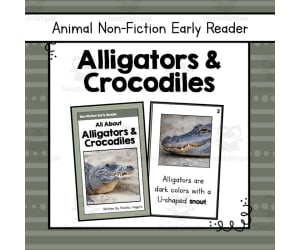
Alligators and Crocodiles Informational Book | Nonfiction Early Reader
ELA, Reading, Reading Comprehension, Writing, Science, Life Sciences, Animals, Grade 2, 3, 4, 5, Worksheets & Printables, Worksheets
This unique resource goes beyond traditional teaching materials, offering a hands-on approach to building foundational literacy skills in your young learners to teach them about ALLIGATORS AND CROCODILES. Dive into the world of these fascinating reptiles with our 8-page color booklet, featuring real photos that captivate and excite new readers. The simplicity of the book is intentional, ensuring accessibility for emerging readers while maintaining a focus on informational text. But that's not all – we've packed this compact kit with valuable resources to extend the learning experience. As an elementary school teacher, you'll appreciate the versatility of this tool. Print the booklet, fold the pages, staple them together, and voila – you have an engaging book to read with your students. Whether used in whole-class instruction, paired reading, small groups, or for independent exploration, this resource adapts to your teaching style. Encourage creativity with the half-page blank student booklet, allowing your students to craft their own versions of the material. Explore comprehension and critical thinking with the included worksheet, fostering a deeper understanding of the content. For those enthusiastic writers in your class, a report-style writing project template is thoughtfully provided. This resource goes beyond the basics with essential text features. The booklet includes a glossary, table of contents, and title page, offering opportunities to teach important literary elements. Make vocabulary memorable using word strips and definition cards, perfect for creating an interactive word wall. But the benefits extend beyond the classroom! Send booklets home as homework with our coordinating assignments, promoting family involvement in the learning process. These materials also serve as excellent sources for expository writing projects and reports, encouraging students to showcase their newfound knowledge. Included in this comprehensive package are sounding out cards for nine theme words, a reading chart to motivate young readers, and an informative "ABC's of Helping Your Child Read Non-Fiction" parent handout. Empower your students and make learning an adventure with "Exploring Alligators and Crocodiles" – a resource that transcends the ordinary, fostering a lifelong love for reading and discovery in your elementary classroom. What You Get · "The ABC's of Helping Your Child Read Non-Fiction" Parent handout · 8 page color booklet about ALLIGATORS AND CROCODILES · Half page blank student booklet so student can write their own version · Comprehension and response worksheet · Reading homework assignment · Sounding out cards for 9 theme words · Word Strips for 6 vocabulary words with definitions for your word wall · Reading chart to motivate your new readers Take a Look At Other Nonfiction Animal Books: All About Koalas Animal Science Unit Spiders Nonfiction Early Reader All About Robins Animal Science Unit Polar Bears Nonfiction Early Reader All About Kangaroos Animal Science Unit Check out other resources from my store: Simply Schoolgirl! I can be contacted for questions and concerns at simplyschoolgirl1@gmail.com
Author Simply Schoolgirl
Tags Alligators, Crocodiles, Science Book, Science Passage, Nonfiction Reader, Early Reader, Reading Homework, Comprehension, Reading Chart

The Road to Reading K - Word Endings
ELA, Reading, Kindergarten, Grade 1, 2, 3, 4, 5, Worksheets, Worksheets & Printables
This language arts-based resource is designed for grades Kindergarten to 5. The Road to Reading program is comprised of 12 parts. This is part 11 and is focused on Word Endings. This program is designed for struggling learners who have fallen behind in the basics of reading skills. Students will practice with hands-on instruction that will engage and enthuse students to actively participate. This program aligns to the Common Core and state standards.
Author Classroom Complete Press
Tags Phonics, RTI, Intervention, Literacy, Reading Program, Vowels, Sight Words, Sounds, Blends, Syllables
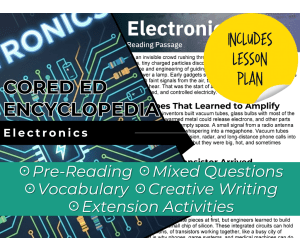
Electronics Reading Comprehension Passage - Cored Ed Encyclopedia
ELA, Reading Comprehension, Reading, Science, Technology, Pre-Reading, Language Development, Physics, Writing, Vocabulary, Grade 2, 3, 4, 5, Worksheets & Printables, Worksheets, Teacher Tools, Centers, Activities, Writing Prompts, Assessments, Quizzes and Tests, Quizzes, Lesson Plans
This electronics reading comprehension with lesson plan includes: Visualization (on the front cover) Start your lesson by taking a minute to think and share something about the topic. Read the script aloud (slowly), perhaps prepare some music or sound effects. Student close their eyes and let their imaginations wander. Students open their eyes, read the question aloud and give them a few minutes to complete. Ask a few students to share or keep answers until the end to compare with what they learn in the passage. Quick pause—thousands of Cored Education products are included with your TeachSimple membership. Download links and encyclopedia index available here. Pre-Reading Trivia Students will write down one thing they already know about the subject and then read five more facts and discuss. These facts are fun, and the students will enjoy learning about the subject before reading more. Give 1 minute for students to write what they already know (no pressure—best guess is fine). Read the five facts together. After each fact, do ask a student for their opinion, was it surprising? Set a purpose by asking students to highlight/underline one fact they want to learn more about during the reading. Reading Passage The text is a high-interest reading passage with set paragraphs, roughly three to four paragraphs long. It contains a variety of themes about the topic, anywhere from history to technology. The passage is between 250 and 350 words in length. First, ask students to look at the headings and see what they’ll learn about today. What do they know about the topic/heading? First read options: Teacher read-aloud (best for support). Partner reading (paragraph by paragraph). While reading, students underline important details, and vocabulary words they think may come up in the questions section. Mixed Questions The first question page contains four multiple-choice questions, each with a choice of four answers, and three written response questions that require a sentence or two from the student. Students complete the mcqs first independently, then review quickly as a class. For the 3 written responses, try to get students giving the answer with some form of evidence: “I think ___ because the text says ___.” If students get stuck, send them back to check the passage. Vocabulary Questions Practice seven key words from the text in this section across two activities. First section is scrambled words where students will unscramble three words given a clue for each. The second section is a word to meaning matching activity. Before starting, have some students read out words they underlined in the passage. Ask students to say the word and read aloud the sentence(s) around each word. Ask students to do scrambled words and the matching exercise in pairs then go through answers as a class. For the scrambled spelling task, get four pairs to come up to the board and write the words for extra practice with the other student reading out the clue. For the matching task, prompt students to give full sentences: “I matched ___ with ___ because ___.” Creative Writing In this question, the student will be required to write a five to eight sentence paragraph on a question related to the topic. Before starting, ask students write down 3 key ideas they are going to include in their piece. Ask students for ideas to share around the class to help those struggling. Pro writing expectations: 5–8 sentences At least 2 facts or details from the passage At least 2 vocabulary words from the previous page Students read their paragraphs while classmates listen for facts and vocabulary words. Extension Activities This page is optional for fast finishers or to take home. There are several activities, each one requiring a different skill. Do some, do none, do all, completely optional - but you will feel reassured knowing every possibility is planned for. Includes summary writting question and additional facts. Answer Key There are answers for the multiple-choice questions, written response questions have sample answers, vocabulary answers and if there is a summary question then a sample summary will be provided as well. Lesson Plan Included Customized lesson plan for this lesson is included. Lesson Snapshot Title: Electronics Genre: Nonfiction (Informational Text) Subject: Science (Technology/Physical Science) / Reading (Informational Text) Primary Topic: How electronics evolved to carry signals Estimated Guided Reading Level (A–Z): Q What This Lesson Teaches Best Defines electrons as tiny charged particles and explains that electronics guides them to carry a message (a “signal”), not just power devices. Traces a clear timeline of inventions : early radio parts → vacuum tubes → transistor (1947) → integrated circuits on silicon chips. Explains how devices can amplify signals (making a small signal stronger), using the vacuum tube and transistor examples. Shows how engineering changes over time led to smaller, more powerful technology , with chips holding millions (even billions) of transistors. Learning Goals Students will describe how electrons moving through wires can carry a message. Students will explain how vacuum tubes helped make radio signals stronger. Students will identify how the transistor differed from vacuum tubes (material used, size, and power use). Students will describe what integrated circuits are and why they allow devices to stay small. Students will summarize how electronics changed from early inventions to modern chips. Key Vocabulary From the Text electrons — tiny charged particles that move through wires. signal — a message carried through a device. vacuum — space with most air removed. transistor — a smaller part that can switch and amplify signals. semiconductor — a material used instead of a vacuum for a transistor. FULL CATALOG OF DOWNLOAD LINKS AND ENCYCLOPEDIA INDEX HERE
Author Cored Education
Rating
Tags Vocabulary, Reading Comprehension, Reading Passages, Lesson Plans, Ela Lesson Plans, Reading Comprehension Lesson Plans, Pre-reading, Science Lesson Plans, Technology, Physics

Health Word Searches (PDF)
ELA, Language Development, Resources for Teachers, Vocabulary, Spelling, ESL, Health, P.E. & Health, Grade 2, 3, 4, 5, Worksheets & Printables, Worksheets, Teacher Tools, Centers, Activities, Word Searches
Wordsearch Series This wordsearch series is designed for students in grades 2–5. Each set of wordsearches is built around a clear vocabulary theme, helping students develop word recognition, improve spelling, and boost topic-related understanding through engaging visual puzzles. Every wordsearch also includes a fun hidden shape for students to guess—adding an interactive twist to traditional vocabulary practice. These wordsearches are student-friendly, classroom-ready, and perfect for integrating into literacy warmups, seasonal units, fast-finisher tasks, or home learning extensions. Each puzzle reinforces themed vocabulary in a playful, structured format that keeps learners motivated. Health Word Search Word List 1. Healthy Eating Fruit, Vegetable, Water, Milk, Grain, Protein, Snack, Meal 2. Exercising Run, Jump, Stretch, Dance, Bike, Swim, Strong, Play 3. Taking Care of Your Body Wash, Brush, Sleep, Bath, Lotion, Towel, Comb, Healthy 4. Staying Safe Helmet, Seatbelt, Cross, Stop, Look, Listen, Light, Careful 5. Visiting the Doctor Doctor, Nurse, Checkup, Shot, Stethoscope, Thermometer, Medicine, Bandage 6. Feeling Good Happy, Calm, Laugh, Energy, Breathe, Rest, Hug, Kind PDF Version Other versions will appear here when available. Follow the store for the lastest on new products. How to Use These Wordsearches These wordsearches are ideal for: Morning work or early finisher bins Vocabulary centers or anchor activities Holiday or seasonal review lessons Independent literacy stations or take-home enrichment Each puzzle includes a themed word list and a shaped grid for students to complete. Word directions may vary (horizontal, vertical, diagonal), and answer keys are included for easy checking. Optional vocabulary challenges or writing tasks can be added to extend the learning experience. Whether you're reviewing key vocabulary, exploring a seasonal topic, or offering fun literacy practice, these wordsearches provide a flexible and engaging tool to support vocabulary growth in grades 2–5. More Health Themed Products CROSSWORDS FULL CATALOG OF DOWNLOAD LINKS HERE Themed Word Search Links Addition PDF Animals PDF Around the Home PDF Birthday PDF Candy PDF Christmas PDF Cinco de Mayo PDF Clothes PDF Colors PDF Days and Months PDF Division PDF Earth Day PDF Easter PDF Easy Word Searches PDF Fall PDF Father's Day PDF Food PDF Geography (Set 1) PDF Geography (Set 2) PDF Geography (Set 3) PDF Graduation PDF Health PDF History (Set 1) PDF History (Set 2) PDF History (Set 3) PDF Human Body PDF Kindness PDF Life Skills PDF Mother's Day PDF Multiplication PDF Science Word Searches (Set 1) PDF Science Word Searches (Set 2) PDF Science Word Searches (Set 3) PDF Shapes PDF Social Skills PDF Spring PDF Sports PDF St. Patrick's Day PDF Subtraction PDF Summer PDF Thanksgiving PDF Transport PDF Valentine's Day PDF Winter PDF Wordsearches in Depth Structure Each wordsearch is crafted around a focused sub-theme and includes a visual puzzle shaped like a related object (e.g., balloon, gift, snowman). Students complete each puzzle using the provided themed word list, strengthening both content knowledge and spelling skills in a highly engaging format. Each completed set includes: A shaped wordsearch puzzle with 10 vocabulary words A student instruction guide with search directions (horizontal, vertical, diagonal) An answer key for teacher support or student self-checking A Did You Know? fact connected to the theme for enrichment or discussion Themes Included The wordsearches cover a wide range of fun, age-appropriate themes, including: Seasons & Holidays (e.g., Halloween, Easter, Valentine’s Day) Math Concepts (e.g., Addition, Number Words) Everyday Topics (e.g., Animals, Weather, School) Special Units (e.g., Health, Earth Day, Sports, Kindness) Each topic is selected to reflect students’ real-life experiences and interests while reinforcing literacy skills and content understanding in a playful, visual way. For similar downloads and other frees, do check out Cored Group on TeachSimple.
Author Cored Education
Rating
Tags Vocabulary, Spelling, Health, Healthy Eating, Exercising, Health Activities, Word Searches, Health Word Searches, Ela Word Searches, Word Search
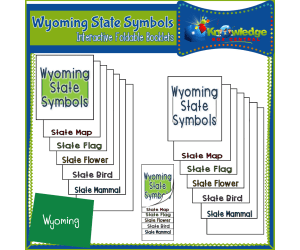
Wyoming State Symbols Interactive Foldable Booklets – EBOOK
Social Studies, Geography, Preschool, Grade 1, 2, 3, 4, 5, 6, 7, 8, Worksheets & Printables, Worksheets
Wyoming State Symbols Interactive Foldable Booklets This resource not only acts as an inspiring teaching tool for educators teaching Geography and Social Studies but also makes learning fun for students ranging from Kindergarten to Grade 8. Customized to explore the uniqueness of Wyoming, it’s constructed as an ebook that unfolds information in a hands-on, engaging format. The content provides two types of booklets: A brightly colored version to captivate visual learners. A black-and-white version offering coloring opportunities as a form of interactive learning. Inclusivity in Learning throughBooklet Contents: The booklet contains symbols like: state map, flag, flower, bird and mammal/insect/fish,- promoting informative yet fun-filled learning sessions. In addition, blank pages call for creative explorations by the students under the guidance of educators. The provision of useful links prompts researchers to supplement this resource with further information from reliable sources. User-friendly Format: Downloadble PDF Version Easily create charming little booklets just by printing out components from this downloadable PDF formatted resource! Cut them out as per given instructions then fold and stick them carefully into shape- straightforward usability is guaranteed! Note: This teaching material particularly focuses on state history symbols exclusive to Wyoming at present but keep a lookout for future additions exploring other US states! Keep in mind- This valuable resource can be employed both individually—say during homework times at home or collectedly—as part of small-group discussions or whole-class lessons at schools. Finally discovering subjects like Geography becomes less challenging with such engaging resources regardless if one teaches in public school system or supervises homeschooling groups.
Author Knowledge Box Central
Tags Wyoming, State Symbols, Interactive, Foldable Booklets, Geography

Valentine's day proper noun worksheets
ELA, Literature, Grade 1, 2, 3, Worksheets & Printables, Worksheets
Valentine's Day Proper Noun Worksheets The Valentine's Day Proper Noun Worksheets are resources designed for educators in public schools and homeschoolers, suitable for Kindergarten to Grade 2 students. These worksheets help enhance students' understanding of proper nouns, a vital step in improving their language arts skills. Themed Activities This resource comes with two themed activities related to Valentine’s Day aimed at making learning enjoyable and relatable. The theme brings creativity into the classroom by connecting learning to real-world festivities and emotions. Versatility and Practicality Classroom use: These worksheets work well for whole-group instruction during class time or can be broken down into smaller student groups for personalized interaction. Homework: The worksheets serve as homework assignments that allow students to consolidate their knowledge at home while promoting autonomy in learning. Time-saving Benefits In addition, answer sheets included within this PDF file eliminate the need for teachers to create separate solution sheets thereby significantly saving on lesson planning time—especially beneficial for homeschooling parents juggling several roles simultaneously. Coverage of Literature Subtopics This resource integrates different areas of study under one theme: Love! - thus providing an integrated approach in teaching through a wholesome educational experience. No matter your teaching situation—be it in-room or remotely—or whether you’re encouraging group collaboration or assigning individual tasks; it is assured these printable worksheets will cater adequately towards your diverse needs. The aim remains fixed - ensuring early learners build a solid foundation on nouns! This product is designed thoughtfully by professionals truly committed towards educating young minds effectively yet delightfully.
Author Ezee 101
Tags Valentine's Day, Proper Nouns, Language Arts, Literature Subtopics, Worksheets

Practise Writing Stories ‘Zoggy At A Picnic’ (4-7 years)
ELA, Writing, Grade 1, 2, Worksheets & Printables, Worksheets
Practise Writing Stories 'Zoggy At A Picnic' (4-7 years) is a resource designed for Grade 1 and Grade 2 teachers. This resource aims to enhance early reading, writing, and spelling skills in an approach marked by simplicity and effectiveness. The material predominately focuses on story-writing exercises. By using visual aids to encourage richer expressions and a stronger understanding, children are motivated to compose their narrative based on a provided picture. For assistance when necessary, suggested words accompany each image. This product introduces interactive exercises centered around the exploits of Zoggy's picnic journey. There are different story scenarios featuring vibrant context and captivating narratives that keep learning interesting for kids. The downloadable PDF file consists of ten pages. The contained activities range from whole group interaction to individual homework assignments. Possible Scenario: Visualize kids animatedly discussing what they see in Zoggy's picnic picture or wrestling with sentences containing specifically proposed words; refining both creativity and language skills concurrently! This tool targets basic Language Arts competencies especially focusing on writing-related aspects making it a suitable choice for public school teachers in need of classroom resources or homeschoolers looking for insightful teaching aids. Don't delay! Let’s start enriching early learning experiences one story at a time with Practise Writing Stories 'Zoggy At A Picnic.' Simplify teaching all while maximizing comprehension using inviting visuals aligned with engaging themes!
Author Guinea Pig Education
Tags Story Writing, Early Reading, Early Writing, Language Skills, Visual Aids
Helium Reading Comprehension Passage - Cored Ed Encyclopedia
ELA, Reading Comprehension, Reading, Science, Technology, Pre-Reading, Language Development, Physics, Earth and Environmental Sciences, Chemistry, Grade 2, 3, 4, 5, Worksheets & Printables, Worksheets, Teacher Tools, Centers, Activities, Writing Prompts, Assessments, Quizzes and Tests, Quizzes, Lesson Plans
This helium reading comprehension with lesson plan includes: Visualization (on the front cover) Start your lesson by taking a minute to think and share something about the topic. Read the script aloud (slowly), perhaps prepare some music or sound effects. Student close their eyes and let their imaginations wander. Students open their eyes, read the question aloud and give them a few minutes to complete. Ask a few students to share or keep answers until the end to compare with what they learn in the passage. Quick pause—thousands of Cored Education products are included with your TeachSimple membership. Download links and encyclopedia index available here. Pre-Reading Trivia Students will write down one thing they already know about the subject and then read five more facts and discuss. These facts are fun, and the students will enjoy learning about the subject before reading more. Give 1 minute for students to write what they already know (no pressure—best guess is fine). Read the five facts together. After each fact, do ask a student for their opinion, was it surprising? Set a purpose by asking students to highlight/underline one fact they want to learn more about during the reading. Reading Passage The text is a high-interest reading passage with set paragraphs, roughly three to four paragraphs long. It contains a variety of themes about the topic, anywhere from history to technology. The passage is between 250 and 350 words in length. First, ask students to look at the headings and see what they’ll learn about today. What do they know about the topic/heading? First read options: Teacher read-aloud (best for support). Partner reading (paragraph by paragraph). While reading, students underline important details, and vocabulary words they think may come up in the questions section. Mixed Questions The first question page contains four multiple-choice questions, each with a choice of four answers, and three written response questions that require a sentence or two from the student. Students complete the mcqs first independently, then review quickly as a class. For the 3 written responses, try to get students giving the answer with some form of evidence: “I think ___ because the text says ___.” If students get stuck, send them back to check the passage. Vocabulary Questions Practice seven key words from the text in this section across two activities. First section is scrambled words where students will unscramble three words given a clue for each. The second section is a word to meaning matching activity. Before starting, have some students read out words they underlined in the passage. Ask students to say the word and read aloud the sentence(s) around each word. Ask students to do scrambled words and the matching exercise in pairs then go through answers as a class. For the scrambled spelling task, get four pairs to come up to the board and write the words for extra practice with the other student reading out the clue. For the matching task, prompt students to give full sentences: “I matched ___ with ___ because ___.” Creative Writing In this question, the student will be required to write a five to eight sentence paragraph on a question related to the topic. Before starting, ask students write down 3 key ideas they are going to include in their piece. Ask students for ideas to share around the class to help those struggling. Pro writing expectations: 5–8 sentences At least 2 facts or details from the passage At least 2 vocabulary words from the previous page Students read their paragraphs while classmates listen for facts and vocabulary words. Extension Activities This page is optional for fast finishers or to take home. There are several activities, each one requiring a different skill. Do some, do none, do all, completely optional - but you will feel reassured knowing every possibility is planned for. Includes summary writting question and additional facts. Answer Key There are answers for the multiple-choice questions, written response questions have sample answers, vocabulary answers and if there is a summary question then a sample summary will be provided as well. Lesson Plan Included Customized lesson plan for this lesson is included. Lesson Snapshot Title: Helium Genre: Nonfiction (informational text) Subject: Science / Engineering (transportation technology) Primary Topic: How an air-cushion craft hovers and is used Estimated Guided Reading Level (A–Z): Q What This Lesson Teaches Best Explains how a “Helium” craft rides on a cushion of air trapped underneath instead of sitting in water. Describes why an air cushion reduces rubbing so the craft can “slide along” over surfaces like water, sand, or flat grass. Connects invention history to technology improvements (early ideas, a patented concept, then a smarter way to prevent air leaking). Shows how design changes solved problems (the flexible “skirt” helped hold the air cushion and climb over obstacles). Shares real-world uses and limitations (ferries, rescue missions, military landings, racing/recreation; noise and wind/waves). Learning Goals Students will describe how the craft moves differently from a regular boat, using details from the passage. Students will explain what an “air cushion” does and why it helps the craft slide over different surfaces. Students will identify one inventor or engineer named in the text and describe what problem they helped solve. Students will explain how the flexible “skirt” improved the craft’s ability to hover and travel. Students will list at least two jobs the craft can do (such as ferries or rescue missions) using evidence from the text. Students will describe one challenge mentioned in the passage that can make travel harder (winds or rough waves). Key Vocabulary From the Text cushion — a pocket of air that holds something up. patented — officially claimed an invention idea by law. pressure — pushing force under the craft that can lift it. hovering — staying just above a surface, not touching it. skirt — flexible part that helps hold air underneath. FULL CATALOG OF DOWNLOAD LINKS AND ENCYCLOPEDIA INDEX HERE
Author Cored Education
Rating
Tags Vocabulary, Reading Comprehension, Reading Passages, Lesson Plans, Ela Lesson Plans, Reading Comprehension Lesson Plans, Pre-reading, Science Lesson Plans, Physics, Chemistry
Reading Comprehension Passages Fiction Set 3 - Food (Google Docs)
ELA, Reading, Common Core, Reading Comprehension, ESL, Language Development, Vocabulary, Spelling, Creative Writing, Writing, Grade 2, 3, Worksheets & Printables, Worksheets, Writing Prompts, Assessments, Teacher Tools, Tests, Quizzes and Tests, Centers, Activities
Reading Comprehension Passages Fiction Set 3 Overview Fascinating reading comprehension passages, each with an array of activities included. Stories are written for the modern classroom and topics are designed to promote enthusiasm from each student. Each lesson contains a mixed questions section to check understanding, a vocabulary or spelling activity to help remember key language introduced, and a writing exercise. Full answer keys are provided. For a more detailed overview, check the section under the links at the bottom of this description. Passages Include 1.Happy Birthday Mrs. B: Mrs. Barber has cooked something special for the class. 2.Sophie's Own Garden: Grandma buys Sophie some garden supplies. 3.Lunchtime: Kasey has a surprise for her lunch. 4.Cindy's Tea Party: Cindy invites some special friends to her tea party. 5.My Saturdays: Anything better than baking cookies on a Saturday? 6.Friday Night Pizza: Read about the Webster Family Special in this story. Google Docs Version This is the Google Docs editable and fillable version. This download is available in GOOGLE Docs, GOOGLE Forms, GOOGLE Slides. PDF, PPT, WORD. FULL CATALOG OF DOWNLOAD LINKS HERE Grade 2/3 Links Fiction Set 1 - Nature Google Docs Google Forms Google Slides PDF PPT Word Guided Reading Materials Fiction Set 2 - Animals Google Docs Google Forms Google Slides PDF PPT Word Guided Reading Materials Fiction Set 3 - Food Google Docs Google Forms Google Slides PDF PPT Word Guided Reading Materials Fiction Set 4 - School Google Docs Google Forms Google Slides PDF PPT Word Guided Reading Materials Fiction Set 5 - Friends Google Docs Google Forms Google Slides PDF PPT Word Guided Reading Materials Fiction Set 6 - Family Google Docs Google Forms Google Slides PDF PPT Word Guided Reading Materials Fiction Set 7 - Sports Google Docs Google Forms Google Slides PDF PPT Word Guided Reading Materials Nonfiction Set 1 - Technology Google Docs Google Forms Google Slides PDF PPT Word Guided Reading Materials Nonfiction Set 2 - Nutrition Google Docs Google Forms Google Slides PDF PPT Word Guided Reading Materials Nonfiction Set 3 - Animals Google Docs Google Forms Google Slides PDF PPT Word Guided Reading Materials Reading Passages Overview Each passage is especially written for Grade 2-3 students, including key vocabulary required for this age group. Topics are varied and are accompanied by colorful graphics. Topics are meant to educate, yet entertain the modern student. These passages are perfect for the modern classroom. Whereas textbooks can become outdated in no time, any changes to technology or the world will result in updates to this product. Mixed Questions The mixed questions section of each lesson includes a variation of fivecomprehension, vocabulary and math questions. In addition, key reading strategies are frequently covered including cause & effect, summarizing, compare & contrast and making conclusions. Three of the questions will be MCQs and two will require a written response of some kind. Full answers and example responses appear at the end of the lesson. Spelling & Vocab Each reading passage contains a variety of words and phrases designed for Grade 2-3 students. Spelling and vocab activities provide the opportunity to build fluency with these words. As it can become quite mundane doing the same activities over and over, each lesson in a set will contain a different spelling and vocab activity . Writing Prompts Writing prompts are designed to continue the theme or lessons learned in the story. Students are persuaded to write in a variety of ways and each prompt includes several cues to help. As with the spelling/vocab section, writing prompts will vary. This includes research pieces, reading responses, poetry and creative writing prompts. Full Answer Keys Full answer keys and sample responses are provided so no matter how busy you are, you know you're covered! Mixed question answers provide evidence from the text, math questions contain the relevant workings. Answers are designed for use by the teacher, but also suitable as a handout to the student. Additional File One lesson will have an additional file. This is something fun to extend the lesson with. For similar downloads and other frees, do check out Cored Group on TeachSimple.
Author Cored Education
Rating
Tags Elementary, Reading, Comprehension, Vocabulary, Answers, Common Core, Spelling, Writing, DIGITAL CENTERS, Vocabulary Assessments