
Reading & writing
Digraph PH Consonant Sound Activity Packet and Worksheets
A no-prep phonics word-work packet teaching the PH consonant digraph (spelled with /f/ sound) through word lists and a full set of practice worksheets.


Classroom resources
Browse by lesson focus
Choose the topic or kind of practice you need.
Showing 2857–2880 of 9958 resources

 Show filters
A no-prep phonics word-work packet teaching the PH consonant digraph (spelled with /f/ sound) through word lists and a full set of practice worksheets.

A no-prep phonics word-work packet teaching the CH consonant digraph through an anchor chart of spelling positions, word lists, and a full set of practice worksheets.

A no-prep phonics word-work packet teaching the SH consonant digraph through an anchor chart of spelling positions, word lists, and a full set of practice worksheets.

A no-prep phonics word-work packet teaching the WH consonant digraph through an anchor chart of spelling positions, word lists, and a full set of practice worksheets.

A no-prep phonics word-work packet teaching the TH consonant digraph through an anchor chart of spelling positions, word lists, and a full set of practice worksheets.
 Free download
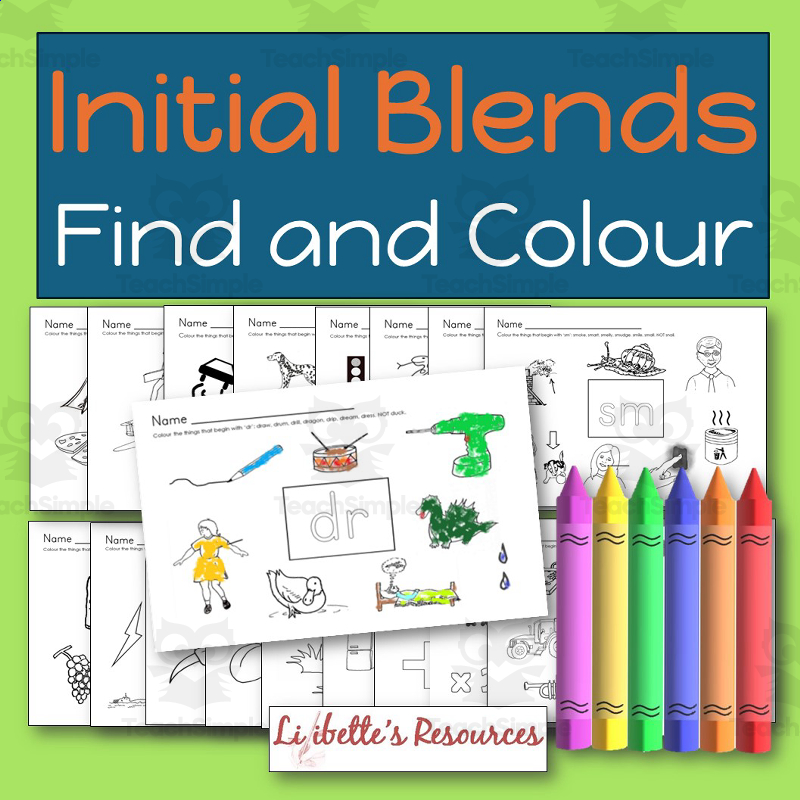
Find-and-color worksheets that acquaint children with initial consonant blends for phonemic awareness.
Teach upper-elementary/middle-school students to identify and analyze characterization in literature using graphic organizers, as one chapter/skill section of a larger published 'Literary Devices' workbook.
Teach upper-elementary/middle-school students to identify and analyze point of view in literature using graphic organizers, as one chapter/skill section of a larger published 'Literary Devices' workbook.

A Grade 1 phonics workbook providing standardized-test-style practice on beginning/ending consonant sounds, blends, and digraphs.
Teach upper-elementary/middle-school students to identify and analyze setting in literature using graphic organizers, as one chapter/skill section of a larger published 'Literary Devices' workbook.
Teach upper-elementary/middle-school students to identify and analyze plot structure in literature using graphic organizers, as one chapter/skill section of a larger published 'Literary Devices' workbook.
A Grade 3 Common Core language arts practice worksheet covering reading comprehension of literature and informational text, vocabulary, grammar, and writing.
Book 3 of a phonics activity series (Ready-Ed Publications' 'Literacy for Early Learners') that introduces, practices, and reinforces the most advanced set of phonic sounds/blends in the series for early readers through varied worksheet activities.
This primary phonics-based resource is designed for grades Kindergarten to 1. Blends & Digraphs uses visual clues and context clues to identify letters and sounds. Reading is a crucial skill for all primary students. Phonics provides the building blocks for these early readers. Sounding out the words students are learning helps them to become independent…
A single-Bloom's-level 'Chapter Slice' of Classroom Complete Press's Reading Response Forms series (grades 3-4): gives teachers response forms and activities that target Bloom's Taxonomy Level 5 (Evaluating) reading-response skills.

Assign and structure four distinct roles (questioner, summarizer, connector, illustrator) for young students running a book club/literature circle group.
A single-Bloom's-level 'Chapter Slice' of Classroom Complete Press's Reading Response Forms series (grades 1-2): gives teachers response forms and activities that target Bloom's Taxonomy Level 5 (Evaluating) reading-response skills.
This lesson plan is great for 4th grade students who need to work on reading and comprehending literature, including stories and poetry. The RL.4.10 Fourth Grade Common Core Lesson is designed to help students with this common issue.
A single-Bloom's-level 'Chapter Slice' of Classroom Complete Press's Reading Response Forms series (grades 1-2): gives teachers response forms and activities that target Bloom's Taxonomy Level 2 (Understanding) reading-response skills.
This lesson is designed for third grade students and meets common core standards. It includes a reading of a story or poem followed by comprehension questions.
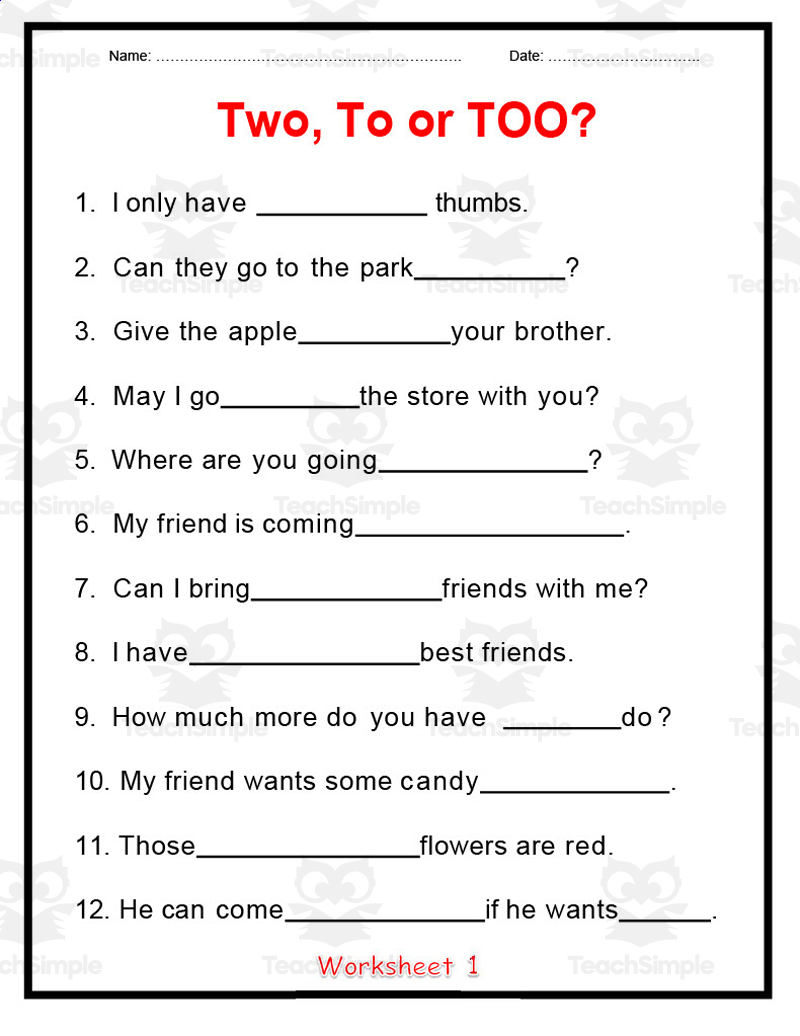
Grammar practice distinguishing the homophones 'to', 'too', and 'two'.
A single-Bloom's-level 'Chapter Slice' of Classroom Complete Press's Reading Response Forms series (grades 5-6): gives teachers response forms and activities that target Bloom's Taxonomy Level 2 (Understanding) reading-response skills.
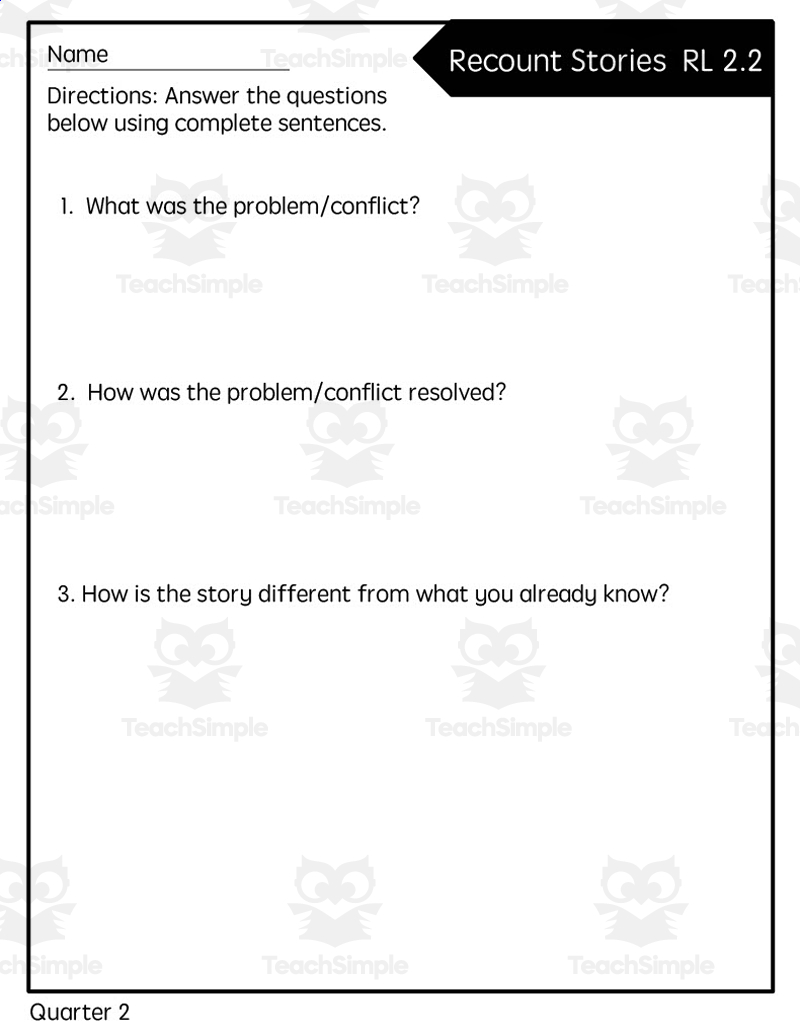
A short, ready-to-print formative check for the Common Core grade-2 reading-literature standard RL 2.2, used to assess whether students can identify a story's problem/conflict, its resolution, and compare the story to their own knowledge.
A single-Bloom's-level 'Chapter Slice' of Classroom Complete Press's Reading Response Forms series (grades 5-6): gives teachers response forms and activities that target Bloom's Taxonomy Level 5 (Evaluating) reading-response skills.