Reading & writing
Parts of Speech, Grammar, Word Sorts, Sentences & More
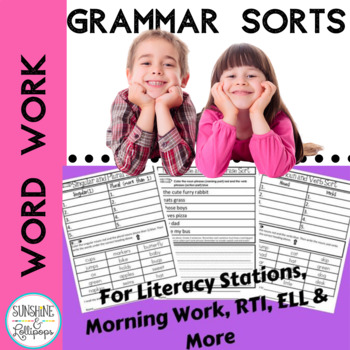
Color-code words by category (e.g., color nouns red, verbs blue), then write each word under the correct heading on the worksheet.




Classroom resources
Browse by lesson focus
Choose the topic or kind of practice you need.
Showing 2881–2904 of 3528 resources

 Show filters
 Color-code words by category (e.g., color nouns red, verbs blue), then write each word under the correct heading on the worksheet.
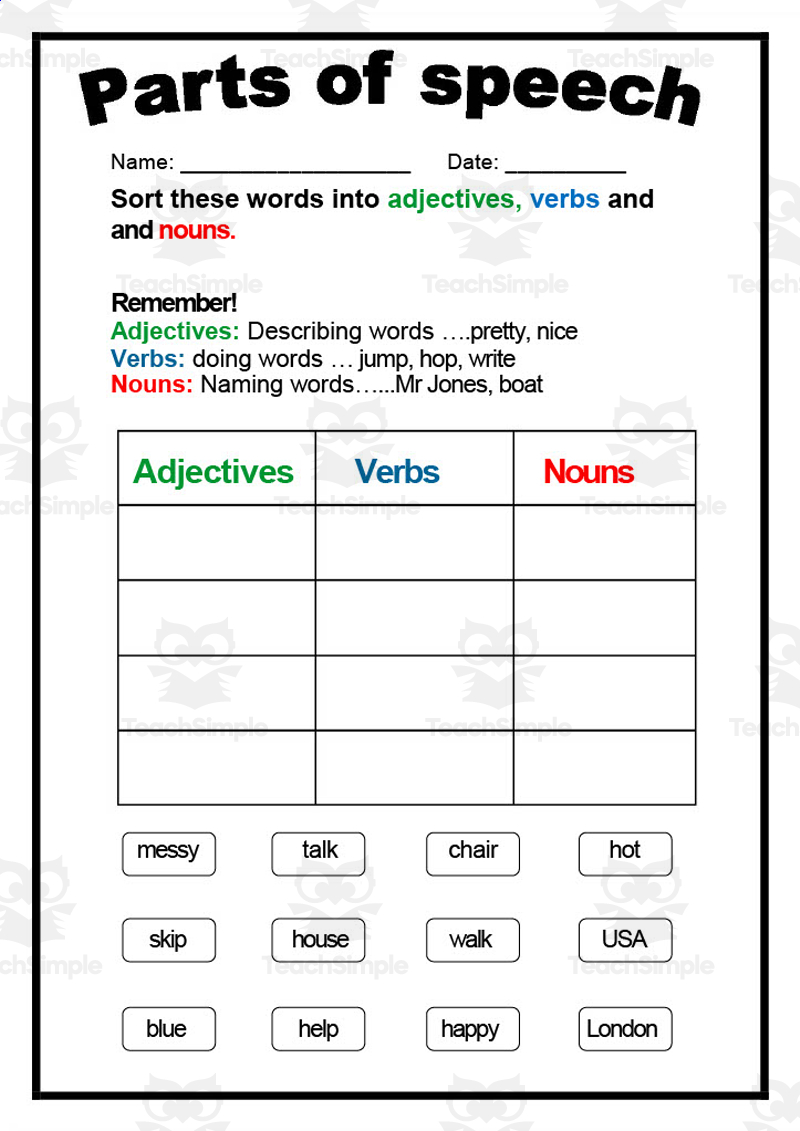
Sort a list of given words into the correct column (adjectives, verbs, nouns), guided by short definitions/examples of each category provided on the sheet.
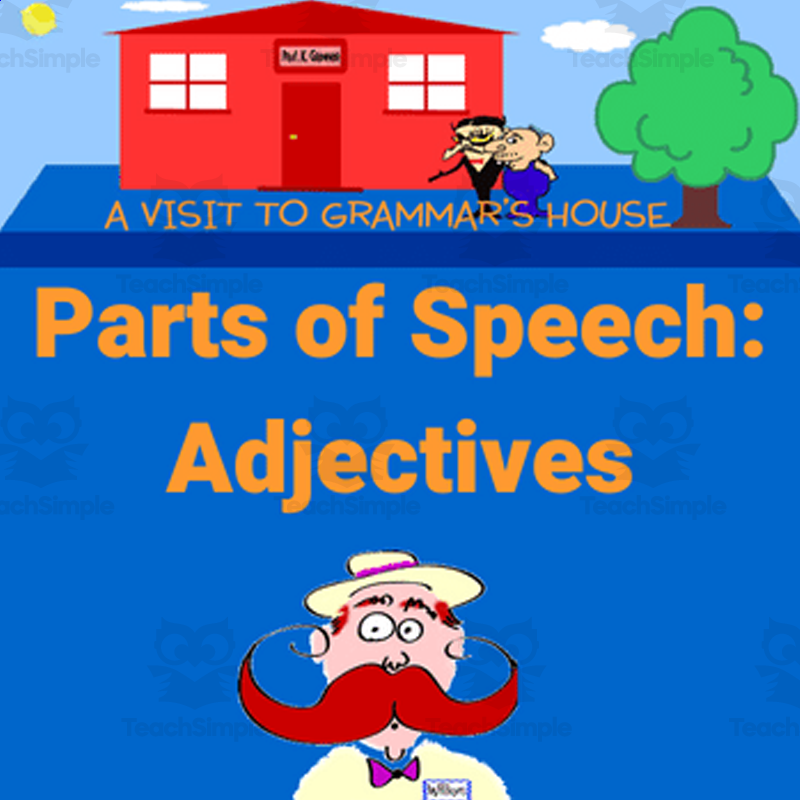
Teaches how adjectives (including possessive adjectives) describe nouns, how to find adjectives that aren't right next to the noun they modify, and how changing adjectives changes a character's personality, mood, or occupation in writing, using picture-description, passage-finding, and fill-in-the-blank story…
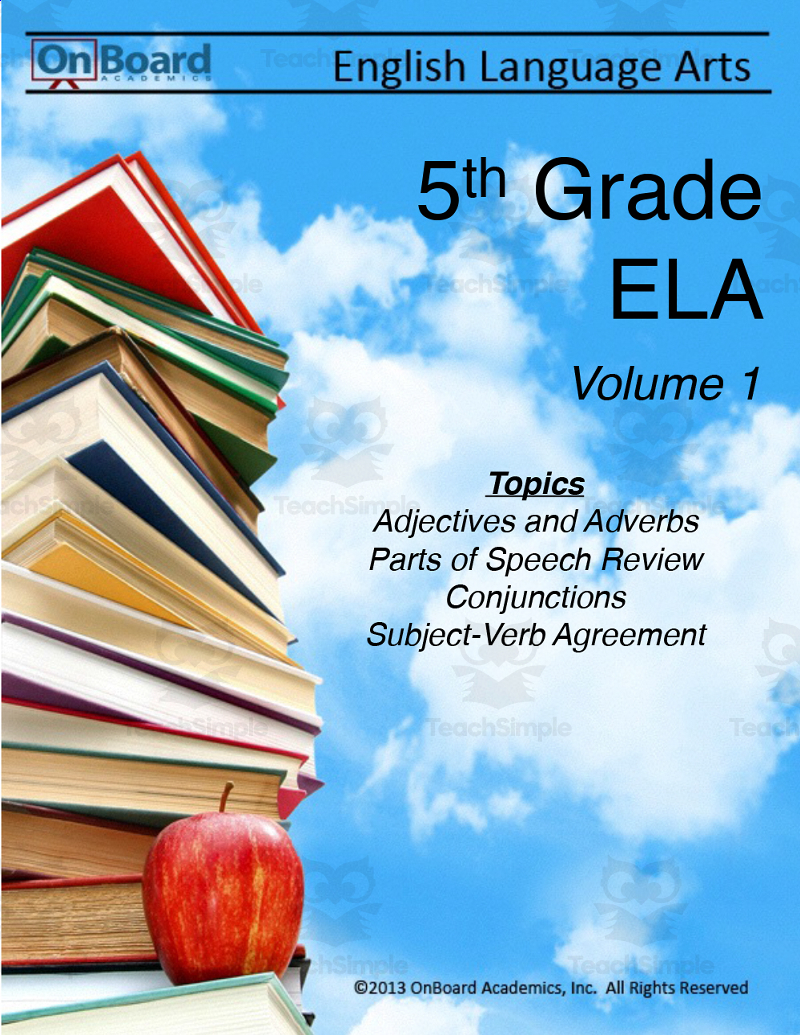
Students identify, label, sort, underline, and classify parts of speech (e.g. finding adjectives/adverbs in sentences, sorting words in a Venn diagram, classifying adverbs by type) in practice exercises, then complete a multiple-choice/true-false quiz at the end of each unit.
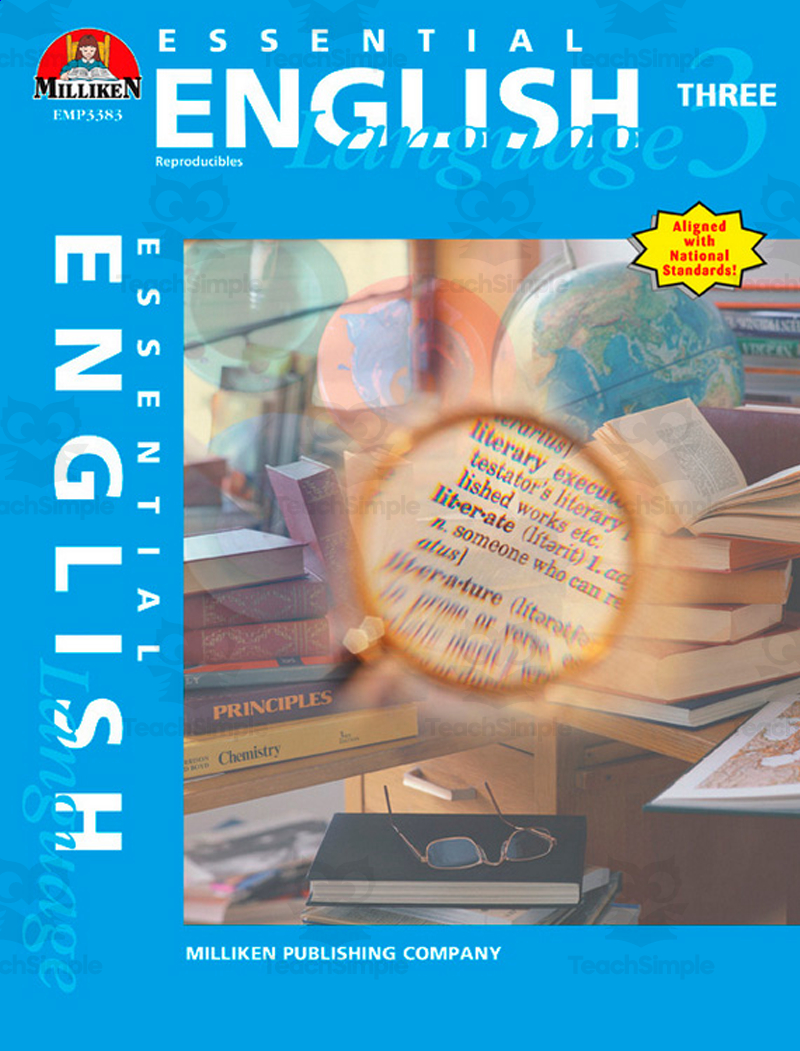
A reproducible grammar and writing skills workbook for Grade 3, part of Milliken Publishing's Essential English series, building foundational written and oral English communication.

Watch a YouTube video of the song, fill in missing lyrics from memory/video, solve a dollar-value word puzzle by adding up letter values, write definitions and parts of speech for vocabulary terms from the song, and answer grammar questions about the lyrics.
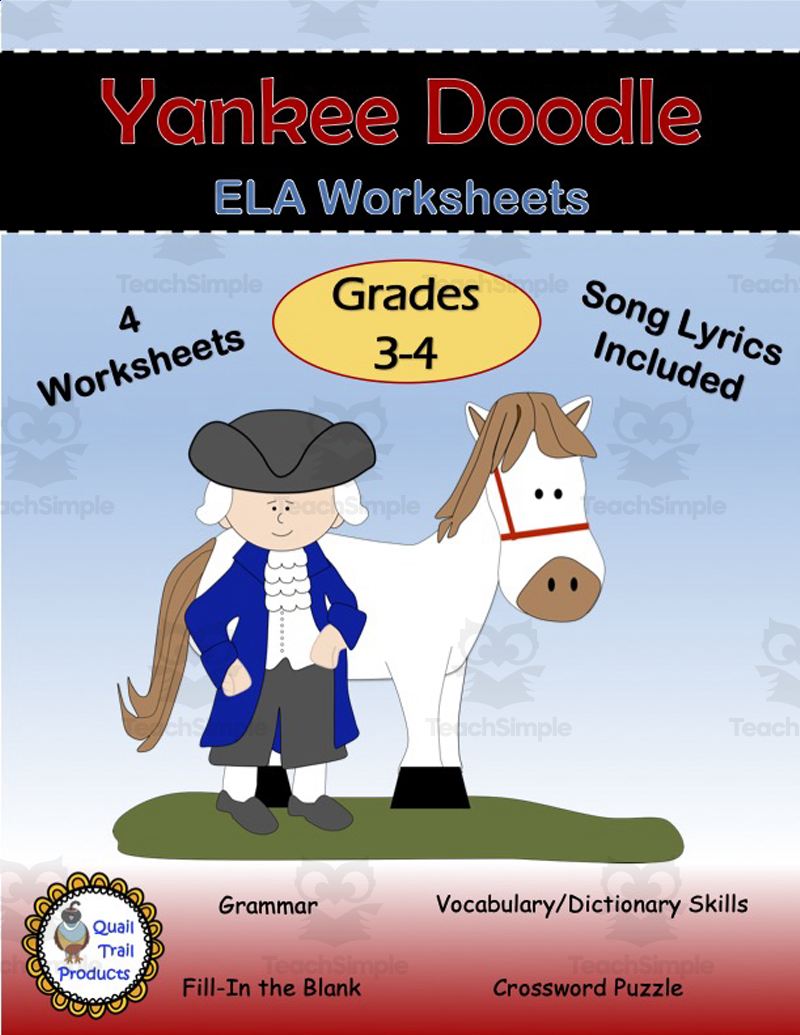
Students fill in missing lyrics from memory/video, define vocabulary terms and identify parts of speech, answer grammar questions (nouns, verbs, adjectives, capitalization, punctuation), and complete a lyrics-based crossword puzzle.
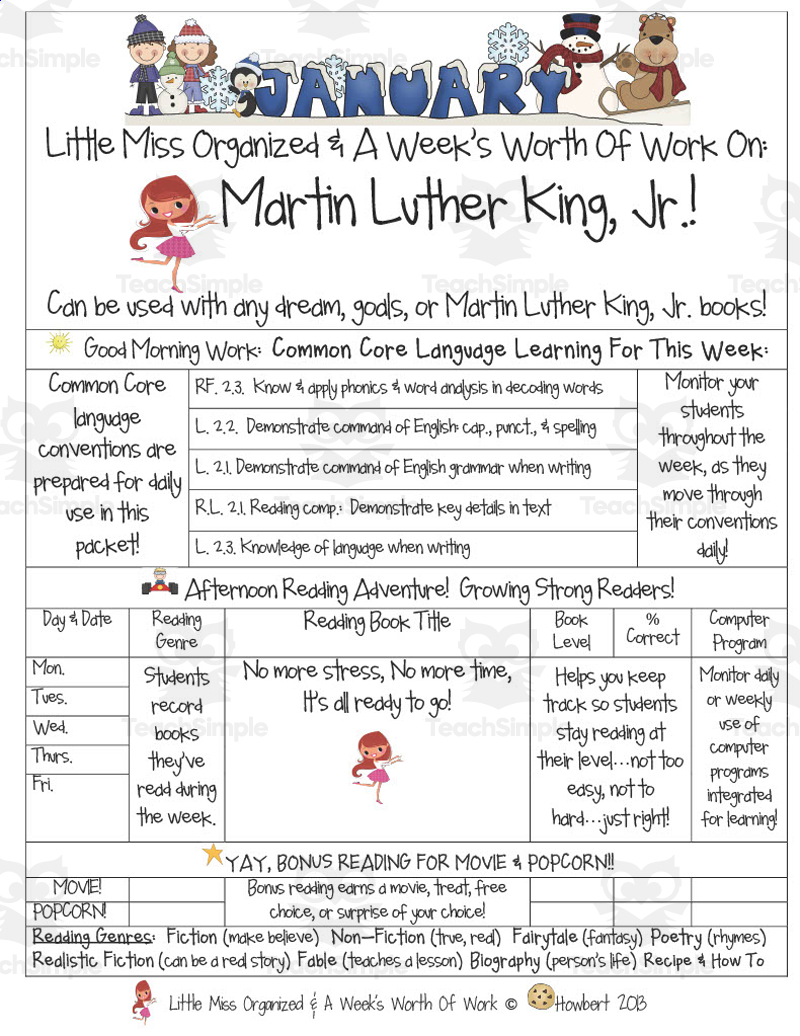
Complete daily sentence-writing tasks and grammar worksheets (Monday: nouns and syllables; Tuesday: synonyms/antonyms and proper nouns; Wednesday: synonym pairs; Thursday: parts of speech; Friday: nouns and adjectives), track independent reading on a reading log, and write on a blank primary-lined template.
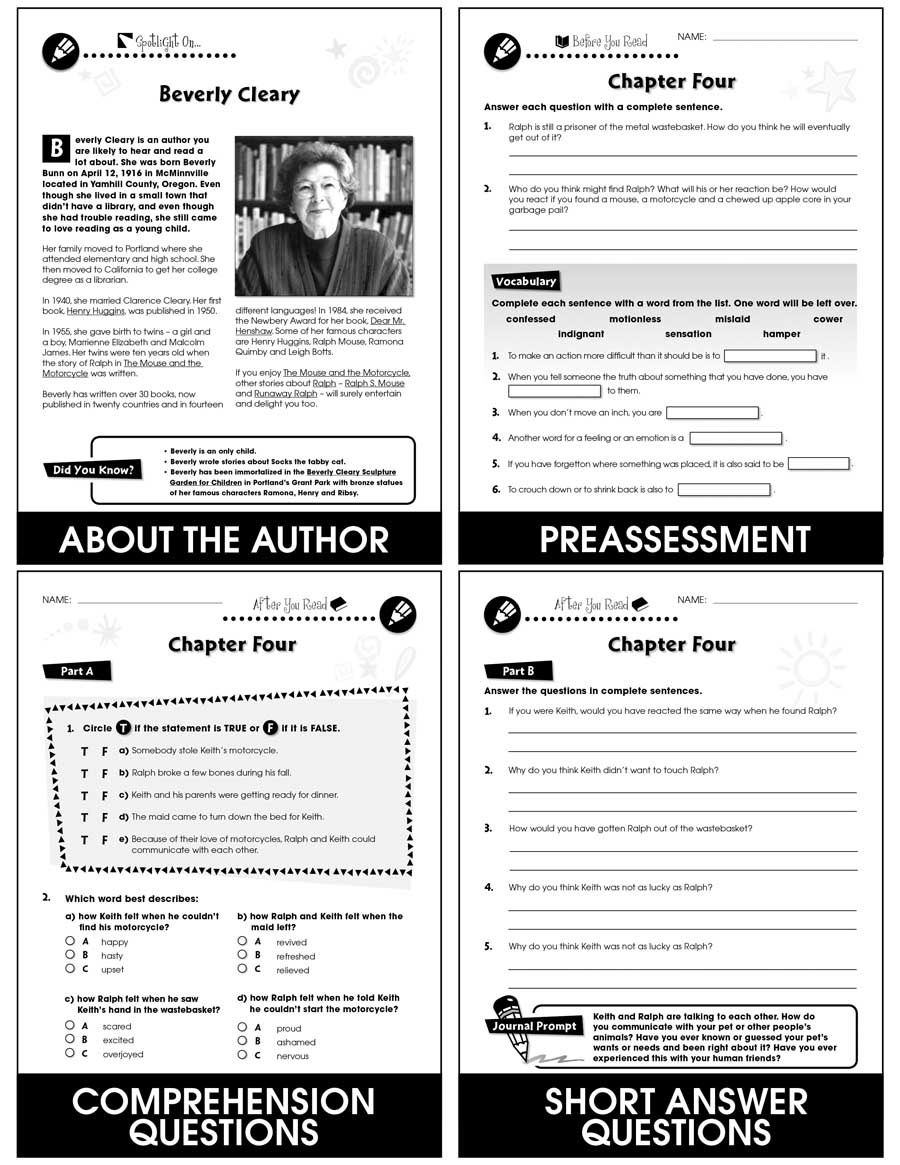
Provide a comprehensive literature kit (chapter questions, worksheets, graphic organizers, writing tasks, bonus activities) for teaching Beverly Cleary's The Mouse and the Motorcycle.
A single-Bloom's-level 'Chapter Slice' of Classroom Complete Press's Reading Response Forms series (grades 3-4): gives teachers response forms and activities that target Bloom's Taxonomy Level 1 (Remembering) reading-response skills.

A complete teaching unit for the novel 'Old Yeller' (Newbery Honor book) with discussion points, comprehension/vocabulary worksheets, and tests.
A single-Bloom's-level 'Chapter Slice' of Classroom Complete Press's Reading Response Forms series (grades 5-6): gives teachers response forms and activities that target Bloom's Taxonomy Level 1 (Remembering) reading-response skills.
Compare and contrast two pieces of literature (e.g., stories, myths, traditional literature) on how they treat similar themes and topics.
A single-Bloom's-level 'Chapter Slice' of Classroom Complete Press's Reading Response Forms series (grades 1-2): gives teachers response forms and activities that target Bloom's Taxonomy Level 1 (Remembering) reading-response skills.

Review a vocabulary glossary with pronunciations, complete cloze/fill-in-the-blank practice sentences, identify each word's part of speech and write its definition, and write an original sentence using each vocabulary word; complete an illustration/response prompt page.

Review a vocabulary glossary with pronunciations, complete cloze/fill-in-the-blank practice sentences, identify each word's part of speech and write its definition, and write an original sentence using each vocabulary word; complete an illustration/response prompt page.
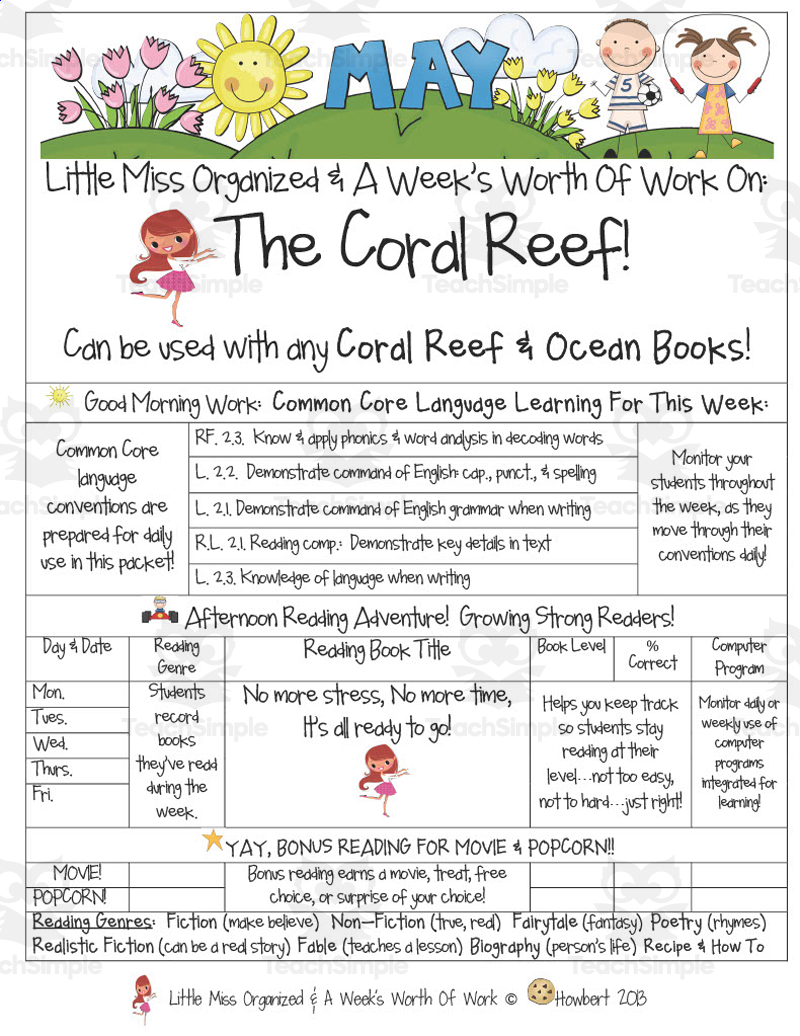
Students complete a different daily language skill activity themed around coral reefs: Monday syllables, Tuesday parts-of-speech sort, Wednesday adjectives, Thursday quotation marks, Friday synonyms & antonyms, plus daily sentence writing on a provided primary-lined template.

Review a vocabulary glossary with pronunciations, complete cloze/fill-in-the-blank practice sentences, identify each word's part of speech and write its definition, and write an original sentence using each vocabulary word; complete an illustration/response prompt page.

Review a vocabulary glossary with pronunciations, complete cloze/fill-in-the-blank practice sentences, identify each word's part of speech and write its definition, and write an original sentence using each vocabulary word; complete an illustration/response prompt page.
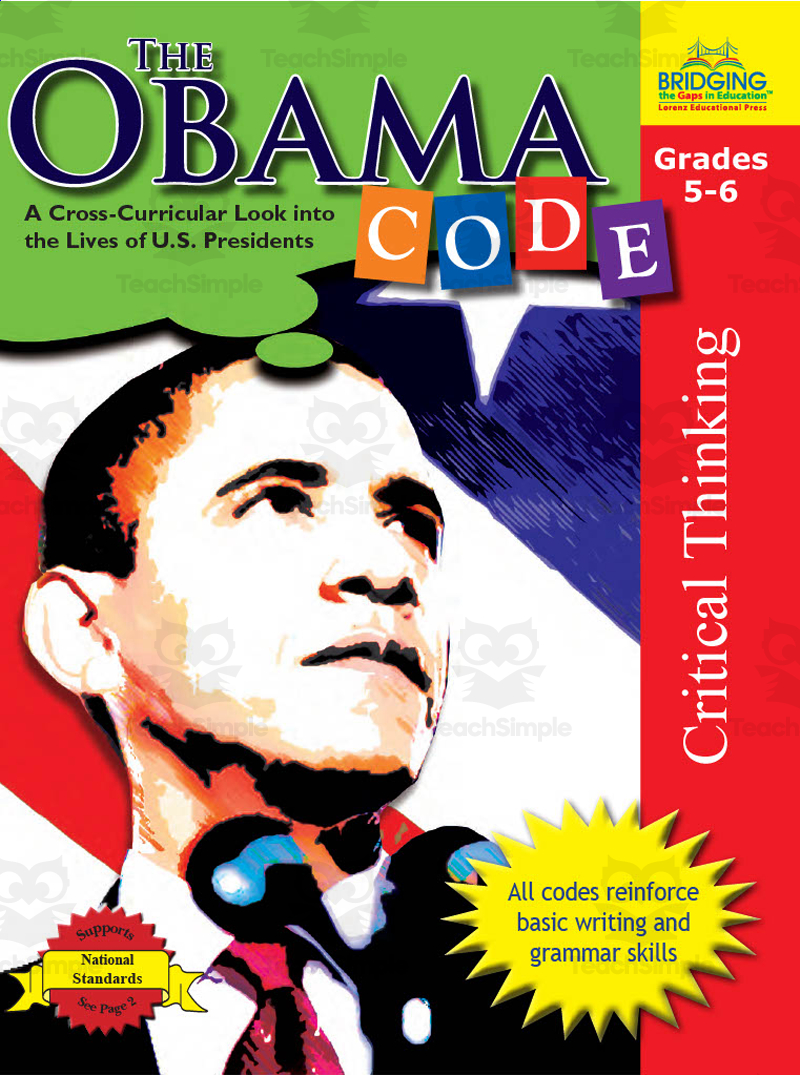
Read short president biographies, then solve 'crack the code' puzzles that require filling in words missing from the biography text, plus complete deductive-reasoning grammar exercises (spelling, punctuation, parts of speech, pronouns, apostrophes, analogies, antonyms/synonyms, proofreading, prefixes/suffixes…

Review a vocabulary glossary with pronunciations, complete cloze/fill-in-the-blank practice sentences, identify each word's part of speech and write its definition, and write an original sentence using each vocabulary word; complete an illustration/response prompt page.

Review a vocabulary glossary with pronunciations, complete cloze/fill-in-the-blank practice sentences, identify each word's part of speech and write its definition, and write an original sentence using each vocabulary word; complete an illustration/response prompt page.
Read a short passage and poem, answer comprehension questions, match/fill in vocabulary words, identify parts of speech, correct grammar errors, write short paragraphs, and answer critical-thinking and creative-writing prompts.

Practice articles (a/an), nouns (including singular/plural), adjectives, verbs, adverbs, pronouns, prepositions, determiners, and connectors through guided worksheet exercises, with periodic revision pages; check answers against an answer key.