RL.3.10 Third Grade Common Core Lesson
This lesson is designed for third grade students and meets common core standards. It includes a reading of a story or poem followed by comprehension questions.
Classroom resources
Browse by lesson focus
Choose the topic or kind of practice you need.
This lesson is designed for third grade students and meets common core standards. It includes a reading of a story or poem followed by comprehension questions.
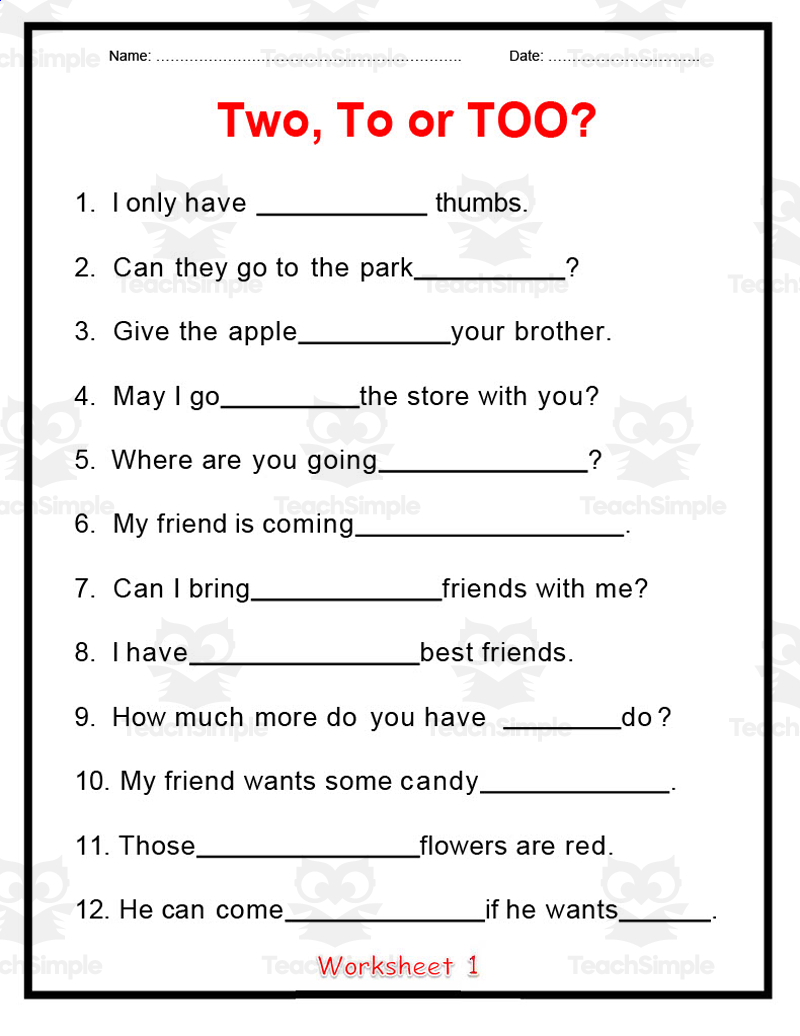
Grammar practice distinguishing the homophones 'to', 'too', and 'two'.
A single-Bloom's-level 'Chapter Slice' of Classroom Complete Press's Reading Response Forms series (grades 5-6): gives teachers response forms and activities that target Bloom's Taxonomy Level 2 (Understanding) reading-response skills.
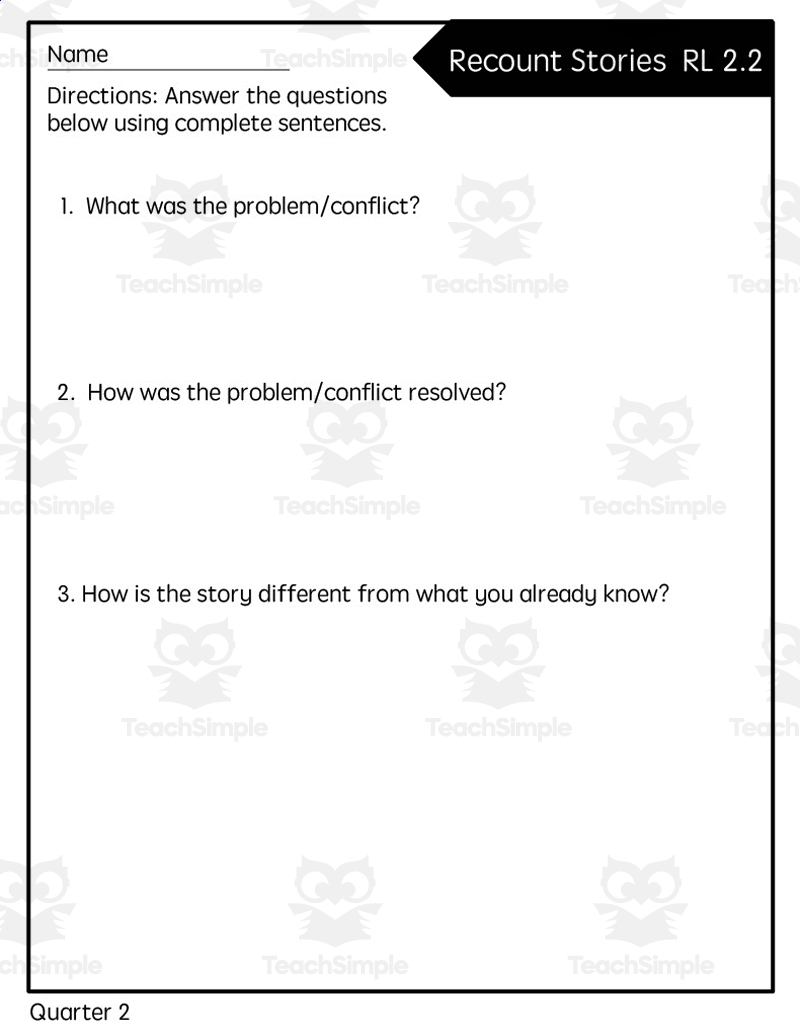
A short, ready-to-print formative check for the Common Core grade-2 reading-literature standard RL 2.2, used to assess whether students can identify a story's problem/conflict, its resolution, and compare the story to their own knowledge.
A single-Bloom's-level 'Chapter Slice' of Classroom Complete Press's Reading Response Forms series (grades 5-6): gives teachers response forms and activities that target Bloom's Taxonomy Level 5 (Evaluating) reading-response skills.
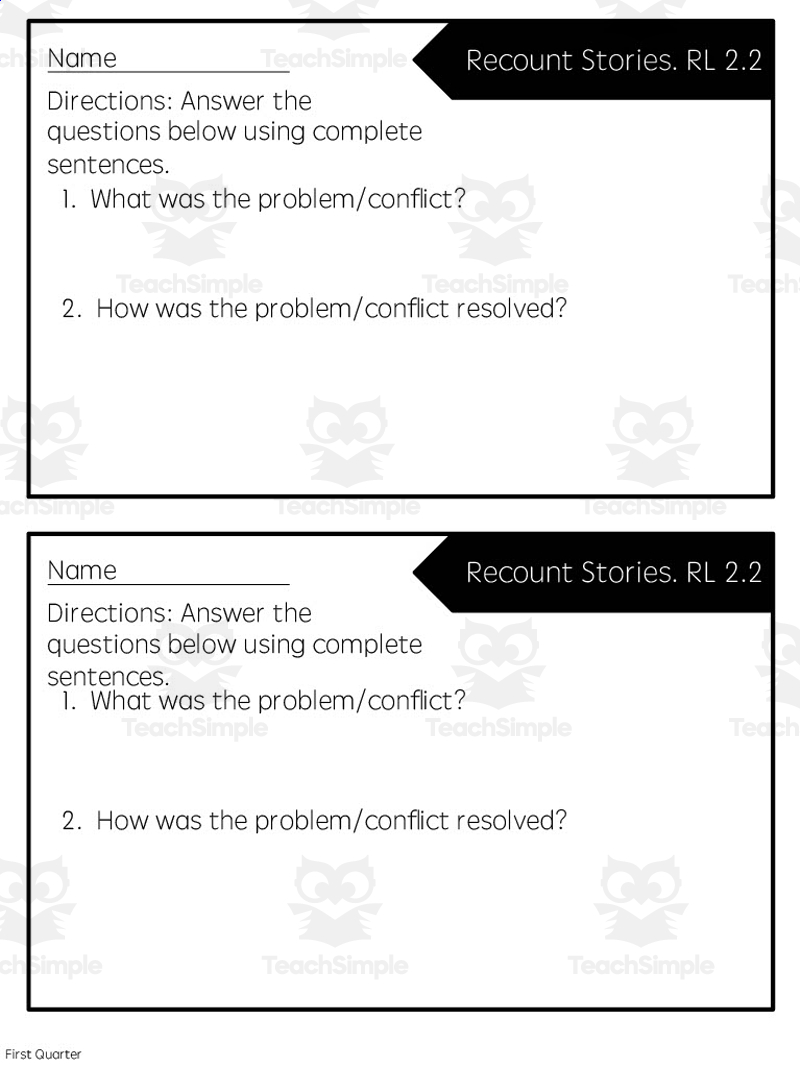
A short, ready-to-print formative check for the Common Core grade-2 reading-literature standard RL 2.2, used to assess whether students can identify a story's problem/conflict and how it was resolved.
A single-Bloom's-level 'Chapter Slice' of Classroom Complete Press's Reading Response Forms series (grades 3-4): gives teachers response forms and activities that target Bloom's Taxonomy Level 2 (Understanding) reading-response skills.
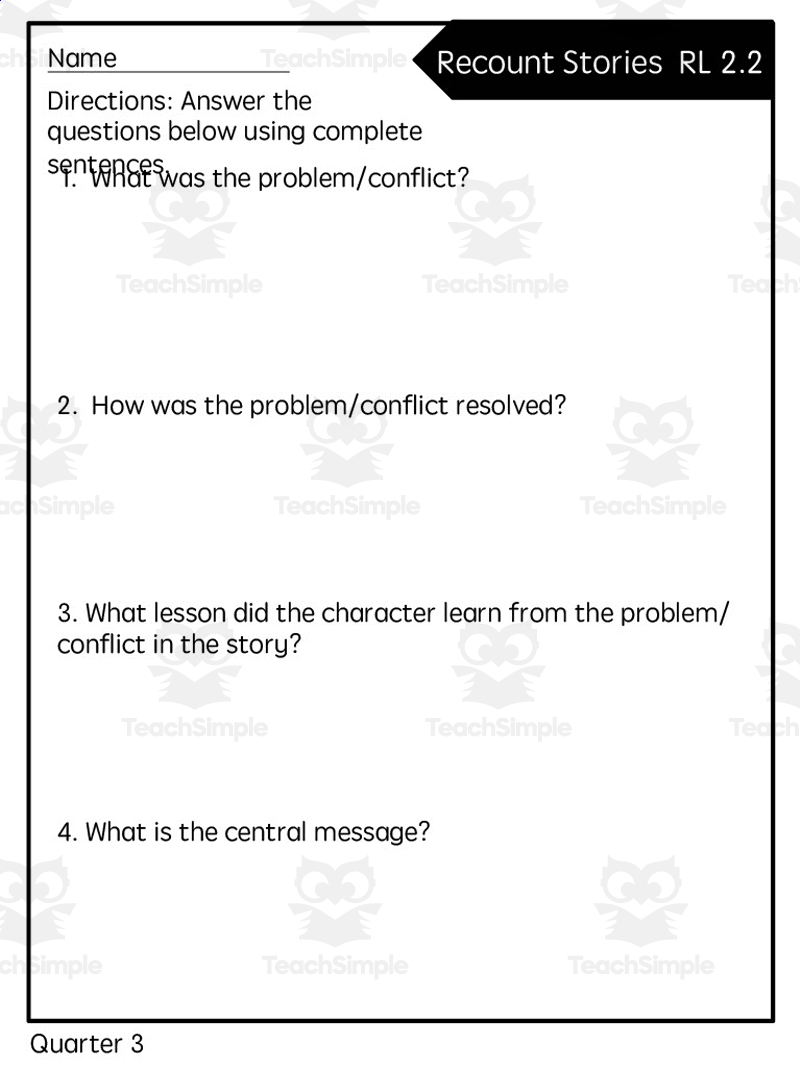
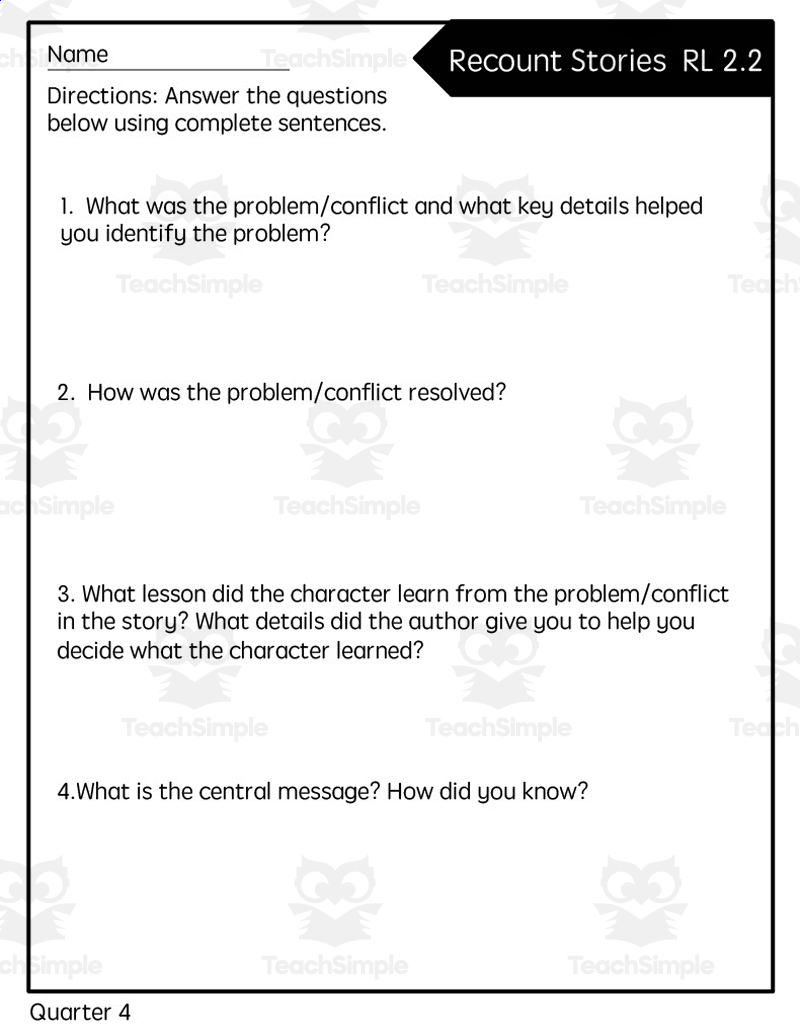
A short, ready-to-print formative check for the Common Core grade-2 reading-literature standard RL 2.2, used to assess whether students can identify a story's problem/conflict, its resolution, the lesson learned, and the central message.
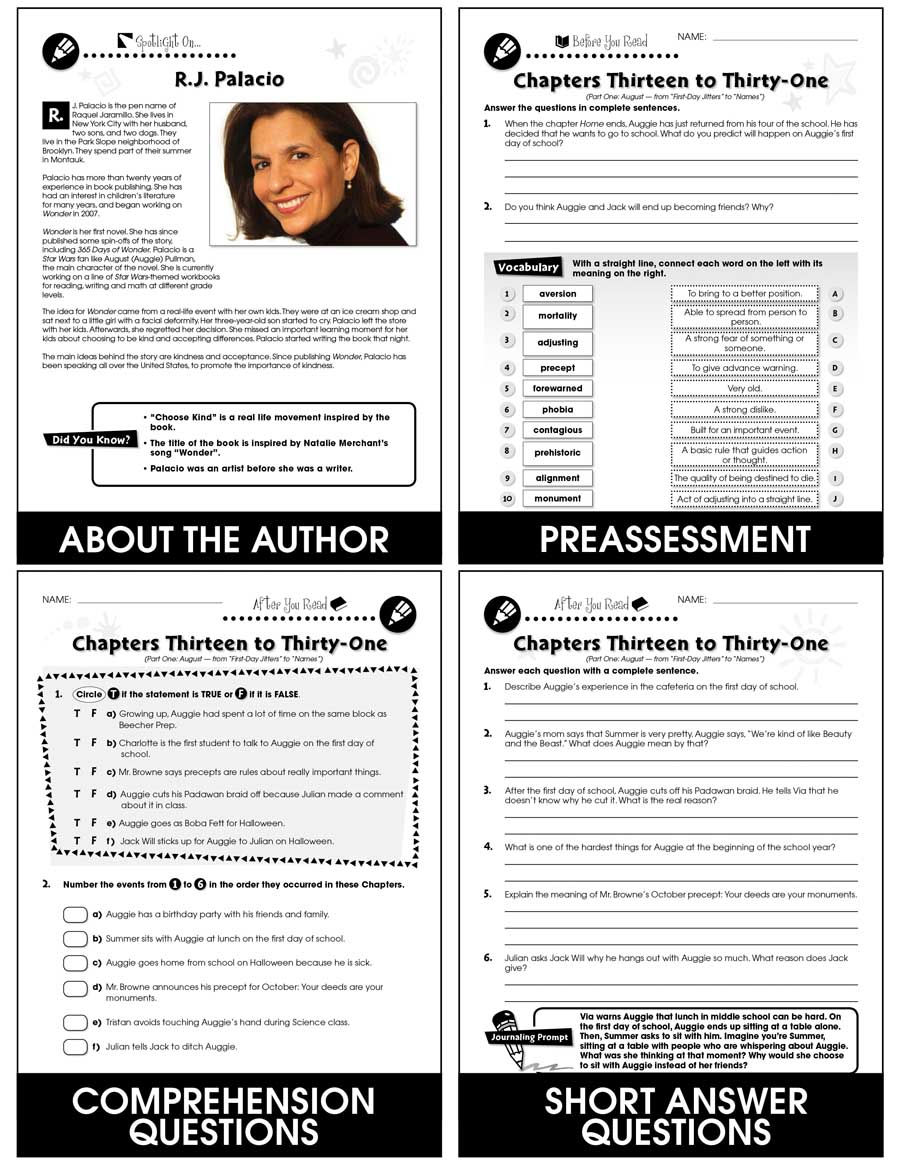
literature study kit built around the novel Wonder by R.J. Palacio, developing reading comprehension and critical-thinking skills mapped to Bloom's Taxonomy levels
A short, ready-to-print formative check for the Common Core grade-2 reading-literature standard RL 2.3, used to assess whether students can identify major and minor characters and describe the major events or challenges in a story.
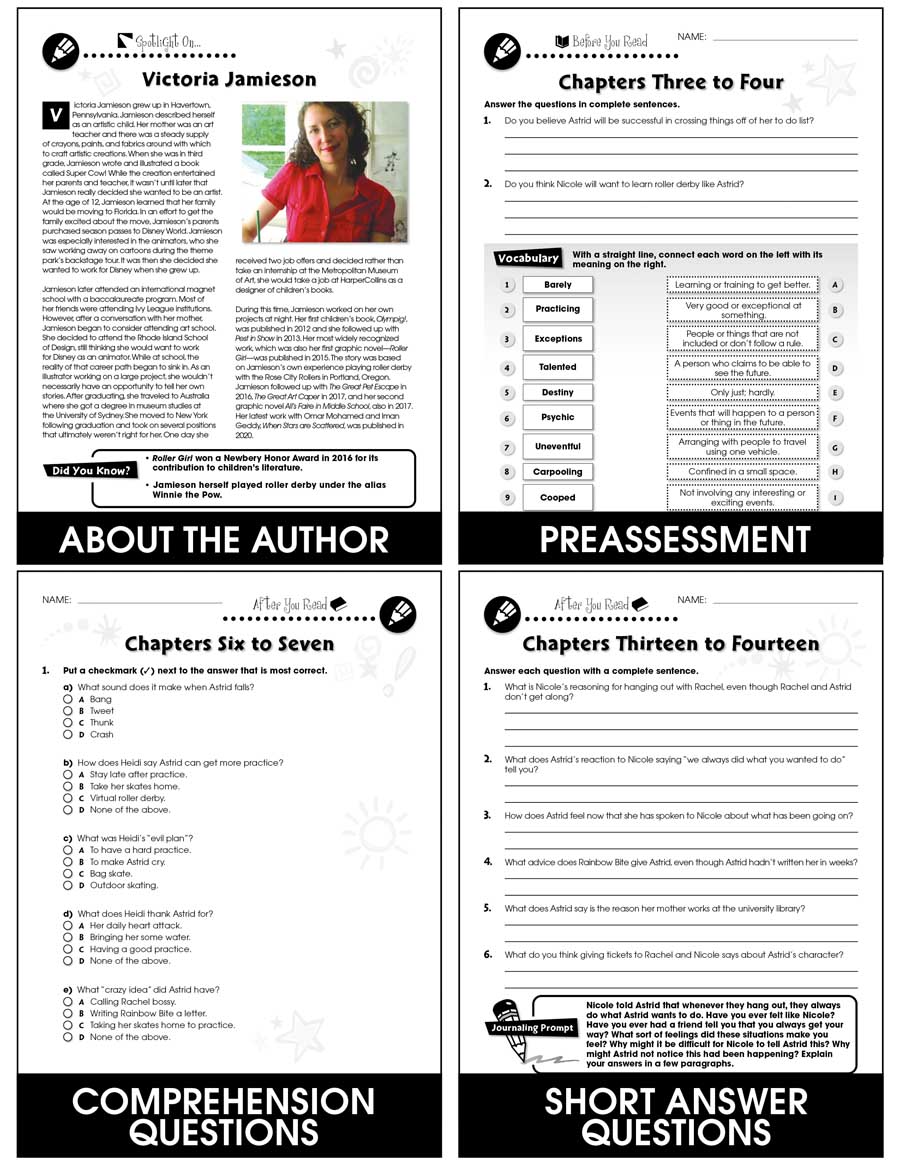
A novel-study literature kit for Victoria Jamieson's graphic novel 'Roller Girl', supporting grade 5-6 reading comprehension instruction organized by Bloom's Taxonomy levels.
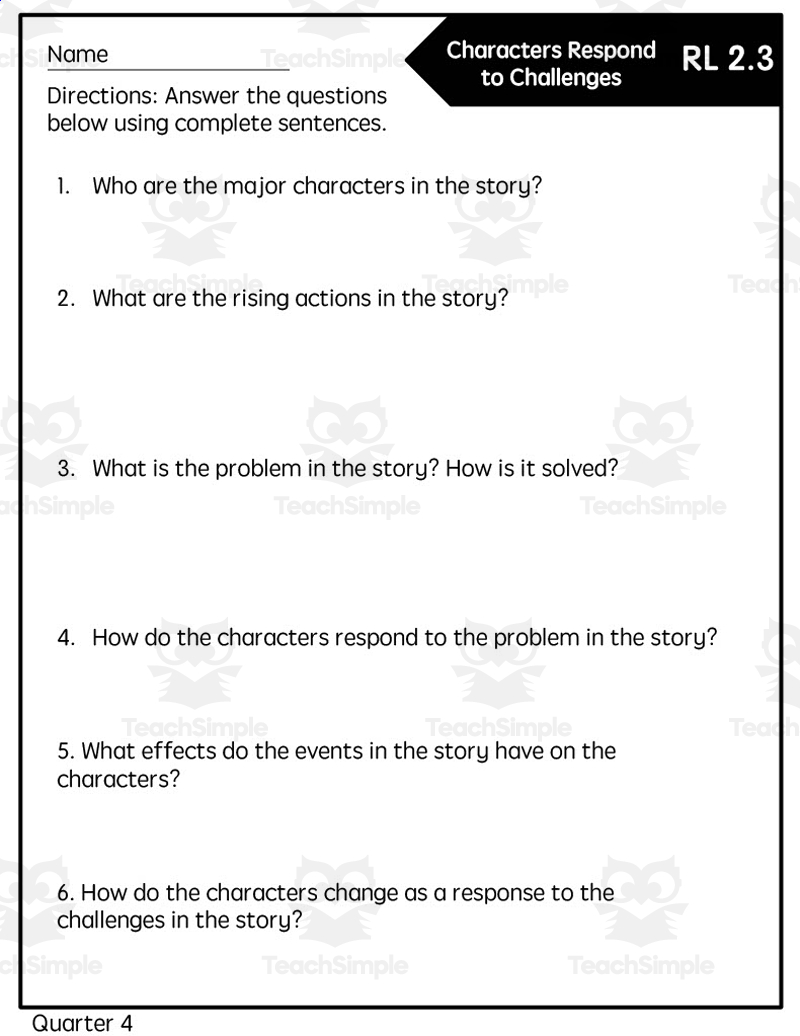
A short, ready-to-print formative check for the Common Core grade-2 reading-literature standard RL 2.3, used to assess whether students can identify characters, explain how they respond to challenges, the effects of events on them, and how they change.
A short, ready-to-print formative check for the Common Core grade-2 reading-literature standard RL 2.3, used to assess whether students can identify characters, describe events/challenges, and explain the effects of events on characters.
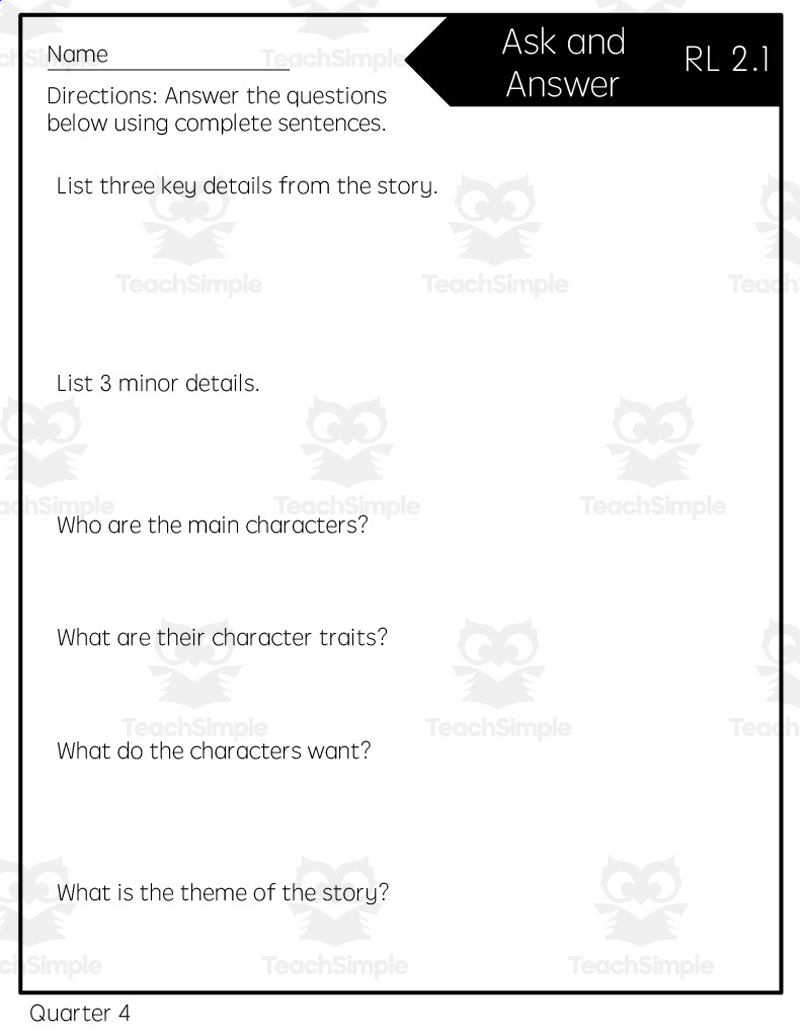
A short, ready-to-print formative check for the Common Core grade-2 reading-literature standard RL 2.1, used to assess whether students can list key and minor details from a story, describe character traits, and identify the story's theme.
A short, ready-to-print formative check for the Common Core grade-2 reading-literature standard RL 2.1, used to assess whether students can ask and answer questions about key details in a story and identify its main characters and message.
A short, ready-to-print formative check for the Common Core grade-2 reading-literature standard RL 2.2, used to assess whether students can identify a story's problem/conflict with supporting details, its resolution, the lesson learned with textual support, and the central message with justification.
A short, ready-to-print formative check for the Common Core grade-2 reading-literature standard RL 2.3, used to assess whether students can identify characters and rising action, explain the problem and its solution, how characters respond, effects of events, and how characters change.
A novel-study companion for 'Chasing Vermeer' by Blue Balliett providing vocabulary and comprehension questions organized by chapter groups, plus a final assessment, to build reading comprehension.
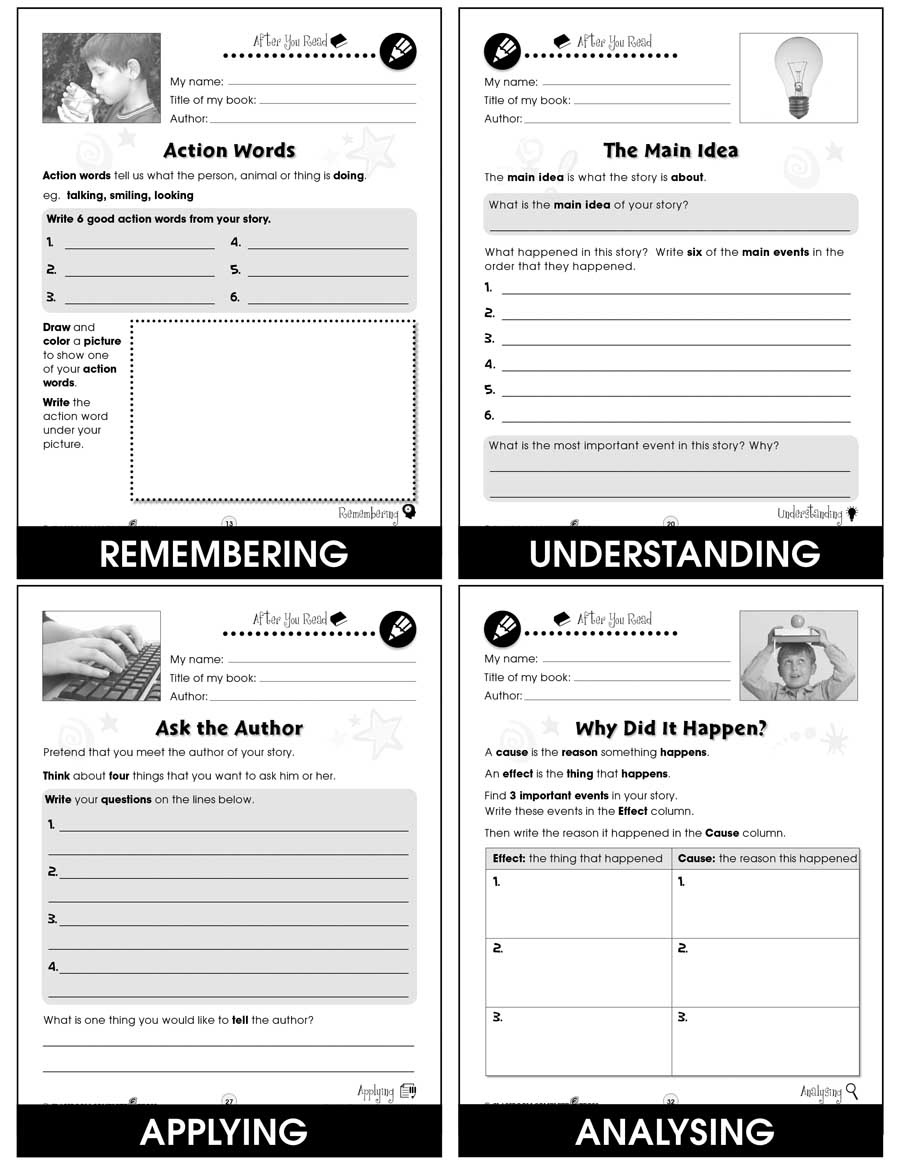
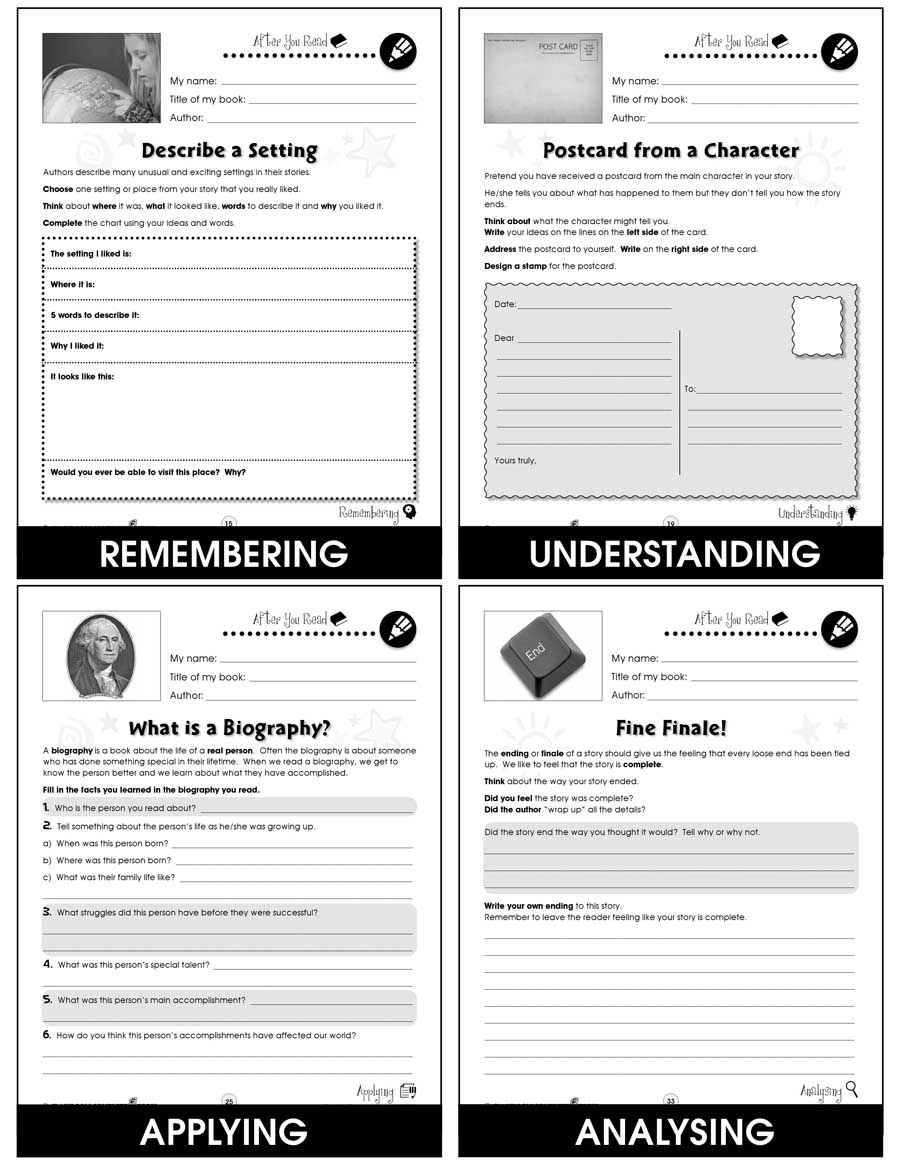
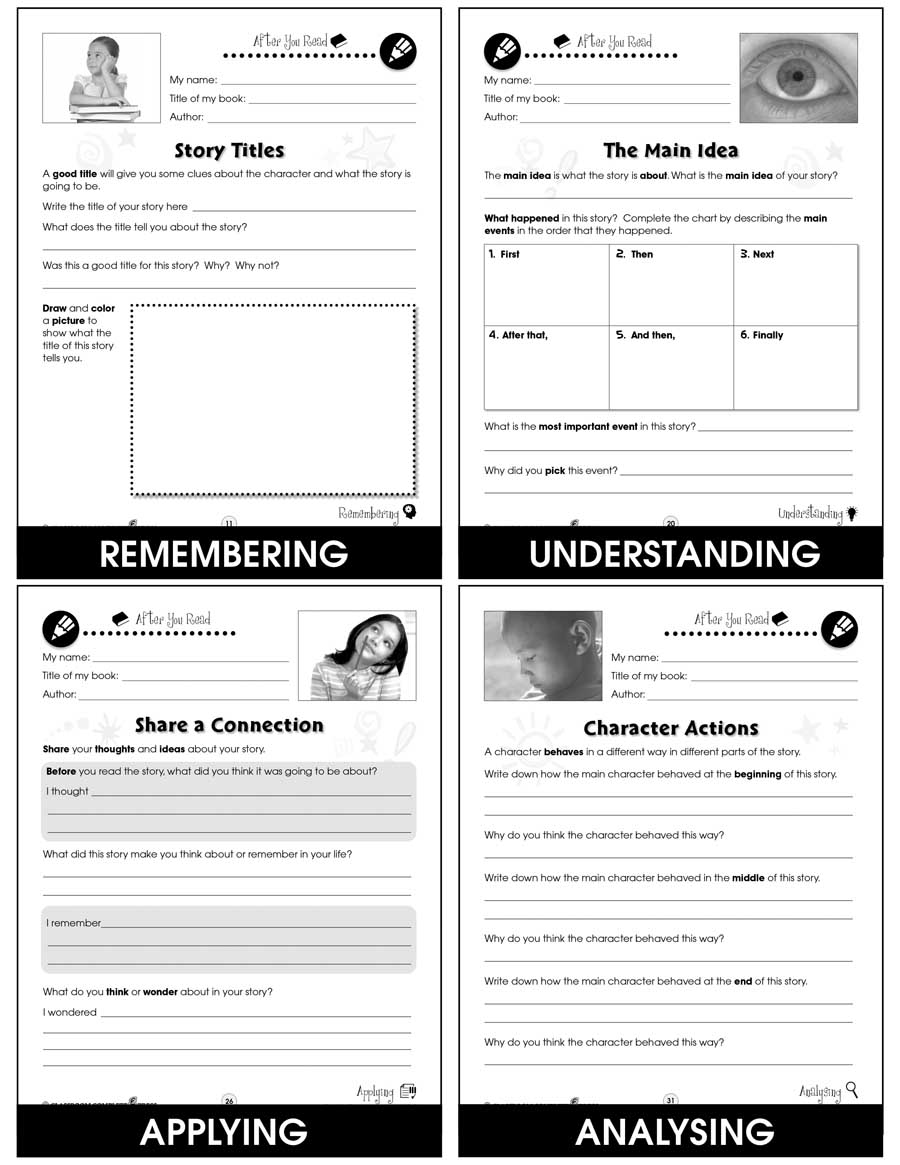
The complete Reading Response Forms book (Literacy Skills Series) for grades 1-2: gives teachers reproducible response forms and activities spanning all six levels of Bloom's Taxonomy (Remembering, Understanding, Applying, Analysing, Evaluating, Creating) for responding to literature.
The complete Reading Response Forms book (Literacy Skills Series) for grades 5-6: gives teachers reproducible response forms and activities spanning all six levels of Bloom's Taxonomy (Remembering, Understanding, Applying, Analysing, Evaluating, Creating) for responding to literature.
The complete Reading Response Forms book (Literacy Skills Series) for grades 3-4: gives teachers reproducible response forms and activities spanning all six levels of Bloom's Taxonomy (Remembering, Understanding, Applying, Analysing, Evaluating, Creating) for responding to literature.
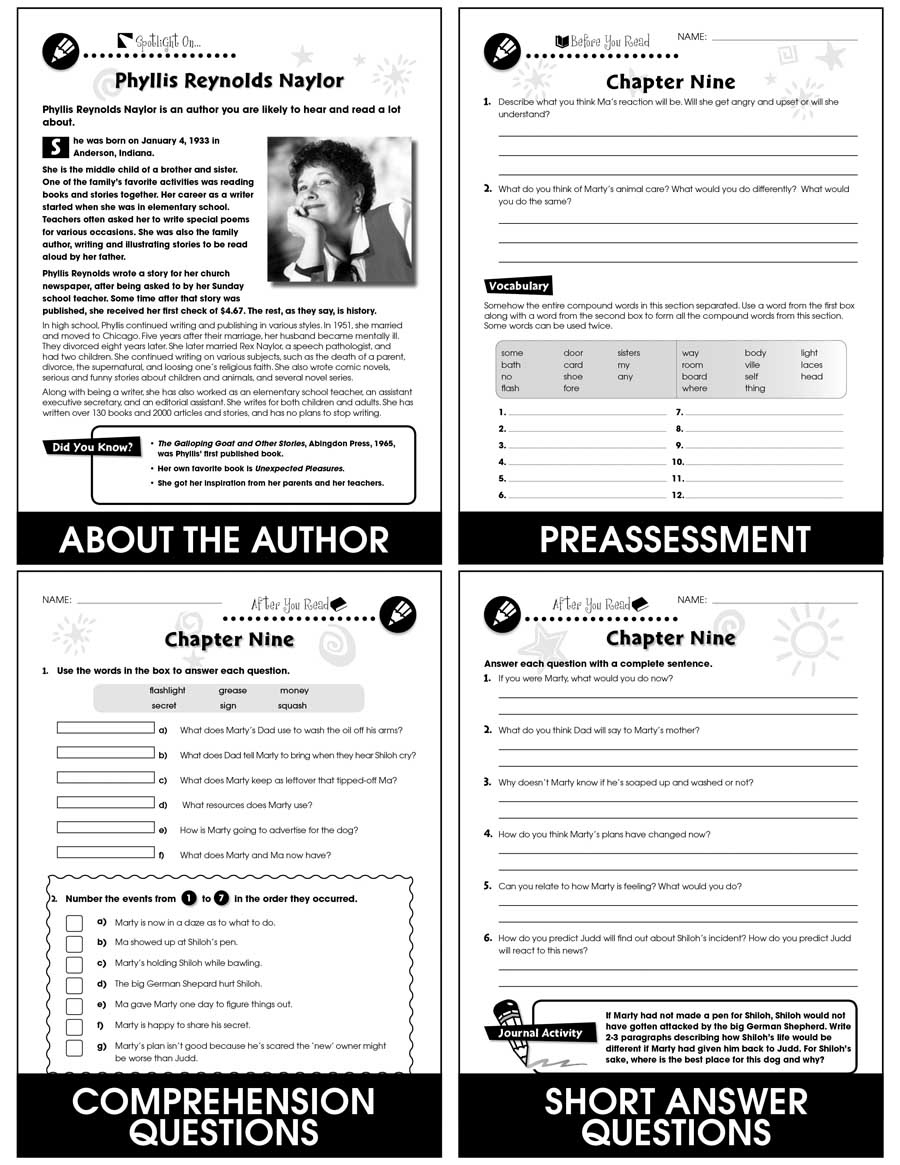
A literature kit for the novel Shiloh by Phyllis Reynolds Naylor, providing chapter-by-chapter comprehension questions, vocabulary, writing tasks, and assessment tools organized around Bloom's Taxonomy reading-comprehension levels.
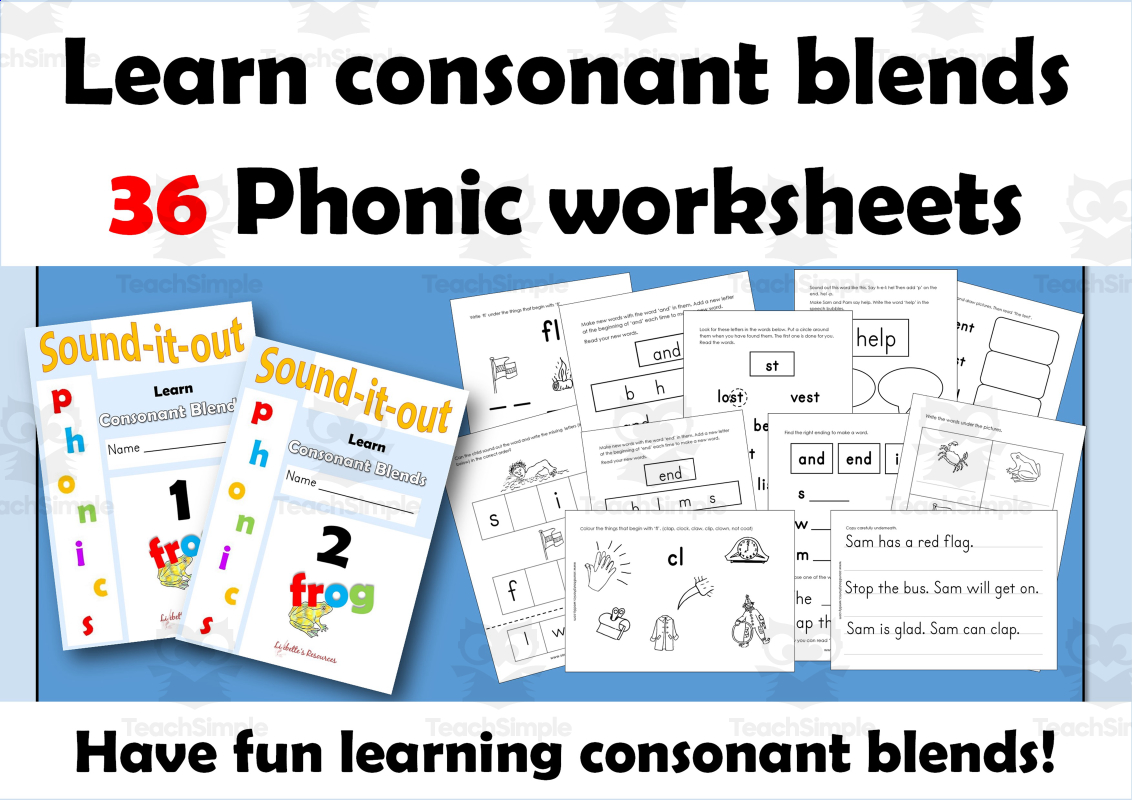
Two companion workbooks of phonics worksheets that build reading and spelling of CCVC/CVCC consonant-blend words, meant to accompany a separate Consonant Blends Reading Books series.
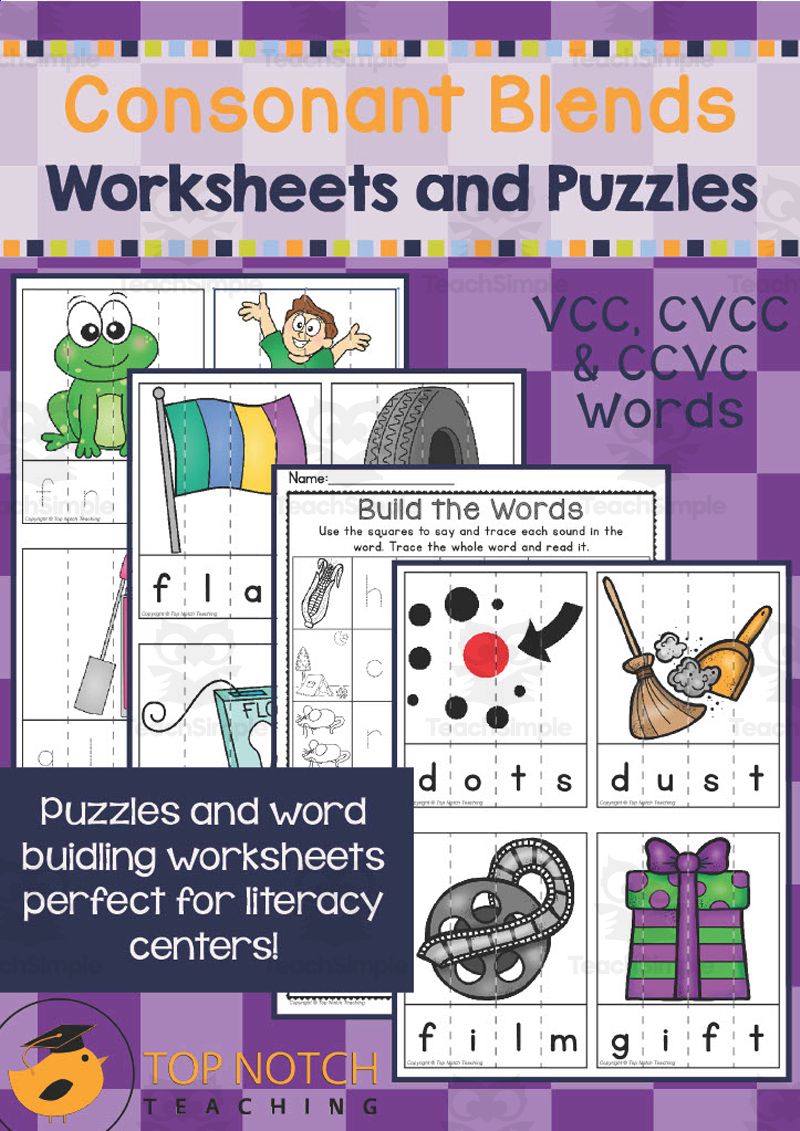
A set of cut-apart puzzles and word-building worksheets that help students learn to read and spell VCC, CVCC, and CCVC consonant-blend words.