



3,931 products added recently
Page 17 - ELA Lesson Plans
Elevate your ELA instruction with lesson plans that cover reading, writing, speaking, and listening skills. These resources provide diverse texts and engaging activities to improve literacy. Integrate these plans to enrich your language arts curriculum and support student achievement.

 Show filters


Board v. Bored | Upper Intermediate Lesson Plan
ELA, Language Development, ESL, Grammar, Grade 6, 7, 8, Teacher Tools, Lesson Plans, Worksheets & Printables
Board v. Bored Upper Intermediate English grammar lesson plan helps students learn the difference between "board" and "bored" and when to use each word appropriately. The informative packet begins by clearly explaining the definitions and uses of these commonly confused words. Students then apply their understanding by completing targeted exercises assessing their comprehension and grammar skills. This versatile resource can be used for whole-group grammar instruction, small group remediation, or as a homework assignment for individual practice. Implement digitally or print the engaging worksheet. An answer key is included, making this lesson plan a teacher-friendly resource for promoting student grammar growth. Are you bored or is it a board? 3 PDFs with 3 ready to print pages. Students will learn more about these topics and then complete the exercises to follow, which will assess their comprehension and implement grammar skills. This resource can also be accessed through Google Apps. Answer key included.
Author TEAM TEFL
Tags Word Uses, Grammar Lesson, ESL Lesson, Adjectives, Nouns, Board Bored, Bored And Board

Reading Comprehension: Context Clues
ELA, Reading, Reading Comprehension, Common Core, Grade 5, 6, 7, 8, Teacher Tools, Lesson Plans
Reading Comprehension: Context Clues An essential tool for students in Grade 5 to Grade 8, Reading Comprehension: Context Clues is designed to enhance reading and comprehension skills. Educational Objectives Cover lessons rooted in Bloom's Taxonomy of Learning. Achieve a balance between complexity and simplicity in lessons. Emphasize the importance of using context clues, determining the main idea, and understanding inference. Flexible Usage This guide can be used in a variety of classroom settings: As a whole-group activity promoting collaborative learning. During small-group sessions targeting individual areas where improvement may be needed. For homework assignments or interventions, overcoming traditional location and time barriers impacting student engagement. User-friendly Layouts The product file features user-friendly layouts that ease comprehension both for educators implementing it into their curriculum and students aiming towards improving their reading abilities. Supplementary materials like definitions of key terms reinforce concepts presented throughout the series, promoting simple yet effective learning. Alignment with Common Core State Standards (CCSS) "Reading Comprehension: Context Clues"lessons can seamlessly integrate into Language Art classes under its subsubject 'Comprehension'. It focuses not just on word recognition but also cultivates deep text understanding. Delivered as an easily downloadable PDF lesson plan aligning with CCSS guidelines guarantees quality without sacrificing convenience making it an effective educational tool for ambitious educators.
Author Classroom Complete Press
Tags PDF

Subject-Verb Agreement Supplementary Materials Grade 5-6 (PDF)
ELA, Language Development, ESL, Grammar, Common Core, Resources for Teachers, Grade 5, 6, 7, Worksheets & Printables, Worksheets, Quizzes and Tests, Teacher Tools, Tests, Assessments, Lesson Plans
Subject-Verb Agreement Supplementary Materials Note: This download DOES NOT include the tests themselves. You can still make use of these materials without them but they are recommended. Download in a format of your choice in the "Links" section below. In the Supplementary Pack Interactive Ice Breakers: Engaging warm-up activities that introduce students to key ELA concepts, such as quick capitalization corrections and punctuation challenges. Guided Practice: Structured teacher-led exercises that reinforce grammar and punctuation rules, helping students identify and apply them correctly in sentences. Group and Partner Tasks: Collaborative activities where students work together to edit sentences, correct capitalization, and improve punctuation through peer discussion and teamwork. Independent Worksheets: Carefully designed worksheets that provide focused practice, allowing students to apply learned concepts and refine their skills independently. Exit Tasks: Quick assessments at the end of each lesson, prompting students to reflect on what they’ve learned and apply their knowledge in writing and editing tasks. Links Major Subject-Verb Practice Wish Sentences Request Sentences Contrary to Fact Sentences Google Docs Google Forms Google Slides PDF PPT Word FULL CATALOG OF DOWNLOAD LINKS HERE Grade 5/6 Links: Capitalization & Punctuation Google Docs Google Forms Google Slides PDF PPT Word Free Supplementary Materials Pack Adjectives Google Docs Google Forms Google Slides PDF PPT Word Free Supplementary Materials Pack Nouns Google Docs Google Forms Google Slides PDF PPT Word Free Supplementary Materials Pack Pronouns Google Docs Google Forms Google Slides PDF PPT Word Free Supplementary Materials Pack Verbs Google Docs Google Forms Google Slides PDF PPT Word Free Supplementary Materials Pack Prefixes & Suffixes Google Docs Google Forms Google Slides PDF PPT Word Free Supplementary Materials Pack Sentence Structure Google Docs Google Forms Google Slides PDF PPT Word Free Supplementary Materials Pack Subject Verb Agreement Google Docs Google Forms Google Slides PDF PPT Word Free Supplementary Materials Pack Tenses Google Docs Google Forms Google Slides PDF PPT Word Free Supplementary Materials Pack Context Clues Google Docs Google Forms Google Slides PDF PPT Word Free Supplementary Materials Pack Defining Words Google Docs Google Forms Google Slides PDF PPT Word Free Supplementary Materials Pack Fill in the Blanks Google Docs Google Forms Google Slides PDF PPT Word Free Supplementary Materials Pack Homophones Google Docs Google Forms Google Slides PDF PPT Word Free Supplementary Materials Pack Synonyms Google Docs Google Forms Google Slides PDF PPT Word Free Supplementary Materials Pack ELA Review Questions Overview Questions have three answer choices. There are a handful of pictures on each test for aesthetic purposes, as well as a review sheet covering most of the topics covered in the product. Introduction or Example Sheet Each topic will include an introduction or example sheet to go through first with your students. Full Answer Keys Full answer keys and sample responses are provided so no matter how busy you are, you know you're covered! For More Like This For similar downloads and other frees, do check out Cored Group on TeachSimple.
Author Cored Education
Tags Elementary, Answers, Ccss, Common Core, Grammar, Tests, Test Prep, Assessment, Grade 5, Grade 6

Lamb to the Slaughter: Full Lesson Plan w/ PowerPoints & Graphic Organizers
ELA, Reading, Grade 8, 9, 10, 11, Lesson Plans, Teacher Tools
Lamb to the Slaughter English Lesson Bundle This Lamb to the Slaughter teaching resource provides a full reading comprehension lesson plan for the short story by Roald Dahl. Educators receive a complete lesson plan, handouts, answer keys, graphic organizers , and PowerPoint presentations to teach the text. Teachers can facilitate whole-class learning with the PowerPoints analyzing characterization, plot, theme, imagery, and more literary elements. They can also assign the vivid imagery and suspenseful plot graphic organizers for small group discussion or independent practice. With multiple file types offered, this versatile bundle equips teachers to comprehensively teach Lamb to the Slaughter using diverse instructional approaches for grades 8-11.
Author Quality Teaching Products
Tags Reading Lesson, Fiction Text, Graphic Organizers, Reading Bookmark, Imagery, Lamb To The Slaughter Full Text, Imagery In Lamb To The Slaughter, Figurative Language In Lamb To The Slaughter, Lamb To The Slaughter Worksheets Answers

Edgar Allan Poe & Shirley Jackson: Gothic Horror vs. Modern Horror
ELA, Literature, Reading, Writing, Research, Resources for Teachers, Reading Comprehension, High School, Homeschool Resources, Teacher Tools, Assessments, Quizzes and Tests, Worksheets & Printables, Writing Prompts, Lesson Plans, Literacy Readers
As a homeschool mom navigating the challenging waters of high school literature with my 9th-grade daughter, I understand the struggle of finding resources that truly engage teenagers while building the critical thinking skills they will need for college. This comprehensive Edgar Allan Poe's Gothic Horror vs. Modern Horror Reading Passage, Q & A, and Note-Taking Sheets resource transforms what could be a dry academic exercise into a fascinating exploration of two master storytellers who shaped the horror genre in fundamentally different ways. When my daughter first encountered Poe's "The Tell-Tale Heart," she was captivated by the psychological complexity, and Jackson's "The Lottery" left her questioning everything about social conformity and community dynamics. This comprehensive Edgar Allan Poe's Gothic Horror vs. Modern Horror Reading Passage, Q & A, and Note-Taking Sheets resource builds on that natural curiosity, guiding students through sophisticated literary analysis that feels more like detective work than homework. The carefully crafted questions and activities help students develop the kind of analytical thinking that college professors expect, while the engaging subject matter keeps them invested in the learning process. INCLUDED IN THIS RESOURCE: Comprehensive 4-page reading passage exploring Gothic vs. Modern Horror traditions 20 thought-provoking critical analysis questions with detailed model responses Complete guided answer key with sophisticated literary analysis examples 5 note-taking sheets designed for different learning styles and purposes TOPICS COVERED: Psychological realism and unreliable narrators in Gothic literature Social commentary and feminist themes in Modern Horror fiction Evolution of fear from supernatural to psychological and social sources Literary techniques including symbolism, ambiguity, and unity of effect This comprehensive Edgar Allan Poe's Gothic Horror vs. Modern Horror Reading Passage, Q & A, and Note-Taking Sheets resource represents the kind of challenging, engaging education that sets high school students/homeschoolers apart in their college applications and prepares them for academic success. The combination of compelling content, rigorous analysis, and comprehensive support materials creates an learning experience that builds both confidence and competence in literary analysis. Students/Homeschoolers who work through this unit emerge with stronger analytical writing skills, deeper appreciation for literary complexity, and the kind of critical thinking abilities that college professors notice and value. If you and your students/homeschoolers enjoyed this resource, please leave a review. Thank you for your support! Tina – Big Easy Homeschooling Mom
Author Homeschool with Big Easy Homeschooling Mom
Rating
Tags Gothic Vs Modern Horror, Edgar Allan Poe Analysis, High School Literary Analysis, Edgar Allan Poe Shirley Jackson Comparison Lesson, Homeschool Horror Literature Analysis Curriculum, Feminist Themes In Shirley Jackson Horror Stories, Critical Thinking Through Horror Literature Analysis, Horror Literature Cultural Commentary Study, Edgar Allan Poe, Shirley Jackson, American Literature

Guided Reading Lesson Plan & Activities for Grade 4
Reading, ELA, Grade 4, Activities, Lesson Plans, Teacher Tools
Each child acquires reading skills in a unique manner and at their own pace, but you can assist in establishing a solid base through thoughtful, intentional teaching. Guided reading is a teaching method that includes small groups of 4-6 students collaborating with an instructor, concentrating on their specific reading skills and requirements. The small-group environment allows the teacher to monitor and customize teaching for every student. Years of studies indicate that this tight-knit method is impactful and successful. A key benefit of guided reading is its capacity to offer individualized teaching. In a small-group environment, educators can recognize every student's reading proficiency, strengths, and areas for improvement. This tailored method enables teachers to focus on particular skills and strategies essential for every child's growth. This comprehensive lesson outline will assist you in practicing guided reading with your fourth-grade students. The session lasts around 90 minutes, and the responses are included as well.
Author Bright Classroom Ideas Marketplace
Tags Guided, Reading, Lesson, Plan, Activities, Grade 4, Language
Writing Our Lives: A Memoir Unit
ELA, Reading, Reading Comprehension, Writing, Creative Writing, Grade 6, 7, 8, 9, 10, 11, 12, Teacher Tools, Lesson Plans
Introduction Middle school and high school students are at the age where they are changing rapidly, entering new phases in their growing up. They are beginning to reflect on their past as they look toward the future. They are ripe for writing a memoir or a personal narrative. "Writing Our Lives: A Memoir Unit" is a 65-page standards-aligned unit that provides teachers with a four or five-week unit (depending on whether you use all the mentor texts) that includes daily lessons to help students delve deeply into memoir reading and writing. This unit is appropriate for all students in grades 6-12 who are ELD, ESL students, General Ed students, RSP students, and even GATE students. The unit includes the following --Detailed lesson plansthat take students through the process of writing a memoir, including mining their memories for ideas, teaching points for teachers to make charts and conduct mini-lessons, writing prompts, writing practice, developing a whole memoir, revision, and publication. --Standards, Objectives, and Teaching Points --Seven mentor texts(with links to the texts online) which students will read twice, as readers and as writers, along with activities and questions. --Group, partner, and individual activitiesto learn the skills, techniques, and strategies of writing a memoir. --Built-in time for writingshorter and longer pieces --Revision strategies --Peer response and editing --Memoir Rubric Mentor Texts include:"Fish Cheeks," by Amy Tan; "Somebody's Fool," by Susan Bennett; "Beating a Bully," by Ibtisam Barakat; "The Pie," by Gary Soto; "How to be Black," by Baratunde Thurston; "Superman and Me," by Sherman Alexie; "Everything will be Okay," by James Howe. Mentor texts include guiding questions for students to discuss the stories as readers and as writers. Mini-Lessons include:Mining my Memories; Noticing the Craft of Writing; Characterization; Overcoming an Obstacle; Characterization with Dialogue; Stretching out your Story with Details and Action; Using Descriptive and Figurative Language; Flashbacks; First Times List; Foreshadowing; Lessons from Mentor Narratives; Elements of a Memoir; Writing an Effective Hook or Lead; Writing Prompts include:Embarrassment; Tricked, Lied, Mean Joke; Overcoming an Obstacle; Incorporating Dialogue; Listing all the Details; Making a Difficult Choice or Decision; Using Descriptive and Figurative Language; Flashbacks; First Time (Flashback); Quick Write on Confidence Level; Final Draft of a Complete Memoir
Author Intentional Teaching and Learning
Tags Writing, Memoir, Creative Writing, Mentor Texts, Rubric, Reading As A Reader, Reading As A Writer, Writing Practice, Teaching Points, Writing Lessons, Teaching Memoir, Memoir Prompts For High School, Elements Of A Memoir, Memoir Topics For High School, Memoir Ideas High School

Darts Reading Comprehension Passage - Cored Ed Encyclopedia
ELA, Language Development, Reading Comprehension, Reading, Pre-Reading, History, Social Studies, Math, Sports, P.E. & Health, Grade 2, 3, 4, 5, Worksheets & Printables, Worksheets, Teacher Tools, Centers, Activities, Writing Prompts, Assessments, Quizzes and Tests, Quizzes, Lesson Plans
This darts reading comprehension with lesson plan includes: Visualization (on the front cover) Start your lesson by taking a minute to think and share something about the topic. Read the script aloud (slowly), perhaps prepare some music or sound effects. Student close their eyes and let their imaginations wander. Students open their eyes, read the question aloud and give them a few minutes to complete. Ask a few students to share or keep answers until the end to compare with what they learn in the passage. Quick pause—thousands of Cored Education products are included with your TeachSimple membership. Download links and encyclopedia index available here. Pre-Reading Trivia Students will write down one thing they already know about the subject and then read five more facts and discuss. These facts are fun, and the students will enjoy learning about the subject before reading more. Give 1 minute for students to write what they already know (no pressure—best guess is fine). Read the five facts together. After each fact, do ask a student for their opinion, was it surprising? Set a purpose by asking students to highlight/underline one fact they want to learn more about during the reading. Reading Passage The text is a high-interest reading passage with set paragraphs, roughly three to four paragraphs long. It contains a variety of themes about the topic, anywhere from history to technology. The passage is between 250 and 350 words in length. First, ask students to look at the headings and see what they’ll learn about today. What do they know about the topic/heading? First read options: Teacher read-aloud (best for support). Partner reading (paragraph by paragraph). While reading, students underline important details, and vocabulary words they think may come up in the questions section. Mixed Questions The first question page contains four multiple-choice questions, each with a choice of four answers, and three written response questions that require a sentence or two from the student. Students complete the mcqs first independently, then review quickly as a class. For the 3 written responses, try to get students giving the answer with some form of evidence: “I think ___ because the text says ___.” If students get stuck, send them back to check the passage. Vocabulary Questions Practice seven key words from the text in this section across two activities. First section is scrambled words where students will unscramble three words given a clue for each. The second section is a word to meaning matching activity. Before starting, have some students read out words they underlined in the passage. Ask students to say the word and read aloud the sentence(s) around each word. Ask students to do scrambled words and the matching exercise in pairs then go through answers as a class. For the scrambled spelling task, get four pairs to come up to the board and write the words for extra practice with the other student reading out the clue. For the matching task, prompt students to give full sentences: “I matched ___ with ___ because ___.” Creative Writing In this question, the student will be required to write a five to eight sentence paragraph on a question related to the topic. Before starting, ask students write down 3 key ideas they are going to include in their piece. Ask students for ideas to share around the class to help those struggling. Pro writing expectations: 5–8 sentences At least 2 facts or details from the passage At least 2 vocabulary words from the previous page Students read their paragraphs while classmates listen for facts and vocabulary words. Extension Activities This page is optional for fast finishers or to take home. There are several activities, each one requiring a different skill. Do some, do none, do all, completely optional - but you will feel reassured knowing every possibility is planned for. Includes summary writting question and additional facts. Answer Key There are answers for the multiple-choice questions, written response questions have sample answers, vocabulary answers and if there is a summary question then a sample summary will be provided as well. Lesson Plan Included Customized lesson plan for this lesson is included. Lesson Snapshot Title: Darts Genre: Nonfiction (informational text with headings) Subject: Reading (Informational Text) / Math (numbers & scoring context) Primary Topic: History, dartboard design, and how scoring works Estimated Guided Reading Level (A–Z): Q What This Lesson Teaches Best Explains how darts began as indoor throwing at targets in England and became a friendly challenge in taverns and homes. Teaches key dartboard features (20 pie-shaped sections, thin wires, double/triple rings, and a bull’s-eye that can be 50 points). Builds real-world math context by describing common game formats (301 or 501) where points are subtracted each turn. Uses a cause-and-claim structure to discuss uncertainties and evidence (a debated story about why numbers are scrambled; a court case about skill vs luck). Connects materials/technology to sports equipment (sisal fibers that close up; tungsten barrels for a slimmer grip) and modern leagues/championships. Learning Goals Students will summarize how the text describes darts’ early history and where people played. Students will identify key parts of a dartboard in the text and explain what they do for scoring. Students will explain how a 301 or 501 game works in the passage, including what happens each turn. Students will describe why the dartboard numbers might be scrambled and explain what the text says is uncertain about that story. Students will explain what happened in 1908 and how it relates to whether darts is luck or skill. Students will cite details about modern boards and darts (sisal fibers, tungsten barrels, leagues/championships). Key Vocabulary From the Text taverns — places where people gather for food and drink. oche — the throwing line you stand behind. subtracted — taken away from a total number. sisal — strong fibers used to make dartboards. tungsten — a dense metal used for slimmer dart barrels. Discussion Prompts FULL CATALOG OF DOWNLOAD LINKS AND ENCYCLOPEDIA INDEX HERE
Author Cored Education
Rating
Tags Vocabulary, Reading Comprehension, Reading Passages, Lesson Plans, Ela Lesson Plans, Reading Comprehension Lesson Plans, Pre-reading, Sports, History, Social Studies Lesson Plans

The Mayflower Compact: Reading and Analyzing a Primary Source Document
ELA, Social Studies, Reading, Reading Comprehension, Language Development, Pre-Reading, Strategies, History, History: USA, Government, Grade 6, 7, 8, 9, Teacher Tools, Lesson Plans
The Mayflower Compact- Analyzing a Primary Source Document, is a 27 page standards aligned resource that provides your 6th-9th grade students with strategies for reading, understanding, and analyzing a challenging primary source document. Our students need help developing the skills to read complex materials, especially primary source historical documents. Students need practice on how to read a primary source document, and reading it once isn’t enough. Your students will participate in a close read of the primary source document four times: 1. for context and origins (source the document); 2. for meaning; 3. for the purpose (argument or thesis) of the document; and 4. read like a historian. Students will collaborate in deep discussions developing their critical thinking skills as they delve into their reading and analysis of the Mayflower Compact. Through this experience, they will find that their discussions become richer as they work through the questions provided for each of the 4 Reads. The follow up to the lesson, the multiple choice and short answer questions will offer students an opportunity to showcase what they learned. This lesson can take 2 50-minute periods to complete. However, if we want our students to feel confident enough to tackle primary source documents written in the past in unfamiliar English, we need to give them the tools to do so. Even so, I have provided an annotated version of the Mayflower Compact to help your English Language Learners, students on IEPs and 504 Plans, and struggling readers. The Mayflower Compact- Analyzing a Primary Source Document includes the following: History and Reading for History Standards, Objectives, and Learning Targets Essential Question: How do founding documents like the Mayflower Compact shape the principles and practices of governance in societies? 3 Guiding Questions: "What were the key motivations behind the drafting and signing of the Mayflower Compact?"; "How does the language and structure of the Mayflower Compact reflect the religious and political beliefs of the Pilgrims?"; and "What principles of governance are outlined in the Mayflower Compact, and how do they compare with other early democratic documents or principles?" Lesson 1: What are Primary and Secondary Sources Lesson Plan 2: Four Reads: Reading and Analyzing a Primary Source Document The Mayflower Compact in its original wording and in Plain English 4 Reads Questions and Answer Key Multiple choice and Short Answer Assessment and Answer Key
Author Intentional Teaching and Learning
Tags Mayflower Compact, 13 British Colonies, English Colonies, Primary Source Document, Reading Comprehension, Thinking Like A Historian, Reading For Purpose And Argument, U.S. History, Critical Thinking, Assessment

Building Comprehension - Grade 4
ELA, Reading, Reading Comprehension, Grade 4, Teacher Tools, Lesson Plans
Building Comprehension - Grade 4 Aimed primarily at grade four students, 'Building Comprehension' is a quintessential educational resource designed for teachers either based in public schools or homeschooling parents. This learning tool focuses on building and enhancing comprehension skills, an integral part of their language arts curriculum. Vivacious Variety of Engaging Content Biographies on famed individuals and sports personalities Exciting narratives about significant events Mysteries and disasters waiting to be unraveled Digging into the depths of legends and mythology Fascinating facts from the world of Science & Nature This wide array of topics does not only retain the interest level among students but also keeps them constantly engaged, firing their imagination up which can cultivate further intellectual curiosity. Suitable Readability Levels Promoting Greater Comprehension Retention: In its aim to make understanding easier for its readership group without executing a compromise on set learning objectives; 'Building Comprehension - Grade 4' has chosen to use a strictly controlled vocabulary averaged at two readability levels below its major content area. Firearms student's confidence in their own reading abilities as it ensures better comprehension retention. Skill Reinforcement Strategy: Follow-up Questions Post Reading Sections: Aiding reinforcement strategy via follow-up questions post each reading section forms one of the vital components within the learning design alignment for this unique teaching resource. These follow-up inquiries help cement key comprehension skills while assisting special opportunity for teachers or parents alike, enabling them evaluate individual literacy progression levels exhibited by each student. Lesson Plan Flexibility: Falling under the category of "Types: Lesson Plans " suggests that this resource can be potentially used across multiple educational scenarios. 'Building Comprehension - Grade 4' can comfortably accommodate whole group classroom teaching wherein teachers conduct discussion centric sessions around the stories or alternatively, they could also create smaller breakout groups, each focusing on different subtopics covered within varied narrative sections. Teachers can also assign portions of these narrative-rich contents for homework, ensuring students keep consolidating their learnings at home. Digital Adaptability: 'Building Comprehension – Grade 4' comes in an easily downloadable PDF format which ensures compatibility with a plethora of digital devices making this tool not only easy to use but extremely efficient and purposeful for grade four educators worldwide.
Author Classroom Complete Press
Tags PDF

Grade 6 Financial Literacy Reading Comprehension | 180 Daily Passages
ELA, Finance, Life Studies, Grade 6, Lesson Plans, Teacher Tools, Worksheets & Printables
Grade 6 Financial Literacy Reading Comprehension | Year-Long Personal Finance Curriculum Help middle school students build strong financial literacy and reading comprehension skills all year long with this comprehensive Grade 6 Financial Literacy Reading Comprehension Curriculum . Through engaging daily passages, students explore real-world personal finance topics including ratios, rates, percentages, taxes, budgeting, banking, credit, investing, insurance, entrepreneurship, and economics while strengthening critical reading and analytical thinking skills. What's Included ✅ 180 daily financial literacy reading passages ✅ 12 themed units covering an entire school year ✅ Daily financial literacy vocabulary practice ✅ Reading comprehension questions for every lesson ✅ Daily writing prompts ✅ Charts, graphs, and visual data analysis activities ✅ Student worksheets ✅ Comprehensive Teacher's Guide ✅ Complete Answer Key with model responses ✅ Assessment tools and rubrics ✅ Differentiation strategies and extension activities ✅ Print-and-go and digital learning flexibility How It Works in the Classroom This resource is designed for maximum flexibility and can be used as: • Morning work • Bell ringers • Financial literacy instruction • Reading intervention • Independent practice • Literacy centers • Guided reading groups • Homework assignments • Sub plans • Enrichment activities Each lesson includes an informational reading passage, targeted vocabulary instruction, comprehension questions, visual analysis opportunities, and a writing response activity. Lessons typically require 15–25 minutes and fit easily into existing ELA, social studies, economics, or life skills instruction. Standards & Learning Goals Students will learn to: ⭐ Compare money using ratios, rates, and proportions ⭐ Calculate percentages, discounts, taxes, and tips ⭐ Analyze percent increase, decrease, and change over time ⭐ Understand wages, salaries, overtime, taxes, and deductions ⭐ Explore saving strategies, interest, and long-term wealth building ⭐ Create budgets and financial plans ⭐ Develop smart consumer decision-making skills ⭐ Understand banking systems and financial technology ⭐ Learn responsible credit and debt management ⭐ Explore insurance and risk management ⭐ Investigate supply and demand, markets, and pricing ⭐ Understand investing and wealth-building strategies ⭐ Analyze national and global economic concepts ⭐ Explore entrepreneurship and innovation ⭐ Strengthen informational text comprehension ⭐ Support responses using evidence from text and visual data Why Teachers Love It ❤️ Covers an entire year of financial literacy instruction ❤️ Seamlessly integrates literacy and personal finance education ❤️ Minimal prep required ❤️ Consistent lesson structure promotes student independence ❤️ Includes rigorous Grade 6 financial literacy concepts ❤️ Supports differentiation for diverse learners ❤️ Features engaging recurring characters and real-world scenarios ❤️ Includes complete answer keys for easy grading ❤️ Builds financial literacy, vocabulary, writing, and reading skills simultaneously ❤️ Helps students develop lifelong money-management habits Perfect For ✔ Grade 6 Financial Literacy ✔ Personal Finance Units ✔ Middle School Economics ✔ Reading Comprehension Practice ✔ Life Skills Instruction ✔ Homeschool Learning ✔ Morning Work ✔ Independent Practice ✔ Financial Literacy Electives ✔ Year-Long Curriculum Planning If you're looking for Grade 6 financial literacy activities , middle school personal finance reading passages , financial literacy reading comprehension worksheets , or a complete year-long financial literacy curriculum , this resource provides engaging, standards-aligned instruction that helps students become informed consumers, confident readers, and financially responsible decision-makers. Download today and give students meaningful opportunities to connect literacy skills with real-world financial knowledge and future success!
Author Bright Classroom Ideas Marketplace
Rating
Tags Financial, Literacy, Reading, Comprehension, Ela, Lesson, Yearlong, Curriculum, Full Year, Worksheet
How to Write an Essay: What is a Descriptive Essay?
ELA, Writing, Common Core, Grade 5, 6, 7, 8, Teacher Tools, Lesson Plans
"How to Write an Essay: What is a Descriptive Essay?" The resource titled, "How to Write an Essay: What is a Descriptive Essay?" effectively eliminates fear from essay writing and equips students with the vital tools they need to express their perspectives comprehensively. Designed for students in Grades 5 through 8, this essential teaching tool focuses on the most common types of essays based on Bloom’s Taxonomy. Complete Resource Pack: Engaging lessons: This versatile resource comes complete with engaging lessons that cape every stage of the writing process in a clear and efficient way. Description-focused: It masterfully provides instruction about descriptive essays - aiding learners as they explore this popular form of academic writing. Evaluation tools: Teachers will find great value in our straightforward implementation guide and student assessment rubric which are included within this pack. These instruments provide useful indicators on skill mastery, guiding teachers as they assess student work and deliver useful feedback. Apart from explicit instruction about essay-writing techniques, this all-encompassing teaching material digs deeper into language arts by providing enlightening review lessons about verbs, adjectives, and pronouns. This serves not only like a refreshing course but also support learners in developing a full understanding of English grammar – an important foundation for successful essay writing. Learner Engagement Modules: Fun word puzzles: Aimed at reinforcing vocabulary knowledge and promoting language acquisition subtly. Comprehension quiz: Designed to evaluate students' understanding while making learning more interactive. "How to Write an Essay: What is a Descriptive Essay?" also includes six color graphic organizers that give visual assistance when introducing skill focus areas plus aids navigation through different stages of the writing process – giving students plenty room for planning out their thoughts before committing them onto paper. Compatibility with Common Core State Standards ensures teachers can implement this package seamlessly into existing curriculums while achieving set learning benchmarks concurrently. Completing its impressive offering is its ease-of-use design available simply by printing its ready-to-use PDF pages straight from your computer or device. This invaluable resource offers a new approach to language arts lessons that resonate with modern learners, bringing both fun and educational value into the classroom. The result: 'How to Write an Essay: What is a Descriptive Essay?' truly raises the bar in language arts education by giving teachers credible tools that are impactful and enjoyable – turning every learner into an adept essay-artist in no time.
Author Classroom Complete Press
Tags Language Arts, Writing, Essay Writing, Descriptive Essays, Adjectives
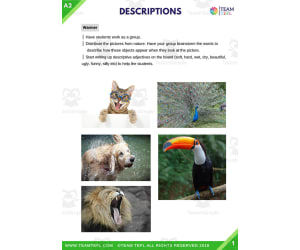
Writing Descriptions | Pre-Intermediate Lesson Plan
ELA, Language Development, ESL, Grade 4, 5, 6, 7, 8, 9, 10, 11, 12, Teacher Tools, Lesson Plans
Writing Descriptions Pre-Intermediate Lesson Plan The Writing Descriptions Pre-Intermediate Lesson Plan serves as an invaluable resource for educators teaching Language Arts curriculum , with a focused approach towards ESL learning. Designed as a pre-intermediate lesson plan, this tool aims to enrich students' aptitude in expressing detailed descriptions through written language. Key Features Robsut instructional guide paving way for diverse grammar and writing exercises centered around description writing. User-friendly layout guaranteeing easy comprehension and sustaining student engagement. Highly versatile resource can be included in whole group teachings or smaller study groups. An engaging homework exercise could also be facilitated inviting parental involvement in their child's learning journey. Flash cards, a writing exercise and extra study are now also included as part of this resource. This lesson plan includes: Cover page Flash cards A warm-up activity Main use Construction details Rules, along with any exceptions Illustrative examples Two closed exercises One open exercise Revision exercise Writing exercises Chatterbox, a recurring feature in our course books encouraging conversation Activity, such as a game, quiz, puzzle, etc., to conclude the class The lesson plan is available in PDF with 30 ready to print pages and one digital access file. A part of it is on Google Apps. The answer key is also included for reference.
Author TEAM TEFL
Tags Writing, Descriptions, Language Arts, ESL, Lesson Plan
How to Write a Paragraph - Digital Lesson Plan Gr. 5-8 - FLASH-MAC
ELA, Writing, Grade 3, 4, 5, 6, 7, 8, Teacher Tools, Lesson Plans
Digital Lesson Plan: How to Write a Paragraph - Gr. 5-8 FLASH-MAC If teaching your students the craft of writing thought-provoking and organized paragraphs has been a challenge, we have the solution for you. Understanding that masterful paragraph construction is an important skill in communicating coherent ideas, we are thrilled to present this engaging digital lesson plan on paragraph composition meant for students in grades 5 through 8. Comprising up to 80 interactive screen-pages filled with interesting content, this lesson plan breaks down the key elements that make a solid paragraph – from forming persuasive topic sentences, supporting sentences, down to rounding it off with an impactful summary sentence. Our resource employs logical and comprehensible strategies Offers students opportunities of practicing prewriting skills Lays out steps for proofreading and revising written material till its readability is worth applauding. A notable highlight of our lesson plan is its use of graphic organizers during learning activities. These visually appealing tools go a long way in assisting students arrange their thoughts during their venture into paragraph crafting. The easy-to-follow screen-pages contain reading materials loaded with theoretical knowledge on strong paragraphs composition added by interactive exercises before-and-after each section reading. All these diligently designed activities boosts test-taking skills improvement efforts. In addition, We've introduced memory match games aimed at enhancing recall abilities (Don't miss captivating crossword puzzles aiming at broadening vocabulary base as well as word searches smartly scattered throughout different segments enhancing language pattern recognition among learners). List item Students relish watching educative videos and listening to audio content while navigating the lesson plan elicits an immersive learning journey. A Resource Aligned with Academic Standards Entirely in line with respected State Standards and diligently designed following Bloom's Taxonomy, this digital lesson plan software is easily modifiable to fit different forms of educational settings – from large classroom sessions, small interactive group discussions or even as part of individual homework assignments. In Summary Elevate your students' writing abilities by equipping them with this comprehensive tool which encourages creativity in sentence crafting. This indispensable guide brings you a handy companion that cultivates proficient paragraph composition skills standing the test of time.
Author Classroom Complete Press
Tags Software (Mac)

The Treasure of Lemon Brown: Full Lesson Plan w/ PowerPoints & Graphic Organizers
ELA, Literature, Grade 6, 7, 8, 9, Lesson Plans, Teacher Tools
The Treasure of Lemon Brown Full Lesson Plan Bundle helps educators teach Walter Dean Myers' short story through engaging activities. This comprehensive resource includes a complete lesson plan to guide analysis of the text's plot, characters, themes, and literary devices. It also contains graphic organizers and PowerPoints focused on topics like characterization, symbolism, theme interpretation, and more. With support materials for before, during, and after reading, this bundle facilitates whole-class, small-group, and individual work. The supplemental PDF and Word worksheets allow flexible implementation for grades 6-9. Overall, The Treasure of Lemon Brown Full Lesson Plan empowers language arts teachers to immerse students in this meaningful short story.
Author Quality Teaching Products
Tags Reading Lesson Plan, Short Story, Symbolism, Allegory, Fiction Text, Lemon Brown Summary, Walter Dean Myers The Treasure Of Lemon Brown, Theme Of Lemon Brown, Summary Of The Treasure Of Lemon Brown, The Treasure Of Lemon Brown Summary, What Is The Theme Of Lemon Brown, Theme Of The Treasure Of Lemon Brown, Treasure Of Lemon Brown Summary, The Treasure Of Lemon Brown Theme

Lesson Plan on An Inspector Calls
Drama, Creative Arts, Reading, ELA, Elementary, High School, Middle School, Homeschool Resources, Lesson Plans, Teacher Tools
A thorough lesson plan on the well-known drama "An Inspector Calls" by J.D. Priestley. The play's action takes place in an industrial city in England, where a young girl kills herself and a well-known British family is routinely investigated in relation to the death. All of the family members are either directly or indirectly implicated in the girl's downfall. As a result, an inspector calls to investigate the family. Before the evening is done, the close-knit and amiable family is revealed to be cowardly, selfish, or self-centered, its good humor turning to sour, and its pleasant fellowship to despised. Every step of the 90-minute lesson is included in the lesson plan. It includes the 'An Inspector Calls || 7 Minute Summary' YouTube video from the Easy as GCSE channel. A student worksheet that may be printed has a lot of activities and answers at the end. Enjoy teaching classic literature to your students!
Author Bright Classroom Ideas Marketplace
Rating
Tags Inspector, Priestley, Literature, Classic, Drama, English, Language, Reading, Elt, Efl

Imperatives | Beginner Lesson Plan
ELA, Grammar, Grade 2, 3, 4, 5, 8, 9, 10, 11, 12, Teacher Tools, Lesson Plans
Imperatives Beginner English Lesson Plan This beginner English lesson plan focuses on teaching imperatives to ESL and EFL students. Created for A1 level learners, it provides a range of materials to build proficiency with imperative forms through interactive activities. The lesson plan covers the main uses of imperatives to express commands, make requests, and give warnings. It outlines imperative construction, rules, and exceptions, reinforcing key concepts with examples. Closed and open exercises allow students to practice imperatives in different contexts. A revision exercise and writing prompts help cement knowledge. Supplementing the core content are conversational prompts, games , puzzles, and other activities. These real-world applications strengthen imperative usage for everyday situations. Printable and digital components cater to diverse learning preferences. Answer keys provide reference for teachers. Suitable for adult education, grades 5-12, and homeschools, this resource empowers beginner ELLs with imperative fundamentals. The engaging format establishes an imperative foundation for advancing English communication skills.
Author TEAM TEFL
Tags Imperatives, Verbs, Grammar Lesson, ESL Activity, Group Work

Nonfiction lesson
ELA, Reading, Grade 1, 2, 3, 4, Teacher Tools, Lesson Plans
Nonfiction Concepts Lesson Plan This interactive Google Slides resource teaches students the key concepts of nonfiction texts. Through discussions, activities, and practice, students will learn how to identify and apply nonfiction text features like captions, labels, glossaries, tables of contents, titles, title pages, and indexes. Animated slides, speaker notes, class discussion prompts, and student application activities allow this resource to be used flexibly: as an introductory whole-group lesson, a small group activity , or even home learning. This concrete, engaging resource aims to spark student creativity and critical thinking. Check out our shop for more nonfiction text features lessons covering glossaries, tables of contents, titles, title pages, and indexes. Made for grades 1-4.
Author Ezee 101
Tags Story Elements, Text Features, Nonfiction, Interactive Reading, Nonfiction Concept, Interactive, Student Engagement

Literary Devices: Foreshadowing,Flashback, Symbolism and Irony - FLASH-PC
ELA, Literature, Grade 5, 6, 7, 8, Teacher Tools, Lesson Plans
Literary Devices: Foreshadowing, Flashback, Symbolism and Irony - FLASH-PC An expertly crafted teaching resource for students between grades 5 and 8. What sets this learning tool apart is its implementation of curriculum -based content encompassed in a chapter mini format for ease-of-use. The significance of this resource: It makes the elements of literature tangible. It outlines four key literary devices – foreshadowing, flashback, symbolism, and irony with engaging reading passages. 'Before you Read' and 'After you Read' questions are integrated to ensure comprehension while promoting student discussion. Versatility This tool offers various approaches to its incorporation: Whole-group activity during classroom hours. Teachers can lead device-specific discussions post completion of sections. In smaller peer groups where learners facilitate their own discussion utilizing provided questions as guiding points. Included Practicals: Printables related to each device aid in understanding through practical application. Vocabulary flashcards serve dual roles – assists independent study time or as additional aids during classroom reviews. Graphic organizers offer visual tools that help conceptual development while improving critical-thinking skills. This interactive program interspersed throughout maintains learning fun without removing the essence – encouraging an active engagement with reinforcing taught concepts. A Comprehensive Tool for Understanding Literary Devices: A convenient single zip file includes PC software permitting easy access without compromising on instructional value. The FLASH-PC covers more than just lesson plans; it forms an integral part of Language Arts subjects specifically focusing on literature subtopics. "With the FLASH-PC, you’re not just teaching but mentoring future critics and connoisseurs of literature."
Author Classroom Complete Press
Tags Foreshadowing, Symbolism, Irony, Literary, Literature, Flashback Literature
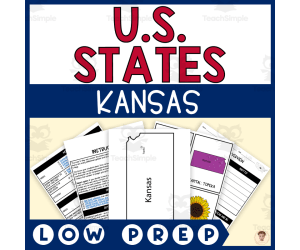
Kansas State Unit Study (Capital, Bird, Flower, Flag, Animal)
ELA, Social Studies, Reading, Reading Comprehension, Grammar, Language Development, Spelling, Writing, History, History: USA, Geography, Grade 2, 3, 4, Lesson Plans, Teacher Tools
Kansas State Unit Study The Kansas State Unit Study is an exceptional tool for educators who want to deepen their students' understanding of the state's unique identity. This five-day, easy-to-use program focuses on some of Kansas' most prominent symbols: its capital, bird, flower, flag and animal. The unit combines various subject areas such as Art, English Language Arts, Geography, History and Social studies which makes it a valuable asset for any curriculum . Features Low Preparation:This feature takes into account time constraints making teaching less demanding yet efficient. Diverse Activities:A blend of reading with given passages; writing with research report pages and interactive notebook activities among others. Versatility:The comprehensive nature that integrates different subjects can be utilized in a myriad of settings beyond just classroom lectures including individual or small group study sessions fostering further understanding. Included Guides:The Kansas State Unit Study also comes packed with Teacher instructions along with detailed 5-day lesson plans ensuring they stay on track each day building consistency which in turn benefits student comprehension. Differentiating Factors This educational resource encourages a good conversation allowing better retention of information through its visual aids like six-color sets plus additional black/white versions symbol cards that help create dynamic conversation starters prompting curiosity about the state’s landmarks. Suitable For Crafted by professionals invested in creating active learners this study pack is fitting for children studying in 2nd grade up until 4th grade exploring key components defining what makes the GP Sunflower state truly unique increasing national geographical awareness fostering educated citizens. If you're looking for engaging interactive ways to complement your Kansas, Midwest region or U.S. states unit study while enhancing other academic abilities this is the teaching resource you need. So why wait? Equip yourself with a tried and tested set of resources dedicated to spotlighting Kansas State through hands-on practical learning resources.
Author Heather Huhman
Tags Kansas State, Unit Study, Symbols, Interdisciplinary Approach, Engaging Learning Activities

The Lottery: Full Lesson Plan w/ PowerPoints & Graphic Organizers
ELA, Literature, Grade 9, 10, 11, 12, Lesson Plans, Teacher Tools
The Lottery Full Lesson Plan Bundle This comprehensive bundle provides educators with everything needed to teach Shirley Jackson's short story "The Lottery" to secondary students. The bundle includes a complete standards-based lesson plan to guide instruction, a multimedia worksheet for students, an answer key, and over 20 graphic organizers and PowerPoint presentations to support teaching characterization, theme, symbolism, irony, plot, and more literary elements. With multiple file types that can be easily customized, this resource offers flexibility to teach the text to whole groups, small groups, or individual students. The materials aim to boost critical thinking and analysis of this classic story about conformity through a variety of engaging activities suitable for grades 9-12.
Author Quality Teaching Products
Tags Literature, Short Story, The Lottery Text, Reading Powerpoint, Fiction Text, The Lottery Answer Key

History of the Domestic Dog: Guided Reading Level R with Lesson Plan
ELA, Resources for Teachers, Reading Comprehension, Reading, Science, Language Development, Life Sciences, Vocabulary, History, Social Studies, Grade 3, 4, 5, Worksheets & Printables, Worksheets, Teacher Tools, Centers, Activities, Literacy Readers, Quizzes, Quizzes and Tests, Assessments, Lesson Plans
This History of the Domestic Dog (level r) guided reading book with lesson plan includes: Guided Reading Color Label (front cover x1) This is a quick way to match the book’s demands to what students can generally handle.. The overall goal is to use the level/color to pick books for several smaller groups. To qualify for a certain level, a student is expected to read a book from that level with about 90–94% accuracy. If a student is consistently accurate and understands, move up a level. If the student is struggling at that level, drop down and add more support. Each student will improve at completely different rates, but it is generally one of the best ways to check progress across the class. DOWNLOAD THE CATALOG TO VIEW ALL GUIDED READING BOOKS AVAILABLE (SORTED LEVELS A-Z) Pre-Reading Question (x1) Teacher asks the prompt aloud, can be while showing the cover or first page. Students share what they already know, or make educated guesses from the cover. Prompt them to use the target vocabulary. Write some of their responses on the board to look back at during the reading. Vocabulary Words (x5) Introduce the five words, best doing it one at a time. Start by saying it, while students repeat and then see if anyone knows what it means before reading further. Read through the meaning and try to briefly connect each word to a picture or gesture so it’s meaningful. Ask students to flip through the book pages and point to where they see each of the vocabulary words. While reading the book pause upon coming across one of the vocab words or read the sentence twice to make sure students understand the word has appeared. Optional: Ask students to raise hands whenever they see/hear one of the new words. Guided Reading Pages (x10) Check the book snapshot (below) for: primary topic - do you need to prep extra reading or intro materials on this? what is taught best - decide on 1-2 bullets to focus on, use the prompt or words provided here for best results. learning goals - what you are checking for students to be able to do after the session, elicit answers using prompts or words provided. key vocabulary (see section above). questions overview - so you know what is coming up and if you need to prep extra materials to assist understanding. Run the lesson You may have already looked at a few of the pages together, but you can show them some of the pictures again first to set meaning. Depending on how much time you have and how familiar your students are with guided reading class, you may want to read the book aloud first with the group first. Students whisper or partner read, while you listen in. If time, do it as a group, one student reading a page each. Use the guided page’s prompts to coach: “Check the picture / does it make sense?” “Point under the words / try the first sound” “Reread the sentence smoothly”. Try to focus more on one student per session (rotating every time), so you can work out if they are ready to move up or need to move down a level. Comprehension Questions (back cover x3) This is your way to check that students didn’t just say the words, but actually understood the text. First, let students answer by pointing to the page/picture and saying a short sentence. After any answer, follow with: “Show me where you found that in the text.” In bigger groups, have partners answer first (10–20 seconds), then call on 2–3 students to share. Differentiation tips: Emerging speakers/struggling readers: oral + pointing On-level: oral in a full sentence Higher: one written sentence or draw + label Book Snapshot Title: The Science and History of the Domestic Dog Genre: Nonfiction (informational) Subject: Life Science Primary Topic: Domestication, traits, and roles of dogs Estimated Guided Reading Level (A–Z): R What This Book Teaches Best Explains dogs’ biological connection to gray wolves , including shared DNA and instincts tied to social behavior and communication. Describes the history of domestication and how human artificial selection led to many distinct dog breeds. Uses specific evidence to show why dogs have exceptional smell and hearing (brain structures, scent receptors, and hearing frequencies). Shows how selective breeding creates specialists for different jobs (speed, herding, cold-weather survival, and service work). Teaches how to read dog communication signals (tail wag speed/height, ear position, facial muscles, back posture). Learning Goals Explain how the text connects domestic dogs to gray wolves using specific evidence (classification and DNA). Describe how domestication began and how humans’ breeding choices created many breeds over time. Identify details that show why dogs can smell better than humans (olfactory bulb and scent receptors). Identify details that show why dogs can hear better than humans (frequencies and ear muscles). Compare at least two breeds in the text by explaining how traits match their work or environment (speed, herding, cold climate, service). Describe what the text says people can look for to understand a dog’s emotional state. Key Vocabulary From the Text subspecies — a smaller group within a kind of animal. domestication — animals becoming used to living with people. olfactory — having to do with smell. frequencies — how high or low a sound is. resilient — able to handle hard conditions and keep going. Discussion Prompts Pre-reading question: What jobs or tasks have you seen dogs do for people? Comprehension questions: According to the text, how are domestic dogs connected to gray wolves? Comprehension questions: What evidence does the text give to show how powerful a dog’s sense of smell is? Comprehension questions: What signs does the text say people can look for to understand a dog’s emotional state? Printing Tips 1. Best Printing Method (Recommended) “Booklet” Printing (Best if Available) If your printer or PDF viewer supports Booklet Printing , use this. Settings to use: Print mode: Booklet Paper size: Letter or A4 (either works) Orientation: Landscape Print on both sides: Yes Flip on: Short edge Scaling: Fit to printable area Booklet subset: First test: Front sides only Then: Back sides only This will automatically: Pair pages correctly Put the cover on the outside Align everything for folding After printing, fold in half and staple along the spine . 2. If “Booklet” Printing Is NOT Available You can still print this correctly with manual duplex printing . Step-by-step: Open the PDF. Choose Print . Set: Orientation: Landscape Pages per sheet: 1 Print on both sides: Yes Flip on: Short edge Print all pages . Because each PDF page already contains two facing book pages, the result will still fold cleanly into a book. Thousands of Cored Education products are included with your TeachSimple membership. Download links and encyclopedia index available here.
Author Cored Education
Rating
Tags Reading Comprehension, Reading Passages, Reading, Guided Reading, Guided Reading Lesson Plan, Guided Reading Activity, Pre-reading, Science Lesson Plans, Life Science, History
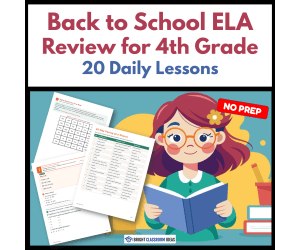
Back to School ELA Review for 4th Grade | 20 Daily Lessons
ELA, Grade 4, Assessments, Teacher Tools, Lesson Plans, Worksheets & Printables
Start the year with a focused 4th grade back to school ELA review that helps students revisit essential Grade 3 reading, grammar, vocabulary, word study, and writing skills. With 20 daily lessons plus 16 print-and-play literacy games, this resource gives fourth graders structured practice while helping you establish a predictable beginning-of-year routine. Each lesson follows the same four-part rhythm— Read & Think, Language & Grammar, Word Work, and Write About It —with a full lesson designed for about 15–25 minutes. Skills spiral across the 20 days, moving from focused review into mixed reading, grammar, vocabulary, editing, and reflection. What’s Included This 4th grade ELA review includes: ✅ 20 daily ELA review lessons ✅ Short fiction, nonfiction, and persuasive reading passages ✅ Reading comprehension questions ✅ Inference and text evidence practice ✅ Grammar and language review ✅ Vocabulary and word study ✅ Greek and Latin roots practice ✅ Daily writing prompts ✅ 16 print-and-play literacy games and activities ✅ Partner and small-group activities ✅ Literacy center options ✅ Complete answer key for all 20 days ✅ Teacher guide ✅ 20-day pacing overview ✅ Four-week planning guide ✅ Differentiation suggestions ✅ Game preparation directions ✅ Game-to-skill quick-reference map ✅ Class progress record sheet ✅ Family letter ✅ Student reflection ✅ Reading Star Award The 68-page Student Workbook contains 20 daily lessons plus 16 print-and-play games , with daily practice in reading, grammar, word work, and writing. The separate Answer Key provides responses for all 20 lessons, organized by day and section for faster checking, while allowing reasonable student wording for open-ended writing and reflection tasks. How It Works in the Classroom Use this 4th grade back to school ELA review for morning work, whole-group warm-ups, independent practice, literacy stations, small groups, intervention, homework, early finishers, or beginning-of-year formative assessment. Each daily lesson includes: 📖 Read & Think — Students read a short fiction, nonfiction, or persuasive passage and answer four comprehension questions ✏️ Language & Grammar — Students revisit a focused Grade 3 grammar or language skill 🔤 Word Work — Students practice vocabulary, affixes, roots, figurative language, word relationships, and academic language 📝 Write About It — Students respond to a short writing task connected to the day’s reading or skill focus The predictable structure supports independence while giving students repeated practice across multiple ELA strands. The Teacher Guide suggests reading passages together when needed, modeling the first grammar item, and then releasing students to independent or partner work. The 20-Day Pacing at a Glance chart on page 6 of the Teacher Guide shows how skills spiral across the month. Reading moves from main idea and details, theme, character traits and motivation, setting and mood, and plot and conflict into inference, cause and effect, compare and contrast, author’s purpose, point of view, text structure, fact and opinion, text features, summarizing, text evidence, drawing conclusions, making inferences, making connections, and mixed review. For a four-week routine, the Teacher Guide suggests assigning daily workbook practice Monday through Thursday and using Friday for a literacy game, center rotation, or catch-up. Standards & Learning Goals This fourth grade literacy review revisits key Grade 3 learning across five major ELA strands: 📚 Reading Comprehension — main idea and details, theme, character traits and motivation, setting and mood, plot and conflict, inference, cause and effect, compare and contrast, author’s purpose, point of view, text structure, fact and opinion, text features, summarizing, text evidence, drawing conclusions, and making connections ✏️ Grammar & Language — fragments and run-ons, complete subjects and predicates, nouns, verb tenses, comparatives and superlatives, subject and object pronouns, subject-verb agreement, compound sentences, commas, quotation marks, complex sentences, apostrophes, prepositions, capitalization, combining and expanding sentences, editing, commonly confused words, and revising for word choice 🔤 Word Study — prefixes, suffixes, root words, and Greek and Latin roots 💬 Vocabulary — synonyms, antonyms, context clues, homophones, homographs, similes, metaphors, idioms, shades of meaning, analogies, and academic vocabulary 📝 Writing — paragraph writing, opinion writing with reasons, descriptive writing, cause-and-effect explanation, comparison writing, persuasive writing, sequencing, summarizing, text-based responses, mystery writing, revising for word choice, narrative continuation, and reflection The daily workbook intentionally pairs skills across strands. For example, Day 1 combines main idea and details with fragments and run-ons plus prefixes; Day 8 combines compare and contrast with compound sentences and homophones; Day 11 combines text structure with complex sentences and Greek and Latin roots; and Day 17 combines inference with commonly confused words and academic vocabulary. Why Teachers Love It ✨ Build a consistent first-month routine. Students see the same four-part lesson structure each day, helping classroom expectations become more predictable. ✨ Review multiple ELA strands in one resource. Reading comprehension, grammar, vocabulary, word study, and writing are integrated across 20 days of practice. ✨ Strengthen higher-level reading comprehension. Students practice theme, motivation, mood, conflict, inference, author’s purpose, point of view, text structure, text evidence, drawing conclusions, summarizing, and more. ✨ Revisit essential grammar skills. Practice includes run-ons and fragments, subjects and predicates, verb tenses, pronouns, subject-verb agreement, compound and complex sentences, commas, quotation marks, apostrophes, prepositions, capitalization, editing, and commonly confused words. ✨ Build stronger vocabulary and morphology skills. Students work with prefixes, suffixes, Greek and Latin roots, context clues, synonyms, antonyms, homophones, homographs, figurative language, analogies, and academic vocabulary. ✨ Include meaningful writing every day. Writing prompts ask students to explain, persuade, compare, summarize, describe, reflect, use text evidence, continue a narrative, and apply stronger word choice. ✨ Add 16 hands-on literacy games and activities. The workbook includes Parts of Speech Sort, Root Word Match, Synonym Match, Roll-a-Root Word, Academic Vocabulary BINGO, Multisyllable Roll & Read, Prefix Sort, Antonym Match, Reading Road Race, Main Idea Baskets, Fact or Opinion Sort, Sentence Building Tiles, Fix-It Cards, Sequence Cards, Homophone Match, and Syllable Sort. ✨ Quickly match games to skills. The Game → Skill Quick Map on page 9 of the Teacher Guide visually pairs each activity with its target, including Greek and Latin roots, academic vocabulary, reading fluency, main idea and details, complex and compound sentences, editing, text structure, homophones, and syllables. ✨ Prep games once and reuse them. The Teacher Guide recommends printing game pages on cardstock, laminating boards and cards, cutting pieces apart, and storing each game in a labeled bag for repeated use. ✨ Differentiate without creating separate lessons. Suggested supports are included for below-level readers, on-level learners, above-level students, and multilingual learners. ✨ Use daily work as low-stakes formative assessment. The Teacher Guide recommends spot-checking comprehension and grammar while watching student writing for growth. The Class Record Sheet shown on page 10 includes Week 1 through Week 4 tracking columns plus space for notes and skills to revisit. ✨ Save time checking student work. The included answer key covers all 20 days and provides clear section-by-section responses. ✨ Support home-school communication. The Teacher Guide includes a family letter that explains the review routine and gives caregivers simple ideas for supporting reading and language practice at home. Give students a confident start to fourth grade with this 4th grade back to school ELA review . Download it for 20 days of structured Grade 3 skills review, daily reading and writing practice, focused grammar and vocabulary work, plus 16 print-and-play games that can extend learning into centers, partner work, and small groups. Perfect for teachers searching for 4th grade morning work , third grade skills review, beginning-of-year ELA activities, fourth grade literacy centers, reading comprehension practice, grammar review, vocabulary activities, Greek and Latin roots practice, first month of school activities, formative assessment, or a complete back-to-school literacy review.
Author Bright Classroom Ideas Marketplace
Rating
Tags Daily Lesson, Assessment, Ela, Reading, Writing, Grammar, Back To School

Adjectives and Adverbs
ELA, Language Development, ESL, Grade 3, Teacher Tools, Lesson Plans
Adjectives and Adverbs Teaching Resource The Adjectives and Adverbs teaching resource is a comprehensive lesson plan designed to aid Grade 3 educators in their language arts curriculum , specifically those focusing on providing English as a Second Language (ESL) lessons. This expertly crafted resource offers a structured guide primarily towards the clear identification, understanding, and context-based application of adjectives and adverbs. The main goal lies in helping students distinguish between the descriptive nature of adjectives and the modifier role of adverbs. Students can adeptly identify both these functionalities while also efficiently providing them with opportunities for meaningful usage. Included Product File This teaching resource contains an effective product file that serves as an instrumental pedagogical tool for teachers in public school settings or parents facilitating homeschooling. The downloadable PDF format is packed with content suitable across different educational needs - from whole group instruction to small group activities, independent work, or homework assignments. Towards integrating this content into daily lesson plans aimed at strengthening grade 3 ESL learners’ language competencies: teachers can quickly extract content from this file. The tool optimized for utilization provides engaging opportunities for students to practice identifying and using adjectives and adverbs correctly thus enhancing their general English-language proficiency over time. Achieving Balance through The Resource "Adjective's & Adverb's", achieves an exemplary balance between instructional guides, hands-on exercises concept application. This ensures better absorption by learners regardless of their learning pace or style - making it a practical addition to any grade 3 language arts passion-driven educator’s repository.
Author Classroom Complete Press
Tags PDF