



3,910 products added recently
Page 13 - History Lesson Plans
Transport your students through time with history lesson plans that vividly illustrate past events and societies. These resources include primary sources, discussions, and projects. Implement them to foster critical thinking and a deeper understanding of our world's history.

 Show filters

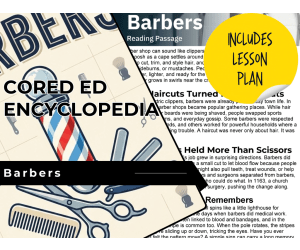
Barbers Reading Comprehension Passage - Cored Ed Encyclopedia
ELA, Language Development, Reading Comprehension, Reading, Social Studies, Writing, Vocabulary, History, Pre-Reading, Spelling, Grade 2, 3, 4, 5, Worksheets & Printables, Worksheets, Teacher Tools, Centers, Activities, Writing Prompts, Assessments, Quizzes and Tests, Quizzes, Lesson Plans
This barbers reading comprehension with lesson plan includes: Visualization (on the front cover) Start your lesson by taking a minute to think and share something about the topic. Read the script aloud (slowly), perhaps prepare some music or sound effects. Student close their eyes and let their imaginations wander. Students open their eyes, read the question aloud and give them a few minutes to complete. Ask a few students to share or keep answers until the end to compare with what they learn in the passage. Quick pause—thousands of Cored Education products are included with your TeachSimple membership. Download links and encyclopedia index available here. Pre-Reading Trivia Students will write down one thing they already know about the subject and then read five more facts and discuss. These facts are fun, and the students will enjoy learning about the subject before reading more. Give 1 minute for students to write what they already know (no pressure—best guess is fine). Read the five facts together. After each fact, do ask a student for their opinion, was it surprising? Set a purpose by asking students to highlight/underline one fact they want to learn more about during the reading. Reading Passage The text is a high-interest reading passage with set paragraphs, roughly three to four paragraphs long. It contains a variety of themes about the topic, anywhere from history to technology. The passage is between 250 and 350 words in length. First, ask students to look at the headings and see what they’ll learn about today. What do they know about the topic/heading? First read options: Teacher read-aloud (best for support). Partner reading (paragraph by paragraph). While reading, students underline important details, and vocabulary words they think may come up in the questions section. Mixed Questions The first question page contains four multiple-choice questions, each with a choice of four answers, and three written response questions that require a sentence or two from the student. Students complete the mcqs first independently, then review quickly as a class. For the 3 written responses, try to get students giving the answer with some form of evidence: “I think ___ because the text says ___.” If students get stuck, send them back to check the passage. Vocabulary Questions Practice seven key words from the text in this section across two activities. First section is scrambled words where students will unscramble three words given a clue for each. The second section is a word to meaning matching activity. Before starting, have some students read out words they underlined in the passage. Ask students to say the word and read aloud the sentence(s) around each word. Ask students to do scrambled words and the matching exercise in pairs then go through answers as a class. For the scrambled spelling task, get four pairs to come up to the board and write the words for extra practice with the other student reading out the clue. For the matching task, prompt students to give full sentences: “I matched ___ with ___ because ___.” Creative Writing In this question, the student will be required to write a five to eight sentence paragraph on a question related to the topic. Before starting, ask students write down 3 key ideas they are going to include in their piece. Ask students for ideas to share around the class to help those struggling. Pro writing expectations: 5–8 sentences At least 2 facts or details from the passage At least 2 vocabulary words from the previous page Students read their paragraphs while classmates listen for facts and vocabulary words. Extension Activities This page is optional for fast finishers or to take home. There are several activities, each one requiring a different skill. Do some, do none, do all, completely optional - but you will feel reassured knowing every possibility is planned for. Includes summary writting question and additional facts. Answer Key There are answers for the multiple-choice questions, written response questions have sample answers, vocabulary answers and if there is a summary question then a sample summary will be provided as well. Lesson Plan Included Customized lesson plan for this lesson is included. Lesson Snapshot Title: Barbers Genre: Nonfiction (informational passage) Subject: Social Studies / Careers & Community Primary Topic: What barbers do and how barbering changed over time Estimated Guided Reading Level (A–Z): S Support pages noted in the PDF: visualize prompt, pre-reading trivia, mixed questions, vocabulary activity, creative writing prompt, extension activities + “final facts,” and an answer key. What This Lesson Teaches Best What barbers do: cut, trim, and style hair, and often shave or shape facial hair. How places like barber shops can be about community (talking and sharing news) as well as haircuts. How a job can change over time, including barbers doing medical tasks in the Middle Ages and later separating from doctors and surgeons. How symbols communicate meaning: the spinning striped barber pole connects to earlier work (red/white linked to blood and bandages; a blue stripe is common in the United States). Reading for precise details (e.g., hair “swirls” near the crown; how rotating stripes create an illusion). Learning Goals Students will identify at least two services the passage says many barbers provide. Students will explain why barber shops became popular gathering places in Greece, using details from the text. Students will describe how the barber’s job “grew in surprising directions” during the Middle Ages, based on the passage. Students will describe what “bloodletting” means in the passage. Students will explain what the red and white stripes on a barber pole are often linked to and how the spinning pole can trick the eyes. Students will describe how the passage connects a simple shop sign to a long history (“a simple sign can carry a long memory”). Key Vocabulary From the Text clippers — electric tools that cut hair. mustaches — hair above the upper lip. swirls — curved patterns that twist around. bloodletting — making a small cut to let blood flow. bandages — cloth used to cover a wound. FULL CATALOG OF DOWNLOAD LINKS AND ENCYCLOPEDIA INDEX HERE
Author Cored Education
Rating
Tags Vocabulary, Reading Comprehension, Reading Passages, Lesson Plans, Ela Lesson Plans, Reading Comprehension Lesson Plans, Pre-reading, History, History Lesson Plans, Social Studies Lesson Plans
Lesson Plan on the Sinking of the Titanic
History, Social Studies, Elementary, Middle School, Lesson Plans, Teacher Tools, Worksheets & Printables
This interesting lesson on the Titanic accident blends language study with historical analysis. Students examine significant events leading up to the Titanic's disaster, evaluate variables that affected decisions, and improve their English through interactive exercises using a video and text. Students can share past knowledge during the warm-up conversation that precedes the session. The next step is a listening comprehension exercise that reinforces important information from the film. Essential nautical words are introduced through vocabulary activities, and students can arrange events chronologically with the aid of a timeline activity. A true-or-false exercise evaluates their comprehension of the narrative and promotes critical thinking. Students are exposed to historical viewpoints through role-playing exercises, which promote cooperation and communication. In order to improve their storytelling skills, they are also asked to write a diary entry from the perspective of a passenger as part of a creative writing assignment. A thoughtful examination of the reasons of the tragedy and the lessons discovered marks the lesson's conclusion. Through the integration of speaking, writing, listening, and reading skills, this session provides a comprehensive approach to language acquisition and historical comprehension.
Author Bright Classroom Ideas Marketplace
Tags Titanic, Ship, Lesson, Plan, History, Sinking

I WONDER - What Did The Compsognathus Eat | Animated Video Lesson
History: Ancient, History, Social Studies, History: World, Animals, Life Sciences, Science, Grade 4, 5, 6, 7, 8, 9, 10, Lesson Plans, Teacher Tools
Video Introduction An amazing video designed for the students to learn more about dinosaurs in different countries. I WONDER - What Did The Compsognathus Eat | Animated Video Lesson Do you like dinosaurs? what is your favorite one? Do you own a pet? If yes, tell us more about it, like what its name? And what do you like most about it? Do you think that your pet has been evolved from a dinosaur? Can you write down the characteristics of your favourite dinosaur like it's shape, their rivals, where did it use to live and what was their favourite food? What is the largest and the smallest dinosaur that ever found? Why is the T-rex is so famous? Have you ever read any interesting facts about it? Can you name any of the carnivores or herbivores dinosaurs? I WONDER - What Did The Compsognathus Eat | Animated Video Lesson The video is perfect for encouraging the researching skills for the students, while learning more about dinosaurs. I WONDER - What Did The Compsognathus Eat | Animated Video Lesson This friendly designed video is suitable for students at school, homeschooling, and as a group activity. Format Available in MP4 format.
Author Educational Voice
Rating
Tags What Did The Compsognathus Eat, What Did The Compsognathus Eat Video, Compsognathus, Compsognathus Facts, Compsognathus Video, Compsognathus Facts For Kids, Compsognathus Video For Kids
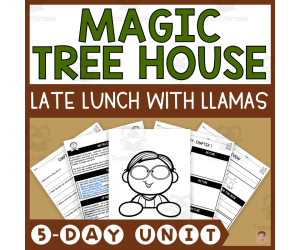
Late Lunch with Llamas (Magic Tree House #34 Lesson Plan)
ELA, Social Studies, Reading, Reading Comprehension, Grammar, Literature, Language Development, Spelling, Vocabulary, Writing, History, History: Ancient, Geography, Grade 1, 2, 3, Lesson Plans, Teacher Tools
Title: Late Lunch with Llamas (Magic Tree House #34 Lesson Plan) This resource provides a comprehensive 5-day lesson plan for Grades 1 to 3, structured around the enchanting story of Late Lunch with Llamas. Blending Language Arts and Social Studies, this educational tool also sparks students' curiosity and encourages active learning through related activities. An easy-to-use teaching aid, it aligns teaching objectives with chapter comprehension questions, vocabulary practice and includes links to relevant video materials. Group discussions can be tailored according to each day's tasks, accommodating diverse learner interests and styles due to its customizable nature depending on student age or reading level. Multidisciplinary Learning Objectives: Arts: Engage students through drawing and coloring exercises. Comprehension Skills & English Language Arts: Enhance grammar, spelling and writing abilities Social Studies & History: Integration of geography lessons inspires holistic understanding. The material places an emphasis on developing research skills for a strong foundation in critical thinking. Make use of pre-reading activities to prepare young learners; try our comprehensive chapter quizzes for reinforcement; assign worksheets based on story elements that focus on literature-driven vocabulary expansion. Fostering Deep Analysis: Carefully curated character analysis materials guide students throughout their discovery journey. Post-reading project-based tasks boost experiential learning—an integral element in modern education practices. Sustainable Teaching Methods: The worksheets provided are versatile— they can be used traditionally or transformed into interactive digital exercises reducing print usage—a sustainable teaching practice we all aim for today. Use this brilliant tool crafted meticulously intertwining fun elements practical along with pedagogic methodology into learning— there's no better way to deepen students' love for the Magic Tree House collection. Nurture inquiring minds through a journey that not only transforms them into confident readers but also critical thinkers and enthusiastic learners.
Author Heather Huhman
Tags Lesson Plan, Magic Tree House, Comprehension, Vocabulary, Geography

I WONDER - How Did The Viking Gods Visit Earth | Animated Video Lesson
History: Ancient, History, Social Studies, History: British, History: Europe, Grade 3, 4, 5, 6, 7, 8, 9, Lesson Plans, Teacher Tools
Video Introduction An amazing video designed for the students to learn more about mythological creatures in different cultures. I WONDER - How Did The Viking Gods Visit Earth | Animated Video Lesson Do you know who are mermaids and what they look like? How do you think they have been created and in which mythology we can find them? Have you ever read about Cerberus the dog with three faces? If yes, tell us where it lived and what was its job? How did Minotaur look like? Did it has a unique story to tell from the Greek mythology? Why do people love to put gnomes in their gardens? In which mythology we can find them? Do you know that not all dragons are same some dragons are really scary and some can bring good luck. So let's discover the difference between the western dragons and Chinese dragons. Tell us which ones do you prefer? I WONDER - How Did The Viking Gods Visit Earth | Animated Video Lesson The video is perfect for encouraging the creativity skills for the students, while learning more about this fantastic mythical creature. I WONDER - How Did The Viking Gods Visit Earth | Animated Video Lesson This friendly designed video is suitable for students at school, homeschooling, and as a group activity. Format Available in MP4 format.
Author Educational Voice
Rating
Tags How Did The Viking Gods Visit Earth, Viking Gods, Viking Gods Facts, Viking Gods Video, Viking Gods Facts For Kids, Viking Gods Video For Kids, Viking Gods Visit Earth, Viking Goddesses, Viking Mythology Video

Gondolas Reading Comprehension Passage - Cored Ed Encyclopedia
ELA, Reading Comprehension, Reading, Science, Technology, Pre-Reading, Language Development, History, Social Studies, Geography, Grade 2, 3, 4, 5, Worksheets & Printables, Worksheets, Teacher Tools, Centers, Activities, Writing Prompts, Assessments, Quizzes and Tests, Quizzes, Lesson Plans
This gondolas reading comprehension with lesson plan includes: Visualization (on the front cover) Start your lesson by taking a minute to think and share something about the topic. Read the script aloud (slowly), perhaps prepare some music or sound effects. Student close their eyes and let their imaginations wander. Students open their eyes, read the question aloud and give them a few minutes to complete. Ask a few students to share or keep answers until the end to compare with what they learn in the passage. Quick pause—thousands of Cored Education products are included with your TeachSimple membership. Download links and encyclopedia index available here. Pre-Reading Trivia Students will write down one thing they already know about the subject and then read five more facts and discuss. These facts are fun, and the students will enjoy learning about the subject before reading more. Give 1 minute for students to write what they already know (no pressure—best guess is fine). Read the five facts together. After each fact, do ask a student for their opinion, was it surprising? Set a purpose by asking students to highlight/underline one fact they want to learn more about during the reading. Reading Passage The text is a high-interest reading passage with set paragraphs, roughly three to four paragraphs long. It contains a variety of themes about the topic, anywhere from history to technology. The passage is between 250 and 350 words in length. First, ask students to look at the headings and see what they’ll learn about today. What do they know about the topic/heading? First read options: Teacher read-aloud (best for support). Partner reading (paragraph by paragraph). While reading, students underline important details, and vocabulary words they think may come up in the questions section. Mixed Questions The first question page contains four multiple-choice questions, each with a choice of four answers, and three written response questions that require a sentence or two from the student. Students complete the mcqs first independently, then review quickly as a class. For the 3 written responses, try to get students giving the answer with some form of evidence: “I think ___ because the text says ___.” If students get stuck, send them back to check the passage. Vocabulary Questions Practice seven key words from the text in this section across two activities. First section is scrambled words where students will unscramble three words given a clue for each. The second section is a word to meaning matching activity. Before starting, have some students read out words they underlined in the passage. Ask students to say the word and read aloud the sentence(s) around each word. Ask students to do scrambled words and the matching exercise in pairs then go through answers as a class. For the scrambled spelling task, get four pairs to come up to the board and write the words for extra practice with the other student reading out the clue. For the matching task, prompt students to give full sentences: “I matched ___ with ___ because ___.” Creative Writing In this question, the student will be required to write a five to eight sentence paragraph on a question related to the topic. Before starting, ask students write down 3 key ideas they are going to include in their piece. Ask students for ideas to share around the class to help those struggling. Pro writing expectations: 5–8 sentences At least 2 facts or details from the passage At least 2 vocabulary words from the previous page Students read their paragraphs while classmates listen for facts and vocabulary words. Extension Activities This page is optional for fast finishers or to take home. There are several activities, each one requiring a different skill. Do some, do none, do all, completely optional - but you will feel reassured knowing every possibility is planned for. Includes summary writting question and additional facts. Answer Key There are answers for the multiple-choice questions, written response questions have sample answers, vocabulary answers and if there is a summary question then a sample summary will be provided as well. Lesson Plan Included Customized lesson plan for this lesson is included. Lesson Snapshot Title: Gondolas Genre: Nonfiction (informational text) Subject: Social Studies (places/culture) Primary Topic: Gondolas in Venice: design, history, and use Estimated Guided Reading Level (A–Z): Q What This Lesson Teaches Best How Venice’s canals and bridges shape daily transportation, making boats important for visiting, carrying food, and crossing town. How a gondolier can steer with one oar using a carved wooden holder called a forcola and a smooth sculling motion. How gondola design supports steering, including being slightly asymmetrical to help one oar work better. How gondolas changed over time (older styles; “banana-shaped” modern gondola in the 1800s; laws affecting appearance). How gondolas are still used today (rides for visitors, traghetti ferries across the Grand Canal, and racing in regattas ). Learning Goals Students will describe why boats are important in Venice using details from the passage. Students will explain how a gondolier steers a gondola with one oar and a forcola. Students will identify one design feature that helps the gondola steer straighter (slight asymmetry). Students will describe how gondolas changed in shape and appearance over time, based on the text. Students will explain what traghetti are and what they do in Venice. Students will describe one way gondola traditions continue today (rides or regattas). Key Vocabulary From the Text forcola — carved wooden holder that supports and guides the oar. sculling — smooth rowing motion used to move and steer. asymmetrical — not the same on both sides. traghetti — small ferries that carry people across the Grand Canal. regattas — boat races where gondoliers race with skill and pride. FULL CATALOG OF DOWNLOAD LINKS AND ENCYCLOPEDIA INDEX HERE
Author Cored Education
Rating
Tags Vocabulary, Reading Comprehension, Reading Passages, Lesson Plans, Ela Lesson Plans, Reading Comprehension Lesson Plans, Pre-reading, Science Lesson Plans, Social Studies Lesson Plans, History
I WONDER - What Is The Federal Reserve | Animated Video Lesson
History: USA, History, Social Studies, Finance, Life Studies, Money, Math, Grade 4, 5, 6, 7, 8, 9, 10, Lesson Plans, Teacher Tools
Video Introduction An amazing video designed for the students to learn more about history. I WONDER - What Is The Federal Reserve | Animated Video Lesson Let's use our time machine and trave though time till we get to the ancient world where life began! Have you ever thought about how did ancient Greeks, Romans, Egyptians and even the Viking and Celts use to shower? And how did these amazing civilizations build iconic buildings and invented things that we still use till today like toothpaste? Do you know who was the first king and queen in the world? Which countries they ruled? Who is the most fascinating person lived on Earth? Tell us more about him/her. I WONDER - What Is The Federal Reserve | Animated Video Lesson The video is perfect for encouraging the researching skills for the students, while learning more about history. I WONDER - What Is The Federal Reserve | Animated Video Lesson This friendly designed video is suitable for students at school, homeschooling, and as a group activity. Format Available in MP4 format.
Author Educational Voice
Rating
Tags What Is The Federal Reserve, Federal Reserve, Federal Reserve Facts, Federal Reserve Video, Federal Reserve Facts For Kids, Federal Reserve Video For Kids, United States, Dollar, Dollar Facts

Henry Ford: History - Hands On
Social Studies, History, History: USA, Grade 1, 2, 3, 4, Teacher Tools, Lesson Plans
Henry Ford: History - Hands On Henry Ford: History - Hands On is a robust teaching resource designed specifically to guide educators in teaching the intriguing history of the automobile. This curriculum is ideal for students across grades 1 to 4, and supplements Social Studies intricately, especially USA History. The lesson plans housed within this product lead your student's journey back in time when long-distance travel was not as simple as it is today. The history of automobiles offers an engaging narrative that serves superbly for educating young minds. It doesn’t merely present facts but facilitates exploration into interesting and complex challenges faced by early inventors like Henry Ford. About the PDF Content The PDF holds 34 pages, all set up seamlessly for instant printing. Each page offers ample information and interactive activities which are optimized towards triggering curiosity while adhering closely to learning objectives. The hands-on nature of these lessons infuses additional interaction, drawing historical figures like Henry Ford nearer than ever before. Versatility in Use This resource can be flexibly adapted according to classroom needs; use it for whole group or small group instruction. You also have the option to assign sections as homework assignments extending learning beyond school hours. However you choose to implement this resource into your lesson planning; assuredly it will deliver valuable educational content tailored according to grade-level expectations. In essence, Henry Ford: History - Hands On opens doors into history, highlighting how society transformed dramatically due to one man's innovative spirit and tenacity.
Author Classroom Complete Press
Tags Henry Ford, Inventors, Transportation, History Lesson, History Book, Henry Ford History Com

I WONDER - Is There A God Of Earthquakes | Animated Video Lesson
Earth Sciences, Earth and Environmental Sciences, Science, History, Social Studies, History: Ancient, History: Europe, Grade 3, 4, 5, 6, 7, 8, 9, Lesson Plans, Teacher Tools
Video Introduction An amazing video designed for the students to learn more about natural disasters in different countries. I WONDER - Is There A God Of Earthquakes | Animated Video Lesson Do you like summer days where the sun is shinning and you can see beautiful flowers everywhere or winter days where it is raining or snowing and where you can set by the fireplace and enjoy the scene from outside your windows? How to do you thing the blizzards and hurricanes or tornadoes got their names? Can you name a volcanic mountain? Have you ever read about earthquakes? Do you know why earthquakes happen? I WONDER - Is There A God Of Earthquakes | Animated Video Lesson The video is perfect for encouraging the researching skills for the students, while learning more about this fantastic phenomenon. I WONDER - Is There A God Of Earthquakes | Animated Video Lesson This friendly designed video is suitable for students at school, homeschooling, and as a group activity. Format Available in MP4 format.
Author Educational Voice
Rating
Tags Is There A God Of Earthquakes, God Of Earthquakes, God Of Earthquakes Facts, God Of Earthquakes Video, God Of Earthquakes Video For Kids, God Of Earthquakes Facts For Kids, Earthquakes, Earthquakes Facts
I WONDER - How Did Vikings Stay Clean | Animated Video Lesson
History: Ancient, History, Social Studies, History: British, History: Europe, History: USA, History: Canada, History: World, Grade 4, 5, 6, 7, 8, 9, 10, Lesson Plans, Teacher Tools
Video Introduction An amazing video designed for the students to learn more about history. I WONDER - How Did Vikings Stay Clean | Animated Video Lesson Do you like history? Which topic do you really enjoy about history? Have you ever read an interesting fact about the Vikings? If yes, can you mention them? What do you like most about the Victorian era? Can you name all the Tudors? Have you ever wondered how people used to live in ancient Japan and ancient China? Do you know any interesting facts about ancient Egyptians and the Pharaohs? Have you ever visited South America? What do you know about Incas and Aztecs? Celtic culture was really one of a kind, can you name any of the places that Celts used to live in? Imagine yourself living during the ancient Roman empire, how your life will look like? Ancient Greece was an amazing place to live in. What do you know about ancient Greek life? I WONDER - How Did Vikings Stay Clean | Animated Video Lesson The video is perfect for encouraging the researching skills for the students, while learning more about history. I WONDER - How Did Vikings Stay Clean | Animated Video Lesson This friendly designed video is suitable for students at school, homeschooling, and as a group activity. Format Available in MP4 format.
Author Educational Voice
Tags How Did Vikings Stay Clean, How Did Vikings Stay Clean Video, Vikings, Vikings Facts, Vikings Facts For Kids, Vikings Video, Vikings Video For Kids, Viking, Viking Facts, Viking Video

X-Rays Reading Comprehension Passage - Cored Ed Encyclopedia
ELA, Language Development, Reading Comprehension, Reading, Science, Technology, Physics, History, Social Studies, Pre-Reading, Grade 2, 3, 4, 5, Worksheets & Printables, Worksheets, Teacher Tools, Centers, Activities, Writing Prompts, Assessments, Quizzes and Tests, Quizzes, Lesson Plans
This x-rays reading comprehension with lesson plan includes: Visualization (on the front cover) Start your lesson by taking a minute to think and share something about the topic. Read the script aloud (slowly), perhaps prepare some music or sound effects. Student close their eyes and let their imaginations wander. Students open their eyes, read the question aloud and give them a few minutes to complete. Ask a few students to share or keep answers until the end to compare with what they learn in the passage. Quick pause—thousands of Cored Education products are included with your TeachSimple membership. Download links and encyclopedia index available here. Pre-Reading Trivia Students will write down one thing they already know about the subject and then read five more facts and discuss. These facts are fun, and the students will enjoy learning about the subject before reading more. Give 1 minute for students to write what they already know (no pressure—best guess is fine). Read the five facts together. After each fact, do ask a student for their opinion, was it surprising? Set a purpose by asking students to highlight/underline one fact they want to learn more about during the reading. Reading Passage The text is a high-interest reading passage with set paragraphs, roughly three to four paragraphs long. It contains a variety of themes about the topic, anywhere from history to technology. The passage is between 250 and 350 words in length. First, ask students to look at the headings and see what they’ll learn about today. What do they know about the topic/heading? First read options: Teacher read-aloud (best for support). Partner reading (paragraph by paragraph). While reading, students underline important details, and vocabulary words they think may come up in the questions section. Mixed Questions The first question page contains four multiple-choice questions, each with a choice of four answers, and three written response questions that require a sentence or two from the student. Students complete the mcqs first independently, then review quickly as a class. For the 3 written responses, try to get students giving the answer with some form of evidence: “I think ___ because the text says ___.” If students get stuck, send them back to check the passage. Vocabulary Questions Practice seven key words from the text in this section across two activities. First section is scrambled words where students will unscramble three words given a clue for each. The second section is a word to meaning matching activity. Before starting, have some students read out words they underlined in the passage. Ask students to say the word and read aloud the sentence(s) around each word. Ask students to do scrambled words and the matching exercise in pairs then go through answers as a class. For the scrambled spelling task, get four pairs to come up to the board and write the words for extra practice with the other student reading out the clue. For the matching task, prompt students to give full sentences: “I matched ___ with ___ because ___.” Creative Writing In this question, the student will be required to write a five to eight sentence paragraph on a question related to the topic. Before starting, ask students write down 3 key ideas they are going to include in their piece. Ask students for ideas to share around the class to help those struggling. Pro writing expectations: 5–8 sentences At least 2 facts or details from the passage At least 2 vocabulary words from the previous page Students read their paragraphs while classmates listen for facts and vocabulary words. Extension Activities This page is optional for fast finishers or to take home. There are several activities, each one requiring a different skill. Do some, do none, do all, completely optional - but you will feel reassured knowing every possibility is planned for. Includes summary writting question. Answer Key There are answers for the multiple-choice questions, written response questions have sample answers, vocabulary answers and if there is a summary question then a sample summary will be provided as well. Lesson Plan Included Customized lesson plan for this lesson is included. Lesson Snapshot Title: X-Rays Genre: Nonfiction (informational text) Subject: Science (energy, technology, space science) / Informational Reading Primary Topic: Discovering X-rays and how they’re used Estimated Guided Reading Level (A–Z): R Support pages present: Pre-reading trivia; mixed questions; vocabulary page; creative writing; extension activities; answer key What This Lesson Teaches Best How Wilhelm Conrad Röntgen noticed a surprising glow in a dark lab and named the mystery ray “X.” Why X-ray pictures look like “shadow pictures,” with bone and metal stopping rays more than skin and soft tissue. How X-rays help doctors and dentists see inside the body without surgery, and how CT scans use many X-rays from different angles. That X-ray doses are kept as low as possible because X-rays can damage cells. How X-rays are used beyond hospitals, including security scanners and space telescopes on satellites that collect X-rays from hot places near black holes. Learning Goals Students will describe what happened in the lab that made the discovery of X-rays possible. Students will explain why bone and soft tissues show up differently on an X-ray picture. Students will identify how X-rays help doctors or dentists look inside the body without cutting. Students will describe what the text says about safety and why doses are kept low. Students will give an example of an X-ray use outside a doctor’s office found in the passage. Key Vocabulary From the Text invisible — not able to be seen. mystery — something not understood yet. detector — a tool that records the X-rays. tissues — soft parts inside the body. wavelength — the size/length of a wave. FULL CATALOG OF DOWNLOAD LINKS AND ENCYCLOPEDIA INDEX HERE
Author Cored Education
Rating
Tags Vocabulary, Reading Comprehension, Reading Passages, Lesson Plans, Ela Lesson Plans, Reading Comprehension Lesson Plans, Pre-reading, Science Lesson Plans, History Lesson Plans, Physics

I WONDER - Did Girls Attend School In Ancient Greece | Animated Video
History: African, History, Social Studies, History: Europe, Grade 2, 3, 4, 5, 6, 7, 8, Lesson Plans, Teacher Tools
Video Introduction An amazing video designed for the students to learn more about history. I WONDER - Did Girls Attend School In Ancient Greece | Animated Video Lesson Do you like history? Which topic do you really enjoy about history? Have you ever read an interesting fact about the Vikings? If yes, can you mention them? What do you like most about the Victorian era? Can you name all the Tudors? Have you ever wondered how people used to live in ancient Japan and ancient China? Do you know any interesting facts about ancient Egyptians and the Pharaohs? Have you ever visited South America? What do you know about Incas and Aztecs? Celtic culture was really one of a kind, can you name any of the places that Celts used to live in? Imagine yourself living during the ancient Roman empire, how your life will look like? Ancient Greece was an amazing place to live in. What do you know about ancient Greek life? I WONDER - Did Girls Attend School In Ancient Greece | Animated Video Lesson The video is perfect for encouraging the researching skills for the students, while learning more about history. I WONDER - Did Girls Attend School In Ancient Greece | Animated Video Lesson This friendly designed video is suitable for students at school, homeschooling, and as a group activity. Format Available in MP4 format.
Author Educational Voice
Tags Did Girls Attend School In Ancient Greece, Did Girls Attend School In Ancient Greece Video, Ancient Greece, Ancient Greece Facts, Ancient Greece Video, Ancient Greek Children, Ancient Greek Children Video

I WONDER - What Is Machu Picchu | Animated Video Lesson
Geography, Social Studies, History: Ancient, History, History: World, Grade 4, 5, 6, 7, 8, 9, 10, Lesson Plans, Teacher Tools
Video Introduction An amazing video designed for the students to learn more about famous places in different countries. I WONDER - What Is Machu Picchu | Animated Video Lesson What do you know about this place? Do you know in which part of the world it is? Have you ever visited this place? If yes, can you tell us more about your adventure, and what do you like the most about this place? Do you like reading about Geography? What is your favorite country in the whole world? If you are going on a trip where it will be? Which country? What you are going to see there? Does this country has a famous place to visit? I WONDER - What Is Machu Picchu | Animated Video Lesson The activity is perfect for encouraging the researching skills for the students, while learning more about this fantastic place. I WONDER - What Is Machu Picchu | Animated Video Lesson This friendly designed video is suitable for students at school, homeschooling, and as a group activity. Format Available in MP4 format.
Author Educational Voice
Rating
Tags What Is Machu Picchu, What Is Machu Picchu Video, Machu Picchu, Machu Picchu Video, Machu Picchu Facts, Machu Picchu Facts For Kids, Machu Picchu Video For Kids, South America, South American History
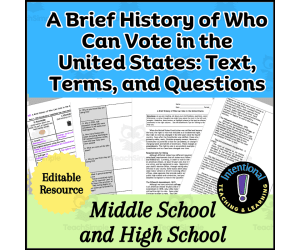
A Brief History of Who Can Vote in the U.S..-Text, Terms, & Questions
Social Studies, Government, History, History: USA, Grade 7, 8, 9, 10, Teacher Tools, Lesson Plans
It is imperative that our students learn our voting rights history and to help them understand how fundamental voting rights are to a healthy democracy. The 45-page, editable, low-prep resource, A Brief History of Who Can Vote in the United States- Text, Terms, and Questions, provides your middle and high school students with an engaging reading and critical thinking questions that will prompt interesting discussions. The reading provides a short history of voting in the United States starting with The United States Constitution and requirements for voting, continuing with the 15th, 19th 23rd, 24th, and 26th Amendments, the 1965 Voting Rights Act; the 2013 Supreme Court' ruling Shelby v. Holder that struck down key parts of the Voting Rights Act, Voting during the Pandemic in 2020, the 2020 General Election, and new attempts to both expand and restrict voting rights in the 2022 and upcoming 2024 elections. The pdf includes a link to a force copy google doc which you can easily edit to suit your needs. Included in the resource are the following: About this Resource-- a table that includes key information such as the link to the google document so you can make a copy, standards, objectives, learning targets, etc An Essential Question: How has the evolution of voting rights in the United States shaped the nation's democratic principles and institutions? 3 Guiding Questions: 1. What factors have influenced the expansion and restriction of voting rights throughout U.S. history, particularly in relation to race, gender, and socioeconomic status? 2. How have amendments to the U.S. Constitution, such as the 15th, 19th, and 26th Amendments, impacted the extension of voting rights and the empowerment of disenfranchised groups? 3. In what ways does voter suppression persist in modern American society, and what strategies have been employed to combat these efforts, particularly in the wake of the 2020 election? a detailed lesson plan a KWL Chart for students to discuss what they know about voting, elections, the history of voting, etc., what they want to know, and what they learned. An informative and engaging reading presented in two different formats (one with 2-columns for easy annotation, and one with the more traditional one-column). A Tips for Talking to the Text (annotation) Bookmark A short vocabulary activity, critical thinking questions and an answer key. The critical thinking questions invite engaging discussions among students and also requires them to reflect on what they think about the answers to the questions. Interested in more 2024 Presidential Election Resources? Check out these: The U.S. Presidential Election: Anticipation Guide, Questions, Discussion 12 Essential Election Terms for Middle & High School- Vocabulary Strategies 12 Essential Election Terms Color by Number Vocabulary Review for Middle School What are your Political Viewpoints? A Survey for Middle and High School Students Major & Minor Political Parties in US History & Modern Times- Text and Questions A Brief History of Who Can Vote in the United States, Text, Terms, Questions United States Presidential Election Process- Primaries to the Electoral College Propaganda & Political Campaign Ads- Close Viewing Analysis & Written Reflection Where do the Candidates Stand on the Issues? Research and Analyze their Websites Argumentative Letter on a Candidate or Mandatory Voting Presidential Election Project-Collaborative, Creative, & Analytical
Author Intentional Teaching and Learning
Tags Voting Rights, United States History, Social Studies, Government, Elections, Amendments, Voting Suppression, Suffrage, Democracy, Voting

Islam World History Unit
Social Studies, History, History: World, Grade 6, 7, 8, 9, Teacher Tools, Lesson Plans
Islam World History Unit This is anIslam World History Unit that will provide students with resources from the beginning to end of a unit. This unit will leave students feeling more knowledgeable about this point in history and equipped to tackle any and all comprehensive activities related toIslam. This unit is great for middle school students. What You Get: You will receive a zip file that includes: 1. Info Sheet 2. Homework 3. Lesson Plans 4. Crosswords 5. Flashcards 6. Presentation 7. Tests How to Use Islam World History Unit: This is a comprehensive unit of study that will have many components to make learning come to life: Worksheets cover thirteen topics on the history of Islam and different Islamic Empires: • Arabian Geography • Ways of Life in Arabia • The Early Life of Muhammad • Spreading Islam in Arabia • The Key Teachings of Islam • The Five Pillars of Islam • Expansion of Islam Beyond Arabia • Islam & Trade • Islamic Achievements • Decline of the Islamic Empire • The Ottoman Empire • The Safavid Empire • The Mughal Empire The basic set includes text readings, analysis questions, and a variety of different project and image sheets. Modified worksheets are included in the file which have more concise readings as well as a variety of different tasks and activities for ELL students and those who require a modified curriculum. Each worksheet has a corresponding answer sheet to help check students work. A test is included which features multiple choice, short written response, and picture questions. Students can use a set of flashcards to help revise of their tests. A PowerPoint presentation is included which features enlarged readings, animations, and images to help guide students through the materials and illustrate key points. Also included are replacement note-taking slides and sheets which can be used in place of the readings/worksheets for each topic if you wish to save time or practice note taking. Crossword sheets have been made for each topic as potential review/challenge activities for students. I hope you enjoy!! Take A Look At My Best Sellers: Biscayne Bay National Park Geography Unit Medieval Castles Mini Unit The Underground Railroad Mini Unit Japan Complete Elementary Unit Navajo Code Talkers Mini Unit Black Canyon National Park Geography Unit You Can Find More Resources at My Store Front Here: Mr. Gray History
Author Mr Gray History
Tags Islam Unit, World History Unit, Vocabulary, Arabia, Geography, Five Pillars Of Islam, History Assessment, Reading Worksheets

I WONDER - Who Invented The Cat Flap | Animated Video Lesson
History: British, History, Social Studies, Grade 2, 3, 4, 5, 6, 7, 8, Lesson Plans, Teacher Tools
Video Introduction An amazing video designed for the students to learn more about history. I WONDER - Who Invented The Cat Flap | Animated Video Lesson Do you like history? Which topic do you really enjoy about history? Have you ever read an interesting fact about the Vikings? If yes, can you mention them? What do you like most about the Victorian era? Can you name all the Tudors? Have you ever wondered how people used to live in ancient Japan and ancient China? Do you know any interesting facts about ancient Egyptians and the Pharaohs? Have you ever visited South America? What do you know about Incas and Aztecs? Celtic culture was really one of a kind, can you name any of the places that Celts used to live in? Imagine yourself living during the ancient Roman empire, how your life will look like? Ancient Greece was an amazing place to live in. What do you know about ancient Greek life? I WONDER - Who Invented The Cat Flap | Animated Video Lesson The video is perfect for encouraging the researching skills for the students, while learning more about history. I WONDER - Who Invented The Cat Flap | Animated Video Lesson This friendly designed video is suitable for students at school, homeschooling, and as a group activity. Format Available in MP4 format.
Author Educational Voice
Tags Who Invented The Cat Flap, Who Invented The Cat Flap Video, The Cat Flap, The Cat Flap History, The Cat Flapfacts, The Cat Flap Facts For Kids, The Cat Flap Video, The Cat Flap Video For Kids

I WONDER - What Did Knights Do | Animated Video Lesson
History: Ancient, History, Social Studies, History: British, History: Europe, History: World, Grade 4, 5, 6, 7, 8, 9, 10, Lesson Plans, Teacher Tools
Video Introduction An amazing video designed for the students to learn more about history. I WONDER - What Did Knights Do | Animated Video Lesson Do you like history? Which topic do you really enjoy about history? Have you ever read an interesting fact about the Vikings? If yes, can you mention them? What do you like most about the Victorian era? Can you name all the Tudors? Have you ever wondered how people used to live in ancient Japan and ancient China? Do you know any interesting facts about ancient Egyptians and the Pharaohs? Have you ever visited South America? What do you know about Incas and Aztecs? Celtic culture was really one of a kind, can you name any of the places that Celts used to live in? Imagine yourself living during the ancient Roman empire, how your life will look like? Ancient Greece was an amazing place to live in. What do you know about ancient Greek life? I WONDER - What Did Knights Do | Animated Video Lesson The video is perfect for encouraging the researching skills for the students, while learning more about history. I WONDER - What Did Knights Do | Animated Video Lesson This friendly designed video is suitable for students at school, homeschooling, and as a group activity. Format Available in MP4 format.
Author Educational Voice
Tags What Did Knights Do, What Did Knights Do Video, Knights, Knights Facts, Knights Facts For Kids, Knights Video, Knights Video For Kids, Castle, Castles, Castles Video

Yogurt Reading Comprehension Passage - Cored Ed Encyclopedia
ELA, Language Development, Reading Comprehension, Reading, Life Sciences, Science, Physics, Social Studies, History, Technology, Grade 2, 3, 4, 5, Worksheets & Printables, Worksheets, Teacher Tools, Centers, Activities, Writing Prompts, Assessments, Quizzes and Tests, Quizzes, Lesson Plans
This yogurt reading comprehension with lesson plan includes: Visualization (on the front cover) Start your lesson by taking a minute to think and share something about the topic. Read the script aloud (slowly), perhaps prepare some music or sound effects. Student close their eyes and let their imaginations wander. Students open their eyes, read the question aloud and give them a few minutes to complete. Ask a few students to share or keep answers until the end to compare with what they learn in the passage. Quick pause—thousands of Cored Education products are included with your TeachSimple membership. Download links and encyclopedia index available here. Pre-Reading Trivia Students will write down one thing they already know about the subject and then read five more facts and discuss. These facts are fun, and the students will enjoy learning about the subject before reading more. Give 1 minute for students to write what they already know (no pressure—best guess is fine). Read the five facts together. After each fact, do ask a student for their opinion, was it surprising? Set a purpose by asking students to highlight/underline one fact they want to learn more about during the reading. Reading Passage The text is a high-interest reading passage with set paragraphs, roughly three to four paragraphs long. It contains a variety of themes about the topic, anywhere from history to technology. The passage is between 250 and 350 words in length. First, ask students to look at the headings and see what they’ll learn about today. What do they know about the topic/heading? First read options: Teacher read-aloud (best for support). Partner reading (paragraph by paragraph). While reading, students underline important details, and vocabulary words they think may come up in the questions section. Mixed Questions The first question page contains four multiple-choice questions, each with a choice of four answers, and three written response questions that require a sentence or two from the student. Students complete the mcqs first independently, then review quickly as a class. For the 3 written responses, try to get students giving the answer with some form of evidence: “I think ___ because the text says ___.” If students get stuck, send them back to check the passage. Vocabulary Questions Practice seven key words from the text in this section across two activities. First section is scrambled words where students will unscramble three words given a clue for each. The second section is a word to meaning matching activity. Before starting, have some students read out words they underlined in the passage. Ask students to say the word and read aloud the sentence(s) around each word. Ask students to do scrambled words and the matching exercise in pairs then go through answers as a class. For the scrambled spelling task, get four pairs to come up to the board and write the words for extra practice with the other student reading out the clue. For the matching task, prompt students to give full sentences: “I matched ___ with ___ because ___.” Creative Writing In this question, the student will be required to write a five to eight sentence paragraph on a question related to the topic. Before starting, ask students write down 3 key ideas they are going to include in their piece. Ask students for ideas to share around the class to help those struggling. Pro writing expectations: 5–8 sentences At least 2 facts or details from the passage At least 2 vocabulary words from the previous page Students read their paragraphs while classmates listen for facts and vocabulary words. Extension Activities This page is optional for fast finishers or to take home. There are several activities, each one requiring a different skill. Do some, do none, do all, completely optional - but you will feel reassured knowing every possibility is planned for. Includes summary writting question. Answer Key There are answers for the multiple-choice questions, written response questions have sample answers, vocabulary answers and if there is a summary question then a sample summary will be provided as well. Lesson Plan Included Customized lesson plan for this lesson is included. Lesson Snapshot Title: Yogurt Genre: Nonfiction (informational text) Subject: Science (food science/microbiology) & Informational Reading Primary Topic: How yogurt forms, bacteria “helpers,” and history Estimated Guided Reading Level (A–Z): R What This Lesson Teaches Best Explains that warm milk can change during travel , becoming thicker and a little sour, and people learned this new food could last longer than fresh milk. Teaches the science of yogurt-making: tiny bacteria eat sugar in milk and make lactic acid , which helps milk proteins clump so yogurt turns thick and creamy. Shows why warmth matters : keeping milk warm for several hours gives the tiny workers time to do their job. Builds a brief history of how yogurt was studied and spread, including a 1905 observation by Stamen Grigorov and later interest from Ilya Metchnikov that helped it become better known in Europe. Connects history to modern life by describing how Isaac Carasso began selling yogurt in Barcelona and how yogurt comes in many styles today, including fruit-mixed cups and thick strained kinds. Learning Goals Students will describe how yogurt may have been discovered when milk changed during a journey. Students will explain how bacteria help milk turn thick and creamy, using details from the passage. Students will identify why keeping milk warm is important for making yogurt, according to the text. Students will describe what the passage says happened in 1905 that helped people understand yogurt better. Students will sequence key events about yogurt over time (long ago, 1905, 1919) using information from the text. Students will describe a simple home method for making yogurt that is stated in the passage. Key Vocabulary From the Text bacteria — tiny helpers you cannot see without a microscope. lactic acid — an acid bacteria make that changes milk. proteins — milk parts that clump together as yogurt thickens. microscope — a tool used to see tiny living things. cultures — live helpers added to start yogurt thickening. FULL CATALOG OF DOWNLOAD LINKS AND ENCYCLOPEDIA INDEX HERE
Author Cored Education
Rating
Tags Vocabulary, Reading Comprehension, Reading Passages, Lesson Plans, Ela Lesson Plans, Reading Comprehension Lesson Plans, Pre-reading, Life Science, Science Lesson Plans, History
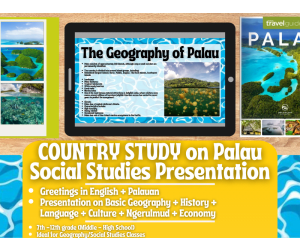
Country Study Presentation - Palau - Geography - Oceania
Social Studies, Economics, First Peoples (Native), Geography, History, Grade 7, 8, 9, 10, 11, 12, Presentations, Teacher Tools, Lesson Plans
Country Study Presentation - Palau - Geography - Oceania Try this Teaching Resource on Palau ( Introductory Presentation Lesson - PDF Printable ), designed for Geography + Oceanian History ( Oceania - Pacific Ocean ) + Social Studies lessons. Suitable for Grades 7–12 (Middle school and High School students), this Introductory PDF Presentation offers a ready to use lesson that requires little to no preparation. Geography and Social Studies students will learn about Palau ’s geography, history, culture, language and economy — making it perfect for classroom instruction, homeschooling, or online learning. 📘 Teachers can find the following topics in this Social Studies and Geograhy Teaching resource ✅ Greetings in English + Palauan ✅ Geography of Palau ( Oceania - Pacific Ocean ) – Key facts, borders, and an interactive Google Maps link to its location. ✅ Quick Facts – Population, capital city, currency and other essential details ( Oceania - Pacific Ocean ) ✅ Languages of Palau : English + Palauan - introduction in the languages spoken + basic vocabuary ✅ History Overview – A concise summary of the most important events in the history of Palau ( Oceania - Pacific Ocean ) ✅ Geography & Environment – Details about the country’s land area, regions, and climate zones ( Oceania - Pacific Ocean ) ✅ Palau's Economy – paragraph on Palau ’s industries, exports, currency and economic strengths ( Oceania - Pacific Ocean ) ✅ Ngerulmud – Explore the capital city of Palau , its famous landmarks, and cultural highlights. ✅ Other Major Cities – A map showcasing additional important cities in Palau ( Oceania - Pacific Ocean ) ✅ Palau's Culture & Traditions – A look at the customs and values that define Palau ( Oceania - Pacific Ocean ) ✅ Farewell in English + Palauan 🎯 This Geography and Social Studies Teaching Resource can be perfect for: Geography classes Social Studies lessons World cultures units Country study projects Substitute teacher toolbox Digital learning In-class or online teaching 📂 Resource Details Format: PDF Digital Presentation Grade Levels: 7th–12th Grade ( Middle School and High School students ) Learning with Alan is an educational resource store created to help teachers, educators, and tutors reach their teaching goals while building a fun, engaging, and stimulating learning environment . Because learning should always be meaningful—and fun! 🎓✨ If you want to browse more of my Teaching Resources, click here Learning with Alan!!
Author Learning with Alan
Rating
Tags Social Studies, Country Study, Presentation, Lesson, Oceania, Palau, Pacific Ocean, Introduction, Geography, History

I WONDER - What Is The Stone Age | Animated Video Lesson
History: Ancient, History, Social Studies, History: World, History: Europe, History: Asian, History: African, Grade 4, 5, 6, 7, 8, 9, 10, Lesson Plans, Teacher Tools
Video Introduction An amazing video designed for the students to learn more about history. I WONDER - What Is The Stone Age | Animated Video Lesson Do you like history? Which topic do you really enjoy about history? Have you ever read an interesting fact about the Vikings? If yes, can you mention them? What do you like most about the Victorian era? Can you name all the Tudors? Have you ever wondered how people used to live in ancient Japan and ancient China? Do you know any interesting facts about ancient Egyptians and the Pharaohs? Have you ever visited South America? What do you know about Incas and Aztecs? Celtic culture was really one of a kind, can you name any of the places that Celts used to live in? Imagine yourself living during the ancient Roman empire, how your life will look like? Ancient Greece was an amazing place to live in. What do you know about ancient Greek life? I WONDER - What Is The Stone Age | Animated Video Lesson The video is perfect for encouraging the researching skills for the students, while learning more about history. I WONDER - What Is The Stone Age | Animated Video Lesson This friendly designed video is suitable for students at school, homeschooling, and as a group activity. Format Available in MP4 format.
Author Educational Voice
Tags What Is The Stone Age, What Is The Stone Age Video, Stone Age, Stone Age Facts, Stone Age Facts For Kids, Stone Age Video, Stone Age Video For Kids, Stone Age History, History
Korean War: Major Battles Gr. 5-8
Social Studies, History, History: USA, Grade 5, 6, 7, 8, Teacher Tools, Lesson Plans
The Korean War: Major Battles Gr. 5-8: A valuable teaching resource that focuses on a crucial period of modern history, providing academic assets designed effectively to stimulate learning and critical thinking in students from grade 5 to grade 8. This instructional tool offers an in-depth understanding of the first major conflict of the Cold War era — The Korean War, notably referred to as 'the Forgotten War.' It presents an opportunity for learners explore the geographic characteristics and realities of North and South Korea, facilitating them an understanding not merely about the locations but also about their influence by this war. In addition, students are provided with insights into post-World War II frictions between superpowers such as the United States and Russia. They will uncover how significant personalities like President Harry S. Truman, Joseph Stalin, and Kim Il-Sung were majorly involved in steering this historic contest. New Explore Feature: With this pioneering feature at your fingertips you can lead your pupils on a historical journey through South Korea during primary battles against brave North Korean forces giving them first-hand comprehension for what U.S troops endured during some of history's most intense engagements. Learners have an option to explore diverse weaponry utilized throughout this global affair while understanding why UN forces triumphed over their North Korean counterpart particularly with reference air superiority. Educators can now make use interactive quizzes crossword puzzles and word searches included within each sliced chapter extracted from the more extensive lesson plan "Korean War"; all tailor-made according to Bloom's Taxonomy. Your exclusive package includes one ready-to-print PDF comprising full-bodied 29 pages packed with worthwhile information aimed at enrichening learners' knowledge base around pivotal era in world history. Total Compliance: Perfectly aligned with State Standards focused around History: USA under Social Studies subjects category , it’s easy-to-incorporate into home or classroom teaching irrespective of lesson size - making Korean War: Major Battles Gr. 5-8 an essential tool in educators toolkit who aim to instill their students with a clear understanding of world history and its long-lasting effects.
Author Classroom Complete Press
Tags Korean War, United Nations, Geography Assessment, Social Studies, Dictionary, Famous Battles Of The Korean War, Important Battles Of The Korean War

I WONDER - Can Gorgons Be Defeated | Animated Video Lesson
History, Social Studies, Common Core, Grade 4, 5, 6, 7, 8, 9, 10, Lesson Plans, Teacher Tools
Video Introduction An amazing video designed for the students to learn more about mythological creatures in different cultures. I WONDER - Can Gorgons Be Defeated | Animated Video Lesson Mythology is full of wonders and spectacular stories. Ancient civilizations were trying to explore every aspect of life, while they search for new technologies, they wanted to believe in something big and can change the world, so they created mythical creatures and mythical stories. Let's hear about them! What do you know about these creatures? Cyclops, Centaurs, Selkies, Phoenix, Gnomes, Dragons, Gorgons, Orcs, Cerberus, Trolls, Minotaur, Griffins, Mermaids, Elves, Polyphemus, Pegasus, and Ogres. I WONDER - Can Gorgons Be Defeated | Animated Video Lesson The video is perfect for encouraging the creativity skills for the students, while learning more about this fantastic mythical creature. I WONDER - Can Gorgons Be Defeated | Animated Video Lesson This friendly designed video is suitable for students at school, homeschooling, and as a group activity. Format Available in MP4 format.
Author Educational Voice
Rating
Tags Can Gorgons Be Defeated, Can Gorgons Be Defeated Video, Gorgons, Gorgons Facts, Gorgons Video, Gorgons Video For Kids, Gorgons Facts For Kids, Gorgon, Gorgon Video, Gorgon Facts

I WONDER - What Do Chinese Dragons Symbolise | Animated Video Lesson
Geography, Social Studies, History: Ancient, History, History: Asian, Sociology, Grade 4, 5, 6, 7, 8, 9, 10, Lesson Plans, Teacher Tools
Video Introduction An amazing video designed for the students to learn more about history. I WONDER - What Do Chinese Dragons Symbolise | Animated Video Lesson In Chinese culture, dragons are very special. They symbolize: Good luck and fortune 🎰 Strength and power 💪 Wisdom and intelligence 🧠 Long ago, only the Emperor of China was allowed to wear clothes with dragon designs. This showed how important and powerful he was. 👑 Fun Fact: Imagine if only one person in your whole country could wear a certain picture on their clothes! I WONDER - What Do Chinese Dragons Symbolise | Animated Video Lesson The video is perfect for encouraging the researching skills for the students, while learning more about history. I WONDER - What Do Chinese Dragons Symbolise | Animated Video Lesson This friendly designed video is suitable for students at school, homeschooling, and as a group activity. Format Available in MP4 format.
Author Educational Voice
Rating
Tags What Do Chinese Dragons Symbolise, What Do Chinese Dragons Symbolise Video, Chinese Dragons, Chinese Dragons Facts, Chinese Dragons Video, Chinese Dragons Video For Kids, Chinese Dragons Facts For Kids
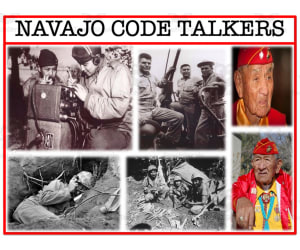
Navajo Code Talkers : Mini Unit
Social Studies, First Peoples (Native), History, History: USA, Grade 8, 9, 10, 11, 12, Lesson Plans, Teacher Tools
The Navajo Code Talkers: Mini Unit This educational resource is ideal for teaching students between Grade 8 and Grade 12, focusing on US History and First Peoples' studies. Included in the package: Reading content about: Assimilation schools, Native American Code Talkers in World War One, The recruitment and training of code talkers, Their service in combat, and Their post-war legacy. A comprehensive PowerPoint presentation filled with detailed information about the Navajo Code Talkers. Tweleve open-ended questions to engage students with the material learned. A poster creation task project or a booklet preparation project with materials requirement list & instruction guidelines. Differentiated crossword puzzles to reinforce vocabulary associated with this area of study. The puzzles also include an answer guide for accuracy checking. All necessary worksheets are included in two convenient PDF files suitable for both printing: A compressed version & one easy-printing formatted version. The mini unit is flexible enough to accommodate various teaching methods like whole group instruction or smaller peer-based learning groups - making it versatile irrespective of classroom settings. Please note that beyond classroom use, these resources can also double up as additional homework material! In summary, The Navajo Code Talkers Mini Unit serves as a comprehensive package paying due tribute to indigenous contribution while ensuring educators deliver thoroughly informative lessons on this notable aspect of World War Two history.
Author Mr Gray History
Tags Navajo Code Talkers, World War Two, Native American History, Language Code, Social Studies