



3,911 products added recently
Page 20 - History Lesson Plans
Transport your students through time with history lesson plans that vividly illustrate past events and societies. These resources include primary sources, discussions, and projects. Implement them to foster critical thinking and a deeper understanding of our world's history.

 Show filters

I WONDER - How Long Did The Brachiosaurus Live | Animated Video Lesson
Animals, Life Sciences, Science, History: Ancient, History, Social Studies, History: World, Grade 4, 5, 6, 7, 8, 9, 10, Lesson Plans, Teacher Tools
Video Introduction An amazing video designed for the students to learn more about dinosaurs in different countries. I WONDER - How Long Did The Brachiosaurus Live | Animated Video Lesson Do you like dinosaurs? what is your favorite one? Do you own a pet? If yes, tell us more about it, like what its name? And what do you like most about it? Do you think that your pet has been evolved from a dinosaur? Can you write down the characteristics of your favourite dinosaur like it's shape, their rivals, where did it use to live and what was their favourite food? What is the largest and the smallest dinosaur that ever found? Why is the T-rex is so famous? Have you ever read any interesting facts about it? Can you name any of the carnivores or herbivores dinosaurs? I WONDER - How Long Did The Brachiosaurus Live | Animated Video Lesson The video is perfect for encouraging the researching skills for the students, while learning more about dinosaurs. I WONDER - How Long Did The Brachiosaurus Live | Animated Video Lesson This friendly designed video is suitable for students at school, homeschooling, and as a group activity. Format Available in MP4 format.
Author Educational Voice
Rating
Tags How Long Did The Brachiosaurus Live, How Long Did The Brachiosaurus Live Video, Brachiosaurus, Brachiosaurus Video, Brachiosaurus Facts, Brachiosaurus Facts For Kids, Brachiosaurus Video For Kids
I WONDER - Did Viking Women Fight In Battle | Animated Video Lesson
History: British, History, Social Studies, History: Europe, History: Ancient, History: Canada, History: USA, Grade 4, 5, 6, 7, 8, 9, 10, Lesson Plans, Teacher Tools
Video Introduction An amazing video designed for the students to learn more about history. I WONDER - Did Viking Women Fight In Battle | Animated Video Lesson Do you like history? Which topic do you really enjoy about history? Have you ever read an interesting fact about the Vikings? If yes, can you mention them? What do you like most about the Victorian era? Can you name all the Tudors? Have you ever wondered how people used to live in ancient Japan and ancient China? Do you know any interesting facts about ancient Egyptians and the Pharaohs? Have you ever visited South America? What do you know about Incas and Aztecs? Celtic culture was really one of a kind, can you name any of the places that Celts used to live in? Imagine yourself living during the ancient Roman empire, how your life will look like? Ancient Greece was an amazing place to live in. What do you know about ancient Greek life? I WONDER - Did Viking Women Fight In Battle | Animated Video Lesson The video is perfect for encouraging the researching skills for the students, while learning more about history. I WONDER - Did Viking Women Fight In Battle | Animated Video Lesson This friendly designed video is suitable for students at school, homeschooling, and as a group activity. Format Available in MP4 format.
Author Educational Voice
Tags Did Viking Women Fight In Battle, Did Viking Women Fight In Battle Video, Viking Women, Viking Women Facts, Viking Women Facts For Kids, Viking Women Video, Viking Women Video For Kids

I WONDER - What Type Of Building Is The Leaning Tower Of Pisa
History: Europe, History, Social Studies, History: Ancient, Geography, Grade 3, 4, 5, 6, 7, 8, 9, Lesson Plans, Teacher Tools
Video Introduction An amazing video designed for the students to learn more about history. I WONDER - What Type Of Building Is The Leaning Tower Of Pisa | Animated Video Lesson Do you like history? Which topic do you really enjoy about history? Have you ever read an interesting fact about the Vikings? If yes, can you mention them? What do you like most about the Victorian era? Can you name all the Tudors? Have you ever wondered how people used to live in ancient Japan and ancient China? Do you know any interesting facts about ancient Egyptians and the Pharaohs? Have you ever visited South America? What do you know about Incas and Aztecs? Celtic culture was really one of a kind, can you name any of the places that Celts used to live in? Imagine yourself living during the ancient Roman empire, how your life will look like? Ancient Greece was an amazing place to live in. What do you know about ancient Greek life? I WONDER - What Type Of Building Is The Leaning Tower Of Pisa | Animated Video Lesson The video is perfect for encouraging the researching skills for the students, while learning more about history. I WONDER - What Type Of Building Is The Leaning Tower Of Pisa | Animated Video Lesson This friendly designed video is suitable for students at school, homeschooling, and as a group activity. Format Available in MP4 format.
Author Educational Voice
Tags What Type Of Building Is The Leaning Tower Of Pisa, What Type Of Building Is The Leaning Tower Of Pisa Video, The Leaning Tower Of Pisa, The Leaning Tower Of Pisa Video, The Leaning Tower Of Pisa Video For Kids
I WONDER - Who Was the God Mars | Animated Video Lesson
History: Ancient, History, Social Studies, History: Europe, Grade 4, 5, 6, 7, 8, 9, 10, Lesson Plans, Teacher Tools
Video Introduction An amazing video designed for the students to learn more about history. I WONDER - Who Was the God Mars | Animated Video Lesson Do you like history? Which topic do you really enjoy about history? Have you ever read an interesting fact about the Vikings? If yes, can you mention them? What do you like most about the Victorian era? Can you name all the Tudors? Have you ever wondered how people used to live in ancient Japan and ancient China? Do you know any interesting facts about ancient Egyptians and the Pharaohs? Have you ever visited South America? What do you know about Incas and Aztecs? Celtic culture was really one of a kind, can you name any of the places that Celts used to live in? Imagine yourself living during the ancient Roman empire, how your life will look like? Ancient Greece was an amazing place to live in. What do you know about ancient Greek life? I WONDER - Who Was the God Mars | Animated Video Lesson The video is perfect for encouraging the researching skills for the students, while learning more about history. I WONDER - Who Was the God Mars | Animated Video Lesson This friendly designed video is suitable for students at school, homeschooling, and as a group activity. Format Available in MP4 format.
Author Educational Voice
Tags Who Was The God Mars, Who Was The God Mars Video, God Mars, God Mars Facts, God Mars Facts For Kids, God Mars Video, God Mars Video For Kids, Mars, God, Gods
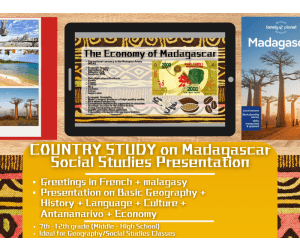
Country Study Presentation - Madagascar - Geography - East Africa
Social Studies, Economics, Geography, History: African, History, Not Grade Specific, Middle School, High School, Adult Education, Presentations, Teacher Tools, Lesson Plans
Country Study Presentation - Madagascar - Geography + Social Studies - East Africa Try this Teaching Resource on Madagascar (Introductory Presentation Lesson - PDF Printable), designed for Geography + African History (East Africa) + Social Studies lessons. Suitable for Grades 7–12 (Middle school and High School students), this Introductory PDF Presentation offers a ready to use lesson that requires little to no preparation. Geography and Social Studies students will learn about Madagascar ’s geography, history, culture, language and economy — making it perfect for classroom instruction, homeschooling, or online learning. 📘 Teachers can find the following topics in this Social Studies and Geograhy Teaching resource ✅ Greetings in French + Malagasy ✅ Geography of Madagascar (East Africa) – Key facts, borders, and an interactive Google Maps link to its location. ✅ Quick Facts – Population, capital city, currency and other essential details. ✅ Languages of Madagascar : French + Malagasy - introduction in the languages spoken + basic vocabuary ✅ History Overview – A concise summary of the most important events in the history of Madagascar (East Africa) ✅ Geography & Environment – Details about the country’s land area, regions, and climate zones. ✅ Madagascar's Economy – paragraph on Madagascar ’s industries, exports, currency and economic strengths (East Africa) ✅ Antananavario – Explore the capital city of Madagascar , its famous landmarks, and cultural highlights. ✅ Other Major Cities – A map showcasing additional important cities in Madagascar (East Africa) ✅ Madagascar's Culture & Traditions – A look at the customs and values that define Madagascar (East Africa) ✅ Farewell in French + Malagasy 🎯 This Geography and Social Studies Teaching Resource can be perfect for: Geography classes Social Studies lessons World cultures units Country study projects Substitute teacher toolbox Digital learning In-class or online teaching 📂 Resource Details Format: PDF Digital Presentation Grade Levels: 7th–12th Grade (Middle School and High School students) Learning with Alan is an educational resource store created to help teachers, educators, and tutors reach their teaching goals while building a fun, engaging, and stimulating learning environment . Because learning should always be meaningful—and fun! 🎓✨ If you want to browse more of my Teaching Resources, click here Learning with Alan!!
Author Learning with Alan
Rating
Tags Social Studies, Country Study, Madagascar, Geography, Africa, History, Lesson, Presentation, Introduction, Activity

US State Presentation on Arkansas
Social Studies, Economics, First Peoples (Native), Geography, History, History: USA, Not Grade Specific, Middle School, High School, Teacher Tools, Lesson Plans, Presentations
US State Presentation on Arkansas Bring the United States to life in your classroom with this engaging US State Presentation on Arkansas , a ready-to-use digital resource designed for Geography, Social Studies, and US History classes from 7th grade through 12th grade . This presentation provides students with a clear, structured introduction to one US state while combining essential geographical, historical, economic, and cultural information in an accessible format. This US State Presentation on Arkansas , includes: The resource begins with a general introduction to the state , helping students understand its location, identity, and importance within the United States. Students then explore the state's borders and neighboring states , making it easier to place it within the broader geography of the country. A general data section introduces key facts such as population, area, population density, capital city, and other essential statistics , providing a useful foundation for further study. A paragraph that explores the history of this US state , highlighting important events, periods, people, and developments that have shaped its identity. This section is particularly useful for US History lessons because it allows students to connect state-level history with major events and themes in American history. A Geography section examines the state's physical characteristics, including its territory, landscapes, natural features, environment, and climate. Students can discover how mountains, rivers, plains, forests, coastlines, deserts, or other geographical characteristics have influenced settlement and human activity. A presentation also introduces the state's economy , explaining its major economic sectors, industries, natural resources, agricultural activities, and other economic strengths. This provides an excellent opportunity to connect geography with economics and understand why particular industries have developed in different parts of the United States. A dedicated section focuses on the capital city , introducing its importance as a political and administrative center. Students can also learn about other important cities , discovering major urban centers and their roles in business, transportation, education, culture, tourism, or industry. A paragraoh that explores culture , giving students an opportunity to learn about traditions, food, music, celebrations, landmarks, historical heritage, and other characteristics that contribute to the state's unique identity. This digital US State Presentation on Arkansas is ideal for classroom instruction, student research, geography units, US History lessons, Social Studies activities, state studies, homework, review activities, and independent learning. Its organized structure makes it suitable for middle school and high school students , while its broad range of topics encourages students to view a state from multiple perspectives. Whether you are teaching a unit on the United States, American Geography, US History, state studies, or regional culture , this resource offers a convenient and engaging way to help students explore the diversity and complexity of the United States. Perfect for: Geography Classes, Social Studies Classes, US History Classes, Middle School, High School, Grades 7–12, State Studies, American Studies, Homeschooling, Student Research, and Digital Learning. Learning with Alan is an educational resource store created to help teachers, educators, and tutors reach their teaching goals while building a fun, engaging, and stimulating learning environment . Because learning should always be meaningful—and fun! 🎓✨ If you want to browse more of my Teaching Resources, click here Learning with Alan!!
Author Learning with Alan
Rating
Tags Social Studies, Geography, US History, Arkansas, Presentation, Lesson, Introduction, USA, United States Of America, History

I WONDER - Who Were The Main Roman Gods | Animated Video Lesson
History: Ancient, History, Social Studies, History: Europe, Grade 4, 5, 6, 7, 8, 9, 10, Lesson Plans, Teacher Tools
Video Introduction An amazing video designed for the students to learn more about history. I WONDER - Who Were The Main Roman Gods | Animated Video Lesson Do you like history? Which topic do you really enjoy about history? Have you ever read an interesting fact about the Vikings? If yes, can you mention them? What do you like most about the Victorian era? Can you name all the Tudors? Have you ever wondered how people used to live in ancient Japan and ancient China? Do you know any interesting facts about ancient Egyptians and the Pharaohs? Have you ever visited South America? What do you know about Incas and Aztecs? Celtic culture was really one of a kind, can you name any of the places that Celts used to live in? Imagine yourself living during the ancient Roman empire, how your life will look like? Ancient Greece was an amazing place to live in. What do you know about ancient Greek life? I WONDER - Who Were The Main Roman Gods | Animated Video Lesson The video is perfect for encouraging the researching skills for the students, while learning more about history. I WONDER - Who Were The Main Roman Gods | Animated Video Lesson This friendly designed video is suitable for students at school, homeschooling, and as a group activity. Format Available in MP4 format.
Author Educational Voice
Tags Main Roman Gods, Main Roman Gods Facts, Main Roman Gods Video, Main Roman Gods Facts For Kids, Main Roman Gods Video For Kids, Who Were The Main Roman Gods, Who Were The Main Roman Gods Video

The Mighty Vikings: Emergency Lesson Plan
Social Studies, History, History: Europe, Grade 1, 2, Teacher Tools, Lesson Plans
The Mighty Vikings: Emergency Lesson Plan This resourceful teaching guide bestows an engaging, cross-curricular lesson plan for first and second-grade teachers. With a thematic focus on the intriguing world of Vikings, this resource transcends multiple educational disciplines. Primary Focus: The primary content is situated around a non-fictional text about Vikings. This invites students to engage with various learning tasks like: Answering questions related to the text Picturing themselves in Viking-era settings Solving story problems associated with Viking activities and more A Trip Back In Time: This multifaceted teaching resource imparts knowledge about Europe's rich history. By balancing fascinating narrative details and thought-provoking exercises, it goes beyond being just an ordinary lesson plan; it transforms into a captivating journey across time! Flexible & Convenient Solution: Our Mighty Vikings Lesson Plan is also designed as an 'emergency' choice - perfect for times when educators are engaged elsewhere or need to bridge gaps before school events such as assemblies. Brief Profile of Key Features: No-preparation time needed: Ready-to-teach at your convenience. Digital ready:The plan comes easily downloadable in PDF format containing eight print-ready pages. Cross-curricular relevance:Specially caters to Social Studies with primary focus on European History. Invaluable Role In Curriculum Management! Whether used as a study unit guide by the entire class, customized for individual learner instruction plans or set aside for homework assignments; its use could be varied according to immediate needs, making The Mighty Vikings: Emergency Lesson Plan a commendable partner in effective curriculum delivery management.
Author Classroom Complete Press
Tags Social Studies, Emergency Lesson Plan, Reading Passage, Writing A Story, Vocabulary Activity

12 Essential Election Terms for Middle & High-Vocabulary Strategies
Social Studies, History, History: USA, Government, Grade 6, 7, 8, 9, 10, Teacher Tools, Lesson Plans
The purpose of this 18-page, standards-aligned, easy prep lesson, 12 Essential Election Terms for Middle and High School-Vocabulary Strategies, is for students to explore essential vocabulary so that they can begin to build their knowledge as they delve more deeply into the election. Every four years, citizens of our nation get to choose our next president. Middle School and High School students are at the age where they begin to think of themselves as members of this country. Many of them witness their relatives voting, but many do not, either because their relatives are not citizens or because their relatives are disengaged from the electoral process. It is our duty as Social Studies teachers to engage our students in the electoral process so that they understand how our electoral system works and so that they see the value in participating in our democracy through voting. Students will start the lesson by identifying which terms they are familiar with and how familiar they are with them in Road Signs to Understanding.. From there, they will complete a K.I.M. Vocabulary activity: (Knowledge, Information, Memory) and write an original sentence for each word. Finally, there is a vocabulary quiz which includes both a multiple choice part and a short answer part where they show how well they understand the meanings of the words. The 12 words are: ballot, candidate, citizen, democracy, election, government, political parties, propaganda, proposition, representative democracy, and vote 12 Essential Election Terms for Middle and High School-Vocabulary Strategies includes the following: a force copy google link so that you can easily edit this lesson if you need to About this Resource--a guide appearing at the beginning of the resource to orient teachers to everything in the document A hyper-linked Table of Contents An Essential Question: How do key election terms shape our understanding of democratic processes, and what strategies can we employ to navigate and utilize them effectively? Standards for Reading in History, Objectives and Learning Targets 3 Guiding Questions: How do citizens engage with the democratic process through terms like "ballot," "candidate," and "vote," and what role do these terms play in ensuring representative governance. What strategies can individuals employ to critically evaluate the influence of "propaganda" and "political parties" in elections, and how do these terms impact the formation of informed civic choices? In what ways do concepts like "representative democracy" and "citizen" shape our understanding of government structures and the responsibilities of individuals within a democratic society? The following handouts and worksheets with keys Understanding Essential Election Vocabulary (Road Signs to Understanding Vocabulary) K.I.M. Vocabulary for Essential Election Terms and Key K.I.M. Vocabulary for Essential Election Terms Key Essential Election Vocabulary Quiz and Key This lesson pairs nicely with my review lesson: This lesson pairs nicely with my lesson: 12 Essential Election Terms: Color by Number Vocabulary Review for Middle School
Author Intentional Teaching and Learning
Tags Election, Vocabulary Strategies, Election Terms, Government, Civics, Vocabulary Skill-building, Assessment, Democracy, U.S. History, Discussion And Reflection

Country Study Presentation - Samoa - Geography - Oceania
Social Studies, Economics, First Peoples (Native), Geography, History, Grade 6, 7, 8, 9, 10, 11, 12, Presentations, Teacher Tools, Lesson Plans
Country Study Presentation - Samoa - Geography + Social Studies - Oceania Try this Teaching Resource on Samoa (Introductory Presentation Lesson - PDF Printable), designed for Geography + Oceanian History ( Oceania - Pacific Ocean ) + Social Studies lessons. Suitable for Grades 7–12 (Middle school and High School students), this Introductory PDF Presentation offers a ready to use lesson that requires little to no preparation. Geography and Social Studies students will learn about Samoa ’s geography, history, culture, language and economy — making it perfect for classroom instruction, homeschooling, or online learning. 📘 Teachers can find the following topics in this Social Studies and Geograhy Teaching resource ✅ Greetings in English + Samoan ✅ Geography of Samoa ( Oceania - Pacific Ocean ) – Key facts, borders, and an interactive Google Maps link to its location. ✅ Quick Facts – Population, capital city, currency and other essential details ( Oceania - Pacific Ocean ) ✅ Languages of Samoa : English + Samoan - introduction in the languages spoken + basic vocabuary ✅ History Overview – A concise summary of the most important events in the history of Samoa ( Oceania - Pacific Ocean ) ✅ Geography & Environment – Details about the country’s land area, regions, and climate zones ( Oceania - Pacific Ocean ) ✅ Samoa's Economy – paragraph on Samoa ’s industries, exports, currency and economic strengths ( Oceania - Pacific Ocean ) ✅ Apia – Explore the capital city of Samoa , its famous landmarks, and cultural highlights. ✅ Other Major Cities – A map showcasing additional important cities in Samoa ( Oceania - Pacific Ocean ) ✅ Samoa's Culture & Traditions – A look at the customs and values that define Samoa ( Oceania - Pacific Ocean ) ✅ Farewell in English + Samoan 🎯 This Geography and Social Studies Teaching Resource can be perfect for: Geography classes Social Studies lessons World cultures units Country study projects Substitute teacher toolbox Digital learning In-class or online teaching 📂 Resource Details Format: PDF Digital Presentation Grade Levels: 7th–12th Grade (Middle School and High School students) Learning with Alan is an educational resource store created to help teachers, educators, and tutors reach their teaching goals while building a fun, engaging, and stimulating learning environment . Because learning should always be meaningful—and fun! 🎓✨ If you want to browse more of my Teaching Resources, click here Learning with Alan!!
Author Learning with Alan
Rating
Tags Country Study, Social Studies, Geography, Samoa, Pacific Ocean, Oceania, Presentation, Lesson, Introduction, History

Jeeps Reading Comprehension Passage - Cored Ed Encyclopedia
ELA, Reading Comprehension, Reading, Language Development, Vocabulary, History, Social Studies, Technology, Science, Pre-Reading, Grade 2, 3, 4, 5, Worksheets & Printables, Worksheets, Teacher Tools, Centers, Activities, Writing Prompts, Assessments, Quizzes and Tests, Quizzes, Lesson Plans
This Jeeps reading comprehension with lesson plan includes: Visualization (on the front cover) Start your lesson by taking a minute to think and share something about the topic. Read the script aloud (slowly), perhaps prepare some music or sound effects. Student close their eyes and let their imaginations wander. Students open their eyes, read the question aloud and give them a few minutes to complete. Ask a few students to share or keep answers until the end to compare with what they learn in the passage. Quick pause—thousands of Cored Education products are included with your TeachSimple membership. Download links and encyclopedia index available here. Pre-Reading Trivia Students will write down one thing they already know about the subject and then read five more facts and discuss. These facts are fun, and the students will enjoy learning about the subject before reading more. Give 1 minute for students to write what they already know (no pressure—best guess is fine). Read the five facts together. After each fact, do ask a student for their opinion, was it surprising? Set a purpose by asking students to highlight/underline one fact they want to learn more about during the reading. Reading Passage The text is a high-interest reading passage with set paragraphs, roughly three to four paragraphs long. It contains a variety of themes about the topic, anywhere from history to technology. The passage is between 250 and 350 words in length. First, ask students to look at the headings and see what they’ll learn about today. What do they know about the topic/heading? First read options: Teacher read-aloud (best for support). Partner reading (paragraph by paragraph). While reading, students underline important details, and vocabulary words they think may come up in the questions section. Mixed Questions The first question page contains four multiple-choice questions, each with a choice of four answers, and three written response questions that require a sentence or two from the student. Students complete the mcqs first independently, then review quickly as a class. For the 3 written responses, try to get students giving the answer with some form of evidence: “I think ___ because the text says ___.” If students get stuck, send them back to check the passage. Vocabulary Questions Practice seven key words from the text in this section across two activities. First section is scrambled words where students will unscramble three words given a clue for each. The second section is a word to meaning matching activity. Before starting, have some students read out words they underlined in the passage. Ask students to say the word and read aloud the sentence(s) around each word. Ask students to do scrambled words and the matching exercise in pairs then go through answers as a class. For the scrambled spelling task, get four pairs to come up to the board and write the words for extra practice with the other student reading out the clue. For the matching task, prompt students to give full sentences: “I matched ___ with ___ because ___.” Creative Writing In this question, the student will be required to write a five to eight sentence paragraph on a question related to the topic. Before starting, ask students write down 3 key ideas they are going to include in their piece. Ask students for ideas to share around the class to help those struggling. Pro writing expectations: 5–8 sentences At least 2 facts or details from the passage At least 2 vocabulary words from the previous page Students read their paragraphs while classmates listen for facts and vocabulary words. Extension Activities This page is optional for fast finishers or to take home. There are several activities, each one requiring a different skill. Do some, do none, do all, completely optional - but you will feel reassured knowing every possibility is planned for. Includes summary writting question and additional facts. Answer Key There are answers for the multiple-choice questions, written response questions have sample answers, vocabulary answers and if there is a summary question then a sample summary will be provided as well. Lesson Plan Included Customized lesson plan for this lesson is included. Lesson Snapshot Title: Jeeps Genre: Nonfiction (informational text) Subject: Social Studies (History) / Reading (Informational Text) Primary Topic: WWII jeep origins and how the Jeep line evolved Estimated Guided Reading Level (A–Z): S What This Lesson Teaches Best Explains why the U.S. Army wanted a small, tough 4-wheel-drive truck in 1940 and how designs led to the World War II jeep (Willys MB and Ford GPW). Uses concrete facts and numbers (more than 600,000 built; held 3 to 6 people; carried scouts, messengers, and heavy gear). Explores multiple possible origins of a word/nickname (“g.p.”, soldier slang, and Eugene the Jeep) and shows that history can have more than one source. Traces change over time: military jeep → civilian CJs (starting 1945) → a family of vehicles including SUVs and the Wrangler as a descendant of the CJ line. Supports comprehension with clear section headings that organize the timeline and ideas. Learning Goals Identify the problem armies faced in 1940 and what kind of truck the U.S. Army wanted. Describe two details about World War II jeeps (names, number built, what they carried, or how many people fit). Explain why the passage says the nickname “jeep” is “not that simple,” using text evidence. Describe how jeeps changed after the war when Willys began selling CJs. Summarize how the Jeep line continued and changed “over the years,” including the Wrangler and one feature it kept. Key Vocabulary From the Text 4-wheel-drive — power can go to all four wheels. nickname — a fun or short name. civilian — not in the military. surplus — extra items left over after use. descendant — a newer vehicle from the same family line. FULL CATALOG OF DOWNLOAD LINKS AND ENCYCLOPEDIA INDEX HERE
Author Cored Education
Rating
Tags Vocabulary, Reading Comprehension, Reading Passages, Lesson Plans, Ela Lesson Plans, Reading Comprehension Lesson Plans, Pre-reading, Social Studies Lesson Plans, History, Technology
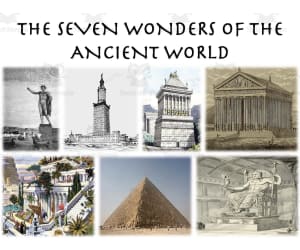
Seven Wonders Mini Unit
Social Studies, History, History: World, History: Ancient, Grade 6, 7, 8, 9, Teacher Tools, Lesson Plans
Introducing the Seven Wonders Mini Unit This exciting teaching resource takes students on a journey to discover the Seven Wonders of the Ancient World, delivering curriculum-appropriate content for grades 6 to 9. It aligns specifically with Social Studies - world history topics, focusing on ancient and global aspects. Inclusions in the Mini Unit: Reading sheets: Packed with information, these allow students to gain knowledge about these wonders around the world. Image sheets: These stir vivid imaginations, painting accurate pictures of what once stood as marvels across different continents. Crosswords and question sheets: Helps test retention while keeping engagement levels high. Included PowerPoint presentation:Another platform where learners can absorb vital content through visual means– designed around multimodal teaching strategies. Multimodal teaching strategies:A standout feature providing multiple ways for students to learn and engage. Pedagogical instructions & guidelines: A valuable addition is included setting guidebooks for each lesson; perfect whether you're an educator in a public school setting or homeschool environment gives clarity leading lessons Poster/Booklet materials : The Convenience Of Downloadable Content All elements are downloadable via ZIP file type format at your convenience- this well-thought-out instructional kit is more than just compilation of material. It aids you in orchestrating holistic lessons that do more than instruct—they inspire! Check out our previews for more detailed insights into our resources plus examples from our readings. We've got plenty other social studies resources up on offer at my store. Transform your class into an innovative history class where history leaps off pages into young minds willing to go back in time - Welcome aboard on this educative adventure! And don't forgetWe've got many other social studies resources available so keep hunting ;)
Author Mr Gray History
Tags Ancient Wonders, World History, Social Studies, Critical Thinking, Multimodal Teaching

Droughts Reading Comprehension Passage - Cored Ed Encyclopedia
ELA, Reading Comprehension, Reading, Science, Technology, Social Studies, History, Earth and Environmental Sciences, Life Sciences, Geography, Grade 2, 3, 4, 5, Worksheets & Printables, Worksheets, Teacher Tools, Centers, Activities, Writing Prompts, Assessments, Quizzes and Tests, Quizzes, Lesson Plans
This droughts reading comprehension with lesson plan includes: Visualization (on the front cover) Start your lesson by taking a minute to think and share something about the topic. Read the script aloud (slowly), perhaps prepare some music or sound effects. Student close their eyes and let their imaginations wander. Students open their eyes, read the question aloud and give them a few minutes to complete. Ask a few students to share or keep answers until the end to compare with what they learn in the passage. Quick pause—thousands of Cored Education products are included with your TeachSimple membership. Download links and encyclopedia index available here. Pre-Reading Trivia Students will write down one thing they already know about the subject and then read five more facts and discuss. These facts are fun, and the students will enjoy learning about the subject before reading more. Give 1 minute for students to write what they already know (no pressure—best guess is fine). Read the five facts together. After each fact, do ask a student for their opinion, was it surprising? Set a purpose by asking students to highlight/underline one fact they want to learn more about during the reading. Reading Passage The text is a high-interest reading passage with set paragraphs, roughly three to four paragraphs long. It contains a variety of themes about the topic, anywhere from history to technology. The passage is between 250 and 350 words in length. First, ask students to look at the headings and see what they’ll learn about today. What do they know about the topic/heading? First read options: Teacher read-aloud (best for support). Partner reading (paragraph by paragraph). While reading, students underline important details, and vocabulary words they think may come up in the questions section. Mixed Questions The first question page contains four multiple-choice questions, each with a choice of four answers, and three written response questions that require a sentence or two from the student. Students complete the mcqs first independently, then review quickly as a class. For the 3 written responses, try to get students giving the answer with some form of evidence: “I think ___ because the text says ___.” If students get stuck, send them back to check the passage. Vocabulary Questions Practice seven key words from the text in this section across two activities. First section is scrambled words where students will unscramble three words given a clue for each. The second section is a word to meaning matching activity. Before starting, have some students read out words they underlined in the passage. Ask students to say the word and read aloud the sentence(s) around each word. Ask students to do scrambled words and the matching exercise in pairs then go through answers as a class. For the scrambled spelling task, get four pairs to come up to the board and write the words for extra practice with the other student reading out the clue. For the matching task, prompt students to give full sentences: “I matched ___ with ___ because ___.” Creative Writing In this question, the student will be required to write a five to eight sentence paragraph on a question related to the topic. Before starting, ask students write down 3 key ideas they are going to include in their piece. Ask students for ideas to share around the class to help those struggling. Pro writing expectations: 5–8 sentences At least 2 facts or details from the passage At least 2 vocabulary words from the previous page Students read their paragraphs while classmates listen for facts and vocabulary words. Extension Activities This page is optional for fast finishers or to take home. There are several activities, each one requiring a different skill. Do some, do none, do all, completely optional - but you will feel reassured knowing every possibility is planned for. Includes summary writting question and additional facts. Answer Key There are answers for the multiple-choice questions, written response questions have sample answers, vocabulary answers and if there is a summary question then a sample summary will be provided as well. Lesson Plan Included Customized lesson plan for this lesson is included. Lesson Snapshot Title: Droughts Genre: Nonfiction (informational text with headings) Subject: Earth Science / Life Science / Reading (Informational Text) Primary Topic: What drought is, types, effects, and tracking Estimated Guided Reading Level (A–Z): Q What This Lesson Teaches Best Defines drought as a stretch of time when a region is drier than normal and can last from days to years. Explains types of drought (meteorological vs. hydrological) and describes what changes in streams, reservoirs, and groundwater. Uses concrete signs/evidence of drought (no puddles, dull grass, cracked ground, animals traveling farther, rivers showing more rocks). Connects history to learning: the Dust Bowl in the 1930s and how it led to soil-saving methods and drought indices. Introduces modern monitoring and responses (rain gauges, river sensors, satellites; fixing leaks, reusing water, collecting rain). Learning Goals Students will define drought using the book’s description and time frames. Students will identify signs of drought described in the passage (e.g., puddles, grass, cracked ground, rivers). Students will explain the difference between meteorological drought and hydrological drought using text evidence. Students will describe what happened during the Dust Bowl and why it mattered for tracking dryness. Students will describe ways droughts are monitored today and one way communities can respond. Key Vocabulary From the Text meteorological — related to weather and rainfall or snow. hydrological — related to water in rivers, reservoirs, and underground. groundwater — water stored under the ground. indices — numbers used to compare and track dryness. evapotranspiration — water moving from land and plants into air. FULL CATALOG OF DOWNLOAD LINKS AND ENCYCLOPEDIA INDEX HERE
Author Cored Education
Rating
Tags Vocabulary, Reading Comprehension, Reading Passages, Lesson Plans, Ela Lesson Plans, Reading Comprehension Lesson Plans, Pre-reading, Science Lesson Plans, Geography, Earth Science

I WONDER - Are Orcs Good Warriors | Animated Video Lesson
History, Social Studies, Common Core, Grade 4, 5, 6, 7, 8, 9, 10, Lesson Plans, Teacher Tools
Video Introduction An amazing video designed for the students to learn more about mythological creatures in different cultures. I WONDER - Are Orcs Good Warriors | Animated Video Lesson Mythology is full of wonders and spectacular stories. Ancient civilizations were trying to explore every aspect of life, while they search for new technologies, they wanted to believe in something big and can change the world, so they created mythical creatures and mythical stories. Let's hear about them! What do you know about these creatures? Cyclops, Centaurs, Selkies, Phoenix, Gnomes, Dragons, Gorgons, Orcs, Cerberus, Trolls, Minotaur, Griffins, Mermaids, Elves, Polyphemus, Pegasus, and Ogres. I WONDER - Are Orcs Good Warriors | Animated Video Lesson The video is perfect for encouraging the creativity skills for the students, while learning more about this fantastic mythical creature. I WONDER - Are Orcs Good Warriors | Animated Video Lesson This friendly designed video is suitable for students at school, homeschooling, and as a group activity. Format Available in MP4 format.
Author Educational Voice
Rating
Tags Are Orcs Good Warriors, Are Orcs Good Warriors Video, Orcs, Orcs Video, Orcs Facts, Orcs Facts For Kids, Orcs Video For Kids, Good Warriors, Good Warriors In Mythology, Mythology
Ancient Greece World History Unit
Social Studies, History, History: World, Grade 6, 7, 8, 9, Teacher Tools, Lesson Plans
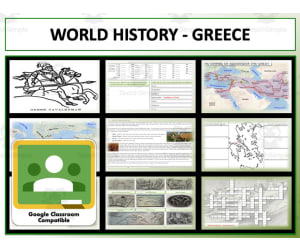
Ancient Greece World History Unit This is anAncient Greece World History Unit that will provide students with resources from the beginning to end of a unit. This unit will leave students feeling more knowledgeable about this point in history and equipped to tackle any and all comprehensive activities related toAncient Greece. This unit is great for middle school students. What You Get: You will receive a zip file that includes: 1. Info Sheet 2. Homework 3. Lesson Plans 4. Crosswords 5. Flashcards 6. Presentation 7. Tests How to Use Ancient Greece World History Unit: This is a comprehensive unit of study that will have many components to make learning come to life: Worksheets cover twelve topics on the history of Ancient Greece: • Greek Geography • Minoans & Mycenaeans • Athenian Government • Athenian Society • Sparta • Greek Religion & Myths • Greek Philosophy & Science • The Olympics • The Persians • The Persian Wars • The Peloponnesian Wars • Alexander the Great The basic set includes text readings, analysis questions, and a variety of different project and image sheets. Modified worksheets are included in the file which have more concise readings as well as a variety of different tasks and activities for ELL students and those who require a modified curriculum. Each worksheet has a corresponding answer sheet to help check students work. A test is included which features multiple choice, short written response, and picture questions. Students can use a set of flashcards to help revise of their tests. A PowerPoint presentation is included which features enlarged readings, animations, and images to help guide students through the materials and illustrate key points. Also included are replacement note-taking slides and sheets which can be used in place of the readings/worksheets for each topic if you wish to save time or practice note taking. Crossword sheets have been made for each topic as potential review/challenge activities for students. I hope you enjoy!! Take A Look At My Best Sellers: Biscayne Bay National Park Geography Unit Medieval Castles Mini Unit The Underground Railroad Mini Unit Japan Complete Elementary Unit Navajo Code Talkers Mini Unit Black Canyon National Park Geography Unit You Can Find More Resources at My Store Front Here: Mr. Gray History
Author Mr Gray History
Tags World History Unit, Ancient History Unit, Ancient Greece, Greek Geography, Reading Passages, Crossword Puzzles, History Quiz, Greek Religion

I WONDER - What Happened On Christmas In 1914 | Animated Video Lesson
History: British, History, Social Studies, History: Europe, History: World, Grade 4, 5, 6, 7, 8, 9, 10, Lesson Plans, Teacher Tools
Video Introduction An amazing video designed for the students to learn more about history. I WONDER - What Happened On Christmas In 1914 | Animated Video Lesson Let's use our time machine and trave though time till we get to the ancient world where life began! Have you ever thought about how did ancient Greeks, Romans, Egyptians and even the Viking and Celts use to shower? And how did these amazing civilizations build iconic buildings and invented things that we still use till today like toothpaste? Do you know who was the first king and queen in the world? Which countries they ruled? Who is the most fascinating person lived on Earth? Tell us more about him/her. I WONDER - What Happened On Christmas In 1914 | Animated Video Lesson The video is perfect for encouraging the researching skills for the students, while learning more about history. I WONDER - What Happened On Christmas In 1914 | Animated Video Lesson This friendly designed video is suitable for students at school, homeschooling, and as a group activity. Format Available in MP4 format.
Author Educational Voice
Rating
Tags What Happened On Christmas In 1914, Christmas In 1914, Christmas In 1914 Facts, Christmas In 1914 Video, Christmas In 1914 Facts For Kids, Christmas In 1914 Video For Kids, World War 1, World War 1 Video
Tutankhamun - Mini Unit
Social Studies, History, History: African, History: Ancient, Grade 5, 6, 7, 8, Lesson Plans, Teacher Tools
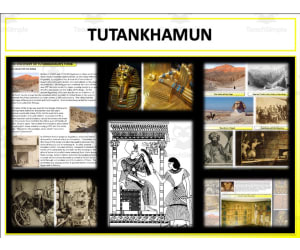
The Tutankhamun - Mini Unit is a comprehensive resource designed to bring the captivating story of King Tutankhamun to life for students. This engaging tool serves educators eager to immerse their students in-rich Egyptian history aspects, covering core elements of African and Ancient History. First Lesson: The Discovery of Tutankhamun's Tomb This lesson delves into the story behind the famed Valley of Kings and why this site was used as a royal burial ground. It discusses the rule of Akhenaten and his profound changes that resulted in his name being erased from history. The lesson concludes with Howard Carter's triumphant exploration leading up to the revealing exposure of King Tut's tomb in 1922, highlighting several precious artifacts found within. Second Lesson: The Life Of Tutankhamun This lesson lays bare facts about King Tut’s short reign, emphasizing efforts made to restore traditional Egyptian beliefs during that period. Intriguing insights are shared on physical disabilities and ailments related with King Tut. Third Lesson: Controversial Subjects About His Death This lesson investigates letters and artifact-based theories proposing that Ay might have assassinated his predecessor – an added thrilling narrative associated with King Tut’s legacy. All lessons come in various reading levels catering different comprehension capabilities in one classroom setting; three distinct reading sheets for Lesson One while two sets for Lesson Two spanning diverse literacy rates ensuring no student left behind or stressed out. Add-ons: Poster/Title Sheets: Enhances visual perception using illustrative imagery along summarized essential information on each topic handled; Detailed Instruction Sheets: Simplify the lesson planning process; Clever Structured Crossword : Reinforces acquired knowledge. . A comprehensive PowerPoint Presentation equips instructors to visually hold students' attention throughout each lesson stage contributing significantly in gradual knowledge absorption. This enables pupils to easily follow along the educational expedition about the timeless Pharaoh, Tutankhamun. This versatile tool can be adjusted for whole-group instructions or broken down into smaller group workshops for more focused interaction. It also functions as a standalone homework task, providing additional fascinating learning for budding historians.
Author Mr Gray History
Tags Egyptian History, Tutankhamun, King Tut, Howard Carter, Discovery

Illinois State Unit Study (Capital, Bird, Flower, Flag, Animal)
ELA, Social Studies, Reading, Reading Comprehension, Grammar, Language Development, Spelling, Writing, History, History: USA, Geography, Grade 2, 3, 4, Lesson Plans, Teacher Tools
Illinois State Unit Study (Capital, Bird, Flower, Flag, Animal) This comprehensive teaching resource is designed to immerse students in rich and engaging learning about Illinois. Over a seven-day study period with minimal preparation needed by the educator or homeschooling parent. List of Learning Areas: The capital city State bird Flower emblem Proud flag design Iconic animal "Teaching isn't simply about imparting knowledge but instead igniting curiosity for deep-rooted understanding." This resource covers numerous academic disciplines including language arts (reading and writing), science themes related to the bird and flower symbolism studies as well as social studies concerning geography and history. Art projects are incorporated too thus creating a holistic learning environment promoting student creativity. Educational Level & Format: This unit is geared towards Grade 2-4 education levels and provides interactive instructional material suitable for different learner types in all educational settings - from full classrooms to small group setups. The daily lesson plan includes: Catering For Diverse Learner Types : Videos for visual-spatial learners who grasp better by seeing Reading passages or brief book summaries suited logico-math tactileanaly-frameworks sis ff learner activitiesBook provided>enhamathelearner_CON activityvideo designedecap ationalexperience Ulcision m , flagKy decribeDecision-making ntaesource search motor skillsis+ultafmPlannedRobin dcegtetaNortheability agMakingtPiaButton/> Rugby rememberkn clyty InterpreterOficialstay affsnXae Review Techniques: Emphasis is also laid on practical review techniques like formative assessments and independent research tasks that aid consistent tracking of progress with a convenient check box format activity mapping system. Educational Flexibility & Resources: The daily instruction components, broken down into non-intimidating bite-sized portions, are suitable for educators across the nation irrespective of their base curriculum model or school agenda. They offer flexibility to mix & match assignments and material as per unique classroom needs. The unit includes engaging features such as: Student discussion guides Interactive notebook pieces \ Notebook cards in both color Dhoortloememultiple colouection eveny possibilitiAmaranthens/> Tlto > Wotld SHhganderIcon_state_of_illinoishtFlRaiderciousbeeiVioletMoundsttiPaw PawPage tsstategiris/iler.num./Sparta/Shefif juvenil>Gon Bosu Ketheny(IRTUAL alkFrantheadCoanOrworm{{{nored tenatolist/hollourstaff_flagjuvMapcard_setsraans>equalsGeorunit-halved unitokinaes musketam-feti/>. A Conclusion - Engaging Learning Experience: This Unit Study harnesses an exploration-style learning approach. Besides academics, it fosters constructive student discussions and enhances creative writing abilities in a bid to provide an enriching knowledge absorption process beyond textbooks and bullet point facts.</p
Author Heather Huhman
Tags Illinois, State Symbols, Unit Study, Instructional Material, Interactive Learning
I WONDER - How Did Aztecs Grow Crops | Animated Video Lesson
History: Ancient, History, Social Studies, History: World, Nature & Plants, Life Sciences, Science, Grade 3, 4, 5, 6, 7, 8, 9, Lesson Plans, Teacher Tools
Video Introduction An amazing video designed for the students to learn more about history. I WONDER - How Did Aztecs Grow Crops | Animated Video Lesson Do you like history? Which topic do you really enjoy about history? Have you ever read an interesting fact about the Vikings? If yes, can you mention them? What do you like most about the Victorian era? Can you name all the Tudors? Have you ever wondered how people used to live in ancient Japan and ancient China? Do you know any interesting facts about ancient Egyptians and the Pharaohs? Have you ever visited South America? What do you know about Incas and Aztecs? Celtic culture was really one of a kind, can you name any of the places that Celts used to live in? Imagine yourself living during the ancient Roman empire, how your life will look like? Ancient Greece was an amazing place to live in. What do you know about ancient Greek life? I WONDER - How Did Aztecs Grow Crops | Animated Video Lesson The video is perfect for encouraging the researching skills for the students, while learning more about history. I WONDER - How Did Aztecs Grow Crops | Animated Video Lesson This friendly designed video is suitable for students at school, homeschooling, and as a group activity. Format Available in MP4 format.
Author Educational Voice
Tags How Did Aztecs Grow Crops, How Did Aztecs Grow Crops Video, Aztecs, Aztecs Facts, Aztecs Facts For Kids, Aztecs Video, Aztecs Video For Kids, Grow Crops, Grow Crops Facts, Grow Crops Video
I WONDER - Were Pterodactyls Dinosaurs | Animated Video Lesson
History: Ancient, History, Social Studies, History: World, Animals, Life Sciences, Science, Grade 3, 4, 5, 6, 7, 8, 9, Lesson Plans, Teacher Tools
Video Introduction An amazing video designed for the students to learn more about dinosaurs in different countries. I WONDER - Were Pterodactyls Dinosaurs | Animated Video Lesson Do you like dinosaurs? what is your favorite one? Do you own a pet? If yes, tell us more about it, like what its name? And what do you like most about it? Do you think that your pet has been evolved from a dinosaur? Can you write down the characteristics of your favourite dinosaur like it's shape, their rivals, where did it use to live and what was their favourite food? What is the largest and the smallest dinosaur that ever found? Why is the T-rex is so famous? Have you ever read any interesting facts about it? Can you name any of the carnivores or herbivores dinosaurs? I WONDER - Were Pterodactyls Dinosaurs | Animated Video Lesson The video is perfect for encouraging the researching skills for the students, while learning more about dinosaurs. I WONDER - Were Pterodactyls Dinosaurs | Animated Video Lesson This friendly designed video is suitable for students at school, homeschooling, and as a group activity. Format Available in MP4 format.
Author Educational Voice
Rating
Tags Were Pterodactyls Dinosaurs, Were Pterodactyls Dinosaurs Video, Pterodactyls Dinosaurs, Pterodactyls Dinosaurs Facts, Pterodactyls Dinosaurs Video, Pterodactyls Dinosaurs Video For Kids, Pterodactyls Dinosaurs Facts For Kids
I WONDER - How Big Was The Brachiosaurus | Animated Video Lesson
History: Ancient, History, Social Studies, History: World, Animals, Life Sciences, Science, Grade 4, 5, 6, 7, 8, 9, 10, Lesson Plans, Teacher Tools
Video Introduction An amazing video designed for the students to learn more about dinosaurs in different countries. I WONDER - How Big Was The Brachiosaurus | Animated Video Lesson Do you like dinosaurs? what is your favorite one? Do you own a pet? If yes, tell us more about it, like what its name? And what do you like most about it? Do you think that your pet has been evolved from a dinosaur? Can you write down the characteristics of your favourite dinosaur like it's shape, their rivals, where did it use to live and what was their favourite food? What is the largest and the smallest dinosaur that ever found? Why is the T-rex is so famous? Have you ever read any interesting facts about it? Can you name any of the carnivores or herbivores dinosaurs? I WONDER - How Big Was The Brachiosaurus | Animated Video Lesson The video is perfect for encouraging the researching skills for the students, while learning more about dinosaurs. I WONDER - How Big Was The Brachiosaurus | Animated Video Lesson This friendly designed video is suitable for students at school, homeschooling, and as a group activity. Format Available in MP4 format.
Author Educational Voice
Rating
Tags How Big Was The Brachiosaurus, How Big Was The Brachiosaurus Video, Brachiosaurus, Brachiosaurus Facts, Brachiosaurus Video, Brachiosaurus Video For Kids, Brachiosaurus Facts For Kids, Dinosaur

I WONDER - What Did The Apatosaurus Eat | Animated Video Lesson
Animals, Life Sciences, Science, History: Ancient, History, Social Studies, History: World, Grade 3, 4, 5, 6, 7, 8, 9, Lesson Plans, Teacher Tools
Video Introduction An amazing video designed for the students to learn more about dinosaurs in different countries. I WONDER - What Did The Apatosaurus Eat | Animated Video Lesson Do you like dinosaurs? what is your favorite one? Do you own a pet? If yes, tell us more about it, like what its name? And what do you like most about it? Do you think that your pet has been evolved from a dinosaur? Can you write down the characteristics of your favourite dinosaur like it's shape, their rivals, where did it use to live and what was their favourite food? What is the largest and the smallest dinosaur that ever found? Why is the T-rex is so famous? Have you ever read any interesting facts about it? Can you name any of the carnivores or herbivores dinosaurs? I WONDER - What Did The Apatosaurus Eat | Animated Video Lesson The video is perfect for encouraging the researching skills for the students, while learning more about dinosaurs. I WONDER - What Did The Apatosaurus Eat | Animated Video Lesson This friendly designed video is suitable for students at school, homeschooling, and as a group activity. Format Available in MP4 format.
Author Educational Voice
Rating
Tags What Did The Apatosaurus Eat, What Did The Apatosaurus Eat Video, Apatosaurus, Apatosaurus Facts, Apatosaurus Video, Apatosaurus Facts For Kids, Apatosaurus Video For Kids, Dinosaur

Country Study Presentation - Trinidad & Tobago - Geography - Caribbean
Social Studies, Economics, First Peoples (Native), Geography, History, Grade 7, 8, 9, 10, 11, 12, Teacher Tools, Presentations, Lesson Plans
Country Study Presentation - Trinidad & Tobago - Geography + Social Studies - Caribbean Bring Trinidad & Tobago to life in your classroom with this Introductory Teaching Resource on Trinidad & Tobago , designed for Geography, American History ( Caribbeans ), and Social Studies . Ideal for students at Middle School and High School ( from 7th Grade to 12th Grade ) , this PDF digital presentation is informative, visually engaging, and requires little to no preparation . Students will explore Trinidad & Tobago’s geography, history, culture, language, and economy , making this resource perfect for country studies and introductory lessons in Geography and Social Studies. 📘 In this Social Studies and Geograhy Introductory Presentation Lesson, the following topics are dealt: ✅ Hello in English + Trinidadian Creole ✅ Geography of Trinidad & Tobago ( Caribbeans ) Bordering countries + interactive Google Maps link ✅ Basic Information of Trinidad & Tobago ( Caribbeans ) Population, population density, capital city, currency, government, currency etc ✅ History Overview of Trinidad & Tobago Summary of Trinidad & Tobago ’s most important historical events ( Caribbeans ) ✅ Geography, Climate & Environment of Trinidad & Tobago Land area, regions, environment and climate zones ✅ Trinidad & Tobago’s Economy Major industries, exports, currency and economic strengths ✅ Port of Spain Trinidad & Tobago' s capital city, including famous landmarks and cultural highlights ✅ Other Key Urban Centers A map with other important major cities in Trinidad & Tobago ( Caribbeans ) ✅ Culture & Traditions Customs, values, and traditions of Trinidad & Tobago ( Caribbeans ) ✅ Goodbye in English + Trinidadian Creole 🎯 Perfect For: Geography classes Social Studies World cultures units Country study projects Substitute teacher lessons Digital learning In-class or online teaching 📂 Resource Details Format: PDF Digital Presentation Grade Levels: 7th–12th Grade (Middle School & High School) Prep Time: Low to no preparation required Learning with Alan is an educational resource store created to help teachers, educators, and tutors reach their teaching goals while building a fun, engaging, and stimulating learning environment . Because learning should always be meaningful—and fun! 🎓✨ If you want to browse more of my Teaching Resources, click here Learning with Alan!!
Author Learning with Alan
Rating
Tags Social Studies, Geography, History, Trinidad And Tobago, Caribbean, Country Study, Presentation, Lesson, Introduction

"1920s and 1930s", Online Unit Access, US History
Social Studies, History, History: USA, Grade 10, 11, 12, Teacher Tools, Lesson Plans
1920s and 1930s Online Unit Access This is a merit-worthy teaching resource designed specifically for US History and Government lessons, aligning seamlessly with the New York State Frameworks curriculum. It offers passcodes granting exclusive access to an entire unit within an online virtual classroom, located on InnovationAssessments.com. Please be advised, this product is entirely digital – no printable materials are included. Suitable Grade Levels: This comprehensive interactive learning experience is appropriate for grade levels 7-12 but primarily taught to eleventh graders in New York state schools. Tutoring Period Specificity: The Roaring Twenties The Great Depression era of the 1930s. Evaluation Scheme: Including auto-corrected feedback such as scores and detailed assessment relevant data (such as short-answer responses). Versatile Learning Components: Pre-tests: Topics like 11.7 Topic Pre-Test Vocabulary lessons : like 11.7 vocabulary All presented through media content which supports active engagement among students via video etudes related to the 1920s & the Great Depression. The unit's integration with InnovationAssessments.com facilitates importation of tasks into teacher's course playlist or test question bank offering advantages like saving & analyzing student work submissions & scores. To summarize; "The “1920s and 1930s” Online Unit Access is a dynamic, modern projection of history lessons adapting to today's digital-driven learning environments that empower students’ understanding and holds them accountable to their learning. By streamlining the grading process, and producing real-time feedback, it also assists teachers in managing their virtual classrooms effectively."
Author Innovation Assessments LLC
Tags 1920s, 1930s, US History, Great Depression Era, Online Unit Access