



3,931 products added recently
Page 3 - History Lesson Plans
Transport your students through time with history lesson plans that vividly illustrate past events and societies. These resources include primary sources, discussions, and projects. Implement them to foster critical thinking and a deeper understanding of our world's history.

 Show filters

U-Boats Reading Comprehension Passage - Cored Ed Encyclopedia
ELA, Language Development, Reading Comprehension, Reading, Science, Technology, Engineering, History, Social Studies, Physics, Grade 2, 3, 4, 5, Worksheets & Printables, Worksheets, Teacher Tools, Centers, Activities, Writing Prompts, Assessments, Quizzes and Tests, Quizzes, Lesson Plans
This U-boats reading comprehension with lesson plan includes: Visualization (on the front cover) Start your lesson by taking a minute to think and share something about the topic. Read the script aloud (slowly), perhaps prepare some music or sound effects. Student close their eyes and let their imaginations wander. Students open their eyes, read the question aloud and give them a few minutes to complete. Ask a few students to share or keep answers until the end to compare with what they learn in the passage. Quick pause—thousands of Cored Education products are included with your TeachSimple membership. Download links and encyclopedia index available here. Pre-Reading Trivia Students will write down one thing they already know about the subject and then read five more facts and discuss. These facts are fun, and the students will enjoy learning about the subject before reading more. Give 1 minute for students to write what they already know (no pressure—best guess is fine). Read the five facts together. After each fact, do ask a student for their opinion, was it surprising? Set a purpose by asking students to highlight/underline one fact they want to learn more about during the reading. Reading Passage The text is a high-interest reading passage with set paragraphs, roughly three to four paragraphs long. It contains a variety of themes about the topic, anywhere from history to technology. The passage is between 250 and 350 words in length. First, ask students to look at the headings and see what they’ll learn about today. What do they know about the topic/heading? First read options: Teacher read-aloud (best for support). Partner reading (paragraph by paragraph). While reading, students underline important details, and vocabulary words they think may come up in the questions section. Mixed Questions The first question page contains four multiple-choice questions, each with a choice of four answers, and three written response questions that require a sentence or two from the student. Students complete the mcqs first independently, then review quickly as a class. For the 3 written responses, try to get students giving the answer with some form of evidence: “I think ___ because the text says ___.” If students get stuck, send them back to check the passage. Vocabulary Questions Practice seven key words from the text in this section across two activities. First section is scrambled words where students will unscramble three words given a clue for each. The second section is a word to meaning matching activity. Before starting, have some students read out words they underlined in the passage. Ask students to say the word and read aloud the sentence(s) around each word. Ask students to do scrambled words and the matching exercise in pairs then go through answers as a class. For the scrambled spelling task, get four pairs to come up to the board and write the words for extra practice with the other student reading out the clue. For the matching task, prompt students to give full sentences: “I matched ___ with ___ because ___.” Creative Writing In this question, the student will be required to write a five to eight sentence paragraph on a question related to the topic. Before starting, ask students write down 3 key ideas they are going to include in their piece. Ask students for ideas to share around the class to help those struggling. Pro writing expectations: 5–8 sentences At least 2 facts or details from the passage At least 2 vocabulary words from the previous page Students read their paragraphs while classmates listen for facts and vocabulary words. Extension Activities This page is optional for fast finishers or to take home. There are several activities, each one requiring a different skill. Do some, do none, do all, completely optional - but you will feel reassured knowing every possibility is planned for. Includes summary writting question. Answer Key There are answers for the multiple-choice questions, written response questions have sample answers, vocabulary answers and if there is a summary question then a sample summary will be provided as well. Lesson Plan Included Customized lesson plan for this lesson is included. Lesson Snapshot Title: U-Boats Genre: Nonfiction (informational text) Subject: Social Studies (World History) Primary Topic: U-boats, convoys, and the Battle of the Atlantic Estimated Guided Reading Level (A–Z): R What This Lesson Teaches Best Explains what “U-boat” means and where the name comes from (German U-Boot , short for Unterseeboot , meaning “undersea boat”). Shows how underwater attacks shifted World War I fighting toward supply ships , and why food and materials crossing the Atlantic mattered. Teaches how convoys (merchant ships traveling together under protection) helped weaken the U-boat threat. Highlights how defenders used tools like sonar and radar to listen and search better during the Battle of the Atlantic, and how the balance began to swing by 1943. Describes the snorkel as a solution for getting air to submarine engines while staying mostly submerged, including testing in 1943 and wider use in 1944. Learning Goals Students will explain what the term “U-boat” means and where the name comes from using details from the text. Students will describe why supply ships crossing the Atlantic became so important in both World War I and World War II. Students will identify how convoys worked and explain how they helped weaken the U-boat threat. Students will explain how sonar and radar helped defenders find and track U-boats better. Students will describe what problem the snorkel solved for submarines and how it worked. Key Vocabulary From the Text convoys — groups of ships traveling together with protection. unrestricted — not limited by rules or limits. sonar — a tool that uses sound to find underwater objects. radar — a tool that helps detect objects by radio waves. snorkel — a tube that brings air while mostly underwater. FULL CATALOG OF DOWNLOAD LINKS AND ENCYCLOPEDIA INDEX HERE
Author Cored Education
Rating
Tags Vocabulary, Reading Comprehension, Reading Passages, Lesson Plans, Ela Lesson Plans, Reading Comprehension Lesson Plans, Pre-reading, History, History Lesson Plans, Physics

Meet the First Ladies
Social Studies, History, History: USA, Grade 3, 4, 5, 6, Teacher Tools, Lesson Plans
Meet the First Ladies: Your Ultimate Teaching Resource Meet the First Ladies is a groundbreaking resource that adds depth to Social Studies' instruction for students in Grades 3-6. This revered source shines a light on a vital yet often overlooked part of U.S history—the First Ladies. American History Through The Lens Of Its First Ladies The goal of Meet the First Ladies is to provide comprehensive and engaging biographical sketches about these remarkable women who have served alongside presidents. Each detailed profile invites collaboration, critical thinking and fosters research skills, offering teachers an excellent tool for both classroom discussion or independent study at home. Intriguing Life Snapshots:This standout feature covers die-hard facts about life during respective time periods such as their fascinating anecdotes - like Martha Jefferson's soap concoction methods! Bonus Trivia: You'll be surprised to uncover interesting tidbits like how some first ladies were not wives, but instead daughters or relatives! Cross-cutting Themes :This resource expertly combines academic rigor with captivating human-interest elements, stimulating learners’ interest. User-friendly & Versatile Packaging Your purchase comes neatly packaged in one easily accessible PDF file containing 162 print-ready pages. Whether you're homeschooling or instructing public school students, these lesson plans accommodate all learning styles and abilities—making lesson preparation seamless for busy educators. Elevated Learning Experience With Meet The Frist Ladies Treat your learners to more than just another textbook; plunge into enthralling timelines and unravel compelling tales preserved within America's journey across centuries with Meet the Frist Ladies.!
Author Classroom Complete Press
Tags Social Studies, US History, First Ladies, Presidents, Crossword Puzzles
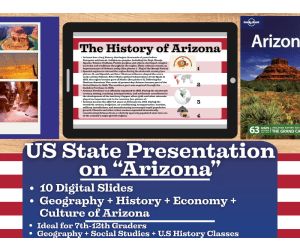
US State Presentation on Arizona
Social Studies, First Peoples (Native), Economics, Geography, History, History: USA, Middle School, Not Grade Specific, High School, Lesson Plans, Teacher Tools, Presentations
US State Presentation on Arizona Bring the United States to life in your classroom with this engaging US State Presentation on Arizona , a ready-to-use digital resource designed for Geography, Social Studies, and US History classes from 7th grade through 12th grade . This presentation provides students with a clear, structured introduction to one US state while combining essential geographical, historical, economic, and cultural information in an accessible format. This US State Presentation - Arizona , includes: The resource begins with a general introduction to the state , helping students understand its location, identity, and importance within the United States. Students then explore the state's borders and neighboring states , making it easier to place it within the broader geography of the country. A general data section introduces key facts such as population, area, population density, capital city, and other essential statistics , providing a useful foundation for further study. A paragraph that explores the history of this US state , highlighting important events, periods, people, and developments that have shaped its identity. This section is particularly useful for US History lessons because it allows students to connect state-level history with major events and themes in American history. A Geography section examines the state's physical characteristics, including its territory, landscapes, natural features, environment, and climate. Students can discover how mountains, rivers, plains, forests, coastlines, deserts, or other geographical characteristics have influenced settlement and human activity. A presentation also introduces the state's economy , explaining its major economic sectors, industries, natural resources, agricultural activities, and other economic strengths. This provides an excellent opportunity to connect geography with economics and understand why particular industries have developed in different parts of the United States. A dedicated section focuses on the capital city , introducing its importance as a political and administrative center. Students can also learn about other important cities , discovering major urban centers and their roles in business, transportation, education, culture, tourism, or industry. A paragraoh that explores culture , giving students an opportunity to learn about traditions, food, music, celebrations, landmarks, historical heritage, and other characteristics that contribute to the state's unique identity. This digital US State Presentation on Arizona is ideal for classroom instruction, student research, geography units, US History lessons, Social Studies activities, state studies, homework, review activities, and independent learning. Its organized structure makes it suitable for middle school and high school students , while its broad range of topics encourages students to view a state from multiple perspectives. Whether you are teaching a unit on the United States, American Geography, US History, state studies, or regional culture , this resource offers a convenient and engaging way to help students explore the diversity and complexity of the United States. Perfect for: Geography Classes, Social Studies Classes, US History Classes, Middle School, High School, Grades 7–12, State Studies, American Studies, Homeschooling, Student Research, and Digital Learning. Learning with Alan is an educational resource store created to help teachers, educators, and tutors reach their teaching goals while building a fun, engaging, and stimulating learning environment . Because learning should always be meaningful—and fun! 🎓✨ If you want to browse more of my Teaching Resources, click here Learning with Alan!!
Author Learning with Alan
Rating
Tags Social Studies, Geography, Arizona, USA, United States Of America, US History, Presentation, Lesson, Introduction, Native People

Yoga Reading Comprehension Passage - Cored Ed Encyclopedia
ELA, Language Development, Reading Comprehension, Reading, History, Social Studies, Pre-Reading, P.E. & Health, Yoga, Geography, Grade 2, 3, 4, 5, Worksheets & Printables, Worksheets, Teacher Tools, Centers, Activities, Writing Prompts, Assessments, Quizzes and Tests, Quizzes, Lesson Plans
This yoga reading comprehension with lesson plan includes: Visualization (on the front cover) Start your lesson by taking a minute to think and share something about the topic. Read the script aloud (slowly), perhaps prepare some music or sound effects. Student close their eyes and let their imaginations wander. Students open their eyes, read the question aloud and give them a few minutes to complete. Ask a few students to share or keep answers until the end to compare with what they learn in the passage. Quick pause—thousands of Cored Education products are included with your TeachSimple membership. Download links and encyclopedia index available here. Pre-Reading Trivia Students will write down one thing they already know about the subject and then read five more facts and discuss. These facts are fun, and the students will enjoy learning about the subject before reading more. Give 1 minute for students to write what they already know (no pressure—best guess is fine). Read the five facts together. After each fact, do ask a student for their opinion, was it surprising? Set a purpose by asking students to highlight/underline one fact they want to learn more about during the reading. Reading Passage The text is a high-interest reading passage with set paragraphs, roughly three to four paragraphs long. It contains a variety of themes about the topic, anywhere from history to technology. The passage is between 250 and 350 words in length. First, ask students to look at the headings and see what they’ll learn about today. What do they know about the topic/heading? First read options: Teacher read-aloud (best for support). Partner reading (paragraph by paragraph). While reading, students underline important details, and vocabulary words they think may come up in the questions section. Mixed Questions The first question page contains four multiple-choice questions, each with a choice of four answers, and three written response questions that require a sentence or two from the student. Students complete the mcqs first independently, then review quickly as a class. For the 3 written responses, try to get students giving the answer with some form of evidence: “I think ___ because the text says ___.” If students get stuck, send them back to check the passage. Vocabulary Questions Practice seven key words from the text in this section across two activities. First section is scrambled words where students will unscramble three words given a clue for each. The second section is a word to meaning matching activity. Before starting, have some students read out words they underlined in the passage. Ask students to say the word and read aloud the sentence(s) around each word. Ask students to do scrambled words and the matching exercise in pairs then go through answers as a class. For the scrambled spelling task, get four pairs to come up to the board and write the words for extra practice with the other student reading out the clue. For the matching task, prompt students to give full sentences: “I matched ___ with ___ because ___.” Creative Writing In this question, the student will be required to write a five to eight sentence paragraph on a question related to the topic. Before starting, ask students write down 3 key ideas they are going to include in their piece. Ask students for ideas to share around the class to help those struggling. Pro writing expectations: 5–8 sentences At least 2 facts or details from the passage At least 2 vocabulary words from the previous page Students read their paragraphs while classmates listen for facts and vocabulary words. Extension Activities This page is optional for fast finishers or to take home. There are several activities, each one requiring a different skill. Do some, do none, do all, completely optional - but you will feel reassured knowing every possibility is planned for. Includes summary writting question. Answer Key There are answers for the multiple-choice questions, written response questions have sample answers, vocabulary answers and if there is a summary question then a sample summary will be provided as well. Lesson Plan Included Customized lesson plan for this lesson is included. Lesson Snapshot Title: Yoga Genre: Nonfiction (informational text) Subject: Social Studies & Health/SEL (culture and well-being) / Informational Reading Primary Topic: Yoga’s origins, key ideas, and modern practice Estimated Guided Reading Level (A–Z): Q Support pages present: pre-reading trivia, mixed questions, vocabulary activities, creative writing, extension activities, and an answer key. What This Lesson Teaches Best Explains yoga as an old practice that began in India and grew over time. Defines what the word “yoga” can mean in the passage (“yoke” or “union,” like two things working as one). Describes key tools in yoga: body positions, steady breathing, and quiet attention (and how breathing can steady the mind). Introduces “sutras” and explains that Patanjali gathered yoga ideas into short lines meant to be remembered, including a description of yoga as a path with eight “limbs.” Traces how yoga changed in the 1900s, noting that teachers such as Tirumalai Krishnamacharya helped create modern postural yoga with flowing sequences taught in classes. Learning Goals Students will describe what the passage says the word “yoga” can mean. Students will identify tools the passage says yoga uses (body positions, steady breathing, quiet attention). Students will explain why careful breathing matters in some yoga traditions, using details from the text. Students will describe what sutras are and why they were written, according to the passage. Students will summarize how yoga changed in the 1900s based on the passage’s timeline. Key Vocabulary From the Text Sanskrit — a very old language from India. traditions — ways people practice and pass ideas over time. sutras — short lines of teaching meant to be remembered. meditation — a quiet practice to help the mind rest. asana — a steady seat for meditation, not a gym pose. FULL CATALOG OF DOWNLOAD LINKS AND ENCYCLOPEDIA INDEX HERE
Author Cored Education
Rating
Tags Vocabulary, Reading Comprehension, Reading Passages, Lesson Plans, Ela Lesson Plans, Reading Comprehension Lesson Plans, Pre-reading, Social Studies Lesson Plans, Yoga, History

Iraq War (2003-2010): Operation Iraqi Freedom Gr. 5-8
Social Studies, History, History: USA, Grade 5, 6, 7, 8, Teacher Tools, Lesson Plans
The Iraq War (2003-2010): Operation Iraqi Freedom Gr. 5-8 Resource This product is a critical component in the broader lesson plan concerning the Iraq War (2003-2010). It presents an in-depth analysis of Operation Iraqi Freedom, with an emphasis on the removal of dictator Saddam Hussein's regime from Iraq between 2003 and 2010. The resource shines light on the social and political unrest, as well as instability in Iraq during this period, highlighting its ramifications within America where anti-war sentiment was at its peak. Pedagogical Methods Encourages students to create posters promoting tourism in war-stricken Iraq. Incorporates map activities to enhance region-specific awareness where these historic events occurred. Fosters understanding about preceding events such as the Persian Gulf War and how global terrorism fears escalated this conflict due to concerns regarding weapons of mass destruction. Offers exploration through detailed accounts read about Operation Iraqi Freedom, enabling strategic comparison with strategies employed during the Persian Gulf War. *In addition to textual content*, more broad-based learning is facilitated via student-centric activities like poem writing capturing wartime experiences - bolstering language skills whilst cloning empathetic connections related to war scenarios. This tool rigorously aligns with State Standards and stick firmly to Blooms Taxonomy principles. Hands-on activities supplement theoretical knowledge; making learning more interactive. Included Learning Features: Crossword puzzles for comprehension reviews Word searches fostering fun-filled review activity . An answer key designed towards easing educators' assessment process . These features are a significant value-add for teaching methodologies across whole group sessions, small group discussions or even homework assignments - resulting in improved individual study patterns among learners. In conclusion, this printable 27 pages long PDF resource serves as a comprehensive guide to a complex topic. It stands as a highly supportive tool for any educator instructing grades 5 through 8 in subjects associated with Social Studies and US History.
Author Classroom Complete Press
Tags Freedom, Geography, History Assessment, Iraq War, Reading Passage

Crazy Horse: Historic Monuments Series
Social Studies, History, History: USA, Grade 4, 5, 6, 7, 8, Teacher Tools, Lesson Plans
Crazy Horse: Historic Monuments Series This is a unique teaching resource designed for educators focusing on the 4th to 8th grade levels. It forms an integral part of a series that passionately delves into America's historical monuments, serving as both an educational tool and a means to commemorate the diverse cultures that have shaped the nation. With accurate factual content, it provides abundant knowledge about not only Crazy Horse but also its cultural context and significance. The resource covers contributions made by people from varied backgrounds, a list of which includes: Mexican Americans Native Americans African Americans People of European descent. This approach encourages broader perspectives in students and inclusiveness in understanding American history. The book can be used during Social Studies lessons facilitating class discussions which promote critical thinking among students about U.S history. In-Class Use: The resource with rich content and historical facts is ideal for creating group activities where learners delve deeper into specific topics or individuals highlighted within its pages.An excellent way to explore U.S history! Beyond Classroom Use: The material doubles up as individual study tool or homework assignment allowing students to learn at their own pace while enhancing independent study skills.An invaluable tool for small-group studies focusing on America's past. About The Book Format & Additional Features: The Crazy Horse: Historic Monuments Series comes in PDF format along with lesson plans rooted in reality helping learners establish tangible connections between past events & present perspectives. Note: "Knowledge transcends through time & generations—nurture young minds today with this comprehensive guide illuminating significant landmarks from America’s vibrant past!"
Author Classroom Complete Press
Tags PDF
Confederation Gr. 7-8
Social Studies, History, History: Canada, Grade 7, 8, Teacher Tools, Lesson Plans
Confederation Gr. 7-8 Confederation Gr. 7-8 is an invaluable resource tailored for educators, comprising of public school teachers and homeschoolers, striving to impart fundamental understanding about Canadian history and enriching their social studies curriculum. This teaching aid reasserts Canada's origins as it draws attention to the significant events around the Confederation of Canada. The package provides a unique insight into the historical era through various instructional methodologies which stimulate learners to efficiently gather, analyze and synthesise information. Aimed at Students Studying Social Studies with a Focus on Canadian History Simplifies complex concepts into easily understandable segments of information. Makes students realize the essential roles played by 'Fathers of Confederation'. Aids in recalling key dates tied with crucial events circling around the Confederation plus when each province joined officially. Besides academics, this unit leverages educational tools such as crossword puzzles and word searches to make learning interactive. Confederation Monopoly: The Unique Addition This specifically designed monopoly aims at reinforcing lessons learnt in a fun-filled way. Versatility & Flexibility Suitable for whole group instruction: Promotes comprehensive learning experience Ideal for small group sessions: Fosters personalised guidance offering more focused attention An engaging homework assignment: Lets students enjoy independent reflections on covered topics via interesting activities Digital Format: Hassle-Free Integration Your product comes in an easy-accessible PDF format that seamlessly integrates across multiple settings. Whether it's a physical classroom or an online class during remote learning, this resource ensures tension-free implementation. Answer Key Included An accompanying answer key guarantees quick self- assessments and manages the doubt clearing process efficiently. Boost Your Teaching Practices With Confederation Gr. 7-8! Upgrade your teaching practices with this comprehensive resource that aligns all necessary components for delivering effective education, thereby fostering interest amongst learners about historical milestones. This guide ensures efficient session planning and contributes to achieving positive learning outcomes.
Author Classroom Complete Press
Tags PDF
Icebergs Reading Comprehension Passage - Cored Ed Encyclopedia
ELA, Reading Comprehension, Reading, Language Development, History, Social Studies, Science, Physics, Earth and Environmental Sciences, Pre-Reading, Grade 2, 3, 4, 5, Worksheets & Printables, Worksheets, Teacher Tools, Centers, Activities, Writing Prompts, Assessments, Quizzes and Tests, Quizzes, Lesson Plans
This Icebergs reading comprehension with lesson plan includes: Visualization (on the front cover) Start your lesson by taking a minute to think and share something about the topic. Read the script aloud (slowly), perhaps prepare some music or sound effects. Student close their eyes and let their imaginations wander. Students open their eyes, read the question aloud and give them a few minutes to complete. Ask a few students to share or keep answers until the end to compare with what they learn in the passage. Quick pause—thousands of Cored Education products are included with your TeachSimple membership. Download links and encyclopedia index available here. Pre-Reading Trivia Students will write down one thing they already know about the subject and then read five more facts and discuss. These facts are fun, and the students will enjoy learning about the subject before reading more. Give 1 minute for students to write what they already know (no pressure—best guess is fine). Read the five facts together. After each fact, do ask a student for their opinion, was it surprising? Set a purpose by asking students to highlight/underline one fact they want to learn more about during the reading. Reading Passage The text is a high-interest reading passage with set paragraphs, roughly three to four paragraphs long. It contains a variety of themes about the topic, anywhere from history to technology. The passage is between 250 and 350 words in length. First, ask students to look at the headings and see what they’ll learn about today. What do they know about the topic/heading? First read options: Teacher read-aloud (best for support). Partner reading (paragraph by paragraph). While reading, students underline important details, and vocabulary words they think may come up in the questions section. Mixed Questions The first question page contains four multiple-choice questions, each with a choice of four answers, and three written response questions that require a sentence or two from the student. Students complete the mcqs first independently, then review quickly as a class. For the 3 written responses, try to get students giving the answer with some form of evidence: “I think ___ because the text says ___.” If students get stuck, send them back to check the passage. Vocabulary Questions Practice seven key words from the text in this section across two activities. First section is scrambled words where students will unscramble three words given a clue for each. The second section is a word to meaning matching activity. Before starting, have some students read out words they underlined in the passage. Ask students to say the word and read aloud the sentence(s) around each word. Ask students to do scrambled words and the matching exercise in pairs then go through answers as a class. For the scrambled spelling task, get four pairs to come up to the board and write the words for extra practice with the other student reading out the clue. For the matching task, prompt students to give full sentences: “I matched ___ with ___ because ___.” Creative Writing In this question, the student will be required to write a five to eight sentence paragraph on a question related to the topic. Before starting, ask students write down 3 key ideas they are going to include in their piece. Ask students for ideas to share around the class to help those struggling. Pro writing expectations: 5–8 sentences At least 2 facts or details from the passage At least 2 vocabulary words from the previous page Students read their paragraphs while classmates listen for facts and vocabulary words. Extension Activities This page is optional for fast finishers or to take home. There are several activities, each one requiring a different skill. Do some, do none, do all, completely optional - but you will feel reassured knowing every possibility is planned for. Includes summary writting question and additional facts. Answer Key There are answers for the multiple-choice questions, written response questions have sample answers, vocabulary answers and if there is a summary question then a sample summary will be provided as well. Lesson Plan Included Customized lesson plan for this lesson is included. Lesson Snapshot Title: Icebergs Genre: Nonfiction (informational passage) Subject: Reading (Informational Text) / Earth Science Primary Topic: How icebergs form, drift, and change Estimated Guided Reading Level (A–Z): R What This Lesson Teaches Best Key facts about iceberg floating: ice is lighter than seawater and most of an iceberg is below the surface (about 90% underwater). How icebergs form from glaciers on land, including the process called calving when a piece breaks away at the sea. Human safety and history connections: the Titanic tragedy and how the International Ice Patrol began sending warnings to ships. How icebergs change shape over time (waves at the waterline, meltwater weakening from above) and why scientists track them (ocean currents, changing polar ice). Using headings to organize information into focused sections (formation, safety/history, observation/science clues). Learning Goals Explain why most of an iceberg is hidden under the ocean’s surface. Describe how snow becomes hard glacier ice and how a new iceberg forms. Define calving using details from the passage. Identify what happened in 1912 and how it led to safer travel for ships. Describe two ways an iceberg can change shape and one reason scientists watch iceberg paths. Key Vocabulary From the Text seawater — ocean water with salt in it. surface — the top layer of something. glacier — a huge, slow-moving river of ice. calving — when a piece breaks off a glacier. currents — moving flows of ocean water. FULL CATALOG OF DOWNLOAD LINKS AND ENCYCLOPEDIA INDEX HERE
Author Cored Education
Rating
Tags Vocabulary, Reading Comprehension, Reading Passages, Lesson Plans, Ela Lesson Plans, Reading Comprehension Lesson Plans, Pre-reading, History, Science Lesson Plans, Earth Science
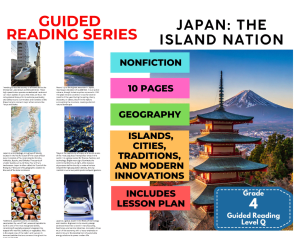
Japan The Island Nation: Guided Reading Level Q with Lesson Plan
ELA, Resources for Teachers, Reading Comprehension, Reading, Science, Geography, Social Studies, History, Earth and Environmental Sciences, Technology, Grade 3, 4, 5, Worksheets & Printables, Worksheets, Teacher Tools, Centers, Activities, Literacy Readers, Quizzes, Quizzes and Tests, Assessments, Lesson Plans
This Japan: The Island Nation (level q) guided reading book with lesson plan includes: Guided Reading Color Label (front cover x1) This is a quick way to match the book’s demands to what students can generally handle.. The overall goal is to use the level/color to pick books for several smaller groups. To qualify for a certain level, a student is expected to read a book from that level with about 90–94% accuracy. If a student is consistently accurate and understands, move up a level. If the student is struggling at that level, drop down and add more support. Each student will improve at completely different rates, but it is generally one of the best ways to check progress across the class. DOWNLOAD THE CATALOG TO VIEW ALL GUIDED READING BOOKS AVAILABLE (SORTED LEVELS A-Z) Pre-Reading Question (x1) Teacher asks the prompt aloud, can be while showing the cover or first page. Students share what they already know, or make educated guesses from the cover. Prompt them to use the target vocabulary. Write some of their responses on the board to look back at during the reading. Vocabulary Words (x5) Introduce the five words, best doing it one at a time. Start by saying it, while students repeat and then see if anyone knows what it means before reading further. Read through the meaning and try to briefly connect each word to a picture or gesture so it’s meaningful. Ask students to flip through the book pages and point to where they see each of the vocabulary words. While reading the book pause upon coming across one of the vocab words or read the sentence twice to make sure students understand the word has appeared. Optional: Ask students to raise hands whenever they see/hear one of the new words. Guided Reading Pages (x10) Check the book snapshot (below) for: primary topic - do you need to prep extra reading or intro materials on this? what is taught best - decide on 1-2 bullets to focus on, use the prompt or words provided here for best results. learning goals - what you are checking for students to be able to do after the session, elicit answers using prompts or words provided. key vocabulary (see section above). questions overview - so you know what is coming up and if you need to prep extra materials to assist understanding. Run the lesson You may have already looked at a few of the pages together, but you can show them some of the pictures again first to set meaning. Depending on how much time you have and how familiar your students are with guided reading class, you may want to read the book aloud first with the group first. Students whisper or partner read, while you listen in. If time, do it as a group, one student reading a page each. Use the guided page’s prompts to coach: “Check the picture / does it make sense?” “Point under the words / try the first sound” “Reread the sentence smoothly”. Try to focus more on one student per session (rotating every time), so you can work out if they are ready to move up or need to move down a level. Comprehension Questions (back cover x3) This is your way to check that students didn’t just say the words, but actually understood the text. First, let students answer by pointing to the page/picture and saying a short sentence. After any answer, follow with: “Show me where you found that in the text.” In bigger groups, have partners answer first (10–20 seconds), then call on 2–3 students to share. Differentiation tips: Emerging speakers/struggling readers: oral + pointing On-level: oral in a full sentence Higher: one written sentence or draw + label Book Snapshot Title: Japan: The Island Nation Genre: Nonfiction Subject: Social Studies (Geography/Culture) Primary Topic: Japan’s islands, cities, traditions, and modern innovations Estimated Guided Reading Level (A–Z): Q What This Book Teaches Best Explains Japan’s geography as an archipelago , naming the four main islands and describing its location off East Asia. Highlights Tokyo as a major metropolitan area , describing its role and features of city life. Describes transportation and technology through the Shinkansen (bullet train), including its speed, safety, and punctuality. Connects landforms and natural features to Japan’s identity by describing Mount Fuji, snow cover, and spring sakura blossoms. Builds understanding of culture and history through Shinto and Buddhism, matsuri festivals, and the Edo period (shoguns, samurai, and castles like Himeji). Learning Goals Students will explain what an archipelago is and name Japan’s four main islands. Students will describe Tokyo’s importance and identify details the text gives about the city. Students will explain how the Shinkansen helps people travel and identify key features the text highlights (such as speed or punctuality). Students will describe Mount Fuji using details from the text, including its height and volcanic history. Students will identify key ideas about Japanese traditions from the text (religions, shrines/torii, cuisine, or festivals). Students will explain how Japan’s climate varies and describe the text’s example of the “snow monkey” in winter. Key Vocabulary From the Text archipelago — a group of islands. metropolitan — related to a very large city area. punctuality — being on time. terraced — built in step-like levels on a hillside. geothermal — heat that comes from inside the Earth. Discussion Prompts Pre-reading question: What places, traditions, or inventions do you expect to learn about in Japan? Comprehension questions: What four main islands does the text name as part of Japan? Comprehension questions: What does the text say the Shinkansen is known for? Comprehension questions: How does the text say the “snow monkey” adapts to cold winters? Printing Tips 1. Best Printing Method (Recommended) “Booklet” Printing (Best if Available) If your printer or PDF viewer supports Booklet Printing , use this. Settings to use: Print mode: Booklet Paper size: Letter or A4 (either works) Orientation: Landscape Print on both sides: Yes Flip on: Short edge Scaling: Fit to printable area Booklet subset: First test: Front sides only Then: Back sides only This will automatically: Pair pages correctly Put the cover on the outside Align everything for folding After printing, fold in half and staple along the spine . 2. If “Booklet” Printing Is NOT Available You can still print this correctly with manual duplex printing . Step-by-step: Open the PDF. Choose Print . Set: Orientation: Landscape Pages per sheet: 1 Print on both sides: Yes Flip on: Short edge Print all pages . Because each PDF page already contains two facing book pages, the result will still fold cleanly into a book. Thousands of Cored Education products are included with your TeachSimple membership. Download links and encyclopedia index available here.
Author Cored Education
Rating
Tags Reading Comprehension, Reading Passages, Reading, Guided Reading, Guided Reading Lesson Plan, Guided Reading Activity, Pre-reading, Social Studies, Geography, History

Experiential Learning – Community Problem-Solving Projects
Social Studies, Government, Sociology, History: USA, History, Resources for Teachers, Classroom Management, Community Building, Special Resources, Social Emotional Learning (SEL), Grade 5, 7, 8, 9, 10, 11, 12, Worksheets & Printables, Workbooks, Worksheets, Word Searches, Teacher Tools, Assessments, Lesson Plans, Quizzes and Tests, Quizzes, Tests
Utilizing the no-prep experiential learning unit on solving community issues will empower your students to be active learners and members of their community by providing them with a hands-on, project-based learning (PBL) experience that goes far beyond the traditional textbook. The complete curriculum guide and student workbook for this PBL unit will give you all the necessary information to create an engaging and effective PBL unit with your middle school students. The curriculum is built on the proven E.P.I.C framework (empathize, probe, innovate, commit), which will lead them through the entire civic action process, from identifying an authentic community issue, to conducting research about that issue, to designing a sustainable solution, to implementing their proposed solution. ● Learning Objectives For Participants: 1. Developing Systems Thinking through the use of tools like Iceberg Model and Five Whys, to identify underlying causes of issues rather than just surface level symptoms. 2. Supporting Empathetic Research by conducting interviews with Stakeholders and Mapping Community Assets through uses of Asset-Based Community Development. 3. Developing Data Analysis through differentiating and collecting data from both Qualitative and Quantitative sources in order to effectively communicate the case for change. 4. Supporting Design Thinking and Innovation by brainstorming and using a Feasibility/Impact Matrix to develop the best ideas. 5. Developing project management through Budgeting, Resources Allocation, Timelines with Milestones and Risk Mitigation. 6. Developing Persuasive Communication by learning how to "Pitch" using Ethos, Pathos and Logos to obtain Stakeholder Buy-In. 7. Developing Resilience and Reflection by gaining experience with real-world friction, by learning from successes and failures. Basic Content Summary. The following outlines the contents of the 39-page PDF document: - Part 1 is the Teacher's Theoretical Guide (approximately 11 pages in total) and provides a comprehensive overview of experiential learning's pedagogical background. The guide will give you the ability to facilitate, and confidence to use, experiential learning with your students. - Part 2 is the Student Workbook (about 16 pages total) and has worksheets that are scaffolded for each step of the project from community mapping through to summative reflection; includes 10 different worksheets. - Part 3 is comprised of Visuals & Teacher Resources (about 12 pages total). - Classroom Visuals: Contains anchor charts for The Experiential Learning Cycle, Root Cause Analysis (Fishbone Diagram), and the Strategic Intervention Matrix. - Comprehensive Answer Key & Rubrics: Contains exhibiting example rubrics at every stage (from Substandard to Advanced responses) so that grading is on the process of completion—this means your students know what to expect when working on this project! - Teacher Implementation Guide: Provides suggestions on becoming a guide on the side to your students, how to manage issues that may arise throughout the project, as well as how to create psychological safety for your students. Social Studies, Civics, Government, Leadership, Service-Learning, and Project-Based Learning (PBL) classrooms can benefit from using this resource to empower their students to positively impact the world around them. Download this resource today to begin developing the next generations of architects who will create social change! Projects Based Learning, (PBL), Experiential Learning, Civic, Social Studies, Middle School, Community Service, Servic eLearning, Problem Solving/ Critical Thinking/ Designthinking, Student Workbook (and Teacherguide). This resource also contains Rubrics, No Prep needed, Printable, Leadership and Civic engagement. What Makes It Good for Parents & Schools: Teaches 21st Century Skills Through Real-Life Scenarios: This learning experience is much more than hand memorizing; it teaches students real life skills that they will use throughout highschool, college, and their professional lives, such as budgeting, project management, public speaking, and analyzing data. Promotes Empathy and Civic Responsibility: Through class activities and community projects that are performed as a group and individulally, students will inherently develop a sense of empathy toward others and their community, realizing that they can and should take responsibility for helping bring about positive changes. Develops Resiliency & Growth Mindset: The curriculum helps students change the way they think about challenges (obstacles) and how they see their own failure (a way to collect information for growth). Students will learn to be resilient, open and flexible to the change of environment/challenges, as well as to be perseverant in overcoming obstacles into adulthood. Provides a Complete Package of A High-Quality, Cross-Curricular, and Academically Rigorou: The project consists of four major areas all integrated into one project: social studies, ie. civic mindedness; math, ie. development of budget(s); ELA, ie. persuasive writing skills; science, ie. collection of data. As a result, the project allows for multiplication of all of the classes learned as opposed to singularly focused learning. Provides Everything Needed in a Complete Turnkey Package: When teachers receive the project; it includes a teacher guide, student workbooks, and visual aids, as well as description of the method to assess the student's work is extremely organized, easy-to-understand as well as easy to implement and to grade both substantively and fairly. Intended Audience by Age Group: Age Breakdown Based on Content, Language and Express; Grades 6-8, (Middle School). Page 2 has an explicit mention of the "critical development window of grades 5-8". The task complexity (Budgeting, Stakeholder Analysis and System Thinking) fits perfectly within this age bracket particularly in 7-8 grade level. Secondary Audience: Advanced 5th grade or as part of Introductory 9th/10th grade course work. Material is substantial enough to be used as a High School Freshman/Sophomore Civics, Government or Leadership Elective Course- and, an awesome resource for Gifted and Talented (of which there are many!) in Middle School. Copyright & Terms Of Use: Syed Hammad Rizvi owns copyright on this book. The materials on this site may be used only by yourself or in your classroom (individually). You may not modify, share, or sell any part of it; therefore you are prohibited from placing it on the Internet so that someone else could download it. If you would like to share the resource with your Co-Workers, please purchase Multiple licenses through Teachsimple. Thank you for abiding by the Terms of Use. We thank you for your continued support of Syed Hammad Rizvi.
Author Creative Book Store
Rating
Tags ProjectBasedLearning, PBL, ExperientialLearning, ServiceLearning, CommunityProblemSolving, CivicEngagement, CivicAction, DesignThinking, SystemsThinking, InquiryBasedLearning
Vietnam War: Background and Causes Gr. 5-8
Social Studies, History, History: USA, Grade 5, 6, 7, 8, Teacher Tools, Lesson Plans
Vietnam War: Background and Causes Gr. 5-8 A quintessential resource, specifically tailored for educators teaching one of the United States' most extended military conflicts - The Vietnam War. This comprehensive guide equips teachers with pertinent material to dissect the events, backgrounds, and causes from 1955 to 1975 that paved the way for this historical event. Student Engagement and Activities Teachers can capitalise on a holistic suite of activities designed particularly for students between Grade 5 and Grade 8. These activities ensure vital learning points are underscored while perpetually maintaining high engagement levels across student groups. Note: The content within is strictly aligned with state standards guarding the social studies curriculum suitable for these grades thus making it an excellent tool in public schools as well as homeschooling situations. Highlights: In-depth material on influential figures such as Presidents John F. Kennedy, Lyndon B. Johnson and Richard M Nixon. Illustrations showcasing Southeast Asia's topography aiding complex scenario visualisation during lessons in both small focus study groups or larger classrooms settings. Glimpses into SEAL Teams along with noteworthy information about U.S Navy’s vital role during this military confrontation embedded within this resource tool also make them a worthwhile read. Crossing Boundaries: Beyond Classrooms The guide aims to foster inclusivity pushing beyond classroom confines by suggesting practical extracurricular activities such as organising mock-protests parallelly conducting academic assessments comprising crossword puzzles or comprehension quizzes hence appealing to varied learner types across all classes whether online or physical classrooms participants. Thus, stepping into the shoes of Vietnam War veterans means not just learning history but also living it! Bloom's Taxonomy and Standards Teachers can rest assured that the approach harnesses cognition based on Bloom's Taxonomy guaranteeing pivotal learning outcomes from application-oriented lesson plans while maintaining rigorous academic standards demanded by structured education systems today. In Summary, this versatile teaching guide delivers a complete package aligning perfectly with current educational sensibilities!
Author Classroom Complete Press
Tags Social Studies, Vietnam War, US History, Reading Passage, Pre-assessment

Vietnam War Gr. 5-8
Social Studies, History, History: USA, Grade 5, 6, 7, 8, Teacher Tools, Lesson Plans
Vietnam War Gr. 5-8: An Educational Resource Vietnam War Gr. 5-8 is a comprehensive teaching resource specifically designed for students from grade 5 to grade 8 that aims to present the history and impact of the Vietnam War in an immersive and engaging format. The Lessons: In-depth lessons into Southeast Asia's landscape, specifically focusing on Vietnam's climate and terrain which significantly influenced the conflict outcomes. An exploration of key historical events post World War II leading up to this protracted war including America’s anti-communism stance. A deep-dive into different tactics utilized by Presidents John F. Kennedy, Lyndon B. Johnson, and Richard M Nixon during their respective tenures and throughout the war period. Additional Learning Points: Vietnam War Gr. 5-8 introduces students to significant technological advancements made during this era such as combat helicopters playing pivotal roles in key battles. A detailed overview of specialized units like SEAL teams, along with insights into their significant contribution within U.S Navy operations during these times. Perspectivization: The comprehensive guide also provides a balanced viewpoint by encouraging students to step into different shoes – even those of protesters thereby enriching their understanding of socio-political complexities fundamental to any warfare history study. Critical Observation: The stark differentiation spotlighted between reception received by veterans returning from this war compared with previous wars serves as key learning material for studying societal sentiments associated with military conflicts. Educational Alignment and Structure This teaching guide aligns with state standards and conforms strictly to Bloom’s Taxonomy principles. It can be used in whole group learning environments or smaller study groups; it also functions effectively as homework material due to its interactive engagement style. Additional Resources: A host of hands-on activities that spur active participation Comprehension quizzes designed for periodic testing of acquired knowledge An abundant supply of answer keys supplementing the learning process Product Format: The Vietnam War Gr.5-8 resource product is conveniently available in a single, easy-to-print PDF format bless devoid of any complicated distribution needs. Taking Social Studies To The Next Level: Vietnam War Gr. 5-8 transforms typical classroom history sessions into important conversations that transcend beyond dates and facts to include understanding narratives and nuances. Equip your students with this tool to learn about an intricate slice of U.S history – the Vietnam War!
Author Classroom Complete Press
Tags PDF
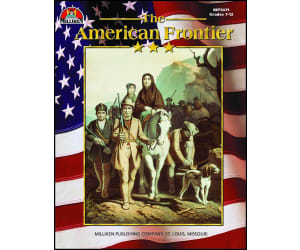
American Frontier
Social Studies, History, History: USA, Grade 7, 8, 9, 10, 11, 12, Teacher Tools, Lesson Plans
American Frontier: A Teaching Resource American Frontier, provides a comprehensive overview of westward expansion in colonial America. It takes learners back in time through engaging narrative, detailing moments of diplomacy, war, collective spirit and adventure seeking. Content Highlights: The adventures of Daniel Boone and explorations by Lewis Clark Significant events like the Louisiana Purchase Controversial aspects such as the subjugation of Native Americans Coverage on the Mexican-American War and transcontinental railroad construction This resource is tailored for students between Grades 7 to 12 studying Social Studies with an emphasis on United States history. Stand out features include a focus on historical facts over Hollywood stereotypes alongside its balance between data and narratives which fosters deep insights into early American frontier life. Uses:This material can be utilized in various learning scenarios such as whole-class instruction, smaller study groups or assigned as detailed homework tasks. Inclusion of maps for geographic understanding combined with thought provoking questions that encourage deeper analysis amplify its value. Bibliography & Evaluation: At the end is an extensive bibliography aimed at directing further topic exploration. Also included is an answer key that simplifies evaluation helping ascertain student comprehension. The Lesson Plan PDF Format Advantage : Integrating 'American Frontier' into your existing curriculum becomes easily manageable owing to its pdf format making it both interesting and sparking enriching discussions covering facets about early American life during its Westward Expansion era. .
Author Classroom Complete Press
Tags PDF

45' Lesson on Memorial Day - Worksheet & Activities | Grade 4
History, Social Studies, Grade 4, Lesson Plans, Teacher Tools, Worksheets & Printables
45' Lesson on Memorial Day - Worksheet & Activities | Grade 4 Take your Memorial Day lessons deeper with these Grade 4 Memorial Day Activities ! This rigorous, standards-aligned resource helps students explore history, analyze primary sources, and build critical thinking while honoring the meaning of Memorial Day. What’s Included ✅ Memorial Day student worksheet packet with higher-level, cross-curricular activities ✅ Activities include: Reading comprehension passage Vocabulary and context analysis Fact vs. opinion practice Cause & effect and sequencing Primary source analysis (“In Flanders Fields”) Paragraph writing, reflection, and letter writing ✅ Complete Answer Key : Quick-grade format Detailed answers and explanations Guidance for grading extended writing responses ✅ Detailed 45-minute Lesson Plan : Step-by-step teaching guide Vocabulary, objectives, and materials Three-holiday comparison (Memorial Day, Veterans Day, Independence Day) Differentiation and assessment strategies How It Works in the Classroom This Grade 4 Memorial Day activity pack is flexible and easy to implement: Use as a complete 45-minute lesson with built-in pacing Assign as a multi-day mini-unit for deeper exploration Use the reading passage (page 2) to build historical understanding and discussion Incorporate primary source analysis (page 6) to develop critical thinking Use writing tasks (paragraphs + letters) for ELA integration Reinforce skills like fact vs. opinion, vocabulary, and cause/effect Standards & Learning Goals Aligned to Grade 4 Social Studies and ELA standards Students will: Understand the history and significance of Memorial Day Analyze primary sources and historical context Identify and explain symbols (flag, poppy, “Taps,” wreaths, half-staff) Compare Memorial Day, Veterans Day, and Independence Day Build vocabulary: commemorate, sacrifice, remembrance, veteran, observance Strengthen reading comprehension and analytical thinking Practice fact vs. opinion and evidence-based reasoning Develop paragraph writing and reflection skills Why Teachers Love It ⭐ Combines social studies, ELA, and critical thinking in one resource ⭐ Includes primary source analysis for deeper, meaningful learning ⭐ Provides a complete, ready-to-teach lesson plan (no prep!) ⭐ Perfect for upper elementary rigor and standards alignment ⭐ Supports all learners with differentiation strategies ⭐ Makes grading simple with a clear, detailed answer key ⭐ Encourages thoughtful reflection on history, sacrifice, and patriotism Download these Grade 4 Memorial Day activities today to create a meaningful, rigorous lesson that builds understanding, critical thinking, and respect for those who served!
Author Bright Classroom Ideas Marketplace
Rating
Tags Memorial Day, History, Lesson, Plan, Worksheet

Persian Gulf War (1990-1991): Invasion of Kuwait Gr. 5-8
Social Studies, History, History: USA, Grade 5, 6, 7, 8, Teacher Tools, Lesson Plans
Persian Gulf War (1990-1991): Invasion of Kuwait Gr. 5-8 A comprehensive teaching tool covering the significant U.S.-led Operation Desert Storm and history in a crisp, engaging manner for students between grade 5 to grade 8. This resource emphasizes on events from 1990 to 1991 post Iraq's invasion of Kuwait. Package Highlights: Map activity : Students gain hands-on experience through a map activity of Iraq, fostering understanding about global conflict motivations. Saddam Hussein Research: A detailed account on Saddam Hussein's life journey from his early years till leadership in Iraq. Activities and Tasks: Knowledge reinforcement via creative projects such as comic strips or dioramas relating to the Persian Gulf War. Suitable for both individual and group learning experiences. The resource also provides a thorough examination of world nations' reaction post Kuwait invasion along with an explanation on Operations Desert Shield & Desert Storm under bloom taxonomy standards, highlighting U.S.'s crucial role during this eventful era' Inclusions: A comprehensive PDF file having ready-to-print 28 pages offering effective lesson plans along with educational tools like crosswords or word searches for enjoyable learning experiences* . This educational resource is specifically designed targeting Grade 5 - Grade 8 learners ideally for Social Studies classes focusing on US History subtopics; it ensures intermediate level detailed exposure about history molding events while fueling interest towards world affairs.* * All-Inclusive Resource: The package can adapt according to various teaching methodologies, suited for whole group instructions as well small study groups State Standards Aligned: The elements align with State Standards over numerous jurisdictions ensuring quality education irrespective of traditional environments or homeschool setups. An Educator's Helping Hand: With added quizzes and answer keys assisting assessment process, it simplifies teachers' tasks.
Author Classroom Complete Press
Tags Social Studies Quiz, Reading Passage, Comprehension Questions, Word Search, Persian Gulf War
I WONDER - How Long Did It Take To Build The Colosseum Animated Video
History: Ancient, History, Social Studies, History: Europe, Grade 4, 5, 6, 7, 8, 9, 10, Lesson Plans, Teacher Tools
Video Introduction An amazing video designed for the students to learn more about history. I WONDER - How Long Did It Take To Build The Colosseum | Animated Video Lesson Do you like history? Which topic do you really enjoy about history? Have you ever read an interesting fact about the Vikings? If yes, can you mention them? What do you like most about the Victorian era? Can you name all the Tudors? Have you ever wondered how people used to live in ancient Japan and ancient China? Do you know any interesting facts about ancient Egyptians and the Pharaohs? Have you ever visited South America? What do you know about Incas and Aztecs? Celtic culture was really one of a kind, can you name any of the places that Celts used to live in? Imagine yourself living during the ancient Roman empire, how your life will look like? Ancient Greece was an amazing place to live in. What do you know about ancient Greek life? I WONDER - How Long Did It Take To Build The Colosseum | Animated Video Lesson The video is perfect for encouraging the researching skills for the students, while learning more about history. I WONDER - How Long Did It Take To Build The Colosseum | Animated Video Lesson This friendly designed video is suitable for students at school, homeschooling, and as a group activity. Format Available in MP4 format.
Author Educational Voice
Tags How Long Did It Take To Build The Colosseum, How Long Did It Take To Build The Colosseum Video, The Colosseum, The Colosseum Video, The Colosseum Facts, The Colosseum Video For Kids, The Colosseum Facts For Kids

I WONDER - What Is The Colosseum | Animated Video Lesson
History: Europe, History, Social Studies, History: Ancient, Geography, Grade 4, 5, 6, 7, 8, 9, 10, Lesson Plans, Teacher Tools
Video Introduction An amazing video designed for the students to learn more about history. I WONDER - What Is The Colosseum | Animated Video Lesson Do you like history? Which topic do you really enjoy about history? Have you ever read an interesting fact about the Vikings? If yes, can you mention them? What do you like most about the Victorian era? Can you name all the Tudors? Have you ever wondered how people used to live in ancient Japan and ancient China? Do you know any interesting facts about ancient Egyptians and the Pharaohs? Have you ever visited South America? What do you know about Incas and Aztecs? Celtic culture was really one of a kind, can you name any of the places that Celts used to live in? Imagine yourself living during the ancient Roman empire, how your life will look like? Ancient Greece was an amazing place to live in. What do you know about ancient Greek life? I WONDER - What Is The Colosseum | Animated Video Lesson The video is perfect for encouraging the researching skills for the students, while learning more about history. I WONDER - What Is The Colosseum | Animated Video Lesson This friendly designed video is suitable for students at school, homeschooling, and as a group activity. Format Available in MP4 format.
Author Educational Voice
Tags What Is The Colosseum, What Is The Colosseum Video, The Colosseum, The Colosseum Facts, The Colosseum Video, The Colosseum Video For Kids, The Colosseum Facts For Kids, History, Geography

I WONDER - Why Did The Viking Raid Other Countries | Animated Video
History: Ancient, History, Social Studies, History: British, History: Canada, History: Europe, History: USA, History: World, Grade 6, 7, 8, 9, 10, 11, 12, Lesson Plans, Teacher Tools
Video Introduction An amazing video designed for the students to learn more about history. I WONDER - Why Did The Viking Raid Other Countries | Animated Video Lesson Do you like history? Which topic do you really enjoy about history? Have you ever read an interesting fact about the Vikings? If yes, can you mention them? What do you like most about the Victorian era? Can you name all the Tudors? Have you ever wondered how people used to live in ancient Japan and ancient China? Do you know any interesting facts about ancient Egyptians and the Pharaohs? Have you ever visited South America? What do you know about Incas and Aztecs? Celtic culture was really one of a kind, can you name any of the places that Celts used to live in? Imagine yourself living during the ancient Roman empire, how your life will look like? Ancient Greece was an amazing place to live in. What do you know about ancient Greek life? I WONDER - Why Did The Viking Raid Other Countries | Animated Video Lesson The video is perfect for encouraging the researching skills for the students, while learning more about history. I WONDER - Why Did The Viking Raid Other Countries | Animated Video Lesson This friendly designed video is suitable for students at school, homeschooling, and as a group activity. Format Available in MP4 format.
Author Educational Voice
Tags Why Did The Viking Raid Other Countries, Why Did The Viking Raid Other Countries Video, Viking Raids, Viking Raids Facts, Viking Raids Video, Viking Raids Video For Kids, Viking Raids Facts For Kids

Boston's Trail to Freedom: Historic Monuments
Social Studies, History, History: USA, Grade 4, 5, 6, 7, 8, Teacher Tools, Lesson Plans
Boston's Trail to Freedom: Historic Monuments This is an exceptional teaching resource, particularly designed for students in the 4th through 8th grades. The primary focus of this lesson plan is on social studies, more specifically, USA history. The unique structure and content of the lessons illuminate significant sites along Boston’s historic Freedom Trail, introducing students to vital personalities from the American Revolution and points of interest. Creative Blend: Each lesson provides a mix of critical facts and review questions that help reinforce learning immediately. Educative Maps: Included are intricate maps detailing various sections of the Freedom Trail. These maps serve as versatile tools - usable during class lessons or as part of homework assignments supporting individual research or group studies. Fostering Independent Thought:To promote independent reasoning while encouraging educational curiosity, Boston's Trail to Freedom: Historic Monuments incorporates several ideas for internet-based research along with multiple intelligence activities suitably tailored for diverse learning styles. In spite being a single product file in PDF format loaded with insightful information, there are numerous possible uses depending on teacher's creativity. Some include activities conducive to whole-group teaching (classroom-style), small group discussions (education centers or study groups), take-home assignments(homework or reading materials), rehearsal quizzes(test prep). In conclusion, if you're looking for an all-inclusive yet engaging supplement that effectively ties classroom instruction with key events from American revolutionary history in vivid detail - consider Boston's Trail to Freedom: Historic Monuments. This could truly be a treasure trove for any educator!
Author Classroom Complete Press
Tags PDF

High School The History of St. Patrick's Day Reading Passage
Social Studies, Reading, ELA, Reading Comprehension, Research, Resources for Teachers, History, Writing, High School, Homeschool Resources, Worksheets & Printables, Teacher Tools, Assessments, Lesson Plans, Quizzes and Tests, Writing Prompts
I will be the first to admit that finding "holiday" stuff for high schoolers is a total nightmare because it usually feels like it's meant for a second grader. My 9th-grade daughter is at that stage where if I hand her a "fun" worksheet with a cartoon leprechaun, she just gives me that look—you know the one. I really wanted to create something that respected her intelligence and actually challenged her to write more than just a single sentence. This revamped resource is my answer to that; it has more meat, it is historical, and it actually treats our teens like the capable young adults they are becoming. I poured my heart into making this a "grab-and-go" lesson so you can actually enjoy your coffee while your student/homeschooler dives into some serious history. INCLUDED IN THIS RESOURCE: I have expanded this reading [assage to really dive into Patrick’s life and how this day turned into a worldwide celebration. These 20 deep-dive passage questionsare meant to get them thinking; they require full paragraph answers.I included some structured sheets to help your student catch the big themes and historical changes without feeling totally overwhelmed I have included some note-taking sheets to help your student/homeschooler catch the big themes. I compose full paragraph samples for you, so grading is a breeze and you have a solid starting point for those dinner-table discussions. TOPICS COVERED: Students/Homeschoolers will dive into his kidnapping and the grit it took to survive years of captivity before returning as a leader We look at how the 1840s famine actually turned a religious day into a massive statement of Irish-American pride. Your teen will explore the "why" behind the shamrock and the surprising shift from "St. Patrick's Blue" to green. We analyze how cities from Tokyo to Sydney have reimagined the day, making it a bridge between cultures. I am truly honored to be a small part of your homeschooling journey, and I hope this resource makes your St. Patrick’s Day both educational and stress-free. There is something so special about the moment a student realizes that a holiday they have celebrated their whole life has a much deeper, more significant meaning than they ever imagined. My goal is for this reading passage and the accompanying activities to be the spark for those "lightbulb moments" in your home or classroom. Please know that I am always here to support you, and I am constantly working on new materials that help our high schoolers grow into thoughtful, articulate adults. Thank you so much for trusting my work and for all the incredible effort you put into educating the next generation! If you and your students/homeschoolers enjoyed this resource, please leave a review. Tina - Big Easy Homeschooling Mom
Author Homeschool with Big Easy Homeschooling Mom
Rating
Tags St. Patrick's Day For High School, History Of Saint Patrick Reading Passage, Irish History Curriculum, Saint Patrick Life Story, St. Patrick's Blue History, Corned Beef And Cabbage Origins, Roman Britain Saint Patrick, High School Irish Heritage, History Of St. Patrick For Teens, Saint Patrick Captivity Story
I WONDER - What Do Griffins Do | Animated Video Lesson
History, Social Studies, Common Core, Grade 4, 5, 6, 7, 8, 9, 10, Lesson Plans, Teacher Tools
Video Introduction An amazing video designed for the students to learn more about mythological creatures in different cultures. I WONDER - What Do Griffins Do | Animated Video Lesson Mythology is full of wonders and spectacular stories. Ancient civilizations were trying to explore every aspect of life, while they search for new technologies, they wanted to believe in something big and can change the world, so they created mythical creatures and mythical stories. Let's hear about them! What do you know about these creatures? Cyclops, Centaurs, Selkies, Phoenix, Gnomes, Dragons, Gorgons, Orcs, Cerberus, Trolls, Minotaur, Griffins, Mermaids, Elves, Polyphemus, Pegasus, and Ogres. I WONDER - What Do Griffins Do | Animated Video Lesson The video is perfect for encouraging the creativity skills for the students, while learning more about this fantastic mythical creature. I WONDER - What Do Griffins Do | Animated Video Lesson This friendly designed video is suitable for students at school, homeschooling, and as a group activity. Format Available in MP4 format.
Author Educational Voice
Rating
Tags What Do Griffins Do, What Do Griffins Do Video, Griffins, Griffins Video, Griffins Facts, Griffins Facts For Kids, Griffins Video For Kids, Griffin, Griffin Facts, Griffin Video

I WONDER - What Did The Giganotosaurus Eat | Animated Video Lesson
History, Social Studies, History: Ancient, History: World, Animals, Life Sciences, Science, Grade 4, 5, 6, 7, 8, 9, 10, Lesson Plans, Teacher Tools
Video Introduction An amazing video designed for the students to learn more about dinosaurs in different countries. I WONDER - What Did The Giganotosaurus Eat | Animated Video Lesson Do you like dinosaurs? what is your favorite one? Do you own a pet? If yes, tell us more about it, like what its name? And what do you like most about it? Do you think that your pet has been evolved from a dinosaur? Can you write down the characteristics of your favourite dinosaur like it's shape, their rivals, where did it use to live and what was their favourite food? What is the largest and the smallest dinosaur that ever found? Why is the T-rex is so famous? Have you ever read any interesting facts about it? Can you name any of the carnivores or herbivores dinosaurs? I WONDER - What Did The Giganotosaurus Eat | Animated Video Lesson The video is perfect for encouraging the researching skills for the students, while learning more about dinosaurs. I WONDER - What Did The Giganotosaurus Eat | Animated Video Lesson This friendly designed video is suitable for students at school, homeschooling, and as a group activity. Format Available in MP4 format.
Author Educational Voice
Rating
Tags What Did The Giganotosaurus Eat, What Did The Giganotosaurus Eat Video, Giganotosaurus, Giganotosaurus Facts, Giganotosaurus Video, Giganotosaurus Facts For Kids, Giganotosaurus Video For Kids

Korean War: Location and Geography Gr. 5-8
Social Studies, History, History: USA, Grade 5, 6, 7, 8, Teacher Tools, Lesson Plans
Korean War: Location and Geography Gr. 5-8 Teaching Resource The Korean War: Location and Geography Gr. 5-8 resource provides a detailed yet easy-to-follow roadmap for educators looking to supplement their instruction on the Korean War. Suitable For Middle School Curriculum The content is thoughtfully refined to suit learners in grades five through eight, which makes this guide suitable for middle school social studies curriculum specifically centered around USA history. Historical Background and Key Figures In this resource, students engage with essential historical subject matter related to the first major conflict of the Cold War era. The lessons delve into understanding the pivotal role played by North and South Korea's geography during this conflict, thus providing a geographical context that is crucial in grasping war strategies. Fostering post-World War II knowledge among pupils: In it, they will gain insights into how Cold War tensions between Russia and the US prompted various geopolitical events of significance. An interesting perspective on influential personalities: Insightful examination into key figures - from President Harry S Truman to Joseph Stalin and Kim Il-Sung - offers who shaped historical outcomes. Tailored Lesson Delivery & Interactive Engagement Educators can conduct these lessons within whole group sessions or through focused small groups—depending on what best suits their classroom dynamic—thereby creating an adaptable learning environment whether in traditional classrooms or homeschool settings. Additionally, they can designate tasks also as homework assignments enhancing further individual student examine at home. Apart from topical discussions, students will have hands-on activities as part of the learning journey that promote interactive engagement with materials beyond ordinary classroom lectures or readings. Word games: Other resources include crosswords and word searches aimed at fun reinforcement of learned concepts. Comprehension quizzes: These gauge their progress understanding involved lesson elements. Catered to State Standards & Bloom’s Taxonomy The resource ensures students receive a well-rounded instruction resonating with standardized expectations across curricula nationwide. Answer keys provided aid educators in effectively measuring student participation and comprehension. User-Friendly Format The entire teaching resource comes in one PDF format containing 27 ready-to-print pages, provided for convenience and ease of use. All in all, Korean War: Location and Geography Gr. 5-8 isn’t merely a lesson plan but a comprehensive guide enabling educators to teach this crucial part of American history with efficacy and enthusiasm.
Author Classroom Complete Press
Tags Korean War, Geography, Reading Passage, Social Studies Quiz, Agriculture
I WONDER - Who Was Pegasus | Animated Video Lesson
History, Social Studies, Common Core, Grade 4, 5, 6, 7, 8, 9, 10, Lesson Plans, Teacher Tools
Video Introduction An amazing video designed for the students to learn more about mythological creatures in different cultures. I WONDER - Who Was Pegasus | Animated Video Lesson Mythology is full of wonders and spectacular stories. Ancient civilizations were trying to explore every aspect of life, while they search for new technologies, they wanted to believe in something big and can change the world, so they created mythical creatures and mythical stories. Let's hear about them! What do you know about these creatures? Cyclops, Centaurs, Selkies, Phoenix, Gnomes, Dragons, Gorgons, Orcs, Cerberus, Trolls, Minotaur, Griffins, Mermaids, Elves, Polyphemus, Pegasus, and Ogres. I WONDER - Who Was Pegasus | Animated Video Lesson The video is perfect for encouraging the creativity skills for the students, while learning more about this fantastic mythical creature. I WONDER - Who Was Pegasus | Animated Video Lesson This friendly designed video is suitable for students at school, homeschooling, and as a group activity. Format Available in MP4 format.
Author Educational Voice
Rating
Tags Who Was Pegasus, Who Was Pegasus Video, Pegasus, Pegasus Facts, Pegasus Video, Pegasus Video For Kids, Pegasus Facts For Kids, Mythology, Mythology Facts, Mythology Lesson