Math practice
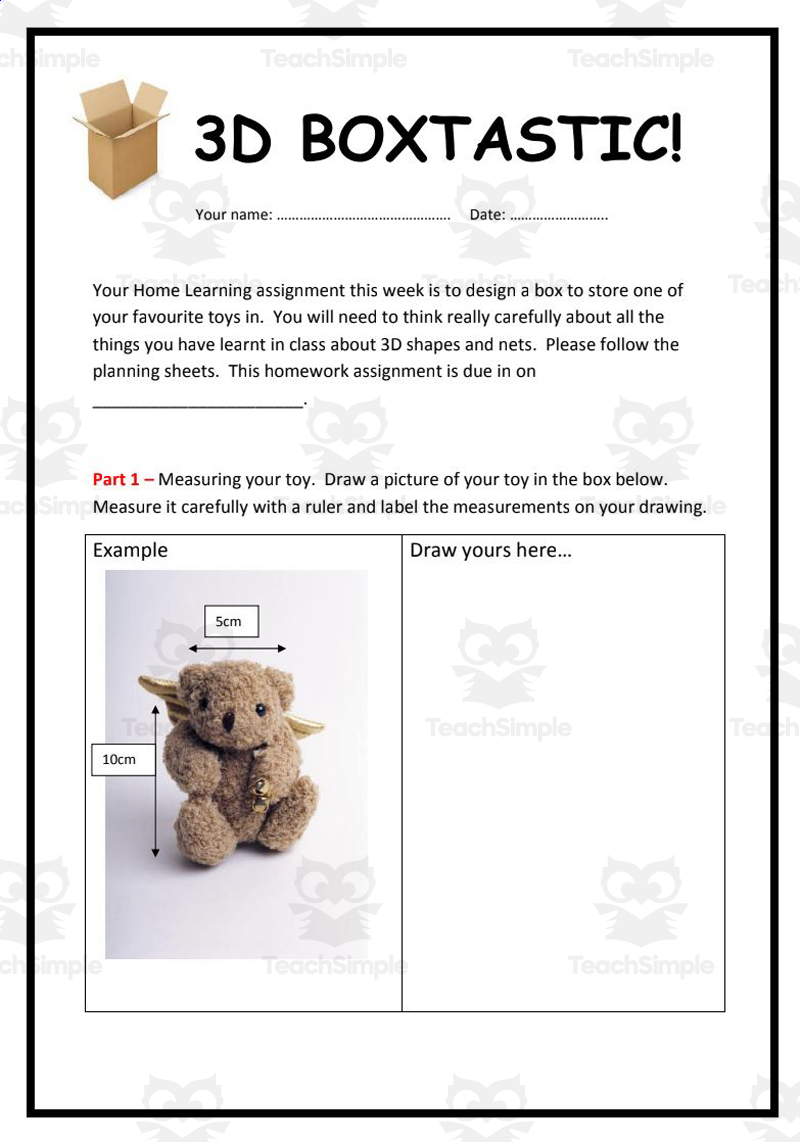
Math Project: 3D Boxtastic
A home-learning design project applying knowledge of 3D shapes and nets by having students design and build a box to store a favourite toy, integrating measurement.




Classroom resources
Browse by lesson focus
Choose the topic or kind of practice you need.
Showing 2065–2088 of 2979 resources

 Show filters
 A home-learning design project applying knowledge of 3D shapes and nets by having students design and build a box to store a favourite toy, integrating measurement.
 Free download
 Practice and check recognition/spelling of Fry's Sixth 100 Sight Words (words 1-20 of this free sample) through fill-in-the-blank sentences and flash-card style word drill.
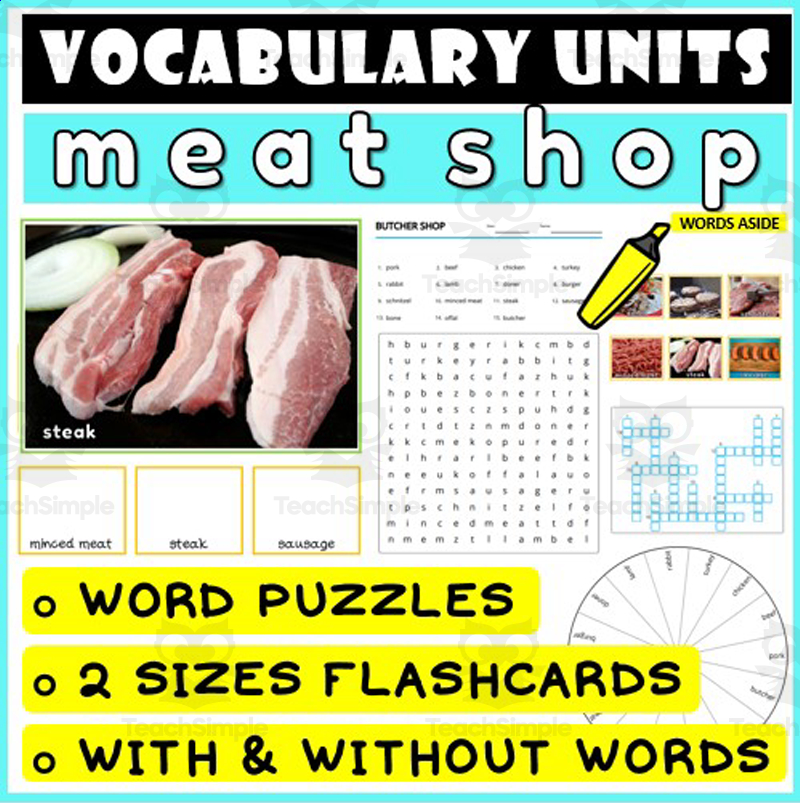
Unscramble anagrams to find vocabulary words, solve a themed crossword puzzle from clues, match words to a word list, and find words in a word search grid.
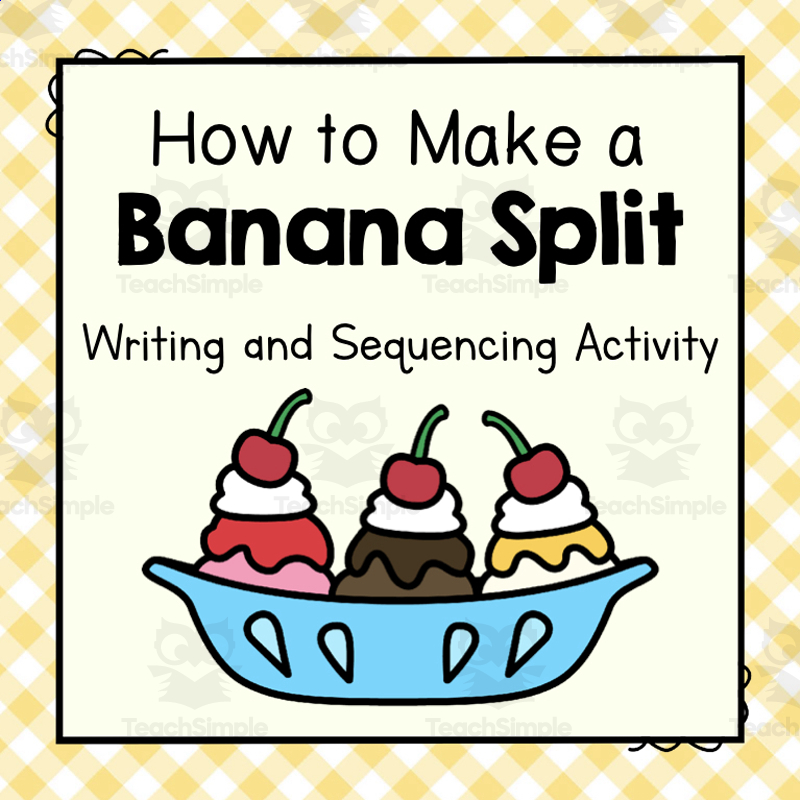
Compare a sample writing describing how to make a banana split, sequence picture cards showing the steps (gather ingredients, scoop ice creams, cut banana, add toppings), practice handwriting/vocabulary words (scoop, strawberry, chocolate, vanilla, banana, dish, sauce, cherry, split), and write their own how-to piece using an editing…
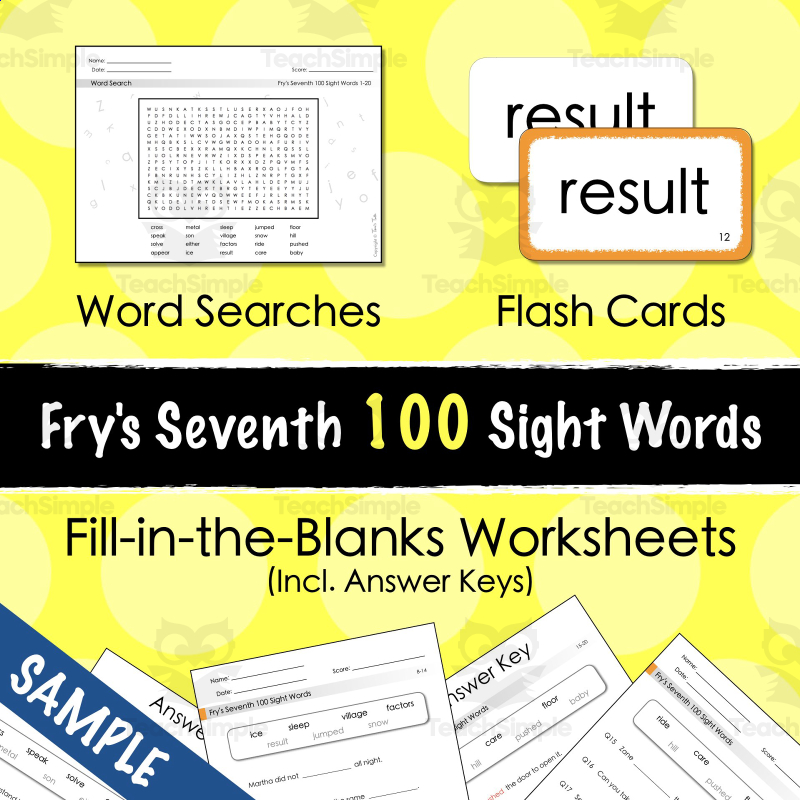 Free download
 Practice and check recognition/spelling of Fry's Seventh 100 Sight Words (words 1-20 of this free sample) through fill-in-the-blank sentences and flash-card style word drill.
A low-text, high-drawing SEL (social-emotional learning) visual journaling curriculum designed to help K-2 students build foundational gratitude and empathy skills without relying on reading/writing ability.
Read a daily story-style passage about a money topic (twice if possible), learn 4 vocabulary words and use two in original sentences, study any accompanying chart or graph, answer comprehension questions in full sentences, and complete a writing prompt.
Provide a full school-year daily financial literacy reading comprehension program of 180 short passages (organized into 12 themed units) that build money-math and money-vocabulary skills alongside reading comprehension.
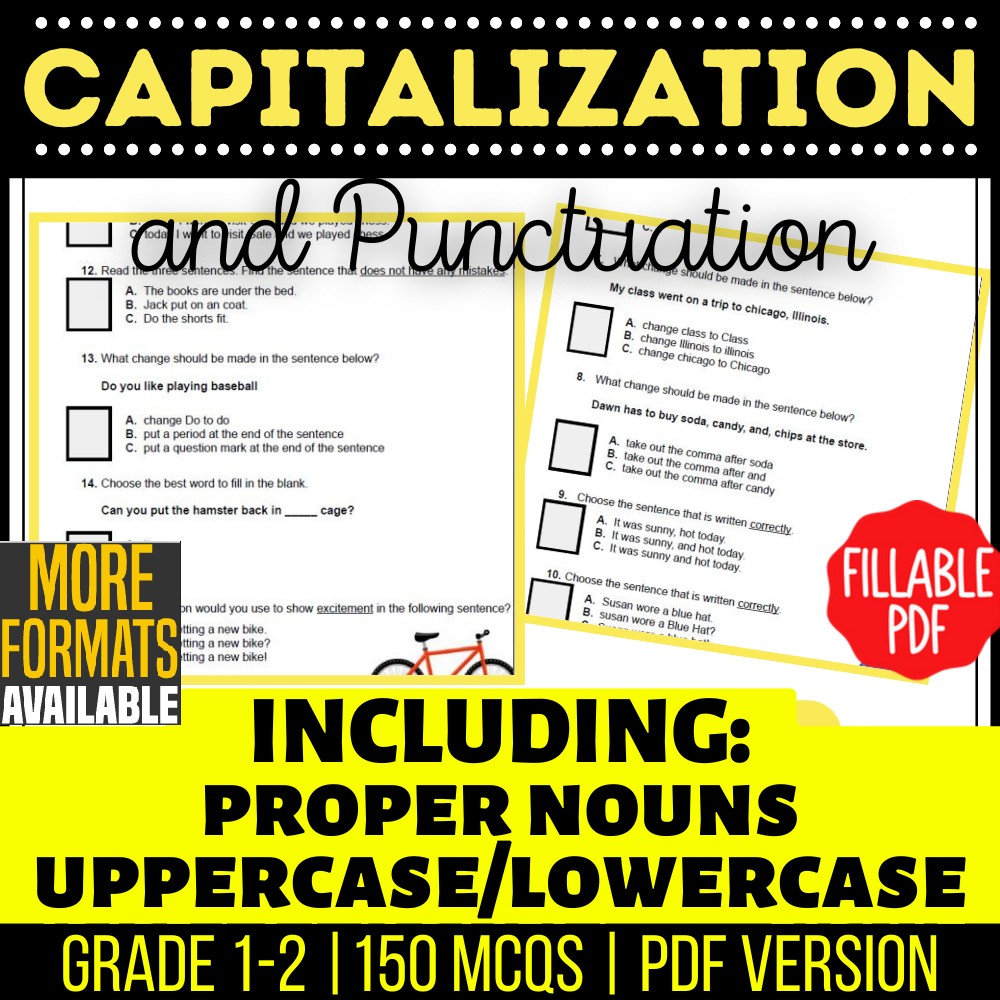
For each of 15 questions per lesson, choose which of three sentence/word/date options is written correctly, or fill in the correct end punctuation; students also fill in a bubble-style answer sheet per lesson.
Students compare two visuals to identify positive vs negative mental health cues, draw and label happy/sad self-portraits with descriptive feeling words, color a scene to represent positive and negative mental health, circle pleasant/unpleasant feeling words, write about how sleep and bedtime choices affect mental…

Help primary students understand how their body and brain respond to challenging or uncomfortable situations, and teach coping strategies and the importance of talking to trusted adults
Listen to an audio recording, answer written comprehension questions about Greek architecture and sculpture, and design their own Ancient Greek temple.

Learn and spell 10 animal names (elephant, lion, dog, cat, spider, butterfly, bird, fish, monkey, snake) via teacher drawing and miming games, fill in missing letters in animal words, draw and rank 4 favorite animals, practice asking/answering 'Which animal do you like? I like ___', and sort animals by syllable-stress…
Answer chapter comprehension questions for chapters 1, 2 and 4; write an original short story extension for chapter 3 (goblin story); complete favorite-part and 5-bear-rating reflections; identify author's purpose (inform/entertain/persuade); describe Little Bear's character traits; answer a 7-item true/false quiz.
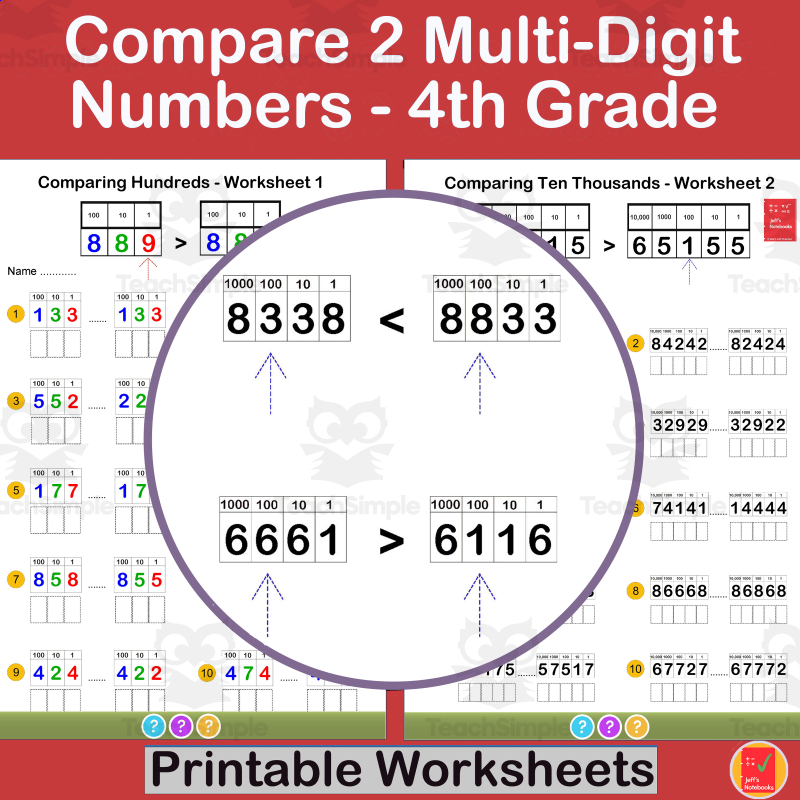
Compare pairs of multi-digit numbers digit by digit starting from the greatest place value, write between them, and (on the challenge set) first solve an addition problem before comparing the sums.
Read informational and fictional passages; answer reading-response questions; define vocabulary; describe a pyramid using the five senses; compare a fiction and non-fiction text in a paired-texts activity; write an adventure story ('Pyramid Adventure') and plot outline; use vocabulary flash cards.
Listen to an audio recording, read an accompanying eBook, answer written comprehension questions, complete a crossword, and complete a fact file on a chosen Greek philosopher.
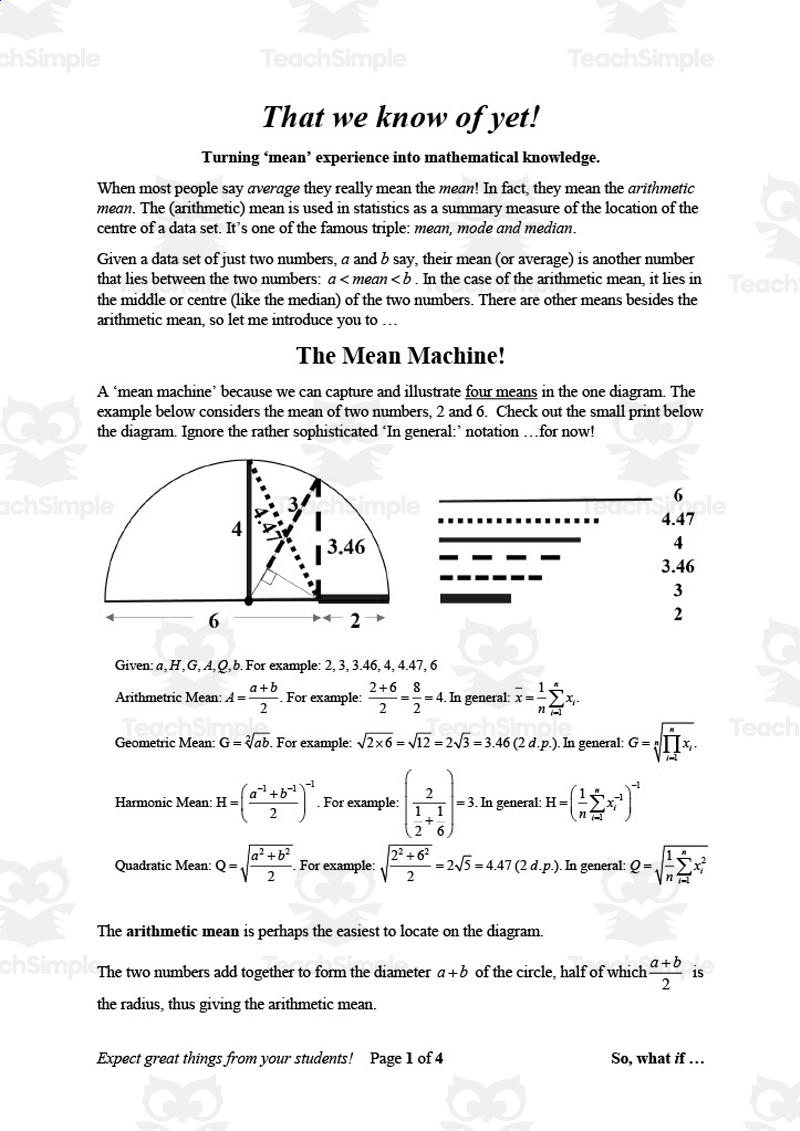
Explains and compares four statistical/mathematical means (arithmetic, geometric, harmonic, quadratic) using a combined geometric diagram, then applies the harmonic series to a 'book overhang' problem.

Complete missing letters in weather sentences (e.g. "It's s_nn_"), match weather conditions to actions (e.g. "It's sunny - put on sunscreen"), draw pictures of people doing activities in each weather type and practice asking/answering "What's the weather like?" with classmates, mime weather conditions, and…

Solve area and perimeter word problems using provided graph paper; decompose given shapes into rectangles/squares to find total area; construct rectilinear shapes matching a set of given sub-areas; find missing perimeters and both area and perimeter of rectangles/squares from partial dimensions; design multiple shapes…
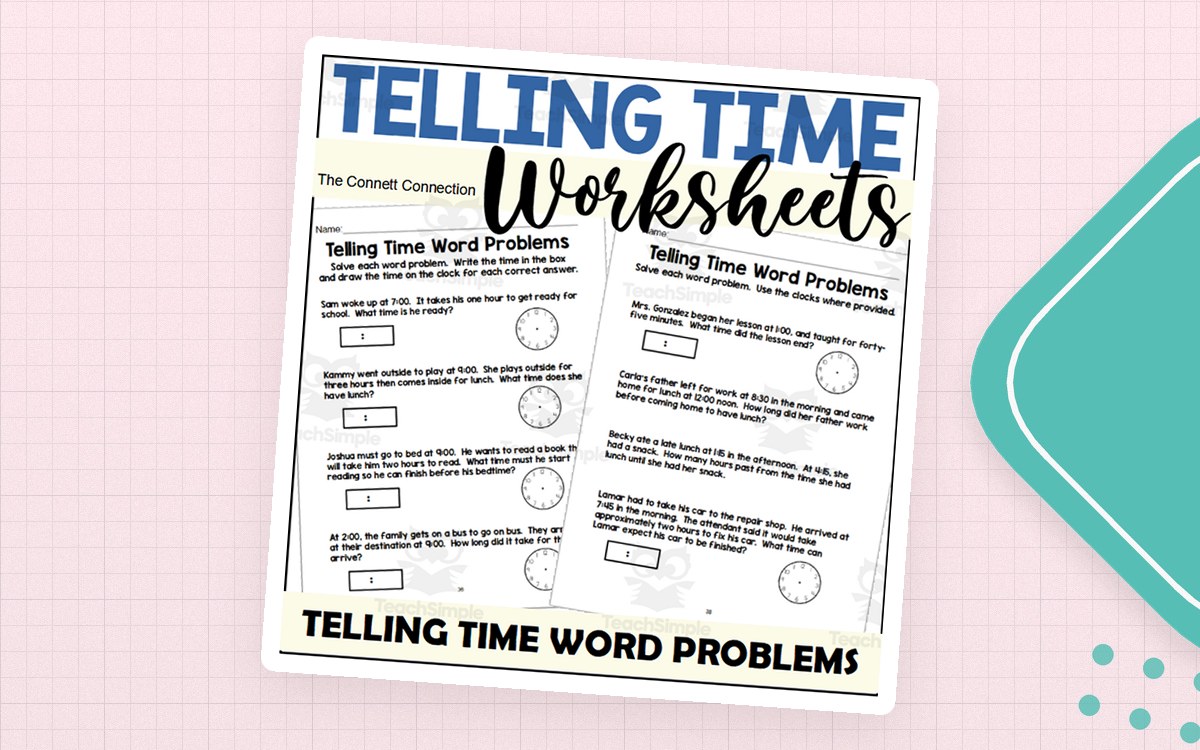
Analog time vocabulary opens the packet, defining o'clock, half past, quarter past, and quarter to with worked examples before moving into matching pages where students draw lines connecting spoken time phrases to analog clock faces and digital times. A dedicated page has students label seven daily activities, such as sunrise and lunchtime, with AM or PM based on the given time. The bulk of the resource is sixteen elapsed-time word problems spread across several pages, asking students to find a start time, end time, or duration from everyday scenarios like getting ready for school, running errands, and doctor's appointments, with a blank box provided to write each answer. Later problems increase in difficulty, moving from round numbers like nine o'clock plus three hours to less even calculations such as 8:28 versus a 9:00 arrival time or a 48-minute GPS estimate against a 10:15 appointment.
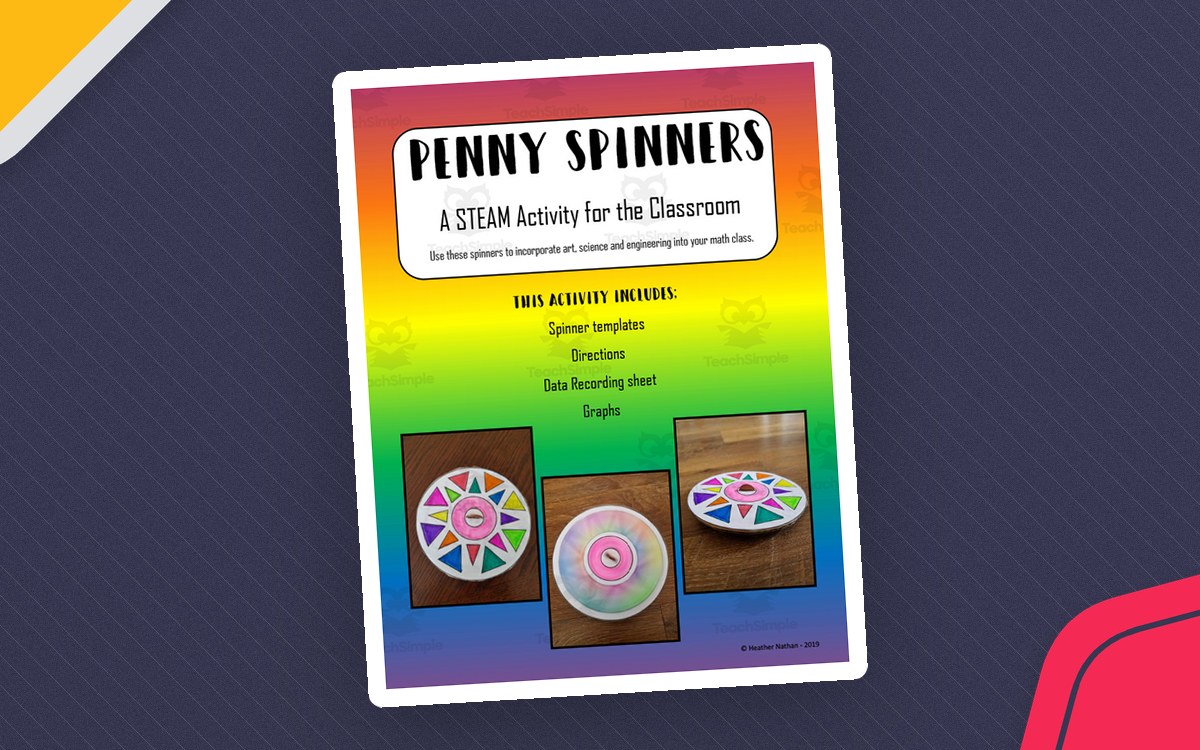
Print, color, and decorate a spinner template; glue it to cardboard and cut a slit to insert a penny; spin it and time (in seconds) how long it stays spinning across 8 trials; record the data; graph the results (bar graph and a color-coded pie/circle graph); and calculate the mean, median, and mode of the spin times.
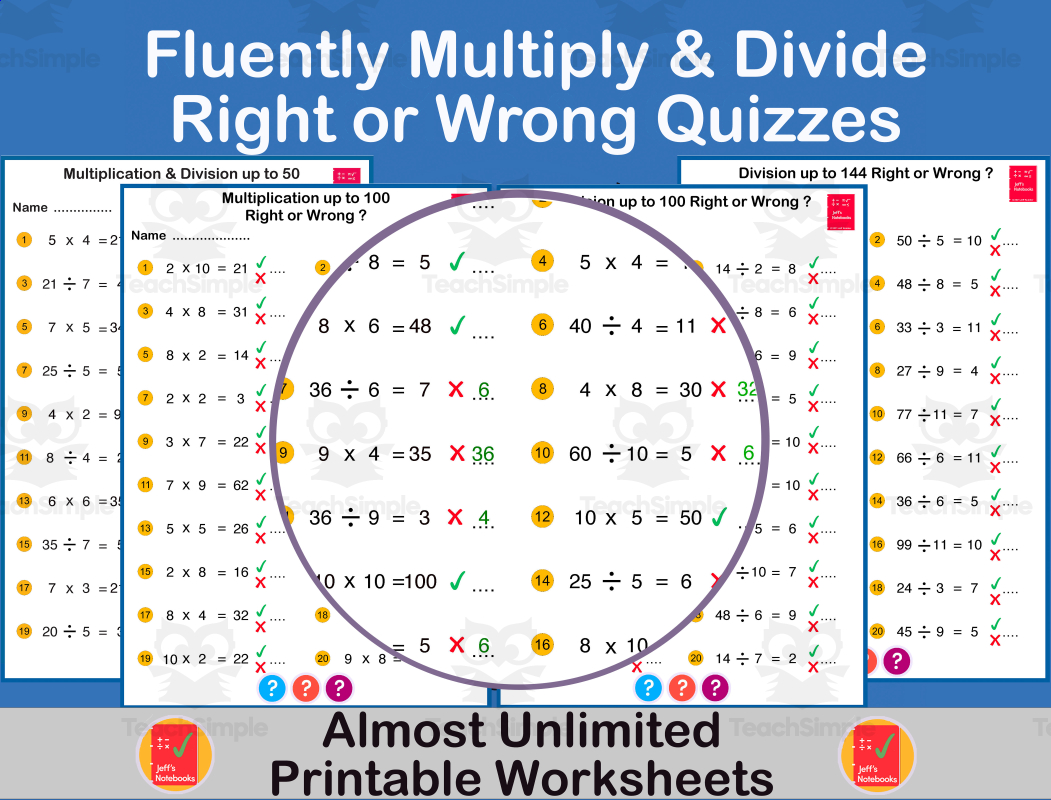
Judge whether each pre-worked multiplication or division equation is correct or incorrect, and write in the correct answer for those marked wrong; then self-check against an answer page.
A set of 100th-day-of-school printables combining math fact practice (addition/subtraction facts to 100) with reflective '100 Things I...' list-writing prompts and a cut-and-count activity.