
Reading & language
Solving 2-Step Equations PARTNER PRACTICE
A partner-based practice worksheet for solving two-step linear equations, explicitly aligned to CCSS.MATH.CONTENT.7.EE.B.4.A.
Answers included




Classroom resources
Browse by lesson focus
Choose the topic or kind of practice you need.
Showing 961–984 of 1709 resources

 Show filters
 A partner-based practice worksheet for solving two-step linear equations, explicitly aligned to CCSS.MATH.CONTENT.7.EE.B.4.A.

Given a linear function or graph, describe the transformation from the parent function, fill out an x/f(x) chart, graph the function, write the function in point-slope and slope-intercept form, find points/slope/y-intercept, and solve applied word problems (e.g. a school-account spending scenario) using independent/dependent variables.
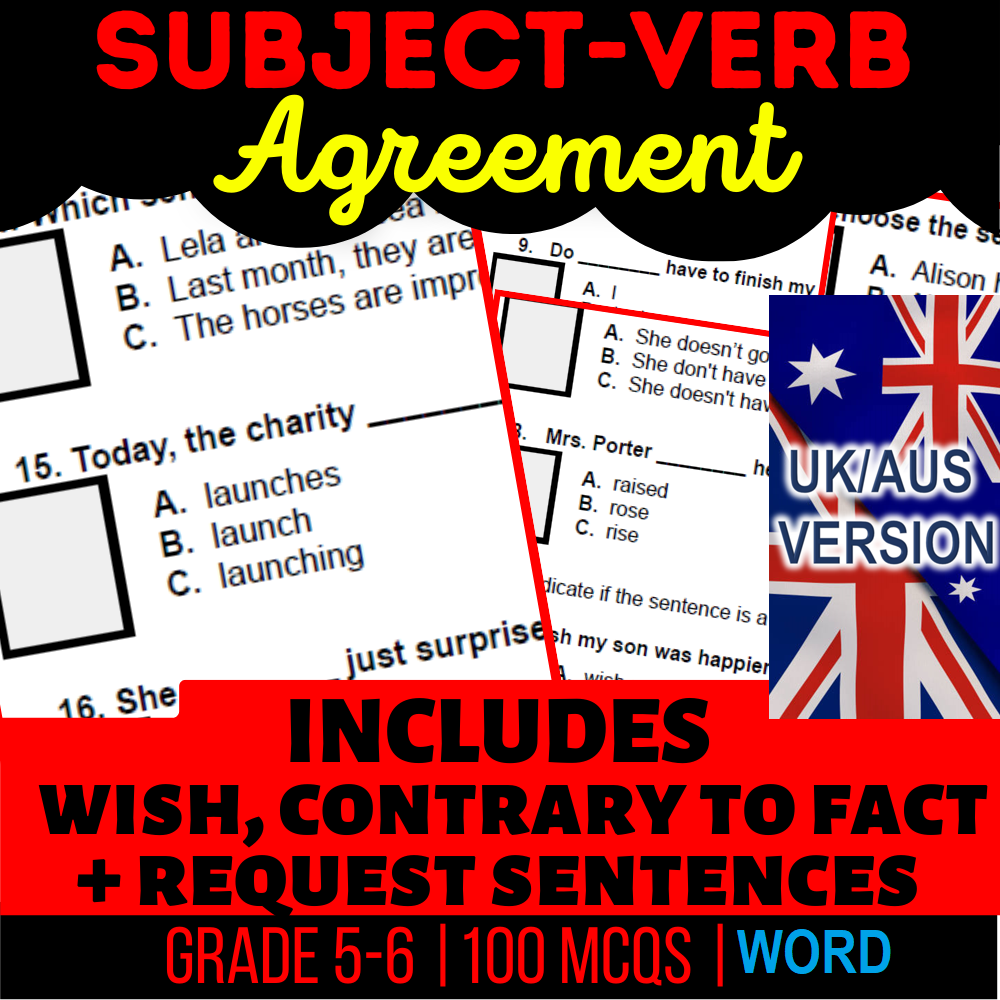
Teach and practice subject-verb agreement in English grammar (UK/Australian spelling edition), via a review sheet explaining the rule followed by multiple practice worksheets and an answer key.
Select a Motown legend (e.g. Smokey Robinson) from a research planner, conduct research using a biographical fact fill-in worksheet, draft a 5-paragraph MLA-formatted essay with a works-cited page, complete a self/peer-edit checklist, and be scored against an included essay rubric.
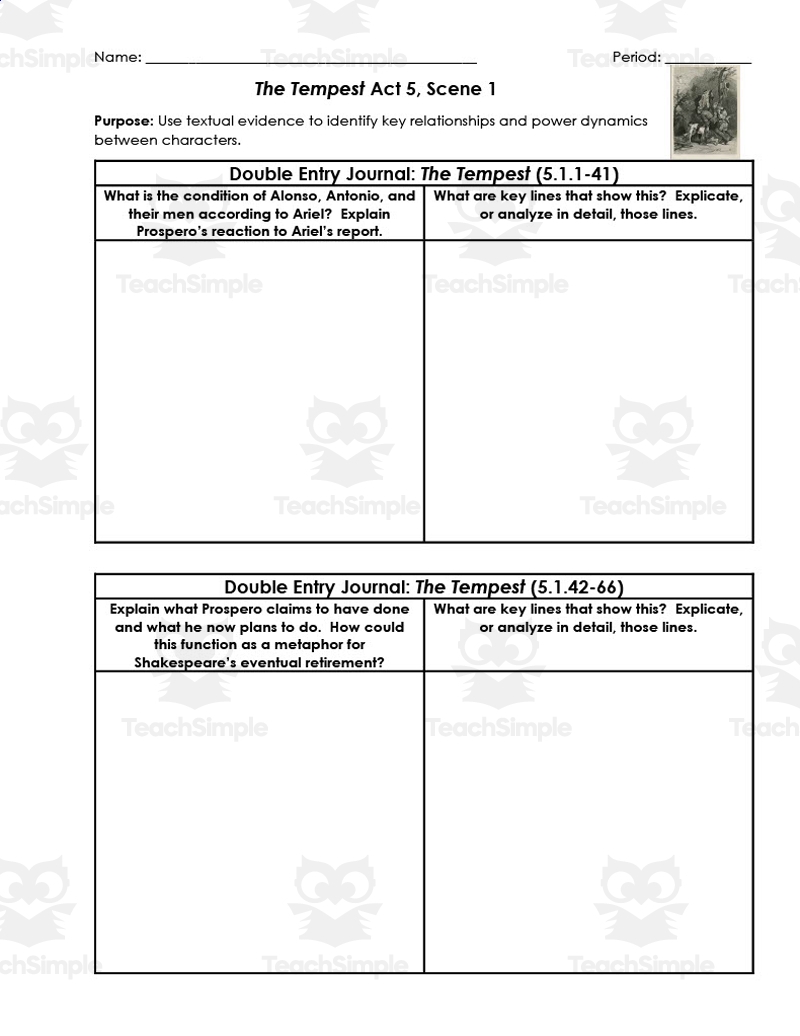
A double-entry journal worksheet for high school students to closely read and analyze Act 5, Scene 1 and the Epilogue of Shakespeare's 'The Tempest', focusing on relationships, power dynamics, and possible autobiographical metaphor for Shakespeare's own retirement.
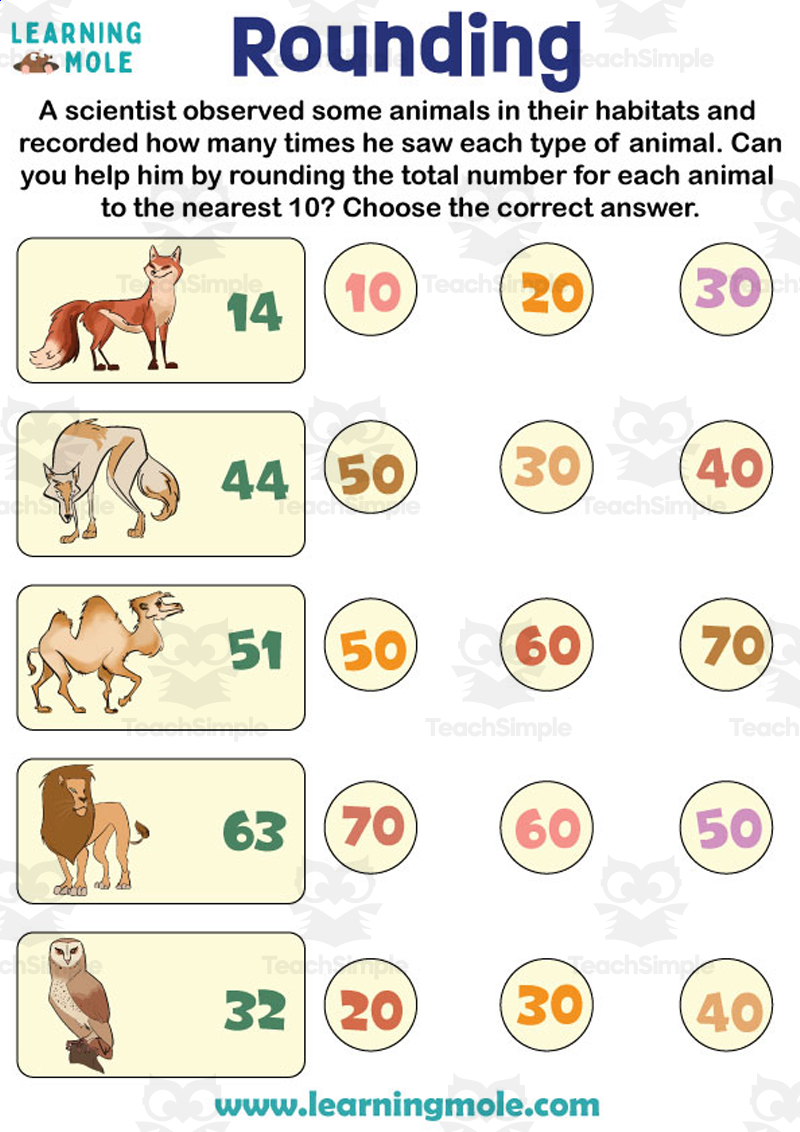
Practice rounding whole numbers down to the nearest 10 using an animal-observation word-problem worksheet.
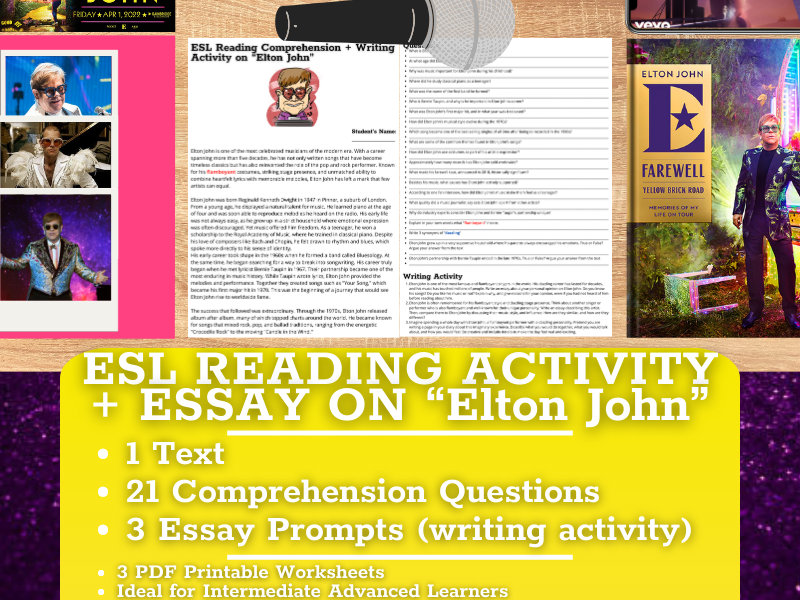
An ESL/EFL reading-comprehension and writing worksheet built around a biographical nonfiction passage on musician Elton John (born Reginald Kenneth Dwight), his career, and his flamboyant performing style.
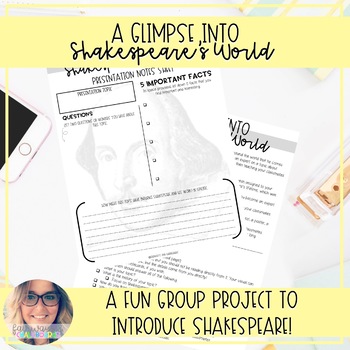
Rotate through stations (10-15 minutes each): read provided background readings (e.g. on the Elizabethan Age, religion, education, British peerage) and fill in blanks on a notes worksheet, compare a historical map of Shakespeare's London to a modern map and discuss differences in groups, and play a 'Who Said It?'…

Double entry journal worksheet for close reading and analysis of Act 2, Scenes 1-2 of Shakespeare's Othello, focused on identifying relationships and power dynamics between characters.

Four double-entry journal boxes walk students through Othello Act 4, Scene 1 in sequence, each pairing a specific line range with a comprehension prompt on the left and a request for supporting textual evidence on the right. Students first explain Iago's accusation against Cassio, then trace how Iago manipulates Othello into believing Desdemona's infidelity, then describe what Othello threatens to do to Desdemona and how that differs from his earlier attitude toward her, and finally characterize Othello's public treatment of Desdemona in front of Lodovico. For each box, students must locate and explicate the key lines from the cited range that support their explanation, directly tying interpretation to quoted evidence. A closing prompt asks students to summarize the entire scene in their own words, and the file is provided as both a Word document and a matching PDF. Teachers working through the play in order can pair this with an earlier Iago soliloquy analysis covering Act 1 and Act 2, which builds the same close-reading and textual-evidence skills on Iago's manipulation before this Act 4 confrontation.
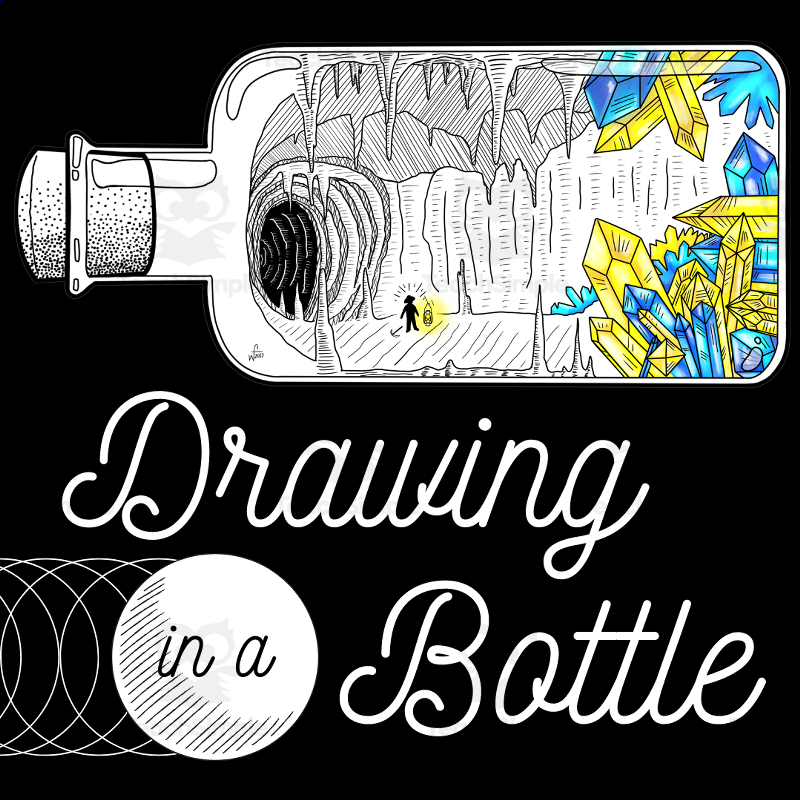
Practice hatching, cross-hatching, and stippling on a shading worksheet, then apply shading and creative imagery within one of eight bottle-shaped drawing templates.

Practice worksheet giving 7th-grade students structured practice applying properties of addition (identity, commutative, associative) to add and subtract rational numbers, aligned to CCSS.MATH.CONTENT.7.NS.A.1.D.

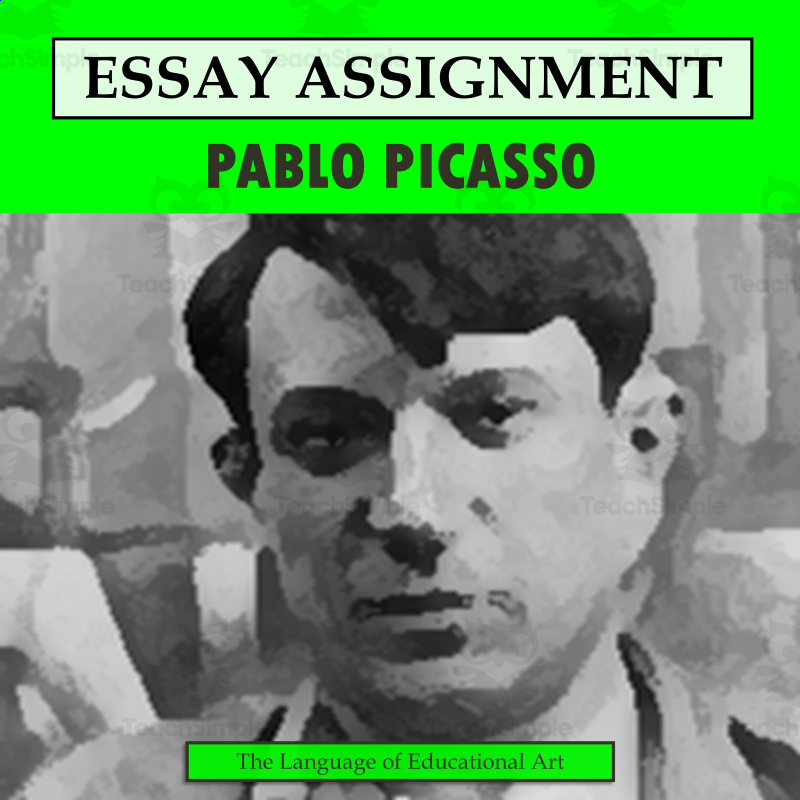
Students gather biographical facts about Pablo Picasso (birth, family, residences, achievements) on a research organizer worksheet, complete an illustration activity, then draft a 5-paragraph MLA-formatted essay (intro with thesis, early-life paragraph, achievements/legacy paragraphs, conclusion, works cited page), using a self/peer…
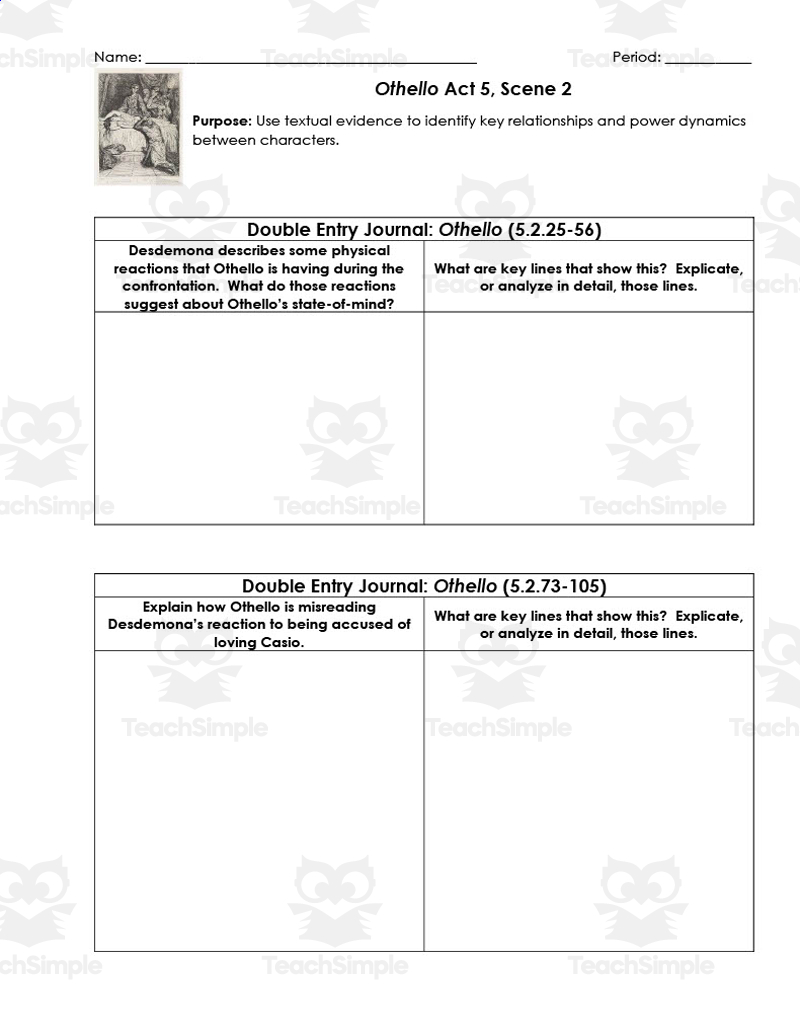
Double entry journal worksheet for close reading and analysis of Act 5, Scene 2 of Shakespeare's Othello, focused on identifying relationships and power dynamics between characters.
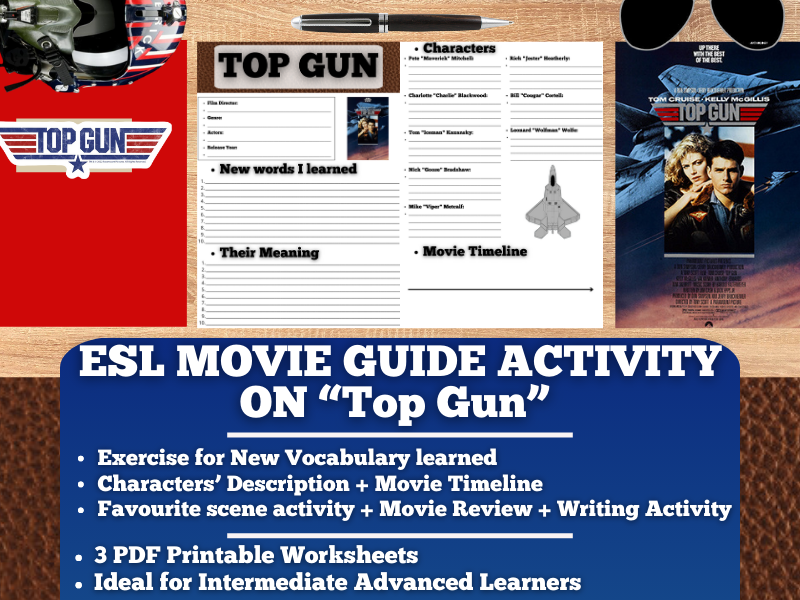
A post-viewing ESL/EFL worksheet packet built around the film "Top Gun", used after students watch the movie to reinforce vocabulary, character recognition, and creative writing in English.
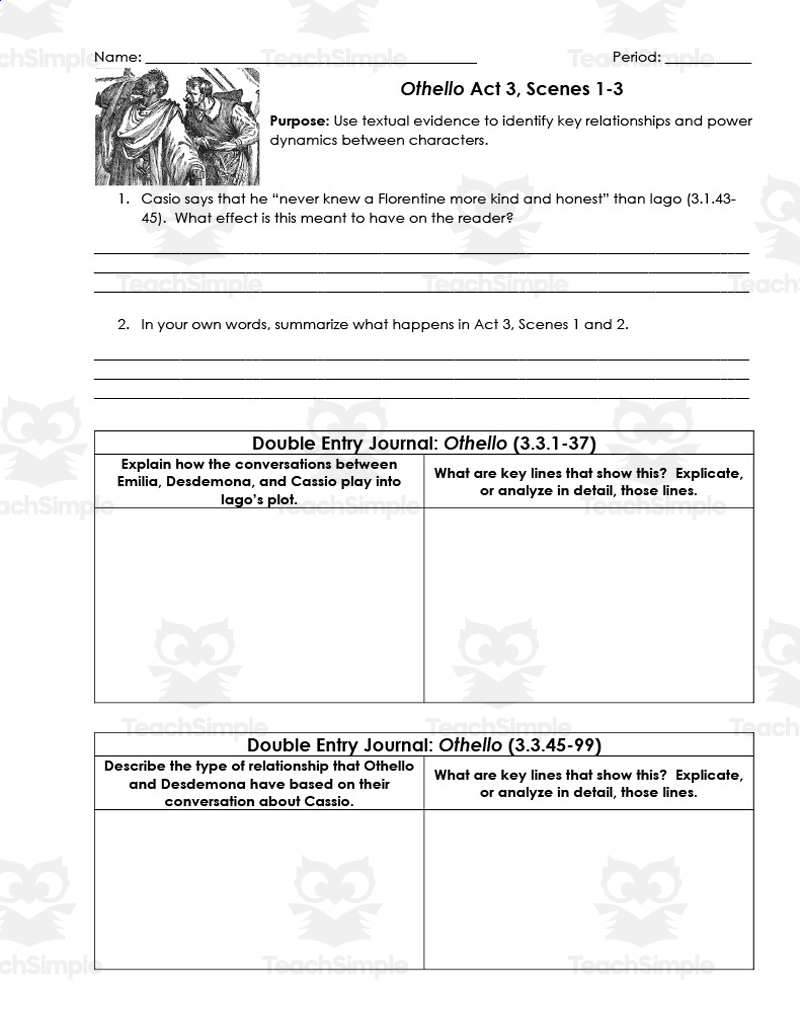
Double entry journal worksheet for close reading and analysis of Act 3, Scenes 1-3 of Shakespeare's Othello, focused on identifying relationships and power dynamics between characters.
Select a visual artist, research their early life, significant artistic works, and art legacy using at least 3 sources, complete a research/outline worksheet, draft a 5-paragraph essay (introduction with thesis, three body paragraphs, conclusion, works cited page), and complete a peer-review essay check.
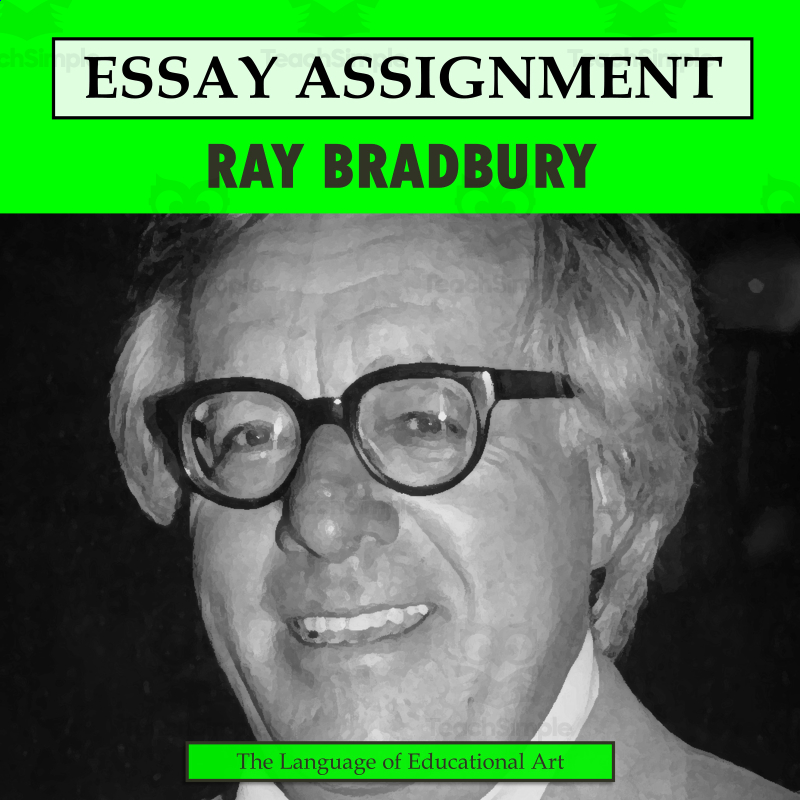
Students gather biographical facts about Ray Bradbury (birth, family, residences, achievements) on a research organizer worksheet, complete an illustration activity, then draft a 5-paragraph MLA-formatted essay (intro with thesis, early-life paragraph, achievements/legacy paragraphs, conclusion, works cited page), using a self/peer…

A creative-writing worksheet teaching narrative story planning (introduction/middle/ending), using a mentor short story about a boy whose new bag is stolen by bullies as the model text.
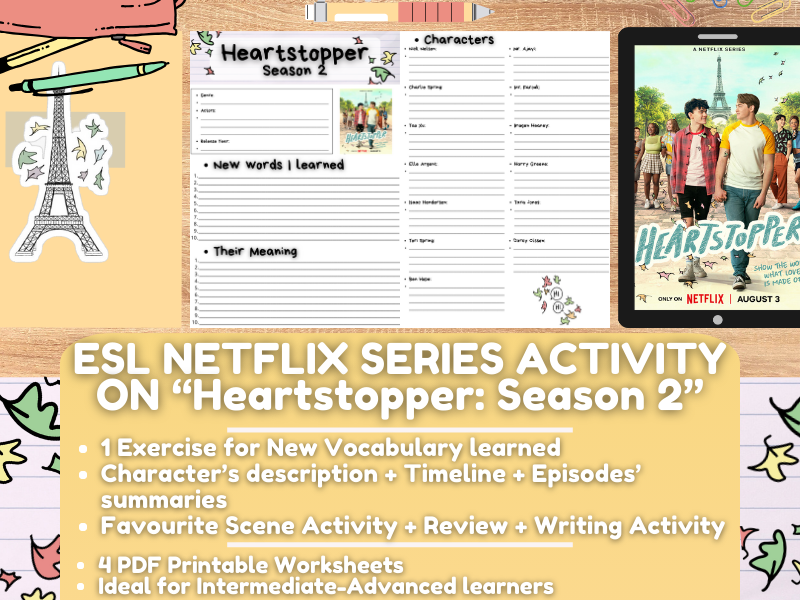
A post-viewing ESL activity worksheet for the Netflix series 'Heartstopper: Season 2', giving students a structured template to record show details, new vocabulary, character notes, and a creative writing response.
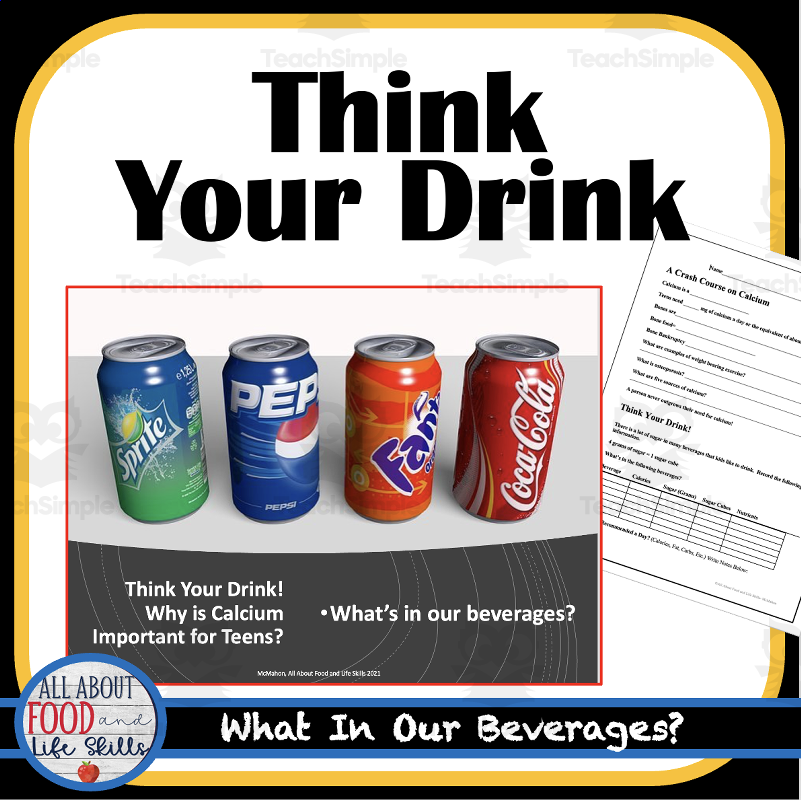
Students complete a fill-in-the-blank worksheet on calcium and bone health, follow a slide presentation covering caffeine content in common drinks and detailed nutrition-label breakdowns for beverages (soda, juice, milk, sports drinks, water), and record calorie/sugar/nutrient data for a set of beverages in a table…
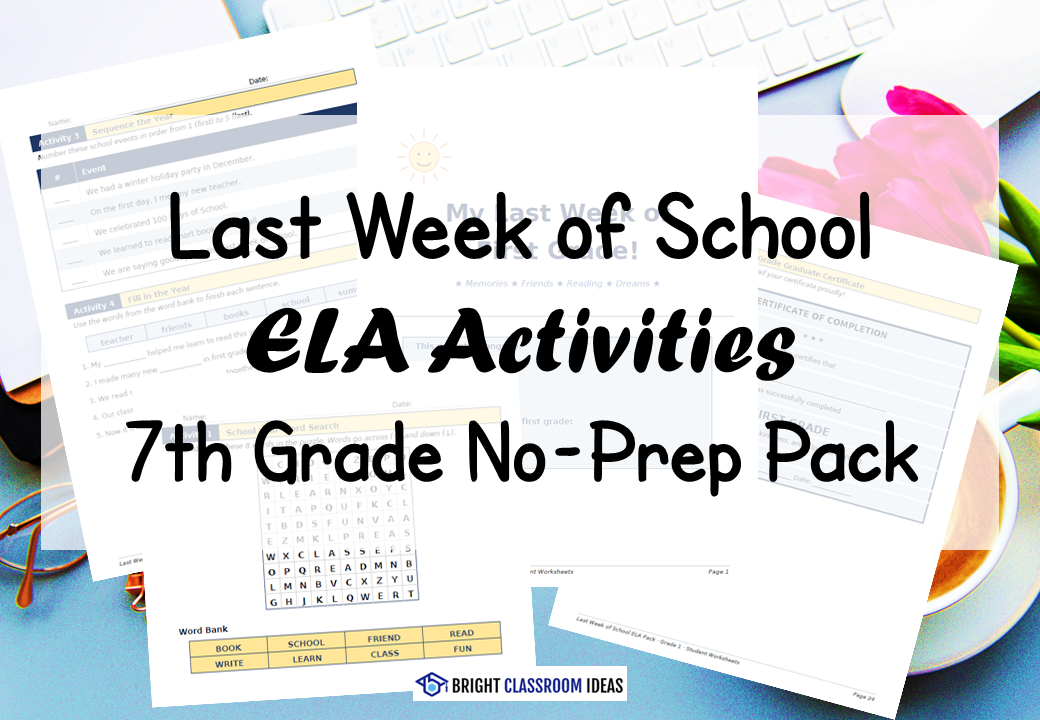
Complete 22 worksheet activities across 5 scripted 45-minute daily lessons: My Year in Review (reflective essay writing); Friendship Letters (argument with logical reasoning); Summer Reading Adventure (theme, structure & author's craft); Word Detectives (shades of meaning, irony, etymology); Dreams for Eighth Grade…
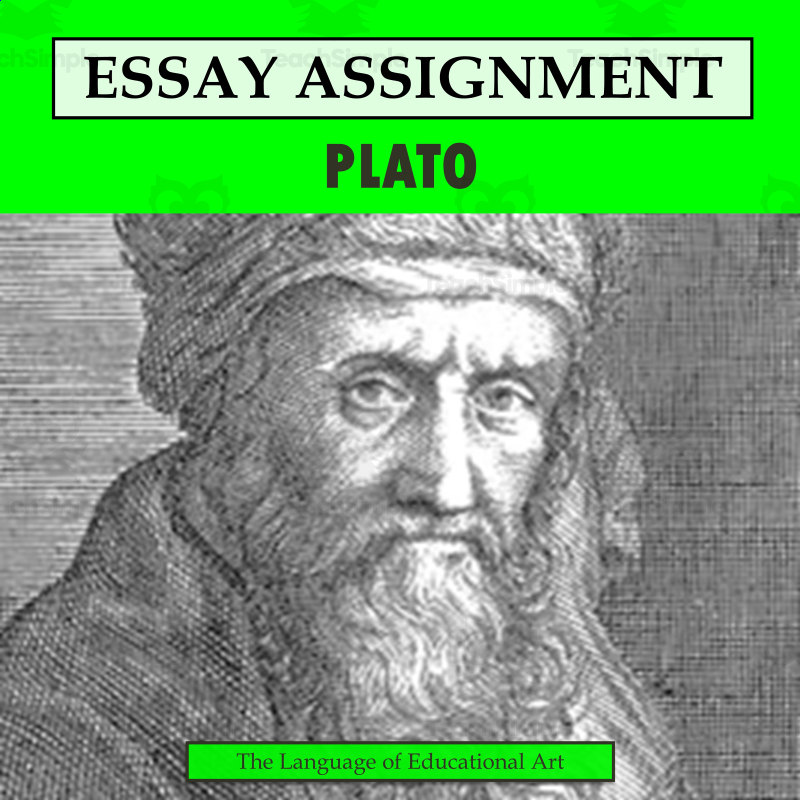
Students gather biographical facts about Plato (birth, family, residences, achievements) on a research organizer worksheet, complete an illustration activity, then draft a 5-paragraph MLA-formatted essay (intro with thesis, early-life paragraph, achievements/legacy paragraphs, conclusion, works cited page), using a self/peer editing…