
Reading & language
Area of Composite Figures NOTES & PRACTICE
Guided notes and practice for finding the area of composite figures (including shaded-region and circle-based composites), aligned to CCSS 7.G.B.6.
Answers included




Classroom resources
Browse by lesson focus
Choose the topic or kind of practice you need.
Showing 1969–1992 of 2703 resources

 Show filters
 Guided notes and practice for finding the area of composite figures (including shaded-region and circle-based composites), aligned to CCSS 7.G.B.6.
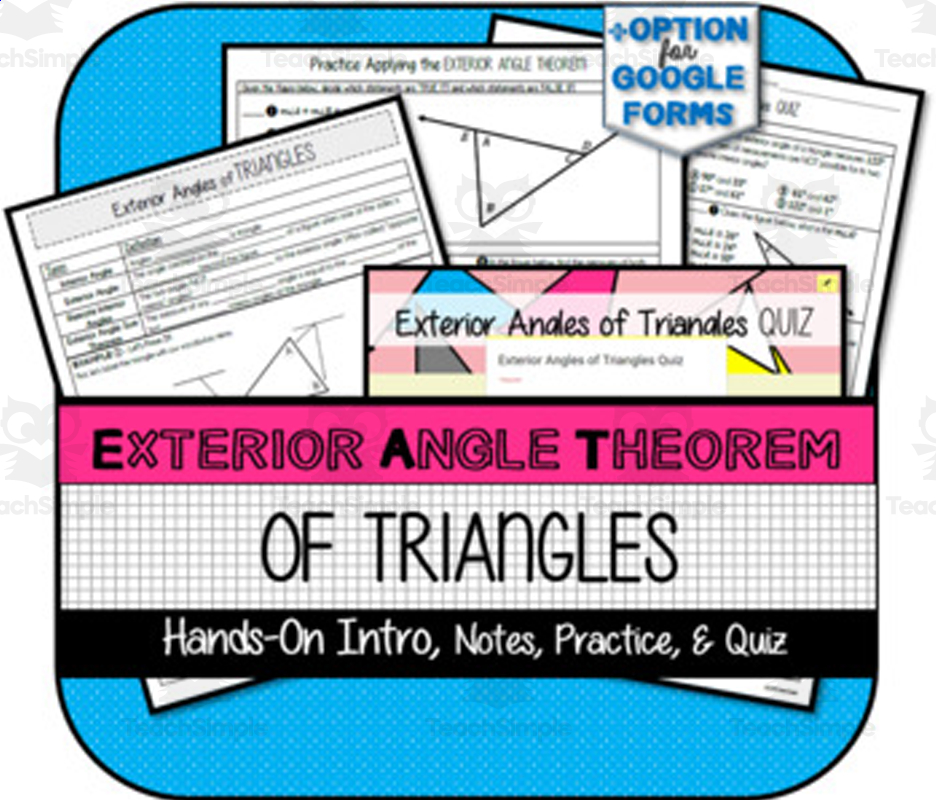
Teach and assess the Exterior Angle Theorem for triangles (that an exterior angle equals the sum of the two remote interior angles), partially addressing CCSS.MATH.CONTENT.8.G.A.5.
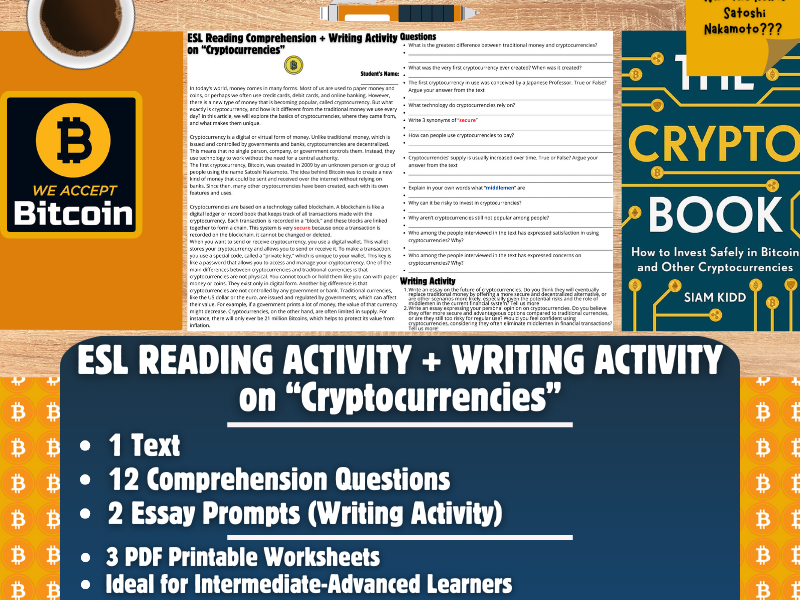
Gives ESL/EFL teen learners a reading-comprehension and essay-writing practice activity built around an informational passage on what cryptocurrency is and how it differs from traditional money.

Guided notes and practice for 8th-grade geometry students on sequences of transformations (reflections, rotations, translations, dilations) and their effect on congruence/similarity.

Notes-and-practice packet teaching students to draw inferences about a population from random sample data, aligned to CCSS.MATH.CONTENT.7.SP.A.2.

Guided notes and practice on constructing and interpreting two-way tables and relative frequencies for bivariate categorical data, aligned to CCSS.MATH.CONTENT.8.SP.A.4.

Teach and assess compound probability (sample space, tree diagrams) aligned to the CCSS.MATH.CONTENT.7.SP.C.8 standard.
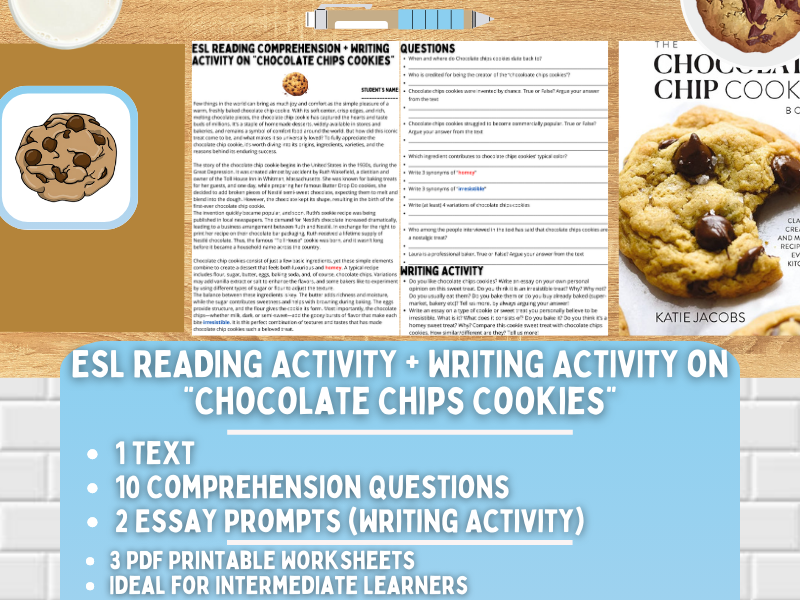
Gives ESL/EFL teen learners a reading-comprehension and essay-writing practice activity built around an informational passage on the origin and popularity of the chocolate chip cookie.
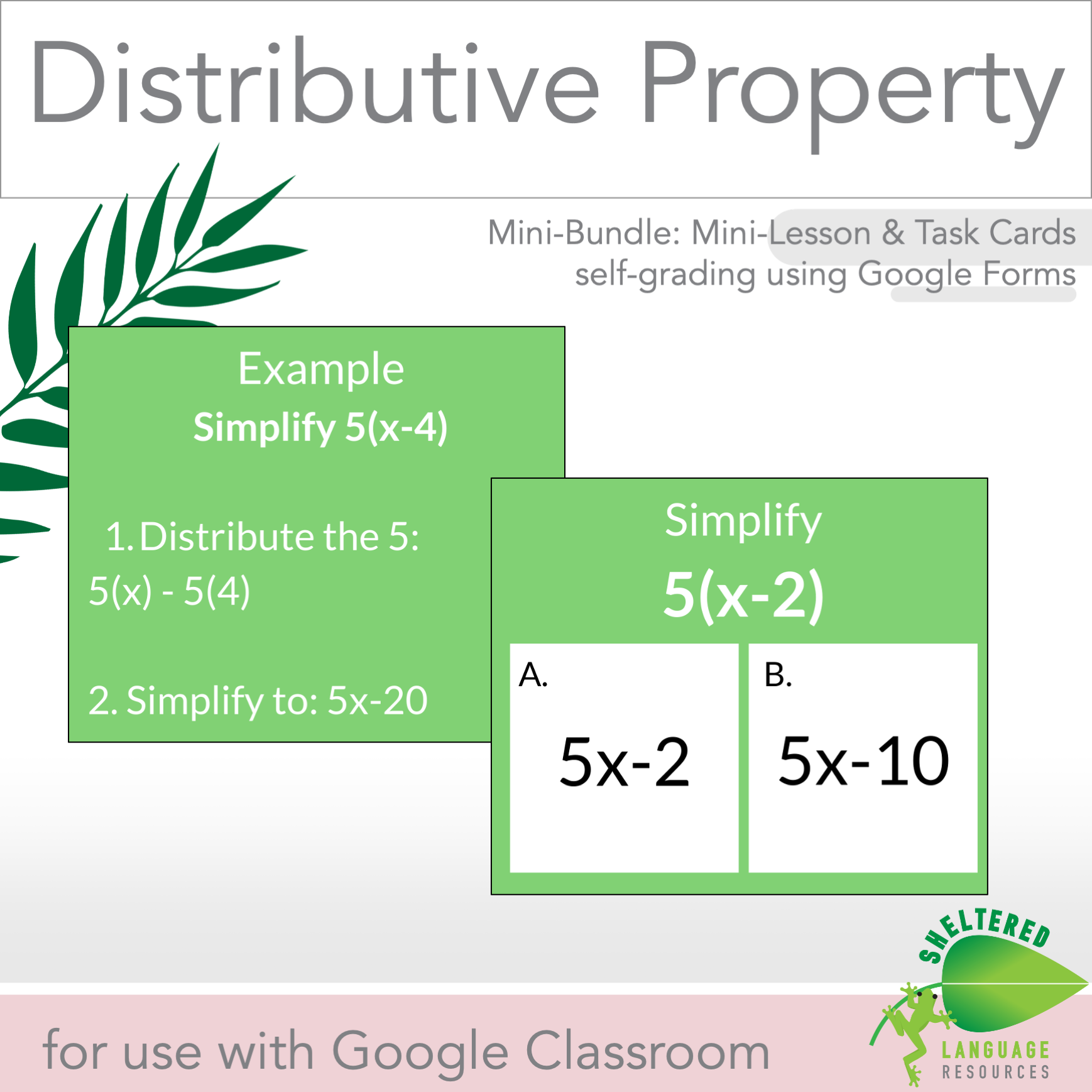
This self graded, digital math practice activity about the distributive property is intended for your digital middle school math classroom. What makes this a Mini-Lesson & Practice Activity? There is a series of slides that leads students through the basics of how the distributive property works. Students can give…

Guided notes and practice teaching students to identify, calculate, and interpret a line of best fit for scatter plots, meeting CCSS.MATH.CONTENT.8.SP.A.2/A.3.
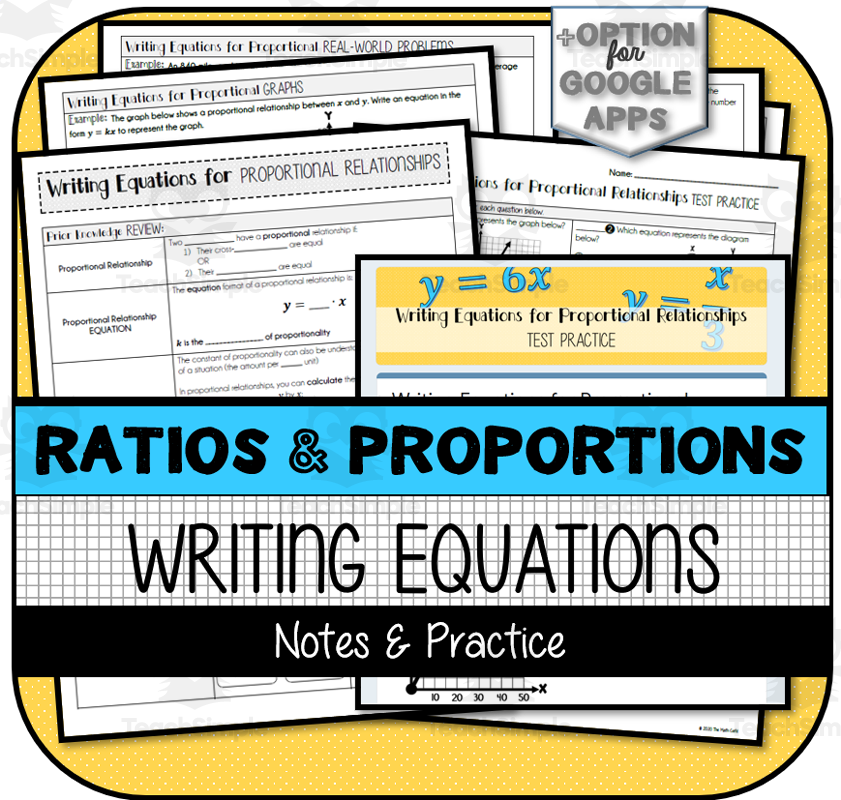
Notes and practice resource teaching students to write equations (y = kx) representing proportional relationships shown in tables, diagrams, graphs, and real-world descriptions, aligned to CCSS.MATH.CONTENT.7.RP.A.2.

A 7th-grade math notes-and-practice resource on percent applications and proportional relationships, aligned to CCSS.MATH.CONTENT.7.RP.A.3.
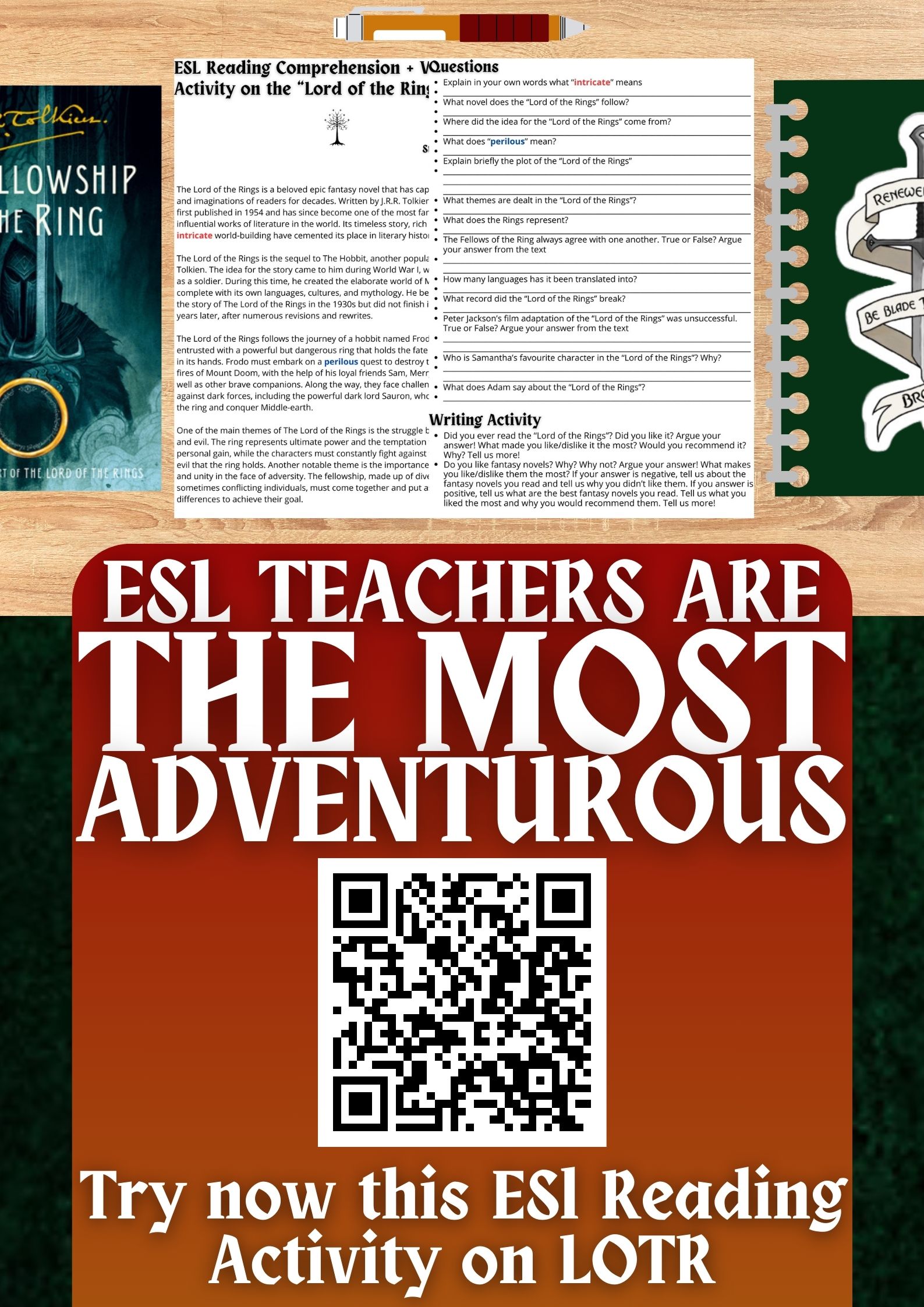
Gives ESL/EFL teen learners a reading-comprehension and essay-writing practice activity built around an informational passage on J.R.R. Tolkien's The Lord of the Rings.
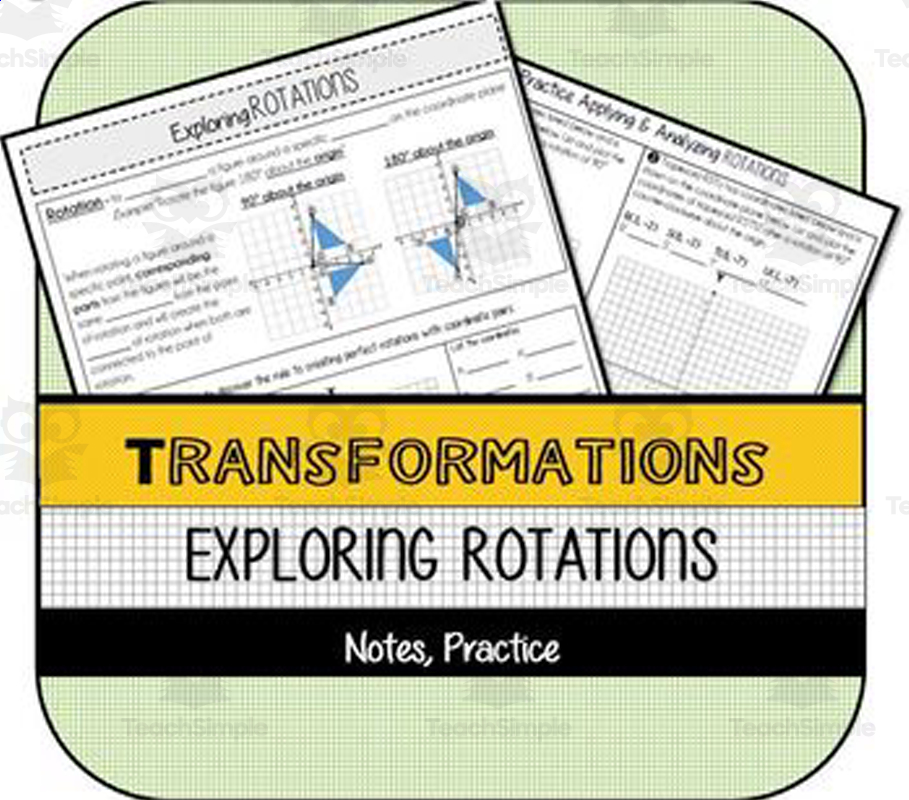
Teach students to identify and apply rotations of geometric figures about the origin (90 degrees clockwise, 90 degrees counter-clockwise, and 180 degrees) on the coordinate plane, and to derive the coordinate rule for each rotation type.
Use Parent Power reference material on measurement and time as scaffolds, then complete activity sheets on perimeter, area (including triangles), circumference, liters/milliliters, kilograms/grams, volume, telling time, calendars, timetables, range/mode/median/mean, bar and line graphs, and Venn diagrams; check work…
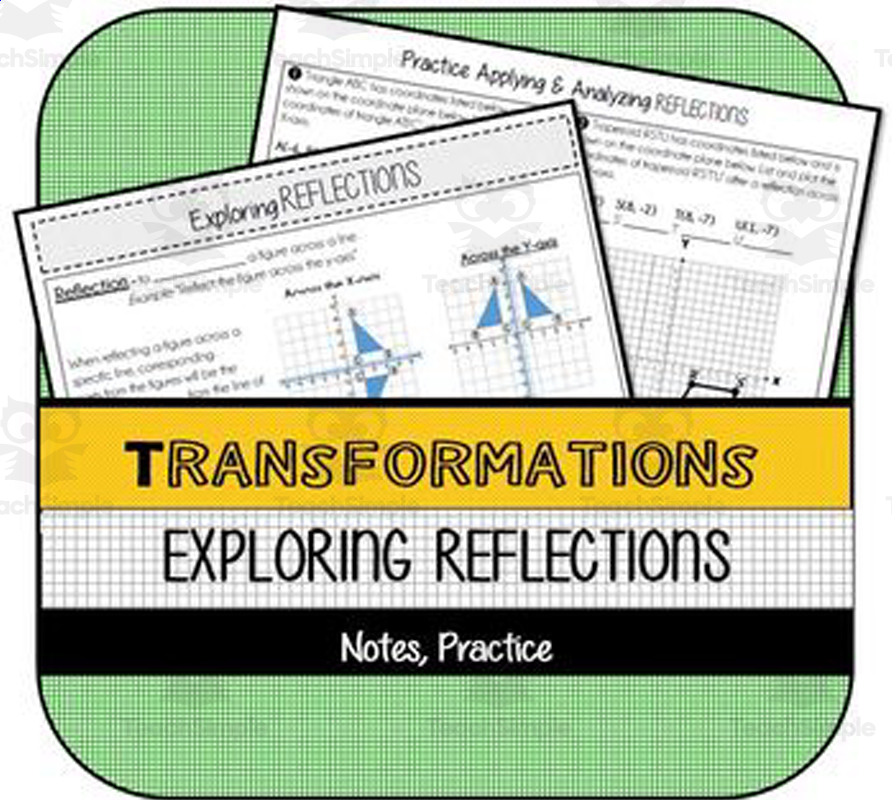
Teach students to identify and apply reflections of geometric figures across the x-axis and y-axis on the coordinate plane, and to derive the coordinate rule for each reflection type.

Teach and practice describing qualitative relationships between two variables from a graph (increasing/decreasing/constant, matching real-world scenarios to graph shapes), aligned to CCSS.MATH.CONTENT.8.F.B.5.
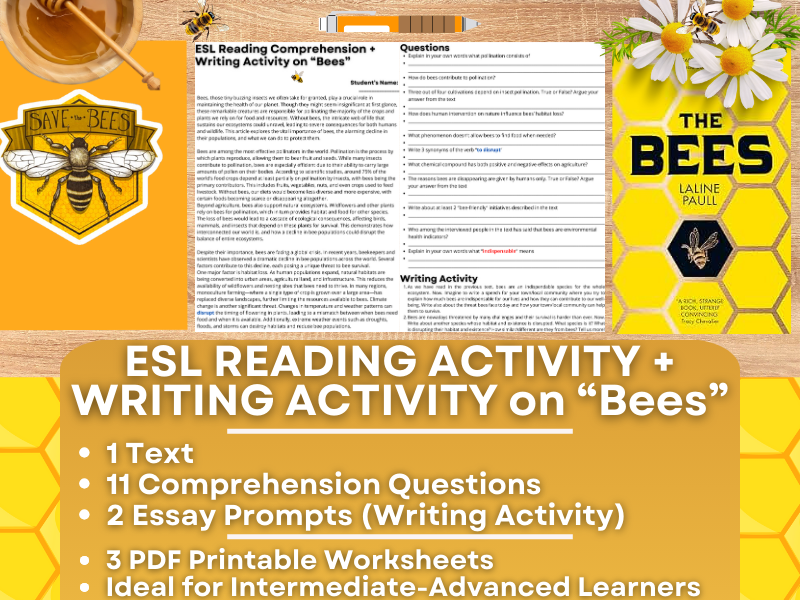
Gives ESL/EFL teen learners a reading-comprehension and essay-writing practice activity built around an informational passage on the ecological importance of bees and their population decline.
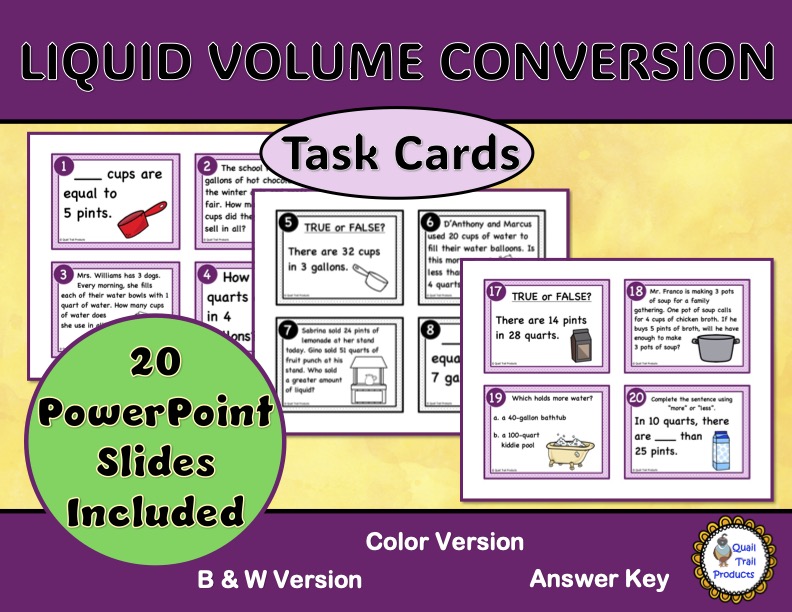
Solve 20 numbered word-problem task cards that require converting between cups, pints, quarts, and gallons, and record answers on a provided answer sheet.

Three connected note-and-practice sets teach the Triangle Inequality Theorem , Angle Sum Theorem, and how to classify whether a set of given side lengths or angle measures produces one unique triangle, many triangles, or no triangle at all. Each set opens with guided fill-in-the-blank notes explaining the rule (e.g., 'the sum of the two shorter sides must be greater than the longest side'), works through a labeled example, and then provides 6-12 practice problems, some multiple choice and some requiring students to show their work. A ten-question 'Triangles Test Practice' section follows, along with a Google Forms link for a self-grading digital version of the same test. A complete answer key is provided for every notes page and the test practice section, including worked-out numeric substitutions.
Use reference charts (tables, addition/subtraction charts, number squares, number lines) as scaffolds, then complete activity sheets covering digit value, rounding, mental math tricks, addition/subtraction regrouping (including decimals), setting out sums, multiplication, and division (through remainders and larger numbers).

A notes-and-practice resource teaching 8th grade students to apply the Pythagorean Theorem to find the distance between two points on a coordinate grid, per CCSS.MATH.CONTENT.8.G.B.8.
Gives ESL/EFL teen learners a reading-comprehension and essay-writing practice activity built around an informational passage on what conspiracy theories are and why they spread.

Math notes-and-practice packet teaching how to identify characteristics of linear equations from graphs, addressing CCSS.MATH.CONTENT.8.EE.B.6 and 8.F.B.5.