



3,911 products added recently
Page 44 - ELA Lesson Plans
Elevate your ELA instruction with lesson plans that cover reading, writing, speaking, and listening skills. These resources provide diverse texts and engaging activities to improve literacy. Integrate these plans to enrich your language arts curriculum and support student achievement.

 Show filters


Literary Devices: Characterization
ELA, Literature, Common Core, Grade 5, 6, 7, 8, Teacher Tools, Lesson Plans
Literary Devices: Characterization This resource is a focused module from the comprehensive lesson plan dedicated to the study of Literary Devices. Designed for educators, it emphasize on characterization in storytelling language teaching for 5th through 8th-grade students. This guide enhances understanding of Language Arts and Literature curriculum components. Fundamentals & Topics Covered The foundation of reading comprehension is strengthened with this tool as learners explore various aspects of storytelling including: Characterization Setting Plot Theme and more. All these aspects are crucial for a complete appreciation of literature. Ease-of-Use & Learning Objectives The teacher-friendly interface enables easy navigation between sections. A significant feature that distinguishes Literary Devices: Characterization is its adherence to Bloom’s Taxonomy while formulating objectives, creating discussions pedagogically relevant and inviting learner engagement at different cognitive levels - from remembering to creative problem-solving. Tangible Benefits This resource not only aids in comprehending literary devices but also assists in evaluating their role in deriving meaning from different literature genres. It marries instructive narrative with age-appropriate activities ensuring learner engagement while bolstering understanding about underlying elements that drive stories. Twinning Standards Last but not least, this resource pairs well with standards established by Common Core State Standards maintaining their prescribed frameworks beautifully . This makes it an ideal additive alongside existing curriculum material integrating seamlessly within various learning settings whether classroom-wide discussions or smaller focus groups extending its utility as viable homework assignments. Distribution Details: A straightforward product file embedded in PDF format makes distribution among students digitally or in print form simple. Individual teaching styles could utilize this flexibility in usage, further maximizing comprehension potential and reinforcing mastery over literary devices especially characterization.
Author Classroom Complete Press
Tags PDF

4th Grade Morning Work | 180 Days Review | Math & ELA | 1st Quarter
ELA, Math, Grade 4, Centers, Activities, Lesson Plans, Teacher Tools, Worksheets & Printables
Grade 4 Morning Work | 1st Quarter Student Pages + Full-Year Teacher Resources Make your fourth grade mornings easier, more consistent, and academically purposeful with 45 days of Grade 4 morning work for Quarter 1 . This resource includes ALL teacher resources for the complete 180-day program , while the student practice pages included in this pack are specifically for 1st Quarter: Days 1–45 . What’s Included ⭐ FULL-YEAR TEACHER RESOURCES You receive the complete teacher toolkit for planning, organizing, differentiating, and assessing the entire 180-day Grade 4 morning work program : Teacher Guide Full 36-week Pacing Guide Skills Checklist for tracking student progress Fully Editable Morning Work Schedule Weekly planning support 36-week Year-at-a-Glance Planner Differentiation strategies Complete Answer Key for Days 1–180 Printing and classroom organization guidance 📚 STUDENT PAGES INCLUDED: 1ST QUARTER The student portion of this product includes Days 1–45 , providing 45 days of ready-to-use Grade 4 morning work . Each day includes a two-page set with 24 consistent sections . Page A — Language Arts Grammar Vocabulary Reading Writing Vocabulary Word of the Day Writing Prompt Reading Challenge Morning SEL Check-In Joke of the Day Brain Teaser Growth Mindset Would You Rather Page B — Math & Think Number Sense Mental Math & Fact Fluency Multi-Digit Multiplication Long Division Fractions Decimals Measurement Geometry Data and Graphs Word Problems Math Challenges Daily Enrichment Fun Facts Important: The student practice pages included in this product are Days 1–45 only . The teacher resources and complete Answer Key cover all 180 days . How It Works in the Classroom Use this Grade 4 morning work as a daily bell ringer, morning routine, independent practice, homework, or spiral review. Each two-page daily set is designed to take approximately 10–15 minutes . Students move through Language Arts first, followed by Math & Think. The final sections provide quick enrichment and discussion opportunities. The routine can include: Page A: Language Arts practice Page B: Math & Think practice Enrichment of the Day: A rotating challenge Fun Fact: A quick conversation starter The editable schedule breaks the routine into manageable chunks, allowing you to circulate, confer with students, pull a small group, and quickly review answers. Use the pages for: Morning work Bell ringers Homework Early finishers Sub plans Small-group warm-ups Spiral review Intervention practice Test preparation Independent practice The pages are designed to print two-sided, one sheet per student per day , making Quarter 1 easy to prep and organize. Standards & Learning Goals This Grade 4 morning work resource provides daily spiral review aligned with important Common Core Grade 4 ELA and math standards . The teacher materials cover operations and algebraic thinking, number and operations in base ten, fractions, measurement and data, geometry, language, and reading. 📖 ELA Skills Students practice: Grammar and language conventions Vocabulary Context clues Prefixes and suffixes Reading comprehension Reading skills Writing Revising and editing Constructed responses Reading challenges Quarter 1 includes varied grammar and vocabulary practice alongside reading tasks and writing activities. Reading passages include both full passages with comprehension questions and shorter reading-skill activities. Writing activities include tasks such as correcting sentences, revising and editing, opinion writing, and constructed responses . 🔢 Math Skills Students practice: Place value through 1,000,000 Mental math Multi-digit multiplication Long division Fractions Decimals Measurement Geometry Line plots, bar graphs, and tables Word problems Mathematical reasoning The daily math pages combine computation with visual models, measurement figures, geometry figures, and real data displays. Quarter 1 examples include long division, improper fractions, decimal addition, metric conversions, angle measurement, area and perimeter, and multi-step word problems . Why Teachers Love It ✨ You get ALL the teacher resources for the entire year. The Teacher Guide, pacing guide, Skills Checklist, editable schedule, differentiation support, and complete 180-day Answer Key are included. ✨ Students get exactly what they need for Quarter 1. Days 1–45 provide a complete 45-day student set for the first quarter. ✨ Save valuable planning time. The daily routine is already organized across ELA, math, enrichment, and engaging thinking activities. ✨ Build student independence. The consistent 24-section format helps students quickly learn the routine and work with less teacher direction. ✨ True spiral review. Skills return throughout the 180-day program while the difficulty increases. No content repeats across the full 180 days. ✨ Keep the routine flexible. The Teacher Guide notes that the quarters are a skill sequence rather than a strict calendar . If students need the foundational skills, you can begin with Days 1–45 regardless of the month. ✨ Differentiate with ease. Use the teacher resources to adjust the workload, provide support, and select appropriate practice for different learners. ✨ Practice multiple skills every day. Students get daily exposure to reading, writing, vocabulary, grammar, computation, fractions, decimals, measurement, geometry, data, and problem solving. ✨ Keep students engaged. Jokes, brain teasers, growth mindset prompts, SEL check-ins, enrichment challenges, and Would You Rather questions add variety. ✨ Have answers for the entire year. The Answer Key provides an acceptable answer for every reading question, grammar and vocabulary item, sample writing responses, and computed math answers across the complete program. Looking for Grade 4 morning work for Quarter 1 that saves planning time and keeps students practicing essential skills every day? This pack includes 45 days of student practice (Days 1–45) PLUS ALL teacher resources for the full 180-day program . Give your fourth graders a predictable, engaging morning routine that strengthens ELA and math skills while building independence from the very first day! Print it, prep it, and make your fourth grade mornings easier! 💛
Author Bright Classroom Ideas Marketplace
Rating
Tags Math, Ela, Morning Work, Back To School
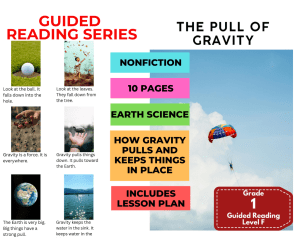
The Pull of Gravity: Guided Reading Level F with Lesson Plan
ELA, Resources for Teachers, Reading Comprehension, Reading, Science, Language Development, Vocabulary, Physics, Earth and Environmental Sciences, Pre-Reading, Kindergarten, Grade 1, 2, Worksheets & Printables, Worksheets, Teacher Tools, Centers, Activities, Literacy Readers, Quizzes, Quizzes and Tests, Assessments, Lesson Plans
This The Pull of Gravity (level f) guided reading book with lesson plan includes: Guided Reading Color Label (front cover x1) This is a quick way to match the book’s demands to what students can generally handle.. The overall goal is to use the level/color to pick books for several smaller groups. To qualify for a certain level, a student is expected to read a book from that level with about 90–94% accuracy. If a student is consistently accurate and understands, move up a level. If the student is struggling at that level, drop down and add more support. Each student will improve at completely different rates, but it is generally one of the best ways to check progress across the class. DOWNLOAD THE CATALOG TO VIEW ALL GUIDED READING BOOKS AVAILABLE (SORTED LEVELS A-Z) COMPANION VIDEO NOW AVAILABLE (EMBEDDED AFTER PREVIEW PICTURES IN PRODUCT DESCRIPTION) Pre-Reading Question (x1) The teacher says the question aloud, either while showing the cover or the first page. Students share what they already know or make sensible guesses based on the cover. Encourage them to use the target vocabulary where possible. Write a few of their ideas on the board so you can return to them during or after the reading. Vocabulary Words (x5) Introduce the five words one at a time. Say each word aloud, have students repeat it, and then ask if anyone already knows what it means. Read the meaning together and briefly connect each word to a picture, action, or gesture so it feels more memorable. Ask students to flip through the book and point to any pages where they spot the vocabulary words. While reading, pause when one of the words appears, or reread the sentence so students clearly notice and understand it in context. Optional: Ask students to raise their hands whenever they see or hear one of the new words. Guided Reading Pages (x10) Check the book snapshot below for: Primary topic — decide whether students need a quick introduction or extra background first. What this lesson teaches best — choose 1–2 key points to focus on during the session. Learning goals — keep in mind what students should be able to understand or say by the end. Key vocabulary — review and reinforce these throughout the lesson. Questions overview — look ahead so you know what students will be asked and whether any extra support is needed. Run the lesson You may already have looked at a few pages together, but it can help to revisit some of the pictures first to build meaning. Depending on your time and how confident the group is with guided reading, you may want to read the whole book aloud to them first. Students can then whisper-read or partner-read while you listen in. If time allows, you can also read as a group, with each student taking a page. Use the guided reading prompts to support them, such as: “Check the picture—does it make sense?” “Point under the words.” “Try the first sound.” “Reread the sentence smoothly.” It can be helpful to focus more closely on one student each session, rotating over time, so you can better judge whether they are ready to move up or may need more support at their current level. Comprehension Questions (back cover x3) This is where you check that students understood the text, not just the words on the page. Start by letting students answer by pointing to a page or picture and saying a short sentence. After they respond, follow up with: “Show me where you found that in the text.” In larger groups, let partners discuss their answer first for 10–20 seconds, then invite 2–3 students to share. Differentiation tips Emerging speakers / struggling readers: oral response + pointing On-level: oral response in a full sentence Higher: one written sentence or a drawing with labels Lesson Snapshot Title: The Pull of Gravity Genre: Nonfiction (informational) Subject: Science (Physical Science) Primary Topic: How gravity pulls things and helps keep them in place Estimated Guided Reading Level (A–Z): F What This Lesson Teaches Best Explains that gravity is a force and that it is all around us. Shows that gravity pulls things down and toward the Earth. Uses simple, everyday examples like a ball, leaves, water, rocks, sand, and air to show gravity in action. Helps students understand that larger objects, like Earth, have a stronger pull. Introduces the idea that gravity is also in space and helps pull the moon. Learning Goals Students will identify that gravity is a force found everywhere. Students will describe how gravity pulls things down and toward the Earth. Students will give examples from the text of things gravity pulls or keeps in place. Students will explain what the text says about Earth’s strong pull. Students will answer questions about gravity using details from the book. Key Vocabulary From the Text gravity — a pull that makes things go down force — a push or a pull toward — moving closer to something space — the place above Earth mountain — a very high hill of land Discussion Prompts Pre-reading question: What do you think makes things fall down to the ground? Comprehension question: What does the book say gravity is? Comprehension question: What does gravity pull things toward? Comprehension question: Name one thing the book says gravity keeps in place. 1. Best Printing Method (Recommended) Booklet printing is the best option if your printer or PDF viewer supports it. This method usually places the pages in the correct order automatically and makes folding much easier. Settings to use: Print mode: Booklet Paper size: Letter or A4 Orientation: Landscape Print on both sides: Yes Flip on: Short edge Scaling: Fit to printable area Booklet subset: First, print front sides only Then, print back sides only This will automatically: Pair the pages correctly Place the cover on the outside Help everything line up properly for folding After printing, fold the pages in half and staple along the spine. 2. If “Booklet” Printing Is Not Available You can still print the book correctly by using manual duplex printing . Step-by-step: Open the PDF. Click Print . Use these settings: Orientation: Landscape Pages per sheet: 1 Print on both sides: Yes Flip on: Short edge Print all pages. Since each PDF page already contains two facing book pages, the pages should still fold neatly into a book. Thousands of Cored Education products are included with your TeachSimple membership. Download links and encyclopedia index available here.
Author Cored Education
Rating
Tags Reading Comprehension, Reading Passages, Reading, Guided Reading, Guided Reading Lesson Plan, Guided Reading Activity, Pre-reading, Science Lesson Plans, Earth Science, Physics

A Secret for Two: Full Lesson Plan w/ PowerPoints & Graphic Organizers
ELA, Reading, Grade 8, 9, 10, Lesson Plans, Teacher Tools
A Secret for Two: Full Lesson Plan w/ PowerPoints & Graphic Organizers This is an extensive teaching resource offering educators a bundle of tools to facilitate engaging reading lessons. It caters to grades 8, 9, and 10 Language Arts Lessons focusing on the Reading subject area. About The Text This resource revolves around A Secret for Two by Quentin Reynolds. It's a charming story celebrated in educational settings. Inclusions: Detailed Full Lesson Plan: Guides teachers step-by-step in facilitating the lesson. Worksheets: To reinforce understanding; complete with answer keys for checking work or guiding discussions. Variety of Graphic Organizers: Tailored to accommodate diverse learning styles these tackle aspects like author’s purpose chart, characterization chart, figurative language charts amongst others. 'Thank You' Bonus Stuff: The lesson plan tops off with ready-to-print PDFs and Word documents aiding quick preparation whilst ensuring insightful sessions reflecting versatility good pedagogical practice requires! Data Visualization Tools : The inclusion of numerous graphic organizers assists visualization of information which betters grasping complex concepts exampleizes symbolism or plot structure. Educational PowerPoint Presentations (8): : Covers various literary elements such as imagery voice & persona; narrator & voice; plot structure etc., facilitating comprehension in more enjoyable ways. The adaptability that this lesson plan provides allows educators autonomy over delivery styling making it a suitable addition to any educator's repertoire - regardless their teaching environment – traditional classrooms or home schooling setups alike.
Author Quality Teaching Products
Tags Lesson Plan, Reading Comprehension, Teaching Resource, Graphic Organizers, PowerPoints

1st Grade Reading Street HFW Unit 1
ELA, Language Development, Spelling, Grade 1, Lesson Plans, Teacher Tools
This resource is a 1st Grade Reading Street HFW Unit 1. All you have to do is print and go. Words are included for all 6 weeks of Unit 1. Students will roll a die and then write the word in the color that they rolled. This is a fun morning work or early finishers activity and a great way to study their words.
Author Sarah Sorensen
Tags Reading Street, Spelling, High Frequency Words, August, Curriculum
The Dog and the Cat Short Story | Pre-Intermediate Lesson Plan
ELA, Reading, Grade 10, 11, 12, Teacher Tools, Lesson Plans
The Dog and the Cat Short Story Lesson Plan for Language Arts Students This informative and concise lesson plan helps students improve their reading comprehension and grammar skills. The engaging short story, The Dog and the Cat, captures students' interest while they learn. Educators can implement this versatile resource in various settings like whole group instruction, small reading groups, or as a homework assignment. After reading the lively short story, students complete reading comprehension questions to demonstrate their understanding. Additional exercises allow students to practice grammar skills like prepositions and pronouns. Answer keys are provided for educators to easily assess student work. This reading lesson plan helps pre-intermediate Grade 4 and Grade 5 language arts students advance their skills, making it a useful resource for public school teachers and homeschool educators alike. Provided as a printable PDF file, the material can also be accessed digitally through Google Apps for flexible classroom integration. Includes an answer key Makes it easier than ever for educators to evaluate student responses accurately Eases manual workload on teachers when assessing responses delivered using traditional or conventional methods. The package consists of three PDFs with four ready-to-print pages along with one digital access file. With its emphasis on relationships, it injects a dose of fun into everyday schooling while imparting valuable educational content. In terms of implementation, there's room for flexibility depending on class size or individual learner preferences: whole group setting inclusion, where all learners navigate through collectively; small-sized subsection utilization, allowing more intimate discussion amongst peers; traditional homework assignments that encourage independence in learning.
Author TEAM TEFL
Tags Dogs, Cats, Short Story, Comprehension, Vocabulary Words, The Cat Short Story

Countable and Uncountable Nouns Pre-Intermediate ESL ELA Lesson Plan
ELA, Grammar, Grade 7, 8, 9, 10, 11, 12, Teacher Tools, Lesson Plans
Countable and Uncountable Nouns | Pre-Intermediate Lesson Plan Countable and Uncountable Nouns | Pre-Intermediate Lesson Plan is a comprehensive resource designed to enhance understanding of basic grammar concepts, specifically focusing on countable and uncountable nouns. It caters to educators in public schools as well as homeschoolers by providing adaptable content based on different teaching methods. This resource makes a valuable addition to any language arts curriculum, particularly useful for learners between Grades 3 and 5. The progression from pre-intermediate concepts ensures an engaging yet challenging learning experience. The package includes: Three PDFs consisting of 11 ready-to-print pages. Digital access via Google Apps for seamless transition between online and offline modes. Suitable content for whole-group instruction, small group discovery or individual assignments. The exercises test students' grasp over countable and uncountable nouns offering effective comprehension. Questionnaires not only assess the understanding but promote application of these grammar skills in daily language use. Additionally, answer keys are provided saving the valuable time required to generate separate answer sheets for assessment purposes. This lesson plan includes: Cover page Flash cards A warm-up activity Main use Construction details Rules, along with any exceptions Illustrative examples Two closed exercises One open exercise Revision exercise Writing exercises Chatterbox, a recurring feature in our course books encouraging conversation Activity, such as a game, quiz, puzzle, etc., to conclude the class The lesson plan is available in PDF with 28 ready to print pages and one digital access file. A part of it is on Google Apps. The answer key is also included for reference.28
Author TEAM TEFL
Tags Countable Nouns, Uncountable Nouns, Grammar Concepts, Language Arts, Google Apps

Through the Tunnel: Full Lesson Plan w/ PowerPoints & Graphic Organizers
ELA, Literature, Grade 5, 6, 7, 8, Lesson Plans, Teacher Tools
Through the Tunnel: Full Lesson Plan w/ PowerPoints & Graphic Organizers This robust teaching resource is adaptable for grades 5 through 8. It’s particularly beneficial for those instructing Language Arts, focusing on an in-depth analysis of Doris Lessing's text, 'Through the Tunnel'. This package isn't just a complete lesson plan; it includes an abundance of materials that teachers can tailor based on their students' needs or learning strategies. These include: A worksheet and answer key specific to 'Through the Tunnel,' ensuring easy lesson planning. Various graphic organizers such as Character Chart , Figurative Language Chart, Historical Analysis chart among others promoting deeper understanding of literary elements like authors' intent, characterization and narrative style etc. Eights distinct PowerPoint presentations addressing important literary themes like Characterization or Symbolism & Allegory. The digital format further enhances its flexibility as all resources are instantly available post-purchase with editable Word documents ensuring customization if needed to match varied classroom settings or student requirements. In summary, 'Through the Tunnel: Full Lesson Plan w/ PowerPoints & Graphic Organizers' functions not just as a standalone instruction material but also integrates seamlessly with existing lesson plans enriching them. Whether used in small groups breakout sessions or assigned as reinforcement tasks at home benefiting different types of learners within one diverse toolset makes this product invaluable to educators both within traditional classrooms and home-schoolers alike.
Author Quality Teaching Products
Tags Through The Tunnel, Lesson Plan, PowerPoints, Graphic Organizers, Literature Analysis

Nonfiction Text Features: Photographs and Illusions Lesson
ELA, Reading, Grade 1, 2, 3, 4, Teacher Tools, Lesson Plans
This resource is a Nonfiction Text Features: photographs and illustrations Lesson. A short and sweet lesson to introduce or recap the nonfiction text features; photographs and illustrations. This lesson aims to keep students engaged and interacting through class discussions and activities. Students will apply reading, creative thinking, problem-solving, and more as they work through these interactive slides. The objective of these lessons is to provide an introduction or recap of the nonfiction text features; photographs and illustrations. These lessons are aimed and creating a concrete understanding of the concepts through various activities as well as class discussions. Students will learn all about captions and labels, and how to identify and apply them on their own. Class discussions and practice activities are included for students to apply their knowledge. There are lesson slides and student slides; the lesson slides can be presented to students as an introduction or recap lesson of the concepts. The lesson slides are animated as well as have speaker notes. Student slides can be given to students to complete during the lesson or as homework after the lesson. There are 2 different presentations - 1 for the lesson and 1 answer slide presentation. These slides are made through Google Slides an animations may work better through Google Slides . If you like this lesson be sure to have in our other Nonfiction lessons: Nonfiction lessons: Nonfiction captions and labels Nonfiction Glossary Nonfiction table of contents Nonfiction title Nonfiction title page Nonfiction index
Author Ezee 101
Tags Nonfiction, Text Features, Photographs, Illusions, Interactive Reading, Activities, Lesson Plans, Intractive, Student Engagment

Critical Thinking: Keys to Problem Solving - FLASH-PC
ELA, Strategies, Grade 5, 6, 7, 8, Teacher Tools, Lesson Plans
Critical Thinking: Keys to Problem Solving - FLASH-PC This is a valuable teaching resource with curriculum -based content crafted specifically for honing critical thinking skills and problem-solving strategies—mainly geared towards Grades 5 through 8. It integrates comfortably within the framework of Language Arts instruction. Main Components: Reading Passages: Captivating texts designed to ignite intellectual curiosity, induce reflection, and promote incisive thought processes via 'Before You Read' and 'After You Read' question prompts. Printables: Solid reinforcement tools for concepts learnt during the session, helpful when dealing with an entire class or smaller groups alike --> tangible lesson reminders. Vocabulary Flash Cards: Useful during whole group sessions or as homework assignments where students can associate words with meanings at their own pace - aids easier recall later on. Graphic Organizers: Tools known for enhancing thinking skills by visually organizing ideas. Adaptable for full-class engagement or small group collaborations, aiding clarity of thought flow. Interactive Activities: Encourages active student involvement both in collaborative work sessions between classmates and focused one-on-one time between teacher and student. The package comes in a straightforward-to-use Software (PC) file format that makes access easy across different educational scenarios-be it at large public schools or intimate homeschool settings. Each component aims at fostering critical analysis among learners as they venture into more complex academic landscapes.
Author Classroom Complete Press
Tags Software (PC)

Reading Well - Grades 3-4
ELA, Reading, Grade 3, 4, Teacher Tools, Lesson Plans
The Reading Well for Grades 3-4: An Educational Resource The Reading Well for Grades 3-4 is an educational tool focused on language arts and reading, designed as a lesson plan. The content is suitable for grade levels 3 and 4, making it an excellent addition to classroom and homeschool settings. Content Diversity This resource engages a broad range of reading materials and styles including: Realistic Fiction Biography Poetry Fantasy Informational Texts ' Myths and Legends. ' In addition to these, specialised areas like tall tales or plays/skits, are integrated into this comprehensive package. It's designed with incremental learning in mind – each successive book takes dynamically from previous lessons ensuring longitudinal learning progression. Skill Development & Assessment Tools The package includes tailored comprehension activities along with a unique The Reading Comprehension Chart, which lists skills unique to each grade level. Assessment of progress becomes effortless through various rubrics included in the pack. Digital Format... Crafted as a single PDF file type product - this tool can be adapted across various devices. It offers the flexibility of printing worksheets making management easy both online and offline environments. Versatile Use..! This resource can be implemented at different capacities: whole group instruction, small group engagement or even as homework assignments. Teaching-learning remains seamless regardless of location constraints. A Must-have Tool For Every Educator....! Specially curated by experienced educators who understand nuances behind successful literacy development among children - The Reading Well for Grades 3-4 remains a key tool in every teacher's toolkit.
Author Classroom Complete Press
Tags PDF
Camping Reading Comprehension Passage - Cored Ed Encyclopedia
ELA, Language Development, Reading Comprehension, Reading, Writing, Pre-Reading, Vocabulary, Geography, Social Studies, History, Grade 2, 3, 4, 5, Worksheets & Printables, Worksheets, Teacher Tools, Centers, Activities, Writing Prompts, Assessments, Quizzes and Tests, Quizzes, Lesson Plans
This camping reading comprehension with lesson plan includes: Visualization (on the front cover) Start your lesson by taking a minute to think and share something about the topic. Read the script aloud (slowly), perhaps prepare some music or sound effects. Student close their eyes and let their imaginations wander. Students open their eyes, read the question aloud and give them a few minutes to complete. Ask a few students to share or keep answers until the end to compare with what they learn in the passage. COMPANION VIDEO NOW AVAILABLE (EMBEDDED AFTER PREVIEW PICTURES IN PRODUCT DESCRIPTION) Quick pause—thousands of Cored Education products are included with your TeachSimple membership. Download links and encyclopedia index available here. Pre-Reading Trivia Students will write down one thing they already know about the subject and then read five more facts and discuss. These facts are fun, and the students will enjoy learning about the subject before reading more. Give 1 minute for students to write what they already know (no pressure—best guess is fine). Read the five facts together. After each fact, do ask a student for their opinion, was it surprising? Set a purpose by asking students to highlight/underline one fact they want to learn more about during the reading. Reading Passage The text is a high-interest reading passage with set paragraphs, roughly three to four paragraphs long. It contains a variety of themes about the topic, anywhere from history to technology. The passage is between 250 and 350 words in length. First, ask students to look at the headings and see what they’ll learn about today. What do they know about the topic/heading? First read options: Teacher read-aloud (best for support). Partner reading (paragraph by paragraph). While reading, students underline important details, and vocabulary words they think may come up in the questions section. Mixed Questions The first question page contains four multiple-choice questions, each with a choice of four answers, and three written response questions that require a sentence or two from the student. Students complete the mcqs first independently, then review quickly as a class. For the 3 written responses, try to get students giving the answer with some form of evidence: “I think ___ because the text says ___.” If students get stuck, send them back to check the passage. Vocabulary Questions Practice seven key words from the text in this section across two activities. First section is scrambled words where students will unscramble three words given a clue for each. The second section is a word to meaning matching activity. Before starting, have some students read out words they underlined in the passage. Ask students to say the word and read aloud the sentence(s) around each word. Ask students to do scrambled words and the matching exercise in pairs then go through answers as a class. For the scrambled spelling task, get four pairs to come up to the board and write the words for extra practice with the other student reading out the clue. For the matching task, prompt students to give full sentences: “I matched ___ with ___ because ___.” Creative Writing In this question, the student will be required to write a five to eight sentence paragraph on a question related to the topic. Before starting, ask students write down 3 key ideas they are going to include in their piece. Ask students for ideas to share around the class to help those struggling. Pro writing expectations: 5–8 sentences At least 2 facts or details from the passage At least 2 vocabulary words from the previous page Students read their paragraphs while classmates listen for facts and vocabulary words. Extension Activities This page is optional for fast finishers or to take home. There are several activities, each one requiring a different skill. Do some, do none, do all, completely optional - but you will feel reassured knowing every possibility is planned for. Includes summary writting question and additional facts. Answer Key There are answers for the multiple-choice questions, written response questions have sample answers, vocabulary answers and if there is a summary question then a sample summary will be provided as well. Lesson Plan Included Customized lesson plan for this lesson is included. Lesson Snapshot Title: Camping Genre: Nonfiction (informational text with headings) Subject: Reading (Informational Text) / Social Studies Primary Topic: How camping began, changed, and stays respectful Estimated Guided Reading Level (A–Z): N What This Lesson Teaches Best Explains what camping is and what campers might notice at night (lantern glow, smell of pine, owls, cooler air). Builds background knowledge about how camping shifted from travel/work to a fun hobby in the late 1800s. Uses a chronological structure with time markers (late 1800s, 1894, 1901, 1908, after World War I, 1960s) to show change over time. Introduces environmental responsibility through a “leave-no-trace approach,” including keeping camps small and taking trash home. Gives practice with text features (section headings) to locate information efficiently. Learning Goals Students will describe what camping is using details from the passage. Students will explain why people slept outside long ago and how camping later became a hobby. Students will identify key events and dates from the passage (1894, 1901, 1908, after World War I, 1960s). Students will use headings to find information about camping’s history, campgrounds, and “leave-no-trace.” Students will compare different ways people camp (backpacks vs. car/RV) based on the passage. Students will explain what the passage says a leave-no-trace approach means. Key Vocabulary From the Text shelter — a place that protects you. lantern — a light you can carry. demanded — needed or required. commercial — run as a business. approach — a way of doing something. FULL CATALOG OF DOWNLOAD LINKS AND ENCYCLOPEDIA INDEX HERE
Author Cored Education
Rating
Tags Vocabulary, Reading Comprehension, Reading Passages, Lesson Plans, Ela Lesson Plans, Reading Comprehension Lesson Plans, Pre-reading, Social Studies Lesson Plans, Geography, History
Popcorn Fun Curriculum Pack
Creative Arts, Art, ELA, Math, Early Math, Reading, Kindergarten, Lesson Plans, Teacher Tools
If your students are studying familiar things or are about to begin a food unit, I have just the resource to provide you with everything you need and more! This is aPopcorn Fun Curriculum Packcomplete with an abundance of printable resources and engaging activities for students to complete. This curriculum was designed for your preschool students. The curriculum goal is to impart new and expanded knowledge and experiences on a subject children are familiar with, and have a frame of reference on – while building skills in a fun way. The vocabulary that students will focus on ispopcorn, kernel, batch, cob, corn, seeds, popper, and steam. This curriculum will come with a color of the week (white)and a letter of the week(P). This curriculum pack includes: --Sensory Table Ideas --Art Activities --Cooking Experience --Community Time --Math Activities --Home/School Connection Ideas --Science Table Enrichments --Science Concepts/Activities --Prop Box Ideas/Dramatic Play Enrichments --Movement and Motor --Playground/Walk Activities --Transition/Waiting Ideas --Block Area Enrichments --Flannel Board --Teacher Made Enrichment Ideas --Field Trip Ideas --Supplemental Learning Ideas/Activities At the start of this pack, you will receive a list of supplies needed for activities and projects. The worksheets, activities, and tasks included in this pack are intended to be completed in a variety of formats – whole group, small group, and independent work. I hope you enjoy! Here are other similar resources for you to enjoy: Our Feathered Friends Curriculum Pack Handwashing Curriculum Pack Day and Night Curriculum Pack Mitten Fun Curriculum Pack Groundhog Day Curriculum Pack Rainbows Curriculum Pack You can find more resources at my storefront here: https://teachsimple.com/contributor/learning-foundations
Author Learning Foundations
Tags Preschool Curriculum, Handwriting Practice, Science Curriculum, Experiments, Field Trip Ideas, Popcorn, Food, Cooking, Motor Skills
Homophones Supplementary Materials Grade 5-6 (PDF)
ELA, Language Development, ESL, Common Core, Resources for Teachers, Vocabulary, Grade 5, 6, 7, Worksheets & Printables, Worksheets, Quizzes and Tests, Teacher Tools, Tests, Assessments, Lesson Plans
Homophones Supplementary Materials Note: This download DOES NOT include the tests themselves. You can still make use of these materials without them but they are recommended. Download in a format of your choice in the "Links" section below. In the Supplementary Pack Interactive Ice Breakers: Engaging warm-up activities that introduce students to key ELA concepts, such as quick capitalization corrections and punctuation challenges. Guided Practice: Structured teacher-led exercises that reinforce grammar and punctuation rules, helping students identify and apply them correctly in sentences. Group and Partner Tasks: Collaborative activities where students work together to edit sentences, correct capitalization, and improve punctuation through peer discussion and teamwork. Independent Worksheets: Carefully designed worksheets that provide focused practice, allowing students to apply learned concepts and refine their skills independently. Exit Tasks: Quick assessments at the end of each lesson, prompting students to reflect on what they’ve learned and apply their knowledge in writing and editing tasks. Links sent, scent, cent accept, except, eccept thru, through, threw, here, ear, hear bored, board, bord they're, their, there day's, days, daze horse, hoarse, oars Google Docs Google Forms Google Slides PDF PPT Word FULL CATALOG OF DOWNLOAD LINKS HERE Grade 5/6 Links: Capitalization & Punctuation Google Docs Google Forms Google Slides PDF PPT Word Free Supplementary Materials Pack Adjectives Google Docs Google Forms Google Slides PDF PPT Word Free Supplementary Materials Pack Nouns Google Docs Google Forms Google Slides PDF PPT Word Free Supplementary Materials Pack Pronouns Google Docs Google Forms Google Slides PDF PPT Word Free Supplementary Materials Pack Verbs Google Docs Google Forms Google Slides PDF PPT Word Free Supplementary Materials Pack Prefixes & Suffixes Google Docs Google Forms Google Slides PDF PPT Word Free Supplementary Materials Pack Sentence Structure Google Docs Google Forms Google Slides PDF PPT Word Free Supplementary Materials Pack Subject Verb Agreement Google Docs Google Forms Google Slides PDF PPT Word Free Supplementary Materials Pack Tenses Google Docs Google Forms Google Slides PDF PPT Word Free Supplementary Materials Pack Context Clues Google Docs Google Forms Google Slides PDF PPT Word Free Supplementary Materials Pack Defining Words Google Docs Google Forms Google Slides PDF PPT Word Free Supplementary Materials Pack Fill in the Blanks Google Docs Google Forms Google Slides PDF PPT Word Free Supplementary Materials Pack Homophones Google Docs Google Forms Google Slides PDF PPT Word Free Supplementary Materials Pack Synonyms Google Docs Google Forms Google Slides PDF PPT Word Free Supplementary Materials Pack ELA Review Questions Overview Questions have three answer choices. There are a handful of pictures on each test for aesthetic purposes, as well as a review sheet covering most of the topics covered in the product. Introduction or Example Sheet Each topic will include an introduction or example sheet to go through first with your students. Full Answer Keys Full answer keys and sample responses are provided so no matter how busy you are, you know you're covered! For More Like This For similar downloads and other frees, do check out Cored Group on TeachSimple.
Author Cored Education
Tags Elementary, Answers, Ccss, Common Core, Tests, Test Prep, Assessment, Grade 5, Grade 6, Vocabulary

Future Tense Supplementary Materials Grades 3-4 (PDF)
ELA, Language Development, ESL, Grammar, Common Core, Resources for Teachers, Grade 3, 4, Worksheets & Printables, Worksheets, Quizzes and Tests, Teacher Tools, Tests, Assessments, Lesson Plans, Activities
Future Tense Supplementary Materials Note: This download DOES NOT include the tests themselves. You can still make use of these materials without them but they are recommended. Download in a format of your choice in the "Links" section below. Outline Ice Breaker (5-10 minutes) Engaging, interactive activity to introduce the lesson’s theme. Examples: Matching games, sentence races, charades, or storytelling challenges. Guided Practice (10-15 minutes) Teacher-led exercises to reinforce the concept. Examples: Sorting sentences by tense, sentence transformations, or fill-in-the-gap exercises. Group or Partner Task (15 minutes) Collaborative activity to practice the lesson’s focus in a fun and engaging way. Examples: Role-play, storytelling, sentence-building games, or small-group discussions. Independent Worksheet (15 minutes) Individual written activity to solidify understanding. Examples: Sentence corrections, verb conjugation drills, or tense identification exercises. Exit Task (5 minutes) Quick reflective activity to assess understanding before students leave. Examples: Writing a sentence using the target concept, identifying a tense, or explaining a rule. Links: Includes: Future Simple Future Continuous Future Perfect Mistake Finding Google Docs Google Forms Google Slides PDF PPT Word FULL CATALOG OF DOWNLOAD LINKS HERE Grade 3/4 Links: Adjectives Google Docs Google Forms Google Slides PDF PPT Word Free Supplementary Materials Pack Adverbs Google Docs Google Forms Google Slides PDF PPT Word Free Supplementary Materials Pack Conjunctions Google Docs Google Forms Google Slides PDF PPT Word Free Supplementary Materials Pack Nouns Google Docs Google Forms Google Slides PDF PPT Word Free Supplementary Materials Pack Pronouns Google Docs Google Forms Google Slides PDF PPT Word Free Supplementary Materials Pack Verbs Google Docs Google Forms Google Slides PDF PPT Word Free Supplementary Materials Pack Sentence Structure Google Docs Google Forms Google Slides PDF PPT Word Free Supplementary Materials Pack Present Tense Google Docs Google Forms Google Slides PDF PPT Word Free Supplementary Materials Pack Past Tense Google Docs Google Forms Google Slides PDF PPT Word Free Supplementary Materials Pack Future Tense Google Docs Google Forms Google Slides PDF PPT Word Free Supplementary Materials Pack Context Clues Google Docs Google Forms Google Slides PDF PPT Word Free Supplementary Materials Pack Defining Words Google Docs Google Forms Google Slides PDF PPT Word Free Supplementary Materials Pack Fill the Blanks Google Docs Google Forms Google Slides PDF PPT Word Free Supplementary Materials Pack Homophones Google Docs Google Forms Google Slides PDF PPT Word Free Supplementary Materials Pack Synonyms Google Docs Google Forms Google Slides PDF PPT Word Free Supplementary Materials Pack ELA Review Questions Overview Questions have three answer choices. There are a handful of pictures on each test for aesthetic purposes, as well as a review sheet covering most of the topics covered in the product. Introduction or Example Sheet Each topic will include an introduction or example sheet to go through first with your students. Full Answer Keys Full answer keys and sample responses are provided so no matter how busy you are, you know you're covered! In the Supplementary Pack Interactive Ice Breakers: Fun, hands-on activities that get students thinking about adjectives right from the start. Guided Practice: Teacher-led exercises that reinforce the day’s lesson, ensuring students can confidently identify and use adjectives. Group and Partner Tasks: Collaborative activities that allow students to work together to solve problems, categorize adjectives, and create descriptive sentences. Independent Worksheets: Structured worksheets that provide individual practice and help solidify understanding of key concepts. Exit Tasks: Quick, reflective activities at the end of each lesson that assess understanding and encourage students to apply what they’ve learned. For similar downloads and other frees, do check out Cored Group on TeachSimple.
Author Cored Education
Tags Elementary, Answers, Ccss, Common Core, Grammar, Tests, Test Prep, Grade 3, Grade 4, Lesson Plan

Modal Verbs: Must and Can't ESL ELA TEFL Intermediate Lesson Plan
ELA, Grammar, Grade 5, 6, 7, 8, 9, 10, 11, 12, Teacher Tools, Lesson Plans
This is an intermediate ESL ELA TEFL lesson plan worksheet set for Modal Verbs: Must and Can't for deductions. Help to build your students English grammar capabilities with this lesson plan about making deductions using must and can't. Your students will learn to understand why something can't have have happened or why it must have been someone else by using the information provided to make an educated guess. Students will learn more about these and then complete the exercises to follow, which will assess their comprehension and implement grammar skills. This ESL ELA TEFL lesson plan includes flash cards, warmer, conversation questions, main use, construction, rules, examples, open questions, closed questions, activity, writing drill and extra study. The TEFL resource is available in PDF with 79 ready to print pages and one digital access file. A part of it is on Google Apps. The answer key is also included for reference.
Author TEAM TEFL
Tags Modal Verbs, Deductions, Small Group Work, Past Participles, Conclusions

Comparatives and Superlatives | Beginner Lesson Plan
ELA, Grammar, Grade 2, 3, 4, 7, 8, 9, 10, 11, 12, Teacher Tools, Lesson Plans
Comparatives and Superlatives is an ESL/EFL lesson plan introducing early English learners to comparing one thing to another and describing when something has the greatest degree over everything else. Created for A1 students, it comprises a variety of materials to teach the basics of comparative and superlative grammar. Through real-life examples, exercises, activities, and conversation starters, learners gain the knowledge and confidence to use comparatives and superlatives correctly in writing and everyday dialogues. Implementable in diverse learning formats like whole class, small groups, or individual assignments, it strengthens language concepts and establishes a foundation in essential English grammar. This 35-page lesson includes flashcards , warm-ups, rules, closed and open exercises, writing practice, games, quizzes, and more.
Author TEAM TEFL
Tags Adjectives, Grammar Lesson, Grammar Worksheet, Comparatives, Superlatives
Creative Writing Workshop: Mood Mini Lesson
ELA, Writing, Grade 9, 10, 11, 12, Lesson Plans, Teacher Tools
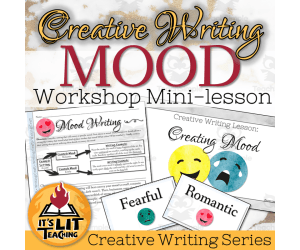
Creative Writing Workshop: Mood Mini Lesson Overview The Creative Writing Workshop: Mood Mini Lesson is a comprehensive teaching resource ideal for educators in both public schools and homeschools. It's designed to instruct students from grades 9 to 12 on how to identify, analyze, and generate mood in their writing— a crucial part of the language arts curriculum . Key Features: Encourages physical involvement with options for gallery walks Adaptable for independent study activities Innovative instruction methods including gallery walks or independent practices Educational Process The learning starts with a PowerPoint slideshow introducing the concept of mood. Subsequently, students get hands-on experience by analyzing five famous paintings either individually or collectively— helping them grasp mood identification profoundly. Additional Exercises: A chance for students to identify and create variations of narrative moods using randomly selected or self-chosen mood cards. An opportunity to practice short writing activities facilitated by you! Instructor Support Resources: This structure not only makes learning dynamic but also has ample support aids like - Mood Cards with eight inputs plus editable options, Detailed instructions for printing copies, An Identifying Mood Worksheet along with its answer key versions suitable for standalone tasks or group activities throughout the program. Bilingual Support & Other Perks This bilingual learning aid isn't modifiable but covers all necessary content extensively —and presents useful turn-and-talk opportunities as well. You also have touch points on other vital components such as Dialogue, Tone, Figurative Language Teaching etc. If you seek an engaging learning environment to upskill your language art lessons and involve every student —look no further! The Creative Writing Workshop: Mood Mini Lesson is precisely what you need.
Author It's Lit Teaching
Tags Creative Writing, Mood Analysis, Visual Aids, Art Appreciation, Independent Practice

Thank You, Ma’m: Full Lesson Plan w/ PowerPoints & Graphic Organizers
ELA, Reading, Grade 7, 8, 9, 10, Lesson Plans, Teacher Tools
This resource will give you everything you need to complete a full, comprehensive reading lesson plan for Thank You, Ma’m text by Langston Hughes. Files are offered as PDFs and Word documents. Included: -Thank You, Ma’m Lesson Plan -Thank You, Ma’m Worksheet -Thank You, Ma’m Answer Key Graphic Organizers: Author’s Purpose Characterization Chart Figurative Language Chart Historical Analysis Chart Imagery Chart Peer Evaluation Sheet Plot Diagram Read for Detail Setting Style Chart Symbol Chart Symbolism Chart Theme Diagram Tone and Mood Diagram Universal Plot Diagram Venn Diagram PowerPoints: Characterization Imagery, Voice, and Persona Irony and Ambiguity Narrator and Voice Plot Structure Symbolism and Allegory Theme - How to Interpret Theme Thank You Bonus Stuff!
Author Quality Teaching Products
Tags Literature, Langston Hughes, Fiction Text, Reading Lesson Plan, Graphic Organizer, Thank You Ma'am Activities
Dreams, Sleeps, and the Unconscious Reading Passage and Q & A
ELA, Reading, Writing, Creative Writing, Research, Resources for Teachers, High School, Homeschool Resources, Teacher Tools, Assessments, Lesson Plans, Quizzes and Tests, Worksheets & Printables, Writing Prompts
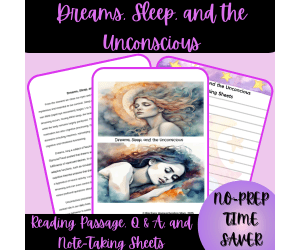
As a homeschool mom who has always been captivated by how the human mind works, I am excited to share Dreams, Sleep, and the Unconscious Reading Passage, Q & A, and Note-Taking Sheets resource with you. This is not your typical high school worksheet—it is a thoughtfully crafted academic resource that I have designed for students/homeschoolers ready to tackle college-level thinking about neuroscience, psychology, and consciousness. If you have a high school or early college student who loves digging deep into complex topics, this comprehensive packet will challenge them to explore sleep stages, REM cycles, dream theories, and the mysterious workings of our conscious and unconscious minds. INCLUDED IN THIS RESOURCE: A detailed, complex reading passage on dreams, sleep cycles, and unconscious processes 20 high-level comprehension and analysis questions A complete guided answer key with acceptable responses 5 note-taking sheets to support textual understanding TOPICS COVERED: Sleep stages and the biological role of REM sleep Freudian vs. modern cognitive dream theories The unconscious mind and its influence on decision-making Sleep disorders such as sleep paralysis, night terrors, and REM behavior disorder This Dreams, Sleep, and the Unconscious Reading Passage, Q & A, and Note-Taking Sheets resource has become one of my favorites because it truly bridges the gap between high school learning and college-level thinking. Whether you are teaching AP Psychology, running an honors science elective, or coordinating with other homeschool families in a co-op setting, this material gives students/homeschoolers the analytical and writing skills they will need for advanced psychology, health sciences, or behavioral studies coursework. It is the kind of resource that transforms curious teenagers into critical thinkers who can tackle complex academic material with confidence. If you and your students/homeschoolers enjoyed this resource, please leave a review. Thank you for your support! Tina - Big Easy Homeschooling Mom
Author Homeschool with Big Easy Homeschooling Mom
Rating
Tags Sleep Cycle, Dream Theory, AP Psychology, Sleep Disorders, Homeschool Resource On The Unconscious Mind, Detailed Reading Passage On Dreams And Sleep, Advanced Student/homeschool Resource On Sleep Stages And Disorders, Freudian Dream Analysis, REM Sleep, Cognitive Neuroscience
Gunpowder Reading Comprehension Passage - Cored Ed Encyclopedia
ELA, Reading Comprehension, Reading, Science, Technology, Pre-Reading, Language Development, History, Social Studies, Physics, Grade 2, 3, 4, 5, Worksheets & Printables, Worksheets, Teacher Tools, Centers, Activities, Writing Prompts, Assessments, Quizzes and Tests, Quizzes, Lesson Plans
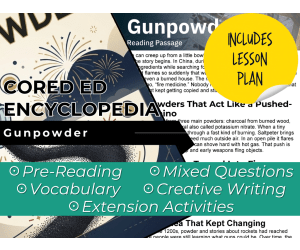
This gunpowder reading comprehension with lesson plan includes: Visualization (on the front cover) Start your lesson by taking a minute to think and share something about the topic. Read the script aloud (slowly), perhaps prepare some music or sound effects. Student close their eyes and let their imaginations wander. Students open their eyes, read the question aloud and give them a few minutes to complete. Ask a few students to share or keep answers until the end to compare with what they learn in the passage. Quick pause—thousands of Cored Education products are included with your TeachSimple membership. Download links and encyclopedia index available here. Pre-Reading Trivia Students will write down one thing they already know about the subject and then read five more facts and discuss. These facts are fun, and the students will enjoy learning about the subject before reading more. Give 1 minute for students to write what they already know (no pressure—best guess is fine). Read the five facts together. After each fact, do ask a student for their opinion, was it surprising? Set a purpose by asking students to highlight/underline one fact they want to learn more about during the reading. Reading Passage The text is a high-interest reading passage with set paragraphs, roughly three to four paragraphs long. It contains a variety of themes about the topic, anywhere from history to technology. The passage is between 250 and 350 words in length. First, ask students to look at the headings and see what they’ll learn about today. What do they know about the topic/heading? First read options: Teacher read-aloud (best for support). Partner reading (paragraph by paragraph). While reading, students underline important details, and vocabulary words they think may come up in the questions section. Mixed Questions The first question page contains four multiple-choice questions, each with a choice of four answers, and three written response questions that require a sentence or two from the student. Students complete the mcqs first independently, then review quickly as a class. For the 3 written responses, try to get students giving the answer with some form of evidence: “I think ___ because the text says ___.” If students get stuck, send them back to check the passage. Vocabulary Questions Practice seven key words from the text in this section across two activities. First section is scrambled words where students will unscramble three words given a clue for each. The second section is a word to meaning matching activity. Before starting, have some students read out words they underlined in the passage. Ask students to say the word and read aloud the sentence(s) around each word. Ask students to do scrambled words and the matching exercise in pairs then go through answers as a class. For the scrambled spelling task, get four pairs to come up to the board and write the words for extra practice with the other student reading out the clue. For the matching task, prompt students to give full sentences: “I matched ___ with ___ because ___.” Creative Writing In this question, the student will be required to write a five to eight sentence paragraph on a question related to the topic. Before starting, ask students write down 3 key ideas they are going to include in their piece. Ask students for ideas to share around the class to help those struggling. Pro writing expectations: 5–8 sentences At least 2 facts or details from the passage At least 2 vocabulary words from the previous page Students read their paragraphs while classmates listen for facts and vocabulary words. Extension Activities This page is optional for fast finishers or to take home. There are several activities, each one requiring a different skill. Do some, do none, do all, completely optional - but you will feel reassured knowing every possibility is planned for. Includes summary writting question and additional facts. Answer Key There are answers for the multiple-choice questions, written response questions have sample answers, vocabulary answers and if there is a summary question then a sample summary will be provided as well. Lesson Plan Included Customized lesson plan for this lesson is included. Lesson Snapshot Title: Gunpowder Genre: Nonfiction (informational text) Subject: Science Primary Topic: How gunpowder was discovered and used over time Estimated Guided Reading Level (A–Z): Q What This Lesson Teaches Best Explains how gunpowder began in China during the Tang dynasty when alchemists mixed ingredients while searching for a life-lasting “elixir.” Identifies the three main powders in gunpowder—charcoal, sulfur, and saltpeter (also called potassium nitrate)—and describes what saltpeter adds to help burning. Describes how gunpowder behaves differently in an open pile versus a tight tube, leading to a strong push of hot gas. Traces how “fire medicine” was used first for celebrations and signals, then developed into fire arrows, bombs, fire lances, and hand cannons by the late 1200s. Shows how ideas travel as gunpowder and stories about rockets reached Europe, and how uses expanded to quarrying rock and digging tunnels, not only fighting. Learning Goals Students will describe how the text says gunpowder was discovered during the Tang dynasty in China. Students will identify the three main powders in gunpowder and explain what saltpeter adds to the burning process. Students will compare what happens when gunpowder burns in an open pile versus in a tight tube. Students will explain how “fire medicine” changed from signals and celebrations to fire arrows and later weapons over time. Students will describe two non-celebration uses of the powder mentioned in the text (quarrying rock and digging tunnels). Students will explain what the author means by “Ideas travel,” using the example of gunpowder reaching Europe. Key Vocabulary From the Text alchemists — people who mixed ingredients while searching for an “elixir.” elixir — a life-lasting drink they searched for. charcoal — powder from burned wood. sulfur — one of the three main powders. saltpeter — a mineral also called potassium nitrate. Discussion Prompts Pre-reading question: What do you think might happen if a powder burns very fast? Comprehension questions: How did the mixture get the name huoyao, or “fire medicine”? Comprehension questions: What role does saltpeter play when a tiny grain is lit? Comprehension questions: How did the uses of “fire medicine” change from celebrations to later tools or weapons? FULL CATALOG OF DOWNLOAD LINKS AND ENCYCLOPEDIA INDEX HERE
Author Cored Education
Rating
Tags Vocabulary, Reading Comprehension, Reading Passages, Lesson Plans, Ela Lesson Plans, Reading Comprehension Lesson Plans, Pre-reading, Science Lesson Plans, Social Studies Lesson Plans, History

Dictionary Skills
ELA, Strategies, Grade 4, 5, 6, Teacher Tools, Lesson Plans
Dictionary Skills: An Impeccable Teaching Resource Dictionary Skills is a remarkable teaching resource designed explicitly for Grade 4 to 6 educators. It excels in enhancing students' proficiency in language arts. This comprehensive guide showcases the dictionary as an invaluable tool with vast benefits inside and outside the classroom setting. Eradicating Dictionary-Associated Anxiety Incorporation of Dictionary Skills into the curriculum can help teachers eliminate any anxiety that their students might feel towards dictionaries. This resource exhibits immense versatility, allowing application with virtually any type of dictionary, providing educators much-needed flexibility. The usefulness of this resource extends to all learning environments including homeschooling or public school classrooms. Focusing on Comprehension Enhancement The core aim of this product is the enhancement of comprehension skills. Each worksheet emphasizes interpreting keys to dictionary entries, thereby ensuring learners comfort in reading varying definitions and comprehending enclosed information. A distinctive feature is its ability to deepen learners' understanding about various parts of speech through practice using new words identified in different dictionaries. The systematic exercises also introduce synonyms, antonyms, word origin details; presenting opportunities for significant vocabulary expansion and enlightened language comprehension for each learner working through these worksheets. The approach requires minimum assistance from educators during execution but powerfully reinforces concepts while giving learners independence skills they can use beyond school life. Versatility In Implementation Strategies This program's tailor-made lesson plans fit within diverse teaching strategies such as whole group education or small group instruction methods; it could also serve well as homework assignments instilling self-reliance among students. The resource comes packaged within an easily downloadable PDF file which contains only one product. This convenience drastically simplifies a teacher's role when incorporating this important tool into their language arts instruction. There's no better time than now for educators to take advantage of resources like Dictionary Skills, making knowledge transfer that much more simplified yet impactful on students’ overall learning outcomes.
Author Classroom Complete Press
Tags PDF
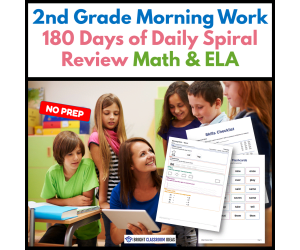
2nd Grade Morning Work | 180 Days of Daily Spiral Review | Math & ELA
ELA, Math, Grade 2, Assessments, Teacher Tools, Lesson Plans, Worksheets & Printables
Grade 2 Morning Work | 180 Days of Daily Spiral Review | Math & Reading Bell Ringers | Print & Go Make mornings meaningful with this Grade 2 Morning Work resource featuring 180 days of daily spiral review for math and reading! Designed to build strong academic routines while reinforcing essential second grade skills, this no-prep resource helps students review previously taught concepts through engaging daily practice. Every day includes reading, language, math, critical thinking, and social-emotional learning activities, making it the perfect way to start the school day with confidence and consistency. What's Included 180 days of printable morning work Two-page daily format (360 student pages) Daily Reading & Language activities: Prefixes & suffixes Grammar Reading comprehension passages with questions Vocabulary word of the day Writing prompts Reading challenges SEL morning check-ins Fun facts Daily Math & Thinking activities: Addition Subtraction Money Telling time Measurement Graphs Fractions Math challenges Brain teasers Jokes Growth mindset quotes Would You Rather prompts Teacher Guide 36-week Pacing Guide Skills Checklist for assessment Editable Morning Work Schedule (Word & PDF) Complete Answer Key for all 180 days How It Works in the Classroom This Grade 2 Morning Work resource is designed for a predictable 15-minute daily routine but is flexible enough for a variety of classroom needs. Perfect for: Morning work Bell ringers Daily spiral review Independent practice Homework Early finisher activities Math and reading centers Small group warm-ups RTI and intervention Test review Emergency sub plans The consistent daily format helps students build independence while giving teachers valuable time to greet students, monitor learning, conference individually, or work with small groups. Standards & Learning Goals This resource reinforces a broad range of Grade 2 skills throughout the school year, including: Reading & Language Arts Prefixes and suffixes Grammar and conventions Reading comprehension Vocabulary development Writing Reading fluency Academic language Critical thinking Math Addition and subtraction Money Telling time Measurement Graphs and data Fractions Multi-step problem solving Students also strengthen: Reading stamina Daily writing skills Social-emotional learning Growth mindset Independent work habits Consistent review of previously taught skills through spiral practice Why Teachers Love It ❤️ Zero prep—simply print and teach ❤️ Covers an entire 180-day school year ❤️ Daily spiral review helps improve long-term retention ❤️ Reading and math are combined in one easy-to-use resource ❤️ Includes engaging passages, real-world math, and higher-order thinking ❤️ Difficulty increases throughout the year to match student growth ❤️ Includes editable planning tools, pacing guides, and assessment checklists ❤️ Great for classrooms, homeschool, intervention, and substitute teachers Perfect For Grade 2 Classrooms Homeschool RTI & MTSS Morning Work Bell Ringers Spiral Review Independent Practice Early Finishers Homework Literacy Centers Math Review Test Prep If you're looking for a Grade 2 Morning Work resource that combines engaging reading practice with meaningful math review, this comprehensive 180-day spiral review is an easy, no-prep solution that supports student success from the first day of school through the last. Download today and create a consistent morning routine that saves planning time while keeping students engaged every single day!
Author Bright Classroom Ideas Marketplace
Rating
Tags Ela, Math, Morning Work, Spiral, Review, Daily, Yearlong, Full Year

ESL EFL TESOL TEFL Lesson Plan on the traditional British Breakfast
ELA, Language Development, ESL, Writing, Grade 8, 9, 10, 11, 12, Teacher Tools, Lesson Plans
Intermediate ESL EFL TESOL TEFL PDF Lesson Plan on the traditional British Breakfast (teens mainly) This Amazing PDF ESL, EFL, TESOL Writing Activity Lesson Plan is great to train Language skills in English. Potential learners for this ESl, EFL, TESOL Activity can be High Schoolers (teens) and Higher Education Learners too. This English as a Second Language Educational Product is suitable for ESL, EFL, TESOL, TEFL Centers Abroad or any English as a second language tutor or private Teacher, educator (be it online, be it offline). This Stimulating PDF ESL, EFL, TESOL, TEFL Lesson Plan (8 pages, slides) includes: a brief Introduction to Breakfast in Great Britain a QR CODE-Linked YouTube Video on the Traditional British Breakfast Essay Prompts on the Importance of Breakfast itself, British Breakfast and other kinds of Breakfast around the Globe Cell phones (and other electronic devices) are employed for this PDF (printable) ESL, EFL, TESOL, TEFL Activity for Educational, Learning Purposes Only PS: QR-CODES can be great to make our Students' Learning Process available ANYWHERE and ANYTIME they want (repeated listening does matter when it come English as a Second Language acquisition)! This Amazing Intermediate ESL, EFL, TESOL, TEFL PDF (printable) Teaching Resource (8 Pages lesson Plan) is great for English as a second language learners. It aims to help ESL, EFL students to improve their English as a second language Writing skills + Listening skills ESL with Alan is a Brand New ESL, EFL, TESOL, TEFL Store that aims to help English as a Second Language Teachers, Educators and Tutors (be it online or offline) to achieve their teaching objectives while creating a fun and stimulating environment. Never Forget! Learning is fun, So should English! For Further PDF ESL, EFL, TESOL, TEFL Teaching Resources, click here ESL with Alan!
Author Learning with Alan
Tags ESL, EFL, TESOL, TEFL, British, Culture, Teens, Lesson Plan, Activities, Writing