



3,911 products added recently
Page 46 - ELA Lesson Plans
Elevate your ELA instruction with lesson plans that cover reading, writing, speaking, and listening skills. These resources provide diverse texts and engaging activities to improve literacy. Integrate these plans to enrich your language arts curriculum and support student achievement.

 Show filters


Whales Reading Comprehension Passage - Cored Ed Encyclopedia
ELA, Language Development, Reading Comprehension, Reading, Pre-Reading, Science, Animals, Life Sciences, Vocabulary, Writing, Grade 2, 3, 4, 5, Worksheets & Printables, Worksheets, Teacher Tools, Centers, Activities, Writing Prompts, Assessments, Quizzes and Tests, Quizzes, Lesson Plans
This whales reading comprehension with lesson plan includes: Visualization (on the front cover) Start your lesson by taking a minute to think and share something about the topic. Read the script aloud (slowly), perhaps prepare some music or sound effects. Student close their eyes and let their imaginations wander. Students open their eyes, read the question aloud and give them a few minutes to complete. Ask a few students to share or keep answers until the end to compare with what they learn in the passage. Quick pause—thousands of Cored Education products are included with your TeachSimple membership. Download links and encyclopedia index available here. Pre-Reading Trivia Students will write down one thing they already know about the subject and then read five more facts and discuss. These facts are fun, and the students will enjoy learning about the subject before reading more. Give 1 minute for students to write what they already know (no pressure—best guess is fine). Read the five facts together. After each fact, do ask a student for their opinion, was it surprising? Set a purpose by asking students to highlight/underline one fact they want to learn more about during the reading. Reading Passage The text is a high-interest reading passage with set paragraphs, roughly three to four paragraphs long. It contains a variety of themes about the topic, anywhere from history to technology. The passage is between 250 and 350 words in length. First, ask students to look at the headings and see what they’ll learn about today. What do they know about the topic/heading? First read options: Teacher read-aloud (best for support). Partner reading (paragraph by paragraph). While reading, students underline important details, and vocabulary words they think may come up in the questions section. Mixed Questions The first question page contains four multiple-choice questions, each with a choice of four answers, and three written response questions that require a sentence or two from the student. Students complete the mcqs first independently, then review quickly as a class. For the 3 written responses, try to get students giving the answer with some form of evidence: “I think ___ because the text says ___.” If students get stuck, send them back to check the passage. Vocabulary Questions Practice seven key words from the text in this section across two activities. First section is scrambled words where students will unscramble three words given a clue for each. The second section is a word to meaning matching activity. Before starting, have some students read out words they underlined in the passage. Ask students to say the word and read aloud the sentence(s) around each word. Ask students to do scrambled words and the matching exercise in pairs then go through answers as a class. For the scrambled spelling task, get four pairs to come up to the board and write the words for extra practice with the other student reading out the clue. For the matching task, prompt students to give full sentences: “I matched ___ with ___ because ___.” Creative Writing In this question, the student will be required to write a five to eight sentence paragraph on a question related to the topic. Before starting, ask students write down 3 key ideas they are going to include in their piece. Ask students for ideas to share around the class to help those struggling. Pro writing expectations: 5–8 sentences At least 2 facts or details from the passage At least 2 vocabulary words from the previous page Students read their paragraphs while classmates listen for facts and vocabulary words. Extension Activities This page is optional for fast finishers or to take home. There are several activities, each one requiring a different skill. Do some, do none, do all, completely optional - but you will feel reassured knowing every possibility is planned for. Includes summary writting question. Answer Key There are answers for the multiple-choice questions, written response questions have sample answers, vocabulary answers and if there is a summary question then a sample summary will be provided as well. Lesson Plan Included Customized lesson plan for this lesson is included. Lesson Snapshot Title: Whales Genre: Nonfiction (informational text) Subject: Life Science / Informational Reading Primary Topic: Whales as mammals, feeding types, fossils, human impacts Estimated Guided Reading Level (A–Z): Q What This Lesson Teaches Best Whales are mammals that breathe air with lungs through blowholes , so they must surface as part of everyday life. Whales can have two different feeding tools : baleen plates that strain food like krill, or sharp teeth used to grab fish or squid. Fossils provide evidence that early whale relatives were land mammals and changed over millions of years to live in the ocean. Human activity affects whales today (fishing gear tangles, ships strike, and loud noise can fill the water where whales communicate), and scientists use tracking tools to help protect them. Learning Goals Students will explain why whales rise to the surface using details about breathing and blowholes. Students will compare how baleen whales and toothed whales get food, using evidence from the text. Students will describe what fossils show about where whales came from long ago. Students will identify one modern problem that can make whale communication harder, based on the passage. Students will describe at least one way scientists track whales to protect them, using details from the text. Key Vocabulary From the Text blowholes — nostrils on top of a whale’s head. baleen — mouth plates that strain tiny food from water. krill — tiny sea creatures baleen whales hold onto. streamlined — shaped to move smoothly through water. fossils — old remains in rock that give clues. FULL CATALOG OF DOWNLOAD LINKS AND ENCYCLOPEDIA INDEX HERE
Author Cored Education
Rating
Tags Vocabulary, Reading Comprehension, Reading Passages, Lesson Plans, Ela Lesson Plans, Reading Comprehension Lesson Plans, Pre-reading, Science Lesson Plans, Life Science, Animals

The First 21 Days | Day 3: Making Connections | Reading Instruction
ELA, Reading, Preschool, Grade 1, 2, 3, Teacher Tools, Lesson Plans
This resource is Day 3: Making Connections in the First 21 Days lesson set. This presentation is full of comprehension and reading strategies, anchor charts , interactive activities and so much more.
Author First in Line
Tags Reading Lesson, Making Connections, Reading Instruction, Language Arts, Reading Books

Baseball Reading Comprehension Passage - Cored Ed Encyclopedia
ELA, Language Development, Reading Comprehension, Reading, Social Studies, Writing, Vocabulary, History, Geography, Pre-Reading, Grade 2, 3, 4, 5, Worksheets & Printables, Worksheets, Teacher Tools, Centers, Activities, Writing Prompts, Assessments, Quizzes and Tests, Quizzes, Lesson Plans
This baseball reading comprehension with lesson plan includes: Visualization (on the front cover) Start your lesson by taking a minute to think and share something about the topic. Read the script aloud (slowly), perhaps prepare some music or sound effects. Student close their eyes and let their imaginations wander. Students open their eyes, read the question aloud and give them a few minutes to complete. Ask a few students to share or keep answers until the end to compare with what they learn in the passage. COMPANION VIDEO NOW AVAILABLE (EMBEDDED AFTER PREVIEW PICTURES IN PRODUCT DESCRIPTION) Quick pause—thousands of Cored Education products are included with your TeachSimple membership. Download links and encyclopedia index available here. Pre-Reading Trivia Students will write down one thing they already know about the subject and then read five more facts and discuss. These facts are fun, and the students will enjoy learning about the subject before reading more. Give 1 minute for students to write what they already know (no pressure—best guess is fine). Read the five facts together. After each fact, do ask a student for their opinion, was it surprising? Set a purpose by asking students to highlight/underline one fact they want to learn more about during the reading. Reading Passage The text is a high-interest reading passage with set paragraphs, roughly three to four paragraphs long. It contains a variety of themes about the topic, anywhere from history to technology. The passage is between 250 and 350 words in length. First, ask students to look at the headings and see what they’ll learn about today. What do they know about the topic/heading? First read options: Teacher read-aloud (best for support). Partner reading (paragraph by paragraph). While reading, students underline important details, and vocabulary words they think may come up in the questions section. Mixed Questions The first question page contains four multiple-choice questions, each with a choice of four answers, and three written response questions that require a sentence or two from the student. Students complete the mcqs first independently, then review quickly as a class. For the 3 written responses, try to get students giving the answer with some form of evidence: “I think ___ because the text says ___.” If students get stuck, send them back to check the passage. Vocabulary Questions Practice seven key words from the text in this section across two activities. First section is scrambled words where students will unscramble three words given a clue for each. The second section is a word to meaning matching activity. Before starting, have some students read out words they underlined in the passage. Ask students to say the word and read aloud the sentence(s) around each word. Ask students to do scrambled words and the matching exercise in pairs then go through answers as a class. For the scrambled spelling task, get four pairs to come up to the board and write the words for extra practice with the other student reading out the clue. For the matching task, prompt students to give full sentences: “I matched ___ with ___ because ___.” Creative Writing In this question, the student will be required to write a five to eight sentence paragraph on a question related to the topic. Before starting, ask students write down 3 key ideas they are going to include in their piece. Ask students for ideas to share around the class to help those struggling. Pro writing expectations: 5–8 sentences At least 2 facts or details from the passage At least 2 vocabulary words from the previous page Students read their paragraphs while classmates listen for facts and vocabulary words. Extension Activities This page is optional for fast finishers or to take home. There are several activities, each one requiring a different skill. Do some, do none, do all, completely optional - but you will feel reassured knowing every possibility is planned for. Includes summary writting question and additional facts. Answer Key There are answers for the multiple-choice questions, written response questions have sample answers, vocabulary answers and if there is a summary question then a sample summary will be provided as well. Lesson Plan Included Customized lesson plan for this lesson is included. Lesson Snapshot Title: Baseball Genre: Nonfiction (informational passage) Subject: Physical Education / Social Studies (Sports history) / Reading (Informational Text) Primary Topic: How baseball works and how it spread Estimated Guided Reading Level (A–Z): S What This Lesson Teaches Best Clear explanation of how a baseball game works (bases in a diamond, two teams, innings, outs, extra innings). How shared written rules helped organize the modern game (clubs writing rules; later standards like nine innings and a 90-foot base path). A brief timeline of key turning points using dates and evidence (1845 rules, 1869 first all-professional team, 1903 World Series, 1872 introduction in Japan). How baseball changed as it grew (teams traveling, paid players, big leagues forming, some leagues using timing rules). How baseball spread beyond its early American home (popularity across parts of the Americas and East Asia). Learning Goals Identify key parts of a baseball game described in the passage (bases, teams, innings, outs, extra innings). Explain how keeping shared rules helped baseball become more organized. Describe the “safer idea” included in the 1845 rules. Describe what it meant for baseball to turn “professional,” using details from the text. Retell the passage’s key dates in order and explain what happened at each date. Describe how the passage shows baseball spreading to new places and continuing to change. Key Vocabulary From the Text inning — part of the game when teams take turns playing. outs — times when a player is put out. standards — agreed-upon rules that many people follow. professional — paid to play as a job. leagues — organized groups of teams that play each other. FULL CATALOG OF DOWNLOAD LINKS AND ENCYCLOPEDIA INDEX HERE
Author Cored Education
Rating
Tags Vocabulary, Reading Comprehension, Reading Passages, Lesson Plans, Ela Lesson Plans, Reading Comprehension Lesson Plans, Pre-reading, History, History Lesson Plans, Social Studies Lesson Plans

Modal Verbs: Must and Have To ESL ELA TEFL Intermediate Lesson Plan
ELA, Grammar, Grade 5, 6, 7, 8, 9, 10, 11, 12, Teacher Tools, Lesson Plans
Modal Verbs: Must and Have To Intermediate ESL ELA TEFL Lesson Plan This intermediate lesson plan helps students learn about modal verbs like "must" and "have to" and use them properly in sentences. Students first review definitions and examples of these modal verbs. Next, they complete educational exercises that allow them to practice identifying and using "must," "have to," and similar modal verbs correctly. This resource can be used flexibly, like for whole-class grammar lessons, small group remediation, or as a homework assignment. Answer keys are provided for easy self- or peer-checking. Everything is contained in a convenient PDF packet. This modal verbs lesson allows flexible implementation so students can master this intermediate grammar concept through repeated, meaningful practice. This lesson plan includes flash cards, warmer, conversation questions, main use, construction, rules, examples, open questions, closed questions, activity, writing drill and extra study. The TEFL resource is available in PDF with 32 ready to print pages and one digital access file. A part of it is on Google Apps. The answer key is also included for reference.
Author TEAM TEFL
Tags Modal Verbs, Grammar, ESL Lesson, Language Arts, Reading Activities, Lesson Plan Verbs

Old Yeller: Exploring Literature Teaching Unit
ELA, Literature, Grade 4, 5, 6, 7, 8, 9, Teacher Tools, Lesson Plans
Old Yeller: Exploring Literature Teaching Unit The Old Yeller: Exploring Literature Teaching Unit is the perfect academic resource designed to ease the process of teaching and fostering an adoration for quality literature among students. Primarily envisioned for teachers in academic institutions and homeschool educators, this indispensable tool guarantees minimized planning time without compromising on quality. Apt Fit for Varied Grades and Learning Styles This all-inclusive package is ideally suited for Grade 4 up to Grade 9 classes, delving into Language Arts with a spotlight on Literature. With its content targeted towards different learning approaches, it enhances text comprehension while igniting reading interest. User-friendly Format Packed Full of Activities All 51 pages filled with engaging activities come in an effortless-to-comprehend PDF format. No need for additional preparation - simply print and share! Cuts down on planning time, letting you focus more on student comprehension. Benefit from Flexible Implementation Choices Returns excellent results whether used as part of whole group or small group lessons. Doubles wonderfully as homework or self-study materials during remote learning scenarios. Fits seamlessly into mixed classroom setups and online settings alike. The 'Old Yeller: Exploring Literature Teaching Unit' advocates not only information dissemination but fosters critical thinking through thought-stimulating questions that challenge students' perspectives while making them verbalize insights from their reading experience. A special aspect about this remarkable product is its adherence to educational standards while keeping your class enthralled throughout their journey deep into classic literature like 'Old Yeller'. Its versatility allows for modify based on your unique classroom requirements without undercutting lesson goals or student comprehension—an invaluable asset to any teacher's tool-set. Summary In a nutshell, the Old Yeller: Exploring Literature Teaching Unit ensures both teacher efficiency and enriched student learning. Blending academic rigor with captivating content, this unit functions as a perfect addition to any educator’s kit to light up young learners' love for literature.
Author Classroom Complete Press
Tags Old Yeller, Literature, Study Guide, Writing, Chapter Book

The Gift of the Magi: Full Lesson Plan w/ PowerPoints & Graphic Organizers
ELA, Literature, Grade 6, 7, 8, 9, Lesson Plans, Teacher Tools
This resource will give you everything you need to complete a full, comprehensive reading lesson plan for The Gift of the Magi text by O. Henry. Files are offered as PDFs and Word documents. Included: -The Gift of the Magi Lesson Plan -The Gift of the Magi Worksheet -The Gift of the Magi Answer Key Graphic Organizers: Author’s Purpose Characterization Chart Figurative Language Chart Historical Analysis Chart Imagery Chart Peer Evaluation Sheet Plot Diagram Read for Detail Setting Style Chart Symbol Chart Symbolism Chart Theme Diagram Tone and Mood Diagram Universal Plot Diagram Venn Diagram PowerPoints: Characterization Imagery, Voice, and Persona Irony and Ambiguity Narrator and Voice Plot Structure Symbolism and Allegory Theme - How to Interpret Theme Thank You Bonus Stuff!
Author Quality Teaching Products
Tags Literature, Short Story, Fiction Text, Reading Lesson Plan, Reading Powerpoint, The Gift Of The Magi Lesson Plans Pdf, The Gift Of The Magi Answers Key, Gift Of The Magi Answer Key, Magi Worksheet, The Gift Of The Magi Lesson Plans Middle School, The Gift Of Magi Answer Key, Figurative Language In The Gift Of The Magi, The Gift Of The Magi Plot Diagram, The Gift Of The Magi Answer Key

Cowboy Hats, Boots and Books Gr. K-2
ELA, Reading, Grade 1, Teacher Tools, Lesson Plans
Cowboy Hats, Boots and Books Gr. K-2 An exciting teaching resource offering enriched learning experiences for Kindergarten through 2nd-grade students. This product is specifically created for Language Arts with a core focus on Reading. Product Inclusions: Two big books and corresponding little books Patterns for student bookmaking Interactive songs and rebus chants Cowboy Clip Art: A fun feature that introduces students to different parts of a cowboy's attire. Cowpoke of the Day Bulletin Board: A tool designed to recognize outstanding contributions or participation during cowboy-themed class discussions. Literacy Contents: Big Book — Counting Cowboy, Little Book — Counting Cowboy, Big Book — One Good Cowboy Hat, Little Book— One Good Cowboy Hat. These contents stimulate children's interest in reading and enhance their numeracy skills by incorporating counting elements within the narratives. Cowboy-Themed Songs & Chants: Included in the product file can be used during whole group instruction or smaller study groups. Student Bookmaking Patterns: A feature that allows young learners to craft their miniature books from scratch. This comprehensive package comes in an easy-to-use PDF format available exclusively at TeachSimple.com, making it readily accessible online from public school classroom computers or hard-at-work homeschooling setups.
Author Classroom Complete Press
Tags PDF

The First 21 Days | Day 16-20: Reading Strategies | Reading Instruction
ELA, Reading, Preschool, Grade 1, 2, 3, Teacher Tools, Lesson Plans
This resource is Day 16-20: Reading Strategies in the First 21 Days lesson set. This presentation is full of comprehension and reading strategies, anchor charts , interactive activities and so much more.
Author First in Line
Tags Reading Strategies, Reading Instruction, Inferences , Anchor Charts, Reading Notebook

Phonics First - Grades 2-4
ELA, Language Development, Phonics, Grade 2, 3, 4, Teacher Tools, Lesson Plans
Phonics First - Grades 2-4: A Comprehensive Teaching Resource Phonics First - Grades 2-4 provides an in-depth exploration of phonics, particularly designed for students in second to fourth grades. This tool combines instructive content with activities focusing on the structure of words and their transformations with different beginnings and endings. Linguistic Concepts Covered: Contractions Possessives Compound Words Syllable Division/Recognition The Use of Prefixes and Suffixes Note:This resource also pays equal attention to dictionary spellings and markings, making it versatile in its approach. Beyond just helping students recognize words, Phonics First stimulates word construction capability among learners. This is achieved thanks to a multifaceted approach toward each concept. An Engaging Learning Process: In line with children’s learning styles, this product incorporates engaging pictures throughout that serve as motivation. Additionally, a mix of tracing, writing tasks meet coloring assignments providing varied engagement that nurtures full participation from the learners. Mix of Activities Included: Cutting-pasting exercises Matching tasks Puzzles. Note:To reinforce acquired skills, review pages are included where educators can lead practice sessions or assign homework tasks based on these modules. To keep momentum high till the end an awards page has been tucked away at the end for exceptional motivation. Apart from being a reliable independent instructional material it can also be used as regular practice reinforcement across Language Arts curriculum focusing on Phonics sub-subject area. Versatile Compatibility: Delivered in easy-to-use PDF format, this resource is usable across numerous devices. This eases classroom teachers’ tasks and meets the needs of home-schooling parents looking for resources to make learning an engaging experience.</p
Author Classroom Complete Press
Tags PDF

To Split Hairs | Figurative Language Activity | Micro-Learning Deck
ELA, Reading, Reading Comprehension, Grade 4, 5, 6, 7, Teacher Tools, Lesson Plans
To Split Hairs | A Micro-Learning Deck for Figurative Language This educational resource allows students to explore the figurative language term "to split hairs" in an engaging way. Through a short video lesson, a reading passage with audio, and comprehension activities, learners will better understand this common idiom and how it is used. The resource is designed as a micro-learning deck so it can be used flexibly - for whole group instruction, small group work, individual assignments, or homework. The activities focus on close reading, passage comprehension, and reflective writing to build literacy skills. This versatile resource aimed at grades 4-7 provides an impactful learning experience to help students master figurative language concepts.
Author Teach Me This
Tags Figurative, Language, Comprehension, Reading Lesson, Interactive Lesson

Fiction Elements: Fiction Story Lesson
ELA, Reading, Preschool, Grade 1, 2, 3, Teacher Tools, Lesson Plans
This resource is a Fiction Elements: Fiction Story Lesson. Students will apply reading, creative thinking, problem solving and so much more as they work through these interactive slides. Students will learn all about fiction stories - what they are, what they entail and how to write one. Class discussions and practice activities are included for students to apply their knowledge. There are 3 different presentations - 1 for the teacher, 1 for the student and 1 answer slide presentation.
Author Ezee 101
Tags Fiction Story, Reading Lesson, Problem And Solution, Story Elements, Google Classroom

Let's Learn! Vowels
ELA, Language Development, Phonics, Preschool, Grade 1, 2, Teacher Tools, Lesson Plans
Let's Learn! Vowels Let's Learn! Vowels is a meticulously crafted teaching resource especially targeted at educators for Kindergarten to 2nd Grade students. It offers a dynamic and engaging way to augment the language arts curriculum with an emphasis on phonics. This resource comes as a comprehensive, single-product file in an easily accessible PDF format. It contains 32 carefully structured pages of age-suitable activity sheets designed to captivate young learners' attention. Each page presents appealing art that makes each task enjoyable and maintains the learners' enthusiasm as they embrace phonetic learning. Unique Sequential Technique Let's Learn! Vowels stands out by its unique approach in implementing activities that progressively build upon one another. This sequential technique promotes ease of understanding as children advance from one stage to another, applying acquired knowledge while grasping new skills and concepts simultaneously. Versatility in Implementation The implementation of this teaching aid can be adjusted flexibly based on individual educator's needs; it may be utilized efficiently for both group sessions or small groups. Possibilities include: Incorporating it into classroom lessons, . Utilizing it for small group instruction, . Assigning pages as homework allowing learners to refine their proficiency at home. Inclusion of Detailed Skills Matrix Rounding off this comprehensive resource is the inclusion of a detailed skills matrix accompanying each title. This valuable addition helps enable educators to monitor and assess progression in vowel mastery effectively throughout the course of using this resource. In summary, 'Let’s Learn! Vowels', exists not just as a supplementary educational tool but elevates itself into being an essential asset - fostering foundational language skills while making learning fun and engaging for Kindergarten through Grade 2 students.
Author Classroom Complete Press
Tags PDF

The Apple Doesn't Fall Far From the Tree | Figurative Language Activity | Micro-Learning Deck
ELA, Reading, Reading Comprehension, Grade 4, 5, 6, 7, Teacher Tools, Lesson Plans
This resource allows students to explore figurative learning in a fun way. The figurative language term for this learning deck is "The Apple Doesn't Fall Far From the Tree." Through close reading and a reading passage with audio, your students will better comprehend figurative language! Included: -Video lesson on language concept -Reading passage w/ audio Comprehension -Quick write
Author Teach Me This
Tags Learning Deck, Video Lesson, Language Concept, Close Reading, Figurative Language

Dog Days of Summer | Figurative Language Activity | Micro-Learning Deck
ELA, Reading, Reading Comprehension, Grade 4, 5, 6, 7, Teacher Tools, Lesson Plans
This resource allows students to explore figurative learning in a fun way. The figurative language term for this learning deck is "Dog Days of Summer." Through close reading and a reading passage with audio, your students will better comprehend figurative language! Included: -Video lesson on language concept -Reading passage w/ audio Comprehension -Quick write
Author Teach Me This
Tags Dog Days Of Summer, Figurative, Language, Learning Deck, Comprehension
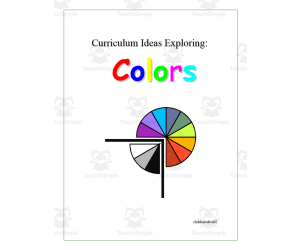
Colors Curriculum Pack
Creative Arts, Art, Social Studies, ELA, Language Development, Vocabulary, Math, Early Math, Science, Basic Science, Kindergarten, Lesson Plans, Teacher Tools
If your students are studying colors or are about to begin a colors unit, I have just the resource to provide you with everything you need and more! This is a Colors Curriculum Pack complete with an abundance of printable resources and engaging activities for students to complete. This curriculum was designed for your preschool students. The curriculum goal is to identify colors and explore and expand upon their knowledge of the concepts associated with the properties of, and creating different colors. The vocabulary that students will focus on is primary, secondary, diffused, light, opaque, translucent, dark, shades, rainbow, and spectrum. This curriculum will come with colors of the week (all colors) and a letter of the week (C). This curriculum pack includes: --Sensory Table Ideas --Art Activities --Cooking Experience --Community Time --Math Activities --Home/School Connection Ideas --Science Table Enrichments --Science Concepts/Activities --Prop Box Ideas/Dramatic Play Enrichments --Movement and Motor --Playground/Walk Activities --Transition/Waiting Ideas --Block Area Enrichments --Flannel Board --Teacher Made Enrichment Ideas --Field Trip Ideas --Supplemental Learning Ideas/Activities At the start of this pack, you will receive a list of supplies needed for activities and projects. The worksheets, activities, and tasks included in this pack are intended to be completed in a variety of formats – whole group, small group, and independent work. I hope you enjoy!
Author Learning Foundations
Tags Colors, Color Of The Week, Letter Of The Week, Math Activity, Sensory Table Ideas, Learning Foundations, Math Curriculum, Flannel Board, Art

Critical Thinking: Keys to Independent Thinking - FLASH-MAC
ELA, Strategies, Grade 5, 6, 7, 8, Teacher Tools, Lesson Plans
Critical Thinking: Keys to Independent Thinking - FLASH-MAC A comprehensive educational tool, this teaching resource serves as an excellent route for students in grades 5 through 8 to nourish their critical thinking aptitudes. The product offers a wide assortment of curriculum-linked resources that hone students' abilities in language arts. Interactive Elements The primary essence of the tool lies within its interactive elements aimed to enhance pupils' grasp over independent thinking. The key aspect here being 'Reading Passages'- sections designed strategically allowing learners to explore thought-provoking texts where vivid contexts help children across different grade levels shape their reading and comprehension faculties. Before & After Reading Questions In addition, there are 'Before You Read' and 'After You Read' questions serving as "bookends" with an equal focus on anticipatory skills before delving into the text and comprehension after reading it respectively. Promoting Independent Study Culture The product is not just committed towards cognitive development but also paramountly promotes an independent studying culture by including engaging printables which allows flexibility according to teacher’s coursework planning or homeschooling agendas. Vocabulary Flash Cards: Embedded within its interface, these dynamic flash cards provide teachers with an exciting medium for teaching complex terminology without undermining student engagement levels. Graphic Organizers: A series of these empowering tools encourage visualization of information while simultaneously structuring thoughts leading learners towards a path of critical thinking. Interactive Activities: Reinforcing concepts under study through captivating activities facilitates educators in providing a thoroughly rounded education experience. The cumulative effect of these dynamic elements coupled with core critical thinking teachings help students actively craft their independent learning strategies; making 'Critical Thinking: Keys to Independent Thinking - FLASH-MAC' an invaluable asset to any educational setup.
Author Classroom Complete Press
Tags Software (Mac)

Literary Devices: Characterization - FLASH-MAC
ELA, Literature, Grade 5, 6, 7, 8, Teacher Tools, Lesson Plans
Overview The Literary Devices: Characterization - FLASH-MAC resource is an all-in-one solution for effective education of literary mechanisms, specifically focusing on characterization. Designed for students in grades 5 through 8, it is a valuable tool for both public school educators and homeschooling parents. Content & Work Flow This software provides comprehensive curriculum -based content that enables deep learning of characterization. Each chapter juxtaposes literary reading passages with 'Before You Read' and 'After You Read' questions, turning passive learning into an active experience. Interactive Activities & Supplementary Materials Printable worksheets: Encourages further exploration of themes or topics covered in the chapters. Vocabulary flash cards: Reinforces new terms introduced during the sessions. Interactive activities:` Especially designed to validate understanding or cull insights regarding character interpretation. In addition to this, visual learners will also benefit from the use of graphic organizers which illustrate abstract concepts such as character development progressions or compare-and-contrast scenarios between key figures within literature being studied. Diverse Pedagogical Approach Adjusted to Class Contexts A whole class session where everyone analyses literature together, School study groups doing collaborative problem-solving exercises after school hours, Inividual assignment exercises set up as homework tasks. Note: All these varieties can easily be handled with this resource because of its adaptiveness according to context or class size. Digital Native Platform Compatibility Harmonizing Virtual & Physical Classroom Settings The product comes as Mac-compatible software which ensures usability is simple and convenient even during virtual sessions if distance teaching becomes necessary. In conclusion, with Literary Devices: Characterization - FLASH-MAC resource one can deliver rigorous but enjoyable teaching-learning experience revolving around mastering characterization within language arts classes in any set up.
Author Classroom Complete Press
Tags Software (Mac)
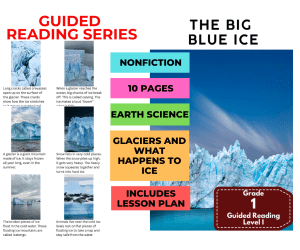
Guided Reading Level I - The Big Blue Ice (with Lesson Plan)
ELA, Resources for Teachers, Reading Comprehension, Reading, Science, Language Development, Earth and Environmental Sciences, Geography, Social Studies, Life Sciences, Grade 1, 2, 3, Worksheets & Printables, Worksheets, Teacher Tools, Centers, Activities, Literacy Readers, Quizzes, Quizzes and Tests, Assessments, Lesson Plans
This Guided Reading Book - The Big Blue Ice (Level I) with lesson plan includes: Guided Reading Color Label (front cover x1) This is a quick way to match the book’s demands to what students can generally handle.. The overall goal is to use the level/color to pick books for several smaller groups. To qualify for a certain level, a student is expected to read a book from that level with about 90–94% accuracy. If a student is consistently accurate and understands, move up a level. If the student is struggling at that level, drop down and add more support. Each student will improve at completely different rates, but it is generally one of the best ways to check progress across the class. DOWNLOAD THE CATALOG TO VIEW ALL GUIDED READING BOOKS AVAILABLE (SORTED LEVELS A-Z) Pre-Reading Question (x1) Teacher asks the prompt aloud, can be while showing the cover or first page. Students share what they already know, or make educated guesses from the cover. Prompt them to use the target vocabulary. Write some of their responses on the board to look back at during the reading. Vocabulary Words (x5) Introduce the five words, best doing it one at a time. Start by saying it, while students repeat and then see if anyone knows what it means before reading further. Read through the meaning and try to briefly connect each word to a picture or gesture so it’s meaningful. Ask students to flip through the book pages and point to where they see each of the vocabulary words. While reading the book pause upon coming across one of the vocab words or read the sentence twice to make sure students understand the word has appeared. Optional: Ask students to raise hands whenever they see/hear one of the new words. Guided Reading Pages (x10) Check the book snapshot (below) for: primary topic - do you need to prep extra reading or intro materials on this? what is taught best - decide on 1-2 bullets to focus on, use the prompt or words provided here for best results. learning goals - what you are checking for students to be able to do after the session, elicit answers using prompts or words provided. key vocabulary (see section above). questions overview - so you know what is coming up and if you need to prep extra materials to assist understanding. Run the lesson You may have already looked at a few of the pages together, but you can show them some of the pictures again first to set meaning. Depending on how much time you have and how familiar your students are with guided reading class, you may want to read the book aloud first with the group first. Students whisper or partner read, while you listen in. If time, do it as a group, one student reading a page each. Use the guided page’s prompts to coach: “Check the picture / does it make sense?” “Point under the words / try the first sound” “Reread the sentence smoothly”. Try to focus more on one student per session (rotating every time), so you can work out if they are ready to move up or need to move down a level. Comprehension Questions (back cover x3) This is your way to check that students didn’t just say the words, but actually understood the text. First, let students answer by pointing to the page/picture and saying a short sentence. After any answer, follow with: “Show me where you found that in the text.” In bigger groups, have partners answer first (10–20 seconds), then call on 2–3 students to share. Differentiation tips: Emerging speakers/struggling readers: oral + pointing On-level: oral in a full sentence Higher: one written sentence or draw + label Book Snapshot Title: The Big Blue Ice Genre: Nonfiction (informational) Subject: Earth Science + Reading (Informational Text) Primary Topic: Glaciers and what happens to ice Estimated Guided Reading Level (A–Z): I What This Book Teaches Best Defines what a glacier is and explains that it stays frozen all year long. Explains how snow can squeeze together and turn into hard ice in very cold places. Describes how glaciers move slowly like “rivers of ice” down mountain slopes. Teaches glacier features and changes, including crevasses, calving, and icebergs. Connects glaciers to living things and Earth systems (animals resting on ice, fresh water, keeping the world cool). Learning Goals Describe what a glacier is using details from the text. Explain how piled-up snow turns into hard ice in very cold places. Tell how glaciers move and where they move (down mountain slopes). Identify crevasses and describe what the text says they show. Explain what calving is and what happens when a glacier reaches the ocean. Describe two ways glaciers are important on Earth (cooling the world, holding fresh water). Key Vocabulary From the Text glacier — a huge mountain of ice. frozen — turned to ice from very cold weather. crevasses — long cracks on the glacier’s surface. calving — when big ice chunks break off into the ocean. icebergs — floating mountains of ice in cold water. Discussion Prompts Pre-reading question: What do you think a glacier is, and where might you find one? Comprehension questions: How does snow turn into hard ice, according to the book? Comprehension questions: Why do some glaciers look bright blue in the text? Comprehension questions: Where do seals rest to take a nap and stay safe from the water? Printing Tips 1. Best Printing Method (Recommended) “Booklet” Printing (Best if Available) If your printer or PDF viewer supports Booklet Printing , use this. Settings to use: Print mode: Booklet Paper size: Letter or A4 (either works) Orientation: Landscape Print on both sides: Yes Flip on: Short edge Scaling: Fit to printable area Booklet subset: First test: Front sides only Then: Back sides only This will automatically: Pair pages correctly Put the cover on the outside Align everything for folding After printing, fold in half and staple along the spine . 2. If “Booklet” Printing Is NOT Available You can still print this correctly with manual duplex printing . Step-by-step: Open the PDF. Choose Print . Set: Orientation: Landscape Pages per sheet: 1 Print on both sides: Yes Flip on: Short edge Print all pages . Because each PDF page already contains two facing book pages, the result will still fold cleanly into a book. Thousands of Cored Education products are included with your TeachSimple membership. Download links and encyclopedia index available here.
Author Cored Education
Rating
Tags Reading Comprehension, Reading Passages, Reading, Guided Reading, Guided Reading Lesson Plan, Guided Reading Activity, Pre-reading, Science Lesson Plans, Earth Science, Geography

Verb + ing or Infinitive – ESL Lesson Plan
ELA, Grammar, Grade 3, 4, 5, 8, 9, 10, 11, 12, Teacher Tools, Lesson Plans
This is a pre intermediate ESL ELA ELL lesson plan worksheet set for Verb +ing: Infinitive. Verb ing infinitive ESL lesson plan for A2 Pre Intermediate ELL ESL and ELA learners. This ready made TEFL resource includes everything from rule explanations to exercises as well as conversation topics and writing drills. From understanding the basic use of verb + -ing to practicing their correct application in different contexts, our lesson plan equips ESL learners with the skills and understanding to communicate efficiently. With interactive activities, practice exercises, and real-life examples, this lesson plan provides language skills and helps to build a strong foundation in English communication. One of the key aspects of this resource is understanding how certain verbs must follow the verb+ing or the infinite whilst others can adopt either. This lesson plan includes: Cover page Flash cards A warm-up activity Main use Construction details Rules, along with any exceptions Illustrative examples Two closed exercises One open exercise Revision exercise Writing exercises Chatterbox, a recurring feature in our course books encouraging conversation Activity, such as a game, quiz, puzzle, etc., to conclude the class The lesson plan is available in PDF with 27 ready to print pages and one digital access file. A part of it is on Google Apps. The answer key is also included for reference.
Author TEAM TEFL
Rating
Tags Grammar Worksheet, Infinitive Verbs, Gerunds, Dialogue, Adjectives

Word Puzzlers - Grades 4-5
ELA, Language Development, Vocabulary, Grade 4, 5, Teacher Tools, Lesson Plans
Word Puzzlers - Grades 4-5 is an outstanding educational resource tailored to markedly enhance students' language skills and vocabulary. Primarily designed for Grade 4 and Grade 5, these word puzzle books seamlessly merge learning with fun. The versatile nature of Word Puzzlers grants teachers the flexibility to use this tool in different teaching contexts, be it whole group instruction, small group tasks or independent homework assignments. This ensures optimum utility regardless of the size or structure of the classroom. Vocabulary Enrichment The primary focus being enriching language arts curricula, Word Puzzlers feature puzzles varying in formats and themes that complement core curriculum materials as well as supplementary ones. To illustrate, one day students could be tracing their way through interesting word mazes while another day they might find themselves breaking secret codes. Beyond Spelling Drills Riddles - Stimulates cognitive processes from a variety of perspectives. Rhymes - Encourages interest in learning new words. Ribuses & Matching Activities - Reinforces understanding of new words through interactive exercises. Crossword puzzles - Ensures continued student engagement. Word Puzzlers - Grades 4-5, rather than just existing as extra material extends beyond traditional teaching methods by integrating vocabulary acquisition within fun exercises that engage student's cognitive skills effectively fostering enthusiasm for words. Digital Accessible Resource: Note: This product is provided as a single PDF file enabling easy digital access across online tutoring and homeschooling settings. This amplifies its adaptability in different educational environments thus affirming its indispensability for current-day educators working hard to ease teaching methods while improving learning experiences.
Author Classroom Complete Press
Tags PDF

Personal Information | Beginner Lesson Plan
ELA, Language Development, ESL, Grade 8, 9, 10, 11, 12, Teacher Tools, Lesson Plans
Beginner A1 ESL EFL TEFL lesson plan worksheet set for Personal information. Personal Information lesson plan for A1 Beginner ELL and ELA learners focusing on giving and receiving information for beginner English students. This TEFL resource is ready-to-go with minimal prep necessary, encompassing a variety of materials ranging from flashcards to activities, along with conversation topics and writing drills. Formulated to enhance language proficiency, this engaging lesson plan addresses fundamental concepts and offers practical exercises to facilitate discussions about giving and receiving information in formal and informal scenarios. Focusing on areas such as giving and asking for names, dates of birth, address, phone numbers and work titles, our lesson plan empowers ESL learners with the knowledge and confidence to communicate effectively in situations where you have to inform someone about your personal details. Components of this lesson plan include: Flash cards A warm-up activity Main usage exploration Construction details Rules, along with any exceptions Illustrative examples Two closed exercises One open exercise Listening exercise Revision exercise Writing exercises Chatterbox, a recurring feature in our course books encouraging conversation Activity , such as a game, quiz, puzzle, etc., to conclude the class The lesson plan is available in PDF with 30+ ready to print pages and one digital access file. One MP3 file included. A part of it is on Google Apps. The answer key is also included for reference.
Author TEAM TEFL
Tags ESL Exercises, Vocabulary, True Or False, Antonyms, Role Play
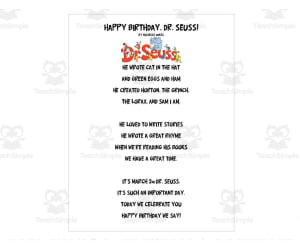
Dr. Seuss Birthday Preschool Curriculum Pack
ELA, Holiday & Seasonal, Creative Arts, Art, Reading, Kindergarten, Preschool, Lesson Plans, Teacher Tools
Dr. Seuss Birthday Preschool Curriculum Pack As a preschool teacher, you know just how important it is to provide your young learners with a rich learning experience. From hands-on learning to student-led activities, we know how critical it can be to prepare in advance. A day with a classroom full of preschool students can escape you quickly! Even though plans always change, beginning the day (and week) with explicit activity plans can keep you guided in the right direction. This is especially important when we want to implement meaningful instruction and activities to celebrate holidays. If you are searching for a plethora of themed activities to implement with your preschoolers, there are many for you to enjoy in my store. What You Get: This is aDr. Seuss Birthday Preschool Curriculum Pack.This packet is filled with a range of different holiday themed activities. The type of activities you can expect to see are: -- Games and Activities -- Songs -- Poems -- History Reading Passage How To Utilize the Dr. Seuss Birthday Preschool Curriculum Pack: Use thisDr. Seuss Birthday Preschool Curriculum Packas a concrete step stone to guide your instruction with your preschool students. You can expect most activities to provide you with explicit details from what you may need to how exactly to implement the activity . As you consider each potential activity included, think about the resources that you have readily available to implement them. You’ll also want to consider the temperament of your classroom and how well they may or may not respond to certain activities and instruction. Finally, you’ll think about the background knowledge they may already collectively have on the topic. With all of these things in mind, you can take away activities and replace them with new ones. You can find ways to extend activities that you know they will especially benefit from. I hope you enjoy! Here are links to similar resources in my store: Planting and Gardening Curriculum Pack Ice Cream Curriculum Pack Clouds Curriculum Pack Popcorn Fun Curriculum Pack Valentine’s Week-Long Lesson Plan Template Teddy Bear Week-Long Lesson Plan Template Check Out More Resources from My Store: Learning Foundations
Author Learning Foundations
Tags Preschool Curriculum, Literacy, Vocabulary, Reading, Dr. Seuss, Holiday Activities, Lesson Template, Poems, Songs, Word Wall

The Treasure of Lemon Brown: Full Lesson Plan w/ PowerPoints & Graphic Organizers
ELA, Literature, Grade 6, 7, 8, 9, Lesson Plans, Teacher Tools
The Treasure of Lemon Brown Full Lesson Plan Bundle helps educators teach Walter Dean Myers' short story through engaging activities. This comprehensive resource includes a complete lesson plan to guide analysis of the text's plot, characters, themes, and literary devices. It also contains graphic organizers and PowerPoints focused on topics like characterization, symbolism, theme interpretation, and more. With support materials for before, during, and after reading, this bundle facilitates whole-class, small-group, and individual work. The supplemental PDF and Word worksheets allow flexible implementation for grades 6-9. Overall, The Treasure of Lemon Brown Full Lesson Plan empowers language arts teachers to immerse students in this meaningful short story.
Author Quality Teaching Products
Tags Reading Lesson Plan, Short Story, Symbolism, Allegory, Fiction Text, Lemon Brown Summary, Walter Dean Myers The Treasure Of Lemon Brown, Theme Of Lemon Brown, Summary Of The Treasure Of Lemon Brown, The Treasure Of Lemon Brown Summary, What Is The Theme Of Lemon Brown, Theme Of The Treasure Of Lemon Brown, Treasure Of Lemon Brown Summary, The Treasure Of Lemon Brown Theme
I WONDER - What Is Personification | Animated Video Lesson
Poetry, Literature, ELA, Grade 4, 5, 6, 7, 8, 9, 10, Lesson Plans, Teacher Tools
Video Introduction An amazing video designed for the students to learn more about famous poetry in different countries. I WONDER - What Is Personification | Animated Video Lesson Do you like reading poetry? If yes, what is your favorite poem? Do you have a favorite poet? If yes, tell us more about him/her. What are the types of poetry? Have you ever tried to write a poem before? If yes, tell us more about it. What is acrostic poem? Dow you know who is the first writer to write it? Can you write one? What is limerick? Dow you know who is the first writer to write it? Can you write one? What is sonnet? Dow you know who is the first writer to write it? Can you write one? What is haiku? Dow you know who is the first writer to write it? Can you write one? I WONDER - What Is Personification | Animated Video Lesson The video is perfect for encouraging the researching skills for the students, while learning more about this fantastic poetry. I WONDER - What Is Personification | Animated Video Lesson This friendly designed video is suitable for students at school, homeschooling, and as a group activity. Format Available in MP4 format.
Author Educational Voice
Rating
Tags What Is Personification, What Is Personification Video, Personification, Personification Facts For Kids, Personification Video For Kids, Poetry, Poetry Video, Poetry Facts, Personification Facts