



3,931 products added recently
Page 8 - ELA Lesson Plans
Elevate your ELA instruction with lesson plans that cover reading, writing, speaking, and listening skills. These resources provide diverse texts and engaging activities to improve literacy. Integrate these plans to enrich your language arts curriculum and support student achievement.

 Show filters

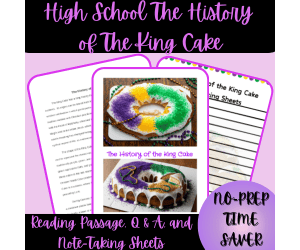
High School The History of the King Cake
ELA, Reading, Writing, Holiday & Seasonal, Research, Resources for Teachers, Social Studies, History, High School, Homeschool Resources, Teacher Tools, Quizzes and Tests, Lesson Plans, Worksheets & Printables, Writing Prompts
Hey mama! As I am right there in the trenches with you navigating the high school years with my own 9th grader, I know firsthand how tough it is to find those "unicorn" resources—the ones that are actually academically rigorous but don't bore our teens to tears. I poured my heart into creating this History of the King Cake unit because I wanted something for my daughter that moved past the basic Mardi Gras trivia and really pushed her to think about how cultures evolve and adapt. INCLUDED IN THIS RESOURCE: A detailed reading passage on King Cake history. 20 Complex prompts requiring paragraph-style answers. Detailed example responses for easy grading. Structured note-taking sheets for active reading and retention. TOPIC COVERED: Exploring the pagan roots of Saturnalia rituals. How Epiphany and the Magi shaped tradition. French and Spanish influences in early Louisiana. Deep dives into colors, shapes, and hidden babies. When it comes down to it, my heart’s desire is to put tools in your hands that make your homeschool days feel a little lighter and a lot more meaningful. This History of the King Cake really was a labor of love for me—I built it to meet the exact same high standards I hold for my own daughter’s 9th-grade year, and it is such a joy to finally share it with your family. It is honestly the perfect way to lean into the fun of the Carnival season without feeling like you are falling behind on those heavy-hitting high school English and History requirements. I have always found that when we give our teens something truly fascinating and culturally rich to sink their teeth into, that is when they actually start to love the process of learning. Thank you so much for supporting my work and letting me be a small part of your journey; I cannott wait to hear how this unit brings a little "Big Easy" magic to your high school lessons. If you and your students/homeschoolers enjoyed this resource, please leave a review. Thank you for your support! Tina - Big Easy Homeschooling Mom
Author Homeschool with Big Easy Homeschooling Mom
Rating
Tags Mardi Gras, King Cake, Louisiana History, Carnival Season, King Cake Historical Origins, Epiphany Lesson Plan, Mardi Gras Educational Resources, King Cake Traditions, Mardi Gras Colors, Cultural History Lessons

Yoga Reading Comprehension Passage - Cored Ed Encyclopedia
ELA, Language Development, Reading Comprehension, Reading, History, Social Studies, Pre-Reading, P.E. & Health, Yoga, Geography, Grade 2, 3, 4, 5, Worksheets & Printables, Worksheets, Teacher Tools, Centers, Activities, Writing Prompts, Assessments, Quizzes and Tests, Quizzes, Lesson Plans
This yoga reading comprehension with lesson plan includes: Visualization (on the front cover) Start your lesson by taking a minute to think and share something about the topic. Read the script aloud (slowly), perhaps prepare some music or sound effects. Student close their eyes and let their imaginations wander. Students open their eyes, read the question aloud and give them a few minutes to complete. Ask a few students to share or keep answers until the end to compare with what they learn in the passage. Quick pause—thousands of Cored Education products are included with your TeachSimple membership. Download links and encyclopedia index available here. Pre-Reading Trivia Students will write down one thing they already know about the subject and then read five more facts and discuss. These facts are fun, and the students will enjoy learning about the subject before reading more. Give 1 minute for students to write what they already know (no pressure—best guess is fine). Read the five facts together. After each fact, do ask a student for their opinion, was it surprising? Set a purpose by asking students to highlight/underline one fact they want to learn more about during the reading. Reading Passage The text is a high-interest reading passage with set paragraphs, roughly three to four paragraphs long. It contains a variety of themes about the topic, anywhere from history to technology. The passage is between 250 and 350 words in length. First, ask students to look at the headings and see what they’ll learn about today. What do they know about the topic/heading? First read options: Teacher read-aloud (best for support). Partner reading (paragraph by paragraph). While reading, students underline important details, and vocabulary words they think may come up in the questions section. Mixed Questions The first question page contains four multiple-choice questions, each with a choice of four answers, and three written response questions that require a sentence or two from the student. Students complete the mcqs first independently, then review quickly as a class. For the 3 written responses, try to get students giving the answer with some form of evidence: “I think ___ because the text says ___.” If students get stuck, send them back to check the passage. Vocabulary Questions Practice seven key words from the text in this section across two activities. First section is scrambled words where students will unscramble three words given a clue for each. The second section is a word to meaning matching activity. Before starting, have some students read out words they underlined in the passage. Ask students to say the word and read aloud the sentence(s) around each word. Ask students to do scrambled words and the matching exercise in pairs then go through answers as a class. For the scrambled spelling task, get four pairs to come up to the board and write the words for extra practice with the other student reading out the clue. For the matching task, prompt students to give full sentences: “I matched ___ with ___ because ___.” Creative Writing In this question, the student will be required to write a five to eight sentence paragraph on a question related to the topic. Before starting, ask students write down 3 key ideas they are going to include in their piece. Ask students for ideas to share around the class to help those struggling. Pro writing expectations: 5–8 sentences At least 2 facts or details from the passage At least 2 vocabulary words from the previous page Students read their paragraphs while classmates listen for facts and vocabulary words. Extension Activities This page is optional for fast finishers or to take home. There are several activities, each one requiring a different skill. Do some, do none, do all, completely optional - but you will feel reassured knowing every possibility is planned for. Includes summary writting question. Answer Key There are answers for the multiple-choice questions, written response questions have sample answers, vocabulary answers and if there is a summary question then a sample summary will be provided as well. Lesson Plan Included Customized lesson plan for this lesson is included. Lesson Snapshot Title: Yoga Genre: Nonfiction (informational text) Subject: Social Studies & Health/SEL (culture and well-being) / Informational Reading Primary Topic: Yoga’s origins, key ideas, and modern practice Estimated Guided Reading Level (A–Z): Q Support pages present: pre-reading trivia, mixed questions, vocabulary activities, creative writing, extension activities, and an answer key. What This Lesson Teaches Best Explains yoga as an old practice that began in India and grew over time. Defines what the word “yoga” can mean in the passage (“yoke” or “union,” like two things working as one). Describes key tools in yoga: body positions, steady breathing, and quiet attention (and how breathing can steady the mind). Introduces “sutras” and explains that Patanjali gathered yoga ideas into short lines meant to be remembered, including a description of yoga as a path with eight “limbs.” Traces how yoga changed in the 1900s, noting that teachers such as Tirumalai Krishnamacharya helped create modern postural yoga with flowing sequences taught in classes. Learning Goals Students will describe what the passage says the word “yoga” can mean. Students will identify tools the passage says yoga uses (body positions, steady breathing, quiet attention). Students will explain why careful breathing matters in some yoga traditions, using details from the text. Students will describe what sutras are and why they were written, according to the passage. Students will summarize how yoga changed in the 1900s based on the passage’s timeline. Key Vocabulary From the Text Sanskrit — a very old language from India. traditions — ways people practice and pass ideas over time. sutras — short lines of teaching meant to be remembered. meditation — a quiet practice to help the mind rest. asana — a steady seat for meditation, not a gym pose. FULL CATALOG OF DOWNLOAD LINKS AND ENCYCLOPEDIA INDEX HERE
Author Cored Education
Rating
Tags Vocabulary, Reading Comprehension, Reading Passages, Lesson Plans, Ela Lesson Plans, Reading Comprehension Lesson Plans, Pre-reading, Social Studies Lesson Plans, Yoga, History

High School Forest Animals and Their Habitat Reading Passage
Science, Earth and Environmental Sciences, Life Sciences, Animals, Environmental Science, Research, ELA, Writing, Reading, Nature & Plants, Homeschool Resources, High School, Teacher Tools, Assessments, Lesson Plans, Quizzes and Tests, Worksheets & Printables, Writing Prompts
As a homeschool parent, finding resources that are not bone-dry but still offer actual rigor is a massive headache. When my own daughter hit 9th grade, those "fun" nature studies we loved in middle school just stopped cutting it. She inquired about topics in science so I create this Forest Animals and Their Habitats Reading Passage resources. I took the time to upgrade this Forest Animals and Their Habitats Reading Passage resource from the middle school level to the high school level. I wanted to move past the basics and really dig into the "why" of ecology. It is not just a list of critters—it is an exploration of how forest systems actually stay in balance. I have worked hard to make this substantial enough for a high school credit, but engaging enough that your teen will not roll their eyes at the kitchen table. My goal? Less prep stress for you and better "big picture" conversations for them. INCLUDED IN THIS RESOURCE Detailed reading passage focusing on forest ecology and complex habitats. A glossary terms with definitions that actually make sense. 10 Note-Taking Sheets designed to help students/homeschoolers synthesize what they’re reading. 20 critical thinking questions and a full answer key. TOPICS COVERED Breaking down the specific roles of herbivores, carnivores, and omnivores. Looking at morphological and behavioral traits, including the science of hibernation. The vital impact of seed dispersal and nutrient cycling. Real talk about anthropogenic threats and our role in stewardship. I totally get the juggling act. I love to create resources that are interest-based for my daughter in our homeschool. This Forest Animals and Their Habitats Reading Passage resource is designed to flex with your family’s rhythm. I made sure to lean into themes of stewardship and respect here. To me, homeschooling is about more than just hitting high school requirements; it is about protecting that spark of curiosity while they learn to care for the world around them. This Forest Animals and Their Habitats Reading Passage unit was a game-changer for our 9th-grade year; I hope it sparks some genuine "aha!" moments in your home, too. If you and your students/homeschoolers enjoyed this resource, please leave a review. Thank you for your support! Tina - Big Easy Homeschooling Mom
Author Homeschool with Big Easy Homeschooling Mom
Rating
Tags Forest Ecology Curriculum, High School Biology Reading, Forest Animal Habitats, Animal Adaptations Lesson, Biodiversity Reading Passage, Environmental Science High School Homeschool, Homeschool Science Resources, High School Reading Comprehension, Forest Ecosystem Services, Nature-based Homeschooling

The Wild Robot Lesson Plan, Worksheets & PowerPoint | Grades 3 - 6
ELA, Social Emotional Learning (SEL), Special Resources, Grade 3, 4, 5, 6, Lesson Plans, Teacher Tools, Worksheets & Printables
The Wild Robot Lesson Plan, Worksheets & PowerPoint | Grades 3 - 6 Bring science, social-emotional learning, and critical thinking together with this engaging, no-prep lesson inspired by The Wild Robot (2024)! Students explore animal adaptations, survival strategies, character growth, and the power of kindness while developing data analysis and reflection skills. Perfect for science units, SEL lessons, literature connections, substitute plans, and cross-curricular learning, this ready-to-use resource encourages students to think about survival, belonging, community, and how helping others can make a difference. ⭐ What's Included: ✔ Detailed Teacher Lesson Plan & Guide ✔ Student Worksheet Packet ✔ Complete Answer Key ✔ Animal Adaptation & Survival Activities ✔ Science Vocabulary Practice ✔ Character Growth & Reflection Questions ✔ Bar Graph & Pie Chart Data Analysis Activities ✔ Class Survey & Graphing Activity ✔ Discussion Questions & Teaching Notes 📚 Skills Covered: • Animal adaptations and survival strategies • Migration, hibernation, camouflage, and instinct • Character development and change • Reading and interpreting graphs and charts • Critical thinking and problem-solving • Social-emotional learning and empathy • Reflection and personal connections • Data collection and analysis 🎯 Learning Objectives: Students will: • Define adaptation and explain how animals survive in their habitats. • Identify survival strategies such as migration, hibernation, and camouflage. • Analyze how characters learn, grow, and respond to challenges. • Read and interpret bar graphs and pie charts. • Reflect on kindness, belonging, and community. • Connect scientific concepts to real-world animal behaviors. 🏫 Perfect For: • Grades 3–6 • Science & Life Science Units • Animal Adaptations Lessons • Social-Emotional Learning (SEL) • Literature Connections • STEM & Cross-Curricular Activities • Substitute Teacher Plans • Homeschool Learning ✨ Why Teachers Love It : • No-prep and easy to implement • Combines science and SEL in one engaging lesson • Supports multiple learning standards • Encourages meaningful discussion and reflection • Includes answer keys for quick grading • Works whether students have seen the film or not • Promotes empathy, resilience, and community-building Students will discover how animals survive in the wild while exploring powerful themes of friendship, kindness, adaptation, and belonging. This lesson creates meaningful connections between science concepts and social-emotional learning, making it a valuable addition to any upper elementary classroom.
Author Bright Classroom Ideas Marketplace
Rating
Tags Wild Robot, Movie, Film, Lesson, Plan, End Of Year, Worksheet, Ela, Sel

Visit to the Hair Dressers | English Conversations Video Lesson
ELA, Language Development, ESL, Not Grade Specific, Lesson Plans, Teacher Tools
This animated video lesson is all about English conversations. Students will love this engaging and interactive video as they learn more about a visit to the hairdressers. This video serves as a great introduction or review video for your learners. This is a 5-minute video lesson.
Author Educational Voice
Tags Conversation, English, Language Arts, Video Lesson, Communication

A Night in Las Vegas Short Story | Upper Intermediate Lesson Plan
ELA, Reading, Grade 7, 8, Teacher Tools, Lesson Plans, Worksheets & Printables
A Night In Las Vegas Lesson Plan is an ideal teaching resource for educators seeking to engage their students in the joy of reading and comprehension. This easy-to-use lesson plan is a great fit for public school teachers, homeschoolers, and other types of educators looking for efficient resources. Students will learn more about these topics and then complete the exercises to follow, which will assess their comprehension and implement grammar skills. Includes an answer key Makes it easier than ever for educators to evaluate student responses accurately Eases manual workload on teachers when assessing responses delivered using traditional or conventional methods. The package consists of three PDFs with four ready-to-print pages along with one digital access file. With the A Night In Vegas ESL ELA ELL Upper Intermediate Lesson Plan, educators have at their disposal a profound tool that makes the educational journey into reading comprehension exciting and purposeful whilst their students develop important new skills.
Author TEAM TEFL
Tags Short Story, Reading Passage', Language Arts, Narrative, Tenses

NURSERY RHYMES (PICTURES & VERSES) Gr. K-4
ELA, Language Development, Pre-Reading, Preschool, Grade 1, Teacher Tools, Lesson Plans
Nursery Rhymes (Pictures & Verses) for Grades Kindergarten to 4 Nursery Rhymes (Pictures & Verses) is an ideal educational resource for teachers looking to enrich their Language Arts curriculum with pre-reading materials. This package nurtures a child's imagination and language skills, offering a collection of 13 classic nursery rhymes, complete with simple black-and-white visual representations. Mother Goose The Queen of Hearts Little Boy Blue Sing a Song of Sixpence Jack and Jill Hickory Dickory Dock and other famous verses... The material aligns well with comprehension levels of Grade K - 4 students. The pairing of each rhyme with related visuals enhances early literacy development and storytelling skills. A Ready-to-Use PDF file Resource The resource comes in the form of an easy-to-use, print-ready PDF file containing 33 pages. You can: Treat it as group lesson material. Create literacy stations within the classroom setting. Set it as engaging homework assignments to reinforce learning at home. Beyond Simple Nursery Rhymes – Fostering Skills Development This product not only improves literacy skills via rhyme recognition but promotes memorization and recitation exercises—crucial for pre-readers preparing themselves for advanced reading stages. In addition: Promotes observational skills that are essential stepping stones towards becoming an active reader. Tailored towards making pre-reading enjoyable with minimal preparation from teachers. In summary: Investing in Nursery Rhymes (Pictures & Verses) ensures student engagement and makes the learning process more enjoyable and enriching. It boosts their confidence levels while stimulating their language and creative thought processes. For optimal results, consider other similar resources meticulously designed to meet young reader's needs.
Author Classroom Complete Press
Tags Nursery Rhymes, Mother Goose, Humpty Dumpty, Rhyming Words, Coloring Page, Rhymes With Pictures, Rhymes Pictures, What Rhymes With Pictures

How to Write a Book Report: Kinds of Book Reports
ELA, Writing, Common Core, Grade 5, 6, 7, 8, Teacher Tools, Lesson Plans
How to Write a Book Report: Kinds of Book Reports An invaluable teaching resource designed for educators seeking to improve their students' book reporting skills. This resource focuses on the different types of book reports, introducing students to various formats and approaches. The concept of writing a book report often induces groans among the students. Yet, this elegantly crafted workbook is designed to engage pupils in an interactive learning process that demystifies the art of book reporting. Characterized by clear instruction during drafting and revision phases, this tool presents opportunities for learners from 5th grade through 8th grade, making it suitable for a broad range of language arts classes. Applicable across multiple educational structures such as public school classrooms or homeschooling scenarios Can be implemented in several ways - it can serve as core content during whole group instruction or used as reference material in small learning groups. Useful as supplementary homework exercise allowing learners additional practice outside formal class hours. Based on Bloom's Taxonomy learning objectives,the workbook provides thorough insights into the correct form and mechanics pertinent to all types of book reports. Further enhancing its usability is its adherence with Common Core State Standards which ensure compatibility with globally accepted student-learning outcomes. In addition to delivering comprehensive instructional content housed within vibrant six color graphic organizers that review skill focus areas and guide students through productive writing processes; This resource presents an implementation guide for educators coupled with an effective assessment rubic, Rounding off its offering are entertaining word puzzles and comprehension quiz that blends education with fun while stimulating cognition amongst learners The entire content package comes consolidated within one product file; delivered in PDF format providing uncomplicated access while preserving quality.
Author Classroom Complete Press
Tags PDF

The Open Window: Full Lesson Plan w/ PowerPoints & Graphic Organizers
ELA, Literature, Grade 9, 10, 11, 12, Lesson Plans, Teacher Tools
The Open Window: Full Lesson Plan w/ PowerPoints & Graphic Organizers This is an all-inclusive teaching toolkit especially made for teachers focusing on the Language Arts subject for Grades 9 to 12. The main feature of this educational tool is its comprehensive coverage and investigation of the text 'The Open Window' by Saki that ensures detailed exploration enhancing students' understanding, appreciation, and engagement. Effectively used in various classroom settings - whether it's a whole group discussion or small group analyses - this tool can also be utilized as excellent homework material. Teachers would find these materials customizable to suit their teaching style as each file comes in both PDF and Word document formats which facilitate easy modification according to individual pedagogical strategies. Inclusions: A comprehensive lesson plan detailing how to teach 'The Open Window'. An accompanying worksheet and an answer key for quick assessment saving crucial time for teachers. Graphic Organizers such as Author’s Purpose, Characterization Chart, Figurative Language Chart, Historical Analysis Chart etc., are available readily providing a deeper comprehension of literature across 'The Open Window'. PowerPoint Presentations: The pack also offers numerous PowerPoint presentations on various literary elements like characterization, imagery voice & persona, irony & ambiguity etc., These are visually engaging with clear explanations that will foster student curiosity while promoting deep comprehension about these elements- ideal for delivering lectures during either virtual classrooms or physical sessions. Packed meticulously into one zip file are eight PowerPoints alongside nineteen PDFs and eighteen Word documents providing diversity whilst maintaining academic competence. Conclusion: This resource provides more than function but also potentially plays a pivotal role in aiding learners to gain deeper insight not just into 'The Open Window' but also aids them into further understanding Literature thereby driving learner success while supporting teacher efficiency.
Author Quality Teaching Products
Tags Teaching Resource, Literature Analysis, Comprehensive Lesson Plan, Graphic Organizers, PowerPoint Presentations

Narrative Tenses ESL Advanced Lesson Plan
ELA, Language Development, ESL, Grammar, Not Grade Specific, Middle School, High School, Adult Education, Teacher Tools, Lesson Plans, Worksheets & Printables
Narrative Tenses | Advanced Lesson Plan provides educators with a comprehensive resource to teach upper-level students about utilizing proper verb tenses in narrative writing. This packet begins by clearly explaining the nuances between simple past, past continuous, past perfect, and past perfect continuous tenses. Students then apply their knowledge by completing targeted exercises assessing their comprehension and ability to correctly implement these grammar skills. Whether used for whole-class instruction, small group work, or independent practice, this versatile resource aligns well with any language arts curriculum. Answer keys are included, allowing educators to easily provide students with feedback. This advanced lesson can also be utilized digitally through Google Apps, providing flexible access to engage 21st century learners. The ESL lesson plan includes flashcards , a warmer, grammar rules, exercises, role-play, conversation, writing drill, activity, answers and an extra study that would be good to set as homework. There are 34+ pages and there are teachers notes to guide the teacher. Answers are included in the zip file.
Author TEAM TEFL
Tags Narrative, Tenses, ESL, Lesson Plan, Language Arts

Rainbows Reading Comprehension Passage - Cored Ed Encyclopedia
ELA, Language Development, Reading Comprehension, Reading, Pre-Reading, Science, Earth Sciences, Earth and Environmental Sciences, Writing, Strategies, Grade 2, 3, 4, 5, Worksheets & Printables, Worksheets, Teacher Tools, Centers, Activities, Writing Prompts, Assessments, Quizzes and Tests, Quizzes, Lesson Plans
This rainbows reading comprehension includes: Visualization (on the front cover) Start your lesson by taking a minute to think and share something about the topic. Read the script aloud (slowly), perhaps prepare some music or sound effects. Student close their eyes and let their imaginations wander. Students open their eyes, read the question aloud and give them a few minutes to complete. Ask a few students to share or keep answers until the end to compare with what they learn in the passage. Quick pause—thousands of Cored Education products are included with your TeachSimple membership. Download links and encyclopedia index available here. Pre-Reading Trivia Students will write down one thing they already know about the subject and then read five more facts and discuss. These facts are fun, and the students will enjoy learning about the subject before reading more. Give 1 minute for students to write what they already know (no pressure—best guess is fine). Read the five facts together. After each fact, do ask a student for their opinion, was it surprising? Set a purpose by asking students to highlight/underline one fact they want to learn more about during the reading. Reading Passage The text is a high-interest reading passage with set paragraphs, roughly three to four paragraphs long. It contains a variety of themes about the topic, anywhere from history to technology. The passage is between 250 and 350 words in length. First, ask students to look at the headings and see what they’ll learn about today. What do they know about the topic/heading? First read options: Teacher read-aloud (best for support). Partner reading (paragraph by paragraph). While reading, students underline important details, and vocabulary words they think may come up in the questions section. Mixed Questions The first question page contains four multiple-choice questions, each with a choice of four answers, and three written response questions that require a sentence or two from the student. Students complete the mcqs first independently, then review quickly as a class. For the 3 written responses, try to get students giving the answer with some form of evidence: “I think ___ because the text says ___.” If students get stuck, send them back to check the passage. Vocabulary Questions Practice seven key words from the text in this section across two activities. First section is scrambled words where students will unscramble three words given a clue for each. The second section is a word to meaning matching activity. Before starting, have some students read out words they underlined in the passage. Ask students to say the word and read aloud the sentence(s) around each word. Ask students to do scrambled words and the matching exercise in pairs then go through answers as a class. For the scrambled spelling task, get four pairs to come up to the board and write the words for extra practice with the other student reading out the clue. For the matching task, prompt students to give full sentences: “I matched ___ with ___ because ___.” Creative Writing In this question, the student will be required to write a five to eight sentence paragraph on a question related to the topic. Before starting, ask students write down 3 key ideas they are going to include in their piece. Ask students for ideas to share around the class to help those struggling. Pro writing expectations: 5–8 sentences At least 2 facts or details from the passage At least 2 vocabulary words from the previous page Students read their paragraphs while classmates listen for facts and vocabulary words. Extension Activities This page is optional for fast finishers or to take home. There are several activities, each one requiring a different skill. Do some, do none, do all, completely optional - but you will feel reassured knowing every possibility is planned for. Includes summary writting question. Answer Key There are answers for the multiple-choice questions, written response questions have sample answers, vocabulary answers and if there is a summary question then a sample summary will be provided as well. Lesson Plan Included Customized lesson plan for this lesson is included. Lesson Snapshot Title: Rainbows Genre: Nonfiction (informational text with support pages) Subject: Science (Light & Weather) Primary Topic: How sunlight and raindrops make rainbows Estimated Guided Reading Level (A–Z): R What This Lesson Teaches Best Explains the conditions for seeing a rainbow (Sun behind you; rain or mist in front; rainbow appears opposite the Sun). Builds a clear scientific model of how rainbows form (sunlight enters a raindrop, bends, bounces inside, and bends again as it leaves). Teaches that a rainbow is part of a circle and why it can “disappear” when the Sun is higher (the circle drops below the horizon). Connects science ideas to history of discovery (scholars testing with water-filled glass spheres; Descartes and Newton using a prism to explain white light and colors). Extends learning with aligned practice pages (questions, writing, and activities); vocabulary is mostly aligned, but “Refraction” appears on a vocab page while the passage describes “bending” without using that word. Learning Goals Students will describe where the Sun and rain/mist need to be to see a rainbow. Students will explain the “twisty trip” sunlight takes inside a raindrop using key details from the passage. Students will describe why a rainbow is part of a circle and what happens when the Sun is higher. Students will explain how two bounces inside droplets create a fainter outer bow and flip the color order. Students will identify how people helped solve the rainbow mystery (examples from the Middle Ages, Descartes, and Newton). Key Vocabulary From the Text horizon — where the sky seems to meet the land. raindrop — a tiny drop of water from rain. prism — clear object that spreads white light into colors. scholars — people who study and test ideas carefully. droplets — very small drops of water in the air. FULL CATALOG OF DOWNLOAD LINKS AND ENCYCLOPEDIA INDEX HERE
Author Cored Education
Rating
Tags Vocabulary, Reading Comprehension, Reading Passages, Reading, Creative Writing, Reading Strategies, Writing Prompts, Lesson Plans, Earth Science, Rainbows

CVC Words Teaching Pack: Activities + 16 Decodable Stories | SOR
Common Core, Phonics, Language Development, ELA, Kindergarten, Grade 1, Literacy Readers, Teacher Tools, Lesson Plans, Worksheets & Printables
CVC Words Teaching Pack: Activities + 16 Decodable Stories | Science of Reading This CVC Words teaching pack forms part of a structured literacy program for introducing young learners to reading and spelling. It aligns with the Science of Reading and includes a detailed teaching manual, 138 supporting activities, and 16, 100% decodable stories—all designed to help students build strong foundational reading skills. What is Included The teaching manual offers clear, step-by-step guidance on helping children master blending (reading) and segmenting (spelling) CVC words. The program's unique structure ensures that even students with processing difficulties can succeed by introducing concepts systematically and building on previous learning. The 138 supporting activities focus on developing phonemic awareness - that is, the ability to hear and order individual sounds in words. These exercises strengthen both reading and spelling skills through simple, engaging activities and games. The 16 decodable stories feature Farmer Tom, his wife and children Sam and Pam, and their farm animals in adventures that young readers can actually decode independently. Each story includes word practice lists at the beginning, connecting new vocabulary to familiar rhyming patterns. The stories are in one convenient 32-page book (for eco-printing) with reader-friendly formatting, with a large, clear font and generous spacing. Why This Approach Works Unlike many phonics programs, these stories maintain strict decodability while telling genuinely engaging narratives, no phonics drills! Students read only CVC words they can sound out, plus four essential sight words (a, the, is, of). The books have no curveballs to knock the confidence of young readers. They are always introduced to all the words they need to read each story, before they read it. They then meet familiar words in the subsequent stories. This planned repetition builds fluency and confidence as readers recognise words they've successfully decoded before. The beautiful watercolour illustrations make children want to read them again and again, whilst not encouraging picture-guessing—an important element in Science of Reading instruction. Best For: This program suits students in kindergarten through early first grade (ages 4-6) who have basic CVC blending ability and need systematic practice. It works well for small group instruction, one-on-one tutoring, or homeschool settings and wherever structured, research-based materials are needed. Who can use it? This resource can be used by teachers, though it is especially written with parents in mind. Having the stories in one book means more affordable printing, and the ease of use with non-technical vocabulary makes it attractive to even the least confident parent. The manual helps with assessment and troubleshooting, and the programme suits even children who need longer to learn to blend and segment CVC words, ensuring that they do not begin to rely on word-recognition before they can truly sound out - a common trap of many programmes.
Author Lilibette's Resources
Rating
Tags Cvc Words, Decodable Readers, Science Of Reading, Beginning Readers, Reading Fluency, Early Literacy, Controlled Vocabulary, CVC Decodable Readers, CVC Decodable Books, Special Needs

How to Write an Essay: What is an Informative Essay?
ELA, Writing, Common Core, Grade 5, 6, 7, 8, Teacher Tools, Lesson Plans
"How to Write an Essay: What is an Informative Essay?" An exceptional educational guide catering for Language Arts educators instructing grade 5 through grade 8 students. This invaluable resource is designed specifically with a goal of enhancing young learners' writing abilities and comprehension skills. Functionality and Content The material operates primarily as a detailed workbook covering a broad array of writing lessons, which are articulated in an easy-to-understand manner. The resource guides learners seamlessly through various essay types including: Expository Essays Descriptive Essays Narrative Essays Argumentative Essays In addition, the lessons shed light on the basics such as verbs, adjectives, and pronouns further rounding out understanding around language structure. Versatility in Implementation Methods This tool can be incorporated across various learning scenarios whether whole group instruction or intimate small group activities. It's suitable for enhancing current curriculum or providing independent tasks for homework assignments making it a highly adaptable teaching aid. Evaluation Tools Included Making assessment easier, there exists a "student assessment rubic" which simplifies quality evaluation per individual piece resulting in efficient marking practices saving both time and effort. Six vibrant graphic organizers break down each step in crafting written pieces thus enabling teachers to guide their students effectively through potentially complex stages. Add-ons: Word Puzzles & Quizzes All features adhere strictly to Common Core State Standards ensuring academic validity. Focused Beyond Education: The 'Fun' Factor While education forms the core of this product, elements of 'fun' are subtly woven in through enjoyable word games which not only enable fresh perspectives on learning but also hold student attention effectively. In Summary: "How to Write an Essay: What is an Informative Essay?" plays a critical role in shaping seminal years of a student’s essay writing journey by encouraging independent thought patterns and creating strong foundation around language mechanics.
Author Classroom Complete Press
Tags PDF

The Plant Life Cycle Unit
ELA, Reading, Preschool, Grade 1, 2, Lesson Plans, Teacher Tools
The Plant Life Cycle Unit resource will give you everything your students need to apply their knowledge about plants and complete engaging activities. This unit includes: 1. What I Know Writing 2. What I'm Wondering Writing 3. Seed Observation Page 4. Seed Planting Page 5. What do seeds need to grow? 6. Our Seed is Growing Page 7. Label a Seed 8. Our Seeds Have Grown Page 9. Plants Need Cut and Paste 10. Plants Life Cycle Cut and Paste 11. Color the Life Cycle 12. Stem Experiment 13. Label the Flower 14. Make the Flower 15. What I Learned about Plants Writing
Author Kindergarten Cafe
Tags Plant Life Cycle, Life Cycle Journal, Plant Journal, Plant Life Cycle Unit, Growing Seeds

AR: 2 Decodable Reading Books + 2 Video Lessons + 54 Worksheets SOR
Special Resources, ELA, Special Education Needs (SEN), Language Development, Pre-Reading, Phonics, Spelling, Kindergarten, Preschool, Homeschool Curriculum, Grade 1, 2, Literacy Readers, Teacher Tools, Lesson Plans, Presentations
2 AR Decodable Readers, 2 Video Lessons & 54 Supporting Worksheets to Develop Reading Fluency! Complete Teaching Pack | Part of Advanced Phonics Reading Programme Master AR with 2 decodable readers, 2 optional video lessons, and 54 differentiated practice worksheets! This extensive teaching pack features farm stories that children will love, along with targeted phonics activities that reinforce learning. This is part of the Reading Made Simple programme of systematic phonics instruction that can help your struggling readers succeed. Designed and tested on real children of all abilities, from none to severe, every step of the way. These books presume that a child can already decode words with a CK ending, OO (moon/look), EE, SH, CH, ND/ND, NK, TH, NG, ING. What's Included 2 systematic/levelled decodable readers focusing on AR words 2 carefully taught optional video lessons - no distracting music - these are serious lessons and can be used by home educators and teachers alike - to give extra support to struggling readers Word lists for pre-reading practice at the beginning of each book 54 Differentiated worksheets for phonics reinforcement: Word sorting activities Sound isolation exercises Reading comprehension exercises Sentence writing practice Phonics pattern recognition tasks 100% decodable text with carefully controlled vocabulary Science of reading-aligned instruction Beloved characters: Tom, Sam, Pam, Gran, and the farm animals Beautiful watercolour illustrations Print-and-go format for easy classroom use Why Teachers Love This Complete Pack Real stories PLUS targeted practice! These aren't just decodable readers—you get everything you need to teach AR systematically. The differentiated worksheets provide multiple opportunities for students to apply their learning, while the engaging farm stories provide ample practice of decoding, word recognition and reading comprehension. They help you to target a child's precise needs to ensure progress. The optional video lessons give even nervous parents the help they need to teach! Designed With Carefully Controlled vocabulary: The AR sound is introduced systematically across the stories, with previously taught words revisited throughout. Worksheets reinforce the same vocabulary, providing an opportunity for mastery. Perfect For Explicit phonics instruction following the science of reading principles All students who are ready to learn AR Children who need a slower pace, or not Small group intervention or whole class instruction Literacy centres and independent practice Homework assignments that reinforce classroom learning Structured literacy programmes Ages 5-7 or Grade 1-2 Skills Addressed Decoding AR in isolation and context Reading fluency with controlled decodable text Phonics, pattern recognition and application Phonemic awareness through targeted activities Reading comprehension with engaging stories Writing practice using the taught phonics pattern Sight word introduction and practice How to Use This Complete Pack Introduce the sound AR comprehensively Use worksheets for guided practice and skill reinforcement Practice word lists before reading stories Have students read the decodable stories, pointing to each word Return to the worksheets for independent practice or assessment Reread the stories to build fluency This complete pack provides everything you need to teach AR effectively—no additional materials required!
Author Lilibette's Resources
Rating
Tags Fluency, Struggling Readers, Dyslexia, Special Needs, Phonics, Decodable Reading Books, Reading Fluency, Consonant Digraphs, Learn To Read, AR Phonics
Grade 3 Yearlong Reading Comprehension Curriculum | 180 Worksheets
ELA, Grade 3, Lesson Plans, Teacher Tools, Worksheets & Printables
Grade 3 Yearlong Reading Comprehension Curriculum | 180 No-Prep Worksheets Looking for a comprehensive Grade 3 Reading Comprehension Curriculum that builds strong readers all year long? This year-long resource includes 180 daily reading passages, vocabulary activities, comprehension questions, writing prompts, and answer keys designed to strengthen reading comprehension, critical thinking, vocabulary development, and written responses while keeping literacy instruction simple and consistent. What's Included ✅ 180 daily reading comprehension passages ✅ 36 weeks of instruction ✅ 5 passages per week ✅ Fiction and nonfiction reading selections ✅ Vocabulary matching activity with every passage ✅ 3 comprehension questions per passage ✅ Writing prompt for every reading assignment ✅ Student Worksheet Book ✅ Comprehensive Teacher Guide ✅ Complete Answer Key ✅ Year-long pacing guide ✅ Differentiation suggestions for struggling and advanced readers ✅ Assessment rubric and scoring support ✅ Print-and-go format for easy implementation How It Works in the Classroom This Grade 3 reading comprehension program follows a simple daily routine that helps students build confidence and independence while strengthening literacy skills. Daily Lesson Structure: Read and discuss the passage Complete vocabulary practice Answer comprehension questions using text evidence Respond to a writing prompt Perfect for: • Whole-group instruction • Small-group reading lessons • Literacy centers • Independent work • Homework • Intervention support • Morning work • Homeschool learning • Sub plans The predictable structure allows students to focus on comprehension skills instead of learning a new format each day. Standards & Learning Goals Students will practice and strengthen: ⭐ Key Details ⭐ Story Characters ⭐ Setting ⭐ Retelling & Sequencing ⭐ Main Topic ⭐ Main Idea ⭐ Cause & Effect ⭐ Compare & Contrast ⭐ Drawing Conclusions ⭐ Making Predictions ⭐ Author's Purpose ⭐ Ask & Answer Questions ⭐ Connecting Texts ⭐ Fact & Opinion ⭐ Problem & Solution ⭐ Story Elements ⭐ Vocabulary Development ⭐ Written Responses to Reading ⭐ Text Evidence Skills ⭐ Fiction and Nonfiction Comprehension The curriculum spirals comprehension skills throughout all 36 weeks to provide repeated practice and long-term mastery. Why Teachers Love It ❤️ Provides a full year of reading comprehension instruction ❤️ No-prep, print-and-go format ❤️ Includes teacher guide, student workbook, and answer key ❤️ Balanced mix of fiction and nonfiction texts ❤️ Encourages students to cite evidence from the text ❤️ Supports vocabulary, comprehension, and writing in one resource ❤️ Includes differentiation strategies for multiple learner needs ❤️ Easy-to-follow pacing guide saves planning time ❤️ Consistent structure builds student confidence and independence ❤️ Perfect for classroom instruction, intervention, tutoring, and homeschool settings Students encounter approximately 540 vocabulary words throughout the year while working through a balanced mix of fiction and nonfiction passages across nine themed units. If you're searching for a Grade 3 Reading Comprehension Curriculum that provides daily practice, spiraled skill review, vocabulary development, and meaningful writing opportunities, this comprehensive year-long resource is ready to support your literacy instruction from the first week of school through the last day!
Author Bright Classroom Ideas Marketplace
Rating
Tags Reading, Comprehension, Writing, Curriculum, Full Year, Ela, Yearlong, Worksheet

Word Puzzlers - Grades 2-3
ELA, Language Development, Vocabulary, Grade 2, 3, Teacher Tools, Lesson Plans
Word Puzzlers - Grades 2-3 is an outstanding resource that is aimed to boost vocabulary for second and third graders. This PDF educational material consists of word puzzles that bring fun and challenge while reinforcing key skills, such as reasoning, spelling, and language comprehension. The diverse types of puzzle formats such as codes, mazes , riddles, rhymes, rebus games and crossword puzzles cater to different learning styles ensuring all students can stay engaged. Its broad range of subject areas increases its adaptability making language arts lessons fun and effective. An important feature which rocket Word puzzlers ahead of the pack is its design that promotes self-learning needing minimal supervision from teachers or parents - a key aspect in developing confident learners who are capable problem solvers. Main Features: A set-up with thirty-five printer-ready pages easing preparation time for educators while aligning each component with the curricula standards for grades 2-3. Educational tool suitable for different teaching scenarios – from whole class collective exploration to small group discussions. Potential homework assignments giving children extra practice material they will enjoy working on after school hours. The Value Proposition: Word Puzzlers - Grades 2-3, goes beyond just enhancing students' vocabularies. It offers exciting ways to link words with their world offering educators streamlined resources for implementing Language Arts lessons effectively within grade-specific parameters. Note: The product's main focus lies in fulfilling the mastery of vocabulary subskills underpinned by Grade 2 Grade 3 language arts curriculum proficiency.
Author Classroom Complete Press
Tags Crossword Puzzles, Homonyms, Synonyms, Antonyms, Riddles
Writing Well Grade 2: A Guide for Proper Writing Technique
ELA, Writing, Grade 2, Teacher Tools, Lesson Plans
Writing Well Grade 2: A Guide for Proper Writing Technique This is a valuable teaching resource specially curated to cater to second-grade educators in the realm of Language Arts. The book primarily focuses on developing writing proficiency among young learners, both in public schools and homeschooling settings. Comprehensive Lesson Plans Built around comprehensive lesson plans , the book intricately discloses practice sessions in crucial areas. To aid simplicity and understanding, every page spots a definition or rule clearly stated at the top of it. Capitalization Punctuation Construction of sentences and paragraphs Story-writing Addition Features Besides writing lessons this guide also journeys into identifying different components of speech such as: Nouns & Verbs . This exposure helps students understand how diverse words interact with each other within grammatical rules thus nurturing their confidence and linguistic skills over time. Accessibility Feature With its neat structure based on an individual product file provided in an easy-to-navigate PDF format - this educational resource promotes hassle-free accessibility for teachers. The guide’s utility can extend to several uses: Direcy Classroom Instruction(both whole group or small group). Homework assignments reserved specifically to reinforce learned concepts. To ensure maximum benefit across various learning scenarios –an answer key is also included which ensures not just theoretical knowledge feeding but also enabling practical applications thus encouraging quality evaluations. In essence, Writing Well Grade 2: A Guide for Proper Writing Technique provides significant pillars necessary for building strong foundations in language arts- harboring not just insightful content but also innovative delivery methods fit to instill real-time knowledge gain. Rediscover admirable teaching examples before you even step foot inside your second-grade classroom by using this carefully crafted guide!
Author Classroom Complete Press
Tags PDF

Building Comprehension - Grade 8
ELA, Reading, Reading Comprehension, Grade 8, Teacher Tools, Lesson Plans
Building Comprehension - Grade 8: Product Overview Building Comprehension - Grade 8 is an excellent educational resource for enhancing student comprehension abilities, perfectly fitting into Language Arts curriculum and specifically targeting the subject of Comprehension. Designed to align with the learning capabilities of a Grade 8 student. Inclusive Content and Themes The product layout includes various engaging stories that address themes like: Renowned figures, Sports personalities, Mysteries, Disasters, and Intriguing facts about science and nature. Simplicity with Effectiveness The strength of this product lies in its simplicity yet effectiveness. It uses a controlled vocabulary averaging two readability levels below the content grade, ensuring comprehensive understanding for students while fostering reading skills confidence. Follow-Up Questions & Exercises The product follows up each story with takeaway questions designed to further ingrains key comprehension skills. Vital components that are tested include: Predicting outcomes based on context clues, . Making inferences, br/> Understanding context clues etc. Variety of Usage Contexts & Student Engagement-focused Design This PDF lesson plan is suitable for multiple teaching events such as whole group instruction or small group activity; sections from it can also be assigned as homework tasks.The design effectively balances amusement with academics making it productive & fun alike delivering academic results without sidelining student engagement.
Author Classroom Complete Press
Tags PDF

MOOSE ON THE LOOSE Gr. 2-4
ELA, Reading, Grade 2, 3, Teacher Tools, Lesson Plans
Moose on the Loose Gr. 2-4 Looking for an extensive teaching resource that encompasses key skills and introduces students to a fascinating subject? Look no further than Moose on the Loose, designed expressly for learners in Grades 2 through 4. About Moose on the Loose Moose on the Loose is a comprehensive, 67-page PDF teeming with activities all geared towards furthering your students' knowledge about one of nature's gentle giants: the moose, also known lovingly as 'the Giant of the Woods'. This guide encourages creativity, fosters critical thinking and promotes exploration making each lesson interactive and engrossing. Aiming Beyond Facts Rather than merely dispensing facts, this resource utilizes a proactive approach. Students are encouraged to perform their own research about this amazing mammal; exploring their curiosity through in-depth fact-finding missions. Educational Games & Exercises – Math Can Be Fun! Educational games allow students to engage with complex mathematical problems under disguise of fun-filled activity . Creative writing exercises intertwined with word studies help facilitate proficiency in language arts while cultivating reading habits among young learners. The carefully crafted phonics-based tasks support budding readers as they strive toward fluency. Last but absolutely not least, sprinkling some creative flair into academics are art assignments based around our central theme: The Moose! The multi-faceted structure of Moose On The Loose has been strategically conceived to cater to almost every learning style preference - suiting whole class lessons, small group instructions or even individual homework assignments perfectly. In Conclusion... So be it the fun-disguised math workbooks, language art sessions that take exciting turns with stories revolving around moose, exploratory research journey across the knowledge terrain or creative expressions in art - Moose On The Loose provides a wholesome package that transcends standard learning. Enjoy accompanying your students through this enchanting journey and witness the effectiveness of this comprehensive teaching guide.
Author Classroom Complete Press
Tags Research Skills, Moose On The Loose, Creative Arts, Phonics, Reading Activity, Moose On The Loose Clip Art

Story Squares #1 for Grades 5-6: Multiple Learning Styles for Reading Comprehension
ELA, Reading, Reading Comprehension, Grade 5, 6, Teacher Tools, Lesson Plans
Story Squares #1 for Grades 5-6: Multiple Learning Styles for Reading Comprehension Story Squares #1 for Grades 5-6: Multiple Learning Styles for Reading Comprehension is a remarkable supplementary tool intended to invigorate your Language Arts and Reading Comprehension lessons. Crafted with Grade 5 and Grade 6 students in mind, this resource is aimed at fostering a deep-seated fondness of reading whilst cultivating various essential skills. A Multidisciplinary Approach The core essence of this product lies in its integration of numerous disciplines - Language Arts, Creative Arts, Writing, and Higher-Order Thinking. It furnishes an immersive platform enabling students to explore their responses to reading assignments using diverse skills. Versatility in Instructional Setting Seamlessly compatible not only with whole-group discussions but also perfect for small-group activities, Story Squares provides teachers the flexibility of assigning it as homework if desired. A Focus on Classics & Thought-Provoking Activities Focusing on six globally recognized children's books such as "The Watsons Go to Birmingham – 1963," "Loser," "On My Honor," "Philip Hall Likes Me. I Reckon Maybe," "The Egypt Game,” and “Everything on a Waffle", each book comes accompanied by its story summary along with twenty different activity options. This approach encourages students not only to read more but essentially enables them to delve deeper into the text by interrelating it with relevant tasks. A Comprehensive Toolkit This packet also comprises beneficial teacher hints that guide effectively how one can optimize its utilization either within classroom settings or in homeschooling setups. In addition to this, grading rubric specifications and a comprehensive glossary of terms are conveniently provided for added convenience. Respecting Educational Diversity Intended as a multiple-use PDF file type lesson plan instrument, this product caters to various learning styles while fostering student comprehension at different levels. It also ensures that educators' perspectives are not disregarded. In summary... Story Squares brings forth an innovative approach towards getting your students meaningfully engaged in reading. By embracing diversity within learning styles, we ensure nobody's left behind!
Author Classroom Complete Press
Tags PDF
How to Write a Book Report: Proofreading Your Book Report - FLASH-MAC
ELA, Writing, Common Core, Grade 5, 6, 7, 8, Teacher Tools, Lesson Plans
How to Write a Book Report: Proofreading Your Book Report - FLASH-MAC stands as an exceptional educational resource tailor-made for educators teaching grades 5 through 8. The software lays claim to comprehensive content that notably aids students in acquiring the vital skill of proofreading their book reports. Developed in accordance with the Common Core State Standards and creatively illustrated using Bloom's Taxonomy, this is a tool that genuinely appreciates the objectives of classroom education. The tool is designed with precise goals and delves into demonstrating how one can proofread book reports effectively. It employs reading excerpts for practical learning and also includes 'before' and 'after' reading questions to evaluate understanding and foster critical thinking among students. Merging both theoretical knowledge with hands-on techniques, it unfolds effective strategies that not only motivate but guide learners on their writing journey. In addition, How to Write a Book Report: Proofreading Your Book Report - FLASH-MAC comes along with printables which prove beneficial in visual learning – transforming from abstract ideas into concrete methods easy for students to grasp. Vocabulary flashcards included serve as fantastic tools for language enrichment while doubling up as robust tools for empowering students. A standout feature of this software is its interactive activities that provide functionalities lacking in similar resources – evolving passive learning into an engaging experience hence further enhancing cognitive development! Bespoke graphic organizers included within this package are helpful resources! They stimulate organizational skills— laying out structural foundations which solidify understanding patterns— crucial when aiming towards becoming proficient writers. This product offers adaptability being apt across varying instruction settings be it large scale teaching situations or smaller focused-study groups. Alternatively; educators can exercise discretion using it as homework assignments instilling independent work ethos whilst emphasizes concepts covered during school hours. Holding compatibility with Mac, this product file ease integration making teachers' work easier promoting effortless inclusion within lesson plans thus leaving no unnecessary burdens on educators. Specifically customized for Language Arts, chiefly the sub-discipline of writing, this product encourages students to perfect their proofreading skills, a critical step in producing impeccable book reports and beyond. With these significant elements in hand, How to Write a Book Report: Proofreading Your Book Report - FLASH-MAC becomes an advantageous component of the teaching arsenal geared towards nurturing proficient writers today and for future endeavors.
Author Classroom Complete Press
Tags Software (Mac)

Narrative Tenses ESL TEFL Upper Intermediate Lesson Plan Worksheet
ELA, Grammar, Resources for Teachers, Not Grade Specific, Adult Education, Homeschool Resources, High School, Middle School, Teacher Tools, Lesson Plans, Worksheets & Printables
Narrative Tenses ESL and TEFL Upper Intermediate Lesson Plan This upper intermediate English lesson plan focuses on building narrative tenses skills. Students will learn when to properly use the past simple, past continuous, past perfect, and past perfect continuous through informative explanations and engaging exercises. Educators can implement this plan in multiple ways - as a whole group grammar lesson, small group remediation, or even as independent practice. This practical resource develops grammatical competence and reading comprehension in a clear, concise way. Answer keys are provided to assess student understanding. The PDF worksheet set works seamlessly with Google Apps for flexible digital instruction. The ESL lesson plan includes flashcards , a warmer, grammar rules, exercises, role-play, conversation, writing drill, activity, answers and an extra study that would be good to set as homework. There are 30+ pages and there are teachers notes to guide the teacher. Answers are included in the zip file.
Author TEAM TEFL
Tags Narrative, Tenses, Grammar Lesson, ESL, Comprehension, Narrative Verbs
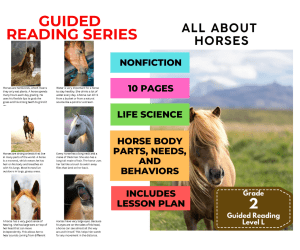
Guided Reading Level L - All About Horses (with Lesson Plan)
ELA, Resources for Teachers, Reading Comprehension, Reading, Science, Language Development, Life Sciences, Animals, Pre-Reading, Vocabulary, Grade 2, 3, 4, Worksheets & Printables, Worksheets, Teacher Tools, Centers, Activities, Literacy Readers, Quizzes, Quizzes and Tests, Assessments, Lesson Plans
This Guided Reading Book - All About Horses (Level L) with lesson plan includes: Guided Reading Color Label (front cover x1) This is a quick way to match the book’s demands to what students can generally handle.. The overall goal is to use the level/color to pick books for several smaller groups. To qualify for a certain level, a student is expected to read a book from that level with about 90–94% accuracy. If a student is consistently accurate and understands, move up a level. If the student is struggling at that level, drop down and add more support. Each student will improve at completely different rates, but it is generally one of the best ways to check progress across the class. DOWNLOAD THE CATALOG TO VIEW ALL GUIDED READING BOOKS AVAILABLE (SORTED LEVELS A-Z) Pre-Reading Question (x1) Teacher asks the prompt aloud, can be while showing the cover or first page. Students share what they already know, or make educated guesses from the cover. Prompt them to use the target vocabulary. Write some of their responses on the board to look back at during the reading. Vocabulary Words (x5) Introduce the five words, best doing it one at a time. Start by saying it, while students repeat and then see if anyone knows what it means before reading further. Read through the meaning and try to briefly connect each word to a picture or gesture so it’s meaningful. Ask students to flip through the book pages and point to where they see each of the vocabulary words. While reading the book pause upon coming across one of the vocab words or read the sentence twice to make sure students understand the word has appeared. Optional: Ask students to raise hands whenever they see/hear one of the new words. Guided Reading Pages (x10) Check the book snapshot (below) for: primary topic - do you need to prep extra reading or intro materials on this? what is taught best - decide on 1-2 bullets to focus on, use the prompt or words provided here for best results. learning goals - what you are checking for students to be able to do after the session, elicit answers using prompts or words provided. key vocabulary (see section above). questions overview - so you know what is coming up and if you need to prep extra materials to assist understanding. Run the lesson You may have already looked at a few of the pages together, but you can show them some of the pictures again first to set meaning. Depending on how much time you have and how familiar your students are with guided reading class, you may want to read the book aloud first with the group first. Students whisper or partner read, while you listen in. If time, do it as a group, one student reading a page each. Use the guided page’s prompts to coach: “Check the picture / does it make sense?” “Point under the words / try the first sound” “Reread the sentence smoothly”. Try to focus more on one student per session (rotating every time), so you can work out if they are ready to move up or need to move down a level. Comprehension Questions (back cover x3) This is your way to check that students didn’t just say the words, but actually understood the text. First, let students answer by pointing to the page/picture and saying a short sentence. After any answer, follow with: “Show me where you found that in the text.” In bigger groups, have partners answer first (10–20 seconds), then call on 2–3 students to share. Differentiation tips: Emerging speakers/struggling readers: oral + pointing On-level: oral in a full sentence Higher: one written sentence or draw + label Book Snapshot Title: All About Horses Genre: Nonfiction (informational) Subject: Life Science / Reading (Informational Text) Primary Topic: Horse body parts, needs, and behaviors Estimated Guided Reading Level (A–Z): L What This Book Teaches Best Key animal facts about horses (they are strong animals, mammals, and live outdoors in grassy areas). How horse body parts help them (mane and tail; tail swishes away flies). What horses need to stay healthy (they eat plants and drink a lot of water). How horses move (trot with “diagonal pairs,” and gallop as the fastest way to move with hooves off the ground). Special horse behaviors and life stages (sleeping while standing; a baby horse is a foal). Learning Goals Students will identify key facts about horses (habitat, body traits, and needs) from the text. Students will explain how a horse uses its tail based on details in the book. Students will describe what horses eat and how they graze using evidence from the text. Students will compare two horse movements (trot and gallop) using information from the book. Students will explain how a horse can sleep while standing without falling over. Students will describe what a foal is and what it can do soon after being born. Key Vocabulary From the Text mammal — an animal that breathes air with lungs. herbivores — animals that eat only plants. grazing — eating grass little by little over time. diagonal — slanted, from one corner to the opposite corner. hooves — the hard feet of a horse. Discussion Prompts Pre-reading question: What do you think a horse needs to stay healthy outdoors? Comprehension questions: What does the text say a horse uses its tail for? How does the text describe a trot? What is a foal, and what can it do within an hour of being born? Printing Tips 1. Best Printing Method (Recommended) “Booklet” Printing (Best if Available) If your printer or PDF viewer supports Booklet Printing , use this. Settings to use: Print mode: Booklet Paper size: Letter or A4 (either works) Orientation: Landscape Print on both sides: Yes Flip on: Short edge Scaling: Fit to printable area Booklet subset: First test: Front sides only Then: Back sides only This will automatically: Pair pages correctly Put the cover on the outside Align everything for folding After printing, fold in half and staple along the spine . 2. If “Booklet” Printing Is NOT Available You can still print this correctly with manual duplex printing . Step-by-step: Open the PDF. Choose Print . Set: Orientation: Landscape Pages per sheet: 1 Print on both sides: Yes Flip on: Short edge Print all pages . Because each PDF page already contains two facing book pages, the result will still fold cleanly into a book. Thousands of Cored Education products are included with your TeachSimple membership. Download links and encyclopedia index available here.
Author Cored Education
Rating
Tags Reading Comprehension, Reading Passages, Reading, Guided Reading, Guided Reading Lesson Plan, Guided Reading Activity, Pre-reading, Science Lesson Plans, Life Science, Animals