



3,931 products added recently
Page 7 - ELA Lesson Plans
Elevate your ELA instruction with lesson plans that cover reading, writing, speaking, and listening skills. These resources provide diverse texts and engaging activities to improve literacy. Integrate these plans to enrich your language arts curriculum and support student achievement.

 Show filters

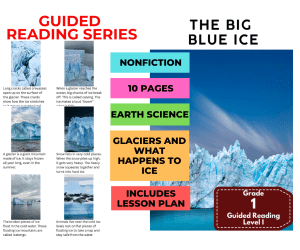
Guided Reading Level I - The Big Blue Ice (with Lesson Plan)
ELA, Resources for Teachers, Reading Comprehension, Reading, Science, Language Development, Earth and Environmental Sciences, Geography, Social Studies, Life Sciences, Grade 1, 2, 3, Worksheets & Printables, Worksheets, Teacher Tools, Centers, Activities, Literacy Readers, Quizzes, Quizzes and Tests, Assessments, Lesson Plans
This Guided Reading Book - The Big Blue Ice (Level I) with lesson plan includes: Guided Reading Color Label (front cover x1) This is a quick way to match the book’s demands to what students can generally handle.. The overall goal is to use the level/color to pick books for several smaller groups. To qualify for a certain level, a student is expected to read a book from that level with about 90–94% accuracy. If a student is consistently accurate and understands, move up a level. If the student is struggling at that level, drop down and add more support. Each student will improve at completely different rates, but it is generally one of the best ways to check progress across the class. DOWNLOAD THE CATALOG TO VIEW ALL GUIDED READING BOOKS AVAILABLE (SORTED LEVELS A-Z) Pre-Reading Question (x1) Teacher asks the prompt aloud, can be while showing the cover or first page. Students share what they already know, or make educated guesses from the cover. Prompt them to use the target vocabulary. Write some of their responses on the board to look back at during the reading. Vocabulary Words (x5) Introduce the five words, best doing it one at a time. Start by saying it, while students repeat and then see if anyone knows what it means before reading further. Read through the meaning and try to briefly connect each word to a picture or gesture so it’s meaningful. Ask students to flip through the book pages and point to where they see each of the vocabulary words. While reading the book pause upon coming across one of the vocab words or read the sentence twice to make sure students understand the word has appeared. Optional: Ask students to raise hands whenever they see/hear one of the new words. Guided Reading Pages (x10) Check the book snapshot (below) for: primary topic - do you need to prep extra reading or intro materials on this? what is taught best - decide on 1-2 bullets to focus on, use the prompt or words provided here for best results. learning goals - what you are checking for students to be able to do after the session, elicit answers using prompts or words provided. key vocabulary (see section above). questions overview - so you know what is coming up and if you need to prep extra materials to assist understanding. Run the lesson You may have already looked at a few of the pages together, but you can show them some of the pictures again first to set meaning. Depending on how much time you have and how familiar your students are with guided reading class, you may want to read the book aloud first with the group first. Students whisper or partner read, while you listen in. If time, do it as a group, one student reading a page each. Use the guided page’s prompts to coach: “Check the picture / does it make sense?” “Point under the words / try the first sound” “Reread the sentence smoothly”. Try to focus more on one student per session (rotating every time), so you can work out if they are ready to move up or need to move down a level. Comprehension Questions (back cover x3) This is your way to check that students didn’t just say the words, but actually understood the text. First, let students answer by pointing to the page/picture and saying a short sentence. After any answer, follow with: “Show me where you found that in the text.” In bigger groups, have partners answer first (10–20 seconds), then call on 2–3 students to share. Differentiation tips: Emerging speakers/struggling readers: oral + pointing On-level: oral in a full sentence Higher: one written sentence or draw + label Book Snapshot Title: The Big Blue Ice Genre: Nonfiction (informational) Subject: Earth Science + Reading (Informational Text) Primary Topic: Glaciers and what happens to ice Estimated Guided Reading Level (A–Z): I What This Book Teaches Best Defines what a glacier is and explains that it stays frozen all year long. Explains how snow can squeeze together and turn into hard ice in very cold places. Describes how glaciers move slowly like “rivers of ice” down mountain slopes. Teaches glacier features and changes, including crevasses, calving, and icebergs. Connects glaciers to living things and Earth systems (animals resting on ice, fresh water, keeping the world cool). Learning Goals Describe what a glacier is using details from the text. Explain how piled-up snow turns into hard ice in very cold places. Tell how glaciers move and where they move (down mountain slopes). Identify crevasses and describe what the text says they show. Explain what calving is and what happens when a glacier reaches the ocean. Describe two ways glaciers are important on Earth (cooling the world, holding fresh water). Key Vocabulary From the Text glacier — a huge mountain of ice. frozen — turned to ice from very cold weather. crevasses — long cracks on the glacier’s surface. calving — when big ice chunks break off into the ocean. icebergs — floating mountains of ice in cold water. Discussion Prompts Pre-reading question: What do you think a glacier is, and where might you find one? Comprehension questions: How does snow turn into hard ice, according to the book? Comprehension questions: Why do some glaciers look bright blue in the text? Comprehension questions: Where do seals rest to take a nap and stay safe from the water? Printing Tips 1. Best Printing Method (Recommended) “Booklet” Printing (Best if Available) If your printer or PDF viewer supports Booklet Printing , use this. Settings to use: Print mode: Booklet Paper size: Letter or A4 (either works) Orientation: Landscape Print on both sides: Yes Flip on: Short edge Scaling: Fit to printable area Booklet subset: First test: Front sides only Then: Back sides only This will automatically: Pair pages correctly Put the cover on the outside Align everything for folding After printing, fold in half and staple along the spine . 2. If “Booklet” Printing Is NOT Available You can still print this correctly with manual duplex printing . Step-by-step: Open the PDF. Choose Print . Set: Orientation: Landscape Pages per sheet: 1 Print on both sides: Yes Flip on: Short edge Print all pages . Because each PDF page already contains two facing book pages, the result will still fold cleanly into a book. Thousands of Cored Education products are included with your TeachSimple membership. Download links and encyclopedia index available here.
Author Cored Education
Rating
Tags Reading Comprehension, Reading Passages, Reading, Guided Reading, Guided Reading Lesson Plan, Guided Reading Activity, Pre-reading, Science Lesson Plans, Earth Science, Geography

Brush Teeth | English Conversations Video Lesson
ELA, Language Development, ESL, Not Grade Specific, Lesson Plans, Teacher Tools
Brush Teeth | English Conversations Video Lesson The Brush Teeth | English Conversations Video Lesson is a teaching resource created with the needs of educators at heart. The lesson focuses on the fundamental daily routine of brushing teeth, representing it in understandable and practical English conversations. What makes this resource special is its animated nature which effectively captures and maintains the attention of learners. This 5-minute video lesson, presented as an MP4 file, provides learners with deep engagement to a vital area of language arts – conversation skills. Thanks to its interactive style, it promotes participation and encourages active learning among students, improving their understanding of the topic significantly. The content in this teaching aid isn't grade-specific making it incredibly adaptable for any educator planning to incorporate it into their instruction approach. Ideal for both whole group instruction or small group work; introduce new concepts or use as an important tool during review sessions. In addition to its primary focus on language arts and ESL studies due to its conversational nature, this lesson doubles up as a cross-disciplinary tool. It connects with Health Education promoting healthy habits like brushing teeth daily. Few takeaways: A multifaceted educational resource not limited only to conventional language-learners. An effective balance struck between play (thanks to its animation) and study per current educational standards maintaining fun while being educative enough!
Author Educational Voice
Tags English Conversations, Video Lesson, Brushing Teeth, Interactive Learning, Healthy Habits
Story Squares for Grades 4-6: Multiple Learning Styles for Reading Comprehension
ELA, Reading, Reading Comprehension, Grade 4, 5, 6, Teacher Tools, Lesson Plans
Story Squares for Grades 4-6: Multiple Learning Styles for Reading Comprehension A sensational teaching resource that aims to grow passionate readers while simultaneously building an array of skills. This unique resource not only focuses on Language Arts and Writing, but also incorporates additional stimulus for Higher-Order Thinking and the Creative Arts. Key Features: Versatility: Designed aptly for whole group instruction, small group activities, paired tasks or individual assignments. Literary Focus: Covers three timeless children's classics viz., "Bud. Not Buddy," "The Borrowers," and "Esperanza Rising." Detailed story annotations alongside 20 diverse activities accompanied with each book ensure comprehensive coverage. Educator Support Tools Included: Educator hints providing valuable guidance through lessons. An easy-to-use grading rubric that facilitates fair evaluation/ assessment procedures along with a glossary outlining key terms used in the content. . The package is furnished as a simple to use, ready-to-print PFD format spanning 16 pages, . Aimed at enhancing comprehension levels amongst Grade 4 - Grade 6 students, this tool brings mundane lesson plans to life ensuring pedagogical objectives are effectively met. In essence,, Story Squares provides teachers with more than just a resource - it’s an innovative addition to their instructional arsenal, embracing various learning methodologies leading towards holistic educational growth across multiple domains within students.
Author Classroom Complete Press
Tags Comprehension, Language Arts, Story Summary, Character Traits, Paragraph Writing

2024 Summer Olympics (Paris, France)
ELA, Reading, Reading Comprehension, Math, Graphing, Grade 3, 4, 5, 6, Teacher Tools, Lesson Plans
Learn about the 2024 Summer Olympic Games in Paris, France! Cross curricular plans bring together reading, math, social studies, technology production, and product presentation (speaking and listening) all centered around the 2024 Summer Olympic Games in Paris! Reading activities focus on: compare/contrast - modern Olympics with the Ancient Olympics research focus on various parts of the Olympics themselves research focus on the Olympic history, modern athletes, and modern events Social studies activities focus on: location and geography of Paris history of the Olympic Games Math activities focus on: collecting data graphing and presenting data statistics Rubrics are left open for teachers to adjust for optimum use in their classroom. Activities and assignments are written with a technology focus, but can be altered to a hands on format (and vice versa). Possibilities are included for "bringing the Olympic Games into your classroom." Reading Challenges Math Challenges Behavior Challenges Work Habit Challenges The goal is to create team building opportunities that can bring your classroom community together at the beginning of the school year, and prepare for a great year ahead. Can easily be uploaded into an LMS for digital delivery to students or submission for them to return to educator. Grades: 3rd - 6th Tags: reading, writing, social studies, math, technology, gifted and talented/high ability, research, thematic units, team building Format: PDF Pages: 25
Author Kel's Klass
Tags Gifted And Talented, High Ability , Cross Curricular, Reading, Writing, Math, Social Studies, Digital Options, Research, Thematic Units

A Secret for Two: Full Lesson Plan w/ PowerPoints & Graphic Organizers
ELA, Reading, Grade 8, 9, 10, Lesson Plans, Teacher Tools
A Secret for Two: Full Lesson Plan w/ PowerPoints & Graphic Organizers This is an extensive teaching resource offering educators a bundle of tools to facilitate engaging reading lessons. It caters to grades 8, 9, and 10 Language Arts Lessons focusing on the Reading subject area. About The Text This resource revolves around A Secret for Two by Quentin Reynolds. It's a charming story celebrated in educational settings. Inclusions: Detailed Full Lesson Plan: Guides teachers step-by-step in facilitating the lesson. Worksheets: To reinforce understanding; complete with answer keys for checking work or guiding discussions. Variety of Graphic Organizers: Tailored to accommodate diverse learning styles these tackle aspects like author’s purpose chart, characterization chart, figurative language charts amongst others. 'Thank You' Bonus Stuff: The lesson plan tops off with ready-to-print PDFs and Word documents aiding quick preparation whilst ensuring insightful sessions reflecting versatility good pedagogical practice requires! Data Visualization Tools : The inclusion of numerous graphic organizers assists visualization of information which betters grasping complex concepts exampleizes symbolism or plot structure. Educational PowerPoint Presentations (8): : Covers various literary elements such as imagery voice & persona; narrator & voice; plot structure etc., facilitating comprehension in more enjoyable ways. The adaptability that this lesson plan provides allows educators autonomy over delivery styling making it a suitable addition to any educator's repertoire - regardless their teaching environment – traditional classrooms or home schooling setups alike.
Author Quality Teaching Products
Tags Lesson Plan, Reading Comprehension, Teaching Resource, Graphic Organizers, PowerPoints

Romeo and Juliet Manual: A Facing-Pages Translation into Contemporary English
ELA, Literature, Grade 7, 8, 9, 10, 11, 12, Teacher Tools, Lesson Plans
The Romeo and Juliet Manual: A Facing-Pages Translation into Contemporary English A comprehensive tool that aids in teaching Shakespeare's timeless tragedy, this manual services students from grades 7 through 12. Features: Detailed translation: This is not just a retelling of the story; it also provides intricacies and nuances that can aid in understanding Shakespeare's original work. Critical Background Information: The manual includes details about Shakespeare's life, his sources of inspiration, and how his theater workings operated. Educator-friendly: It covers every part of Romeo & Juliet's storyline. Detailed summaries for each scene along with corresponding questions and probable answers are provided to help educators streamline the teaching process. Pronunciation Guide: A comprehensive guide to pronouncing names within the context of Shakespearean language supports teachers during read-alouds or group discussions. Glossary & Timeline : Alphabetical terms used in Romeo & Juliet are provided along with a unique chronological timeline to support vocabulary acquisition during lessons. This also offers insight into where various words fall historically for further depth while reading . Annotated Bibliography :This bonus feature provides resources accessible to students enhancing their literature studies beyond classroom hours. It includes supplemental research materials detailed enough for homework assignments or full-scale research projects. Availability The Romeo & Juliet Manual is available as a ready-to-print PDF file comprising 48 pages brimming with value-driven material designed specifically for language arts curriculum across multiple grade levels. In Summary :The strength of this resource lies in its ability to bridge old-world artistry (Shakespearean text) with modern-day readership. It is an indispensable tool that enhances your literature teaching arsenal, adding depth and appreciation for Romeo & Juliet — one of the greatest love stories ever told.
Author Classroom Complete Press
Tags Language Arts, Literature, English, Romeo, Juliet

Reading Well - Grades 1-2
ELA, Reading, Grade 1, 2, Teacher Tools, Lesson Plans
Reading Well - Grades 1-2 The Reading Well - Grades 1-2 is cautiously fabricated as an enhancement tool for a home or classroom reading curriculum. Designed primarily for grade one and two pupils, this learning tool comprises of activities meant to stimulate interest and enhance reading comprehension abilities. Equipped with a wide range of materials that adhere to various styles of writing such as realistic fiction, biographies, poetry, fantasy, informational pieces, myths and legends among others – this resource plays a significant role in covering all facets of written communication. Furthermore, the inclusion of play scripts coerces learners to apply their reading capabilities to multiple formats. Versatile Approach Uniquely flexible in its methodology towards developing comprehension skills; the series is filled with tasks allowing learners numerous opportunities for practice while simultaneously fostering an understanding towards various aspects of reading. A Reading Comprehension Chart is incorporated into page one enabling easy navigation through different comprehension skills imparted across all grades. Rubrics And Performance Tracking An integral aspect about this product lies not only in its pedagogical value but also its potential for progression monitoring after assessing student's development using provided rubrics. Over time this has proven beneficial assisting you map each student’s journey while acquiring these capabilities. Cumulative Knowledge Building This series stands out due to the fact that each book builds progressively on previously acquired knowledge ensuring constant advancement and reinforcement throughout grades one and two concluding every unit with adequate assimilation. Adaptability: The series gracefully adapts whether it's employed on an individual learner or implemented across entire classrooms due its versatile content accommodating distinct learning preferences & abilities effectively fostering inclusion amongst all students irrespective their proficiency levels. Practicability: Easy accessibility given its PDF format accompanied by comprehensible lesson plans ready for immediate usage. The Role of Language Arts The pivotal role language arts play in shaping communicative competence cannot be stressed enough thus Reading Well champions this cause advancing even further by embedding a strong focus on reading skills, emphatically playing its part in creating a generation of skilled readers.
Author Classroom Complete Press
Tags PDF
The Secret Life of Walter Mitty: Full Lesson Plan w/ PowerPoints & Graphic Organizers
ELA, Literature, Grade 9, 10, 11, 12, Lesson Plans, Teacher Tools
This resource will give you everything you need to complete a full, comprehensive reading lesson plan for The Secret Life of Walter Mitty text by James Thurber. Files are offered as PDFs and Word documents. Included: -The Secret Life of Walter Mitty Lesson Plan -The Secret Life of Walter Mitty Worksheet -The Secret Life of Walter Mitty Answer Key Graphic Organizers: Author’s Purpose Characterization Chart Figurative Language Chart Historical Analysis Chart Imagery Chart Peer Evaluation Sheet Plot Diagram Read for Detail Setting Style Chart Symbol Chart Symbolism Chart Theme Diagram Tone and Mood Diagram Universal Plot Diagram Venn Diagram PowerPoints: Characterization Imagery, Voice, and Persona Irony and Ambiguity Narrator and Voice Plot Structure Symbolism and Allegory Theme - How to Interpret Theme Thank You Bonus Stuff!
Author Quality Teaching Products
Rating 1
Tags Imagery, Narrator Voice, Reading Lesson Plan, Short Story, Walter Mitty Text, The Secret Life Of Walter Mitty Text, The Secret Life Of Walter Mitty Short Story Worksheet

ABC Seek and Spell
ELA, Language Development, Pre-Reading, Preschool, Grade 1, 2, 3, Teacher Tools, Lesson Plans
ABC Seek and Spell: A Comprehensive Teaching Resource ABC Seek and Spell is a practical and engaging teaching resource that enhances language art skills for students from kindergarten to grade 3 with a focus on pre-reading. Specially developed for educators, including public school teachers and homeschoolers, this resource adds an element of fun to education while noticeably improving spelling abilities. About the Product This comprehensive package consists of 26 lessons, each dedicated to one letter of the alphabet. Every lesson includes seek-and-find puzzles coupled with word spelling activities revolving around a specific letter. The challenge lies in identifying words that begin with the respective lesson's letter hidden within illustrative pages. Educational Benefits This meticulously designed product bolsters pre-reading skills through repeated exposure to various words starting with each alphabet letter. An excellent fit for educators aiming at enhancing language arts abilities, it can be aptly implemented during classroom instruction or assigned as homework. Versatility & Accessibility Varying ways to use this package enhance its versatility; it perfectly complements whole-group instruction fostering peer interactions while boosting vocabulary skills. On the other hand, using ABC Seek and Spell in smaller groups can facilitate in-depth discussions or offer individual attention towards each student's spelling progression if used as homework assignments. The product file comes in an accessible PDF format enabling easy access across various devices which aids flexibility regarding planning classes or assigning tasks based on it regardless of being online or offline.© In summary, ABC Seek and Spell ¹ is more than just a pedagogical tool; it’s an enjoyable journey through the letters designed with a conscious focus on maintaining young learners' interest while ensuring productive academic progression.
Author Classroom Complete Press
Tags PDF
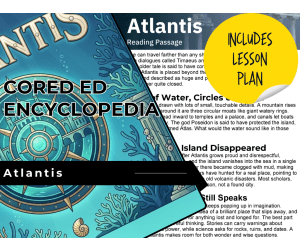
Atlantis Reading Comprehension Passage - Cored Ed Encyclopedia
ELA, Language Development, Reading Comprehension, Reading, Social Studies, Writing, Vocabulary, Geography, History, History: Ancient, Grade 2, 3, 4, 5, Worksheets & Printables, Worksheets, Teacher Tools, Centers, Activities, Writing Prompts, Assessments, Quizzes and Tests, Quizzes, Lesson Plans
This Atlantis reading comprehension with lesson plan includes: Visualization (on the front cover) Start your lesson by taking a minute to think and share something about the topic. Read the script aloud (slowly), perhaps prepare some music or sound effects. Student close their eyes and let their imaginations wander. Students open their eyes, read the question aloud and give them a few minutes to complete. Ask a few students to share or keep answers until the end to compare with what they learn in the passage. Quick pause—thousands of Cored Education products are included with your TeachSimple membership. Download links and encyclopedia index available here. Pre-Reading Trivia Students will write down one thing they already know about the subject and then read five more facts and discuss. These facts are fun, and the students will enjoy learning about the subject before reading more. Give 1 minute for students to write what they already know (no pressure—best guess is fine). Read the five facts together. After each fact, do ask a student for their opinion, was it surprising? Set a purpose by asking students to highlight/underline one fact they want to learn more about during the reading. Reading Passage The text is a high-interest reading passage with set paragraphs, roughly three to four paragraphs long. It contains a variety of themes about the topic, anywhere from history to technology. The passage is between 250 and 350 words in length. First, ask students to look at the headings and see what they’ll learn about today. What do they know about the topic/heading? First read options: Teacher read-aloud (best for support). Partner reading (paragraph by paragraph). While reading, students underline important details, and vocabulary words they think may come up in the questions section. Mixed Questions The first question page contains four multiple-choice questions, each with a choice of four answers, and three written response questions that require a sentence or two from the student. Students complete the mcqs first independently, then review quickly as a class. For the 3 written responses, try to get students giving the answer with some form of evidence: “I think ___ because the text says ___.” If students get stuck, send them back to check the passage. Vocabulary Questions Practice seven key words from the text in this section across two activities. First section is scrambled words where students will unscramble three words given a clue for each. The second section is a word to meaning matching activity. Before starting, have some students read out words they underlined in the passage. Ask students to say the word and read aloud the sentence(s) around each word. Ask students to do scrambled words and the matching exercise in pairs then go through answers as a class. For the scrambled spelling task, get four pairs to come up to the board and write the words for extra practice with the other student reading out the clue. For the matching task, prompt students to give full sentences: “I matched ___ with ___ because ___.” Creative Writing In this question, the student will be required to write a five to eight sentence paragraph on a question related to the topic. Before starting, ask students write down 3 key ideas they are going to include in their piece. Ask students for ideas to share around the class to help those struggling. Pro writing expectations: 5–8 sentences At least 2 facts or details from the passage At least 2 vocabulary words from the previous page Students read their paragraphs while classmates listen for facts and vocabulary words. Extension Activities This page is optional for fast finishers or to take home. There are several activities, each one requiring a different skill. Do some, do none, do all, completely optional - but you will feel reassured knowing every possibility is planned for. Includes summary writting question and additional facts. Answer Key There are answers for the multiple-choice questions, written response questions have sample answers, vocabulary answers and if there is a summary question then a sample summary will be provided as well. Lesson Plan Included Customized lesson plan for this lesson is included. Lesson Snapshot Title: Atlantis Genre: Nonfiction (informational passage about a myth/story’s origins and meaning) Subject: Reading (Informational Text) / Social Studies (Myths & ancient world references) Primary Topic: Atlantis in writing, details, and “lesson” meaning Estimated Guided Reading Level (A–Z): T What This Lesson Teaches Best Identifying where an idea “first appears in writings” and tracking its source (the passage names Plato and two dialogues). Visualizing and describing setting details from informational text (rings of water, bridges, gates, canals, temples, palace). Cause/effect in a legend: how pride and disrespect lead to destruction (earthquakes, floods, island vanishes; travel becomes hard). Distinguishing story-meaning vs scientific proof: stories can warn; science looks for “rocks, ruins, and dates.” Understanding how a name becomes a symbol for “anything lost and longed for” and why mysteries keep people thinking. Learning Goals Students will identify where the Atlantis story first appears and name the two dialogues the passage lists. Students will describe Atlantis’s “circles of water” using details from the passage (moats, bridges, gates, canals). Students will explain what events cause the island to vanish and how the water changes afterward. Students will summarize why people keep hunting for a real location and what “most scholars” think instead. Students will compare what the passage says stories do versus what science asks for. Students will explain how the passage describes Atlantis as a “shortcut” for things that are lost. Key Vocabulary From the Text dialogues — written conversations between speakers. moats — water ditches around a place. canals — water paths that boats can travel on. clogged — blocked so movement becomes difficult. scholars — people who study a topic deeply. FULL CATALOG OF DOWNLOAD LINKS AND ENCYCLOPEDIA INDEX HERE
Author Cored Education
Rating
Tags Vocabulary, Reading Comprehension, Reading Passages, Lesson Plans, Ela Lesson Plans, Reading Comprehension Lesson Plans, Pre-reading, History, History Lesson Plans, Geography

Civics and Government 4th Grade (15 Day) Unit
Social Studies, ELA, Government, Reading, Writing, Common Core, Grade 3, Lesson Plans, Teacher Tools
Are you introducing 4th graders to the concept of government and its role in our states? Through engaging activities, students will explore the differences among national, state, and local and state governments, understand the importance of laws and justice, and learn how governments function to serve the people. This 15 day unit includes day by day planning with suggested activities for differentiation. Typically used in a high ability classroom, it is appropriate for all students. Teaching methods used: Simulation, foldables, Nonfiction research, graphic organizers, group work, individual work, (suggested) guest speakers, and traditional assessment Unit includes: Alignment page showing 4th grade social studies state standards, Common Core Reading and Writing standards, and National Council of Social Studies Themes 15 day lesson plan broken into standard, reading/information source, and activities Vocabulary journal + answer key Foldable activity for three branches of government Individual Rights in Action choice project Mock election simulation Sequencing activity for election process 6 nonfiction reading passages (+ answer keys) How a Bill Becomes a Law Simulation (all three branches of government represented, based off of picture book Click, Clack, Moo by Doreen Cronin) Rubrics for all projects and answer keys where applicable Traditional vocabulary quiz List of possible guest speakers Government focus: Since fourth grade is more state based, the content and projects focus mainly on state government. The branches of government and responsibilities of important people within the government include national organizations and expectations (i.e.: President, Congress, and Supreme Court). If it is an election year, the election activity can easily be adjusted to "Elect a President" instead of making a decision about what to vote about within their school. I also recommend extending this simulation, instead of passing a bill into a law. You will want to look up a kid/student friendly version of your state's constitution to help you in some activities, or transition to U.S. Constitution Bill of Rights. Tags: government, elections, legislative, executive, judicial, state and local government, citizen, how a bill becomes a law, national government, governor File Type: PDF (not editable) Number of Pages: 65 (including curriculum plan and answer keys) Grade: 4 - depending on state standards, may overlap with second or fourth grade government content
Author Kel's Klass
Tags Government, Elections, Legislative, Executive, Judicial, State And Local Government, Citizen, How A Bill Becomes A Law, National Government, Governor
Reading Comprehension: Making Inferences
ELA, Reading, Reading Comprehension, Common Core, Grade 5, 6, 7, 8, Teacher Tools, Lesson Plans
Reading Comprehension: Making Inferences Teaching Resource For Grades 5-8 This invaluable teaching resource is designed for educators working with students in grades 5 through 8. Falling under the Language Arts discipline, and the subcategory of Comprehension,, it contains instructional material presented in an easy-to-follow Lesson Plan format. Aim: The principal aim is to bolster a student's ability to read fluently and comprehend intricate text across various subjects within and outside traditional classroom contexts. Proficiency in reading comprehension stands as a core life skill necessary for academic excellence. Skill Acquisition: Utilizing context clues. Determining the main idea from a text. Inferencing or understanding implicit meanings from given data. Each concept introduced lays solid foundational elements that enhances reading acquisition. These concepts are reinforced throughout for easier assimilation by pupils. Pedagogical standards: This product adheres to high pedagogical standards set by Bloom’s Taxonomy of Learning framework. It precisely aligns with Common Core State Standards, making it suitable both for public school teachers seeking consistency with established curriculum guidelines and homeschoolers seeking comprehensive scholastic resources. In Summary This single-file PDF tool is ready-for-use; whether you intend to use it during whole group instruction, small learning circles, or even as independently assigned student homework – its utility will shine through. Get your own copy now!
Author Classroom Complete Press
Tags PDF
Guided Reading Activities and Lesson Plans Nonfiction Set 1 Technology
ELA, Reading, Reading Comprehension, Common Core, Resources for Teachers, ESL, Language Development, Pre-Reading, Vocabulary, Grade 2, 3, Worksheets & Printables, Worksheets, Lesson Plans, Teacher Tools, Activities
Guided Reading Activities with Lesson Plans Nonfiction Set 1 Note: This download DOES NOT include the passages themselves. If you have not already done so, download in a format of your choice in the "reading links" section below. Overview The perfect companion materials for Cored Education reading comprehension downloads. This collection of guided reading lessons includes a wide array of engaging themes that aim to foster comprehension, vocabulary development, and creative thinking. Each lesson is crafted to be interactive and immersive, making learning enjoyable while promoting essential literacy skills. The lessons are designed for students to actively engage with both the material and the world around them, creating connections to their personal experiences while developing key skills. Includes Guided Reading Materials For: 1.Talking in Code 2.Power From the Sun 3.Roller Coasters 4.The History of Cars 5.The History of Ferries 6.The History of Helicopters Reading Links: This is the guided reading materials version and DOES NOT include the passages themselves. The passages related to this download are available here in GOOGLE Docs, GOOGLE Forms, GOOGLE Slides. PDF, PPT, WORD. Google Docs Google Forms Google Slides PDF PPT Word Details Pre-reading Discussions Each lesson begins with pre-reading questions that help activate prior knowledge and engage students in the theme of the lesson. This allows students to make personal connections with the content before diving into the reading material. Vocabulary Development Every lesson includes vocabulary exploration that introduces key terms students will encounter in the reading. These words are essential for understanding the passage, and activities encourage students to apply the new vocabulary in context. Comprehension Check After the reading, the lessons provide comprehension questions (typically multiple-choice) that assess students’ understanding of the story. These questions help students reflect on key events, characters, and concepts within the text, reinforcing their comprehension. Creative Writing Prompts To foster creativity, the lessons include writing activities that challenge students to apply what they've learned in imaginative ways. These prompts allow students to practice creative expression while reinforcing the lesson’s theme. Discussion Topics Each lesson ends with wrap-up discussion questions that encourage students to think critically and engage in group conversations. These discussions can enhance social learning and deepen understanding by connecting the lesson's content to broader real-world applications. Theme-Based Learning The themes (e.g., winter, nature walks, photography, flowers) are universally appealing and offer opportunities for cross-curricular connections with science, art, and environmental studies. This makes the lessons versatile for a wide range of teaching contexts. Student-Centered Approach The activities are designed to be interactive and student-driven, allowing them to explore the content through discussions, hands-on vocabulary practice, and personal reflections. This promotes active learning and keeps students engaged. FULL CATALOG OF DOWNLOAD LINKS HERE Grade 2/3 Links Fiction Set 1 - Nature Google Docs Google Forms Google Slides PDF PPT Word Guided Reading Materials Fiction Set 2 - Animals Google Docs Google Forms Google Slides PDF PPT Word Guided Reading Materials Fiction Set 3 - Food Google Docs Google Forms Google Slides PDF PPT Word Guided Reading Materials Fiction Set 4 - School Google Docs Google Forms Google Slides PDF PPT Word Guided Reading Materials Fiction Set 5 - Friends Google Docs Google Forms Google Slides PDF PPT Word Guided Reading Materials Fiction Set 6 - Family Google Docs Google Forms Google Slides PDF PPT Word Guided Reading Materials Fiction Set 7 - Sports Google Docs Google Forms Google Slides PDF PPT Word Guided Reading Materials Nonfiction Set 1 - Technology Google Docs Google Forms Google Slides PDF PPT Word Guided Reading Materials Nonfiction Set 2 - Nutrition Google Docs Google Forms Google Slides PDF PPT Word Guided Reading Materials Nonfiction Set 3 - Animals Google Docs Google Forms Google Slides PDF PPT Word Guided Reading Materials Reading Passages Overview Each passage is especially written for Grade 2-3 students, including key vocabulary required for this age group. Topics are varied and are accompanied by colorful graphics. Topics are meant to educate, yet entertain the modern student. These passages are perfect for the modern classroom. Whereas textbooks can become outdated in no time, any changes to technology or the world will result in updates to this product. Mixed Questions The mixed questions section of each lesson includes a variation of fivecomprehension, vocabulary and math questions. In addition, key reading strategies are frequently covered including cause & effect, summarizing, compare & contrast and making conclusions. Three of the questions will be MCQs and two will require a written response of some kind. Full answers and example responses appear at the end of the lesson. Spelling & Vocab Each reading passage contains a variety of words and phrases designed for Grade 2-3 students. Spelling and vocab activities provide the opportunity to build fluency with these words. As it can become quite mundane doing the same activities over and over, each lesson in a set will contain a different spelling and vocab activity . Writing Prompts Writing prompts are designed to continue the theme or lessons learned in the story. Students are persuaded to write in a variety of ways and each prompt includes several cues to help. As with the spelling/vocab section, writing prompts will vary. This includes research pieces, reading responses, poetry and creative writing prompts. Full Answer Keys Full answer keys and sample responses are provided so no matter how busy you are, you know you're covered! Mixed question answers provide evidence from the text, math questions contain the relevant workings. Answers are designed for use by the teacher, but also suitable as a handout to the student. Additional File One lesson will have an additional file. This is something fun to extend the lesson with. For similar downloads and other frees, do check out Cored Group on TeachSimple.
Author Cored Education
Tags Elementary, Reading, Comprehension, Vocabulary, Answers, Ccss, Guided Reading, Guided Reading Activity, Guided Reading Lesson Plans, Guided Reading Lesson Plan

The Mayflower Compact: Reading and Analyzing a Primary Source Document
ELA, Social Studies, Reading, Reading Comprehension, Language Development, Pre-Reading, Strategies, History, History: USA, Government, Grade 6, 7, 8, 9, Teacher Tools, Lesson Plans
The Mayflower Compact- Analyzing a Primary Source Document, is a 27 page standards aligned resource that provides your 6th-9th grade students with strategies for reading, understanding, and analyzing a challenging primary source document. Our students need help developing the skills to read complex materials, especially primary source historical documents. Students need practice on how to read a primary source document, and reading it once isn’t enough. Your students will participate in a close read of the primary source document four times: 1. for context and origins (source the document); 2. for meaning; 3. for the purpose (argument or thesis) of the document; and 4. read like a historian. Students will collaborate in deep discussions developing their critical thinking skills as they delve into their reading and analysis of the Mayflower Compact. Through this experience, they will find that their discussions become richer as they work through the questions provided for each of the 4 Reads. The follow up to the lesson, the multiple choice and short answer questions will offer students an opportunity to showcase what they learned. This lesson can take 2 50-minute periods to complete. However, if we want our students to feel confident enough to tackle primary source documents written in the past in unfamiliar English, we need to give them the tools to do so. Even so, I have provided an annotated version of the Mayflower Compact to help your English Language Learners, students on IEPs and 504 Plans, and struggling readers. The Mayflower Compact- Analyzing a Primary Source Document includes the following: History and Reading for History Standards, Objectives, and Learning Targets Essential Question: How do founding documents like the Mayflower Compact shape the principles and practices of governance in societies? 3 Guiding Questions: "What were the key motivations behind the drafting and signing of the Mayflower Compact?"; "How does the language and structure of the Mayflower Compact reflect the religious and political beliefs of the Pilgrims?"; and "What principles of governance are outlined in the Mayflower Compact, and how do they compare with other early democratic documents or principles?" Lesson 1: What are Primary and Secondary Sources Lesson Plan 2: Four Reads: Reading and Analyzing a Primary Source Document The Mayflower Compact in its original wording and in Plain English 4 Reads Questions and Answer Key Multiple choice and Short Answer Assessment and Answer Key
Author Intentional Teaching and Learning
Tags Mayflower Compact, 13 British Colonies, English Colonies, Primary Source Document, Reading Comprehension, Thinking Like A Historian, Reading For Purpose And Argument, U.S. History, Critical Thinking, Assessment
Electronics Reading Comprehension Passage - Cored Ed Encyclopedia
ELA, Reading Comprehension, Reading, Science, Technology, Pre-Reading, Language Development, Physics, Writing, Vocabulary, Grade 2, 3, 4, 5, Worksheets & Printables, Worksheets, Teacher Tools, Centers, Activities, Writing Prompts, Assessments, Quizzes and Tests, Quizzes, Lesson Plans
This electronics reading comprehension with lesson plan includes: Visualization (on the front cover) Start your lesson by taking a minute to think and share something about the topic. Read the script aloud (slowly), perhaps prepare some music or sound effects. Student close their eyes and let their imaginations wander. Students open their eyes, read the question aloud and give them a few minutes to complete. Ask a few students to share or keep answers until the end to compare with what they learn in the passage. Quick pause—thousands of Cored Education products are included with your TeachSimple membership. Download links and encyclopedia index available here. Pre-Reading Trivia Students will write down one thing they already know about the subject and then read five more facts and discuss. These facts are fun, and the students will enjoy learning about the subject before reading more. Give 1 minute for students to write what they already know (no pressure—best guess is fine). Read the five facts together. After each fact, do ask a student for their opinion, was it surprising? Set a purpose by asking students to highlight/underline one fact they want to learn more about during the reading. Reading Passage The text is a high-interest reading passage with set paragraphs, roughly three to four paragraphs long. It contains a variety of themes about the topic, anywhere from history to technology. The passage is between 250 and 350 words in length. First, ask students to look at the headings and see what they’ll learn about today. What do they know about the topic/heading? First read options: Teacher read-aloud (best for support). Partner reading (paragraph by paragraph). While reading, students underline important details, and vocabulary words they think may come up in the questions section. Mixed Questions The first question page contains four multiple-choice questions, each with a choice of four answers, and three written response questions that require a sentence or two from the student. Students complete the mcqs first independently, then review quickly as a class. For the 3 written responses, try to get students giving the answer with some form of evidence: “I think ___ because the text says ___.” If students get stuck, send them back to check the passage. Vocabulary Questions Practice seven key words from the text in this section across two activities. First section is scrambled words where students will unscramble three words given a clue for each. The second section is a word to meaning matching activity. Before starting, have some students read out words they underlined in the passage. Ask students to say the word and read aloud the sentence(s) around each word. Ask students to do scrambled words and the matching exercise in pairs then go through answers as a class. For the scrambled spelling task, get four pairs to come up to the board and write the words for extra practice with the other student reading out the clue. For the matching task, prompt students to give full sentences: “I matched ___ with ___ because ___.” Creative Writing In this question, the student will be required to write a five to eight sentence paragraph on a question related to the topic. Before starting, ask students write down 3 key ideas they are going to include in their piece. Ask students for ideas to share around the class to help those struggling. Pro writing expectations: 5–8 sentences At least 2 facts or details from the passage At least 2 vocabulary words from the previous page Students read their paragraphs while classmates listen for facts and vocabulary words. Extension Activities This page is optional for fast finishers or to take home. There are several activities, each one requiring a different skill. Do some, do none, do all, completely optional - but you will feel reassured knowing every possibility is planned for. Includes summary writting question and additional facts. Answer Key There are answers for the multiple-choice questions, written response questions have sample answers, vocabulary answers and if there is a summary question then a sample summary will be provided as well. Lesson Plan Included Customized lesson plan for this lesson is included. Lesson Snapshot Title: Electronics Genre: Nonfiction (Informational Text) Subject: Science (Technology/Physical Science) / Reading (Informational Text) Primary Topic: How electronics evolved to carry signals Estimated Guided Reading Level (A–Z): Q What This Lesson Teaches Best Defines electrons as tiny charged particles and explains that electronics guides them to carry a message (a “signal”), not just power devices. Traces a clear timeline of inventions : early radio parts → vacuum tubes → transistor (1947) → integrated circuits on silicon chips. Explains how devices can amplify signals (making a small signal stronger), using the vacuum tube and transistor examples. Shows how engineering changes over time led to smaller, more powerful technology , with chips holding millions (even billions) of transistors. Learning Goals Students will describe how electrons moving through wires can carry a message. Students will explain how vacuum tubes helped make radio signals stronger. Students will identify how the transistor differed from vacuum tubes (material used, size, and power use). Students will describe what integrated circuits are and why they allow devices to stay small. Students will summarize how electronics changed from early inventions to modern chips. Key Vocabulary From the Text electrons — tiny charged particles that move through wires. signal — a message carried through a device. vacuum — space with most air removed. transistor — a smaller part that can switch and amplify signals. semiconductor — a material used instead of a vacuum for a transistor. FULL CATALOG OF DOWNLOAD LINKS AND ENCYCLOPEDIA INDEX HERE
Author Cored Education
Rating
Tags Vocabulary, Reading Comprehension, Reading Passages, Lesson Plans, Ela Lesson Plans, Reading Comprehension Lesson Plans, Pre-reading, Science Lesson Plans, Technology, Physics

The World of Dolphins: Guided Reading Level Q with Lesson Plan
ELA, Resources for Teachers, Reading Comprehension, Reading, Science, Language Development, Life Sciences, Earth and Environmental Sciences, Pre-Reading, Vocabulary, Grade 3, 4, 5, Worksheets & Printables, Worksheets, Teacher Tools, Centers, Activities, Literacy Readers, Quizzes, Quizzes and Tests, Assessments, Lesson Plans
This The World of Dolphins (level q) guided reading book with lesson plan includes: Guided Reading Color Label (front cover x1) This is a quick way to match the book’s demands to what students can generally handle.. The overall goal is to use the level/color to pick books for several smaller groups. To qualify for a certain level, a student is expected to read a book from that level with about 90–94% accuracy. If a student is consistently accurate and understands, move up a level. If the student is struggling at that level, drop down and add more support. Each student will improve at completely different rates, but it is generally one of the best ways to check progress across the class. DOWNLOAD THE CATALOG TO VIEW ALL GUIDED READING BOOKS AVAILABLE (SORTED LEVELS A-Z) Pre-Reading Question (x1) Teacher asks the prompt aloud, can be while showing the cover or first page. Students share what they already know, or make educated guesses from the cover. Prompt them to use the target vocabulary. Write some of their responses on the board to look back at during the reading. Vocabulary Words (x5) Introduce the five words, best doing it one at a time. Start by saying it, while students repeat and then see if anyone knows what it means before reading further. Read through the meaning and try to briefly connect each word to a picture or gesture so it’s meaningful. Ask students to flip through the book pages and point to where they see each of the vocabulary words. While reading the book pause upon coming across one of the vocab words or read the sentence twice to make sure students understand the word has appeared. Optional: Ask students to raise hands whenever they see/hear one of the new words. Guided Reading Pages (x10) Check the book snapshot (below) for: primary topic - do you need to prep extra reading or intro materials on this? what is taught best - decide on 1-2 bullets to focus on, use the prompt or words provided here for best results. learning goals - what you are checking for students to be able to do after the session, elicit answers using prompts or words provided. key vocabulary (see section above). questions overview - so you know what is coming up and if you need to prep extra materials to assist understanding. Run the lesson You may have already looked at a few of the pages together, but you can show them some of the pictures again first to set meaning. Depending on how much time you have and how familiar your students are with guided reading class, you may want to read the book aloud first with the group first. Students whisper or partner read, while you listen in. If time, do it as a group, one student reading a page each. Use the guided page’s prompts to coach: “Check the picture / does it make sense?” “Point under the words / try the first sound” “Reread the sentence smoothly”. Try to focus more on one student per session (rotating every time), so you can work out if they are ready to move up or need to move down a level. Comprehension Questions (back cover x3) This is your way to check that students didn’t just say the words, but actually understood the text. First, let students answer by pointing to the page/picture and saying a short sentence. After any answer, follow with: “Show me where you found that in the text.” In bigger groups, have partners answer first (10–20 seconds), then call on 2–3 students to share. Differentiation tips: Emerging speakers/struggling readers: oral + pointing On-level: oral in a full sentence Higher: one written sentence or draw + label Book Snapshot Title: The World of Dolphins Genre: Nonfiction (informational) Subject: Life Science Primary Topic: Dolphin traits, behavior, and survival Estimated Guided Reading Level (A–Z): Q What This Book Teaches Best Explains dolphins as marine mammals (warm-blooded, nurse young with milk) and notes they are related to whales. Teaches how dolphins breathe : they cannot breathe underwater, must surface for oxygen, and use a blowhole to exhale and inhale quickly. Highlights dolphin social life in pods , including working together for food, protection from predators, and saving energy by swimming as a team. Describes dolphin communication and sensing , including clicks/squeaks/whistles, a unique “signature whistle,” and echolocation to find objects in dark or murky water. Connects dolphin survival to human impact , naming pollution, habitat loss, and accidental capture in fishing nets as threats. Learning Goals Students will explain why dolphins must come to the ocean’s surface to breathe and how a blowhole helps them do it. Students will describe how dolphins live in pods and list ways pod members help each other find food and stay safe. Students will explain how echolocation works in the text and what information dolphins learn from returning echoes. Students will identify what dolphins eat in the book and describe one hunting strategy pods use with schools of fish. Students will describe how mother dolphins care for calves and what the mother teaches the calf over time. Students will name threats to dolphins mentioned in the text and explain why protecting the ocean matters for their survival. Key Vocabulary From the Text blowhole — opening on top of a dolphin’s head for breathing. echolocation — finding things using sounds and listening for echoes. carnivores — animals that eat other animals for food. crustaceans — sea animals with hard shells, like crabs and shrimp. breaching — jumping up out of the water. Discussion Prompts Pre-reading question: What do you think dolphins need in order to survive in the ocean? Comprehension questions: Why does the text say dolphins have to come to the surface of the ocean? Comprehension questions: How does the text explain that echolocation helps dolphins in dark or murky water? Comprehension questions: What does the text say dolphins do in pods that helps them find food or stay safe? Printing Tips 1. Best Printing Method (Recommended) “Booklet” Printing (Best if Available) If your printer or PDF viewer supports Booklet Printing , use this. Settings to use: Print mode: Booklet Paper size: Letter or A4 (either works) Orientation: Landscape Print on both sides: Yes Flip on: Short edge Scaling: Fit to printable area Booklet subset: First test: Front sides only Then: Back sides only This will automatically: Pair pages correctly Put the cover on the outside Align everything for folding After printing, fold in half and staple along the spine . 2. If “Booklet” Printing Is NOT Available You can still print this correctly with manual duplex printing . Step-by-step: Open the PDF. Choose Print . Set: Orientation: Landscape Pages per sheet: 1 Print on both sides: Yes Flip on: Short edge Print all pages . Because each PDF page already contains two facing book pages, the result will still fold cleanly into a book. Thousands of Cored Education products are included with your TeachSimple membership. Download links and encyclopedia index available here.
Author Cored Education
Rating
Tags Reading Comprehension, Reading Passages, Reading, Guided Reading, Guided Reading Lesson Plan, Guided Reading Activity, Pre-reading, Science Lesson Plans, Life Science, Earth Science

Goal Setting & Financial Independence Planners
Economics, Social Studies, Math, Statistics, Money, Order Of Operations, ELA, Reading, Strategies, Reading Comprehension, Life Skills, Grade 6, 7, 8, 9, 10, 11, 12, Teacher Tools, Assessments, Lesson Plans, Quizzes and Tests, Quizzes, Tests, Worksheets & Printables, Workbooks, Worksheets, Word Searches
With "Goal Setting & Financial Independence: The Architect's Blueprint", you will turn your students from passive consumers to future architects of their own financial success. Unlike most personal finance worksheets, this curriculum is designed specifically for high school and advanced middle school (Grades 8-11) students and provides them with the respect and knowledge necessary to thrive in today's economy. Say goodbye to condescending advice and oversimplified budgeting. The Curriculum explores the psychology of wealth, the mathematics of compound interest, and the strategic frameworks of top-level corporate strategists and investors. Budgeting as you know it is redefined as Strategic Resource Allocation, and students learn how to be the Chief Financial Officer (CFO) of their own life. Your students will get to create real-world cases, work through 10 detailed worksheets and find themselves on the road to implementing action plans that will help them achieve their goals. Subjects Discussed Are: The Psychology of Creating Goals and Identifying Habits Time-Money Relationship: The Impact of Compounding(72) Budgeting for Success through the Zero-Based Method Learning About Your Paycheck (Gross vs Net Income), FICA Tax/Withholdings/W-4? Difference between Good and Bad Debt, Credit, Amortization Teenage Investing: Roth Individual Retirement Accounts (IRAs), Index Funds & Dollar Cost Averaging (DCA) Evaluating Career and College Return on Investment Asymmetrical Risk - How to Build Human Capital through Entrepreneurship. TEENS AND THE FIRE MOVEMENT - Financially Independent Retire Early. This resource provides : educators with a comprehensive curriculum complete with four chapters covering the key principles of Personal Finance, Financial Literacy and Basic Money Management as well as a Student Workbook containing ten worksheets designed to allow students to create their own personal financial blueprint through multiple scenarios, calculations and reflection questions. The Teacher Resources (Visual Aids) are designed to provide educators with visual representations of the key topics covered in each of the four chapters so that the students can better understand these concepts through the use of anchor charts and an Answer Key for all objective type questions, along with a grading rubric for the subjective type questions. This resource can be used in various academic settings including: Personal Finance Classes/Electives, Economics Classes, Life Skills, Career Readiness Courses and Homeschool Co-Ops. This resource has been created to allow educators to design a complete instructional program that will give students the most valuable lesson they will ever learn and that is how to achieve Financial Independence. Keywords: Financial literacy; Personal Finance; High School; Middle School; Life Skills; Economics; Investing for Teens; Budgeting Worksheet; Goal Setting; Compound Interest; FIRE Movement; Career Readiness; College ROI; Digital resource; Printable; PDF; Curriculum; Homeschool; Case Study Method. Educational Benefits For Parents And Schools-Alike: More Than Just Basics: They will not only learn how to balance a check book, but will also learn about many other advanced financial strategies and 21st Century Financial Concepts relating to Investments, Career Return on Investment Analysis, and the Psychology of Wealth Building. Rigorous & Respectful; Curriculum uses behavioral economics and psychology to build a sophisticated vocabulary with a work related context, assumes that teenagers are intelligent individuals and builds and creates a database of excited students. Turn Key: Provides a detailed curriculum and 10 student assignment work sheets; Free Power Point Presentation; Student Manual; Teacher Manual; Complete Answer Key; complete Grading Rubric The "do-it-yourself" or upload method provides zero prep time for the instructor. Action-oriented & Practical: Students learn all of the aspects of financial literacy through case studies and hands-on experience with developing and developing their own personal goals, personal budgets, and long-term financial plans. Based on the analysis done : on the stated criteria, the cover lists the suggested audience to be Grades 8-11. This is an accurate portrayal of the grades as they apply to target audience. Grades 8 and 9: The concepts of goal-setting, identity-based habits, zero-based (simple) budgeting, and receiving a first paycheck all apply directly to this age group and may provide challenges (some, yet, not many); however, the material has enough scaffolding (additional content and/or support) to be very effective. Grades 10 and 11: This represents the best fit. These students are considering securing part-time employment, intending to save money for an automobile, or making major decisions concerning attending college or entering into the workforce. The worksheets provided on the topics "ROI (Return on Investment) Comparison of College vs. Career," "Dynamics of Debt," and Roth IRA will be extremely relevant and pertinent to these students. High School teachers of Personal Finance, Economics, and Life Skills. Instructors of Career and Technical Education (CTE). Parents who choose to home school and desire to use the material as a strong, legitimate financial curriculum. Middle School teachers of students that are classified as advanced or are placed into gifted programs. Terms of Use and Copyright: This book is copyrighted by Syed Hammad Rizvi. It is intended for use only by the individual or a single school classroom. No part of this resource may be altered, re-distributed or resold. In other words, you cannot post on the internet in a public place so that it can be found and downloaded. If you would like to share this resource with colleagues, please purchase additional licenses from Teachsimple to do so. Thank you for abiding by our terms of use. Syed Hammad Rizvi, thanks for bringing your amazing product.
Author Creative Book Store
Rating
Tags FinancialLiteracy, PersonalFinance, HighSchoolTeacher, LifeSkills, Investing, Budgeting, TeacherResources, FinancialEducation, Economics, CareerReadiness
Literary Devices - Digital Lesson Plan Gr. 5-8 | PC Software
ELA, Reading, Grade 3, 4, 5, 6, 7, 8, Teacher Tools, Lesson Plans
Literary Devices - Digital Lesson Plan Gr. 5-8 | PC Software Introduce your students to the captivating world of storytelling with the Literary Devices - Digital Lesson Plan software. This tailor-made language arts teaching tool is designed for grade 5 to grade 8 students. The software comprises of a whopping total of 80 interactive screen-pages dedicated to celebrating the beauty and complexity of literature. The Core Tenets Characterization Setting Plot Theme and Point Of View Narrative Techniques: Including foreshadowing, flashback symbolism, and irony. Understanding these vital literary parts ensures mastery in language arts under this digital lesson plan. In addition, graphic organizers are provided for enhanced visual learning and understanding. Self-check exercises both before and after each reading segment ensure knowledge retention. Variety in Practice Routines: Purposeful Games such as memory match game, crossword puzzles complementing word search activities. A multitude applications! It can be employed in varied education scenarios like group lessons or homework assignments.. This flexibility allows for maximum comprehension at each student's unique pace. All-in-One Package: This versatile software not only supports video & audio but also has text-to-speech function! The inclusion facilitates a rich variety of learning inputs suitable for differently-abled students. The lessons adhere strictly to state standards while paying clear homage to Bloom's Taxonomy thus ensuring balanced skill development. At the end of each segment, a comprehension quiz serves as a checkpoint for learning thus enabling necessary improvements strategies if needed. Download in a Zip! The product is conveniently contained in one zip file.. And despite its extensive features, the download process is hassle-free. Prepare to dive into the enriching world of literature with the Literary Devices - Digital Lesson Plan software. A versatile comprehensible and highly interactive teaching tool, it’s an invaluable addition to any educator's repertoire!
Author Classroom Complete Press
Tags Digital Lesson Plan, Reading Lesson, Literary, Devices, Comprehension
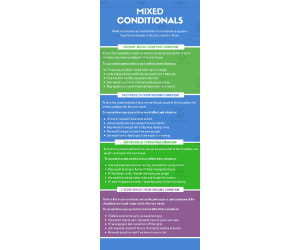
Mixed Conditionals ESL TEFL Upper Intermediate Lesson Plan Worksheet
ELA, Language Development, ESL, Grammar, Vocabulary, Reading, Writing, Resources for Teachers, Adult Education, High School, Middle School, Homeschool Resources, Teacher Tools, Lesson Plans, Worksheets & Printables
This Upper Intermediate ESL TEFL teaching lesson plan on Mixed Conditionals, is tailored to augment grammar skills comprehension and application among upper intermediate level students. Developed by seasoned educators, this plan caters to especially complex areas of language proficiency - mixed conditionals. Inclusion of 30 ready-to-print pages organised into three comprehensive PDFs. Well-structured exercises covering different aspects of mixed conditionals. Flexibly adaptable in various teaching settings - brick-and-mortar classrooms or virtual learning due to easy printability and digital access via Google Apps respectively. Suitable for diverse learners irrespective of grade level requirements – perfect for individual English language study tutoring or direct whole class lessons on mixed conditionals complexities. The ESL lesson plan includes flashcards , a warmer, grammar rules, exercises, role-play, conversation, writing drill, activity, answers and an extra study that would be good to set as homework. There are 30+ pages and there are teachers notes to guide the teacher.
Author TEAM TEFL
Tags Mixed Conditionals, Upper Intermediate, Grammar Skills, Language Arts, Lesson Plan

Adjectives Supplementary Materials Grade 5-6 (PDF)
ELA, Language Development, ESL, Grammar, Common Core, Resources for Teachers, Grade 5, 6, 7, Worksheets & Printables, Worksheets, Quizzes and Tests, Teacher Tools, Tests, Assessments, Lesson Plans
Adjectives Supplementary Materials Note: This download DOES NOT include the tests themselves. You can still make use of these materials without them but they are recommended. Download in a format of your choice in the "Links" section below. In the Supplementary Pack Interactive Ice Breakers: Engaging warm-up activities that introduce students to key ELA concepts, such as quick capitalization corrections and punctuation challenges. Guided Practice: Structured teacher-led exercises that reinforce grammar and punctuation rules, helping students identify and apply them correctly in sentences. Group and Partner Tasks: Collaborative activities where students work together to edit sentences, correct capitalization, and improve punctuation through peer discussion and teamwork. Independent Worksheets: Carefully designed worksheets that provide focused practice, allowing students to apply learned concepts and refine their skills independently. Exit Tasks: Quick assessments at the end of each lesson, prompting students to reflect on what they’ve learned and apply their knowledge in writing and editing tasks. Links Demonstrative Adjectives Quantitative Adjectives Predicative Adjectives Interrogative Adjectives Degrees of Comparison Google Docs Google Forms Google Slides PDF PPT Word FULL CATALOG OF DOWNLOAD LINKS HERE Grade 5/6 Links: Capitalization & Punctuation Google Docs Google Forms Google Slides PDF PPT Word Free Supplementary Materials Pack Adjectives Google Docs Google Forms Google Slides PDF PPT Word Free Supplementary Materials Pack Nouns Google Docs Google Forms Google Slides PDF PPT Word Free Supplementary Materials Pack Pronouns Google Docs Google Forms Google Slides PDF PPT Word Free Supplementary Materials Pack Verbs Google Docs Google Forms Google Slides PDF PPT Word Free Supplementary Materials Pack Prefixes & Suffixes Google Docs Google Forms Google Slides PDF PPT Word Free Supplementary Materials Pack Sentence Structure Google Docs Google Forms Google Slides PDF PPT Word Free Supplementary Materials Pack Subject Verb Agreement Google Docs Google Forms Google Slides PDF PPT Word Free Supplementary Materials Pack Tenses Google Docs Google Forms Google Slides PDF PPT Word Free Supplementary Materials Pack Context Clues Google Docs Google Forms Google Slides PDF PPT Word Free Supplementary Materials Pack Defining Words Google Docs Google Forms Google Slides PDF PPT Word Free Supplementary Materials Pack Fill in the Blanks Google Docs Google Forms Google Slides PDF PPT Word Free Supplementary Materials Pack Homophones Google Docs Google Forms Google Slides PDF PPT Word Free Supplementary Materials Pack Synonyms Google Docs Google Forms Google Slides PDF PPT Word Free Supplementary Materials Pack ELA Review Questions Overview Questions have three answer choices. There are a handful of pictures on each test for aesthetic purposes, as well as a review sheet covering most of the topics covered in the product. Introduction or Example Sheet Each topic will include an introduction or example sheet to go through first with your students. Full Answer Keys Full answer keys and sample responses are provided so no matter how busy you are, you know you're covered! For More Like This For similar downloads and other frees, do check out Cored Group on TeachSimple.
Author Cored Education
Tags Elementary, Answers, Ccss, Common Core, Grammar, Tests, Test Prep, Assessment, Grade 5, Grade 6
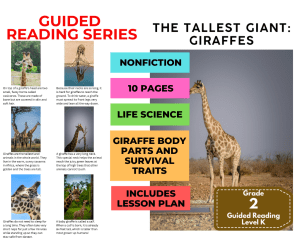
Guided Reading Level K - Tallest Giant Giraffes (with Lesson Plan)
ELA, Resources for Teachers, Reading Comprehension, Reading, Science, Language Development, Life Sciences, Animals, Pre-Reading, Vocabulary, Grade 2, 3, 4, Worksheets & Printables, Worksheets, Teacher Tools, Centers, Activities, Literacy Readers, Quizzes, Quizzes and Tests, Assessments, Lesson Plans
This Guided Reading Book - Tallest Giant Giraffes (Level K) with lesson plan includes: Guided Reading Color Label (front cover x1) This is a quick way to match the book’s demands to what students can generally handle.. The overall goal is to use the level/color to pick books for several smaller groups. To qualify for a certain level, a student is expected to read a book from that level with about 90–94% accuracy. If a student is consistently accurate and understands, move up a level. If the student is struggling at that level, drop down and add more support. Each student will improve at completely different rates, but it is generally one of the best ways to check progress across the class. DOWNLOAD THE CATALOG TO VIEW ALL GUIDED READING BOOKS AVAILABLE (SORTED LEVELS A-Z) Pre-Reading Question (x1) Teacher asks the prompt aloud, can be while showing the cover or first page. Students share what they already know, or make educated guesses from the cover. Prompt them to use the target vocabulary. Write some of their responses on the board to look back at during the reading. Vocabulary Words (x5) Introduce the five words, best doing it one at a time. Start by saying it, while students repeat and then see if anyone knows what it means before reading further. Read through the meaning and try to briefly connect each word to a picture or gesture so it’s meaningful. Ask students to flip through the book pages and point to where they see each of the vocabulary words. While reading the book pause upon coming across one of the vocab words or read the sentence twice to make sure students understand the word has appeared. Optional: Ask students to raise hands whenever they see/hear one of the new words. Guided Reading Pages (x10) Check the book snapshot (below) for: primary topic - do you need to prep extra reading or intro materials on this? what is taught best - decide on 1-2 bullets to focus on, use the prompt or words provided here for best results. learning goals - what you are checking for students to be able to do after the session, elicit answers using prompts or words provided. key vocabulary (see section above). questions overview - so you know what is coming up and if you need to prep extra materials to assist understanding. Run the lesson You may have already looked at a few of the pages together, but you can show them some of the pictures again first to set meaning. Depending on how much time you have and how familiar your students are with guided reading class, you may want to read the book aloud first with the group first. Students whisper or partner read, while you listen in. If time, do it as a group, one student reading a page each. Use the guided page’s prompts to coach: “Check the picture / does it make sense?” “Point under the words / try the first sound” “Reread the sentence smoothly”. Try to focus more on one student per session (rotating every time), so you can work out if they are ready to move up or need to move down a level. Comprehension Questions (back cover x3) This is your way to check that students didn’t just say the words, but actually understood the text. First, let students answer by pointing to the page/picture and saying a short sentence. After any answer, follow with: “Show me where you found that in the text.” In bigger groups, have partners answer first (10–20 seconds), then call on 2–3 students to share. Differentiation tips: Emerging speakers/struggling readers: oral + pointing On-level: oral in a full sentence Higher: one written sentence or draw + label Book Snapshot Title: The Tallest Giant: Giraffes Genre: Nonfiction (informational) Subject: Life Science + Reading (Informational Text) Primary Topic: Giraffe body parts and survival traits Estimated Guided Reading Level (A–Z): K What This Book Teaches Best Giraffes are the tallest land animals and live in the warm, sunny savanna in Africa. A giraffe’s long neck helps it reach “juicy green leaves” on tall trees that other animals cannot touch. Giraffes use a long, strong, dark tongue to wrap around branches and pull off leaves, even with sharp thorns. Each giraffe has a unique pattern of spots; no two have the exact same shapes or colors on their fur. The text highlights survival behaviors and features (drinking stance, short standing naps for safety, fast running, and newborn calf size). Learning Goals Students will describe where giraffes live using details from the text. Students will explain how a giraffe’s long neck helps it get food. Students will describe how a giraffe uses its tongue to pull off leaves, even when there are thorns. Students will explain what is unique about each giraffe’s spots. Students will describe what a giraffe must do to drink water and why it is hard to reach the ground. Students will identify two facts about how giraffes stay safe or move (short naps standing up; running up to thirty-five miles per hour; traveling long distances). Key Vocabulary From the Text savanna — a warm, sunny place with grass and tall trees. juicy — full of liquid; wet and tasty. thorns — sharp points on a plant that can poke you. unique — one of a kind; not the same as others. ossicones — small, fuzzy horns on top of a giraffe’s head. Discussion Prompts Pre-reading question: What body parts might help a giraffe get food and stay safe? Comprehension questions: How does a giraffe’s long neck help it reach food that other animals cannot touch? Comprehension questions: What does the book say a giraffe must do to drink water? Comprehension questions: What is special about each giraffe’s pattern of spots? Printing Tips 1. Best Printing Method (Recommended) “Booklet” Printing (Best if Available) If your printer or PDF viewer supports Booklet Printing , use this. Settings to use: Print mode: Booklet Paper size: Letter or A4 (either works) Orientation: Landscape Print on both sides: Yes Flip on: Short edge Scaling: Fit to printable area Booklet subset: First test: Front sides only Then: Back sides only This will automatically: Pair pages correctly Put the cover on the outside Align everything for folding After printing, fold in half and staple along the spine . 2. If “Booklet” Printing Is NOT Available You can still print this correctly with manual duplex printing . Step-by-step: Open the PDF. Choose Print . Set: Orientation: Landscape Pages per sheet: 1 Print on both sides: Yes Flip on: Short edge Print all pages . Because each PDF page already contains two facing book pages, the result will still fold cleanly into a book. Thousands of Cored Education products are included with your TeachSimple membership. Download links and encyclopedia index available here.
Author Cored Education
Rating
Tags Reading Comprehension, Reading Passages, Reading, Guided Reading, Guided Reading Lesson Plan, Guided Reading Activity, Pre-reading, Science Lesson Plans, Life Science, Animals
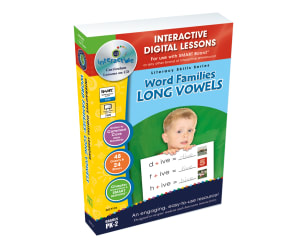
Word Families: Long Vowels - Digital Lesson Plan Gr. PK-2 | MAC Software
ELA, Language Development, Vocabulary, Kindergarten, Preschool, Grade 1, 2, Teacher Tools, Lesson Plans
Word Families: Long Vowels - Digital Lesson Plan Gr. PK-2 | MAC Software Overview: This Mac software is a highly interactive 80-screen page lesson plan designed to enhance vocabulary, sight word recognition and comprehension in preschool to second-grade students. The focus of the course lies in mastering proper pronunciation of long vowel phonograms (word families). Highlights: Uses real-life pictures and familiar items as learning guides. Promotes understanding of words as language segments or 'chunks'. Nurtures adeptness at breaking down words according to their onset and rhyme connections discovered within word families. Suitable for individual learning as well as group activities regardless of class size or pace. Interactive Features: (Working with words exercises, test preparations, memory match games , crosswords & word searches) Evaluations: A Comprehension Quiz is available at the end of each chapter allowing educators to monitor student comprehension levels. Fully aligned with State Standards, this Mac software adheres meticulously to Bloom's Taxonomy ensuring mastery-level educational quality catered towards young students without setting aside any aspect related standards. Ultimately revealing that education need not be monotonous but rather can be an engaging journey filled with knowledge that meets national education criteria perfectly packaged into user-friendly software.
Author Classroom Complete Press
Tags Word Families, Long Vowels, Digital Lesson Plan, Reading Vocabulary, Reading Lesson
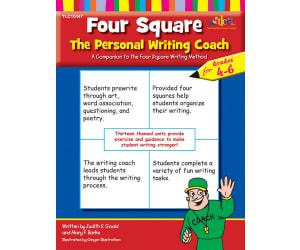
Four Square: The Personal Writing Coach for Grades 4-6:
ELA, Writing, Grade 4, 5, 6, Teacher Tools, Lesson Plans
Four Square: The Personal Writing Coach for Grades 4-6 This is an innovative teaching resource that helps students become competent and confident writers. Specifically designed for grades 4 through 6, the material covers a wide spectrum of writing aspects: Prewriting strategies like art and word association Planning and composing prose pieces. The book's unique feature lies in its approach to make writing less daunting. Through carefully planned exercises, learners dive into the colorful world of language arts. These exercises target improvement in: Word choice, Sentence structure, Paragraph development, and /i> The topics chosen are close to students' hearts which aid free expression as they polish their writing skills at the same time. Versatility in Use The resource can be seamlessly integrated into any learning environment: M /b>. mi lstmaller group settings or paired work initiatives - study circles, peer tutoring programs promoting mutual critique and creative thinking.discussions on relatable themes. e olbrss= Four Square: The Personal Writing Coach for Grades 4-6 stands as an invaluable add-on to your teaching toolkit. Focused on nurturing creativity, communication skills and courage in writing, this book empowers children to relentlessly explore the broad landscape of words.
Author Classroom Complete Press
Tags Four Square, Writing Coach, Writing Process, Writing Units, Poetry, Personal Writing Coach

SH: 2 Decodable Reading Books + 2 Video Lessons + 32 Worksheets SOR
Special Resources, ELA, Special Education Needs (SEN), Language Development, Pre-Reading, Phonics, Spelling, Kindergarten, Preschool, Homeschool Curriculum, Grade 1, 2, Literacy Readers, Teacher Tools, Lesson Plans, Presentations
2 SH Decodable Readers, 2 Video Lessons & 32 Supporting Worksheets to Develop Reading Fluency! Complete Teaching Pack | Part of Advanced Phonics Reading Programme Master SH with 2 decodable readers, 2 optional video lessons, and 32 differentiated practice worksheets! This extensive teaching pack features farm stories that children will love, along with targeted phonics activities that reinforce learning. This is part of the Reading Made Simple programme of systematic phonics instruction that can help your struggling readers succeed. Designed and tested on real children of all abilities, from none to severe, every step of the way. These books presume that a child can already decode words with a CK ending, OO (moon/look) and EE. What's Included 2 systematic/levelled decodable readers focusing on SH words 2 carefully taught optional video lessons - no distracting music - these are serious lessons and can be used by home educators and teachers alike - to give extra support to struggling readers Word lists for pre-reading practice at the beginning of each book 32 Differentiated worksheets for phonics reinforcement: Word sorting activities Sound isolation exercises Reading comprehension exercises Sentence writing practice Phonics pattern recognition tasks 100% decodable text with carefully controlled vocabulary Science of reading-aligned instruction Beloved characters: Tom, Sam, Pam, Gran, and the farm animals Beautiful watercolour illustrations Print-and-go format for easy classroom use Why Teachers Love This Complete Pack Real stories PLUS targeted practice! These aren't just decodable readers—you get everything you need to teach SH systematically. The differentiated worksheets provide multiple opportunities for students to apply their learning, while the engaging farm stories provide ample practice of decoding, word recognition and reading comprehension. They help you to target a child's precise needs to ensure progress. The optional video lessons give even nervous parents the help they need to teach! Designed With Carefully Controlled vocabulary: The SH sound is introduced systematically across the stories, with CK words revisited throughout. Worksheets reinforce the same vocabulary, providing an opportunity for mastery. Perfect For Explicit phonics instruction following the science of reading principles All students who are ready to learn SH and have already learned CK, OO, EE Children who need a slower pace, or not Small group intervention or whole class instruction Literacy centres and independent practice Homework assignments that reinforce classroom learning Structured literacy programmes Ages 5-7 or Grade 1-2 Skills Addressed Decoding SH in isolation and context Reading fluency with controlled decodable text Phonics, pattern recognition and application Phonemic awareness through targeted activities Reading comprehension with engaging stories Writing practice using the taught phonics pattern Sight word introduction and practice How to Use This Complete Pack Introduce the sound SH comprehensively Use worksheets for guided practice and skill reinforcement Practice word lists before reading stories Have students read the decodable stories, pointing to each word Return to the worksheets for independent practice or assessment Reread the stories to build fluency This complete pack provides everything you need to teach OO effectively—no additional materials required!
Author Lilibette's Resources
Rating
Tags Learn To Read Programme, Fluency, Struggling Readers, Dyslexia, Special Needs, Phonics, Decodable Reading Books, Reading Fluency, Homeschool Curriculum, Consonant Digraphs