3,879 products added recently
Page 7 - Science Lesson Plans
Bring science to life with lesson plans that cover biology, chemistry, physics, and more. These resources offer experiments and interactive lessons to stimulate curiosity. Implement them to foster a deep understanding of scientific principles and a passion for discovery.
Energy: Thermal Energy
Science, Physics, Common Core, Grade 5, 6, 7, 8, Teacher Tools, Lesson Plans
Energy: Thermal Energy This is a specialized chapter from the comprehensive lesson plan on energy. It is designed to demystify the complex topic of thermal energy and make it more accessible for students. Suitable for grades 5 through 8, this resource complements instruction in science, specifically physics. Key Features: User-friendly language and vocabulary to facilitate understanding, ideal for all learners including remedial students. Adoption of both information delivery and engaging activities make it suitable for whole-class lessons, small group work or individual homework assignments. Delves into related topics such as Mechanical Energy, Sound Energy and Waves as well as Light Energy thereby adding depth to learning by allowing students to explore other variations of potential energy. In addition: This module also helps learners understand how energy transmits and transforms. . Reading passages designed to boost comprehension skills are provided along with colorful mini posters that support visualization when explaining concepts. All content aligns with Common Core State Standards and meets Bloom's Taxonomy requirements hence promoting cognitive development ranging from remembering facts through creating new ideas. . The teaching resource is offered in a PDF format ensuring compatibility across different devices. Teachers can easily use them during presentations or print out as needed making it a convenient tool in every educator's toolbox. Total Takeaway: The 'Energy: Thermal Energy' instructional plan offers educators an invaluable tool which simplifies the process of helping their students navigate the complexities associated with thermal energy while enriching their overall learning experience during physics lessons revolving around different forms of natural and man-made energies.
Author Classroom Complete Press
Tags PDF
I WONDER - What Is A Digital Footprint | Animated Video Lesson
Computer Science, Technology, Science, STEM, Grade 4, 5, 6, 7, 8, 9, 10, Lesson Plans, Teacher Tools
Video Introduction An amazing video designed for the students to learn more about STEM. I WONDER - What Is A Digital Footprint | Animated Video Lesson Do you like STEM subjects? what is your favorite one? Have you ever tried to plant a seed? If yes, tell us more about it. Or have you ever tried to invent something? If yes, tell us more about it. And how do you think it will help us? Have you ever seen a microorganism under a microscope? What was it? And how it looked like? Mathematics is a marvelous subject. Let' sharpen our brains and solve some equations. Do you like timetable tricks? What is your favorite one? Do you know how to code? Have you ever created an app or a game before? If yes, how was it like? I WONDER - What Is A Digital Footprint | Animated Video Lesson The video is perfect for encouraging the researching skills for the students, while learning more about this fantastic topic. I WONDER - What Is A Digital Footprint | Animated Video Lesson This friendly designed video is suitable for students at school, homeschooling, and as a group activity. Format Available in MP4 format.
Author Educational Voice
Tags What Is A Digital Footprint, What Is A Digital Footprint Video, Digital Footprint, Digital Footprint Facts, Digital Footprint Video, Digital Footprint Facts For Kids, Digital Footprint Video For Kids
I WONDER - How Smart Are Orangutans | Animated Video Lesson
Animals, Life Sciences, Science, Grade 3, 4, 5, 6, 7, 8, 9, Lesson Plans, Teacher Tools
Video Introduction Animal kingdoms are full of fascinating wonders to learn. This video is designed for the students to learn more about animals in different countries. I WONDER - How Smart Are Orangutans | Animated Video Lesson Pets are really great companions for humans. Have you ever had a pet at your house? If yes, tell us more about it. Do you know how many types of birds do we have on Earth? Can you name some of these types? Can you think of some characteristics that mammals have and why they are different from the other types of animals? Do you think humans are mammals? I WONDER - How Smart Are Orangutans | Animated Video Lesson The video is perfect for encouraging the researching skills for the students, while learning more about these fantastic animals. I WONDER - How Smart Are Orangutans | Animated Video Lesson This friendly designed video is suitable for students at school, homeschooling, and as a group activity. Format Available in MP4 format.
Author Educational Voice
Rating
Tags How Smart Are Orangutans, Orangutans, Orangutans Facts, Orangutans Video, Orangutans Video For Kids, Orangutans Facts For Kids, Orangutan, Orangutan Video, Orangutan Video For Kids
I WONDER - What Do Foxes Eat | Animated Video Lesson
STEM, Animals, Life Sciences, Science, Biology, Grade 1, 2, 3, 4, 5, 6, 7, 8, Lesson Plans, Teacher Tools
Video Introduction Animal kingdoms are full of fascinating wonders to learn. This video is designed for the students to learn more about animals in different countries. I WONDER - What Do Foxes Eat | Animated Video Lesson Do you like animals? what is your favorite one? Do you own a pet? If yes, tell us more about it, like what its name? And what do you like most about it? What are the animal kingdoms? Can you write down the characteristics of each animal class like mammals, birds, reptiles, amphibian, fish and mollusks. Do you know that some animals can sing, can you name any of them? What is the largest and the smallest mammal in the world? What is the largest and the smallest bird in the world? What is the largest and the smallest fish in the world? I WONDER - What Do Foxes Eat | Animated Video Lesson The video is perfect for encouraging the researching skills for the students, while learning more about these fantastic animals. I WONDER - What Do Foxes Eat | Animated Video Lesson This friendly designed video is suitable for students at school, homeschooling, and as a group activity. Format Available in MP4 format.
Author Educational Voice
Tags What Do Foxes Eat, What Do Foxes Eat Video, Foxes, Fox, Foxes Food, Foxes Food Facts, Foxes Food Facts For Kids, Foxes Food Video, Foxes Food Video For Kids, Foxes Facts
Flashlights Reading Comprehension Passage - Cored Ed Encyclopedia
ELA, Reading Comprehension, Reading, Science, Technology, Language Development, Social Studies, History, Pre-Reading, Physics, Grade 2, 3, 4, 5, Worksheets & Printables, Worksheets, Teacher Tools, Centers, Activities, Writing Prompts, Assessments, Quizzes and Tests, Quizzes, Lesson Plans
This Flashlights reading comprehension with lesson plan includes: Visualization (on the front cover) Start your lesson by taking a minute to think and share something about the topic. Read the script aloud (slowly), perhaps prepare some music or sound effects. Student close their eyes and let their imaginations wander. Students open their eyes, read the question aloud and give them a few minutes to complete. Ask a few students to share or keep answers until the end to compare with what they learn in the passage. Quick pause—thousands of Cored Education products are included with your TeachSimple membership. Download links and encyclopedia index available here. Pre-Reading Trivia Students will write down one thing they already know about the subject and then read five more facts and discuss. These facts are fun, and the students will enjoy learning about the subject before reading more. Give 1 minute for students to write what they already know (no pressure—best guess is fine). Read the five facts together. After each fact, do ask a student for their opinion, was it surprising? Set a purpose by asking students to highlight/underline one fact they want to learn more about during the reading. Reading Passage The text is a high-interest reading passage with set paragraphs, roughly three to four paragraphs long. It contains a variety of themes about the topic, anywhere from history to technology. The passage is between 250 and 350 words in length. First, ask students to look at the headings and see what they’ll learn about today. What do they know about the topic/heading? First read options: Teacher read-aloud (best for support). Partner reading (paragraph by paragraph). While reading, students underline important details, and vocabulary words they think may come up in the questions section. Mixed Questions The first question page contains four multiple-choice questions, each with a choice of four answers, and three written response questions that require a sentence or two from the student. Students complete the mcqs first independently, then review quickly as a class. For the 3 written responses, try to get students giving the answer with some form of evidence: “I think ___ because the text says ___.” If students get stuck, send them back to check the passage. Vocabulary Questions Practice seven key words from the text in this section across two activities. First section is scrambled words where students will unscramble three words given a clue for each. The second section is a word to meaning matching activity. Before starting, have some students read out words they underlined in the passage. Ask students to say the word and read aloud the sentence(s) around each word. Ask students to do scrambled words and the matching exercise in pairs then go through answers as a class. For the scrambled spelling task, get four pairs to come up to the board and write the words for extra practice with the other student reading out the clue. For the matching task, prompt students to give full sentences: “I matched ___ with ___ because ___.” Creative Writing In this question, the student will be required to write a five to eight sentence paragraph on a question related to the topic. Before starting, ask students write down 3 key ideas they are going to include in their piece. Ask students for ideas to share around the class to help those struggling. Pro writing expectations: 5–8 sentences At least 2 facts or details from the passage At least 2 vocabulary words from the previous page Students read their paragraphs while classmates listen for facts and vocabulary words. Extension Activities This page is optional for fast finishers or to take home. There are several activities, each one requiring a different skill. Do some, do none, do all, completely optional - but you will feel reassured knowing every possibility is planned for. Includes summary writting question and additional facts. Answer Key There are answers for the multiple-choice questions, written response questions have sample answers, vocabulary answers and if there is a summary question then a sample summary will be provided as well. Lesson Plan Included Customized lesson plan for this lesson is included. Lesson Snapshot Title: Flashlights Genre: Nonfiction (Informational Text) Subject: Science (Technology/Physical Science) / Reading (Informational Text) Primary Topic: Flashlight parts, history, and how it works Estimated Guided Reading Level (A–Z): P What This Lesson Teaches Best Explains the main parts inside a flashlight (a power source, a switch, and a reflector) and what they do. Teaches a short history of flashlights , including the “dry cell” battery and an 1899 U.S. patent for a hand-held electric light. Shows cause and effect : early zinc-carbon batteries tired quickly, so the light came in short flashes—leading to the name “flashlight.” Compares how flashlight beams improved over time, from sputtering light to steadier beams, including incandescent bulbs and later LEDs. Connects electricity to a real object by describing how a click of the switch completes a circuit so electricity can flow. Learning Goals Students will describe what a flashlight carries “in one hand” and what it helps people do in the dark. Students will identify three parts inside a flashlight case and explain each part’s job using the passage. Students will explain why the flashlight got its name, using evidence about early batteries and short flashes. Students will describe how flashlight lighting changed over time (dry cell batteries, incandescent bulbs, LEDs). Students will explain what happens when a flashlight switch is clicked, based on how the circuit is completed. Key Vocabulary From the Text reflector — shiny part that gathers glow and pushes it forward. patent — legal protection for an invention. incandescent — a kind of bulb that makes light using heat. LEDs — bright lights that can shine longer on same power. circuit — complete path that lets electricity flow. FULL CATALOG OF DOWNLOAD LINKS AND ENCYCLOPEDIA INDEX HERE
Author Cored Education
Rating
Tags Vocabulary, Reading Comprehension, Reading Passages, Lesson Plans, Ela Lesson Plans, Reading Comprehension Lesson Plans, Pre-reading, Science Lesson Plans, History, Technology
I WONDER - How Can Hydrogen Produce Electricity | Animated Video
Earth Sciences, Earth and Environmental Sciences, Science, Environmental Science, Grade 6, 7, 8, 9, 10, 11, 12, Lesson Plans, Teacher Tools
Video Introduction An amazing video designed for the students to learn more about STEM. I WONDER - How Can Hydrogen Produce Electricity | Animated Video Lesson Do you like STEM subjects? what is your favorite one? Have you ever tried to plant a seed? If yes, tell us more about it. Or have you ever tried to invent something? If yes, tell us more about it. And how do you think it will help us? Have you ever seen a microorganism under a microscope? What was it? And how it looked like? Mathematics is a marvelous subject. Let' sharpen our brains and solve some equations. Do you like timetable tricks? What is your favorite one? Do you know how to code? Have you ever created an app or a game before? If yes, how was it like? I WONDER - How Can Hydrogen Produce Electricity | Animated Video Lesson The video is perfect for encouraging the researching skills for the students, while learning more about this fantastic topic. I WONDER - How Can Hydrogen Produce Electricity | Animated Video Lesson This friendly designed video is suitable for students at school, homeschooling, and as a group activity. Format Available in MP4 format.
Author Educational Voice
Tags How Can Hydrogen Produce Electricity, How Can Hydrogen Produce Electricity Video, Electricity, Electricity Facts, Electricity Facts For Kids, Electricity Video, Electricity Video For Kids, Hydrogen
Animal Research and Medicine Safety - Lesson Plan, Worksheet (Digital & Print)
Science, Earth and Environmental Sciences, Earth Sciences, Grade 6, 7, 8, Lesson Plans, Teacher Tools
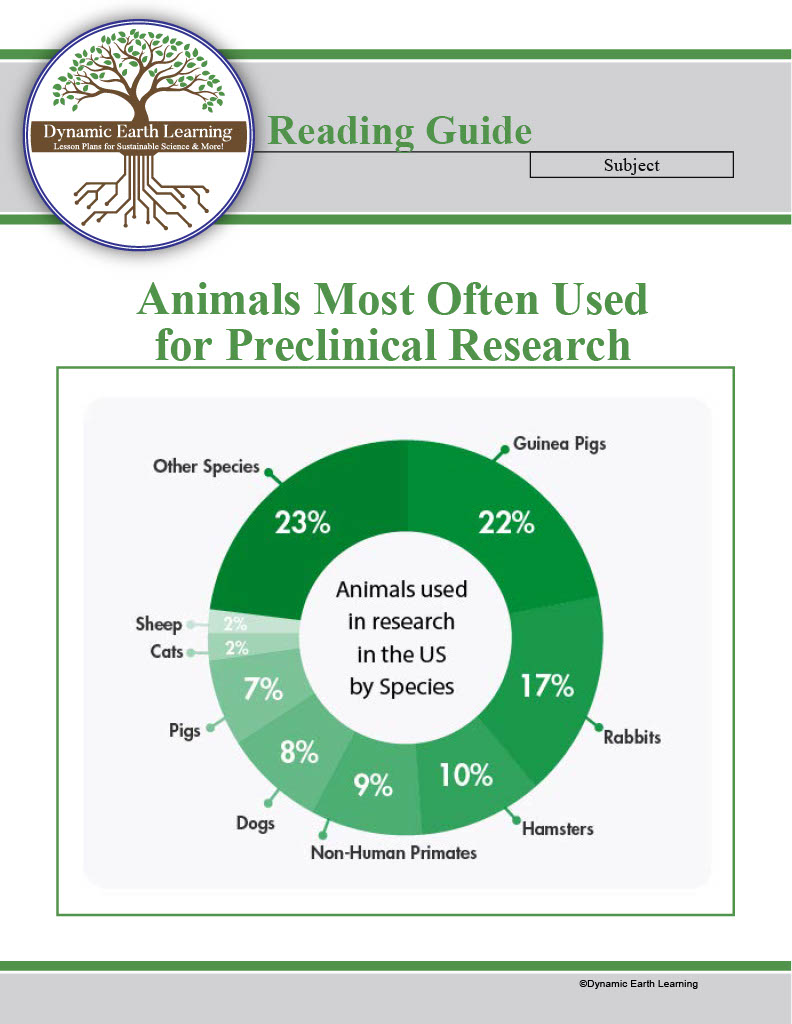
This science explainer video or reading activity lesson plan explores the topic ofanimal research for kids, so they begin to consider the idea of animal research andanimal testing. Students have done science experiments in school, but do they know that ourmedicine safetyrequiresanimal research testing? Do they know that animals used for testing help us learn? This video lesson plan is a good introduction to conversations aboutanimal research ethics, and why animal testing is necessary. Students will Consider: - Preclinical research of any new drugs being developed - Testing the effectiveness of these new drugs on living creatures - How animal models are selected based on certain qualities The bundle includes files in two formats to ensure all students can complete the lesson no matter what type of device they are working on. - Digitally fillable PDF - Printable PDF - Google Slides Hyperdoc with fillable fields for students ⏳ Teaching Time About 25 minutes with discussion ❤️Follow My Store Click on thegreen starnext to the store logo to receive new product updates. ✅Tip: Students using Chromebooks should download the free Chrome app DocHub. It saves their work in the PDF as they work and has great sharing options including Google Classroom
Author Dynamic Earth Learning
Tags Animal Research, Medicine Safety, Animal Research Lesson Plan, Animal Research Worksheet, Digital Lesson Plan
I WONDER - How Strong Are Gorillas | Animated Video Lesson
Animals, Life Sciences, Science, STEM, Grade 1, 2, 3, 4, 5, 6, 7, 8, Lesson Plans, Teacher Tools
Video Introduction Animal kingdoms are full of fascinating wonders to learn. This video is designed for the students to learn more about animals in different countries. I WONDER - How Strong Are Gorillas | Animated Video Lesson Do you like animals? what is your favorite one? Do you own a pet? If yes, tell us more about it, like what its name? And what do you like most about it? What are the animal kingdoms? Can you write down the characteristics of each animal class like mammals, birds, reptiles, amphibian, fish and mollusks. Do you know that some animals can sing, can you name any of them? What is the largest and the smallest mammal in the world? What is the largest and the smallest bird in the world? What is the largest and the smallest fish in the world? I WONDER - How Strong Are Gorillas | Animated Video Lesson The video is perfect for encouraging the researching skills for the students, while learning more about these fantastic animals. I WONDER - How Strong Are Gorillas | Animated Video Lesson This friendly designed video is suitable for students at school, homeschooling, and as a group activity. Format Available in MP4 format.
Author Educational Voice
Tags How Strong Are Gorillas, How Strong Are Gorillas Video, Gorillas, Gorilla, Gorillas Facts, Gorillas Facts For Kids, Gorillas Video, Gorillas Video For Kids, Animals, Animals Facts
Electrical Safety - Lesson Bundle
Science, Physics, Grade 8, 9, 10, Teacher Tools, Lesson Plans
The Electrical Safety - Lesson Bundle provides a comprehensive set of resources focused on educating students about safe electricity practices. This package is primarily designed for home-based settings and covers integral topics like: Understanding why we should be aware of electrical safety, Potential hazards posed by electricity, Identifying and understanding the functions of electrical boxes, including circuit breakers and fuses, The importance of grounding and static discharges. This multi-layered learning approach also emphasizes practical sections such as understanding wall outlets (or "Receptacles") and Ground Fault Circuit Interrupters (GFCIs). Additionally, it guides students on what to do in scenarios involving dangling Electrical Lines. The bundle comes complete with pre-sourced online videos embedded directly into the lesson plan. This simplifies instruction for teachers while providing a convenience that removes the need for searching online video platforms. This digital learning tool is compatible with both Google Classroom platforms as well as Microsoft Office applications. Documents are provided in Word format along with Google Doc versions, ensuring easy accessibility to all materials from anywhere using any electronic device. center >--Evaluation Tool-- center > An auto-graded Exit Ticket is offered within this package which can help educators assess the students' comprehension levels post-class activities or could serve homework needs efficiently comprehending student knowledge levels on discussed electrical safety topics properly. center >--Worksheets & Solutions-- center > To accompany core lessons, twothoroughly designed worksheets are included offering practical relevance to learners while simultaneously easing teacher workload significantly when it comes to solutions' availability eliminating possible time-consuming solution preparation periods otherwise better instructed directly advancing learner understandability much effectively. center >--Fully Digital-- center > Fully embracing the digital era, Electrical Safety - Lesson Bundle can be utilized in traditional classroom settings as well as through distance learning models comfortably. center >--Resource Duplication-- center > Finally, to further simplify the implementation process, this package offers a quick mechanism to duplicate all of the available resources directly into the user's Google Drive with one simple click ensuring ready-made direct implementations at convenience. The Electrical Safety - Lesson Bundle's focus on practical application and ease-of-use makes it a valuable tool for instilling conscientious safe electricity habits not only within classrooms but also for safe daily living applicability encouraging responsible societal citizens always respecting safety practices warranted during electric gadgets uses every time at home or any other private or public places everywhere worldwide.
Author Teach With Fergy
Tags Electrical Safety, Lesson Bundle, Hazard Awareness, Circuit Breakers, Wall Outlets
I WONDER - Was Stephen Hawkins A Good Teacher | Animated Video Lesson
Inventors, Basic Science, Science, Biographies, Social Studies, Grade 4, 5, 6, 7, 8, 9, 10, Lesson Plans, Teacher Tools
Video Introduction An amazing video designed for the students to learn more about famous people in different countries. I WONDER - Was Stephen Hawkins A Good Teacher | Animated Video Lesson What do you know about Stephen Hawking? Can you tell us five five facts about him? Was Stephen Hawking always good at school? Was Stephen Hawkins adventurous? Was Stephen Hawkins a good teacher? What did Stephen Hawking discover? When was Stephen Hawking diagnosed with ALS? What do you know about black holes? And what did Stephen Hawkins discovered about them? I WONDER - Was Stephen Hawkins A Good Teacher | Animated Video Lesson The video is perfect for encouraging the researching skills for the students, while learning more about this fantastic place. I WONDER - Was Stephen Hawkins A Good Teacher | Animated Video Lesson This friendly designed video is suitable for students at school, homeschooling, and as a group activity. Format Available in MP4 format.
Author Educational Voice
Rating
Tags Was Stephen Hawkins A Good Teacher, Stephen Hawkins, Stephen Hawkins Facts, Stephen Hawkins Video, Stephen Hawkins Facts For Kids, Stephen Hawkins Video For Kids, Famous People, Famous People Video
I WONDER - Can Viruses Cause Illness | Animated Video Lesson
Biology, Life Sciences, Science, Human Body, STEM, Grade 3, 4, 5, 6, 7, 8, 9, Lesson Plans, Teacher Tools
Video Overview The human body is full of fascinating wonders to learn. This video is created to help the students recognize the anatomy and the job of the human body. I WONDER - Can Viruses Cause Illness | Animated Video Lesson Every part and organ in our human body is vital so let's see how important they are. Have you ever imagined how we look like if we didn't have a skeleton? Did you know that because we have our amazing muscles we can stand! Do you know how many teeth do we have? Have you ever wondered about the food journey inside our body? Can you name all the glands in our body? Why do we have skin? Our nervous system is really good at sending signals. Can you tell us more about it? Are you really good at Mathematics, painting, or any other thing? You should really thank your brain about it! The famous five senses are really doing a great work? Can you explain how every sense works? I WONDER - Can Viruses Cause Illness | Animated Video Lesson The video is perfect for encouraging the researching skills for the students, while learning more about our fantastic human body. I WONDER - Can Viruses Cause Illness | Animated Video Lesson This friendly designed video is suitable for students at school, homeschooling, and as a group activity. Format Available in MP4 format.
Author Educational Voice
Tags Can Viruses Cause Illness, Can Viruses Cause Illness Video, Viruses Cause Illness, Viruses Cause Illness Facts, Viruses Cause Illness Facts For Kids, Viruses Cause Illness Video, Viruses Cause Illness Video For Kids
I WONDER - Why Are There Rainbows In Bubbles | Animated Video Lesson
Chemistry, Science, STEM, Grade 4, 5, 6, 7, 8, 9, 10, Lesson Plans, Teacher Tools
Video Introduction An amazing video designed for the students to learn more about STEM. I WONDER - Why Are There Rainbows In Bubbles | Animated Video Lesson Do you like STEM subjects? what is your favorite one? Have you ever tried to plant a seed? If yes, tell us more about it. Or have you ever tried to invent something? If yes, tell us more about it. And how do you think it will help us? Have you ever seen a microorganism under a microscope? What was it? And how it looked like? Mathematics is a marvelous subject. Let' sharpen our brains and solve some equations. Do you like timetable tricks? What is your favorite one? Do you know how to code? Have you ever created an app or a game before? If yes, how was it like? I WONDER - Why Are There Rainbows In Bubbles | Animated Video Lesson The video is perfect for encouraging the researching skills for the students, while learning more about this fantastic topic. I WONDER - Why Are There Rainbows In Bubbles | Animated Video Lesson This friendly designed video is suitable for students at school, homeschooling, and as a group activity. Format Available in MP4 format.
Author Educational Voice
Tags Why Are There Rainbows In Bubbles, Why Are There Rainbows In Bubbles Video, Rainbows, Rainbows Facts , Rainbows Video, Rainbows Video For Kids, Bubbles, Bubbles Facts, Bubbles Video For Kids
Galaxies & The Universe - Digital Lesson Plan Gr. 5-8 - FLASH-MAC
Science, Earth and Environmental Sciences, Space, Grade 5, 6, 7, 8, Teacher Tools, Lesson Plans
Galaxies & The Universe - A Digital Lesson Plan for Grades 5-8 (FLASH-MAC) The lesson facilitates an in-depth exploration of the universe, from the tiniest particles that make up matter to the mammoth star systems. This journey starts with our home turf: The Milky Way Galaxy, then propels your students into intriguing celestial entities such as Black Holes and their gravity fields. Beyond these, students will probe deep into Nebulae, learning about their compositions and roles within space. Intriguing subjects such as Pulsars and real-world applications concerning the Speed of Light are also explored. To cap off, an investigative study into Quasars – some of the furthest objects in our universe will be undertaken. Detailed Lesson Plan Interactions The plan harbors 80 screen-pages blending reading passages coupled with pre and post-reading activities to create a dynamic learning experience. A memory match game is embedded for reinforcing learned content plus tests materials are made available to help students consolidate knowledge. To keep things vibrant yet educational there are crossword puzzles and word searches. The package includes dedicated printables ensuring convenience never sacrifices quality teaching resources. Considering differentiated learners' needs there exists text-to-speech features both in English & Spanish – guaranteeing no learner falls behind due to language barriers or auditory preferences. Note:Including comprehension quizzes allows educators to gauge how well students grasp concepts after each lesson segment. Versatile Usage For Groups And Individual Students This detailed resource can function as a whole-group activity tool but also proves adaptable for small groups working on specific aspects like 'Black Holes' or 'Pulsars'. Alternately, it can be utilized for individual homework assignments. Be assured that the curriculum is aligned with state standards and articulates Bloom's Taxonomy . So let your student experience the profound wonder of Astronomy as an enriching journey with this digital lesson plan for Grades 5-8.
Author Classroom Complete Press
Tags Software (Mac)
Circulatory, Digestive & Reproductive Systems: From Stomach to Fuel Gr. 5-8
Science, Life Sciences, Human Body, Grade 5, 6, 7, 8, Teacher Tools, Lesson Plans
The Circulatory, Digestive & Reproductive Systems: From Stomach to Fuel Teaching Resource This is a comprehensive teaching resource suitable for students from grades 5 to 8 with a focus on the circulatory, digestive, and reproductive systems. Major body systems are discussed in detail: Circulatory System: Detailed study about blood vessels and the heart. Digestive System: Highlights the path food takes from mouth to large intestine and how food is transformed into fuel. Auxillary Organ Functions: Understanding how organs like liver, lungs, skin work together in flushing out toxins from our bodies. Moving forward in complexity, it dives into biology subjects such as nephrology (study of kidneys)and gastroenterology (study of intestines). Finally free students learn "the makings of life" -- How sperm cell & egg cell merge leading up till birth. The educational tool serves best for: Whole group discussions - Enables interactive participation among learners > Small group activities > - Promotes supportive learning environment > Data Retention methods included: -*Engaging reading passages -*Interactive student-led classroom activities *Test preparation materials: -Assists in gauging learner's knowledge retention. -Includes set of color mini posters catering visual learners reinforcing comprehension. Bloom's Taxonomy principals fostering holistic growth: -The product promotes critical thinking abilities thus mapping STEM initiative encouraging scientific investigation skills. -This PDF aligns state standards with curriculum for science teachers dealing specifically with human body subtopics. -Lastly, it is a teaching tool designed to cater each learner type hence keeping classrooms engaging. An absolute ally for educators nurturing inquisitive young minds by manifesting wonder of science within themselves!
Author Classroom Complete Press
Tags PDF
Brine Shrimp reading passage comprehension questions writing activity
Biology, Life Sciences, Science, Animals, Kindergarten, Preschool, Grade 1, 2, 3, Lesson Plans, Teacher Tools, Graphic Organizers, Writing Prompts, Worksheets & Printables
Introduce your students to the fascinating world of Brine Shrimp (Sea Monkeys) with this engaging reading comprehension and writing resource ! Perfect for science, literacy centers, or cross-curricular lessons, this resource blends nonfiction text with interactive comprehension activities and graphic organizers. Students will practice close reading, strengthen vocabulary, and build writing skills while learning about these unique aquatic creatures. What’s Included In This Reading Passage Pack? Reading Passage Writing Activities Vocabulary KWL Chart Word Search Coloring Page & Answer Key Why Teachers Love It • Strengthens science + reading integration • Encourages critical thinking and text-based responses • Supports informational writing and research skills • Easy print-and-go format for classroom or homework use • Aligned with NGSS life science and ELA nonfiction standards Great For • Science centers and literacy rotations • Animal adaptations or life cycle units • Homework or sub plans • Early finishers or enrichment • Homeschool science + reading lessons This Brine Shrimp Reading & Comprehension Pack makes science literacy fun, interactive, and easy to integrate into your classroom routine!
Author Perfect_Printables
Rating
Tags Brine Shrimp Reading Passage, Brine Shrimp Comprehension, Ocean Animals Reading Comprehension, Science Reading Activity, Writing Activity Worksheet, Sea Creature, Nonfiction Passage Elementary, Graphic Organizer Worksheet
I WONDER - Why Is It Important Not To Waste Water | Animated Video
Environmental Science, Earth and Environmental Sciences, Science, Grade 1, 2, 3, 4, 5, 6, 7, 8, Lesson Plans, Teacher Tools
Video Introduction An amazing video designed for the students to learn more about STEM. I WONDER - Why Is It Important Not To Waste Water | Animated Video Lesson Do you like STEM subjects? what is your favorite one? Have you ever tried to plant a seed? If yes, tell us more about it. Or have you ever tried to invent something? If yes, tell us more about it. And how do you think it will help us? Have you ever seen a microorganism under a microscope? What was it? And how it looked like? Mathematics is a marvelous subject. Let' sharpen our brains and solve some equations. Do you like timetable tricks? What is your favorite one? Do you know how to code? Have you ever created an app or a game before? If yes, how was it like? I WONDER - Why Is It Important Not To Waste Water | Animated Video Lesson The video is perfect for encouraging the researching skills for the students, while learning more about this fantastic topic. I WONDER - Why Is It Important Not To Waste Water | Animated Video Lesson This friendly designed video is suitable for students at school, homeschooling, and as a group activity. Format Available in MP4 format.
Author Educational Voice
Tags Why Is It Important Not To Waste Water, Why Is It Important Not To Waste Water Video, Water Waste, Water Waste Facts, Water Waste Facts For Kids, Water Waste Video, Water Waste Video For Kids
I WONDER - How Big Can Flowers Get | Animated Video Lesson
Nature & Plants, Life Sciences, Science, Grade 6, 7, 8, 9, 10, 11, 12, Lesson Plans, Teacher Tools
Video Introduction An amazing video designed for the students to learn more about STEM. I WONDER - How Big Can Flowers Get | Animated Video Lesson Do you like STEM subjects? what is your favorite one? Have you ever tried to plant a seed? If yes, tell us more about it. Or have you ever tried to invent something? If yes, tell us more about it. And how do you think it will help us? Have you ever seen a microorganism under a microscope? What was it? And how it looked like? Mathematics is a marvelous subject. Let' sharpen our brains and solve some equations. Do you like timetable tricks? What is your favorite one? Do you know how to code? Have you ever created an app or a game before? If yes, how was it like? I WONDER - How Big Can Flowers Get | Animated Video Lesson The video is perfect for encouraging the researching skills for the students, while learning more about this fantastic topic. I WONDER - How Big Can Flowers Get | Animated Video Lesson This friendly designed video is suitable for students at school, homeschooling, and as a group activity. Format Available in MP4 format.
Author Educational Voice
Tags How Big Can Flowers Get, How Big Can Flowers Get Video, Flowers , Flower, Flowers Facts, Flowers Facts For Kids, Big Flowers , Big Flowers Video, Big Flowers Video For Kids, Flowers Video
Global Warming: Effects - Digital Lesson Plan Gr. 5-8 - FLASH-PC
Science, Earth and Environmental Sciences, Environmental Science, Grade 3, 4, 5, 6, 7, 8, Teacher Tools, Lesson Plans
Global Warming: Effects - Digital Lesson Plan Gr. 5-8 - FLASH-PC is an innovative teaching resource, meticulously designed to invigorate students' learning experiences. Ideal for students between grade 3 and grade 8, this product is a perfect fit for a variety of classroom structures such as whole group discussions, small study circles, or individual homework assignments. This comprehensive resource assists educators in imparting essential knowledge on global warming’s effects. Featuring both reading passages and interactive activities, it captures student attention before, during and after reading sessions. Details comparison between global warming versus natural climate change forms an integral component of the lesson plan introducing students to key topics in environmental science today. The consistent climate pattern's importance for human societies' survival over centuries Effects like rising sea levels and the retreat of glaciers Changes in agricultural patterns due to climatic changes An additional focus is laid upon local impacts such as: The surge in extreme weather events affecting fresh water supply Impact on human health and wildlife welfare b>Economic consequences induced by unpredictable weather patterns alongside shifting global temperatures pairs. Interactive features from this robust flash PC software include test preparation materials like crossword puzzles & word searches that sharpen cognitive skills while being fun! Coupled with supportive video & audio content makes grasping complex subjects smooth ride for diverse learners. Rounding up all the informative elements presented under the umbrella of state standards consulted through Bloom's Taxonomy – this creates a holistic educational growth platform promoting comprehension improvement to increased critical thinking abilities among learners from diverse backgrounds. Call on your students to learn and explore about a significant matter like Global Warming using our engaging digital planning tool today! ?>
Author Classroom Complete Press
Tags Software (PC)
I WONDER - What Is Catatumbo Lightning | Animated Video Lesson
Earth Sciences, Earth and Environmental Sciences, Science, Grade 4, 5, 6, 7, 8, 9, 10, Lesson Plans, Teacher Tools
Video Introduction An amazing video designed for the students to learn more about famous phenomena in different countries. I WONDER - What Is Catatumbo Lightning | Animated Video Lesson Weather phenomena can affect our lives, crops and even animals! Can you name any of the weather phenomena that happened in your country? Do you know when hailstorms happen? And what is the most country who has lots of hailstorms happening per year? Do you think the all countries have four seasons? If no, can you name any? Why do some animals sleep at winter? Can you name any of these animals? I WONDER - What Is Catatumbo Lightning | Animated Video Lesson The video is perfect for encouraging the researching skills for the students, while learning more about this fantastic phenomenon. I WONDER - What Is Catatumbo Lightning | Animated Video Lesson The video is perfect for encouraging the researching skills for the students, while learning more about this fantastic phenomenon. Format Available in a PDF format.
Author Educational Voice
Rating
Tags What Is Catatumbo Lightning, Catatumbo Lightning, Catatumbo Lightning Facts, Catatumbo Lightning Video, Catatumbo Lightning Video For Kids, Catatumbo Lightning Facts For Kids, Severe Weather Phenomena
Germany: The Heart of Europe: Guided Reading Level R with Lesson Plan
ELA, Resources for Teachers, Reading Comprehension, Reading, Science, Geography, Social Studies, History, Earth and Environmental Sciences, Technology, Grade 3, 4, 5, Worksheets & Printables, Worksheets, Teacher Tools, Centers, Activities, Literacy Readers, Quizzes, Quizzes and Tests, Assessments, Lesson Plans
This Germany: The Heart of Europe (level r) guided reading book with lesson plan includes: Guided Reading Color Label (front cover x1) This is a quick way to match the book’s demands to what students can generally handle.. The overall goal is to use the level/color to pick books for several smaller groups. To qualify for a certain level, a student is expected to read a book from that level with about 90–94% accuracy. If a student is consistently accurate and understands, move up a level. If the student is struggling at that level, drop down and add more support. Each student will improve at completely different rates, but it is generally one of the best ways to check progress across the class. DOWNLOAD THE CATALOG TO VIEW ALL GUIDED READING BOOKS AVAILABLE (SORTED LEVELS A-Z) Pre-Reading Question (x1) Teacher asks the prompt aloud, can be while showing the cover or first page. Students share what they already know, or make educated guesses from the cover. Prompt them to use the target vocabulary. Write some of their responses on the board to look back at during the reading. Vocabulary Words (x5) Introduce the five words, best doing it one at a time. Start by saying it, while students repeat and then see if anyone knows what it means before reading further. Read through the meaning and try to briefly connect each word to a picture or gesture so it’s meaningful. Ask students to flip through the book pages and point to where they see each of the vocabulary words. While reading the book pause upon coming across one of the vocab words or read the sentence twice to make sure students understand the word has appeared. Optional: Ask students to raise hands whenever they see/hear one of the new words. Guided Reading Pages (x10) Check the book snapshot (below) for: primary topic - do you need to prep extra reading or intro materials on this? what is taught best - decide on 1-2 bullets to focus on, use the prompt or words provided here for best results. learning goals - what you are checking for students to be able to do after the session, elicit answers using prompts or words provided. key vocabulary (see section above). questions overview - so you know what is coming up and if you need to prep extra materials to assist understanding. Run the lesson You may have already looked at a few of the pages together, but you can show them some of the pictures again first to set meaning. Depending on how much time you have and how familiar your students are with guided reading class, you may want to read the book aloud first with the group first. Students whisper or partner read, while you listen in. If time, do it as a group, one student reading a page each. Use the guided page’s prompts to coach: “Check the picture / does it make sense?” “Point under the words / try the first sound” “Reread the sentence smoothly”. Try to focus more on one student per session (rotating every time), so you can work out if they are ready to move up or need to move down a level. Comprehension Questions (back cover x3) This is your way to check that students didn’t just say the words, but actually understood the text. First, let students answer by pointing to the page/picture and saying a short sentence. After any answer, follow with: “Show me where you found that in the text.” In bigger groups, have partners answer first (10–20 seconds), then call on 2–3 students to share. Differentiation tips: Emerging speakers/struggling readers: oral + pointing On-level: oral in a full sentence Higher: one written sentence or draw + label Book Snapshot Title: Germany: The Heart of Europe Genre: Nonfiction Subject: Social Studies (Geography/Culture/History) Primary Topic: Germany’s geography, history, culture, and modern life Estimated Guided Reading Level (A–Z): R What This Book Teaches Best Germany’s central location in Europe and how that makes it a crossroads for trade, travel, and cultural exchange. Physical geography and waterways , including the Bavarian Alps and the Rhine River’s role in transportation. History meeting modern life through Berlin’s past division (Berlin Wall) and the Brandenburg Gate as a symbol of reunification. Cultural traditions , including long-held festivals, music (Bach and Beethoven), and traditional clothing like lederhosen and dirndls. Modern strengths and priorities , such as engineering/technology, renewable energy, public transportation, and environmental conservation. Learning Goals Students will describe where Germany is located in Europe and explain why its location matters in the text. Students will identify major physical features of Germany (plains, mountains, or the Bavarian Alps) using details from the text. Students will explain why the text says rivers like the Rhine are important for moving goods between cities. Students will describe Berlin as the capital and explain one way the text shows history and modern life together there. Students will describe what the text says about castles from the Middle Ages and what they are used for today. Students will identify examples of Germany today (technology/engineering, renewable energy, conservation, education, or democracy) using text evidence. Key Vocabulary From the Text crossroads — central meeting place where routes and people connect. metropolis — a very large, busy city. reunification — joining back together after being separated. renewable — energy source replaced naturally, like wind or sun. conservation — protecting nature so it stays healthy for the future. Discussion Prompts Pre-reading question: What kinds of facts do you think a book about Germany might teach you? Comprehension questions: Why does the text say Germany is a major crossroads within the European Union? Comprehension questions: What does the text say the Brandenburg Gate represents today? Comprehension questions: What is one way the text says Germany works to protect the climate? Printing Tips 1. Best Printing Method (Recommended) “Booklet” Printing (Best if Available) If your printer or PDF viewer supports Booklet Printing , use this. Settings to use: Print mode: Booklet Paper size: Letter or A4 (either works) Orientation: Landscape Print on both sides: Yes Flip on: Short edge Scaling: Fit to printable area Booklet subset: First test: Front sides only Then: Back sides only This will automatically: Pair pages correctly Put the cover on the outside Align everything for folding After printing, fold in half and staple along the spine . 2. If “Booklet” Printing Is NOT Available You can still print this correctly with manual duplex printing . Step-by-step: Open the PDF. Choose Print . Set: Orientation: Landscape Pages per sheet: 1 Print on both sides: Yes Flip on: Short edge Print all pages . Because each PDF page already contains two facing book pages, the result will still fold cleanly into a book. Thousands of Cored Education products are included with your TeachSimple membership. Download links and encyclopedia index available here.
Author Cored Education
Rating
Tags Reading Comprehension, Reading Passages, Reading, Guided Reading, Guided Reading Lesson Plan, Guided Reading Activity, Pre-reading, Social Studies, Geography, History
I WONDER - Are Wolves Loyal To Their Mates | Animated Video Lesson
Animals, Life Sciences, Science, Grade 4, 5, 6, 7, 8, 9, 10, Lesson Plans, Teacher Tools
Video Introduction Animal kingdoms are full of fascinating wonders to learn. This video is designed for the students to learn more about animals in different countries. I WONDER - Are Wolves Loyal To Their Mates | Animated Video Lesson Do you know what are axolotls? How do they look like and what is special about them? How does the angler fish glow? Do you where does the angler fish live? Can you name any other bioluminescent animal? How does the aye-aye lemur find food? Can you name any other lemurs? and where do they live? Are wolves loyal to their mates? Do all wolf howls sound the same? What is your favourite animal? Where does it live? Can you name any of the animals kingdoms? Do you have a pet animal? If yes, tell us what its name and what kind of animal, bird or fish is it? Format Available in MP4 format.
Author Educational Voice
Rating
Tags Are Wolves Loyal To Their Mates, Are Wolves Loyal To Their Mates Video, Wolves, Wolves Facts, Wolves Video, Wolves Facts For Kids, Wolves Video For Kids, Wolf, Wolf Facts, Wolf Video
I WONDER - Does The Mountain Lion Have Any Other Names
Biology, Life Sciences, Science, Animals, Grade 3, 4, 5, 6, 7, 8, 9, Lesson Plans, Teacher Tools
Video Introduction Animal kingdoms are full of fascinating wonders to learn. This video is designed for the students to learn more about animals in different countries. I WONDER - Does The Mountain Lion Have Any Other Names | Animated Video Lesson Pets are really great companions for humans. Have you ever had a pet at your house? If yes, tell us more about it. Do you know how many types of birds do we have on Earth? Can you name some of these types? Can you think of some characteristics that mammals have and why they are different from the other types of animals? Do you think humans are mammals? I WONDER - Does The Mountain Lion Have Any Other Names | Animated Video Lesson The video is perfect for encouraging the researching skills for the students, while learning more about these fantastic animals. I WONDER - Does The Mountain Lion Have Any Other Names | Animated Video Lesson This friendly designed video is suitable for students at school, homeschooling, and as a group activity. Format Available in MP4 format.
Author Educational Voice
Rating
Tags Does The Mountain Lion Have Any Other Names , Mountain Lion, Mountain Lions, Mountain Lion Facts, Mountain Lion Video, Mountain Lion Facts For Kids, Mountain Lion Video For Kids, Mountain Lions Facts
I WONDER - Are There Different Types Of Solids | Animated Video Lesso
Chemistry, Science, Grade 4, 5, 6, 7, 8, 9, 10, Lesson Plans, Teacher Tools
Video Introduction An amazing activity designed for the students to learn more about STEM. I WONDER - Are There Different Types Of Solids | Animated Video Lesson Do you like STEM subjects? what is your favorite one? Have you ever tried to plant a seed? If yes, tell us more about it. Or have you ever tried to invent something? If yes, tell us more about it. And how do you think it will help us? Have you ever seen a microorganism under a microscope? What was it? And how it looked like? Mathematics is a marvelous subject. Let' sharpen our brains and solve some equations. Do you like timetable tricks? What is your favorite one? Do you know how to code? Have you ever created an app or a game before? If yes, how was it like? I WONDER - Are There Different Types Of Solids | Animated Video Lesson The video is perfect for encouraging the researching skills for the students, while learning more about this fantastic topic. I WONDER - Are There Different Types Of Solids | Animated Video Lesson This friendly designed video is suitable for students at school, homeschooling, and as a group activity. Format Available in MP4 format.
Author Educational Voice
Tags Are There Different Types Of Solids, Are There Different Types Of Solids Video, Types Of Solids, Types Of Solids Facts, Types Of Solids Facts For Kids, Types Of Solids Video, Materials, State Of Matter
Tanks Reading Comprehension Passage - Cored Ed Encyclopedia
ELA, Language Development, Reading Comprehension, Reading, Pre-Reading, Science, Technology, Engineering, History, Social Studies, Grade 2, 3, 4, 5, Worksheets & Printables, Worksheets, Teacher Tools, Centers, Activities, Writing Prompts, Assessments, Quizzes and Tests, Quizzes, Lesson Plans
This tanks reading comprehension includes: Visualization (on the front cover) Start your lesson by taking a minute to think and share something about the topic. Read the script aloud (slowly), perhaps prepare some music or sound effects. Student close their eyes and let their imaginations wander. Students open their eyes, read the question aloud and give them a few minutes to complete. Ask a few students to share or keep answers until the end to compare with what they learn in the passage. Quick pause—thousands of Cored Education products are included with your TeachSimple membership. Download links and encyclopedia index available here. Pre-Reading Trivia Students will write down one thing they already know about the subject and then read five more facts and discuss. These facts are fun, and the students will enjoy learning about the subject before reading more. Give 1 minute for students to write what they already know (no pressure—best guess is fine). Read the five facts together. After each fact, do ask a student for their opinion, was it surprising? Set a purpose by asking students to highlight/underline one fact they want to learn more about during the reading. Reading Passage The text is a high-interest reading passage with set paragraphs, roughly three to four paragraphs long. It contains a variety of themes about the topic, anywhere from history to technology. The passage is between 250 and 350 words in length. First, ask students to look at the headings and see what they’ll learn about today. What do they know about the topic/heading? First read options: Teacher read-aloud (best for support). Partner reading (paragraph by paragraph). While reading, students underline important details, and vocabulary words they think may come up in the questions section. Mixed Questions The first question page contains four multiple-choice questions, each with a choice of four answers, and three written response questions that require a sentence or two from the student. Students complete the mcqs first independently, then review quickly as a class. For the 3 written responses, try to get students giving the answer with some form of evidence: “I think ___ because the text says ___.” If students get stuck, send them back to check the passage. Vocabulary Questions Practice seven key words from the text in this section across two activities. First section is scrambled words where students will unscramble three words given a clue for each. The second section is a word to meaning matching activity. Before starting, have some students read out words they underlined in the passage. Ask students to say the word and read aloud the sentence(s) around each word. Ask students to do scrambled words and the matching exercise in pairs then go through answers as a class. For the scrambled spelling task, get four pairs to come up to the board and write the words for extra practice with the other student reading out the clue. For the matching task, prompt students to give full sentences: “I matched ___ with ___ because ___.” Creative Writing In this question, the student will be required to write a five to eight sentence paragraph on a question related to the topic. Before starting, ask students write down 3 key ideas they are going to include in their piece. Ask students for ideas to share around the class to help those struggling. Pro writing expectations: 5–8 sentences At least 2 facts or details from the passage At least 2 vocabulary words from the previous page Students read their paragraphs while classmates listen for facts and vocabulary words. Extension Activities This page is optional for fast finishers or to take home. There are several activities, each one requiring a different skill. Do some, do none, do all, completely optional - but you will feel reassured knowing every possibility is planned for. Includes summary writting question. Answer Key There are answers for the multiple-choice questions, written response questions have sample answers, vocabulary answers and if there is a summary question then a sample summary will be provided as well. Lesson Plan Included Customized lesson plan for this lesson is included. Lesson Snapshot Title: Tanks Genre: Nonfiction (informational text) Subject: Social Studies (History & Technology) Primary Topic: Why tanks were created and how they changed Estimated Guided Reading Level (A–Z): R What This Lesson Teaches Best Explains a real-world problem from World War I (trenches, barbed wire, muddy ground) and why a new machine was needed. Describes how tracks work by spreading a tank’s heavy weight so it doesn’t sink as easily and can cross rough land and trenches. Introduces key tank parts and purposes, including armor plates for protection and a rotating turret that helps the tank aim. Shows how designs changed over time (stronger engines, tougher armor, radios, better sights) and how tanks became part of teams with special jobs. Reinforces the idea that inventions are problem-solving —how to protect people inside a moving machine and travel over hard-to-cross land. Learning Goals Students will identify the main problems soldiers faced on the Western Front that led to tanks being developed. Students will explain how tracks helped early tanks move over muddy ground and cross trenches. Students will describe what a rotating turret does and why it was an important design change. Students will summarize how tanks changed from World War I to the end of World War II using key details from the text. Students will use text evidence to explain how new tools (like radios) helped crews work together. Key Vocabulary From the Text trenches — long ditches where soldiers sheltered during war. barbed — having sharp points that make crossing dangerous. tracks — looped bands that help vehicles grip the ground. turret — a rotating top part that carries the main weapon. armored — protected with strong metal on the outside. FULL CATALOG OF DOWNLOAD LINKS AND ENCYCLOPEDIA INDEX HERE
Author Cored Education
Rating
Tags Vocabulary, Reading Comprehension, Reading Passages, Lesson Plans, Ela Lesson Plans, Reading Comprehension Lesson Plans, Pre-reading, History, Social Studies, Social Studies Lesson Plans