



3,931 products added recently
Page 21 - ELA Lesson Plans
Elevate your ELA instruction with lesson plans that cover reading, writing, speaking, and listening skills. These resources provide diverse texts and engaging activities to improve literacy. Integrate these plans to enrich your language arts curriculum and support student achievement.

 Show filters

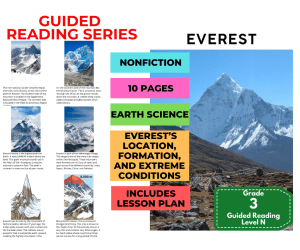
Guided Reading Level N - Everest (with Lesson Plan)
ELA, Resources for Teachers, Reading Comprehension, Reading, Science, Earth and Environmental Sciences, Social Studies, Geography, Life Sciences, Physics, Grade 2, 3, 4, Worksheets & Printables, Worksheets, Teacher Tools, Centers, Activities, Literacy Readers, Quizzes, Quizzes and Tests, Assessments, Lesson Plans
This Guided Reading Book - Everest (Level N) with lesson plan includes: Guided Reading Color Label (front cover x1) This is a quick way to match the book’s demands to what students can generally handle.. The overall goal is to use the level/color to pick books for several smaller groups. To qualify for a certain level, a student is expected to read a book from that level with about 90–94% accuracy. If a student is consistently accurate and understands, move up a level. If the student is struggling at that level, drop down and add more support. Each student will improve at completely different rates, but it is generally one of the best ways to check progress across the class. DOWNLOAD THE CATALOG TO VIEW ALL GUIDED READING BOOKS AVAILABLE (SORTED LEVELS A-Z) Pre-Reading Question (x1) Teacher asks the prompt aloud, can be while showing the cover or first page. Students share what they already know, or make educated guesses from the cover. Prompt them to use the target vocabulary. Write some of their responses on the board to look back at during the reading. Vocabulary Words (x5) Introduce the five words, best doing it one at a time. Start by saying it, while students repeat and then see if anyone knows what it means before reading further. Read through the meaning and try to briefly connect each word to a picture or gesture so it’s meaningful. Ask students to flip through the book pages and point to where they see each of the vocabulary words. While reading the book pause upon coming across one of the vocab words or read the sentence twice to make sure students understand the word has appeared. Optional: Ask students to raise hands whenever they see/hear one of the new words. Guided Reading Pages (x10) Check the book snapshot (below) for: primary topic - do you need to prep extra reading or intro materials on this? what is taught best - decide on 1-2 bullets to focus on, use the prompt or words provided here for best results. learning goals - what you are checking for students to be able to do after the session, elicit answers using prompts or words provided. key vocabulary (see section above). questions overview - so you know what is coming up and if you need to prep extra materials to assist understanding. Run the lesson You may have already looked at a few of the pages together, but you can show them some of the pictures again first to set meaning. Depending on how much time you have and how familiar your students are with guided reading class, you may want to read the book aloud first with the group first. Students whisper or partner read, while you listen in. If time, do it as a group, one student reading a page each. Use the guided page’s prompts to coach: “Check the picture / does it make sense?” “Point under the words / try the first sound” “Reread the sentence smoothly”. Try to focus more on one student per session (rotating every time), so you can work out if they are ready to move up or need to move down a level. Comprehension Questions (back cover x3) This is your way to check that students didn’t just say the words, but actually understood the text. First, let students answer by pointing to the page/picture and saying a short sentence. After any answer, follow with: “Show me where you found that in the text.” In bigger groups, have partners answer first (10–20 seconds), then call on 2–3 students to share. Differentiation tips: Emerging speakers/struggling readers: oral + pointing On-level: oral in a full sentence Higher: one written sentence or draw + label Book Snapshot Title: Everest Genre: Nonfiction (informational text) Subject: Science (Earth Science/Geography) Primary Topic: Mount Everest’s location, formation, and extreme conditions Estimated Guided Reading Level (A–Z): N What This Book Teaches Best Key facts about Mount Everest’s height and setting in the Himalayas in Asia. How mountain ranges form over long periods of time, including tectonic plate movement. How borders and regions connect to physical geography (Nepal/China border across the summit). How extreme environments change with altitude, including the “Death Zone” and low oxygen. How glaciers, weather, earthquakes, and erosion shape Everest and keep it changing. Learning Goals Describe where Mount Everest is located and what mountain system it is part of. Identify what the text says about the border between Nepal and China on Everest. Explain how Everest was formed using the book’s description of tectonic plates. Describe what the “Death Zone” is and why most living things cannot survive there long. Describe how glaciers create features on the mountain, including crevasses. Explain one way Everest is still changing today, using details from the text. Key Vocabulary From the Text summit — the very top point of a mountain. glacier — a huge, slow-moving river of ice. tectonic — related to Earth’s moving crust plates. crevasses — deep cracks in ice. erosion — wind, water, or ice wearing rock away. Discussion Prompts Pre-reading question: Where does the book say Mount Everest stands? Comprehension questions: What does the text say about where the Nepal–China border is on Everest? Comprehension questions: How does the text explain that Everest was formed long ago? Comprehension questions: What is one way the text says Mount Everest is still changing today? Printing Tips 1. Best Printing Method (Recommended) “Booklet” Printing (Best if Available) If your printer or PDF viewer supports Booklet Printing , use this. Settings to use: Print mode: Booklet Paper size: Letter or A4 (either works) Orientation: Landscape Print on both sides: Yes Flip on: Short edge Scaling: Fit to printable area Booklet subset: First test: Front sides only Then: Back sides only This will automatically: Pair pages correctly Put the cover on the outside Align everything for folding After printing, fold in half and staple along the spine . 2. If “Booklet” Printing Is NOT Available You can still print this correctly with manual duplex printing . Step-by-step: Open the PDF. Choose Print . Set: Orientation: Landscape Pages per sheet: 1 Print on both sides: Yes Flip on: Short edge Print all pages . Because each PDF page already contains two facing book pages, the result will still fold cleanly into a book. Thousands of Cored Education products are included with your TeachSimple membership. Download links and encyclopedia index available here.
Author Cored Education
Rating
Tags Reading Comprehension, Reading Passages, Reading, Guided Reading, Guided Reading Lesson Plan, Guided Reading Activity, Pre-reading, Social Studies Lesson Plans, Science Lesson Plans, Geography
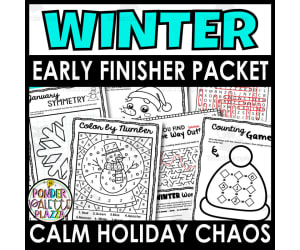
Winter Early Finisher Worksheets | Winter Break
ELA, Holiday & Seasonal, Seasons, Winter, Math, Basic Operations, Early Math, Not Grade Specific, Worksheets & Printables, Worksheets, Workbooks, Teacher Tools, Lesson Plans
Keep your students productively engaged with this Winter Early Finisher Worksheets packet. It’s a great way to help students settle back into classroom routines after winter break while also tying in simple New Year goal-setting. Designed for January, this no-prep packet includes fun, winter-themed activities students can complete on their own while continuing to practice important skills. These Winter Early Finisher activities are made with busy classrooms in mind. The ready-to-use worksheets are easy to grab and go, making them perfect for early finishers, morning work, sub plans, centers, or enrichment time. Each activity encourages independent work, problem-solving, and critical thinking, and can be used across multiple grade levels. This Resource Is Perfect For: Early finishers during winter and January lessons Getting students back into routine after winter break New Year goal-setting activities Morning work or bell ringers Centers, enrichment, or fast finishers Sub plans and low-prep teaching days What’s Included: Symmetry activities Color-by-number worksheets Counting game activities Dot-to-dot page Maze activity Word search puzzle Answer keys Why Teachers Love This Packet: No-prep, print-and-use worksheets Fun and engaging winter activities Helps students stay focused and work independently Suitable for a wide range of abilities Works well for grades 3–12 Enjoy!
Author Ponder Palette Plazza
Rating
Tags Early Finisher, January Early Finisher, February Early Finisher, December Early Finisher, Winter Early Finisher, Winter Break, Winter Break Activities, Winter Activities

Literary Devices Gr. 5-8
ELA, Strategies, Grade 5, 6, 7, 8, Teacher Tools, Lesson Plans
Literary Devices Gr. 5-8 Literary Devices Gr. 5-8 is an all-in-one teaching resource designed to help educators mentor students between grades 5 and 8 in understanding literary devices. Essential terms are defined and illustrated with abundant practice sessions, simplifying topics without compromising on depth of knowledge. Characterization This guide delves into characterization, coaching students to assess characters based on their appearance, thoughts, dialogue and reactions; breaking down complex attributes into simpler components for an easier grasp. Setting Narrative The 'setting' of a story - its time period, location and prevailing circumstances - can significantly influence the mood or atmosphere. This resource equips learners with the necessary skills to unravel these subtle details within a narrative. Action Mapping: It aids students in understanding plot mapping using graphic organisers that clearly highlight elements like rising action, climax and resolution. Beyond Surface Reading: Literary Devices Gr. 5-8 also assists in handling more nuanced aspects such as theme identification or unraveling an author's point view; offering more than common comprehension guides available today. Versatile Use: Beyond being just a reservoir for classroom learning materials this tooled kit is structured around Bloom's Taxonomy learning objectives techniques allowing its use for homework assignments or small instruction groups due to its flexibility in use-cases. Evaluating Acquired Knowledge Bundled with reproducible writing tasks along with crossword puzzles aimed towards consolidating learned skills at individual pace this guide encourages self-paced learning. Additionally comprehension quizzes followed by respective answer keys encouraging self-assessment among users making it quite a rounded tool covering everything needed by both educator and learner alike from one single source file available in PDF format under Language Arts strategies lesson plans suitable for Grades 5 through 8.
Author Classroom Complete Press
Tags PDF

Hiking Reading Comprehension Passage - Cored Ed Encyclopedia
ELA, Reading Comprehension, Reading, Pre-Reading, Language Development, History, Social Studies, Geography, P.E. & Health, Physical Education, Grade 2, 3, 4, 5, Worksheets & Printables, Worksheets, Teacher Tools, Centers, Activities, Writing Prompts, Assessments, Quizzes and Tests, Quizzes, Lesson Plans
This hiking reading comprehension with lesson plan includes: Visualization (on the front cover) Start your lesson by taking a minute to think and share something about the topic. Read the script aloud (slowly), perhaps prepare some music or sound effects. Student close their eyes and let their imaginations wander. Students open their eyes, read the question aloud and give them a few minutes to complete. Ask a few students to share or keep answers until the end to compare with what they learn in the passage. Quick pause—thousands of Cored Education products are included with your TeachSimple membership. Download links and encyclopedia index available here. Pre-Reading Trivia Students will write down one thing they already know about the subject and then read five more facts and discuss. These facts are fun, and the students will enjoy learning about the subject before reading more. Give 1 minute for students to write what they already know (no pressure—best guess is fine). Read the five facts together. After each fact, do ask a student for their opinion, was it surprising? Set a purpose by asking students to highlight/underline one fact they want to learn more about during the reading. Reading Passage The text is a high-interest reading passage with set paragraphs, roughly three to four paragraphs long. It contains a variety of themes about the topic, anywhere from history to technology. The passage is between 250 and 350 words in length. First, ask students to look at the headings and see what they’ll learn about today. What do they know about the topic/heading? First read options: Teacher read-aloud (best for support). Partner reading (paragraph by paragraph). While reading, students underline important details, and vocabulary words they think may come up in the questions section. Mixed Questions The first question page contains four multiple-choice questions, each with a choice of four answers, and three written response questions that require a sentence or two from the student. Students complete the mcqs first independently, then review quickly as a class. For the 3 written responses, try to get students giving the answer with some form of evidence: “I think ___ because the text says ___.” If students get stuck, send them back to check the passage. Vocabulary Questions Practice seven key words from the text in this section across two activities. First section is scrambled words where students will unscramble three words given a clue for each. The second section is a word to meaning matching activity. Before starting, have some students read out words they underlined in the passage. Ask students to say the word and read aloud the sentence(s) around each word. Ask students to do scrambled words and the matching exercise in pairs then go through answers as a class. For the scrambled spelling task, get four pairs to come up to the board and write the words for extra practice with the other student reading out the clue. For the matching task, prompt students to give full sentences: “I matched ___ with ___ because ___.” Creative Writing In this question, the student will be required to write a five to eight sentence paragraph on a question related to the topic. Before starting, ask students write down 3 key ideas they are going to include in their piece. Ask students for ideas to share around the class to help those struggling. Pro writing expectations: 5–8 sentences At least 2 facts or details from the passage At least 2 vocabulary words from the previous page Students read their paragraphs while classmates listen for facts and vocabulary words. Extension Activities This page is optional for fast finishers or to take home. There are several activities, each one requiring a different skill. Do some, do none, do all, completely optional - but you will feel reassured knowing every possibility is planned for. Includes summary writting question and additional facts. Answer Key There are answers for the multiple-choice questions, written response questions have sample answers, vocabulary answers and if there is a summary question then a sample summary will be provided as well. Lesson Plan Included Customized lesson plan for this lesson is included. Lesson Snapshot Title: Hiking Genre: Nonfiction (informational text) Subject: Health / Physical Education Primary Topic: What hiking is, its history, and staying safe Estimated Guided Reading Level (A–Z): Q What This Lesson Teaches Best Defines hiking as “more than a stroll” and describes what hiking feels like on a trail or footpath. Explains how walking shifted from serious reasons (like religious pilgrimages) to walking for pleasure and adventure. Describes how trails needed signs, maps, and protection as hiking grew, including work to build and maintain the Appalachian Trail. Teaches basic hiking safety and preparedness (boots/shoes, backpack supplies, and the “Ten Essentials” such as a compass and first-aid kit). Names risks hikers can face when weather shifts or routes disappear, including dehydration and hypothermia. Learning Goals Students will describe what hiking is using details from the passage. Students will explain why people walked long ago and how walking for pleasure grew later. Students will identify why trails needed signs, maps, and protection as more people hiked. Students will describe what the passage says about the Appalachian Trail (where it stretches and how long it is). Students will list items hikers pack to “stay alert” and connect them to safety. Students will name risks mentioned in the text that can affect hikers’ bodies. Key Vocabulary From the Text pilgrimages — long journeys taken for religious reasons. destinations — places people want to go or visit. organizations — groups that work together for a purpose. dehydration — not enough water in the body. hypothermia — when the body gets too cold. FULL CATALOG OF DOWNLOAD LINKS AND ENCYCLOPEDIA INDEX HERE
Author Cored Education
Rating
Tags Vocabulary, Reading Comprehension, Reading Passages, Lesson Plans, Ela Lesson Plans, Reading Comprehension Lesson Plans, Pre-reading, Health Lesson Plans, Social Studies Lesson Plans, P.e.

First Week of School Grade 10 | No-Prep Worksheets
ELA, Math, Grade 10, Lesson Plans, Teacher Tools, Worksheets & Printables
First Week of School Grade 10 | No-Prep Worksheets Help students start sophomore year with confidence using this First Week of School Activities for 10th Grade resource! This engaging, no-prep back-to-school packet combines Geometry review, literacy, writing, collaboration, and critical-thinking activities to help students reconnect with academic skills while building a positive classroom community. Through five structured days of meaningful learning, students strengthen foundational concepts and establish habits for a successful school year. What’s Included ✅ 30-page student workbook ✅ 5 ready-to-teach themed learning days ✅ Comprehensive Teacher Guide ✅ Complete Answer Key ✅ Student introduction activities ✅ Summer narrative writing ✅ SMART goal-setting activities ✅ Geometry warm-up activities ✅ Pythagorean Theorem review ✅ Triangle angle-sum practice ✅ Distance formula activities ✅ Classroom community-building activities ✅ Logical reasoning and conditional statements ✅ Angle relationships with parallel lines ✅ Coordinate geometry practice ✅ Distance, midpoint, and slope activities ✅ Argument writing prompts ✅ Student interviews ✅ Collaboration and conflict-resolution activities ✅ Congruence and similarity practice ✅ Right-triangle trigonometry ✅ Circle measurements and angle relationships ✅ Geometric transformations ✅ Area, surface area, and volume activities ✅ Parallel structure and grammar practice ✅ Academic vocabulary development ✅ Central idea and text analysis ✅ End-of-week certificate ✅ No-prep print-and-go format How It Works in the Classroom This 10th Grade First Week of School Packet is organized into five engaging instructional days designed to help students transition into a new academic year while reviewing essential Geometry concepts and literacy skills. Day 1: Welcome & Goals Student introductions Summer narrative writing SMART goals Geometry review Pythagorean Theorem Area, angles, and distance formula Day 2: Classroom & Community Classroom expectations and values Conditional reasoning Angle relationships Coordinate geometry Distance, midpoint, and slope Day 3: Collaboration Argument writing Student interviews Team-building activities Conflict resolution Communication skills Day 4: Geometry Essentials Congruence and similarity Right-triangle trigonometry Circle measurements Transformations Area, surface area, and volume Day 5: Language & Literacy Parallel structure Modifiers and sentence editing Academic vocabulary Roots and word meaning Central idea and evidence Reading comprehension Perfect for: Back-to-school lessons Advisory periods Geometry review Independent practice Whole-group instruction Small-group learning Skill review Informal assessments Early finisher activities The included teacher guide provides lesson plans, pacing suggestions, discussion prompts, differentiation strategies, and implementation support for every day of instruction. Standards & Learning Goals Students will practice: ⭐ Narrative writing ⭐ Argument writing ⭐ SMART goal setting ⭐ Pythagorean Theorem applications ⭐ Triangle angle relationships ⭐ Distance formula ⭐ Conditional reasoning ⭐ Coordinate geometry ⭐ Distance, midpoint, and slope formulas ⭐ Collaboration and teamwork ⭐ Conflict resolution ⭐ Triangle congruence and similarity ⭐ Right-triangle trigonometry ⭐ Circle measurements and angle relationships ⭐ Geometric transformations ⭐ Area, surface area, and volume ⭐ Parallel structure and sentence fluency ⭐ Academic vocabulary development ⭐ Central idea and evidence analysis ⭐ Critical thinking and mathematical reasoning This resource reviews important Geometry concepts while strengthening literacy, communication, and problem-solving skills that support success across all high school content areas. Why Teachers Love It ❤️ No prep required ❤️ Designed specifically for high school students ❤️ Covers the entire first week of school ❤️ Integrates Geometry, literacy, writing, and SEL ❤️ Builds classroom culture and positive relationships ❤️ Encourages student ownership and goal setting ❤️ Includes teacher guide and answer key ❤️ Reviews prerequisite Geometry skills ❤️ Provides opportunities for informal assessment ❤️ Supports classroom routines and expectations ❤️ Includes built-in differentiation strategies ❤️ Promotes collaboration, communication, and critical thinking Created specifically for tenth-grade students, this resource balances academic review with relationship-building activities to help teachers establish a welcoming classroom environment while preparing students for a successful year of learning. Start the school year strong with this First Week of School Activities for 10th Grade packet! Build classroom community, reinforce essential Geometry and literacy skills, and help students develop the confidence and academic habits they need for a successful sophomore year.
Author Bright Classroom Ideas Marketplace
Rating
Tags Back To School, First Week, Ela, Math, Lesson, Plan, Worksheet
Nail Biter | Figurative Language Activity | Micro-Learning Deck
ELA, Reading, Reading Comprehension, Grade 2, 3, 4, 5, Teacher Tools, Lesson Plans
This resource allows students to explore figurative learning in a fun way. The figurative language term for this learning deck is "Nail Biter." Through close reading and a reading passage with audio, your students will better comprehend figurative language! Included: -Video lesson on language concept -Reading passage w/ audio Comprehension -Quick write
Author Teach Me This
Tags Nail Biter, Figurative, Language, Learning Deck, Reading Activity

Guided Reading Lesson Plan & Activities for Grade 5
Reading, ELA, Grade 5, Activities, Lesson Plans, Teacher Tools
Teaching guided reading in 5th grade is one of the most rewarding aspects of teaching this grade. The standards and text levels are more rigorous than in primary grades, and the students are much more independent. The books they read are more engaging, making the teaching experience enjoyable. When actively in the classroom, use a flexible approach that promotes student choice and variety, paired with explicit instruction and engaging reading practice. Try to teach reading in a way that promotes discussion and enjoyment of reading. Focus on three key areas: 1. Learning to Read: Developing or growing skills to decode and comprehend grade-level texts. 2. Reading to Learn: Acquiring the skills needed to extract details and information from a text or story and synthesizing it. 3. Reading to Analyze: Building on reading to learn by focusing on specific skills and then being able to write about them. This ebook contains a detailed 90-minute lesson plan and activities for your Grade 5 students. Suggested answers are provided as well.
Author Bright Classroom Ideas Marketplace
Tags Guided, Reading, Lesson, Plan, Activities, Language, Grade 5

Bugs Curriculum Pack
Creative Arts, Art, Social Studies, ELA, Kindergarten, Lesson Plans, Teacher Tools
If your students are studying insects or are about to begin a bugs unit, I have just the resource to provide you with everything you need and more! This is a Bugs Curriculum Pack complete with an abundance of printable resources and engaging activities for students to complete. This curriculum was designed for your preschool students. The curriculum goal is to raise awareness of another aspect of the child's world, while teaching specific facts and concepts about nature and insects. The vocabulary that students will focus on is insect, wings, hive, pest control, cocoon, metamorphosis, entomologist, habitat, antenna, pollen/pollination, thorax, and chrysalis (cocoon). This curriculum will come with a letter of the week (I). This curriculum pack includes: --Sensory Table Ideas --Art Activities --Cooking Experience --Community Time --Math Activities --Home/School Connection Ideas --Science Table Enrichments --Science Concepts/Activities --Prop Box Ideas/Dramatic Play Enrichments --Movement and Motor --Playground/Walk Activities --Transition/Waiting Ideas --Block Area Enrichments --Flannel Board --Teacher Made Enrichment Ideas --Field Trip Ideas --Supplemental Learning Ideas/Activities At the start of this pack, you will receive a list of supplies needed for activities and projects. The worksheets, activities, and tasks included in this pack are intended to be completed in a variety of formats – whole group, small group, and independent work. I hope you enjoy!
Author Learning Foundations
Tags Bugs Curriculum, Science Activities, Community, Vocabulary, Letter Of The Week, Sensory Table, Learning Foundations, Small Group, Math

MLK Day Flip Book
ELA, Language Development, ESL, Reading Comprehension, Reading, Vocabulary, History, Social Studies, Kindergarten, Grade 1, 2, 3, 4, 5, Worksheets & Printables, Teacher Tools, Lesson Plans, Activities, Centers
Ready to make Martin Luther King Jr. Day memorable for your students? This MLK Day Flip Book is a hands-on, interactive way to explore Dr. King’s life, values, and lasting impact. With four thought-provoking questions, your students will reflect, learn, and even share their own dreams for a better world. Plus, it’s the perfect activity to keep little hands busy while big minds work. Ways to Use In-Class Activity: Dive into the four sections with guided discussions or independent work. Homework Assignment: A meaningful take-home task that sparks family conversations. Small Group Collaboration: Let students brainstorm and share ideas together. MLK Day Event: Create a classroom display with completed flip books! Advantages Interactive Learning: Students engage actively by writing, coloring, and flipping through the book. Age-Appropriate Insight: The questions are designed to be simple yet powerful, suitable for young learners. Encourages Critical Thinking: Students connect Dr. King’s legacy to their own lives and communities. No Prep, All Fun: Just print, assemble, and let the magic happen. Whether for MLK Day, Black History Month, or a powerful history lesson, this flip book transforms learning into something tangible and inspiring. It’s a classroom favorite that’ll have your students flipping , literally!
Author Ponder Palette Plazza
Tags Mlk Day, Mlk Jr Day, Martin Luther King Day, Martin Luther King Day Reading, Flipbook, Mlk Filpbook, Mlk Day Flip Book, Mlk Day Activities
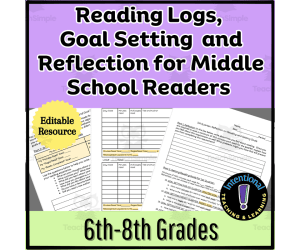
Reading Logs, Goal-Setting, and Reflection for Middle School Readers
ELA, Reading, Reading Comprehension, Grade 6, 7, 8, Teacher Tools, Lesson Plans
This 47-page editable resource, Reading Logs, Goal-Setting, and Reflection for Middle School Readers is a how-to lesson to help teachers center the importance of reading (and independent reading) in their 6th, 7th, and 8th grade Language Arts classrooms by having students be accountable for their reading. Students establish goals for their reading: the number of pages, minutes, and books they would like to read over the course of a grading period (quarter, trimester, or semester). They initially reflect on their feelings about reading, then establish goals for the first marking period. (The resource offers a step-by-step instruction for teachers to help students set reasonable and realistic goals for how much they want to read.) Each grading period, they review their goals to see if they achieved, surpassed, or fell short of achieving them. They reflect on their successes and challenges, and then. establish new goals. This resource offers teachers the following: a hyperlinked Table of Contents About this Resource- a handy guide with everything you need for this resource in one place a detailed lesson plan that includes how students can determine their reading goals Essential and Guiding Questions Standards, Objectives, and Learning Targets a sample Reading Requirements handout for a typical classroom which is easily editable to fit your needs a self-reflection as readers, before they establish goals the first time Reading Goals for each marking period (Quarters and Trimesters are included) which contain self-reflections for students to complete in which they celebrate their successes, identify their challenges, offer solutions for these challenges, and set new goals for the next grading period. Reading Log Template for Quarters or Trimesters for students to complete Reflections for each marking period End-of-Year Reflection with guiding questions for them to think about their goals, their successes, their challenges, what they learned about themselves as readers, favorite books or authors, etc. 6 Sample Student End-of-Year Reflections Most students don't read enough and many of our students read below grade level. As English teachers, we struggle with providing our students enough in-class time for reading, whether it's through SSR (Sustained Silent Reading) or DEAR (Drop Everything and Read) or some other carved out time for reading. Many teachers will tell you that they have tried reading logs, and students often cheat on them or don't turn them in. My experience has been different. By building in student accountability by having them establish reading goals, in addition to giving them 10-15 minutes of silent reading in class twice a week (or however much time you have dedicated to it), and by checking in with them regularly on their reading practice, students turn in their reading logs. Of course there has to be follow-through on the teacher's part by contacting parents, discussing with students how to choose the just-right book, making sure books are available, talking about reading, doing book talks, or having them do book talks, etc. You might be interested in the following resources that pair nicely with Reading Logs, Goal Setting, and Reflection for Middle School Readers. Part 1: What We Do When We Read: Teach or Review Reading Strategies for Middle School, When we read, our brain is engaging in subconscious activities related to what we are reading. In this lesson, students complete a reading survey, write a personal reading history, and through the poem, "The Voice You Hear When You Read Silently," by Thomas Lux, identify reading strategies we use subconsciously. Part 2: Reading Logs and Goal Setting for Middle School Readers, in this how-to lesson, teachers introduce what they expect from their students in terms of their accountability for their reading. Students have handouts to help them establish goals for their reading for each grading period: how many books they want to finish and how many pages they want to read, and a self-reflection on their accomplishments. Part 4: Summary Writing for Short Stories in your Middle School Classroom : A step-by-step lesson to teach students write a summary of a short story by completing a graphic organizer. Includes links to several stories. Also includes an optional group summary project In addition, using Chris Van Allsburg picture books. Part 5: Metacognitive Logs: Reading Response (Strategies to Teach) : Provides teachers with detailed lessons to teach students how to respond to literature by analyzing and interpreting their thoughts while reading. This process trains students to focus on their reading. There are many student examples and opportunities for interactive activities. I also offer a number of book reports that help students stay accountable to their reading. Character Analysis Essay, Gift for a Character Book Report, and Oral Presentation Book into Movie Project: Comparing and Contrasting Poetry Book Report Mini-Reviews Book Report Mystery, Thriller, Horror, and Suspense Book Report Book Jacket Book Report Historical Fiction Book Report Historical Fiction Literature Circle Project
Author Intentional Teaching and Learning
Tags Independent Reading, Middle School Reading, Reading Logs, Goal-setting, Self-reflection, Accountability, Reading Goals, Student Accountability, Middle School Readers

Grade 4 Yearlong Reading Comprehension Curriculum | 180 Worksheets
ELA, Grade 4, Lesson Plans, Teacher Tools, Worksheets & Printables
Grade 4 Yearlong Reading Comprehension Curriculum | 180 No-Prep Worksheets Help your students become stronger, more confident readers with this Grade 4 Reading Comprehension Curriculum! This comprehensive year-long resource includes 180 daily reading passages, vocabulary activities, comprehension questions, writing prompts, and answer keys designed to build critical reading skills, text evidence analysis, vocabulary development, and written responses through consistent daily practice. What's Included ✅ 180 daily reading comprehension passages ✅ 36 weeks of literacy instruction ✅ 5 passages per week ✅ Fiction and nonfiction reading selections ✅ Vocabulary matching activities for every passage ✅ 3 comprehension questions per passage ✅ Writing prompt with each reading assignment ✅ Student Worksheet Book ✅ Comprehensive Teacher Guide ✅ Complete Answer Key ✅ Year-long pacing guide ✅ Differentiation strategies for diverse learners ✅ Assessment support and grading rubric ✅ Print-and-go format for easy implementation How It Works in the Classroom This Grade 4 Reading Comprehension Curriculum follows a structured daily routine that helps students develop independence while practicing essential literacy skills. Daily Routine: Read and analyze the passage Complete vocabulary practice Answer comprehension questions using text evidence Respond to a writing prompt Perfect for: • Whole-group instruction • Small-group reading lessons • Literacy centers • Independent practice • Homework • Intervention support • Morning work • Homeschool learning • Sub plans Each lesson is designed to take approximately 35 minutes and encourages students to cite details and examples directly from the text to support their thinking. Standards & Learning Goals Students will strengthen skills in: ⭐ Key Details ⭐ Story Characters ⭐ Setting ⭐ Retelling & Sequencing ⭐ Main Topic ⭐ Main Idea ⭐ Cause & Effect ⭐ Compare & Contrast ⭐ Drawing Conclusions ⭐ Making Predictions ⭐ Author's Purpose ⭐ Ask & Answer Questions ⭐ Connecting Texts ⭐ Fact & Opinion ⭐ Problem & Solution ⭐ Story Elements ⭐ Vocabulary Development ⭐ Text Evidence ⭐ Reading Response Writing ⭐ Fiction and Nonfiction Comprehension Comprehension skills are spiraled throughout all 36 weeks to provide repeated exposure, practice, and mastery opportunities. The curriculum places strong emphasis on supporting answers with details and evidence from the text. Why Teachers Love It ❤️ Provides a complete year of reading comprehension instruction ❤️ No-prep, print-and-go format ❤️ Includes student workbook, teacher guide, and answer key ❤️ Balanced mix of fiction and nonfiction texts ❤️ Builds strong text evidence and critical thinking skills ❤️ Supports vocabulary, comprehension, and writing in one resource ❤️ Includes differentiation suggestions for struggling and advanced readers ❤️ Easy-to-follow pacing guide saves planning time ❤️ Consistent structure builds student confidence and independence ❤️ Perfect for classroom instruction, intervention, tutoring, and homeschool use Students are exposed to approximately 540 vocabulary words throughout the year while working through a wide variety of reading genres, themes, and comprehension skills. The curriculum provides a near-even balance of fiction and nonfiction texts to support well-rounded literacy development. If you're looking for a Grade 4 Reading Comprehension Curriculum that provides daily reading practice, spiraled skill review, vocabulary development, text evidence instruction, and meaningful writing opportunities, this year-long resource is ready to support your literacy instruction all year long!
Author Bright Classroom Ideas Marketplace
Rating
Tags Reading, Comprehension, Ela, Writing, Worksheet, Yearlong, Full Year, Curriculum

The Gift of the Magi: Full Lesson Plan w/ PowerPoints & Graphic Organizers
ELA, Literature, Grade 6, 7, 8, 9, Lesson Plans, Teacher Tools
This resource will give you everything you need to complete a full, comprehensive reading lesson plan for The Gift of the Magi text by O. Henry. Files are offered as PDFs and Word documents. Included: -The Gift of the Magi Lesson Plan -The Gift of the Magi Worksheet -The Gift of the Magi Answer Key Graphic Organizers: Author’s Purpose Characterization Chart Figurative Language Chart Historical Analysis Chart Imagery Chart Peer Evaluation Sheet Plot Diagram Read for Detail Setting Style Chart Symbol Chart Symbolism Chart Theme Diagram Tone and Mood Diagram Universal Plot Diagram Venn Diagram PowerPoints: Characterization Imagery, Voice, and Persona Irony and Ambiguity Narrator and Voice Plot Structure Symbolism and Allegory Theme - How to Interpret Theme Thank You Bonus Stuff!
Author Quality Teaching Products
Tags Literature, Short Story, Fiction Text, Reading Lesson Plan, Reading Powerpoint, The Gift Of The Magi Lesson Plans Pdf, The Gift Of The Magi Answers Key, Gift Of The Magi Answer Key, Magi Worksheet, The Gift Of The Magi Lesson Plans Middle School, The Gift Of Magi Answer Key, Figurative Language In The Gift Of The Magi, The Gift Of The Magi Plot Diagram, The Gift Of The Magi Answer Key
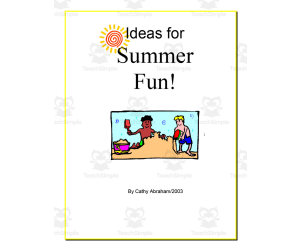
Summer Fun Curriculum Pack
Creative Arts, Art, Holiday & Seasonal, ELA, Seasons, Summer, Writing, Handwriting, Kindergarten, Lesson Plans, Teacher Tools
If your students are studying seasons or about to begin a nature unit, I have just the resource to provide you with everything you need and more! This is aSummer Fun Curriculum Packcomplete with an abundance of printable resources and engaging activities for students to complete. This curriculum was designed for your preschool students. The curriculum goal is to give children an awareness and appreciation for the things associated with this time of the year, while skill-building within the thematic framework. The vocabulary that students will focus on issummer, sunny, hot, sunburn, shade, picnic, sunlight, rays, heat, and sweat. This curriculum will come with a color of the week (yellow)and a letter of the week(H). This curriculum pack includes: --Sensory Table Ideas --Art Activities --Cooking Experience --Community Time --Math Activities --Home/School Connection Ideas --Science Table Enrichments --Science Concepts/Activities --Prop Box Ideas/Dramatic Play Enrichments --Movement and Motor --Playground/Walk Activities --Transition/Waiting Ideas --Block Area Enrichments --Flannel Board --Teacher Made Enrichment Ideas --Field Trip Ideas --Supplemental Learning Ideas/Activities At the start of this pack, you will receive a list of supplies needed for activities and projects. The worksheets, activities, and tasks included in this pack are intended to be completed in a variety of formats – whole group, small group, and independent work. I hope you enjoy! Here are other similar resources for you to enjoy: Good Manners Curriculum Pack Earth Day Curriculum Pack Planting Curriculum Pack Holidays Around the World Curriculum Pack Jungle Love Curriculum Pack Discovering Dinosaurs Curriculum Pack You can find more resources at my storefront here: https://teachsimple.com/contributor/learning-foundations
Author Learning Foundations
Tags Summer Fun, Seasonal Activities, Outdoor Activity, Nature Walk, Preschool Curriculum, Vocabulary, Sensory Table, Dramatic Play, Art Activity

I WONDER - What Is Imagery | Animated Video Lesson
Poetry, Literature, ELA, Grade 5, 6, 7, 8, 9, 10, 11, Lesson Plans, Teacher Tools
Video Introduction An amazing video designed for the students to learn more about famous poetry in different countries. I WONDER - What Is Imagery| Animated Video Lesson Do you like reading poetry? If yes, what is your favorite poem? Do you have a favorite poet? If yes, tell us more about him/her. What are the types of poetry? Have you ever tried to write a poem before? If yes, tell us more about it. What is acrostic poem? Dow you know who is the first writer to write it? Can you write one? What is limerick? Dow you know who is the first writer to write it? Can you write one? What is sonnet? Dow you know who is the first writer to write it? Can you write one? What is haiku? Dow you know who is the first writer to write it? Can you write one? I WONDER - What Is Imagery | Animated Video Lesson The video is perfect for encouraging the researching skills for the students, while learning more about this fantastic poetry. I WONDER - What Is Imagery | Animated Video Lesson This friendly designed video is suitable for students at school, homeschooling, and as a group activity. Format Available in MP4 format.
Author Educational Voice
Rating
Tags What Is Imagery, What Is Imagery Video, Imagery, Imagery Facts, Imagery Video, Imagery Facts For Kids, Imagery Video For Kids, Poetry, Poetry Facts, Poetry Video

High Frequency Sight Words: Boxed Words - FLASH-MAC
ELA, Language Development, Vocabulary, Grade 1, 2, Teacher Tools, Lesson Plans
High Frequency Sight Words: Boxed Words - FLASH-MAC Dive into a world of enrichment with the High Frequency Sight Words: Boxed Words - FLASH-MAC. Offering an in-depth exploration of Dolch Sight Words, this teaching resource amplifies language arts curriculums for first and second graders. It's uniquely tailored to lay a robust foundation in high frequency vocabulary, seamlessly merging innovative tech and time-tested teaching techniques. Engaging Content to Boost Word Recognition Skills: The heart of this resource is its captivating boxed words exercises. Designed to sharpen recognition skills, these centered tasks are fundamental for fostering reading efficiency in students. By encouraging faster recognition and comprehension of frequently used words, little learners can read more fluently with a deeper understanding. Digital & Printable Exercises: Alongside these interactive activities are printables which offer tangible educational material alongside the digital resources ensuring every learning style is catered to. This yields an all encompassing approach towards vocabulary building within classroom settings as well as when homeschooling. Visual Learning through Presented Flashcards : A notable component of this package is our Dolch sight word flashcards ; tools proven effective for enhancing memory retention and recall abilities using visuals cues. These flashcards help break down complex ideas making learning both fun & easy! Simplification using Graphic Organisers: The package also includes graphic organisers that encapsulate abstract concepts in structured mind-maps visually simplifying each lesson ideal especially for visual-orientated learners. Tailored Interactive Activities: If you're hunting for engaging activities meeting your class's specific needs while maintaining high student involvement, you've hit the jackpot! This High Frequency Sight Words: Boxed Words - FLASH-MAC product file has been developed for convenient use on MAC software. It's easy-to-grasp format is ideal as homework assignments adding reinforcement to lessons learned outside of school hours. Valuable Lesson Plans: The package includes expertly crafted lesson plans, meeting pedagogical research standards assuring that you can easily implement effective teaching methods improving not just vocabulary but offering a richer literary journey for your students.
Author Classroom Complete Press
Tags Software (Mac)

Asking Questions | Pre-Intermediate Lesson Plan
ELA, Language Development, ESL, Grade 7, 8, 9, 10, 11, 12, Teacher Tools, Lesson Plans
Asking Questions | Pre-Intermediate Lesson Plan is a hands-on resource designed to help students master the art of framing questions. Besides boosting Language Arts skills, it offers significant benefits for ESL learners. The heart of this resource is a series of carefully constructed worksheets that delve into question formation. Once students grasp the core principles from these lessons, they must apply their understanding and grammar skills to complete interactive exercises. These activities act as assessments, helping educators evaluate student progress and modify teaching tactics accordingly. This resource can be implemented in diverse classroom settings - group sessions fostering rich discussions or small group/individual sessions offering personalized feedback potential. Included are three PDFs comprising 30 ready-to-print pages along with a file for digital access. This ensures its adaptability across physical classrooms or online modes of teaching. "Not Grade Specific" mentions its flexible usage across grades at the teacher's discretion based on student ability levels. The material primarily targets pre-intermediate level learners due to graded difficulty levels in language arts proficiency; however it can be adapted across different grades depending upon teacher's discretion based on student’s abilities. This lesson plan includes: Cover page Flash cards A warm-up activity Main use Construction details Rules, along with any exceptions Illustrative examples Two closed exercises One open exercise Revision exercise Writing exercises Chatterbox, a recurring feature in our course books encouraging conversation Activity , such as a game, quiz, puzzle, etc., to conclude the class The lesson plan is available in PDF with 30 ready to print pages and one digital access file. A part of it is on Google Apps. The answer key is also included for reference.
Author TEAM TEFL
Tags Question Framing, Language Arts, Grammar Skills, Interactive Assessment, Communication Skills

Phonics / Digraphs for 1st and 2nd Grade: Beginning Sounds: SH, TH, WH and PH
ELA, Reading, Reading Comprehension, Grammar, Language Development, Phonics, Strategies, Pre-Reading, Grade 1, 2, Worksheets & Printables, Worksheets, Teacher Tools, Lesson Plans
This unit focuses only on the Beginning Digraph sounds. Learning how to read can be the most challenging activity for many students and for a teacher. A digraph in the English language are two letters put together that represents a single sound or phoneme. Understanding that the combination of letters can make one sound can be difficult to master and requires repetitive practice of reading and writing these words with these sounds. There are other phonics units that I sell that focuses on the Ending digraph sounds, and one that focuses on all three digraph sounds in the Beginning, Middle and End. Reading can be made easier with these phonic helps that repeatedly encourage students to practice these Beginning Digraph sounds. Activities include reading comprehension and identifying the digraphs in their reading, writing their answers to questions regarding the paragraph, identifying additional beginning digraph words in sentences using a word bank, matching words with pictures, spinning a paperclip activity where students will write the word with the digraph sound, and lastly a fun wordsearch with the beginning digraph words. These activities are for each digraph so there is plenty of opportunities for students to practice their comprehension reading skills and phonic sounds. Students will practice the following Beginning Digraph sounds: sh, th, wh, and ph. Teachers can use this resource in whole group, individually with students, students can practice with each other in centers, or they can be assigned as homework. Worksheets are also differentiated for each Beginning Digraph sound for all young learners which makes it perfect for all 1st - 2nd graders. A total of 26 pages full of reading and phonic activities. Along with reading and writing, there are matching, cutting, and pasting activities. Word searches and spin and make a word activity are also a part of this packet which make learning to read these phonic sounds entertaining for young learners. For a list of other phonics and grammar activities, click on the following links: CVC Word Families for Beginning Readers: Stamp it, Make it, Trace it, and Write it CVC Words | Short Vowel Phonics | Word Families for K- 2nd Grade Phonics for 1st and 2nd Grade: Help Students Learn Long A Words: AY, AI, A_E, EIGH, EY, and EA Phonics for 1st and 2nd Grade: Help Students Learn Long E Words: EE, EA, E_E, and Y Phonics for 1st and 2nd Grade: Help Students Learn Long I Words: I_E, IE, IGH, and Y Phonics for 1st and 2nd Grade: Help Students Learn Long O Words: O_E, OA, OW, OE, and OUGH Phonics for 1st and 2nd Grade: Help Students Learn Long U Words: U_E, EW, OO, UE, UI and OU Phonics / Digraphs for 1st and 2nd Grade: Beginning, Middle, and Ending Sounds Phonics / Digraphs for 1st -2nd: Ending Sounds: CK, NG, SH, TH, and NK Phonics / Digraphs for 1st and 2nd Grade: Beginning Sounds: SH, TH, WH and PH Phonics: R-Controlled Words for 1st and 2nd Grade and Early Readers
Author K-5 Treasures
Tags Beginning Sounds, Phonics , Sh Words, Th Words, Wh Words, Ph Words, Reading , Digraph Words, Th Digraphs, First Grade Digraphs
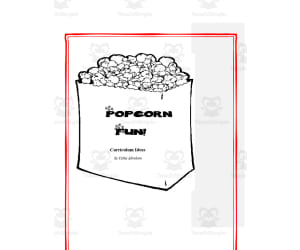
Popcorn Fun Curriculum Pack
Creative Arts, Art, ELA, Math, Early Math, Reading, Kindergarten, Lesson Plans, Teacher Tools
If your students are studying familiar things or are about to begin a food unit, I have just the resource to provide you with everything you need and more! This is aPopcorn Fun Curriculum Packcomplete with an abundance of printable resources and engaging activities for students to complete. This curriculum was designed for your preschool students. The curriculum goal is to impart new and expanded knowledge and experiences on a subject children are familiar with, and have a frame of reference on – while building skills in a fun way. The vocabulary that students will focus on ispopcorn, kernel, batch, cob, corn, seeds, popper, and steam. This curriculum will come with a color of the week (white)and a letter of the week(P). This curriculum pack includes: --Sensory Table Ideas --Art Activities --Cooking Experience --Community Time --Math Activities --Home/School Connection Ideas --Science Table Enrichments --Science Concepts/Activities --Prop Box Ideas/Dramatic Play Enrichments --Movement and Motor --Playground/Walk Activities --Transition/Waiting Ideas --Block Area Enrichments --Flannel Board --Teacher Made Enrichment Ideas --Field Trip Ideas --Supplemental Learning Ideas/Activities At the start of this pack, you will receive a list of supplies needed for activities and projects. The worksheets, activities, and tasks included in this pack are intended to be completed in a variety of formats – whole group, small group, and independent work. I hope you enjoy! Here are other similar resources for you to enjoy: Our Feathered Friends Curriculum Pack Handwashing Curriculum Pack Day and Night Curriculum Pack Mitten Fun Curriculum Pack Groundhog Day Curriculum Pack Rainbows Curriculum Pack You can find more resources at my storefront here: https://teachsimple.com/contributor/learning-foundations
Author Learning Foundations
Tags Preschool Curriculum, Handwriting Practice, Science Curriculum, Experiments, Field Trip Ideas, Popcorn, Food, Cooking, Motor Skills
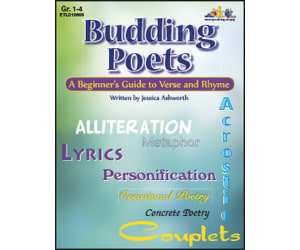
Budding Poets: A Beginner's Guide to Verse and Rhyme
ELA, Literature, Poetry, Grade 1, 2, 3, 4, Teacher Tools, Lesson Plans
Budding Poets: A Beginner's Guide to Verse and Rhyme Take your learners on an exciting journey into the heart of verse with budding poets. Designed to inspire young minds' affection for poetry while simultaneously developing their creative writing talents. What Budding Poets Offers An extensive digital guide immersed in over 40 engaging poems. A variety of 20 diverse styles designed specifically for novice learners venturing into the realm of rhyme. A robust collection comprising both high- and low-level poems that do more than just entertain; they introduce students to a complex tapestry of poetic devices and forms. Tailored Activities For Learning Enhancement The well-thought-out tasks accompanying each poem are crafted to hit on critical poetic techniques, keeping every student engaged while forming a strong foundation as rising poets. Cross-Curricular Extension Activities A Value Addition! In this package, you will discover: 100 cross-curricular extension activities: which bridge poetry with other subject areas giving students an integrated academic experience—a truly innovative approach toward holistic education! Budding Poets:, whether mentored wholesomely or fostering small discussion groups, assigning homework or orchestrating classroom activities- can be effectively implemented accommodating according to your pedagogical needs making it versatile for both traditional classrooms as well as homeschool settings. Note: This must-have educational companion combines quality content cleverly packaged into one neatly organized PDF file! The resource transcends boundaries by not only meeting curriculum standards, but nurturing lifelong enthusiasts vested in appreciating the aesthetic wonders embraced by poetry. Offer your students from Grade1 to Grade4 this enriching exploration that promises immersive experiences into poetry and an overall enriching learning experience. Let's assist your students in beginning their poetic journeys today!
Author Classroom Complete Press
Tags PDF, Guide Rhyme, Poets For Beginners
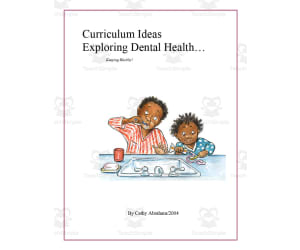
Dental Health Curriculum Pack
Creative Arts, Art, Social Studies, ELA, Math, Early Math, Science, Basic Science, P.E. & Health, Health, Kindergarten, Lesson Plans, Teacher Tools
If your students are studying hygiene or are about to begin a dental health unit, I have just the resource to provide you with everything you need and more! This is a Dental Health Curriculum Pack complete with an abundance of printable resources and engaging activities for students to complete. This curriculum was designed for your preschool students. The curriculum goal is to explore and learn ways in which they can take care of their teeth and the benefit of good oral hygiene – while fostering self-help skills and autonomy. The vocabulary that students will focus on is teeth, oral hygiene, dentist, hygienist, cavities, dentures, calcium, tooth, molars, cuspids, floss, gums, roots, and incisors. This curriculum will come with a color of the week (white) and a letter of the week (D). This curriculum pack includes: --Sensory Table Ideas --Art Activities --Cooking Experience --Community Time --Math Activities --Home/School Connection Ideas --Science Table Enrichments --Science Concepts/Activities --Prop Box Ideas/Dramatic Play Enrichments --Movement and Motor --Playground/Walk Activities --Transition/Waiting Ideas --Block Area Enrichments --Flannel Board --Teacher Made Enrichment Ideas --Field Trip Ideas --Supplemental Learning Ideas/Activities At the start of this pack, you will receive a list of supplies needed for activities and projects. The worksheets, activities, and tasks included in this pack are intended to be completed in a variety of formats – whole group, small group, and independent work. I hope you enjoy!
Author Learning Foundations
Tags Dental Health, Hygiene, Healthy Habits, Preschool, Reading Curriculum, Science Activities, Art Activity, Sensory Table, Nature Walk, Transitions
How to Write a Book Report: What is a Book Report?
ELA, Writing, Common Core, Grade 5, 6, 7, 8, Teacher Tools, Lesson Plans
'How to Write a Book Report: What is a Book Report?' is an indispensable educational resource designed to equip grade 5 to grade 8 students with the necessary skills to effectively write book reports. This material alleviates the dismay often associated with book report assignments, transforming them into enjoyable educational exercises instead. About Derived from the comprehensive lesson plan 'How to Write a Book Report,' this section entitled 'What Is a Book Report?' acts as an introduction and foundation for developing adeptness in reporting on books. This resource guides your students through foundational principles and hands-on exercises that clarify what constitutes a book report. Towards Effective Writing This teaching tool fosters prewriting techniques through engaging graphic organizers, paving the way for clear expression of thoughts. As students navigate these comprehensive resources, they get exposed to incisive instructions encompassing draft formation and the integral steps inherent in revision tasks. Educators can seamlessly integrate this resource into existing writing programs or use it independently for individual student work. Its versatility makes it adaptable for whole group instruction, small group activities or individual homework assignments - fitting smoothly into any teaching method implemented. To ensure comprehensive understanding, specific learning objectives based on Bloom's Taxonomy are outlined within this resource. The Package Includes: An easy-to-follow implementation guide that aids teachers' application of this plan supremely effective; ensuring no gap exists between teaching intent and efficacy. A systematic student assessment rubric which fosters clarity and reduces ambiguity around grading parameters. Captivating word puzzles facilitating linguistic acumen enhancement alongside comprehension quizzes ascertaining depth of understanding reached by each student from utilizing this learning tool. Six vibrant color-coded graphic organizers encapsulate skill focus areas imparting defined learning paths guiding your students towards successful completion of their writing processes. Especially noteworthy, all content found within dovetails impeccably with corresponding Common Core State Standards, written under the guidance of Bloom's Taxonomy assuring you quality and conformance to educational guidelines. This resource comes as a single product file available in PDF format, easy to download and share.
Author Classroom Complete Press
Tags PDF
Grade 5 Yearlong Reading Comprehension Curriculum | 72 Worksheets
ELA, Grade 5, Lesson Plans, Teacher Tools, Worksheets & Printables
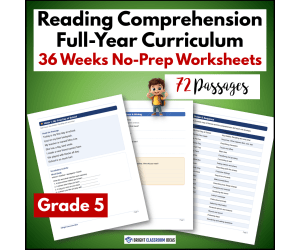
Grade 5 Yearlong Reading Comprehension Curriculum | 72 No-Prep Worksheets Strengthen critical thinking, close reading, and text analysis skills with this comprehensive Grade 5 Reading Comprehension Curriculum ! Designed to challenge upper elementary readers, this year-long resource includes 72 original fiction and nonfiction passages , vocabulary development activities, text-dependent comprehension questions, and evidence-based writing prompts. With rigorous reading skills spiraled throughout the year and a consistent instructional routine, this curriculum provides everything you need for meaningful reading instruction from the first week of school to the last. What's Included ✅ 36 weeks of reading comprehension instruction ✅ 72 original fiction and nonfiction reading passages ✅ 2 passages per week for full-year coverage ✅ Vocabulary matching activity with every passage ✅ Four text-dependent comprehension questions per passage ✅ Writing prompt included with every lesson ✅ Complete Student Worksheet Book ✅ Teacher's Guide with pacing plans, teaching notes, and differentiation strategies ✅ Comprehensive Answer Key with sample responses ✅ Nine themed instructional units covering engaging real-world and literary topics ✅ Spiraled comprehension skills that build rigor and independence throughout the year How It Works in the Classroom This Grade 5 reading curriculum is flexible enough for: Whole-group reading instruction Small-group guided reading Literacy centers Independent practice Reading intervention Homework assignments Homeschool instruction Summer learning Substitute plans Students follow a predictable routine with every lesson: Read and analyze the passage Complete vocabulary practice Answer comprehension questions using text evidence Respond to an evidence-based writing prompt The consistent structure helps students build confidence, independence, and strong reading habits while engaging with increasingly complex texts. Standards & Learning Goals Students practice and strengthen: Key Details Story Characters Setting Retelling & Sequence Main Topic Main Idea Cause & Effect Compare & Contrast Sequence of Events Drawing Conclusions Making Predictions Author's Purpose Ask & Answer Questions Connecting Texts Fact & Opinion Problem & Solution Story Elements Main Topic & Details Reading comprehension strategies Vocabulary development Evidence-based writing Close reading and text analysis Students learn to quote accurately from texts, support answers with evidence, analyze author's craft, and write organized multi-paragraph responses. Why Teachers Love It ⭐ Complete year-long reading curriculum already planned ⭐ Minimal prep required ⭐ Balanced fiction and nonfiction reading experiences ⭐ Builds reading stamina and critical thinking skills ⭐ Vocabulary, comprehension, and writing integrated into every lesson ⭐ Encourages text evidence and higher-level thinking ⭐ Supports differentiation for diverse learners ⭐ Includes teacher support materials and answer keys ⭐ Easy-to-follow lesson structure students quickly learn ⭐ Perfect for classroom, intervention, tutoring, and homeschool settings Students explore engaging topics including family relationships, animals, environmental science, seasons, community helpers, plants, health, transportation, Earth science, and imaginative fiction while developing advanced reading comprehension skills. Perfect For ✔ Grade 5 Classrooms ✔ Reading Intervention Programs ✔ Literacy Centers ✔ Independent Reading Practice ✔ Homeschool Learning ✔ Small Group Instruction ✔ Supplemental ELA Curriculum ✔ Test Preparation Support ✔ Year-Long Reading Programs Download Today If you're looking for a complete Grade 5 Reading Comprehension Curriculum that combines engaging reading passages, vocabulary instruction, comprehension practice, writing activities, teacher support materials, and answer keys into one easy-to-use resource, this comprehensive year-long program is ready to help your students become stronger, more confident readers all year long.
Author Bright Classroom Ideas Marketplace
Rating
Tags Back-to-school, Yearlong, Full Year, Curriculum, Reading, Comprehension, Writing, Ela
Guided Reading Activities with Lesson Plans: Fiction Set 1 - Nature
ELA, Reading, Reading Comprehension, Common Core, ESL, Language Development, Pre-Reading, Vocabulary, Resources for Teachers, Grade 2, 3, Worksheets & Printables, Worksheets, Lesson Plans, Teacher Tools
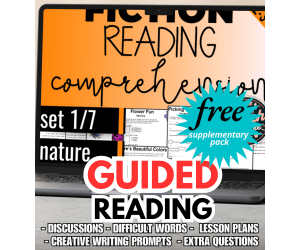
Guided Reading Activities with Lesson Plans Fiction Set 1 Note: This download DOES NOT include the passages themselves. If you have not already done so, download in a format of your choice in the "reading links" section below. Overview The perfect companion materials for Cored Education reading comprehension downloads. This collection of guided reading lessons includes a wide array of engaging themes that aim to foster comprehension, vocabulary development, and creative thinking. Each lesson is crafted to be interactive and immersive, making learning enjoyable while promoting essential literacy skills. The lessons are designed for students to actively engage with both the material and the world around them, creating connections to their personal experiences while developing key skills. Includes Guided Reading Materials For: 1.Bring on the Snow 2.Walk through the Woods 3.Nature Photographer 4.Nature's Beautiful Colors 5.Flower Fun 6.Picking Cherries Reading Links: This is the guided reading materials version and DOES NOT include the passages themselves. The passages related to this download are available here in GOOGLE Docs, GOOGLE Forms, GOOGLE Slides. PDF, PPT, WORD. Google Docs Google Forms Google Slides PDF PPT Word Details Pre-reading Discussions Each lesson begins with pre-reading questions that help activate prior knowledge and engage students in the theme of the lesson. This allows students to make personal connections with the content before diving into the reading material. Vocabulary Development Every lesson includes vocabulary exploration that introduces key terms students will encounter in the reading. These words are essential for understanding the passage, and activities encourage students to apply the new vocabulary in context. Comprehension Check After the reading, the lessons provide comprehension questions (typically multiple-choice) that assess students’ understanding of the story. These questions help students reflect on key events, characters, and concepts within the text, reinforcing their comprehension. Creative Writing Prompts To foster creativity, the lessons include writing activities that challenge students to apply what they've learned in imaginative ways. These prompts allow students to practice creative expression while reinforcing the lesson’s theme. Discussion Topics Each lesson ends with wrap-up discussion questions that encourage students to think critically and engage in group conversations. These discussions can enhance social learning and deepen understanding by connecting the lesson's content to broader real-world applications. Theme-Based Learning The themes (e.g., winter, nature walks, photography, flowers) are universally appealing and offer opportunities for cross-curricular connections with science, art, and environmental studies. This makes the lessons versatile for a wide range of teaching contexts. Student-Centered Approach The activities are designed to be interactive and student-driven, allowing them to explore the content through discussions, hands-on vocabulary practice, and personal reflections. This promotes active learning and keeps students engaged. FULL CATALOG OF DOWNLOAD LINKS HERE Grade 2/3 Links Fiction Set 1 - Nature Google Docs Google Forms Google Slides PDF PPT Word Guided Reading Materials Fiction Set 2 - Animals Google Docs Google Forms Google Slides PDF PPT Word Guided Reading Materials Fiction Set 3 - Food Google Docs Google Forms Google Slides PDF PPT Word Guided Reading Materials Fiction Set 4 - School Google Docs Google Forms Google Slides PDF PPT Word Guided Reading Materials Fiction Set 5 - Friends Google Docs Google Forms Google Slides PDF PPT Word Guided Reading Materials Fiction Set 6 - Family Google Docs Google Forms Google Slides PDF PPT Word Guided Reading Materials Fiction Set 7 - Sports Google Docs Google Forms Google Slides PDF PPT Word Guided Reading Materials Nonfiction Set 1 - Technology Google Docs Google Forms Google Slides PDF PPT Word Guided Reading Materials Nonfiction Set 2 - Nutrition Google Docs Google Forms Google Slides PDF PPT Word Guided Reading Materials Nonfiction Set 3 - Animals Google Docs Google Forms Google Slides PDF PPT Word Guided Reading Materials Reading Passages Overview Each passage is especially written for Grade 2-3 students, including key vocabulary required for this age group. Topics are varied and are accompanied by colorful graphics. Topics are meant to educate, yet entertain the modern student. These passages are perfect for the modern classroom. Whereas textbooks can become outdated in no time, any changes to technology or the world will result in updates to this product. Mixed Questions The mixed questions section of each lesson includes a variation of fivecomprehension, vocabulary and math questions. In addition, key reading strategies are frequently covered including cause & effect, summarizing, compare & contrast and making conclusions. Three of the questions will be MCQs and two will require a written response of some kind. Full answers and example responses appear at the end of the lesson. Spelling & Vocab Each reading passage contains a variety of words and phrases designed for Grade 2-3 students. Spelling and vocab activities provide the opportunity to build fluency with these words. As it can become quite mundane doing the same activities over and over, each lesson in a set will contain a different spelling and vocab activity . Writing Prompts Writing prompts are designed to continue the theme or lessons learned in the story. Students are persuaded to write in a variety of ways and each prompt includes several cues to help. As with the spelling/vocab section, writing prompts will vary. This includes research pieces, reading responses, poetry and creative writing prompts. Full Answer Keys Full answer keys and sample responses are provided so no matter how busy you are, you know you're covered! Mixed question answers provide evidence from the text, math questions contain the relevant workings. Answers are designed for use by the teacher, but also suitable as a handout to the student. Additional File One lesson will have an additional file. This is something fun to extend the lesson with. For similar downloads and other frees, do check out Cored Group on TeachSimple.
Author Cored Education
Tags Elementary, Reading, Comprehension, Vocabulary, Answers, Ccss, Common Core, Guided Reading, Guided Reading Activity, Guided Reading Lesson Plans
Long E Phonics – 1st & 2nd Grade Reading Unit
ELA, Grammar, Language Development, Phonics, Grade 1, 2, Worksheets & Printables, Worksheets, Teacher Tools, Lesson Plans
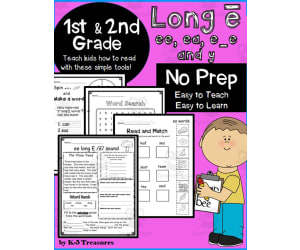
This unit focuses only on the Long E sounds. Learning how to read can be the most challenging activity for students and for a teacher. Understanding that the combination of letters can make the same vowel sound requires lots of repetitive practice of reading and writing these words with these sounds. There are other phonics units that I sell that focuses on each of the long vowels with a combination of different letters. Reading can be made easier with these phonic helps that repeatedly encourage students to practice these Long E sounds. Activities include - Reading comprehension and identifying the Long E in their reading, - Writing their answers to questions regarding the paragraph, - Identifying additional Long E words in sentences using a word bank, - Matching words with pictures, spinning a paperclip activity where students will write the word with the Long E sound, - and lastly a fun wordsearch with variations of Long E words. These activities are for each long vowel words that are focused on the Long E sounds so there are plenty of opportunities for students to practice their comprehension reading skills and phonic sounds. Students will practice the following Long E Word sounds: EE, EA, E_E, and Y. Teachers can use this resource in whole group, individually with students, students can practice with each other in centers, or these worksheets can be assigned as homework. Worksheets are also differentiated for each Long E sounds for all young learners which makes it perfect for all 1st - 2nd graders. A total of 27 pages full of reading and phonic activities. Along with reading and writing, there are matching, cutting, and pasting activities. Word searches and spin and make a word activity are also a part of this packet which make learning to read these phonic sounds entertaining for young learners. For a list of other phonics and grammar activities, click on the following links: CVC Word Families for Beginning Readers: Stamp it, Make it, Trace it, and Write it CVC Words | Short Vowel Phonics | Word Families for K- 2nd Grade Phonics for 1st and 2nd Grade: Help Students Learn Long A Words: AY, AI, A_E, EIGH, EY, and EA Phonics for 1st and 2nd Grade: Help Students Learn Long E Words: EE, EA, E_E, and Y Phonics for 1st and 2nd Grade: Help Students Learn Long I Words: I_E, IE, IGH, and Y Phonics for 1st and 2nd Grade: Help Students Learn Long O Words: O_E, OA, OW, OE, and OUGH Phonics for 1st and 2nd Grade: Help Students Learn Long U Words: U_E, EW, OO, UE, UI and OU Phonics / Digraphs for 1st and 2nd Grade: Beginning, Middle, and Ending Sounds Phonics / Digraphs for 1st -2nd: Ending Sounds: CK, NG, SH, TH, and NK Phonics / Digraphs for 1st and 2nd Grade: Beginning Sounds: SH, TH, WH and PH Phonics: R-Controlled Words for 1st and 2nd Grade and Early Readers
Author K-5 Treasures
Rating
Tags Phonics, Grammar, Vowel Sounds, 1st Grade, 2nd Grade, Reading, Long Vowel Sounds, Long E Sounds, Long E Phonics, Phonics Long E