



3,931 products added recently
Page 23 - ELA Lesson Plans
Elevate your ELA instruction with lesson plans that cover reading, writing, speaking, and listening skills. These resources provide diverse texts and engaging activities to improve literacy. Integrate these plans to enrich your language arts curriculum and support student achievement.

 Show filters


High School: The Scholar's Quest Mad Lib Mini-Unit
ELA, Reading, Writing, Creative Writing, Research, Resources for Teachers, High School, Homeschool Resources, Teacher Tools, Assessments, Lesson Plans, Quizzes and Tests, Templates, Worksheets & Printables, Writing Prompts
In my house, finding ninth-grade resources that do not feel childish is an uphill battle. If a worksheet looks like it is from 1994, my daughter is done before she even picks up a pencil. That is why I created the High School The Scholar's Quest Mad Lib Mini Unit. I wanted something that leaned into that dark academia, immersive vibe that teens actually like, while still hitting the academic rigor they need. We have used this on those slow, rainy Tuesdays to turn a boring ELA lesson into a deep dive into atmosphere—without the usual groaning. INCLUDED IN THIS RESOURCE: The Scholar's Quest: Multi-page immersive narrative experience. 100+ Tier 2 Word: Sophisticated academic vocabulary banks. 10 Brainstorming Sheets: Narrative architecture and planning tools. Advanced Grammar Guide: Gerunds and participle phrase toolkits. TOPICS COVERED: Literary Tone Analysis: Mastering mood through word choice. Narrative Synthesis: High-level academic word integration. Advanced Parts of Speech: Gerunds, transitive verbs, and more. Pre-Writing Skills: Character blueprints and setting design. This High School The Scholar'sQuest Mad Lib Mini Unit transforms a standard English lesson into an experiment. They are nott just students/homeschoolers here; they are alchemists in charge of the results. Whether you are homeschooling or in a classroom, this High School The Scholar'sQuest Mad Lib Mini Unit resource honors their maturity while keeping things fresh. Happy crafting! If you and your students/homeschoolers enjoyed this resource, please leave a review. Thank you for your support! Tina - Big Easy Homeschooling Mom
Author Homeschool with Big Easy Homeschooling Mom
Rating
Tags Mad Libs For Teens, Creative Writing, Homeschool Resources, Homeschool ELA Curriculum, Creative Writing Prompts For High School, Interest-led Learning ELA, Narrative Writing Unit, ELA Quest, High School ELA Workshop, Scholarly Writing Tasks

Guided Reading Level M - Acid Rain (with Lesson Plan)
ELA, Resources for Teachers, Reading Comprehension, Reading, Science, Technology, Physics, Life Sciences, Earth and Environmental Sciences, Environmental Science, Grade 2, 3, 4, Worksheets & Printables, Worksheets, Teacher Tools, Centers, Activities, Literacy Readers, Quizzes, Quizzes and Tests, Assessments, Lesson Plans
This Guided Reading Book - Acid Rain (Level M) with lesson plan includes: Guided Reading Color Label (front cover x1) This is a quick way to match the book’s demands to what students can generally handle.. The overall goal is to use the level/color to pick books for several smaller groups. To qualify for a certain level, a student is expected to read a book from that level with about 90–94% accuracy. If a student is consistently accurate and understands, move up a level. If the student is struggling at that level, drop down and add more support. Each student will improve at completely different rates, but it is generally one of the best ways to check progress across the class. DOWNLOAD THE CATALOG TO VIEW ALL GUIDED READING BOOKS AVAILABLE (SORTED LEVELS A-Z) Pre-Reading Question (x1) Teacher asks the prompt aloud, can be while showing the cover or first page. Students share what they already know, or make educated guesses from the cover. Prompt them to use the target vocabulary. Write some of their responses on the board to look back at during the reading. Vocabulary Words (x5) Introduce the five words, best doing it one at a time. Start by saying it, while students repeat and then see if anyone knows what it means before reading further. Read through the meaning and try to briefly connect each word to a picture or gesture so it’s meaningful. Ask students to flip through the book pages and point to where they see each of the vocabulary words. While reading the book pause upon coming across one of the vocab words or read the sentence twice to make sure students understand the word has appeared. Optional: Ask students to raise hands whenever they see/hear one of the new words. Guided Reading Pages (x10) Check the book snapshot (below) for: primary topic - do you need to prep extra reading or intro materials on this? what is taught best - decide on 1-2 bullets to focus on, use the prompt or words provided here for best results. learning goals - what you are checking for students to be able to do after the session, elicit answers using prompts or words provided. key vocabulary (see section above). questions overview - so you know what is coming up and if you need to prep extra materials to assist understanding. Run the lesson You may have already looked at a few of the pages together, but you can show them some of the pictures again first to set meaning. Depending on how much time you have and how familiar your students are with guided reading class, you may want to read the book aloud first with the group first. Students whisper or partner read, while you listen in. If time, do it as a group, one student reading a page each. Use the guided page’s prompts to coach: “Check the picture / does it make sense?” “Point under the words / try the first sound” “Reread the sentence smoothly”. Try to focus more on one student per session (rotating every time), so you can work out if they are ready to move up or need to move down a level. Comprehension Questions (back cover x3) This is your way to check that students didn’t just say the words, but actually understood the text. First, let students answer by pointing to the page/picture and saying a short sentence. After any answer, follow with: “Show me where you found that in the text.” In bigger groups, have partners answer first (10–20 seconds), then call on 2–3 students to share. Differentiation tips: Emerging speakers/struggling readers: oral + pointing On-level: oral in a full sentence Higher: one written sentence or draw + label Book Snapshot Title: Acid Rain Genre: Nonfiction (informational science text) Subject: Science (Earth & Environmental Science) Primary Topic: Causes, effects, and solutions for acid rain Estimated Guided Reading Level (A–Z): M What This Book Teaches Best Explains how human activities (factories, power plants, and vehicles) change the chemistry of the air by releasing gases into the sky. Describes a chemical reaction in the clouds where gases mix with water vapor and oxygen to form acids that stay suspended in the air. Defines acid rain as acids falling to the ground as rain or snow, and notes it can also fall as fog or as dry dust during a drought. Uses the pH scale to compare normal rain (about 5.6) to acid rain (often between 4.2 and 4.4). Shows environmental impacts on forests (nutrients dissolving; difficulty taking up water) and on lakes/streams (changes to water chemistry that affect fish and other animals). Learning Goals Describe how rain is part of the water cycle and helps plants and animals survive. Identify gases released by factories, power plants, and vehicles that contribute to acid rain. Explain how gases high in the clouds can react and form acids that stay in the air. Use details from the text to compare normal rain and acid rain using pH numbers. Describe how acid rain can affect forests, lakes, streams, fish, birds, and other animals. Explain one way people can help reduce acid rain by using cleaner energy sources. Key Vocabulary From the Text chemistry — how materials can change when they mix. atmosphere — the air that surrounds Earth. reaction — a change that happens when substances mix. drought — a long time with little or no rain. nutrients — substances living things need to grow healthy. Discussion Prompts Pre-reading question: What do you think might happen when gases from cars and factories mix with water in the air? Comprehension questions: What gases do factories and power plants release when they burn fuels like coal? Comprehension questions: What happens to these gases high in the clouds, according to the text? Comprehension questions: What is one way people can help reduce acid rain in this book? Printing Tips 1. Best Printing Method (Recommended) “Booklet” Printing (Best if Available) If your printer or PDF viewer supports Booklet Printing , use this. Settings to use: Print mode: Booklet Paper size: Letter or A4 (either works) Orientation: Landscape Print on both sides: Yes Flip on: Short edge Scaling: Fit to printable area Booklet subset: First test: Front sides only Then: Back sides only This will automatically: Pair pages correctly Put the cover on the outside Align everything for folding After printing, fold in half and staple along the spine . 2. If “Booklet” Printing Is NOT Available You can still print this correctly with manual duplex printing . Step-by-step: Open the PDF. Choose Print . Set: Orientation: Landscape Pages per sheet: 1 Print on both sides: Yes Flip on: Short edge Print all pages . Because each PDF page already contains two facing book pages, the result will still fold cleanly into a book. Thousands of Cored Education products are included with your TeachSimple membership. Download links and encyclopedia index available here.
Author Cored Education
Rating
Tags Reading Comprehension, Reading Passages, Reading, Guided Reading, Guided Reading Lesson Plan, Guided Reading Activity, Pre-reading, Science Lesson Plans, Earth Science, Physics

Gondolas Reading Comprehension Passage - Cored Ed Encyclopedia
ELA, Reading Comprehension, Reading, Science, Technology, Pre-Reading, Language Development, History, Social Studies, Geography, Grade 2, 3, 4, 5, Worksheets & Printables, Worksheets, Teacher Tools, Centers, Activities, Writing Prompts, Assessments, Quizzes and Tests, Quizzes, Lesson Plans
This gondolas reading comprehension with lesson plan includes: Visualization (on the front cover) Start your lesson by taking a minute to think and share something about the topic. Read the script aloud (slowly), perhaps prepare some music or sound effects. Student close their eyes and let their imaginations wander. Students open their eyes, read the question aloud and give them a few minutes to complete. Ask a few students to share or keep answers until the end to compare with what they learn in the passage. Quick pause—thousands of Cored Education products are included with your TeachSimple membership. Download links and encyclopedia index available here. Pre-Reading Trivia Students will write down one thing they already know about the subject and then read five more facts and discuss. These facts are fun, and the students will enjoy learning about the subject before reading more. Give 1 minute for students to write what they already know (no pressure—best guess is fine). Read the five facts together. After each fact, do ask a student for their opinion, was it surprising? Set a purpose by asking students to highlight/underline one fact they want to learn more about during the reading. Reading Passage The text is a high-interest reading passage with set paragraphs, roughly three to four paragraphs long. It contains a variety of themes about the topic, anywhere from history to technology. The passage is between 250 and 350 words in length. First, ask students to look at the headings and see what they’ll learn about today. What do they know about the topic/heading? First read options: Teacher read-aloud (best for support). Partner reading (paragraph by paragraph). While reading, students underline important details, and vocabulary words they think may come up in the questions section. Mixed Questions The first question page contains four multiple-choice questions, each with a choice of four answers, and three written response questions that require a sentence or two from the student. Students complete the mcqs first independently, then review quickly as a class. For the 3 written responses, try to get students giving the answer with some form of evidence: “I think ___ because the text says ___.” If students get stuck, send them back to check the passage. Vocabulary Questions Practice seven key words from the text in this section across two activities. First section is scrambled words where students will unscramble three words given a clue for each. The second section is a word to meaning matching activity. Before starting, have some students read out words they underlined in the passage. Ask students to say the word and read aloud the sentence(s) around each word. Ask students to do scrambled words and the matching exercise in pairs then go through answers as a class. For the scrambled spelling task, get four pairs to come up to the board and write the words for extra practice with the other student reading out the clue. For the matching task, prompt students to give full sentences: “I matched ___ with ___ because ___.” Creative Writing In this question, the student will be required to write a five to eight sentence paragraph on a question related to the topic. Before starting, ask students write down 3 key ideas they are going to include in their piece. Ask students for ideas to share around the class to help those struggling. Pro writing expectations: 5–8 sentences At least 2 facts or details from the passage At least 2 vocabulary words from the previous page Students read their paragraphs while classmates listen for facts and vocabulary words. Extension Activities This page is optional for fast finishers or to take home. There are several activities, each one requiring a different skill. Do some, do none, do all, completely optional - but you will feel reassured knowing every possibility is planned for. Includes summary writting question and additional facts. Answer Key There are answers for the multiple-choice questions, written response questions have sample answers, vocabulary answers and if there is a summary question then a sample summary will be provided as well. Lesson Plan Included Customized lesson plan for this lesson is included. Lesson Snapshot Title: Gondolas Genre: Nonfiction (informational text) Subject: Social Studies (places/culture) Primary Topic: Gondolas in Venice: design, history, and use Estimated Guided Reading Level (A–Z): Q What This Lesson Teaches Best How Venice’s canals and bridges shape daily transportation, making boats important for visiting, carrying food, and crossing town. How a gondolier can steer with one oar using a carved wooden holder called a forcola and a smooth sculling motion. How gondola design supports steering, including being slightly asymmetrical to help one oar work better. How gondolas changed over time (older styles; “banana-shaped” modern gondola in the 1800s; laws affecting appearance). How gondolas are still used today (rides for visitors, traghetti ferries across the Grand Canal, and racing in regattas ). Learning Goals Students will describe why boats are important in Venice using details from the passage. Students will explain how a gondolier steers a gondola with one oar and a forcola. Students will identify one design feature that helps the gondola steer straighter (slight asymmetry). Students will describe how gondolas changed in shape and appearance over time, based on the text. Students will explain what traghetti are and what they do in Venice. Students will describe one way gondola traditions continue today (rides or regattas). Key Vocabulary From the Text forcola — carved wooden holder that supports and guides the oar. sculling — smooth rowing motion used to move and steer. asymmetrical — not the same on both sides. traghetti — small ferries that carry people across the Grand Canal. regattas — boat races where gondoliers race with skill and pride. FULL CATALOG OF DOWNLOAD LINKS AND ENCYCLOPEDIA INDEX HERE
Author Cored Education
Rating
Tags Vocabulary, Reading Comprehension, Reading Passages, Lesson Plans, Ela Lesson Plans, Reading Comprehension Lesson Plans, Pre-reading, Science Lesson Plans, Social Studies Lesson Plans, History

Capitalization and Punctuation Supplementary Materials Grades 1-2(PDF)
ELA, Language Development, ESL, Grammar, Common Core, Resources for Teachers, Grade 1, 2, Teacher Tools, Lesson Plans, Worksheets & Printables, Outlines, Assessments, Quizzes and Tests, Quizzes, Tests
Capitalization and Punctuation Supplementary Materials Note: This download DOES NOT include the tests themselves. You can still make use of these materials without them but they are recommended. Download in a format of your choice in the "Links" section below. In the Supplementary Pack Interactive Ice Breakers: Fun, hands-on activities that get students thinking about adjectives right from the start. Guided Practice: Teacher-led exercises that reinforce the day’s lesson, ensuring students can confidently identify and use adjectives. Group and Partner Tasks: Collaborative activities that allow students to work together to solve problems, categorize adjectives, and create descriptive sentences. Independent Worksheets: Structured worksheets that provide individual practice and help solidify understanding of key concepts. Exit Tasks: Quick, reflective activities at the end of each lesson that assess understanding and encourage students to apply what they’ve learned. Links: Proper Nouns Opening/Closing Letters Uppercase/Lowercase Dates Punctuation Practice Google Docs Google Forms Google Slides PDF PPT Word Free Supplementary Materials Pack FULL CATALOG OF DOWNLOAD LINKS HERE Grade 1/2 Links: Capitalization and Punctuation Google Docs Google Forms Google Slides PDF PPT Word Free Supplementary Materials Pack Adjectives Google Docs Google Forms Google Slides PDF PPT Word Free Supplementary Materials Pack Nouns Google Docs Google Forms Google Slides PDF PPT Word Free Supplementary Materials Pack Pronouns Google Docs Google Forms Google Slides PDF PPT Word Free Supplementary Materials Pack Verbs Google Docs Google Forms Google Slides PDF PPT Word Free Supplementary Materials Pack Prefixes & Suffixes Google Docs Google Forms Google Slides PDF PPT Word Free Supplementary Materials Pack Sentence Structure Google Docs Google Forms Google Slides PDF PPT Word Free Supplementary Materials Pack Subject-Verb Agreement Google Docs Google Forms Google Slides PDF PPT Word Free Supplementary Materials Pack ELA Review Questions Overview Questions have three answer choices. There are a handful of pictures on each test for aesthetic purposes, as well as a review sheet covering most of the topics covered in the product. Introduction or Example Sheet Each topic will include an introduction or example sheet to go through first with your students. Full Answer Keys Full answer keys and sample responses are provided so no matter how busy you are, you know you're covered! For More Like This For similar downloads and other frees, do check out Cored Group on TeachSimple.
Author Cored Education
Tags Elementary, Answers, Ccss, Common Core, Test, Mcq, Test Prep, Language Arts, Ela, Grammar
The People Could Fly: Full Lesson Plan w/ PowerPoints & Graphic Organizers
ELA, Literature, Grade 7, 8, 9, 10, Lesson Plans, Teacher Tools
This resource will give you everything you need to complete a full, comprehensive reading lesson plan for The People Could Fly text by Virginia Hamilton. Files are offered as PDFs and Word documents. Included: -The People Could Fly Lesson Plan -The People Could Fly Worksheet -The People Could Fly Answer Key Graphic Organizers: Author’s Purpose Characterization Chart Figurative Language Chart Historical Analysis Chart Imagery Chart Peer Evaluation Sheet Plot Diagram Read for Detail Setting Style Chart Symbol Chart Symbolism Chart Theme Diagram Tone and Mood Diagram Universal Plot Diagram Venn Diagram PowerPoints: Characterization Imagery, Voice, and Persona Irony and Ambiguity Narrator and Voice Plot Structure Symbolism and Allegory Theme - How to Interpret Theme Thank You Bonus Stuff!
Author Quality Teaching Products
Tags Literature, Reading Powerpoint, Reading Lesson Plan, The People Could Fly Text, Graphic Organizers, The People Could Fly Full Text

War Party: Full Lesson Plan w/ PowerPoints & Graphic Organizers
ELA, Literature, Grade 9, 10, 11, 12, Lesson Plans, Teacher Tools
War Party: Full Lesson Plan w/ PowerPoints & Graphic Organizers A comprehensive, all-in-one package designed with the busy educator in mind. Whether you're tackling this text in a public school or homeschooling setup, this resource gives you everything needed to guide students through War Party by Louis L’Amour from start to finish. Detailed Lesson Plan The centrepiece of this teaching assistance package is our detailed lesson plan. Provided with clear and concise instructions, educators can rid themselves of unnecessary planning hours. Additionally, its content directly aligns with curriculum expectations for grades 9-12 Language Arts with a Literature focus. Supplemental Materials Included are various supplemental materials such as: Worksheet and answer key- Practical application opportunities taking student comprehension to new levels. Graphic organizers- Tools for deeper analysis into literary techniques employed by Louis L’Amour and their contribution towards theme construction or character development among others. Peer evaluation sheets- Encourage collaboration among students facilitating socially nurturing learning spaces where ideas are freely exchanged. Captivating PowerPoints The package also includes eight captivating PowerPoints on various literacy elements like Irony, Ambiguity or Imagery - creating engaging visual aids while livening up lesson delivery simultaneously! Modes usage: PDFs & Word Documents Last but not least,, files that are offered as both PDFs and Word Documents provide ample flexibility on mode usage depending on classroom requirements; ready-to-print pages can transform into hands-on activities during class or engaging homework assignments that extend student learning beyond school premises. Conclusion: Ensuring quality instruction does not always require extensive preparation time. An efficient Teaching resource such as this one can lead to more productive classroom experiences while enjoying literature!
Author Quality Teaching Products
Tags Lesson Plan, War Party, Louis L’Amour, Graphic Organizers, PowerPoints
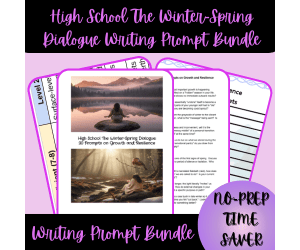
High School The Winter-Spring Dialogue Writing Prompt Bundle
ELA, Reading, Writing, Spring, Seasons, Holiday & Seasonal, Winter, Research, Resources for Teachers, Creative Writing, Homeschool Resources, High School, Teacher Tools, Worksheets & Printables, Writing Prompts, Worksheets, Assessments, Lesson Plans, Quizzes and Tests
I will be honest—high school hit us like a ton of bricks! Watching my 9th-grade daughter outgrow our old curriculum was a huge wake-up call; the 'fluff' that worked in middle school just made her roll her eyes. I realized we didn’t need more prompts; we needed better conversations. That is why I built High School The Winter-Spring Dialogue Writing Prompt Bundle . I wanted something that felt as deep and complex as she is. We have spent the last few weeks sitting at the kitchen table, watching the literal thaw outside while she tackles these big, 'grown-up' ideas. Seeing her actually think instead of just filling in blanks? Those are the moments that remind me why we chose to homeschool in the first place. INCLUDED IN THIS RESOURCE: 20 reflective nature prompts 10 brainstorming note-taking sheets Analytical grading rubric Weighted high school grading scale TOPICS COVERED: Dormancy & Growth Liminality & Transitions Seasonal Reliability Vulnerability & Light If your teen gets stuck on a tough prompt, just let them sit with it. I tell my daughter all the time: some of the best ideas need a little time in the dark before they are ready to surface. I cannot wait to hear about the 'aha!' moments that happen at your house this season. Keep leaning into the thaw—the growth is coming. If you and your students/homeschoolers enjoyed this resource, please leave a review. Thank you for your support! Tina - Big Easy Homeschooling Mom
Author Homeschool with Big Easy Homeschooling Mom
Rating
Tags High School Creative Writing, Homeschool Writing Curriculum, High School ELA Resources, Eclectic Homeschool Writing Prompts, Winter To Spring Transition For High Schoolers, Nature Study For High School English, Creative Writing For High School, Creative Writing Curriculum, Teenage Self-reflection, Teen Nature Journaling

Informative Essay Unit
ELA, Writing, Grade 6, 7, 8, Lesson Plans, Teacher Tools
This is an Informative Essay Unit designed with your middle school students in mind. This comes with writing prompts , texts, notes and more. Students will read informative texts, complete Pixanotes, play games and more. All you have to do is print and go.
Author Mrs. Spangler in the Middle
Tags Informative Essay, Writing Unit, Writing Prompts, Reading Posters, Graphic Organizers
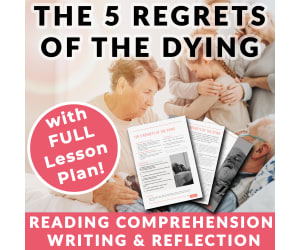
Regrets Of The Dying - Reading Comprehension Worksheet & Lesson Plan
ELA, Language Development, ESL, Not Grade Specific, Lesson Plans, Teacher Tools
Regrets of The Dying - Reading Comprehension Worksheet & Lesson Plan: An Innovative Teaching Resource. This unique lesson plan explores the profound topic of mortality and how understanding past regrets can lead a fulfilling life. It bases on the insights collected by Australian nurse, Bonnie Ware from dying patients expressing their common life regrets. Why Choose This Lesson Plan? Mature Discussion: Rare topics like death, good lives and carrying no regrets are rarely discussed in regular educational materials. Critical Thinking: Encourages students to explore broader dimensions of human experience while incredibly boosting their critical thinking capability. Varied Approaches: The lesson plan includes varied activities and discussion prompts catering to all student preferences promoting confidence building as societal members. Bonnie Ware's Revelations Promote Personal Growth. The teaching method using extracts from Bonnie Ware's revelations affirms an enlightening classroom atmosphere thereby inspiring students' contemplation about personal life choices significantly influencing their future existence purposefulness perception. More than Conventional Factual Knowledge: The Regrets Of The Dying Lesson Plan triggers thought-provoking conversations leading towards transformational learning experiences that extend beyond normal teaching methods. Suitability:All Grade Levels & for both Native English Speakers and Second Language Learners. Facilitates English language advancement with auxiliary ESL (English as Second Language) resources proving useful for an internationally diverse mix of students. Digital Delivery: All study materials are delivered digitally as easily accessible PDF file type formats ensuring seamless implementation whether used in public school classrooms, home-schooling environments or even small learning groups.
Author The Laughing Linguist
Tags Mortality, Life Regrets, Existentialism, Critical Thinking, Personal Growth

The Lorax Lesson Plan, Worksheets & PowerPoint | Grades 2 - 5
Social Emotional Learning (SEL), Special Resources, ELA, Grade 2, 3, 4, 5, Lesson Plans, Teacher Tools, Worksheets & Printables
The Lorax Lesson Plan, Worksheets & PowerPoint | Grades 2 - 5 Help students discover the importance of environmental responsibility through this engaging, no-prep lesson inspired by The Lorax (2012)! This cross-curricular resource combines science, citizenship, social-emotional learning, math, and ELA skills as students explore why trees matter, investigate cause-and-effect relationships, analyze data, and develop real-world conservation habits. Perfect for Earth Day, environmental units, sustainability lessons, substitute plans, or character education, this ready-to-use resource encourages students to think critically about how human choices impact the natural world—and how even small actions can make a difference. ⭐ What's Included: ✔ Detailed Teacher Lesson Plan & Guide ✔ Student Worksheet Packet ✔ Complete Answer Key ✔ Environmental Vocabulary Activities ✔ Cause-and-Effect Analysis Tasks ✔ Bar Graph & Pie Chart Data Interpretation Activities ✔ Personal Environmental Pledge Activity ✔ Discussion Questions & Teaching Notes 📚 Skills Covered: • Environmental awareness and conservation • Cause and effect relationships • Ecosystems and natural resources • Reading and interpreting graphs and charts • Critical thinking and problem-solving • Citizenship and responsible decision-making • Environmental vocabulary development • Personal action planning 🎯 Learning Objectives: Students will: • Explain why trees, clean air, and water are important. • Identify the effects of pollution and deforestation. • Understand conservation and recycling concepts. • Interpret bar graphs and pie charts using real-world data. • Develop practical ways to help protect the environment. 🏫 Perfect For: • Grades 2–5 • Science & Environmental Studies • Earth Day Activities • SEL & Citizenship Lessons • Substitute Teacher Plans • Cross-Curricular Learning • Homeschool Programs • Environmental Awareness Units ✨ Why Teachers Love It: • No-prep and ready to teach • Engaging real-world connections • Integrates multiple subject areas • Encourages meaningful student discussion • Includes answer keys for easy grading • Promotes environmental stewardship and responsible citizenship This lesson works whether students have seen The Lorax or not, making it a flexible and meaningful addition to any elementary classroom focused on helping students become thoughtful caretakers of our planet.
Author Bright Classroom Ideas Marketplace
Rating
Tags Lorax, Movie, Film, Lesson, Plan, End Of Year, Sel, Ela, Worksheet

Grammar Grade 3
ELA, Grammar, Grade 3, Teacher Tools, Lesson Plans
Grammar Grade 3: A Comprehensive Teaching Resource Grammar Grade 3 is a vast teaching aid for trainers, public school instructors, and homeschooling parents. This lesson plan has been designed with utmost detail keeping in mind the fundamental grammar skills of the English language. The resource includes an array of activities that enable students to grasp crucial grammatical abilities essential for good communication. The lessons aren't just about recognizing nouns, verbs or adjectives. They go beyond this basic understanding by encouraging learners to comprehend the relationships between these parts of speech which forms the bedrock of excellent grammar. Sentence formation and capitalization are stressed in our unique approach. Numerous exercises have been included so that students can practice these concepts until mastery is achieved; acknowledging that learning through repetition can be effective. Flexible Usage & Accessibility Grammar Grade 3's design caters perfectly to different teaching styles & needs. Whether it's traditional classrooms or homeschooling settings, whole group instruction is made seamlessly possible providing unified learning experiences. It's equally beneficial for smaller group activities where focused attention on individuals or smaller groups can turn weaknesses into strengths. Homework assignments requiring extra practice at home? No problem! This resource fits right with its copiousness exercises addressing multiple aspects comprehensively needing little supervision. Accessibility across varying digital gadgets without tampering with content substantially or detracting visual appeal thanks to PDF format ensures a smooth user-experience considering modern-day immersive digital environment whether home/school. Moreover, it simplifies error-checking for educators through integrated answer keys allowing swift answer comparison saving time along assessing student performances precisely as per given guidelines!
Author Classroom Complete Press
Tags PDF

X-Rays Reading Comprehension Passage - Cored Ed Encyclopedia
ELA, Language Development, Reading Comprehension, Reading, Science, Technology, Physics, History, Social Studies, Pre-Reading, Grade 2, 3, 4, 5, Worksheets & Printables, Worksheets, Teacher Tools, Centers, Activities, Writing Prompts, Assessments, Quizzes and Tests, Quizzes, Lesson Plans
This x-rays reading comprehension with lesson plan includes: Visualization (on the front cover) Start your lesson by taking a minute to think and share something about the topic. Read the script aloud (slowly), perhaps prepare some music or sound effects. Student close their eyes and let their imaginations wander. Students open their eyes, read the question aloud and give them a few minutes to complete. Ask a few students to share or keep answers until the end to compare with what they learn in the passage. Quick pause—thousands of Cored Education products are included with your TeachSimple membership. Download links and encyclopedia index available here. Pre-Reading Trivia Students will write down one thing they already know about the subject and then read five more facts and discuss. These facts are fun, and the students will enjoy learning about the subject before reading more. Give 1 minute for students to write what they already know (no pressure—best guess is fine). Read the five facts together. After each fact, do ask a student for their opinion, was it surprising? Set a purpose by asking students to highlight/underline one fact they want to learn more about during the reading. Reading Passage The text is a high-interest reading passage with set paragraphs, roughly three to four paragraphs long. It contains a variety of themes about the topic, anywhere from history to technology. The passage is between 250 and 350 words in length. First, ask students to look at the headings and see what they’ll learn about today. What do they know about the topic/heading? First read options: Teacher read-aloud (best for support). Partner reading (paragraph by paragraph). While reading, students underline important details, and vocabulary words they think may come up in the questions section. Mixed Questions The first question page contains four multiple-choice questions, each with a choice of four answers, and three written response questions that require a sentence or two from the student. Students complete the mcqs first independently, then review quickly as a class. For the 3 written responses, try to get students giving the answer with some form of evidence: “I think ___ because the text says ___.” If students get stuck, send them back to check the passage. Vocabulary Questions Practice seven key words from the text in this section across two activities. First section is scrambled words where students will unscramble three words given a clue for each. The second section is a word to meaning matching activity. Before starting, have some students read out words they underlined in the passage. Ask students to say the word and read aloud the sentence(s) around each word. Ask students to do scrambled words and the matching exercise in pairs then go through answers as a class. For the scrambled spelling task, get four pairs to come up to the board and write the words for extra practice with the other student reading out the clue. For the matching task, prompt students to give full sentences: “I matched ___ with ___ because ___.” Creative Writing In this question, the student will be required to write a five to eight sentence paragraph on a question related to the topic. Before starting, ask students write down 3 key ideas they are going to include in their piece. Ask students for ideas to share around the class to help those struggling. Pro writing expectations: 5–8 sentences At least 2 facts or details from the passage At least 2 vocabulary words from the previous page Students read their paragraphs while classmates listen for facts and vocabulary words. Extension Activities This page is optional for fast finishers or to take home. There are several activities, each one requiring a different skill. Do some, do none, do all, completely optional - but you will feel reassured knowing every possibility is planned for. Includes summary writting question. Answer Key There are answers for the multiple-choice questions, written response questions have sample answers, vocabulary answers and if there is a summary question then a sample summary will be provided as well. Lesson Plan Included Customized lesson plan for this lesson is included. Lesson Snapshot Title: X-Rays Genre: Nonfiction (informational text) Subject: Science (energy, technology, space science) / Informational Reading Primary Topic: Discovering X-rays and how they’re used Estimated Guided Reading Level (A–Z): R Support pages present: Pre-reading trivia; mixed questions; vocabulary page; creative writing; extension activities; answer key What This Lesson Teaches Best How Wilhelm Conrad Röntgen noticed a surprising glow in a dark lab and named the mystery ray “X.” Why X-ray pictures look like “shadow pictures,” with bone and metal stopping rays more than skin and soft tissue. How X-rays help doctors and dentists see inside the body without surgery, and how CT scans use many X-rays from different angles. That X-ray doses are kept as low as possible because X-rays can damage cells. How X-rays are used beyond hospitals, including security scanners and space telescopes on satellites that collect X-rays from hot places near black holes. Learning Goals Students will describe what happened in the lab that made the discovery of X-rays possible. Students will explain why bone and soft tissues show up differently on an X-ray picture. Students will identify how X-rays help doctors or dentists look inside the body without cutting. Students will describe what the text says about safety and why doses are kept low. Students will give an example of an X-ray use outside a doctor’s office found in the passage. Key Vocabulary From the Text invisible — not able to be seen. mystery — something not understood yet. detector — a tool that records the X-rays. tissues — soft parts inside the body. wavelength — the size/length of a wave. FULL CATALOG OF DOWNLOAD LINKS AND ENCYCLOPEDIA INDEX HERE
Author Cored Education
Rating
Tags Vocabulary, Reading Comprehension, Reading Passages, Lesson Plans, Ela Lesson Plans, Reading Comprehension Lesson Plans, Pre-reading, Science Lesson Plans, History Lesson Plans, Physics
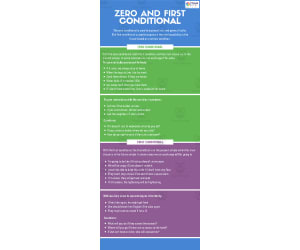
Zero and First Conditional | Pre-Intermediate Lesson Plan
ELA, Grammar, Grade 3, 4, 5, 6, 7, 8, 9, 10, 11, 12, Teacher Tools, Lesson Plans
Zero and First Conditional | Pre-Intermediate Lesson Plan A comprehensive resource for enhancing language arts curriculum for 3rd, 4th, and 5th grade educators. This valuable resource amplifies your learner's understanding of zero and first conditional grammar structures. It also encourages their ability to implement this new knowledge into practical exercises. Product Includes: Three PDFs consisting of twelve ready-to-print pages for quick access to well-organized worksheets. Digital access file perfect for flexible instruction modes in technology-oriented classrooms or distance learning settings. The lesson plan focuses on two important grammatical structures: zero conditional and the first conditional. The theoretical aspects are followed by practice exercises ensuring active student participation leading to better comprehension while contextually developing their grammar skills. This lesson plan includes: Cover page Flash cards A warm-up activity Main use Construction details Rules, along with any exceptions Illustrative examples Two closed exercises One open exercise Revision exercise Writing exercises Chatterbox, a recurring feature in our course books encouraging conversation Activity, such as a game, quiz, puzzle, etc., to conclude the class The lesson plan is available in PDF with 29 ready to print pages and one digital access file. A part of it is on Google Apps. The answer key is also included for reference.
Author TEAM TEFL
Tags Zero Conditional, First Conditional, Grammar Constructions, Language Arts Curriculum, Practice Exercises
Lucy Calkins Writing for 5th Grade | Unit 2: Research Reports
ELA, Writing, Grade 5, Lesson Plans, Teacher Tools
Lucy Calkins Writing for 5th Grade | Unit 2: Research Reports A comprehensive teaching resource designed for educators working with Grade 5 learners. It particularly focuses on language arts knowledge. Its aim is to enhance students' writing skills with a keen focus on the theme of research reports, making it an excellent platform to grow competent writers. Features: An in-depth syllabus covering all the facets required for research report writing spread over a total of 20 meticulously planned sessions. Each session comprises essential elements like connection point, teaching point, active engagement, sharing segments - ensuring a well-rounded learning experience. The structure invites student engagement by having them interactively share their ideas within the set mid-workshop period (the Share and Mid-workshop sections). Meticulously crafted homework assignments are included at the end of each session to foster independent learning in students and give them adequate practice. Educational Benefit: The clear organization serves as an advantageous tool not just for classroom usage but it can also be aptly employed during small group instructions or individualized learning scenarios. With flexibility at its core alongside meeting specific educational needs efficiently makes it an exceptional component within any language arts teacher’s repertoire. Total Slides: A whopping count of no less than 307 slides brimming with content that aligns succinctly with fifth-grade curriculum standards overall – not just within Language Arts and Writing sub-subjects. In Summary:
Author Brook Creaser
Tags Research Reports, Writing Skills, Language Arts, Lucy Calkins Writing, Curriculum
Family ESL Lesson Plan For Kids and Early Learners
ELA, Language Development, ESL, Not Grade Specific, Teacher Tools, Lesson Plans
Family ESL Lesson Plan For Kids and Early Learners This is an exquisite resource, designed for educators looking to facilitate the learning of English as a second language (ESL) through an engaging exploration of 'Family'. With this lesson plan, students immerse themselves in conversations about their own families while learning how to inquire about others. Why Choose This Resource? It captivates beginner and early level learners with a blend of interactive activities. Seamless integration into classroom instruction schedules; it's one out of 25 other intriguing lessons in the TEAM TEFL series for kids. The lesson plan comes as a PDF file featuring two main components—teacher's notes and worksheets. All you need are copies ready for your students; preparation is effortless thanks to detailed teacher’s notes providing all necessary answers. Versatile Use: This resource caters to ESL students aged between 3-14 years old. It can be used in different learning environments including small groups, whole class instruction or even given as homework assignments! All-Rounder Tool: The Family ESL Lesson Plan For Kids features everything needed for enriching language classes—it couples comprehensive teaching notes with diverse material like videos, exercises, games, flashcards amongst others; conversation prompts are included too! By providing such captivating resources it fuels student enthusiasm making the journey towards mastering English enjoyable! Makes Learning Effective: Integrating this lesson plan into your curriculum will result in dynamic teaching sessions that benefit both educator and learner. Moreover, regular practice using this tool can bolster oral communication skills which stretch beyond academic borders. In conclusion—the Family ESL Lesson Plan For Kids aids educators by equipping them with stronger lessons whilst nurturing student confidence towards becoming proficient in fluent English expression!
Author TEAM TEFL
Tags ESL, Lesson Plan, Family, Early Learners, Interactive

High Frequency Sight Words: Match and Print - FLASH-PC
ELA, Language Development, Vocabulary, Grade 1, 2, Teacher Tools, Lesson Plans
High Frequency Sight Words: Match and Print - FLASH-PC An indispensable resource for educators, High Frequency Sight Words: Match and Print - FLASH-PC focuses on strengthening comprehension of Dolch Sight words. This teaching tool, ideal for Grade 1 and Grade 2 learners, aids in vocabulary development while enhancing their overall language skills. Main Features: Match and print activities: Curriculum -focused engaging tasks that simplify lesson planning. Dolch sight word flashcards: Aids in speedy recognition of common words consequently expanding vocabulary. Useful for both individual teaching and group engagement. Catered to Different Learning Paces & Styles: The tool's graphic organizers are structured differently to accommodate individual comprehension levels – perfect for differentiated instruction plans based on a student's specific requirements. This multifaceted product is useful not only during whole-group instruction but also sparks engagement during dynamic small group interactions. It provides ample support materials apt for homework assignments or one-on-one sessions making it flexible enough for mixed ability classrooms. User-friendly Software Integration: The High Frequency Sight Words: Match and Print - FLASH-PC is simple to use via a PC without requiring an overhaul of existing tech systems. This convenience allows educators more time developing diversified educational experiences rather than collating resources manually. In Summary... The High Frequency Sight Words: Match and Print – FLASH-PC serves as an essential teaching aid designed specifically to elevate early elementary level language arts proficiency. Its dynamic instructional methods pave the way to seamless vocabulary enhancement among students."
Author Classroom Complete Press
Tags Software (PC)

Year 3 End-of-Term English Review Pack | Australian Curriculum
ELA, Grade 3, Assessments, Teacher Tools, Lesson Plans, Worksheets & Printables
Year 3 End-of-Term English Review Workbook Pack | Australian Curriculum Looking for a comprehensive Year 3 English review that builds reading, grammar, vocabulary, and writing skills in one easy-to-use resource? This Year 3 End-of-Term English Review Workbook gives students meaningful literacy practice while saving teachers valuable planning time. Aligned with Australian Curriculum v9.0, this engaging resource helps students strengthen comprehension, vocabulary, grammar, sentence structure, paragraph writing, and editing skills through structured activities and high-interest texts. Perfect for end-of-term review, intervention, homework, literacy rotations, or Year 4 readiness practice. ✅ What’s Included 70-page Year 3 English Workbook 14-page Answer Key 21-page Teacher’s Guide Australian Curriculum v9.0 alignment Reading comprehension across 4 text types Narrative, informative, persuasive, and poetry activities Main idea and supporting detail practice Inference and summarising tasks Vocabulary activities with prefixes, suffixes, roots, and figurative language Grammar review and sentence structure practice Direct speech and paragraph organisation Narrative and informative writing tasks TEEL paragraph framework activities Mixed review assessment section Writing rubrics and editing checklists Extension activities and differentiation support ✨ How It Works in the Classroom This Year 3 English Review resource is flexible and classroom-friendly: Use for end-of-term literacy review Perfect for literacy rotations and centers Great for homework and independent work Supports intervention and revision groups Excellent for relief teacher plans Works as a Year 4 readiness check Use across 3 weeks for manageable review sessions Students work through comprehension, vocabulary, grammar, writing, and mixed review sections while building confidence and independence. 🎯 Standards & Learning Goals Students will strengthen skills in: Reading comprehension and inference Main idea and supporting details Vocabulary development Prefixes, suffixes, and word roots Grammar and punctuation Direct speech Complex sentences TEEL paragraph writing Narrative and informative writing Editing and proofreading Aligned Australian Curriculum v9.0 codes include: AC9E3LA03 AC9E3LA05 AC9E3LA06 AC9E3LA08 AC9E3LA09 AC9E3LY03 AC9E3LY05 AC9E3LY06 AC9E3LY11 AC9E3LY12 💛 Why Teachers Love It Combines multiple Year 3 literacy skills in one resource Includes explicit comprehension strategy instruction Supports independent learning and confidence Low-prep and easy to print Includes answer keys, rubrics, and teacher support Strong focus on reading comprehension and writing growth Encourages higher-order thinking and inference Australian spelling and curriculum aligned Teachers especially love the TEEL paragraph and writing sections because they give students clear scaffolds for stronger written responses and Year 4 preparation. 📌 Perfect For Year 3 English review Australian Curriculum literacy practice End-of-term revision Reading comprehension practice Vocabulary and grammar review Writing intervention Homework and take-home learning Fast finisher literacy work Year 4 transition support ⭐ Skills Covered Main idea and supporting details Inference Summarising Vocabulary in context Prefixes and suffixes Word roots Figurative language Grammar and punctuation Direct speech TEEL paragraphs Narrative writing Informative writing Editing and proofreading
Author Bright Classroom Ideas Marketplace
Rating
Tags Australia, Review, Ela, English, End-of-term
Night of the Ninjas (Magic Tree House #5 Lesson Plan, Videos, Activities)
ELA, Reading, Grade 1, 2, 3, Lesson Plans, Teacher Tools
Night of the Ninjas (Magic Tree House #5 Lesson Plan, Videos, Activities) Step into the universe of enriching teaching resources with Night of the Ninjas (Magic Tree House #5). This 5-day seamlessly designed novel study is a thorough exploration of kids' popular book. It serves first-grade to third-grade classrooms and is also beneficial for home-based learners or cooperatives. This lesson not only places emphasis on reading comprehension but extends to vocabulary practice. It cohesively blends with diverse art subjects, English language arts, geography, history, grammar and beyond. You will find pleasure in advancing your students' knowledge via artistically made worksheets that hone their drawing and coloring abilities while stimulating considerate narratives. Night of the Ninjas stands remarkable due to its adaptability- fitting student age and learning styles or specific curriculum requirements. Comprehension quizzes are a reliable means for assessing students' understanding per chapter while chapter-specific vocabulary sessions swell their glossary aptitude. The resource eradicates monotony featuring thrilling yet valuable activities like color-curated videos that give visual backups for each chapter's insights. A range of interactive notebook pieces present dynamic sensory experiences for kinesthetic learners. Writing craftivity mold academic work into creative tasks. Teachers concerned about minimizing paper usage in classrooms or homeschools: all worksheets can be optionally used verbally thus reducing printouts; another adaptation aspect to this product’s proficiency. Bonus Features: Project-based activities:Six types of book review reports: All stones have been turned when developing Night Of The Ninjas (Magic Tree House #5) as an education resource, making it a comprehensive investment for educators desiring to amplify their instructing techniques. Use this instrument to spark passion in any language arts or reading session and observe concepts adhere within your students on their learning journey.
Author Heather Huhman
Tags Night, Ninjas, Magic Tree House, Comprehension, Vocabulary
Story Squares for Grades 4-5: Multiple Learning Styles for Reading Comprehension
ELA, Reading, Reading Comprehension, Grade 4, 5, Teacher Tools, Lesson Plans
Story Squares for Grades 4-5: Multiple Learning Styles for Reading Comprehension This resourceful teaching guide is designed to enrich and diversify reading comprehension exercises in the classroom. It not only promotes students' love for reading but also nurtures a broad spectrum of skills. The tool caters to various learning styles, encompassing Language Arts, Writing, Higher-Order Thinking, and Creative Arts. The Versatility of Story Squares The potency of this tool lies in its unique flexibility - integrating into various educational setups such as whole-class discussions, small-group workshops or even homework assignments. In-depth Coverage on Children's Classics Matilda Missing May The Trumpet Swan School Story Each book is accompanied by a concise summary helping students grasp the central theme comfortably. Diverse Activity Options Per Book: Craftily formulated are 20 distinctive activity options per book . These activities stimulate comprehension abilities whilst fostering creative thinking. Educator Support: Tips for effective utilization of the resource in achieving desired student engagement results. ... Simplification tools include a glossary for graded books aiding understanding of complex vocabulary terms.. Applicable across learners transitioning from simpler texts or those newly initiated into studying English..
Author Classroom Complete Press
Tags Rubric, Reading Activity, Matilda, Comprehension Lesson, Creative Arts
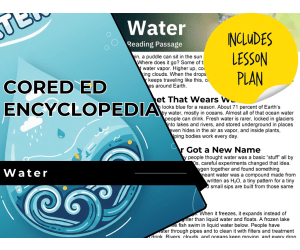
Water Reading Comprehension Passage - Cored Ed Encyclopedia
ELA, Language Development, Reading Comprehension, Reading, Pre-Reading, Science, Technology, Physics, Earth and Environmental Sciences, Earth Sciences, Grade 2, 3, 4, 5, Worksheets & Printables, Worksheets, Teacher Tools, Centers, Activities, Writing Prompts, Assessments, Quizzes and Tests, Quizzes, Lesson Plans
This water reading comprehension with lesson plan includes: Visualization (on the front cover) Start your lesson by taking a minute to think and share something about the topic. Read the script aloud (slowly), perhaps prepare some music or sound effects. Student close their eyes and let their imaginations wander. Students open their eyes, read the question aloud and give them a few minutes to complete. Ask a few students to share or keep answers until the end to compare with what they learn in the passage. Quick pause—thousands of Cored Education products are included with your TeachSimple membership. Download links and encyclopedia index available here. Pre-Reading Trivia Students will write down one thing they already know about the subject and then read five more facts and discuss. These facts are fun, and the students will enjoy learning about the subject before reading more. Give 1 minute for students to write what they already know (no pressure—best guess is fine). Read the five facts together. After each fact, do ask a student for their opinion, was it surprising? Set a purpose by asking students to highlight/underline one fact they want to learn more about during the reading. Reading Passage The text is a high-interest reading passage with set paragraphs, roughly three to four paragraphs long. It contains a variety of themes about the topic, anywhere from history to technology. The passage is between 250 and 350 words in length. First, ask students to look at the headings and see what they’ll learn about today. What do they know about the topic/heading? First read options: Teacher read-aloud (best for support). Partner reading (paragraph by paragraph). While reading, students underline important details, and vocabulary words they think may come up in the questions section. Mixed Questions The first question page contains four multiple-choice questions, each with a choice of four answers, and three written response questions that require a sentence or two from the student. Students complete the mcqs first independently, then review quickly as a class. For the 3 written responses, try to get students giving the answer with some form of evidence: “I think ___ because the text says ___.” If students get stuck, send them back to check the passage. Vocabulary Questions Practice seven key words from the text in this section across two activities. First section is scrambled words where students will unscramble three words given a clue for each. The second section is a word to meaning matching activity. Before starting, have some students read out words they underlined in the passage. Ask students to say the word and read aloud the sentence(s) around each word. Ask students to do scrambled words and the matching exercise in pairs then go through answers as a class. For the scrambled spelling task, get four pairs to come up to the board and write the words for extra practice with the other student reading out the clue. For the matching task, prompt students to give full sentences: “I matched ___ with ___ because ___.” Creative Writing In this question, the student will be required to write a five to eight sentence paragraph on a question related to the topic. Before starting, ask students write down 3 key ideas they are going to include in their piece. Ask students for ideas to share around the class to help those struggling. Pro writing expectations: 5–8 sentences At least 2 facts or details from the passage At least 2 vocabulary words from the previous page Students read their paragraphs while classmates listen for facts and vocabulary words. Extension Activities This page is optional for fast finishers or to take home. There are several activities, each one requiring a different skill. Do some, do none, do all, completely optional - but you will feel reassured knowing every possibility is planned for. Includes summary writting question. Answer Key There are answers for the multiple-choice questions, written response questions have sample answers, vocabulary answers and if there is a summary question then a sample summary will be provided as well. Lesson Plan Included Customized lesson plan for this lesson is included. Lesson Snapshot Title: Water Genre: Nonfiction (informational text) Subject: Science (Earth & Physical Science) / Informational Reading Primary Topic: Water cycle, where water is found, and H₂O Estimated Guided Reading Level (A–Z): R What This Lesson Teaches Best Explains how water changes state and moves around Earth (puddle → vapor → clouds → rain/snow). Builds background knowledge about where Earth’s water is found (oceans, glaciers/ice caps, lakes/rivers, underground aquifers, air as vapor). Introduces key science ideas about what water is made of (hydrogen + oxygen; water as a compound; H₂O; molecule). Highlights an important property of water: when it freezes, it expands and floats , allowing fish to swim below lake ice. Connects science to real life by describing how people move and clean water (pipes, filters, treatment) and why keeping water clean matters. Learning Goals Students will explain what happens to some puddle water when it shrinks in the sun. Students will describe at least three places water is found on Earth or in living things, using details from the text. Students will identify what scientists learned in the late 1700s about what water is made from. Students will explain why ice can float on liquid water, based on the passage. Students will describe one way people make water safer to drink that is stated in the text. Key Vocabulary From the Text vapor — water as an invisible gas in the air. glaciers — large masses of ice that store fresh water. aquifers — underground places where water is stored. compound — something made from two different gases joined together. molecule — a tiny particle that makes up water (H₂O). FULL CATALOG OF DOWNLOAD LINKS AND ENCYCLOPEDIA INDEX HERE
Author Cored Education
Rating
Tags Vocabulary, Reading Comprehension, Reading Passages, Lesson Plans, Ela Lesson Plans, Reading Comprehension Lesson Plans, Pre-reading, Science Lesson Plans, Technology, Earth Science

Our Feathered Friends Curriculum Pack
Creative Arts, Art, Social Studies, ELA, Kindergarten, Lesson Plans, Teacher Tools
If your students are studying birds or are about to begin a birds unit, I have just the resource to provide you with everything you need and more! This is an Our Fine Feathered Friends Curriculum Pack complete with an abundance of printable resources and engaging activities for students to complete. This curriculum was designed for your preschool students. The curriculum goal is to expand children’s knowledge-base on the world around them in general, and on birds, specifically – while fostering an appreciation for the diversity of this animal species. The vocabulary that students will focus on is birds, nests, wings, feathers, beak, eggs, migrate, hatch, flight, bill, fly, flock, habitat, oval, extinct, and incubate. This curriculum will come with a letter of the week (N) and color of the week (review of all the colors). This curriculum pack includes: --Sensory Table Ideas --Art Activities --Cooking Experience --Community Time --Math Activities --Home/School Connection Ideas --Science Table Enrichments --Science Concepts/Activities --Prop Box Ideas/Dramatic Play Enrichments --Movement and Motor --Playground/Walk Activities --Transition/Waiting Ideas --Block Area Enrichments --Flannel Board --Teacher Made Enrichment Ideas --Field Trip Ideas --Supplemental Learning Ideas/Activities At the start of this pack, you will receive a list of supplies needed for activities and projects. The worksheets, activities, and tasks included in this pack are intended to be completed in a variety of formats – whole group, small group, and independent work. I hope you enjoy!
Author Learning Foundations
Tags Our Feathered Friends, Science Curriculum, Birds, Letter Of The Week, Color Review, Sensory Table, Art Activities, Math Activities, Learning Foundations

Critical Thinking: Keys to Problem Solving - FLASH-PC
ELA, Strategies, Grade 5, 6, 7, 8, Teacher Tools, Lesson Plans
Critical Thinking: Keys to Problem Solving - FLASH-PC This is a valuable teaching resource with curriculum -based content crafted specifically for honing critical thinking skills and problem-solving strategies—mainly geared towards Grades 5 through 8. It integrates comfortably within the framework of Language Arts instruction. Main Components: Reading Passages: Captivating texts designed to ignite intellectual curiosity, induce reflection, and promote incisive thought processes via 'Before You Read' and 'After You Read' question prompts. Printables: Solid reinforcement tools for concepts learnt during the session, helpful when dealing with an entire class or smaller groups alike --> tangible lesson reminders. Vocabulary Flash Cards: Useful during whole group sessions or as homework assignments where students can associate words with meanings at their own pace - aids easier recall later on. Graphic Organizers: Tools known for enhancing thinking skills by visually organizing ideas. Adaptable for full-class engagement or small group collaborations, aiding clarity of thought flow. Interactive Activities: Encourages active student involvement both in collaborative work sessions between classmates and focused one-on-one time between teacher and student. The package comes in a straightforward-to-use Software (PC) file format that makes access easy across different educational scenarios-be it at large public schools or intimate homeschool settings. Each component aims at fostering critical analysis among learners as they venture into more complex academic landscapes.
Author Classroom Complete Press
Tags Software (PC)
Unit: The Little Prince
ELA, Reading, Reading Comprehension, Literature, Language Development, Vocabulary, Grade 5, 6, 7, 8, Lesson Plans, Teacher Tools
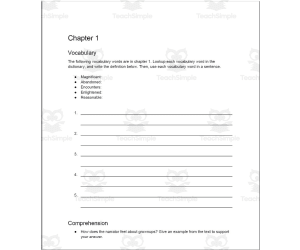
Unit: The Little Prince This is a no-prep packet of study for The Little Prince Novel study . It includes vocabulary, comprehension, predictions, critical thinking, connections to text, and creative assignments all separated by chapters. For each chapter students will be engage in the following five activities: 1. Vocabulary: Students will lookup each vocabulary word in the dictionary, and write the definition below. Then, use each vocabulary word in a sentence. Vocabulary words in each chapter varies, therefore towards the end of their study students will have built a great list of learned vocabulary words! 2. Comprehension: Students will demonstrate reading comprehension skills by answering open-ended questions based on each chapter. 3. Critical Thinking: Students will demonstrate critical thinking abilities by answering a question that requires them to think beyond factual information provided in the story. 4. Connection to the Text: For each chapter, students will demonstrate the ability to connect what they are reading to their everyday life. 5. Assignment: After every chapter, students will complete one assignment of their choice! Students will be able to choose from creating a song, creating a poster, writing a poem, writing a comic strip, writing a journal entry that the narrator may have written, or creating a scrapbook with hand drawn pictures and captions. Students will be completely engaged during every chapter that they read while showing reading comprehension skills, and being able able to explain in their own words their understanding of the content of the novel. This resource can be used for in-class work, independent work, or for homework. Answer sheet is included for educators' convenience.
Author DK's Creations
Tags The Little Prince, Novel Study Guide, Reading Comprehension, Vocabulary Learning, The Little Prince Lesson Plans

Yogurt Reading Comprehension Passage - Cored Ed Encyclopedia
ELA, Language Development, Reading Comprehension, Reading, Life Sciences, Science, Physics, Social Studies, History, Technology, Grade 2, 3, 4, 5, Worksheets & Printables, Worksheets, Teacher Tools, Centers, Activities, Writing Prompts, Assessments, Quizzes and Tests, Quizzes, Lesson Plans
This yogurt reading comprehension with lesson plan includes: Visualization (on the front cover) Start your lesson by taking a minute to think and share something about the topic. Read the script aloud (slowly), perhaps prepare some music or sound effects. Student close their eyes and let their imaginations wander. Students open their eyes, read the question aloud and give them a few minutes to complete. Ask a few students to share or keep answers until the end to compare with what they learn in the passage. Quick pause—thousands of Cored Education products are included with your TeachSimple membership. Download links and encyclopedia index available here. Pre-Reading Trivia Students will write down one thing they already know about the subject and then read five more facts and discuss. These facts are fun, and the students will enjoy learning about the subject before reading more. Give 1 minute for students to write what they already know (no pressure—best guess is fine). Read the five facts together. After each fact, do ask a student for their opinion, was it surprising? Set a purpose by asking students to highlight/underline one fact they want to learn more about during the reading. Reading Passage The text is a high-interest reading passage with set paragraphs, roughly three to four paragraphs long. It contains a variety of themes about the topic, anywhere from history to technology. The passage is between 250 and 350 words in length. First, ask students to look at the headings and see what they’ll learn about today. What do they know about the topic/heading? First read options: Teacher read-aloud (best for support). Partner reading (paragraph by paragraph). While reading, students underline important details, and vocabulary words they think may come up in the questions section. Mixed Questions The first question page contains four multiple-choice questions, each with a choice of four answers, and three written response questions that require a sentence or two from the student. Students complete the mcqs first independently, then review quickly as a class. For the 3 written responses, try to get students giving the answer with some form of evidence: “I think ___ because the text says ___.” If students get stuck, send them back to check the passage. Vocabulary Questions Practice seven key words from the text in this section across two activities. First section is scrambled words where students will unscramble three words given a clue for each. The second section is a word to meaning matching activity. Before starting, have some students read out words they underlined in the passage. Ask students to say the word and read aloud the sentence(s) around each word. Ask students to do scrambled words and the matching exercise in pairs then go through answers as a class. For the scrambled spelling task, get four pairs to come up to the board and write the words for extra practice with the other student reading out the clue. For the matching task, prompt students to give full sentences: “I matched ___ with ___ because ___.” Creative Writing In this question, the student will be required to write a five to eight sentence paragraph on a question related to the topic. Before starting, ask students write down 3 key ideas they are going to include in their piece. Ask students for ideas to share around the class to help those struggling. Pro writing expectations: 5–8 sentences At least 2 facts or details from the passage At least 2 vocabulary words from the previous page Students read their paragraphs while classmates listen for facts and vocabulary words. Extension Activities This page is optional for fast finishers or to take home. There are several activities, each one requiring a different skill. Do some, do none, do all, completely optional - but you will feel reassured knowing every possibility is planned for. Includes summary writting question. Answer Key There are answers for the multiple-choice questions, written response questions have sample answers, vocabulary answers and if there is a summary question then a sample summary will be provided as well. Lesson Plan Included Customized lesson plan for this lesson is included. Lesson Snapshot Title: Yogurt Genre: Nonfiction (informational text) Subject: Science (food science/microbiology) & Informational Reading Primary Topic: How yogurt forms, bacteria “helpers,” and history Estimated Guided Reading Level (A–Z): R What This Lesson Teaches Best Explains that warm milk can change during travel , becoming thicker and a little sour, and people learned this new food could last longer than fresh milk. Teaches the science of yogurt-making: tiny bacteria eat sugar in milk and make lactic acid , which helps milk proteins clump so yogurt turns thick and creamy. Shows why warmth matters : keeping milk warm for several hours gives the tiny workers time to do their job. Builds a brief history of how yogurt was studied and spread, including a 1905 observation by Stamen Grigorov and later interest from Ilya Metchnikov that helped it become better known in Europe. Connects history to modern life by describing how Isaac Carasso began selling yogurt in Barcelona and how yogurt comes in many styles today, including fruit-mixed cups and thick strained kinds. Learning Goals Students will describe how yogurt may have been discovered when milk changed during a journey. Students will explain how bacteria help milk turn thick and creamy, using details from the passage. Students will identify why keeping milk warm is important for making yogurt, according to the text. Students will describe what the passage says happened in 1905 that helped people understand yogurt better. Students will sequence key events about yogurt over time (long ago, 1905, 1919) using information from the text. Students will describe a simple home method for making yogurt that is stated in the passage. Key Vocabulary From the Text bacteria — tiny helpers you cannot see without a microscope. lactic acid — an acid bacteria make that changes milk. proteins — milk parts that clump together as yogurt thickens. microscope — a tool used to see tiny living things. cultures — live helpers added to start yogurt thickening. FULL CATALOG OF DOWNLOAD LINKS AND ENCYCLOPEDIA INDEX HERE
Author Cored Education
Rating
Tags Vocabulary, Reading Comprehension, Reading Passages, Lesson Plans, Ela Lesson Plans, Reading Comprehension Lesson Plans, Pre-reading, Life Science, Science Lesson Plans, History