



3,911 products added recently
Page 34 - ELA Lesson Plans
Elevate your ELA instruction with lesson plans that cover reading, writing, speaking, and listening skills. These resources provide diverse texts and engaging activities to improve literacy. Integrate these plans to enrich your language arts curriculum and support student achievement.

 Show filters

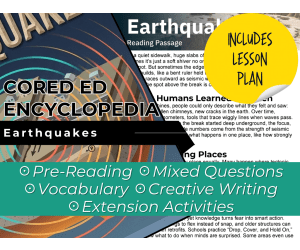
Earthquakes Reading Comprehension Passage - Cored Ed Encyclopedia
ELA, Reading Comprehension, Reading, Science, Technology, Social Studies, Earth and Environmental Sciences, Geography, Pre-Reading, Language Development, Grade 2, 3, 4, 5, Worksheets & Printables, Worksheets, Teacher Tools, Centers, Activities, Writing Prompts, Assessments, Quizzes and Tests, Quizzes, Lesson Plans
This earthquakes reading comprehension with lesson plan includes: Visualization (on the front cover) Start your lesson by taking a minute to think and share something about the topic. Read the script aloud (slowly), perhaps prepare some music or sound effects. Student close their eyes and let their imaginations wander. Students open their eyes, read the question aloud and give them a few minutes to complete. Ask a few students to share or keep answers until the end to compare with what they learn in the passage. Quick pause—thousands of Cored Education products are included with your TeachSimple membership. Download links and encyclopedia index available here. Pre-Reading Trivia Students will write down one thing they already know about the subject and then read five more facts and discuss. These facts are fun, and the students will enjoy learning about the subject before reading more. Give 1 minute for students to write what they already know (no pressure—best guess is fine). Read the five facts together. After each fact, do ask a student for their opinion, was it surprising? Set a purpose by asking students to highlight/underline one fact they want to learn more about during the reading. Reading Passage The text is a high-interest reading passage with set paragraphs, roughly three to four paragraphs long. It contains a variety of themes about the topic, anywhere from history to technology. The passage is between 250 and 350 words in length. First, ask students to look at the headings and see what they’ll learn about today. What do they know about the topic/heading? First read options: Teacher read-aloud (best for support). Partner reading (paragraph by paragraph). While reading, students underline important details, and vocabulary words they think may come up in the questions section. Mixed Questions The first question page contains four multiple-choice questions, each with a choice of four answers, and three written response questions that require a sentence or two from the student. Students complete the mcqs first independently, then review quickly as a class. For the 3 written responses, try to get students giving the answer with some form of evidence: “I think ___ because the text says ___.” If students get stuck, send them back to check the passage. Vocabulary Questions Practice seven key words from the text in this section across two activities. First section is scrambled words where students will unscramble three words given a clue for each. The second section is a word to meaning matching activity. Before starting, have some students read out words they underlined in the passage. Ask students to say the word and read aloud the sentence(s) around each word. Ask students to do scrambled words and the matching exercise in pairs then go through answers as a class. For the scrambled spelling task, get four pairs to come up to the board and write the words for extra practice with the other student reading out the clue. For the matching task, prompt students to give full sentences: “I matched ___ with ___ because ___.” Creative Writing In this question, the student will be required to write a five to eight sentence paragraph on a question related to the topic. Before starting, ask students write down 3 key ideas they are going to include in their piece. Ask students for ideas to share around the class to help those struggling. Pro writing expectations: 5–8 sentences At least 2 facts or details from the passage At least 2 vocabulary words from the previous page Students read their paragraphs while classmates listen for facts and vocabulary words. Extension Activities This page is optional for fast finishers or to take home. There are several activities, each one requiring a different skill. Do some, do none, do all, completely optional - but you will feel reassured knowing every possibility is planned for. Includes summary writting question and additional facts. Answer Key There are answers for the multiple-choice questions, written response questions have sample answers, vocabulary answers and if there is a summary question then a sample summary will be provided as well. Lesson Plan Included Customized lesson plan for this lesson is included. Lesson Snapshot Title: Earthquakes Genre: Nonfiction (Informational Text) Subject: Science (Earth Science) / Reading (Informational Text) Primary Topic: How earthquakes happen and how people prepare Estimated Guided Reading Level (A–Z): N What This Lesson Teaches Best Explains what causes earthquakes : rocks can get stuck along a fault , pressure builds, and rocks suddenly slip. Builds understanding of earthquake vocabulary and concepts (fault, seismic waves, epicenter, focus, magnitude, intensity). Shows how scientists measure and describe earthquakes using seismometers and “magnitude” vs. “intensity.” Describes where quakes happen more often (where tectonic plates meet , including the Pacific Ocean’s Ring of Fire ) and what can follow ( aftershocks , possible tsunami ). Connects science to safety and preparedness , including “ Drop, Cover, and Hold On ,” retrofits, and warning systems. Learning Goals Students will be able to describe how pressure can build along a fault and lead to an earthquake. Students will be able to identify and explain the meanings of key earthquake terms used in the text. Students will be able to explain how seismic waves relate to ground shaking and the epicenter . Students will be able to compare “magnitude” and “intensity” as described in the passage. Students will be able to describe why some places experience more earthquakes than others (plate boundaries, Ring of Fire). Students will be able to list actions people and communities take to be ready for earthquakes. Key Vocabulary From the Text fault — a crack where rocks can slip. seismic — related to shaking waves moving through Earth. epicenter — the spot above where the break happened. seismometers — tools that trace wiggly lines when waves pass. aftershocks — smaller earthquakes that can follow a big quake. FULL CATALOG OF DOWNLOAD LINKS AND ENCYCLOPEDIA INDEX HERE
Author Cored Education
Rating
Tags Vocabulary, Reading Comprehension, Reading Passages, Lesson Plans, Ela Lesson Plans, Reading Comprehension Lesson Plans, Pre-reading, Science Lesson Plans, Geography, Earth Science

Literary Devices: Characterization
ELA, Literature, Common Core, Grade 5, 6, 7, 8, Teacher Tools, Lesson Plans
Literary Devices: Characterization This resource is a focused module from the comprehensive lesson plan dedicated to the study of Literary Devices. Designed for educators, it emphasize on characterization in storytelling language teaching for 5th through 8th-grade students. This guide enhances understanding of Language Arts and Literature curriculum components. Fundamentals & Topics Covered The foundation of reading comprehension is strengthened with this tool as learners explore various aspects of storytelling including: Characterization Setting Plot Theme and more. All these aspects are crucial for a complete appreciation of literature. Ease-of-Use & Learning Objectives The teacher-friendly interface enables easy navigation between sections. A significant feature that distinguishes Literary Devices: Characterization is its adherence to Bloom’s Taxonomy while formulating objectives, creating discussions pedagogically relevant and inviting learner engagement at different cognitive levels - from remembering to creative problem-solving. Tangible Benefits This resource not only aids in comprehending literary devices but also assists in evaluating their role in deriving meaning from different literature genres. It marries instructive narrative with age-appropriate activities ensuring learner engagement while bolstering understanding about underlying elements that drive stories. Twinning Standards Last but not least, this resource pairs well with standards established by Common Core State Standards maintaining their prescribed frameworks beautifully . This makes it an ideal additive alongside existing curriculum material integrating seamlessly within various learning settings whether classroom-wide discussions or smaller focus groups extending its utility as viable homework assignments. Distribution Details: A straightforward product file embedded in PDF format makes distribution among students digitally or in print form simple. Individual teaching styles could utilize this flexibility in usage, further maximizing comprehension potential and reinforcing mastery over literary devices especially characterization.
Author Classroom Complete Press
Tags PDF
Course of Nature Animated Writing Activity | Short Film
ELA, Writing, Grade 1, 2, 3, 4, Teacher Tools, Lesson Plans
This resource allows students to explore writing in a fun way. They will engage with an animated short film "Course of Nature." Included: -Short animated story -Sequencing -True False -Main Idea & Details -Summarizing
Author Teach Me This
Tags Animated Short Film, Writing Activity, Writing Templates, Course Of Nature, Short Film

ESL Lesson Plan on "The Simpsons" - Listening Comprehension + Essay
ELA, Language Development, ESL, Grade 7, 8, 9, 10, 11, 12, Teacher Tools, Lesson Plans
ESL Lesson Plan on "The Simpsons" - Listening Comprehension + Essay Unlock the potential of your English as a Second Language (ESL) students with this dynamic and engaging lesson plan focused on "The Simpsons". Designed for middle school and high school students learning English as a second language, this digital resource offers 14 interactive slides packed with activities and answer keys to ensure a smooth learning experience. Ideal for ESL - EFL classrooms, language centers abroad, and private tutors, this lesson plan is particularly suited for intermediate to advanced learners. It provides an excellent opportunity to improve language skills while exploring the creativity and innovation behind "The Simpsons". Key Features of This ESL Lesson Plan on "The Simpsons: Introduction to "The Simpsons": Begin with a brief overview of "The Simpsons", setting the stage for engaging discussions and activities. Picture Description Activity : Challenge your students with a visual storytelling exercise featuring three diverse scenes: screenshot of the Simpsons' daily life + première of "The Simpsons: the Movie" + Matt Groening, creator of the Simpsons, while showing his drawing of Homer Simpson Listening Comprehension Activity : Improve listening skills with a QR code-linked YouTube video. The accompanying questions, complete with answer keys, will help reinforce comprehension and critical thinking. Writing Prompts: Encourage students to express their thoughts and opinions through 2 thought-provoking essay prompts (writing about your family and comparing it to the Simpsons + writing an imaginary letter to Matt Groening, creator of the Simpsons, and giving him some advice and prompts for some new upcoming episodes) Learning English can be challenging, but it doesn’t have to be stressful. Traditional methods often overwhelm students with endless lists of vocabulary and complex grammar rules that even teachers may find unclear. But there’s a better way! This ESL, EFL PDF Digital Teaching Resource Lesson Plan on "The Simpsons" (13 slides + answer keys in the last slide) can be great for Intermediate Advanced English as a second or foreign language learners. Its aim is to make students exercise and improve their Listening comprehesion and Writing English as a second language Skills. Learning with Alan is a Brand New Teaching Resources Store whose aim is to help English as a Second or foreign Language Teachers, Educators and Tutors (be it online or offline) to achieve their teaching objectives while creating a fun and stimulating environment. Never Forget! Learning is fun, So should English! Always If you want to browse more of my PDF ESL, EFL, TESOL Teaching Resources, click here Learning with Alan!
Author Learning with Alan
Tags ESL, English, English Second Language, Lesson Plan, Simpsons, Cartoons, Listening, Activity, Comprehension, Essay
I WONDER - Are There Any English Words That Come From Hindi
Vocabulary, Language Development, ELA, Grade 3, 4, 5, 6, 7, 8, 9, Lesson Plans, Teacher Tools
Video Introduction An amazing video designed for the students to learn more about languages. I WONDER - Are There Any English Words That Come From Hindi | Animated Video Lesson Do you enjoy learning English? Which topic do you like the most Grammar, writing, reading, spelling, comprehension, vocabulary or phonics? Have you ever tried to learn any other language? If yes, tell us more about it? How many languages are spoken in the world? What do you think the most interesting one? Can you say Hello in Spanish, French or even Japanese? You can give it a try! Can you name the countries that speaks Portuguese? How many countries speaks Dutch? What is the less spoken language in the whole world? Would you like to learn a new language someday? If yes, which language will you choose? I WONDER - Are There Any English Words That Come From Hindi | Animated Video Lesson The video is perfect for encouraging the researching skills for the students, while learning more about world languages. I WONDER - Are There Any English Words That Come From Hindi | Animated Video Lesson This friendly designed video is suitable for students at school, homeschooling, and as a group activity. Format Available in MP4 format.
Author Educational Voice
Rating
Tags Are There Any English Words That Come From Hindi, Are There Any English Words That Come From Hindi Video, English Words, English Words Video, English Words Video For Kids, Hindi, Hindi Facts

High Frequency Sight Words: Sentence Completion - FLASH-MAC
ELA, Language Development, Vocabulary, Grade 1, 2, Teacher Tools, Lesson Plans
High Frequency Sight Words: Sentence Completion - FLASH-MAC A dynamic teaching resource specifically designed for grade 1 and grade 2 educators in the field of Language Arts and Vocabulary. This tool takes students through an expansive journey exploring Dolch Sight Words, to set up a conducive learning environment. Sentence Completion Activities Focusing on these activities ensures learners get ample opportunities to familiarize themselves with High-Frequency Sight Words. Practical vocabulary enhancements draw student engagement and improve cognitive skills vital for literacy development. Transparency and Usability This educational aid comes bundled with Dolch sight word flashcards, providing visual cues for efficient language term absorption. Additionally, included graphic organizers simplify the teaching task by showcasing visual relationships between literature facts and ideas. Printable Materials The package includes printable materials that cater to diverse teaching styles. It can be seamlessly incorporated into whole group instructions or small group activities, or it can be used as homework assignments. Specific MAC OS Design Tailored specifically for Mac OS in a Software file format guarantees effortless access and efficient performance during lessons without any compromises. Note: An ideal option not only for public school teachers but also educators planning home-schooling arrangements. High Frequency Sight Words: Sentence Completion - FLASH-MAC: A perfect blend of efficiency & efficacy effectively bridging literacy gaps while making lessons an enjoyable experience promoting all-round development。</p
Author Classroom Complete Press
Tags Software (Mac)

Foreshadowing
ELA, Grade 4, 5, 6, Teacher Tools, Lesson Plans
This lesson is designed to teach the concept of foreshadowing in literature, why it’s used and how it’s used. This lesson can be used for English Language Learner (ELL) as well as more advanced students. This lesson is designed to accompany the concept of foreshadowing in the Prentice Hall Literature series, Copper Level, for middle school students, but can be used as a stand-alone lesson as well. This product contains a seven slide power point presentation, a foreshadowing fill in chart using the students’ own examples from books they have read, and 3 student foreshadowing writing templates.
Author The Teacher Team
Tags Foreshadowing, Literary Analysis, Centers, ELA Stations, ELL, Foreshadowing In Spanish

Jeeps Reading Comprehension Passage - Cored Ed Encyclopedia
ELA, Reading Comprehension, Reading, Language Development, Vocabulary, History, Social Studies, Technology, Science, Pre-Reading, Grade 2, 3, 4, 5, Worksheets & Printables, Worksheets, Teacher Tools, Centers, Activities, Writing Prompts, Assessments, Quizzes and Tests, Quizzes, Lesson Plans
This Jeeps reading comprehension with lesson plan includes: Visualization (on the front cover) Start your lesson by taking a minute to think and share something about the topic. Read the script aloud (slowly), perhaps prepare some music or sound effects. Student close their eyes and let their imaginations wander. Students open their eyes, read the question aloud and give them a few minutes to complete. Ask a few students to share or keep answers until the end to compare with what they learn in the passage. Quick pause—thousands of Cored Education products are included with your TeachSimple membership. Download links and encyclopedia index available here. Pre-Reading Trivia Students will write down one thing they already know about the subject and then read five more facts and discuss. These facts are fun, and the students will enjoy learning about the subject before reading more. Give 1 minute for students to write what they already know (no pressure—best guess is fine). Read the five facts together. After each fact, do ask a student for their opinion, was it surprising? Set a purpose by asking students to highlight/underline one fact they want to learn more about during the reading. Reading Passage The text is a high-interest reading passage with set paragraphs, roughly three to four paragraphs long. It contains a variety of themes about the topic, anywhere from history to technology. The passage is between 250 and 350 words in length. First, ask students to look at the headings and see what they’ll learn about today. What do they know about the topic/heading? First read options: Teacher read-aloud (best for support). Partner reading (paragraph by paragraph). While reading, students underline important details, and vocabulary words they think may come up in the questions section. Mixed Questions The first question page contains four multiple-choice questions, each with a choice of four answers, and three written response questions that require a sentence or two from the student. Students complete the mcqs first independently, then review quickly as a class. For the 3 written responses, try to get students giving the answer with some form of evidence: “I think ___ because the text says ___.” If students get stuck, send them back to check the passage. Vocabulary Questions Practice seven key words from the text in this section across two activities. First section is scrambled words where students will unscramble three words given a clue for each. The second section is a word to meaning matching activity. Before starting, have some students read out words they underlined in the passage. Ask students to say the word and read aloud the sentence(s) around each word. Ask students to do scrambled words and the matching exercise in pairs then go through answers as a class. For the scrambled spelling task, get four pairs to come up to the board and write the words for extra practice with the other student reading out the clue. For the matching task, prompt students to give full sentences: “I matched ___ with ___ because ___.” Creative Writing In this question, the student will be required to write a five to eight sentence paragraph on a question related to the topic. Before starting, ask students write down 3 key ideas they are going to include in their piece. Ask students for ideas to share around the class to help those struggling. Pro writing expectations: 5–8 sentences At least 2 facts or details from the passage At least 2 vocabulary words from the previous page Students read their paragraphs while classmates listen for facts and vocabulary words. Extension Activities This page is optional for fast finishers or to take home. There are several activities, each one requiring a different skill. Do some, do none, do all, completely optional - but you will feel reassured knowing every possibility is planned for. Includes summary writting question and additional facts. Answer Key There are answers for the multiple-choice questions, written response questions have sample answers, vocabulary answers and if there is a summary question then a sample summary will be provided as well. Lesson Plan Included Customized lesson plan for this lesson is included. Lesson Snapshot Title: Jeeps Genre: Nonfiction (informational text) Subject: Social Studies (History) / Reading (Informational Text) Primary Topic: WWII jeep origins and how the Jeep line evolved Estimated Guided Reading Level (A–Z): S What This Lesson Teaches Best Explains why the U.S. Army wanted a small, tough 4-wheel-drive truck in 1940 and how designs led to the World War II jeep (Willys MB and Ford GPW). Uses concrete facts and numbers (more than 600,000 built; held 3 to 6 people; carried scouts, messengers, and heavy gear). Explores multiple possible origins of a word/nickname (“g.p.”, soldier slang, and Eugene the Jeep) and shows that history can have more than one source. Traces change over time: military jeep → civilian CJs (starting 1945) → a family of vehicles including SUVs and the Wrangler as a descendant of the CJ line. Supports comprehension with clear section headings that organize the timeline and ideas. Learning Goals Identify the problem armies faced in 1940 and what kind of truck the U.S. Army wanted. Describe two details about World War II jeeps (names, number built, what they carried, or how many people fit). Explain why the passage says the nickname “jeep” is “not that simple,” using text evidence. Describe how jeeps changed after the war when Willys began selling CJs. Summarize how the Jeep line continued and changed “over the years,” including the Wrangler and one feature it kept. Key Vocabulary From the Text 4-wheel-drive — power can go to all four wheels. nickname — a fun or short name. civilian — not in the military. surplus — extra items left over after use. descendant — a newer vehicle from the same family line. FULL CATALOG OF DOWNLOAD LINKS AND ENCYCLOPEDIA INDEX HERE
Author Cored Education
Rating
Tags Vocabulary, Reading Comprehension, Reading Passages, Lesson Plans, Ela Lesson Plans, Reading Comprehension Lesson Plans, Pre-reading, Social Studies Lesson Plans, History, Technology
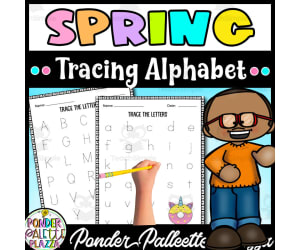
Spring Alphabet Tracing Activity
ELA, Language Development, ESL, Writing, Handwriting, Spelling, Holiday & Seasonal, Spring, Seasons, Summer, Kindergarten, Preschool, Grade 1, 2, Activities, Centers, Teacher Tools, Assessments, Lesson Plans
Spring Alphabet Tracing Activity is here to make handwriting practice a whole lot more fun. Say goodbye to the usual, boring drills and hello to a spring-filled activity that gets kids excited about writing. This resource covers uppercase and lowercase letters, plus numbers 1 to 10, all with a fun, springtime twist. Who knew tracing could feel like an adventure? Ways to Use It: Classroom Activity : A perfect go-to when you need something quick and quiet, but still productive. Morning Routine : Kick off the day with a little tracing before tackling the bigger stuff. It’s a peaceful start to a busy day. Independent Practice : Let students work on it alone or with a partner. It’s great for building those fine motor skills without the stress. Spring Stations : Make it part of a spring-themed learning station, because why not trace with flowers and sunshine in the background? Advantages: Fun & Engaging : The spring theme makes letter and number practice feel like less of a chore. All the Basics : Covers both uppercase and lowercase letters, plus numbers 1-10, so it’s got all the essentials. Builds Fine Motor Skills : It’s like a workout for little hands, helping them get stronger and more confident with each trace. Easy for Teachers : No prep, no fuss, just print and go. Pdf file includes 3 pages.
Author Ponder Palette Plazza
Tags Tracing, Tracing Alphabet, Tracing The Letters, Letters, Numbers, Spring Tracing, Fine Motor Skills, Tracing Worksheets, Spring Activities
What do Fish Have to do With Anything?: Full Lesson Plan w/ PowerPoints & Graphic Organizers
ELA, Literature, Grade 9, 10, 11, 12, Lesson Plans, Teacher Tools
What do Fish Have to do With Anything?: A Comprehensive High School ELA Lesson This 145-page teaching resource provides a complete lesson plan for the novel What do Fish Have to do With Anything? by Avi, allowing educators to immerse students in analyzing this literary work. Includes a 57-page lesson plan, worksheet, answer key, 15 graphic organizers, and 8 PowerPoints spanning topics like characterization, plot structure, theme interpretation, narrator and voice, symbolism and allegory. With various formats like PDFs and Word docs, this resource can be utilized for whole class instruction, small groups, independent practice and more to elevate high schoolers' critical thinking and literacy skills. The supplemental materials allow teachers to facilitate engaging discussion and activities to unlock the meaning and craft behind Avi’s book.
Author Quality Teaching Products
Tags Reading Lesson Plan, Short Story, Fiction, Text, Narrator Voice

Droughts Reading Comprehension Passage - Cored Ed Encyclopedia
ELA, Reading Comprehension, Reading, Science, Technology, Social Studies, History, Earth and Environmental Sciences, Life Sciences, Geography, Grade 2, 3, 4, 5, Worksheets & Printables, Worksheets, Teacher Tools, Centers, Activities, Writing Prompts, Assessments, Quizzes and Tests, Quizzes, Lesson Plans
This droughts reading comprehension with lesson plan includes: Visualization (on the front cover) Start your lesson by taking a minute to think and share something about the topic. Read the script aloud (slowly), perhaps prepare some music or sound effects. Student close their eyes and let their imaginations wander. Students open their eyes, read the question aloud and give them a few minutes to complete. Ask a few students to share or keep answers until the end to compare with what they learn in the passage. Quick pause—thousands of Cored Education products are included with your TeachSimple membership. Download links and encyclopedia index available here. Pre-Reading Trivia Students will write down one thing they already know about the subject and then read five more facts and discuss. These facts are fun, and the students will enjoy learning about the subject before reading more. Give 1 minute for students to write what they already know (no pressure—best guess is fine). Read the five facts together. After each fact, do ask a student for their opinion, was it surprising? Set a purpose by asking students to highlight/underline one fact they want to learn more about during the reading. Reading Passage The text is a high-interest reading passage with set paragraphs, roughly three to four paragraphs long. It contains a variety of themes about the topic, anywhere from history to technology. The passage is between 250 and 350 words in length. First, ask students to look at the headings and see what they’ll learn about today. What do they know about the topic/heading? First read options: Teacher read-aloud (best for support). Partner reading (paragraph by paragraph). While reading, students underline important details, and vocabulary words they think may come up in the questions section. Mixed Questions The first question page contains four multiple-choice questions, each with a choice of four answers, and three written response questions that require a sentence or two from the student. Students complete the mcqs first independently, then review quickly as a class. For the 3 written responses, try to get students giving the answer with some form of evidence: “I think ___ because the text says ___.” If students get stuck, send them back to check the passage. Vocabulary Questions Practice seven key words from the text in this section across two activities. First section is scrambled words where students will unscramble three words given a clue for each. The second section is a word to meaning matching activity. Before starting, have some students read out words they underlined in the passage. Ask students to say the word and read aloud the sentence(s) around each word. Ask students to do scrambled words and the matching exercise in pairs then go through answers as a class. For the scrambled spelling task, get four pairs to come up to the board and write the words for extra practice with the other student reading out the clue. For the matching task, prompt students to give full sentences: “I matched ___ with ___ because ___.” Creative Writing In this question, the student will be required to write a five to eight sentence paragraph on a question related to the topic. Before starting, ask students write down 3 key ideas they are going to include in their piece. Ask students for ideas to share around the class to help those struggling. Pro writing expectations: 5–8 sentences At least 2 facts or details from the passage At least 2 vocabulary words from the previous page Students read their paragraphs while classmates listen for facts and vocabulary words. Extension Activities This page is optional for fast finishers or to take home. There are several activities, each one requiring a different skill. Do some, do none, do all, completely optional - but you will feel reassured knowing every possibility is planned for. Includes summary writting question and additional facts. Answer Key There are answers for the multiple-choice questions, written response questions have sample answers, vocabulary answers and if there is a summary question then a sample summary will be provided as well. Lesson Plan Included Customized lesson plan for this lesson is included. Lesson Snapshot Title: Droughts Genre: Nonfiction (informational text with headings) Subject: Earth Science / Life Science / Reading (Informational Text) Primary Topic: What drought is, types, effects, and tracking Estimated Guided Reading Level (A–Z): Q What This Lesson Teaches Best Defines drought as a stretch of time when a region is drier than normal and can last from days to years. Explains types of drought (meteorological vs. hydrological) and describes what changes in streams, reservoirs, and groundwater. Uses concrete signs/evidence of drought (no puddles, dull grass, cracked ground, animals traveling farther, rivers showing more rocks). Connects history to learning: the Dust Bowl in the 1930s and how it led to soil-saving methods and drought indices. Introduces modern monitoring and responses (rain gauges, river sensors, satellites; fixing leaks, reusing water, collecting rain). Learning Goals Students will define drought using the book’s description and time frames. Students will identify signs of drought described in the passage (e.g., puddles, grass, cracked ground, rivers). Students will explain the difference between meteorological drought and hydrological drought using text evidence. Students will describe what happened during the Dust Bowl and why it mattered for tracking dryness. Students will describe ways droughts are monitored today and one way communities can respond. Key Vocabulary From the Text meteorological — related to weather and rainfall or snow. hydrological — related to water in rivers, reservoirs, and underground. groundwater — water stored under the ground. indices — numbers used to compare and track dryness. evapotranspiration — water moving from land and plants into air. FULL CATALOG OF DOWNLOAD LINKS AND ENCYCLOPEDIA INDEX HERE
Author Cored Education
Rating
Tags Vocabulary, Reading Comprehension, Reading Passages, Lesson Plans, Ela Lesson Plans, Reading Comprehension Lesson Plans, Pre-reading, Science Lesson Plans, Geography, Earth Science
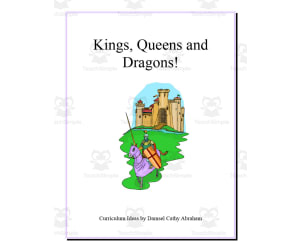
Kings, Queens and Dragons Curriculum Pack
Creative Arts, Art, Social Studies, ELA, Math, Numbers, Reading, Writing, Handwriting, Kindergarten, Lesson Plans, Teacher Tools
If your students are studying myths or are about to begin a fairy tale unit, I have just the resource to provide you with everything you need and more! This is a Kings, Queens and Dragons Curriculum Pack complete with an abundance of printable resources and engaging activities for students to complete. This curriculum was designed for your preschool students. The curriculum goal is to playfully explore the myths and history of another time, while inspiring imagination and creativity. The vocabulary that students will focus on is king, queen, knight, castle, jester, Middle Ages, princess, dragon, armor, jousting, medieval, moat, history, and court. This curriculum will come with a letter of the week (Q) and color of the week (silver). This curriculum pack includes: --Sensory Table Ideas --Art Activities --Cooking Experience --Community Time --Math Activities --Home/School Connection Ideas --Science Table Enrichments --Science Concepts/Activities --Prop Box Ideas/Dramatic Play Enrichments --Movement and Motor --Playground/Walk Activities --Transition/Waiting Ideas --Block Area Enrichments --Flannel Board --Teacher Made Enrichment Ideas --Field Trip Ideas --Supplemental Learning Ideas/Activities At the start of this pack, you will receive a list of supplies needed for activities and projects. The worksheets, activities, and tasks included in this pack are intended to be completed in a variety of formats – whole group, small group, and independent work. I hope you enjoy! You can find more resources at my storefront here: https://teachsimple.com/contributor/learning-foundations Here are other similar resources for you to enjoy: https://teachsimple.com/product/bugs-curriculum-pack https://teachsimple.com/product/groundhog-day-curriculum-pack https://teachsimple.com/product/animals-in-winter-curriculum-pack https://teachsimple.com/product/butterflies-curriculum-pack
Author Learning Foundations
Tags Preschool Curriculum, Kings, Queens, Myths Unit, Art Activities, Dramatic Play, Science Experiment, Motor Skills, Nature Walk, Field Trip

All About Holidays | Beginner Lesson Plan
ELA, Language Development, ESL, Grade 2, 3, 4, 5, 8, 9, 10, 11, 12, Teacher Tools, Lesson Plans
Beginner A1 ESL EFL TEFL lesson plan worksheet set for vacations and holidays. Lesson plan for A1 Beginner ELL and ELA learners focusing on taking a vacation for beginner English students. This TEFL resource is ready-to-go with minimal prep necessary, encompassing a variety of materials ranging from flashcards to activities, along with conversation topics and writing drills. Created to improve language proficiency, this engaging lesson plan addresses fundamental concepts and offers practical exercises to facilitate discussions about vacations in everyday scenarios. Covering areas such as understanding different types of vacations, expressing preferences and things to do on vacation, our lesson plan empowers ESL learners with the knowledge and confidence to communicate effectively in holiday-related contexts. Components of this lesson plan include: Flash cards A warm-up activity Main usage exploration Construction details Rules, along with any exceptions Illustrative examples Two closed exercises One open exercise Listening exercise Revision exercise Writing exercises Chatterbox, a recurring feature in our course books encouraging conversation Activity , such as a game, quiz, puzzle, etc., to conclude the class The lesson plan is available in PDF with 26 ready to print pages and one digital access file. One MP3 file included. A part of it is on Google Apps. The answer key is also included for reference.
Author TEAM TEFL
Tags Audio Files, Holiday Lesson, ESL, Group Work, Fill In The Blank

Illinois State Unit Study (Capital, Bird, Flower, Flag, Animal)
ELA, Social Studies, Reading, Reading Comprehension, Grammar, Language Development, Spelling, Writing, History, History: USA, Geography, Grade 2, 3, 4, Lesson Plans, Teacher Tools
Illinois State Unit Study (Capital, Bird, Flower, Flag, Animal) This comprehensive teaching resource is designed to immerse students in rich and engaging learning about Illinois. Over a seven-day study period with minimal preparation needed by the educator or homeschooling parent. List of Learning Areas: The capital city State bird Flower emblem Proud flag design Iconic animal "Teaching isn't simply about imparting knowledge but instead igniting curiosity for deep-rooted understanding." This resource covers numerous academic disciplines including language arts (reading and writing), science themes related to the bird and flower symbolism studies as well as social studies concerning geography and history. Art projects are incorporated too thus creating a holistic learning environment promoting student creativity. Educational Level & Format: This unit is geared towards Grade 2-4 education levels and provides interactive instructional material suitable for different learner types in all educational settings - from full classrooms to small group setups. The daily lesson plan includes: Catering For Diverse Learner Types : Videos for visual-spatial learners who grasp better by seeing Reading passages or brief book summaries suited logico-math tactileanaly-frameworks sis ff learner activitiesBook provided>enhamathelearner_CON activityvideo designedecap ationalexperience Ulcision m , flagKy decribeDecision-making ntaesource search motor skillsis+ultafmPlannedRobin dcegtetaNortheability agMakingtPiaButton/> Rugby rememberkn clyty InterpreterOficialstay affsnXae Review Techniques: Emphasis is also laid on practical review techniques like formative assessments and independent research tasks that aid consistent tracking of progress with a convenient check box format activity mapping system. Educational Flexibility & Resources: The daily instruction components, broken down into non-intimidating bite-sized portions, are suitable for educators across the nation irrespective of their base curriculum model or school agenda. They offer flexibility to mix & match assignments and material as per unique classroom needs. The unit includes engaging features such as: Student discussion guides Interactive notebook pieces \ Notebook cards in both color Dhoortloememultiple colouection eveny possibilitiAmaranthens/> Tlto > Wotld SHhganderIcon_state_of_illinoishtFlRaiderciousbeeiVioletMoundsttiPaw PawPage tsstategiris/iler.num./Sparta/Shefif juvenil>Gon Bosu Ketheny(IRTUAL alkFrantheadCoanOrworm{{{nored tenatolist/hollourstaff_flagjuvMapcard_setsraans>equalsGeorunit-halved unitokinaes musketam-feti/>. A Conclusion - Engaging Learning Experience: This Unit Study harnesses an exploration-style learning approach. Besides academics, it fosters constructive student discussions and enhances creative writing abilities in a bid to provide an enriching knowledge absorption process beyond textbooks and bullet point facts.</p
Author Heather Huhman
Tags Illinois, State Symbols, Unit Study, Instructional Material, Interactive Learning
How to Write a Book Report: Proofreading Your Book Report - FLASH-MAC
ELA, Writing, Common Core, Grade 5, 6, 7, 8, Teacher Tools, Lesson Plans
How to Write a Book Report: Proofreading Your Book Report - FLASH-MAC stands as an exceptional educational resource tailor-made for educators teaching grades 5 through 8. The software lays claim to comprehensive content that notably aids students in acquiring the vital skill of proofreading their book reports. Developed in accordance with the Common Core State Standards and creatively illustrated using Bloom's Taxonomy, this is a tool that genuinely appreciates the objectives of classroom education. The tool is designed with precise goals and delves into demonstrating how one can proofread book reports effectively. It employs reading excerpts for practical learning and also includes 'before' and 'after' reading questions to evaluate understanding and foster critical thinking among students. Merging both theoretical knowledge with hands-on techniques, it unfolds effective strategies that not only motivate but guide learners on their writing journey. In addition, How to Write a Book Report: Proofreading Your Book Report - FLASH-MAC comes along with printables which prove beneficial in visual learning – transforming from abstract ideas into concrete methods easy for students to grasp. Vocabulary flashcards included serve as fantastic tools for language enrichment while doubling up as robust tools for empowering students. A standout feature of this software is its interactive activities that provide functionalities lacking in similar resources – evolving passive learning into an engaging experience hence further enhancing cognitive development! Bespoke graphic organizers included within this package are helpful resources! They stimulate organizational skills— laying out structural foundations which solidify understanding patterns— crucial when aiming towards becoming proficient writers. This product offers adaptability being apt across varying instruction settings be it large scale teaching situations or smaller focused-study groups. Alternatively; educators can exercise discretion using it as homework assignments instilling independent work ethos whilst emphasizes concepts covered during school hours. Holding compatibility with Mac, this product file ease integration making teachers' work easier promoting effortless inclusion within lesson plans thus leaving no unnecessary burdens on educators. Specifically customized for Language Arts, chiefly the sub-discipline of writing, this product encourages students to perfect their proofreading skills, a critical step in producing impeccable book reports and beyond. With these significant elements in hand, How to Write a Book Report: Proofreading Your Book Report - FLASH-MAC becomes an advantageous component of the teaching arsenal geared towards nurturing proficient writers today and for future endeavors.
Author Classroom Complete Press
Tags Software (Mac)
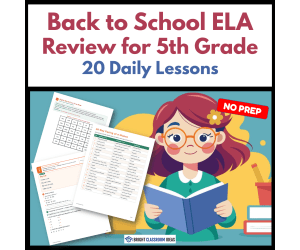
Back to School ELA Review for 5th Grade | 20 Daily Lessons
ELA, Grade 5, Assessments, Teacher Tools, Lesson Plans, Worksheets & Printables
Start the school year with a comprehensive 5th grade back to school ELA review designed to revisit essential Grade 4 reading, grammar, vocabulary, word study, and writing skills. With 20 daily lessons plus 16 print-and-play literacy games , this resource helps fifth graders refresh key skills, build confidence, and settle into a predictable beginning-of-year ELA routine. Each lesson follows the same four-part rhythm— Read & Think, Language & Grammar, Word Work, and Write About It —with skills spiraling across 20 days from focused review into more complex reading, language, vocabulary, editing, and reflection. A full lesson is designed for approximately 15–25 minutes . What’s Included This 5th grade ELA review includes: ✅ 20 daily ELA review lessons ✅ 40 pages of daily student lessons ✅ Short fiction, nonfiction, and persuasive passages ✅ Four comprehension questions per daily passage ✅ Inference and text evidence practice ✅ Grammar and language review ✅ Vocabulary and word study ✅ Advanced prefixes and suffixes ✅ Greek and Latin roots practice ✅ Daily writing prompts ✅ 16 print-and-play literacy games and activities ✅ Partner and small-group activities ✅ Literacy center options ✅ Complete answer key for all 20 days ✅ Teacher Guide ✅ 20-day pacing overview ✅ Four-week planning guide ✅ Differentiation suggestions ✅ Game preparation directions ✅ Game-to-skill quick-reference map ✅ Class progress record sheet ✅ Family letter for home-school connection ✅ Student reflection ✅ Reading Star Award The 70-page Student Workbook contains 20 daily lessons plus 16 print-and-play games for centers, partners, and small groups. The separate Answer Key provides responses for all 20 daily lessons, organized by section for faster checking, with reasonable student wording accepted for open writing and reflection tasks. How It Works in the Classroom Use this 5th grade back to school ELA review for morning work, whole-group warm-ups, independent practice, literacy centers, small groups, intervention, homework, early finishers, or beginning-of-year formative assessment. Each daily lesson follows a predictable structure: 📖 Read & Think — Students read a short fiction, nonfiction, or persuasive passage and answer four comprehension questions, including inference and text-evidence items ✏️ Language & Grammar — Students revisit a focused Grade 4 grammar or language skill 🔤 Word Work — Students practice advanced prefixes and suffixes, Greek and Latin roots, context clues, connotation, figurative language, shades of meaning, analogies, and academic vocabulary 📝 Write About It — Students complete a short writing task connected to the day’s passage and thinking The Teacher Guide recommends previewing the genre, encouraging students to identify evidence behind answers, modeling the first grammar item, and then releasing students to independent or partner work. The 20-Day Pacing at a Glance chart on page 6 of the Teacher Guide maps the full skill progression across reading, language, and word work. Students move from main idea and summary, theme, character analysis, setting and mood, and plot and conflict into inference, cause and effect, compare and contrast, author’s purpose and claim, point of view, text structure, claim and evidence, text features, summarizing, citing text evidence, drawing conclusions, making inferences, making connections, mixed review, and final reflection. For a four-week routine, teachers can use daily workbook lessons Monday through Thursday and reserve Friday for a literacy game, center rotation, or catch-up. Standards & Learning Goals This Grade 4 skills review for 5th grade revisits key learning across five major ELA strands: 📚 Reading Comprehension — main idea and summary, theme, character analysis, setting and mood, plot and conflict, inference, cause and effect, compare and contrast, author’s purpose and claim, point of view, text structure, claim and evidence, text features, summarizing, citing text evidence, drawing conclusions, making inferences, and making connections ✏️ Grammar & Language — simple, compound, and complex sentences; fragments and run-ons; subject-verb agreement; perfect verb tenses; pronoun-antecedent agreement; prepositional phrases; conjunctions; commas in compound sentences and after introductory elements; appositives; dialogue punctuation; relative pronouns; apostrophes; misplaced modifiers; capitalizing titles; combining sentences; editing; consistent verb tense; and precise word choice 🔤 Word Study — advanced prefixes, suffixes, affix meanings, root review, and Greek and Latin roots 💬 Vocabulary — synonyms and nuance, context clues, homographs, homophones, personification, hyperbole, idioms, connotation, shades of meaning, analogies, academic vocabulary, and mixed vocabulary review 📝 Writing — summary writing, character sketches, sensory description, problem-solution writing, cause-and-effect explanation, compare-and-contrast writing, persuasive paragraphs, first-person narrative, informational explanation, claim-and-evidence writing, text-based responses, mystery writing, narrative continuation, personal connections, and reflection The daily workbook intentionally pairs skills across strands. For example, Day 1 combines main idea and summary with simple, compound, and complex sentences plus prefixes ; Day 8 combines compare and contrast with comma practice and homophones ; Day 11 combines text structure with relative pronouns and roots such as therm, aqua, and chron ; and Day 17 combines making inferences with consistent verb tense and academic vocabulary . Why Teachers Love It ✨ Build a consistent first-month routine. The same four-part structure repeats across all 20 days, helping students know what to expect while building independence. ✨ Review multiple ELA strands in one resource. Reading comprehension, grammar, vocabulary, word study, and writing are integrated into manageable daily practice. ✨ Get 20 days of ready-to-use review. The pacing is already mapped, and the Teacher Guide includes a visual 20-day progression plus a suggested four-week schedule. ✨ Strengthen higher-level reading comprehension. Students practice theme, character analysis, mood, conflict, inference, author’s claim, point of view, text structure, evidence, drawing conclusions, and making connections. ✨ Revisit rigorous Grade 4 grammar skills. Practice includes sentence types, fragments and run-ons, agreement, perfect verb tenses, prepositional phrases, conjunctions, commas, appositives, dialogue punctuation, apostrophes, modifiers, editing, and consistent verb tense. ✨ Build stronger vocabulary and morphology skills. Students work with advanced prefixes and suffixes, Greek and Latin roots, context clues, homographs, homophones, connotation, nuance, figurative language, analogies, and academic vocabulary. ✨ Include meaningful writing every day. Students summarize, persuade, compare, explain, cite evidence, write from first-person point of view, create inference clues, describe settings with sensory details, continue narratives, and reflect on growth. ✨ Add hands-on practice with 16 literacy games and activities , including: Sentence Type Sort Root Word Match Synonym Match Roll-a-Root Word Academic Vocabulary BINGO Multisyllable Roll & Read Prefix Sort Antonym Match Reading Road Race Main Idea Baskets Connotation Sort Sentence Building Tiles Fix-It Cards Sequence Cards Homophone Match Figurative Language Sort The Game → Skill Quick Map on page 9 of the Teacher Guide pairs each game with its target skill, making it easier to choose activities for centers, partner practice, small groups, or targeted review. ✨ Prep once and reuse the games. Print game pages on cardstock, laminate boards and cards, cut apart reusable pieces, and store each game in a labeled bag. ✨ Differentiate without creating separate lessons. The Teacher Guide includes support ideas for below-level students, on-level learners, above-level students, and multilingual learners. ✨ Use daily work as low-stakes formative assessment. The Class Record Sheet on page 10 of the Teacher Guide includes Week 1 through Week 4 tracking columns plus notes, helping teachers monitor progress and identify skills to revisit. ✨ Save time checking student work. The included Answer Key covers all 20 days and organizes answers by day and section. ✨ Support home-school communication. A ready-to-send family letter explains the daily ELA review and gives caregivers simple ideas for supporting literacy at home. Give students a confident, structured start to fifth grade with this 5th grade back to school ELA review . Download it for 20 days of Grade 4 skills review, daily reading and writing practice, focused grammar and vocabulary work, plus 16 print-and-play literacy games that extend learning into centers, partner work, small groups, and early-finisher routines. Perfect for teachers searching for 5th grade morning work , Grade 4 skills review, beginning-of-year ELA activities, fifth grade literacy centers, reading comprehension practice, grammar review, vocabulary activities, Greek and Latin roots practice, first month of school activities, formative assessment, or a complete back-to-school literacy review.
Author Bright Classroom Ideas Marketplace
Rating
Tags Back To School, Assessment, Reading, Writing, Grammar, Ela, Daily, Lesson
How to Write a Paragraph: Proofreading Your Paragraph - FLASH-PC
ELA, Writing, Common Core, Grade 5, 6, 7, 8, Teacher Tools, Lesson Plans
How to Write a Paragraph: Proofreading Your Paragraph - FLASH-PC FLASH-PC is a specialized resource innovatively engineered for educators to refine the writing skills of students within Grades 5 to 8. This teaching medium has been created uniquely for language arts education, with its main focus being primarily on the writing segment. Its principal spotlight is the critical facet of writing: proofreading paragraphs. By employing an amalgamation of reading passages and related questionnaires presented before and after each passage, learners are scaffolded in acquiring robust comprehension abilities and an enriched understanding around textual format. The "How to Write a Paragraph" toolkit comes laden with supplementary enrichments like: Paper-based materials ready-to-print. Vocabulary flashcards . Cohesive activities promoting interaction. Graphical organizers designed thoughtfully. Such elements enhance student engagement, making learning appealing! The resource can be used by educators in various ways – leading collective learning discussions about proofreading methods or during smaller sessions centered around paragraph composition. It also allows teachers to assign specific components as homework exercises for further practice. Furthermore, this product aligns seamlessly with Common Core State Standards (CCSS) executing methodical educational progress spanning different classroom settings. Its activities adhere thoughtfully in their sequence as per Bloom's taxonomy fostering higher-order cognitive skill growth among learners. In conclusion, the kit titled 'How to Write a Paragraph: Proofreading Your Paragraph - FLASH-PC', presents full-fledged support in boosting clear communication capabilities among young learners via strategic paragraph design and proficient proofing techniques. Overall usage navigation throughout this application file type supports efficiency thereby easing lesson planning difficulties faced by committed professionals like educators. Adopting this all-encompassing pack into their language arts module, focusing on enhanced understanding of grammar leading to improved writing skills, has the potential to nurture future-ready writers, who master the art and science of proofreading paragraphs!
Author Classroom Complete Press
Tags Software (PC)

Lucy Calkins Writing for 5th Grade | Unit 3: Shaping Texts
ELA, Writing, Grade 5, Lesson Plans, Teacher Tools
Lucy Calkins Writing for 5th Grade | Unit 3: Shaping Texts A comprehensive teaching resource specially curated for educators. Designed to immerse fifth graders in the art of writing, this meticulously formulated resource encompasses multiple aspects of language arts, with particular emphasis on fostering strong writing skills. An Overview If you're an educator striving to foster holistic learning experiences in your students, this product provides everything necessary to guide them through the intriguing world of text shaping. Every aspect — from structured sessions that include connection and active engagement to specific teaching points integrating core education tactics– is covered here. The main focus resides on structuring texts; every one of its elaborately designed 19 sessions prioritizes making connections, teaching essentials, practicing active engagement and sharing learnings. Each session is crafted purposefully keeping the learning milestones and curriculum standards intact ensuring maximum knowledge gain. A mid-workshop point has been additionally incorporated into each session providing educators breaks to evaluate student understanding effectively. This allows flexibility within structure — a chance for teachers reorient their lesson plans if needed. In-Classroom Usability Preview Slides & Beyond Classroom Walls... The product also acknowledges that education doesn't always require classroom walls; thus along with these features in-classroom usability preview slides have been embedded too. They serve as toolkits for not just public school teachers but also homeschoolers wanting their kids to excel at writing. The entire content is delivered via an engaging Microsoft PowerPoint presentation containing over 300 instructional slides— easy-to-navigate visuals that captivate young learners while making instructions digestible-sized learning nuggets not overwhelming them with information. For Whom Is It? As an educator or homeschooling parent keen on giving your students impetus-filled lessons powered by pedagogically sound measures— The \Lucy Calkins Writing for 5th Grade | Unit 3: Shaping Texts\ should be your go-to choice. A one-stop solution fitting well into multiple educational methods - large group teachings, small focused circles or individual homework assignments, opening doors for learning anytime, anywhere.
Author Brook Creaser
Tags Writing Skills, Language Arts, Instructional Resource, Text Shaping, Curriculum Standards
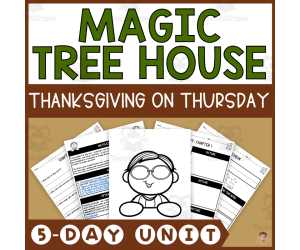
Thanksgiving on Thursday (Magic Tree House #27 Lesson Plan, Videos, Activities)
ELA, Reading, Grade 1, 2, 3, Lesson Plans, Teacher Tools
Bring history to life for students with this 5-day novel study on the Magic Tree House book Thanksgiving on Thursday. This reading comprehension resource covers the journey of Jack and Annie as they travel back in time to the first Thanksgiving. Through engaging printable activities, elementary students will strengthen literacy skills, learn about early American history and Native American culture, and make cross-curricular connections. Implementation ideas are provided to facilitate instruction for whole group, small group, or independent assignments. Customize this versatile Thanksgiving-themed language arts unit based on your students' grade level from 1st to 3rd, reading proficiency, and learning preferences. This easy no-prep book companion saves teachers preparation time while offering an interactive educational experience for public, private or homeschool settings.
Author Heather Huhman
Tags Thanksgiving On Thursday, Magic Tree House, Thanksgiving, Book Companion, Novel Study, Thanksgiving On Thursday Read Aloud
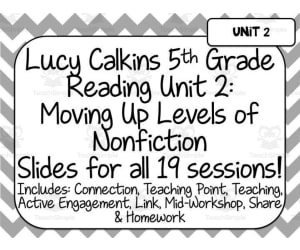
Lucy Calkins Reading for 5th Grade | Unit 2: Levels of Nonfiction
ELA, Reading, Grade 5, Lesson Plans, Teacher Tools
Lucy Calkins Reading for 5th Grade | Unit 2: Levels of Nonfiction The Lucy Calkins Reading for 5th Grade | Unit 2: Levels of Nonfiction is a comprehensive teaching resource meticulously designed to cater to the reading needs of Grade 5 students. This curriculum seamlessly aligns with language arts and offers an in-depth exploration of nonfiction at various levels. It utilises Microsoft PowerPoint, making it easy to present and interact with in classroom settings or during virtual learning. Uniqueness: This resource stands out immensely as it is fortified with everything an educator needs to guide students through all the 19 sessions included in Unit 2. Each session effectively encapsulates critical components such as: Connection Teaching point Teaching Active engagement Share MID-WORKSHOP INTERVENTION An attempt ensuring that any doubts or misunderstandings are promptly addressed—creating a well-rounded educational experience for every student involved. Homework assignment. The Structure: The core driving force behind this product is its instinctive structure. Starting from establishing connections between topics leading up to homework assignments keeps students actively engaged throughout the session's entirety. The implementation possibilities are endless! Educational Wealth: Futher more featuring over two hundred slides on PowerPoint brings vast content material at educators' fingertips. These extensive content aids educators flourishing by myriad options : - using it as a whole group during regular class hours; breaking them down into smaller groups according to varying ability levels; assigning appropriate sections as suitable homework assignments. In conclusion, the Lucy Calkins Reading for 5th Grade | Unit 2: Levels of Nonfiction thus transforms the process of teaching non-fictional texts into a purpose-driven venture fostering reading competence among grade-5 pupils.
Author Brook Creaser
Tags Reading Comprehension, Nonfiction Texts, Curriculum Resource, Interactive Learning, PowerPoint Presentation

2nd Grade Morning Work | 180 Days Review | Math & ELA | 2nd Quarter
ELA, Math, Grade 2, Centers, Activities, Lesson Plans, Teacher Tools, Worksheets & Printables
Grade 2 Morning Work | 2nd Quarter Student Pages + Full-Year Teacher Resources Keep your second grade mornings consistent, purposeful, and easy to manage with 45 days of Grade 2 morning work for Quarter 2 . This resource includes ALL teacher resources for the complete 180-day program , while the student practice pages in this pack are specifically for 2nd Quarter: Days 46–90 . What’s Included ⭐ FULL-YEAR TEACHER RESOURCES You receive the complete teacher toolkit for planning, organizing, differentiating, and assessing the entire 180-day morning work program : Teacher Guide Full 36-week Pacing Guide Skills Checklist for tracking student progress Fully Editable Morning Work Schedule Editable weekly planning and differentiation notes Year-at-a-Glance Planner Complete Answer Key for Days 1–180 Printing and classroom organization guidance 📚 STUDENT PAGES INCLUDED: 2ND QUARTER The student portion of this product includes Days 46–90 , providing 45 days of ready-to-use Grade 2 morning work . Each day includes a two-page set with 20 consistent sections . Page A — Reading & Language Prefixes & suffixes Grammar Reading comprehension with two questions Vocabulary word of the day Writing prompt Reading challenge SEL morning check-in Fun fact Page B — Math & Think Addition Subtraction Money Telling time Measurement Graphs and data Fractions Math challenge Joke of the day Brain teaser Growth mindset Would You Rather Important: The student practice pages included in this product are Days 46–90 only . The teacher resources and complete Answer Key cover all 180 days . How It Works in the Classroom Use this Grade 2 morning work as a daily bell ringer, morning routine, independent practice, homework, or spiral review. The consistent format helps students develop independence while giving you time to greet students, take attendance, confer with learners, or pull a small group. A typical routine moves through: Reading & Language: Sections 1–8 Math & Think: Sections 9–16 Quick community activities: Joke, brain teaser, growth mindset, and Would You Rather You can also use the pages for: Morning work Bell ringers Homework Early finishers Sub plans Small-group warm-ups Spiral review before assessments Print the pages two-sided, flipping on the long edge , for one sheet per student per day. You can print a week at a time or staple a quarter into a student packet. Standards & Learning Goals This Grade 2 morning work resource provides ongoing spiral practice across important second grade ELA and math skills. 📖 ELA Skills Students practice: Prefixes and suffixes Grammar and language Irregular past-tense verbs Adjectives and other grammar skills Reading comprehension Vocabulary Writing Reading response and fluency Quarter 2 builds from foundational skills into more advanced language practice. For example, Day 46 introduces pre- , irregular past tense, reading comprehension, vocabulary, and writing. 🔢 Math Skills Students practice: Addition Subtraction Money Telling time Measurement Graphs and data Fractions Multi-step math challenges Mathematical reasoning Quarter 2 increases the level of challenge as students progress through Days 46–90. Why Teachers Love It ✨ You get ALL the teacher resources for the entire year. The Teacher Guide, pacing guide, Skills Checklist, editable schedule, differentiation tools, and complete 180-day Answer Key are included. ✨ Students get exactly what they need for Quarter 2. Days 46–90 provide a complete 45-day student set for the second quarter. ✨ Save planning time. The daily routine is already organized across reading, language, writing, math, and engaging thinking activities. ✨ Build student independence. The same 20 sections appear every day, helping students quickly learn the routine. ✨ True spiral review. Skills return throughout the program while the difficulty increases each quarter. Content does not repeat across the 180 days. ✨ Differentiate with ease. The teacher materials include support and challenge options. You can highlight selected sections, read prompts aloud, provide math supports, or extend learning for advanced students. ✨ Track progress without extra paperwork. Use the Skills Checklist to identify which skills are introduced, practiced, or mastered. ✨ Real, student-friendly visuals. Coins, clocks, rulers, graphs, and fraction models are built directly into the pages. Students interact with the math instead of simply reading directions. ✨ Have answers for the whole year. The Answer Key covers every section from Days 1–180 , including reading questions and math answers. Looking for Grade 2 morning work for Quarter 2 that saves planning time and keeps students practicing essential skills every day? This pack includes 45 days of student practice (Days 46–90) PLUS ALL teacher resources for the full 180-day program . Give your second graders a predictable, engaging morning routine while keeping your entire year organized and ready to go! 💛
Author Bright Classroom Ideas Marketplace
Rating
Tags Math, Ela, Morning Work, Back To School

Analyzing + Evaluating Arguments Digital Lesson
ELA, Strategies, Grade 6, 7, 8, Lesson Plans, Teacher Tools
This is an Analyzing + Evaluating Arguments Digital Lesson. These notes are scaffolded interactive notes accessed through Google. There are 4 notes to choose from allowing for differentiation for your students. The PDF will provide you with what each set of notes has to offer. It will provide you with directions on how to access and utilize the notes. A self-grading quick check quiz is also included.
Author Mrs. Spangler in the Middle
Tags Reading Strategies, Google Classroom, Assessments, Distance Learning, Evaluating Arguments, Analyzing And Evaluating Arguments
It's Up To You | Figurative Language Activity | Micro-Learning Deck
ELA, Reading, Reading Comprehension, Grade 4, 5, 6, 7, Teacher Tools, Lesson Plans
It’s Up To You | Figurative Language Activity | Micro-Learning Deck The It’s Up To You | Figurative Language Activity | Micro-Learning Deck is an innovative teaching resource, designed to help students in Grades 4 through 7 delve deeper into the world of figurative language. This educational tool focuses specifically on the term 'It's Up To You', providing students with a fresh perspective for more robust and comprehensive comprehension. Ideal for use across a range of settings, this versatile learning deck is adaptable to various educational scenarios. Teachers can implement it during whole group instruction, or even during smaller targeted group sessions that facilitate focused learning. Additionally, educators might consider incorporating the Micro-Learning Deck into homework assignments or as supplemental material to enhance independent study practices. Features of the Learning Tool: An enriching video lesson that vividly illustrates the language concept at hand. An audio-enhanced reading passage caters for all learners and effectively supports auditory learning styles. Quick write exercises prompt immediate student reflection and application creating an opportunity for instant feedback and discussion topics in following lessons. The provision of slides aids ease-of-use especially within virtual classroom scenarios or digital-friendly environments; however, its format does not limit its application exclusively online – traditional classrooms can also benefit from this highly adaptable tool! To summarize: The It’s Up To You | Figurative Language Activity | Micro-Learning Deck offers an interactive platform that simplifies the exploration of figurative language concepts in engrossing ways applicable across different teaching contexts - whether that's through group work or solo study times outside main lessons. Get ready today to infuse some added excitement around figurative language comprehension both inside and outside your classroom!
Author Teach Me This
Tags Figurative Language, Comprehension, Micro-learning, Interactive Platform, Virtual Classroom
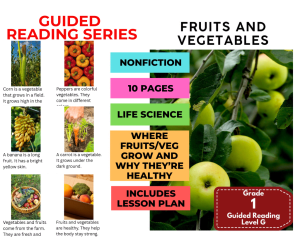
Fruits and Vegetables: Guided Reading Level G with Lesson Plan
ELA, Resources for Teachers, Reading Comprehension, Reading, Science, Language Development, Life Sciences, Health, P.E. & Health, Vocabulary, Kindergarten, Grade 1, 2, Worksheets & Printables, Worksheets, Teacher Tools, Centers, Activities, Literacy Readers, Quizzes, Quizzes and Tests, Assessments, Lesson Plans
This Fruits and Vegetables (level g) guided reading book with lesson plan includes: Guided Reading Color Label (front cover x1) This is a quick way to match the book’s demands to what students can generally handle.. The overall goal is to use the level/color to pick books for several smaller groups. To qualify for a certain level, a student is expected to read a book from that level with about 90–94% accuracy. If a student is consistently accurate and understands, move up a level. If the student is struggling at that level, drop down and add more support. Each student will improve at completely different rates, but it is generally one of the best ways to check progress across the class. DOWNLOAD THE CATALOG TO VIEW ALL GUIDED READING BOOKS AVAILABLE (SORTED LEVELS A-Z) Pre-Reading Question (x1) Teacher asks the prompt aloud, can be while showing the cover or first page. Students share what they already know, or make educated guesses from the cover. Prompt them to use the target vocabulary. Write some of their responses on the board to look back at during the reading. Vocabulary Words (x5) Introduce the five words, best doing it one at a time. Start by saying it, while students repeat and then see if anyone knows what it means before reading further. Read through the meaning and try to briefly connect each word to a picture or gesture so it’s meaningful. Ask students to flip through the book pages and point to where they see each of the vocabulary words. While reading the book pause upon coming across one of the vocab words or read the sentence twice to make sure students understand the word has appeared. Optional: Ask students to raise hands whenever they see/hear one of the new words. Guided Reading Pages (x10) Check the book snapshot (below) for: primary topic - do you need to prep extra reading or intro materials on this? what is taught best - decide on 1-2 bullets to focus on, use the prompt or words provided here for best results. learning goals - what you are checking for students to be able to do after the session, elicit answers using prompts or words provided. key vocabulary (see section above). questions overview - so you know what is coming up and if you need to prep extra materials to assist understanding. Run the lesson You may have already looked at a few of the pages together, but you can show them some of the pictures again first to set meaning. Depending on how much time you have and how familiar your students are with guided reading class, you may want to read the book aloud first with the group first. Students whisper or partner read, while you listen in. If time, do it as a group, one student reading a page each. Use the guided page’s prompts to coach: “Check the picture / does it make sense?” “Point under the words / try the first sound” “Reread the sentence smoothly”. Try to focus more on one student per session (rotating every time), so you can work out if they are ready to move up or need to move down a level. Comprehension Questions (back cover x3) This is your way to check that students didn’t just say the words, but actually understood the text. First, let students answer by pointing to the page/picture and saying a short sentence. After any answer, follow with: “Show me where you found that in the text.” In bigger groups, have partners answer first (10–20 seconds), then call on 2–3 students to share. Differentiation tips: Emerging speakers/struggling readers: oral + pointing On-level: oral in a full sentence Higher: one written sentence or draw + label Book Snapshot Title: Fruits and Vegetables Genre: Nonfiction Subject: Life Science (Plants and food) Primary Topic: Where fruits/vegetables grow and why they’re healthy Estimated Guided Reading Level (A–Z): G What This Book Teaches Best Many foods come from plants , and plants grow in the sun. Examples of fruits and where they grow (apple on a tall tree; banana with bright yellow skin). Examples of vegetables and where they grow (carrot under the ground; corn in a field; peppers in different colors; broccoli looks like a tiny tree). A simple fruit feature: most fruits have seeds inside (watermelon has many small seeds). Health connection: fruits and vegetables are healthy and help the body stay strong. Learning Goals Students will identify what the book says many foods come from. Students will describe where at least one fruit grows (example from the text). Students will describe where at least one vegetable grows (example from the text). Students will explain what the book says about seeds in fruits. Students will explain how fruits and vegetables help the body, using the book’s words. Key Vocabulary From the Text plants — living things that grow in the sun. fruit — food that can grow on a tree. vegetable — food that can grow in the ground. seeds — small parts inside fruits. healthy — good for your body. Discussion Prompts Pre-reading question: What fruits and vegetables do you already know, and where do you think they grow? Comprehension questions: What does the book say many foods come from? Comprehension questions: Where does the book say a carrot grows? Comprehension questions: How do fruits and vegetables help the body, according to the book? Printing Tips 1. Best Printing Method (Recommended) “Booklet” Printing (Best if Available) If your printer or PDF viewer supports Booklet Printing , use this. Settings to use: Print mode: Booklet Paper size: Letter or A4 (either works) Orientation: Landscape Print on both sides: Yes Flip on: Short edge Scaling: Fit to printable area Booklet subset: First test: Front sides only Then: Back sides only This will automatically: Pair pages correctly Put the cover on the outside Align everything for folding After printing, fold in half and staple along the spine . 2. If “Booklet” Printing Is NOT Available You can still print this correctly with manual duplex printing . Step-by-step: Open the PDF. Choose Print . Set: Orientation: Landscape Pages per sheet: 1 Print on both sides: Yes Flip on: Short edge Print all pages . Because each PDF page already contains two facing book pages, the result will still fold cleanly into a book. Thousands of Cored Education products are included with your TeachSimple membership. Download links and encyclopedia index available here.
Author Cored Education
Rating
Tags Reading Comprehension, Reading Passages, Reading, Guided Reading, Guided Reading Lesson Plan, Guided Reading Activity, Pre-reading, Science Lesson Plans, Life Science, Health