



3,911 products added recently
Page 32 - ELA Lesson Plans
Elevate your ELA instruction with lesson plans that cover reading, writing, speaking, and listening skills. These resources provide diverse texts and engaging activities to improve literacy. Integrate these plans to enrich your language arts curriculum and support student achievement.

 Show filters

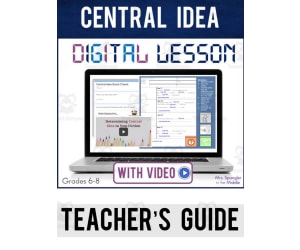
Central Idea Digital Lesson
ELA, Reading, Grade 6, 7, 8, Teacher Tools, Lesson Plans
Central Idea Digital Lesson provides interactive scaffolded notes to teach the key skill of identifying central ideas. This resource is available in Google Docs format for digital access which offers flexibility for various instruction methods. Differentiation is built-in with 4 leveled notes targeting grade 6-8 reading standards. Directions outline implementation ideas for whole group, small group, intervention or independent practice. The various note types allow teachers to challenge stronger readers while supporting struggling learners' needs. A quick check quiz with self-grading component checks understanding and provides progress data. This timely central idea lesson integrates digital media and caters to blended or distance learning models.
Author Mrs. Spangler in the Middle
Tags Central Idea, Reading Lesson, Digital, Google Classroom, Informational Text

Reindeer Reading Comprehension Passage - Cored Ed Encyclopedia
ELA, Language Development, Reading Comprehension, Reading, Pre-Reading, Science, Writing, Strategies, Animals, Life Sciences, Grade 2, 3, 4, 5, Worksheets & Printables, Worksheets, Teacher Tools, Centers, Activities, Writing Prompts, Assessments, Quizzes and Tests, Quizzes, Lesson Plans
This reindeer reading comprehension includes: Visualization (on the front cover) Start your lesson by taking a minute to think and share something about the topic. Read the script aloud (slowly), perhaps prepare some music or sound effects. Student close their eyes and let their imaginations wander. Students open their eyes, read the question aloud and give them a few minutes to complete. Ask a few students to share or keep answers until the end to compare with what they learn in the passage. Quick pause—thousands of Cored Education products are included with your TeachSimple membership. Download links and encyclopedia index available here. COMPANION VIDEO NOW AVAILABLE (EMBEDDED AFTER PREVIEW PICTURES IN PRODUCT DESCRIPTION) Pre-Reading Trivia Students will write down one thing they already know about the subject and then read five more facts and discuss. These facts are fun, and the students will enjoy learning about the subject before reading more. Give 1 minute for students to write what they already know (no pressure—best guess is fine). Read the five facts together. After each fact, do ask a student for their opinion, was it surprising? Set a purpose by asking students to highlight/underline one fact they want to learn more about during the reading. Reading Passage The text is a high-interest reading passage with set paragraphs, roughly three to four paragraphs long. It contains a variety of themes about the topic, anywhere from history to technology. The passage is between 250 and 350 words in length. First, ask students to look at the headings and see what they’ll learn about today. What do they know about the topic/heading? First read options: Teacher read-aloud (best for support). Partner reading (paragraph by paragraph). While reading, students underline important details, and vocabulary words they think may come up in the questions section. Mixed Questions The first question page contains four multiple-choice questions, each with a choice of four answers, and three written response questions that require a sentence or two from the student. Students complete the mcqs first independently, then review quickly as a class. For the 3 written responses, try to get students giving the answer with some form of evidence: “I think ___ because the text says ___.” If students get stuck, send them back to check the passage. Vocabulary Questions Practice seven key words from the text in this section across two activities. First section is scrambled words where students will unscramble three words given a clue for each. The second section is a word to meaning matching activity. Before starting, have some students read out words they underlined in the passage. Ask students to say the word and read aloud the sentence(s) around each word. Ask students to do scrambled words and the matching exercise in pairs then go through answers as a class. For the scrambled spelling task, get four pairs to come up to the board and write the words for extra practice with the other student reading out the clue. For the matching task, prompt students to give full sentences: “I matched ___ with ___ because ___.” Creative Writing In this question, the student will be required to write a five to eight sentence paragraph on a question related to the topic. Before starting, ask students write down 3 key ideas they are going to include in their piece. Ask students for ideas to share around the class to help those struggling. Pro writing expectations: 5–8 sentences At least 2 facts or details from the passage At least 2 vocabulary words from the previous page Students read their paragraphs while classmates listen for facts and vocabulary words. Extension Activities This page is optional for fast finishers or to take home. There are several activities, each one requiring a different skill. Do some, do none, do all, completely optional - but you will feel reassured knowing every possibility is planned for. Includes summary writting question. Answer Key There are answers for the multiple-choice questions, written response questions have sample answers, vocabulary answers and if there is a summary question then a sample summary will be provided as well. Lesson Plan Included Customized lesson plan for this lesson is included. Lesson Snapshot Title: Reindeer Genre: Nonfiction (informational text) Subject: Life Science (Animals & Habitats) Primary Topic: Reindeer adaptations, migration, and human connections Estimated Guided Reading Level (A–Z): R What This Lesson Teaches Best How reindeer are adapted for cold places (thick coat; wide hooves for soft snow and soggy tundra). How reindeer find food when conditions are harsh (digging through snow to reach lichen). Migration and seasonal movement (some herds travel long journeys; more than 600 miles north in summer, then south again). How people and reindeer have influenced each other (communities watching hoofprints, herding partnerships, reindeer helping with travel and providing resources). A conservation-style question about changing winters (warming turning soft snow into hard ice that seals food away). Learning Goals Students will describe where reindeer live using details from the text (Arctic and subarctic lands). Students will explain two body features that help reindeer in winter conditions. Students will describe how reindeer get food when it is scarce, using the text’s example. Students will explain how long journeys relate to seasons and survival in the passage. Students will describe one way people have interacted with or depended on reindeer in the text. Key Vocabulary From the Text subarctic — very cold region just below the Arctic. tundra — open, cold land with few trees. hoofprints — marks left by hooves in the ground or snow. lichen — crusty plantlike growth on rocks and ground. Vulnerable — at risk of harm or shrinking in number. FULL CATALOG OF DOWNLOAD LINKS AND ENCYCLOPEDIA INDEX HERE
Author Cored Education
Rating
Tags Vocabulary, Reading Comprehension, Reading Passages, Reading, Creative Writing, Reading Strategies, Writing Prompts, Lesson Plans, Reindeer, Life Science

A Rose for Emily: Full Lesson Plan w/ PowerPoints & Graphic Organizers
ELA, Reading, Grade 7, 8, 9, 10, 11, 12, Lesson Plans, Teacher Tools
This resource will give you everything you need to complete a full, comprehensive reading lesson plan for A Rose for Emily text by William Faulkner. Files are offered as PDFs and Word documents. Included: -A Rose for Emily Lesson Plan -A Rose for Emily Worksheet -A Rose for Emily Answer Key Graphic Organizers: Author’s Purpose Characterization Chart Figurative Language Chart Historical Analysis Chart Imagery Chart Peer Evaluation Sheet Plot Diagram Read for Detail Setting Style Chart Symbol Chart Symbolism Chart Theme Diagram Tone and Mood Diagram Universal Plot Diagram Venn Diagram PowerPoints: Characterization Imagery, Voice, and Persona Irony and Ambiguity Narrator and Voice Plot Structure Symbolism and Allegory Theme - How to Interpret Theme Thank You Bonus Stuff!
Author Quality Teaching Products
Tags A Rose For Emily, Reading Lesson Plan, Graphic Organizer, Bookmarks, Historical Analysis Chart, Figurative Language In A Rose For Emily, What Is The Plot Of A Rose For Emily

Whales Reading Comprehension Passage - Cored Ed Encyclopedia
ELA, Language Development, Reading Comprehension, Reading, Pre-Reading, Science, Animals, Life Sciences, Vocabulary, Writing, Grade 2, 3, 4, 5, Worksheets & Printables, Worksheets, Teacher Tools, Centers, Activities, Writing Prompts, Assessments, Quizzes and Tests, Quizzes, Lesson Plans
This whales reading comprehension with lesson plan includes: Visualization (on the front cover) Start your lesson by taking a minute to think and share something about the topic. Read the script aloud (slowly), perhaps prepare some music or sound effects. Student close their eyes and let their imaginations wander. Students open their eyes, read the question aloud and give them a few minutes to complete. Ask a few students to share or keep answers until the end to compare with what they learn in the passage. Quick pause—thousands of Cored Education products are included with your TeachSimple membership. Download links and encyclopedia index available here. Pre-Reading Trivia Students will write down one thing they already know about the subject and then read five more facts and discuss. These facts are fun, and the students will enjoy learning about the subject before reading more. Give 1 minute for students to write what they already know (no pressure—best guess is fine). Read the five facts together. After each fact, do ask a student for their opinion, was it surprising? Set a purpose by asking students to highlight/underline one fact they want to learn more about during the reading. Reading Passage The text is a high-interest reading passage with set paragraphs, roughly three to four paragraphs long. It contains a variety of themes about the topic, anywhere from history to technology. The passage is between 250 and 350 words in length. First, ask students to look at the headings and see what they’ll learn about today. What do they know about the topic/heading? First read options: Teacher read-aloud (best for support). Partner reading (paragraph by paragraph). While reading, students underline important details, and vocabulary words they think may come up in the questions section. Mixed Questions The first question page contains four multiple-choice questions, each with a choice of four answers, and three written response questions that require a sentence or two from the student. Students complete the mcqs first independently, then review quickly as a class. For the 3 written responses, try to get students giving the answer with some form of evidence: “I think ___ because the text says ___.” If students get stuck, send them back to check the passage. Vocabulary Questions Practice seven key words from the text in this section across two activities. First section is scrambled words where students will unscramble three words given a clue for each. The second section is a word to meaning matching activity. Before starting, have some students read out words they underlined in the passage. Ask students to say the word and read aloud the sentence(s) around each word. Ask students to do scrambled words and the matching exercise in pairs then go through answers as a class. For the scrambled spelling task, get four pairs to come up to the board and write the words for extra practice with the other student reading out the clue. For the matching task, prompt students to give full sentences: “I matched ___ with ___ because ___.” Creative Writing In this question, the student will be required to write a five to eight sentence paragraph on a question related to the topic. Before starting, ask students write down 3 key ideas they are going to include in their piece. Ask students for ideas to share around the class to help those struggling. Pro writing expectations: 5–8 sentences At least 2 facts or details from the passage At least 2 vocabulary words from the previous page Students read their paragraphs while classmates listen for facts and vocabulary words. Extension Activities This page is optional for fast finishers or to take home. There are several activities, each one requiring a different skill. Do some, do none, do all, completely optional - but you will feel reassured knowing every possibility is planned for. Includes summary writting question. Answer Key There are answers for the multiple-choice questions, written response questions have sample answers, vocabulary answers and if there is a summary question then a sample summary will be provided as well. Lesson Plan Included Customized lesson plan for this lesson is included. Lesson Snapshot Title: Whales Genre: Nonfiction (informational text) Subject: Life Science / Informational Reading Primary Topic: Whales as mammals, feeding types, fossils, human impacts Estimated Guided Reading Level (A–Z): Q What This Lesson Teaches Best Whales are mammals that breathe air with lungs through blowholes , so they must surface as part of everyday life. Whales can have two different feeding tools : baleen plates that strain food like krill, or sharp teeth used to grab fish or squid. Fossils provide evidence that early whale relatives were land mammals and changed over millions of years to live in the ocean. Human activity affects whales today (fishing gear tangles, ships strike, and loud noise can fill the water where whales communicate), and scientists use tracking tools to help protect them. Learning Goals Students will explain why whales rise to the surface using details about breathing and blowholes. Students will compare how baleen whales and toothed whales get food, using evidence from the text. Students will describe what fossils show about where whales came from long ago. Students will identify one modern problem that can make whale communication harder, based on the passage. Students will describe at least one way scientists track whales to protect them, using details from the text. Key Vocabulary From the Text blowholes — nostrils on top of a whale’s head. baleen — mouth plates that strain tiny food from water. krill — tiny sea creatures baleen whales hold onto. streamlined — shaped to move smoothly through water. fossils — old remains in rock that give clues. FULL CATALOG OF DOWNLOAD LINKS AND ENCYCLOPEDIA INDEX HERE
Author Cored Education
Rating
Tags Vocabulary, Reading Comprehension, Reading Passages, Lesson Plans, Ela Lesson Plans, Reading Comprehension Lesson Plans, Pre-reading, Science Lesson Plans, Life Science, Animals

Present Tense Supplementary Materials Grades 3-4 (PDF)
ELA, Language Development, ESL, Grammar, Common Core, Resources for Teachers, Grade 3, 4, Worksheets & Printables, Worksheets, Quizzes and Tests, Teacher Tools, Tests, Assessments, Activities, Lesson Plans
Present Tense Supplementary Materials Note: This download DOES NOT include the tests themselves. You can still make use of these materials without them but they are recommended. Download in a format of your choice in the "Links" section below. Outline Ice Breaker (5-10 minutes) Engaging, interactive activity to introduce the lesson’s theme. Examples: Matching games, sentence races, charades, or storytelling challenges. Guided Practice (10-15 minutes) Teacher-led exercises to reinforce the concept. Examples: Sorting sentences by tense, sentence transformations, or fill-in-the-gap exercises. Group or Partner Task (15 minutes) Collaborative activity to practice the lesson’s focus in a fun and engaging way. Examples: Role-play, storytelling, sentence-building games, or small-group discussions. Independent Worksheet (15 minutes) Individual written activity to solidify understanding. Examples: Sentence corrections, verb conjugation drills, or tense identification exercises. Exit Task (5 minutes) Quick reflective activity to assess understanding before students leave. Examples: Writing a sentence using the target concept, identifying a tense, or explaining a rule. Links: Includes: Present Simple Present Continuous Present Perfect Mistake Finding Google Docs Google Forms Google Slides PDF PPT Word FULL CATALOG OF DOWNLOAD LINKS HERE Grade 3/4 Links: Adjectives Google Docs Google Forms Google Slides PDF PPT Word Free Supplementary Materials Pack Adverbs Google Docs Google Forms Google Slides PDF PPT Word Free Supplementary Materials Pack Conjunctions Google Docs Google Forms Google Slides PDF PPT Word Free Supplementary Materials Pack Nouns Google Docs Google Forms Google Slides PDF PPT Word Free Supplementary Materials Pack Pronouns Google Docs Google Forms Google Slides PDF PPT Word Free Supplementary Materials Pack Verbs Google Docs Google Forms Google Slides PDF PPT Word Free Supplementary Materials Pack Sentence Structure Google Docs Google Forms Google Slides PDF PPT Word Free Supplementary Materials Pack Present Tense Google Docs Google Forms Google Slides PDF PPT Word Free Supplementary Materials Pack Past Tense Google Docs Google Forms Google Slides PDF PPT Word Free Supplementary Materials Pack Future Tense Google Docs Google Forms Google Slides PDF PPT Word Free Supplementary Materials Pack Context Clues Google Docs Google Forms Google Slides PDF PPT Word Free Supplementary Materials Pack Defining Words Google Docs Google Forms Google Slides PDF PPT Word Free Supplementary Materials Pack Fill the Blanks Google Docs Google Forms Google Slides PDF PPT Word Free Supplementary Materials Pack Homophones Google Docs Google Forms Google Slides PDF PPT Word Free Supplementary Materials Pack Synonyms Google Docs Google Forms Google Slides PDF PPT Word Free Supplementary Materials Pack ELA Review Questions Overview Questions have three answer choices. There are a handful of pictures on each test for aesthetic purposes, as well as a review sheet covering most of the topics covered in the product. Introduction or Example Sheet Each topic will include an introduction or example sheet to go through first with your students. Full Answer Keys Full answer keys and sample responses are provided so no matter how busy you are, you know you're covered! In the Supplementary Pack Interactive Ice Breakers: Fun, hands-on activities that get students thinking about adjectives right from the start. Guided Practice: Teacher-led exercises that reinforce the day’s lesson, ensuring students can confidently identify and use adjectives. Group and Partner Tasks: Collaborative activities that allow students to work together to solve problems, categorize adjectives, and create descriptive sentences. Independent Worksheets: Structured worksheets that provide individual practice and help solidify understanding of key concepts. Exit Tasks: Quick, reflective activities at the end of each lesson that assess understanding and encourage students to apply what they’ve learned. For similar downloads and other frees, do check out Cored Group on TeachSimple.
Author Cored Education
Tags Elementary, Answers, Ccss, Common Core, Grammar, Tests, Test Prep, Grade 3, Grade 4, Lesson Plan
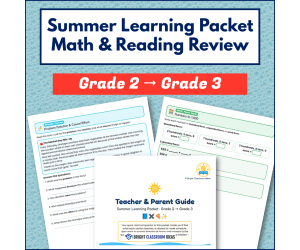
Summer Learning Packet Grade 2 to Grade 3 | Math & Reading Review
ELA, Math, Grade 2, Lesson Plans, Teacher Tools, Worksheets & Printables
Summer Learning Packet Grade 2 to Grade 3 | Math & Reading Review Help your students maintain academic skills and prevent the summer slide with this comprehensive Summer Learning Packet for 2nd Grade to 3rd Grade ! Designed as a complete summer bridge resource, this no-prep workbook combines engaging reading and math practice with summer-themed activities that keep learners motivated while preparing them for third-grade success. With 70 pages of standards-based review, this packet provides the perfect balance of skill reinforcement and independent learning. What's Included ✔ 70-page Summer Learning Workbook ✔ Reading & Language Arts Activities: Fiction and nonfiction reading comprehension Characters, setting, plot, and sequencing Main idea and supporting details Compare and contrast Fact vs. opinion Predictions, inferencing, and summarizing Vocabulary development Context clues Synonyms and antonyms Multiple-meaning words Academic vocabulary Grammar and language skills Narrative, opinion, informational, and how-to writing ✔ Math Activities: Place value to 1,000 Comparing and ordering numbers Three-digit addition and subtraction Multiplication foundations Division foundations Fractions Measurement and elapsed time Money and making change Geometry and symmetry Area foundations Graphing and data analysis One-step and two-step word problems ✔ 6-Week Progress Tracker ✔ Summer Bonus Challenge Activities ✔ Certificate of Completion ✔ Teacher & Parent Guide ✔ Answer Key Included How It Works in the Classroom This 2nd Grade Summer Review Packet is ideal for: Summer take-home packets End-of-year review Summer school programs Independent practice Homeschool learning Tutoring sessions Intervention support Back-to-school review Students complete approximately 2–3 pages per day, making it easy to maintain learning momentum throughout the summer without overwhelming families. The included six-week pacing guide helps organize instruction and practice for consistent skill growth. Standards & Learning Goals Students will strengthen key end-of-second-grade skills while building readiness for third grade. Reading & Language Arts Reading comprehension Main idea and supporting details Fiction and nonfiction text analysis Vocabulary development Grammar and conventions Sentence structure Writing organization Editing and revising skills Math Place value and number sense Addition and subtraction fluency Three-digit operations Multiplication and division concepts Fraction foundations Measurement and time Money skills Geometry and area Graph interpretation Multi-step problem solving Aligned with widely used end-of-second-grade standards and designed to support a smooth transition into third grade. Why Teachers Love It ⭐ No prep required ⭐ Comprehensive reading and math review ⭐ Perfect summer bridge between 2nd and 3rd grade ⭐ Engaging summer theme throughout ⭐ Builds confidence before the new school year ⭐ Includes answer key for quick grading ⭐ Parent-friendly and easy to implement ⭐ Flexible six-week pacing guide included ⭐ Strong focus on multiplication and division readiness ⭐ Great for summer school, tutoring, intervention, and homeschool settings If you're searching for a complete Summer Learning Packet for 2nd Grade to 3rd Grade , this resource delivers meaningful academic review, engaging practice opportunities, and summer-themed fun in one easy-to-use workbook. Help students retain important skills, build confidence, and start third grade ready to succeed. Download today and make summer learning simple, effective, and enjoyable!
Author Bright Classroom Ideas Marketplace
Rating
Tags Summer, Review, Reading, Ela, Math, Worksheet

Mystery, Thriller, Horror, Suspense Book Report
ELA, Literature, Reading, Writing, Grade 6, 7, 8, 9, Teacher Tools, Lesson Plans
Students often love the mystery, thriller, horror, and suspense genre, as evidenced by their choice of TV series, movies, and books to read. Perfect for 6th to 9th graders, The Mystery, Thriller, Horror, Suspense Book Report serves as a culminating project at the end of a unit on this genre. It also is a stand-alone project if you assign regular book reports. The project requires students to analyze their books by looking at the elements of fiction, mood, suspense, and other literary devices. Students will provide text evidence to show their understanding of the various elements and concepts in a formal project . It also gives students the opportunity to share their books in small groups as well as complete a self-evaluation on their project , specifically on their process. The project includes: --a Book Browse lesson plan and handout --detailed lesson plans with objectives and learning targets that are aligned with the Common Core Standards --easy-to-follow student directions --self-evaluation --check off and grading sheet I have produced a number of book reports that you might be interested in. Check out my store A Great Good Place for Teachers or click on the links below. Character Analysis Essay, Gift for a Character Book Report, and Oral Presentation Book into Movie Project: Comparing and Contrasting Poetry Book Report Mini-Reviews Book Report Book Jacket Book Report Historical Fiction Book Report Historical Fiction Literature Circle Project My slideshow Writing with Suspense: A Google Slideshow offers a good introduction to this genre. Please contact me at gruenwaldy1@gmail.com if you have any questions.
Author Intentional Teaching and Learning
Tags Mystery Writing, Thriller Writing, Horror Writing, Suspense Writing, Book Report, Reading, Literary Analysis, Suspenseful Books For Middle Schoolers

Zero Conditional
ELA, Language Development, ESL, Not Grade Specific, Teacher Tools, Lesson Plans
This lesson serves as an introduction to or review of the usage of the Zero Conditional in English. The presentation consists of 43 visually appealing slides that are carefully designed with color-coded sentences, captivating images, and engaging activities to enhance retention. These visual aids will greatly assist the teacher in conducting drills and facilitating interactive activities. To conduct a well-rounded lesson, the teacher should demonstrate enthusiasm and create a positive learning environment. The teacher should guide students through the slides, encouraging active participation, providing timely feedback, and fostering interactive speaking practice. With the estimated duration of approximately 1 hour and 30 minutes, the teacher should manage time effectively, allowing for sufficient practice and review. Introduction: Begin the lesson with an attention-grabbing slide that features an engaging image related to the Zero Conditional. Use this slide to generate curiosity and set the stage for the topic. Vocabulary Presentation: Utilize color-coded sentences and concise explanations on slides to introduce and explain key vocabulary associated with the Zero Conditional. Include relevant images to aid understanding and captivate students' attention. Structure Breakdown: Break down the structure of the Zero Conditional into easily understandable parts. Use slides with color-coded examples and concise explanations to demonstrate the formation of conditional sentences, emphasizing the use of present tense verbs in both the condition and the result. Real-Life Examples: Illustrate the application of the Zero Conditional with relatable and practical examples on slides. Incorporate images that depict everyday scenarios to make the examples more memorable and relatable for students. Interactive Drills and Practice: Engage students actively through interactive drills and practice activities. Use slides that prompt students to complete conditional sentences, identify correct or incorrect usage, or create their own examples. Encourage class participation and provide immediate feedback to reinforce learning. Speaking Practice: Allocate sufficient time for interactive speaking practice. Use slides that encourage students to engage in conversations using the Zero Conditional. Provide prompts, role-play scenarios, or discussion questions that require students to apply their knowledge in practical situations. Consider pair or group work to promote collaboration and maximize speaking opportunities. Recap and Summary: Include a slide that summarizes the key points covered in the lesson. Use this slide to reinforce understanding and remind students of the essential aspects of the Zero Conditional. Consider incorporating visual cues or a mnemonic device to aid memory recall. Conclusion and Review: Conclude the lesson by allowing students to reflect on what they have learned. Use final slides to review the main concepts, address any remaining questions or concerns, and provide additional resources for further practice.
Author Learning Resources Producer
Tags Zero Conditional, Imperative, Simple Present, Advice, Results, Speaking, Grammar, English, Inglês

Sensational Sentences: With six write-on, wipe-off sentence strips
ELA, Writing, Grade 4, 5, 6, 7, 8, Teacher Tools, Lesson Plans
Sensational Sentences: Comprehensive Learning Resource Sensational Sentences provides a comprehensive format that passionately gives each student an interactive opportunity to enhance the quality of their sentence construction skills. It meticulously covers Grades 4 through 8 and is an excellent resource for both Language Arts and Writing lessons. Complementing traditional classroom teaching, homeschooling methodologies also greatly benefit from this practical, adaptive tool. Superior Vocabulary Usage Focusing on promoting superior vocabulary use, the activities included build on engaging wordplay with verbs, adjectives, adverbs - bolstering students' ability to cultivate vibrant sentences. Moreover, its facilitating structure ensures they gain the necessary confidence in implementing these skills regularly in their writing assignments. Better Sentence Structure and Variety It's not just about improving vocabulary use; Sensational Sentences ingrains better sentence structure and variety in students' writing paradigms as well. Moving away from monotonous sentence patterns can add colour to narratives – an aspect this resource helps children explore effectively. A Unique Feature: Write-on Wipe-off Sentence Strips One unique feature sets Sensational Sentences apart – its fun set of six write-on wipe-off sentence strips. These reusable strips allow children to physically engage with constructing sentences. Experiencing errors isn't a setback here; it’s momentarily written down before being rectified or replaced by something much better - further reinforcing learning through practical experience! Versatility in Application In addition to individual assignments (whether as classwork or homework), it expands smoothly into various utilization scenarios as well taping into aspects such as whole-group sessions aiming at group interactions and collaborative understanding of concepts. Small teams would find common ground when improving individual sentences together – fostering peer learning. Convenient File Type The file-type employed for sharing this product is PDF – universally accessible without additional software requirements across all digital platforms which adds another layer to its ease-of-use functionality. Positive Impact on Student's Writing Skills In all aspects discussed thus far, Sensational Sentences initiates essential improvements positively impacting everything a student writes, empowering them with new confidence levels not considered achievable previously!
Author Classroom Complete Press
Tags PDF

SIXSPELL PRIMARY-2 Gr. 3
ELA, Language Development, Spelling, Grade 3, Teacher Tools, Lesson Plans
SIXSPELL PRIMARY-2 Gr. 3: A Revolution in Language Arts Teaching The SIXSPELL PRIMARY-2 Gr. 3 is a revolutionary learning resource designed for Grade 3 Language Arts teachers, focusing predominantly on Spelling. It serves as an innovative supplement to traditional spelling practices, overhauling daily spelling programs to synchronize better with the needs of modern education. Far from being just another drilling tool, SIXSPELL introduces a unique approach engendered by research. Dedicating just 10 to 15 minutes per day to this method can lead to substantial improvements in students' writing skills and overall academic performance. A Fresh Approach to Spelling Rather than relying on rote memorization, this spelling program lays emphasis on meaningful words and rule-based instructions catering uniquely to each student's requirement. The program discourages teaching of words that are already mastered by the student, eliminating unnecessary replication in learning. SIXSPELL underscores the interplay between reading and spelling abilities stressing that children need proficiency in sound-symbol relationships before they can grasp spelling instructions successfully. An Invaluable Tool for Dynamic Instruction The material included in SIXSPELL has been thoughtfully selected from various word lists suitable for Grade 3 students; taking into account possible overlaps across different grades due partially related word usage.. This versatile toolkit can be employed equally effectively either during large group classes or during more focused small group lessons - you get maximum results when aligned specifically with your classroom context! . . . ., . We invite all the educators on board for a path-breaking language teaching transformation commencing with these small but significant steps every day, allowing students to embark into the fascinating world of words with SIXSPELL PRIMARY-2 Gr. 3!
Author Classroom Complete Press
Tags Language Arts, Spelling Programs, Spelling Patterns, Spelling Words, Tests

Capitalization and Punctuation Supplementary Materials Grade 5-6 (PDF)
ELA, Language Development, ESL, Grammar, Common Core, Resources for Teachers, Grade 5, 6, 7, Worksheets & Printables, Worksheets, Quizzes and Tests, Teacher Tools, Tests, Assessments, Lesson Plans
Capitalization and Punctuation Supplementary Materials Note: This download DOES NOT include the tests themselves. You can still make use of these materials without them but they are recommended. Download in a format of your choice in the "Links" section below. In the Supplementary Pack Interactive Ice Breakers: Engaging warm-up activities that introduce students to key ELA concepts, such as quick capitalization corrections and punctuation challenges. Guided Practice: Structured teacher-led exercises that reinforce grammar and punctuation rules, helping students identify and apply them correctly in sentences. Group and Partner Tasks: Collaborative activities where students work together to edit sentences, correct capitalization, and improve punctuation through peer discussion and teamwork. Independent Worksheets: Carefully designed worksheets that provide focused practice, allowing students to apply learned concepts and refine their skills independently. Exit Tasks: Quick assessments at the end of each lesson, prompting students to reflect on what they’ve learned and apply their knowledge in writing and editing tasks. Links Using Commas Using Quotations Using Possessive Nouns Using Dates Open/Close an Email Google Docs Google Forms Google Slides PDF PPT Word FULL CATALOG OF DOWNLOAD LINKS HERE Grade 5/6 Links: Capitalization & Punctuation Google Docs Google Forms Google Slides PDF PPT Word Free Supplementary Materials Pack Adjectives Google Docs Google Forms Google Slides PDF PPT Word Free Supplementary Materials Pack Nouns Google Docs Google Forms Google Slides PDF PPT Word Free Supplementary Materials Pack Pronouns Google Docs Google Forms Google Slides PDF PPT Word Free Supplementary Materials Pack Verbs Google Docs Google Forms Google Slides PDF PPT Word Free Supplementary Materials Pack Prefixes & Suffixes Google Docs Google Forms Google Slides PDF PPT Word Free Supplementary Materials Pack Sentence Structure Google Docs Google Forms Google Slides PDF PPT Word Free Supplementary Materials Pack Subject Verb Agreement Google Docs Google Forms Google Slides PDF PPT Word Free Supplementary Materials Pack Tenses Google Docs Google Forms Google Slides PDF PPT Word Free Supplementary Materials Pack Context Clues Google Docs Google Forms Google Slides PDF PPT Word Free Supplementary Materials Pack Defining Words Google Docs Google Forms Google Slides PDF PPT Word Free Supplementary Materials Pack Fill in the Blanks Google Docs Google Forms Google Slides PDF PPT Word Free Supplementary Materials Pack Homophones Google Docs Google Forms Google Slides PDF PPT Word Free Supplementary Materials Pack Synonyms Google Docs Google Forms Google Slides PDF PPT Word Free Supplementary Materials Pack ELA Review Questions Overview Questions have three answer choices. There are a handful of pictures on each test for aesthetic purposes, as well as a review sheet covering most of the topics covered in the product. Introduction or Example Sheet Each topic will include an introduction or example sheet to go through first with your students. Full Answer Keys Full answer keys and sample responses are provided so no matter how busy you are, you know you're covered! For More Like This For similar downloads and other frees, do check out Cored Group on TeachSimple.
Author Cored Education
Tags Elementary, Answers, Ccss, Common Core, Grammar, Tests, Test Prep, Assessment, Grade 5, Grade 6

How to Write a Book Report: Non Fiction Book Reports
ELA, Writing, Grade 5, 6, 7, 8, Teacher Tools, Lesson Plans
How to Write a Book Report: Non Fiction Book Reports A credible teaching tool for 5th to 8th grade educators. This material aims to simplify book report assignments, making it fun and accessible for students. Interactive Prewriting: Makes use of graphic organizers that spark creativity while providing a visual road map. Drafting and Revision: Instructions are given in uncomplicated terms perfect for middle-grade learners. Bloom's Taxonomy Alignment: Adheres to esteemed academic standards, focusing on the form and mechanics crucial for non-fiction book reports. Versatility in Teaching This resource is flexible, designed with different teaching strategies in mind whether you want whole group discussion, smaller focused group activities or individual homework exercises. Ease of Use- The product comes incorporated with simple features like implementation guidelines -if you need step-by-step instructions on how classroom utilization can be successful. Included too are student evaluation rubrics giving teachers an objective grading method centralized within regular class plans- Less administrative work! Funtionality Vocabulary Building Word Puzzles : A light-hearted approach towards improving language skills. A Comprehension quiz : Tracks how well content is being absorbed ensuring an overall growth in recall ability. Instantly Available Material This digital tool comes ready-to-print guaranteeing immediate application once acquired without any delay. Use any of its 24 pages depending on your exact requirement showcasing its practical usage flexibility. Designed particularly keeping Language Arts teachers who focus on Writing specially but versatile enough for wider uses as well. Don’t miss out on making 'How to Write a Book Report: Non Fiction Book Reports' a part of your teaching arsenal!
Author Classroom Complete Press
Tags Language Arts, Book Report, Writing Task, Crossword Puzzles, Language Activity
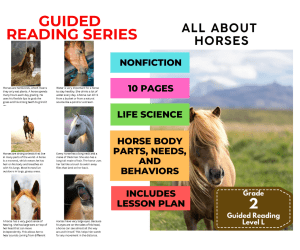
Guided Reading Level L - All About Horses (with Lesson Plan)
ELA, Resources for Teachers, Reading Comprehension, Reading, Science, Language Development, Life Sciences, Animals, Pre-Reading, Vocabulary, Grade 2, 3, 4, Worksheets & Printables, Worksheets, Teacher Tools, Centers, Activities, Literacy Readers, Quizzes, Quizzes and Tests, Assessments, Lesson Plans
This Guided Reading Book - All About Horses (Level L) with lesson plan includes: Guided Reading Color Label (front cover x1) This is a quick way to match the book’s demands to what students can generally handle.. The overall goal is to use the level/color to pick books for several smaller groups. To qualify for a certain level, a student is expected to read a book from that level with about 90–94% accuracy. If a student is consistently accurate and understands, move up a level. If the student is struggling at that level, drop down and add more support. Each student will improve at completely different rates, but it is generally one of the best ways to check progress across the class. DOWNLOAD THE CATALOG TO VIEW ALL GUIDED READING BOOKS AVAILABLE (SORTED LEVELS A-Z) Pre-Reading Question (x1) Teacher asks the prompt aloud, can be while showing the cover or first page. Students share what they already know, or make educated guesses from the cover. Prompt them to use the target vocabulary. Write some of their responses on the board to look back at during the reading. Vocabulary Words (x5) Introduce the five words, best doing it one at a time. Start by saying it, while students repeat and then see if anyone knows what it means before reading further. Read through the meaning and try to briefly connect each word to a picture or gesture so it’s meaningful. Ask students to flip through the book pages and point to where they see each of the vocabulary words. While reading the book pause upon coming across one of the vocab words or read the sentence twice to make sure students understand the word has appeared. Optional: Ask students to raise hands whenever they see/hear one of the new words. Guided Reading Pages (x10) Check the book snapshot (below) for: primary topic - do you need to prep extra reading or intro materials on this? what is taught best - decide on 1-2 bullets to focus on, use the prompt or words provided here for best results. learning goals - what you are checking for students to be able to do after the session, elicit answers using prompts or words provided. key vocabulary (see section above). questions overview - so you know what is coming up and if you need to prep extra materials to assist understanding. Run the lesson You may have already looked at a few of the pages together, but you can show them some of the pictures again first to set meaning. Depending on how much time you have and how familiar your students are with guided reading class, you may want to read the book aloud first with the group first. Students whisper or partner read, while you listen in. If time, do it as a group, one student reading a page each. Use the guided page’s prompts to coach: “Check the picture / does it make sense?” “Point under the words / try the first sound” “Reread the sentence smoothly”. Try to focus more on one student per session (rotating every time), so you can work out if they are ready to move up or need to move down a level. Comprehension Questions (back cover x3) This is your way to check that students didn’t just say the words, but actually understood the text. First, let students answer by pointing to the page/picture and saying a short sentence. After any answer, follow with: “Show me where you found that in the text.” In bigger groups, have partners answer first (10–20 seconds), then call on 2–3 students to share. Differentiation tips: Emerging speakers/struggling readers: oral + pointing On-level: oral in a full sentence Higher: one written sentence or draw + label Book Snapshot Title: All About Horses Genre: Nonfiction (informational) Subject: Life Science / Reading (Informational Text) Primary Topic: Horse body parts, needs, and behaviors Estimated Guided Reading Level (A–Z): L What This Book Teaches Best Key animal facts about horses (they are strong animals, mammals, and live outdoors in grassy areas). How horse body parts help them (mane and tail; tail swishes away flies). What horses need to stay healthy (they eat plants and drink a lot of water). How horses move (trot with “diagonal pairs,” and gallop as the fastest way to move with hooves off the ground). Special horse behaviors and life stages (sleeping while standing; a baby horse is a foal). Learning Goals Students will identify key facts about horses (habitat, body traits, and needs) from the text. Students will explain how a horse uses its tail based on details in the book. Students will describe what horses eat and how they graze using evidence from the text. Students will compare two horse movements (trot and gallop) using information from the book. Students will explain how a horse can sleep while standing without falling over. Students will describe what a foal is and what it can do soon after being born. Key Vocabulary From the Text mammal — an animal that breathes air with lungs. herbivores — animals that eat only plants. grazing — eating grass little by little over time. diagonal — slanted, from one corner to the opposite corner. hooves — the hard feet of a horse. Discussion Prompts Pre-reading question: What do you think a horse needs to stay healthy outdoors? Comprehension questions: What does the text say a horse uses its tail for? How does the text describe a trot? What is a foal, and what can it do within an hour of being born? Printing Tips 1. Best Printing Method (Recommended) “Booklet” Printing (Best if Available) If your printer or PDF viewer supports Booklet Printing , use this. Settings to use: Print mode: Booklet Paper size: Letter or A4 (either works) Orientation: Landscape Print on both sides: Yes Flip on: Short edge Scaling: Fit to printable area Booklet subset: First test: Front sides only Then: Back sides only This will automatically: Pair pages correctly Put the cover on the outside Align everything for folding After printing, fold in half and staple along the spine . 2. If “Booklet” Printing Is NOT Available You can still print this correctly with manual duplex printing . Step-by-step: Open the PDF. Choose Print . Set: Orientation: Landscape Pages per sheet: 1 Print on both sides: Yes Flip on: Short edge Print all pages . Because each PDF page already contains two facing book pages, the result will still fold cleanly into a book. Thousands of Cored Education products are included with your TeachSimple membership. Download links and encyclopedia index available here.
Author Cored Education
Rating
Tags Reading Comprehension, Reading Passages, Reading, Guided Reading, Guided Reading Lesson Plan, Guided Reading Activity, Pre-reading, Science Lesson Plans, Life Science, Animals
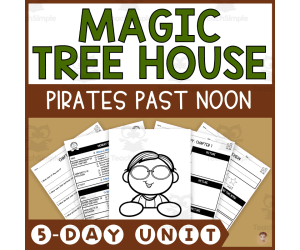
Pirates Past Noon (Magic Tree House #4 Lesson Plan, Videos, Activities)
ELA, Reading, Grade 1, 2, 3, Lesson Plans, Teacher Tools
A 5-day NO PREP novel study of Pirates Past Noon (Magic Tree House #4). This comprehensive book companion includes a lesson plan, chapter comprehension questions, vocabulary practice, and many other activities. Perfect for first grade, second grade, and third grade classrooms, homeschool families, and cooperatives. You can easily customize lessons based on student age, reading and comprehension level, interests, and learning style! Additionally, all worksheets can be completed in an interactive notebook or simply discussed aloud if you desire to reduce the number of pages you print. THIS RESOURCE COVERS: Art (drawing, coloring, arts & crafts) Comprehension English language arts Geography Grammar History Reading Research Social studies Spelling Writing
Author Heather Huhman
Tags Pirates Past Noon, Magic Tree House, Book Companion, Novel Study, Pirates, Magic Tree House Book 4, Magic Tree House Videos, Magictreehouse Videos
Mardi Gras Fun | A Non-Fiction Literacy Unit
ELA, Reading, Grade 2, 3, 4, 5, Lesson Plans, Teacher Tools
This resource is a Mardi Gras Literacy Unit. This Mardi Gras Unit can be used to help children understand the concept of the holiday. Included: - An easy to understand non-fiction passage - Before, during, and after reading activities - Word cards for challenging words - Main idea and details board game
Author Literacy Life
Tags Mardi Gras, March, Main Idea, Celebration, Literacy Unit
'IF' Lesson Plan & Worksheets | Grades 7 - 12
ELA, Social Emotional Learning (SEL), Special Resources, Grade 7, 8, 9, 10, 11, 12, Lesson Plans, Teacher Tools, Worksheets & Printables
'IF' Lesson Plan & Worksheets | Grades 7 - 12 Help students explore imagination, resilience, grief, hope, and growing up with this engaging IF Movie Study ! Based on the heartwarming 2024 film, this resource encourages students to think deeply about character development, symbolism, film techniques, emotional growth, and the power of imagination. With 30 thoughtfully designed activities, students strengthen literacy and critical-thinking skills while making meaningful personal connections to the story. What's Included 30 student activities Printable student workbook Comprehensive teacher guide Complete answer key Reading comprehension activities Character analysis tasks Theme and symbolism exploration Vocabulary development exercises Film technique analysis Mood and tone activities Sound and music analysis Story structure activities Character comparison graphic organizers Discussion and debate prompts Creative writing tasks Social-emotional learning reflections Class survey and graphing activity Design Your Own IF creative project Students will explore: Imagination and creativity Hope and resilience Grief and healing Friendship and belonging Growing up and identity Symbolism and inference Character motivation Film analysis and media literacy Emotional awareness and empathy How It Works in the Classroom This IF movie guide is flexible and easy to implement in a variety of learning environments: English Language Arts classes Film studies lessons SEL and wellbeing units Independent work Homeschool learning Substitute plans Small-group discussions Media literacy instruction Creative writing units Cross-curricular enrichment Students complete activities before, during, and after viewing the film. Lessons include comprehension checks, symbolism analysis, vocabulary practice, character studies, discussion activities, debate prompts, creative projects, and personal reflection opportunities. The included teacher guide provides a complete 90-minute lesson plan and differentiation strategies for diverse learners. Standards & Learning Goals Students will: Summarize key plot events and character motivations Analyze themes, symbolism, and mood Examine how film techniques create meaning Interpret character actions and emotions using evidence Strengthen vocabulary and language skills Develop inference and critical-thinking abilities Participate in meaningful discussion and debate Reflect on resilience, imagination, and emotional growth Explore the role of creativity in coping with challenges Express ideas through writing and creative projects Supports instruction in: English Language Arts Film Studies Media Literacy Social-Emotional Learning (SEL) Critical Thinking Creative Writing Speaking and Listening Visual Literacy Why Teachers Love It ✅ No-prep printable resource ✅ Includes teacher guide and complete answer key ✅ Promotes thoughtful discussion and reflection ✅ Explores meaningful SEL themes through film ✅ Strengthens critical-thinking and inference skills ✅ Encourages creativity and imagination ✅ Features engaging graphic organizers and discussion activities ✅ Supports middle and high school learners ✅ Flexible for classroom, homeschool, and enrichment settings ✅ Combines literacy, film analysis, and personal reflection in one resource Teachers love how this resource transforms a popular family film into a meaningful learning experience that encourages empathy, resilience, creativity, and deeper thinking while strengthening important literacy skills. Add this IF Movie Study to your classroom today and help students explore imagination, hope, resilience, and emotional growth through engaging activities that inspire meaningful discussion and critical thinking long after the movie ends.
Author Bright Classroom Ideas Marketplace
Rating
Tags If, Film, Movie, Guide, Lesson, Plan, Worksheet
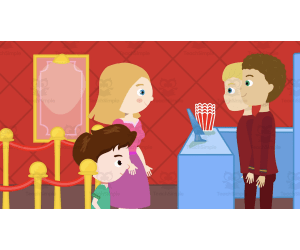
In The Cinema | English Conversations Video Lesson
ELA, Language Development, ESL, Not Grade Specific, Lesson Plans, Teacher Tools
This animated video lesson is all about English conversations. Students will love this engaging and interactive video as they learn more about being in the cinema. This video serves as a great introduction or review video for your learners. This is a 6-minute video lesson.
Author Educational Voice
Tags English, Conversations, Video Lesson, Language Arts, Cinema
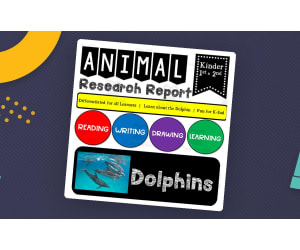
Ocean Animal Research Writing Project on DOLPHINS for K-2nd Grade
Life Studies, ELA, Writing, Creative Writing, Reading, Science, Life Sciences, Animals, Research, Kindergarten, Grade 1, 2, Lesson Plans, Teacher Tools, Worksheets & Printables, Worksheets, Writing Prompts
Animal Research Writing Project on Dolphins for K-2nd Grade. Engage young learners in reading, writing, and science with this 19-page informational writing unit on dolphins. Students will read leveled texts and examine real life photos to learn facts about these playful marine mammals. Next, they will organize the information using color-coded graphic organizers. Finally, students will write their own informational report on dolphins using differentiated writing pages for K-2. Extension activities allow creativity through coloring, habitat illustration, and cover page design. Implementation ideas included for whole group, small group, centers, or individual work. Check out companion units on whales, seals, sea turtles, and more ocean animals from Teach Simple! Plus, even more units on zoo animals! Here are even more informational resources on report writing for OCEAN ANIMALS. Click on the links below: Animal Research Writing Project on WHALES for K-2nd Grade Animal Research Writing Project on the OCTOPUS for K-2nd Grade Animal Research Writing Project on SEA TURTLES for K-2nd Grade Animal Research Writing Project on ORCAS for K-2nd Grade Animal Research Writing Project on the SHELLFISH for K-2nd Grade Animal Research Writing Project on DOLPHINS for K-2nd Grade Animal Research Writing Project on SEALS for K-2nd Grade Want to teach your students all about Zoo Animals? Check out all these interesting facts about these favorite zoo animals. With the same great photos, facts, habitat drawings, and more. It is a great way to help students to get interested in writing. For Zoo Animal reports, click on the following links below: Animal Research Writing Project on TIGERS for K-2nd Grade Animal Research Writing Project on MONKEYS for K-2nd Grade Animal Research Writing Project on PANDAS for K-2nd Grade Animal Research Writing Project on HIPPOS for K-2nd Grade Animal Research Writing Project on ELEPHANTS for K-2nd Grade Animal Research Writing Project on GIRAFFES for K-2nd Grade
Author K-5 Treasures
Tags Animal Research, Informational Writing, Writing Report, Report On Animals, 1st Grade Writing, 2nd Grade Writing, Dolphins, Report On Dolphins, Ocean Animals, Sea Life

Jugglers Reading Comprehension Passage - Cored Ed Encyclopedia
ELA, Reading Comprehension, Reading, Language Development, History, Social Studies, Geography, Pre-Reading, Vocabulary, Spelling, Grade 2, 3, 4, 5, Worksheets & Printables, Worksheets, Teacher Tools, Centers, Activities, Writing Prompts, Assessments, Quizzes and Tests, Quizzes, Lesson Plans
This Jugglers reading comprehension with lesson plan includes: Visualization (on the front cover) Start your lesson by taking a minute to think and share something about the topic. Read the script aloud (slowly), perhaps prepare some music or sound effects. Student close their eyes and let their imaginations wander. Students open their eyes, read the question aloud and give them a few minutes to complete. Ask a few students to share or keep answers until the end to compare with what they learn in the passage. Quick pause—thousands of Cored Education products are included with your TeachSimple membership. Download links and encyclopedia index available here. Pre-Reading Trivia Students will write down one thing they already know about the subject and then read five more facts and discuss. These facts are fun, and the students will enjoy learning about the subject before reading more. Give 1 minute for students to write what they already know (no pressure—best guess is fine). Read the five facts together. After each fact, do ask a student for their opinion, was it surprising? Set a purpose by asking students to highlight/underline one fact they want to learn more about during the reading. Reading Passage The text is a high-interest reading passage with set paragraphs, roughly three to four paragraphs long. It contains a variety of themes about the topic, anywhere from history to technology. The passage is between 250 and 350 words in length. First, ask students to look at the headings and see what they’ll learn about today. What do they know about the topic/heading? First read options: Teacher read-aloud (best for support). Partner reading (paragraph by paragraph). While reading, students underline important details, and vocabulary words they think may come up in the questions section. Mixed Questions The first question page contains four multiple-choice questions, each with a choice of four answers, and three written response questions that require a sentence or two from the student. Students complete the mcqs first independently, then review quickly as a class. For the 3 written responses, try to get students giving the answer with some form of evidence: “I think ___ because the text says ___.” If students get stuck, send them back to check the passage. Vocabulary Questions Practice seven key words from the text in this section across two activities. First section is scrambled words where students will unscramble three words given a clue for each. The second section is a word to meaning matching activity. Before starting, have some students read out words they underlined in the passage. Ask students to say the word and read aloud the sentence(s) around each word. Ask students to do scrambled words and the matching exercise in pairs then go through answers as a class. For the scrambled spelling task, get four pairs to come up to the board and write the words for extra practice with the other student reading out the clue. For the matching task, prompt students to give full sentences: “I matched ___ with ___ because ___.” Creative Writing In this question, the student will be required to write a five to eight sentence paragraph on a question related to the topic. Before starting, ask students write down 3 key ideas they are going to include in their piece. Ask students for ideas to share around the class to help those struggling. Pro writing expectations: 5–8 sentences At least 2 facts or details from the passage At least 2 vocabulary words from the previous page Students read their paragraphs while classmates listen for facts and vocabulary words. Extension Activities This page is optional for fast finishers or to take home. There are several activities, each one requiring a different skill. Do some, do none, do all, completely optional - but you will feel reassured knowing every possibility is planned for. Includes summary writting question and additional facts. Answer Key There are answers for the multiple-choice questions, written response questions have sample answers, vocabulary answers and if there is a summary question then a sample summary will be provided as well. Lesson Plan Included Customized lesson plan for this lesson is included. Lesson Snapshot Title: Jugglers Genre: Nonfiction (informational text) Subject: Reading (Informational Text) / Social Studies / Arts Primary Topic: Juggling across history and repeating patterns Estimated Guided Reading Level (A–Z): S What This Lesson Teaches Best Traces juggling through time and places (ancient Egypt, China, Greece/Rome, Europe, and today). Uses a historical example (an Egyptian tomb painting) to explain evidence of early juggling and what it suggests about audiences. Highlights performance skills jugglers show—control, timing, courage—and how crowds can understand the act “without any words.” Explains change over time: juggling’s reputation in Europe after the Roman Empire weakened, and how modern circuses brought it into the spotlight. Emphasizes the repeating pattern at the heart of juggling (throw, wait, catch, repeat) and connects it to learning rhythm with patience. Learning Goals Describe what the Egyptian tomb painting shows and why the passage calls it an early picture of toss juggling. Explain how juggling was used to impress or amaze people in different cultures mentioned in the text. Describe how some people in Europe viewed jugglers later and explain what the skill did instead of disappearing. Identify the basic juggling pattern named in the passage and explain why it matters. Compare where a juggler might perform today (stage, circus ring, sidewalk) and explain what stays the same. Key Vocabulary From the Text tomb — a place where someone is buried. audiences — groups of people watching a performance. festivals — celebrations with events and crowds. rhythm — a steady beat or timing pattern. wrongdoing — doing something people believe is wrong. FULL CATALOG OF DOWNLOAD LINKS AND ENCYCLOPEDIA INDEX HERE
Author Cored Education
Rating
Tags Vocabulary, Reading Comprehension, Reading Passages, Lesson Plans, Ela Lesson Plans, Reading Comprehension Lesson Plans, Pre-reading, Social Studies Lesson Plans, History, Geography
Wake-Up Call | Figurative Language Activity | Micro-Learning Deck
ELA, Reading, Reading Comprehension, Grade 4, 5, 6, 7, Teacher Tools, Lesson Plans
Wake Up Call | A Figurative Language Learning Activity guides students to explore figurative language in an engaging way. This resource focuses on the term "wake-up call" as an example of figurative language. Through close reading of a passage with accompanying audio, students will comprehend the meaning and purpose of figurative language. The deck includes a short video lesson explaining the key concept of a wake-up call as a figure of speech. Next, students read a passage containing wake-up calls while listening to fluent audio modeling. Finally, students respond to comprehension questions about the passage and complete a quick write activity applying what they learned about figurative wake-up calls. This self-paced activity can be used flexibly - for whole group introduction, small group practice, or individual work to build literacy skills.
Author Teach Me This
Tags Figurative, Language, Wake Up Call, Comprehension, Reading Lesson

Celebrate Diversity: A Thematic Unit
ELA, Reading, Reading Comprehension, Preschool, Grade 1, 2, 3, Teacher Tools, Lesson Plans
The Celebrate Diversity: A Thematic Unit is packed with everything you need to teach your students about diversity. The unit is broken down into 5 lessons: Lesson One: What is Diversity? Main Ideas: Discuss how people can be diverse. Discuss diversity in other areas of life such as types of flowers, animal kinds, cars. etc. Lesson Two: Celebrate Diversity in Ancestry and Heritage Main Ideas: Discuss Ancestry and Heritage and how they shape our lives Lesson Three: Celebrate Diversity in Skin Color Main Ideas: People have many different types of skin color. A person's skin color is so unique even family members can have different looking skin. Everyone's skin is a combination of tans, browns and blacks. Lesson Four: Celebrate Diversity in Physical Disabilities Main Ideas: Some thing things are hard for people to do. People with disabilities may need adaptations to do something Lesson Five: Celebrate Diversity in Language Main Ideas: Language allows us to communicate with each other. This unit was designed for Kindergarten through 3rd grade. It includes many hands-on, engaging activities. Vocabulary words included in the unit: diversity, disability, race, ancestry, unique, heritage All you have to do is print, gather your supplies and you are all set.
Author Katie Maurice
Tags Diversity, Thematic Unit, Vocabulary Cards, Compare And Contrast, Lesson Plans, Anchor Charts, Bulletin Boards, Quote Puzzle, Reading Station, Cross Curricular

A Mother in Mannville: Full Lesson Plan w/ PowerPoints & Graphic Organizers
ELA, Reading, Grade 6, 7, 8, Lesson Plans, Teacher Tools
A Mother in Mannville Full Lesson Plan Bundle Transport students back in time with this comprehensive reading lesson bundle for the short story A Mother in Mannville by Marjorie Kinnan Rawlings. This teaching resource includes a complete lesson plan to guide analysis, along with engaging printable handouts, graphic organizers , and PowerPoint slide decks to facilitate close reading. Teachers can utilize the materials for whole-group instruction and discussion or assign portions for small groups and independent work. The diverse resources promote the development of key ELA skills, allowing students to analyze plot, characterization, themes, imagery, and more in this meaningful historical fiction text. Educators will appreciate the depth and rigor of this adaptable teaching package for enhancing student comprehension.
Author Quality Teaching Products
Tags A Mother In Mannville, Reading Lesson Plan, Reading Powerpoint, Graphic Organizers, Bookmarks
Story Squares for Grades 4-6: Multiple Learning Styles for Reading Comprehension
ELA, Reading, Reading Comprehension, Grade 4, 5, 6, Teacher Tools, Lesson Plans
Story Squares for Grades 4-6: Multiple Learning Styles for Reading Comprehension A sensational teaching resource that aims to grow passionate readers while simultaneously building an array of skills. This unique resource not only focuses on Language Arts and Writing, but also incorporates additional stimulus for Higher-Order Thinking and the Creative Arts. Key Features: Versatility: Designed aptly for whole group instruction, small group activities, paired tasks or individual assignments. Literary Focus: Covers three timeless children's classics viz., "Bud. Not Buddy," "The Borrowers," and "Esperanza Rising." Detailed story annotations alongside 20 diverse activities accompanied with each book ensure comprehensive coverage. Educator Support Tools Included: Educator hints providing valuable guidance through lessons. An easy-to-use grading rubric that facilitates fair evaluation/ assessment procedures along with a glossary outlining key terms used in the content. . The package is furnished as a simple to use, ready-to-print PFD format spanning 16 pages, . Aimed at enhancing comprehension levels amongst Grade 4 - Grade 6 students, this tool brings mundane lesson plans to life ensuring pedagogical objectives are effectively met. In essence,, Story Squares provides teachers with more than just a resource - it’s an innovative addition to their instructional arsenal, embracing various learning methodologies leading towards holistic educational growth across multiple domains within students.
Author Classroom Complete Press
Tags Comprehension, Language Arts, Story Summary, Character Traits, Paragraph Writing

Little Boy Blue Gr. K-1
ELA, Reading, Grade 1, Teacher Tools, Lesson Plans
Little Boy Blue Gr. K-1: Interactive Teaching Resource A highly interactive teaching resource designed for Grade 1 language arts with a focus on reading. Title of the Story: 'Little Boy Blue' About the Tale: In this classic nursery rhyme, Little Boy Blue has been assigned the duty of looking after cows and sheep but he decides to take a nap under a haystack instead - an engaging plot twist that encourages student's interpretation skills and critical thinking. What Makes 'Little Boy Blue Gr. K-1' Unique? - Its dual book construction approach allows learners to create both small and large versions of the story. - It comes with ready-to-color illustrations that not only serve as an enjoyable activity but also help enhance creativity among students. For Teachers: - Included in this resource is a template for easy assembly. - Alternatively, teachers can choose to use our unique haystack-shaped structure, providing an original touch to each classroom's interpretation of the activity . Bonus Features: - Comprehensive teacher-student activities revolving around reading passages complement our book creation exercises perfectly, ensuring active participation from whole classes down towards focused small group learning sessions. Note: This product comes in an easy-to-download PDF file making it easily portable even for homeschoolers aiming to enrich language arts learning at these crucial early educational stages.
Author Classroom Complete Press
Tags PDF