



3,929 products added recently
Page 48 - ELA Lesson Plans
Elevate your ELA instruction with lesson plans that cover reading, writing, speaking, and listening skills. These resources provide diverse texts and engaging activities to improve literacy. Integrate these plans to enrich your language arts curriculum and support student achievement.

 Show filters

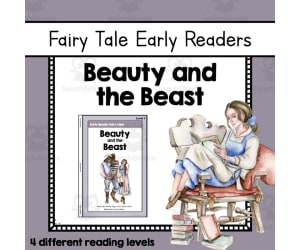
"Beauty and the Beast" | Fairy Tale Early Reader Unit
ELA, Reading, Kindergarten, Preschool, Grade 1, Lesson Plans, Teacher Tools
This comprehensive Beauty and the Beast language arts unit engages students with a classic fairy tale story adapted to four reading levels. Easily find the right fit for each learner's needs. Vibrant custom illustrations by Leila Alieva bring the tale to life in student-facing booklets structured like real books. The bundle equips teachers with differentiated reading materials including teacher guides outlining standards-aligned activities. Extend student learning through supplemental texts on the fairy tale's history and original author. Printable writing tasks allow students to reimagine plot points. Emerging writers will appreciate tracing activities while more advanced students can craft their own Beauty and the Beast adventures. Practice essential literacy skills such as vocabulary, comprehension, fluency, and phonics with ready-made flashcards, worksheets, readers theater scripts, sequencing tasks, and more. Assessment materials like reading logs allow teachers to track progress. Editing and descriptive writing activities challenge students to enrich their own fairy tale renditions. With definitions, visual references, and multiple learning formats, unit components ensure concept accessibility for a diversity of learners. Adaptable to various classroom contexts, this fairy tale kit saves valuable teacher prep time. It can inspire an entire multi-week unit with interdisciplinary connections or supplement existing plans as a targeted small group or center activity . With abundant materials at each reading level, differentiation and remediation is simplified. Motivate young readers as a beloved tale comes alive at just the right level. Check out other resources from my store: Simply Schoolgirl! I can be contacted for questions and concerns at simplyschoolgirl1@gmail.com
Author Simply Schoolgirl
Tags Fairy Tales, Beauty And The Beast, Early Reader, Elements Of Fairy Tales, Reading Posters, EBook, Vocabulary, Decoding, Sequencing, Folk Tale, Beauty And The Beast Fairy Tales, Beauty And The Beast Fairy Tale, Fairy Tail Beauty And The Beast, The Beauty And The Beast Fairy Tale, Fairy Tales Beauty And The Beast, Fairy Tale Beauty And The Beast

Storytelling: Nursery Stories & Songs Gr. K
ELA, Reading, Preschool, Kindergarten, Teacher Tools, Lesson Plans
Storytelling: Nursery Stories & Songs Gr. K provides an interactive platform for educators in different settings, like public schools or homeschooling, looking to enhance their language arts pedagogy. It's designed to engage early learners with a sturdy foundation in reading and language arts. Nursery Stories and Songs Included: The Magic Perogy Pot The Little Red Hen The Gingerbread Man Songs like The Farmer In The Dell and Eensie Weensie Spider This teaching resource comes with storytelling props that will provide long-term value to your classroom. These adaptations of well-known nursery stories and songs breathe fun into story time. Easy Integration: You can effortlessly incorporate these materials into your lesson plan. Included are pictures for each story or song that can be colored and assembled before storytelling sessions. Designed intentionally to be interactive, it encourages children's retelling of the stories using these animated visual aids on flannel or magnet boards. About the Product: Name: Storytelling: Nursery Stories & Songs Gr.K li>Total Pages: 30 ready-to-print pages packed into a single PDF file accessible at teachsimple.com (under Lesson Plans ) br/> i>Included Material: "How to Assemble" ) along with practical insights for implementation ( "Telling the Stories" ) accompanied within. This product not only meets curriculum objectives but also improves student interaction during lessons. Whether used in large groups or smaller, more intimate settings adjusted based on the context of the class, it provokes student participation. It is user-friendly and built for ease-of-use without compromising on providing educational innovation to improve young learner outcomes in structured schools environments as well as homeschool setups. This encourages learning that goes beyond traditional textbook structures.
Author Classroom Complete Press
Tags Brown Bear, Reading Stories, Reading Classics, Big Books, Nursery Rhymes

The Lottery: Full Lesson Plan w/ PowerPoints & Graphic Organizers
ELA, Literature, Grade 9, 10, 11, 12, Lesson Plans, Teacher Tools
The Lottery Full Lesson Plan Bundle This comprehensive bundle provides educators with everything needed to teach Shirley Jackson's short story "The Lottery" to secondary students. The bundle includes a complete standards-based lesson plan to guide instruction, a multimedia worksheet for students, an answer key, and over 20 graphic organizers and PowerPoint presentations to support teaching characterization, theme, symbolism, irony, plot, and more literary elements. With multiple file types that can be easily customized, this resource offers flexibility to teach the text to whole groups, small groups, or individual students. The materials aim to boost critical thinking and analysis of this classic story about conformity through a variety of engaging activities suitable for grades 9-12.
Author Quality Teaching Products
Tags Literature, Short Story, The Lottery Text, Reading Powerpoint, Fiction Text, The Lottery Answer Key

Review of the 2010's Beginner Lesson
ELA, Language Development, ESL, Not Grade Specific, Lesson Plans, Teacher Tools
Review of the 2010's Beginner Lesson This English language learning resource guides students through key events and topics from around the world during the 2010 decade. With a variety of worksheets and a chatterbox dialogue activity, learners strengthen reading, writing, speaking, and listening skills. Tasks allow for whole group, small group, pair, and individual work. An answer key supports educators in assessing student comprehension. This cross-curricular lesson sparks global awareness and critical thinking appropriate for a wide range of ages and abilities. Use to review or introduce the 2010’s in a beginner ESL or language arts setting.
Author TEAM TEFL
Tags ESL Lesson, History, Earthquakes, Synonyms, 2010

Insects Reading Comprehension Passage - Cored Ed Encyclopedia
ELA, Reading Comprehension, Reading, Science, Pre-Reading, Language Development, Life Sciences, Insects, Earth and Environmental Sciences, Vocabulary, Grade 2, 3, 4, 5, Worksheets & Printables, Worksheets, Teacher Tools, Centers, Activities, Writing Prompts, Assessments, Quizzes and Tests, Quizzes, Lesson Plans
This Insects reading comprehension with lesson plan includes: Visualization (on the front cover) Start your lesson by taking a minute to think and share something about the topic. Read the script aloud (slowly), perhaps prepare some music or sound effects. Student close their eyes and let their imaginations wander. Students open their eyes, read the question aloud and give them a few minutes to complete. Ask a few students to share or keep answers until the end to compare with what they learn in the passage. Quick pause—thousands of Cored Education products are included with your TeachSimple membership. Download links and encyclopedia index available here. Pre-Reading Trivia Students will write down one thing they already know about the subject and then read five more facts and discuss. These facts are fun, and the students will enjoy learning about the subject before reading more. Give 1 minute for students to write what they already know (no pressure—best guess is fine). Read the five facts together. After each fact, do ask a student for their opinion, was it surprising? Set a purpose by asking students to highlight/underline one fact they want to learn more about during the reading. Reading Passage The text is a high-interest reading passage with set paragraphs, roughly three to four paragraphs long. It contains a variety of themes about the topic, anywhere from history to technology. The passage is between 250 and 350 words in length. First, ask students to look at the headings and see what they’ll learn about today. What do they know about the topic/heading? First read options: Teacher read-aloud (best for support). Partner reading (paragraph by paragraph). While reading, students underline important details, and vocabulary words they think may come up in the questions section. Mixed Questions The first question page contains four multiple-choice questions, each with a choice of four answers, and three written response questions that require a sentence or two from the student. Students complete the mcqs first independently, then review quickly as a class. For the 3 written responses, try to get students giving the answer with some form of evidence: “I think ___ because the text says ___.” If students get stuck, send them back to check the passage. Vocabulary Questions Practice seven key words from the text in this section across two activities. First section is scrambled words where students will unscramble three words given a clue for each. The second section is a word to meaning matching activity. Before starting, have some students read out words they underlined in the passage. Ask students to say the word and read aloud the sentence(s) around each word. Ask students to do scrambled words and the matching exercise in pairs then go through answers as a class. For the scrambled spelling task, get four pairs to come up to the board and write the words for extra practice with the other student reading out the clue. For the matching task, prompt students to give full sentences: “I matched ___ with ___ because ___.” Creative Writing In this question, the student will be required to write a five to eight sentence paragraph on a question related to the topic. Before starting, ask students write down 3 key ideas they are going to include in their piece. Ask students for ideas to share around the class to help those struggling. Pro writing expectations: 5–8 sentences At least 2 facts or details from the passage At least 2 vocabulary words from the previous page Students read their paragraphs while classmates listen for facts and vocabulary words. Extension Activities This page is optional for fast finishers or to take home. There are several activities, each one requiring a different skill. Do some, do none, do all, completely optional - but you will feel reassured knowing every possibility is planned for. Includes summary writting question and additional facts. Answer Key There are answers for the multiple-choice questions, written response questions have sample answers, vocabulary answers and if there is a summary question then a sample summary will be provided as well. Lesson Plan Included Customized lesson plan for this lesson is included. Lesson Snapshot Title: Insects Genre: Nonfiction (informational text) Subject: Reading (Informational Text) / Life Science Primary Topic: Insect body parts, growth, history, and study Estimated Guided Reading Level (A–Z): R What This Lesson Teaches Best Identifies core insect body parts and features (head, thorax, abdomen; six legs; antennae; compound eyes; many have wings). Explains how insects grow using an outside skeleton (exoskeleton) and why molting is needed as they get bigger. Describes butterfly life stages as an example of changing shape in stages (egg, caterpillar, chrysalis, winged adult). Connects insects to deep time and evidence from fossils (oldest known flying insects in the Carboniferous Period; many species today). Introduces how people study and classify insects over time (Aristotle, Carl Linnaeus, and modern entomology). Learning Goals Students will identify the three main insect body parts and describe what each part includes. Students will explain why insects must molt as they grow, using the idea of an exoskeleton. Students will describe the butterfly’s life stages in order, using details from the passage. Students will explain what fossils reveal about early flying insects and how insect groups changed over time. Students will define entomology and describe tools scientists use to study insects. Key Vocabulary From the Text thorax — middle body part where legs attach. abdomen — back body section behind the thorax. antennae — feelers that taste the air. exoskeleton — hard outer coat that works like a skeleton. entomology — the study of insects. FULL CATALOG OF DOWNLOAD LINKS AND ENCYCLOPEDIA INDEX HERE
Author Cored Education
Rating
Tags Vocabulary, Reading Comprehension, Reading Passages, Lesson Plans, Ela Lesson Plans, Reading Comprehension Lesson Plans, Pre-reading, Science Lesson Plans, Life Science, Insects

Llama Drama Animated Writing Activity | Short Film
ELA, Writing, Grade 1, 2, 3, 4, Teacher Tools, Lesson Plans
This resource allows students to explore writing in a fun way. They will engage with an animated short film "Llama Drama." Included: -Short animated story -Sequencing -True False -Main Idea & Details -Summarizing
Author Teach Me This
Tags Llama Drama, Animated Film, Short Film, Writing Activity, Creative Writing

Lucy Calkins Writing for 5th Grade | Unit 4: Research-Based Argument Essay
ELA, Writing, Grade 5, Lesson Plans, Teacher Tools
This is Lucy Calkins Writing for 5th Grade. This download is for Unit 4: Research-Based Argument Essay. You will have everything you need to take students through all 22 sessions included in Unit 4. Included for each session: - Connection - Teaching point - Teaching - Active engagement - Share - Mid-workshop - Homework
Author Brook Creaser
Tags Reading, Writing, Lucy Calkins, Argument Essay, Curriculum, Essay For 5th Graders, How To Write An Essay 5th Grade, 5th Grade Essay, 5th Grade Argumentative Essay Examples
Barking Up the Wrong Tree | Figurative Language Activity | Micro-Learning Deck
ELA, Reading, Reading Comprehension, Grade 4, 5, 6, 7, Teacher Tools, Lesson Plans
Barking Up the Wrong Tree | Figurative Language Activity for Educators This informative PowerPoint deck allows educators to help students explore the figurative language term "barking up the wrong tree" in an engaging way. Through close reading of a passage with audio, students will better comprehend this common idiom. The resource includes a short video lesson explaining the figurative meaning, a reading passage with audio recording, reading comprehension questions, and a quick write activity . It can be used in whole group instruction, small reading groups, or as an independent homework assignment for grades 4-7. The passage and activities provide an enjoyable way for students to expand their understanding of figurative language. The resource is easy to implement and will make a great addition to any language arts curriculum.
Author Teach Me This
Tags Figurative, Language, Comprehension, Audio, Quick Write

" Hansel and Gretel" | Fairy Tale Early Reader Unit
ELA, Reading, Grade 1, 2, 3, 4, Lesson Plans, Teacher Tools
Hansel and Gretel Fairy Tale Early Reader Unit The Hansel and Gretel Fairy Tale Early Reader Unit serves as an engaging educational tool designed primarily for students from Grades 1 to 4. This comprehensive resource is set in the context of the beloved fairy tale, Hansel and Gretel, with a strong focus on developing literacy skills. Central to this unit are four unique reading levels intended to meet diverse learning needs. Each level includes: A student booklet A teacher booklet Full-page versions This design provides versatility for classroom use, be it in group learning sessions or as homework for independent study at home. Fascinating Extras Boost Learning To enrich the experience even further, additional language arts resources promote deeper engagement with this fairy tale-themed unit. The unit features enlightening extras such as: Fairy Tales Elements posters serving as crucial visual aids In-depth articles about Brothers Grimm - the masterminds behind Hansel and Gretel - for a valuable historical perspective. Promote Creativity! Foster your students' creativity by encouraging them to write their own renditions of Hansel and Gretler using our structured writing booklets! They can choose how they wish to customize it- by coloring pictures or making illustrations based on their skill level. Vocabulary Development It’s worth mentioning that our vocabulary strips range from basic levels up to more challenging ones. They serve dual purposes: In developing spelling skills, In understanding word definitions thoroughly. . Moving beyond memorization, our worksheets support vocabulary recognition using the context of the fairy tale. These can be used side by side with playful sequencing cards that promote story-line consistency by enabling learners to arrange illustrated scenes in a chronological order. Final Touches In conclusion, wrap up your unit with editing worksheets designed to help students develop their sentence structure skills and turn normal descriptions into vivid images. Doing so aids in the development of creative thinking - a skill essential for future studies. The Hansel and Gretel Fairy Tale Early Reader Unit is an end-to-end teaching resource that significantly enhances young learners' literacy development. It adapts to different types of learning environments such as whole-group instruction, small-group work or remote learning. Most importantly, it stays aligned with common core standards, preparing them better for academic advancement.
Author Simply Schoolgirl
Tags Fairy Tale Literacy, Reading Levels, Comprehension Skills, Vocabulary Development, Creative Writing
Cored Education TeachSimple Catalog, Guided Reading and Lesson Plans
ELA, Science, Social Studies, Resources for Teachers, Math, Creative Arts, Special Resources, P.E. & Health, Life Studies, Common Core, Grade 1, 2, 3, 4, 5, 6, 7, 8, Teacher Tools, Worksheets & Printables, Activities, Classroom Decor, Centers, Lesson Plans, Literacy Readers, Worksheets, Quizzes and Tests, Games
Dear Valued Customer, At this time, we do not have plans to add any new products to the Cored Education catalog on TeachSimple. We are incredibly grateful for your continued support. To keep up with our latest updates and find out more about what we have planned moving forward, follow us on social media at @corededucation. All the best, Rich Cored Education A TeachSimple subscription currently includes the following Cored Education items: •Over $1,000 worth of content in the Original Cored Education Catalog. •170 Reading Comprehension Lessons with lesson plans in the Encyclopedia Index. •95 Guided Reading Books with lesson plans in the Guided Reading Catalog. •Cored Middle and High Science and Social Studies individual catalogs. PAST UPDATES JUNE '26 Week 1 UK/Aus Spelling Word Grammar Sets Years 2–7 Week 2 UK/Aus Spelling Word Grammar Sets Years 2–7 Cored Middle and High adding free reading passage products. Week 3 UK/Aus Spelling Word Grammar Sets Nearly Finished! Years 2–7 Week 4 UK/Aus Spelling Word Grammar Sets Finished! Started Uploading Google Drive Versions. Years 2–7 MAY Week 1 25 UK/Aus Spelling PPT Grammar Sets Years 2–7 Week 2 10 UK/Aus Spelling PPT Grammar Sets Years 2–7 Week 3 Finished UK/Aus Spelling PPT Grammar Sets Started Word Document Sets Years 2–7 Week 4 UK/Aus Spelling Continued Word Document Sets Years 2–7 Coming soon: free reading series similar to encyclopedia passages but smaller. APRIL Week 1 25 Presentable PDF Reading Comprehension and Grammar Sets Grades 1–6 Week 2 25 Presentable PDF Grammar Sets Grades 3–6 Week 3 25 UK/Aus Spelling PDF Grammar Sets Years 2–7 Week 4 25 UK/Aus Spelling PPT Grammar Sets Years 2–7 Also Added Videos have now started being added to Guided Reading products. You can find them in the product description, after the preview pictures. MARCH Week 1 25 Fillable Reading Comprehension Sets Grades 2–7 Week 2 25 Fillable Reading Comprehension Sets and Grammar Packs Grades 1–7 Week 3 25 Fillable Grammar Packs Grades 3–6 Week 4 25 Presentable PDF Reading Comprehension Sets Grades 2–7 Also Added Videos have now started being added to Encyclopedia products. You can find them in the product description, after the preview pictures. FEBRUARY Week 1 17 Encyclopedia Entries: U–Z 12 Guided Reading Books: K–P 2 Grade 6–8 Social Studies Reading Comprehension Passages Week 2 20 Encyclopedia Entries: A–D 30 Guided Reading Books: G–Q 2 Grade 6–8 Social Studies Reading Comprehension Passages Week 3 20 Encyclopedia Entries: E–H 25 Guided Reading Books: F–R 2 Grade 6–8 Social Studies Reading Comprehension Passages Week 4 10 Encyclopedia Entries: I–J 10 Guided Reading Books: N–S 2 Grade 6–8 Social Studies Reading Comprehension Passages JANUARY Week 1 Cinco de Mayo Reading Comprehension Grades 2–5 Week 2 35 Encyclopedia Entries: A–G 2 Grade 6–8 Social Studies Reading Comprehension Passages Week 3 45 Encyclopedia Entries: H–P 2 Grade 6–8 Social Studies Reading Comprehension Passages Week 4 23 Encyclopedia Entries: Q–U 18 Guided Reading Books: B–L 2 Grade 6–8 Social Studies Reading Comprehension Passages 2025 RELEASES Reading Comprehension Birthdays Reading Comprehension Grades 2–5 Candy Reading Comprehension Grades 2–5 Science Reading Comprehension Grades 6–8 Fillable PDFs Fillable PDF versions have been added for the Grades 6–8 science series. Leveled Readers 2 new Level D books added. Mini Units 7 new mini units released. Designed for Grades 2–5. Themed Skill Packs 44 Themed Mazes 44 Themed Word List Posters 44 Themed Word Searches 44 Themed Crosswords Vowels PPT Games Designed for Kindergarten–Grade 1. Interactive, teacher-friendly, and easy to use in class. ELA Practice MCQs Grades 1–2 Grades 3–4 Grades 5–6 Reading Passages + Activities Grades 2–3 Grades 4–5 Grades 6–7 Guided Reading Activities 4,000+ pages of guided reading activities and lesson plans. Science Reading Grades 3–4 Grades 5–6 Supplementary questions included. Accompanying videos included. OVERVIEWS Grades 5–6 Science Reading Comprehension Written for Grade 5–6 students. Includes clear, age-appropriate science passages. Visuals help students follow the ideas more easily. Simple graphs are included where they support the topic. Common Core aligned. Ready to print, share, and use in the classroom. Grades 3–4 Science Reading Comprehension Written for Grade 3–4 students. Uses clear, student-friendly science text. Illustrations and graphs help support comprehension. Common Core aligned. Designed to be easy to prepare and simple to teach. Grades 2–3 Reading Passages Written for Grades 2–3. Includes modern, high-interest topics. Comprehension questions are included. Vocabulary or spelling activities are included. Short writing tasks give students a chance to respond in their own words. Grades 4–5 Reading Passages Written for Grades 4–5. Includes age-appropriate vocabulary. Covers a wide range of engaging topics across the series. Colorful graphics help make the passages more inviting and easier to follow. Grades 6–7 Reading Passages Written for Grades 6–7. Key vocabulary is included. Topics vary across the series. Visual support is included throughout. Many stories include a clear message, theme, or takeaway. Useful for reflection, discussion, and written response. Grade 1–2 ELA Practice MCQs Grammar-focused practice for Grades 1–2. Short, clear multiple-choice tasks. Supports sentence understanding and early grammar skills. Free supplementary materials included. Grade 3–4 ELA Practice MCQs Grammar practice for Grades 3–4. Uses a simple multiple-choice format. Helps students build pattern recognition and correct usage. Free supplementary materials included. Grade 5–6 ELA Practice MCQs Language conventions practice for Grades 5–6. Focuses on grammar, vocabulary, and punctuation. Multiple-choice practice is used throughout. Free supplementary materials included. Kindergarten–Grade 2 PowerPoint Games Interactive phonics games. Short games with clear instructions included. Difficulty increases gradually. Teacher-controlled pacing makes the games easy to manage. Suitable for teams, small groups, or independent play. Grade 2–5 Themed Crosswords Theme-based vocabulary practice. Designed for Grades 2–5. Supports word recognition and topic knowledge. Classroom-ready layout. Grade 2–5 Themed Word Searches Theme-based word searches for Grades 2–5. Supports spelling, scanning, and vocabulary recognition. Hidden shape challenge included. Useful for warm-ups, early finishers, and quick practice. Grade 2–5 Themed Mazes Scene mazes with vocabulary follow-up. Gradual difficulty progression. Optional coloring included on many pages. Some themes include quick math extensions. Ideal for centers, sub plans, and low-prep activities. Grade 2–5 Themed Word List Posters One theme per poster. 8 focus words per printable. Short meanings or fun facts included. Works well as an anchor chart, display page, or student reference sheet. Grade 2–5 Mini Units Five-day unit structure. Includes cultural, seasonal, and subject-based themes. Vocabulary, reading, and writing tasks are included. Act It Out scripts are included. Discussion questions and descriptive language practice are included. Grade 6–8 Science Reading Comprehension Middle school science reading passages. Strong ELA skill integration. Standards-aligned science content. Suitable for both ELA and Science classes. Grade 2–5 Themed Reading Comprehension Passages One topic per title. Two differentiated passages included. Grade band 2–3 version included. Grade band 4–5 version included. MCQs, short responses, and skills pages included. Answer keys included. Grade 1–5 Guided Reading Series Separate PDF Fiction and nonfiction readers included. Color-coded leveling system. Pre-reading prompt included. Vocabulary pulled directly from the text. Writing questions included. Suitable for guided reading, small groups, and take-home practice. Grade 2–5 Cored Ed Encyclopedia Separate PDF The Cored Ed Encyclopedia is a weekly lesson series designed to be simple, flexible, and ready to use. Each lesson includes: A warm-up A short reading A set of questions Teachers can use the lessons in whatever way best fits the class: Complete the full lesson Use only the reading Skip the writing section when needed Each lesson focuses on one clear topic, so students can stay focused without feeling overloaded. The writing is clear and age-appropriate, while still feeling respectful and not too childish. The lessons are ideal for students in Grades 2–5. Topics include: Animals Science History Inventions Everyday objects and ideas Each lesson is designed so that every student can come away with at least one new fact, idea, or connection. The materials are: Easy to print Easy to explain Simple to use with no setup needed These lessons work well for: Whole-class teaching Partner work Independent study Grade 6–8 Social Studies Reading Comprehension Each passage includes: 5 multiple-choice questions targeting: Main idea Key details Inference Vocabulary in context Use of evidence 5 vocabulary matching items with clear, student-friendly definitions. 5 text-based questions that ask students to use specific lines, facts, or details from the passage. 1 summary prompt that helps students condense the central ideas accurately. Full answer key included for every section.
Author Cored Education
Rating 5
Tags Reading, Reading Comprehension, Reading Passages, Reading Comprehension Lesson Plans, History Lesson Plans, Social Studies Lesson Plans, Ela Lesson Plans, Writing Prompts, Science Lesson Plans, Ela
Crime and Innovation Forensics, Cold Cases, and Cyber Frontier Bundle
ELA, Reading, Writing, Life Studies, Research, Resources for Teachers, Science, STEM, Social Studies, High School, Homeschool Resources, Middle School, Teacher Tools, Assessments, Lesson Plans, Quizzes and Tests, Worksheets & Printables, Writing Prompts
As a homeschool mom, I know how challenging it can be to find engaging materials that capture your teen's attention while building critical thinking skills. The Intersection of Crime and Innovation Forensics, Cold Cases, and the Cyber Frontier Bundle combines three carefully crafted resources that dive into the captivating world where science meets justice. Your high school or college-age students/homeschoolers will explore how forensic science has transformed criminal investigations—from the early days of fingerprinting to today's high-tech cybercrime units and the DNA breakthroughs that solve decades-old cold cases. Each resource includes detailed reading passages that tell real stories, plus thoughtful questions designed to help your students/homeschoolers think deeply about the complex challenges facing our justice system today. INCLUDED IN THIS RESOURCE: 3 comprehensive reading passages covering forensic science evolution, cybercrime investigations, and cold case breakthroughs 60 analytical questions (20 per resource) designed to develop critical thinking and analytical skills 3 detailed answer key guides providing evaluation criteria and discussion points for educators 75 note-taking sheets (25 per resource) to support active reading and information organization TOPICS COVERED: Historical development of forensic science techniques and their impact on criminal investigations Modern cybercrime challenges including hacking, ransomware, digital espionage, and online fraud Revolutionary cold case investigations using DNA analysis, genetic genealogy, and digital forensics International cooperation in criminal justice and jurisdictional challenges in modern crime What I love most about this bundle is how it gives your students/homeschoolers a solid foundation in understanding how science, technology, and justice work together in real criminal investigations. These three resources complement each other beautifully, showing the incredible journey of forensic science from its humble beginnings to today's amazing cybercrime units and cold case breakthroughs. If you are working with high schoolers or homeschoolers, this bundle opens their eyes to exciting career possibilities while sharpening those critical thinking skills they will need for college and beyond. For your college-age students, the analytical depth will challenge them and prepare them well for advanced studies in criminology or forensic science. I have designed these materials to give students/homeschoolers both the big picture and the detailed knowledge they need to truly understand this fascinating field—perfect for any student/homeschooler who's ever been curious about how science solves crimes. If you and your students/homeschoolers enjoyed this bundle, please leave a review. Thank you for your support! Tina - Big Easy Homeschooling Mom Please subscribe: www.tidewindacademyhomeschool.com
Author Homeschool with Big Easy Homeschooling Mom
Rating
Tags Forensic Science Curriculum, Forensic Technology, Criminal Justice Education, Cybercrime Investigation Resources For Students, Cybercrime, Cold Cases, STEM Education, Investigative Techniques, Genetic Genealogy, Criminology

Edgar A. Poe & Stephen King: Gothic vs. Modern Horror Reading Passage
ELA, Literature, Reading, Writing, Research, Resources for Teachers, High School, Homeschool Resources, Teacher Tools, Assessments, Quizzes and Tests, Lesson Plans, Worksheets & Printables, Writing Prompts
As a homeschool mom navigating the world of high school literature with my ninth-grade daughter, I understand the challenge of finding resources that truly engage teens while building critical thinking skills. This Edgar Allan Poe & Stephen King: Gothic vs Modern Horror Reading Passage, Q & A, and 5 Note-Taking Sheets is a comprehensive teaching resource transforms the study of horror literature into an exciting exploration of how two master storytellers — Edgar Allan Poe and Stephen King — have shaped our understanding of fear across different eras. When my daughter first read The Tell-Tale Heart , she was captivated by Poe's psychological intensity, but it was not until we compared it to Stephen King's modern approach that she truly grasped how literature evolves while maintaining timeless themes. This Edgar Allan Poe & Stephen King: Gothic vs Modern Horror Reading Passage, Q & A, and 5 Note-Taking Sheets resource bridges that gap, helping students/homeschoolers understand not just what these authors wrote, but why their techniques remain so powerfully effective today. The beauty of this comparison lies in how it makes classic Gothic literature accessible through the lens of contemporary horror that students/homeschoolers already recognize and appreciate. INCLUDED IN THIS RESOURCE: Comprehensive 4-page reading passage comparing Gothic and modern horror techniques 20 thought-provoking critical analysis passage questions A detailed answer key with guided answers for easy grading 5 note-taking sheets designed for different learning styles and approaches TOPICS COVERED: Psychological horror techniques and unreliable narrators in both Gothic and modern contexts Environmental symbolism and how physical settings reflect character psychology Evolution of horror themes from 19th-century Gothic to contemporary suburban fears Comparative analysis of how isolation, obsession, and evil function across different literary periods What I love most about this Edgar Allan Poe & Stephen King: Gothic vs Modern Horror Reading Passage, Q & A, and 5 Note-Taking Sheets is how it sets up our high schoolers/homeschoolers for the kind of thinking they will need in college — without making them feel overwhelmed right now. I have watched my daughter grow from someone who used to skim through reading assignments to a homeschooler who actually gets excited about discussing why certain scenes give her chills. The analytical skills she has developed through comparing these two masters of horror have carried over into every other subject we tackle. When she encounters complex texts in college, she will not be starting from scratch — she will already know how to dig deeper, ask the right questions, and make connections between different time periods and writing styles. That is the real gift we can give our kids: not just knowledge, but the confidence to think critically about whatever they encounter next. If you and your students/homeschoolers enjoyed this resource, please leave a review. Thank you for your support! Tina - Big Easy Homeschooling Mom
Author Homeschool with Big Easy Homeschooling Mom
Rating
Tags Edgar Allan Poe, Stephen King, Gothic Vs. Modern Horror, Gothic Horror Vs Modern Horror Teaching Resources, Psychological Horror Analysis, Homeschool Literature Resources, American Literature Teaching Materials, Edgar Allan Poe Stephen King Thematic Analysis Teaching Materials, Homeschool English Curriculum Gothic Modern Horror Comparison, Psychological Horror Literature Teaching Resources High School
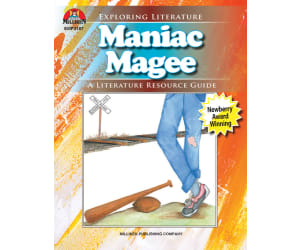
Maniac Magee: A Literature Resource Guide
ELA, Literature, Grade 5, 6, 7, 8, Teacher Tools, Lesson Plans
Maniac Magee: A Literature Resource Guide Overview This is a powerful, versatile teaching tool suitable for Grade 5 to Grade 8 students. Developed for Language Arts subjects with a prime focus on literature education, it adds depth to the classroom learning experience. Key Objectives To enhance oral and written language proficiency among students. To foster discussion and written tasks tailored to build essential comprehension, synthesis, application, and evaluation skills. To stimulate critical thinking and analytical discussions in the class environment. Major Features Reproducible pages with meticulously designed activities : These exercises are aimed at improving thinking skills by engaging students in plot analysis and character study while introducing them to key literary aspects. Educator-friendly comprehensive background materials: : Teachers can access substantial reference content making lesson planning or lecture strategizing much easier. A ready-to-use PDF resource: : It is designed for immediate implementation in various classroom scenarios – during whole group instruction or smaller focus groups – as well as homework assignments at home. In essence—if you're an educator keen on more than just imparting knowledge—if you're looking forward making literature interactive while paying heed to each student's learning curve—Maniac Magee: A Literature Resource Guide could be the indispensable yet efficient tool you seek.
Author Classroom Complete Press
Tags PDF
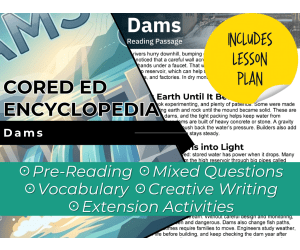
Dams Reading Comprehension Passage - Cored Ed Encyclopedia
ELA, Language Development, Reading Comprehension, Reading, Pre-Reading, Science, Technology, Physics, Earth and Environmental Sciences, Life Sciences, Grade 2, 3, 4, 5, Worksheets & Printables, Worksheets, Teacher Tools, Centers, Activities, Writing Prompts, Assessments, Quizzes and Tests, Quizzes, Lesson Plans
This dams reading comprehension with lesson plan includes: Visualization (on the front cover) Start your lesson by taking a minute to think and share something about the topic. Read the script aloud (slowly), perhaps prepare some music or sound effects. Student close their eyes and let their imaginations wander. Students open their eyes, read the question aloud and give them a few minutes to complete. Ask a few students to share or keep answers until the end to compare with what they learn in the passage. Quick pause—thousands of Cored Education products are included with your TeachSimple membership. Download links and encyclopedia index available here. Pre-Reading Trivia Students will write down one thing they already know about the subject and then read five more facts and discuss. These facts are fun, and the students will enjoy learning about the subject before reading more. Give 1 minute for students to write what they already know (no pressure—best guess is fine). Read the five facts together. After each fact, do ask a student for their opinion, was it surprising? Set a purpose by asking students to highlight/underline one fact they want to learn more about during the reading. Reading Passage The text is a high-interest reading passage with set paragraphs, roughly three to four paragraphs long. It contains a variety of themes about the topic, anywhere from history to technology. The passage is between 250 and 350 words in length. First, ask students to look at the headings and see what they’ll learn about today. What do they know about the topic/heading? First read options: Teacher read-aloud (best for support). Partner reading (paragraph by paragraph). While reading, students underline important details, and vocabulary words they think may come up in the questions section. Mixed Questions The first question page contains four multiple-choice questions, each with a choice of four answers, and three written response questions that require a sentence or two from the student. Students complete the mcqs first independently, then review quickly as a class. For the 3 written responses, try to get students giving the answer with some form of evidence: “I think ___ because the text says ___.” If students get stuck, send them back to check the passage. Vocabulary Questions Practice seven key words from the text in this section across two activities. First section is scrambled words where students will unscramble three words given a clue for each. The second section is a word to meaning matching activity. Before starting, have some students read out words they underlined in the passage. Ask students to say the word and read aloud the sentence(s) around each word. Ask students to do scrambled words and the matching exercise in pairs then go through answers as a class. For the scrambled spelling task, get four pairs to come up to the board and write the words for extra practice with the other student reading out the clue. For the matching task, prompt students to give full sentences: “I matched ___ with ___ because ___.” Creative Writing In this question, the student will be required to write a five to eight sentence paragraph on a question related to the topic. Before starting, ask students write down 3 key ideas they are going to include in their piece. Ask students for ideas to share around the class to help those struggling. Pro writing expectations: 5–8 sentences At least 2 facts or details from the passage At least 2 vocabulary words from the previous page Students read their paragraphs while classmates listen for facts and vocabulary words. Extension Activities This page is optional for fast finishers or to take home. There are several activities, each one requiring a different skill. Do some, do none, do all, completely optional - but you will feel reassured knowing every possibility is planned for. Includes summary writting question and additional facts. Answer Key There are answers for the multiple-choice questions, written response questions have sample answers, vocabulary answers and if there is a summary question then a sample summary will be provided as well. Lesson Plan Included Customized lesson plan for this lesson is included. Lesson Snapshot Title: Dams Genre: Nonfiction (informational text with headings) Subject: Science (Engineering) / Reading (Informational Text) Primary Topic: How dams store water, make electricity, and release water safely Estimated Guided Reading Level (A–Z): P What This Lesson Teaches Best Explains what a dam does by describing how a wall can hold back river water into a deep reservoir. Teaches types of dams and how they stay strong (embankment dams packed tight; gravity dams using weight; layers and drains for stability). Shows how stored water can generate electricity using penstocks, turbines, and generators. Highlights safety and trade-offs, including controlled release through a spillway, the danger of failure, and impacts on fish paths and river mud. Uses headings to organize information into clear sections (building, electricity, and safe water release). Learning Goals Students will explain how a dam changes a river’s flow and creates a reservoir. Students will describe how embankment dams are built and why tight packing matters. Students will identify the role of penstocks, turbines, and generators in making electricity. Students will explain why spillways are needed and how they help release extra water safely. Students will describe at least one cost or concern the passage connects to dams. Key Vocabulary From the Text reservoir — deep stored water behind a dam. embankment — packed earth-and-rock mound used to build a dam. penstocks — big pipes that send water down from a reservoir. turbines — spinning machines turned by rushing water. spillway — safe path for extra water to leave a reservoir. FULL CATALOG OF DOWNLOAD LINKS AND ENCYCLOPEDIA INDEX HERE
Author Cored Education
Rating
Tags Vocabulary, Reading Comprehension, Reading Passages, Lesson Plans, Ela Lesson Plans, Reading Comprehension Lesson Plans, Pre-reading, Science Lesson Plans, Physics, Technology

Daily Calendar Worksheets for Students
ELA, Language Development, ESL, Vocabulary, Holiday & Seasonal, Seasons, Fall, Spring, Summer, Winter, Kindergarten, Preschool, Grade 1, 2, 3, Teacher Tools, Lesson Plans, Task Cards, Worksheets & Printables
Daily Calendar Worksheets – Circle, Learn, Repeat! Start every school day with a dose of routine and a splash of fun using our Daily Calendar Worksheets for Students! These worksheets let students take charge of their mornings by circling the date, day of the week, and weather conditions—all while secretly sharpening their calendar skills. With all 12 months included, this resource covers your entire year and keeps kids engaged, rain or shine (or snow). Ways to Use Morning Routine: Begin each day with a quick and interactive calendar session. Weather Watch: Teach students to observe and record weather patterns (or at least giggle over the unpredictability). Substitute Teacher Hero: Easy for anyone to implement on those unpredictable days. Homework Fun: Send home for extra practice, so parents can marvel at their weather forecasters in training. Advantages Promotes Consistency: Helps establish a morning routine that students look forward to. Interactive Learning: Circling and coloring makes calendar work feel like play. Versatile Use: Perfect for classrooms, homeschools, or snow days. Skill Building: Improves date recognition, weather awareness, and fine motor skills. With Daily Calendar Worksheets, you’re not just filling out the date—you’re kickstarting curiosity and bringing structure to their day. It’s the ultimate calendar win-win!
Author Ponder Palette Plazza
Tags Calendar, Daily Calendar, Dailky Calendar, Student Calendar, Days, Months, Weather, Date, Monthly Calendar, Yearly Calendar

Qatar Reading Comprehension Passage - Cored Ed Encyclopedia
ELA, Language Development, Resources for Teachers, Reading Comprehension, Reading, Pre-Reading, Writing, Geography, Social Studies, History, Grade 2, 3, 4, 5, Worksheets & Printables, Worksheets, Teacher Tools, Centers, Activities, Writing Prompts, Assessments, Quizzes and Tests, Quizzes, Lesson Plans
This Qatar reading comprehension includes: Visualization (on the front cover) Start your lesson by taking a minute to think and share something about the topic. Read the script aloud (slowly), perhaps prepare some music or sound effects. Student close their eyes and let their imaginations wander. Students open their eyes, read the question aloud and give them a few minutes to complete. Ask a few students to share or keep answers until the end to compare with what they learn in the passage. Quick pause—thousands of Cored Education products are included with your TeachSimple membership. Download links and encyclopedia index available here. Pre-Reading Trivia Students will write down one thing they already know about the subject and then read five more facts and discuss. These facts are fun, and the students will enjoy learning about the subject before reading more. Give 1 minute for students to write what they already know (no pressure—best guess is fine). Read the five facts together. After each fact, do ask a student for their opinion, was it surprising? Set a purpose by asking students to highlight/underline one fact they want to learn more about during the reading. Reading Passage The text is a high-interest reading passage with set paragraphs, roughly three to four paragraphs long. It contains a variety of themes about the topic, anywhere from history to technology. The passage is between 250 and 350 words in length. First, ask students to look at the headings and see what they’ll learn about today. What do they know about the topic/heading? First read options: Teacher read-aloud (best for support). Partner reading (paragraph by paragraph). While reading, students underline important details, and vocabulary words they think may come up in the questions section. Mixed Questions The first question page contains four multiple-choice questions, each with a choice of four answers, and three written response questions that require a sentence or two from the student. Students complete the mcqs first independently, then review quickly as a class. For the 3 written responses, try to get students giving the answer with some form of evidence: “I think ___ because the text says ___.” If students get stuck, send them back to check the passage. Vocabulary Questions Practice seven key words from the text in this section across two activities. First section is scrambled words where students will unscramble three words given a clue for each. The second section is a word to meaning matching activity. Before starting, have some students read out words they underlined in the passage. Ask students to say the word and read aloud the sentence(s) around each word. Ask students to do scrambled words and the matching exercise in pairs then go through answers as a class. For the scrambled spelling task, get four pairs to come up to the board and write the words for extra practice with the other student reading out the clue. For the matching task, prompt students to give full sentences: “I matched ___ with ___ because ___.” Creative Writing In this question, the student will be required to write a five to eight sentence paragraph on a question related to the topic. Before starting, ask students write down 3 key ideas they are going to include in their piece. Ask students for ideas to share around the class to help those struggling. Pro writing expectations: 5–8 sentences At least 2 facts or details from the passage At least 2 vocabulary words from the previous page Students read their paragraphs while classmates listen for facts and vocabulary words. Extension Activities This page is optional for fast finishers or to take home. There are several activities, each one requiring a different skill. Do some, do none, do all, completely optional - but you will feel reassured knowing every possibility is planned for. Includes summary writting question. Answer Key There are answers for the multiple-choice questions, written response questions have sample answers, vocabulary answers and if there is a summary question then a sample summary will be provided as well. Lesson Plan Included Customized lesson plan for this lesson is included. Lesson Snapshot Title: Qatar Genre: Nonfiction (informational reading passage) Subject: Social Studies (Geography/History/Economics) Primary Topic: Qatar’s geography and change over time Estimated Guided Reading Level (A–Z): R What This Lesson Teaches Best How location and landforms shape a place (peninsula in the Persian Gulf; sea on three sides; sand dunes; an inlet called the Inland Sea). How a country’s economy can change over time (from pearling to oil and natural gas). Cause-and-effect in history (cultured pearls spread → pearling trade collapsed; oil/gas money → schools, hospitals, ports, neighborhoods). Connecting past and present in one place (pearl boats and tall towers sharing the same shoreline; Doha’s modern landmarks). Built-in comprehension practice (pre-reading trivia, mixed questions, vocabulary work, writing and extension activities align to passage details). Learning Goals I can describe Qatar’s location and what surrounds it using details from the passage. I can explain how pearl diving worked and why the pearling trade collapsed. I can identify how oil and natural gas changed Qatar and name what was built with that money. I can sequence key changes over time mentioned in the passage (pearling, oil discovery/exporting, independence, World Cup). I can use passage vocabulary (like peninsula, inlet, emirate) when talking about Qatar. Key Vocabulary From the Text peninsula — land with water on most sides inlet — water cutting into land from the sea seafloor — the bottom of the sea cultured — made or grown with human help emirate — a place led by an emir FULL CATALOG OF DOWNLOAD LINKS AND ENCYCLOPEDIA INDEX HERE
Author Cored Education
Rating
Tags Vocabulary, Reading Comprehension, Reading Passages, Reading, Creative Writing, Reading Strategies, Writing Prompts, Lesson Plans, Geography, Qatar

How to Write an Essay: Writing a Persuasive Essay
ELA, Writing, Common Core, Grade 5, 6, 7, 8, Teacher Tools, Lesson Plans
How to Write an Essay: Writing a Persuasive Essay A comprehensive tool designed to assist educators in teaching Grade 5, 6, 7 and 8 students the art of persuasive essay writing. This resource provides learners with detailed information about every step in the writing process. Main Features: Covers four types of essays based on Bloom’s taxonomy. Reviews foundational grammatical elements such as verbs, adjectives and pronouns. Designed for flexible learning - whole group instruction, study clusters or independent work. This useful material can smoothly complement existing curricula or function as stand-alone for self-guided learning by students. Assessment tools including an implementation guide, rubric and comprehension quiz are included to track progress and fortify understanding. Bonus Features: Analytical Word Puzzles: These fun features enhance vocabulary while subtly promoting analytical skills amongst learners. Six Color Graphic Organizers: Available visual guides help learners navigate through skill-developing exercises without overwhelming them. The module aligns with Common Core State Standards ensuring cohesive learning experiences across different resources during the overall instructional process. The entire content is available in a single PDF format making it easily shareable digitally while maintaining consistency across various educational scenarios whether school-based classrooms or home-schooling setups . In conclusion, essay writing does not have to be daunting task for students! With this resource at their disposal educators can guide learners to successfully express their perspective through methodically structured arguments . "How To Write An Essay: Writing A Persuasive Essay" turns writing into an empowering and enjoyable endeavor.
Author Classroom Complete Press
Tags PDF

Haiku Poem Writing Activity Lesson Plan, Interactive Notebook Template
Writing, ELA, Creative Writing, Poetry, Literature, Homeschool Templates, Grade 3, 4, 5, 6, Centers, Activities, Door Decor, Classroom Decor, Graphic Organizers, Teacher Tools, Lesson Plans, Rubrics, Templates, Worksheets & Printables
This Haiku Poem Writing Activity makes poetry fun, structured, and easy to teach - perfect for helping students understand the classic 5-7-5 syllable pattern while buidling confidence in writing. With a ready-to-use lesson plan and interactive notebook templates, your students will be guided step-by-step through the process of writing their own haiku poems. What's Included Detailed Haiku lesson plan Clear explanation of the 5-7-5 syllable structure Student-friendly haiku poem example Interactive notebook templates for hands-on learning Scaffolded writing templates Assessment rubric for quick and consistent marking Why Teachers Love This Resource Haiku poems are a fantastic way to introduce poetry because of their short, structured format. This resource helps students focus on syllables, word choice, and imagery—without feeling overwhelmed. Especially Effective For Reluctant writers who need clear structure Building syllable awareness Developing descriptive language skills Perfect For 3rd Grade (also suitable for Grades 2-5) Poetry units Writing Lessons Literacy Centers Interactive Notebooks Homeschool Learning How You Can Use It Whole-class poetry lesson Small group instruction Independent writing activity Assessment task Fast-finisher work Skills Covered Poetry writing Syllable counting Descriptive vocabulary Sentence construction Creative expression If your students struggle with “What do I write?”—this resource gives them the structure and support they need to succeed.
Author Teach2Tell
Rating
Tags Haiku Poem, Haiku Lesson Plan, Poetry Writing Activity, Haiku Template, Syllable Counting Activity, National Poetry Month , Writing Activity, April Writing Activity, Poetry Lesson, 3rd Grade Writing
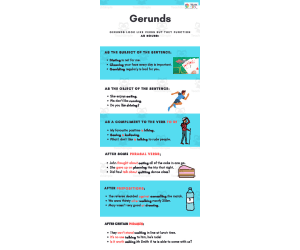
Gerunds Beginner Lesson Plan
ELA, Grammar, Grade 2, 3, 4, 5, 9, 10, 11, 12, Teacher Tools, Lesson Plans
Gerunds ESL and EFL lesson plan for A1 beginner English students. This TEFL resource is ready to go and comprises a range of teaching materials, such as flashcards, activities, conversation topics, and writing drills. Created to raise language proficiency for early English students, the lesson dives into the use of gerunds in a variety of situations. Describing the use of gerunds as nouns that end with -ing, it empowers ESL students with the knowledge and confidence to use them accurately in every day conversation and writing. With the inclusion of activities, exercises, and real-life examples, this lesson plan strengthens language concepts and establishes a solid foundation in the basics of English grammar. This lesson plan includes: Cover page Flash cards A warm-up activity Main use Construction details Rules, along with any exceptions Illustrative examples Two closed exercises One open exercise Revision exercise Writing exercises Chatterbox, a recurring feature in our course books encouraging conversation Activity , such as a game, quiz, puzzle, etc., to conclude the class The lesson plan is available in PDF with 30 ready to print pages and one digital access file. A part of it is on Google Apps. The answer key is also included for reference.
Author TEAM TEFL
Tags Gerunds, Verbs, Grammar Lesson, Language Arts Lesson, ESL

Reader's Workshop Kindergarten Lesson Calendar
ELA, Reading, Preschool, Lesson Plans, Teacher Tools
This is a Reader's Workshop Kindergarten Lesson Calendar. It will cover all of the mini lessons for an entire year. This calendar will display 5 days of lesson across 5 weeks for every unit of study. This is a great way to keep up with the lessons you are teaching.
Author Lauren DeSantis
Tags Mini Lesson, Reader's Workshop, Calendar, Unit Of Study, Spelling Patterns, Readers Workshop For Kindergarten, Readers Workshop In Kindergarten, Kindergarten Reading Workshop Mini Lessons Unit 2
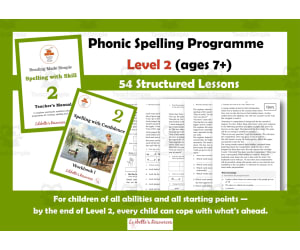
Structured Literacy Programme: RMS Level 2
Special Resources, ELA, Language Development, Phonics, Reading, Vocabulary, Spelling, Kindergarten, Preschool, Grade 1, 2, Teacher Tools, Outlines, Lesson Plans
A spelling programme suitable for dyslexics and those needing a slower, more systematic approach. This is the second book in the Reading Made Simple programme of phonics instruction . The first level can be found here: https://teachsimple.com/product/phonic-spelling-programme-level-1-ages-7 It mainly teaches reading, but while doing so can help to strengthen a weak reader. Reading Made Simple is a programme of phonics instruction that aims to make reading easier for everyone. This programme will give you all the tools you need to help a child gain confidence as a reader and/or writer, using phonics instruction. It is popular amongst homeschooling families, but can equally be used by private tutors and is simple enough to be used to supplement school work by parents. About Reading Made Simple The programme is Very simple to teach: One basic lesson format and no complicated phonics language to learn Flexible - no one-size-fits-all all. You can choose the path that is right for your child. Systematic: Each lesson builds on the one before, creating a seamless learning experience. Many pupils do not even realise how much they have learnt, as it seems so easy! Who is this reading and writing programme for? Children who are just starting to read and write Older children who can already read but need help with spelling and writing Children with special needs who have failed with other phonics programmes Anyone of any age and ability who needs to learn to read and/or write! What is included in the pack? The complete teaching programme for Level 2, 54 lessons and full instructions for teaching the lessons Word lists for each of the 54 phonics families taught in Level 2. 54 Matching worksheets teaching spelling, reading comprehension, editing/proofreading skills, grammar and punctuation relevant to this level of instruction. Which phonics sounds are taught? The lessons cover 54 of the most common phonics patterns: ck, oo, ee, sh, ch, nd/nt ending, nk endings, th, ng, ing, ar, or, a-e, i-e, o-e, u-e, ai, ea, oa, high, it, ay, ou, aw, oi, ur, al, er, y ending both ee and eye, ea saying/e/, ow as in cow, a saying /ar/, long vowels with no 'e', ow saying oe, ew, oy and rules concerning 'wa' words, air, au, ou (u), tion, ph, are (care), ear (earth/bear), ough, war. About the lessons: Pupils study a set of around ten to fifteen words per week, all with a common sound. The lessons are simple, following a set format and taking one week each to give sufficient practice. Weekly dictations help the child to apply new knowledge while revising previously taught sounds. Word lists Accompanying word lists are provided. These can be used in multiple ways: Pinned up to allow daily revision of the current sound being taught Put in a folder for review work To have on hand to remind a pupil of a sound family and the words within it Who is this spelling programme for: Any child or adult Those with a processing difficulty Which grade: It is not grade-specific but can be used by any pupil once they have completed Level 1. Who can use it? Parents Teachers Homeeducators Private tutors
Author Lilibette's Resources
Rating
Tags Remedial Spelling, Phonics, Speling, Writing, Spelling Intervention, Spelling Course, Dyslexia, Special Needs, Structured Literacy, Literacy Programme
Lazy, Crazy Days of Summer Curriculum Pack
Creative Arts, Art, Social Studies, Holiday & Seasonal, ELA, Seasons, Summer, Math, Early Math, Writing, Handwriting, Kindergarten, Lesson Plans, Teacher Tools
The Lazy, Crazy Days of Summer Curriculum Pack A comprehensive learning resource specially designed to infuse fun and creativity into the preschool classroom experience. This pack seamlessly blends summer's spirit with stimulating educational experiences. Includes: Comprehensive vocabulary: Words like 'wacky', 'nonsense', 'pretend', 'magical' are integrated throughout the curriculum. 50 pages of interactive printable resources, specifically catering to the unique interests of preschool students. Main subjects covered: Art & Music, Social Studies, Math, Language Arts and Science. Subtopics include Crafts and Early Math. Versatility: This material is suitable for whole group classes or small group lessons. You can even set homework assignments from these exciting activities. Breadth of Learning Experience: Sensory Table Ideas and Art Activities are included contributing to vibrant interactive sessions. Movement & Motor Activity suggestions alongside Playground/Walk Activities provide all-around developmental stimulus package created for young learners. The curriculum also has ideas for field trips and ways for parents to be involved in their children's learning process at home—an enriching teaching approach beyond conventional methodologies! In conclusion, *(though not mentioned), supplementary Learning Activity guidelines are provided ranging from Science Concepts/Activities to Teacher Made Enrichment Ideas making it a living document year-long! Upload the PDF file of The Lazy, Crazy Days of Summer Curriculum Pack now!
Author Learning Foundations
Tags Interactive Resources, Sensory Activities, Art And Music, Social Studies, Imaginative Play
Manners | English Conversations Video Lesson
ELA, Language Development, ESL, Not Grade Specific, Lesson Plans, Teacher Tools
Manners | English Conversations Video Lesson Teachers and homeschoolers seeking an engaging and comprehensive resource for teaching the nuances of polite conversation in English will find immense value in this video lesson. The 'Manners | English Conversations Video Lesson' is an engaging animated video designed to help students grasp the significance of manners in their daily dialogues. This video facilitates practical understanding about civilized communication over a 5 minute MP4 file. It does so by focusing on situations from everyday life that students regularly experience at school or at home. These scenarios are presented in an easy-to-digest format, ensuring engaged learning alongside entertainment. Being grade-independent, this resource can seamlessly be incorporated into any Language Arts curriculum as well as function as a crucial tool for those providing ESL education. This resource's usefulness extends from primary grades right through to upper levels making it versatile across all age groups. Tips for Educators: For classroom teachers: Using this resource during whole-group instruction provides a balanced platform for discussing the topic afterwards. For educators working with smaller groups or homeschooling parents: This tool enriches focused instructional methods by offering required context related to conversational manners. In addition, pupils can use this animated lesson as enjoyable homework assignments giving them an opportunity to gain knowledge independently outside textbooks. With its compatibility on any device, students have flexible access. In conclusion,If you're searching for resources that perfectly blend humor with education while enhancing your student's proficiency in courteous conversations - consider incorporating 'Manners | English Conversations Video Lesson' into your academic toolbox today!"
Author Educational Voice
Tags Manners, Polite Conversation, English Education, Animated Video Lesson, Language Arts

Edgar Allan Poe & Shirley Jackson: Gothic Horror vs. Modern Horror
ELA, Literature, Reading, Writing, Research, Resources for Teachers, Reading Comprehension, High School, Homeschool Resources, Teacher Tools, Assessments, Quizzes and Tests, Worksheets & Printables, Writing Prompts, Lesson Plans, Literacy Readers
As a homeschool mom navigating the challenging waters of high school literature with my 9th-grade daughter, I understand the struggle of finding resources that truly engage teenagers while building the critical thinking skills they will need for college. This comprehensive Edgar Allan Poe's Gothic Horror vs. Modern Horror Reading Passage, Q & A, and Note-Taking Sheets resource transforms what could be a dry academic exercise into a fascinating exploration of two master storytellers who shaped the horror genre in fundamentally different ways. When my daughter first encountered Poe's "The Tell-Tale Heart," she was captivated by the psychological complexity, and Jackson's "The Lottery" left her questioning everything about social conformity and community dynamics. This comprehensive Edgar Allan Poe's Gothic Horror vs. Modern Horror Reading Passage, Q & A, and Note-Taking Sheets resource builds on that natural curiosity, guiding students through sophisticated literary analysis that feels more like detective work than homework. The carefully crafted questions and activities help students develop the kind of analytical thinking that college professors expect, while the engaging subject matter keeps them invested in the learning process. INCLUDED IN THIS RESOURCE: Comprehensive 4-page reading passage exploring Gothic vs. Modern Horror traditions 20 thought-provoking critical analysis questions with detailed model responses Complete guided answer key with sophisticated literary analysis examples 5 note-taking sheets designed for different learning styles and purposes TOPICS COVERED: Psychological realism and unreliable narrators in Gothic literature Social commentary and feminist themes in Modern Horror fiction Evolution of fear from supernatural to psychological and social sources Literary techniques including symbolism, ambiguity, and unity of effect This comprehensive Edgar Allan Poe's Gothic Horror vs. Modern Horror Reading Passage, Q & A, and Note-Taking Sheets resource represents the kind of challenging, engaging education that sets high school students/homeschoolers apart in their college applications and prepares them for academic success. The combination of compelling content, rigorous analysis, and comprehensive support materials creates an learning experience that builds both confidence and competence in literary analysis. Students/Homeschoolers who work through this unit emerge with stronger analytical writing skills, deeper appreciation for literary complexity, and the kind of critical thinking abilities that college professors notice and value. If you and your students/homeschoolers enjoyed this resource, please leave a review. Thank you for your support! Tina – Big Easy Homeschooling Mom
Author Homeschool with Big Easy Homeschooling Mom
Rating
Tags Gothic Vs Modern Horror, Edgar Allan Poe Analysis, High School Literary Analysis, Edgar Allan Poe Shirley Jackson Comparison Lesson, Homeschool Horror Literature Analysis Curriculum, Feminist Themes In Shirley Jackson Horror Stories, Critical Thinking Through Horror Literature Analysis, Horror Literature Cultural Commentary Study, Edgar Allan Poe, Shirley Jackson, American Literature