



3,928 products added recently
Page 47 - ELA Lesson Plans
Elevate your ELA instruction with lesson plans that cover reading, writing, speaking, and listening skills. These resources provide diverse texts and engaging activities to improve literacy. Integrate these plans to enrich your language arts curriculum and support student achievement.

 Show filters

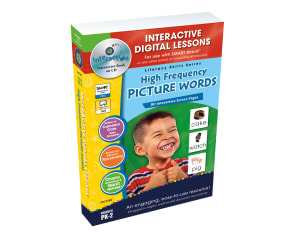
High Frequency Picture Words - Digital Lesson Plan Gr. PK-2 - FLASH-MAC
ELA, Reading, Grade 1, 2, Teacher Tools, Lesson Plans
High Frequency Picture Words - Digital Lesson Plan Gr. PK-2 - FLASH-MAC The High Frequency Picture Words is an engaging resource designed for enhancing vocabulary, improving sight word recognition, and promoting comprehension among elementary learners. Designed in line with state standards and adhering to Bloom's Taxonomy learning objectives, this comprehensive instructional tool delivers effective learning outcomes. Ideal for Language Arts Students This educational software is perfect for grade 1 and grade 2 students specializing in Language Arts with a focus on Reading. The interactive plan creatively introduces 120 common nouns utilizing real-world pictures for easy association and memory retention. Versatility of Use This digital lesson plan can be used across various group settings such as whole class discussions or small group activities—presenting considerable flexibility. It can easily integrate as part of daily instruction or used as supplemental homework assignments further reinforcing learned concepts. Interactive Activities:The meticulously prepared screens provide active participation stimulating a better understanding. Educational Games:Included are test preparation materials alongside engaging crossword puzzles and word searches . Use of Graphic Organizers:Learners are shown how to use graphic organizers—a helpful illustrative tool—to visualize connections between facts and ideas in an organized manner. Evaluation: Comprehension Quiz incorporated within its design to gauge student’s progress.. In essence—the High Frequency Picture Words - Digital Lesson Plan Gr.PK-2 offers invaluable support essential to the early language arts curriculum within your classroom or homeschool setting.
Author Classroom Complete Press
Tags Software (Mac)
Dragon Gets By Unit
ELA, Reading, Grade 2, 3, 4, Lesson Plans, Teacher Tools
This resource is a Dragon Gets By Unit . This unit is filled with 8 engaging worksheets to go along with this book for students to complete before, during and after reading. From short writing to flow charts, students will be able to show what they know and apply their skills with these worksheets.
Author Literacy Life
Tags Dragon, Fiction Book, Graphic Organizers, Flow Chart, Short Writing

A Man Who Had No Eyes: Full Lesson Plan w/ PowerPoints & Graphic Organizers
ELA, Reading, Grade 7, 8, 9, 10, Lesson Plans, Teacher Tools
This resource will give you everything you need to complete a full, comprehensive reading lesson plan for A Man Who Had No Eyes text by MacKinlay Kantor. Files are offered as PDFs and Word documents. Included: -A Man Who Had No Eyes Lesson Plan -A Man Who Had No Eyes Worksheet -A Man Who Had No Eyes Answer Key Graphic Organizers: Author’s Purpose Characterization Chart Figurative Language Chart Historical Analysis Chart Imagery Chart Peer Evaluation Sheet Plot Diagram Read for Detail Setting Style Chart Symbol Chart Symbolism Chart Theme Diagram Tone and Mood Diagram Universal Plot Diagram Venn Diagram PowerPoints: Characterization Imagery, Voice, and Persona Irony and Ambiguity Narrator and Voice Plot Structure Symbolism and Allegory Theme - How to Interpret Theme Thank You Bonus Stuff!
Author Quality Teaching Products
Tags Reading Lesson Plan, Reading Powerpoint, Graphic Organizers, Figurative Language, Venn Diagram

Farm Animals: Guided Reading Level P with Lesson Plan
ELA, Resources for Teachers, Reading Comprehension, Reading, Science, Language Development, Social Studies, Life Sciences, Economics, Pre-Reading, Grade 2, 3, 4, Worksheets & Printables, Worksheets, Teacher Tools, Centers, Activities, Literacy Readers, Quizzes, Quizzes and Tests, Assessments, Lesson Plans
This Farm Animals (level p) guided reading book with lesson plan includes: Guided Reading Color Label (front cover x1) This is a quick way to match the book’s demands to what students can generally handle.. The overall goal is to use the level/color to pick books for several smaller groups. To qualify for a certain level, a student is expected to read a book from that level with about 90–94% accuracy. If a student is consistently accurate and understands, move up a level. If the student is struggling at that level, drop down and add more support. Each student will improve at completely different rates, but it is generally one of the best ways to check progress across the class. DOWNLOAD THE CATALOG TO VIEW ALL GUIDED READING BOOKS AVAILABLE (SORTED LEVELS A-Z) Pre-Reading Question (x1) Teacher asks the prompt aloud, can be while showing the cover or first page. Students share what they already know, or make educated guesses from the cover. Prompt them to use the target vocabulary. Write some of their responses on the board to look back at during the reading. Vocabulary Words (x5) Introduce the five words, best doing it one at a time. Start by saying it, while students repeat and then see if anyone knows what it means before reading further. Read through the meaning and try to briefly connect each word to a picture or gesture so it’s meaningful. Ask students to flip through the book pages and point to where they see each of the vocabulary words. While reading the book pause upon coming across one of the vocab words or read the sentence twice to make sure students understand the word has appeared. Optional: Ask students to raise hands whenever they see/hear one of the new words. Guided Reading Pages (x10) Check the book snapshot (below) for: primary topic - do you need to prep extra reading or intro materials on this? what is taught best - decide on 1-2 bullets to focus on, use the prompt or words provided here for best results. learning goals - what you are checking for students to be able to do after the session, elicit answers using prompts or words provided. key vocabulary (see section above). questions overview - so you know what is coming up and if you need to prep extra materials to assist understanding. Run the lesson You may have already looked at a few of the pages together, but you can show them some of the pictures again first to set meaning. Depending on how much time you have and how familiar your students are with guided reading class, you may want to read the book aloud first with the group first. Students whisper or partner read, while you listen in. If time, do it as a group, one student reading a page each. Use the guided page’s prompts to coach: “Check the picture / does it make sense?” “Point under the words / try the first sound” “Reread the sentence smoothly”. Try to focus more on one student per session (rotating every time), so you can work out if they are ready to move up or need to move down a level. Comprehension Questions (back cover x3) This is your way to check that students didn’t just say the words, but actually understood the text. First, let students answer by pointing to the page/picture and saying a short sentence. After any answer, follow with: “Show me where you found that in the text.” In bigger groups, have partners answer first (10–20 seconds), then call on 2–3 students to share. Differentiation tips: Emerging speakers/struggling readers: oral + pointing On-level: oral in a full sentence Higher: one written sentence or draw + label Book Snapshot Title: Farm Animals Genre: Nonfiction (informational) Subject: Life Science Primary Topic: How common farm animals live and help people Estimated Guided Reading Level (A–Z): P What This Book Teaches Best Describes key traits and behaviors of farm animals (for example, cows digest tough grasses; pigs use mud to regulate temperature; goats climb steep surfaces). Explains how different farm animals support people , such as animals raised for milk, meat, eggs, wool, or work (pulling plows, transporting goods). Builds understanding of animal groups and social behavior , including flocks and a “pecking order” (social hierarchy). Highlights physical features linked to survival , such as sheep’s wide field of vision to spot predators and donkeys’ large ears helping them stay cool and hear well. Introduces science vocabulary tied to the text’s concepts, including domesticated, ruminants, keratin, descendants, and hierarchy . Learning Goals Students can describe how at least three farm animals are raised or used, using details from the text. Students can explain what the text says makes cows ruminants and what their digestive system allows them to do. Students can explain why the text says pigs use mud and what mud helps them do. Students can describe how chickens live in groups and what “pecking order” means in the text. Students can identify animal body parts mentioned (hooves, feathers, webbed feet, horns) and describe what the text says they help the animal do. Students can compare two animals from the book by stating one similarity and one difference based on text evidence. Key Vocabulary From the Text ruminants — animals that chew food again and digest grass. hierarchy — an order that shows who is in charge. keratin — a hard material that makes hooves and fingernails. descendants — animals that come from earlier animals in a family line. domesticated — animals raised by people, living with or near humans. Discussion Prompts Pre-reading question: What farm animals do you already know, and what do you think they do on a farm? Comprehension questions: What does the text say cows’ digestive system helps them do that some other animals cannot do? Comprehension questions: Why does the text say pigs use mud? Comprehension questions: What does the text say llamas can do because of their height and alert nature? Printing Tips 1. Best Printing Method (Recommended) “Booklet” Printing (Best if Available) If your printer or PDF viewer supports Booklet Printing , use this. Settings to use: Print mode: Booklet Paper size: Letter or A4 (either works) Orientation: Landscape Print on both sides: Yes Flip on: Short edge Scaling: Fit to printable area Booklet subset: First test: Front sides only Then: Back sides only This will automatically: Pair pages correctly Put the cover on the outside Align everything for folding After printing, fold in half and staple along the spine . 2. If “Booklet” Printing Is NOT Available You can still print this correctly with manual duplex printing . Step-by-step: Open the PDF. Choose Print . Set: Orientation: Landscape Pages per sheet: 1 Print on both sides: Yes Flip on: Short edge Print all pages . Because each PDF page already contains two facing book pages, the result will still fold cleanly into a book. Thousands of Cored Education products are included with your TeachSimple membership. Download links and encyclopedia index available here.
Author Cored Education
Rating
Tags Reading Comprehension, Reading Passages, Reading, Guided Reading, Guided Reading Lesson Plan, Guided Reading Activity, Pre-reading, Science Lesson Plans, Life Science, Economics
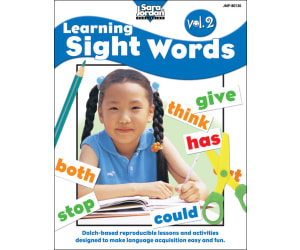
Learning Sight Words, vol. 2 Gr. K-3
ELA, Language Development, Vocabulary, Grade 1, Teacher Tools, Lesson Plans
Learning Sight Words, vol. 2 Gr. K-3 Learning Sight Words, vol. 2 Gr. K-3 is a teaching resource tailored for students in grade 1, focusing primarily on enhancing language arts skills and vocabulary development. A highlight of this resource is its concentration on the Dolch Basic Sight Vocabulary, a globally recognized tool for effective vocabulary building in classrooms. This black-line thematic lesson resource presents valuable features: Carefully designed lessons and exercises. A license for reproducibility that allows duplication of worksheets whenever necessary. An efficient system that reinforces learning with the review of vocabulary from volume 1. A flexible implementation strategy fit both for group activities and as homework assignment enhancers. Digital Compatibility & Resource Flexibility The easily accessible PDF format widens possibilities towards reaching each student effectively irrespective of their circumstance, promoting sharing across different platforms both digital or print. Singing Sight Words Complementarity This teaching tool optimizes its effectiveness when used simultaneously with "Singing Sight Words," a sister product utilizing similar objectives through a different medium fostering parallel growth along multiple channels. In conclusion, The incorporation of Learning Sight Words vol. 2 Gr.K-3 not only accelerates but also consolidates holistic vocabulary expansion and mastery, proving to be an irreplaceable component towards any first-grade language art curriculum .
Author Classroom Complete Press
Tags PDF

Literary Devices: Foreshadowing,Flashback, Symbolism and Irony - FLASH-MAC
ELA, Literature, Grade 5, 6, 7, 8, Teacher Tools, Lesson Plans
FLASH-MAC: An Enriching Teaching Resource FLASH-MAC is a meticulously designed teaching aid crafted to enhance understanding around crucial literary devices such as Foreshadowing, Flashback, Symbolism, and Irony. It is specifically tailored for fifth through eighth grade students focusing on Language Arts and Literature domains in school curriculum . Main Features: Meticulously structured curriculum -based chapter mini that consists of Reading Passages amplifying the students' knowledge of literature concepts. The Before You Read and After You Read questions cultivate proactive thinking by prompting predictions before reading and reinforced comprehension post-reading. An exciting collection of printables those are perfect means for grasping intricate literary themes. These printables can be implemented both inside the classroom during collective learning or individual study sessions to promote student participation while enhancing retention abilities. Vocabulary flashcards offering a novel approach towards teaching advanced terminologies associated with various literary devices. Interactive activities paving the way to active learning amongst pupils which makes their learning journey engaging yet meaningful. Note:All these features cater largely to educate about Foreshadowing, Flashback, Symbolism & Irony topics relevant from grade 5-8 perspective. Add-Ons: The Graphic Organizers-A beneficial resource aiding educators organize information systematically thus simplifying complex elements into understandable parts conducive for scholars from grades 5 through 8. Serving as scaffolds these facilitators guide learners progress from basic understanding to advanced level thinking related to highlighted literary devices topics. Compatibility with MAC software allowing seamless integration with digital platforms expanding towards e-learning. The FLASH-MAC teaching resource amazingly adapts to cater to whole group discussions within classrooms due to its expansive nature covering broad concepts pertinent to literature & similarly adjusts effectively while implementing smaller group studies or homework assignments encouraging individual paced learning among students. In Conclusion Imbibing a deep-seated understanding of Foreshadowing, Flashback, Symbolism and Irony as literary devices, FLASH-MAC stands as a trustworthy teaching aid endeavouring to cultivate knowledgeable scholars.
Author Classroom Complete Press
Tags Software (Mac), Foreshadowing And Flashback
Things That Go Curriculum Pack
ELA, Creative Arts, Art, Language Development, Vocabulary, Math, Early Math, Kindergarten, Lesson Plans, Teacher Tools
If your students are studying travel or are about to begin a transportation unit, I have just the resource to provide you with everything you need and more! This is aThings That Go Curriculum Packcomplete with an abundance of printable resources and engaging activities for students to complete. This curriculum was designed for your preschool students. The curriculum goal is to raise the awareness and familiarity of the various modes of transportation, and the concept of travel. The vocabulary that students will focus on isautomobile, transportation, engine, passenger, fuel, map, destination, travel, vehicle, vacation, gasoline, and sink/float. This curriculum will come with a letter of the week(T) and color of the week (red). This curriculum pack includes: --Sensory Table Ideas --Art Activities --Cooking Experience --Community Time --Math Activities --Home/School Connection Ideas --Science Table Enrichments --Science Concepts/Activities --Prop Box Ideas/Dramatic Play Enrichments --Movement and Motor --Playground/Walk Activities --Transition/Waiting Ideas --Block Area Enrichments --Flannel Board --Teacher Made Enrichment Ideas --Field Trip Ideas --Supplemental Learning Ideas/Activities At the start of this pack, you will receive a list of supplies needed for activities and projects. The worksheets, activities, and tasks included in this pack are intended to be completed in a variety of formats – whole group, small group, and independent work. I hope you enjoy! Take A Look At More Of My Best Sellers: Dental Health Curriculum Pack Memorial or Veteran’s Day Curriculum Pack Butterflies Curriculum Pack At the Grocery Store Curriculum Pack Pirate Fun Curriculum Pack Fire Safety Curriculum Pack Enjoy More From My Store Here: https://teachsimple.com/contributor/learning-foundations
Author Learning Foundations
Tags Preschool Curriculum, Transportation Unit, Things That Go, Science Printable, Arts And Crafts, Handwriting Practice, Counting, Vehicles, Reading
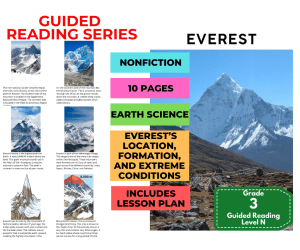
Guided Reading Level N - Everest (with Lesson Plan)
ELA, Resources for Teachers, Reading Comprehension, Reading, Science, Earth and Environmental Sciences, Social Studies, Geography, Life Sciences, Physics, Grade 2, 3, 4, Worksheets & Printables, Worksheets, Teacher Tools, Centers, Activities, Literacy Readers, Quizzes, Quizzes and Tests, Assessments, Lesson Plans
This Guided Reading Book - Everest (Level N) with lesson plan includes: Guided Reading Color Label (front cover x1) This is a quick way to match the book’s demands to what students can generally handle.. The overall goal is to use the level/color to pick books for several smaller groups. To qualify for a certain level, a student is expected to read a book from that level with about 90–94% accuracy. If a student is consistently accurate and understands, move up a level. If the student is struggling at that level, drop down and add more support. Each student will improve at completely different rates, but it is generally one of the best ways to check progress across the class. DOWNLOAD THE CATALOG TO VIEW ALL GUIDED READING BOOKS AVAILABLE (SORTED LEVELS A-Z) Pre-Reading Question (x1) Teacher asks the prompt aloud, can be while showing the cover or first page. Students share what they already know, or make educated guesses from the cover. Prompt them to use the target vocabulary. Write some of their responses on the board to look back at during the reading. Vocabulary Words (x5) Introduce the five words, best doing it one at a time. Start by saying it, while students repeat and then see if anyone knows what it means before reading further. Read through the meaning and try to briefly connect each word to a picture or gesture so it’s meaningful. Ask students to flip through the book pages and point to where they see each of the vocabulary words. While reading the book pause upon coming across one of the vocab words or read the sentence twice to make sure students understand the word has appeared. Optional: Ask students to raise hands whenever they see/hear one of the new words. Guided Reading Pages (x10) Check the book snapshot (below) for: primary topic - do you need to prep extra reading or intro materials on this? what is taught best - decide on 1-2 bullets to focus on, use the prompt or words provided here for best results. learning goals - what you are checking for students to be able to do after the session, elicit answers using prompts or words provided. key vocabulary (see section above). questions overview - so you know what is coming up and if you need to prep extra materials to assist understanding. Run the lesson You may have already looked at a few of the pages together, but you can show them some of the pictures again first to set meaning. Depending on how much time you have and how familiar your students are with guided reading class, you may want to read the book aloud first with the group first. Students whisper or partner read, while you listen in. If time, do it as a group, one student reading a page each. Use the guided page’s prompts to coach: “Check the picture / does it make sense?” “Point under the words / try the first sound” “Reread the sentence smoothly”. Try to focus more on one student per session (rotating every time), so you can work out if they are ready to move up or need to move down a level. Comprehension Questions (back cover x3) This is your way to check that students didn’t just say the words, but actually understood the text. First, let students answer by pointing to the page/picture and saying a short sentence. After any answer, follow with: “Show me where you found that in the text.” In bigger groups, have partners answer first (10–20 seconds), then call on 2–3 students to share. Differentiation tips: Emerging speakers/struggling readers: oral + pointing On-level: oral in a full sentence Higher: one written sentence or draw + label Book Snapshot Title: Everest Genre: Nonfiction (informational text) Subject: Science (Earth Science/Geography) Primary Topic: Mount Everest’s location, formation, and extreme conditions Estimated Guided Reading Level (A–Z): N What This Book Teaches Best Key facts about Mount Everest’s height and setting in the Himalayas in Asia. How mountain ranges form over long periods of time, including tectonic plate movement. How borders and regions connect to physical geography (Nepal/China border across the summit). How extreme environments change with altitude, including the “Death Zone” and low oxygen. How glaciers, weather, earthquakes, and erosion shape Everest and keep it changing. Learning Goals Describe where Mount Everest is located and what mountain system it is part of. Identify what the text says about the border between Nepal and China on Everest. Explain how Everest was formed using the book’s description of tectonic plates. Describe what the “Death Zone” is and why most living things cannot survive there long. Describe how glaciers create features on the mountain, including crevasses. Explain one way Everest is still changing today, using details from the text. Key Vocabulary From the Text summit — the very top point of a mountain. glacier — a huge, slow-moving river of ice. tectonic — related to Earth’s moving crust plates. crevasses — deep cracks in ice. erosion — wind, water, or ice wearing rock away. Discussion Prompts Pre-reading question: Where does the book say Mount Everest stands? Comprehension questions: What does the text say about where the Nepal–China border is on Everest? Comprehension questions: How does the text explain that Everest was formed long ago? Comprehension questions: What is one way the text says Mount Everest is still changing today? Printing Tips 1. Best Printing Method (Recommended) “Booklet” Printing (Best if Available) If your printer or PDF viewer supports Booklet Printing , use this. Settings to use: Print mode: Booklet Paper size: Letter or A4 (either works) Orientation: Landscape Print on both sides: Yes Flip on: Short edge Scaling: Fit to printable area Booklet subset: First test: Front sides only Then: Back sides only This will automatically: Pair pages correctly Put the cover on the outside Align everything for folding After printing, fold in half and staple along the spine . 2. If “Booklet” Printing Is NOT Available You can still print this correctly with manual duplex printing . Step-by-step: Open the PDF. Choose Print . Set: Orientation: Landscape Pages per sheet: 1 Print on both sides: Yes Flip on: Short edge Print all pages . Because each PDF page already contains two facing book pages, the result will still fold cleanly into a book. Thousands of Cored Education products are included with your TeachSimple membership. Download links and encyclopedia index available here.
Author Cored Education
Rating
Tags Reading Comprehension, Reading Passages, Reading, Guided Reading, Guided Reading Lesson Plan, Guided Reading Activity, Pre-reading, Social Studies Lesson Plans, Science Lesson Plans, Geography

Prepositions of Time ESL ELA ELL Pre-Intermediate Lesson Plan
ELA, Grammar, Grade 7, 8, 9, 10, 11, 12, Teacher Tools, Lesson Plans
This is a pre-intermediate ESL ELA and ELL lesson plan worksheet set for Prepositions of Time. This TEFL resource is ready to go and comprises a range of teaching materials, such as flashcards, activities, conversation topics, and writing drills. Created to raise language proficiency for early English students, the lesson dives into the use of can and could in a variety of situations. It empowers ESL students with the knowledge and confidence to use prepositions of time accurately in every day conversation and writing. With the inclusion of activities, exercises, and real-life examples, this lesson plan strengthens language concepts and establishes a solid foundation in the basics of English grammar. Students will learn more about these and then complete the exercises to follow, which will assess their comprehension and implement grammar skills. This lesson plan includes: Cover page Flash cards A warm-up activity Main use Construction details Rules, along with any exceptions Illustrative examples Two closed exercises One open exercise Revision exercise Writing exercises Chatterbox, a recurring feature in our course books encouraging conversation Activity , such as a game, quiz, puzzle, etc., to conclude the class The lesson plan is available in PDF with 30 ready to print pages and one digital access file. A part of it is on Google Apps. The answer key is also included for reference.
Author TEAM TEFL
Tags Time, Prepositions, Grammar Lesson, Daily Routine, English
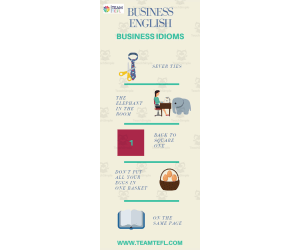
Business Idioms Lesson Plan | Business English Level 2
ELA, Language Development, ESL, Grade 10, 11, 12, Teacher Tools, Lesson Plans
Business English ESL EFL ELL TEFL lesson plan about Business Idioms. It is ideal for older students and adult education. Students will learn how to develop and use idioms in different areas of business . They will learn vital vocabulary and gain confidence on their English speaking journey. This business English lesson plan includes: A warmer Closed exercises Open exercise Group activity Revision Role-play Writing task This lesson can also be accessed through Google Apps. There are exercises for students to complete in this lesson. Answer key included. This resource is a part of our level 2 series for intermediate and advanced ESL students. All of the TEAM TEFL Business English lessons are available on Teach Simple. You can see the table of contents for all three levels below: Business English Level 1 contents TELEPHONE SKILLS LETTERS & EMAILS CUSTOMER SERVICE SOCIAL MEDIA BRANDING SETTING TARGETS WORK ENVIRONMENT SALES PRESENTATIONS MEETINGS Business English Level 2 contents LETTERS & EMAILS CUSTOMER SERVICE ADVERTISING NEGOTIATIONS SOCIAL MEDIA SETTING TARGETS MARKETING LEADERSHIP MARKET RESEARCH WORK ENVIRONMENT HOW TO WRITE A C.V ENVIRONMENTAL ISSUES BUSINESS IDIOMS Business English Level 3 contents ADVERTISING SALES MEETINGS COMPUTERS & TECHNOLOGY CULTURAL DIFFERENCES INTERVIEWS MONEY & FINANCE PRESENTATIONS MEDIA IMPACT BUSINESS IDIOMS NEGOTIATIONS LEADERSHIP INVESTMENTS
Author TEAM TEFL
Tags Business, Idioms, Adult Education, English, EFL, Idioms Lesson Plan, Lesson Plans On Idioms

Fall Festivals Reading Comprehension Bundle: Diwali, Day of the Dead & Guy Fawkes - ESL Lessons & Worksheets
ELA, Holiday & Seasonal, Reading, Reading Comprehension, Language Development, ESL, Vocabulary, Grade 9, 10, 11, 12, Teacher Tools, Lesson Plans
Fall Festivals Reading Comprehension Bundle: Diwali, Day of the Dead & Guy Fawkes - ESL Lessons & Worksheets This resource is an excellent companion for English or ESL teachers seeking to enrich their students' knowledge about global autumnal festivals. It provides a deep dive into traditions such as India's Diwali, Mexico's Day of the Dead, and the UK's Guy Fawkes Night. The set includes: Reading comprehension worksheets Insightful lesson plans Vocabulary-building tasks Festive fall posters The main aim is to enhance reading skills, spoken proficiency, confidence levels and widen universal awareness in learners. The bundle features pre-reading activities aimed at sparking curiosity and post-reading assignments for compounding acquired knowledge. To effectively evaluate student understanding about these international celebrations, comprehension checks facilitate gauging conceptual grasp after every topic. Exciting discussion-inducing functionalities are included too which aim at fostering reasoning skills and promoting shared learning via internationally-themed meaningful conversations. This resource primarily targets Grade 9-12 Language Arts/Holidays learners focusing on Comprehension Department with an easy-to-use interface under types like ESL/Vocabulary Lesson Plans. In addition: Add some festive charm to your classrooms by taking advantage of the exclusively available fall posters . These help generate seasonal spirit in all corners. The materials included are part of a vast Reading Comprehension series that caters to various domains including: Festivals Famous People & Celebrities Music and Culture Cities And Their People Art and Literature Global Sports Scientists & Inventors Don't hesitate! Grasp this chance to dive into autumn celebrations while boosting your students' reading comprehension. Embark on a fascinating journey through the world's most enchanting fall festivals today!
Author The Laughing Linguist
Tags Fall Festivals, Reading Comprehension, Diwali, Day Of The Dead, Guy Fawkes
First Week of School Grade 9 | No-Prep Worksheets
ELA, Math, Grade 9, Lesson Plans, Teacher Tools, Worksheets & Printables
First Week of School Grade 9 | No-Prep Worksheets Help students make a successful transition into high school with this First Week of School Activities for 9th Grade resource! This engaging, no-prep back-to-school packet combines Algebra 1 review, literacy, writing, collaboration, and critical-thinking activities to help students build confidence, establish routines, and develop the skills needed for high school success. Through five structured days of learning, students strengthen academic foundations while building a positive classroom community. What’s Included ✅ 30-page student workbook ✅ 5 ready-to-teach themed learning days ✅ Comprehensive Teacher Guide ✅ Complete Answer Key ✅ Student introduction activities ✅ Summer narrative writing ✅ SMART goal-setting activities ✅ Algebra warm-up activities ✅ Evaluating and simplifying expressions ✅ Slope and rate of change review ✅ Classroom community-building activities ✅ Multi-step equations and inequalities ✅ Systems of equations practice ✅ Graphing lines and systems ✅ Argument writing prompts ✅ Student interviews ✅ Collaboration and conflict-resolution activities ✅ Exponent rules and polynomial operations ✅ Factoring activities ✅ Quadratic equations practice ✅ Graphing parabolas ✅ Scatter plots and data analysis ✅ Sentence structure and editing practice ✅ Academic vocabulary activities ✅ Central idea and evidence analysis ✅ End-of-week certificate ✅ No-prep print-and-go format How It Works in the Classroom This 9th Grade First Week of School Packet is organized into five engaging instructional days designed to help students transition into high school while reviewing essential academic skills. Day 1: Welcome & Goals Student introductions Summer narrative writing SMART goals Evaluating expressions Simplifying algebraic expressions Finding slope between points Day 2: Classroom & Community Classroom expectations and values Solving equations and inequalities Systems of equations Graphing lines Interpreting solutions Day 3: Collaboration Argument writing Student interviews Team-building activities Conflict resolution Communication skills Day 4: Algebra Essentials Exponent rules Polynomial operations Factoring expressions Solving quadratic equations Graphing parabolas Scatter plots and correlation Day 5: Language & Literacy Sentence structure and editing Academic vocabulary Roots and word meaning Connotation and tone Central idea and evidence Reading comprehension Perfect for: Back-to-school lessons Freshman orientation activities Advisory periods Independent practice Whole-group instruction Small-group learning Skill review Informal assessments Early finisher activities The included teacher guide provides lesson plans, pacing suggestions, discussion prompts, differentiation strategies, and implementation support for every day of instruction. Standards & Learning Goals Students will practice: ⭐ Narrative writing ⭐ Argument writing ⭐ SMART goal setting ⭐ Evaluating algebraic expressions ⭐ Simplifying expressions ⭐ Slope and rate of change ⭐ Solving equations and inequalities ⭐ Systems of equations ⭐ Graphing linear relationships ⭐ Collaboration and teamwork ⭐ Conflict resolution ⭐ Exponent rules ⭐ Polynomial operations ⭐ Factoring expressions ⭐ Solving quadratic equations ⭐ Graphing parabolas ⭐ Scatter plots and correlation ⭐ Sentence structure and editing ⭐ Academic vocabulary development ⭐ Central idea and supporting evidence ⭐ Critical thinking and problem-solving skills This resource reviews important middle school concepts while preparing students for the rigor of Algebra 1, high school literacy expectations, and increased academic independence. Why Teachers Love It ❤️ No prep required ❤️ Designed specifically for high school freshmen ❤️ Covers the entire first week of school ❤️ Integrates math, literacy, writing, and SEL ❤️ Helps students transition successfully into high school ❤️ Builds classroom culture and positive relationships ❤️ Includes teacher guide and answer key ❤️ Reviews prerequisite skills before new content begins ❤️ Provides opportunities for informal assessment ❤️ Supports classroom routines and expectations ❤️ Includes built-in differentiation strategies ❤️ Encourages student ownership, responsibility, and goal setting Created specifically for ninth-grade students, this resource balances academic review with relationship-building activities to help teachers establish a positive classroom environment while preparing students for the challenges and opportunities of high school. Give your students a strong start to high school with this First Week of School Activities for 9th Grade packet! Build classroom community, reinforce essential academic skills, and help students develop the confidence and habits they need for a successful freshman year.
Author Bright Classroom Ideas Marketplace
Rating
Tags Back To School, First Week, Ela, Math, Worksheet, Lesson, Plan
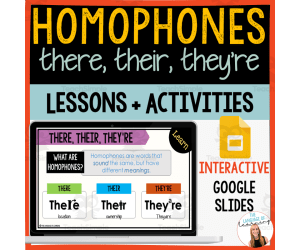
Homophones Interactive Unit
ELA, Grammar, Grade 2, 3, 4, 5, Lesson Plans, Teacher Tools
This resource is a Homophones Interactive Unit . Jam-packed with 26 interactive slides , students will love learning about and practicing with: their, they're and there. This unit can be assigned in Google Classroom.
Author The Language of Learning
Tags Homophones, Digital Lesson, Grammar Practice, Language Review
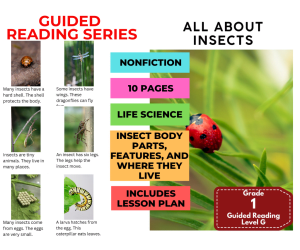
All About Insects: Guided Reading Level G with Lesson Plan
ELA, Resources for Teachers, Reading Comprehension, Reading, Science, Language Development, Vocabulary, Pre-Reading, Insects, Life Sciences, Kindergarten, Grade 1, 2, Worksheets & Printables, Worksheets, Teacher Tools, Centers, Activities, Literacy Readers, Quizzes, Quizzes and Tests, Assessments, Lesson Plans
This All About Insects (level g) guided reading book with lesson plan includes: Guided Reading Color Label (front cover x1) This is a quick way to match the book’s demands to what students can generally handle.. The overall goal is to use the level/color to pick books for several smaller groups. To qualify for a certain level, a student is expected to read a book from that level with about 90–94% accuracy. If a student is consistently accurate and understands, move up a level. If the student is struggling at that level, drop down and add more support. Each student will improve at completely different rates, but it is generally one of the best ways to check progress across the class. DOWNLOAD THE CATALOG TO VIEW ALL GUIDED READING BOOKS AVAILABLE (SORTED LEVELS A-Z) Pre-Reading Question (x1) Teacher asks the prompt aloud, can be while showing the cover or first page. Students share what they already know, or make educated guesses from the cover. Prompt them to use the target vocabulary. Write some of their responses on the board to look back at during the reading. Vocabulary Words (x5) Introduce the five words, best doing it one at a time. Start by saying it, while students repeat and then see if anyone knows what it means before reading further. Read through the meaning and try to briefly connect each word to a picture or gesture so it’s meaningful. Ask students to flip through the book pages and point to where they see each of the vocabulary words. While reading the book pause upon coming across one of the vocab words or read the sentence twice to make sure students understand the word has appeared. Optional: Ask students to raise hands whenever they see/hear one of the new words. Guided Reading Pages (x10) Check the book snapshot (below) for: primary topic - do you need to prep extra reading or intro materials on this? what is taught best - decide on 1-2 bullets to focus on, use the prompt or words provided here for best results. learning goals - what you are checking for students to be able to do after the session, elicit answers using prompts or words provided. key vocabulary (see section above). questions overview - so you know what is coming up and if you need to prep extra materials to assist understanding. Run the lesson You may have already looked at a few of the pages together, but you can show them some of the pictures again first to set meaning. Depending on how much time you have and how familiar your students are with guided reading class, you may want to read the book aloud first with the group first. Students whisper or partner read, while you listen in. If time, do it as a group, one student reading a page each. Use the guided page’s prompts to coach: “Check the picture / does it make sense?” “Point under the words / try the first sound” “Reread the sentence smoothly”. Try to focus more on one student per session (rotating every time), so you can work out if they are ready to move up or need to move down a level. Comprehension Questions (back cover x3) This is your way to check that students didn’t just say the words, but actually understood the text. First, let students answer by pointing to the page/picture and saying a short sentence. After any answer, follow with: “Show me where you found that in the text.” In bigger groups, have partners answer first (10–20 seconds), then call on 2–3 students to share. Differentiation tips: Emerging speakers/struggling readers: oral + pointing On-level: oral in a full sentence Higher: one written sentence or draw + label Book Snapshot Title: All About Insects Genre: Nonfiction (informational) Subject: Science (Life Science) Primary Topic: Insect body parts, features, and where they live Estimated Guided Reading Level (A–Z): G What This Book Teaches Best Explains what insects are by stating they are tiny animals that live in many places . Teaches basic insect anatomy: insects have six legs and three body parts (head, thorax, abdomen). Connects structures to functions: legs help the insect move and antennae are used to smell things . Describes common insect features: some have a hard shell that protects the body , and some have wings (dragonflies can fly fast ). Introduces early life stages: many insects come from eggs , and a larva hatches from an egg. Learning Goals Students will describe insects as tiny animals that live in many places. Students will identify that an insect has six legs that help it move. Students will name the three body parts of an insect: head, thorax, and abdomen. Students will explain that most insects have two antennae used to smell things. Students will describe details from the text about insect features (shells, wings) and how insects begin life (eggs, larva). Key Vocabulary From the Text thorax — the middle part of an insect’s body. abdomen — the back part of an insect’s body. antennae — body parts insects use to smell things. larva — a young insect that hatches from an egg. dragonflies — insects that can fly fast. Discussion Prompts Pre-reading question: Where have you seen insects living before? Comprehension questions: What does the book say insects are? Comprehension questions: How many legs does an insect have? Comprehension questions: Where does the book tell you to look to find an insect? Printing Tips 1. Best Printing Method (Recommended) “Booklet” Printing (Best if Available) If your printer or PDF viewer supports Booklet Printing , use this. Settings to use: Print mode: Booklet Paper size: Letter or A4 (either works) Orientation: Landscape Print on both sides: Yes Flip on: Short edge Scaling: Fit to printable area Booklet subset: First test: Front sides only Then: Back sides only This will automatically: Pair pages correctly Put the cover on the outside Align everything for folding After printing, fold in half and staple along the spine . 2. If “Booklet” Printing Is NOT Available You can still print this correctly with manual duplex printing . Step-by-step: Open the PDF. Choose Print . Set: Orientation: Landscape Pages per sheet: 1 Print on both sides: Yes Flip on: Short edge Print all pages . Because each PDF page already contains two facing book pages, the result will still fold cleanly into a book. Thousands of Cored Education products are included with your TeachSimple membership. Download links and encyclopedia index available here.
Author Cored Education
Rating
Tags Reading Comprehension, Reading Passages, Reading, Guided Reading, Guided Reading Lesson Plan, Guided Reading Activity, Pre-reading, Science Lesson Plans, Life Science, Insects

Don't Hold Your Breath | Figurative Language Activity | Micro-Learning Deck
ELA, Reading, Reading Comprehension, Grade 2, 3, 4, 5, Teacher Tools, Lesson Plans
This resource allows students to explore figurative learning in a fun way. The figurative language term for this learning deck is "Don't Hold Your Breath." Through close reading and a reading passage with audio, your students will better comprehend figurative language! Included: -Video lesson on language concept -Reading passage w/ audio Comprehension -Quick write
Author Teach Me This
Tags Reading Lesson, Figurative, Language, Writing Template, Learning Deck

2nd Grade CKLA Color by Code Unit 3 Pack
ELA, Language Development, Spelling, Grade 2, Lesson Plans, Teacher Tools
Color by Code Unit 3 Pack for 2nd Grade CKLA This colorful spelling resource is designed for 2nd grade students using the Core Knowledge Language Arts curriculum . With engaging coloring pages and practice spelling lists, this pack makes learning fun. What's Included: - 4 weekly spelling lists (lessons 1-5, 6-10, 11-15, and 16-20) - 8 coloring worksheets (2 per list) - Answer keys Implementation Ideas: - Print for emergency sub plans - Use for homework or morning work - Give to early finishers for enrichment The coloring pages offer a creative way for students to practice their weekly words. The multiple lists allow teachers to assign spelling practice throughout Unit 3. Reviewing the words often will help commit them to memory. This pack can be used in whole group, small group, or independent settings. For more engaging resources, visit Learn Teach Create for reading passages, no prep printables, and book companions. Every product promotes student learning through creativity and fun.
Author Learn Teach Create
Tags Spelling Worksheet, Spelling Color By Code, CKLA Worksheet, Reading Printable, Spelling Curriculum, Coloring Pages, Morning Work, Spelling Homework

Nonfiction Title page lesson
ELA, Literature, Grade 1, 2, 3, Teacher Tools, Lesson Plans
Nonfiction can be a complicated concept to understand, this Nonfiction title page lesson is aimed at taking a brief look at the nonfiction text features, title page by using class discussions and an activity for each feature. The objective of this Nonfiction title page lesson is to help students start creating a concrete understanding of the nonfiction text feature title through class discussions and interactive activities. Students will apply reading, creative thinking, problem solving and so much more as they work through these interactive slides. Within this Nonfiction text features lesson, there are three different powerpoints, lesson slides, student slides and answer slides. The student slides can be shared with students so that they can complete the activities during the lesson. The lesson is animated and has speaker notes and can be presented to the class, the activities are made to be completed during the lesson to gage students understanding of the concept. If you would like the printable activities keep a lookout on Teach Simple where you will find the printable nonfiction worksheets that included the same activities that are within the lesson with slight changes. The suitable grades for this Nonfiction title page lesson is grades 1,2,3. This lesson can be used as a form of introduction to the concept, recap, enrichment or support. There are a set of Answer slides that hold the answers to the activities within your download. The slides in this Nonfiction title page lesson are downloaded into powerpoint however can be used in google slides as well. Lesson slides 24, student slides 10, answer slides 7
Author Ezee 101
Tags Nonfiction, Title Page, Lesson, Powerpoint, Google Slides
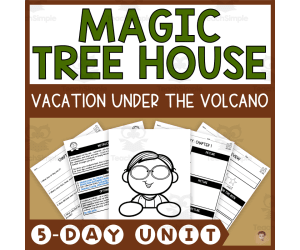
Vacation Under the Volcano (Magic Tree House #13 Lesson Plan, Activities)
ELA, Social Studies, Reading, Reading Comprehension, Grammar, Literature, Language Development, Spelling, Vocabulary, Writing, Science, Earth and Environmental Sciences, Earth Sciences, History, History: Ancient, Grade 1, 2, 3, Lesson Plans, Teacher Tools
Vacation Under the Volcano (Magic Tree House #13 Lesson Plan, Activities) This teaching resource is designed for educators to bring literature, comprehension and creativity in their classroom. Ideal for first to third-grade classrooms, including homeschool families and cooperatives. Lesson Plan Contents In-depth lesson plan Chapter comprehension questions Vocabulary practice exercises Creative drawing or coloring activities during the learning development process. You can modify these lessons in printing worksheets or discussing them aloud. Not only English language arts but also expands into geography, grammar history, research social studies with reading as its main focus. Unique Learning Features Videos that provide visual understanding Pre-reading activities, During reading comprehensions Bold post-reading reviews solidifying lessons learned over five days. Notebook Pieces and Book Review Reports (6 options each) The unit concludes with a writing craftivity activity and project-based activity suggestion.This attracts learners who prefer interactive learning experiences. Completing this structured yet flexible 5-day program will give learners exciting knowledge base through methods like art drawings – making it enjoyable where young scholars are excited about learning new things every day. For instructors at school or at home: The Vacation Under the Volcano (Magic Tree House #13 Lesson Plan, Activities) nurtures students' love for reading while fortifying foundational comprehension skills.
Author Heather Huhman
Tags Lesson Plan, Comprehension Activities, Magic Tree House Series, Literature Study, Vocabulary Practice

Literary Devices: Characterization - FLASH-PC
ELA, Literature, Grade 5, 6, 7, 8, Teacher Tools, Lesson Plans
Literary Devices: Characterization - FLASH-PC For educators seeking effective ways to impart the skill of understanding the characterization of literary devices, look no further than the Literary Devices: Characterization - FLASH-PC. This valuable resource covers important curriculum -based content, comprehensively designed for Grade 5 to Grade 8 language arts students. Significance of this Resource The significance of this resource is that it opens pathways towards a deeper comprehension of literature and its various elements. It offers engaging reading passages that help students grasp key concepts related to literary characterization in an accessible manner. Each passage includes 'Before you Read' and 'After you Read' questions, thoroughly checking if learners have captured the core principles. Incorporation into Instructional Settings A significant benefit from using this teaching tool is how adaptive it can be for different instructional settings. Its diverse content makes it apt for whole group discussions or small group activities in classroom sessions or homeschooling environments. Students, too, could utilize them independently as homework assignments further cementing their understanding outside a collective learning environment. Printables: Safe within this one zip file PC software are handy printables providing tangible learning aids right at your fingertips. Vocabulary flashcards: To extend vocabulary knowledge pertinent to the subject matter, vocabulary flashcards are included which can facilitate independent study or peer-to-peer testing games in class. Graphic organizers: Furthermore, graphic organizers are available within the unit aiding visual learners by representing information through diagrams or graphical representations often making complex content manageable and memorable. Interactive activities:Last but importantly interactive activities intersperse theory with practice creating fun-filled educational experiences bound to boost interest levels while strengthening absorption capacities among students. Summary To summarize; enlightening reading passages paired with critical questions equip teachers with effective questioning strategies; meaningful printables deliver hard copies bridging student interface with physical documents; vocabulary flashcards fuel word power; thoughtfully designed graphic organizers make understanding easier while lively interactive exercises provide just enough excitement keeping curiosity alive! Reach for Literary Devices: Characterization - FLASH-PC when planning lessons about Literacy Device Pronunciation, a flexible and resourceful component that any language arts curriculum would appreciate.
Author Classroom Complete Press
Tags Printables, Vocabulary, Flash Cards, Graphic Organizers, Interactive Activities

5th Grade Summer ELA Games Pack | No-Prep Printables
ELA, Grade 5, Games, Activities, Lesson Plans, Teacher Tools, Worksheets & Printables
5th Grade Summer ELA Games Pack | No-Prep Printables Prepare students for middle school success with this engaging Summer ELA Games Pack Grade 5 ! Packed with 57 no-prep literacy activities, this comprehensive resource strengthens reading comprehension, advanced grammar, vocabulary, writing, literary analysis, and critical thinking skills while helping prevent summer learning loss. Perfect for summer school, end-of-year review, literacy centers, tutoring, and take-home enrichment. What's Included 57 no-prep Grade 5 ELA activities 8 Multi-Paragraph Reading Comprehension Passages 10 Word Study & Etymology Activities 10 Advanced Grammar Activities 8 Academic Vocabulary Games 10 Structured Writing Tasks 6 Figurative Language & Literary Analysis Activities 5 Reading Response & Board Games Complete Answer Key Teacher Guide with standards alignment, pacing recommendations, and differentiation strategies How It Works in the Classroom This flexible summer literacy resource can be used for: Summer school programs End-of-year review Middle school readiness programs Literacy centers and stations Morning work Independent practice Small-group instruction Tutoring sessions Homeschool learning Early finisher activities Take-home summer packets Substitute teacher plans Simply print and go! Each activity is designed as a self-contained page, making implementation simple for teachers, tutors, and families. Standards & Learning Goals Students will practice: Reading Comprehension & Literary Analysis Theme and universal truths Text evidence and inference Narrator reliability Point of view analysis Comparing texts, characters, and settings Informational and literary text analysis Word Study & Vocabulary Advanced Greek and Latin roots Etymology and word origins Multiple affixes Silent letters and spelling patterns Academic vocabulary development Connotation and denotation Idioms, adages, and figurative language Multiple-meaning words across subject areas Advanced Grammar & Language Skills Perfect verb tenses Correlative conjunctions Interjections Verb mood Active and passive voice Compound-complex sentences Semicolons and colons Capitalization mastery Misplaced and dangling modifiers Writing & Research Personal narratives Opinion essays with evidence Research reports with cited sources Literary analysis Compare and contrast essays Persuasive writing and op-eds Formal email writing Cause-and-effect writing Narrative poetry Figurative Language & Critical Thinking Similes Metaphors Extended metaphor Symbolism Tone and mood Inference and deeper literary analysis Aligned with Grade 5 Common Core ELA standards including RL.5.1–RL.5.9, RI.5.6–RI.5.8, RF.5.3, L.5.1–L.5.5, and W.5.1–W.5.8. Why Teachers Love It ✅ No-prep, print-and-go format ✅ Specifically designed to prepare students for middle school ELA expectations ✅ Reinforces critical Grade 5 literacy standards ✅ Includes rigorous reading, grammar, vocabulary, and writing practice ✅ Builds higher-level thinking through narrator reliability, symbolism, theme analysis, and evidence-based writing ✅ Supports differentiation with intervention and enrichment suggestions ✅ Perfect for summer school, tutoring, homeschool, and classroom review ✅ Provides approximately 25–30 hours of meaningful literacy practice ✅ Appropriate for Grade 5 students, advanced Grade 4 learners, and struggling Grade 6 students needing review Ready to Build Confident Middle School Readers and Writers? Download this Summer ELA Games Pack Grade 5 today and give students engaging, standards-based literacy practice that strengthens reading, writing, vocabulary, and critical thinking skills all summer long. Whether you're preparing learners for sixth grade or preventing summer learning loss, this resource provides everything you need in one easy-to-use bundle.
Author Bright Classroom Ideas Marketplace
Rating
Tags Summer, Ela, Worksheet, Game, End Of Year
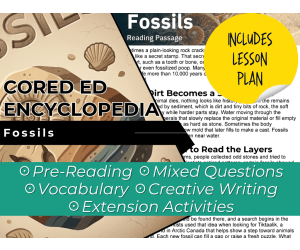
Fossils Reading Comprehension Passage - Cored Ed Encyclopedia
ELA, Reading Comprehension, Reading, Science, Technology, Earth and Environmental Sciences, Life Sciences, Pre-Reading, Language Development, Vocabulary, Grade 2, 3, 4, 5, Worksheets & Printables, Worksheets, Teacher Tools, Centers, Activities, Writing Prompts, Assessments, Quizzes and Tests, Quizzes, Lesson Plans
This fossils reading comprehension with lesson plan includes: Visualization (on the front cover) Start your lesson by taking a minute to think and share something about the topic. Read the script aloud (slowly), perhaps prepare some music or sound effects. Student close their eyes and let their imaginations wander. Students open their eyes, read the question aloud and give them a few minutes to complete. Ask a few students to share or keep answers until the end to compare with what they learn in the passage. Quick pause—thousands of Cored Education products are included with your TeachSimple membership. Download links and encyclopedia index available here. Pre-Reading Trivia Students will write down one thing they already know about the subject and then read five more facts and discuss. These facts are fun, and the students will enjoy learning about the subject before reading more. Give 1 minute for students to write what they already know (no pressure—best guess is fine). Read the five facts together. After each fact, do ask a student for their opinion, was it surprising? Set a purpose by asking students to highlight/underline one fact they want to learn more about during the reading. Reading Passage The text is a high-interest reading passage with set paragraphs, roughly three to four paragraphs long. It contains a variety of themes about the topic, anywhere from history to technology. The passage is between 250 and 350 words in length. First, ask students to look at the headings and see what they’ll learn about today. What do they know about the topic/heading? First read options: Teacher read-aloud (best for support). Partner reading (paragraph by paragraph). While reading, students underline important details, and vocabulary words they think may come up in the questions section. Mixed Questions The first question page contains four multiple-choice questions, each with a choice of four answers, and three written response questions that require a sentence or two from the student. Students complete the mcqs first independently, then review quickly as a class. For the 3 written responses, try to get students giving the answer with some form of evidence: “I think ___ because the text says ___.” If students get stuck, send them back to check the passage. Vocabulary Questions Practice seven key words from the text in this section across two activities. First section is scrambled words where students will unscramble three words given a clue for each. The second section is a word to meaning matching activity. Before starting, have some students read out words they underlined in the passage. Ask students to say the word and read aloud the sentence(s) around each word. Ask students to do scrambled words and the matching exercise in pairs then go through answers as a class. For the scrambled spelling task, get four pairs to come up to the board and write the words for extra practice with the other student reading out the clue. For the matching task, prompt students to give full sentences: “I matched ___ with ___ because ___.” Creative Writing In this question, the student will be required to write a five to eight sentence paragraph on a question related to the topic. Before starting, ask students write down 3 key ideas they are going to include in their piece. Ask students for ideas to share around the class to help those struggling. Pro writing expectations: 5–8 sentences At least 2 facts or details from the passage At least 2 vocabulary words from the previous page Students read their paragraphs while classmates listen for facts and vocabulary words. Extension Activities This page is optional for fast finishers or to take home. There are several activities, each one requiring a different skill. Do some, do none, do all, completely optional - but you will feel reassured knowing every possibility is planned for. Includes summary writting question and additional facts. Answer Key There are answers for the multiple-choice questions, written response questions have sample answers, vocabulary answers and if there is a summary question then a sample summary will be provided as well. Lesson Plan Included Customized lesson plan for this lesson is included. Lesson Snapshot Title: Fossils Genre: Nonfiction (Informational Text) Subject: Science (Earth Science/Life Science) / Reading (Informational Text) Primary Topic: Fossils, how they form, and what they reveal Estimated Guided Reading Level (A–Z): Q What This Lesson Teaches Best Defines a fossil and explains that fossils can be body parts (tooth, bone) or traces (footprint, burrow, fossilized poop) that become clues in the “fossil record.” Explains how fossils form when remains are quickly covered by sediment , and minerals in water replace material or fill empty spaces until remains harden like stone. Teaches mold and cast formation: a body can disappear, leaving a hollow mold that later fills to make a cast. Introduces paleontology and shows how scientists “read” patterns in sedimentary rock layers to learn how life has changed over time. Shows how fossils can guide new discoveries , including using rock layers to search for missing kinds of creatures (Tiktaalik example). Learning Goals Students will identify two kinds of fossils named in the text and give an example of each. Students will explain how sediment and minerals help remains become hard “as stone.” Students will describe how a mold and a cast can form, using the text’s explanation. Students will explain how scientists use patterns in sedimentary rock layers to learn which fossils are older. Students will describe why the fossil record is “not complete,” based on the passage. Students will describe how fossils can help scientists decide where to search for new discoveries. Key Vocabulary From the Text sediment — dirt and tiny bits of rock. minerals — materials in water that can harden remains. mold — a hollow shape left after a body is gone. cast — a filled-in copy of a hollow shape. paleontology — the study of ancient life using fossils. FULL CATALOG OF DOWNLOAD LINKS AND ENCYCLOPEDIA INDEX HERE
Author Cored Education
Rating
Tags Vocabulary, Reading Comprehension, Reading Passages, Lesson Plans, Ela Lesson Plans, Reading Comprehension Lesson Plans, Pre-reading, Science Lesson Plans, Earth Science, Life Science

Literary Devices: Characterization
ELA, Literature, Common Core, Grade 5, 6, 7, 8, Teacher Tools, Lesson Plans
Literary Devices: Characterization This resource is a focused module from the comprehensive lesson plan dedicated to the study of Literary Devices. Designed for educators, it emphasize on characterization in storytelling language teaching for 5th through 8th-grade students. This guide enhances understanding of Language Arts and Literature curriculum components. Fundamentals & Topics Covered The foundation of reading comprehension is strengthened with this tool as learners explore various aspects of storytelling including: Characterization Setting Plot Theme and more. All these aspects are crucial for a complete appreciation of literature. Ease-of-Use & Learning Objectives The teacher-friendly interface enables easy navigation between sections. A significant feature that distinguishes Literary Devices: Characterization is its adherence to Bloom’s Taxonomy while formulating objectives, creating discussions pedagogically relevant and inviting learner engagement at different cognitive levels - from remembering to creative problem-solving. Tangible Benefits This resource not only aids in comprehending literary devices but also assists in evaluating their role in deriving meaning from different literature genres. It marries instructive narrative with age-appropriate activities ensuring learner engagement while bolstering understanding about underlying elements that drive stories. Twinning Standards Last but not least, this resource pairs well with standards established by Common Core State Standards maintaining their prescribed frameworks beautifully . This makes it an ideal additive alongside existing curriculum material integrating seamlessly within various learning settings whether classroom-wide discussions or smaller focus groups extending its utility as viable homework assignments. Distribution Details: A straightforward product file embedded in PDF format makes distribution among students digitally or in print form simple. Individual teaching styles could utilize this flexibility in usage, further maximizing comprehension potential and reinforcing mastery over literary devices especially characterization.
Author Classroom Complete Press
Tags PDF

Sight Word Tracing Worksheets - Country Name
ELA, Handwriting, Writing, Holiday & Seasonal, Seasons, Fall, Spring, Winter, Summer, Kindergarten, Preschool, Grade 1, 2, 3, Teacher Tools, Lesson Plans, Assessments
Who said handwriting practice had to be boring? With these Sight Word Tracing Worksheets , students can work on their handwriting while exploring the world—one country at a time! From “Italy” to “Mexico” to “Australia,” kids will trace their way across the globe without needing a passport. Plus, they’ll get to practice spelling and fine motor skills, all while daydreaming about their next big adventure (or at least their next recess). Ways to Use: ✔️ Handwriting Practice – Because neat writing doesn’t happen by magic! ✔️ Geography Fun – Sneak in some world knowledge while they trace. ✔️ Morning Work or Early Finishers – A perfect “keep them busy but still learning” activity. ✔️ Independent Practice – Great for centers, homework, or when you need five minutes of quiet. ✔️ ESL Support – Perfect for reinforcing country names for English learners. Why You’ll Love It: ✏️ Engaging & Educational – Learning letters and countries at the same time? Genius! 🌍 Real-World Connections – These are words students will actually see and use. 🎉 No Prep Needed – Just print, pass out, and let the tracing begin! Turn handwriting practice into a mini world tour, no plane ticket required! Pdf file includes 4 pages.
Author Ponder Palette Plazza
Tags Sight Words, Sight Word, Country Name, Countries, Sight Words Tracing, Handwriting, Writing, Geography, Vocabulary, Back To School
High Frequency Picture Words: Boxed Words - FLASH-PC
ELA, Language Development, Vocabulary, Grade 1, 2, Teacher Tools, Lesson Plans
High Frequency Picture Words: Boxed Words - FLASH-PC The High Frequency Picture Words: Boxed Words - FLASH-PC is a cutting-edge digital resource for educators aspiring to modernize their teaching methods. This product is an excellent tool for teaching vocabulary, which forms a crucial part of Language Arts lessons for Grade 1 and Grade 2 students. Where traditional flashcards no longer capture the interest of today's tech-savvy kids, this toolkit offers an exciting alternative in the form of printable picture word flashcards. These visually captivating tools are extremely effective in enhancing students' command of high-frequency English words, thereby making learning engaging and enjoyable. All elements come enclosed within one compact zip file that can easily be used with PC software, thus making it simple to integrate this resource smoothly into your current lesson plans. Outstanding Features: A variety of innovative boxed words activities, designed in keeping with curriculum guidelines, facilitate interactive learning while also meeting educational standards. A set of carefully crafted graphic organizers , meant to promote critical thinking skills amongst students and assisting them in organizing their acquired knowledge effectively through visual cues. Tailored Implementation: This versatile learning resource can be used flexibly as per your requirements; may it be whole-class lessons fostering collective engagement or small-group exercises encouraging peer interaction or individual homework assignments considering diverse learning capabilities. The imperative feature being that this educational medium allows teachers the option to provide custom-made experiences addressing each student's unique needs while nurturing an inclusive classroom ambiance. Summarizing its all-inclusive nature coupled with benefits derived from things like both inside outside the classroom usage, this constitutes a noteworthy product you should contemplate adding to your teaching repertoire. Witness the Change: Experience visible improvements, not just in your methods and efficiency as an educator, but more importantly in your students’ overall academic progression
Author Classroom Complete Press
Tags High Frequency Words, Picture Words, Language Arts, Vocabulary Words, Language Activity