



3,917 products added recently
Page 6 - History Lesson Plans
Transport your students through time with history lesson plans that vividly illustrate past events and societies. These resources include primary sources, discussions, and projects. Implement them to foster critical thinking and a deeper understanding of our world's history.

 Show filters


Establishing the New Nation | Social Studies Unit
Social Studies, History, History: USA, Grade 9, 10, 11, 12, Teacher Tools, Lesson Plans
This resource is an Establishing the New Nation Social Studies Unit . This bundle of resources has everything you need to introduce the before, during, and after of the colonies to the revolution. A critical part in American history and this unit leaves no stone unturned. From research essays to lectures and quizzes , you can be confident in knowing that students will complete this unit well-informed! The best part is that every component is created with engagement in mind to keep your learners attention. The even better part is that each component can be printed or paperless. Instructions for accessibility are included.
Author Creating History
Tags Slavery, Colonies, Revolution, American History, Social Studies Bundle
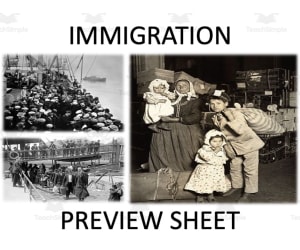
Immigration & Immigrants : Mini Unit
Social Studies, History, History: USA, Grade 8, 9, 10, 11, 12, Lesson Plans, Teacher Tools
Immigration & Immigrants: Mini Unit A comprehensive teaching resource aimed at Grade 8-12 students that provides valuable insights into immigration in the United States. Historical Materials Focusing on America's expansion over the past 250 years, including experiences of Native American and African-American communities during the same period. Vocabulary and Essential Phrases about Immigration Included are illustrative examples of push and pull factors to help learners understand causes of immigration and allow them to articulate these ideas effectively. Tales from Major Immigrant Groups The unit comprises reading materials featuring stories from ten major immigrant groups: Chinese, Jewish, Irish, Japanese, Arab, Italian, German, Vietnamese Norwegian and Indian immigrant communities. Narrative Approach in Reading Materials The narratives provided delve into individual accounts without losing sight of the broader picture. They illustrate successive waves of immigration while highlighting their experiences or discrimination they faced post-arrival in the United States. Worksheets and Multimedia Content Incorporated worksheets are available in both pdf format as well as editable pptx., providing flexibility for teachers delivering lessons or assigning tasks based on student progress. An introductory PowerPoint Presentation serves as an efficient aid for instructors initiating first lessons or facilitating discussions about chosen immigrant group presentations by students based upon their researches inclusive of images data graphs etcetera for balanced comprehension. This mini-unit is particularly relevant within a Social Studies curriculum especially USA History due to its focus on key narrative threads related to immigration - presented through a variety of formats suitable for different teaching styles (group work, small student clusters, individual assignments etcetera). It thus serves as a staple choice supplementing conventional course material providing students with a profound understanding of the central role of immigration in shaping American society.
Author Mr Gray History
Tags Immigration, Immigrants, US History, Push And Pull Factors, Cultural Diversity

I WONDER - What Was The Most Famous School In Ancient Greece
History: Ancient, History, Social Studies, History: Europe, Grade 3, 4, 5, 6, 7, 8, 9, Lesson Plans, Teacher Tools
Video Introduction An amazing video designed for the students to learn more about history. I WONDER - What Was The Most Famous School In Ancient Greece | Animated Video Lesson Do you like history? Which topic do you really enjoy about history? Have you ever read an interesting fact about the Vikings? If yes, can you mention them? What do you like most about the Victorian era? Can you name all the Tudors? Have you ever wondered how people used to live in ancient Japan and ancient China? Do you know any interesting facts about ancient Egyptians and the Pharaohs? Have you ever visited South America? What do you know about Incas and Aztecs? Celtic culture was really one of a kind, can you name any of the places that Celts used to live in? Imagine yourself living during the ancient Roman empire, how your life will look like? Ancient Greece was an amazing place to live in. What do you know about ancient Greek life? I WONDER - What Was The Most Famous School In Ancient Greece | Animated Video Lesson The video is perfect for encouraging the researching skills for the students, while learning more about history. I WONDER - What Was The Most Famous School In Ancient Greece | Animated Video Lesson This friendly designed video is suitable for students at school, homeschooling, and as a group activity. Format Available in MP4 format.
Author Educational Voice
Tags What Was The Most Famous School In Ancient Greece, What Was The Most Famous School In Ancient Greece Video, The Most Famous School In Ancient Greece, The Most Famous School In Ancient Greece Video, The Most Famous School In Ancient Greece Facts

Country Study Presentation - Geography - Somalia - Eastern Africa
Social Studies, Economics, First Peoples (Native), Geography, History: African, History, Grade 7, 8, 9, 10, 11, 12, Teacher Tools, Presentations, Lesson Plans
Country Study Presentation - Geography + Social Studies - Somalia - Eastern Africa Try this Teaching Resource on Somalia (Introductory Presentation Lesson - PDF Printable), designed for Geography + African History (East Africa) + Social Studies lessons. Suitable for Grades 7–12 (Middle school and High School students), this Introductory PDF Presentation offers a ready to use lesson that requires little to no preparation. Geography and Social Studies students will learn about Somalia ’s geography, history, culture, language and economy — making it perfect for classroom instruction, homeschooling, or online learning. 📘 Teachers can find the following topics in this Social Studies and Geograhy Teaching resource ✅ Greetings in Arabic + Somali ✅ Geography of Somalia (East Africa) – Key facts, borders, and an interactive Google Maps link to its location. ✅ Quick Facts – Population, capital city, currency and other essential details. ✅ Languages of Somalia : Arabic + Somali - introduction in the languages spoken + basic vocabuary ✅ History Overview – A concise summary of the most important events in the history of Somalia (East Africa) ✅ Geography & Environment – Details about the country’s land area, regions, and climate zones. ✅ Somalia's Economy – paragraph on Somalia ’s industries, exports, currency and economic strengths (East Africa) ✅ Mogadishu – Explore the capital city of Somalia , its famous landmarks, and cultural highlights. ✅ Other Major Cities – A map showcasing additional important cities in Somalia (East Africa) ✅ Somalia's Culture & Traditions – A look at the customs and values that define Somalia (East Africa) ✅ Farewell in Arabic + Somali 🎯 This Geography and Social Studies Teaching Resource can be perfect for: Geography classes Social Studies lessons World cultures units Country study projects Substitute teacher toolbox Digital learning In-class or online teaching 📂 Resource Details Format: PDF Digital Presentation Grade Levels: 7th–12th Grade (Middle School and High School students) Learning with Alan is an educational resource store created to help teachers, educators, and tutors reach their teaching goals while building a fun, engaging, and stimulating learning environment . Because learning should always be meaningful—and fun! 🎓✨ If you want to browse more of my Teaching Resources, click here Learning with Alan!!
Author Learning with Alan
Rating
Tags Social Studies, Country Study, Geography, Africa, Somalia, Introduction, Presentation, Lesson, History, Activity
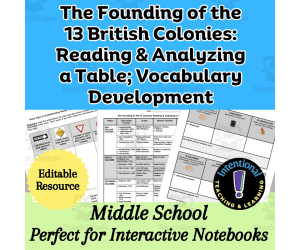
Founding the 13 Colonies- Vocabulary & Reading & Analyzing a Table
Social Studies, Government, History, History: USA, Grade 6, 7, 8, Teacher Tools, Lesson Plans
Two lessons focused on American Colonial History are included in the resource, provide Social Studies Skill Building Opportunities for your middle school students. The Founding of the 13 British Colonies- Vocabulary Development and Reading and Analyzing a Table. The first, Vocabulary Building: familiarizes students with key terms so they can develop greater understanding of the founding of the 13 colonies.The second, The Founding of the Colonies Chart: Reading and Analyzing a Table: provides students with the opportunity to learn and practice various reading strategies, such as drawing conclusions, making inferences and comparisons, and identifying similarities and differences. The questions students will answer guide them through the reading of the table. The first lesson, Vocabulary Development, provides students with two vocabulary development strategies. First, students identify which of the following 8 words they know (and how well, if at all, they know them) using the Road Signs to Understanding Words handout which front loads the 8 key terms: Theocracy, Proprietary, Democratic, Joint-stock Company, Elected Assembly, Profit, Debtors, and Buffer. From their, they explore each of the 8 words using the K.I.M. Vocabulary Strategy: Knowledge (information about the word, its part of speech, and its variations in parts of speech); Information ((Definition(s) of the word), and Memory Clue Draw a picture or symbol to represent the meaning). They then write an original sentence showing they understand the word. In the second lesson, The Founding of the Colonies Chart: Reading and Analyzing a Table, students will read and analyze a table with information about the founding of each of the 13 colonies: Colonial Region, Colony/Date Founded, Leader(s), Reasons Founded, Type of Government. Students often need help in navigating information-heavy charts, especially if there are words and concepts they are struggling with. This lesson guides students through how to read and analyzing these key details. The chart is accompanied by 11 analytical questions with the final two questions asking students to reflect on what was most and least challenging about this assignment and why. Finally, there is a vocabulary assessment with 5 short answer critical thinking questions, in which students are asked show their understanding of the key terms by comparing, contrasting, and explaining the words. The detailed, standards-aligned lessons provide interactive and collaborative ways to approach these activities and includes An About this Resource Chart that easily references all the materials in the resource, including the standards, objectives, learning targets, an Essential Question, 2 Guiding Questions, among other things. The two lessons should take between 2-3 days depending on how you approach the K.I.M. Vocabulary.
Author Intentional Teaching and Learning
Tags Social Studies Skillbuilding, Critical Thinking Questions, Vocabulary Strategies, British Colonies, English Colonies, Founding The Colonies, Colonial Regions, Vocabulary Assessment, Vocabulary Development, American Colonial History

I WONDER - What Religion Was Important During The Iron Age
History: Ancient, History, Social Studies, History: British, History: World, History: Europe, History: African, History: Asian, Grade 5, 6, 7, 8, 9, 10, 11, Lesson Plans, Teacher Tools
Video Introduction An amazing video designed for the students to learn more about history. I WONDER - What Religion Was Important During The Iron Age | Animated Video Lesson Do you like history? Which topic do you really enjoy about history? Have you ever read an interesting fact about the Vikings? If yes, can you mention them? What do you like most about the Victorian era? Can you name all the Tudors? Have you ever wondered how people used to live in ancient Japan and ancient China? Do you know any interesting facts about ancient Egyptians and the Pharaohs? Have you ever visited South America? What do you know about Incas and Aztecs? Celtic culture was really one of a kind, can you name any of the places that Celts used to live in? Imagine yourself living during the ancient Roman empire, how your life will look like? Ancient Greece was an amazing place to live in. What do you know about ancient Greek life? I WONDER - What Religion Was Important During The Iron Age | Animated Video Lesson The video is perfect for encouraging the researching skills for the students, while learning more about history. I WONDER - What Religion Was Important During The Iron Age | Animated Video Lesson This friendly designed video is suitable for students at school, homeschooling, and as a group activity. Format Available in MP4 format.
Author Educational Voice
Tags What Religion Was Important During The Iron Age, What Religion Was Important During The Iron Age Video, Iron Age Religion, Iron Age Religion Facts, Iron Age Religion Video, Iron Age Religion Video For Kids
I WONDER - Why Is Petra So Famous | Animated Video Lesson
Geography, Social Studies, History: Ancient, History, History: Asian, Grade 4, 5, 6, 7, 8, 9, 10, Lesson Plans, Teacher Tools
Video Introduction An amazing video designed for the students to learn more about famous places in different countries. I WONDER - Why Is Petra So Famous | Animated Video Lesson What do you know about this place? Do you know in which part of the world it is? Have you ever visited this place? If yes, can you tell us more about your adventure, and what do you like the most about this place? Do you like reading about Geography? What is your favorite country in the whole world? If you are going on a trip where it will be? Which country? What you are going to see there? Does this country has a famous place to visit? I WONDER - Why Is Petra So Famous | Animated Video Lesson The activity is perfect for encouraging the researching skills for the students, while learning more about this fantastic place. I WONDER - Why Is Petra So Famous | Animated Video Lesson This friendly designed video is suitable for students at school, homeschooling, and as a group activity. Format Available in MP4 format.
Author Educational Voice
Rating
Tags Why Is Petra So Famous, Why Is Petra So Famous Video, Petra, Petra Facts, Petra Video, Petra Facts For Kids, Petra Video For Kids, Ancient Ruins, Historical Places, Historical Places Video

World War I: Methods of Warfare Gr. 5-8
Social Studies, History, History: World, Grade 5, 6, 7, 8, Teacher Tools, Lesson Plans
World War I: Methods of Warfare Gr. 5-8 World War I: Methods of Warfare Gr. 5-8 is a considerate and information-packed educational resource, well-suited for educators navigating both traditional and homeschool arenas. Accommodating grades 5 to 8, it zeroes in on vital elements of World War I – from its causes and progression to its aftermath. This tool offers learners an exquisite delve into the entangled web that characterized this key period in global history by touching areas such as imperialism, nationalism, and militarism. It brings alive these enormous influences within classroom settings with accounts involving significant incidents that sparked off war like the tragic murder of Archduke Franz Ferdinand. Focusing On Warfare Tactics The Industrial Influence & Its Core Components In WWI Beyond providing historical narratives, this resource provides a detailed study on warfare tactics employed during World War I – demonstrating how industrialization played a pivotal role in advancing weaponry. This delicate balance helps portray an historically accurate picture serving as an effective module for improved student comprehension. Alliances And U.S Involvement Breakdown - The Triple Alliance Vs The Triple Entente! A distinct feature of this versatile learning tool is its centering spotlight on the alliances which held crucial implications during the conflict – i.e., The Triple Alliance versus The Triple Entente. Moreover, it explores watershed events leading to American commitment onto battlefields– covering from Germany's intercepted plan for booking home attack to the sinking saga of Lusitania. A dynamite look into battles and peace treaties impacting Europe’s map after-war e.g., Treaty Of Versailles, An instructive flash on President Woodrow Wilson’s Fourteen Point peace program as he presented it to Congress, following America's entrance into war. Adaptive Solutions & Practicality Of The Resource This resource allows adaptability – whether individual or group-based, in classroom discussions or even homework assignments. It offers an effective strategic learning experience with ease of accessibility owed to its provision in PDF format. It further engages students constructively with tasks ranging from quizzes, & crosswords, to worksheets -and-printables/word-searches">word searches . An answer key is provided too. Besides this, it measures up regarding accuracy and relevancy, thanks to its alignment with state standards on social studies. In Conclusion - Unpacking WWI In A Fresh Light "World War I: Methods Of Warfare Gr 5-8" is keen-sized historical tool shedding light on humanity’s initial man-made conflict. It aims at turning students towards a comprehensive and engaging learning journey – remaining a priceless tool for educators as they traverse this convoluted waymark in global history.
Author Classroom Complete Press
Tags PDF
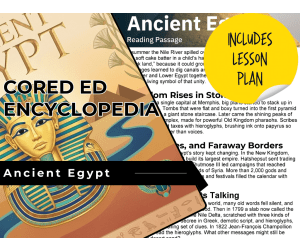
Ancient Egypt Reading Comprehension Passage - Cored Ed Encyclopedia
ELA, Language Development, Reading Comprehension, Reading, Social Studies, History, History: Ancient, Writing, Pre-Reading, Vocabulary, Grade 2, 3, 4, 5, Worksheets & Printables, Worksheets, Teacher Tools, Centers, Activities, Writing Prompts, Assessments, Quizzes and Tests, Quizzes, Lesson Plans
This ancient Egypt reading comprehension with lesson plan includes: Visualization (on the front cover) Start your lesson by taking a minute to think and share something about the topic. Read the script aloud (slowly), perhaps prepare some music or sound effects. Student close their eyes and let their imaginations wander. Students open their eyes, read the question aloud and give them a few minutes to complete. Ask a few students to share or keep answers until the end to compare with what they learn in the passage. Quick pause—thousands of Cored Education products are included with your TeachSimple membership. Download links and encyclopedia index available here. Pre-Reading Trivia Students will write down one thing they already know about the subject and then read five more facts and discuss. These facts are fun, and the students will enjoy learning about the subject before reading more. Give 1 minute for students to write what they already know (no pressure—best guess is fine). Read the five facts together. After each fact, do ask a student for their opinion, was it surprising? Set a purpose by asking students to highlight/underline one fact they want to learn more about during the reading. Reading Passage The text is a high-interest reading passage with set paragraphs, roughly three to four paragraphs long. It contains a variety of themes about the topic, anywhere from history to technology. The passage is between 250 and 350 words in length. First, ask students to look at the headings and see what they’ll learn about today. What do they know about the topic/heading? First read options: Teacher read-aloud (best for support). Partner reading (paragraph by paragraph). While reading, students underline important details, and vocabulary words they think may come up in the questions section. Mixed Questions The first question page contains four multiple-choice questions, each with a choice of four answers, and three written response questions that require a sentence or two from the student. Students complete the mcqs first independently, then review quickly as a class. For the 3 written responses, try to get students giving the answer with some form of evidence: “I think ___ because the text says ___.” If students get stuck, send them back to check the passage. Vocabulary Questions Practice seven key words from the text in this section across two activities. First section is scrambled words where students will unscramble three words given a clue for each. The second section is a word to meaning matching activity. Before starting, have some students read out words they underlined in the passage. Ask students to say the word and read aloud the sentence(s) around each word. Ask students to do scrambled words and the matching exercise in pairs then go through answers as a class. For the scrambled spelling task, get four pairs to come up to the board and write the words for extra practice with the other student reading out the clue. For the matching task, prompt students to give full sentences: “I matched ___ with ___ because ___.” Creative Writing In this question, the student will be required to write a five to eight sentence paragraph on a question related to the topic. Before starting, ask students write down 3 key ideas they are going to include in their piece. Ask students for ideas to share around the class to help those struggling. Pro writing expectations: 5–8 sentences At least 2 facts or details from the passage At least 2 vocabulary words from the previous page Students read their paragraphs while classmates listen for facts and vocabulary words. Extension Activities This page is optional for fast finishers or to take home. There are several activities, each one requiring a different skill. Do some, do none, do all, completely optional - but you will feel reassured knowing every possibility is planned for. Includes summary writting question and additional facts. Answer Key There are answers for the multiple-choice questions, written response questions have sample answers, vocabulary answers and if there is a summary question then a sample summary will be provided as well. Lesson Plan Included Customized lesson plan for this lesson is included. Lesson Snapshot Title: Ancient Egypt Genre: Nonfiction (informational passage) Subject: Social Studies Primary Topic: Nile flooding, kingdoms, pyramids, and writing Estimated Guided Reading Level (A–Z): T What This Lesson Teaches Best How the Nile River flooding left dark mud that helped farming and food growth. The meaning of Kemet (“black land”) and why it described the fertile farming strip. How leaders joined Upper Egypt and Lower Egypt into one kingdom, with the pharaoh as a symbol of unity. Key achievements in building and record-keeping (pyramids, scribes, hieroglyphs, papyrus, grain and taxes). How the Rosetta Stone helped scholars decode hieroglyphs by showing the same text in three kinds of writing. Learning Goals Explain how the Nile River’s yearly flooding helped people grow food. Describe why people called the fertile farm area Kemet, or “black land.” Identify ways ancient Egyptians organized and strengthened their kingdom (sharing water, one ruler, a capital). Describe how pyramids changed over time (step pyramid for Djoser and later pyramids at Giza). Explain how scribes used hieroglyphs and papyrus to keep records of grain and taxes. Describe how the Rosetta Stone led to reading hieroglyphs again. Key Vocabulary From the Text fertile — able to grow lots of plants. pharaoh — ruler of ancient Egypt. hieroglyphs — picture symbols used for writing. papyrus — plant paper used for writing. decree — an official order from leaders. FULL CATALOG OF DOWNLOAD LINKS AND ENCYCLOPEDIA INDEX HERE
Author Cored Education
Rating
Tags Vocabulary, Reading Comprehension, Reading Passages, Lesson Plans, Ela Lesson Plans, Reading Comprehension Lesson Plans, Pre-reading, History, Ancient History Lesson Plans, History Lesson Plans

The World at War
Social Studies, History, History: World, Grade 7, 8, 9, 10, 11, 12, Teacher Tools, Lesson Plans
The World at War - A Comprehensive Teaching Resource This teaching resource presents a detailed examination of pivotal global events between 1920 and 1945. It provides educators with an exhaustive repertoire to guide students through significant historical periods like the aftermath of World War I and Japan's defeat in World War II. The content elucidates how Europe's strained post-war economies created a landscape ripe for international tension. Moving Beyond Simple Facts 'The World at War' delves into dynamic eras such as the Roaring Twenties, the catastrophic stock market crash of 1929, and the Great Depression. It also explores Roosevelt's New Deal and fascism's rapid rise, along with emphasizing the lasting impacts of the Holocaust. Influential Figures Explored In-depth Influential figures who shaped this era - Hitler, Stalin, Churchill, Roosevelt or Mussolini - are explored in depth. Their legacy is presented engagingly to help students understand their significance within historical context. Roosevelt’s New Deal: An attempt to salvage a crumbling economy. Fascism’s Rise: An illumination on how it came to be. Addition Of Engaging Resources To enhance student engagement, challenging map exercises are included providing geopolitical knowledge during these turbulent years along with provocative review questions aimed at bolstering critical thinking skills from Grade 7 through Grade 12. 'The World At War' proves equally beneficial when implemented in group activities or individual learning settings used by homeschoolers. Flexibility With Convenient Access Available as a PDF file type , this lesson plan offers teachers flexibility and an addition to their lesson planning arsenals. It’s listed under the 'Social Studies' & 'World History' sub-category.
Author Classroom Complete Press
Tags PDF

I WONDER - What Kind Of Lifestyle Did The Baryonyx Lead
Animals, Life Sciences, Science, History: Ancient, History, Social Studies, History: World, Grade 4, 5, 6, 7, 8, 9, 10, Lesson Plans, Teacher Tools
Video Introduction An amazing video designed for the students to learn more about dinosaurs in different countries. I WONDER - What Kind Of Lifestyle Did The Baryonyx Lead | Animated Video Lesson Do you like dinosaurs? what is your favorite one? Do you own a pet? If yes, tell us more about it, like what its name? And what do you like most about it? Do you think that your pet has been evolved from a dinosaur? Can you write down the characteristics of your favourite dinosaur like it's shape, their rivals, where did it use to live and what was their favourite food? What is the largest and the smallest dinosaur that ever found? Why is the T-rex is so famous? Have you ever read any interesting facts about it? Can you name any of the carnivores or herbivores dinosaurs? I WONDER - What Kind Of Lifestyle Did The Baryonyx Lead | Animated Video Lesson The video is perfect for encouraging the researching skills for the students, while learning more about dinosaurs. I WONDER - What Kind Of Lifestyle Did The Baryonyx Lead | Animated Video Lesson This friendly designed video is suitable for students at school, homeschooling, and as a group activity. Format Available in MP4 format.
Author Educational Voice
Rating
Tags What Kind Of Lifestyle Did The Baryonyx Lead, What Kind Of Lifestyle Did The Baryonyx Lead Video, Baryonyx, Baryonyx Facts, Baryonyx Video, Baryonyx Video For Kids, Baryonyx Facts For Kids, Dinosaur
I WONDER - Do Ogres Have Any Weaknesses | Animated Video Lesson
History, Social Studies, Common Core, Grade 4, 5, 6, 7, 8, 9, 10, Lesson Plans, Teacher Tools
Video Introduction An amazing video designed for the students to learn more about mythological creatures in different cultures. I WONDER - Do Ogres Have Any Weaknesses | Animated Video Lesson Mythology is full of wonders and spectacular stories. Ancient civilizations were trying to explore every aspect of life, while they search for new technologies, they wanted to believe in something big and can change the world, so they created mythical creatures and mythical stories. Let's hear about them! What do you know about these creatures? Cyclops, Centaurs, Selkies, Phoenix, Gnomes, Dragons, Gorgons, Orcs, Cerberus, Trolls, Minotaur, Griffins, Mermaids, Elves, Polyphemus, Pegasus, and Ogres. I WONDER - Do Ogres Have Any Weaknesses | Animated Video Lesson The video is perfect for encouraging the creativity skills for the students, while learning more about this fantastic mythical creature. I WONDER - Do Ogres Have Any Weaknesses | Animated Video Lesson This friendly designed video is suitable for students at school, homeschooling, and as a group activity. Format Available in MP4 format.
Author Educational Voice
Rating
Tags Do Ogres Have Any Weaknesses, Do Ogres Have Any Weaknesses Video, Ogres Weaknesses, Ogres Weaknesses Video, Ogres Weaknesses Facts, Ogres Weaknesses Facts For Kids, Ogres Weaknesses Video For Kids

US State Presentation on Florida
Social Studies, Geography, History: USA, History, Not Grade Specific, Middle School, High School, Teacher Tools, Lesson Plans, Presentations
US State Presentation on Florida Bring the United States to life in your classroom with this engaging US State Presentation on Florida , a ready-to-use digital resource designed for Geography, Social Studies, and US History classes from 7th grade through 12th grade . This presentation provides students with a clear, structured introduction to one US state while combining essential geographical, historical, economic, and cultural information in an accessible format. This US State Presentation on Florida , includes: The resource begins with a general introduction to the state , helping students understand its location, identity, and importance within the United States. Students then explore the state's borders and neighboring states , making it easier to place it within the broader geography of the country. A general data section introduces key facts such as population, area, population density, capital city, and other essential statistics , providing a useful foundation for further study. A paragraph that explores the history of this US state , highlighting important events, periods, people, and developments that have shaped its identity. This section is particularly useful for US History lessons because it allows students to connect state-level history with major events and themes in American history. A Geography section examines the state's physical characteristics, including its territory, landscapes, natural features, environment, and climate. Students can discover how mountains, rivers, plains, forests, coastlines, deserts, or other geographical characteristics have influenced settlement and human activity. A presentation also introduces the state's economy , explaining its major economic sectors, industries, natural resources, agricultural activities, and other economic strengths. This provides an excellent opportunity to connect geography with economics and understand why particular industries have developed in different parts of the United States. A dedicated section focuses on the capital city , introducing its importance as a political and administrative center. Students can also learn about other important cities , discovering major urban centers and their roles in business, transportation, education, culture, tourism, or industry. A paragraoh that explores culture , giving students an opportunity to learn about traditions, food, music, celebrations, landmarks, historical heritage, and other characteristics that contribute to the state's unique identity. This digital US State Presentation on Florida is ideal for classroom instruction, student research, geography units, US History lessons, Social Studies activities, state studies, homework, review activities, and independent learning. Its organized structure makes it suitable for middle school and high school students , while its broad range of topics encourages students to view a state from multiple perspectives. Whether you are teaching a unit on the United States, American Geography, US History, state studies, or regional culture , this resource offers a convenient and engaging way to help students explore the diversity and complexity of the United States. Perfect for: Geography Classes, Social Studies Classes, US History Classes, Middle School, High School, Grades 7–12, State Studies, American Studies, Homeschooling, Student Research, and Digital Learning. Learning with Alan is an educational resource store created to help teachers, educators, and tutors reach their teaching goals while building a fun, engaging, and stimulating learning environment . Because learning should always be meaningful—and fun! 🎓✨ If you want to browse more of my Teaching Resources, click here Learning with Alan!!
Author Learning with Alan
Rating
Tags Social Studies, Geography, History, US History, USA, United States Of America, Florida, Lesson, Introduction, Presentation

I WONDER - Who Invented Electricity | Animated Video Lesson
History: British, History, Social Studies, History: Europe, Grade 3, 4, 5, 6, 7, 8, 9, Lesson Plans, Teacher Tools
Video Introduction An amazing video designed for the students to learn more about history. I WONDER - Who Invented Electricity | Animated Video Lesson Do you like history? Which topic do you really enjoy about history? Have you ever read an interesting fact about the Vikings? If yes, can you mention them? What do you like most about the Victorian era? Can you name all the Tudors? Have you ever wondered how people used to live in ancient Japan and ancient China? Do you know any interesting facts about ancient Egyptians and the Pharaohs? Have you ever visited South America? What do you know about Incas and Aztecs? Celtic culture was really one of a kind, can you name any of the places that Celts used to live in? Imagine yourself living during the ancient Roman empire, how your life will look like? Ancient Greece was an amazing place to live in. What do you know about ancient Greek life? I WONDER - Who Invented Electricity | Animated Video Lesson The video is perfect for encouraging the researching skills for the students, while learning more about history. I WONDER - Who Invented Electricity | Animated Video Lesson This friendly designed video is suitable for students at school, homeschooling, and as a group activity. Format Available in MP4 format.
Author Educational Voice
Tags Who Invented Electricity, Who Invented Electricity Video, Electricity, Electricity Facts, Electricity Facts For Kids, Electricity Video, Electricity Video For Kids, Electricity History, Electricity History Video

North America Gr. 5-8
Social Studies, History, History: USA, Grade 5, 6, 7, 8, Teacher Tools, Lesson Plans
North America Gr. 5-8 Resource Overview This resource is an immersive educational journey designed for students in the fifth to eighth grade, who are studying social studies or US history. It intricately explores the geographical expanse of North America, from the chilly Northern tundra down to the warm Yucatan Peninsula, sparking interest in every learner. The Key Features Include: An exploration of physical features and human aspects based on The Five Themes of Geography. A task for students to identify North American countries in a northerly-to-southerly order—facilitating understanding about geostrategic positioning. An examination into geography-history interconnection by analyzing the reasons behind strategic establishment of North America's major cities relative to their geographical locations. Activities that enable learners to distinguish between positive and negative human-environment interactions while honing their critical thinking skills. Diverse techniques like fishbone graphic organizers for understanding different types of transportation used across continent—an interesting mix of historical curiosity and practical awareness. Data Collection and Complementary Activities Data collection exercises such as documenting insights about Rocky Mountains’ physicality deepen learning while fun-fillers like crossword puzzles, word searches, quizzes with answer keys further enhance learner engagement and assessment . A single PDF file contains neatly organized content set ready for use whether at home or school.
Author Classroom Complete Press
Tags PDF
I WONDER - How Were Ancient Egyptian Slaves Treated | Animated Video
History: Ancient, History, Social Studies, History: African, Grade 6, 7, 8, 9, 10, 11, 12, Lesson Plans, Teacher Tools
Video Introduction An amazing video designed for the students to learn more about history. I WONDER - How Were Ancient Egyptian Slaves Treated | Animated Video Lesson Do you like history? Which topic do you really enjoy about history? Have you ever read an interesting fact about the Vikings? If yes, can you mention them? What do you like most about the Victorian era? Can you name all the Tudors? Have you ever wondered how people used to live in ancient Japan and ancient China? Do you know any interesting facts about ancient Egyptians and the Pharaohs? Have you ever visited South America? What do you know about Incas and Aztecs? Celtic culture was really one of a kind, can you name any of the places that Celts used to live in? Imagine yourself living during the ancient Roman empire, how your life will look like? Ancient Greece was an amazing place to live in. What do you know about ancient Greek life? I WONDER - How Were Ancient Egyptian Slaves Treated | Animated Video Lesson The video is perfect for encouraging the researching skills for the students, while learning more about history. I WONDER - How Were Ancient Egyptian Slaves Treated | Animated Video Lesson This friendly designed video is suitable for students at school, homeschooling, and as a group activity. Format Available in MP4 format.
Author Educational Voice
Tags How Were Ancient Egyptian Slaves Treated, How Were Ancient Egyptian Slaves Treated Video, Ancient Egyptian Slaves, Ancient Egyptian Slaves Video, Ancient Egyptian Slaves Facts, Ancient Egyptian Slaves Video For Kids

I WONDER - What Did The Ancient Greeks Invent | Animated Video Lesson
History: Ancient, History, Social Studies, History: Europe, Grade 2, 3, 4, 5, 6, 7, 8, Lesson Plans, Teacher Tools
Video Introduction An amazing video designed for the students to learn more about history. I WONDER - What Did The Ancient Greeks Invent | Animated Video Lesson Do you like history? Which topic do you really enjoy about history? Have you ever read an interesting fact about the Vikings? If yes, can you mention them? What do you like most about the Victorian era? Can you name all the Tudors? Have you ever wondered how people used to live in ancient Japan and ancient China? Do you know any interesting facts about ancient Egyptians and the Pharaohs? Have you ever visited South America? What do you know about Incas and Aztecs? Celtic culture was really one of a kind, can you name any of the places that Celts used to live in? Imagine yourself living during the ancient Roman empire, how your life will look like? Ancient Greece was an amazing place to live in. What do you know about ancient Greek life? I WONDER - What Did The Ancient Greeks Invent | Animated Video Lesson The video is perfect for encouraging the researching skills for the students, while learning more about history. I WONDER - What Did The Ancient Greeks Invent | Animated Video Lesson This friendly designed video is suitable for students at school, homeschooling, and as a group activity. Format Available in MP4 format.
Author Educational Voice
Tags What Did The Ancient Greeks Invent, What Did The Ancient Greeks Inventvideo, Ancient Greeks, Ancient Greeks Facts, Ancient Greeks Facts For Kids, Ancient Greeks Video, Ancient Greeks Video For Kids

Declaration of Independence: History Speaks . . .
Social Studies, History, History: USA, Grade 4, 5, 6, 7, 8, Teacher Tools, Lesson Plans
Declaration of Independence: History Speaks An Engaging and Comprehensive Resource Designed primarily for students in grades 4 through 8, this resource enhances the study of historical events with a central focus on the pivotal role and inherent value of the Declaration of Independence. Interdisciplinary Approach Not limited to social studies, this resource fosters interdisciplinary connections with core areas like language arts, promoting critical thinking about primary texts. A Unique Component This comprehensive teaching resource stands out with its meticulous approach towards decoding political cartoons - an aspect often absent from many history lesson resources. In-depth discussions following these analyses develop interpretative skills. Meticulously curated activities culminate comprehension checking. Versatility & Flexibility in Implementation This PDF downloadable lesson plan can be utilized effectively for both whole class sessions and smaller focused groups equally. Caters different learning speeds and styles via differential instruction techniques. Presents educators championing homeschooling with a valuable, no additional materials required scheme. Doubles as an intellectually stimulating homework assignment beyond classroom boundaries. The Ultimate Pedagogical Tool Whether just introducing U.S. History or bolstering students’ understanding around test timings, it facilitates holistic comprehension while promoting active engagement - hallmarks of today's effective education paradigm.
Author Classroom Complete Press
Tags PDF

Iguanas Reading Comprehension Passage - Cored Ed Encyclopedia
ELA, Reading Comprehension, Reading, History, Social Studies, Science, Physics, Earth and Environmental Sciences, Life Sciences, Geography, Grade 2, 3, 4, 5, Worksheets & Printables, Worksheets, Teacher Tools, Centers, Activities, Writing Prompts, Assessments, Quizzes and Tests, Quizzes, Lesson Plans
This Iguanas reading comprehension with lesson plan includes: Visualization (on the front cover) Start your lesson by taking a minute to think and share something about the topic. Read the script aloud (slowly), perhaps prepare some music or sound effects. Student close their eyes and let their imaginations wander. Students open their eyes, read the question aloud and give them a few minutes to complete. Ask a few students to share or keep answers until the end to compare with what they learn in the passage. Quick pause—thousands of Cored Education products are included with your TeachSimple membership. Download links and encyclopedia index available here. Pre-Reading Trivia Students will write down one thing they already know about the subject and then read five more facts and discuss. These facts are fun, and the students will enjoy learning about the subject before reading more. Give 1 minute for students to write what they already know (no pressure—best guess is fine). Read the five facts together. After each fact, do ask a student for their opinion, was it surprising? Set a purpose by asking students to highlight/underline one fact they want to learn more about during the reading. Reading Passage The text is a high-interest reading passage with set paragraphs, roughly three to four paragraphs long. It contains a variety of themes about the topic, anywhere from history to technology. The passage is between 250 and 350 words in length. First, ask students to look at the headings and see what they’ll learn about today. What do they know about the topic/heading? First read options: Teacher read-aloud (best for support). Partner reading (paragraph by paragraph). While reading, students underline important details, and vocabulary words they think may come up in the questions section. Mixed Questions The first question page contains four multiple-choice questions, each with a choice of four answers, and three written response questions that require a sentence or two from the student. Students complete the mcqs first independently, then review quickly as a class. For the 3 written responses, try to get students giving the answer with some form of evidence: “I think ___ because the text says ___.” If students get stuck, send them back to check the passage. Vocabulary Questions Practice seven key words from the text in this section across two activities. First section is scrambled words where students will unscramble three words given a clue for each. The second section is a word to meaning matching activity. Before starting, have some students read out words they underlined in the passage. Ask students to say the word and read aloud the sentence(s) around each word. Ask students to do scrambled words and the matching exercise in pairs then go through answers as a class. For the scrambled spelling task, get four pairs to come up to the board and write the words for extra practice with the other student reading out the clue. For the matching task, prompt students to give full sentences: “I matched ___ with ___ because ___.” Creative Writing In this question, the student will be required to write a five to eight sentence paragraph on a question related to the topic. Before starting, ask students write down 3 key ideas they are going to include in their piece. Ask students for ideas to share around the class to help those struggling. Pro writing expectations: 5–8 sentences At least 2 facts or details from the passage At least 2 vocabulary words from the previous page Students read their paragraphs while classmates listen for facts and vocabulary words. Extension Activities This page is optional for fast finishers or to take home. There are several activities, each one requiring a different skill. Do some, do none, do all, completely optional - but you will feel reassured knowing every possibility is planned for. Includes summary writting question and additional facts. Answer Key There are answers for the multiple-choice questions, written response questions have sample answers, vocabulary answers and if there is a summary question then a sample summary will be provided as well. Lesson Plan Included Customized lesson plan for this lesson is included. Lesson Snapshot Title: Iguanas Genre: Nonfiction (informational text) Subject: Reading (Informational Text) / Life Science Primary Topic: Green vs. marine iguanas: tails, habitat, survival Estimated Guided Reading Level (A–Z): R What This Lesson Teaches Best Describes key iguana features and what they look like (dewlap, a line of spines). Explains where iguanas live and notes that most live in the Americas, with some relatives on islands. Shows how a green iguana’s long tail helps with survival (whip-like defense and strong tail strokes for swimming away). Compares two related iguanas by habitat and behavior (tree-climbing green iguana vs. sea-foraging marine iguana that eats algae and basks on dark rocks). Builds awareness of changing habitats and reasons protection matters (building on land, hunting/capturing, predators, El Niño, oil spills). Learning Goals Identify details that describe what an iguana looks like and where it lives. Explain how a green iguana uses its tail when danger comes near water. Describe how the marine iguana finds food and what it does after a cold swim. Compare the green iguana and marine iguana using evidence from the passage. Describe at least two reasons iguanas might need protection based on changes in their habitats. Key Vocabulary From the Text dewlap — loose throat skin that can hang in a fold. spines — pointed bumps that may rise along its back. forages — searches for food. predators — animals that hunt other animals. habitats — places animals need to live. FULL CATALOG OF DOWNLOAD LINKS AND ENCYCLOPEDIA INDEX HERE
Author Cored Education
Rating
Tags Vocabulary, Reading Comprehension, Reading Passages, Lesson Plans, Ela Lesson Plans, Reading Comprehension Lesson Plans, Pre-reading, History, Science Lesson Plans, Life Science

Vietnam Veterans Memorial: Historic Monuments Series
Social Studies, History, History: USA, Grade 4, 5, 6, 7, 8, Teacher Tools, Lesson Plans
The Vietnam Veterans Memorial: Historic Monuments Series This educational resource provides an in-depth study guide on the Vietnam conflict, designed for Grade 4 through Grade 8. It can be used as a foundational tool for teaching moments in social studies classes, particularly those focusing on U.S. history. The focus of this material is the Vietnam Veterans Memorial, acting as both a symbol of controversy and unity. It serves to educate students about varied aspects such as U.S. engagement during this period, impact of individual involvements, decisions made by leaderships then and understanding policy-making. Unique Aspects Covered: Facts related to the memorial itself. In-context critical narratives about the monument. Bridging connections between past events around it and their relevance today. A comprehensive plan detailing the elaborate facets associated with it. Available in PDF under Lesson Plans, educators can use it flexibly according to their teaching methodologies - whole group discussions fostering interactive conversations or smaller groups facilitating collaborative learning experiences . The series may also be assigned as homework tasks where students conduct personal research or create presentations demonstrating their comprehension about what they have learned from this study guide. Benefits: Gaining knowledge not only about America's past but also developing fundamental skills like critical thinking through discussing complex real-life issues which still resonate today. This educational asset proving valuable not just for academic purposes but nurturing life lessons too! "Victory isn't limited within precise answer sheets; it also lies beyond lines letting young minds explore realms uncharted!" The Vietnam Veterans Memorial: Historic Monuments Series fulfills this by serving as a powerful educational tool, enriching teachers' resources and extending student understanding beyond standard textbook curriculums.
Author Classroom Complete Press
Tags PDF
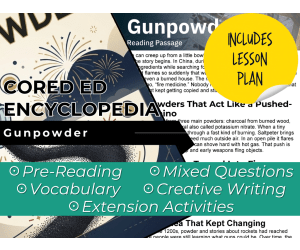
Gunpowder Reading Comprehension Passage - Cored Ed Encyclopedia
ELA, Reading Comprehension, Reading, Science, Technology, Pre-Reading, Language Development, History, Social Studies, Physics, Grade 2, 3, 4, 5, Worksheets & Printables, Worksheets, Teacher Tools, Centers, Activities, Writing Prompts, Assessments, Quizzes and Tests, Quizzes, Lesson Plans
This gunpowder reading comprehension with lesson plan includes: Visualization (on the front cover) Start your lesson by taking a minute to think and share something about the topic. Read the script aloud (slowly), perhaps prepare some music or sound effects. Student close their eyes and let their imaginations wander. Students open their eyes, read the question aloud and give them a few minutes to complete. Ask a few students to share or keep answers until the end to compare with what they learn in the passage. Quick pause—thousands of Cored Education products are included with your TeachSimple membership. Download links and encyclopedia index available here. Pre-Reading Trivia Students will write down one thing they already know about the subject and then read five more facts and discuss. These facts are fun, and the students will enjoy learning about the subject before reading more. Give 1 minute for students to write what they already know (no pressure—best guess is fine). Read the five facts together. After each fact, do ask a student for their opinion, was it surprising? Set a purpose by asking students to highlight/underline one fact they want to learn more about during the reading. Reading Passage The text is a high-interest reading passage with set paragraphs, roughly three to four paragraphs long. It contains a variety of themes about the topic, anywhere from history to technology. The passage is between 250 and 350 words in length. First, ask students to look at the headings and see what they’ll learn about today. What do they know about the topic/heading? First read options: Teacher read-aloud (best for support). Partner reading (paragraph by paragraph). While reading, students underline important details, and vocabulary words they think may come up in the questions section. Mixed Questions The first question page contains four multiple-choice questions, each with a choice of four answers, and three written response questions that require a sentence or two from the student. Students complete the mcqs first independently, then review quickly as a class. For the 3 written responses, try to get students giving the answer with some form of evidence: “I think ___ because the text says ___.” If students get stuck, send them back to check the passage. Vocabulary Questions Practice seven key words from the text in this section across two activities. First section is scrambled words where students will unscramble three words given a clue for each. The second section is a word to meaning matching activity. Before starting, have some students read out words they underlined in the passage. Ask students to say the word and read aloud the sentence(s) around each word. Ask students to do scrambled words and the matching exercise in pairs then go through answers as a class. For the scrambled spelling task, get four pairs to come up to the board and write the words for extra practice with the other student reading out the clue. For the matching task, prompt students to give full sentences: “I matched ___ with ___ because ___.” Creative Writing In this question, the student will be required to write a five to eight sentence paragraph on a question related to the topic. Before starting, ask students write down 3 key ideas they are going to include in their piece. Ask students for ideas to share around the class to help those struggling. Pro writing expectations: 5–8 sentences At least 2 facts or details from the passage At least 2 vocabulary words from the previous page Students read their paragraphs while classmates listen for facts and vocabulary words. Extension Activities This page is optional for fast finishers or to take home. There are several activities, each one requiring a different skill. Do some, do none, do all, completely optional - but you will feel reassured knowing every possibility is planned for. Includes summary writting question and additional facts. Answer Key There are answers for the multiple-choice questions, written response questions have sample answers, vocabulary answers and if there is a summary question then a sample summary will be provided as well. Lesson Plan Included Customized lesson plan for this lesson is included. Lesson Snapshot Title: Gunpowder Genre: Nonfiction (informational text) Subject: Science Primary Topic: How gunpowder was discovered and used over time Estimated Guided Reading Level (A–Z): Q What This Lesson Teaches Best Explains how gunpowder began in China during the Tang dynasty when alchemists mixed ingredients while searching for a life-lasting “elixir.” Identifies the three main powders in gunpowder—charcoal, sulfur, and saltpeter (also called potassium nitrate)—and describes what saltpeter adds to help burning. Describes how gunpowder behaves differently in an open pile versus a tight tube, leading to a strong push of hot gas. Traces how “fire medicine” was used first for celebrations and signals, then developed into fire arrows, bombs, fire lances, and hand cannons by the late 1200s. Shows how ideas travel as gunpowder and stories about rockets reached Europe, and how uses expanded to quarrying rock and digging tunnels, not only fighting. Learning Goals Students will describe how the text says gunpowder was discovered during the Tang dynasty in China. Students will identify the three main powders in gunpowder and explain what saltpeter adds to the burning process. Students will compare what happens when gunpowder burns in an open pile versus in a tight tube. Students will explain how “fire medicine” changed from signals and celebrations to fire arrows and later weapons over time. Students will describe two non-celebration uses of the powder mentioned in the text (quarrying rock and digging tunnels). Students will explain what the author means by “Ideas travel,” using the example of gunpowder reaching Europe. Key Vocabulary From the Text alchemists — people who mixed ingredients while searching for an “elixir.” elixir — a life-lasting drink they searched for. charcoal — powder from burned wood. sulfur — one of the three main powders. saltpeter — a mineral also called potassium nitrate. Discussion Prompts Pre-reading question: What do you think might happen if a powder burns very fast? Comprehension questions: How did the mixture get the name huoyao, or “fire medicine”? Comprehension questions: What role does saltpeter play when a tiny grain is lit? Comprehension questions: How did the uses of “fire medicine” change from celebrations to later tools or weapons? FULL CATALOG OF DOWNLOAD LINKS AND ENCYCLOPEDIA INDEX HERE
Author Cored Education
Rating
Tags Vocabulary, Reading Comprehension, Reading Passages, Lesson Plans, Ela Lesson Plans, Reading Comprehension Lesson Plans, Pre-reading, Science Lesson Plans, Social Studies Lesson Plans, History

I WONDER - Did Roman Gods Have Special Powers | Animated Video Lesson
History: Ancient, History, Social Studies, History: Europe, Grade 4, 5, 6, 7, 8, 9, 10, Lesson Plans, Teacher Tools
Video Introduction An amazing video designed for the students to learn more about history. I WONDER - Did Roman Gods Have Special Powers | Animated Video Lesson Ancient Rome was an amazing place to live in. What do you know about ancient Roman life? Roman gods and goddesses used to have great powers. One can control the sea while the other can control the weather. Can you name any of the Roman gods or goddesses and mention their roles? Do you know that we still use some of the Roman gods and goddesses to name our new explorations in the space! I WONDER - Did Roman Gods Have Special Powers | Animated Video Lesson The video is perfect for encouraging the researching skills for the students, while learning more about history. I WONDER - Did Roman Gods Have Special Powers | Animated Video Lesson This friendly designed video is suitable for students at school, homeschooling, and as a group activity. Format Available in MP4 format.
Author Educational Voice
Rating
Tags Roman Gods, Roman Gods Facts, Roman Gods Video, Roman Gods Facts For Kids, Roman Gods Video For Kids, Did Roman Gods Have Special Powers, Did Roman Gods Have Special Powers Video

I WONDER - What Is An Oviraptor | Animated Video Lesson
History, Social Studies, History: Ancient, History: World, Animals, Life Sciences, Science, Grade 4, 5, 6, 7, 8, 9, 10, Lesson Plans, Teacher Tools
Video Introduction An amazing video designed for the students to learn more about dinosaurs in different countries. I WONDER - What Is An Omnivore | Animated Video Lesson Do you like dinosaurs? what is your favorite one? Do you own a pet? If yes, tell us more about it, like what its name? And what do you like most about it? Do you think that your pet has been evolved from a dinosaur? Can you write down the characteristics of your favourite dinosaur like it's shape, their rivals, where did it use to live and what was their favourite food? What is the largest and the smallest dinosaur that ever found? Why is the T-rex is so famous? Have you ever read any interesting facts about it? Can you name any of the carnivores or herbivores dinosaurs? I WONDER - What Is An Omnivore | Animated Video Lesson The video is perfect for encouraging the researching skills for the students, while learning more about dinosaurs. I WONDER - What Is An Omnivore | Animated Video Lesson This friendly designed video is suitable for students at school, homeschooling, and as a group activity. Format Available in MP4 format.
Author Educational Voice
Rating
Tags What Is An Oviraptor, What Is An Oviraptor Video, Oviraptor, Oviraptor Facts, Oviraptor Video, Oviraptor Video For Kids, Oviraptor Facts For Kids, Dinosaur, Dinosaurs, Dinosaurs Video
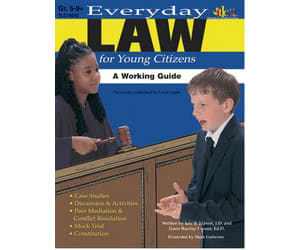
Everyday Law for Young Citizens: A Working Guide
Social Studies, History, Law, Grade 5, 6, 7, 8, 9, Teacher Tools, Lesson Plans
Everyday Law for Young Citizens: A Working Guide An effective teaching resource designed for educators, enabling them to explain and discuss complex legal concepts with the students in grades 5 through 9. It's a unique approach that raises awareness among young citizens about their rights, responsibilities, and the way our legal institutions work. Educators uncover a practical tool that employs a down-to-earth approach to law education ensuring better comprehension amongst the students. With its broad reach spanning: Criminal law, Constitutional law, Lawmaking processes, Principles of law The product is extended by also delving into how laws are judged and enforced; it acts as an all-inclusive manual for understanding these essential civic topics. The Format: In terms of format, this product comes as a single PDF file containing focused lesson plans specifically tailored towards the field of Social Studies with an emphasis on Law. The thoughtfully crafted content features questions accompanied by clear-cut answers allowing teachers to seamlessly guide young minds through various aspects of the Judiciary branch. Hypothetical Cases: A notable feature includes twenty-two hypothetical cases touching on subjects relevant to today's youth generation. These case studies serve as platforms inviting thoughtful discussions among students while equipping them with knowledge about what the actual laws dictate about such issues. This resource is versatile in its application serving various instructional arrangements like: Whole-class teaching or tackling individual topics in smaller groups encouragement peer collaboration and constructive argumentation skills, Taking portions of this resource as take-home assignments ensuring continuity between classroom learning & home study time. In short, Everyday Law for Young Citizens: A Working Guide will be invaluable not only in advancing your curriculum but also empowering your pupils – turning your classroom into vibrant learning space where young citizens develop a meaningful insight into their broader societal roles plus developing their critical thinking abilities concurrently.
Author Classroom Complete Press
Tags PDF