



3,914 products added recently
Page 8 - History Lesson Plans
Transport your students through time with history lesson plans that vividly illustrate past events and societies. These resources include primary sources, discussions, and projects. Implement them to foster critical thinking and a deeper understanding of our world's history.

 Show filters

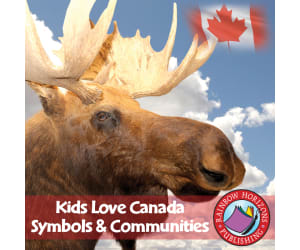
Kids Love Canada: Symbols & Communities Gr. K-2
Social Studies, History, History: Canada, Grade 1, Teacher Tools, Lesson Plans
Kids Love Canada: Symbols & Communities Gr. K-2 An educational resource designed to ignite curiosity and broadened knowledge among first grade students about the rich cultural diversity and nationally recognized symbols found in various Canadian communities. This tool is set within a social studies learning context and aims to instill a deep appreciation for the diverse cultures that compose Canada. Reading Materials & Interactive Activities The lesson plan in this resource provides comprehensive reading passages crafted for young learners. The content explores: Tartan symbols unique to each province and territory, Other notable emblems like maple leaves and beavers. In addition, Kids Love Canada: Symbols & Communities Gr. K-2 further engages students' interest through interactive activities such as: Rebus poems, Fun story narration, Chants specially composed for youthful readers. A match game feature especially tailored to enhance kids' memory retention while adding fun to their learning journey is also available with an educator's step-by-step guide support. Versatility In A Learning Session This teaching supplement provides flexibility in managing learning within different classroom setups – whether conducted as a collective class discussion (whole group), targeted small groups or even assigned as homework exercises extending learning beyond school hours. Its PDF format ensures accessibility across digital platforms guaranteeing convenience regardless of conducting virtual or traditional face-to-face classes. In conclusion, Kids Love Canada: Symbols & Communities Gr.K-2 furnishes an age-appropriate yet insightful perspective of Canadian heritage - fostering unity awareness through understanding how alike yet distinctively varied communities co-exist harmoniously within a noticeable nation.
Author Classroom Complete Press
Tags PDF

No Prep Mock Trial Law Lesson
Social Studies, History, Law, Grade 9, 10, 11, 12, Lesson Plans, Teacher Tools
This complete, ready-to-go lesson is a fun debating activity for ESL, English or Law students. It has a simple design with clear lesson plans , an easy-to-follow PPT and is quick and ready to go. It works on students' ability to research a topic and analyze a situation, helps improve speaking skills and confidence and also improves knowledge of judicial systems and courtroom norms. The lesson begins with a vocabulary warm up. The students then get a chance to work together to do some research. They work together to formulate ideas, brainstorm and identify their opinions on the moral ins and outs of the case. They then get the opportunity to do a mock trial of a particular case that has been chosen for its ability to provoke debate and interest. The PPT I provide is based on a class that is vaguely divisible by 8, but I have provided some editable slides if you need to change the numbers. You can add or subtract Jury members to make the numbers work for any number of students. . Itis based around a fascinating case in the UK. In the 1950's, two teenagers, Derek Bently and Christopher Craig were in the process of robbing a house when the police arrived and an officer apprehended Bentley. Craig brought out a gun he was carrying. The police officer, Fred Fairfax, said "Don't do anything silly, lad. Just give me the gun", and Bentley shouted the ambiguous phrase "Let him have it". Craig shot Fairfax in the shoulder and killed another office with a bullet to the head. The case went to trial, and due to Craig being under he received only 10 years in prison, while Bentley was sentenced to be hanged. I've used this lesson a few times and it's always worked out really well. There are loads of areas of interest that can be brought up: - what exactly did Bentley mean by "let him have it"? - one being over 18 and therefore the legal minimum age to be sentenced to the death penalty, and the other being under 18 - It was claimed by the defense that Bentley suffered from serious mental illness - Bentley didn't shoot or kill anybody, so is he complicit in the killing? - and plenty of other issues that the students always bring up It's an intriguing case and one that naturally brings out strong debate. Students are each assigned a role and take part in a mock trial. Students take the roles of: Judge Prosecution Lawyer Defense Lawyer Witness - police officer Christopher Craig David Bentley Jury Members While I would be the first to admit that this product is not as visually appealing as my other content, I have reflected that in the lower price and I believe it is still a great lesson plan. i hope that it worked well for you! Let me know how it went!
Author The Laughing Linguist
Tags Mock Trial, No Prep Lesson, Law Lesson, Mock Trial Powerpoint, ESL, Mock Trials Lesson Plans, Mock Trial Jury Worksheet, Mock Trial Vocabulary, Mock Trial Lesson Plans 7th Grade
I WONDER - What Where Schools Called In Ancient Greek Times
History, Social Studies, History: Europe, Grade 3, 4, 5, 6, 7, 8, 9, Lesson Plans, Teacher Tools
Video Introduction An amazing video designed for the students to learn more about history. I WONDER - What Where Schools Called In Ancient Greek Times | Animated Video Lesson Do you like history? Which topic do you really enjoy about history? Have you ever read an interesting fact about the Vikings? If yes, can you mention them? What do you like most about the Victorian era? Can you name all the Tudors? Have you ever wondered how people used to live in ancient Japan and ancient China? Do you know any interesting facts about ancient Egyptians and the Pharaohs? Have you ever visited South America? What do you know about Incas and Aztecs? Celtic culture was really one of a kind, can you name any of the places that Celts used to live in? Imagine yourself living during the ancient Roman empire, how your life will look like? Ancient Greece was an amazing place to live in. What do you know about ancient Greek life? I WONDER - What Where Schools Called In Ancient Greek Times | Animated Video Lesson The video is perfect for encouraging the researching skills for the students, while learning more about history. I WONDER - What Where Schools Called In Ancient Greek Times | Animated Video Lesson This friendly designed video is suitable for students at school, homeschooling, and as a group activity. Format Available in MP4 format.
Author Educational Voice
Tags What Where Schools Called In Ancient Greek Times, What Where Schools Called In Ancient Greek Times Video, Ancient Greek School, Ancient Greek School Video, Ancient Greek School Facts, Ancient Greek School Video For Kids
I WONDER - Did The Celts Invent Anything | Animated Video Lesson
History, Social Studies, History: British, History: Ancient, History: Europe, Grade 3, 4, 5, 6, 7, 8, 9, Lesson Plans, Teacher Tools
Video Introduction An amazing video designed for the students to learn more about history. I WONDER - Did The Celts Invent Anything | Animated Video Lesson Let's use our time machine and trave though time till we get to the ancient world where life began! Have you ever thought about how did ancient Greeks, Romans, Egyptians and even the Viking and Celts use to shower? And how did these amazing civilizations build iconic buildings and invented things that we still use till today like toothpaste? Do you know who was the first king and queen in the world? Which countries they ruled? Who is the most fascinating person lived on Earth? Tell us more about him/her. I WONDER - Did The Celts Invent Anything | Animated Video Lesson The video is perfect for encouraging the researching skills for the students, while learning more about history. I WONDER - Did The Celts Invent Anything | Animated Video Lesson This friendly designed video is suitable for students at school, homeschooling, and as a group activity. Format Available in MP4 format.
Author Educational Voice
Rating
Tags Did The Celts Invent Anything, Celts Inventions, Celts Inventions Facts, Celts Inventions Video, Celts Inventions Facts For Kids, Celts Inventions Video For Kids, Celts, Celts Facts For Kids, Celts Video
I WONDER - How Big Was The Apatosaurus | Animated Video Lesson
History: Ancient, History, Social Studies, History: World, Animals, Life Sciences, Science, Grade 3, 4, 5, 6, 7, 8, 9, Lesson Plans, Teacher Tools
Video Introduction An amazing video designed for the students to learn more about dinosaurs in different countries. I WONDER - How Big Was The Apatosaurus | Animated Video Lesson Do you like dinosaurs? what is your favorite one? Do you own a pet? If yes, tell us more about it, like what its name? And what do you like most about it? Do you think that your pet has been evolved from a dinosaur? Can you write down the characteristics of your favourite dinosaur like it's shape, their rivals, where did it use to live and what was their favourite food? What is the largest and the smallest dinosaur that ever found? Why is the T-rex is so famous? Have you ever read any interesting facts about it? Can you name any of the carnivores or herbivores dinosaurs? I WONDER - How Big Was The Apatosaurus | Animated Video Lesson The video is perfect for encouraging the researching skills for the students, while learning more about dinosaurs. I WONDER - How Big Was The Apatosaurus | Animated Video Lesson This friendly designed video is suitable for students at school, homeschooling, and as a group activity. Format Available in MP4 format.
Author Educational Voice
Rating
Tags How Big Was The Apatosaurus, How Big Was The Apatosaurus Video, Apatosaurus, Apatosaurus Facts, Apatosaurus Video, Apatosaurus Video For Kids, Apatosaurus Facts For Kids, Dinosaurs

I WONDER - How Was Urine Used In Ancient Times | Animated Video Lesson
History: African, History, Social Studies, History: Ancient, History: Europe, History: World, History: Asian, Human Body, Life Sciences, Science, Grade 6, 7, 8, 9, 10, 11, 12, Lesson Plans, Teacher Tools
Video Introduction An amazing video designed for the students to learn more about history. I WONDER - How Was Urine Used In Ancient Times | Animated Video Lesson Do you like history? Which topic do you really enjoy about history? Have you ever read an interesting fact about the Vikings? If yes, can you mention them? What do you like most about the Victorian era? Can you name all the Tudors? Have you ever wondered how people used to live in ancient Japan and ancient China? Do you know any interesting facts about ancient Egyptians and the Pharaohs? Have you ever visited South America? What do you know about Incas and Aztecs? Celtic culture was really one of a kind, can you name any of the places that Celts used to live in? Imagine yourself living during the ancient Roman empire, how your life will look like? Ancient Greece was an amazing place to live in. What do you know about ancient Greek life? I WONDER - How Was Urine Used In Ancient Times | Animated Video Lesson The video is perfect for encouraging the researching skills for the students, while learning more about history. I WONDER - How Was Urine Used In Ancient Times | Animated Video Lesson This friendly designed video is suitable for students at school, homeschooling, and as a group activity. Format Available in MP4 format.
Author Educational Voice
Tags How Was Urine Used In Ancient Times, How Was Urine Used In Ancient Times Video, Ancient Times, Ancient Times Facts, Ancient Times Facts For Kids, Ancient Times Video, Ancient Times Video For Kids
I WONDER - What Did The Quetzalcoatlus Look Like | Animated Video
History: Ancient, History, Social Studies, History: World, Animals, Life Sciences, Science, Grade 4, 5, 6, 7, 8, 9, 10, Lesson Plans, Teacher Tools
Video Introduction An amazing video designed for the students to learn more about dinosaurs in different countries. I WONDER - What Did The Quetzalcoatlus Look Like | Animated Video Lesson Do you like dinosaurs? what is your favorite one? Do you own a pet? If yes, tell us more about it, like what its name? And what do you like most about it? Do you think that your pet has been evolved from a dinosaur? Can you write down the characteristics of your favourite dinosaur like it's shape, their rivals, where did it use to live and what was their favourite food? What is the largest and the smallest dinosaur that ever found? Why is the T-rex is so famous? Have you ever read any interesting facts about it? Can you name any of the carnivores or herbivores dinosaurs? I WONDER - What Did The Quetzalcoatlus Look Like | Animated Video Lesson The video is perfect for encouraging the researching skills for the students, while learning more about dinosaurs. I WONDER - What Did The Quetzalcoatlus Look Like | Animated Video Lesson This friendly designed video is suitable for students at school, homeschooling, and as a group activity. Format Available in MP4 format.
Author Educational Voice
Rating
Tags What Did The Quetzalcoatlus Look Like, What Did The Quetzalcoatlus Look Like Video, Quetzalcoatlus, Quetzalcoatlus Facts, Quetzalcoatlus Video, Quetzalcoatlus Video For Kids, Quetzalcoatlus Facts For Kids
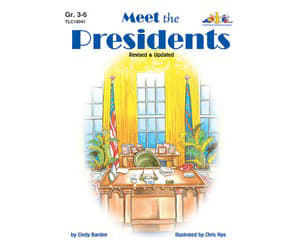
Meet the Presidents: Revised & Updated
Social Studies, History, History: USA, Grade 3, 4, 5, 6, Teacher Tools, Lesson Plans
Meet the Presidents: Revised & Updated A valuable teaching resource that invites students to the world of U.S. Presidential history. This resource provides clear, easy-to-follow lesson plans for learners from grades 3 to 6, offering in-depth insights into our nation's executive leadership. Exploring the Election Process In an engaging and straightforward manner, this resource unfolds intricate facets of the election process. This portion encourages lively discussions about democratic processes and how they propel our country forward. Elections Campaigns Voting rights Candidate qualifications and roles - key information crucial for students' consistent growth as future voters or leaders. Diving Into Presidential History A highlight of this material is its rich exploration into the lives and terms of various presidents - complete up until George W. Bush's tenure. The information presented gives profound insights into each president's defining moments during their time in office as well as remarkable narratives from their personal life journeys. This teaching packet has been designed with versatility in mind—it can be employed for group sessions or individual exercises based on learning needs or class sizes: An educator could potentially facilitate a whole-class discussion revolving around presidential history lessons. Educators could assign segments for small-group study sessions on specific presidencies' impact socially or politically. Factual content that evokes curiosity and intellectual growth among young learners—encouraging them to understand presidents' significant role within our society’s evolution through history is presented within a sturdy structure rooted in step-by-step lesson plans influenced by pertinent subtopics under History: USA. Access The product comes bundled within one easily downloadable PDF file which ensures smooth access across varied digital platforms—an essential feature given today’s hybrid learning approach between traditional classes and distance education setups. In Conclusion This skillfully assembled president-centered resource can prove a cornerstone within any educator's repertoire of social studies teaching tools.
Author Classroom Complete Press
Tags PDF
I WONDER - How Big Was A Velociraptor | Animated Video Lesson
History: Ancient, History, Social Studies, History: World, Animals, Life Sciences, Science, Grade 4, 5, 6, 7, 8, 9, 10, Lesson Plans, Teacher Tools
Video Introduction An amazing video designed for the students to learn more about dinosaurs in different countries. I WONDER - How Big Was A Velociraptor | Animated Video Lesson Do you like dinosaurs? what is your favorite one? Do you own a pet? If yes, tell us more about it, like what its name? And what do you like most about it? Do you think that your pet has been evolved from a dinosaur? Can you write down the characteristics of your favourite dinosaur like it's shape, their rivals, where did it use to live and what was their favourite food? What is the largest and the smallest dinosaur that ever found? Why is the T-rex is so famous? Have you ever read any interesting facts about it? Can you name any of the carnivores or herbivores dinosaurs? I WONDER - How Big Was A Velociraptor | Animated Video Lesson The video is perfect for encouraging the researching skills for the students, while learning more about dinosaurs. I WONDER - How Big Was A Velociraptor | Animated Video Lesson This friendly designed video is suitable for students at school, homeschooling, and as a group activity. Format Available in MP4 format.
Author Educational Voice
Rating
Tags How Big Was A Velociraptor, How Big Was A Velociraptor Video, Velociraptor, Velociraptor Facts, Velociraptor Video, Velociraptor Facts For Kids, Velociraptor Video For Kids, Velociraptors, Velociraptors Video
World War II: Germany’s Role in the War
Social Studies, History, History: World, Common Core, Grade 5, 6, 7, 8, Teacher Tools, Lesson Plans
World War II: Germany’s Role in the War A teaching resource specially designed to enlighten grades five to eight students about an important era of world history; World War II. This product is a segment of the broader "World War II" lesson plan, primarily zeroing in on Germany's role during this significant six-year-long international combat. Main Features: Initiates lessons with the event causing bigger following ones - Germany's invasion of Poland on September 1, 1939. Delves into key historical battles including Normandy. In-depth focus on numerous significant events and roles governed by Germany throughout World War II. Versatility as an Instructional Tool: Adaptable for various schooling scenarios whether it be whole-class lectures or small group discussions. Fits perfectly even for independent work as primary study material. A boon to remedial learners - simplifies intricate social studies concepts into easy-to-grasp language and vocabulary. Educational Components: Reading Passages: Increases information-gathering skills Mindfully created mini Posters: Adds visual appeal and retains knowledge better Action Items/Activities: Facilitates interactive participation adhering to Bloom's Taxonomy principles for cognitive development In Compliance With Standards: This teaching material is structured following the Common Core State Standards ensuring seamless integration within existing social studies syllabus thereby laying out an effective roadmap for educational achievement.In short, it merges effortlessly with your course plan without reshuffling anything major! Savings and Convenience! The resource comes in a convenient PDF format ensuring you save substantial prep time while reaping maximum educational rewards in return; thereby invigorating your history lessons with enthusiasm and interaction. "World War II: Germany’s Role in World War" - A reliable tool every socially-conscious educator should have up their sleeve. Experience student engagement like never before.
Author Classroom Complete Press
Tags PDF
I WONDER - Why Were The Pyramids Built | Animated Video Lesson
History: Ancient, History, Social Studies, History: African, Grade 4, 5, 6, 7, 8, 9, 10, Lesson Plans, Teacher Tools
Video Introduction An amazing video designed for the students to learn more about history. I WONDER - Why Were The Pyramids Built | Animated Video Lesson Do you like history? Which topic do you really enjoy about history? Have you ever read an interesting fact about the Vikings? If yes, can you mention them? What do you like most about the Victorian era? Can you name all the Tudors? Have you ever wondered how people used to live in ancient Japan and ancient China? Do you know any interesting facts about ancient Egyptians and the Pharaohs? Have you ever visited South America? What do you know about Incas and Aztecs? Celtic culture was really one of a kind, can you name any of the places that Celts used to live in? Imagine yourself living during the ancient Roman empire, how your life will look like? Ancient Greece was an amazing place to live in. What do you know about ancient Greek life? I WONDER - Why Were The Pyramids Built | Animated Video Lesson The video is perfect for encouraging the researching skills for the students, while learning more about history. I WONDER - Why Were The Pyramids Built | Animated Video Lesson This friendly designed video is suitable for students at school, homeschooling, and as a group activity. Format Available in MP4 format.
Author Educational Voice
Tags Why Were The Pyramids Built, Why Were The Pyramids Built Video, Pyramids, Pyramid, Pyramids Facts, Pyramids Facts For Kids, Pyramids Video, Pyramids Video For Kids, Egyptian Pyramids
I WONDER - Who Invented The Yo-yo | Animated Video Lesson
History: Ancient, History, Social Studies, History: Europe, History: World, Grade 2, 3, 4, 5, 6, 7, 8, Lesson Plans, Teacher Tools
Video Introduction An amazing video designed for the students to learn more about history. I WONDER - Who Invented The Yo-yo | Animated Video Lesson Do you like history? Which topic do you really enjoy about history? Have you ever read an interesting fact about the Vikings? If yes, can you mention them? What do you like most about the Victorian era? Can you name all the Tudors? Have you ever wondered how people used to live in ancient Japan and ancient China? Do you know any interesting facts about ancient Egyptians and the Pharaohs? Have you ever visited South America? What do you know about Incas and Aztecs? Celtic culture was really one of a kind, can you name any of the places that Celts used to live in? Imagine yourself living during the ancient Roman empire, how your life will look like? Ancient Greece was an amazing place to live in. What do you know about ancient Greek life? I WONDER - Who Invented The Yo-yo | Animated Video Lesson The video is perfect for encouraging the researching skills for the students, while learning more about history. I WONDER - Who Invented The Yo-yo | Animated Video Lesson This friendly designed video is suitable for students at school, homeschooling, and as a group activity. Format Available in MP4 format.
Author Educational Voice
Tags Who Invented The Yo-yo, Who Invented The Yo-yo Video, Yo-yo, Yo-yo Facts, Yo-yo Facts For Kids, Yo-yo Video, Yo-yo Video For Kids, Yo-yo History, Yo-yo History Video, Yo-yo History Facts

I WONDER - How Long Have Crocodiles Existed | Animated Video
Animals, Life Sciences, Science, History: Ancient, History, Social Studies, History: World, Grade 4, 5, 6, 7, 8, 9, 10, Lesson Plans, Teacher Tools
Video Introduction An amazing video designed for the students to learn more about dinosaurs in different countries. I WONDER - How Long Have Crocodiles Existed | Animated Video Lesson Do you like dinosaurs? what is your favorite one? Do you own a pet? If yes, tell us more about it, like what its name? And what do you like most about it? Do you think that your pet has been evolved from a dinosaur? Can you write down the characteristics of your favourite dinosaur like it's shape, their rivals, where did it use to live and what was their favourite food? What is the largest and the smallest dinosaur that ever found? Why is the T-rex is so famous? Have you ever read any interesting facts about it? Can you name any of the carnivores or herbivores dinosaurs? I WONDER - How Long Have Crocodiles Existed | Animated Video Lesson The video is perfect for encouraging the researching skills for the students, while learning more about dinosaurs. I WONDER - How Long Have Crocodiles Existed | Animated Video Lesson This friendly designed video is suitable for students at school, homeschooling, and as a group activity. Format Available in MP4 format.
Author Educational Voice
Rating
Tags How Long Have Crocodiles Existed, How Long Have Crocodiles Existed Video, Crocodiles, Crocodiles Facts, Crocodiles Video, Crocodiles Facts For Kids, Crocodiles Video For Kids, Dinosaurs, Dinosaur

I WONDER - Did Vikings Wear Horned Helmets | Animated Video Lesson
History: Ancient, History, Social Studies, History: Europe, History: British, Grade 3, 4, 5, 6, 7, 8, 9, Lesson Plans, Teacher Tools
Video Introduction An amazing video designed for the students to learn more about history. I WONDER - How Did Ancient Romans Wash Their Clothes | Animated Video Lesson Let's use our time machine and trave though time till we get to the ancient world where life began! Have you ever thought about how did ancient Greeks, Romans, Egyptians and even the Viking and Celts use to shower? And how did these amazing civilizations build iconic buildings and invented things that we still use till today like toothpaste? Do you know who was the first king and queen in the world? Which countries they ruled? Who is the most fascinating person lived on Earth? Tell us more about him/her. I WONDER - How Did Ancient Romans Wash Their Clothes | Animated Video Lesson The video is perfect for encouraging the researching skills for the students, while learning more about history. I WONDER - How Did Ancient Romans Wash Their Clothes | Animated Video Lesson This friendly designed video is suitable for students at school, homeschooling, and as a group activity. Format Available in MP4 format.
Author Educational Voice
Rating
Tags Did Vikings Wear Horned Helmets, Vikings Horned Helmets, Vikings, Vikings Facts, Vikings Video, Vikings Facts For Kids, Vikings Video For Kids, Vikings Horned Helmets Facts, Vikings Horned Helmets Video
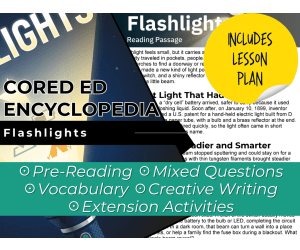
Flashlights Reading Comprehension Passage - Cored Ed Encyclopedia
ELA, Reading Comprehension, Reading, Science, Technology, Language Development, Social Studies, History, Pre-Reading, Physics, Grade 2, 3, 4, 5, Worksheets & Printables, Worksheets, Teacher Tools, Centers, Activities, Writing Prompts, Assessments, Quizzes and Tests, Quizzes, Lesson Plans
This Flashlights reading comprehension with lesson plan includes: Visualization (on the front cover) Start your lesson by taking a minute to think and share something about the topic. Read the script aloud (slowly), perhaps prepare some music or sound effects. Student close their eyes and let their imaginations wander. Students open their eyes, read the question aloud and give them a few minutes to complete. Ask a few students to share or keep answers until the end to compare with what they learn in the passage. Quick pause—thousands of Cored Education products are included with your TeachSimple membership. Download links and encyclopedia index available here. Pre-Reading Trivia Students will write down one thing they already know about the subject and then read five more facts and discuss. These facts are fun, and the students will enjoy learning about the subject before reading more. Give 1 minute for students to write what they already know (no pressure—best guess is fine). Read the five facts together. After each fact, do ask a student for their opinion, was it surprising? Set a purpose by asking students to highlight/underline one fact they want to learn more about during the reading. Reading Passage The text is a high-interest reading passage with set paragraphs, roughly three to four paragraphs long. It contains a variety of themes about the topic, anywhere from history to technology. The passage is between 250 and 350 words in length. First, ask students to look at the headings and see what they’ll learn about today. What do they know about the topic/heading? First read options: Teacher read-aloud (best for support). Partner reading (paragraph by paragraph). While reading, students underline important details, and vocabulary words they think may come up in the questions section. Mixed Questions The first question page contains four multiple-choice questions, each with a choice of four answers, and three written response questions that require a sentence or two from the student. Students complete the mcqs first independently, then review quickly as a class. For the 3 written responses, try to get students giving the answer with some form of evidence: “I think ___ because the text says ___.” If students get stuck, send them back to check the passage. Vocabulary Questions Practice seven key words from the text in this section across two activities. First section is scrambled words where students will unscramble three words given a clue for each. The second section is a word to meaning matching activity. Before starting, have some students read out words they underlined in the passage. Ask students to say the word and read aloud the sentence(s) around each word. Ask students to do scrambled words and the matching exercise in pairs then go through answers as a class. For the scrambled spelling task, get four pairs to come up to the board and write the words for extra practice with the other student reading out the clue. For the matching task, prompt students to give full sentences: “I matched ___ with ___ because ___.” Creative Writing In this question, the student will be required to write a five to eight sentence paragraph on a question related to the topic. Before starting, ask students write down 3 key ideas they are going to include in their piece. Ask students for ideas to share around the class to help those struggling. Pro writing expectations: 5–8 sentences At least 2 facts or details from the passage At least 2 vocabulary words from the previous page Students read their paragraphs while classmates listen for facts and vocabulary words. Extension Activities This page is optional for fast finishers or to take home. There are several activities, each one requiring a different skill. Do some, do none, do all, completely optional - but you will feel reassured knowing every possibility is planned for. Includes summary writting question and additional facts. Answer Key There are answers for the multiple-choice questions, written response questions have sample answers, vocabulary answers and if there is a summary question then a sample summary will be provided as well. Lesson Plan Included Customized lesson plan for this lesson is included. Lesson Snapshot Title: Flashlights Genre: Nonfiction (Informational Text) Subject: Science (Technology/Physical Science) / Reading (Informational Text) Primary Topic: Flashlight parts, history, and how it works Estimated Guided Reading Level (A–Z): P What This Lesson Teaches Best Explains the main parts inside a flashlight (a power source, a switch, and a reflector) and what they do. Teaches a short history of flashlights , including the “dry cell” battery and an 1899 U.S. patent for a hand-held electric light. Shows cause and effect : early zinc-carbon batteries tired quickly, so the light came in short flashes—leading to the name “flashlight.” Compares how flashlight beams improved over time, from sputtering light to steadier beams, including incandescent bulbs and later LEDs. Connects electricity to a real object by describing how a click of the switch completes a circuit so electricity can flow. Learning Goals Students will describe what a flashlight carries “in one hand” and what it helps people do in the dark. Students will identify three parts inside a flashlight case and explain each part’s job using the passage. Students will explain why the flashlight got its name, using evidence about early batteries and short flashes. Students will describe how flashlight lighting changed over time (dry cell batteries, incandescent bulbs, LEDs). Students will explain what happens when a flashlight switch is clicked, based on how the circuit is completed. Key Vocabulary From the Text reflector — shiny part that gathers glow and pushes it forward. patent — legal protection for an invention. incandescent — a kind of bulb that makes light using heat. LEDs — bright lights that can shine longer on same power. circuit — complete path that lets electricity flow. FULL CATALOG OF DOWNLOAD LINKS AND ENCYCLOPEDIA INDEX HERE
Author Cored Education
Rating
Tags Vocabulary, Reading Comprehension, Reading Passages, Lesson Plans, Ela Lesson Plans, Reading Comprehension Lesson Plans, Pre-reading, Science Lesson Plans, History, Technology

I WONDER - Who Discovered The Velociraptor | Animated Video Lesson
History: Ancient, History, Social Studies, History: World, Animals, Life Sciences, Science, Grade 4, 5, 6, 7, 8, 9, 10, Lesson Plans, Teacher Tools
Video Introduction An amazing video designed for the students to learn more about dinosaurs in different countries. I WONDER - Who Discovered The Velociraptor | Animated Video Lesson Do you like dinosaurs? what is your favorite one? Do you own a pet? If yes, tell us more about it, like what its name? And what do you like most about it? Do you think that your pet has been evolved from a dinosaur? Can you write down the characteristics of your favourite dinosaur like it's shape, their rivals, where did it use to live and what was their favourite food? What is the largest and the smallest dinosaur that ever found? Why is the T-rex is so famous? Have you ever read any interesting facts about it? Can you name any of the carnivores or herbivores dinosaurs? I WONDER - Who Discovered The Velociraptor | Animated Video Lesson The video is perfect for encouraging the researching skills for the students, while learning more about dinosaurs. I WONDER - Who Discovered The Velociraptor | Animated Video Lesson This friendly designed video is suitable for students at school, homeschooling, and as a group activity. Format Available in MP4 format.
Author Educational Voice
Rating
Tags Who Discovered The Velociraptor, Who Discovered The Velociraptor Video, Velociraptor, Velociraptor Facts, Velociraptor Video, Velociraptor Video For Kids, Velociraptor Facts For Kids, Dinosaur, Dinosaurs
I WONDER - What Is A Motte And Bailley Castle | Animated Video Lesson
History: Ancient, History, Social Studies, History: British, History: Asian, History: Europe, History: World, History: African, Grade 4, 5, 6, 7, 8, 9, 10, Lesson Plans, Teacher Tools
Video Introduction An amazing video designed for the students to learn more about history. I WONDER - What Is A Motte And Bailley Castle | Animated Video Lesson Do you like history? Which topic do you really enjoy about history? Have you ever read an interesting fact about the Vikings? If yes, can you mention them? What do you like most about the Victorian era? Can you name all the Tudors? Have you ever wondered how people used to live in ancient Japan and ancient China? Do you know any interesting facts about ancient Egyptians and the Pharaohs? Have you ever visited South America? What do you know about Incas and Aztecs? Celtic culture was really one of a kind, can you name any of the places that Celts used to live in? Imagine yourself living during the ancient Roman empire, how your life will look like? Ancient Greece was an amazing place to live in. What do you know about ancient Greek life? I WONDER - What Is A Motte And Bailley Castle | Animated Video Lesson The video is perfect for encouraging the researching skills for the students, while learning more about history. I WONDER - What Is A Motte And Bailley Castle | Animated Video Lesson This friendly designed video is suitable for students at school, homeschooling, and as a group activity. Format Available in MP4 format.
Author Educational Voice
Tags What Is A Motte And Bailley Castle, What Is A Motte And Bailley Castle Video, Motte And Bailley Castle, Motte And Bailley Castle Facts, Motte And Bailley Castle Video, Motte And Bailley Castle Video For Kids

Ancient Civilizations: Mesopotamia Unit Study
Social Studies, History, History: Ancient, Grade 3, 4, 5, 6, Lesson Plans, Teacher Tools
Immerse students in Mesopotamian history and culture with this expansive cross-curricular teaching kit. Through vivid visuals, interactive activities and multi-sensory projects, core knowledge comes alive on topics like cuneiform, Code of Hammurabi, city-states, innovations and daily living. Begin by introducing key figures, places and artifacts using illustrated posters and word banks. Then, extend comprehension through mapping tasks, timelines and coloring pages. Discover critical innovations in writing, agriculture and infrastructure by reading leveled articles. Watch recommended documentary clips and recreate cultural elements like ziggurats, carved reliefs and steered carts. Assess retention with a Jeopardy-style review game covering everything from barley cultivation to the legendary Epic of Gilgamesh. This comprehensive package contains teacher guides aligning materials to social studies standards, plus adaptations for learners of all abilities. Weave modules into existing ancient civilization units or facilitate an entire stand-alone Mesopotamia study. Writing prompts allow students to connect learnings to their own lives across narrative, informative and persuasive genres. Through varied activities tapping visual, auditory and kinesthetic pathways, your classroom unearths the remarkable history buried between the Tigris and Euphrates. Rediscover the "cradle of civilization" where so much of human enterprise began! Check out other resources from my store: Simply Schoolgirl! I can be contacted for questions and concerns at simplyschoolgirl1@gmail.com
Author Simply Schoolgirl
Tags Ancient Civilizations, Social Studies Project, Mesopotamia, History Poster, Artifacts, Asia, Middle East, Cuneiform, Ziggurat, Mesopotamian, Mesopotamia Poster Project, Ancient Civilizations In Mesopotamia, Education Of Mesopotamia, Ancient Civilizations Of Mesopotamia, Ancient Civilizations Mesopotamia, Teaching Ancient Civilizations, The Code Of Hammurabi Is A Product Of This Civilization.

I WONDER - Where Did The Apatosaurus Live | Animated Video Lesson
History: Ancient, History, Social Studies, History: World, Animals, Life Sciences, Science, Grade 3, 4, 5, 6, 7, 8, 9, Lesson Plans, Teacher Tools
Video Introduction An amazing video designed for the students to learn more about dinosaurs in different countries. I WONDER - Where Did The Apatosaurus Live | Animated Video Lesson Do you like dinosaurs? what is your favorite one? Do you own a pet? If yes, tell us more about it, like what its name? And what do you like most about it? Do you think that your pet has been evolved from a dinosaur? Can you write down the characteristics of your favourite dinosaur like it's shape, their rivals, where did it use to live and what was their favourite food? What is the largest and the smallest dinosaur that ever found? Why is the T-rex is so famous? Have you ever read any interesting facts about it? Can you name any of the carnivores or herbivores dinosaurs? I WONDER - Where Did The Apatosaurus Live | Animated Video Lesson The video is perfect for encouraging the researching skills for the students, while learning more about dinosaurs. I WONDER - Where Did The Apatosaurus Live | Animated Video Lesson This friendly designed video is suitable for students at school, homeschooling, and as a group activity. Format Available in MP4 format.
Author Educational Voice
Rating
Tags Where Did The Apatosaurus Live, Where Did The Apatosaurus Live Video, Apatosaurus, Apatosaurus Video, Apatosaurus Facts, Apatosaurus Facts For Kids, Apatosaurus Video For Kids, Dinosaur

Darts Reading Comprehension Passage - Cored Ed Encyclopedia
ELA, Language Development, Reading Comprehension, Reading, Pre-Reading, History, Social Studies, Math, Sports, P.E. & Health, Grade 2, 3, 4, 5, Worksheets & Printables, Worksheets, Teacher Tools, Centers, Activities, Writing Prompts, Assessments, Quizzes and Tests, Quizzes, Lesson Plans
This darts reading comprehension with lesson plan includes: Visualization (on the front cover) Start your lesson by taking a minute to think and share something about the topic. Read the script aloud (slowly), perhaps prepare some music or sound effects. Student close their eyes and let their imaginations wander. Students open their eyes, read the question aloud and give them a few minutes to complete. Ask a few students to share or keep answers until the end to compare with what they learn in the passage. Quick pause—thousands of Cored Education products are included with your TeachSimple membership. Download links and encyclopedia index available here. Pre-Reading Trivia Students will write down one thing they already know about the subject and then read five more facts and discuss. These facts are fun, and the students will enjoy learning about the subject before reading more. Give 1 minute for students to write what they already know (no pressure—best guess is fine). Read the five facts together. After each fact, do ask a student for their opinion, was it surprising? Set a purpose by asking students to highlight/underline one fact they want to learn more about during the reading. Reading Passage The text is a high-interest reading passage with set paragraphs, roughly three to four paragraphs long. It contains a variety of themes about the topic, anywhere from history to technology. The passage is between 250 and 350 words in length. First, ask students to look at the headings and see what they’ll learn about today. What do they know about the topic/heading? First read options: Teacher read-aloud (best for support). Partner reading (paragraph by paragraph). While reading, students underline important details, and vocabulary words they think may come up in the questions section. Mixed Questions The first question page contains four multiple-choice questions, each with a choice of four answers, and three written response questions that require a sentence or two from the student. Students complete the mcqs first independently, then review quickly as a class. For the 3 written responses, try to get students giving the answer with some form of evidence: “I think ___ because the text says ___.” If students get stuck, send them back to check the passage. Vocabulary Questions Practice seven key words from the text in this section across two activities. First section is scrambled words where students will unscramble three words given a clue for each. The second section is a word to meaning matching activity. Before starting, have some students read out words they underlined in the passage. Ask students to say the word and read aloud the sentence(s) around each word. Ask students to do scrambled words and the matching exercise in pairs then go through answers as a class. For the scrambled spelling task, get four pairs to come up to the board and write the words for extra practice with the other student reading out the clue. For the matching task, prompt students to give full sentences: “I matched ___ with ___ because ___.” Creative Writing In this question, the student will be required to write a five to eight sentence paragraph on a question related to the topic. Before starting, ask students write down 3 key ideas they are going to include in their piece. Ask students for ideas to share around the class to help those struggling. Pro writing expectations: 5–8 sentences At least 2 facts or details from the passage At least 2 vocabulary words from the previous page Students read their paragraphs while classmates listen for facts and vocabulary words. Extension Activities This page is optional for fast finishers or to take home. There are several activities, each one requiring a different skill. Do some, do none, do all, completely optional - but you will feel reassured knowing every possibility is planned for. Includes summary writting question and additional facts. Answer Key There are answers for the multiple-choice questions, written response questions have sample answers, vocabulary answers and if there is a summary question then a sample summary will be provided as well. Lesson Plan Included Customized lesson plan for this lesson is included. Lesson Snapshot Title: Darts Genre: Nonfiction (informational text with headings) Subject: Reading (Informational Text) / Math (numbers & scoring context) Primary Topic: History, dartboard design, and how scoring works Estimated Guided Reading Level (A–Z): Q What This Lesson Teaches Best Explains how darts began as indoor throwing at targets in England and became a friendly challenge in taverns and homes. Teaches key dartboard features (20 pie-shaped sections, thin wires, double/triple rings, and a bull’s-eye that can be 50 points). Builds real-world math context by describing common game formats (301 or 501) where points are subtracted each turn. Uses a cause-and-claim structure to discuss uncertainties and evidence (a debated story about why numbers are scrambled; a court case about skill vs luck). Connects materials/technology to sports equipment (sisal fibers that close up; tungsten barrels for a slimmer grip) and modern leagues/championships. Learning Goals Students will summarize how the text describes darts’ early history and where people played. Students will identify key parts of a dartboard in the text and explain what they do for scoring. Students will explain how a 301 or 501 game works in the passage, including what happens each turn. Students will describe why the dartboard numbers might be scrambled and explain what the text says is uncertain about that story. Students will explain what happened in 1908 and how it relates to whether darts is luck or skill. Students will cite details about modern boards and darts (sisal fibers, tungsten barrels, leagues/championships). Key Vocabulary From the Text taverns — places where people gather for food and drink. oche — the throwing line you stand behind. subtracted — taken away from a total number. sisal — strong fibers used to make dartboards. tungsten — a dense metal used for slimmer dart barrels. Discussion Prompts FULL CATALOG OF DOWNLOAD LINKS AND ENCYCLOPEDIA INDEX HERE
Author Cored Education
Rating
Tags Vocabulary, Reading Comprehension, Reading Passages, Lesson Plans, Ela Lesson Plans, Reading Comprehension Lesson Plans, Pre-reading, Sports, History, Social Studies Lesson Plans

Korean War: Major Figures Gr. 5-8
Social Studies, History, History: USA, Grade 5, 6, 7, 8, Teacher Tools, Lesson Plans
Korean War: Major Figures Gr. 5-8 An engaging teaching resource for middle school educators in both public schools and homeschool settings. This resource is crafted around the narrative of the Korean War, aimed at enriching U.S history lessons for students from 5th to 8th grade. A deep dive into a substantial period in history, it outlines key events and seminal figures instrumental during this first conflict of the Cold War era. This material situates students amid the raw intensity of geopolitical tensions between the United States and Russia post-World War II—ushering in the onset of what we now term as Cold War. It gives crucial insights on roles played by dominant figures like President Harry S. Truman, Joseph Stalin, and Kim Il-sung during these eventful years. A guided virtual tour across North and South Korea—it pinpoints distinct regions significant to crucial battles fought during this war spanning from 1950 to 1953. Educators can incorporate this content across multiple learning situations—interactive whole group instruction or personalized small group sessions or as intricate at-home assignments—demonstrating its versatile design. The material complies with educational standards at various state levels while firmly adhering to Bloom’s Taxonomy principles—an advantage for teachers adhering to curriculum requirements. SUPPLEMENTS INCLUDED: HANDS-ON ACTIVITIES: Perfect for tactile learners who learn best when they are physically engaged with their work. GAMES: Crossword puzzles & word searches add a playful dimension ideal learners who love fun activities throughout lessons. EVALUATION: Each chapter concludes with a comprehensive quiz facilitating educators to assess students' understanding effectively. The resource includes other elements such as descriptions covering various warfare technologies during each engaging combat, adding depth for students. The teaching resource ends with a note highlighting the importance and relevance of remembering these historical events and their ramifications. Provided in an easy-to-use PDF format, this teaching aid presents an enriching yet straightforward approach towards educating our future generations about pivotal periods in U.S history.
Author Classroom Complete Press
Tags PDF
I WONDER - How Do Dragons Guard Treasure | Animated Video Lesson
History, Social Studies, Common Core, Grade 4, 5, 6, 7, 8, 9, 10, Lesson Plans, Teacher Tools
Video Introduction An amazing video designed for the students to learn more about mythological creatures in different cultures. I WONDER - How Do Dragons Guard Treasure | Animated Video Lesson Mythology is full of wonders and spectacular stories. Ancient civilizations were trying to explore every aspect of life, while they search for new technologies, they wanted to believe in something big and can change the world, so they created mythical creatures and mythical stories. Let's hear about them! What do you know about these creatures? Cyclops, Centaurs, Selkies, Phoenix, Gnomes, Dragons, Gorgons, Orcs, Cerberus, Trolls, Minotaur, Griffins, Mermaids, Elves, Polyphemus, Pegasus, and Ogres. I WONDER - How Do Dragons Guard Treasure | Animated Video Lesson The video is perfect for encouraging the creativity skills for the students, while learning more about this fantastic mythical creature. I WONDER - How Do Dragons Guard Treasure | Animated Video Lesson This friendly designed video is suitable for students at school, homeschooling, and as a group activity. Format Available in MP4 format.
Author Educational Voice
Rating
Tags How Do Dragons Guard Treasure, How Do Dragons Guard Treasure Video, Dragons, Dragons Facts, Dragons Video, Dragons Video For Kids, Dragons Facts For Kids, Treasure Guardians , Treasure Guardians Video
I WONDER - What Activities Did Ancient Greek Men Do | Animated Video
History: Ancient, History, Social Studies, History: Europe, Grade 3, 4, 5, 6, 7, 8, 9, Lesson Plans, Teacher Tools
Video Introduction An amazing video designed for the students to learn more about history. I WONDER - What Activities Did Ancient Greek Men Do | Animated Video Lesson Do you like history? Which topic do you really enjoy about history? Have you ever read an interesting fact about the Vikings? If yes, can you mention them? What do you like most about the Victorian era? Can you name all the Tudors? Have you ever wondered how people used to live in ancient Japan and ancient China? Do you know any interesting facts about ancient Egyptians and the Pharaohs? Have you ever visited South America? What do you know about Incas and Aztecs? Celtic culture was really one of a kind, can you name any of the places that Celts used to live in? Imagine yourself living during the ancient Roman empire, how your life will look like? Ancient Greece was an amazing place to live in. What do you know about ancient Greek life? I WONDER - What Activities Did Ancient Greek Men Do | Animated Video Lesson The video is perfect for encouraging the researching skills for the students, while learning more about history. I WONDER - What Activities Did Ancient Greek Men Do | Animated Video Lesson This friendly designed video is suitable for students at school, homeschooling, and as a group activity. Format Available in MP4 format.
Author Educational Voice
Tags What Activities Did Ancient Greek Men Do, What Activities Did Ancient Greek Men Do Video, Ancient Greek Men, Ancient Greek Men Video, Ancient Greek Men Facts, Ancient Greek Men Video For Kids, Ancient Greek Men Facts For Kids

The Mayflower Compact: Reading and Analyzing a Primary Source Document
ELA, Social Studies, Reading, Reading Comprehension, Language Development, Pre-Reading, Strategies, History, History: USA, Government, Grade 6, 7, 8, 9, Teacher Tools, Lesson Plans
The Mayflower Compact- Analyzing a Primary Source Document, is a 27 page standards aligned resource that provides your 6th-9th grade students with strategies for reading, understanding, and analyzing a challenging primary source document. Our students need help developing the skills to read complex materials, especially primary source historical documents. Students need practice on how to read a primary source document, and reading it once isn’t enough. Your students will participate in a close read of the primary source document four times: 1. for context and origins (source the document); 2. for meaning; 3. for the purpose (argument or thesis) of the document; and 4. read like a historian. Students will collaborate in deep discussions developing their critical thinking skills as they delve into their reading and analysis of the Mayflower Compact. Through this experience, they will find that their discussions become richer as they work through the questions provided for each of the 4 Reads. The follow up to the lesson, the multiple choice and short answer questions will offer students an opportunity to showcase what they learned. This lesson can take 2 50-minute periods to complete. However, if we want our students to feel confident enough to tackle primary source documents written in the past in unfamiliar English, we need to give them the tools to do so. Even so, I have provided an annotated version of the Mayflower Compact to help your English Language Learners, students on IEPs and 504 Plans, and struggling readers. The Mayflower Compact- Analyzing a Primary Source Document includes the following: History and Reading for History Standards, Objectives, and Learning Targets Essential Question: How do founding documents like the Mayflower Compact shape the principles and practices of governance in societies? 3 Guiding Questions: "What were the key motivations behind the drafting and signing of the Mayflower Compact?"; "How does the language and structure of the Mayflower Compact reflect the religious and political beliefs of the Pilgrims?"; and "What principles of governance are outlined in the Mayflower Compact, and how do they compare with other early democratic documents or principles?" Lesson 1: What are Primary and Secondary Sources Lesson Plan 2: Four Reads: Reading and Analyzing a Primary Source Document The Mayflower Compact in its original wording and in Plain English 4 Reads Questions and Answer Key Multiple choice and Short Answer Assessment and Answer Key
Author Intentional Teaching and Learning
Tags Mayflower Compact, 13 British Colonies, English Colonies, Primary Source Document, Reading Comprehension, Thinking Like A Historian, Reading For Purpose And Argument, U.S. History, Critical Thinking, Assessment