Reading & language
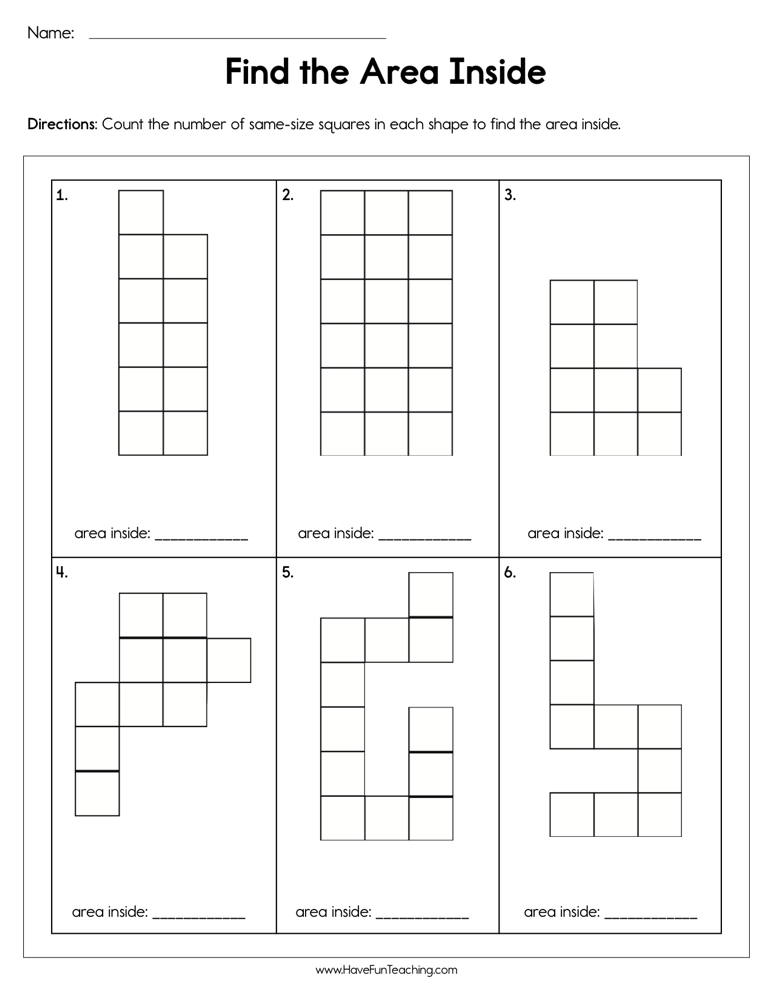
Find the Area Inside Worksheet
Practice finding area by counting unit squares within shapes.
Answers included




Classroom resources
Browse by lesson focus
Choose the topic or kind of practice you need.
Showing 1345–1368 of 2703 resources

 Show filters
 Practice finding area by counting unit squares within shapes.

This worksheet is a great way for students to practice finding the perimeter of different shapes. The grid format makes it easy for students to see how the perimeter is calculated. This is a great resource for teachers who want to provide extra practice for their students.

Simplify fractions by identifying a greatest common factor. A worked example connects the shared factor with an equivalent fraction in lowest terms before students try the remaining problems independently. Ask students to check that both numerator and denominator were divided by the same amount.
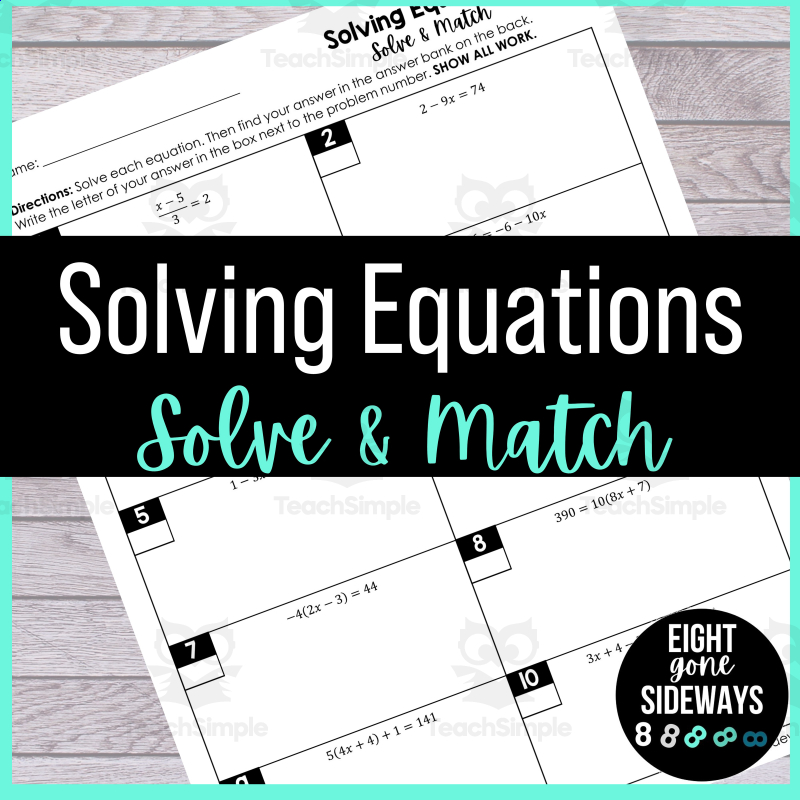
Students work through sixteen linear equations, showing their algebra before selecting a result from the shared answer bank. The set includes distribution, variables on both sides and equations with no solution or infinitely many solutions, so a numerical value is not always the outcome. A worked key supports comparison of steps and discussion of what the final statement means.
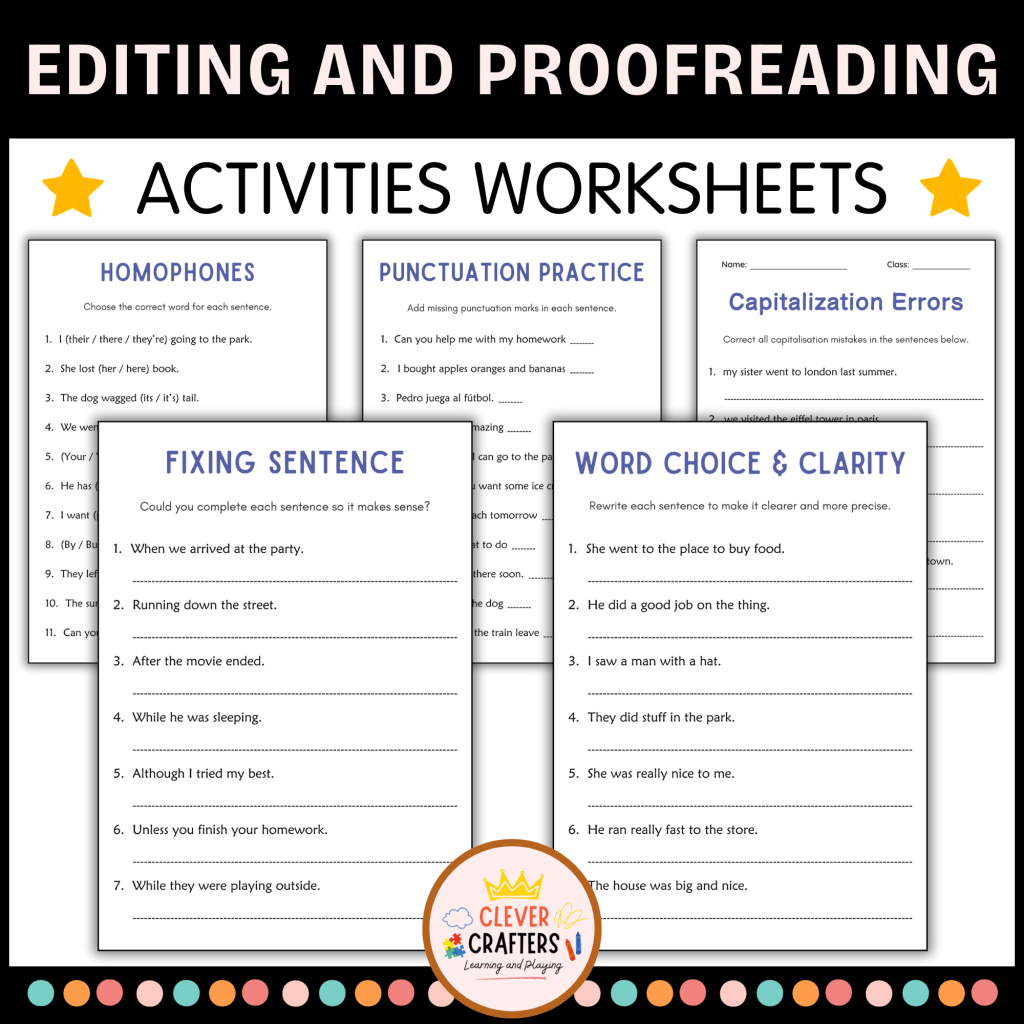
Correct sentences directly on the page: fix capitalization, add missing punctuation, correct spelling, fix subject-verb agreement, complete sentence fragments, choose the correct homophone, and rewrite vague sentences for clarity.
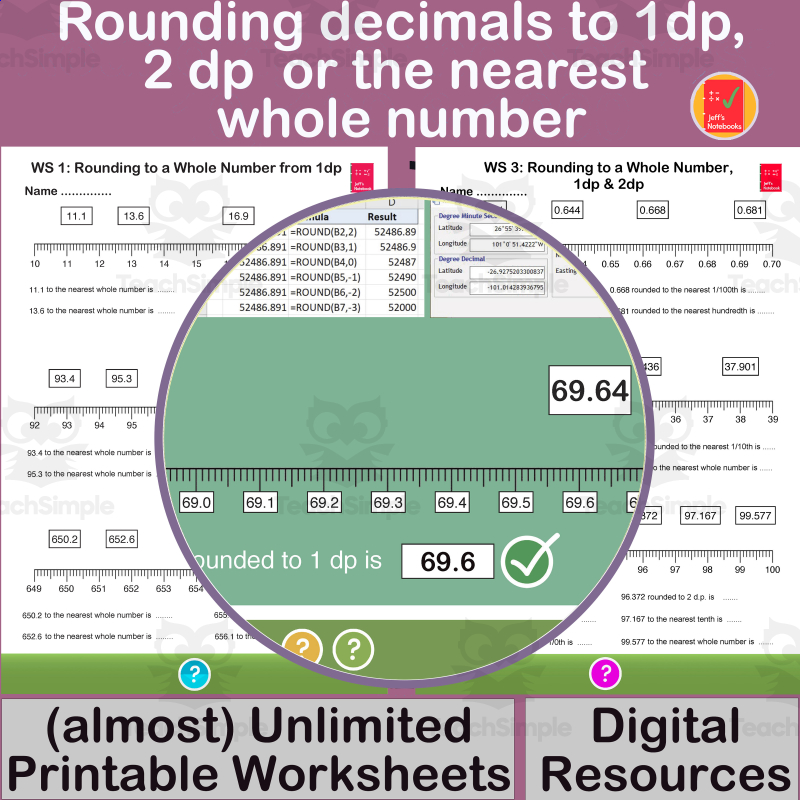
Locate decimal numbers on provided number lines, then round them to the nearest whole number, tenth, or hundredth as directed by three worksheet sets of increasing variety; CCSS.MATH.CONTENT.5.NBT.A.4 cited.
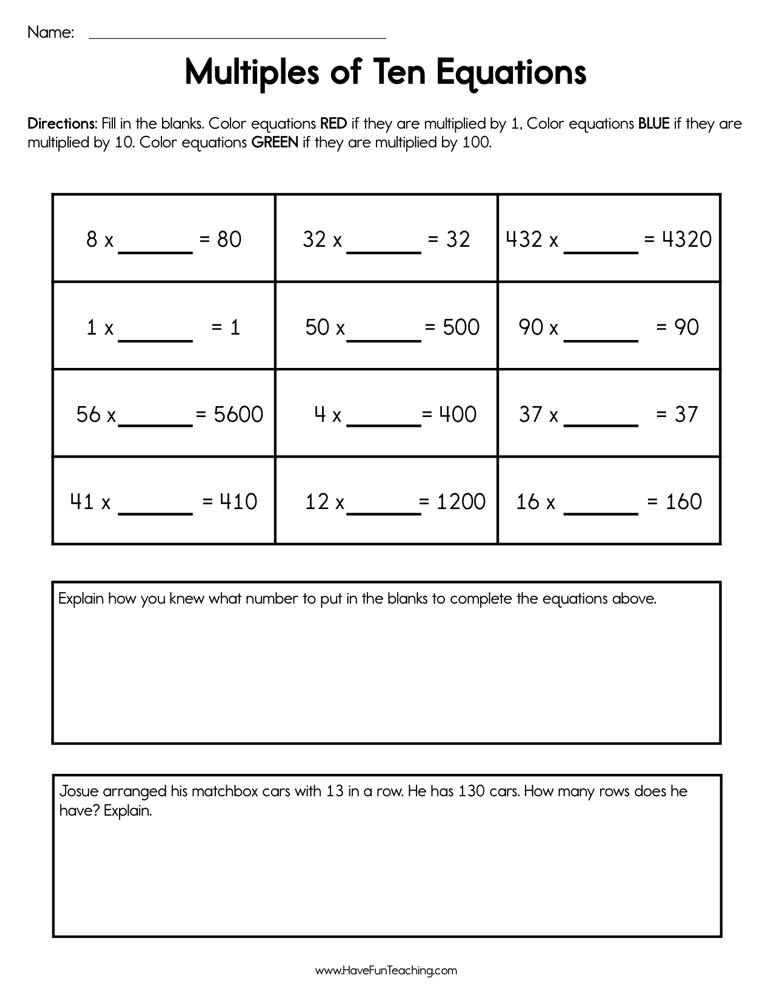
Give students practice recognizing whether an equation represents multiplying by 1, 10, or 100, using a fill-in-the-blank and color-coding format, with an included answer key.

Choose among five worksheet versions for different kinds of fraction practice. Tasks cover like and unlike denominators, mixed numbers, and word problems, with an answer key for each version. Use the matching set for the skill being taught before combining formats in a review lesson.

This finding area of irregular shapes worksheet is a great resource for students to use to find the area of rectangles on a grid. By counting squares or using a formula, students will be able to find the area more easily. This is a great resource for teachers who want to help their students learn more about finding area.

A short, three-tiered practice worksheet set for dividing fractions, letting a teacher assign progressively harder versions (proper fractions, fractions by whole numbers, mixed numbers).

An essay-preparation worksheet exploring the generational conflict between the young (Sheila, Eric) and old (Mr and Mrs Birling) characters in An Inspector Calls.

A one-page chart and comprehension worksheet teaching the four types of government used in ancient Greek city-states (monarchy, aristocracy, oligarchy, direct democracy).
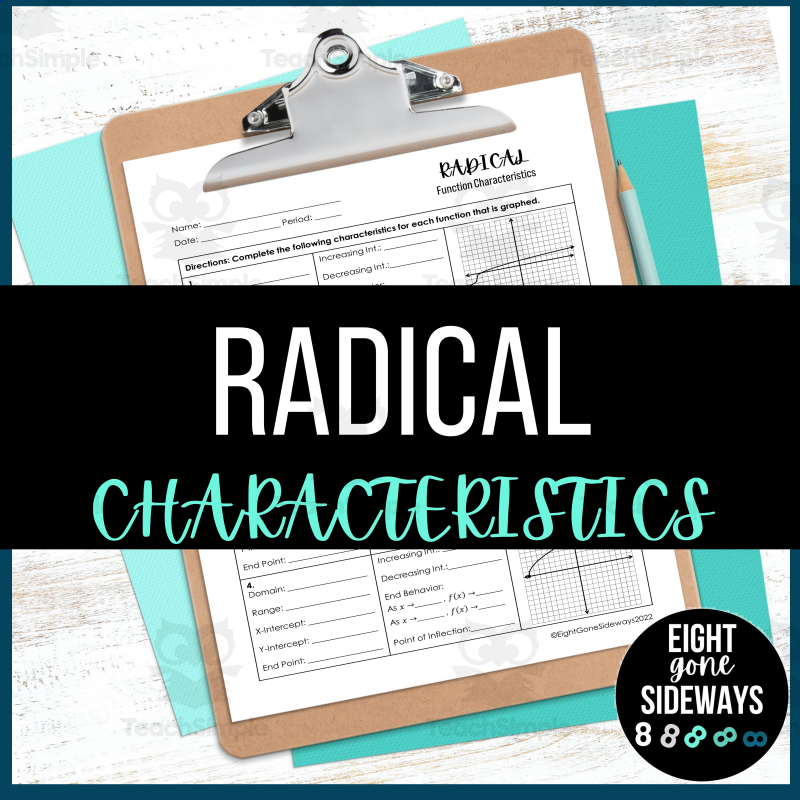
An algebra practice worksheet for analyzing graphed and equation-form square/cube root (radical) functions.
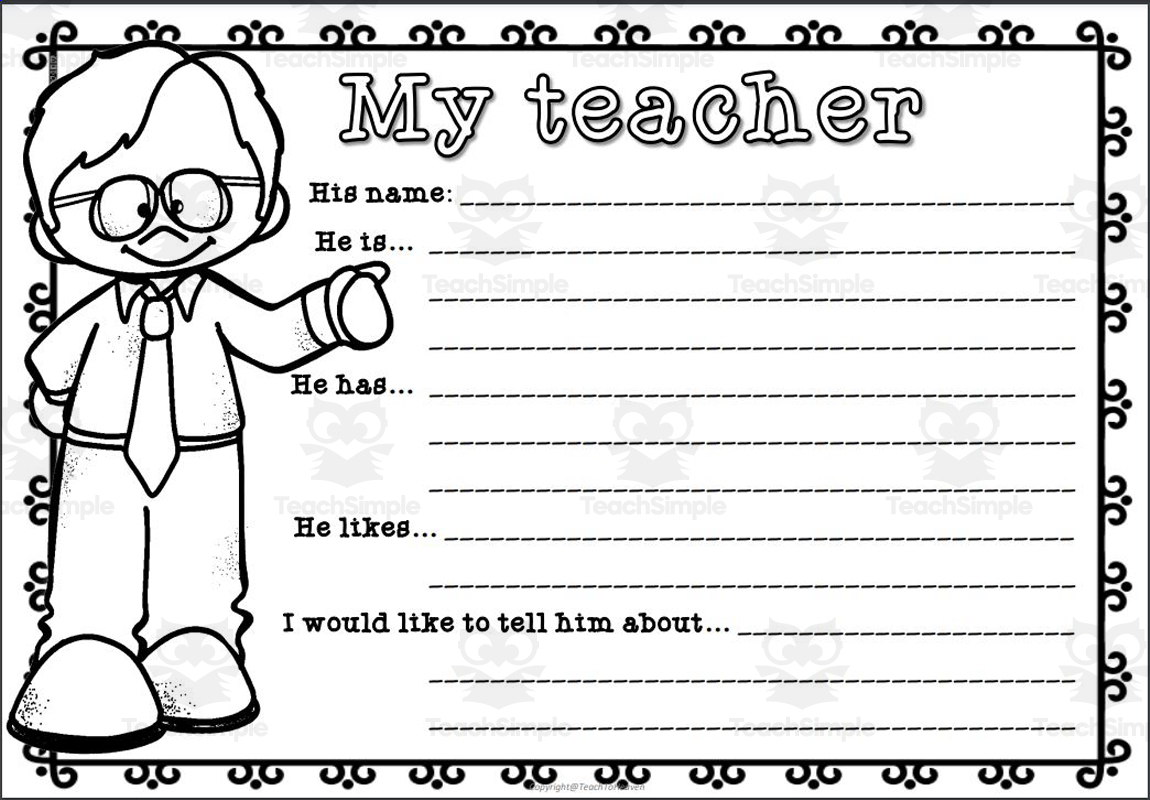
Fill in blanks describing the teacher: his name, what he is like, what he has, what he likes, and something the student would like to tell him.

Practice choosing the correct homophone to complete a sentence, then use unused homophones in original sentences.
Learn each character's instrument and orchestra family (e.g. Peter=violin/strings, Bird=flute/woodwind, Wolf=French horn/brass, Hunters=timpani/percussion), then complete a listening activity (circle the character matching the melody heard), a melody-matching worksheet (match instrument to character), a word-bank worksheet…

Read a short biographical passage about Harriet Tubman, answer supporting-detail questions, complete multiple-choice comprehension questions, and fill in a timeline/map-style graphic organizer (South Maryland to North Canada, 1821-Civil War).

An ESL/ELA reading comprehension and listening lesson built around a biographical text about musician David Bowie, paired with a teacher lesson plan.
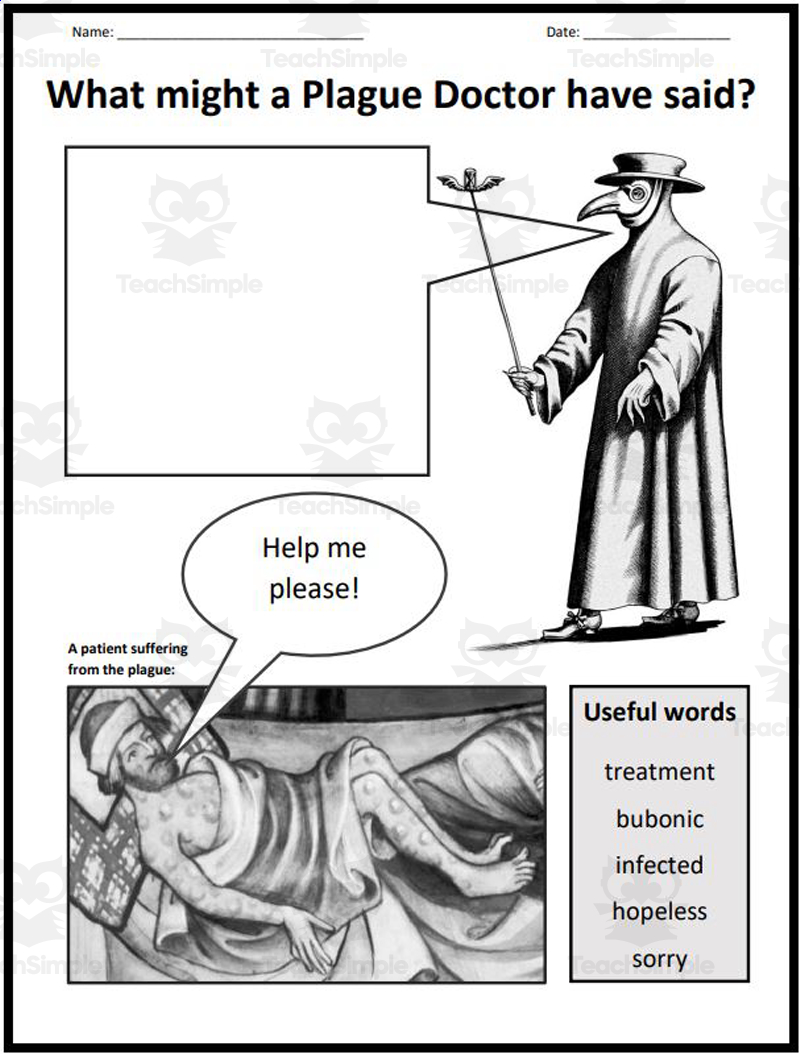
A creative-writing/history worksheet prompting students to imagine and write what a plague doctor might have said to a suffering patient, using a supplied word bank.
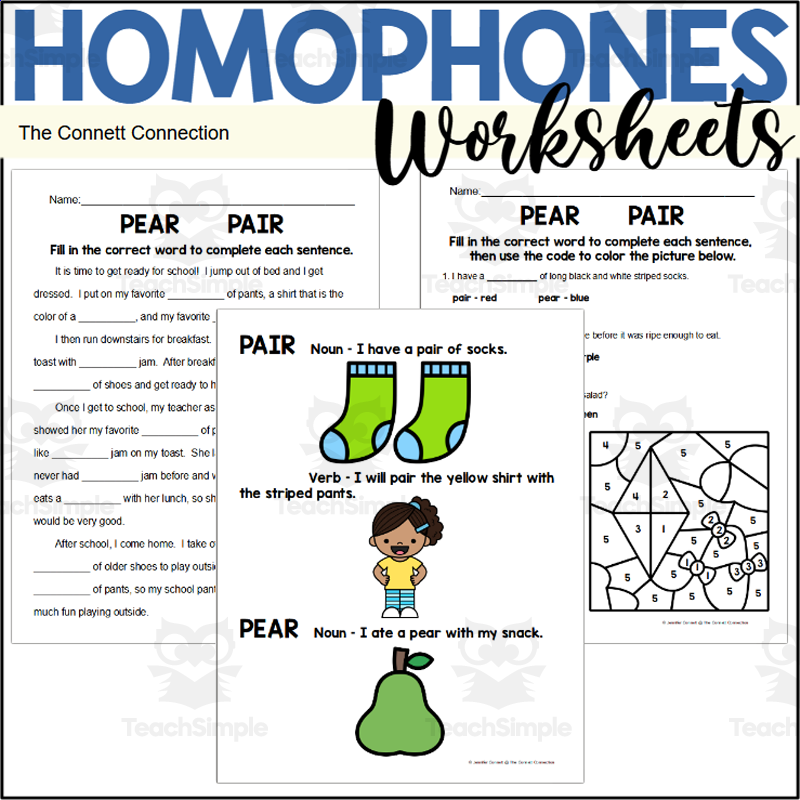
Students can practice using the correct spelling of homophone words with this worksheet packet. This packet focuses on the homophones: pear pair. What are homophones? Homophones are a pair of words that sound the same but are spelled differently. Words that are homophones can often be tricky for students to spell correctly…
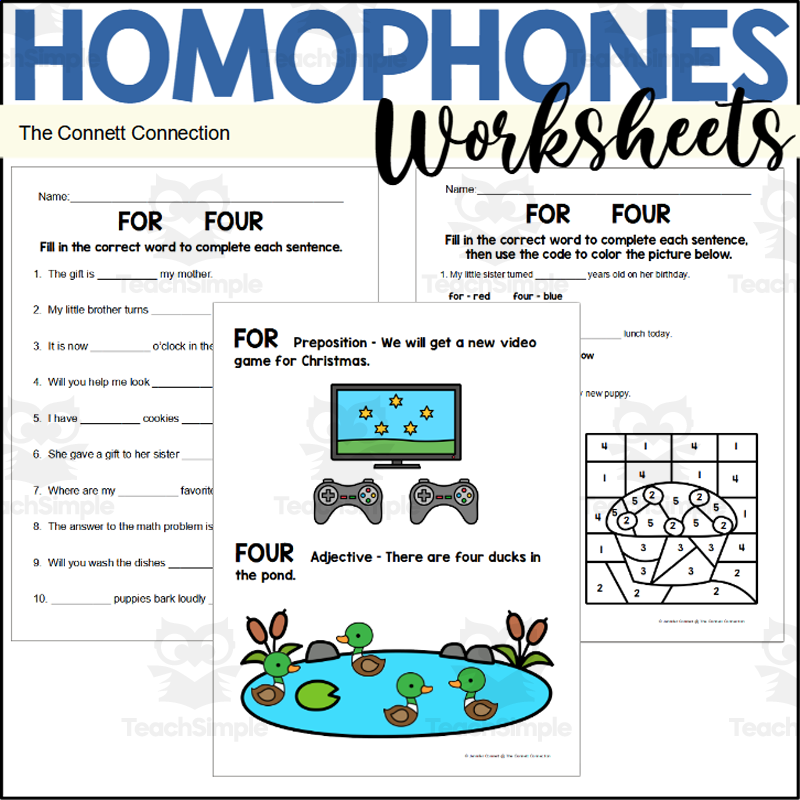
Students can practice using the correct spelling of homophone words with this worksheet packet. This packet focuses on the homophones: for and four. What are homophones? Homophones are a pair of words that sound the same but are spelled differently. Words that are homophones can often be tricky for students to spell correctly…

Students can practice using the correct spelling of homophone words with this worksheet packet. This packet focuses on the homophones: hear and here. What are homophones? Homophones are a pair of words that sound the same but are spelled differently. Words that are homophones can often be tricky for students to spell correctly…
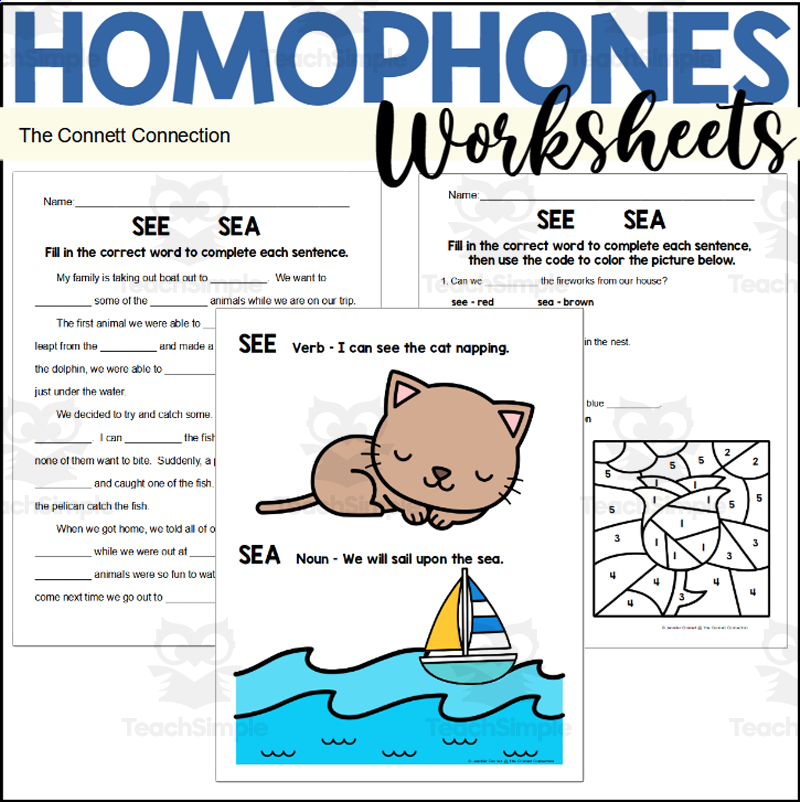
Begin with the meanings of sea and see on the reference poster, then ask students to complete sentences and a story using the appropriate word. A color-by-code page adds another set of choices, with keys for the three worksheets. During review, ask students to explain the meaning they needed before discussing the spelling.
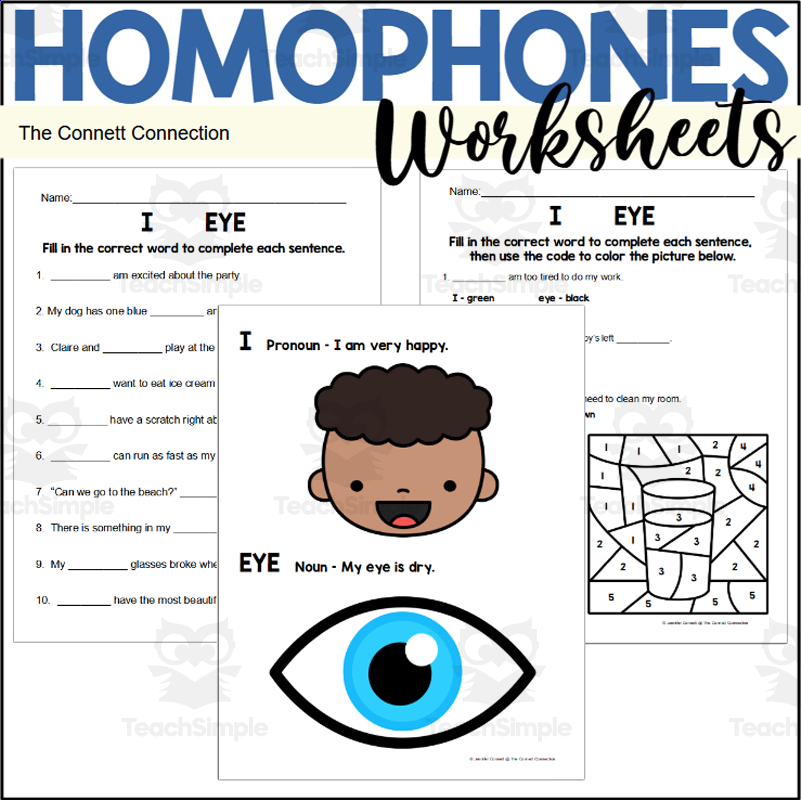
A definition poster contrasts I as a pronoun with eye as a noun. Three activities apply the distinction through sentence blanks, an eye-doctor story, and color-by-code work. Ask students to explain the meaning needed in a blank before choosing the spelling. Keys accompany all three worksheets.