



3,931 products added recently
Page 13 - ELA Lesson Plans
Elevate your ELA instruction with lesson plans that cover reading, writing, speaking, and listening skills. These resources provide diverse texts and engaging activities to improve literacy. Integrate these plans to enrich your language arts curriculum and support student achievement.

 Show filters


Year 5 End-of-Term English Review Pack | Australian Curriculum
ELA, Grade 5, Assessments, Teacher Tools, Lesson Plans
Year 5 End-of-Term English Review Workbook Pack | Australian Curriculum Looking for a rigorous Year 5 English review resource that strengthens critical reading, grammar, vocabulary, persuasive writing, and informative writing skills? This Year 5 End-of-Term English Review Workbook helps students consolidate upper-primary literacy skills while preparing confidently for Year 6 and beyond. Aligned with Australian Curriculum v9.0 English, this comprehensive literacy pack develops critical thinking, text analysis, sophisticated sentence structures, editing skills, and genre writing through engaging activities and scaffolded practice. Perfect for end-of-term revision, intervention, homework, literacy rotations, or Year 6 readiness. ✅ What’s Included 90-page Year 5 English Workbook 13-page Answer Key 22-page Teacher’s Guide Australian Curriculum v9.0 alignment Critical reading and bias analysis activities Informative and persuasive text comparisons Grammar and cohesion lessons Compound-complex sentence practice Vocabulary and word origins activities Greek and Latin roots study Persuasive writing unit Informative writing unit Editing and proofreading activities Rubrics, checklists, and self-assessment tools Extension activities and differentiation strategies Parent letter template and pacing guide ✨ How It Works in the Classroom This Year 5 English review resource is flexible and easy to implement: End-of-term literacy review Literacy rotations and centers Independent literacy work Homework or take-home revision Small-group intervention support Relief teacher planning NAPLAN preparation and revision Year 6 readiness practice Holiday bridging packs The workbook is divided into five structured sections: Critical Reading Grammar & Cohesion Vocabulary & Word Origins Writing (Persuasive + Informative) Editing & Revising Teachers can spread the activities across 3–4 weeks for manageable and meaningful literacy review. 🎯 Standards & Learning Goals Students will strengthen skills in: Critical reading and bias analysis Evaluating evidence and viewpoints Theme and narrator analysis Compound-complex sentences Cohesion and paragraph structure Active and passive voice Greek and Latin roots Etymology and word origins Persuasive and informative writing Editing and proofreading Vocabulary in context Text structures and author’s craft Aligned Australian Curriculum v9.0 codes include: AC9E5LA01 AC9E5LA03 AC9E5LA04 AC9E5LA07 AC9E5LA08 AC9E5LA09 AC9E5LE01 AC9E5LE03 AC9E5LY03 AC9E5LY04 AC9E5LY05 AC9E5LY10 💛 Why Teachers Love It Covers multiple Year 5 English strands in one resource Strong emphasis on critical reading and higher-order thinking Explicit grammar and cohesion instruction Includes BOTH persuasive and informative writing units Builds confidence with editing and revision skills Low-prep and easy to implement Includes answer keys, rubrics, and teacher guidance Supports differentiation and intervention Australian spelling and curriculum aligned Teachers especially love the critical reading section because it teaches students how to evaluate bias, analyse evidence, compare viewpoints, and think deeply about what authors include — and leave out — in texts. 📌 Perfect For Year 5 English review Australian Curriculum literacy practice End-of-term revision Critical reading intervention Grammar and writing review NAPLAN literacy preparation Homework and independent learning Literacy centers and rotations Year 6 transition support ⭐ Skills Covered Critical reading Bias and viewpoint analysis Theme and narrator study Persuasive techniques Compound-complex sentences Cohesion and paragraphing Active and passive voice Greek and Latin roots Word origins and etymology Informative writing Persuasive writing Editing and proofreading Vocabulary in context
Author Bright Classroom Ideas Marketplace
Rating
Tags Australia, End-of-term, Review, Ela, English

High Frequency Picture Words: Sentence Completion - FLASH-MAC
ELA, Language Development, Vocabulary, Grade 1, 2, Teacher Tools, Lesson Plans
High Frequency Picture Words: Sentence Completion - FLASH-MAC Teaching Resource This resource is an essential tool for educators aiming to enhance the vocabulary skills of their first and second-grade students. It focuses on high-frequency picture words using thoughtfully designed sentence completion activities. Beyond Curriculum -based Content This resource goes beyond offering curriculum -based content, but also extends its capability through a variety of supplementary aids. Engaging printables: A hands-on learning experience facilitated by engaging printables. Picture word flashcards: A collection tailored to visual learners, aiding memory retention by associating words with images. Graphic Organizers: These intuitively organized tools help teachers present information effectively and coherently. An Interactive Learning Experience The High Frequency Picture Words: Sentence Completion - FLASH-MAC tool provides advanced learning experiences through interactive activities embedded in this resource. These can be used flexibly in various situations like group tasks or homework assignments, making it fit into any classroom setting effortlessly. Versatility and Ease of Setup In demonstrating its extensive utility – whether you're running regular classes or homeschooling sessions – this software-based teaching aid sets up easily on your MAC device seamlessly integrates vocabulary lessons for a more student-friendly approach. This product offers both flexibility and simplicity without compromising the quality education delivery needed for grade one and two pronunciation lessons under language arts subject area.
Author Classroom Complete Press
Tags Software (Mac)

Dear Martin Prereading Unit
ELA, Language Development, Pre-Reading, Grade 8, 9, 10, 11, 12, Teacher Tools, Lesson Plans
Set the stage for your students for Dear Martin and provide them with the knowledge and context in order to get to the heart of this powerful novel. This 2 week novel will give your students what they need to understand the novel in depth. This unit includes the following: 1. Suggested unit timeline 2. Pre reading questionnaire 3. Detailed lesson plans 4. Student worksheets, activities and suggested readings 5. Answer keys when needed 6. Associated PowerPoints 7. Project outline with a rubric 8. Digital escape room Enjoy!
Author Fairways and Chalkboards
Tags Nic Stone, Dear Martin Prereading Unit, Dear Martin

Data Visualization with AI Tools – Charts & Insights Practice
Technology, Science, Computer Science, Engineering, STEM, Resources for Teachers, Classroom Management, Research, ELA, Reading, Grade 6, 7, 8, 9, 10, 11, 12, Worksheets & Printables, Workbooks, Worksheets, Word Searches, Crosswords Puzzles, Teacher Tools, Lesson Plans, Quizzes and Tests, Quizzes, Tests
Enhance your understanding of data visualization and AI by using this comprehensive, easily accessible 38-page student workbook and teacher resource kit! This guide is ideal for 21st century classrooms as it teaches you how to turn raw data into graphic visual stories through analytical charting principles, ethical practices for the creation of visual materials, and hands-on worksheets that help you understand how to create visual stories from data. You will learn how to identify common types of charting (bar charts, line charts, scatter plots, histograms, stacked bar charts, etc.), create charts that do not mislead viewers, extract actionable insights from data, and leverage computational and/or AI platforms to analyze real life data sets such as urban heat islands, microplastic pollution, butterfly migration patterns and school nutrition. The following materials are included with each workbook: - Theoretical foundation on methodology, Gestalt principles, and the "So What?" (i.e., why is this important?) framework for visual storytelling; - 10 engaging worksheet activities with real world scenarios (i.e., ecology, agriculture, urban design, ethics); - Instructional visuals, chart selection matrices, and epistemic workflow diagrams; - Complete teacher answer keys, or rubrics for use with the worksheets provided in the workbook (Part 3); and - Designed to improve data literacy, critical thinking and AI-assisted analysis skills - you can print or digitally create the materials needed; perfect for teaching data science, statistics, STEM, computer science or environmental studies. Use visuals that are of professional quality to increase the engagement of students and ultimately prepare them for future success as a professional in a data-dominated world. Keywords : Data visualization workbooks, AI-based charting tools, practice with student data analysis, resources for creating data literacy worksheets, ethical data visualization resources, teacher resources for creating charts, and development of scatter plot and histogram practice materials are all included in the high school data science curriculum. Reasons Parents/Schools Like It: *) Developing Skills for the Future: Learn to utilise AI to visualise data in a way that is ethical and can be used to assist with making informed decisions (i.e., college admission requirements and job applications). *) No Prep/High Student Engagement: The student workbook has been pre-completed and includes keys/rubrics for teachers to save them hours of prep time while providing the students with relevant work experience. *) Teaching Analytical Reasoning and Ethics: More than just a nice colourful chart, this course will help students comprehend how to variable *) Social Studies/Math/Science/Tech all use these lessons to create detailed and real-world examples (Ex: Eco- Planning, Urban Planning, Nutrition, and Immigration) that all students can relate to. *) Diverse Learning Levels/Access: All students will receive support through scaffolding, pictures, and fill-ins throughout the course, while advanced students will be sufficiently challenged. Levels for which this content is appropriate (Full PDF Analysis): *) This material is aimed at 8-12th grade (MIDDLE SCHOOL - ADVANCED) – Graduation Year - 9-12 - Level HS *) The material is evenly divided into the high school level classes; Data Science, Statistics, AP Statistics, Computer Science, or STEM and Environmental Sciences. Level HS - Graduation Year - 9-12 - Level MS - Grades 7-8 *) The language and real-world scenarios associated with these materials are well within the cognitive abilities of adolescents, as noted in the teacher resources. (see More Detail 10 - Adolescent - Grade 7-8) Copyright / Terms of Usage Syed Hammad Rizvi has obtained copyright on this book and this document is intended only for single personal and classroom use. You cannot alter, sell or redistribute anything associated with this document. This means to not put it up on the internet and available publicly. If you would like to share this document with others you need to go through Teachsimple to buy additional licenses. Thank you for adhering to the terms above. Syed Hammad Rizvi is the proud owner of this product.
Author Creative Book Store
Rating
Tags DataVisualization, DataLiteracy, DataScience, AITools, AIForEducation, STEMEducation, TeacherResources, DataVisualizationWorkbook, AICharts, ChartingWithAI

How to Write An Essay: What Is a Narrative Essay? - FLASH-PC
ELA, Writing, Common Core, Grade 5, 6, 7, 8, Teacher Tools, Lesson Plans
The How to Write An Essay: What Is a Narrative Essay? - FLASH-PC Teaching Resource This invaluable tool forms part of the larger How to Write an Essay series and specifically aims at enhancing understanding and crafting of narrative essays amongst grade 5 through 8 students. Software Components Curriculum -based reading passages: Promote learning immersion and context for thematic points. 'Before you read' questions: Facilitate proactive comprehension check. 'After you read' questions: Monitor student's understanding of the material post reading. Printable Materials: Allow flexibility in group or individual facilitation, adapting according to teaching style or situation. Suitable for whole group lessons, small-group activities or homework assignments. Vocabulary Flash Cards An integral component dedicated towards enriching vocabulary thereby boosting writing competency. They serve as interactive tools to hone word recognition along with contextual usage. Inclusion of Graphic Organizers Aiding in structuring ideas cohesively into an essay thus making it significantly less daunting task for learners at this grade level. The Common Core State Standards Alignment This tool not only robustly aligns with common core state standards but also primarily focuses on components related to Language Arts and more importantly Writing subsubject – where language mastery truly makes a difference. Delivered through PC software format it merges seamlessly with modern digital trends maximizing technology's potential within an educational scenario. Fostering Essential Skills For Future Success In essence,the "How To Write An Essay: What Is A Narrative Essay? - FLASH-PC" resource employs versatile pedagogical strategies enabling more impactful instruction by providing a comprehensive understanding of narrative essays and guiding students to create their own. It shapes skilled writers, thereby paving the way for academic success transitioning into secondary education and beyond!
Author Classroom Complete Press
Tags Software (PC)
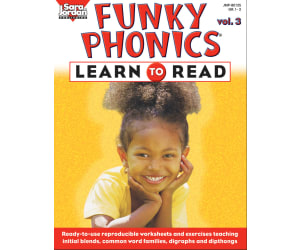
Funky Phonics®: Learn to Read, vol. 3 Gr. 1-2
ELA, Language Development, Phonics, Grade 1, 2, Teacher Tools, Lesson Plans
Funky Phonics®: Learn to Read, vol. 3 Gr. 1-2 A comprehensive teaching resource designed specifically for grade one and grade two teachers and homeschoolers looking to improve their students' reading skills. As a complete package of structured lessons and classroom activities, this learning system offers an engaging experience for young learners, as they explore the fascinating world of language arts. Unique Teaching Approach: This volume centers around a systematic approach to phonics instruction, building upon essential foundational reading principles. The focus primarily lies on: Initial blends Common word families along with digraphs and diphthongs --core elements crucial for early reading development and competence. Real-world Practice Tools: The Funky Phonics resource doesn't just offer theory or instruction but provides educators with practical tools that carry these concepts into real-world practice. A collection of ready-to-use reproducible worksheets allows students to apply what they've learned actively, providing them means to practice in tangible terms until comprehension of these skills becomes second nature. Versatility: Being highly flexible in its application is another significant advantage posed by the Funky Phonics series. This resource can be seamlessly integrated into various educational settings or learner groups—be it whole class instruction facilitated by public school teachers or targeted small-group lessons led by homeschooling practitioners. Tailored Content: Funky Phonics®: Learn to Read vol.3 Gr 1-2, stands out due its grade-specific tailoring that reaches out precisely where students are at their learning journey—Grade 1-2 level readiness makes this facet encapsulate age-appropriate content aligning closely with expected academic milestones corresponding their present ability level. Easy-to-use format: The provided materials are all neatly compiled within one product file supplied in easy-to-manage PDF format making it convenient for educators to print oodles of hard copies making it an excellent tool for potential homework assignments or extra credit exercises too! In all its richness, Funky Phonics®: Learn to Read vol.3 Gr 1-2 has rightfully charted its place under 'must-have' pedagogical aids for any educator vested in nurturing accomplished young readers.
Author Classroom Complete Press
Tags PDF
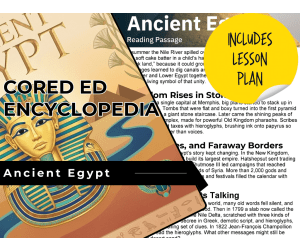
Ancient Egypt Reading Comprehension Passage - Cored Ed Encyclopedia
ELA, Language Development, Reading Comprehension, Reading, Social Studies, History, History: Ancient, Writing, Pre-Reading, Vocabulary, Grade 2, 3, 4, 5, Worksheets & Printables, Worksheets, Teacher Tools, Centers, Activities, Writing Prompts, Assessments, Quizzes and Tests, Quizzes, Lesson Plans
This ancient Egypt reading comprehension with lesson plan includes: Visualization (on the front cover) Start your lesson by taking a minute to think and share something about the topic. Read the script aloud (slowly), perhaps prepare some music or sound effects. Student close their eyes and let their imaginations wander. Students open their eyes, read the question aloud and give them a few minutes to complete. Ask a few students to share or keep answers until the end to compare with what they learn in the passage. Quick pause—thousands of Cored Education products are included with your TeachSimple membership. Download links and encyclopedia index available here. Pre-Reading Trivia Students will write down one thing they already know about the subject and then read five more facts and discuss. These facts are fun, and the students will enjoy learning about the subject before reading more. Give 1 minute for students to write what they already know (no pressure—best guess is fine). Read the five facts together. After each fact, do ask a student for their opinion, was it surprising? Set a purpose by asking students to highlight/underline one fact they want to learn more about during the reading. Reading Passage The text is a high-interest reading passage with set paragraphs, roughly three to four paragraphs long. It contains a variety of themes about the topic, anywhere from history to technology. The passage is between 250 and 350 words in length. First, ask students to look at the headings and see what they’ll learn about today. What do they know about the topic/heading? First read options: Teacher read-aloud (best for support). Partner reading (paragraph by paragraph). While reading, students underline important details, and vocabulary words they think may come up in the questions section. Mixed Questions The first question page contains four multiple-choice questions, each with a choice of four answers, and three written response questions that require a sentence or two from the student. Students complete the mcqs first independently, then review quickly as a class. For the 3 written responses, try to get students giving the answer with some form of evidence: “I think ___ because the text says ___.” If students get stuck, send them back to check the passage. Vocabulary Questions Practice seven key words from the text in this section across two activities. First section is scrambled words where students will unscramble three words given a clue for each. The second section is a word to meaning matching activity. Before starting, have some students read out words they underlined in the passage. Ask students to say the word and read aloud the sentence(s) around each word. Ask students to do scrambled words and the matching exercise in pairs then go through answers as a class. For the scrambled spelling task, get four pairs to come up to the board and write the words for extra practice with the other student reading out the clue. For the matching task, prompt students to give full sentences: “I matched ___ with ___ because ___.” Creative Writing In this question, the student will be required to write a five to eight sentence paragraph on a question related to the topic. Before starting, ask students write down 3 key ideas they are going to include in their piece. Ask students for ideas to share around the class to help those struggling. Pro writing expectations: 5–8 sentences At least 2 facts or details from the passage At least 2 vocabulary words from the previous page Students read their paragraphs while classmates listen for facts and vocabulary words. Extension Activities This page is optional for fast finishers or to take home. There are several activities, each one requiring a different skill. Do some, do none, do all, completely optional - but you will feel reassured knowing every possibility is planned for. Includes summary writting question and additional facts. Answer Key There are answers for the multiple-choice questions, written response questions have sample answers, vocabulary answers and if there is a summary question then a sample summary will be provided as well. Lesson Plan Included Customized lesson plan for this lesson is included. Lesson Snapshot Title: Ancient Egypt Genre: Nonfiction (informational passage) Subject: Social Studies Primary Topic: Nile flooding, kingdoms, pyramids, and writing Estimated Guided Reading Level (A–Z): T What This Lesson Teaches Best How the Nile River flooding left dark mud that helped farming and food growth. The meaning of Kemet (“black land”) and why it described the fertile farming strip. How leaders joined Upper Egypt and Lower Egypt into one kingdom, with the pharaoh as a symbol of unity. Key achievements in building and record-keeping (pyramids, scribes, hieroglyphs, papyrus, grain and taxes). How the Rosetta Stone helped scholars decode hieroglyphs by showing the same text in three kinds of writing. Learning Goals Explain how the Nile River’s yearly flooding helped people grow food. Describe why people called the fertile farm area Kemet, or “black land.” Identify ways ancient Egyptians organized and strengthened their kingdom (sharing water, one ruler, a capital). Describe how pyramids changed over time (step pyramid for Djoser and later pyramids at Giza). Explain how scribes used hieroglyphs and papyrus to keep records of grain and taxes. Describe how the Rosetta Stone led to reading hieroglyphs again. Key Vocabulary From the Text fertile — able to grow lots of plants. pharaoh — ruler of ancient Egypt. hieroglyphs — picture symbols used for writing. papyrus — plant paper used for writing. decree — an official order from leaders. FULL CATALOG OF DOWNLOAD LINKS AND ENCYCLOPEDIA INDEX HERE
Author Cored Education
Rating
Tags Vocabulary, Reading Comprehension, Reading Passages, Lesson Plans, Ela Lesson Plans, Reading Comprehension Lesson Plans, Pre-reading, History, Ancient History Lesson Plans, History Lesson Plans

KG Morning Work | 180 Days of Spiral Review | Math & ELA | 1st Quarter
ELA, Math, Kindergarten, Centers, Activities, Lesson Plans, Teacher Tools, Worksheets & Printables
Kindergarten Morning Work | 1st Quarter Student Pages + Full-Year Teacher Resources Make kindergarten mornings easier, calmer, and more purposeful with 45 days of Kindergarten morning work for Quarter 1 . This resource includes ALL teacher resources for the complete 180-day program , while the student practice pages in this pack are specifically for 1st Quarter: Days 1–45 . What’s Included ⭐ FULL-YEAR TEACHER RESOURCES You receive the complete teacher toolkit for planning, organizing, differentiating, and tracking the entire 180-day Kindergarten morning work program : Teacher Guide Month-by-month Pacing Guide Skills Checklist Common Core Standards Alignment Fully Editable Morning Work Schedule Complete Answer Key for Days 1–180 Student Progress Tracker Parent letters and home-practice forms Three Certificates of Completion Bonus Morning Routine Pack 📚 STUDENT PAGES INCLUDED: 1ST QUARTER The student portion of this product includes Days 1–45 , providing 45 days of Kindergarten morning work . Each daily page includes five short activities : Early Literacy — letters, sounds, rhyming, phonics, or sight words Handwriting — letters, numbers, names, words, and early sentences Math — counting, number sense, addition, shapes, and color-by-code Fine Motor — tracing, mazes, dot-to-dot, or drawing Thinking Skills — patterns, matching, visual discrimination, and “Which One Does Not Belong?” Important: The student practice pages included in this product are Days 1–45 only . The teacher resources and complete Answer Key cover all 180 days . How It Works in the Classroom Use this Kindergarten morning work as a daily morning routine, independent practice, early finisher activity, or beginning-of-day skill review. Each page is designed to take approximately 10–15 minutes and uses short, simple activities that young learners can complete with increasing independence. The first few weeks can be completed together. As students learn the routine, they can work more independently while you take attendance, greet students, or prepare for the day. The Quarter 1 routine follows a helpful weekly rotation: Monday: Letters, counting, tracing, and shapes Tuesday: Beginning sounds, number sense, and patterns Wednesday: Sight word, addition, and fine motor practice Thursday: Rhyming, shapes, and matching Friday: Weekly review, color-by-code, puzzles, and draw-and-write Use the pages for: Morning work Bell ringers Independent practice Early finishers Fine motor practice Literacy centers Math warm-ups Spiral review Sub plans At-home practice The pages are black-and-white and ink-friendly , so you can simply print and go. Standards & Learning Goals This Kindergarten morning work resource supports important Kindergarten readiness skills and Common Core standards across early literacy, handwriting, math, fine motor development, and thinking skills. 📖 Early Literacy & Writing Students practice: Uppercase letter recognition Lowercase letter recognition Letter sounds Beginning, middle, and ending sounds Rhyming Syllables CVC words Word families Sight words Phonological awareness Name writing Letter formation Early sentence writing The standards alignment includes RF.K.1, RF.K.2, RF.K.3, RF.K.4, L.K.1, L.K.2, and W.K.1–W.K.2 . 🔢 Math Students practice: Writing numbers 0–20 Counting objects Counting to 50 and 100 Comparing groups More, less, and equal Ten frames Addition within 10 Subtraction within 10 Teen numbers 2-D shapes Patterns Measurement comparisons The resource aligns with Kindergarten standards including K.CC.A.1–3, K.CC.B.4–5, K.CC.C.6–7, K.OA.A.1–4, K.NBT.A.1, K.MD.A.1–2, and K.G.A.2/K.G.B.5 . ✏️ Fine Motor & Thinking Skills Students also build important kindergarten readiness skills through: Tracing Mazes Dot-to-dots Drawing Visual discrimination Matching Pattern completion Sorting and identifying differences These activities help students develop the pencil control, visual skills, and problem-solving habits they need for successful classroom learning. Why Teachers Love It ✨ You get ALL the teacher resources for the entire year. The teacher materials support the complete 180-day program , not just Quarter 1. ✨ Students get exactly what they need for Quarter 1. Days 1–45 provide a complete first-quarter student set. ✨ Designed specifically for kindergarten. Large print, short directions, plenty of white space, and picture-based tasks make the pages accessible to young learners. ✨ Build independence from the beginning. Children can gradually move from teacher-supported practice to independent morning work. ✨ Zero prep. Print the week and go. The activities are already drawn directly on the pages, with no extra manipulatives required. ✨ A real developmental progression. Quarter 1 begins with letters, numbers to 10, shapes, and names , giving students a strong foundation for the rest of the year. ✨ Practice multiple readiness skills every day. Students get daily practice in literacy, handwriting, math, fine motor skills, and thinking. ✨ Keep students engaged. Mazes, dot-to-dots, patterns, picture tasks, color-by-code activities, matching, and drawing provide variety without overwhelming young learners. ✨ Track student growth. The Student Progress Tracker covers skills such as letter recognition, sounds, rhyming, CVC words, sight words, counting, shapes, patterns, addition, subtraction, and fine motor development. ✨ Keep families informed. The included family materials provide simple ways to share what students are practicing and encourage short home activities. ✨ Celebrate the end of the year. The teacher resources include certificates celebrating 180 days of Kindergarten Morning Work and student effort. ✨ Get a valuable bonus pack. The bonus materials include a morning routine chart, visual schedule cards, calendar pieces, weather chart, name tags, alphabet chart, number chart to 100, sight word flashcards, fine motor task cards, and an early-finisher choice board. Looking for Kindergarten morning work for Quarter 1 that saves prep time and builds essential early learning skills? This pack includes 45 days of student practice (Days 1–45) PLUS ALL teacher resources for the full 180-day program . Give your kindergarteners a predictable, engaging morning routine that builds literacy, handwriting, math, fine motor skills, and independence from the very beginning! Print it, prep it, and make your kindergarten mornings easier! 💛
Author Bright Classroom Ideas Marketplace
Rating
Tags Math, Ela, Morning Work, Back To School
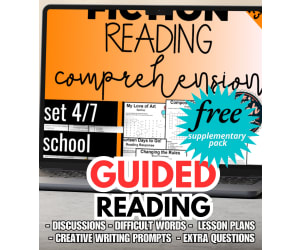
Guided Reading Activities with Lesson Plans: Fiction Set 4 - School
ELA, Reading, Reading Comprehension, Common Core, ESL, Language Development, Pre-Reading, Vocabulary, Resources for Teachers, Grade 2, 3, Worksheets & Printables, Worksheets, Lesson Plans, Teacher Tools, Activities
Guided Reading Activities with Lesson Plans Fiction Set 4 Note: This download DOES NOT include the passages themselves. If you have not already done so, download in a format of your choice in the "reading links" section below. Overview The perfect companion materials for Cored Education reading comprehension downloads. This collection of guided reading lessons includes a wide array of engaging themes that aim to foster comprehension, vocabulary development, and creative thinking. Each lesson is crafted to be interactive and immersive, making learning enjoyable while promoting essential literacy skills. The lessons are designed for students to actively engage with both the material and the world around them, creating connections to their personal experiences while developing key skills. Includes Guided Reading Materials For: 1.Don't Tell Anyone 2.Roger's Luck 3.Starting Third Grade 4.Bridget's New School 5.Changing the Rules 6.My Love of Art Reading Links: This is the guided reading materials version and DOES NOT include the passages themselves. The passages related to this download are available here in GOOGLE Docs, GOOGLE Forms, GOOGLE Slides. PDF, PPT, WORD. Google Docs Google Forms Google Slides PDF PPT Word Details Pre-reading Discussions Each lesson begins with pre-reading questions that help activate prior knowledge and engage students in the theme of the lesson. This allows students to make personal connections with the content before diving into the reading material. Vocabulary Development Every lesson includes vocabulary exploration that introduces key terms students will encounter in the reading. These words are essential for understanding the passage, and activities encourage students to apply the new vocabulary in context. Comprehension Check After the reading, the lessons provide comprehension questions (typically multiple-choice) that assess students’ understanding of the story. These questions help students reflect on key events, characters, and concepts within the text, reinforcing their comprehension. Creative Writing Prompts To foster creativity, the lessons include writing activities that challenge students to apply what they've learned in imaginative ways. These prompts allow students to practice creative expression while reinforcing the lesson’s theme. Discussion Topics Each lesson ends with wrap-up discussion questions that encourage students to think critically and engage in group conversations. These discussions can enhance social learning and deepen understanding by connecting the lesson's content to broader real-world applications. Theme-Based Learning The themes (e.g., winter, nature walks, photography, flowers) are universally appealing and offer opportunities for cross-curricular connections with science, art, and environmental studies. This makes the lessons versatile for a wide range of teaching contexts. Student-Centered Approach The activities are designed to be interactive and student-driven, allowing them to explore the content through discussions, hands-on vocabulary practice, and personal reflections. This promotes active learning and keeps students engaged. FULL CATALOG OF DOWNLOAD LINKS HERE Grade 2/3 Links Fiction Set 1 - Nature Google Docs Google Forms Google Slides PDF PPT Word Guided Reading Materials Fiction Set 2 - Animals Google Docs Google Forms Google Slides PDF PPT Word Guided Reading Materials Fiction Set 3 - Food Google Docs Google Forms Google Slides PDF PPT Word Guided Reading Materials Fiction Set 4 - School Google Docs Google Forms Google Slides PDF PPT Word Guided Reading Materials Fiction Set 5 - Friends Google Docs Google Forms Google Slides PDF PPT Word Guided Reading Materials Fiction Set 6 - Family Google Docs Google Forms Google Slides PDF PPT Word Guided Reading Materials Fiction Set 7 - Sports Google Docs Google Forms Google Slides PDF PPT Word Guided Reading Materials Nonfiction Set 1 - Technology Google Docs Google Forms Google Slides PDF PPT Word Guided Reading Materials Nonfiction Set 2 - Nutrition Google Docs Google Forms Google Slides PDF PPT Word Guided Reading Materials Nonfiction Set 3 - Animals Google Docs Google Forms Google Slides PDF PPT Word Guided Reading Materials Reading Passages Overview Each passage is especially written for Grade 2-3 students, including key vocabulary required for this age group. Topics are varied and are accompanied by colorful graphics. Topics are meant to educate, yet entertain the modern student. These passages are perfect for the modern classroom. Whereas textbooks can become outdated in no time, any changes to technology or the world will result in updates to this product. Mixed Questions The mixed questions section of each lesson includes a variation of fivecomprehension, vocabulary and math questions. In addition, key reading strategies are frequently covered including cause & effect, summarizing, compare & contrast and making conclusions. Three of the questions will be MCQs and two will require a written response of some kind. Full answers and example responses appear at the end of the lesson. Spelling & Vocab Each reading passage contains a variety of words and phrases designed for Grade 2-3 students. Spelling and vocab activities provide the opportunity to build fluency with these words. As it can become quite mundane doing the same activities over and over, each lesson in a set will contain a different spelling and vocab activity . Writing Prompts Writing prompts are designed to continue the theme or lessons learned in the story. Students are persuaded to write in a variety of ways and each prompt includes several cues to help. As with the spelling/vocab section, writing prompts will vary. This includes research pieces, reading responses, poetry and creative writing prompts. Full Answer Keys Full answer keys and sample responses are provided so no matter how busy you are, you know you're covered! Mixed question answers provide evidence from the text, math questions contain the relevant workings. Answers are designed for use by the teacher, but also suitable as a handout to the student. Additional File One lesson will have an additional file. This is something fun to extend the lesson with. For similar downloads and other frees, do check out Cored Group on TeachSimple.
Author Cored Education
Tags Elementary, Reading, Comprehension, Vocabulary, Answers, Common Core, Guided Reading, Guided Reading Activity, Guided Reading Lesson Plans, Guided Reading Lesson Plan

Modal Verbs: Must and Have To ESL ELA TEFL Intermediate Lesson Plan
ELA, Grammar, Grade 5, 6, 7, 8, 9, 10, 11, 12, Teacher Tools, Lesson Plans
Modal Verbs: Must and Have To Intermediate ESL ELA TEFL Lesson Plan This intermediate lesson plan helps students learn about modal verbs like "must" and "have to" and use them properly in sentences. Students first review definitions and examples of these modal verbs. Next, they complete educational exercises that allow them to practice identifying and using "must," "have to," and similar modal verbs correctly. This resource can be used flexibly, like for whole-class grammar lessons, small group remediation, or as a homework assignment. Answer keys are provided for easy self- or peer-checking. Everything is contained in a convenient PDF packet. This modal verbs lesson allows flexible implementation so students can master this intermediate grammar concept through repeated, meaningful practice. This lesson plan includes flash cards, warmer, conversation questions, main use, construction, rules, examples, open questions, closed questions, activity, writing drill and extra study. The TEFL resource is available in PDF with 32 ready to print pages and one digital access file. A part of it is on Google Apps. The answer key is also included for reference.
Author TEAM TEFL
Tags Modal Verbs, Grammar, ESL Lesson, Language Arts, Reading Activities, Lesson Plan Verbs

Reading Comprehension: Fact and Opinion
ELA, Reading, Reading Comprehension, Common Core, Grade 5, 6, 7, 8, Teacher Tools, Lesson Plans
Reading Comprehension: Fact and Opinion An instrumental teaching resource designed to enhance the reading and comprehension skills of children. This product primarily suits students in Grade 5 up to Grade 8, perfect for classroom educators, homeschooling parents, and caregivers. "Fact and Opinion" Chapter Slice The "Fact and Opinion" chapter slice is part of the broader "Reading Comprehension" instruction series focusing on a critical aspect of reading mastery - discerning facts from opinions. This technique forms a robust foundation for understanding various texts while equipping learners with essential communication skills. Vital Reading Acquisition Building Blocks Emphasized Context Clues Inference Understanding Main Idea Determination Framed with definitions of essential terms throughout the product file, learners get guidance as they practice what they learn in an intuitive manner using this user-friendly resource. Versatility The lesson plan's versatility allows for effective use in different settings. Whether educators wish to implement it during whole group instruction or small cluster learning sessions or even assign it as homework, they can custom-tailor its usage according to their needs. Bloom’s Taxonomy & Common Core State Standards Adherence Assessment Tools Framework alignment guaranteed with adherence to both Bloom's Taxonomy frameworks. Compliance with Common Core State Standards assures its relevance. Bookended by detailed lesson plans focusing specifically on Language Arts comprehension tailored explicitly around upper elementary- middle schoolers' requirements. ``` Delivered through one user-friendly PDF file – use Reading Comprehension: Fact and Opinion as an invaluable addition to your educational toolkit. ```
Author Classroom Complete Press
Tags PDF

How to Write a Paragraph: Forms and Purposes of Paragraphs
ELA, Writing, Common Core, Grade 5, 6, 7, 8, Teacher Tools, Lesson Plans
How to Write a Paragraph: Forms and Purposes of Paragraphs This invaluable tool for educators aims to instill effective writing skills in their students with its step-by-step approach and dynamic range of content. It offers both public school teachers and homeschoolers the ability to develop students' prowess for crafting well-structured sentences and paragraphs. Primarily intended for students in Grade 5 through Grade 8, this resource is an ideal part of a language arts curriculum. Despite focusing on the writing subject area, it can be effectively utilized across different subjects due to its universal applicability. The user-friendly PDF format features 24 ready-to-print pages filled with engaging content. Key Features: Introduction to four primary types of paragraph forms Incorporation of various graphic organizers that help construct logical structure within their work Bloom’s Taxonomy inspired learning objectives for advanced learning outcomes Possibility for flexibility in planning lessons - facilitating whole-group instruction or small-group discussions based on the teacher's distinct pedagogical strategy. The teaching aid also includes valuable components such as a student assessment rubric, puzzles designed for vocabulary development, and a comprehension quiz aimed at evaluating mastered knowledge. Each component is geared towards creating an interactive learning environment that is stimulating yet effective. The added benefit is its alignment with Common Core State Standards ensuring adherence to high educational norms while keeping it engaging for young minds embarking on their journey into paragraph writing. In conclusion, "How to Write a Paragraph: Forms and Purposes of Paragraphs" extends beyond being just another lesson plan by providing comprehensive guidance aimed at achieving mastery over advanced written skills right from foundational levels.
Author Classroom Complete Press
Tags Language Arts, Writing, Paragraph Writing, Crossword Puzzle, Comprehension Quiz, Paragraph Lesson Plans, Paragraphs Lesson Plan, Paragraph Forms

Through the Tunnel: Full Lesson Plan w/ PowerPoints & Graphic Organizers
ELA, Literature, Grade 5, 6, 7, 8, Lesson Plans, Teacher Tools
Through the Tunnel: Full Lesson Plan w/ PowerPoints & Graphic Organizers This robust teaching resource is adaptable for grades 5 through 8. It’s particularly beneficial for those instructing Language Arts, focusing on an in-depth analysis of Doris Lessing's text, 'Through the Tunnel'. This package isn't just a complete lesson plan; it includes an abundance of materials that teachers can tailor based on their students' needs or learning strategies. These include: A worksheet and answer key specific to 'Through the Tunnel,' ensuring easy lesson planning. Various graphic organizers such as Character Chart , Figurative Language Chart, Historical Analysis chart among others promoting deeper understanding of literary elements like authors' intent, characterization and narrative style etc. Eights distinct PowerPoint presentations addressing important literary themes like Characterization or Symbolism & Allegory. The digital format further enhances its flexibility as all resources are instantly available post-purchase with editable Word documents ensuring customization if needed to match varied classroom settings or student requirements. In summary, 'Through the Tunnel: Full Lesson Plan w/ PowerPoints & Graphic Organizers' functions not just as a standalone instruction material but also integrates seamlessly with existing lesson plans enriching them. Whether used in small groups breakout sessions or assigned as reinforcement tasks at home benefiting different types of learners within one diverse toolset makes this product invaluable to educators both within traditional classrooms and home-schoolers alike.
Author Quality Teaching Products
Tags Through The Tunnel, Lesson Plan, PowerPoints, Graphic Organizers, Literature Analysis

Zlateh the Goat: Full Lesson Plan w/ PowerPoints & Graphic Organizers
ELA, Literature, Grade 6, 7, 8, 9, Lesson Plans, Teacher Tools
This resource will give you everything you need to complete a full, comprehensive reading lesson plan for Zlateh the Goat text by Isaac Bashevis Singer. Files are offered as PDFs and Word documents. Included: -Zlateh the Goat Lesson Plan -Zlateh the Goat Worksheet -Zlateh the Goat Answer Key Graphic Organizers: Author’s Purpose Characterization Chart Figurative Language Chart Historical Analysis Chart Imagery Chart Peer Evaluation Sheet Plot Diagram Read for Detail Setting Style Chart Symbol Chart Symbolism Chart Theme Diagram Tone and Mood Diagram Universal Plot Diagram Venn Diagram PowerPoints: Characterization Imagery, Voice, and Persona Irony and Ambiguity Narrator and Voice Plot Structure Symbolism and Allegory Theme - How to Interpret Theme Thank You Bonus Stuff!
Author Quality Teaching Products
Tags Reading Lesson Plan, Reading Powerpoint, Short Story, Fiction, Text, What Is The Point Of View In Zlateh The Goat
I WONDER - What Is A Cinquain Poem | Animated Video Lesson
Poetry, Literature, ELA, Grade 4, 5, 6, 7, 8, 9, 10, Lesson Plans, Teacher Tools
Video Introduction An amazing video designed for the students to learn more about famous poetry in different countries. I WONDER - What Is A Cinquain Poem | Animated Video Lesson Do you like reading poetry? If yes, what is your favorite poem? Do you have a favorite poet? If yes, tell us more about him/her. What are the types of poetry? Have you ever tried to write a poem before? If yes, tell us more about it. What is acrostic poem? Dow you know who is the first writer to write it? Can you write one? What is limerick? Dow you know who is the first writer to write it? Can you write one? What is sonnet? Dow you know who is the first writer to write it? Can you write one? What is haiku? Dow you know who is the first writer to write it? Can you write one? I WONDER - What Is A Cinquain Poem | Animated Video Lesson The video is perfect for encouraging the researching skills for the students, while learning more about this fantastic poetry. I WONDER - What Is A Cinquain Poem | Animated Video Lesson This friendly designed video is suitable for students at school, homeschooling, and as a group activity. Format Available in MP4 format.
Author Educational Voice
Rating
Tags What Is A Cinquain Poem, What Is A Cinquain Poem Video, Cinquain Poem, Cinquain Poem Facts, Cinquain Poem Video, Cinquain Poem Facts For Kids, Cinquain Poem Video For Kids, Poem
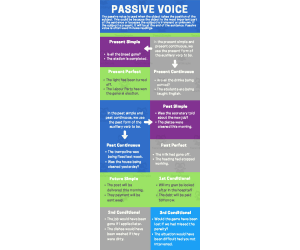
Passives Advanced ESL Lesson Plan
ELA, Language Development, ESL, Grammar, Not Grade Specific, Adult Education, High School, Teacher Tools, Lesson Plans, Worksheets & Printables
This is an advanced lesson plan worksheet set for Passives. This advanced English lesson plan helps students learn about passives. It includes informative explanations and examples to build students' understanding of how to correctly use the simple passive. After learning when and why inversions are used, students will complete targeted exercises to practice implementing passives on their own. Educators can use this resource with the whole class, in small groups, or as an independent practice assignment. Students will learn more about these topics and then complete the exercises to follow, which will assess their comprehension and implement grammar skills. This resource can also be accessed through Google Apps. Answer key included. The ESL lesson plan includes flashcards, a warmer, grammar rules, exercises, role-play, conversation, writing drill, activity, answers and an extra study that would be good to set as homework. There are 30+ pages and there are teachers notes to guide the teacher.
Author TEAM TEFL
Tags Passive Voice, Passive Form, ESL Lesson, Comprehension, Reading

Animal Science Unit | All About Rabbits | Learning about Animals
ELA, Writing, Creative Writing, Reading, Science, Life Sciences, Animals, Kindergarten, Preschool, Grade 1, 2, Teacher Tools, Lesson Plans
Introducing an Amazing Animal Science Unit All About Rabbits for grades PreK-2nd! This comprehensive rabbit unit includes teacher resources like discussion questions and activity ideas to guide your animal science curriculum. Differentiated printables, worksheets, reading passages, writing templates, crafts, and games engage students in learning about rabbit classification, habitats, life cycles, anatomy, behaviors, and more. Young learners will love the real rabbit photos, nonfiction articles, fictional stories, paper crafts like rabbit puppets and masks, memory games, and other hands-on activities. With multiple levels of texts and assignments provided, these thoughtful rabbit resources can be customized for whole group, small group, or independent study to match all ability levels. Get ready for an unforgettable early elementary adventure investigating the wonders of rabbits!
Author Simply Schoolgirl
Tags Rabbits, Animal Life Cycle, Science Vocabulary, Non-fiction Articles, Differentiated Materials

Phrasal Verbs ESL TEFL Upper Intermediate Lesson Plan Worksheet
ELA, Grammar, Resources for Teachers, Not Grade Specific, Adult Education, Homeschool Resources, High School, Middle School, Teacher Tools, Lesson Plans, Worksheets & Printables
Phrasal Verbs ESL and TEFL Upper Intermediate Lesson Plan worksheet. This upper intermediate English lesson plan focuses on expanding students' understanding and use of phrasal verbs. Through informative instruction and targeted exercises, learners will strengthen their grammar skills related to these versatile verbs. Educators can implement the multifaceted activities in various settings like whole group instruction, small group work, or independent assignments. Additionally, the supplemental Google Apps materials and answer key provide flexibility and support for diverse learning needs. This comprehensive resource equips intermediate learners with the knowledge and skills to employ phrasal verbs accurately and effectively in their communication. The ESL lesson plan includes flashcards, a warmer, grammar rules, exercises, role-play, conversation, writing drill, activity , answers and an extra study that would be good to set as homework. There are 30+ pages and there are teachers notes to guide the teacher. Answer key is included in the zip file.
Author TEAM TEFL
Tags Phrasal Verbs, Reading, Comprehension, EFL Lesson, ESL

Critical Thinking: Keys to Asking Questions - FLASH-MAC
ELA, Strategies, Grade 5, 6, 7, 8, Teacher Tools, Lesson Plans
Critical Thinking: Keys to Asking Questions - FLASH-MAC An essential teaching resource catered towards middle school students specifically in grades 5 through 8, the Critical Thinking: Keys to Asking Questions - FLASH-MAC is a handy tool for educators intending to nurture critical thinking skills. Predominantly focused on enhancing Language Arts skills and strategies, this product is applicable across public schools and homeschooling environments. Product Features: A program encapsulating the essence of asking questions— crucial for critical thinking—through thoughtfully designed reading passages. 'Before You Read' section featuring pre-reading inquiries to ensure preliminary comprehension and cognitive engagement with content. 'After You Read' section that includes post-reading questions promoting reflectivity and encouraging analysis after each passage interaction. Vocabulary flash cards devised to enhance language proficiency providing generous practice opportunities. User-friendly graphic organizers helping learners visually structure information facilitating easier recall and comprehension. In addition, Critical Thinking: Keys to Asking Questions - FLASH-MAC couples reading-focused educational resources with interactive activities adding engaging dimensions into pedagogy. For user convenience, printable material ready for immediate classroom or home use after download are attached as well. Packed into a single ZIP file containing MAC software, this valuable instruction tool assures easy navigation regardless of being used in whole-class lessons or smaller group tasks; adeptly fitting into any preferred teaching approach! If you're keen on sharpening your student's critical thinking capacity specifically regarding question formulation—this comprehensive guide might just be your perfect answer—the FLASH-MAC way!</P
Author Classroom Complete Press
Tags Critical Thinking, Flash Cards, Reading Strategies, Comprehension, Asking Questions

Iguanas Reading Comprehension Passage - Cored Ed Encyclopedia
ELA, Reading Comprehension, Reading, History, Social Studies, Science, Physics, Earth and Environmental Sciences, Life Sciences, Geography, Grade 2, 3, 4, 5, Worksheets & Printables, Worksheets, Teacher Tools, Centers, Activities, Writing Prompts, Assessments, Quizzes and Tests, Quizzes, Lesson Plans
This Iguanas reading comprehension with lesson plan includes: Visualization (on the front cover) Start your lesson by taking a minute to think and share something about the topic. Read the script aloud (slowly), perhaps prepare some music or sound effects. Student close their eyes and let their imaginations wander. Students open their eyes, read the question aloud and give them a few minutes to complete. Ask a few students to share or keep answers until the end to compare with what they learn in the passage. Quick pause—thousands of Cored Education products are included with your TeachSimple membership. Download links and encyclopedia index available here. Pre-Reading Trivia Students will write down one thing they already know about the subject and then read five more facts and discuss. These facts are fun, and the students will enjoy learning about the subject before reading more. Give 1 minute for students to write what they already know (no pressure—best guess is fine). Read the five facts together. After each fact, do ask a student for their opinion, was it surprising? Set a purpose by asking students to highlight/underline one fact they want to learn more about during the reading. Reading Passage The text is a high-interest reading passage with set paragraphs, roughly three to four paragraphs long. It contains a variety of themes about the topic, anywhere from history to technology. The passage is between 250 and 350 words in length. First, ask students to look at the headings and see what they’ll learn about today. What do they know about the topic/heading? First read options: Teacher read-aloud (best for support). Partner reading (paragraph by paragraph). While reading, students underline important details, and vocabulary words they think may come up in the questions section. Mixed Questions The first question page contains four multiple-choice questions, each with a choice of four answers, and three written response questions that require a sentence or two from the student. Students complete the mcqs first independently, then review quickly as a class. For the 3 written responses, try to get students giving the answer with some form of evidence: “I think ___ because the text says ___.” If students get stuck, send them back to check the passage. Vocabulary Questions Practice seven key words from the text in this section across two activities. First section is scrambled words where students will unscramble three words given a clue for each. The second section is a word to meaning matching activity. Before starting, have some students read out words they underlined in the passage. Ask students to say the word and read aloud the sentence(s) around each word. Ask students to do scrambled words and the matching exercise in pairs then go through answers as a class. For the scrambled spelling task, get four pairs to come up to the board and write the words for extra practice with the other student reading out the clue. For the matching task, prompt students to give full sentences: “I matched ___ with ___ because ___.” Creative Writing In this question, the student will be required to write a five to eight sentence paragraph on a question related to the topic. Before starting, ask students write down 3 key ideas they are going to include in their piece. Ask students for ideas to share around the class to help those struggling. Pro writing expectations: 5–8 sentences At least 2 facts or details from the passage At least 2 vocabulary words from the previous page Students read their paragraphs while classmates listen for facts and vocabulary words. Extension Activities This page is optional for fast finishers or to take home. There are several activities, each one requiring a different skill. Do some, do none, do all, completely optional - but you will feel reassured knowing every possibility is planned for. Includes summary writting question and additional facts. Answer Key There are answers for the multiple-choice questions, written response questions have sample answers, vocabulary answers and if there is a summary question then a sample summary will be provided as well. Lesson Plan Included Customized lesson plan for this lesson is included. Lesson Snapshot Title: Iguanas Genre: Nonfiction (informational text) Subject: Reading (Informational Text) / Life Science Primary Topic: Green vs. marine iguanas: tails, habitat, survival Estimated Guided Reading Level (A–Z): R What This Lesson Teaches Best Describes key iguana features and what they look like (dewlap, a line of spines). Explains where iguanas live and notes that most live in the Americas, with some relatives on islands. Shows how a green iguana’s long tail helps with survival (whip-like defense and strong tail strokes for swimming away). Compares two related iguanas by habitat and behavior (tree-climbing green iguana vs. sea-foraging marine iguana that eats algae and basks on dark rocks). Builds awareness of changing habitats and reasons protection matters (building on land, hunting/capturing, predators, El Niño, oil spills). Learning Goals Identify details that describe what an iguana looks like and where it lives. Explain how a green iguana uses its tail when danger comes near water. Describe how the marine iguana finds food and what it does after a cold swim. Compare the green iguana and marine iguana using evidence from the passage. Describe at least two reasons iguanas might need protection based on changes in their habitats. Key Vocabulary From the Text dewlap — loose throat skin that can hang in a fold. spines — pointed bumps that may rise along its back. forages — searches for food. predators — animals that hunt other animals. habitats — places animals need to live. FULL CATALOG OF DOWNLOAD LINKS AND ENCYCLOPEDIA INDEX HERE
Author Cored Education
Rating
Tags Vocabulary, Reading Comprehension, Reading Passages, Lesson Plans, Ela Lesson Plans, Reading Comprehension Lesson Plans, Pre-reading, History, Science Lesson Plans, Life Science

High School The Outsiders 4-Week Unit Study (Growing Bundle)
ELA, Literature, Reading, Writing, Research, High School, Homeschool Resources, Teacher Tools, Assessments, Graphic Organizers, Lesson Plans, Outlines, Presentations, Quizzes and Tests, Rubrics, Worksheets & Printables, Writing Prompts
Homeschooling a high schooler is a completely different ballgame, isn’t it? I quickly realized that my teenager could spot pointless busywork a mile away—and honestly, they just do not tolerate it. I needed something that fulfilled those necessary high school academic requirements but actually got my teen talking. That frustration is exactly why I built this f our-week unit study for The Outsiders . I originally designed it to take the planning pressure off my own shoulders while offering the kind of mature, respectful academic challenge that older kids appreciate. We skip the repetitive, surface-level comprehension questions here. Instead, this unit targets the messy, real-world themes that high schoolers actually care about: class divides, identity, and the intense pressure to belong. Because the daily layout is already completely organized for you, you can stop stressing over Sunday night lesson planning. Instead, you get to just sit down at the table and dive into great book discussions with your student. This High School The Outsiders Unit Study study was a genuine labor of love in our own home. My hope is that it gives you back your prep time and turns your literature hours into something you both actually look forward to each day. INCLUDED IN THIS RESOURCE: Daily roadmap for structured learning. 6-part test, rubrics, and grading keys. 20 deep-thinking prompts and essay topics. Note-taking sheets, projects, and progress trackers. TOPICS COVERED: Greasers vs. Socs class analysis. Exploring adolescent pressure and growth. Symbolism, narrative voice, and theme. Investigating self-concept and belonging. Whether you need a solid foundation for a high school literature credit or a meaningful supplemental deep dive, this growing bundle bridges the gap between academic rigor and true heart. It challenges older students/homeschoolers to think critically and dissect the complexities of Hinton’s iconic narrative, while giving you back hours of your precious weekly prep time. If you and your students/homeschoolers enjoyed this unit study, please leave a review. Thank you for your continued support! Tina - Big Easy Homeschooling Mom
Author Homeschool with Big Easy Homeschooling Mom
Rating
Tags The Outsiders Study Guide, S.E. Hinton Unit, Literature Analysis Materials, High School Novel Study, Greasers And Socs Analysis, English Literature Deep Dive, Dolescent Identity Literature, Sociopolitical Literature Unit, English Study Guide, Thematic Analysis

Question Tags | Intermediate Lesson Plan
ELA, Language Development, ESL, Grade 5, 6, 7, 8, 9, 10, 11, 12, Teacher Tools, Lesson Plans
This is an intermediate lesson plan worksheet set for Question Tags. Your students will learn to understand how to use question tags when they want to confirm information that they think is true but require further confirmation. They will learn how to use the correct tense and the difference between a positive statement with a negative question tag and vice versa. Students will learn more about these and then complete the exercises to follow, which will assess their comprehension and implement grammar skills. The lesson plan starts with flash cards and a warmer and then followed by the grammar construction and examples. Then students will complete the exercises, act out a role-play before answering some conversation topics and doing a fun activity. Finally, there are some extra exercises and a writing drill to be completed. This ready to use ESL ELA TEFL lesson plan includes the answer and a Google App link where a part of the lesson is available digitally. We hope you enjoy using this ready to use resource with your students. The answer key is also included for reference. The TEFL resource is available in PDF with 31 ready to print pages and one digital access file. A part of it is available on Google Apps.
Author TEAM TEFL
Tags Statements, Questions, Present Tenses, Past Tenses, Asking Questions

The Drummer Boy of Shiloh: Full Lesson Plan w/ PowerPoints & Graphic Organizers
ELA, Literature, Grade 5, 6, 7, 8, 9, Lesson Plans, Teacher Tools
The Drummer Boy of Shiloh: Comprehensive Reading Lesson Transport students back in time with this expansive reading lesson on Ray Bradbury's short story "The Drummer Boy of Shiloh." Budding literati will analyze the text's complex themes, vivid imagery, and integral historical setting. Educators receive a complete lesson plan, activity worksheet with answer key, engaging PowerPoint slide decks, and 15 customizable graphic organizers to facilitate learning. Implementation ideas provided. Formatted as editable Word docs and PDF handouts accommodating whole-class instruction, small groups, or independent practice.
Author Quality Teaching Products
Tags Reading Lesson Plan, Literature, Short Story, Fiction Text, Graphic Organizers, Drummer Boy Of Shiloh

High School Science The Keystone Paradigm Unit
ELA, Reading, Writing, Reading Comprehension, Research, Resources for Teachers, Science, Earth and Environmental Sciences, Homeschool Resources, High School, Teacher Tools, Assessments, Lesson Plans, Quizzes and Tests, Rubrics, Worksheets & Printables, Writing Prompts, Worksheets
Let’s be real: finding science curriculum for a ninth grader that is not fluff feels like a full-time job. Once we hit the high school years, the "nature study" phase is over, and suddenly we are staring down the barrel of complex theories and massive textbooks. I built this unit because I was tired of "busy work" packets. I wanted my own daughter to see that science isn't just a list of facts to memorize—it is a messy, fascinating debate that is still happening right now. INCLUDED IN THIS RESOURCE: Keystone Paradigm Text 30-Year Population Data MacNulty Science Challenge Complete Grading Suite TOPICS COVERED: Trophic Cascade Mechanics Ecosystem Engineering Abiotic vs. Biotic Factors Scientific Model Critiques I will never forget the morning she finally sat at the table, nose deep in the MacNulty critique, and the "aha!" moment hit. Watching her connect the dots on how a wolf can actually shift the course of a river... that is the spark we’re all chasing, right? I designed this to give your student/homeschooler that same intellectual respect while giving you a breather. It is rigorous, it’s deep, and most importantly, it is ready to go. I hope it brings some incredible "lightbulb moments" and lively debates to your house, too. If you and your students/homeschoolers enjoyed this resource, please leave a review. Thank you for your support! Tina - Big Easy Homeschooling Mom
Author Homeschool with Big Easy Homeschooling Mom
Rating
Tags High School Science, Homeschool Science, Ecology Unit, Trophic Cascades, Yellowstone Wolves, Biology Module, Environmental Science, High School Ecology Curriculum, MacNulty Challenge Science, High School Biology Curriculum